An ingredient in olive oil that appears to kill cancer cells

February 20, 2015

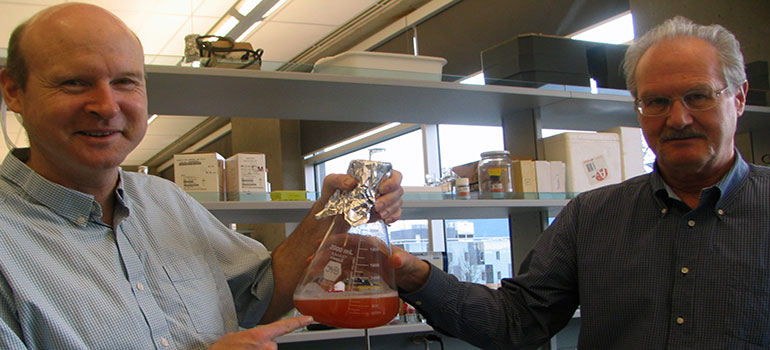
A Rutgers nutritional scientist and two cancer biologists at New York City’s Hunter College have found that an ingredient in extra-virgin olive oil kills a variety of human cancer cells without harming healthy cells.

The ingredient is oleocanthal, a compound that ruptures a part of the cancerous cell, releasing enzymes that cause cell death.

Paul Breslin, professor of nutritional sciences in the School of Environmental and Biological Sciences, and David Foster and Onica LeGendre of Hunter College, report that oleocanthal kills cancerous cells in the laboratory by rupturing vesicles that store the cell’s waste.

The findings are published in Molecular and Cellular Oncology.

Scientists knew that oleocanthal killed some cancer cells, but no one really understood how this occurred. Breslin believed that oleocanthal might be targeting a key protein in cancer cells that triggers a programmed cell death, known as apoptosis, and worked with Foster and Legendre to test his hypothesis.

“We needed to determine if oleocanthal was targeting that protein and causing the cells to die,” Breslin said.

After applying oleocanthal to the cancer cells, Foster and LeGendre discovered that the cancer cells were dying very quickly — within 30 minutes to an hour. Since programmed cell death takes between 16 and 24 hours, the scientists realized that something else had to be causing the cancer cells to break down and die.

LeGendre, a chemist, provided the answer: The cancer cells were being killed by their own enzymes. The oleocanthal was puncturing the vesicles inside the cancer cells that store the cell’s waste. These vesicles, known as lysosomes are larger in cancer cells than in healthy cells, and they contain a lot of waste. “Once you open one of those things, all hell breaks loose,” Breslin said.

But oleocanthal didn’t harm healthy cells, the researchers found. It merely stopped their life cycles temporarily — “put them to sleep,” Breslin said. After a day, the healthy cells resumed their cycles.

The researchers say the logical next step is to go beyond laboratory conditions and show that oleocanthal can kill cancer cells and shrink tumors in living animals. “We also need to understand why it is that cancerous cells are more sensitive to oleocanthal than non-cancerous cells,” Foster said.

It will also be interesting to explore the implications of this study for research suggesting beneficial effects of ingesting fullerenes dissolved in olive oil.

According to the World Health Organization’s World Cancer Report 2014, there were more than 14 million new cases of cancer in 2012 and more than 8 million deaths.

http://www.kurzweilai.net/an-ingredient-in-olive-oil-that-appears-to-kill-cancer-cells

The coming revolution in alternative proteins

February 20, 2015

Are you ready for cricket-flour energy bars and “steaks” constructed from strips of lab-grown animal muscle fibers?

Some of us may not have a choice. Feeding the rapidly expanding world population will require 470 million tons of annual meat production by 2050, an increase of more than 200 million tons from current annual levels, according to the Food and Agriculture Organization of the United Nations (FAO).

Replacing and/or supplementing traditional animal protein with alternatives that require drastically lower levels of water, feed, energy, and land is not only more sustainable but may result in healthier proteins too, according to the latest series of interviews from the Institute of Food Technologists (IFT) “FutureFood 2050” publishing initiative.

FutureFood 2050 explores how increasingly sophisticated science and technology will help feed the world’s projected 9 billion-plus people in 2050.

Pioneering protein researchers talked to FutureFood 2050 this month about a wide array of possible technology-based innovations, including:

  • Ethan Brown: Founder of California-based Beyond Meat, which is processing plant proteins to chemically re-create the structure of meat
  • Daniel Imrie-Situnayake: CEO of Tiny Farms, a startup dedicated to developing technology for industrial-scale insect farming
  • Stephanie Mittermaier: German food technology researcher who sees big potential for protein from sweet blue lupine seeds as an alternative to soy protein
  • Mark Post: Dutch physiologist behind the world’s first in vitro burger made from meat grown in a lab, who wants to transform how meat is produced
  • Harman Singh Johar: Entrepreneurial young entomologist who believes insect protein could become a near-perfect famine relief product

Through 2015, FutureFood 2050 will release 75 interviews with “the world’s most impactful leaders” in food and science. This year, FutureFood 2050 will also debut a documentary film exploring how the science of food will contribute solutions to feeding the world.


Attacking Alzheimer’s with ultrasound

Opening the blood-brain barrier allows the body to remove plaque in the hippocampus
February 20, 2015

For the first time, researchers have reversed some of the symptoms of Alzheimer’s disease* in mice using magnetic resonance (MR) imaging-guided focused ultrasound.

As KurzweilAI reported in 2012, Sunnybrook Research Institute scientists used MR imaging-guided focused ultrasound to temporarily open the blood-brain barrier (BBB), allowing for more effective delivery of drugs to the brain. The method uses a microbubble contrast agent. The microbubbles vibrate when they pass through the ultrasound beam, temporarily creating an opening in the BBB for the drugs to pass through. In addition, this combination of ultrasound and microbubbles has been shown to increase the number of new neurons and the dendrite length.

In the new study, Kullervo Hynynen, Ph.D., a medical physicist at Sunnybrook Research Institute, and his collaborators studied the effects of using MR imaging-guided focused ultrasound on the hippocampus of transgenic (TgCRND8) mice.

Mice with this genetic variant have increased plaque on their hippocampus, the part of the brain that helps convert information from short-term to long-term memory; they also display symptoms similar to Alzheimer’s such as memory impairment and learning reversal. That allows these transgenic mice to be used as an animal model for Alzheimer’s disease.

Improved cognition and spatial learning

The researchers used MR imaging-guided focused ultrasound with microbubbles to open the BBB and treat the hippocampus of the mice. The hippocampus is divided into two parts, one in each hemisphere of the brain. They found the treatment led to improvements in cognition and spatial learning in the transgenic mice, potentially caused by reduced plaque and increased neuronal plasticity due to the focused ultrasound treatment.

They found no tissue damage or negative behavioral changes in the mice due to the treatments in either the transgenic mice or the control (nontransgenic) mice. Both groups of mice benefited from increased neuronal plasticity, which confirms the previous research on the effects of MR imaging-guided focused ultrasound on plasticity in healthy mice.

How it works

According to the Radiology paper, the investigators in previous studies have suggested two potential mechanisms for plaque reduction:

  • Opening of the BBB permits the entry of endogenous immunoglobuline G and immunoglobulin M from the periphery into the brain, which assists with plaque clearance.
  • MR imaging-guided focused ultrasound causes mild activation of astrocytes and microglia, which were shown to internalize amyloid and contribute to plaque reduction. These potential mechanisms are likely to also contribute to the reduced plaque observed in this study.

Next steps

“The results are an exciting step in the search for Alzheimer’s treatments,” said Steven Krosnick, M.D., Program Director for Image-Guided Interventions at the National Institute of Biomedical Imaging and Bioengineering at NIH, “but there is more to be done. There are limitations on the memory tests that can be done on mice, and human cognition is significantly more complex.

“Hopefully these results will open doors to more research on how MR imaging-guided focused ultrasound could benefit cognition and perhaps be magnified by using other therapeutics in conjunction with this method.”

This research was supported in part by the National Institute of Biomedical Imaging and Bioengineering award #EB003268

* An estimated 5.2 million Americans suffer from Alzheimer’s. It is the sixth leading cause of death in the United States and there is currently no treatment for the disease.


Abstract for Alzheimer disease in a mouse model: MR imaging–guided focused ultrasound targeted to the hippocampus opens the blood-brain barrier and improves pathologic abnormalities and behavior

Purpose: To validate whether repeated magnetic resonance (MR) imaging–guided focused ultrasound treatments targeted to the hippocampus, a brain structure relevant for Alzheimer disease (AD), could modulate pathologic abnormalities, plasticity, and behavior in a mouse model.

Materials and Methods: All animal procedures were approved by the Animal Care Committee and are in accordance with the Canadian Council on Animal Care. Seven-month-old transgenic (TgCRND8) (Tg) mice and their nontransgenic (non-Tg) littermates were entered in the study. Mice were treated weekly with MR imaging–guided focused ultrasound in the bilateral hippocampus (1.68 MHz, 10-msec bursts, 1-Hz burst repetition frequency, 120-second total duration). After 1 month, spatial memory was tested in the Y maze with the novel arm prior to sacrifice and immunohistochemical analysis. The data were compared by using unpaired t tests and analysis of variance with Tukey post hoc analysis.

Results: Untreated Tg mice spent 61% less time than untreated non-Tg mice exploring the novel arm of the Y maze because of spatial memory impairments (P < .05). Following MR imaging–guided focused ultrasound, Tg mice spent 99% more time exploring the novel arm, performing as well as their non-Tg littermates. Changes in behavior were correlated with a reduction of the number and size of amyloid plaques in the MR imaging–guided focused ultrasound– treated animals (P < .01). Further, after MR imaging–guided focused ultrasound treatment, there was a 250% increase in the number of newborn neurons in the hippocampus (P < .01). The newborn neurons had longer dendrites and more arborization after MR imaging– guided focused ultrasound, as well (P < .01).

Conclusion: Repeated MR imaging–guided focused ultrasound treatments led to spatial memory improvement in a Tg mouse model of AD. The behavior changes may be mediated by decreased amyloid pathologic abnormalities and increased neuronal plasticity.

A potential breakthrough in using electrical pulses to treat deadly glioblastoma brain tumors

February 20, 2015

Based on successful results in an experiment with a Labrador retriever using a novel treatment for glioblastoma brain cancer, the National Cancer Instituteyesterday (Feb. 19) awarded  Scott Verbridge, an assistant professor of biomedical engineering and mechanics atVirginia Tech , a $386,149 research grant to take a related medical procedure a step closer to using on humans.

The team’s findings from the experiment were reported in an open-access paper in the Feb. 14, 2011, issue of theJournal of Technology Cancer Research and Treatment.

Since the surgery, the investigators have continued experiments and mathematical modeling techniques that are leading toward effective treatments for humans with glioblastoma, the most common and deadly malignant brain tumor.

Punching holes in a tumor

The technique, invented by Virginia Tech faculty member Rafael Davalos, is called irreversible electroporation(basically, punching tiny holes in cancer tissue with electricity).

The investigators propose in the current project that these pulses can be tuned “to target the unique physical properties of malignant cells,” Verbridge said.

By contrast, chemotherapy and radiation used to reduce or eliminate cancerous cells are not discriminatory and can also affect healthy cells.

Clinical trials using the irreversible electroporation procedure have also been conducted for treatment of liver, kidney, pancreatic, and lung cancer.

“The procedure is essentially done with two minimally invasive electrodes placed into the targeted region, delivering approximately 80 pulses to the site in about one minute. The pulses are high voltage but low energy, so no significant heating occurs as a result of the procedure,” Davalos said. They use a device called Nanoknife for that purpose.


AngioDynamics® | URMC introduces NanoKnife technology for soft-tissue tumors

Pulse duration is significant in this process. Earlier studies have demonstrated that length of the pulse accounts for the dead cell lesion size, and the current work will explore the impact of varying these time parameters on the response of different cell types within gliomas.

In addition to researching the response of cell lines, experiments also will include patient-derived cells harvested by colleagues at Wake Forest University and The Ohio State University Comprehensive Cancer Centers.  The researchers plan to build three-dimensional in vitro tumors using these patient-derived cells.

They then will characterize the response of the most highly aggressive tumor cell populations, in physiologically relevant tissue models, to these electric field therapies. Using live staining techniques and confocal microscopy, the researchers will be able to measure real-time responses of the cells to the irreversible electroporation.

“We believe our studies will provide a significant advancement in our understanding of glioma biology and point to new treatment possibilities,” said Verbridge, who conducted postdoctoral research at the National Institutes of Health (NIH)-funded Cornell University Physical Sciences in Oncology Center. Verbridge also is a principal investigator on an additional NIH-funded project investigating glioma transcriptional dynamics, in collaboration with Chang Lu of Virginia Tech’s Department of Chemical Engineering.

http://www.kurzweilai.net/a-potential-breakthrough-in-using-electrical-pulses-to-treat-deadly-glioblastoma-brain-tumors


Detailed map of the brain reveals SEVEN unknown types of cells – and the discovery could help treat multiple sclerosis

  • Swedish researchers found seven unknown cells in the brains of mice 
  • They used single cell sequencing to create a detailed map of the brain
  • This map included various cell types as well as the genes within them
  • It is the first time the method has been used on such a complex tissue
  • Using the map, experts identified 47 different kinds of cell 
  • This included six different types of unknown oligodendrocyte – cells that insulate nerve cells – as well as an unknown nerve cell

And now researchers have discovered that the brains of mice contain at least seven unknown types of cells, including a nerve cell.

These findings are significant because they could shed light on diseases such as multiple sclerosis, explained the researchers.

Researchers have discovered a number of unknown types of brain cells, including a nerve cell, in the brains of mice. They used a process called single cell sequencing to produce a detailed map of brain cell types. The finding could shed more light on the human brain (a stock image of human brain cells are shown)

Researchers have discovered a number of unknown types of brain cells, including a nerve cell, in the brains of mice. They used a process called single cell sequencing to produce a detailed map of brain cell types. The finding could shed more light on the human brain (a stock image of human brain cells are shown)

Using a process called single cell sequencing, scientists at the Karolinska Institute in Sweden produced a detailed map of brain cell types and the genes active within them.

It is the first time the method has been used on such a large scale and on such a complex tissue.

Researchers studied more than 3,000 cells, one at a time, to identify a number of previously unknown types.

‘If you compare the brain to a fruit salad, you could say that previous methods were like running the fruit through a blender and seeing what colour juice you got from different parts of the brain,’ said Sten Linnarsson, senior researcher at the Department of Medical Biochemistry and Biophysics.

Researchers studied more than 3,000 cells, one at a time, and managed to identify a number of previously unknown types. They then compared which of the 20,000 genes were active in each cell, which enabled them to sort the cells into virtual piles. From this, the experts were able to identify 47 different kinds of cell

Researchers studied more than 3,000 cells, one at a time, and managed to identify a number of previously unknown types. They then compared which of the 20,000 genes were active in each cell, which enabled them to sort the cells into virtual piles. From this, the experts were able to identify 47 different kinds of cell

WHAT CELLS DID THEY FIND?

Scientists analysed 3,000 cells from the cerebral cortex in mice.

They then compared which of the 20,000 genes were active in each cell, which enabled them to sort the cells into virtual piles.

From this, the experts were able to identify 47 different kinds of cell.

These included specialised neurons, blood vessel cells and glial cells, which take care of waste products, protect against infection and supply nerve cells with nutrients.

They also discovered unknown cell types, including a nerve cell in the outermost layer of the cortex.

Six different types of unknown oligodendrocyte, which are cells that form the electrically insulating myelin sheath around the nerve cells, were also identified.

‘But in recent years we’ve developed much more sensitive methods of analysis that allow us to see which genes are active in individual cells.

‘This is like taking pieces of the fruit salad, examining them one by one and then sorting them into piles to see how many different kinds of fruit it contains, what they’re made up of and how they interrelate.’

The discovery that all living organisms are made of cells was discovered almost 200 years ago by German scientists.

Since then, researchers have learnt that the nature of a particular body tissue is determined by its cells, which are determined by what genes are active in their DNA.

However, little is still known about how this happens in detail, especially in the body’s most complex organ – the brain.

After the scientist analysed the 3,000 cells from the cerebral cortex in mice, they compared which of the 20,000 genes were active in each one, enabling them to sort the cells into virtual piles.

They identified 47 different kinds of cell, including a large proportion of specialised neurons, as well as blood vessel cells and glial cells, which take care of waste products, protect against infection and supply nerve cells with nutrients.

The researchers identified unknown cell types, including a nerve cell plus six different types of oligodendrocyte. These are cells that form the electrically insulating myelin sheath around the nerve cells. A stock image of cross sections of myelin sheaths surrounding axons of the central nervous system are shown

The researchers identified unknown cell types, including a nerve cell plus six different types of oligodendrocyte. These are cells that form the electrically insulating myelin sheath around the nerve cells. A stock image of cross sections of myelin sheaths surrounding axons of the central nervous system are shown

Then, they identified unknown cell types, including a nerve cell in the outermost layer of the cortex plus six different types of oligodendrocyte.

These are cells that form the electrically insulating myelin sheath around the nerve cells.

The study, published in the journal Science, could shed more light on diseases that affect the myelin – or white matter – such as multiple sclerosis.

The disease is caused by the destruction of the white matter that forms a sheath around the axons of the central nervous system.

‘Demyelisation’ leaves scars or ‘plaques’ that cause various symptoms, including declining visual clarity, difficulty moving and speech problems.

Co-leader of the study, Jens Hjerling-Leffler, said: ‘We have created a much more detailed map of the cells of the brain that describes each cell type in detail and shows which genes are active in it.

‘This gives science a new tool for studying these cell types in disease models and helps us to understand better how brain cell respond to disease and injury.’

There are estimated to be 100 million cells in a mouse brain, and 65 billion in a human brain.


Does Unemployment Change Your Personality? Maybe, Says New Study

I’ve counted myself extremely lucky that throughout the entirety of the economic recession thus far, I only spent a few months totally unemployed (right after I finished grad school). But for those who have suffered from long-term joblessness, could their unemployed status actually be changing their personality? According to a new a somewhat sobering study, maybe. In an effort to determine whether or not unemployment can have lasting changes on someone’s personality, researchers from the University of Warwick performed some impressive data analysis; they just published their results in the Journal of Applied Psychology, so for the curious, here’s the deal.

The researchers used data gathered by the German Socio-Economic Panel Study, an ongoing longitudinal study of German households that began in 1984. Specifically, they focused on 6,769 workers who had taken a Big Five personality inventory in 2006. Their employment status was tracked over the course of four years, at the end of which they were given the Big Five personality inventory again. The University of Warwick researchers then used that data to see how employment status affected the personality traits that make up the Big Five: Agreeableness, conscientiousness, extraversion, neuroticism, and openness.

About 450 of the 6,769 workers tracked for the analysis found themselves unemployed at some point between 2006 and 2009. While those who never suffered from unemployment saw negligible change in their Big Five trait scores during that time, those who were jobless for any length of time did — with regards to three traits in particular.

Here’s how their scores fluctuated for agreeableness, conscientiousness, and openness:

  • Agreeableness: Whereas agreeableness for unemployed women is literally just a straight decline — it hovered in the 3.5 area at the start, but dropped to about 2.8 by the time they’d been unemployed for four years. Men, meanwhile, saw an uptick in agreeableness when they were unemployed for two to three years, followed by a dramatic drop when they hit year four.
  • Conscientiousness: This time it was the men who experienced a straight decline; there wasn’t much change between zero and one year of unemployment, but after that, the scores dropped dramatically (from about 6.25 down to 5.5). Women, on the other hand, were all over the map: After a brief uptick at the one year mark, they dropped fully half a point from 6.5 to 6 during year two; they slid further downwards in year three, but then jumped back to 6.25 in year four — which, incidentally, was right where they started.
  • Openness: Men sort of hovered between 4.5and 4.6-ish for the first few years before dropping down to just over 4 in year four. Women dropped dramatically from 4.75 to just over 4 during the first two years of unemployment; they stayed there for year three, and then began to creep upwards again in year four.

Why are these shifts in score notable? Because how you score on the Big Five personality traits is largely considered to be fixed by the time you reach age 30. What this study seems to suggest, therefore, is that unemployment actually can change your personality, even after the point at which you’re meant to have mostly settled into yourself.

I’ll be honest, though: I’m not totally convinced that the changes are permanent. I’m not even convinced that your personality ever is fixed. We’ve been over why I think the Big Five inventory is flawed before, but Melissa Dahl of the Science of Us also brought up an interesting point in her discussion with Brian Little, author of the book Me, Myself, and Us: The Science of Personality and the Art of Well-Being this past fall: We can consciously choose to “act out of character.” Sometimes doing so can have some unpleasant side effects — anxiety, for example — but if, say, you have a job that requires you to be relatively extraverted, you can put on that behavior the way you would a costume and play the part for as long as you need to. It’s how Little himself says he teaches during his lectures at the University of Cambridge.

I wonder, though — and I don’t have any science to back this up, so let me be clear that this is just speculation on my part — whether playing the part enough can result in actually developing the personality traits associated with that behavior. It’s the real-life application of “fake it til you make it” — and if it is possible to coach yourself into developing new traits, then maybe personality isn’t as fixed as we might think. Besides, it’s been well documented that long-term unemployment correlates with depression. I would expect that no matter how open, agreeable, or conscientious you are, having this sort of depression might dramatically change how you answer questions geared towards measuring the Big Five traits.

Maybe that’s just me, though. It’s still an interesting study; read the whole thing online here.

http://www.bustle.com/articles/65658-does-unemployment-change-your-personality-maybe-says-new-study

Minor bug-fixing 5.0.2 updates go out to various Android Wear watches

Sections: Wearable Tech

 It’s time for a new flavor of Lollipop to spruce up the software on the lauded but underperforming Android Wear smartwatches. Alas, it isn’t build 5.1 or 5.2 that’s rapidly spreading around the “ecosystem”, but instead 5.0.2.

It’s probably not a big deal therefore, although you’ll still want to patch it over your aging 5.0.1 systems. At least to be fully prepared for 5.1, which Google is rumored to make official any day now.

That particular changelog is carefully kept under wraps, whereas the list of 5.0.2 tweaks includes two pithy lines. “Updated Google Play services” and “a variety of system optimizations and security updates to improve performance and stability.”

Of course, an endless string of goodies could be comprised in the latter’s no doubt intentionally vague description. So, whatever small glitches you may have encountered on your Moto 360s, Samsung Gear Lives, LG G Watches and third-gen Sony Smartwatches, be sure to check if they’re gone.

Battery life remains the number one concern on all those devices, so hopefully, that’s covered under “system optimizations” and “performance improvements” as well.

Looking to jump on the Android Wear bandwagon? The Moto 360 is probably the all-around best choice, at $250, closely followed by the $300 LG G Watch R and $230 Sony SmartWatch 3.

Via [Phandroid], [Phone Arena]

New paper-like material for lithium-ion batteries could boost electric vehicle range

February 19, 2015

Researchers at the University of California, Riverside’s Bourns College of Engineering have developed a novel paper-like material for lithium-ion batteries.

It has the potential to boost by several times the specific energy, or amount of energy that can be delivered per unit weight of the battery.

This paper-like material is composed of sponge-like silicon nanofibers more than 100 times thinner than human hair. It could be used in batteries for electric vehicles and personal electronics.

The research is described in the journal Nature Scientific Reports.

The nanofibers were produced using a technique known aselectrospinning: 20,000 to 40,000 volts are applied between a rotating drum and a nozzle, which emits a solution composed mainly of tetraethyl orthosilicate (TEOS), a chemical compound frequently used in the semiconductor industry. The nanofibers are then exposed to magnesium vapor to produce the sponge-like silicon fiber structure.

Conventionally produced lithium-ion battery anodes are made using copper foil coated with a mixture of graphite, a conductive additive, and a polymer binder. But, because the performance of graphite has been nearly tapped out, researchers are experimenting with other materials, such as silicon, which has a specific capacity, or electrical charge per unit weight of the battery, nearly 10 times higher than graphite.

Boosting electric-vehicle range

The problem with silicon is that is suffers from significant volume expansion, which can quickly degrade the battery. The silicon nanofiber structure circumvents this issue and allows the battery to be cycled hundreds of times without significant degradation.

This technology will significantly boost the range capabilities of electric vehicles, according to the researchers. It also solves a problem that has plagued free-standing, or binderless, electrodes for years: scalability. Free-standing materials grown using chemical vapor deposition, such as carbon nanotubes or silicon nanowires, can only be produced in very small quantities (micrograms). Favors was able to produce several grams of silicon nanofibers at a time even at the lab scale.

Future work involves implementing the silicon nanofibers into a pouch-cell-format lithium-ion battery, which is a larger scale battery format that can be used in EVs and portable electronics.

The research is supported by Temiz Energy Technologies. The UC Riverside Office of Technology Commercialization has filed patents for inventions reported in the research paper.

http://www.kurzweilai.net/new-paper-like-material-for-lithium-ion-batteries-could-boost-electric-vehicle-range

The hygiene hypothesis: How being too clean might be making us sick

(Shutterstock.com)
Over the past few decades, doctors have arrived at a counterintuitive hypothesis about our modern, ultra-sanitized world. Too much cleanliness may be causing us to develop allergies, asthma, inflammatory bowel diseases, and other autoimmune disorders.

The idea is that for many children in the wealthy world, a lack of exposure to bacteria, viruses, and allergens prevents the normal development of the immune system, ultimately increasing the chance of disorders within this system down the road. This is called the hygiene hypothesis.

A LACK OF EXPOSURE TO BACTERIA, VIRUSES, AND ALLERGENS MAY PREVENT THE NORMAL DEVELOPMENT OF THE IMMUNE SYSTEM

“A child’s immune system needs education, just like any other growing organ in the human body,” says Erika von Mutius, a pediatric allergist at the University of Munich and one of the first doctors to research the idea. “The hygiene hypothesis suggests that early life exposure to microbes helps in the education of an infant’s developing immune system.” Without this education, your immune system may be more prone to attacking the wrong target — in the case of autoimmune diseases, yourself.

It’s still a matter of active debate among scientists, but evidence for the idea has been slowly accumulating over time, both in humans and animal subjects. It’s been cited as an explanation for why allergy and asthma rates are so much higher in wealthy countries, and most recently, a study published last year found that babies who grow up in houses with higher levels of certain bacteria — carried on cockroach, mouse, and cat dander — are less likely to develop wheezing and asthma by the age of three.

(However, it’s important to note that despite the claims of some anti-vaccine activists, there’s absolutely no evidence that not getting vaccinated has similar benefits.)

How could this kind of filth possibly make us healthier? Here’s an explanation of the hygiene hypothesis.

How doctors got the idea that dirt could make us healthy

141479142

(REMY GABALDA/AFP/Getty Images)

Obviously, the basic sanitary practices we’ve developed as a society over the past few centuries — such as building infrastructure to remove garbage and sewage from cities — have provided all sorts of benefits. They’re a huge part of the reason so few Americans get infectious diseases like cholera or typhoid nowadays.

ASTHMA, HAY FEVER, AND OTHER ALLERGIES HAVE BECOME MUCH MORE COMMON AS WE’VE BECOME MORE SANITARY

But researchers have found that a few specific autoimmune diseases — asthma, hay fever, inflammatory bowel diseases, and various allergies — have become much more common as we’ve become more sanitary, and are much more prevalent in the wealthy world than the developing one.

In the late 1980s, when studying childhood allergies in East and West Germany, British epidemiologist David Strachan began to suspect there was a connection. In the dirtier, more polluted, less wealthy cities of East Germany, he found, children had much lower rates of hay fever and asthma than in the cleaner, richer cities of West Germany.

To explain this, he looked at all sorts of lifestyle differences — and found that West German children were much less likely to spend time in day care centers, around other kids, than East German children. He proposed that their reduced exposure to bacteria and other antigens, normally acquired from other children, somehow affected their immune systems, leading to their increased chance of developing the autoimmune diseases.

The evidence for the hygiene hypothesis

183666877

Children who grow up on farms have lower rates of allergies. (John Moore/Getty Images)

In the decades since, all sorts of epidemiological evidence has been collected that supports Strachan’s idea. He initially found that in Britain, children who grew up in larger families also had lower chances of developing asthma and hay fever, presumably because they were exposed to more bacteria from their siblings.

Other doctors have found that, on the whole, people in wealthy, more heavily sanitized nations have much higher rates of asthma and allergies than those in the developing world. This could be a function of natural variations among the populations, but more recently, doctors have found that people who move from a developing country to a wealthier one have a higher chance of developing these diseases than people who stay in their country of origin.

KIDS WHO GROW UP ON FARMS OR HAVE PETS HAVE LOWER RATES OF ALLERGIES AND ASTHMA

Even within a developing country like Ghana, wealthy urban children have higher rates of these autoimmune diseases than poorer or rural children. In the wealthy world, adults whoclean their houses with antibacterial sprayshave higher asthma rates, and people who are more often exposed to triclosan (the active ingredient in antibacterial soap) have higher rates of allergies and hay fever. Kids who grow up on farms or have pets, meanwhile, have lower rates of allergies and asthma.

These are all correlations — not causations — but they suggest that something about the relatively clean, modern urban environment makes these autoimmune diseases more likely to develop. And the handful of controlled studies conducted on the topic have provided further support — such as one, conducted recently in Uganda, in which babies born to mothers who were given drugs to treat parasitic worm infections during pregnancy ended up having higher rates of eczema and asthma.

Controlled studies with animals have also provided compelling evidence for the idea. “In experimental studies with germ-free mice raised in a sterile environment, researchers have found they’re extremely prone to developing colitis and asthma, among many other problems,” von Mutius says. But interestingly, if during childhood, these ultra-sanitized mice are inoculatedwith the stomach bacteria present in normal mice, they no longer have an increased autoimmune disease risk. Somehow, not being exposed to bacteria during childhood seems to increase the risk of autoimmune diseases, for both mice and humans.

How bacteria might prevent disease

Healthy_human_t_cell

A human T cell, shown under a microscope. (NAID)

Increased evidence for the hygiene hypothesis has come as scientists in general have awakened to the importance of “good” bacteria in our bodies in general. The particular species living inside your body — collectively called the microbiome — may be involved inpreventing obesity, diabetes, and perhaps even depression.

Scientists have proposed several different mechanisms for how limited exposure to bacteria could lead autoimmune disorders to develop in particular. The most likely one, at the moment, involves specialized cells that are part of your immune system called T cells.

WITHOUT BEING EXPOSED TO ENOUGH BACTERIA, OUR IMMUNE SYSTEMS MAY NOT BE ABLE TO LEARN TO PROPERLY RECOGNIZE HARMFUL INVADERS

As part of the same mouse experiments, scientists found that the bacteria-free mice had exceptionally high numbers of these cells present in their stomachs and lungs. Normally, T cells serve a number of roles in the immune system — among other things, theyrecognize and eliminate harmful viruses and bacteria — but in some cases, certain types of T cells have previously been found to play a role in the development of colitis and asthma in mice. That seemed to be the case in the disease-stricken, ultra-clean mice as well — because when the scientists dosed them with a chemical that deactivated these T cells, they no longer developed the autoimmune diseases at such high rates.

If the same mechanism exists in humans, it would help explain all these epidemiological findings about autoimmune diseases — and strongly support the hygiene hypothesis.

But why would abnormal T cell behavior occur in the absence of bacteria? One theory, called the “Old Friends” hypothesis, is that our immune systems as a whole evolved in the presence of bacteria, viruses, and small animals that naturally inhabit our bodies.

We still don’t fully understand how the immune system develops as we grow up, but the idea is that this exposure is actually necessary for it to develop properly. Without being regularly exposed to bacteria, it can’t learn to properly recognize the few harmful invaders that need to be eliminated. As a result, autoimmune diseases — in which the immune system erroneously turns on our own bodies, effectively attacking ourselves — become more common.

But there’s still some disagreement among scientists

169370892

(Media for Medical/UIG via Getty Images)

At the moment, the hygiene hypothesis is still a hypothesis: a working theory, subject to change.

One major caveat is that no scientists believe it can account for all cases of allergies and asthma. Autoimmune disorders have a clear genetic component, so interactions between a person’s environment and genes contribute to rates of autoimmune diseases.

NO SCIENTISTS BELIEVE THIS CAN ACCOUNT FOR ALL CASES OF ALLERGIES AND ASTHMA

Additionally, there are some who believe that the theory can explain increases in some sorts of allergies, but not asthma, partly because asthma rates in the wealthy world didn’t begin increasing until the 1980s, decades after present-day levels of sanitation were largely established. It’s possible that there are varieties of asthma triggered by allergic reactions, and other types that aren’t — and are actually exacerbated by exposure to dust and other less sanitary conditions.

Even regarding allergies, there are all sorts of other epidemiological questions that can’t be answered by the hygiene hypothesis — such as why, in some European cities, the children of migrants from other countries have lower rates of allergies than other children, even though they basically live in the same conditions. Clearly, we’re still in the early stages of understanding the development of the immune system, and don’t fully know how bacteria exposure affects it.

Perhaps most importantly, all scientists agree that basic sanitary practices have brought us enormous benefits: they’ve saved millions of lives by cutting down on all sorts of infectious diseases, and are probably the most important health advances we’ve made as a species so far.

So the key is using research to figure out the proper balance of sanitation and bacteria exposure, in order to limit the spread of infectious diseases without prompting increases in autoimmune disorders.

So what does this mean for you?

antibacterial

(Getty Images)

None of this means that you should stop cleaning your house or washing yourself, or begin drinking potentially sewage-contaminated water.

NONE OF THIS MEANS YOU SHOULD STOP CLEANING YOUR HOUSE OR WASHING YOURSELF

For one, most of these findings involve bacteria exposure during childhood — not for adults. Additionally, most of the reduction in bacteria exposure we have in modern society comes from broader trends (like antibiotic overuse and sewage treatment plants) rather than personal choices.

So, at the moment, the practical applications of this research on a personal level are relatively limited. It might make you think twice before having your kid use antibiotic soap (which you really shouldn’t be using anyway). More importantly, it provides some evidence that vaginal births and breastfeeding are importantfor the development of a healthy microbiome in infants.

But what’s more important is how the hygiene hypothesis will guide doctors’ thinking about the growth of autoimmune diseases. In the future, if scientists are able to better understand the mechanisms of the hygiene hypothesis at the cellular level, we might be able to figure out how to balance basic sanitation with bacteria exposure — and the right kind of exposure to prevent allergies, inflammatory bowel diseases, and asthma from developing.

Further reading

http://www.vox.com/2014/6/25/5837892/is-being-too-clean-making-us-sick

A place in the Sun: A new generation of solar cells