OB Wheel app shows the limitations of Apple Watch

Currently, the OB Wheel Pro 7 app is the only Apple Watch app available that will let you calculate your pregnant patient’s gestational age on your wrist.

While that’s a nice claim the developers can make, the medical app highlights some key limitations of the Apple Watch.

Namely, the inability to input specific numbers. For the OB Wheel app, you have to tap one at a time for specific day of the month — making the app unusable.

ob wheel app

The stroke app, NIH Score and rt-PA checklist app was able to get away with manual tapping on the Apple Watch because the algorithms don’t require you to enter specific numbers.

Another good example is the medical app “Vital Values” — which simply displays 5 cards of data that you can easily swipe through on your Apple Watch.

Basically — it’s useless for developers to make medical calculator apps for the Apple Watch since the majority of them require you to enter a specific numerical value.  While the OB Wheel Pro 7 app for the Apple Watch is interesting, it’s completely useless on the Apple Watch.

Author:

Iltifat Husain, MDFounder, Editor-in-Chief of iMedicalApps.com. Assistant Professor of Emergency Medicine and Director of Mobile App curriculum at Wake Forest University School of Medicine.

OB Wheel app shows the limitations of Apple Watch

How racial stereotypes impact the way we communicate

Gordon and Betty Moore Foundation boosts ultra-fast quantum materials research at UBC

Laser770

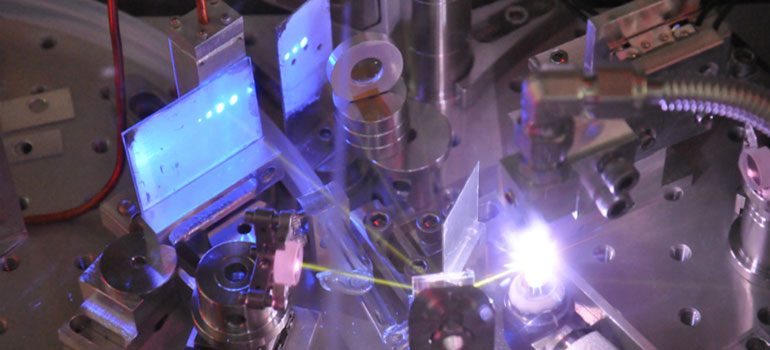
The state-of-the-art, ultrafast laser made possible by the generous support of the Gordon and Betty Moore Foundation.

Researchers at UBC will be able to probe the mysteries of quantum materials with a new state-of-the-art ultrafast laser, thanks to a $1.4 million US grant from the Gordon and Betty Moore Foundation.

UBC physicists Andrea Damascelli and David Jones will use the investment for a one-of-a-kind instrument. It combines a table-top laser that generates ultra-fast flashes of ultraviolet light with a photoelectron spectrometer, a state-of-the-art detector that can probe the motion of electrons in quantum materials.

“This grant enhances UBC’s standing as a world-leading centre for quantum materials research,” said John Hepburn, UBC vice-president, research and international. “This instrument will advance our basic understanding of quantum matter, and move us ever closer to unlocking the incredible potential of new materials to transform our daily lives.”

The instrument will generate femtosecond — one millionth of one billionth of a second (or 1/1,000,000,000,000,000 second) — snapshots of electrons moving inside a range of novel magnets, high-temperature superconductors, and other promising quantum materials.

“This combination of state-of-the-art technologies will enable us to conduct experiments that condensed matter physicists around the world have yearned to perform, but which have remained out of reach with existing instrumentation,” said Damascelli, a professor with the Department of Physics and Astronomy.

“In order to disentangle all relevant electronic interactions within these materials, we require extremely fine-grained measurements of their corresponding timescales.”

UBC is the first Canadian recipient under the Foundation’s Emergent Phenomena in Quantum Systems (EPiQS) Initiative.

More details about the grant can be found here.

BACKGROUND

About the Gordon and Betty Moore Foundation

The Gordon and Betty Moore Foundation believes in bold ideas that create enduring impact in the areas of environmental conservation, patient care and science. Science looks for opportunities to transform–or even create–entire fields by investing in early-stage research, emerging fields and top research scientists. Intel co-founder Gordon and his wife Betty established the foundation to create positive change around the world and at home in the San Francisco Bay Area. Visit us at moore.org or follow us @moorefound

About quantum materials research at UBC

UBC has assembled a strong cluster of research scientists who study quantum structures, quantum materials, and applications for quantum devices. They are supported by strong international collaborations including a formal agreement with the Max Planck Society of Germany. Research topics include transition metal oxides, topological insulators, unconventional superconductors, oxide heterostructures, engineered optical materials and devices at the nanoscale, and many-body electronic structure of solid, surfaces, and interfaces.

About quantum materials

Quantum materials (QM) exhibit a wide range of astonishing electronic and magnetic phenomena that embody the central questions challenging the field of condensed matter physics. The recent advance of femtosecond (fs) laser sources into the ultraviolet region has ushered in a new era in the field. Ultrashort light pulses are also emerging as a unique tool for achieving the all-optical manipulation of the electronic properties of QM on time scales of 10-100 fs, pointing the way toward next-generation ultrafast electronic devices that could switch four orders of magnitude faster than current semiconductor-based devices

.http://news.ubc.ca/2015/05/26/gordon-and-betty-moore-foundation-boosts-ultra-fast-quantum-materials-re-search-at-ubc/

Converting blood stem cells to sensory neural cells to predict and treat pain

Allows for discovering new pain drugs and predicting effects for individual patients
May 25, 2015

Stem-cell scientists at McMaster University have developed a way to directly convert adult human blood cells to sensory neurons, providing the first objective measure of how patients may feel things like pain, temperature, and pressure, the researchers reveal in an open-access paper in the journal Cell Reports.

Currently, scientists and physicians have a limited understanding of the complex issue of pain and how to treat it. “The problem is that unlike blood, a skin sample or even a tissue biopsy, you can’t take a piece of a patient’s neural system,” said Mick Bhatia, director of the McMaster Stem Cell and Cancer Research Institute and research team leader. “It runs like complex wiring throughout the body and portions cannot be sampled for study.

“Now we can take easy to obtain blood samples, and make the main cell types of neurological systems in a dish that is specialized for each patient,” said Bhatia. “We can actually take a patient’s blood sample, as routinely performed in a doctor’s office, and with it we can produce one million sensory neurons, [which] make up the peripheral nerves. We can also make central nervous system cells.”

Testing pain drugs

The new technology has “broad and immediate applications,” said Bhatia: It allows researchers to understand disease and improve treatments by asking questions such as: Why is it that certain people feel pain versus numbness? Is this something genetic? Can the neuropathy that diabetic patients experience be mimicked in a dish?

It also paves the way for the discovery of new pain drugs that don’t just numb the perception of pain. Bhatia said non-specific opioids used for decades are still being used today. “If I was a patient and I was feeling pain or experiencing neuropathy, the prized pain drug for me would target the peripheral nervous system neurons, but do nothing to the central nervous system, thus avoiding addictive drug side effects,” said Bhatia.

“Until now, no one’s had the ability and required technology to actually test different drugs to find something that targets the peripheral nervous system, and not the central nervous system, in a patient-specific, or personalized manner.”

A patient time machine 

Bhatia’s team also successfully tested their process with cryopreserved (frozen) blood. Since blood samples are taken and frozen with many clinical trials, this give them “almost a bit of a time machine” to run tests on neurons created from blood samples of patients taken in past clinical trials, where responses and outcomes have already been recorded.

In the future, the process may have prognostic (predictive diagnostic) potential, explained Bhatia: one might be able to look at a patient with Type 2 Diabetes and predict whether they will experience neuropathy, by running tests in the lab using their own neural cells derived from their blood sample.

“This bench-to-bedside research is very exciting and will have a major impact on the management of neurological diseases, particularly neuropathic pain,” said Akbar Panju, medical director of the Michael G. DeGroote Institute for Pain Research and Care, a clinician and professor of medicine.

“This research will help us understand the response of cells to different drugs and different stimulation responses, and allow us to provide individualized or personalized medical therapy for patients suffering with neuropathic pain.”

This research was supported by the Canadian Institutes of Health Research, Ontario Institute of Regenerative Medicine, Marta and Owen Boris Foundation, J.P. Bickell Foundation, the Ontario Brain Institute, and Brain Canada.


Abstract of Single Transcription Factor Conversion of Human Blood Fate to NPCs with CNS and PNS Developmental Capacity

The clinical applicability of direct cell fate conversion depends on obtaining tissue from patients that is easy to harvest, store, and manipulate for reprogramming. Here, we generate induced neural progenitor cells (iNPCs) from neonatal and adult peripheral blood using single-factor OCT4 reprogramming. Unlike fibroblasts that share molecular hallmarks of neural crest, OCT4 reprogramming of blood was facilitated by SMAD+GSK-3 inhibition to overcome restrictions on neural fate conversion. Blood-derived (BD) iNPCs differentiate in vivo and respond to guided differentiation in vitro, producing glia (astrocytes and oligodendrocytes) and multiple neuronal subtypes, including dopaminergic (CNS related) and nociceptive neurons (peripheral nervous system [PNS]). Furthermore, nociceptive neurons phenocopy chemotherapy-induced neurotoxicity in a system suitable for high-throughput drug screening. Our findings provide an easily accessible approach for generating human NPCs that harbor extensive developmental potential, enabling the study of clinically relevant neural diseases directly from patient cohorts.

Fly-catching robot speeds biomedical research

Good news for overworked graduate students and for researchers of human aging, cancer, diabetes, and other diseases
May 25, 2015

Stanford Bio-X scientists have created a robot that speeds and extends biomedical research with a common laboratory organism — fruit flies (Drosophila).

The robot can visually inspect awake flies and carry out behavioral experiments that were impossible with anesthetized flies. The work is described today (May 25) in the journal Nature Methods.

“Robotic technology offers a new prospect for automated experiments and enables fly researchers to do several things they couldn’t do previously,” said research team leader Mark Schnitzer, an associate professor of biology and of applied physics.

“For example, it can do studies with large numbers of flies inspected in very precise ways.” The group did one study of 1,000 flies in 10 hours, a task that would have taken much longer for even a highly skilled human.

Zap, you’re part of an experiment

When the robot’s fly-snatching apparatus is ready to grab a fly, it flashes a brief infrared blast of light that is invisible to the fly. The light reflects off its thorax, indicating the precise location of each fly and allowing the robot to recognize each individual fly by its reflection pattern. Then, a tiny, narrow suction tube strikes one of the illuminated thoraxes, painlessly sucking onto the fly and lifting it up.

Once the fly is attached, the robot uses machine vision to analyze the fly’s physical attributes, sort the flies by male and female, and even carry out a microdissection to reveal the fly’s minuscule brain. In one experiment, the robot’s machine vision was able to differentiate between two strains of flies so similar they are indistinguishable to the human eye.

Speeding disease research

All this is good news to the legion of graduate students who still spend hours a day looking at flies under a microscope as part of work that continues to uncover mechanisms in human aging, cancer, diabetes and a range of other diseases.

Although flies and humans have obvious differences, in many cases our cells and organs behave in similar ways and it is easier to study those processes in flies than in humans. The earliest information about how radiation causes gene mutations came from fruit flies, as did an understanding of our daily sleep/waking rhythms. And many of the molecules that are now famous for their roles in regulating how cells communicate were originally discovered by scientists hunched over microscopes staring at the unmoving bodies of anesthetized flies.

Now, that list of fruit fly contributions can be expended to include behavioral studies, previously impossible because the humans carrying out the analysis can neither see fly behaviors clearly nor distinguish between individuals.

In their paper, Schnitzer and his team had the robot pick up a fly and carry it to a trackball. Once there, they exposed the fly to different smells and could record how the fly behaved — racing along the trackball to get closer or attempting to turn away.

The work was funded by the W.M. Keck Foundation, the Stanford Bio-X program, an NIH Director’s Pioneer Award, and the Stanford-NIBIB Training Program in Biomedical Imaging Instrumentation.

One step closer to a single-molecule device

One possible route after Moore’s law expires
May 25, 2015

Columbia Engineering researchers have created the first single-molecule diode — the ultimate in miniaturization for electronic devices — with potential for real-world applications in electronic systems.

The diode that has a high (>250) rectification and a high “on” current (~ 0.1 microamps), says Latha Venkataraman, associate professor of applied physics. “Constructing a device where the active elements are only a single molecule … which has been the ‘holy grail’ of molecular electronics, represents the ultimate in functional miniaturization that can be achieved for an electronic device,” he said.

With electronic devices becoming smaller every day, the field of molecular electronics has become ever more critical in solving the problem of further miniaturization, and single molecules represent the limit of miniaturization. The idea of creating a single-molecule diode was suggested by Arieh Aviram and Mark Ratner who theorized in 1974 that a molecule could act as a rectifier, a one-way conductor of electric current.

The future of miniaturization

Researchers have since been exploring the charge-transport properties of molecules. They have shown that single-molecules attached to metal electrodes (single-molecule junctions) can be made to act as a variety of circuit elements, including resistors, switches, transistors, and, indeed, diodes. They have learned that it is possible to see quantum mechanical effects, such as interference, manifest in the conductance properties of molecular junctions.

Since a diode acts as an electricity valve, its structure needs to be asymmetric so that electricity flowing in one direction experiences a different environment than electricity flowing in the other direction. To develop a single-molecule diode, researchers have simply designed molecules that have asymmetric structures.

“While such asymmetric molecules do indeed display some diode-like properties, they are not effective,” explains Brian Capozzi, a PhD student working with Venkataraman and lead author of the paper. “A well-designed diode should only allow current to flow in one direction …  and it should allow a lot of current to flow in that direction. Asymmetric molecular designs have typically suffered from very low current flow in both ‘on’ and ‘off’ directions, and the ratio of current flow in the two has typically been low. Ideally, the ratio of ‘on’ current to ‘off’ current, the rectification ratio, should be very high.”

To overcome the issues associated with asymmetric molecular design, Venkataraman and her colleagues — Chemistry Assistant Professor Luis Campos’ group at Columbia and Jeffrey Neaton’s group at the Molecular Foundry at UC Berkeley — focused on developing an asymmetry in the environment around the molecular junction. They created an environmental asymmetry through a rather simple method: they surrounded the active molecule with an ionic solution and used gold metal electrodes of different sizes to contact the molecule.

Avoiding quantum-mechanical effects

Their results achieved rectification ratios as high as 250 — 50 times higher than earlier designs. The “on” current flow in their devices can be more than 0.1 microamps, which, Venkataraman notes, is a lot of current to be passing through a single-molecule. And, because this new technique is so easily implemented, it can be applied to all nanoscale devices of all types, including those that are made with graphene electrodes.

“It’s amazing to be able to design a molecular circuit, using concepts from chemistry and physics, and have it do something functional,” Venkataraman says. “The length scale is so small that quantum mechanical effects are absolutely a crucial aspect of the device. So it is truly a triumph to be able to create something that you will never be able to physically see and that behaves as intended.”

She and her team are now working on understanding the fundamental physics behind their discovery, and trying to increase the rectification ratios they observed, using new molecular systems.

The study, described in a paper published today (May 25) in Nature Nanotechnology, was funded by the National Science Foundation, the Department of Energy, and the Packard Foundation.


Brain size matters when it comes to survival, researchers say

Brain

Researchers have revealed through a new study that size of the brain is an important factor that governs survival rate with bigger the brain implies better cognitive performance, which logically offers a higher survival potential. Therefore bigger the brain, the researchers say, win out over smaller ones.

Though previous studies have compared intelligence and survival potential of species with large brains versus species with smaller brains, they haven’t been able to show a causal relationship that larger brains do appear to have a survival advantage.

Looking for a causal relationship, four researchers from the Konrad Lorenz Institute of Ethology at the Vetmeduni Vienna studied fish to answer why investing in a larger brain might provide an evolutionary advantage to compensate for the fact that brain mass is very expensive to develop and maintain.

For their research, Alexander Kotrschal, Sarah Zala, Séverine Büchel and Dustin Penn form the institute carried out research on guppies with large and small brains in semi-natural streams. For their study, they aimed to test whether brain size influences survival. Therefore, they released 4,800 guppies from these selection lines into large semi-natural streams, which also contained a natural predator, the pike cichlid.

About half a year later, significantly more guppies with large brains had survived. The researchers suggest that large-brained fish have an advantage that allows them to better evade predation. “We have provided the first experimental proof that a large brain offers an evolutionary advantage,” explains first author Kotrschal, who has since moved on to Stockholm University.

Females with large brains better off

Large-brained females, whose brains were about 12 percent larger than that of the small-brained females, evaded their predators more often and so had a higher rate of survival. Larger brains did not provide any survival benefit for males. Ethologist Sarah Zala explains: “Male guppies are more colourful and more conspicuous than females and are therefore more easily caught by a predator. A larger brain does not appear to compensate this disadvantage.”

“Our findings support the hypothesis that large brains provide a survival benefit under predation pressure,” says co-author Dustin Penn.

The first results also suggest that groups of fish with large or small brains behave differently in the presence of the predatory cichlid. This behaviour merits further study. The researchers also want to know whether surviving fish produce more offspring. Genetic analysis should help provide clarity in this regard.

http://www.techienews.co.uk/9731904/brain-size-matters-when-it-comes-to-survival-researchers-say/

Next iPhone, Mac could have new, Apple-designed font

Apple might change the entire system font on its phones and computers to San Francisco, a typeface it designed for being readable on the tiny Apple Watch screen.

It would mean the company dropping Helvetica Neue on both iOS and Mac OS. Though the 32-year-old Helvetica Neue is well-liked for its aesthetics, it has been criticized for being difficult to read.

But San Francisco was designed with the aim of being clear and readable on any screen type or size. It has rounded features and space between the letters that mean that they can be pushed together without bunching up, and avoids the need for overly thin lines.

As well as making the text more legible, Apple executives hope that the change of font will help refresh the operating systems, according to reports. iOS 9 in particular is expected to focus mostly on improving performance and fixing problems, rather than introducing many new headline features.

If it is heading for iOS devices and Macs, it is likely to be revealed at the Worldwide Developers’ Conference next month. That will see it put inside iOS 9 and OS X 10.11, more features of which are set to be announced at the event.

9to5Mac, which first reported the change in the font, cautioned that the move could be called off before the June event. Changing the font can take some time — all apps, including those made by third-party developers, must be changed and then tested to ensure that the new font doesn’t mess up their functionality.

Helvetica Neue arrived on iOS when it was completely redesigned with iOS 7. It came to Mac OS last year, with the release of OS X Yosemite.

San Francisco was the first typeface designed by Apple for more than 20 years. At the time of its reveal on the Apple Watch last year, many said straight away that it also worked very well on Mac computers with retina displays.

The company has already started using it on products that aren’t the Apple Watch. The new MacBook uses the font on its keyboard, breaking with its traditional use of “Vag Rounded”, which has been on Apple keyboards since 1999. http://timesofindia.indiatimes.com/tech/tech-news/Next-iPhone-Mac-could-have-new-Apple-designed-font/articleshow/47418409.cms

Can abusers break their patterns?

An article on batterer intervention programs includes comments by UBC psychologist Donald Dutton, who says alternative treatment programs such as the model developed in Duluth, Minnesota, could be “ignorant of psychology of abuse.”

Dutton’s research suggests that violence isn’t embedded in the general culture but stems instead from an individual’s psychology.

http://news.ubc.ca/2015/05/25/can-abusers-break-their-patterns/

Appropriate, affordable seniors housing urgently needed

Vancouver Sun columnist Daphne Bramham writes about the need for better housing policies for the elderly. She mentions a study led by Penny Gurstein, director of UBC’s school of community and regional planning, which noted how free-enterprise bastions Singapore and Hong Kong provide extensive support for public housing.

http://news.ubc.ca/2015/05/25/appropriate-affordable-seniors-housing-urgently-needed/