http://www.businessinsider.com/harvard-psychologist-amy-cuddy-on-presence-and-success-2016-2

A Harvard psychologist says your success in any situation hinges on 3 things

Harvard psychologist Amy Cuddy is perhaps best known as the creator of the “power pose.”

As she described in her 2012 TED Talk, power-posing is about taking advantage of the body-mind connection: You adopt the body language of powerful people so that you feel and act more confident.

But power posing is just one path to a state of calm self-confidence that will help you succeed in challenging situations. That state, which Cuddy calls “presence,” is the subject of her new book by the same name.

Cuddy defines presence as being attuned to and able to express your full potential. When you’re present, you approach challenges without a sense of threat.

Whether you’re interviewing for a job or pitching your startup, people can tell right away if you’re present, and they judge you more positively when you are.

In an interview with Business Insider, Cuddy said there are three things people see when you’re present:

1. You believe your story

When you’re present, you demonstrate conviction and passion so that other people come to believe your story, too.

In the book, Cuddy describes a yet-unpublished study she conducted, in which participants went through mock interviews. For five minutes, they had to persuade the interviewer that they were the best person for the job, while being completely honest. All the while, the interviewer held a completely neutral expression.

Three independent pairs of judges watched videos of the interviews, looking for presence, believability, and hireability. Sure enough, the interviewees who were rated more present were also rated more believable and more hireable.

Cuddy writes: “Presence mattered to the judges because it signaled authenticity, believability, and genuineness; it told the judges that they could trust the person, that what they were observing was real.”

confident presentation public speakingJon Gosier/Flickr“A truly confident person does not require arrogance.”

2. You’re confident without being arrogant

In the book, Cuddy quotes a venture capitalist describing what turns him off during an entrepreneur’s pitch: “They’re too high energy and aggressive, maybe a little pushy. It seems defensive, I don’t expect them to have all the answers. Actually, I don’t want them to have all the answers.”

Being open to feedback is key, Cuddy told Business Insider. The more you shut down other people and their perspectives, the less appealing you become. That’s because it can seem like you’re trying to cover up a sense of uncertainty.

“A truly confident person does not require arrogance, which is nothing more than a smoke screen for insecurity,” Cuddy writes. “A confident person can be present to others, hear their perspectives, and integrate those views in ways that create value for everyone.”

3. Your verbal and nonverbal communication is in sync

When we’re being inauthentic — or when we’re intentionally deceiving someone — Cuddy said our verbal and nonverbal communication is incongruent.

In the book, she explains that’s because you’re constantly trying to adjust what you’re saying and doing to create the impression you think others want to see.

On the other hand, when we’re present, our verbal and nonverbal behavior matches. People aren’t distracted trying to figure out why something feels “off,” and they’re more likely to put their trust in you.

Ultimately, if you’re confident in yourself, other people will be more likely to be confident in you, too. It doesn’t necessarily mean you’ll get the job or the investor’s money, but you’ll walk away knowing that you did the best you could — and the right opportunity for you is out there.

Parallella: The Most Energy Efficient Supercomputer on the Planet – Ray Hightower of WisdomGroup

Published on Aug 24, 2015

Slides: http://rayhightower.com/blog/2015/08/…

Parallella is a single-board computer roughly the size of a credit card or Raspberry Pi. Parallella runs Linux. It has 18 cores (2 ARM, 16 RISC) and you can buy it online for about $150. This presentation tells why we care about parallelism and briefly shows how parallel execution differs from serial.

Presented at Madison+ Ruby on August 22, 2015.
Presented by Ray Hightower of WisdomGroup.

http://phys.org/news/2016-02-artificial-exciplexes-possibilities-electronics.html

Artificial control of exciplexes opens possibilities for new electronics
February 26, 2016
Artificial control of exciplexes opens possibilities for new electronics
This schematic shows the basic structure of an exciplex-based OLED with emission color and efficiency that can be controlled simply by changing the spacer thickness. An exciplex forms when a hole in the highest occupied molecular orbital …more
Demonstrating a strategy that could form the basis for a new class of electronic devices with uniquely tunable properties, researchers at Kyushu University were able to widely vary the emission color and efficiency of organic light-emitting diodes based on exciplexes simply by changing the distance between key molecules in the devices by a few nanometers.

This new way to control electrical properties by slightly changing the device thickness instead of the materials could lead to new kinds of organic electronic devices with switching behavior or light emission that reacts to external factors.
Organic electronic devices such as OLEDs and organic solar cells use thin films of organic molecules for the electrically active materials, making flexible and low-cost devices possible.
A key factor determining the properties of organic devices is the behavior of packets of electrical energy called excitons. An exciton consists of a negative electron attracted to a positive hole, which can be thought of as a missing electron.
In OLEDs, the energy in these excitons is released as light when the electron loses energy and fills the vacancy of the hole. Varying the exciton energy, for example, will change the emission color.
However, excitons are commonly localized on a single organic molecule and tightly bound with binding energies of about 0.5 eV. Thus, entirely new molecules must usually be designed and synthesized to obtain different properties from these Frenkel-type excitons, such as red, green, or blue emission for displays.
Researchers at Kyushu University’s Center for Organic Photonics and Electronics Research (OPERA) instead focused on a different type of exciton called an exciplex, which is formed by a hole and electron located on two different molecules instead of the same molecule.
By manipulating the molecular distance between the electron-donating molecule (donor) and the electron-accepting molecule (acceptor) that carry the exciplex’s hole and electron, respectively, the researchers could modify the properties of these weakly bound excitons.
“What we did is similar to placing sheets of paper between a magnet and a refrigerator,” said Associate Professor Hajime Nakanotani, lead author of the paper reporting these results published online February 26, 2016, in the journal Science Advances.
“By increasing the thickness of an extremely thin layer of organic molecules inserted as a spacer between the donor and acceptor, we could reduce the attraction between the hole and electron in the exciplex and thereby greatly influence the exciplex’s energy, lifetime, and emission color and efficiency.”
Indeed, the changes can be large: by inserting a spacer layer with a thickness of only 5 nm between a donor layer and an acceptor layer in an OLED, the emission color shifted from orange to yellowish green and the light emission efficiency increased 700%.
For this to work, the organic molecule used for the spacer layer must have an excitation energy higher than those of the donor and acceptor, but such materials are already widely available.
While the molecular distance is currently determined by the thickness of the vacuum-deposited spacer layer, the researchers are now looking into other ways to control the distance.
“This gives us a powerful way to greatly vary device properties without redesigning or changing any of the materials,” said Professor Chihaya Adachi, director of OPERA. “In the future, we envision new types of exciton-based devices that respond to external forces like pressure to control the distance and electrical behavior.”
In addition, the researchers found that the exciplexes were still formed when the spacer was 10 nm thick, which is long on a molecular scale.
“This is some of the first evidence that electrons and holes could still interact like this across such a long distance,” commented Professor Adachi, “so this structure may also be a useful tool for studying and understanding the physics of excitons to design better OLEDs and organic solar cells in the future.”
“From both scientific and applications standpoints, we are excited to see where this new path for exciton engineering takes us and hope to establish a new category of exciton-based electronics.”
Explore further: New technique helps probe performance of organic solar cell materials
Journal reference: Science Advances
Provided by: Kyushu University, OPERA


http://www.newsweek.com/indoor-solar-cells-made-possible-moth-eye-graphene-breakthrough-430827

‘MOTH EYE’ GRAPHENE BREAKTHROUGH COULD CREATE INDOOR SOLAR CELLS

graphene indoor solar cell university of surrey moth eyes
Researchers studied the eyes of moths to create sheets of graphene they claim to be the most light-absorbent material ever created.UNIVERSITY OF SURREY

A scientific breakthrough with the “wonder material” graphene has opened up the possibility of indoor solar cells that capture energy from indirect sunlight, as well as ambient energy from household devices.

Researchers from the University of Surrey in the U.K. studied the eyes of moths to create sheets of graphene that they claim is the most light-absorbent material ever created. The energy capture method could be used to power Internet of Things (IoT) devices, such as smart clothing, wearables and smart wallpaper.

“We realized that the moth’s eye works in a particular way that traps electromagnetic waves very efficiently,” Professor Ravi Silva, head of the Advanced Technology Institute at the University of Surrey, tells Newsweek . “As a result of our studies, we’ve been able to mimic the surface of a moth’s eye and create an amazingly thin, efficient, light-absorbent material made of graphene.”

“For many years people have been looking for graphene applications that will make it into mainstream use,” Silva says. “We are finally now getting to the point where these applications are going to happen. We think that with this work that is coming out, we can see an application very close because we’ve done something that was previously thought impossible: optimizing its incredible optical properties.

“Organic solar cells are based on polymers and these only really capture energy from the visible range. Now with the materials we have, it transcends all of that by being able to absorb over a much larger range. What we need to do is come up with a technology that allows you to use that efficiently, such as rectennas.”

Rectennas—or rectifying antennas—are a special type of antenna that can convert electromagnetic energy into direct current (DC) electricity. First conceived in 1964, Silva says rectennas are yet to realize their real-world potential.

Combined with Silva’s graphene breakthrough, rectennas would be able to efficiently capture and convert energy from ambient microwave and radio frequencies from household devices, such as smartphones, computers and lightbulbs. This scavenged energy could then be used to power smart sensors and IoT devices without the need for batteries or wired connectivity.

The research is published in Science Advances.

http://canadajournal.net/science/researchers-build-model-biological-supercomputer-43644-2016/

Researchers build model biological supercomputer

An international team of scientists led by Prof. Nicolau, the Chair of the Department of Bioengineering at McGill, have designed and built a model biological supercomputer powered by adenosine triphosphate, or ATP — a biochemical sometimes called a “molecular unit of currency” because it enables the transfer of energy inside cells.

“We’ve managed to create a very complex network in a very small area,” says Dan Nicolau, Sr. with a laugh. He began working on the idea with his son, Dan Jr., more than a decade ago and was then joined by colleagues from Germany, Sweden and The Netherlands, some 7 years ago. “This started as a back of an envelope idea, after too much rum I think, with drawings of what looked like small worms exploring mazes.”

The model bio-supercomputer that the Nicolaus (father and son) and their colleagues have created came about thanks to a combination of geometrical modelling and engineering knowhow (on the nano scale). It is a first step, in showing that this kind of biological supercomputer can actually work.

The circuit the researchers have created looks a bit like a road map of a busy and very organized city as seen from a plane. Just as in a city, cars and trucks of different sizes, powered by motors of different kinds, navigate through channels that have been created for them, consuming the fuel they need to keep moving.

More sustainable computing

But in the case of the biocomputer, the city is a chip measuring about 1.5 cm square in which channels have been etched. Instead of the electrons that are propelled by an electrical charge and move around within a traditional microchip, short strings of proteins (which the researchers call biological agents) travel around the circuit in a controlled way, their movements powered by ATP, the chemical that is, in some ways, the juice of life for everything from plants to politicians.

Because it is run by biological agents, and as a result hardly heats up at all, the model bio-supercomputer that the researchers have developed uses far less energy than standard electronic supercomputers do, making it more sustainable. Traditional supercomputers use so much electricity, that they heat up a lot and then need to be cooled down, often requiring their own power plant to function.

Moving from model to reality

Although the model bio supercomputer was able to very efficiently tackle a complex classical mathematical problem by using parallel computing of the kind used by supercomputers, the researchers recognize that there is still a lot of work ahead to move from the model they have created to a full-scale functional computer.

“Now that this model exists as a way of successfully dealing with a single problem, there are going to be many others who will follow up and try to push it further, using different biological agents, for example,” says Nicolau. “It’s hard to say how soon it will be before we see a full scale bio super-computer. One option for dealing with larger and more complex problems may be to combine our device with a conventional computer to form a hybrid device. Right now we’re working on a variety of ways to push the research further.”

What was once the stuff of science fiction, is now just science.

Agencies/Canadajournal

http://www.delhidailynews.com/news/Apple-Watch-2-release-date–design-and-specs-rumors–Will-Apple-Watch-2-have-an-ARM-Cortex-A32-processor-1456546429/

Washington: While reports have indicated that Apple Watch 2 will be announced at an Apple-hosted event in March 2016, but that might not be the case. The release date of Apple Watch 2 has been pushed back until September 2016 and is said to be launched alongside the iPhone 7, with the March event instead focused on the iPhone 6c (or iPhone 5se) along with the iPad Air 3.

The Cupertino-based firm is preparing a host of new straps for its smartwatch. A source has claimed that the update will include a handful of new colors for the Sports Bands along with additional colors of Apple’s latest collection, the Hemes bands.

The company is exploring more variations of the Apple Watch, beyond the Steel, Sports and Edition tiers available with the first-gen Apple Watch. Apple is planning to introduce new models that should sit between the most expensive steel Apple Watch (?949) and the cheapest Apple Watch Edition (?8,000).

Apart from updating the body of Apple Watch in its second-generation device, it seems the company might be introducing a new multi-function band alongside it. Recently, Apple filed an interesting patent by the name of “Magnetic Wristband,” and details a magnetic wristband for the Apple Watch that offers additional functionality. According to the patent, the magnetic wristband will include a set of magnets embedded into it, allowing the two sides to join together.

The strap could be wrapped around the watch, which would suspend the screen in the middle of the straps, ideal for protection when being transported or stored. It could also double up as a stand (ideal for Apple’s nightstand mode) as it’s been designed to roll up behind the Watch, propping it up.

ARM has revealed a brand new design for an ultra-tiny CPU built specifically for wearables such as Apple Watch and we want the ARM Cortex A32 in the next-generation Apple Watch 2.

The A32 provides better battery life, with lower power usage and faster performance. It’s up to 25 percent quicker than the current ARM offering, and it achieves this while reducing power consumptions.

The Cortex-A32 processor integrates new power management features compared to Cortex-A7 and Cortex-A5 processors, thus providing more capabilities for embedded applications that require minimal idle power consumption.

The company is planning to add a FaceTime video camera to the second-generation watch, which will allow users to make and receive FaceTime calls via their wrists.

The Apple Watch can only support activity tracking, mobile payments and music playback without a paired iPhone, with many other features including emailing, text messaging and using third-party apps impossible without an iPhone for the Apple Watch to communicate with.

The company is working with Samsung and LG to produce thinner OLED displays for the watch to accommodate a larger battery. The larger battery should provide the Apple Watch 2 with a longer battery life.

http://news.mit.edu/2016/congressional-testimony-shoemaker-ligo-0226

Testimony: LIGO has “cracked open” a new window to the universe

MIT’s David Shoemaker testifies before Congress on the significance of LIGO.

LIGO’s recent detection of gravitational waves marks the beginning of a new era for astrophysics, and further insights into black holes, neutron stars, supernovae, and other phenomena are expected before long, MIT LIGO Laboratory Director David Shoemaker told members of Congress this week.

Shoemaker, who is also a senior research scientist at the MIT Kavli Institute for Astrophysics and Space Research, was part of a panel that briefed the House Committee on Science, Space, and Technology on the LIGO effort and how it is expected to benefit science and innovation in the future.

He was joined at the Feb. 24 event by Fleming Crim, assistant director for the National Science Foundation’s Directorate of Mathematical and Physical Sciences; David Reitze, executive director of LIGO at Caltech; and Gabriela Gonzáles, a professor of physics and astronomy at Louisiana State University and spokesperson for the LIGO Scientific Collaboration. The hearing was attended by 21 Committee members, who expressed strong bipartisan interest in LIGO.

“The window to this new world of gravitational waves has just been cracked open,” Shoemaker said. “As we open it wider and more and more people look out on the landscape, we will be rewarded with discoveries that will, time and time again, give us all — scientists, leaders, and laypersons — a thrill of understanding of things much bigger than ourselves.”

Gravitational waves will allow researchers to “see” events that produce signals that cannot be seen any other way, he explained. And by combining gravitational wave data and data from traditional instruments, researchers will be able to test theories about fundamental components of the cosmos. These include supernovae, whose explosions modelers still have not managed to simulate, according to Shoemaker, and neutron stars, objects so dense that a teaspoon of their matter would weigh 10 million tons on Earth.

Watch the committee hearing.

House Committee on Science, Space, and Technology

“There will certainly be surprises. Every time we open up a new window to the universe, we see new things, and we’re surprised every time,” he said.

The rate of new observations should accelerate as the sensitivity of LIGO’s detectors is improved — they currently operate at one-third their potential sensitivity — and as detectors in other countries, such as the Virgo interferometer in Italy, come online, Shoemaker said.

“With three detectors you can do a great deal more science; you can see where the source is in the sky and you can get an idea of what the polarization nature is. It will really add to what we can learn,” Shoemaker said. “It leverages our investment to have…these other projects that are coming along behind us but will supplement the science we can do and will complement the science we get from our own detectors. We are the leaders but with these other observatories we will have a worldwide, global cooperation that will bring us all forward in science.”

After their remarks, the panelists fielded questions from the committee members, including one about the practical applications of LIGO technology. Shoemaker and his colleagues offered multiple examples; the technology involved in LIGO’s powerful, stable lasers, for instance, can also benefit high-end communications, time-keeping, and navigation.

LIGO has also trained a new talent base on the leading edge of science and technology, the panelists said, noting the large number of students and early-career scientists who worked on the project and have since been hired by employers as diverse as genomics companies and the Department of Defense.

http://www.theregister.co.uk/2016/02/26/raspberry_pi_3/

Raspberry Pi 3 to sport Wi-Fi, Bluetooth LE – first photos emerge

Details, snaps of latest addition to tiny-puter family turns up in FCC docs

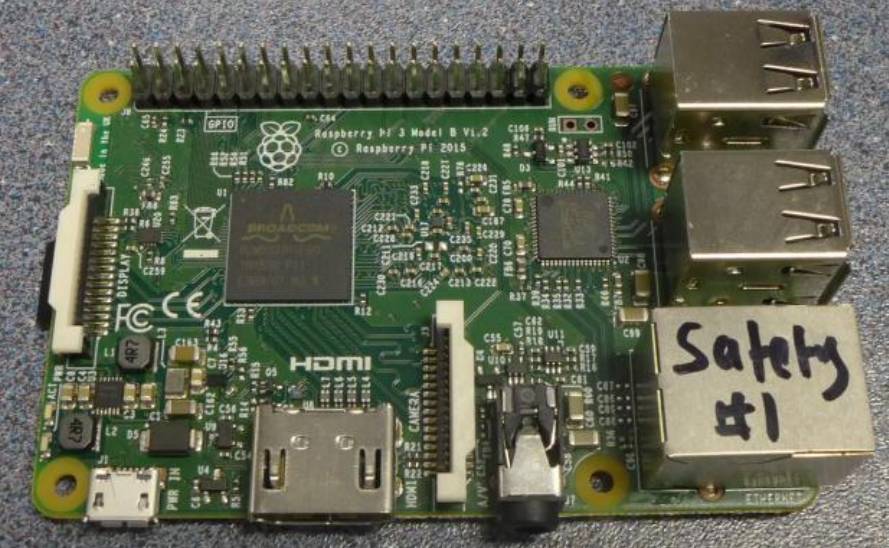
Pics A Raspberry Pi 3 with onboard Wi-Fi, Bluetooth and Bluetooth Low Energy (LE) support has emerged today.

The Model B Raspberry Pi 3 will be the first in the family of tiny cheap-and-cheerful ARM-powered computers to feature builtin wireless networking. For previous models, owners have had to make do with wired Ethernet, USB Wi-Fi adapters, or Ethernet-to-wireless gadgets. Having wire-free networking built into the little single-board computer will be a boon.

Confirmation of the Pi 3’s existence comes from these lab results submitted by the Raspberry Pi Foundation to US communications watchdog the FCC. The documents show the new hardware complies with radio standards, and the regulator has approved the device for use.

The Model B’s schematics, block diagrams, parts lists, and other blueprints have been withheld from public view at the request of the Raspberry Pi designers, so the exact specifications of the new system aren’t yet known. More details are expected to be revealed next week.

From the submitted dossier, the Model B will use a single chip antenna. The hardware was tested in Hull, UK.

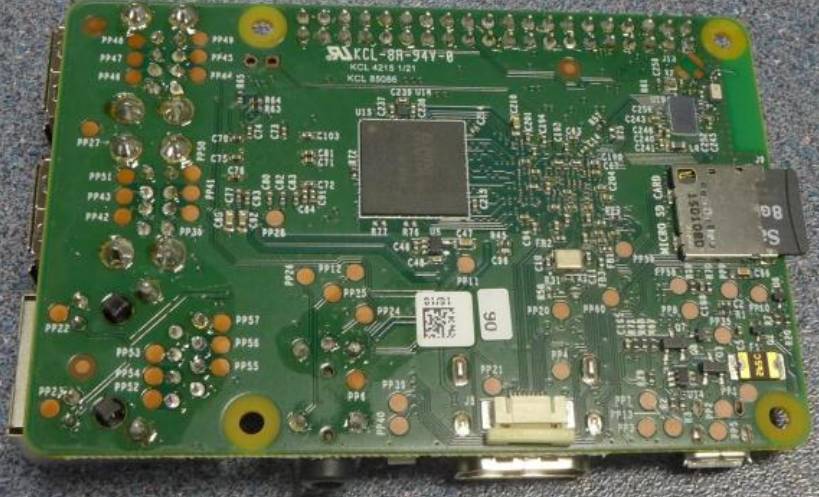
The Pi 3 Model B otherwise looks pretty much like 2015’s quad-core 32-bit ARM Cortex-A7-basedRaspberry Pi 2: it sports a familiar Broadcom system-on-chip, HDMI port, SD card slot, wired Ethernet socket, and 40 general-purpose IO pins, all in a credit-card form factor.

Here are some photos of the new hardware:

Click to enlarge either photo

A spokesperson for the Raspberry Pi Foundation declined to comment.

The Brit-designed Pi first hit the scene in 2011 as an affordable computer to kickstart interest in programming and technology among kids and adults. Since then the hardware has undergone several revisions, although never exceeding a price tag of about $35 (£25). ®

http://learnbonds.com/127246/want-a-tesla-model-3-heres-everything-youll-need-to-know-tsla/

Want a Tesla Model 3? Here’s Everything You’ll Need to Know

However, those cars have high price tags that takes them beyond the reach of the average car buyer. This has made Tesla Motors appear to some as a maker of toys for the rich. With the Model 3, Tesla can prove that is serious about bringing electric cars to the average driver.

The car will be introduced next month and if you want one you’ll need to get in line to make a deposit – but you won’t get your Model 3 for at least a year.

What can you expect from the Model 3?

The Model 3 will be unveiled at an upcoming event in March but Tesla Motors (NASDAQ:TSLA)has hinted that the car will not be fully unveiled at the event. Nonetheless, we can expect the Model 3 to be a sedan about the same size as an Audi A4. The firm’s CTO JB Straubel made the revelation last Thursday during the IHS Energy CERAWeek in Houston. Straubel also notes that the Model 3 “will surprise people with the level of features it includes.”

To see a list of high yielding CDs go here.

However, Musk has said that the Model 3 is “meant to be a slightly smaller version of the Model S… and it won’t have quite as many bells and whistles.” Hence, you should not be surprised if the Model 3 doesn’t come to the market with the autopilot feature. However, you might be able to get options for the autopilot feature for Model 3 version with a higher price tag.

We expect the Model 3 to have a range of about 200 miles. More so, the car will debut the third auto platform from Tesla Motors because the firm had to build the car from the ground up. Straubel notes that “For better or worse, most of the Model 3 has to be new… “It’s a new battery architecture, it’s a new motor technology, brand new vehicle structure. It’s a lot of work.”

How much will a Model 3 cost?

Tesla CEO Elon Musk hinted that the Model 3 would cost $35,000. Last year, he said, “When I say $35,000, I’m talking about without any credits.” However, some folks have hinted that Tesla might not find it easy to sell the Model 3 at $35,000 because of Elon Musk’s penchant for filling his cars with bells and whistles.

Tesla Motors has cleared the air on the cost of the Model 3 and buyers can certainly expect the Model 3 to debut with a $35,000 sticker price. Tesla spokeswoman, Khobi Brooklyn was quoted saying, “We can confirm it’s $35,000 before incentives…We haven’t changed our minds.”

The Model 3 hits a sweet spot

The $35,000 price tag positions the Model 3 at the sweet price spot for massive car sales in the U.S., helping Tesla to reach its goal of 500,000 cars by 2020. Reports from the automobile market indicate that the average price of new cars sold in the U.S. is $31,000. Federal and state tax incentives will further reduce the cost of the Model 3 and encourage the widespread adoption of the Model as a mass market EV.

Mass-Market Cars Need Mass Market Prices

2016-02-27 07.34.30 am

Tesla Motors Inc (NASDAQ:TSLA)‘s decision to price the Model 3 around the mass-market price is not a fluke; rather, it merges smoothly with Elon Musk’s master plan for disrupting the automobile world with EVs. Elon Musk has laid out a grand master plan for Tesla Motors to dominate the auto industry. In 2006, Musk said,

“our long term plan is to build a wide range of models, including affordably priced family cars… The strategy of Tesla is to enter at the high end of the market, where customers are prepared to pay a premium, and then drive down market as fast as possible…  I can say that the second model will be a sporty four door family car at roughly half the $89k price point of the Tesla Roadster and the third model will be even more affordable… When someone buys the Tesla Roadster sports car (Model S, Model X), they are actually helping pay for development of the low cost family car”.

Related…   Can the Tesla Motors (TSLA) Model 3 Help Solve Automakers Troubles?

Now, Tesla’s low cost family car is here and it costs $35,000. Nonetheless, , the $35,000 sticker price might be the price of a base version of the Model 3 – add-ons, trims, and options might significantly raise the price tag. However, $35,000 before tax incentives should buy you a Model 3 that will take you from point A to point B.

These are the best states to buy a Model 3

Buyers of electric cars qualify for some tax breaks as part of efforts by the government to encourage the adoption of cleaner energy sources in a bid to reduce our carbon footprint and pollution of the earth.  The IRS notes that “the Emergency Economic Stabilization Act of 2008 (EESA) and the American Recovery and Reinvestment Act of 2009 (ARRA)” has created two classes of tax credits for electric cars.

The Model 3 qualifies for federal tax credits up to $7500 because it meets the requirements for Federal Electric Vehicle Tax Credit. The Federal Government offers up to $7500 in tax credits on EVs such as the Model 3; hence, you’ll be buying the Model 3 for $27,500 if you qualify the federal tax breaks alone. Some states also offer tax incentives in addition to the Federal tax credit of $7500.

Pennsylvania offers $2000 rebates on EVs but there’s no telling if the state will renew the rebates when the first round ends

If you live in Massachusetts, you can get an extra $2,500 in tax credits from the state when you buy a Model 3 before the program ends in 2017.

Michigan bans the direct sales of Tesla’s cars but if the state changes its mind about Tesla tomorrow, you’ll get an extra $2,500 tax rebate in addition to the $7,500 tax break.

It appears that Texas has ended its $2,500 tax rebate for EVs but you can contact your representative to find out if the state plans to renew the program.

Maryland offers the buyers of electric cars excise tax credit of $3,000 as the state seeks to remove pollution from its roads.

Louisiana is also playing nice to buyers of EV—you might not find it easy to make heads or tail of the complex wordings of Louisianan tax breaks, but it appears that the state will give you a $3,000 tax relief on a Model 3.

South Carolina offers you the equivalent of 20% of the Federal tax incentives – you get an additional $1500 in addition to the $7500 Federal tax credit when you buy a Model 3.

You’ll get an extra $5000 in tax credits from California; hence, buyers in California will buy the Model 3 for about $22,000.

Lots of debate and political wrestling gave birth to the impressive tax credits of $5000 that you can get when you buy a Model 3 in Georgia – it isn’t clear though if the generous tax breaks will continue in the coming years.

Colorado gives out a massive $6,000 in tax credits in addition to the Federal tax credit. Buyers of the Model 3 in Colorado will have the best deal because a Model 3 will set them back $21,500 after tax breaks.

Buy a Model 3 now while it’s cheap

From the foregoing, it is obvious that the Model 3 will be insanely affordable as Tesla Motors(NASDAQ:TSLA) positions it as an easy entry point into the world of EVs. The federal and state tax incentives also provide buyers with more reason to buy the Model 3 over comparable rivals that run on fossil fuels. However, the tax breaks for electric vehicles will not last indefinitely.

Some states have limited their incentives to for the first 200,000 units of the cars sold and other states have started phasing out the tax breaks on electric vehicles. Tesla will start taking preorders for the Model 3 by March 31 – and you can order your Model 3 with a  deposit of $1000 as soon as the Model 3 configuration utility is live.

The Model 3 will go into production sometime in 2017 with deliveries beginning later in the year.

http://www.kurzweilai.net/a-practical-solution-to-mass-producing-low-cost-nanoparticles

A practical solution to mass-producing low-cost nanoparticles

February 26, 2016

Nanoparticles form in a 3-D-printed microfluidic channel. Each droplet shown here is about 250 micrometers in diameter, and contains billions of platinum nanoparticles. (credit: Richard Brutchey and Noah Malmstadt/USC)

USC researchers have created an automated method of manufacturing nanoparticles that may transform the process from an expensive, painstaking, batch-by-batch process by a technician in a chemistry lab, mixing up a batch of chemicals by hand in traditional lab flasks and beakers.

Consider, for example, gold nanoparticles. Their ability to slip through the cell’s membrane makes them ideal delivery devices for medications to healthy cells, or fatal doses of radiation to cancer cells. But the price of gold nanoparticles at $80,000 per gram, compared to about $50 for pure raw gold goes.

The solution, published in an open access paper in Nature Communications on Feb. 23, is microfluidics — manipulating tiny droplets of fluid in narrow channels. The team 3D-printed tubes about 250 micrometers in diameter, possibly the smallest, fully enclosed 3D printed tubes anywhere.

Droplet formation for stable parallel microreactors (credit: Carson T. Riche et al./Nature Communications)

Then they built a parallel network of four of these tubes, side-by-side, and ran a combination of two non-mixing fluids (like oil and water) through them. As the two fluids fought to get out through the openings, they squeezed off tiny droplets. Each of these droplets acted as a microscale chemical reactor in which materials were mixed and nanoparticles were generated. Each microfluidic tube can create millions of identical droplets that perform the same reaction.

This sort of exotic process has been envisioned in the past, but its hasn’t been able to be scaled up because the parallel structure meant that if one tube got jammed, it would cause a ripple effect of changing pressures along its neighbors, knocking out the entire system.

The researchers bypassed this problem by altering the geometry of the tubes themselves, shaping the junction between the tubes such that the particles come out a uniform size and the system is immune to pressure changes.

The work was supported by the National Science Foundation.


USC | Nanoparticle Production


Abstract of Flow invariant droplet formation for stable parallel microreactors

The translation of batch chemistries onto continuous flow platforms requires addressing the issues of consistent fluidic behaviour, channel fouling and high-throughput processing. Droplet microfluidic technologies reduce channel fouling and provide an improved level of control over heat and mass transfer to control reaction kinetics. However, in conventional geometries, the droplet size is sensitive to changes in flow rates. Here we report a three-dimensional droplet generating device that exhibits flow invariant behaviour and is robust to fluctuations in flow rate. In addition, the droplet generator is capable of producing droplet volumes spanning four orders of magnitude. We apply this device in a parallel network to synthesize platinum nanoparticles using an ionic liquid solvent, demonstrate reproducible synthesis after recycling the ionic liquid, and double the reaction yield compared with an analogous batch synthesis.