Tesla’s bioweapon mode is a stroke of genius for developing markets
Tesla today shared details of how effective its particulate filters are. Spoiler alert: They are sogood, not only do they clean up the air inside the car, they make the world outside the carcleaner, too. It may not be obvious why this matters: The company is aiming squarely at avery specific type of customer, which may be the company’s way into markets like China andIndia.
Let’s be frank for a second: Cabin air filters are nothing new; they’ve been rolled out in luxurycars since the late 1970s, and across a broader number of vehicles from the mid 1980sonward. HEPA filters in cars are more novel, not least because for this level of filtration towork, the car must be pretty air-tight to begin with, which traditionally hasn’t been a priorityin automotive design.
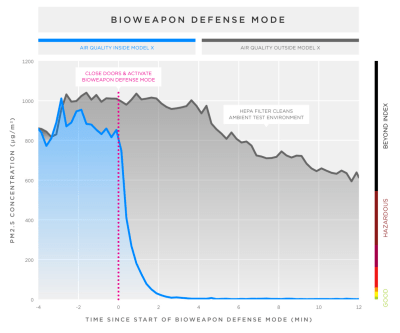
Tesla’s Bioweapon Defense mode is able toscrub a near-lethal dose of pollution down tountraceable in a matter of minutes. Impressive.Note also that the pollution level outside thecar dropped significantly.
It’s hard to see adding HEPA filtersin the first place, but can adding alayer of one-upmanship on top ofthat with a Bioweapon DefenseMode button be seen as anythingother than a spectacular PR stunt?What nobody seems to have doneso far is ask why Tesla is makingsuch a big deal out of it.
The Tesla blog post offers somehints of the most obvious kind.Talking about bioweapons is a wayto catch the headlines (just look upthere! I fell for it, too!), but the realtalking point is that by usingindustrial-grade particulate filters,the Tesla Model S and Model X arespectacularly well-suited for use inenvironments where pollution is offthe charts.
Of course, the current Tesla models are a lot of things, but one thing they ain’t is cheap.
Put the two together, and you get a Venn diagram of Tesla’s target audience here: People whohave access to significant amounts of money and who suffer from tremendous amounts ofpollution.
Pollution is a global problem not equally distributed
Around 7 percent of the top 1,000 most-polluted cities in the world are in the U.S., which isthe first piece of the puzzle: Creating cars that are particularly well-designed for your homemarket is just common sense — especially if you’re an electric car company who inherentlyhas a horse in the race when it comes to making a statement about pollution.
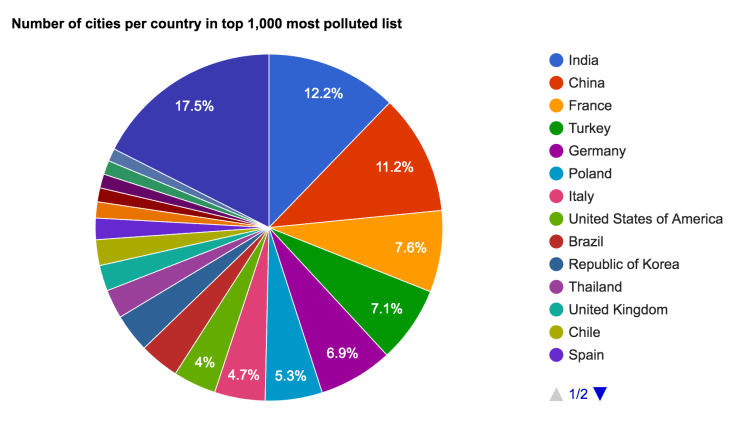
Looking at the rest of the data is far more interesting, however, and offers some clues as towhy this matters to the car manufacturer: India, China, Turkey, France and Germany allfeature heavily in the top 1,000, and, while not all markets are equally affluent (average GDPper capita varies wildly between these countries), there is no denying there is a large numberof people who can afford — and do buy — luxury cars in all these countries.
If we’re looking just at the countries that suffer from the most severe amounts of pollution,the data changes dramatically. In the graph below, I’m looking only at cities that areregistering at above the WHO’s recommended 25 µg/m³ in the “most polluted” data.
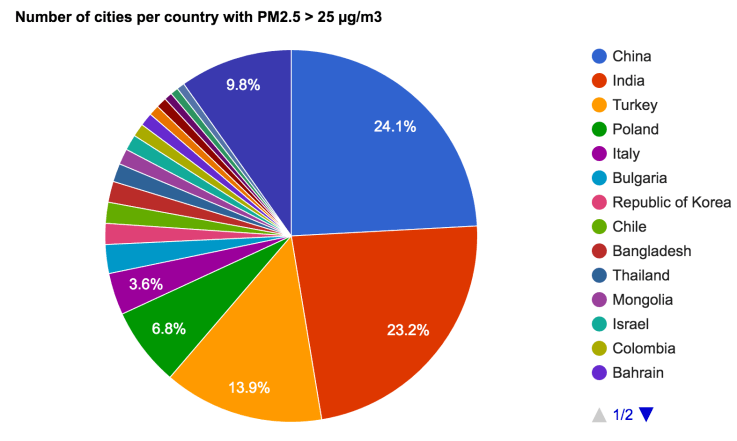
It comes as no surprise that pollution has a choke-hold on China’s economy, with a recentreport suggesting that a staggering 6.5 percent of the country’s GDP is being spent onpollution-related costs.
India is also struggling tremendously; the country has the dubious honor of claiming 13 of the20 slots in the top most-polluted cities in the world. Only today, a 20-minute documentaryentitled Death By Breath was released, exploring just how bad the air quality is in cities likeDelhi, Patna and Gwalior.
What’s interesting about both of these markets is that they may just be perfect target marketsfor the sort of thing Tesla is trying to accomplish.
I believe that thinking “Hey, the HEPA filters make Tesla great for polluted places” is the wrongway of looking at it: It’s the other way around. Tesla was looking at the markets where it wantsto make a huge splash, and added the advanced filtration precisely because these markets arestruggling with severe pollution problems.
Tesla is going to sell so many cars
As I mentioned, HEPA filters in cars are nothing new, but the marketing around them hasusually been subtle and understated, not to mention slightly negated by the fact that thatgiant, gas-chugging SUV you are driving may well have the cleanest passenger compartmentin the world, but you’re still driving around and being part of the problem. By being a purelyelectric car company, Tesla is able to take the high road and offer something unique to anemerging class of wealthy individuals: People who care both about the air they breathe andabout not being part of the problem.
In the world of luxury cars, Tesla is priced relatively averagely: There are a lot of different carsto choose from in this segment, and having a strong differentiating factor will make atremendous different. Being an EV is only a small part of the appeal, doubly so in marketssuch as Beijing, Hong Kong, Delhi and Doha, where the Venn diagram of rampant pollutionand concentrated wealth are at their peak.
 Bruce's Blog