BUILD YOUR OWN RASPBERRY PI TERRARIUM CONTROLLER
Tom Bennet grows Nepenthes, tropical carnivorous plants that I know by the nameof pitcher plants. To stay healthy they need a temperature- and humidity-controlledenvironment, and Tom ensures this by housing them in a terrarium controlled by aRaspberry Pi 3 and Energenie’s Pi-Mote starter kit, which provides an easy way tocontrol mains electrical sockets from a Pi. He has written step-by-step instructionsto help you build your own terrarium controller, the first such guide we’ve seen forthis particular application.
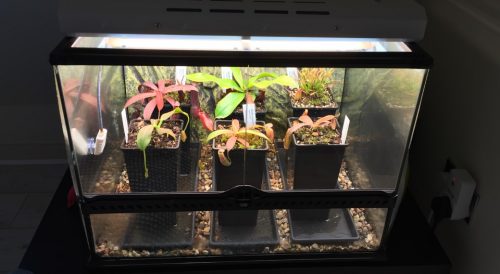
Nepenthes plants of various species in Tom Bennet’s Pi-controlled terrarium. Photo by Tom Bennet
Tom’s terrarium controller doesn’t only monitor and regulate temperature, humidityand light, three of the four main variables in a terrarium (the fourth, he explains, iswater, and because terrariums tend to be nearly or completely sealed, this requiresonly infrequent intervention). It also logs data from its sensors to Internet-of-Thingsdata platform ThingSpeak, which offers real-time data visualisation and alerts.
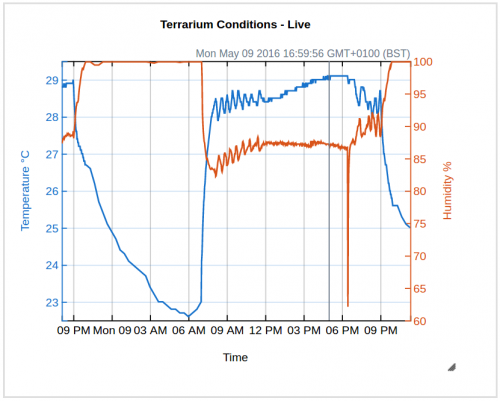
24 hours’ worth of temperature and humidity data for Tom’s terrarium
One of the appealing aspects of this project, as Tom observes, is its capacity forextension. You could quite easily add a soil moisture sensor or, particularly for aterrarium that houses reptiles rather than plants, a camera module, as well asusing the online data logs in all kinds of ways.
The very clear instructions include a full and costed bill of materials consisting ofoff-the-shelf parts that come to less than £90/$125 including the Pi. There arehelpful photographs and wiring diagrams, straightforward explanations, practicaladvice, and Python scripts that can easily be adapted to meet the demands ofdifferent habitats and ambient conditions. Thank you for writing such a usefulguide, Tom; we’re certain it will help plenty of other people set up their own Pi-controlled terrariums!
 Bruce's Blog