http://cleantechnica.com/2016/05/29/apple-ev-charging-work-heating-recent-hires/

Apple EV Charging Work Heating Up With Recent Hires?

May 29th, 2016 by

A number of recent hires at Apple make it appear that the company has begun putting further resources into the development of electric vehicle charging technology.

For what purpose, though? Will it be for use by the electric vehicle (EV) that the company is essentially known to be developing? Or as a stand-alone product (some sort of “smart” charger, no doubt)?

Apple car loading

The recent hires include: Rónán Ó Braonáin, a former BMW employee who worked on the integration of charging infrastructure and home energy/generation systems; Kurt Adelberger, an EV charging expert; and Nan Liu, an engineer specializing in wireless charging technology for EVs.


It is an open secret that Apple is exploring opportunities in the electric vehicle market. Its profits fell for the first time in 13 years in the first quarter of 2016.

…Some in the industry think Apple may be planning to market its own brand of EV chargers. Like all Apple products, they would feature cutting edge technology and styling. Motorists would have a choice of recharging at some generic charging station with unknown performance metrics or an Apple charger that is known to offer the fastest, most reliable charging available.

Would Apple build its own stand alone facilities to compete with Tesla’s Supercharger network? Or is Apple simply following Tesla’s lead and planning to offer customers for its electric car their own dedicated charging network?

Fortune’s coverage included a note by an unnamed source that at least one major global engineering and construction firm has “offered its services to Apple.” Who knows how serious to take the anonymous comment, though.

http://www.techtimes.com/articles/161311/20160528/dish-rolls-out-super-portable-hoppergo-for-tv-on-the-go-heres-the-deal.htm

Dish Rolls Out Super-Portable HopperGO For TV On The Go: Here’s The Deal –

If you’re a frequent traveler looking for a way to take your much-loved shows and movies on your trip, then this news will certainly put a smile on your face: Satellite service provider Dish Network commenced rolling out its super-portable HopperGO, which allows customers to take their DVR recordings on the road.

Dish shared this good news via a press release published on May 26.

“HopperGO is the perfect summer travel companion for nearly anyone, whether you’re road tripping, at the airport or lounging on a beach,” said the company’s chief technology officer and executive vice president Vivek Khemka. “It manages the burden of storage, so forget about deleting apps or pictures to free up space on your phone or tablet for video.”

This mobile video drive is offered to Dish subscribers for a $99 price tag, not subject to monthly charges, so users need not worry about paying for a monthly bill to use it.

HopperGO comes with a 64 GB storage that can take 100 hours of DVR recordings for users to enjoy while on vacation.

Dish explains that this device has the capacity to create its very own private wireless cloud that can support streaming of various shows or movies on up to five Android and iOS smartphones and tablets at once.

The downside of this new device, though, is its short battery life. The company says that owners can only use HopperGO for four hours on a single charge. However, this should still allow them to watch a few show episodes or around two movies. It is worth mentioning that this device can also be used while charging.

On top of that, users do not need to connect to the Internet to watch their videos.

This video drive is particularly deemed beneficial for parents who have many children, as this can entertain the kids during long car rides.

Back in January, Dish already unwrapped HopperGO alongside the 16-tuner, 4K DVR named Hopper 3, which enables users to view four shows simultaneously.

Now that HopperGO has already hit the market, do you have a plan to snag one? Let us know what you think.


http://www.bbc.com/news/technology-36387563

Researchers teach robots to ‘feel pain’

Robot armImagecopyrightLEIBNIZ UNIVERSITY OF HANNOVER
ImagecaptionThe robot’s nervous system would categorise pain into light, moderate and severe

Researchers from Germany are developing an artificial nervous systemaimed at teaching robots how to feel pain.

As well as allowing robots to quickly respond to potential damage to their systems,it could also protect humans who are increasingly working alongside them.

The scientists plan to base the system on “insights from human pain research”.

To test it, they fitted a robotic arm with a fingertip sensor that could detect pressureand temperature.

The researchers, from Leibniz University in Hannover, are developing a system thatwould allow a robot to “be able to detect and classify unforeseen physical statesand disturbances, rate the potential damage they may cause to it and initiateappropriate countermeasures, ie reflexes”, they explained.

Just as human neurons transmit pain, the artificial ones will pass on informationthat can be classified by the robot as either light, moderate or severe pain.

Researcher Johannes Kuehn told IEEE Spectrum: “Pain is a system that protectsus. When we move away from the source of pain, it helps us not get hurt.”

Teaching robots about a range of stimulus is important, robotics expert fromCambridge University Prof Fumiya Iida told the BBC.

“Getting robots to learn is one of the most challenging things but is fundamentalbecause it will make them more intelligent,” he said.

“Learning is all about trial and error. When a child learns that falling over causespain, it then learns to do it with more skill.”

http://www.businessinsider.com/tesla-change-most-advanced-feature-2016-5

Tesla made a major bet to stand out from the competition — and now it might backfire

Tesla’s cars are technologically impressive.

They’re very fast, they can all but drive themselves, they can be summoned from a garage with no one at the wheel, and they are routinely improved by software updates over-the-air that allow owners to go to sleep and wake up with a new car in the driveway.

Everyone in the auto industry now grudgingly admits that Tesla has forever altered consumers’ expectations for how advanced in-car tech should be.

But Tesla’s most advanced feature is largely hidden — and will need to undergo a big change in the coming years if the electric-car maker hopes to realize the far-reaching vision of CEO Elon Musk.

It’s the batteries, stupid

The secret sauce at the core of Tesla’s disruption of the traditional car business is its unique battery design (and the powertrain software than manages how the electricity is delivered to the vehicles’ electric motors). Tesla takes thousands of lithium-ion battery cells and wires them together to make a pack that can serve up well over 200 miles of range.

Tesla’s battery packs give its cars range that’s on par with gas-powered vehicles. And, as an aside, scorching performance (the Model S P90D with “Ludicrous Mode” is as fast as Ferrari, Lamborghini, and Porsche supercars).

But that range comes at a price. Two prices, really. Economically, Tesla’s battery packs are the most expensive part of its cars. Physically, the packs are also large and heavy. What this means is that Teslas need enough power to move themselves around before they can even think about range or acceleration.

teslaREUTERS/Robert GalbraithA Tesla recharging.

Lithium-ion batteries also rely on … lithium, which is a limited, costly resource that is currently in wide demand not just for electric cars, but also for pretty much all the rechargeable consumer electronic gadgets on Earth.

This is why Tesla is building a massive battery factory with Panasonic in Nevada; if the automaker is going to deliver 500,000 cars annually by 2018, it’s going to need something on the order of 4 billion individual Li-ion cells every single year.

The core problem here isn’t actually that daunting number — it’s the power threshold that Li-ion is now approaching, in terms of battery chemistry. Simply put, the chemistry of Li-ion can’t ultimately provide the range that a very fuel-efficient all-gas-powered or hybrid gas-electric vehicle can.

The solution is to add more cells, something that Tesla has done since it was founded, but that’s a slippery slope. A smart car maker would be exploring new battery designs, powered by different chemistries.

Tesla’s early bet

Tesla bet big on its battery design in the early days, enabled the company to have a long-range EV before anyone else. Most EVs from traditional automakers top out at around 100 miles on a charge. Tesla’s competitors have also looked to battery pack designs that aren’t as complex, that don’t require thousands of individual Li-ion cells.

Clearly, Tesla made the right choice. But now it has to make another choice: Stick with Li-ion, or prepare for a shift to a newer, better battery chemistry.

Several cheaper designs that promise better range on a single charge are on the horizon, but they aren’t ready for prime time. Over the next decade, however, they probably will be.

But Tesla will be running the Gigafactory in Nevada flat-out by then, manufacturing batteries that are no longer state-of-the-art. Tesla will also be a 20-year-old company by that time — not a nimble startup capable of turning on a dime, nor a vast, global manufacturing company capable of plunging resources into a post-Li-ion battery future.

tesla battery gigafactory site reno nevada feb 25 2015 photo cc by nc sa 4 0 bob tregilus_100502191_lBob TregilusThe construction site of Tesla’s new Gigafactory near Reno, Nevada.

It’s never too late, until it is

Tesla can still come out on top, if it retains flexibility both with its vehicle designs and at the Gigafactory. A battery is just a battery, and there may come a day when Tesla decides to become more like a modern automobile manufacturer, assembling vehicles from parts supplied by other companies (today’s major car makers are really design, marketing, logistics, and financing firms).

If Musk and his team are thinking that the Gigafactory can, long term, build any type of battery, then the future could still be bright.

But if the Gigafactory is really just an all-in lithium-ion gamble, then Tesla’s now-innovative vehicles will eventually be surpassed by cheaper, longer-range cars that will make profitable use of a superior “fueling” source.

None of this, of course, takes into account a far larger threat: that gas-powered cars will never go away, or that something better than electricity, with all the limits that recharging batteries presents, will appear. Musk called hydrogen fuel-cells “fool cells,” but that’s only because hydrogen, if it can be cleanly produced, is a much better option than electricity.

The only byproduct is water, the vehicles use electric motors (and could presumably have Tesla-like performance), and the fueling infrastructure is already in place; they’re called “gas stations.”

At some point, Tesla will have to grapple with the strategic question of how its cars are powered. Unfortunately, even though the company is much more stable than it was five years ago, it’s still unable to afford any major course corrections. But that may be exactly what it’s up against by 2020.

http://www.ctvnews.ca/health/long-time-baby-powder-users-sue-over-ovarian-cancer-link-1.2920027

Long-time baby powder users sue over ovarian cancer link

Johnson's baby powderIn this April 15, 2011 photo, a bottle of Johnson’s baby powder is displayed in San Francisco. (AP Photo/Jeff Chiu)
Four Canadian women and their families have launched a class-action lawsuit against Johnson & Johnson, claiming the women developed ovarian cancer after using the company’s baby powder.

The planned suits come after several similar lawsuits were launched in the U.S. Earlier this month, a jury in St. Louis ordered Johnson & Johnson to pay US$55 million to a woman who claimed the company’s baby powder caused her ovarian cancer.

In another case in February, the company was ordered to pay $72 million to an Alabama woman who died from ovarian cancer, which she said was caused by using the powder. In both cases, the juries found that Johnson & Johnson knew of a possible link between its talcum powder and cancer but did not warn the public.

Here in Canada, Toronto-based Will Davidson LLP and Rochon Genova LLP have commenced a joint lawsuit.Their suit involves the families of four proposed representative plaintiffs who all developed ovarian cancer after extended use of the J&J’s Baby Powder for feminine hygiene purposes.

One potential plaintiff’s mother, Thérèse Bernier, died in March following her battle with ovarian cancer, Joel Rochon, a partner at Rochon Genova said.

“What I find most troubling about this case is that Johnson & Johnson’s baby powder has been known as a safe product that was made to be used on a daily use – that’s how it was promoted,” Rochon told CTVNews.ca. “And now they have been horribly deceived.”

He says the company should have warned customers decades ago about the link between the powder and cancer.

“They could have easily prevented many, many cases of ovarian cancer by simply placing an appropriate strong warning on the product. But obviously profits got in the way of being responsible,” he said.

Another proposed plaintiff is Mississauga resident Cindy Strathdee. The 56-year-old says she sprinkled the powder into her underwear for 30 years, unaware of any possible link to that practice and cancer. In 2012, she began feeling ill.

“I had a constant, nagging stomach ache. I had a large mass. My stomach was so bloated it looked like I was pregnant,” she told CTV News.

She was diagnosed with Stage 3 ovarian cancer, and had to undergo a total hysterectomy and chemotherapy. She also developed blood clots in her legs and lungs and had to have blood thinning medication injections for six months.

The injections cost $1,000 a month, she said, which she has had to pay herself since she had no medical benefits. She has also been taking blood thinners for the last three years,

“Sometimes, I think of what I have been through and it’s crazy,” she said.

Whether talcum powder causes or increases the risk for ovarian cancer is still unclear. Some studies suggest that women who regularly use talc in their vaginal area face up to 40 per cent higher risk of developing ovarian cancer.

And in 2006, the International Agency for Research on Cancer classified talcum powder as a “possible” human carcinogen if used in the female genital area.

But Johnson & Johnson cites several other studies saying the products are safe. The company is appealing both jury awards and fighting hundreds of other lawsuits on the same matter.

When asked why she was joining the lawsuit, Strathdee says the public deserves to know the truth.

“You trusted that company and to think that could happen…there are people still using it.”

With files from the Associated Press and CTV medical specialist Avis Favaro

http://www.theweathernetwork.com/news/articles/urban-beekeeping-is-more-important-than-you-think/68037

Urban beekeeping is more important than you think

Friday, May 27, 2016, 2:20 PM – Urban beekeeping has become a growing trend in Canada as cities are responding to the troubling problem of a worldwide decrease in honey bee populations.

Why do we need honey bees?

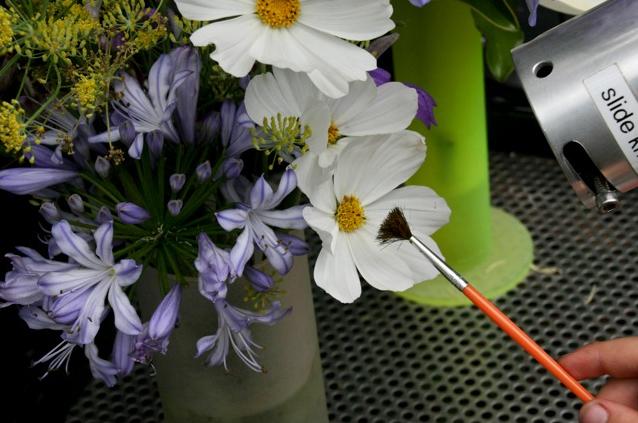
Bees are the most important pollinator of our fruits, vegetables and flowers. More than 1/3 of the world’s crop production is dependent on bee pollination alone. In the areas where bees are no longer present humans have to pollinate by hand—sometimes with the use of a paintbrush.

Urban beekeeping 

Urban beekeeping is the practice of maintaining bee colonies within urban areas. Urban beekeepers closely manage their hives on a daily basis and protect them against harsh winters. Beekeepers help raise bees for their honey production and various hive products such as wax and pollen.

The pollen that is associated with honey production is brought into the beehive as a food source for bee larvae (baby bees). The left over pollen ends up in the honey and is very minimal. Therefore, you would not be consuming enough local pollen to relieve your seasonal allergies. The myth is false.

Climate 

Bee behaviour is deeply affected by temperature. Honey bees will not work below 13oC. Typically, bees can be found in tropical climates that are heavily forested, but bees have the ability to adapt to different environments. For example, when honey bees are in colder climates they will consume more honey and use their metabolic heat to provide warmth to their colony. Honey bees in a tropical climates will not consume as much honey and won’t spend as much time building insulated hives.

Honey bees on the decline 

Bees have been on the decline since WWII. In the U.S. an average of 30% of beehives are lost every winter. The percentage of lost beehives is increasing yearly, and yet we rely on their pollination for many of our crops. Worldwide there is a 300% increase in crop production that requires bee pollination.

How can you help?

Plant bee friendly wild flowers and avoid the use of pesticides. Search for flowers that are native to your area and plant them everywhere. It is important to have a diversity of flowers and maintain landscapes to their natural form. When we alter natural landscapes we eliminate flowering plants that bees need for their survival.

https://www.washingtonpost.com/news/the-switch/wp/2016/05/27/elon-musks-spacex-does-it-again-nails-fourth-landing-in-a-row/

Elon Musk’s SpaceX does it again. Nails fourth landing.

SpaceX Falcon rocket takes off from Cape Canaveral

Embed Share

Play Video1:06
SpaceX had a successful launch of its Falcon 9 rocket from Cape Canaveral Air Force Station in Florida. The rocket is set todeploy a Thaicom 8 communications satellite for Thailand. (Reuters)

Maybe one day it’ll be routine, so boring, as Elon Musk has said, that it’ll no longer benewsworthy. But for now his attempts to launch and then land rockets are still dramatic, asexciting as sporting events. On Friday evening, SpaceX pulled off another stunning landing ona ship 422 miles off the Florida coast that was broadcast in real time on its website.

SpaceX’s Falcon 9 rocket lifted up from Cape Canaveral at 5:39 p.m., carrying a Thaicomcommercial communications satellite to orbit. Given the distance the rocket had  to travel todeliver its payload Friday, and the massive amount of energy it would take to get there, SpaceXhedged on the success of the return, saying that “the first stage will be subject to extremevelocities and re-entry heating, making a successful landing challenging.”

But then the video showed the rocket screaming back from space, its engines firing to slow itdown. And then cameras from the ship showed it standing triumphantly once again.

Over the past couple of years Musk’s space company has been perfecting the difficult art oflanding rockets so they could be reused instead of being ditched into the ocean as had been thepractice since the 1960s-Apollo era.

Coming into Friday’s launch, which was postponed from Thursday after Musk said there was a”tiny glitch” with the rocket’s upper stage, SpaceX had pulled off landings three times. First, itlanded a stage at Cape Canaveral in December. Then it followed with two landings at sea thisspring. The rocket in last landing “took max damage, due to v high entry velocity,” Musktweeted this month.

When SpaceX became the first company to ever vertically land an orbital-class rocket, Musksaid he thought it would improve his chances of eventually getting to Mars, his ultimate goal.Being able to reuse rockets not only reduces the cost, but the technology is key to landing onthe Red Planet where there are no runways and the relatively thin atmosphere make landingstricky, especially for large masses.

Recently the company announced that it plans to land an unmanned Dragon capsule on Marsas soon as 2018. It’s an ambitious timeline, especially given that its Falcon Heavy rocket, whichwould carry the spacecraft, isn’t scheduled to have its maiden flight until later this year. But thecompany has been working on developing capsules that also land using their own power, thatis, firing their engines as a way to slow down before touching down softly.

Once a spunky startup, SpaceX, based in Hawthorne, Calif., has become a major force in theburgeoning space industry, with more than 4,000 employees, a backlog of orders to launchcommercial satellites and multi-billion dollar contracts with NASA to fly cargo and eventuallyastronauts to the International Space Station on its Falcon 9 rocket.

The Thaicom 8 satellite it delivered Thursday was made by Dulles-based Orbital ATK and isto serve Thailand, India and Africa.