http://www.azom.com/news.aspx?newsID=45725

MIT Researchers Study Natural Materials to Develop Stronger, More Durable Concrete

MIT scientists are exploring new ways to make stronger and more durable concrete by studying the blueprints of nature. Concrete is considered to be the world’s most commonly used man-made material.

“If we can replace cement, partially or totally, with some other materials that may be readily and amply available in nature, we can meet our objectives for sustainability,” MIT Professor Oral Buyukozturk says. (Image: Christine Daniloff/MIT)

The group compared the binding ingredient of concrete called cement paste with the properties and structure of natural substances like shells, bones, and deep-sea sponges. The results of the study have been reported in the Construction and Building Materials journal. The scientists discovered that these bio-materials are extremely durable and strong, partly due to their accurate assembly of structures at various length scales, ranging from the molecular to the macro (visible) level.

The research group, headed by Oral Buyukozturk, a professor in MIT’s Department of Civil and Environmental Engineering (CEE), eventually put forward a novel bioinspired, “bottom-up” method to produce the cement paste.

These materials are assembled in a fascinating fashion, with simple constituents arranging in complex geometric configurations that are beautiful to observe. We want to see what kinds of micromechanisms exist within them that provide such superior properties, and how we can adopt a similar building-block-based approach for concrete.

Oral Buyukozturk, Professor, CEE Department, MIT

The aim of this study is to discover natural materials that could act as durable and sustainable alternatives to Portland cement, which needs enormous amount of energy to develop.

“If we can replace cement, partially or totally, with some other materials that may be readily and amply available in nature, we can meet our objectives for sustainability,” says Buyukozturk.

The paper’s co-authors include Steven Palkovic, lead author and graduate student; Dieter Brommer, graduate student; Kunal Kupwade-Patil, research scientist; Admir Masic, CEE Assistant Professor and Markus Buehler, CEE department head, the McAfee Professor of Engineering.

The merger of theory, computation, new synthesis, and characterization methods have enabled a paradigm shift that will likely change the way we produce this ubiquitous material, forever. It could lead to more durable roads, bridges, structures, reduce the carbon and energy footprint, and even enable us to sequester carbon dioxide as the material is made. Implementing nanotechnology in concrete is one powerful example [of how] to scale up the power of nanoscience to solve grand engineering challenges.

Markus Buehler, Head of CEE Department, MIT

From molecules towards bridges

The concrete at present is an arbitrary collection of crushed stones and rocks that are adhered together by a cement paste. The durability and strength of concrete partly relies on its pore configuration and inner structure. For instance, as the material becomes more porous, it becomes more vulnerable to cracking. Conversely, no methods are available to accurately control the inner structure and general properties of concrete.

“It’s mostly guesswork,” says Buyukozturk. “We want to change the culture and start controlling the material at the mesoscale.”

According to Buyukozturk, the correlation between the microscale structures with its macroscale properties is represented by the “mesoscale”. For example, how does the microscopic arrangement of cement influence the strength and durability on the whole of a long bridge or a tall building? Comprehending this link would definitely enable engineers to point out the features that would enhance the overall performance of concrete at different length scales.

We’re dealing with molecules on the one hand, and building a structure that’s on the order of kilometers in length on the other. How do we connect the information we develop at the very small scale, to the information at the large scale? This is the riddle.

Oral Buyukozturk, Professor, CEE Department, MIT

Building upwards from the bottom

In order to interpret this relation, Buyukozturk and his co-workers examined biological materials like deep sea sponges, bone and nacre (internal shell layer of mollusks), all of which have been studied in depth for their microscopic and mechanical properties. The researchers skimmed through the scientific literature to obtain more data on individual biomaterials, and then contrasted their behavior and structures with cement paste at the macro, micro and nano scales.

The researchers then went on to study the relationship between the structure and the mechanical properties of a material. For example, it was discovered that the onion-like structure of silica layers in the deep sea sponge offers a mechanism by which cracks are prevented. Nacre is arranged in a “brick-and-mortar” manner, with minerals that create a strong bond amidst its layers, rendering the material very tough.

In this context, there is a wide range of multiscale characterization and computational modeling techniques that are well established for studying the complexities of biological and biomimetic materials, which can be easily translated into the cement community.

Admir Masic, CEE Assistant Professor, MIT

The researchers then applied their new found knowledge of biological materials and also the information collected on present cement paste design devices to ultimately create a standard, bioinspired outline or method for engineers to create cement, “from the bottom up.”

The framework is a set of guidelines that can be followed by engineers to find out how specific target additives or compounds would affect the overall durability and strength of the cement.

For example, in an associated research, Buyukozturk is analyzing the use of volcanic ash as a substitute or additive for cement. In order to check whether volcanic ash could enhance the properties of cement paste, engineers would initially utilize existing experimental methods, like scanning electron microscopy, nuclear magnetic resonance, and X-ray diffraction in accordance to the group’s framework to characterize the solid and pore configurations of volcanic ash over a period of time.

Scientists can then convert the measurements into models that replicate the long-term progress of concrete to recognize mesoscale associations between, for example, the volcanic ash’s properties and the contribution of the material towards the durability and strength of an ash-containing concrete bridge. These simulations could be further validated with traditional nanoindentation and compression experiments to analyze the actual volcanic ash-based concrete samples.

The scientists are hoping that the framework would help engineers to recognize structured ingredients and progress in a way that might enhance the performance and durability of concrete.

Hopefully this will lead us to some sort of recipe for more sustainable concrete. Typically, buildings and bridges are given a certain design life. Can we extend that design life maybe twice or three times? That’s what we aim for. Our framework puts it all on paper, in a very concrete way, for engineers to use.

Oral Buyukozturk, Professor, CEE Department, MIT

This study was funded partly by the Kuwait Foundation for the Advancement of Sciences through the Kuwait-MIT Center for Natural Resources and the Environment, Argonne National Laboratory, and the National Institute of Standards and Technology.


http://www.citynews.ca/2016/05/27/new-three-wheeled-vehicles-come-with-a-number-of-rules-and-regulations/

New three-wheeled vehicles come with a number of rules and regulations

There’s a new class of three-wheeled vehicles (TWV) on Ontario roads and York Regional police want to make sure their drivers are aware of the rules regarding them.

TWVs are a distinct class of motor vehicle, separate from passenger vehicles, motor tricycles and motorcycles.

They a cross between a motorcycle and a car.

To legally drive a TWV drivers need a full G licence or higher.

“You cannot do your drivers licence test on this,” Staff Sgt. David Mitchell explained. “You need a motorcycle helmet to be operating one of these vehicles.”

Drivers with an ‘M’ class license alone are prohibited from operating a TWV under the pilot project.

Some of the other legislation regarding these vehicles includes:

  • Only federally-approved TWVs designed for on-road use are permitted to participate in the pilot. Current approved models include: Polaris Slingshot and Campagna Motors T-Rex 8
  • Current HTA rules of the road and penalties apply to the driver/vehicle owner
  • Participants in the pilot project are subject to Ontario’s mandatory seatbelt requirements and must use an approved motorcycle safety helmet
  • Passengers who are classified as an infant, toddler or pre-school to primary grade child are not permitted to ride in a TWV
  • TWVs are prohibited from being used for an MTO road test
  • Sidecars or trailers are not permitted to be affixed to a TWV

Drivers who do not obey the rules can be fined from $250 to $2,500.

http://findbiometrics.com/bioconnect-partners-norbain-305264/

BioConnect Partners with UK Distributor Norbain

BioConnect has partnered with a new UK distributor. Specializing in access control, IP, CCTV, and intruder detection solutions, Norbain is now offering customers multiple BioConnect products.

BioConnect Partners with UK Distributor NorbainOne of those is, of course, the flagship BioConnect identity platform, which offers multi-factor authentication via technologies including fingerprint scanning. Norbain is also offering the compatible BioStation A2 and L2 biometric terminals from BioConnect hardare partner Suprema; and BioConnect TeamWorks, a cloud-based HR solution that features biometric time and attendance tracking.

The new partnership arrives right on the heels of BioConnect’s entry into FIDO Alliance membership, and should help to showcase the geographic reach of the company as its profile rises among FIDO members and in the authentication industry more generally. It should also foster more business opportunities in itself; in a statement, BioConnect CEO Rob Douglas highlighted the BioConnect platform’s applications in “education, data centres and in enterprise settings,” and said that the Norbain partnership “facilitates great relationships with key accounts in these markets.”

The companies will also show off their solutions, together with Suprema, at next month’s IFSEC at ExCel London conference.

http://www.ibtimes.co.uk/googles-future-brighter-apples-thanks-its-smart-moves-artificial-intelligence-1562221

Google’s future is brighter than Apple’s thanks to its smart moves on artificial intelligence

But like all instant judgements, they are often flawed. I/O 2016 marked a turning point in history. It was the conference where Google finally came out as an artificial intelligence (AI) engine built on an enormous platform, and not a mere search company. In doing so it has killed any talk of how Apple, Facebook or Amazon somehow represent some kind of existential threat. They don’t.

Google’s avowed aim is to organise all the world’s data so what would happen if Google had access to everything in our lives? What we are doing, where we are, what we get up to, where we eat and what we buy. With that data and powerful AI to make sense of it, then Google could spot the patterns in our daily lives and use that to make predictions about what we need next.

Google’s big data bonanza

Think about how in-game purchases work. Games designers see when you are stuck on a level and at that moment offer to sell you a sword at precisely the time you need it most; not before, not after. It has value only in that moment. Google wants to turn our lives into a string of in-game purchases.

It is one thing to do that in a video game but in real life those kinds of calculations require unimaginably large data sets that allow AI to build up real understanding of what that data means. If only Google had access to that kind of rich data…

Hello, Android. And have you met, calendar, mail, maps, traffic, pictures, play, news and Android Pay? What do all of those services do? Give our data and our intentions to Google. And of course they sit on Google’s key asset, the unimaginable wealth of data that sits on its servers.

Google Home
Google has introduced a new home control centre that features artificial intelligence and advanced Internet of Things smart home capabilitiesGoogle

Imagine that Google sees you have a dinner date coming up. Google Assistant chirps: “Going out for dinner? Here are some restaurants you might want to think about.” This isn’t search, this is Google pre-empting our needs before we even know we need them. And like any real assistant (think Anne Hathaway in The Devil Wears Prada) it should go the extra mile. “Can I recommend this to you for your dinner tomorrow night at 8pm with your boyfriend – and by the way it’s his birthday in a week and this is what you bought him last year on Amazon.”

The ideological differences between the tech front-runners

Google is a platform company; Apple is a hardware company that makes money by selling you expensive pieces of very smart hardware. For Apple the phone is smart, the cloud is dumb. For Google, as a platform company, the phone is just a device for harvesting information and communicating with the smart cloud. You can use Android which is great for them, but you can also use Apple if you like. But if you do, Google will not get as rich a stream of data, and you just will not get as good a service as a result.

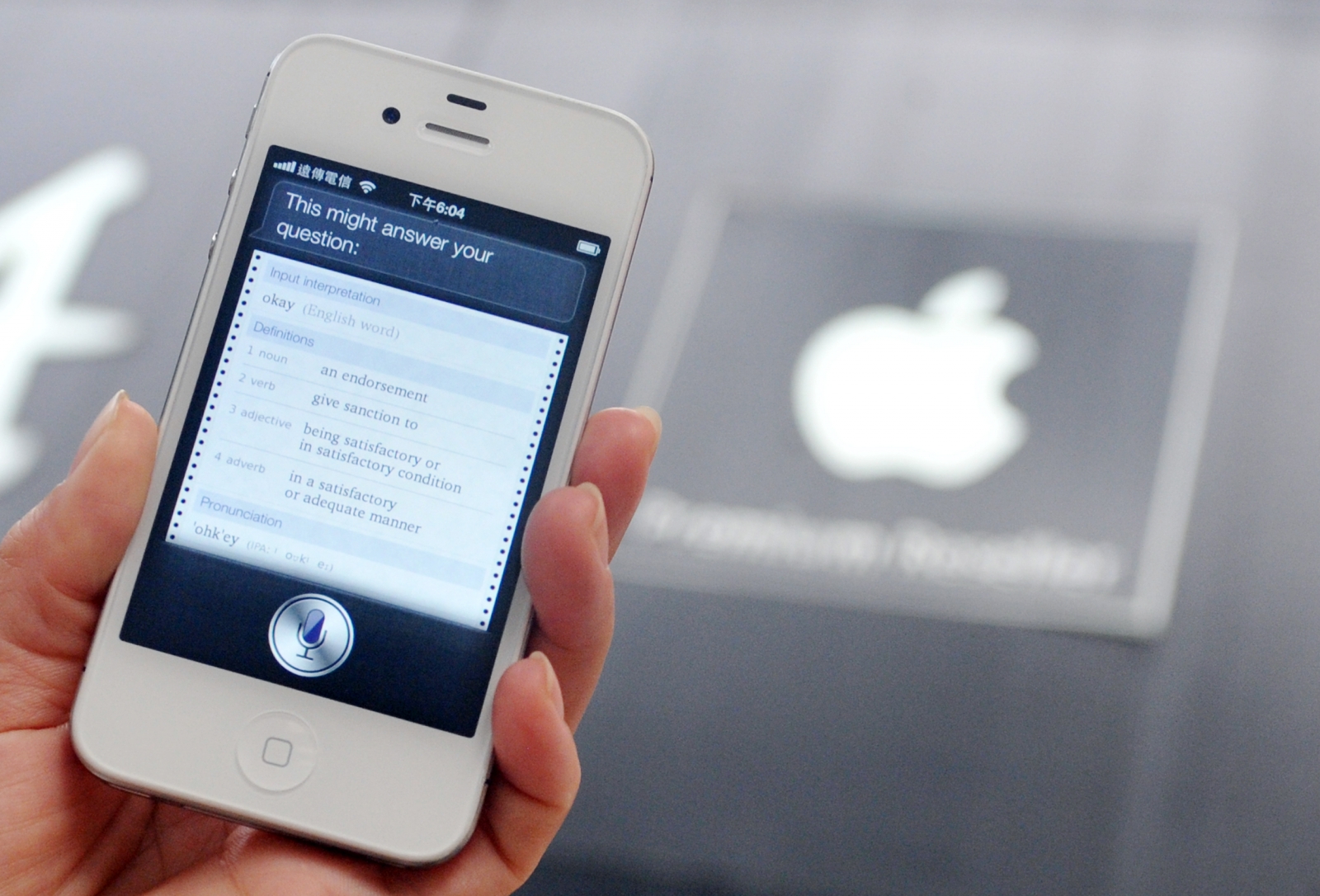
This is a problem for Apple. While it has built a fortune by selling you very nice phones, its ability to do meaningful AI is limited. Yes it has Siri, but it is a party trick. Once you have asked Siri to open the pod bay doors a few times, you move on. Apple was late to the party over mapping and it is late to AI. If the world shifts to AI, and there is every chance it will, Apple is in trouble.

Apple working on Siri speaker
Apple’s Siri is yet to hit the lofty heights predicted when it launchedGetty

It is worth mentioning Amazon. There was an idea kicking around at the end of last year, initiated by very savvy tech investor Bill Gurley, that Amazon represents a threat to Google. His argument is that Google makes money by selling ad words to companies. But if users are on Amazon’s site when they want to buy something, why pay Google? With respect to Gurley, his thinking is five years out of date. If the web were still just the desktop, his argument would be sound. But mobile changes everything. Users have so many ways of expressing intent that are far richer and more subtle than typing things in search boxes. Unfortunately for Amazon it has no access to those richer, subtle ways.

As for Microsoft, with its less than 1% share of the mobile OS market, it is irrelevant.

It is not all plain sailing for Google

Two EU investigations see it fighting a right to be forgotten ruling as well as a copyright court case against Oracle over Java APIs used in Android. The latter is potentially a lot more worrying for them.

Then there is the problem of Apple. Google’s services do run on Apple, but the once friendly relationship between them soured a long time ago, and Apple has made a point of de-Googling its experience. Although Apple accounts for just under 20% of the smartphone market, it is a very attractive slice that Google finds hard to reach.

But far more of a threat is Google’s tone-deafness when it comes to understanding real people. Remember Google Wave? The supposed email killer that was so complicated no one could work out how to use it? Remember Google Glass? It was socially inept. Or Google+, its hopeless social network (once described as being like the gym – everybody joins, but nobody uses it)

http://www.kurzweilai.net/triggering-the-protein-that-programs-cancer-cells-to-kill-themselves

Triggering the protein that programs cancer cells to kill themselves

May 24, 2016


WEHI | Apoptosis

Researchers at the Walter and Eliza Hall Institute in Australia have discovered a new way to trigger cell death that could lead to drugs to treat cancer and autoimmune disease.

Programmed cell death (a.k.a. apoptosis) is a natural process that removes unwanted cells from the body. Failure of apoptosis can allow cancer cells to grow unchecked or immune cells to inappropriately attack the body.

The protein known as Bak is central to apoptosis. In healthy cells, Bak sits in an inert state but when a cell receives a signal to die, Bak transforms into a killer protein that destroys the cell.

Triggering the cancer-apoptosis trigger

Institute researchers Sweta Iyer, PhD, Ruth Kluck, PhD, and colleagues unexpectedly discovered that an antibody they had produced to study Bak actually bound to the Bak protein and triggered its activation. They hope to use this discovery to develop drugs that promote cell death.

The researchers used information about Bak’s three-dimensional structure to find out precisely how the antibody activated Bak. “It is well known that Bak can be activated by a class of proteins called ‘BH3-only proteins’ that bind to a groove on Bak. We were surprised to find that despite our antibody binding to a completely different site on Bak, it could still trigger activation,” Kluck said.  “The advantage of our antibody is that it can’t be ‘mopped up’ and neutralized by pro-survival proteins in the cell, potentially reducing the chance of drug resistance occurring.”

Drugs that target this new activation site could be useful in combination with other therapies that promote cell death by mimicking the BH3-only proteins. The researchers are now working with collaborators to develop their antibody into a drug that can access Bak inside cells.

Their findings have just been published in the open-access journal Nature Communications. The research was supported by the National Health and Medical Research Council, the Australian Research Council, the Victorian State Government Operational Infrastructure Support Scheme, and the Victorian Life Science Computation Initiative.


Abstract of Identification of an activation site in Bak and mitochondrial Bax triggered by antibodies

During apoptosis, Bak and Bax are activated by BH3-only proteins binding to the α2–α5 hydrophobic groove; Bax is also activated via a rear pocket. Here we report that antibodies can directly activate Bak and mitochondrial Bax by binding to the α1–α2 loop. A monoclonal antibody (clone 7D10) binds close to α1 in non-activated Bak to induce conformational change, oligomerization, and cytochrome c release. Anti-FLAG antibodies also activate Bak containing a FLAG epitope close to α1. An antibody (clone 3C10) to the Bax α1–α2 loop activates mitochondrial Bax, but blocks translocation of cytosolic Bax. Tethers within Bak show that 7D10 binding directly extricates α1; a structural model of the 7D10 Fab bound to Bak reveals the formation of a cavity under α1. Our identification of the α1–α2 loop as an activation site in Bak paves the way to develop intrabodies or small molecules that directly and selectively regulate these proteins.

http://unews.utah.edu/metagenomics-pathogen-detection-tool-could-change-how-infectious-diseases-are-diagnosed/

METAGENOMICS PATHOGEN DETECTION TOOL COULD CHANGE HOW INFECTIOUS DISEASES ARE DIAGNOSED

Scientists at the University of Utah, ARUP Laboratories, and IDbyDNA, Inc., have developed ultra-fast, meta-genomics analysis software calledTaxonomer that dramatically improves the accuracy and speed of pathogen detection. In a paper published today in Genome Biology, thecollaborators demonstrated the ability of Taxonomer to analyze the sequences of all nucleic acids in a clinical specimen (DNA and RNA) and todetect pathogens, as well as profile the patient’s gene expression, in a matter of minutes.

Infectious diseases are one of the biggest killers in the world. Almost 5 million children under age 5 die each year from infectious diseasesworldwide, yet many infections are treatable if the pathogen culprit can be quickly and accurately identified.

“In the realm of infectious diseases, this type of technology could be as significant as sequencing the human genome,” says co-author MarkYandell, PhD, professor of human genetics at the University of Utah (U of U), H.A. & Edna Benning Presidential Endowed Chair holder, co-director of the USTAR Center for Genetic Discovery, and co-founder of IDbyDNA.  “Very few people have inherited genetic disease. But at somepoint, everyone gets sick from infections.”

Taxonomer’s interactive display clearly presents the vast genomic data extracted from pathogens found in a patient sample.

Taxonomer’s interactive display clearly presents thevast genomic data extracted from pathogens found ina patient sample.

It is difficult for infectious pathogens to hide when their genetic material is laid bare.Taxonomer opens up an entirely new approach for infectious disease diagnosis, driven bysophisticated genomic analysis and computational technologies. After a patient’s sample issequenced, the data are uploaded via the internet to Taxonomer. In less than one minute,the tool displays a thumbnail inventory of all pathogens in the sample, including viruses,bacteria, and fungi. The interactive, real-time user interface of Taxonomer is powered bythe IOBIO system developed by the laboratory of Gabor Marth, DSc, professor of humangenetics at the U of U and co-Director of the USTAR Center for Genetic Discovery.

“Our benchmark analyses show Taxonomer being ten to a hundred times faster thansimilar tools,” says co-author Robert Schlaberg, MD, Dr Med, MPH, a medical director atARUP Laboratories and cofounder of IDbyDNA. Schlaberg was awarded a $100,000 grantfrom the Bill and Melinda Gates Foundation to apply Taxonomer toward decreasing high mortality rates of children with infectious diseases inresource-limited settings.

Schlaberg points out that current diagnostic testing still relies heavily on growing cultures of suspected pathogens in the laboratory, which isoften inconclusive and time consuming. Even with much faster tests like PCR, the number of pathogens that can be detected is limited.

Schlaberg explains that Taxonomer can identify an infection without the physician having to decide what to test for, something a PCR-based testcannot do. In other words, a doctor doesn’t have to suspect the cause of a patient’s infection, but can instead simply ask, “What does my patienthave?” and Taxonomer will identify the pathogens.

In the new study, Taxonomer was put to the test with real-world cases using data published by others and samples provided by ARUPLaboratories and the Centers for Disease Control and Prevention (CDC). Taxonomer determined that some patients who exhibited Ebola-likesymptoms in the recent African outbreak did not have Ebola but severe bacterial infections that likely caused their symptoms. “This technologycan be applied whenever we don’t know the cause of the disease, including the detection of sudden outbreaks of disease. It is very clear weurgently need more accurate diagnostics to greatly enhance the ability of public health response and clinical care,” says Seema Jain, MD, medicalepidemiologist at the CDC.

Another unique feature of Taxonomer is its ability to delve into human gene expression profiling, which provides information on how or if thepatient’s body is reacting to an infection. “As a clinician, this gives you a better idea, when we identify a pathogen whether it is really the cause ofthe disease,” says Carrie L. Byington, MD, professor of pediatrics of the U of U and co-director of the Center for Clinical and TranslationalScience. “This tool will also allow us to determine if the patient is responding to a bacterial or viral infection when we don’t find a pathogen orwhen we find multiple potential causes.” She says that she sees the exceptional value of this tool for treating children, who experience more life-threatening infections early in life. “Seeing how a host [patient] reacts is extremely valuable; I believe this is a paradigm shift in how we diagnosepeople. It is why I wanted to be involved.”

In a previous paper published in the Journal of Clinical Microbiology, Schlaberg and his collaborators demonstrated that high-throughputsequencing in combination with Taxonomer can reliably detect pathogens, and identify previously missed pathogens, in patient samples.“Taxonomer provides a critical step forward, as it is extremely fast, accurate, and easy enough to use for implementation in diagnosticlaboratories,” says Schlaberg.

http://www.kurzweilai.net/diamonds-closer-to-becoming-ideal-power-semiconductors

Diamonds closer to becoming ideal power semiconductors

May 24, 2016

A diode array bonded to a natural single crystalline diamond plate. Inset: deposited anode metal on top of doped silicon nanomembrane. (credit: Jung-Hun Seo)

Researchers have developed a new method for doping (integrating elements to change a semiconductor’s properties) single crystals of diamond with boron at relatively low temperatures, without degradation.

Diamonds have properties that could make them ideal semiconductors for power electronics. They can handle high voltages and power, and electrical currents also flow through diamonds quickly, meaning the material would make for energy-efficient devices. And they are thermally conductive, which means diamond-based devices would dissipate heat quickly and easily (no need for bulky, expensive cooling methods). However. diamond’s rigid crystalline structure makes doping difficult.*

Doping a diamond with boron

Zhengqiang (Jack) Ma, a University of Wisconsin-Madison electrical and computer engineering professor, and his colleagues describe a solution in the Journal of Applied Physics, from AIP Publishing.

They discovered that if you bond a single-crystal diamond with a piece of silicon doped with boron, and heat it to 800 degrees Celsius (low compared to conventional techniques), the boron atoms will migrate from the silicon to the diamond. It turns out that the boron-doped silicon has defects such as vacancies, where an atom is missing in the lattice structure. Carbon atoms from the diamond will fill those vacancies, leaving empty spots for boron atoms.

This technique also allows for selective doping, which means more control when making devices. You can choose where to dope a single-crystal diamond simply by bonding the silicon to that spot.

The new method currently only works for P-type doping, where the semiconductor is doped with an element that provides positive charge carriers (in this case, the absence of electrons, called holes). The researchers are already working on a simple device using P-type single-crystal diamond semiconductors.

But to make electronic devices like transistors, you need N-type doping, which gives the semiconductor negative charge carriers (electrons). And other barriers remain: diamond is expensive and single crystals are very small.

Still, Ma says, achieving P-type doping is an important step, and might inspire others to find solutions for the remaining challenges. Eventually, he said, single-crystal diamond could be useful everywhere — perfect, for instance, for controlling power in the electrical grid.

* Currently, you can dope diamond by coating the crystal with boron and heating it to 1450 degrees Celsius. But it’s difficult to remove the boron coating at the end. This method only works on diamonds consisting of multiple crystals stuck together. Because such polydiamonds have irregularities between the crystals, single crystals would be superior semiconductors. You can dope single crystals by injecting boron atoms while growing the crystals artificially. The problem is the process requires powerful microwaves that can degrade the quality of the crystal.


Abstract of Thermal diffusion boron doping of single-crystal natural diamond

With the best overall electronic and thermal properties, single crystal diamond (SCD) is the extreme wide bandgap material that is expected to revolutionize power electronics and radio-frequency electronics in the future. However, turning SCD into useful semiconductors requires overcoming doping challenges, as conventional substitutional doping techniques, such as thermal diffusion and ion implantation, are not easily applicable to SCD. Here we report a simple and easily accessible doping strategy demonstrating that electrically activated, substitutional doping in SCD without inducing graphitization transition or lattice damage can be readily realized with thermal diffusion at relatively low temperatures by using heavily dopedSi nanomembranes as a unique dopant carrying medium. Atomistic simulations elucidate a vacancyexchange boron doping mechanism that occurs at the bonded interface between Si and diamond. We further demonstrate selectively doped high voltage diodes and half-wave rectifier circuits using such dopedSCD. Our new doping strategy has established a reachable path toward using SCDs for future high voltage power conversion systems and for other novel diamond based electronic devices. The novel dopingmechanism may find its critical use in other wide bandgap semiconductors.

http://gadgets.ndtv.com/science/news/evidence-of-baby-planets-spotted-around-young-star-study-841923

Evidence of Baby Planets Spotted Around Young Star: Study

http://www.biosciencetechnology.com/news/2016/05/aging-inevitable-not-necessarily-sea-urchins

Is Aging Inevitable? Not Necessarily for Sea Urchins

Sea urchins are remarkable organisms. They can quickly regrow damaged spines and feet. Some species also live to extraordinary old ages and — even more remarkably — do so with no signs of poor health, such as a decline in regenerative capacity or an increase in age-related mortality. These ocean Methuselahs even reproduce as if they were still youngsters.

MDI Biological Laboratory Associate Professor James A. Coffman, Ph.D., is studying the regenerative capacity of sea urchins in hopes that a deeper understanding of the process of regeneration, which governs the regeneration of aging tissues as well as lost or damaged body parts, will lead to a deeper understanding of the aging process in humans, with whom sea urchins share a close genetic relationship.

In a paper recently published in Aging Cell, a leading journal in the field of aging biology, with Andrea G. Bodnar, Ph.D., of the Bermuda Institute of Ocean Studies, the scientists shed new light on the aging process in sea urchins, raising the prospect that the physical decline that typically accompanies aging is not inevitable.

They studied regenerative capacity in three species of sea urchins with long, intermediate and short life expectancies: the red sea urchin, Mesocentrotus franciscanus, one of the world’s longest-lived organisms with a life expectancy of more than 100 years; the purple sea urchin, Strongylocentrotus purpuratus, with a life expectancy of more than 50 years; and the variegated sea urchin, Lytechinus variegatus, with a life expectancy of only four years.

The scientists hypothesized that the regenerative capacity of the species with shorter life expectancies would decline as they aged. Much to their surprise, however, they found that regenerative capacity was not affected by age: as with the very long-lived sea urchin, the regenerative capacity of the species with a shorter life expectancy did not decline with age.

“We wanted to find out why the species with short and intermediate life expectancies aged and the long-lived species didn’t,” said Coffman. “But what we found is that aging is not inevitable: sea urchins don’t appear to age, even when they are short-lived. Because these findings were unexpected in light of the prevailing theories about the evolution of aging, we may have to rethink theories on why aging occurs.”

The MDI Biological Laboratory in Bar Harbor, Maine, is an independent, nonprofit biomedical research institution focused on increasing healthy lifespan and harnessing the natural ability to repair and regenerate tissues damaged by injury or disease. The institution develops solutions to complex human and environmental health problems through research, education and ventures that transform discoveries into cures.

Coffman and other scientists working in the institution’s Kathryn W. Davis Center for Regenerative Medicine study tissue repair, regeneration and aging in a diverse range of organisms that have robust mechanisms to repair and regenerate tissue.

The prevailing theory of the evolution of aging holds that aging is a side effect of genes that promote growth and development of organisms that have a low likelihood of continued survival in the wild once they have reproduced. Many organisms with a low expectation of survival in the wild experience rapid decline once they have reached reproductive maturity.

But Bodnar and Coffman’s findings contradict that theory. They found that although the variegated sea urchin, L. variegatus, has a much lower life expectancy in the wild than the other two species they studied, it displayed no evidence of a decline in regenerative capacity with age, which suggests that senescence may not be tied to a short life expectancy in the wild.

The scientists are planning future studies to identify why short-lived sea urchins experience negligible senescence, and, in particular, the role of the immune system in maintaining youthful function into old age.

Source: Mount Desert Island Biological Laboratory

http://www.chinatopix.com/articles/88687/20160525/darpa-unveils-u-s-army-stealth-motorcycle-prototypes.htm

DARPA Unveils U.S. Army Stealth Motorcycle Prototypes

The two models competing in the stealth motorcycle program of the U.S. Defense Advanced Research Projects Agency (DARPA) feature electric engines as quiet as a normal human conversation.  The engines can also be used to recharge mobile devices such as radios and battlefield laptops

Competing head-to-head for the lucrative contract to build the U.S. Army’s stealth bike are SilentHawk by Logos Technologies based in Virginia and Nightmare from LSA Autonomy out of Maryland. DARPA funded both bikes to phase two development that saw the building of the prototypes.

Both bikes are powered by two engines: a hybrid multi-fuel engine and an electric engine. The hybrid engine runs on a wide variety of fuels such as ordinary gasoline, diesel, Jet A-01 and JP-8.  A lithium-ion electric battery powers the bike in its stealth mode and keeps engine noise down to 55 decibels, the sound of a normal human conversation. A quiet whisper is about 30 dB.

The Army intends to use the winning prototype on raids to be launched by U.S. Special Forces units.

SilentHawk is an upgraded RedShift MX dirt bike, which is an electric racing bike developed by Atla Motors in California. It uses the RedShift MX chassis and a special hybrid engine developed by Logos.

Both bikes feature a front-wheel motor and rear motor. Nightmare, however, runs on a larger horsepower: 17 in front and 135 in back. The Nightmare averages around 13 kilowatts in generated power against 7.5 kilowatts for the Silent Hawk, making them suitable for charging radios and other mobile devices.

Read more: http://www.chinatopix.com/articles/88687/20160525/darpa-unveils-u-s-army-stealth-motorcycle-prototypes.htm#ixzz49nDcy1Sa