http://mspoweruser.com/microsoft-surface-pro-outselling-ipad-pro-enterprise-uk/

Microsoft Surface Pro outselling iPad Pro into enterprise in UK

According to market analyst firm Canalys Microsoft is beating Apple when it comes to the enterprise tablet market in UK.

Microsoft managed to sell more than double the number of Surface Pro tablets into enterprise compared to the iPad Pro in Q1 2016.

In the period the iPad Pro sold 107,000 units while the Surface Pro moved 275,000, up from 83,000 a year ago.

Importantly the data is only for the enterprise market, with Apple tablets handedly outselling Surface tablets in the consumer market.  The consumer market however appears to be in decline, down 8% in UK in Q1 2016 and Apple’s strategy of turning to the enterprise market appears to not be as successful as they have hoped.

“One of the problems facing Apple is price, the other is familiarity and applications,” said Tim Coulling, senior analyst at Canalys.

The Surface is an “easier sell” to businesses because of compatibility with the existing corporate infrastructure. “It is a difficult market for Apple,” said the analyst.

The iPad Pro’s high price remains a barrier to adoption he said.

“People don’t necessarily want to pay the price and aren’t that impressed with the pen,” said one. “Business customers want the iPad Air and education customers the Mini.”

http://news.ubc.ca/2016/05/24/ubc-receives-27-million-research-boost-from-provincial-government/

UBC receives $27 million research boost from provincial government

Trump770

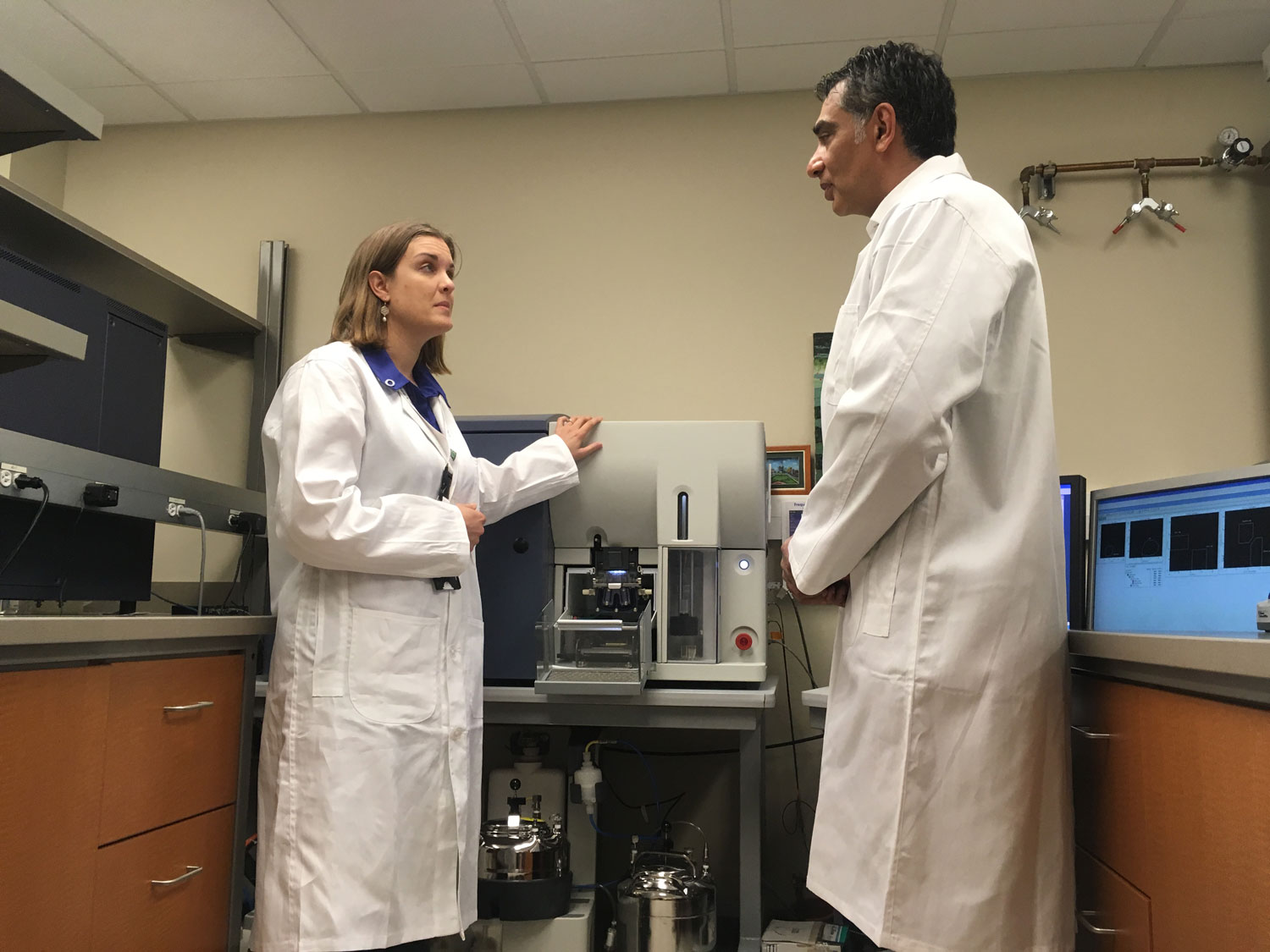
Credit: Heather Amos/UBC News

The University of British Columbia has received more than $27 million in funding from the provincial government for a number of research infrastructure projects, announced today by Honourable Amrik Virk, Minister of Technology, Innovation and Citizens’ Services.

The investment from the BC Knowledge and Development Fund (BCKDF) will help cover the costs of new laboratories, facilities and equipment for 40 research projects ranging from investigations into childhood diabetes to genome sequencing and cancer treatment.

“As one of the world’s top academic institutions, UBC is grateful for the provincial government’s support so our talented scientists can make new discoveries in areas like health, life sciences, and science and technology,” said Helen Burt, UBC associate vice-president, research and international. “This investment in UBC has the potential to bring significant social and economic benefits to all British Columbians.”

Among the funded projects is the Canucks for Kids Fund Childhood Diabetes Laboratories, led by UBC diabetes researcher Bruce Verchere at BC Children’s Hospital, an agency of the Provincial Health Services Authority. A $3.2 million funding investment in new state-of-the-art technology will help further research into diabetes prediction, treatment and prevention.

“The research enabled by this infrastructure will lead to new ways to predict, prevent, and treat diabetes for the many children in this province affected by this devastating disease,” said Verchere.

Established in 1998, BCKDF investments are meant to strengthen scientific research and foster talent at post-secondary institutions, research hospitals and affiliated non-profit agencies across the province.

For more information about today’s announcement, and a full list of the funded UBC research projects, click here.

Additional quotes:

Amrik Virk, Minister of Technology, Innovation and Citizens’ Services –

“As part of our #BCTECH Strategy, the BCKDF provides investments in research and innovation that will explore new frontiers in life sciences, rehabilitation and sport performance, and astrophysics, among many other technology sectors. As one of the top three fastest private-sector job creators over the last decade, B.C.’s tech sector is driving our economy and generating desirable jobs for highly-skilled and creative British Columbians.”

Andrew Wilkinson, Minister of Advanced Education –

“Our government invests tens of millions of dollars in innovation at public post-secondary institutions to build on the growth and diversification of our economy and advance technology. Research at UBC offers students hands-on study opportunities and leads to the jobs and investment that makes our technology sector an important contributor to the provincial economy.”

Minister of Technology, Innovation & Citizens’ Services, Amrik Virk, speaks with researcher at BC Children’s Hospital Tuesday.

http://www.kurzweilai.net/transistor-based-biosensor-detects-molecules-linked-to-cancer-alzheimers-and-parkinsons

Transistor-based biosensor detects molecules linked to cancer, Alzheimer’s, and Parkinson’s

May 23, 2016

An inexpensive portable biosensor developed by researchers at Brazil’s National Nanotechnology Laboratory (credit: LNNano)

A novel nanoscale organic transistor-based biosensor that can detect molecules associated with neurodegenerative diseases and some types of cancer has been developed by researchers at the National Nanotechnology Laboratory (LNNano) in Brazil.

The transistor, mounted on a glass slide, contains the reduced form of the peptide glutathione (GSH), which reacts in a specific way when it comes into contact with the enzyme glutathione S-transferase (GST), linked to Parkinson’s, Alzheimer’s and breast cancer, among other diseases.

Sensitive water-gated copper phthalocyanine (CuPc) thin-film transistor (credit: Rafael Furlan de Oliveira et al./Organic Electronics)

“The device can detect such molecules even when they’re present at very low levels in the examined material, thanks to its nanometric sensitivity,” explained Carlos Cesar Bof Bufon, Head of LNNano’s Functional Devices & Systems Lab (DSF).

Bufon said the system can be adapted to detect other substances by replacing the analytes (detection compounds). The team is working on paper-based biosensors to further lower the cost, improve portability, and facilitate fabrication and disposal.

The research is published in the journal Organic Electronics.


Abstract of Water-gated phthalocyanine transistors: Operation and transduction of the peptide–enzyme interaction

The use of aqueous solutions as the gate medium is an attractive strategy to obtain high charge carrier density (1012 cm−2) and low operational voltages (<1 V) in organic transistors. Additionally, it provides a simple and favorable architecture to couple both ionic and electronic domains in a single device, which is crucial for the development of novel technologies in bioelectronics. Here, we demonstrate the operation of transistors containing copper phthalocyanine (CuPc) thin-films gated with water and discuss the charge dynamics at the CuPc/water interface. Without the need for complex multilayer patterning, or the use of surface treatments, water-gated CuPc transistors exhibited low threshold (100 ± 20 mV) and working voltages (<1 V) compared to conventional CuPc transistors, along with similar charge carrier mobilities (1.2 ± 0.2) x 10−3 cm2 V−1 s−1. Several device characteristics such as moderate switching speeds and hysteresis, associated with high capacitances at low frequencies upon bias application (3.4–12 μF cm−2), indicate the occurrence of interfacial ion doping. Finally, water-gated CuPc OTFTs were employed in the transduction of the biospecific interaction between tripeptide reduced glutathione (GSH) and glutathione S-transferase (GST) enzyme, taking advantage of the device sensitivity and multiparametricity.

http://www.kurzweilai.net/cancer-patient-big-data-can-save-lives-if-shared-globally

Cancer-patient big data can save lives if shared globally

May 23, 2016

Data-sharing vision as facilitated by GA4GH through its working groups (credit: GA4GH)

Sharing genetic information from millions of cancer patients around the world could revolutionize cancer prevention and care, according to a paper in Nature Medicine by the Cancer Task Team of the Global Alliance for Genomics and Health (GA4GH).

Hospitals, laboratories and research facilities around the world hold huge amounts of this data from cancer patients, but it’s currently held in isolated “silos” that don’t talk to each other, according to GA4GH, a partnership between scientists, clinicians, patients, and the IT and Life Sciences industry, involving more than 400 organizations in over 40 countries. GA4GH intends to provide a common framework for the responsible, voluntary and secure sharing of patients’ clinical and genomic data.

A searchable global cancer database

“Imagine if we could create a searchable cancer database that allowed doctors to match patients from different parts of the world with suitable clinical trials,” said GA4GH co-chair professor Mark Lawler, a leading cancer expert fromQueen’s University Belfast. “This genetic matchmaking approach would allow us to develop personalized treatments for each individual’s cancer, precisely targeting rogue cells and improving outcomes for patients.

“This data sharing presents logistical, technical, and ethical challenges. Our paper highlights these challenges and proposes potential solutions to allow the sharing of data in a timely, responsible and effective manner. We hope this blueprint will be adopted by researchers around the world and enable a unified global approach to unlocking the value of data for enhanced patient care.”

GA4GH acknowledges that there are security issues, and has created a Security Working Group and a policy paper that documents the standards and implementation practices for protecting the privacy and security of shared genomic and clinical data.

Examples of current initiatives for clinico-genomic data-sharing include the U.S.-based Precision Medicine Initiative and the UK’s 100,000 Genomes Project, both of which have cancer as a major focus.

Professor Lawler is funded by the Medical Research Council and Cancer Research UK.


Abstract of Facilitating a culture of responsible and effective sharing of cancer genome data

Rapid and affordable tumor molecular profiling has led to an explosion of clinical and genomic data poised to enhance the diagnosis, prognostication and treatment of cancer. A critical point has now been reached at which the analysis and storage of annotated clinical and genomic information in unconnected silos will stall the advancement of precision cancer care. Information systems must be harmonized to overcome the multiple technical and logistical barriers to data sharing. Against this backdrop, the Global Alliance for Genomic Health (GA4GH) was established in 2013 to create a common framework that enables responsible, voluntary and secure sharing of clinical and genomic data. This Perspective from the GA4GH Clinical Working Group Cancer Task Team highlights the data-aggregation challenges faced by the field, suggests potential collaborative solutions and describes how GA4GH can catalyze a harmonized data-sharing culture.

http://www.kurzweilai.net/no-longer-junk-dna-shedding-light-on-the-dark-matter-of-the-genome

No longer ‘junk DNA’ — shedding light on the ‘dark matter’ of the genome

A new tool called “LIGR-Seq” enables scientists to explore in depth what non-coding RNAs actually do in human cells
May 23, 2016

The LIGR-seq method for global-scale mapping of RNA-RNA interactions in vivo to reveal unexpected functions for uncharacterized RNAs that act via base-pairing interactions (credit: University of Toronto)

What used to be dismissed by many as “junk DNA” has now become vitally important, as accelerating genomic data points to the importance of non-coding RNAs (ncRNAs) — a genome’s messages that do not specifically code for proteins — in development and disease.

But our progress in understanding these molecules has been slow because of the lack of technologies that allow for systematic mapping of their functions.

Now, professor Benjamin Blencowe’s team at the University of Toronto’s Donnelly Centre has developed a method called “LIGR-seq” that enables scientists to explore in depth what ncRNAs do in human cells.

The study, described in Molecular Cell, was published on May 19, along with two other papers, in Molecular Cell and Cell, respectively, from Yue Wan’s group at the Genome Institute of Singapore and Howard Chang’s group at Stanford University in California, who developed similar methods to study RNAs in different organisms.

So what exactly do ncRNAs do?

mRNAs vs. ncRNAs (credit: Thomas Shafee/CC)

Of the 3 billion letters in the human genome, only two per cent make up the protein-coding genes. The genes are copied, or transcribed, into messenger RNA (mRNA) molecules, which provide templates for building proteins that do most of the work in the cell. Much of the remaining 98 per cent of the genome was initially considered by some as lacking in functional importance. However, large swaths of the non-coding genome — between half and three quarters of it — are also copied into RNA.

So then what might the resulting ncRNAs do? That depends on whom you ask. Some researchers believe that most ncRNAs have no function, that they are just a by-product of the genome’s powerful transcription machinery that makes mRNA. However, it is emerging that many ncRNAs do have important roles in gene regulation — some ncRNAs act as carriages for shuttling the mRNAs around the cell, or provide a scaffold for other proteins and RNAs to attach to and do their jobs.

But the majority of available data has trickled in piecemeal or through serendipitous discovery. And with emerging evidence that ncRNAs could drive disease progression, such as cancer metastasis, there was a great need for a technology that would allow a systematic functional analysis of ncRNAs.

Up until now, with existing methods, you had to know what you are looking for because they all require you to have some information about the RNA of interest. The power of our method is that you don’t need to preselect your candidates; you can see what’s occurring globally in cells, and use that information to look at interesting things we have not seen before and how they are affecting biology,” says Eesha Sharma, a PhD candidate in Blencowe’s group who, along with postdoctoral fellow Tim Sterne-Weiler, co-developed the method.

A new ncRNA identification tool

The human RNA-RNA interactome, showing interactions detected by LIGR-seq (credit: University of Toronto)

The new ‘‘LIGation of interacting RNA and high-throughput sequencing’’ (LIGR-seq) tool captures interactions between different RNA molecules. When two RNA molecules have matching sequences — strings of letters copied from the DNA blueprint — they will stick together like Velcro. With LIGR-seq, the paired RNA structures are removed from cells and analyzed by state-of-the-art sequencing methods to precisely identify the RNAs that are stuck together.

Most researchers in the life sciences agree that there’s an urgent need to understand what ncRNAs do. This technology will open the door to developing a new understanding of ncRNA function,” says Blencowe, who is also a professor in the Department of Molecular Genetics.

Not having to rely on pre-existing knowledge will boost the discovery of RNA pairs that have never been seen before. Scientists can also, for the first time, look at RNA interactions as they occur in living cells, in all their complexity, unlike in the juices of mashed up cells that they had to rely on before. This is a bit like moving on to explore marine biology from collecting shells on the beach to scuba-diving among the coral reefs, where the scope for discovery is so much bigger.

Actually, ncRNAs come in multiple flavors: there’s rRNA, tRNA, snRNA, snoRNA, piRNA, miRNA, and lncRNA, to name a few, where prefixes reflect the RNA’s place in the cell or some aspect of its function. But the truth is that no one really knows the extent to which these ncRNAs control what goes on in the cell, or how they do this.

Discoveries

Nonetheless, the new technology developed by Blencowe’s group has been able to pick up new interactions involving all classes of RNAs and has already revealed some unexpected findings.

The team discovered new roles for small nucleolar RNAs (snoRNAs), which normally guide chemical modifications of other ncRNAs. It turns out that some snoRNAs can also regulate stability of a set of protein-coding mRNAs. In this way, snoRNAs can also directly influence which proteins are made, as well as their abundance, adding a new level of control in cell biology.

And this is only the tip of the iceberg; the researchers plan to further develop and apply their technology to investigate the ncRNAs in different settings.

“We would like to understand how ncRNAs function during development. We are particularly interested in their role in the formation of neurons. But we will also use our method to discover and map changes in RNA-RNA interactions in the context of human diseases,” says Blencowe.


Abstract of Global Mapping of Human RNA-RNA Interactions

The majority of the human genome is transcribed into non-coding (nc)RNAs that lack known biological functions or else are only partially characterized. Numerous characterized ncRNAs function via base pairing with target RNA sequences to direct their biological activities, which include critical roles in RNA processing, modification, turnover, and translation. To define roles for ncRNAs, we have developed a method enabling the global-scale mapping of RNA-RNA duplexes crosslinked in vivo, “LIGation of interacting RNA followed by high-throughput sequencing” (LIGR-seq). Applying this method in human cells reveals a remarkable landscape of RNA-RNA interactions involving all major classes of ncRNA and mRNA. LIGR-seq data reveal unexpected interactions between small nucleolar (sno)RNAs and mRNAs, including those involving the orphan C/D box snoRNA, SNORD83B, that control steady-state levels of its target mRNAs. LIGR-seq thus represents a powerful approach for illuminating the functions of the myriad of uncharacterized RNAs that act via base-pairing interactions.

http://www.phonearena.com/news/Apple-Watch-to-be-used-to-push-Cooks-health-agenda_id81446

Apple Watch to be used to push Cook’s health agenda

If it were up to Apple CEO Tim Cook, everyone in the world would be healthy. During a talk the Apple executive gave today in Amsterdam, Cook said that “If you look at some things we’re doing that don’t drive revenue but have massive interest from our teams, health is very much one of them.”

Speaking at Startup Fest Europe, Apple’s top executive hinted that the Apple Watch would be the device that in the future, would know everything about you. The device could issue a warning for its owner to see a doctor once the data it analyzes reveals a problem. He compared this to the warning system on a car that tells its owner when it needs maintenance.


“The holy grail of the watch is being able to monitor more and more of what’s going on in your body. If you could have a device that knew so much about you, it would be incredible, and would extend life and extend quality. I’m not saying one device will do all of that…If you drive for a while and your car gets too hot, it says pull over. If you need an oil change, it says check your oil. What’s the equivalent for the body? We believe health is a huge issue around the world and we think it’s ripe for simplicity and a new view.”-Tim Cook, CEO Apple

Despite Cook’s comments, the only changes expected to the next Apple Watch are a bigger battery, FaceTime capabilities and LTE connectivity. That means that we are going to have to wait for future generations of the Apple Watch to provide the features that Cook is talking about. While there are some third party apps that will monitor your sleep and track other health metrics, we are a long way from having your watch tell you when you need to have a check-up.

http://www.huffingtonpost.com/alexandra-zatarain/how-the-right-bedroom-set_b_10070744.html

How the Right Bedroom Setup Can Help You Sleep Better

The street I live on is extremely noisy and has a lot of light. And as much as I wantto control this, 95% of it comes from the busy NY streets. Add in a noisy AC andheating unit, and my husband and I are left in a game of constant compromising.

After two years working on my sleep tech company, I learned that external factors- including those in the environment we sleep in- have a significant impact in thequantity and quality of our sleep, particularly limiting the depth of sleep. If you canget these factors under control, you can significantly improve your sleep.

We’ve been able to make differences in our home that have allowed us to finallysleep through the night and optimize our bedroom, and here’s the seven steps toachieve the same in your own home.

A comfortable mattress
When it comes to your bedroom, most of it does come down to having the rightbed setup – and it starts with the mattress.

You don’t have to spend over $1,000 to have a comfortable mattress. But you dohave to pick what’s right for you, and that is not an easy feat. With hundreds ofmattress models in the market, you should begin by filtering mattress types first(memory foam, innerspring, or adjustable air), and then narrow to your price range.Have no idea where to start? The Mattress Nerd offers a comprehensive mattressbuying guide that you can consult here.

Regardless of your style, consider buying a mattress with a flexible return policy.Many young mattress companies offer trial periods of up to 100 days. This is agreat perk, and will you give you a much better sense of how the surface willimpact your back and sleep health than lying on a mattress in a store. A few nightsin a row will be the real test!

A bed frame at the right height

If your bed is too low or too tall you might have difficulty getting in or out of it.Here’s the test to find the right bed height for you: when you sit on the edge ofyour bed you should be able to touch the floor with the whole soles of your feet.This will determine what works best for your height and ergonomics.

Even feng shui teachings recommend you pay attention to the height of your bed,as you must allow the chi energy to flow all around it. The wrong height can blockthis flow and leave you vulnerable to energies that are too high (restless night) ortoo low (no restorative sleep).

The right sleep temperature
Temperature is one of the recurring reasons why we have trouble falling asleep orwhy we wake up during the night. A smart thermostat might be the answer to thisproblem, allowing you to schedule the right temperature for your night – whichsleep researchers have pointed out as somewhere between 60 and 67 degreesFahrenheit. A smart thermostat also has the ability to adjust throughout the nightso that it’s never too hot or too cold.

Your body also adjusts temperature throughout the night, so dress accordingly:the less the better so you can allow your body to do the work on its own.

Bed sheets for every season
When it comes to bed sheets, always keep different sets for each season. Asmentioned, temperature is going to be a major factor on your sleep optimization,and having the best sheets for each season will help you in maintaining a cooler orwarmer environment.

During the summer, opt for natural fibers which are more breathable than syntheticones. These include cotton or cotton blends like jersey, percale and sateen.Thread count also makes a difference, as sheets with a very high thread countdon’t let air pass through as much as lower thread count sheets do. Opt forsomething in the middle like 300 to 400.

For the winter, go for a thicker variation of cotton such as flannel, or for a syntheticblend like fleece. Fleece is made from polyester, ideal for anyone with allergiescaused by fabrics or dust.

A pillow for your sleeping position
The position you sleep on has a huge impact on the pillow you will perceive ascomfortable.

If you sleep on your back, try a memory foam pillow which provides consistentsupport to your neck by keeping your head at the right angle.

If you sleep on your side, you should place a pillow between your knees toimprove the alignment of your spine, while using a medium to firm pillow for yourhead.

If you sleep on your stomach (which is not an ideal position for your back andneck), you should try a body pillow. Using a giant body pillow can help you adaptyour position overtime to sleep on your side, while still feeling as if you were onyour stomach.

Remember to change your pillows every 4 to 5 years or as soon as you don’t feelcomfortable with them anymore.

Blackout curtains and noise-cancelling panels
It’s easy to control the light inside your bedroom by not going to bed with lights orTVs on. For lights coming from the outside, I recommend you invest in blackoutcurtains. They are the best bet to minimize light disturbances which can easilyinterrupt your sleep.

Noise might be tougher to control, but there are solutions in the market that canmake a difference. The first solution I suggest you try is noise-cancelling panels. Afew months ago I purchased 8 panels from Audimute, and hanged them on mybedroom walls. Even though they are off-white in color – like the walls- they are notthe prettiest solution, but they work. The panels have significantly reduced theecho from outside noises bouncing between my bedroom walls. There are differenttypes of panels, so you can explore what works best for your room’s setup.

A second recommendation is white noise machines, which can neutralizeenvironmental sounds. You can test white noise solutions on mobile apps first, andsee if this works for you before investing in more expensive noise generatingmachines.

Air that is humid-enough

Extreme weather conditions impact our mood, our health, and can even our sleep.When the air has a high humidity concentration, we feel hot and sweaty – whichmeans uncomfortable sleep. When the air is too dry, on the other end, our skin,eye and nasal passages dry out which is also uncomfortable.

The National Sleep Foundation recommends keeping the level of humidity in yourbedroom to 50% year-round. This means you might have to invest in adehumidifier in the summer, and a humidifier in the winter.

http://www.theglobeandmail.com/life/health-and-fitness/health/study-suggests-sleep-training-neednt-be-stressful-for-babies/article30128565/

Study suggests sleep training needn’t be stressful for babies

http://phys.org/news/2016-05-revealing-nature-magnetic-interactions-manganese.html

Revealing the nature of magnetic interactions in manganese oxide

May 24, 2016
Revealing the nature of magnetic interactions in manganese oxide
Magnetic structure of manganese oxide (MnO), with Mn ions as purple spheres and O ions as red spheres. The dashed purple line labeled J1 shows a direct-exchange interaction between nearest-neighbor Mn ions; J2 shows a superexchange …more

For nearly 60 years, scientists have been trying to determine how manganese oxide (MnO) achieves its long-range magnetic order of alternating up and down electron spins. Now, a team of scientists has used their recently developed mathematical approach to study the short-range magnetic interactions that they believe drive this long-range order. By comparing measurements of the local magnetic interactions in MnO with those predicted by competing theoretical models, they determined that the antiparallel electron spin alignment is due to neighboring Mn ions interacting magnetically through an intermediary nonmagnetic oxygen ion—a mechanism called superexchange.

The research was described in a paper published on May 11 in Physical Review Letters by a collaboration of scientists from the U.S. Department of Energy’s (DOE) Brookhaven National Laboratory, Columbia University, DOE’s Oak Ridge and Los Alamos National Laboratories, Institut Laue-Langevin in France, and the University of Warwick in England. The mathematical approach, called magnetic pair distribution function (mPDF) analysis, was developed at Brookhaven Lab and Columbia University. It holds great promise as a new tool for understanding the magnetic properties of superconductors, transition metal oxides, and other materials whose electrons strongly interact.

“This research demonstrates that our technique can be used to study fluctuating local magnetism and yield important scientific insights about a material’s magnetic properties, which are closely related to its ability to conduct electricity without resistance (superconductivity), change electrical resistance under an applied magnetic field (magnetoresistance), and transition from a conducting to an insulating state,” said Brookhaven Lab physicist and Columbia University School of Engineering Professor Simon Billinge, lead author on the paper and co-developer of mPDF. “If we can understand how materials get these properties, we can make power transmission more efficient, increase data-storage capacity, and build smaller electrical components.”

Magnetism in manganese oxide

At low temperatures, the magnetic moments, or , of neighboring Mn ions spontaneously line up in an ordered, alternating up-down-up-down pattern. As the temperature is increased, the magnetic moments start to vibrate and become less ordered. Above a critical temperature of 118 Kelvin, the long-range antiparallel order seems to disappear entirely, with the magnetic moments randomly fluctuating.

However, even above 118 Kelvin, scientists have observed fleeting, short-ranged remnants of magnetic order in the fluctuating moments, which are expected to contain crucial information about the nature of the magnetic interactions. Unfortunately, these short-ranged correlations have been very difficult to study because conventional measurement techniques are not sensitive enough to capture the details of the correlations, such as how the magnetic moments are arranged on the nanometer scale. mPDF is intended to rectify this problem.

“The ultimate goal of our research is to understand what causes these magnetic moments to line up,” said Billinge.

In the MnO structure, there are Mn-O-Mn chains, and the O ion can serve as a “bridge” for the second-nearest neighbor Mn ions to exchange magnetic information through electron hops—an interaction called superexchange. Alternatively, Mn ions can directly exchange magnetic information through first-nearest neighbors (ions that are diagonal from one another) by direct electron hops through space. Both mechanisms are known to occur, but it has been unclear which one is dominant.

“Determining which of these two interactions—those between nearest neighbor spins or second-nearest neighbor spins—is primarily responsible for the ordering of the magnetic moments is key to understanding how the material gets its ,” said Benjamin Frandsen, a Columbia University graduate student in Billinge’s group and the main developer of mPDF.

Examining the short-range magnetic correlations that exist above the critical temperature provides unique information about the magnetic interactions that drive the long-range correlations at lower temperatures.

Animation showing how the magnetic moments in manganese oxide (MnO) fluctuate at different temperatures. The orderly antiparallel alignment of the Mn ions is maintained at lower temperatures. At higher temperatures, this long-range order disappears, …more

“As the temperature is increased, the magnetic correlations over long ranges are lost. Five neighbors over from an Mn ion, the electron spins are completely random,” said Billinge. “But there are remnants of what the locally ordered state looked like. Using mPDF, we can measure patches of remaining magnetic order, even when these patches are fluctuating and short-range ordered only, and compare predictions of competing models based on superexchange versus direct-exchange interactions.”

Nuclear and magnetic scattering data analysis

To measure the correlations, the team first conducted neutron scattering experiments to collect the data needed to apply their technique. They directed beams of neutrons at a powder sample of MnO for temperatures between 15 Kelvin and 300 Kelvin and detected the angle and energy at which the neutrons were scattered after interacting with the sample. They measured two types of scattering signals: nuclear (how the neutrons interacted with sample’s atomic nuclei) and magnetic (how the neutrons’ magnetic moments interacted with the of Mn ions).

From these signals, the team simultaneously calculated the atomic and magnetic pair distribution functions (PDF), mathematical equations that represent correlations in a sample. The atomic PDF is the probability of finding any two atoms separated by a given distance. The magnetic PDF is similar to the atomic PDF but also encodes information about the relative orientations of the electron spins.

The scientists then compared these experimental measurements with the PDF signals calculated by structural and magnetic models of MnO. They also fitted models of atomic structure and magnetic order to the experimental PDF data—iteratively changing parameters such as the direction of electron spins on each Mn ion or the position of Mn ions—until the computed PDF agreed with the measured PDF. Both of these modeling capabilities are available in a software program called mPDF that the team recently made available to other scientists.

At temperatures above 118 Kelvin, the measurements revealed that local atomic structure of MnO was slightly distorted from cubic to rhombohedral, while the long-range average structure remained cubic. Analysis of the mPDF signals confirmed the existence of short-range magnetic correlations at these temperatures and revealed that they are subtly different from those in the long-range magnetic structure.

“The local structure exhibits a slightly different type of magnetic order than that found in the low-temperature average structure—for example, the second-nearest neighbor spins have significantly stronger local correlations than would be expected from the low-temperature structure,” said Frandsen. “Our experimental mPDF signals do not match the signals generated by the known long-range .”

To compare competing theories for magnetic exchange, Julie Staunton of the University of Warwick led the team in calculating the magnetic correlations at high temperatures for several different magnetic exchange ratios between first- and second-nearest neighbors. The value of these ratios is theoretically predicted to be lower for interactions dominated by superexchange and higher for direct exchange. Using the calculated magnetic correlations, the scientists then calculated the mPDF and compared it to the experimental data. The predicted and experimentally observed ratios were close in value, and both pointed toward a superexchange model of magnetic interactions in MnO.

Now that scientists know that superexchange is the dominant mechanism for magnetic exchange in MnO, the next step is to determine why.

Billinge and Frandsen are also interested in using their technique to explore the in other materials.

“Our technique provides a new diagnostic tool for studying the physics of strongly correlated electron systems. If we can understand the physics of these systems—how their magnetic, electronic, and structural properties relate—we can design new materials for specific applications,” said Billinge.

Explore further: Scientists uncover clues to role of magnetism in iron-based superconductors

More information: Benjamin A. Frandsen et al, Verification of Anderson Superexchange in MnO via Magnetic Pair Distribution Function Analysis andTheory, Physical Review Letters (2016). DOI: 10.1103/PhysRevLett.116.197204

http://phys.org/news/2016-05-hubble-clues-birth-supermassive-black.html

Hubble finds clues to the birth of supermassive black holes

May 24, 2016
Hubble finds clues to the birth of supermassive black holes
This artist’s impression shows a possible seed for the formation of a supermassive black hole. Two of these possible seeds were discovered by an Italian team, using three space telescopes: the NASA Chandra X-ray Observatory, the NASA/ESA …more

Astrophysicists have taken a major step forward in understanding how supermassive black holes formed. Using data from Hubble and two other space telescopes, Italian researchers have found the best evidence yet for the seeds that ultimately grow into these cosmic giants.

For years astronomers have debated how the earliest generation of supermassive black holes formed very quickly, relatively speaking, after the Big Bang. Now, an Italian team has identified two objects in the early Universe that seem to be the origin of these early supermassive black holes. The two objects represent the most promising black hole seed candidates found so far.

The group used computer models and applied a new analysis method to data from the NASA Chandra X-ray Observatory, the NASA/ESA Hubble Space Telescope, and the NASA Spitzer Space Telescope to find and identify the two objects. Both of these newly discovered black hole seed candidates are seen less than a billion years after the Big Bang and have an initial mass of about 100 000 times the Sun.

“Our discovery, if confirmed, would explain how these monster black holes were born,” said Fabio Pacucci, lead author of the study, of Scuola Normale Superiore in Pisa, Italy.

This new result helps to explain why we see supermassive black holes less than one billion years after the Big Bang.

Hubble finds clues to the birth of supermassive black holes
This image shows one of two detected supermassive black hole seeds, OBJ29323, as it is seen by the NASA/ESA Hubble Space Telescope. Credit: NASA/STScI/ESA

There are two main theories to explain the formation of supermassive black holes in the early Universe. One assumes that the seeds grow out of black holes with a mass about ten to a hundred times greater than our Sun, as expected for the collapse of a massive star. The black hole seeds then grew through mergers with other small black holes and by pulling in gas from their surroundings. However, they would have to grow at an unusually high rate to reach the mass of already discovered in the billion years young Universe.

The new findings support another scenario where at least some very seeds with 100 000 times the mass of the Sun formed directly when a massive cloud of gas collapses. In this case the growth of the black holes would be jump started, and would proceed more quickly.

“There is a lot of controversy over which path these black holes take,” said co-author Andrea Ferrara also of Scuola Normale Superiore. “Our work suggests we are converging on one answer, where black holes start big and grow at the normal rate, rather than starting small and growing at a very fast rate.”

Andrea Grazian, a co-author from the National Institute for Astrophysics in Italy explains: “Black hole seeds are extremely hard to find and confirming their detection is very difficult. However, we think our research has uncovered the two best candidates so far.”

Even though both black hole seed candidates match the theoretical predictions, further observations are needed to confirm their true nature. To fully distinguish between the two formation theories, it will also be necessary to find more candidates.

The team plans to conduct follow-up observations in X-rays and in the infrared range to check whether the two objects have more of the properties expected for black hole seeds. Upcoming observatories, like the NASA/ESA/CSA James Webb Space Telescope and the European Extremely Large Telescope will certainly mark a breakthrough in this field, by detecting even smaller and more distant .

The findings will appear in an upcoming issue of the Monthly Notices of the Royal Astronomical Society.

Explore further: Oxymoronic black hole RGG 118 provides clues to growth

More information: “First Identification of Direct Collapse Black Hole Candidates in the Early Universe in CANDELS/GOODS-S,” Fabio Pacucci et al., 2016, Monthly Notices of the Royal Astronomical Society ,mnras.oxfordjournals.org/content/459/2/1432.abstract , arxiv.org/abs/1603.08522