http://www.kurzweilai.net/gene-helps-prevent-heart-attack-stroke-may-also-block-effects-of-aging

Gene helps prevent heart attack, stroke; may also block effects of aging

May turn out to be the “fountain-of-youth gene,” say researchers
May 22, 2016

An atherosclerotic lesion. Such lesions can rupture and cause heart attacks and strokes. (credit: UVA School of Medicine)

University of Virginia School of Medicine have discovered that a gene called Oct4 — which scientific dogma insists is inactive in adults — actually plays a vital role in preventing ruptured atherosclerotic plaques inside blood vessels, the underlying cause of most heart attacks and strokes.

The researchers found that Oct4 controls the conversion of smooth muscle cells into protective fibrous “caps” inside plaques, making the plaques less likely to rupture. They also discovered that the gene promotes many changes in gene expression that are beneficial in stabilizing the plaques. In addition, the researchers believe it may be possible to develop drugs or other therapeutic agents that target the Oct4 pathway as a way to reduce the incidence of heart attacks or stroke.

Could impact many human diseases, regenerative medicine

The researchers are also currently testing Oct4′s possible role in repairing cellular damage and healing wounds, which would make it useful for regenerative medicine.

Oct4 is one of the “stem cell pluripotency factors” described by Shinya Yamanaka, PhD, of Kyoto University, for which he received the 2012 Nobel Prize. His lab and many others have shown that artificial over-expression of Oct4 within somatic cells grown in a lab dish is essential for reprogramming these cells into induced pluripotential stem cells, which can then develop into any cell type in the body or even an entire organism.

“Finding a way to reactivate this pathway may have profound implications for health and aging,” said researcher Gary K. Owens, director of UVA’s Robert M. Berne Cardiovascular Research Center. “This could impact many human diseases and the field of regenerative medicine. [It may also] end up being the ‘fountain-of-youth gene,’ a way to revitalize old and worn-out cells.”

The discovery is described in a paper published online in Nature Medicine. The work was funded by the National Institutes of Health, the Russian Science Foundation, the Russian Federal Agency of Scientific Organization, and the U.S. Department of Defense.


Abstract of Activation of the pluripotency factor OCT4 in smooth muscle cells is atheroprotective

Although somatic cell activation of the embryonic stem cell (ESC) pluripotency factor OCT4 has been reported, this previous work has been controversial and has not demonstrated a functional role for OCT4 in somatic cells. Here we demonstrate that smooth muscle cell (SMC)-specific conditional knockout of Oct4 in Apoe−/− mice resulted in increased lesion size and changes in lesion composition that are consistent with decreased plaque stability, including a thinner fibrous cap, increased necrotic core area, and increased intraplaque hemorrhage. Results of SMC-lineage-tracing studies showed that these effects were probably the result of marked reductions in SMC numbers within lesions and SMC investment within the fibrous cap, which may result from impaired SMC migration. The reactivation of Oct4 within SMCs was associated with hydroxymethylation of the Oct4promoter and was hypoxia inducible factor-1α (HIF-1α, encoded by HIF1A) and Krüppel-like factor-4 (KLF4)-dependent. These results provide the first direct evidence that OCT4 has a functional role in somatic cells, and they highlight the potential role of OCT4 in normal and diseased somatic cells.

https://www.rt.com/usa/344000-nasa-asteroid-mission-craft/

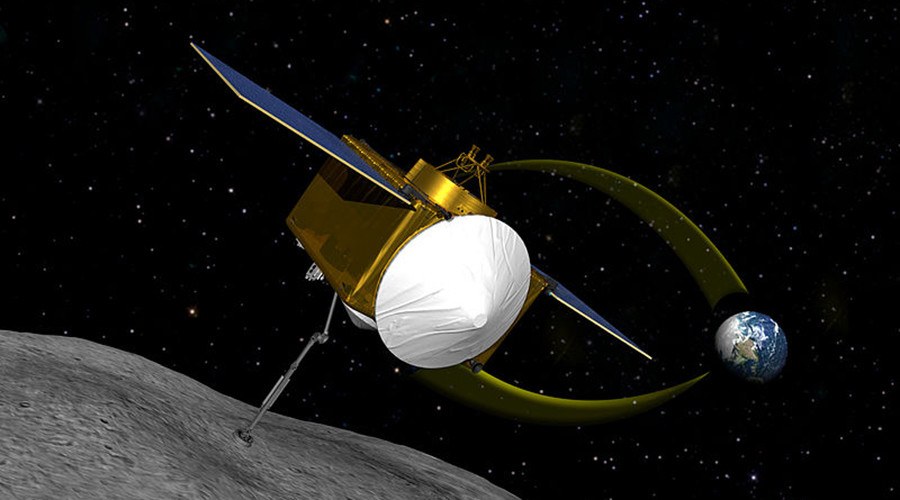
OSIRIS Re-X asteroid-bound spacecraft arrives at NASA’s Kennedy Space Center

© wikipedia.org
88
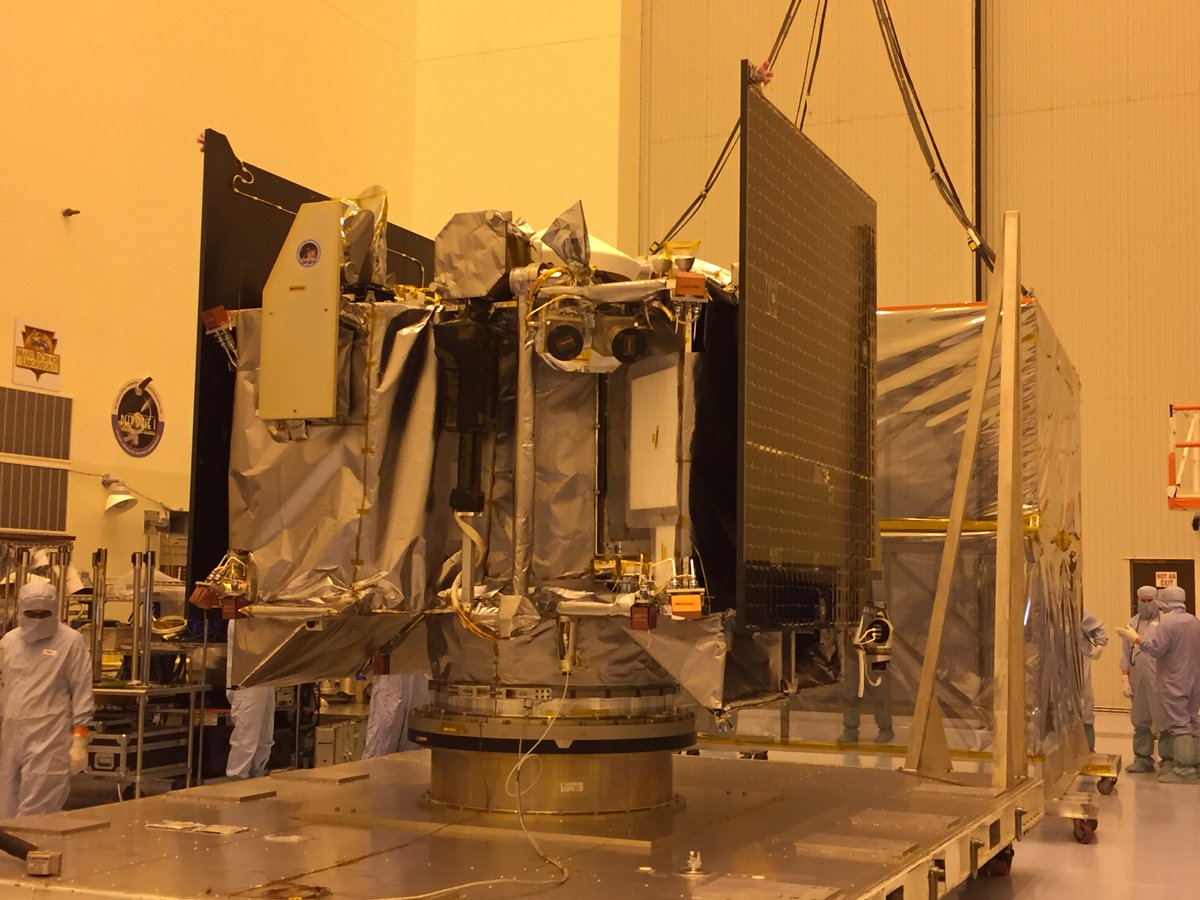
A spacecraft that scientists hope could obtain samples from asteroids is one step closer to its journey after arriving at NASA’s Kennedy Space Center in Florida, where it will undergo final preparations before its expected launch in September 2016.

The craft, which will be used for the mission, has a rather long name: the Origins-Spectral Interpretation-Resource Identification-Security-Regolith Explorer. To avoid such a mouthful, it is also known as the OSIRIS-REx, and will be the first mission carried out by the US to try and obtain samples from an asteroid and bring them back to earth.

The spacecraft was transported from Lockeed Martin in Colorado aboard a US Air Force C-17 plane. It is now undergoing testing and cleaning at the space center to get it ready for its mission.

“It’s a great adventure to explore an unknown world. We are going to reach out and touch it, and we are going to bring treasure back to Earth,” said Dante Lauretta, the OSIRIS-REx principal investigator, according to Space Flight Now.

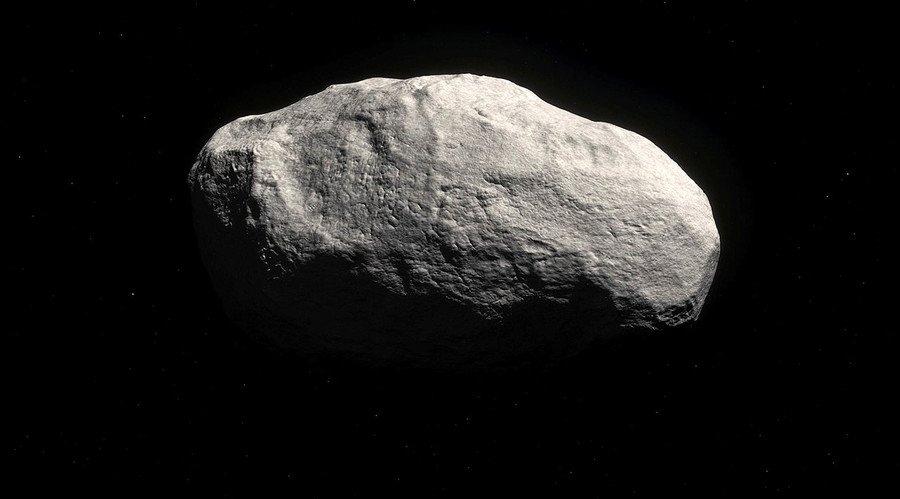
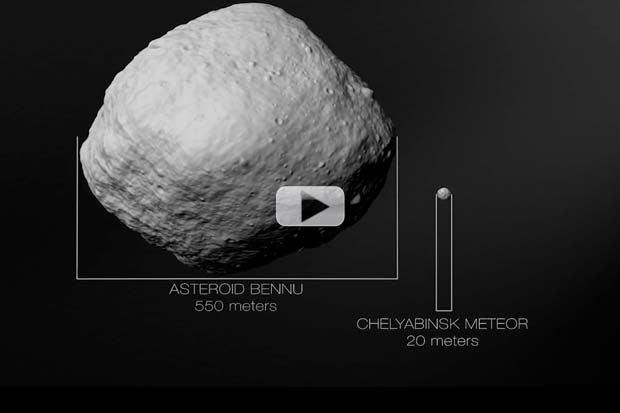
The Bennu asteroid is around the size of six football fields. Scientists believe that little has altered on the asteroid and therefore it will give them an idea of what life was like during the infancy of the solar system.

“The asteroids record the earliest stages of the solar system, so it really is time capsule from the very dawn in the history of our solar system,” Lauretta said, Space Flight Now reported.

“My dream is that we find something that is unique, that is not represented in our meteorite collection, that is really organically-rich material on the surface of this asteroid that holds all kinds of scientific treasures about the origin of life and organic molecular evolution in the solar system.”

The asteroid is also likely to be rich in carbon, which is a key element need for life forms. The scientists will also look to see if there are any forms of life on Bennu.

The asteroid has also been identified as a threat to Earth in the future, as it could collide with our planet, according to Humberto Campins from the University of Florida, who spoke to the Orlando Sentinel.

“Of those [asteroids] that could threaten Earth in the future this one could,” said Campins.

Japan has already sent a probe into space in order to take samples from an asteroid. The Hayabusa craft managed to return more than 1,500 grains of dustform from the asteroid 25143 Itokawa when it landed in the Australian desert in 2010 following its space mission. A second probe Haybusa-2 is currently in space and is set to land on an asteroid in 2018 in order to collect more samples.

http://www.ibtimes.co.uk/airbus-builds-first-alien-looking-3d-printed-motorcycle-1561244

Airbus builds first alien-looking 3D-printed motorcycle

The Light Rider, made from aluminium alloy particles, runs on electric power and is 30% lighter than other motorcyclesAP Works
Have you ever wanted an alien-looking motorbike? A 3D-printed motorcycle that looks like a next-gen alien-like machine has been developed by aeronautics giant Airbus’ subsidiary firm AP Works, which, according to the company, is the world’s first 3D printed functional bike. The bike has been made not from plastic but from aircraft grade aluminium alloy particles and runs on electric power.

Aptly named the Light Rider, the bike weighs a mere 77 pounds (35kg) and is powered by a six kilowatt electric engine, which helps it attain zero to 50mph in just a few seconds. The hollow frame, which looks similar to an exoskeleton of sorts, was made using a selective 3D-printing system.

When designing the motorcycle, AP Works’ intention was to use bionic structures and growth patterns inspired by nature, which is what the firm incorporated in its design algorithm. The frame itself was made by melting aluminium alloy particles in a 3D laser printing system, which enabled the firm to make some parts of the frame hollow. The hollow parts of the frame encase several cables and pipes, which run through the structure and allow the bike to be functional.

Airbus has manufactured a very limited number of Light Riders, each of which has been priced at $56, 095 (£38,663).

http://www.marketwatch.com/story/toyota-and-segway-inventor-team-up-on-stair-climbing-wheelchair-2016-05-21

Toyota and Segway inventor team up on stair-climbing wheelchair

DEKA Research and Development
Prototype of next-generation iBOT base
Toyota Motor North America said Saturday it will work with DEKA Research and Development — the company founded by Segway inventor Dean Kamen — to help launch the next-generation iBOT motorized wheelchairs that are designed to navigate stairs and lift users to stand face-to-face with companions.

For its part, Toyota will license balancing technologies held by DEKA and its affiliate for medical rehabilitative therapy and potentially other purposes. The companies said they continue to engage in ongoing discussions about how Toyota can further support DEKA and its mobility assistance technology.

DEKA stopped selling the iBOT specialized wheelchair in 2009 but its next generation is poised for a comeback due in part to Toyota’s involvement, Kamen said. Financial details were not immediately available.
In November, Toyota said it would spend $1 billion on an initial five-year investment for research focused on artificial intelligence and robotics, including non-automotive goals such as elderly mobility.

“Our company is very focused on mobility solutions for all people,” Osamu “Simon” Nagata, executive vice president and chief administrative officer at Toyota Motor North America TM, +1.00% said Saturday at the Paralyzed Veterans of America’s 70th Annual Convention.

The iBOT is a motorized wheelchair with two sets of powered wheels that can be rotated to allow the user to “walk” up and down stairs. The wheelchair allows users to rise from a sitting level to approximately six feet in height and travel in this “standing” configuration, and is capable of traveling through a wide variety of terrain types.

Kamen also invented the Segway, the two-wheeled, self-balancing electric personal transporter now often used by tour groups.

https://www.theguardian.com/technology/2016/may/21/battery-energy-storage-technology-breakthrough

Huge profits in store for firm that can make a great leap in battery technology

From the phones in our pockets to the cars on our roads, almost everything with an electrical circuit needs a battery. But while the rest of the technology industry has made great leaps over the past couple of decades, batteries have not.

The shortcomings of batteries are now one of the biggest bottlenecks in transport, energy, infrastructure and more. Our power demands are ever-increasing, but our ability to carry or store power is limited. Smartphones barely last a day, electric vehicles have much shorter ranges than petrol or diesel cars, and storing energy from sources such as solar panels is difficult.

A breakthrough in energy storage is sorely needed, and many companies, including some of the oil giants, are working on it. There’s a potentially lucrative market for those that succeed, but the limitations imposed by the chemistry of batteries have proved difficult to overcome.

The biggest problem is energy density – how much energy can be stored in a given size and weight. Lithium-ion batteries, first introduced in 1991 and used in phones, cars and other rechargeable devices, store between 150 and 250 watt-hours per kilogram (Wh/kg). To put that in perspective, a fridge uses around 1,600 Wh a day, and petrol stores about of 13,000 Wh/kg – or more than 50 times the energy of even the best lithium-ion batteries.

There are battery chemistries that used other metals, or elements such as sulphur or silicon, but researchers have struggled to increase energy density and meet strict safety requirements.

A Tesla home battery being installed at a house in Cardiff.
Facebook Twitter Pinterest
A Tesla home battery being installed at a house in Cardiff. Photograph: Gareth Phillips for the Guardian
“The more energy you put into a box, the more dangerous it will be,” says Billy Wu of the Dyson School of Design Engineering at Imperial College London. “Safety is key and thermal management is crucial. If a battery heats up beyond 80C, the components start to decompose. That’s when it can explode.”

Advertisement

That’s not the kind of explosion manufacturers are after. The battery market is forecast to be worth $120bn in 2019 according to industry research firm Freedonia Group, and vacuum cleaner firm Dyson recently joined electric carmaker Tesla, Korea’s Samsung, Panasonic of Japan and IBM in investing heavily in battery research.

Tesla’s electric cars have a claimed range of 200-300 miles per charge, and the company recently entered the home battery market. Working with Panasonic, it is investing $5bn in what has been dubbed the “gigafactory”. Making batteries on a large scale will be crucial for pushing electric cars into the mass market. Currently the battery makes up about 20% of the price of a Tesla Model S, which costs from £58,300.

Many consider a range of 500 miles crucial – the distance an average petrol or diesel car can travel on a single tank. Since 2009, IBM’s Battery 500 Project has been working on lithium-air batteries, which have the potential to reach similar energy densities to petrol. But so far a commercial product has remained out of reach.

“A lot of people talk about metal air systems, which are on the horizon, but are 20 years away from any commercialisation,” says Wu.

Dyson’s recent £1bn investment in battery technology has shone a light on one promising area of research. Last October, the British company acquired University of Michigan spin-off Sakti3, which is developing solid-state batteries with twice the energy density of lithium-ion versions. They use a solid polymer instead of the electrolyte paste, and potentially offer faster charging times as well.

Beyond consumer applications, much research has focused on energy supply. “The problem with renewable energy sources such as solar and wind is that they’re intermittent, and can sometimes produce too much power, which has to be dumped to avoid overloading the grid,” says Wu.

Storing that energy in batteries would help even out supply. But right now that kind of storage, be it in large-scale battery banks or at home, is limited in the same way as in consumer electronics. All commercial battery firms can do is try to get the most out of current lithium-ion cells.A big leap in battery technology is coming – but not quite yet.

http://arstechnica.com/cars/2016/05/four-hundred-miles-with-teslas-autopilot-forced-me-to-trust-the-machine/

Four hundred miles with Tesla’s autopilot forced me to trust the machine

A few weeks ago, I finally tried Tesla Motors’ “autopilot” feature. A Tesla rep and Itooled around Houston’s I-45 in a Model X crossover SUV for 15 minutes, just longenough to test the vehicle’s adaptive cruise/automatic lane-keeping wizardry. Once Itoggled on the autopilot, the rep relaxed by checking e-mail on her phone. This senta clear message: keep an eye on the dumb journalist when he’s driving the$140,000 SUV, but once the machine takes over, everything’s fine.

As we pulled back into the showroom (or whatever Texas’ insane dealershipprotection laws demand Tesla call the places it’s not allowed to sell or servicevehicles), I told the rep that I was driving to Austin soon; Autopilot would be just thething for the long stretches of empty road out on I-10 and TX-71. Without missing abeat, she offered me a loaner Model S.

Ars has officially driven a Model S with autopilot before, but only under controlledcircumstances. The Austin trip would let me take the car out for nearly four hundredmiles of driving in a big mix of traffic scenarios. Plus, I’d get to log more cockpit timein a Tesla. Of course I said yes. Who wouldn’t?

Video: On the road with the Tesla auto-steer and auto-cruise systems. Video edited by Jennifer Hahn.

My chariot

I’ve driven two previous Model S sedans on the approximately 400 mile (about 640km) Houston-Austin round trip—first a 2013 model P85+ and more recently a dual-motor P85D. Both trips were fun, since both times Teslaprovided the currently-most-powerful version of its sedan to hoon around in. True to form, the company againloaned me its top-end car: a dual-motor P90D with a 90kWh battery and the much ballyhooed “ludicrous mode“acceleration option (caution: there’s some NSFW language in that linked video).

The P90D looks and behaves much like previous Model S sedans. Its exterior is studded with sensors that candetect both the road and other vehicles, though unlike the P85D I drove, this P90D had the software installed totake full advantage of those sensors. (The entire Model S fleet produced with these extra sensors over the thepast year has since been software-upgraded to match the new vehicle’s capabilities.)

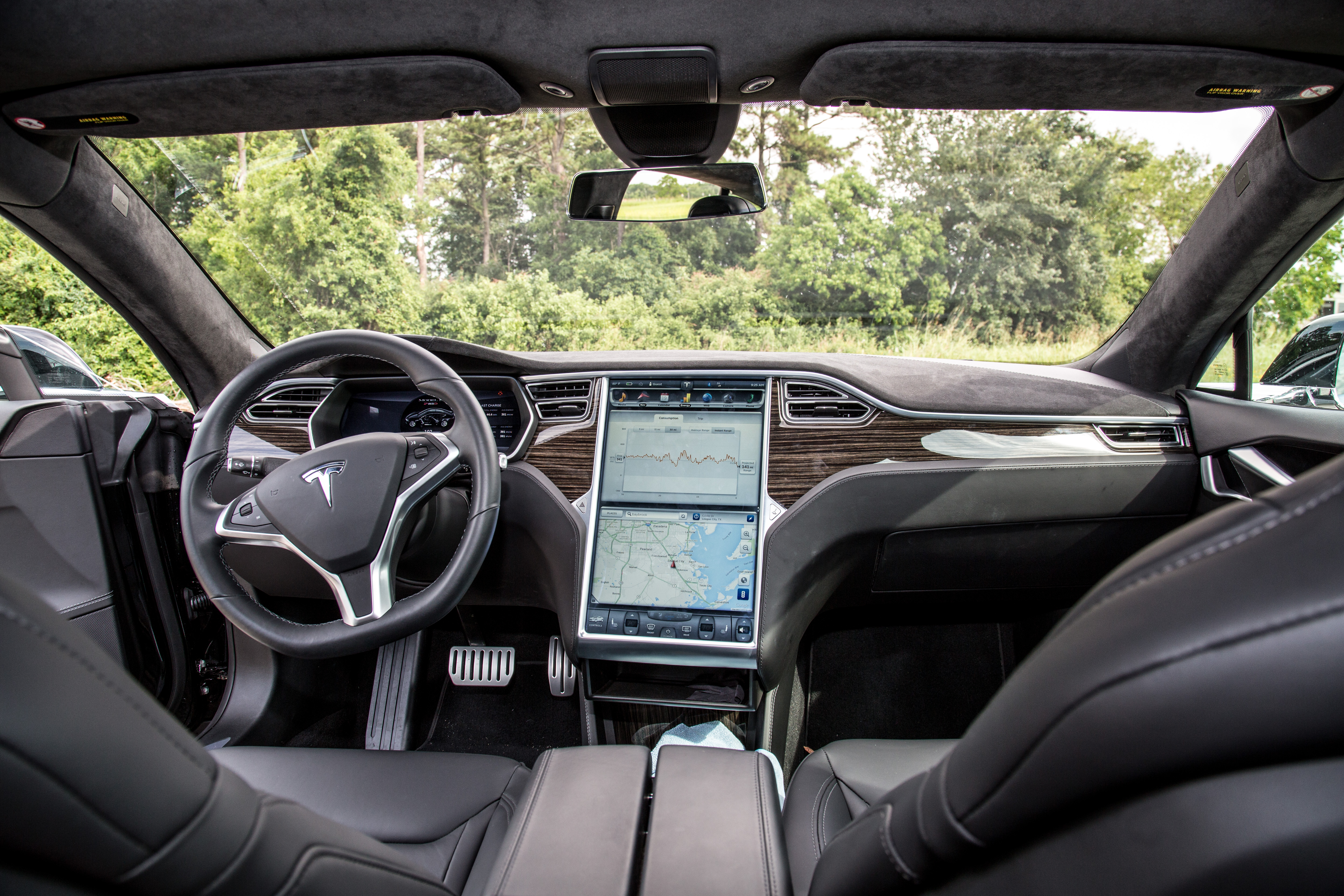
As I gingerly placed my butt in the matte leather driver’s seat of the pearly white P90D,another friendly Tesla rep gave me an unnecessary tour of the cockpit. Yes, I knew how theclimate control worked. Yes, I knew how to open the charge port. Yes, I knew how to engagethe auto-cruise and auto-steer. I was an old hand at Tesla-ing. Let’s get this show on theroad!

Perception, reality, and really good PR

My first jaunt was a 30-mile (48km) drive from the Houston Galleria showroom to my homeon the southeast side of town. Houston’s west 610 loop is in a constant state of rush hour,but the traffic mid-day was as light as it gets. It flowed along at maybe 40 miles per hour(64km/h) until the loop bent east and things opened up. Once I merged with traffic on theloop, I pulled the cruise stalk toward me twice to engage auto-cruise and auto-steer.

Enlarge / The Model S uses several sets of sensors, from optical to ultrasonic to radar, to maintain awareness of the traffic around you.
Tesla Motors

The car had already seen a 60mph (100km/h) speed limit sign, so it set that as its target speed. Since traffic wasmoving slower than the limit, my Tesla patiently paced the car ahead at a near-constant four car lengths. Itwisted the end of the cruise stalk forward and reduced that distance to two car lengths, which curbed theconstant flow of people jerking their cars angrily into the lane ahead of me (woe betide you if you leave a spacein Houston traffic). I forced myself to relax and hovered my hands over the wheel.

The car was driving itself. All I needed was a leather jacket and a two-way radio watch, and I’d be living out theKnight Rider fantasy I’d had since age 5.

Well, OK, this system isn’t revolutionary; adaptive cruise control (where your car paces itselfwith the car ahead) has existed for a decade or more, and automatic lane-keeping is at leastas old. Other car makers like Volvo, Mercedes, and Audi offer similar auto-cruise and auto-steer packages.

But if Tesla isn’t the first OEM to the autopilot table, it is certainly the loudest. The companydominates the marketing war—to the point that even folks who don’t particularly care aboutcars know the company’s story.

That evening, when I caught up with my next-door neighbor—not a particularly tech-centricperson—his eyes lit up. “That’s the electric car that drives itself, right?” he asked. He wanteda test drive.

The first leg: Getting out of town

I was due at my downtown Austin destination the next day at noon, so I set out at 7:30am with a fully chargedcar. From most points in Houston to most points in Austin takes three hours, but my trips begin with thedisadvantage of starting southeast of Houston and having to fight through the city’s morning rush hour (easilyadding an extra 60-90 minutes). I would also need at least 20-30 minutes at the Tesla Supercharger inColumbus, Texas to top off the battery.

Enlarge / The steering wheel you won’t need to touch (except when the car tells you to touch the steering wheel to make sure you haven’t died or something).
Lee Hutchinson

For all the car’s software wizardry, calling its autopilot system an “autopilot system” isn’t really accurate. The caris very good at following the road and keeping pace with the car in front of it, but it does not follow the path youprogram into the navigation system nor do any other kind of advanced self-guidance. So even though Iprogrammed the Columbus Supercharger as my first destination, I stayed hands-on with the car as I drove out ofmy neighborhood and onto the I-45 service road. Auto-steer had to wait for the freeway, where I toggled it on.

Unfortunately, I toggled it right back off. The portion of I-45 near my home is undergoing a multi-year $6 billionrebuild, with a long stretch spanning several exits being destroyed, reconfigured, widened, and otherwise”improved.” The result is a multi-mile segment of road that snakes back and forth across what will eventually beboth sides of the finished project. For now, there’s no consistent surfacing, no real lane markers, and nothing forthe lane-keeping system to “see.” I drove human-style until I could bail off of I-45 and onto the westbound SamHouston Tollway.

Referred to by locals as “Beltway 8,” “the beltway,” or sometimes “the Houston Speedway” (people drive fast!),my section of the Sam Houston Tollway remains relatively un-cluttered for long stretches during the morning. Itoggled on the auto-cruise and auto-steer, dialed the target speed up to 90mph and the desired follow distance tofour cars, parked myself in the right lane, and pulled my hands slowly away from the wheel.

It takes a while to get used to this feeling. Instead of serving as the primary means of direction for a car, you’renow a meat-based backup and failsafe system. Instincts and impulses formed by more than two decades behindthe wheel scream out a warning—”GRAB THE WHEEL NOW OR YOU’LL DIE”—while the rational forebrainfights back. Eventually, the voices quiet as the car starts to prove itself. When the road curves, the car follows. Ifthe car is ever going too fast to negotiate the curve, it slows down and then accelerates smoothly back out of theturn.

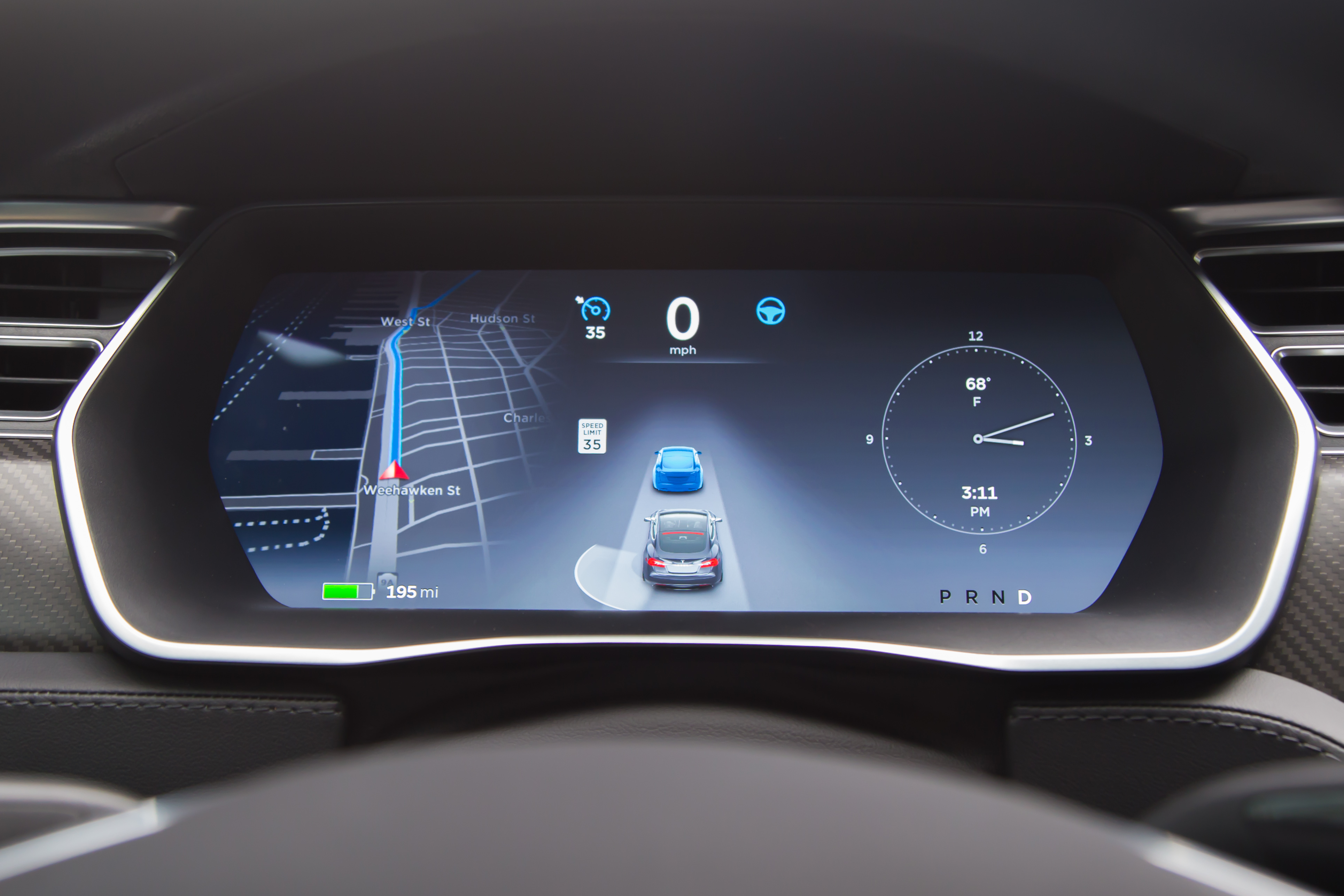
Enlarge / Waiting patiently to accelerate away from a stop. The blue speedometer and steering wheel icons at top indicate that auto-cruise and auto-steer are active.
Ron Amadeo

Lane keeping was almost excellent. The car kept itself squarely planted in the middle of the lane without ping-ponging between the edges like some earlier systems did. The car would still sometimes “lunge” at exit rampswhen lane markings would fall away to the right or left, though the behavior was never enough to make me grabthe wheel and disengage. (Tesla’s 7.1 software update was supposed to eliminate the issue, though it hasn’tcompletely.) Other than the occasional lunge, however, the car was solid as long as there remained even theslightest trace of visible lane markings.

Sitting in the right lane on the tollway meant I frequently encountered other cars merging from the service road.Most of the time, the Model S would see them—with the speedometer display constantly updating to showsilhouettes of other cars in their approximate positions around me—and slow down. The braking was perhaps alittle later and a little harder than I would have done, but it was smooth and controlled every time. (The brakinginterval can be adjusted in the car’s settings). However, sometimes the person merging onto the road would bemore beside me than in front of me. In those cases, I could force the system to initiate an automatic lane changeby pushing up and holding the turn signal stalk, or I could scoot out of the way by manually mashing theaccelerator.

http://www.australianetworknews.com/ipad-pro-9-best-tablet-ever/

iPad Pro 9: Best Tablet Ever?

One of the key likability was its portability that made the original iPad a loved one.

Some users would argue that tablet may never replace a notebook and it could only serve as a complementary device. So, Microsoft took a clever move. It launched a device – a tablet that could double up as a laptop (Surface Pro lineup).

iPad Pro is installed with iOS 9 and it has a key feature called split-screen multi-tasking. This makes the Pro a more powerful work device. Users can now work efficiently on two documents at the same time without having to constantly switch between them, notes The Sydney Morning Herald.

Unlike Surface devices, the iPad is incapable of running desktop apps like Photoshop. However Surface devices are laptop anyway and Photoshop works on computers.

There’s a hack or solution for it. Adobe can split their apps into single user tasks on iOS and users can use Adobe Fix if they wish to retouch a photo. Later sync it all back to Photoshop on the desktop.

In terms of leisure, browsing Twitter or watching movies, iPad outwits Android and Windows tablets for apps.

Not to miss Apple iPad’s accessories. Apple Pencil is very handy for professionals or artists. It could be used to something like Procreate or Adobe’s iPad apps. For jotting down notes it could be expensive but for graphic artists, it serves as an essential accessory. It would be cheap bet compared to Wacom Bamboo or Cintiq.

Lastly, the new speakers of the iPad Pro, it gives incredible sound experience and comes with a great Spotify travel stereo. The device also comes with True Tone display which is fantastic.


http://www.ctvnews.ca/business/health-canada-approves-salmon-genetically-modified-to-grow-more-quickly-1.2909271

Health Canada approves salmon genetically modified to grow more quickly

Canadian consumers could soon be eating so-called “frankenfish” without even knowing it, after Health Canada approved the sale of salmon genetically modified to grow quicker, and said it won’t require any special labelling.

AquAdvantage salmon, a product of Massachusetts-based AquaBounty Technologies Inc., is an Atlantic species genetically modified using genetic material from Chinook salmon and the eel-likeocean pout that allows it to grow year-round.

Anti-GMO groups have called the salmon “frankenfish,” but Health Canada said in a statement Thursday that its scientists, along with the Canadian Food Inspection Agency, has tested the salmon and found it to be “as safe and nutritious for humans and livestock as conventional salmon.”

“GM foods that have been approved by Health Canada have been consumed in Canada for many years, and are safe and nutritious,” the agency said.

“Changes to the genes of plants and animals can improve food quality and production … allowing foods to be grown more quickly,” the statement went on.

AquaBounty issued a statement thanking the regulatory agency for “confirming the safety of our salmon for both the consumer and the environment.”

“Alongside the approval by the U.S. Food and Drug Administration in November 2015, there are now two independent reviews by two of the most sophisticated and demanding regulators in the world and both have come to the same conclusion,” the company said.

No special labels

Health Canada noted in its news release that “given that no health and safety concerns were identified, there are no special labelling requirements for AquAdvantage Salmon.”

AquaBounty’s Dave Conley told The Canadian Press that the company hasn’t decided whether it will voluntarily label the fish to point out that it has been modified.

NDP health critic Don Davies said he thinks Canadians deserve to know what they’re eating.

“If it is safe … then labelling should not be an issue,” Davies said.

Agriculture Minister Lawrence MacAulay said a special committee will examine issues surrounding genetically modified food and make recommendations later this year.

Environmental concerns

The U.S. Food and Drug Administration approved the genetically modified salmon last November, but not without controversy.

The environmental advocacy group Friends of the Earth lobbied against approval, stating that they believe the “frankenfish” could cause “irreversible damage to wild salmon populations.”

Halifax’s Ecology Action Centre has similar concerns. It is in the process of appealing a Federal Court ruling that has allowed the company to continue producing its modified salmon eggs on Prince Edward Island.

The Ecology Action Centre’s Mark Butler insists the fish poses a risk to wild salmon.

“These fish could escape and breed with wild salmon and (their offspring) would then have the genetic material of other species in them,” he said. “Once the genie is out of the bottle — once the salmon is out of the containment facility — we’re not getting it back.”

The FDA said when announcing that it had given the green light that it expected “no significant impact on the environment of the United States.”

“That’s because the multiple containment measures the company will use in the land-based facilities in Panama and Canada make it extremely unlikely that the fish could escape and establish themselves in the wild,” the agency wrote at the time.

The FDA also noted that only sterile females will be allowed and “multiple and redundant levels of physical barriers” will keep the salmon from escaping and breeding with non-GMO fish.

Regardless, some U.S. retailers have said they won’t sell the product, including Whole Foods and Trader Joe’s.

Large export market

Canada is the fourth-largest producer of farmed salmon in the world, according to the Department of Fisheries and Oceans (DFO).

In 2013, producers sold about $813 million worth of farmed salmon, making it Canada’s third-largest seafood export by value.

The farmed salmon industry provides more than 10,000 jobs, mostly in British Columbia and the Atlantic provinces, according to the DFO.