https://techcrunch.com/2016/08/30/more-details-on-audis-tesla-model-s-competitor-emerge/

Autocar. The car is set to go head-to-headwith the Model S, based on these new stats, and will likely be called the “A9 e-tron” when itgoes on sale sometime in 2020, the publication says.

The range is in line with what Tesla says its new P100D option package will offer for Model Sowners, though Autocar says that the Audi A9 e-tron will have a 95kWh battery to achievethat range, rather than the 100kWh version Tesla employs to get 315 miles as measured byEPA standards.

The powertrain for the upcoming vehicle is said to feature three electric motors thatcombined produce 429 brake horsepower (bhp), with a drive mode that can boost it to 496bhp for short stints. Audi is looking at electric drivetrain tuning as one way where it will beable to offer a differentiating advantage to potential consumers.

Another option offered to potential A9 e-tron buyers will be a wireless inductive chargingoption, with a charge rate of 11kW (Plugless, an aftermarket option for Tesla Model S, offersa 7.2kW rate that provides about 20-25 miles of range per hour, for context). The optioncomes with an automated parking feature that will ensure the car positions itself correctlyover a charging pad in an owner’s garage, Autocar says.

Audi has already announced that its A8 will get Level 3 automation next year, but Level 4 ina production car by 2020 is still an ambitious target (though one shared by a growingnumber of carmakers and tech companies worldwide). It’s also unlikely the Model S thatthis A9 e-tron competes with in 2020 will look like the Model S of today – Musk has hintedthat a big leap in Tesla’s autonomous driving tech is on the way soon. Still, it sounds likeAudi will be in the ring when the electric self-driving royal rumble goes down.

http://www.kurzweilai.net/mystery-radio-signal-may-be-from-distant-star-system-or-a-military-transmitter

Mystery radio signal may be from distant star system — or a military transmitter

August 29, 2016

RATAN-600 radio telescope (credit: nat-geo.ru)

A star system 94 light-years away known as HD 164595 is a possible candidate for intelligent life, based on an announcement by an international team of researchers.

On May 15, 2015, Russian astronomers picked up a radio signal on the RATAN-600 radio telescope in Russia “in the direction of HD164595,” an international group of astronomers stated in a document* now being circulated through contact person Alexander Panov, according to Paul Gilster of Centauri Dreams, who blogged about the data on Saturday, August 27, 2016.

This HD164595 system is known to have one planet, a Neptune-sized world in such a very tight orbit, making it unattractive for life. However, there could be other planets in this system that are still undiscovered, said Seth Shostak, Senior Astronomer at the Seti Institute in a post.

“Raw” record of the signal (purple) together with expected shape of the signal (green) for point-like source in the position of HD 164595. (credit: Bursov et al.)

The observations were not ideal, Shostak notes. They were made with a receiver having a bandwidth of 1 GHz — a billion times wider than the bandwidths traditionally used for SETI, and the strength of the signal was 0.75 Janskys (weak). In addition, the RATAN-600 beam design does not uniquely identify the source direction.

Power required for such a signal would be astronomical, he explains. If broadcast in all directions, the required power is 1020 watts (100 billion billion watts) — hundreds of times more energy than all the sunlight falling on Earth. If aimed at us, assuming an antenna the size of the 1000-foot Arecibo instrument, they would still need to transmit more than a trillion watts.

In addition, the signal was received at 11Ghz (2.7 cm wavelength), in a part of the radio spectrum used by the military, so the signal may be due to terrestrial radio-frequency interference, or to gravitational lensing from a more distant source.

Shostak said the SETI Institute swung the Allen Telescope Array (ATA) in the direction of HD 164595 beginning Sunday evening, August 28. No detections reported yet.

The radio signal and the ensuring follow-up investigations will be discussed at the 67th International Astronautical Congress in Guadalajara, Mexico on September 27th.

* “The presentation [was] forwarded to me by Claudio Maccone [the chair of the International Academy of Astronautics Permanent SETI Committee], from which I learn that the team behind the detection was led by N.N. Bursov and included L.N. Filippova, V.V. Filippov, L.M. Gindilis, A.D. Panov, E.S. Starikov, J. Wilson, as well as Claudio Maccone,” said Gilster. The detection was made in Zelenchukskaya, in the Karachay–Cherkess Republic of Russia.

references:

  • SETI observations on the RATAN-600 telescope in 2015 and detection of a strong signal in the direction of HD 164595 BURSOV N., FILIPPOVA L., FILIPPOV V., GINDILIS L., MACCONE C. et al. 2016 | in “IAA SETI Permanent Committee”, Guadalajara, Mexico

http://www.kurzweilai.net/3-d-printed-structures-that-remember-their-shapes

3-D-printed structures that ‘remember’ their shapes

Heat-responsive shape-memory materials may aid in controlled drug delivery and solar panel tracking, for example
August 29, 2016

In this series, a 3-D printed multimaterial shape-memory minigripper, consisting of shape-memory hinges and adaptive touching tips, grasps a cap screw. The material is designed to close when the temperature of the surrounding air is raised to specific temperature or higher (credit: Qi (Kevin) Ge)

Engineers from MIT and Singapore University of Technology and Design (SUTD) are 3D-printing structures based on shape-memory polymers that “remember” and spring back to their original shapes when heated to a certain temperature “sweet spot” — even after being stretched, twisted, and bent at extreme angles.

That makes them useful for applications ranging from soft actuators that turn solar panels toward the sun to tiny drug capsules that open upon early signs of infection. Other applications include biomedical devices, deployable aerospace structures, and shape-changing photovoltaic solar cells.

For some structures, the researchers were able to 3D-print micrometer-scale features as small as the diameter of a human hair — dimensions at least ten times smaller than with other printable shape-memory materials, but with materials that can be stretched 10 times larger than those printed by commercial 3-D printers.

The team’s results were published earlier this month in the online open-access journal Scientific Reports.

“We ultimately want to use body temperature as a trigger,” says Nicholas X. Fang, associate professor of mechanical engineering at MIT. “If we can design these polymers properly, we may be able to form a drug delivery device that will only release medicine at the sign of a fever.”

”Fang and others have been exploring the use of soft, active materials as reliable, pliable tools. These new and emerging materials, which include shape-memory polymers, can stretch and deform dramatically in response to environmental stimuli such as heat, light, and electricity — properties that researchers have been investigating for use in biomedical devices, soft robotics, wearable sensors, and artificial muscles.

Shape-memory polymers can switch between two states — a harder, low-temperature, amorphous state, and a soft, high-temperature, rubbery state. The bent and stretched shapes can be “frozen” at room temperature, and when heated the materials will “remember” and snap back to their original sturdy form.

“If you’re able to make it to much smaller dimensions, these materials can actually respond very quickly, within seconds,” Fang says. “For example, a flower can release pollen in milliseconds. It can only do that because its actuation mechanisms are at the micron scale.”

Printing with light

Workflow for the process of fabricating a multimaterial structure based on microstereolithography (credit: Qi Ge et al./Scientific Reports)

To print shape-memory structures with even finer details, Fang and his colleagues used a 3-D printing process they have pioneered, called “microstereolithography” (PμSL), in which they use light from a projector to print patterns on successive layers of resin. It uses a family of photo-curable methacrylate-based copolymer networks, designing the constituents and compositions to exhibit desired thermomechanical behavior.*

The researchers first create a model of a structure using computer-aided design (CAD) software, then divide the model into hundreds of slices, each of which they send through the projector as a bitmap — an image file format that represents each layer as an arrangement of very fine pixels. The projector then shines light in the pattern of the bitmap, onto a liquid resin, or polymer solution, etching the pattern into the resin, which then solidifies.

Fang found that the structures could be stretched to three times their original length without breaking. “Because we’re using our own printers that offer much smaller pixel size, we’re seeing much faster response, on the order of seconds,” Fang says. “If we can push to even smaller dimensions, we may also be able to push their response time, to milliseconds.”

“This is a very advanced 3-D printing method compared to traditional nozzle or ink-jet based printers,” says Shaochen Chen, professor of nano-engineering at the University of California at San Diego, who was not involved in the research. “The method’s main advantages are faster printing and better structural integrity.”

Soft grip

To demonstrate a simple application for the shape-memory structures, Fang and his colleagues printed a small, rubbery, claw-like gripper. They attached a thin handle to the base of the gripper, then stretched the gripper’s claws open.

“The grippers are a nice example of how manipulation can be done with soft materials,” Fang says. “We showed that it is possible to pick up a small bolt, and also even fish eggs and soft tofu. That type of soft grip is probably very unique and beneficial.”

Going forward, he hopes to find combinations of polymers to make shape-memory materials that react to slightly lower temperatures, approaching the range of human body temperatures, to design soft, active, controllable drug delivery capsules. He says the material may also be printed as soft, responsive hinges to help solar panels track the sun.

Scientists at Rutgers University, SUTD, and Georgia Institute of Technology were also involved in the research, which is supported in part by the SUTD Digital Manufacturing and Design Center (DManD) and the SUTD-MIT joint postdoctoral program.

* “We’re printing with light, layer by layer,” Fang says. “It’s almost like how dentists form replicas of teeth and fill cavities, except that we’re doing it with high-resolution lenses that come from the semiconductor industry, which give us intricate parts, with dimensions comparable to the diameter of a human hair.”

The researchers looked through the scientific literature to identify an ideal mix of polymers to create a shape-memory material on which to print their light patterns. They picked two polymers, one composed of long-chain polymers, or spaghetti-like strands, and the other resembling more of a stiff scaffold. When mixed together and cured, the material can be stretched and twisted dramatically without breaking.

What’s more, the material can bounce back to its original printed form, within a specific temperature range — in this case, between 40 and 180 degrees Celsius (104 to 356 degrees Fahrenheit).


Abstract of Multimaterial 4D Printing with Tailorable Shape Memory Polymers

We present a new 4D printing approach that can create high resolution (up to a few microns), multimaterial shape memory polymer (SMP) architectures. The approach is based on high resolution projection microstereolithography (PμSL) and uses a family of photo-curable methacrylate based copolymer networks. We designed the constituents and compositions to exhibit desired thermomechanical behavior (including rubbery modulus, glass transition temperature and failure strain which is more than 300% and larger than any existing printable materials) to enable controlled shape memory behavior. We used a high resolution, high contrast digital micro display to ensure high resolution of photo-curing methacrylate based SMPs that requires higher exposure energy than more common acrylate based polymers. An automated material exchange process enables the manufacture of 3D composite architectures from multiple photo-curable SMPs. In order to understand the behavior of the 3D composite microarchitectures, we carry out high fidelity computational simulations of their complex nonlinear, time-dependent behavior and study important design considerations including local deformation, shape fixity and free recovery rate. Simulations are in good agreement with experiments for a series of single and multimaterial components and can be used to facilitate the design of SMP 3D structures.

http://globalnews.ca/news/2910129/drones-at-the-university-of-saskatchewan-to-map-food-production/

Drones at the University of Saskatchewan to map food production

The University of Saskatchewan (U of S) continues to lead the way in food security to help feed a growing world population.

On Monday, a major food research program Designing Crops for Global Food Security launched at the Saskatoon campus.

Jino Distasio and Kyle Wiebe, researchers from the University of Winnipeg present their findings on food security. Study shows food security a problem for thousands of Winnipeggers
How to grow fall vegetables PotashCorp helping Saskatoon students plant seeds of success
It’s a seven-year, $37.2 million project funded by the Government of Canada focused on establishing a global data base using field and aerial sensors, satellite imaging and robotics to improve crop development.

“The reason we want to do it is because if we can digitize what a breeder would normally see then it becomes a searchable set of data and it enables us to look for patterns and those patterns will eventually be linked back to the genetics of the plant,” said Maurice Moloney, executive director of the Global Institute for Food Security.

“By 2022, we hope to create a unique global resource for plant breeders seeking to develop new crop varieties at unprecedented speed and scale.”

READ MORE: Agriculture innovation on display at Canada’s Farm Progress Show

The U of S is considered an ideal location for the research because of its strong computer science program, the Canadian Light Source sychrotron, and strong agriculture engineering.

Wendy Winiewski contributed to this story

http://phys.org/news/2016-08-purest-liver-like-cells-pluripotent-stem.html

Purest yet liver-like cells generated from induced pluripotent stem cells

Purest yet liver-like cells generated from induced pluripotent stem cells
Induced pluripotent stem cells expressing a characteristic cell surface protein called SSEA4 (green). Credit: Image courtesy of Stephen A. Duncan, Ph.D., at the Medical University of South Carolina. All rights reserved.
A research team including developmental biologist Stephen A. Duncan, D. Phil., SmartState Chair of Regenerative Medicine at the Medical University of South Carolina (MUSC), has found a better way to purify liver cells made from induced pluripotent stem cells (iPSCs). Their efforts, published August 25, 2016 in Stem Cell Reports, will aid studies of liver disease for the National Heart, Lung, and Blood Institute (NHLBI)’s $80 million Next Generation Genetic Association Studies (Next Gen) Program. The University of Minnesota (Minneapolis) and the Medical College of Wisconsin (Milwaukee) contributed to the study.

This new methodology could facilitate progress toward an important clinical goal: the treatment of patients with disease-causing mutations in their livers by transplant of unmutated liver cells derived from their own stem cells. Previous attempts to generate liver-like cells from stem cells have yielded heterogeneous cell populations that bear little resemblance to diseased livers in patients.
NHLBI’s Next Gen was created to bank stem cell lines sourced from patients in genome-wide association studies (GWAS). The goal of the NHLBI Next Gen Lipid Conditions sub-section—a collaborative effort between Duncan and Daniel J. Rader, M.D., and Edward E. Morrisey, Ph.D., both at the University of Pennsylvania—is to help determine the genetic sources of heart, lung, or blood conditions that also encompass the liver. These GWAS studies map the genomes in hundreds of people as a way to look for genetic mutation patterns that differ from the genomes of healthy individuals.
A GWAS study becomes more powerful—more likely to find the correct genetic mutations that cause a disease—as more genomes are mapped. Once a panel of suspected mutations is built, stem cells from these individuals can be “pushed” in culture dishes to differentiate into any of the body’s cells, as for example liver-, heart-, or vascular-like cells. The cells can be screened in high-throughput formats (i.e., cells are expanded and cultured in many dishes) to learn more about the mutations and to test panels of drugs that might ultimately help treat patients harboring a disease.
The problem arises during the “pushing.” For example, iPSCs stubbornly refuse to mature uniformly into liver-like cells when fed growth factors. Traditionally, antibodies have been used to recognize features of maturity on the surfaces of cells and purify cells that are alike. This approach has been crucial to stem cell research, but available antibodies that recognize mature liver cells are few and tend to recognize many different kinds of cells. The many types of cells in mixed populations have diverse characteristics that can obscure underlying disease-causing genetic variations, which tend to be subtle.
“Without having a pure population of liver cells, it was incredibly difficult to pick up these relatively subtle differences caused by the mutations, but differences that are important in the life of an individual,” said Duncan.
Instead of relying on antibodies, Duncan and his crew embraced a new technology called chemoproteomic cell surface capture (CSC) technology. True to its name, CSC technology allowed the group to map the proteins on the surface of liver cells that were most highly produced during the final stages of differentiation of stem cells into liver cells. The most abundant protein was targeted with an antibody labeled with a fluorescent marker and used to sort the mature liver cells from the rest.
The procedure was highly successful: the team had a population of highly pure, homogeneous, and mature liver-like cells. Labeled cells had far more similar traits of mature hepatocytes than unlabeled cells. Pluripotent stem cells that had not differentiated were excluded from the group of labeled cells.
“That’s important,” said Duncan. “If you’re wanting to transplant cells into somebody that has liver disease, you really don’t want to be transplanting pluripotent cells because pluripotent cells form tumors called teratocarcinomas.”
Duncan cautions that transplantation of iPSC-derived liver cells is not yet ready for translation to the clinic. But the technology for sorting homogeneous liver cells can be used now to successfully and accurately model and study disease in the cell culture dish.
“We think that by being able to generate pure populations, it will get rid of the variability, and therefore really help us combine with GWAS studies to identify allelic variations that are causative of a disease, at least in the liver,” said Duncan.


http://www.dailymail.co.uk/sciencetech/article-3763416/Is-Earth-contacted-ALIENS-Mystery-radio-signals-coming-sun-like-star-baffle-scientists.html

Is Earth being contacted by ALIENS? Mystery radio signals coming from a sun-like star baffle scientists

  • The signals seem to be coming from a sun-like star known as HD 164595
  • The star is 95 light years away and may have undiscovered planets in orbit
  • Scientists say signals may simply be the result of a natural phenomenon
  • One possibility is ‘microlensing’ in which the star’s gravity focuses signals coming from farther away


RA spike in radio signals coming from the direction of a sun-like star has excited astronomers.

The signals seem to be originating from a sun-like star known as HD 164595 in the constellation Hercules, around 95 light years away.

Scientists suggest they are likely to be the result of a natural phenomenon, such as ‘microlensing’, in which the star’s gravity strengthens and focus signals from elsewhere.

But astronomers have also asked Seti (Search for Extraterrestrial Intelligence) to take a closer look at whether they could be a message from ET.

SETI will track HD 164595 tonight using the Allen Telescope Array in northern California and the Boquete Optical SETI Observatory in Panama.

According to a report by Paul Gilster at Centauri Dreams, the signal was first detected on May 15 last year by the RATAN-600 radio telescope in Zelenchukskaya.

HD 164595 is interesting to scientists because it’s a sun-like star with at least one ‘warm Neptune’ planet in orbit.

Its average temperature  is 12 Kelvin hotter than the sun and is around 100 million years younger than our star.

Scientists say there may still be other planets undetected around HD 164595.

‘No one is claiming that this is the work of an extraterrestrial civilisation, but it is certainly worth further study,’ writes Gilster.


http://venturebeat.com/2016/08/29/google-integrates-cast-into-chrome-no-extension-required/

Google integrates Cast into Chrome, no extension required

Google Chromecast 2 and Chromecast Audio

Image Credit: Ken Yeung/VentureBeat

Google today announced Google Cast is now built right into Chrome, allowing anyone using the company’s browser to cast content to supported devices without having to install or configure anything. The Google Cast extension for Chrome, which launched in July 2013, is no longer required for casting.

In March, the Google Chromecast app was rebranded as just Google Cast. Google made the change to clarify that the casting option is available to more than just Chromecast devices, and indeed this integration is compatible with more than just Google dongles.

Here’s how it works. When you browse websites that are integrated with Cast, Chrome will now show you a Cast icon as long as you’re on the same network as a Cast device. With a couple of clicks, you can view the website content on your TV, listen to music on your speakers, and so on. In fact, Google today alsointegrated Hangouts with Google Cast: Signed-in users on Chrome 52 or higher can now use the “Cast…” menu item from Chrome to share the contents of a browser tab or their entire desktop into a Hangout.

Screen Shot 2016-07-15 at 10.49.32 AM

Google started rolling out this new built-in Cast option with Chrome 51 last month. Now the Cast option is available to all users with Chrome 52 and above — put another way, the rollout is complete.

According to a support document shared at the time, removing the aforementioned Chrome extension is optional. It’s presumably going away soon, but Google didn’t explicitly say that. Chrome also lets you access Google Cast functionality by right-clicking on a webpage.

A5Jx9Cvyo-qUGxcdgsDdyLvR9UP_yc2diMLUffxS6snfFka9U-QcjKRflGaw14_j-UOw=w250

For all the ways you can now use Google Cast with Chrome, check out the newsupport document. Again, all that you need is to make sure you have the latest version of Chrome installed on your computer.

Google today also shared that in the past month, Chrome users have casted more than 38 million times, watching and listening to more than 50 million hours of content. Expect that number to grow steadily now that all of Chrome’s massive userbase has access to the functionality without an extension.

Ultrasound jump-starts brain of man in coma New non-invasive technique may lead to low-cost therapy for patients with severe brain injury — possibly for those in a vegetative or minimally conscious state August 26, 2016 The non-invasive technique uses ultrasound to target the brain’s thalamus (credit: Martin Monti/UCLA) UCLA neurosurgeons used ultrasound to “jump-start” the brain of a 25-year-old man from a coma, and he has made remarkable progress following the treatment. The technique, called “low-intensity focused ultrasound pulsation” (LIFUP), works non-invasively and without affecting intervening tissues. It excites neurons in the thalamus, an egg-shaped structure that serves as the brain’s central hub for processing information. “It’s almost as if we were jump-starting the neurons back into function,” said Martin Monti, the study’s lead author and a UCLA associate professor of psychology and neurosurgery. “Until now, the only way to achieve this was a risky surgical procedure known as deep brain stimulation, in which electrodes are implanted directly inside the thalamus,” he said. “Our approach directly targets the thalamus but is noninvasive.” What about using it on vegetative or minimally conscious patients? Monti cautioned that the procedure requires further study on additional patients before the scientists can determine whether it could be used consistently to help other people recovering from comas. “It is possible that we were just very lucky and happened to have stimulated the patient just as he was spontaneously recovering,” Monti said. If the technology helps other people recovering from coma, Monti said, it could eventually be used to build a portable device — perhaps incorporated into a helmet — as a low-cost way to help “wake up” patients, perhaps even those who are in a vegetative or minimally conscious state (MCS). Currently, there is almost no effective treatment for such patients, he said. Israel Stinson (credit: Life Legal Defense Foundation) On Thursday August 25, two year-old Israel Stinson, whose fight for life gained international attention, died Thursday after doctors at Children’s Hospital of Los Angeles removed him from a breathing ventilator against his parents’ wishes, after a Los Angeles Superior Court judge removed a restraining order, the Los Angeles Times reports. It’s not clear, going forward, why doctors or the FDA could ethically refuse to provide “compassionate access” to a treatment such as LIFUP as a last resort before pulling the plug. Speculation: brain hackers will start (have started?) experimenting with LIFUP as a brain stimulant. “Foggy from all-night cramming for midterms? LIFUP it!” Safer than DBS and tDCS A report on the treatment is published in the journal Brain Stimulation. This is the first time the approach has been used to treat severe brain injury. The authors note that the new technique combines the advantages of highly invasive deep brain stimulation (DBS) and transcranial direct current stimulation (tDCS) while avoiding their respective disadvantages. Low-intensity focused ultrasound pulsation (credit: Brainsonix) The procedure was pioneered by Alexander Bystritsky, a UCLA professor of psychiatry and biobehavioral sciences in the Semel Institute for Neuroscience and Human Behavior and a co-author of the study. Bystritsky is also a founder of Brainsonix, a Sherman Oaks, California-based company that provided the device the researchers used in the study. That device, about the size of a coffee cup saucer, creates a small sphere of acoustic energy that can be aimed at different regions of the brain to excite brain tissue. For the new study, researchers placed it by the side of the man’s head and activated it 10 times for 30 seconds each, in a 10-minute period. Monti said the device is safe because it emits only a small amount of energy — less than a conventional Doppler ultrasound. Before the procedure began, the man showed only minimal signs of being conscious and of understanding speech. For example, he could perform small, limited movements when asked. By the day after the treatment, his responses had improved measurably. Three days later, the patient had regained full consciousness and full language comprehension, and he could reliably communicate by nodding his head “yes” or shaking his head “no,” consistent with emergence from MCS (eMCS). He even made a fist-bump gesture to say goodbye to one of his doctors. “The changes were remarkable,” Monti said. The technique targets the thalamus because, in people whose mental function is deeply impaired after a coma, thalamus performance is typically diminished. Medications that are commonly prescribed to people who are coming out of a coma only indirectly target the thalamus. Under the direction of Paul Vespa, a UCLA professor of neurology and neurosurgery at the David Geffen School of Medicine at UCLA, the researchers plan to test the procedure on several more people beginning this fall at the Ronald Reagan UCLA Medical Center. Those tests will be conducted in partnership with the UCLA Brain Injury Research Center and funded in part by the Dana Foundation and the Tiny Blue Dot Foundation. Abstract of Non-Invasive Ultrasonic Thalamic Stimulation in Disorders of Consciousness after Severe Brain Injury: A First-in-Man Report Modern intensive care medicine has greatly increased the rates of survival after severe brain injury (BI). Nonetheless, a number of patients fail to fully recover from coma, and awaken to a disorder of consciousness (DOC) such as the vegetative state (VS) or the minimally conscious state (MCS) [1]. In these conditions, which can be transient or last indefinitely, patients can lose virtually all autonomy and have almost no treatment options [1,2]. In addition, these conditions place great emotional and financial strain on families, lead to increased burn-out rates among care-takers, impose financial stress on medical structures and public finances due to the costs of prolonged intensive care, and raise difficult legal and ethical questions [3]. references: Martin M. Monti, Caroline Schnakers, Alexander S. Korb, Alexander Bystritsky, Paul M. Vespa. Non-Invasive Ultrasonic Thalamic Stimulation in Disorders of Consciousness after Severe Brain Injury: A First-in-Man Report. Brain Stimulation; DOI: 10.1016/j.brs.2016.07.008 Topics: Cognitive Science/Neuroscience

Implantable cell-size ‘neural pixel’ device senses and blocks epileptic seizures

August 26, 2016

A biochemical system for reducing epileptic activity (experimentally generated chemically) in mice hippocampus brain tissue. The miniature “neural pixel” device (bottom) sensed the epileptic attack and then delivered the natural calming neurotransmitter GABA via PEDOT:PSS electrodes, which also  recorded the subsequent electrophysiological activity to confirm effectiveness. (credit: Amanda Jonsson et al./PNAS)

Researchers at Linköping University in Sweden and in France have developed a “neural pixel” device that when implanted in a mouse hippocampus brain slice detects the initial signal of an epileptic attack and also locally administers the exact dose of the natural neurotransmitter GABA needed to stop the attack.

The researchers used a conducting polymer called poly(3,4-ethylenedioxythiophene) doped with poly(styrenesulfonate) (PEDOT:PSS) for electrodes. It has ten times better conductivity than gold, platinum, and iridium electrodes.  A tiny organic electronic ion pump* was used to pump the GABA neurotransmitter through a selective membrane, enabling high spatiotemporal delivery resolution (tiny and works fast) without requiring liquid flow (which is hard to control).

The idea is to have local, real-time measurement and precision delivery directly to specific neurons, which could pave the way in the future to closed-loop, fully automatic, miniature therapeutic devices. Combining electronic detection and release in the same electrode is a major advance, according to the researchers.

The development offers an alternative to drugs taken orally, which may be toxic outside the brain, may not cross the blood−brain barrier, or may have deleterious side effects when they penetrate the brain’s “healthy” regions, affecting physiological functions such as memory and learning. It also opens up a range of opportunities in basic neuroscience.

The research results have been published in the journal Proceedings of the National Academy of Sciences (PNAS).

* The implantable ion pump was developed at Linköping University’s Laboratory for Organic Electronics and announcedin 2015. It was used initially to deliver exact dosages of painkiller GABA to the exact location where the pain signals reach the spinal cord for further transmission to the brain, and could be in clinical use in five to ten years, the researchers say.

The neural sensor for the initial signal of an epileptic attack was developed by the LiU researchers’ collaborators at the École Nationale Supérieure des Mines in Gardanne, France. The mouse experiments were performed at Aix-Marseille University. The entire device is manufactured from conductive, biocompatible plastic.

The Swedish part of the research was funded by Vinnova, the Swedish Research Council, and the Knut and Alice Wallenberg Foundation. The work took place at the OBOE center, under the leadership of Asst. Prof. Daniel Simon and Professor Magnus Berggren.


Abstract of Bioelectronic neural pixel: Chemical stimulation and electrical sensing at the same site

Local control of neuronal activity is central to many therapeutic strategies aiming to treat neurological disorders. Arguably, the best solution would make use of endogenous highly localized and specialized regulatory mechanisms of neuronal activity, and an ideal therapeutic technology should sense activity and deliver endogenous molecules at the same site for the most efficient feedback regulation. Here, we address this challenge with an organic electronic multifunctional device that is capable of chemical stimulation and electrical sensing at the same site, at the single-cell scale. Conducting polymer electrodes recorded epileptiform discharges induced in mouse hippocampal preparation. The inhibitory neurotransmitter, γ-aminobutyric acid (GABA), was then actively delivered through the recording electrodes via organic electronic ion pump technology. GABA delivery stopped epileptiform activity, recorded simultaneously and colocally. This multifunctional “neural pixel” creates a range of opportunities, including implantable therapeutic devices with automated feedback, where locally recorded signals regulate local release of specific therapeutic agents.

http://www.kurzweilai.net/ultrasound-jump-starts-brain-of-man-in-coma

Ultrasound jump-starts brain of man in coma

New non-invasive technique may lead to low-cost therapy for patients with severe brain injury — possibly for those in a vegetative or minimally conscious state
August 26, 2016

The non-invasive technique uses ultrasound to target the brain’s thalamus (credit: Martin Monti/UCLA)

UCLA neurosurgeons used ultrasound to “jump-start” the brain of a 25-year-old man from a coma, and he has made remarkable progress following the treatment.

The technique, called “low-intensity focused ultrasound pulsation” (LIFUP), works non-invasively and without affecting intervening tissues. It excites neurons in the thalamus, an egg-shaped structure that serves as the brain’s central hub for processing information.

“It’s almost as if we were jump-starting the neurons back into function,” said Martin Monti, the study’s lead author and a UCLA associate professor of psychology and neurosurgery. “Until now, the only way to achieve this was a risky surgical procedure known as deep brain stimulation, in which electrodes are implanted directly inside the thalamus,” he said. “Our approach directly targets the thalamus but is noninvasive.”

What about using it on vegetative or minimally conscious patients?

Monti cautioned that the procedure requires further study on additional patients before the scientists can determine whether it could be used consistently to help other people recovering from comas.

“It is possible that we were just very lucky and happened to have stimulated the patient just as he was spontaneously recovering,” Monti said.

If the technology helps other people recovering from coma, Monti said, it could eventually be used to build a portable device — perhaps incorporated into a helmet — as a low-cost way to help “wake up” patients, perhaps even those who are in a vegetative or minimally conscious state (MCS). Currently, there is almost no effective treatment for such patients, he said.


Israel Stinson (credit: Life Legal Defense Foundation)

On Thursday August 25, two year-old Israel Stinson, whose fight for life gained international attention, died Thursday after doctors at Children’s Hospital of Los Angeles removed him from a breathing ventilator against his parents’ wishes, after a Los Angeles Superior Court judge removed a restraining order, the Los Angeles Times reports.

It’s not clear, going forward, why doctors or the FDA could ethically refuse to provide “compassionate access” to a treatment such as LIFUP as a last resort before pulling the plug.

Speculation: brain hackers will start (have started?) experimenting with LIFUP as a brain stimulant.

“Foggy from all-night cramming for midterms? LIFUP it!”


Safer than DBS and tDCS

report on the treatment is published in the journal Brain Stimulation. This is the first time the approach has been used to treat severe brain injury.

The authors note that the new technique combines the advantages of highly invasive deep brain stimulation (DBS) andtranscranial direct current stimulation (tDCS) while avoiding their respective disadvantages.

Low-intensity focused ultrasound pulsation (credit: Brainsonix)

The procedure was pioneered by Alexander Bystritsky, a UCLA professor of psychiatry and biobehavioral sciences in the Semel Institute for Neuroscience and Human Behavior and a co-author of the study.

Bystritsky is also a founder of Brainsonix, a Sherman Oaks, California-based company that provided the device the researchers used in the study.

That device, about the size of a coffee cup saucer, creates a small sphere of acoustic energy that can be aimed at different regions of the brain to excite brain tissue.

For the new study, researchers placed it by the side of the man’s head and activated it 10 times for 30 seconds each, in a 10-minute period.

Monti said the device is safe because it emits only a small amount of energy — less than a conventional Doppler ultrasound.

Before the procedure began, the man showed only minimal signs of being conscious and of understanding speech. For example, he could perform small, limited movements when asked. By the day after the treatment, his responses had improved measurably.

Three days later, the patient had regained full consciousness and full language comprehension, and he could reliably communicate by nodding his head “yes” or shaking his head “no,” consistent with emergence from MCS (eMCS). He even made a fist-bump gesture to say goodbye to one of his doctors.

“The changes were remarkable,” Monti said.

The technique targets the thalamus because, in people whose mental function is deeply impaired after a coma, thalamus performance is typically diminished. Medications that are commonly prescribed to people who are coming out of a coma only indirectly target the thalamus.

Under the direction of Paul Vespa, a UCLA professor of neurology and neurosurgery at the David Geffen School of Medicine at UCLA, the researchers plan to test the procedure on several more people beginning this fall at the Ronald Reagan UCLA Medical Center. Those tests will be conducted in partnership with the UCLA Brain Injury Research Center and funded in part by the Dana Foundation and the Tiny Blue Dot Foundation.


Abstract of Non-Invasive Ultrasonic Thalamic Stimulation in Disorders of Consciousness after Severe Brain Injury: A First-in-Man Report

Modern intensive care medicine has greatly increased the rates of survival after severe brain injury (BI). Nonetheless, a number of patients fail to fully recover from coma, and awaken to a disorder of consciousness (DOC) such as the vegetative state (VS) or the minimally conscious state (MCS) [1]. In these conditions, which can be transient or last indefinitely, patients can lose virtually all autonomy and have almost no treatment options [1,2]. In addition, these conditions place great emotional and financial strain on families, lead to increased burn-out rates among care-takers, impose financial stress on medical structures and public finances due to the costs of prolonged intensive care, and raise difficult legal and ethical questions [3].

http://www.kurzweilai.net/designing-new-ultrasound-imaging-tools-with-lego-like-proteins

Designing new ultrasound imaging tools with Lego-like proteins

Imaging specific cells and molecules deeper in the body
August 26, 2016
[+]

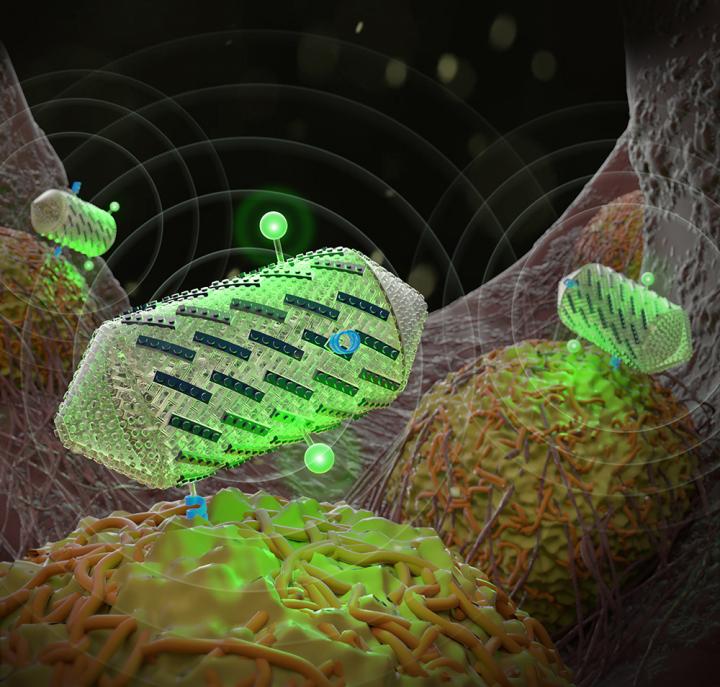
Protein-shelled structures called gas vesicles, illustrated here, can be engineered with Lego-like proteins to improve ultrasound methods. The gas vesicles can help detect specific cell types and create multicolor images. (credit: Barth van Rossum for Caltech)

The next step in ultrasound imaging will let doctors view specific cells and molecules deeper in the body, such as those associated with tumors or bacteria in our gut.

A new study from Caltech outlines how protein engineering techniques might help achieve this milestone. The researchers engineered protein-shelled nanostructures called gas vesicles (which reflect sound waves) to exhibit new properties useful for ultrasound technologies. In the future, these gas vesicles could be administered to a patient to visualize tissues of interest.

The modified gas vesicles were shown to give off more distinct signals (making them easier to image), target specific cell types, and help create color ultrasound images.

“It’s somewhat like engineering with molecular Legos,” says assistant professor of chemical engineering and Heritage Principal Investigator Mikhail Shapiro, who is the senior author of a new paper about the research published in this month’s issue of the journal ACS Nano and featured on the journal’s cover. “We can swap different protein ‘pieces’ on the surface of gas vesicles to alter their targeting properties and to visualize multiple molecules in different colors.”

“Gas vehicle” proteins reflect sound waves

Genetic engineering of gas vesicles — genetically encoded protein nanostructures isolated from buoyant photosynthetic microbes — results in nanostructures with new mechanical, acoustic, surface, and functional properties to enable harmonic, multiplexed, and multimodal ultrasound imaging as well as cell-specific molecular targeting. (credit: Anupama Lakshmanan et al./ACS Nano)

In 2014, Shapiro first discovered the potential use of gas vesicles in ultrasound imaging. These gas-filled structures are naturally occurring in water-dwelling single-celled organisms, such as Anabaena flos-aquae, a species of cyanobacteria that forms filamentous clumps of multicell chains.

The gas vesicles help the organisms control how much they float and thus their exposure to sunlight at the water’s surface. Shapiro realized that the vesicles would readily reflect sound waves during ultrasound imaging, and ultimately demonstrated this using mice.

Genetic engineering a type of protein called GvpC (gas vesicle protein C) can be used to modify the properties of acoustic gas-vesicle nanostructures. (credit: Anupama Lakshmanan et al./ACS Nano)

In the latest research, Shapiro and his team set out to give the gas vesicles new properties by engineering gas vesicle protein C, or GvpC, a protein naturally found on the surface of vesicles that gives them mechanical strength and prevents them from collapsing. The protein can be engineered to have different sizes, with longer versions of the protein producing stronger and stiffer nanostructures.

In one experiment, the scientists removed the strengthening protein from gas vesicles and then administered the engineered vesicles to mice and performed ultrasound imaging. Compared to normal vesicles, the modified vesicles vibrated more in response to sound waves, and thus resonated with harmonic frequencies.

Harmonics are created when sound waves bounce around, for instance in a violin, and form new waves with doubled and tripled frequencies. Harmonics are not readily created in natural tissues, making the vesicles stand out in ultrasound images.

In another set of experiments, the researchers demonstrated how the gas vesicles could be made to target certain tissues in the body. They genetically engineered the vesicles to display various cellular targets, such as an amino acid sequence that recognizes proteins called integrins that are overproduced in tumor cells.

Multicolor ultrasound images

The team also showed how multicolor ultrasound images might be created. Conventional ultrasound images appear black and white. Shapiro’s group created an approach for imaging three different types of gas vesicles as separate “colors” based on their differential ability to resist collapse under pressure. The vesicles themselves do not appear in different colors, but they can be assigned colors based on their different properties.

To demonstrate this, the team made three different versions of the vesicles with varying strengths of the GvpC protein. They then increased the ultrasound pressures, causing the variant populations to successively collapse one by one.

As each population collapsed, the overall ultrasound signal decreased in proportion to the amount of that variant in the sample, and this signal change was then mapped to a specific color. In the future, if each variant population targeted a specific cell type, researchers would be able to visualize the cells in multiple colors.

“You might be able to see tumor cells versus the immune cells attacking the tumor, and thus monitor the progress of a medical treatment,” says Shapiro.

The ACS Nano paper, entitled “Molecular Engineering Of Acoustic Protein Nanostructures,” was funded by the National Institutes of Health, the Defense Advanced Research Projects Agency, the Heritage Research Institute for the Advancement of Medicine and Science at Caltech, and the Burroughs Wellcome Fund.


Abstract of Molecular Engineering of Acoustic Protein Nanostructures

Ultrasound is among the most widely used biomedical imaging modalities, but has limited ability to image specific molecular targets due to the lack of suitable nanoscale contrast agents. Gas vesicles—genetically encoded protein nanostructures isolated from buoyant photosynthetic microbes—have recently been identified as nanoscale reporters for ultrasound. Their unique physical properties give gas vesicles significant advantages over conventional microbubble contrast agents, including nanoscale dimensions and inherent physical stability. Furthermore, as a genetically encoded material, gas vesicles present the possibility that the nanoscale mechanical, acoustic, and targeting properties of an imaging agent can be engineered at the level of its constituent proteins. Here, we demonstrate that genetic engineering of gas vesicles results in nanostructures with new mechanical, acoustic, surface, and functional properties to enable harmonic, multiplexed, and multimodal ultrasound imaging as well as cell-specific molecular targeting. These results establish a biomolecular platform for the engineering of acoustic nanomaterials.