https://www.raspberrypi.org/blog/robocod/

ROBOCOD

Fishbowl existence is tough. There you are, bobbing up and down in the same dull old environment, day in, day out; your view unchanging, your breakfast boringly identical every morning; that clam thing in the bottom of the tank opening and closing monotonously – goldfish can live for up to 20 years. That’s a hell of a long time to watch a clam thing for.

fishbowl on wheels

Indeed, fishbowl existence is so tough that several countries have banned the boring round bowls altogether. (There’s a reason that your childhood goldfish didn’t live for 20 years. You put it in an environment that bored it to death.) So this build comes with a caveat – we are worried that this particular fish is being driven from understimulus to overstimulus and back again, and that she might be prevented from making it to the full 20 years as a result. Please be kind to your fish.

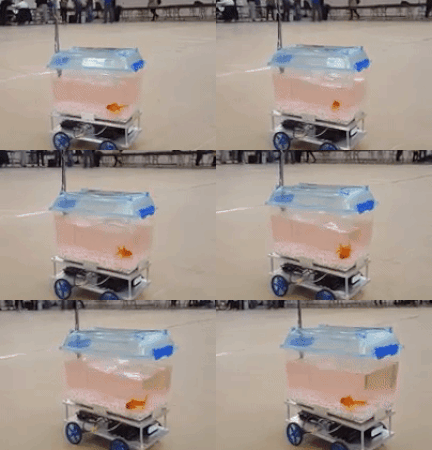
What’s going on here? Over in Pittsburgh, at Carnegie Mellon University, Alex Kent and friends have widened the goldfish’s horizons, by giving it wheels. Meet the free-range fish.

Alex K, negligent fishparent, says that the speed and direction of the build is determined by the position of the fish relative to the centre of the tank. The battery lasts for five hours, and by all accounts the fish is still alive. Things are a bit jerky in this prototype build. Alex explains:

The jerking is actually caused by the Computer Vision algorithm losing track of the fish because of the reflection off of the lid, condensation on the lid, water ripples, etc.

Alex and co: before you look at more expensive solutions, try fixing a polarising filter to the camera you’re using.

All the code you’ll need to torture your own fish is available at GitHub.

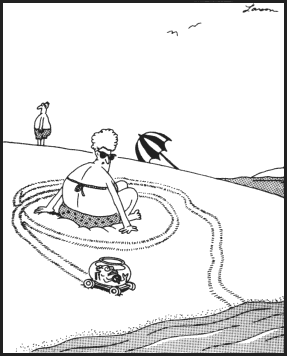
Of course, Far Side fans will observe that there is nothing new under the sun.

Fishbowl on wheels by Gary Larson

http://bc.ctvnews.ca/oxygen-masks-for-pets-of-all-sizes-donated-to-port-moody-fire-dept-1.3263984

Oxygen masks for pets of all sizes donated to Port Moody Fire Dept.

A donation from a long-time resident of Port Moody may help firefighters save the lives of pets suffering from smoke inhalation.

Animal lover Brian Borsoff donated two pet oxygen mask kits to Port Moody Fire and Rescue on Monday, after watching news coverage of pets dying in a fire.

The report made him and his wife think of their dog, Remley, who was present at a news conference to model the masks.

“I want my dog, and all pets in Port Moody, to have the best possible chance for survival if tragedy strikes,” Borsoff said in a news release.

Each of the kits Borsoff donated contains three masks in different sizes, designed specifically for animals by a U.S. company called Wag N’ O2 Fur Life. Prior to the donation, Port Moody Fire Rescue only had a one-size-fits-all mask for dogs.

The donated masks will allow firefighters to treat animals ranging from large dogs to pets as small as gerbils or birds.

“When a fire breaks out, pets instinctively look for a hiding place instead of trying to flee the building,” Deputy Fire Chief Jason Harper said.

“That means far too many pets die each year as a result of smoke inhalation.”

Harper said the kits may help them save the lives of pets that have suffered from exposure to smoke while hiding.

Crews will be trained on how to use the masks in February, then they will be available for use as needed.

Pet oxygen masks

https://ca.news.yahoo.com/well-trained-truffle-sniffing-dog-040000824.html

Well-trained truffle sniffing dog the key to finding truffles in Lower Mainland

View photos

Well-trained truffle sniffing dog the key to finding truffles in Lower Mainland
More

Two well-trained truffle sniffing dogs are helping dig up culinary gold in B.C.

Truffle hunters Brooke Fochuk and John Kelly have trained their dogs Dexter and Macchi to locate ripe truffles growing underground in the roots of trees.

“It’s actually embarrassing how little I have to do,” said Fochuk, praising her pug-beagle cross, Dexter.

Fochuk is considered a pioneer in the Lower Mainland’s truffle community after becoming one of the first people locally to train a truffle dog more than six years ago.

As one of the organizers of the province’s second annual truffle festival next weekend, Fochuk and Kelly have been hunting more than usual for the elusive fungi to serve guests.

They say truffles are nearly impossible to find without an animal.

In the past, some people used rakes, but the widespread digging left soil ruined and tree roots destabilized.

On the hunt … in Burnaby

“Where is it? Show me Dex,” Fochuk asked her puggle during a recent truffle hunt in a secret location in Burnaby, B.C.

Dexter scratched the ground with his front left paw to indicate where to dig.

Within seconds his owner located an Oregon white truffle.

“That’s a nice one,” she said looking at the intact fungus.

WATCH: the truffle hunt as it happened live. On mobile and can’t see the video? Log into Facebook and view here.

Running past them were Kelly and Macchi — a Lagotto Romagnolo traditionally known as the Italian truffle hunting dog.

“Macchi is a ranger, and he’s found one over there,” explained Kelly as he pointed to a patch his dog dug up.

“He circles around and circles around until he hones in on a scent whereas Dexter is much more methodical.”

Before Kelly has time to walk over to that patch, his dog has already run about six metres ahead to another spot where more white truffle turn up.

During this hour and a half trip, the quad of truffle hunters take home “several hundred dollars” worth of goods.

They also find Oregon black truffles, which they describe as smelling like pineapples and dark chocolate.

It is one of four types of edible truffles that Kelly says the Lower Mainland and parts of Vancouver Island are known for.

But he believes there could be other location across the province where they’re available, but few people have been looking for them and even fewer have well-trained truffle dogs.

Tips and tricks of the truffle trade

Traditionally, pigs were used for the hunt but Kelly says the animals often got too excited and would try to eat the truffles making them hard to control.

Dogs, he says, are more ideal because they’re drawn in by the hunt rather than the truffle.

Macchi is so attuned to the scent, he’s able to find truffles the size of a fingernail.

Fochuk says the first time Dexter found truffles, he found 70 in 4 1/2 hours.

“I could barely get him out of the truffle field, even with bacon. He just wanted to keep going — it was just the fun of the game,” she recalled.

Dexter is particularly gifted — sailing through two days worth of training in about 10 minutes, but Fochuk insists the breed of dog typically doesn’t matter.

Instead, she recommends focusing on the human-dog connection.

“You need to work on the fundamentals, so the dogs know exactly what you want them to communicate to you,” she says.

“If there’s confusion in the training, that translates to an inability in the truffle field.”

If you want to give it a try, Kelly says edible truffles tend to prefer young Douglas fir trees, but they may grow beneath other firs like noble or grand fir.

But both hunters say best to tag along with them next weekend, when they take members of the public out for a hunt.
http://www.iclarified.com/58921/apple-stops-signing-ios-102-downgrades-and-restores-no-longer-possible

Apple Stops Signing iOS 10.2, Downgrades and Restores No Longer Possible

Apple has stopped signing iOS 10.2, meaning that downgrading or restoring to that firmware version is no longer possible.

Closure of the signing window comes shortly after a jailbreak of iOS 10.2 was released by Luca Todesco. Hopefully, you managed to jailbreak already or save your SHSH blobs as we recommended.

Currently, Apple’s latest firmware is iOS 10.2.1 and developers have been seeded with iOS 10.3. If you accidentally update or restore, you’ll find yourself on iOS 10.2.1.

Hopefully, saved iOS 10.2 SHSH blobs will help facilitate a downgrade to that firmware version for users who have performed a software update. Stay tuned for more details on that.

It could be quite some time before another jailbreak surfaces as Apple is switching to the APFS file system with iOS 10.3 which is likely to introduce new challenges.

Please follow iClarified on Twitter, Facebook, Google+, or RSS for updates.

Apple Stops Signing iOS 10.2, Downgrades and Restores No Longer Possible

https://www.xda-developers.com/the-chromecast-ethernet-adapter-works-with-google-home/

The Chromecast Ethernet Adapter Works with Google Home

A Couple of weeks after the Google Home personal assistant device was announced last year at Google I/O 2016, it was reported that Google Home would be nothing more than a Chromecast stuffed inside of a speaker. The report came from The Information, and claimed this was true because they shared the same microprocessor and WiFi chip as the Chromecast. There really isn’t that much to a Chromecast so all Google would need to do is add a speaker, microphone, LED lights and a plastic casing and boom, you have Google Home.

Then in November of last year, iFixit released their teardown of the Google Home and it was confirmed that these two devices shared similar hardware. We learned that Google Home shared the same CPU, flash, and RAM as 2015’s Chromecast. This is something that has become incredibly popular with Google selling tens of millions of units since it was first released. Google even has an Ethernet Adapter for the Chromecast that can be purchased from the Google Store for $15.

Reddit user LeonJWood was having trouble connecting their Google Home unit to the wireless network that’s available to them. It seems Google Home has difficulties connecting to 802.1x (WPA2 Enterprise) WiFi networks unless you have MAC Auth set up to automatically allow the device to connect. Naturally, this is not allowed at some work and school environments so they were forced to go through an alternative route. They were aware that the Chromecast and Google Home products shared similar hardware, so they purchased the ethernet adapter from Google to see if it would work.

And indeed it did work! All you have to do is connect the ethernet adapter to Google Home via the port in the back (which is hidden by the speaker grill) and it will work. They do warn you that anyone else on the network can see and control your Google Home too. They have also noticed that streaming music to it from their smartphone will cause it to cut out from time to time. This could be caused by other issues though so it might not be limited to this ethernet adapter.

https://www.rt.com/usa/375679-battery-powered-revolution-tesla-california/

Battery-powered revolution: Tesla storage plant to power 15K Californian homes

Small batteries make big difference for Californians as Tesla storage plant goes live providing power for 15k homes. The pilot project is aimed at curbing power outages and replacing fossil-fueled grids.

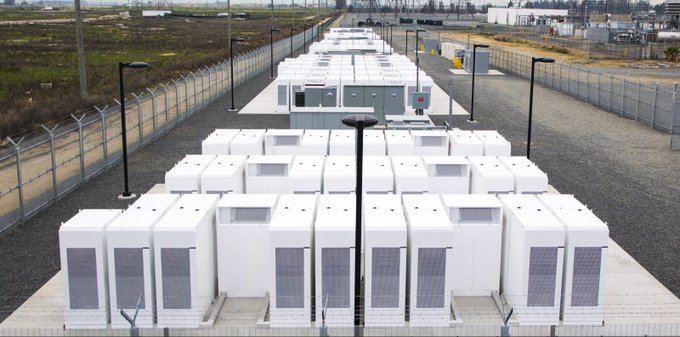
Tesla’s 80 megawatt storage station at Mira Loma substation uses 400 of the company’s new Powerpack 2 lithium-ion batteries, and works by sucking up the power generated by renewables such as wind and solar energy during the day and feeding it back into the system on demand when the sun sets.

“It’s sort of hard to comprehend sometimes the speed all this is going at,” said J B Strubel, Tesla’s Chief Technology Officer, according to Bloomberg. “Our storage is growing as fast as we can humanly scale it.”

Tesla CTO: our energy storage is growing as fast as we can humanly scale it [Gallery of new Powerpack station]

The massive gas leak at the aging Aliso Canyon gas storage facility which for months leaked gas into the homes of LA’s Porter Ranch neighborhood in 2015, prompted Southern California Electric to commission energy storage deals to alleviate the risk of winter blackouts.

The request was also spurred by either the closure or phasing out of the state’s ageing nuclear plants.

“I had relatively limited expectations for the battery industry in advance of 2020. I thought that it would not really accelerate and begin to penetrate the electric grid or the transportation world for a while to come,” Michael Picker, president of California Public Utilities Commission said, according to the New York Times. “Once again, technology is clearly moving faster than we can regulate.”

Two other storage projects are due to go online along with the Tesla station.
Altagas Ltd is joining the grid with its natural gas generator battery project in Pomona, and AES is doing final testing on a 30/120 megawatt plant.

The price of lithium ion batteries has plummeted to almost half in recent years driven by the increasing demand for electric cars leading to a new scale of battery storage manufacturing. Those factors have made battery plants a viable alternative to natural gas-burning “peaker” plants that go online as needed during peak energy use hours.

“There were teams working out there 24 hours a day, living in construction trailers and doing the commissioning work at two in the morning,” Tesla’s Strubel said about the plant that was completed in just under three months. “It feels like the kind of pace that we need to change the world.”

Using a battery to meet demand peaks means it will likely be fully charged and discharged nearly every day. Such demand puts a lot of strain on lithium batteries, which degrade as they get older and are cycled more often. But there are advantages especially in a state like California with strict environmental regulations. Battery plants take up a much smaller footprint than gas-power plants, they don’t pollute and their instant response can provide valuable services better than any other technology.

Tesla thinks it can continue to scale the new system quickly and meet is ambitious goal of delivering 15 gigawatt hours of battery storage a year by 2020.

https://9to5google.com/2017/01/30/autovoice-google-home-custom-commands/

AutoVoice for Google Home brings fully custom commands to your home assistant

Google Home is an excellent device, but it’s obvious that Google could be doing a lot more with it. Tying Google Home with Google’s mobile apps and just Android in general could prove ridiculously powerful, but we’ve only seen that on a minor scale so far. With AutoVoice, though, you can unlock what Google Home is really capable of, and it’s pretty awesome.Building on Google’s ‘Actions on Google‘ program, AutoVoice is an app that anyone can get for their Home. Simply open the Google Home app, navigate to the list of Google Home services, locate AutoVoice, and link a Google account.

What can AutoVoice do? The possibilities are endless, and also a bit complicated. AutoVoice integrates with Tasker to get things done, so you’ll need a decent knowledge of that app to get some of the complicated tasks done. In this article, I’ll show you how to set up a ‘find my phone’ function, but you can see what this service is really capable of in the developer’s video below. Examples include checking notifications, replying to messages on your phone, pushing content from Kodi to your TV, finding locations, and even start phone calls on your smartphone.

To get started, you’ll need Tasker and the AutoVoice Beta for Android (join the Google+ community here to enter the program). Once those are installed and you’ve activated AutoVoice on Home as I explained above, you’ll need to get the AutoVoice app going.

To do this, first ensure you’re in the AutoVoice Beta program. From there, enter the ‘devices’ section of the app and assign the same Google account to the app which you did for Home. Once you’ve performed this step, you can simply say “OK Google, ask AutoVoice to [command].” If everything is working properly, you should see a message on your smartphone confirming that the command came through.

Next, you’ll want to use Tasker to actually assign tasks to that command. As I mentioned, in this tutorial I’ll just be going over the absolute basics with a ‘find my phone’ function. You won’t have to pay anything to get this working, so it’s a great way to get a taste of what AutoVoice is capable of with Google Home. If you want to try out some expanded functionality, you can take a look at XDA’s expanded tutorial which goes over the app’s Natural Language options.

Once you’ve downloaded Tasker, you’ll need to set up an Event profile. Next, select Plugin, followed by the AutoVoice plugin. As we’re trying to stick to the free version of the app, we’ll use the ‘Recognized’ option, but if you opt to pay for the service, you can use Natural Language to offer a bit of extra flexibility. The ‘Recognized’ option will limit you to using the same phrase you set up in the app, word for word. It can be anything you’d like, but if you alter the way it is said, the app won’t recognize it properly, similar to IFTTT commands.

autovoice_home_1

After selecting the AutoVoice Recognized option, you’ll need to set up a list of possible commands that can trigger the action you’ll be creating. Tap ‘Commands’ and from there, enter in a variety of different commands that you would like to use to activate that action. In this example of causing a phone to ring, we’ll use the phrases “find my phone,” “locate my device,” “ring,” and “ring my pixel.” In the fully free version of AutoVoice, you’ll be required to stick to short commands to get this working, so the “ring” command will likely be the most reliable. Once you’ve set up the commands, tap ‘Responses’ and enter a response such as “OK, ringing your phone.”

Next, you’ll need to press the back button on your device and create the task that this command will trigger. In this example, we’ll just be making the phone play a ringtone, but the possibilities here are really only limited by your knowledge of how Tasker works.

To get the phone to ring once the command has been sent, add an ‘Alert’ action, and select ‘Beep.’ From here you can adjust the length of the beep, but the only thing you need to change to get things working is to change the audio stream, at least for this example. The loudest option by default is Alarm, but you can set it to anything and adjust however you’d like.

If everything has been completed properly, you can say “OK Google, ask AutoVoice to ring,” and it will trigger that beep on your device.

This is just a taste, though, of what AutoVoice is capable of with Google Home. The possibilities truly are endless, so give it a shot, and let us know what you come up with!

https://9to5mac.com/2017/01/30/watchos-3-2-beta-1/

Apple rolling out first watchOS 3.2 beta for Apple Watch with new Theater Mode

After first detailing the software update in developer documentation, Apple has now released the first beta version of watchOS 3.2 for developer testing on Apple Watch. watchOS 3.2 is the first version of the Apple Watch software that works with SiriKit, enabling developers to tap in to Siri in the same way as apps on iOS 10.Apple’s documentation also mentioned Theater Mode as a new notification toggle that disables raise-to-wake for alerts without having to change the mode in the Settings app.

Introduced in watchOS 3.1.3, Theater Mode lets users quickly mute the sound on their Apple Watch and avoid waking the screen on wrist raise. Users still receive notifications (including haptics) while in Theater Mode, which they can view by tapping the screen or pressing the Digital Crown.

While Apple detailed this feature as present in watchOS 3.1.3, the feature has not been seen in that software version. If it’s present in watchOS 3.2, we will be looking to see how it interacts with iOS as the feature was first rumored to be seen on iPhone’s Control Center.

We’ll update with any changes discovered in watchOS 3.2 for Apple Watch below.

watchos-3-2-beta-1

Here’s the new Theater Mode:

watchos-3-2-apple-watch-theater-mode

This feature doesn’t seem to interface with the iOS 10.3 beta 1. You can also use the Digital Crown spin method to slowly activate the display from the darkest setting during Theater Mode. Tapping the Theater Mode toggle prompts you with the explainer text each time.

Apple is also running developer betas for iOS 10.3 for iPhone and iPad, macOS 10.12.4 for Mac, and tvOS 10.2 for Apple TV. While iOS and macOS have public beta versions, watchOS and tvOS betas are only available to registered developers.


http://www.kurzweilai.net/soft-robotic-sleeve-developed-to-aid-failing-hearts

Soft robotic sleeve developed to aid failing hearts

Could be implanted to restore blood circulation
January 27, 2017

An international team of scientists has developed a soft robotic sleeve that can be implanted on the external surface of the heart to restore blood circulation in pigs (and possibly humans in the future) whose hearts have stopped beating.

The device is a silicone-based system with two layers of actuators: one that squeezes circumferentially and one that squeezes diagonally, both designed to mimic the movement of healthy hearts when they beat.

Heart failure affects 41 million people worldwide. The concept of an artificial pump that aids cardiac function is not new and has been employed clinically with ventricular assist devices (VADs). “I’ve been implanting VADs in patients for a long time,” says Frank Pigula, MD, a former professor at Harvard and Boston Children’s Hospital who is co-corresponding author of an open-access paper published Jan. 18 in Science Translational Medicine. Pigula is now chief of pediatric cardiac surgery at Norton Children’s Hospital in Louisville, Kentucky.

The current-generation VADs systems directly expose a patient’s blood to artificial materials such as tubing and rotors. When blood touches a device’s components, it has a tendency to clot, which could lead to heart attacks, pulmonary embolism, strokes, or other complications, Pigula explained. To prevent clots from forming, it’s necessary to use blood thinning and anticoagulatory medications such as heparin and warfarin, which are complication-prone.

How to make a soft robotic sleeve for a human heart

That’s where the soft robotic sleeve developed by Pigula’s team comes in.

The robotic sleeve can be implanted on the external surface of the heart, preventing circulating blood from ever coming in contact with the device’s components, possibly eliminating or decreasing the need for anticoagulatory drugs.

In designing the soft robotic sleeve, the researchers were inspired by the structure and movement of the heart itself. The two actuators are formed in thin layers of silicone that are layered on each other in roughly the same orientation as the muscle fibers in the heart. The sleeve is about half a millimeter thick, which is about the width of 5–10 human hairs.

To adhere the sleeve to pig hearts, the researchers used an FDA-approved adherent on the apex, or tip, of the heart. However, the researchers found this caused severe inflammation at the point of adherence, which could interfere with the ability to implant the sleeve for long periods of time. So the researchers employed a gel to adhere the sleeve to the heart, a technique that lessened the inflammation.

To test the sleeves, the scientists implanted them on the hearts of pigs and induced acute heart failure, resulting in a 50–60% drop in cardiac output. Turning on the sleeve restored 97% of the original cardiac output.

“The soft robotic actuators are essentially artificial muscles,” says Nikolay Vasilyev, MD, a staff scientist in cardiac surgery research at Boston Children’s Hospital and co-author on the recent study. “In this sense, the robotic sleeve mimics both ventricles of the heart.”

The soft robotic heart sleeve also contains sophisticated sensing abilities that measure pressure at specific points on the heart’s surface.

“This work represents an exciting proof-of-concept result for this soft robot, demonstrating that it can safely interact with soft tissue and lead to improvements in cardiac function,” said Conor Walsh, senior author of the paper and the John L. Loeb Associate Professor of Engineering and Applied Sciences at SEAS and Core Faculty Member at Harvard’s Wyss Institute. “We envision many other future applications where such devices can deliver mechanotherapy both inside and outside of the body.”

However, “the human body is remarkably good at detecting foreign materials and mounting immune responses to them, so it will be tricky business to find a biologically inert material that will not, over the long run, scar the tissues it’s physically associated with,” according to a physician who was not involved in the research. “This is less critical for non-vital organs like soft-tissue silicone implants, but a thin layer of scar tissue around the heart could have serious implications for the stiffness, structural integrity, and function of native heart tissue.”

The research was a collaboration between Harvard’s SEAS and Wyss Institute, Boston Children’s Hospital, National University of Ireland,  Technische Universität München, Boston Children’s Hospital, University of Leeds, University of Central Florida, Royal College of Surgeons in Ireland, Trinity College Dublin, UCLA, and University of Louisville.

The work was supported by the Translational Research Program grant from Boston Children’s Hospital, a Director’s Challenge Cross-Platform grant from the Wyss Institute for Biologically Inspired Engineering, Harvard School of Engineering and Applied Sciences, and Science Foundation Ireland.


Abstract of Soft robotic sleeve supports heart function

There is much interest in form-fitting, low-modulus, implantable devices or soft robots that can mimic or assist in complex biological functions such as the contraction of heart muscle. We present a soft robotic sleeve that is implanted around the heart and actively compresses and twists to act as a cardiac ventricular assist device. The sleeve does not contact blood, obviating the need for anticoagulation therapy or blood thinners, and reduces complications with current ventricular assist devices, such as clotting and infection. Our approach used a biologically inspired design to orient individual contracting elements or actuators in a layered helical and circumferential fashion, mimicking the orientation of the outer two muscle layers of the mammalian heart. The resulting implantable soft robot mimicked the form and function of the native heart, with a stiffness value of the same order of magnitude as that of the heart tissue. We demonstrated feasibility of this soft sleeve device for supporting heart function in a porcine model of acute heart failure. The soft robotic sleeve can be customized to patient-specific needs and may have the potential to act as a bridge to transplant for patients with heart failure.