https://9to5mac.com/2017/04/27/more-detailed-alleged-iphone-8-schematic-surfaces-suggests-wireless-charging-will-be-based-on-qi-tech/

More detailed alleged iPhone 8 schematic surfaces, suggests wireless charging will be based on Qi tech

Although there are still many doubts about the iPhone 8 rumored design, mocked up above, a new schematic has surfaced on Weibo today. This drawing (embedded after the break below) is a more detailed version of what we saw yesterday and includes label annotations for many components.

The new dual front and (vertical) back cameras are visible and a rear Touch ID sensor is nowhere in sight, again implying it will be integrated into the OLED display. What’s most interesting about this latest leak though is that it indicates the parts used by the iPhone 8 for wireless charging …The drawing is in Chinese but we have had the image translated to confirm the exact components being shown.

From the top left corner going clockwise, the schematic labels point to an antenna gap, light and proximity sensor, duo front camera, a second antenna gap positioned symmetrically opposite, main motherboard (shaded yellow), power button, battery, Qi wireless charging coils, Taptic Engine, a third antenna gap, Lightning port, a fourth antenna gap, speaker, ‘wireless charging module’, SIM tray, volume buttons, mute switch, flash and rear dual-camera.

The four seams for antennas is reminiscent of the iPhone 4/4s design which likewise had antenna lines in the four corners of the chassis. With this purported schematic, the antenna gaps are positioned on the top and bottom sides.

The callout to two wireless charging parts corroborates what KGI has been saying for months, but it also more precisely states that the components are ‘Qi,’ the wireless charging standard that relies on inductive pads to transmit power to devices. The Apple Watch charger uses a variant of Qi technology. Apple joined the Wireless Power consortium that manages the Qi standard in February.

It’s also interesting to note how much internal space Apple will dedicate to making wireless charging a reality, if this schematic is real. As well as the large coil (represented by the green circle), there is also the separate square wireless charging module in the lower left corner.

There have been some sporadic claims in the past months that the iPhone 8 would feature ‘truly’ wireless charging — somehow able to receive power over the air without the need for capacitive pads. This seems unlikely given the current state of technology and the fact that this leak specifically denotes the device as using ‘Qi’ components.

To get a sense of what this iPhone 8 would look like in the hand, refer to our earlier coverage of the iPhone 8 dummy which also uses this design.

Apple is expected to officially announce the new iPhone at a media event in the fall but it may not ship in the usual September timeframe as the company has reportedly faced production delays. Recent rumours have suggested the iPhone 8 will be available to customers in late October or early November.

As well as wireless charging, Apple’s new flagship phone will tout a larger large 5.8-inch curved OLED screen in about the same overall device size as the iPhone 7, 3D-sensing front cameras, an Apple A11 SoC and more.

Apple is also expected to announce two iterative updates to the iPhone 7 and iPhone 7 Plus, keeping the same exterior chassis with upgraded internals. KGI has said that these ‘iPhone 7s’ phones will also get the same wireless charging functionality as the iPhone 8.

http://hackaday.com/2017/04/27/how-to-use-siri-to-control-your-pc/

SIRI CONTROLS YOUR PC THROUGH PYTHON AND GMAIL

Voice-based assistants are becoming more common on devices these days. Siri is known for being particularly good at responding to natural language and snarky responses. In comparison, Google’s Assistant is only capable of the most obvious commands, and this writer isn’t even sure Microsoft’s Cortana can understand English at all. So it makes sense then, if you want voice control for your PC, to choose Siri as your weapon of choice. [Sanjeet] is here to help, enabling Siri to control a PC through Python.

The first step is hooking up the iPhone’s Notes app to a Gmail account. [Sanjeet] suggests using a separate account for security reasons, as you’ll need to place the username and password in a Python script. The Python script checks the Gmail account every second, looking for new Notes from the iPhone. Then, it’s as simple as telling Siri to make a Note (for example, “Siri, Note shutdown”) and the Python script can then pick up the command, and act accordingly.

It’s a quick and easy way to get Siri to do your bidding. There’s other fancy ways to do it, too — like capturing Siri’s WiFi data on your home network.

https://www.neowin.net/news/apple-and-nike-launch-limited-edition-apple-watch-nikelab-from-369

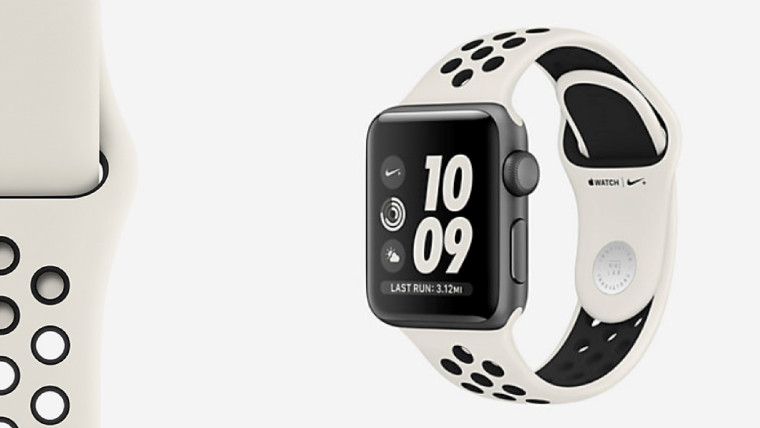
Apple and Nike launch limited edition Apple Watch NikeLab, from $369

Last year, Apple unveiled the Watch Series 2, and among the many options available was a version created in partnership with sports and fitness brand Nike. The Apple Watch Nike+ featured exclusive sport bands, but it was otherwise technically identical to the standard Watch Series 2 models, aside from a simplified watch face for fitness fanatics, and integration with the Nike+ Run Club social platform.

Today, the two companies have expanded their collaboration with the Apple Watch NikeLab. It features a new strap design, but it’s otherwise identical to the previous version.You won’t be able to buy the new strap design separately from the new NikeLab model, so if you’ve really got your heart set on it, you’ll have to buy the whole Watch to get it.

The Apple Watch NikeLab will only be sold through Nike’s website, NikeLab locations, and – for some reason – at a single Apple Watch pop-up shop in Tokyo. The 38mm is priced at $369, while the 42mm will set you back $399.

Source: Nike via The Verge

http://www.androidauthority.com/huawei-hikey-960-specs-price-release-date-767719

Huawei and Linaro launching Raspberry Pi-like computer board for Android

ARM hardware developer Linaro, in partnership with Huawei, is readying a new computer board product capable of running Android with current-gen CPU and GPU technologies.

The HiKey 960 is intended to act as a tool for Android devs to test software and drivers, but it could also be used in the production of robotics, drones, and digital home devices. Google, ARM, Archermind, and LeMaker all had a hand in the board’s development, but it was Linaro’s aim of bringing “access to the latest ARM technology to the developer community,” that seems to have been the driving force behind the project.

As for the specs, the HiKey 960 will ship with an octa-core Kirin 960 processor (as you might have already guessed) with four high-performance ARM Cortex-A73 and four low-power Cortex-A53 cores, a Mali-G71 GPU and 3 GB of LPDDR4 RAM. That means the board will be roughly as powerful as the Huawei Mate 9— though that houses an extra gigabyte of RAM.

The HiKey 960 also delivers two USB 3.0 Type-A ports and one USB 2.0 Type-C port, dual-band 802.11 b/g/n/ac Wi-Fi and Bluetooth 4.1, in addition to a microSD slot and PCIe m.2 slot for extra storage.

Finally, the board includes 40-pin and 60-pin connectors and multiple high-definition outputs, including an HDMI 1.2a slot for 1080p displays.

The HiKey 960 will launch in the US, Europe and Japan in early May priced at US$239. Worldwide availability will roll out later — as will support for Linux.


http://www.kurzweilai.net/ai-will-upload-and-access-our-memories-predicts-siri-inventor

AI will upload and access our memories, predicts Siri co-inventor

“Instead of asking how smart we can make our machines, let’s ask how smart our machines can make us.”
April 26, 2017

“Hey Siri, what’s the name of that person I met yesterday?” (credit: Apple Inc.)

Instead of replacing humans with robots, artificial intelligence should be used more for augmenting human memory and other human weaknesses, Apple Inc. executive Tom Gruber suggested at the TED 2017 conference yesterday (April 25, 2017).

Thanks to the internet and our smartphones, much of our  personal data is already being captured, notes Gruber, who was one the inventors of voice-controlled intelligent-assistant Siri. Future AI memory enhancement could be especially life-changing for those with Alzheimer’s or dementia, he suggested.

Limitless

“Superintelligence should give us super-human abilities,” he said. “As machines get smarter, so do we. Artificial intelligence can enable partnerships where each human on the team is doing what they do best. Instead of asking how smart we can make our machines, let’s ask how smart our machines can make us.

“I can’t say when or what form factors are involved, but I think it is inevitable,” he said. “What if you could have a memory that was as good as computer memory and is about your life? What if you could remember every person you ever met? How to pronounce their name? Their family details? Their favorite sports? The last conversation you had with them?”

Gruber’s ideas mesh with a prediction by Ray Kurzweil: “Once we have achieved complete models of human intelligence, machines will be capable of combining the flexible, subtle human levels of pattern recognition with the natural advantages of machine intelligence, in speed, memory capacity, and, most importantly, the ability to quickly share knowledge and skills.”

Two projects announced last week aim in that direction: Facebook’s plan to develop a non-invasive brain-computer interface that will let you type at 100 words per minute and Elon Musks’ proposal that we become superhuman cyborgsto deal with superintelligent AI.

But trusting machines also raises security concerns, Gruber warned. “We get to choose what is and is not recalled,” he said. “It’s absolutely essential that this be kept very secure.”


Topics: AI/Robotics

http://www.kurzweilai.net/in-a-neurotechnology-future-human-rights-laws-will-need-to-be-revisited

In a neurotechnology future, human-rights laws will need to be revisited

April 24, 2017

New forms of brainwashing include transcranial magnetic stimulation (TMS) to neuromodulate the brain regions responsible for social prejudice and political and religious beliefs, say researchers. (credit: U.S. National Library of Medicine)

New human rights laws to prepare for rapid current advances in neurotechnology that may put “freedom of mind” at risk have been proposed in the open access journal Life Sciences, Society and Policy.

Four new human rights laws could emerge in the near future to protect against exploitation and loss of privacy, the authors of the study suggest: The right to cognitive liberty, the right to mental privacy, the right to mental integrity, and the right to psychological continuity.

Advances in neural engineering, brain imaging, and neurotechnology put freedom of the mind at risk, says MarcelloIenca, lead author and PhD student at the Institute for Biomedical Ethics at the University of Basel. “Our proposed laws would give people the right to refuse coercive and invasive neurotechnology, protect the privacy of data collected by neurotechnology, and protect the physical and psychological aspects of the mind from damage by the misuse of neurotechnology.”

Potential misuses

Sophisticated brain imaging and the development of brain-computer interfaces have moved away from a clinical setting into the consumer domain. There’s a risk that the technology could be misused and create unprecedented threats to personal freedom. For example:

  • Uses in criminal court as a tool for assessing criminal responsibility or even the risk of re-offending.*
  • Consumer companies using brain imaging for “neuromarketing” to understand consumer behavior and elicit desired responses from customers.
  • “Brain decoders” that can turn a person’s brain imaging data into images, text or sound.**
  • Hacking, allowing a third-party to eavesdrop on someone’s mind.***

International human rights laws currently make no specific mention of neuroscience. But as with the genetic revolution, the on-going neurorevolution will require consideration of human-rights laws and even the creation of new ones, the authors suggest.

* “A possibly game-changing use of neurotechnology in the legal field has been illustrated by Aharoni et al. (2013). In this study, researchers followed a group of 96 male prisoners at prison release. Using fMRI, prisoners’ brains were scanned during the performance of computer tasks in which they had to make quick decisions and inhibit impulsive reactions. The researchers followed the ex-convicts for 4 years to see how they behaved. The study results indicate that those individuals showing low activity in a brain region associated with decision-making and action (the Anterior Cingulate Cortex, ACC) are more likely to commit crimes again within 4 years of release (Aharoni et al. 2013). According to the study, the risk of recidivism is more than double in individuals showing low activity in that region of the brain than in individuals with high activity in that region. Their results suggest a “potential neurocognitive biomarker for persistent antisocial behavior”. In other words, brain scans can theoretically help determine whether certain convicted persons are at an increased risk of reoffending if released.” — Marcello Ienca and Roberto Andorno/Life Sciences, Society and Policy

** NASA and Jaguar are jointly developing a technology called Mind Sense, which will measure brainwaves to monitor the driver’s concentration in the car (Biondi and Skrypchuk 2017). If brain activity indicates poor concentration, then the steering wheel or pedals could vibrate to raise the driver’s awareness of the danger. This technology can contribute to reduce the number of accidents caused by drivers who are stressed or distracted. However, it also opens theoretically the possibility for third parties to use brain decoders to eavesdropping on people’s states of mind. — Marcello Ienca and Roberto Andorno/Life Sciences, Society and Policy

*** Criminally motivated actors could selectively erase memories from their victims’ brains to prevent being identified by them later on or simply to cause them harm. On the long term-scenario, they could be used by surveillance and security agencies with the purpose of selectively erasing dangerous, inconvenient from people’s brain as portrayed in the movie Men in Black with the so-called neuralyzer— Marcello Ienca and Roberto Andorno/Life Sciences, Society and Policy


Abstract of Towards new human rights in the age of neuroscience and neurotechnology

Rapid advancements in human neuroscience and neurotechnology open unprecedented possibilities for accessing, collecting, sharing and manipulating information from the human brain. Such applications raise important challenges to human rights principles that need to be addressed to prevent unintended consequences. This paper assesses the implications of emerging neurotechnology applications in the context of the human rights framework and suggests that existing human rights may not be sufficient to respond to these emerging issues. After analysing the relationship between neuroscience and human rights, we identify four new rights that may become of great relevance in the coming decades: the right to cognitive liberty, the right to mental privacy, the right to mental integrity, and the right to psychological continuity.

http://www.independent.co.uk/news/science/artificial-plants-mof-carbon-dioxide-fuel-global-warming-reduce-climate-change-greenhouse-gases-a7703156.html’Artificial plants’ could turn carbon dioxide into fuel helping to reduce global warming

‘Artificial plants’ could turn carbon dioxide into fuel helping to reduce global warming

‘This work is a breakthrough’

artificialphotosynthesis.jpg

An artificial form of photosynthesis that sucks carbon dioxide from the atmosphere has been invented by a scientist who claims the “breakthrough” device could be used to reduce global warming.

Plants use sunlight to turn carbon dioxide into sugar and the new device acts in a similar way, using ultraviolet light and air to create two forms of fuel, which can then be used to create power.

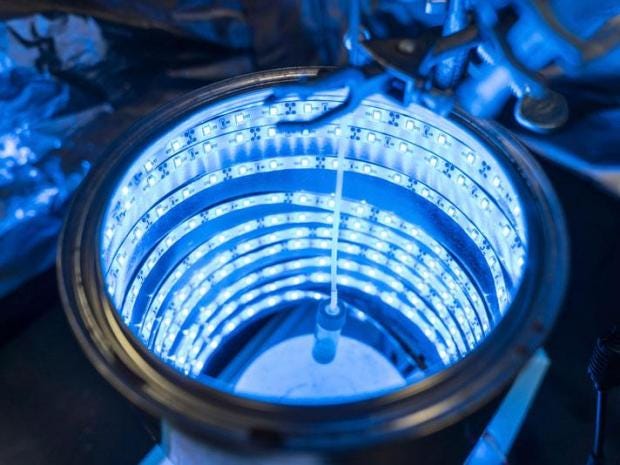
The scientists, Professor Fernando Uribe-Romo, of Central Florida University, and his team of students built a device using titanium, some organic molecules and a blue LED photoreactor – a glowing cylinder that looks like a bit like a tanning bed.

“It’s like photosynthesis, in which plants pick up sunlight and carbon dioxide and turn it into a sugar,” he said in a YouTube video about the research.

“In this case, instead of having a plant we have materials … that capture the sunlight and turn the carbon dioxide into something similar to sugar.”

He suggested the device, described in the Journal of Materials Chemistry A, could be installed near fossil fuel-powered power stations.

“A power plant produces a lot of carbon dioxide because it’s burning coal,” Professor Uribe-Romo said.

“The carbon dioxide can be turned into a fuel and that fuel can be fed up into the power plant so then you can recycle your own carbon dioxide … and that helps to reduce emissions, obtain energy and help fight global warming.”

The device used a ‘metal-organic framework’ or MOF, a type of material created about 20 years ago which can be made in thousands of different ways, each with different properties.

Professor Uribe-Romo said they now hoped to improve its efficiency, but said he believed it could make a significant difference.

“This work is a breakthrough,” he said.

“Tailoring materials that will absorb a specific colour of light is very difficult from the scientific point of view, but from the societal point of view we are contributing to the development of a technology that can help reduce greenhouse gases.

“The goal is to continue to fine-tune the approach so we can create greater amounts of reduced carbon so it is more efficient.”

In addition to using the device in conjunction with power stations, roof tiles could be made from the material, which would produce fuel while improving the local air quality.

“That would take new technology and infrastructure to happen,” Professor Uribe-Romo said. “But it may be possible.”

http://www.express.co.uk/life-style/science-technology/796948/Google-Chrome-Update-Download-Cast-Tab

Google Chrome update will make THIS exclusive feature much, much better

GOOGLE CHROME users will see a bumper increase in image quality when streaming to a Chromecast device.

The new Google Chrome update should improve video quality when streaming to a ChromecastGETTY • GOOGLE

The new Google Chrome update should improve video quality when streaming to a Chromecast

Google is working on a major bump in image quality when wirelessly beaming video content using the Cast functionality built into Google Chrome.

Sending video from your web browser tab to a Google Chromecast device can result in some rather lacklustre video quality, including dropped frames, and stuttering video.

But that could all be about to change, thanks to some clever changes coming to Chrome.

The update was confirmed by Chrome team member François Beaufort on Google+.

Writing on his social network page, he revealed: “The chrome team is experimenting in Dev Channel with improving the ‘Cast a tab’ experience by forwarding directly the video content bitstream to the Chromecast device when a video is fullscreened.

“This ‘simple’ feature allows to save battery and keep video quality intact.”

Clicking on fullscreen will dramatically improve the video quality on your ChromecastGOOGLE

Clicking on fullscreen will dramatically improve the video quality on your Chromecast

Rather than mirror an entire browser tab, which results in low-quality video playback, the new Chrome browser will send the video stream itself your Chromecast device.

Chrome users only need to toggle on full-screen mode, and the software will do the rest.

This should result in much higher quality video playback – as if you had played the footage from within a Chromecast compatible app.

If you have a Chromecast device, you can test-out the feature right now.

Load a Chrome browser tab and navigate to chrome://flags/#media-remoting, then enable the highlighted flag and restart the app.

François Beaufort has confirmed the new functionality works with Vimeo, so that’s probably the best one to try.

Click on the Google Chrome main menu to find the “Cast…” option. When you load the video fullscreen you should see the boost in streaming quality on your TV.

The news comes as Google announced plans to make copy-and-paste much easier on Android phones.

Copying and pasting information on your phone or tablet can often be trickier than on a PC or laptop, especially if you’ve got a device with a small screen.

Attempting to tap on the right letters or numbers can often leave users pawing at their screen, but now help is at hand.

How to enable ‘Copyless Paste’ in Chrome for Android

That’s because Google is reportedly set to solve this issue with a new upgrade to its Chrome mobile app which it says can make copying and pasting easier than ever.
The new feature is called Copyless Paste, and has started rolling out to Chrome users on Android devices now, according to VentureBeat.

The tool takes information from when you use Chrome, and transplant that over to other Google-made apps.

For example, if you had visited a restaurant’s website in Chrome, and then switched to Google Maps, your keyboard would offer up the name of that restaurant as a suggestion to enter into the search bar.

Google says that the data is only stored locally, meaning the company never receives any of the information.

The feature also won’t work if you’re using incognito tabs, with all information in that browser still remaining hidden.

http://www.iclarified.com/60201/leaked-iphone-8-schematic-with-vertical-duallens-camera-wireless-charging-image

Leaked iPhone 8 Schematic With Vertical Dual-Lens Camera, Wireless Charging? [Image]

An alleged iPhone 8 schematic leaked today features a dual-lens vertically aligned rear camera and hints at wireless charging.

Posted by KK, the schematic does not have a rear Touch ID sensor; however, there is an interesting circular shape in the center of the device which could be for some type of wireless charging module.

A few hours before posting the schematic, KK tweeted “#iphone8 supports wireless charging within 5 meters, is this something u guys want?”

Notably, Powermat CEO Elad Dubzinski recently claimed that Apple announced wireless charging as a standard feature for its next generation smartphone.

It’s difficult to determine the authenticity of this type of leak; however, Apple has long been rumored to be working on wireless charging and its vertical cameras align with several other reports.

Take a look at the image below and please follow iClarified on Twitter, Facebook, Google+, or RSS for updates.

Read More

Leaked iPhone 8 Schematic With Vertical Dual-Lens Camera, Wireless Charging? [Image]

http://www.businessinsider.com/amazon-echo-look-privacy-issues-2017-4

What you need to know about the privacy of the new smart camera Amazon wants you to put in your bedroom

Amazon Echo LookAmazon

Amazon’s newest version of its Echo smart home device boasts a built-in video camera that can capture your outfits and provide fashion recommendations.

That’s a big step towards a lifestyle of the future.

But it also creates some important privacy issues that are worth keeping in mind if you’re considering buying the $199 Amazon Echo Look.

As with any connected device, and particularly an internet connected camera, there are valid concerns about privacy: Is the device always listening? Who can see the photos and videos it takes?

The most important thing to know is that the Echo Look does have an on/off switch. If you don’t want the device watching or listening to you, you can turn the camera and microphone off by pressing a button on the side of the device.

That’s nice. But hackers have a long history of using malicious tools to hijack PC webcams, allowing them to surreptitiously spy on people. Facebook CEO Mark Zuckerberg himself covers his laptop’s camera with tape, as does FBI Director James Comey.

And when it comes to internet-connected devices like webcams, it can be tricky to secure them properly, if at all.

The Echo is different, Amazon says, because it uses the retailer’s own time-tested security systems to protect your privacy. That means it’s backed by the same security Amazon uses to protect its own services, which ideally protects it against the vast majority of hackers.

Of course, nothing is bulletproof.

Turn on the blue light

When the Echo Look is turned on, Amazon says it can only detect a special “wake” word, which means it’s not always listening to you. When the devices hears the wake word, a light ring on the Echo Look will turn blue so you know it’s saving audio to the AWS cloud, an Amazon spokeswoman told Business Insider.


Amazon Echo Look, ModelAmazon

Which brings us to the photos, videos, and audio the Echo Look is capturing when it’s on — and this is a bit more complicated than an on/off switch.

The Echo Look has an accompanying app will save all your outfit photos locally rather than clogging up your camera roll. But be advised that the photos are also stored in the AWS cloud until you manually delete them, an Amazon spokesperson told Motherboard.   This means that every time you say, “Alexa, take a photo,” that image is immediately saved to Amazon’s cloud until you go in and delete it yourself.

It’s worth noting that storing images in the cloud is something that services like Google Photos, Dropbox, and iCloud already do. By uploading your images to Google Photos, for example, you’re allowing Google to use machine learning to create customized albums and GIFs of your content.

Just remember that the photos and video that get captured while you’re in your bedroom could contain more private information, whether in the foreground or background, than the photos that you expressly capture with your phone while you’re out and about.

Amazon did not comment as to whether it has any future plans to use the photos and videos you capture with the Echo Look on its other platforms, like tailoring your shopping suggestions on Amazon.com. But since Amazon is making a commitment to growing its fashion business, it’s not hard to speculate how the Echo Look could be used to expand its current offerings.