http://www.irishtimes.com/news/health/antibiotic-attains-new-powers-in-battle-against-superbugs-1.3102192

Antibiotic attains new powers in battle against superbugs

Scientists find way to make vancomycin 1,000 times more potent than old drug

Dr Dale Boger, of Scripps Research Institute  in La Jolla, California, said: “Doctors could use this modified form of vancomycin without fear of resistance emerging,”

Dr Dale Boger, of Scripps Research Institute in La Jolla, California, said: “Doctors could use this modified form of vancomycin without fear of resistance emerging,”

Scientists in the United States have succeeded in modifying a lifesaving antibiotic called vancomycin to make it more powerful; an advance they predict will reduce the threat of antibiotic-resistant infections for years to come.

Vancomycin has been prescribed by doctors for 60 years, but bacteria are only now becoming resistant to it. It has been one of the main tools used against infections caused by bacteria known as enterococci; MRSA and Clostridium difficile – they are among a class of superbugs resistant to antibiotics.

These microbes are among the biggest cause of hospital-acquired infections across the globe, notably vancomycin-resistant enterococci (VRE), and cause particular difficulties for people whose immune system is suppressed.

The World Health Organisation warns antibiotic resistance is one of the biggest threats to global health, with major diseases becoming harder to treat because the drugs used on them are becoming less effective.

Researchers at the Scripps Research Institute (TSRI) in La Jolla, California, led by Dr Dale Boger, discovered a way to structurally modify vancomycin to make an already-powerful version of the antibiotic even more potent. “Doctors could use this modified form of vancomycin without fear of resistance emerging,” he predicted.

Because this antibiotic has been so effective up to recently, it suggests bacteria already have a hard time overcoming its original “mechanism of action”, which works by disrupting how bacteria form cell walls, explained Dr Boger. His team’s findings are published today in the journal Proceedings of the National Academy of Sciences.

‘Magical’

He said vancomycin was “magical” because of its proven strength against infections. Previous studies by his team at TSRI had shown it was possible to add two modifications to vancomycin to make it even more potent. “With these modifications, you need less of the drug to have the same effect,” Dr Boger said.

The new study shows scientists can make a third modification which interferes with a bacterium’s cell wall. “Combined with previous modifications, this alteration gives vancomycin a 1,000-fold increase in activity, meaning doctors would need to use less of the antibiotic to fight infection,” according to TSRI.

The discovery makes this version of vancomycin the first antibiotic to have three independent mechanisms of action. “This increases the durability of this antibiotic,” Dr Boger said. “Organisms just can’t simultaneously work to find a way around three independent mechanisms of action. Even if they found a solution to one of those, the organisms would still be killed by the other two.”

Tested against Enterococci bacteria, the new version of vancomycin killed both VRE and original forms of enterococci. The next step was to design a way to synthesise the modified vancomycin using fewer steps in the lab, as the current method takes 30 steps. But Dr Boger said this was the “easy part” of the project, compared with the challenge of designing the molecule in the first place.

Prof Colum Dunne, director of research at University of Limerick Medical School, said the research had particular relevance to Ireland, as the Republic has the highest reported rate in Europe of VRE, based on recorded bloodstream infections – the resistant form of the disease is approaching 50 per cent of cases.

Real benefits

He said the new form of vancomycin, if developed by a pharmaceutical company, would bring real benefits to patients, provided it was used as a “last resort” product. It should be held in reserve as “the best weapon you have,” he added.

He cautioned against belief it could be a silver bullet, as in his view it would be inevitable that resistance to vancomycin’s new version would build up, due to factors such as reduced vigilance as a consequence of false confidence, and the ways antibiotics would be administered as a consequence.

The process of modifying an antibiotic was not unusual, Prof Dunne said, as it was often done to extend product shelf-life. The antibiotic pipeline for a lot of companies and research “discovery programmes” was not as rich as it used to be but the process could improve drug efficacy and reduce side effects.

https://www.researchgate.net/blog/post/mars-had-water-for-longer-than-previously-thought

Mars had water for longer than previously thought

High concentrations of silica point to the existence of groundwater long after lakes evaporated. This finding extends the potential window for life on the planet.

The discovery of light-toned bedrock – called ‘halos’ – with high concentrations of silica in Mars’ Gale crater, reveals that groundwater persisted once the lake in Gale crater dried up. The discovery was made by NASA’s Curiosity rover which traveled more than 16 km over 1,700 Martian days from the bottom of Gale crater to Mount Sharp in the crater’s center. For researchers who published the study in the journal Geophysical Research Letters, it is now a question of whether this extended window of water on Mars enabled life to develop.

We spoke to the lead author Jens Frydenvang about the work.

ResearchGate: What motivated this study?

Jens Frydenvang: The NASA Curiosity rover landed in Gale crater, Mars in 2012, and has been exploring the crater ever since. Already, this exploration has led to evidence of a long-lived lake (or lakes) early in Mars’ history; but we are still looking for evidence on how long this habitable environment persisted, and how Mars became the arid planet we know today. The results presented in this study, represent the strength of an exploratory rover like Curiosity, in that we were able to react to the unexpected findings of high-silica fracture-associated halos, and use the time needed to measure and understand them.

RG: Can you tell us what you found?

Frydenvang: We have found light toned areas – called halos – surrounding fractures in bedrock originating from deposits in the ancient Gale crater lake, and also in overlying bedrock originating from sand-dunes that were deposited after the lake had disappeared. These halos comprise very high silica concentration near the center-lines, that are interpreted to have been deposited from groundwater flowing through the fractures. As the halos are also found in the lithified sand-dunes, this points to substantial amounts of groundwater being present in Gale crater long after the lake eventually disappeared.

This is a mosaic of images from the navigation cameras on the NASA Curiosity rover shows ‘halos’ of lighter-toned bedrock around fractures. These halos comprise high concentrations of silica and indicate that liquid groundwater flowed through the rocks in Gale crater longer than previously believed. Credit: NASA/JPL-Caltech.

RG: How did you discover this?

Frydenvang: This discovery represents the ability of a capable rover like Curiosity, to discover and react to unexpected features. The first high-silica measurement was made using the ChemCam (Chemistry and Camera) instrument that I’m working on, and the halos themselves are visible in the images we got down from the rover cameras as light toned areas around fractures. Most of the science instruments on the Curiosity rover were utilized to measure and understand the nature of the halos.

RG: When did Mars have water? And when/how did it disappear?

Frydenvang: We believe that Gale crater held a lake 3.8-3.3 billion years ago, and that it might have lasted millions of years. What we show here, is that even long after the lake disappeared, substantial amounts of groundwater were present and flowed through the rocks in Gale crater. It is unfortunately not possible for us to date when this happened better. As for how liquid water disappeared from Mars, this is very much part of our ongoing research using the Curiosity rover and continuing our ascent of Mount Sharp in the center of Gale crater, but also using the NASA Maven spacecraft orbiting Mars.

RG: Why is this only being discovered now?

Frydenvang: The halos we’ve discovered are not visible to the spacecrafts orbiting Mars, and have only been observed over 20-30 m of elevation. Hence, we wouldn’t have found these without the Curiosity rover on the surface.

RG: What does it mean for our understanding of Mars? And its potential for life?

Frydenvang: Data from the Curiosity rover have already shown that Gale crater was once habitable. The big questions for us now, is for how long this environment persisted, and of course whether that window allowed for life to arise. This study shows that liquid water was present in the sub-surface of Gale crater for much longer than previously thought, which expands the window in which life could potentially have evolved on Mars.

Featured image courtesy of ESA/DLR/FU Berlin.

http://www.gamesindustry.biz/articles/2017-05-30-raspberry-pi-merges-with-coderdojo

Raspberry Pi merges with CoderDojo

Low-cost computer maker unites with network of kids’ coding clubs

CoderDojo and Raspberry Pi have always shared similar goals around introducing young people to the field of computing. Now they’ll pursue those goals together, as the two organizations have announced a merger.

As Raspberry Pi CEO Philip Colligan explained in a blog post, the merger will see the Raspberry Pi Foundation become a corporate member of the CoderDojo Foundation, while Colligan himself joins the charity’s board of directors. As CoderDojo is based in Ireland, the merger will need to be approved by Irish regulators.

“The two organisations will work together to advance our shared goals, using our respective assets and capabilities to get many more adults and young people involved in the CoderDojo movement,” Colligan said. “The Raspberry Pi Foundation will also provide practical, financial, and back-office support to the CoderDojo Foundation.”

While that support could include The Raspberry Pi Foundation’s eponymous credit-card-sized computers, Colligan was adamant that CoderDojo would continue on as an independent and platform-neutral organization, able to use any hardware it wishes to advance its goal of helping young people learn computing.

CoderDojo is a network of more than 1,250 coding clubs for kids from 7-17, operating in 69 countries and touting a regular attendance of more than 35,000 participants. Colligan said that with the merger, the organization has set a goal of growing its footprint to 5,000 coding clubs worldwide by the end of 2020.

https://9to5google.com/2017/05/30/youtube-now-widely-rolling-out-a-bottom-bar-redesign-of-its-android-app-gallery/

YouTube now widely rolling out a bottom bar redesign of its Android app [Gallery]

After several months of testing, YouTube is finally rolling out a redesign of its Android app to all users. A new bottom bar is the primary change, with core parts and navigation of the app otherwise remaining unchanged.The tabs at the top of the app have been replaced by a white bottom bar that features icons and text. Interestingly, YouTube will remembers where you left off on each tab:

For example, if you scroll down through the Home feed, then go to your Subscriptions tab, and then return to Home, you can easily pick up where you left off.

As a result of this new bottom navigation and to not interfere with the built-in Picture-in-Picture mode, the FAB for uploading video has been replaced by an icon in the action bar.


Compared to earlier A/B tests, YouTube has colored the action bar red instead of going with a stark white design. Along with the white on red text, this helps retain YouTube’s branding and general design. To the right of the upload and search button, there is a new profile page that slides up with Account and Settings.

There is also a new Library tab that features quick links to history, watch later, and playlists. Unfortunately, unlike with tabs, you can no longer swipe between the different sections of the app. However, Google notes that the bottom bar will always be visible.

To force this update on your device, try launching and force closing the app from the multitasking menu. This process worked instantly on one of our devices, but required half-a-dozen or so attempts on another.


Abner Li

Is interested in the minutiae of Google and Alphabet. Tips/talk: abner@9to5g.com

https://www.inverse.com/article/30913-8-staggering-predictions-ray-kurzweil

8 Staggering Predictions From Ray Kurzweil

Want to know what the future’s going to be like? There’s no better person to ask than Ray Kurzweil, the intellectual and inventor who predicted — among other things — the fall of the Soviet Union and the rapid expansion of the internet back in 1990. According to Kurzweil, “the singularity” will occur in 2045; but even though the point of the singularity is that technology advances so rapidly that humans can’t even fathom what the post-singularity future will look like, Kurzweil himself seems to have no problem imagining the craziest set of possibilities. If past is prologue, he’ll be right.

Contemplating this exponential growth is disconcerting, to say the least, but don’t worry — we’ll start you off small.

8. Ubiquitous Wifi Access

By 2019, almost everyone will be able to access wireless internet from almost anywhere on Earth at all times. That’s because, as Kurzweil describes in his 2005 book The Singularity Is Near (TSIN), we’ll have “very high-bandwidth wireless internet access woven in our clothing.”

7. An Asteroid Won’t Kill Us

Within a few decades, space technology will be able to fully protect the Earth from asteroid collisions. “We don’t see [… a large asteroid visitor] on the horizon,” he writes in TSIN, “and it is virtually certain that by the time such a danger occurs, our civilization will readily destroy the intruder before it destroys us.”

6. Working From Home with VR

Within a few decades, virtual reality will be fully immersive, making physical workspaces obsolete. Instead, we’ll all telecommute to work, and populations will become more decentralized because we won’t need to live in any particular location for our jobs. This will also somewhat alleviate the threat of terrorist attacks.

6. Don’t Worry About Disease

Most diseases will go away by the 2020’s. We’ll be able to reverse engineer the brain to fix neurological issues (ex. Parkinson’s, Alzheimer’s, strokes). Nanobots will not only exist by then, but be smart enough to combat diseases better than our current medical technology.

5. Virtual Reality = Reality

By the late 2020s, it will be impossible to distinguish reality from virtual reality. The implications of this are endless, but one of the things Kurzweil mentions in TSIN is how this will affect your sex life. “In virtual reality,” he writes, “we can be a different person both physically and emotionally. In fact, other people (such as your romantic partner) will be able to select a different body for you than you might select for yourself (and vice versa).” People won’t need sex dolls to sleep with Scarlett Johansson lookalikes.

4. Computers Surpass Humans Really Soon

By 2029, a computer will pass the Turing test.

3. Humans Become Machines

By the early 2030s, technology will be able to copy human brains and put them onto electronic mechanisms. That means no more flesh, blood, or bones — just a scan of your brain on a machine — and will enable humans to take any form, from a box to a bird. It will also mean that a “human” won’t die in any traditional sense, and that it will be infinitely replicable. In TSIN, Kurzweil says our immortality will work like computer software: “When we change from an older computer to a newer one, we don’t throw all our files away. Rather, we copy them and reinstall them on the new hardware.”

2. Earth Will Be Made of Computers

Sometime past 2045, our planet will be entirely made up of computers. With the exception of some nature reserves for the vulgar plebeians who want to live in a “natural state.” Fools.

1. The Universe Will Be a Supercomputer

By 2099, machines will be creating planet-sized computers, and eventually we’ll make the entire universe into an enormous supercomputer. Fingers crossed that a rogue humanoid doesn’t destroy the whole thing with a virus!

http://bgr.com/2017/05/30/google-search-personal-results-tab/

Google already tracks everything you do while inside any of its online services to make money off your data. The trade-off is worth it, many people will argue. Even if Google is able to learn a lot of details about you, it offers invaluable services including Gmail, Google Maps, and search. So if you’re already letting Google aggregate your data, you should know that Google Search now puts this particular skill to good use for you.

The Personal tab might not be immediately obvious to users, but it’s right there on Google Search, buried inside the More option.

Image Source: Google

When you search the web, Google categorizes the results. You might be looking for All results for a query, or just for Images, Maps, or News. That’s right, that’s the menu where you’ll find the More option.

So what’s inside the Personal you ask? Well, the tab will show you relevant results that contain the keywords, but these results come from your Google usage. The Personal tab shows you results that are only visible to you for any items, and they can originate from Google Photos, Calendar or Gmail. Google Drive support isn’t included, The Independent notes, but it’s possible that it’ll show up in the future.

The Personal tab might not show up for all Google users at this time, but it should appear to all users shortly.

If you want to prevent Google from delivering any private results, you can simply go to your Google Account in the Search Settings area and tick the Do Not use private results option in the Private resultssection.

The personal search results should show up in search only when you’re signed in. So if you want to guard your privacy, you should sign out of your Google account on computers shared with others if you want to use this new search option.

https://www.fastcompany.com/40424051/how-googles-music-making-ai-learns-from-human-minds-at-festivals

How Google’s Music-Making AI Learns From Human Minds At Festivals

Google’s year-long quest to teach computers to make music is humming along—but the robots have a lot to learn.

How Google’s Music-Making AI Learns From Human Minds At Festivals
[Photo: Unsplash user Sašo Tušar]

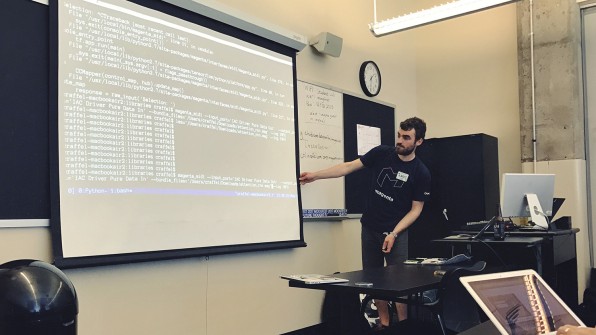
I’m sitting in a packed classroom when the weird noises start whirring around me. In the front of the room, lines of code pour down the screen while beeps and bloops start chiming from the laptop speakers on each desk.

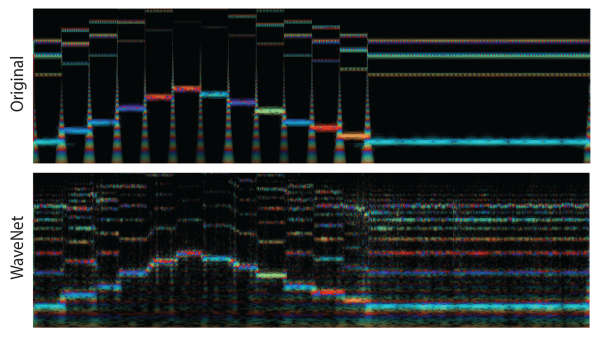
Some of the sounds are reminiscent of a vintage synthesizer, but what’s happening here is much more modern. A powerful neural network is helping to create these tones in the hopes of offering musicians a cutting-edge new tool for their creative arsenal. Over time, the machines will learn to create music themselves.

The classroom is being led by Adam Roberts and Colin Raffel, two Google engineers working on the Magenta project within the rapidly expanding Google Brain artificial intelligence lab. First unveiled to the public last May at the Moogfest music and technology festival in Durham, NC, Magenta is focused on teaching machines to understand and generate music and building tools that supplement human creativity with the horsepower of Google’s machine learning technology. Today, almost exactly one year later, Roberts and Raffel are back at Moogfest showing software engineers and musicians how to get Magenta’s latest tools up and running on their computers so they can start playing around and, they hope, contributing code and ideas to the open source project.

“The goal of the project is to interface with the outside world, especially creators,” says Roberts. “We all have some artistic abilities in some sense, but we don’t consider ourselves artists. We’re trained as researchers and software engineers.”

A DIFFERENT KNOB TO PLAY WITH

This workshop, focused on Magenta’s MIDI-based musical sequence generator API, was just one of several events Magenta engineers hosted at Moogfest this year. Throughout the four-day festival, they could be seen giving workshops, presenting demos of Magenta’s latest playable interfaces, like the web-based NSynth “neural synthesizer,” which uses neural networks to mathematically blend existing sounds to generate entirely new ones.

“With synthesizers, you’re giving people knobs and oscillators that can combine to create a sound,” says Roberts. “This is just a different knob to play with.”

https://www.fastcompany.com/embed/k9JNLq0k?playerID=G2hQKLvX

The Magenta team’s extensive presence at Moogfest is not just a byproduct of their nerdy enthusiasm for all things tech and music. It’s strategically deliberate. As an open source project (its code base can be found on Github), Magenta needs software developers to poke and prod at its code, critique its interface designs, and generally help push the project forward. Moogfest’s bleeding edge, progressive focus on the intersection of music and technology attracts a high concentration of exactly the type of people Magenta needs. It’s a total nerdfest, in other words. By hosting public workshops at a gathering like Moogfest, Magenta aims to ensure that its toolkit is installed on more laptops belonging to people who are among the best equipped to tinker with it and stretch its limits.

It’s also helpful for Google engineers to be onsite for these types of events, because as Roberts admits, the user interfaces aren’t exactly polished. “We’re definitely not a place where you can sit down, open something up, and just start playing around with it,” he says. “There is a lot of overhead and you have to know how to use the command line and all that stuff.”

Workshops like this one let Roberts and Raffel walk coders through the process of installing the tools needed to use Magenta. Much of the work happens in raw code in the command line, but also through applications like PureData. In addition to user-friendly interfaces like the NSynth web app, Magenta coders do their best to build a bridge from Google’s AI infrastructure to more familiar music-creation tools like Ableton Live and Logic Pro. The team’s work strikes a balance between research mode (they just had four research papers accepted for the next International Conference on Machine Learning, which is no small feat) and build-and-design mode. Thus, the user-friendly polish is sometimes slow to come to fruition.

WATCHING CREATIVES USE AI

Once everyone in the room is up and running with the software, Roberts and Raffel start to get something very valuable in return: Critical feedback. Workshop attendees, who vary in terms of their technical prowess, can quickly identify the pain points of using Magenta’s tools—and their imperfections. This is insight Google’s engineers wouldn’t necessarily always get from Github and other online communities. They can also observe firsthand how people use the code and interfaces, sometimes in unexpected ways.

Google’s Colin Raffel at a Magenta workshop during Moogfest. [Photo: John Paul Titlow]

“Whenever you create something, you have some idea of ‘This is how I think I would use it,’” says Roberts. “But all great things that people have invented music-wise, like the electric guitar or the 808, were invented for one purpose and then totally taken by creative people and used in a different way.”The project has come long way since last May, but Google Magenta is still barely an infant in the grand scheme of things. Magenta can auto-generate new sounds and short melodies, for instance, but doesn’t know much about the larger structure of songs. This is one of a few different territories the team hopes to push into next, both through academic-style research and building creative tools.

“I think it’s a neat technical challenge:  Can you actually understand this long-term structure of music?” says Roberts. “And then once you do, can you give people the tools to then fiddle with the parameters of the long-term structure to come up with new concepts that maybe haven’t been explored before?”

A hypothetical, real world example might be a plugin or a button for Garage Band or Ableton that lets songwriters use artificial intelligence to auto-generate a few options for the melodic structure of the song they’re working on. Or perhaps a well-trained neural network could help create ambient “generative” music that never ends—an idea already explored through less technologically sophisticated means by musician Brian Eno. Such prospects may spark chilling, dystopian thoughts among some artists, but Roberts and his colleagues insist the goal is to craft tools that supplement human creativity, not replace it.

MORE WORK TO DO

“I don’t have any expectation that anybody is going to sit in their armchair and listen to symphonies written by computers,” says Doug Eck, who leads the Magenta team at Google.  But, in the future AI could be used to mimic the social, collaborative nature of playing music.

“If you’re a musician and you play with other musicians, [this is like] having something at the table computationally that can function as a kind of musician with you,” says Eck. “But it doesn’t mean you’d want to listen to its output all by itself.”

We’re likely still years away from plug-and-play robo-companions for musicians—although with the rapid pace of developing in AI, who knows? In the meantime, Magenta has a lot more work to do. For starters, Roberts admits, they could build more intuitive interfaces and write cleaner code that’s easier to work with. They’re also continuing on the festival circuit, bringing Magenta’s tools and code to the Sonar festival and Barcelona in June.

[Photo: Unsplash user Álvaro Serrano]

They also desperately need more data. One thing these workshops and demos don’t do is train the underlying machine learning models, at least not directly.  For that, Magenta needs more sources of raw data about music. Roberts’s fantasy about teaching machines to understand and create longer song structures, for example, would require a mountain of intelligence from the annals of written music. Earlier Google A.I. art experiments, like the bizarre Deep Dream image generator, were relatively easy to pull off because of the wealth of image data that’s readily available online. Music is a much more complex form of media than two-dimensional JPEGs, and thus finding meaningful and machine-readable sources of data remains a challenge.One additional advantage of having a presence at conferences and festivals is that they offer leads on potential data sources. Moogfest is teeming with the sort of people who build MIDI datasets or otherwise find useful ways to compile and play with music-related data. Many of them, Roberts say, are eager to find ways to collaborate with Google’s artificial musical brain.

“These types of conversations are going to lead to our ability to have more data,” says Roberts. “Not just for ourselves. This is meant to be a collaborative project internally and externally. So, these conversations are useful.”

http://mfeldstein.com/state-higher-ed-lms-market-us-canada-spring-2017-edition/

State of Higher Ed LMS Market for US and Canada: Spring 2017 Edition

This is the ninth year I have shared the LMS market share graphic, commonly known as the squid graphic, for US and Canadian higher education. The original idea remains – to give a picture of the LMS market in one page, highlighting the story of the market over time. The key to the graphic is that the width of each band represents the percentage of institutions using a particular LMS as its primary system.

Last year we made a big shift based on our LMS market analysis service – we are working with LISTedTECH to provide market data and visualizations. This data source provides historical and current measures of institutional adoptions, allowing new insights into how the market has worked and current trends. Our spring report for subscribers will be released this month. Data for 2017 goes through April 1 of this year.

A few items to note:

  • As has been true since 2012, the fastest-growing LMS is Canvas. There is no other solution close in terms of matching the Canvas[1] growth.
  • While we continue to show Canvas in the Open Source area, we have noted a more precise description as an Open Core model.
  • Blackboard continues to lose market share, although the vast majority of that reduction over the past few years has been from customers leaving ANGEL. Blackboard Learn lost only a handful of clients in the past year. At this point ANGEL has is under 1% of market share.
  • With the University of Phoenix move from a Homegrown system to Blackboard Learn Ultra, the band for Homegrown has dropped to less than 1% of institutions.
  • Pearson’s has announced LearningStudio’s end-of-life for the end of 2017, and there are some big for-profit systems moving to D2L Brightspace and to Canvas. In fact, you can already see Brightspace increasing growth from past years based largely on former LearningStudio clients.
  • There is a line for Other, capturing those systems with less than 50 active implementations as primary systems; systems like Jenzabar, Edvance360, LoudCloud Systems, WebStudy, Schoology, and CampusCruiser. Of these, Schoology is growing the most, primarily from smaller private institutions (their sweet spot). At this rate, Schoology may move to its own band by next year.
  • It is interesting to reiterate that both Homegrown and Other categories have decreased over the past two years.

For a better description of the LMS market analysis service, read this post and / or sign up for more information here.

https://campustechnology.com/articles/2017/05/26/new-mit-lab-intends-to-deliver-education-innovation-to-the-world.aspx

New MIT Lab Intends to Deliver Education Innovation to the World

Digital learning pioneer Massachusetts Institute of Technology has just expanded its mission of delivering education worldwide. The creator of OpenCourseware, open course provider MITx and MicroMasters credentials has launched a lab for “research, policy, pedagogy and practice” dedicated to developing new ways of delivering education to learners in developing countries, including an emphasis on reaching underserved populations such as women and girls, and displaced persons.

The Abdul Latif Jameel World Education Lab (J-WEL) will operate within MIT’s open education and learning initiatives and be led by M.S. Vijay Kumar, the institution’s associate dean of digital learning. The lab will have three “special interest groups” — pre-K-12, higher education and workplace learning — with individual faculty leads directing each one. Faculty will receive J-WEL grants for research related to the given initiative. The program will also tap into existing educational resources at MIT, including the Integrated Learning Initiative and Office of Digital Learning, to gain an understanding about what works best in the education of children, university students and workers.

Along the way, J-WEL hopes to build a “collaborative” made up of schools, governments, nongovernmental organizations, philanthropists and industry to target its work for specific segments and regions. Members of the collaborative will gain access to MIT training, workshops and certification programs.

The effort is being sparked by a longtime supporter of MIT, Fady Mohammed Jameel, head of Abdul Latif Jameel International, a conglomerate of companies with its headquarters in Saudi Arabia and international interests in automotive, financial services, land and real estate, energy, media and advertising and consumer products. Jameel, a graduate of MIT, also serves as president of Community Jameel International, which runs multiple programs for social change and already supports two centers founded at MIT. The Abdul Latif Jameel Poverty Action Lab (J-PAL), established in 2003, seeks to reduce poverty through policy that’s developed through scientific evidence. The Abdul Latif Jameel World Water and Food Security Lab (J-WAFS), begun in 2014, seeks solutions to food and water scarcity in a world beset with change from global warming. All of the centers carry the name of Jameel’s father, Mohammed Abdul Latif Jameel, who founded ALJ International in 1945.

“Education and learning are fundamental to a strong society and economy — they promote employment and create increased opportunity for all,” said Jameel in a prepared statement. “While there has been progress made in improving education, there is always more that can be done. Enabling individuals to do their very best and reach their full potential, whatever their background, is a key priority for Community Jameel and the world. That is exactly why we are establishing the Abdul Latif Jameel World Education Lab with MIT.”

To learn more, watch the video below or visit the J-WEL site.