https://unews.utah.edu/sun-shining-over-research-park/

THREE NEW SOLAR ARRAYS ACTIVATED

The University of Utah Research Park has activated several new solar arrays across three locations. The installations, at the 729 Arapeen, 383 Colorow and 295 Chipeta facilities include multiple mounting configurations (rooftop, parking canopy and ground).

By the Numbers infographic.

PHOTO CREDIT: University of Utah

By the Numbers infographic.

Download Full-Res Image

These new solar arrays are a combined 1.9-megawatts in size and will offset the three buildings energy consumption by a combined 27 percent and contributes to the U’s goal of carbon neutrality by 2050.

“We are excited about the opportunity to significantly expand our alternative energy sources in Research Park,” said Jonathon Bates, Real Estate Administration executive director. “These projects not only align with the U’s commitment to be carbon neutral by 2050, but also begin the process of reinforcing sustainable building practices in Research Park on the cusp of its 50th birthday. As we look to the next 50 years of economic growth, innovation and private-public partnerships to reinforce the foundation of Research Park; it is exciting to capitalize on an opportunity to strengthen our alignment to sustainable development practices.”

Last year, solar energy was reported as the world’s fastest-growing source of power. In Salt Lake City alone, it’s been growing at a rapid pace, with an estimated 60,000 panels installed. The new university facilities are projected to save about 1.6 tons of carbon dioxide a year and represent a combined effort with local contractor EFG Consulting, the U, and Celtic Bank to increase the renewable energy sources in Salt Lake City.

Emissions offset by the numbers:

  • 4 million vehicular miles per year
  • 2 million pounds of coal burned over 10 years
  • 49,100 tree seedlings grown for 10 years
  • 602 tons of waste sent to landfill
  • 279 homes electricity use per year
  • 1,795 acres of U.S. forest in one year

“We are very interested in expanding our renewable footprint at the university. Projects like these, which can supply a whopping 1.9 MW of power, are much more than token gestures,” said University of Utah Chief Sustainability Officer Amy Wildermuth. “They diversify our energy supply and are visible reminders of our commitment to better air quality and carbon neutrality. To do this at no increased cost to the university and without using taxpayer funds is truly a remarkable accomplishment. I applaud Jonathon and his partners at Celtic Bank for their ingenuity in bringing this project to fruition and hope we are able to capitalize on more opportunities like this in the future.”
U Solar Production Data.

PHOTO CREDIT: University of Utah

U Solar Production Data.

Download Full-Res Image

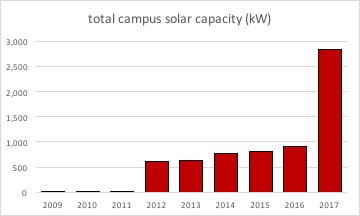
These arrays in Research Park will nearly triple the total amount of solar energy produced on campus. Over the last eight years, on-campus energy production by solar projects has continued to increase. Notable projects include the 2012 installation of solar panels atop the Natural History Museum of Utah, HPER East and HPER North. In 2013, rooftop solar panels on DESB came on line. The Marriott Library panels were installed in 2014 and 15, and most recently in 2016, the S.J. Quinney Law solar patio and parking canopy opened. As illustrated in the graph, each of these projects has helped to increase the campus’ total solar capacity.

The solar arrays at 383 Colorow and 729 Arapeen were made possible through a partnership with Celtic Bank, which provided tax equity, permanent debt and construction funding for this project. This allowed the U to complete this project with zero out-of-pocket costs and no taxpayer capital at risk. Celtic Bank will own and maintain the arrays for the duration of the project, and will charge the U a discounted rate for the kilowatts produced. After 20 years, the ownership transfers to the U.

       
729 Arapeen

New rooftop, gound, and parking canopy solar array at 729 Arapeen in Research Park at the University of Utah.

https://www.fastcompany.com/40500946/tech-giants-are-urging-the-fcc-to-keep-net-neutrality-rules?partner=feedburner&utm_source=feedburner&utm_medium=feed&utm_campaign=feedburner+fastcompany&utm_content=feedburner

Tech giants are urging the FCC to keep net neutrality rules

Tech giants are urging the FCC to keep net neutrality rules
[Photo: NASA/Unsplash]

Over 200 internet companies sent a letter to FFC chairman Ajit Pai urging him to vote against rolling back net neutrality rules next month, reports Reuters. In the letter, CEOs warned rolling back net neutrality rules“would put small and medium-sized businesses at a disadvantageand prevent innovative new ones from even getting off the ground.”The letter was signed by the CEOs of Airbnb, Etsy, Foursquare, GitHub, Pinterest, Reddit, Shutterstock, Sonos, Square, and Tumblr, among many others. You can read the full letter below.

Dear Chairman Pai,

This holiday season, millions of Americans will shop online, searching for the best deals, finding the perfect gifts for their loved ones, and supporting businesses large and small across the United States. Cyber Monday is a testament to the power of the free and open internet to encourage entrepreneurship, drive innovation, make our lives easier, and to support a healthy economy.

Last year, Americans spent almost $3.5 billion online on Cyber Monday, making it the largest online sales day in history. Each year this number increases, with last year’s sales growing more than 10 percent over 2015. Even Black Friday is becoming an online shopping day with more than $3 billion in online sales. E-commerce continues to grow and nearly $400 billion in retail sales were online last year. The internet is increasingly where commerce happens.

This economic growth is possible because of the free and open internet. Our current net neutrality rules support innovation and give all businesses the opportunity to compete equally for consumers. With strong net neutrality protections, the internet is an open marketplace where any business can compete, allowing individuals to start companies easily, market their products across the country, and connect with customers anywhere worldwide.

Because of the open internet, a web developer can launch a business out of their own apartment, an aspiring fashion designer in Wyoming can sell clothes in Los Angeles, or a caterer can find new customers in their town. Because of net neutrality, consumers and businesses have unfettered access to one another, increasing competition and consumer choice.

Disastrously, the Federal Communications Commission (FCC) last week released a draft order that would end this open commerce by repealing the current net neutrality rules and eliminating the protections that keep the internet free and open for America’s businesses and consumers.

Without these rules, internet service providers will be able to favor certain websites and e-businesses, or the platforms they use to garner new customers, over others by putting the ones that can pay in fast lanes and slowing down or even blocking others. Businesses may have to pay a toll just to reach customers. This would put small and medium-sized businesses at a disadvantage and prevent innovative new ones from even getting off the ground. An internet without net neutrality protections would be the opposite of the open market, with a few powerful cable and phone companies picking winners and losers instead of consumers.

Today, on the busiest online shopping day of the year, we, the undersigned businesses and trade associations, urge the FCC to maintain the current net neutrality rules and Title II classification of broadband internet. The current rules provide the protections necessary to protect net neutrality and ensure the internet remains a free and open marketplace that encourages innovation and supports robust competition.

https://www.macrumors.com/2017/11/27/face-id-iphone-x-fooled-by-mask/

iPhone X Face ID Again Unlocked With Mask, Even With ‘Require Attention’ Turned On

Since the iPhone X launched earlier this month, people have been attempting to fool Face ID, the new biometric facial recognition feature built into the device as a primary security feature. Face ID has thus far been tricked by twinschildren, and even a mask.

Vietnamese security company Bkav made headlines in mid-November after uploading a video featuring Face ID accessed by a mask, but there were several questions about the unlocking methods used in the video, including whether “Require Attention” was turned on. Today, Bkav shared a second video with a new mask and a clearer look at how the mask was used to spoof Face ID.

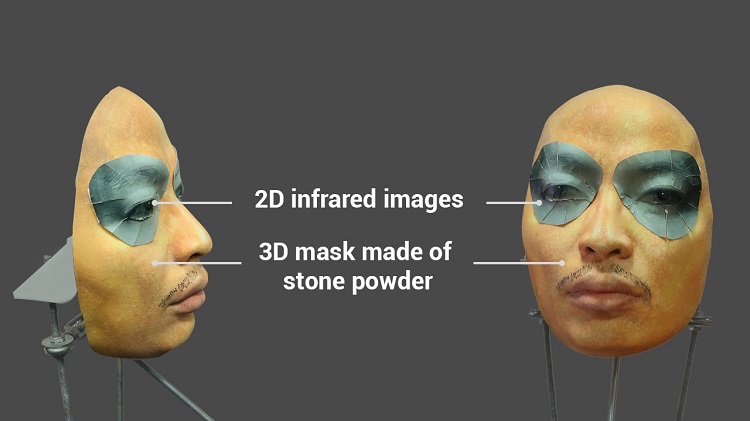
As described in an accompanying blog post, Bkav used a 3D printed mask made of stone powder, which cost approximately $200 to produce. 2D infrared images of eyes were then taped over the mask to emulate real eyes.

Bkav reset Face ID on camera and then set it up anew with the demonstrator’s face. “Require Attention for Face ID” and “Attention Aware Features” were both shown to be enabled on the iPhone X. For those unaware, “Require Attention for Face ID” is meant to add an extra layer of security by requiring you to look at your iPhone to use Face ID, and it’s one of the features that’s supposed to prevent Face ID from unlocking with a mask, with a photograph, or when you’re looking away from your phone.

After activating Face ID, the Bkav demonstrator unlocks the iPhone X normally with his own face, and then unlocks it once again with the mask. The mask appears to be able to unlock the iPhone X right away, with no failed attempts and no learning, as Face ID was set up from scratch just before the test. The mask’s 2D infrared eyes also appear to fool the “Require Attention for Face ID” setting.


Bkav claims the materials and tools used to create the mask are “casual for anyone” and that Face ID is “not secure enough to be used in business transactions,” but it’s worth noting that fooling Face ID in this way requires a 3D printer, several hundred dollars worth of materials, physical access to a person’s iPhone X, and detailed facial photographs that can be used to reconstruct a person’s face. Even then, if the 3D printed mask and the design of the infrared eyes aren’t perfect, Face ID will fail after five attempts.

Bkav believes Face ID is less secure than Touch ID because it’s easier to capture photographs from afar than it is to obtain a fingerprint, but this is still a very complex replication process that the average user does not need to be concerned with.

Bkav researchers said that making 3D model is very simple. A person can be secretly taken photos in just a few seconds when entering a room containing a pre-setup system of cameras located at different angles. Then, the photos will be processed by algorithms to make a 3D object.

It can be said that, until now, Fingerprint is still the most secure biometric technology. Collecting a fingerprint is much harder than taking photos from a distance.

Apple’s Face ID security white paper [PDF] outlines several scenarios where Face ID has a higher probability of being fooled, including with twins, siblings that look alike, and children under the age of 13, but masks are of particular interest because Face ID features a neural network that was “trained to spot and resist spoofing” to protect against “attempts to unlock your phone with photos or masks.” From Apple:

Face ID matches against depth information, which isn’t found in print or 2D digital photographs. It’s designed to protect against spoofing by masks or other techniques through the use of sophisticated anti-spoofing neural networks. Face ID is even attention-aware.

When Touch ID, Face ID’s predecessor, was first released in the iPhone 5s in 2013, there were many similar demonstrations of how it could be fooled with a fake fingerprint, but there’s little evidence that these methods were ever used to unlock devices in the real world on a wide scale basis, and it turned out to be something most iPhone users did not need to worry about. The same is likely true of Face ID.

Apple has made several improvements to Touch ID over the years, making it faster and more accurate, and similar improvements will undoubtedly be made to Face ID in the future. In the meantime, while Face ID can be fooled by a twin or a complicated facial replication process, it’s largely secure for most users and has received mostly positive reviews for its security and ease of use.

http://montrealgazette.com/news/changes-in-habitat-and-skull-shape-of-two-mouse-species-are-signs-of-climate-change

Changes in habitat and skull shape of two mouse species are signs of climate change

Physical changes to two species of mice as well as their changing representation in Quebec’s St. Lawrence Valley could hold some important clues to climate change.

A white-footed mouse at McGill University’s Gault Nature Reserve on Mont Saint Hilaire in the Montérégie. VIRGINIE MILLIEN

Physical changes to two species of mice as well as their changing representation in Quebec’s St. Lawrence Valley could hold some important clues to climate change.

At McGill University’s Gault Nature Reserve in the Montérégie, director Virginie Millien, an associate professor at McGill’s Redpath Museum, has been studying two similar species for the past decade: the deer mouse and the white-footed mouse. Although both are common in eastern North America, the deer mouse is found further north while the white-footed mouse is rarely found north of the St. Lawrence River.

The museum provided a treasure trove for researchers in the form of specimens collected in the nature reserve by McGill researchers in the 1950s and the 1970s. In comparing data from their field research today with that from museum specimens, her team found that the shape of the skulls of both species have changed over time, according to findings published recently in the journal Evolutionary Ecology.

“It is an indirect effect, based on what they are feeding on,” said Millien. What they eat affects their jaw and this in turn affects the shape of their skulls, she explained. But the skull shapes of the two species have not changed at the same rate: Changes to the skulls of the white-footed mouse have been more pronounced.

“One way to reduce the competition is to become more distinct. That way, there is less overlap in the type of food you use. This has been documented in birds: It is called character displacement. I think this is what is happening here. The two species are more distinct than they used to be,” she said.

But they are not distinct enough to be able to co-exist. “The two mice are similar and are competing with each other for nesting sites, for food – for everything. If you have one established population – here, the deer mice – and a new species comes in and it is in aggressive colonizing mode, it takes over,” she said.

“The common driver, we think, is the climate warming. … The very common response to climate warming is for species to shift north.

In the 1970s, nine of every 10 specimens caught in the reserve by researchers were deer mice. Today the white-footed species is by far the more abundant one. As the deer mouse declines in abundance in southern regions, Millien said, it, too, could be shifting north.

https://betanews.com/2017/11/27/3-clever-gift-ideas-using-raspberry-pi/

3 clever gift ideas using Raspberry Pi

While thoughts of savory roast turkey and green bean casserole may come to mind when you hear mention of Raspberry Pi this holiday season, the credit card-sized computer is more likely to make you drool over techie gift ideas.

If you want to get creative with your gift-giving this year — and impress your friends and family with your technical skills — consider tackling one of these projects that are perfect for RasPi beginners. From AI-enabled teddy bears to mini retro game arcades, these are memorable gifts that anyone would be happy to find under the tree.

SEE ALSO: Beautiful blue Raspberry Pi 3 goes on sale, but you (probably) can’t buy it

What is Raspberry Pi?

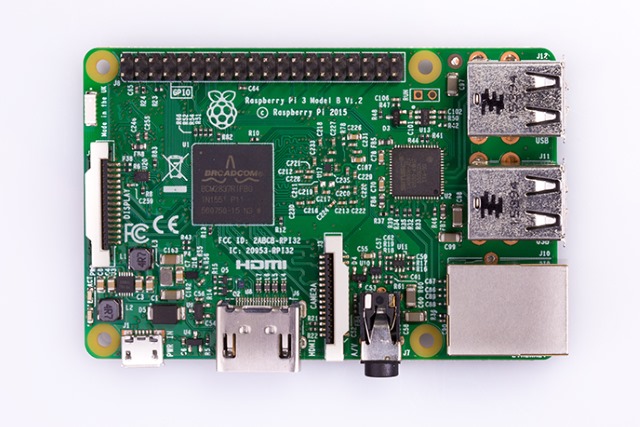
Palm-sized and proportionately powerful for around $35, the latest model, Raspberry Pi 3, is a single-board Linux computer with integrated Wi-Fi and Bluetooth. It can be connected to a flat-screen TV, wireless keyboard, mouse, SD card and USB power supply to make a truly portable computer capable of playing movies or casual games, displaying photos, creating documents for novel writing, or streaming music. Engineered by the UK’s Eben Upton with the Raspberry Pi Foundation, it started out as an educational tool for engaging kids in computer science and programming, but has blossomed into a great way to play for people of all ages.

Gift Ideas Using Raspberry Pi

With this kind of flexible tech and some of your own creativity, you can create an array of memorable gifts. Plus, you can spend some time together as a family learning something new — and fun, too. Note: Each of these internet of things projects will probably take two to three hours for assembly, installation and configuration. They range in cost from $40 to $350, but with some resourcefulness, most can be reduced in cost by using your own or used hardware. 

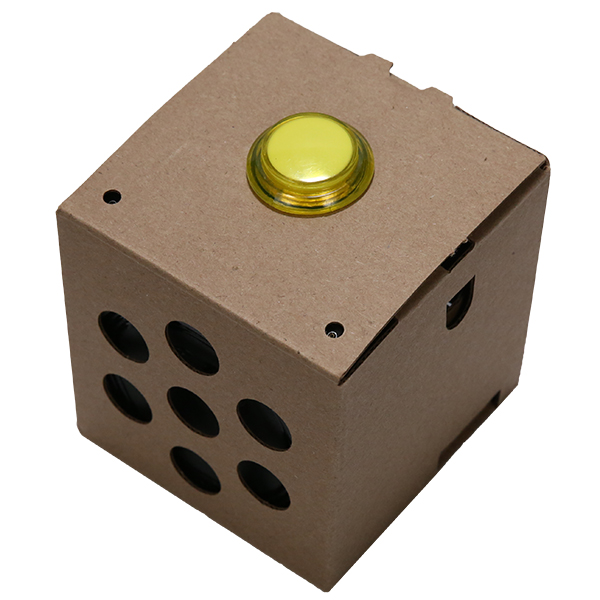
  1. Make your own voice-controlled assistant. Blow the minds of friends and family when you give them a handmade version of a Google Home device. For around $35 (the cost of the RasPi 3), you get all the functionality of Google Assistant, plus the ability to add your own questions and answers. Google’s AIY Projects Voice Kit comes with all the components you need (except the RasPi 3), including a speaker, microphone, and a stylish cardboard cube that you can decorate or leave in its unabashed simplicity. Take this project to the next level by placing it into anything to make a unique assistant — an upcycled camera in the living room, a tissue dispenser in the bathroom, an old-fashioned radio microphone in the den, a bedroom lamp, or a cookie jar in the kitchen, for example.
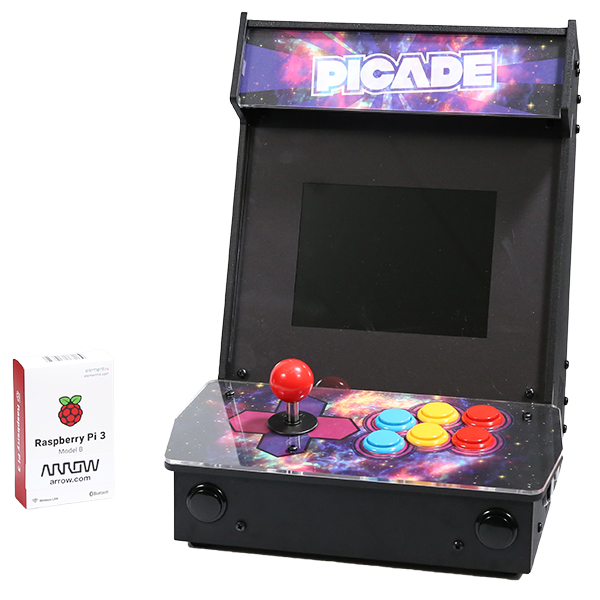
  1. Up your (arcade) game. Give your kids a desktop-sized game arcade you made yourself — or with help from them. Colorful and delightfully retro, the Picade kit comes with a joystick, video screen, push buttons, black powder-coated cabinet panels, and everything else you need (except RasPi 2 or 3 and a wireless keyboard). For around $300, this project will bring many hours of fun — from building it and gifting it to beating each other’s scores.

  1. Add AI to a stuffed animal. Give your child’s beloved furry toy the capability of saying “I love you” back (and a whole lot more) by embedding artificial intelligence using an Emotion Processing Unit. The Open Source project known as The Smart Toy combines RasPi 3 with a microchip that enables an emotional response in robots, AI and, yes, stuffed animals. Emoshape, the creators of the technology, claim that it is the first AI able to develop a personality over time. There’s no need to limit yourself to toys, either — why not give new personality to the family pet by placing your creation near an aquarium, bird cage or hamster habitat? If you’re not a pet owner, a potted plant will do. In addition to the EPU and RasPi 3, you’ll need a medium-sized toy (or other container of your choice), an 8 GB SD card, microphone and speaker, power bank, Micro USB cable and wireless charger — all costing about $350 — to create this high-tech toy. Once you download the software and create a local hotspot, the conversation can begin from anywhere. Don’t be surprised if you find yourself “borrowing” this fascinating toy from your kid.

Getting Started

Raspberry Pi Foundation’s website provides a wealth of helpful documentation and guides for setup, plus various applications of the technology, and a worldwide community of enthusiasts for troubleshooting, ideas exchange and sharing your excitement. These ideas, tweaked with your personality, will make creating the gifts with your loved ones the highlight of your holiday. Happy building!

https://lifehacker.com/how-to-control-unapproved-smart-home-gadgets-with-apple-1820775984

How to Control Unapproved Smart Home Gadgets with Apple’s HomeKit

Apple’s Home app makes it easy to control all your smart home tech right from your iPhone, but because this is Apple we’re dealing with, it also comes with some restrictions. The biggest drawback is that Home only works with a small subset of HomeKit-approved smart lights, switches, and other gadgets.

That often means paying extra to stay inside Apple’s ecosystem, but there’s a way to get around HomeKit’s restrictions. All it takes is a program called Homebridge and a little coding.

What’s Homebridge and How Does It Work?

Homebridge is a server that runs on Node.js. As the name implies, it acts as a bridge between Apple’s HomeKit and other devices. It also supports IFTTT.

That makes Homebridge great for controlling all your smart home gadgets through Apple’s Home app. One Reddit user recommends stocking up on cheap smart plugs from Xiaomi to turn your entire home into a smart house. Basically, anything that doesn’t work directly with Apple’s software should benefit from this workaround.

The one big drawback is that you may be opening yourself up to hackers and other risks. Apple requires every device to go through tons of testing and follow strict security rules if it wants HomeKit approval. That may limit the pool of approved gadgets, but it also means you don’t have to worry as much about security. Homebridge is also open source, so you’re relying on a loose community of developers to keep it updated rather than a trusted company like Apple.

How to Install HomeBridge

If you have a Mac computer at home that’s always running (like a desktop computer or a Mac Mini that doubles as a media player) that’s probably the best option. iMore has a detailed guide to installing Homebridge on macOS. Just don’t forget to back up your computer first in case something goes wrong.

You can also install Homebridge on Windows if you don’t have a macOS computer on hand. But again, you’ll want to make sure it’s a PC that’s always on for the software to work.

If you don’t already have a computer to run Homebridge, the best option may be to pick up a cheap Raspberry Pi computer and use it as your hub instead. In that case, Github has a step-by-step guide to walk you through the process.

https://www.extremetech.com/extreme/259553-750-raspberry-pi-mini-computers-turned-supercomputer-los-alamos-national-laboratory

750 Raspberry Pis Turned Into Supercomputer for Los Alamos National Laboratory

https://futurism.com/scientists-use-crispr-turn-e-coli-bacteria-microscopic-tape-recorder/

Scientists Use CRISPR to Turn E.Coli Bacteria into Microscopic Tape Recorder

IN BRIEF

Researchers from the Columbia University Medical Center have used CRISPR to create the world’s smallest tape recorder. The recorder is stored inside E.coli bacteria, enabling it to record its interactions with the environment and time-stamp events.

CRISPR, MEET E.COLI

We’ve seen CRISPR gene-editing do some amazing things, such as editing DNA in real time and facilitating the creation of animals like “low-fat” pigs and insects like yellow mosquitoes. The technology has revolutionized the scientific and medical communities, and can only become more advanced as it progresses. Some foresee CRISPR becoming key to the elimination of diseases like sickle cell disease and Huntington’s disease.

The latest achievement with help from CRISPR comes from a team of researchers at Columbia University Medical Center (CUMC), and it doesn’t have anything to do with altering the DNA of an existing creature. Instead, the team set out to make the world’s smallest tape recorder inside a bacterium.

The bacterium used for the CRISPR project was Escherichia coli, also known simply as E. coli. The E.coli bacteria was specifically chosen due to its natural ability to retain the genetic information of viruses. In their research, the team explained the modifications they made to the E.coli bacteria enabled it to record interactions with the environment, as well as time-stamp events as they occurred.

“Such bacteria, swallowed by a patient, might be able to record the changes they experience through the whole digestive tract, yielding an unprecedented view of previously inaccessible phenomena,” said Harris Wang, assistant professor in the Departments of Pathology & Cell Biology and Systems Biology at CUMC.

INTRODUCING TRACE

Wang and the team used CRISPR-Cas, an immune system found in certain species of bacteria, to edit a plasmid into E.coli’s DNA. These edits gave the bacteria the ability to replicate itself when exposed to a specific signal. Another plasmid was then modified and added to act as a reference when the signal isn’t present.

“In the absence of an external signal, only the recording plasmid is active, and the cell adds copies of a spacer sequence to the CRISPR locus in its genome,” the team explained. “When an external signal is detected by the cell, the other plasmid is also activated, leading to insertion of its sequences instead. The result is a mixture of background sequences that record time and signal sequences that change depending on the cell’s environment.”

The researcher team is reportedly calling the technology ‘temporal recording in arrays by CRISPR expansion’, or TRACE. It’s believed to be the start of a new kind of technology that utilizes bacteria to diagnose diseases. Other potential applications could be found in basic studies of ecology and microbiology, wherein bacteria could be tasked with taking note of “invisible changes” in the body without impacting the surrounding area.

“The CRISPR-Cas system is a natural biological memory device,” continued Wang. “From an engineering perspective that’s actually quite nice, because it’s already a system that has been honed through evolution to be really great at storing information.”

Elaborating on what’s next for TRACE, Wang concluded that the team is “planning to look at various markers that might be altered under changes in natural or disease states, in the gastrointestinal system or elsewhere.”

https://arstechnica.com/gadgets/2017/11/microsoft-office-arrives-on-chromebooks-provided-you-pay-for-office-365/

Thanks to the Play Store, Microsoft Office arrives on Chromebooks

Word, Excel, and Powerpoint can be yours for $7 a month

Through the magic of the Play Store, the official Microsoft Office apps have arrived on Chromebooks. It has been a long journey to get here, with random individual Chromebook models gaining and losing Office support for the past year, but now, according to a report from Chrome Unboxed, the Office suite is live on all Chromebooks. You need an Office 365 subscription to actually save and edit a document, but if you’re paying the $7-per-month fee, you can now fire up the apps on a Chromebook.

The Play Store on Chromebooks brings Android apps to the formerly “Web only” platform. For Microsoft Office, this means Chromebook users get the Android tablet version of Word, Excel, Outlook, and Powerpoint. Unlike nearly every other Android tablet app in existence, Microsoft’s tablet apps are actually great! They offer a big-screen optimized interface that looks a lot like the Windows apps but with a smaller feature set. The Office apps are actually way better than Google’s own Drive apps on a tablet, which are just stretched-out phone apps (although on Chromebooks, you’d use the Drive website.)

While most people are probably buying Chromebooks to use Google’s suite of online services, having a fully offline capable copy of Office is a handy thing to have in the tool chest. If you really need to open a Word or Excel document without using Google Drive’s conversion features, now you can.

It’s interesting to see Microsoft offer Office support on Chromebooks, which have been threatening Windows desktop dominance for some time. Microsoft is responding to the Chromebook threat with Windows 10 S, a version of Windows that is locked down to the Windows Store. Windows Store apps—especially the new-school Universal Windows Platform apps—are more constrained than the usual Windows applications, allowing for a more managed, “app store” like experience.

With the collapse of Windows Phone, Microsoft has been more open to bringing its apps to other platforms. The company has loaded up Android with Microsoft apps, to the point that it even started selling “Microsoft Edition” Android phones in its stores. While we’re sure Microsoft would rather you go the Windows 10 S route, if you’re on a Chromebook, the company now has a way to reach you with Office.