https://health.spectator.co.uk/neurofeedback-training-could-allow-tinnitus-sufferers-to-treat-themselves/

Neurofeedback training could allow tinnitus sufferers to treat themselves

Neurofeedback training (allowing an individual to view some type of external indicator of brain activity and attempt to exert control over it) has the potential to reduce the severity of tinnitus or even eliminate it, according to a new study by Wright State University in the US.

Tinnitus is the perception of noise, often ringing, in the ear. The condition is very common, affecting approximately one in five people. As sufferers start to focus on it more, they become more frustrated and anxious, which in turn makes the noise seem worse. The primary auditory cortex, the part of the brain where auditory input is processed, has been implicated in tinnitus-related distress.

During the study, researchers looked at a novel potential way to treat tinnitus by having people use neurofeedback training to turn their focus away from the sounds in their ears.

Matthew Sherwood, the study’s lead author, said: ‘The idea is that in people with tinnitus there is an over-attention drawn to the auditory cortex, making it more active than in a healthy person.’

‘Our hope is that tinnitus sufferers could use neurofeedback to divert attention away from their tinnitus and possibly make it go away.’

The researchers had 18 healthy volunteers with normal hearing undergo five fMRI-neurofeedback training sessions. Study participants were given earplugs through which white noise could be introduced for periods of time. The earplugs also served to block out the scanner noise.

‘We started with alternating periods of sound and no sound in order to create a map of the brain and find areas that produced the highest activity during the sound phase,’ Dr. Sherwood said. ‘Then we selected the voxels that were heavily activated when sound was being played.’

The participants then participated in the fMRI-neurofeedback training phase while inside the MRI scanner. They received white noise through their earplugs and were able to view the activity in their primary auditory cortex as a bar on a screen. Each fMRI-neurofeedback training run contained eight blocks separated into a 30-second ‘relax’ period followed by a 30-second ‘lower’ period. Participants were instructed to watch the bar during the relax period and actively attempt to lower it by decreasing primary auditory cortex activity during the lower phase.

The researchers gave the participants techniques to help them do this, such as trying to divert attention from sound to other sensations like touch and sight.

A control group of nine individuals were provided fake neurofeedback visuals – they performed the same tasks as the other group, but the feedback came not from them but from a random participant. By performing the exact same procedures with both groups using either real or fake neurofeedback, the researchers were able to distinguish the effect of real neurofeedback on control of the primary auditory cortex.

The study represents the first time fMRI-neurofeedback training has been applied to demonstrate that there is a significant relationship between control of the primary auditory cortex and attentional processes.

‘Ultimately, we’d like take what we learned from MRI and develop a neurofeedback program that doesn’t require MRI to use, such as an app or home-based therapy that could apply to tinnitus and other conditions,’ Dr. Sherwood said.

http://www.telegraph.co.uk/travel/news/worlds-best-beach-expert-tips/

This the greatest beach on Earth (according to the experts)

Grace Bay Beach, of the Turks and Caicos islands, scored 10 out of 10 for its beauty as well as sand and water quality, plus an eight for its remoteness CREDIT: AP

Tucked away in the Caribbean and boasting some of the clearest waters and softest white sand you’re likely to come across, Grace Bay Beach in the Turks and Caicos Islands has been named the best in the world in a survey of travel experts.

Themile stretch on the island of Providenciales, and protected by a reef just a mile off shore, the pristine beach topped a poll of 632 travel journalists and other experts questioned by the Canadian website FlightNetwork.

Its inaugural ranking of the world’s 50 best beaches saw each scored according to their beauty, remoteness, sand quality and water quality, on a scale of one to 10.

Grace Bay scored 10 for beauty, sand and water quality, and eight for its remoteness.

“Turks and Caicos is a beach-lover’s dream,” says Fred Mawer, Telegraph Travel’s Caribbean expert. “The many strands spread over the 40 islands, only eight of which are inhabited, are truly exceptional, with powder-soft, blindingly white sand bordered by a turquoise ocean – and you may have miles of sands virtually to yourself.”

Providenciales is a beach-lover's dream

Australia’s Whitehaven Beach, on Whitsunday Island (which forms part of the Great Barrier Reef), was ranked second; Anse Lazio in the Seychelles came third.

Australia’s Whitehaven Beach on Whitsunday Island
Australia’s Whitehaven Beach on Whitsunday Island was ranked second for its white cliffs and surreal landscape CREDIT: 169169 – FOTOLIA

Are these the world’s 10 best beaches?

  1. Grace Bay, Turks and Caicos
  2. Whitehaven Beach, Australia
  3. Anse Lazio, Seychelles
  4. Pink Sands Beach, Bahamas
  5. Navagio Beach, Greece
  6. Baia Dos Porcos, Brazil
  7. Playa Paraiso, Mexico
  8. Hyams Beach, Australia
  9. Hidden Beach, Mexico
  10. Trunk Bay, US Virgin Islands

The list of 50 was – unsurprisingly – dominated by the Caribbean, with Pink Sands Beach in the Bahamas coming fourth.

Navagio Beach on the coast of Zakynthos, better known as Shipwreck Beach, took fifth place and was the only European beach in the top 10.

Greece's Navagio Beach on Zakynthos island
Greece’s Navagio Beach on Zakynthos island was the only European beach to make the top 10 CREDIT:RUSM/RUSM

Baia Dos Porcos (the Bay of Pigs) in the Brazilian archipelago of Fernando de Noronha was the top South American beach; Mexico’s Playa Paraiso (seventh), Hidden Beach, also in Mexico (ninth), Hyam’s Beach in New South Wales, Australia (eighth), and Trunk Bay in the US Virgin Islands rounded out the top 10.

Iceland's Reynisfjara Beach
Iceland’s Reynisfjara Beach CREDIT: AP

No UK beaches made the top 50. Other European beaches to feature included Iceland’s Reynisfjara, with its black sand and giant basalt rocks.

http://www.kurzweilai.net/space-dust-may-transport-life-between-worlds

Space dust may transport life between worlds

A hypervelocity bioparticle from Earth could have reached identified potential habitable planets
November 26, 2017

Imagine what this amazingly resilient microscopic (0.2 to 0.7 millimeter) milnesium tardigradum animal could evolve into on another planet. (credit: Wikipedia)

Life on our planet might have originated from biological particles brought to Earth in streams of space dust, according to a study published in the journal Astrobiology.

A huge amount of space dust (~10,000 kilograms — about the weight of two elephants) enters our atmosphere every day — possibly delivering organisms from far-off worlds, according to Professor Arjun Berera from the University of Edinburgh School of Physics and Astronomy, who led the study.

The dust streams could also collide with bacteria and other biological particles at 150 km or higher above Earth’s surface with enough energy to knock them into space, carrying Earth-based organisms to other planets and perhaps beyond.

The finding suggests that large asteroid impacts may not be the sole mechanism by which life could transfer between planets, as previously thought.

“The streaming of fast space dust is found throughout planetary systems and could be a common factor in proliferating life,” said Berera. Some bacteria, plants, and even microscopic animals called tardigrades* are known to be able to survive in space, so it is possible that such organisms — if present in Earth’s upper atmosphere — might collide with fast-moving space dust and withstand a journey to another planet.**

The study was partly funded by the U.K. Science and Technology Facilities Council.

* “Some tardigrades can withstand extremely cold temperatures down to 1 K (−458 °F; −272 °C) (close to absolute zero), while others can withstand extremely hot temperatures up to 420 K (300 °F; 150 °C)[12] for several minutes, pressures about six times greater than those found in the deepest ocean trenches, ionizing radiation at doses hundreds of times higher than the lethal dose for a human, and the vacuum of outer space. They can go without food or water for more than 30 years, drying out to the point where they are 3% or less water, only to rehydrate, forage, and reproduce.” — Wikipedia

** “Over the lifespan of the Earth of four billion years, particles emerging from Earth by this manner in principle could have traveled out as far as tens of kiloparsecs [one kiloparsec = 3,260 light years; our galaxy is about 100 light-years across]. This material horizon, as could be called the maximum distance on pure kinematic grounds that a material particle from Earth could travel outward based on natural processes, would cover most of our Galactic disk [the “Milky Way”], and interestingly would be far enough out to reach the Earth-like or potentially habitable planets that have been identified.” — Arjun Berera/Astrobiology


Abstract of Space Dust Collisions as a Planetary Escape Mechanism

It is observed that hypervelocity space dust, which is continuously bombarding Earth, creates immense momentum flows in the atmosphere. Some of this fast space dust inevitably will interact with the atmospheric system, transferring energy and moving particles around, with various possible consequences. This paper examines, with supporting estimates, the possibility that by way of collisions the Earth-grazing component of space dust can facilitate planetary escape of atmospheric particles, whether they are atoms and molecules that form the atmosphere or larger-sized particles. An interesting outcome of this collision scenario is that a variety of particles that contain telltale signs of Earth’s organic story, including microbial life and life-essential molecules, may be “afloat” in Earth’s atmosphere. The present study assesses the capability of this space dust collision mechanism to propel some of these biological constituents into space. Key Words: Hypervelocity space dust—Collision—Planetary escape—Atmospheric constituents—Microbial life. Astrobiology 17, xxx–xxx.

https://www.tomsguide.com/us/iphone-rumors,news-26165.html

iPhone 2018 Rumors: What to Expect from Apple’s Next Phone

It hasn’t been that long since Apple took the wraps off the iPhone X, but it’s clear that the release of this $999 phone has opened a new chapter in Apple’s smartphone story. The smartphone ditches the physical home button and Touch ID, opting instead for a revamped design with an OLED screen that covers nearly its entire front. Add that to the inclusion of a new Face ID face scanner and wireless charging, and it’s perhaps no surprise this new iPhone is so popular.

Apple's 2017 iPhone lineup figures to change next year. (Credit: Tom's Guide)

Apple’s 2017 iPhone lineup figures to change next year. (Credit: Tom’s Guide)But now that the iPhone X is on store shelves, the rumor mill is turning its attention to the 2018 slate of iPhones, including possible follow-ups. And if the reports are accurate, there’s a good chance Apple will take what it’s delivered in the iPhone X and expand it to more of its phones next year.

Here’s a look at all the latest rumors surrounding the 2018 slate of iPhones.

When Can We Expect Apple to Update Its iPhone Lineup?

Considering this year’s iPhone releases are still fresh in the memory, and that Apple continues to ramp up iPhone X production to meet demand, it’s a safe bet Apple’s not planning any big announcements in the first half of 2018. Apple typically holds off on major iPhone updates until September, and there’s no reason to believe it will deviate from that pattern.

MORE: How to Use the iPhone X – A Guide to New (or Improved) Features

One possible exception: apart from a boost in capacity, Apple hasn’t updated the iPhone SE since that phone arrived in March 2016, so a new version could be in the works for early 2018. However, given that the SE is Apple’s effort to offer a midrange phone, you’re unlikely to see iPhone X features trickling into that lower-priced model.

What Will Apple Call Its 2018 Phones?

That’s up in the air, too. It’s unclear if the iPhone X moniker is a one-off that Apple used to mark the 10th anniversary of its smartphone lineup or that all future phones featuring the new design will be part of the X family. That’s something we expect to become more clear as we get deeper into 2018.

What Features Can We Expect in the Next iPhone?

Bring On the Augmented Reality: Apple has made it clear that it’s committed to augmented reality, and there are now reports that the company will double down on the technology in the coming years.

Bloomberg reports that Apple plans to deliver new laser sensors in a future iPhone X that will be capable of mapping the 3D environment around a person and using that information to inform augmented reality applications.

MORE: Best AR Apps for iOS (So Far)

However, that same report also targets that feature for 2019 iPhones. The 2018 version will get small improvements to its sensors in a step toward a bigger and better augmented reality experience.

The Same Design Concept: Apple’s slate of 2017 iPhones are decidedly different. There are two devices — the iPhone 8 and iPhone 8 Plus — that come with a traditional iPhone design, and the iPhone X has the company’s next-generation look and feel.

According to a report from KGI Securities analyst Ming-Chi Kuo, however, Apple is planning to ditch the old-school design in 2018 and will instead opt for an iPhone X-like design across all its handsets next year. That means the controversial notch will be coming to all the handsets.

So will OLED panels. Apple made the switch to OLED for the iPhone X while still using LCD screens on the iPhone 8 and 8 Plus, in part to differentiate the phones but also because OLED panels were in short supply. As early as this past summer though, news outlets were already reporting that all of Apple’s phones would feature OLED screens by 2018.

Screen Size Talk: According to Kuo, Apple is planning two OLED-based iPhone models next year. And although one of those will be the second-generation version of its 5.8-inch iPhone X, a second model would deliver a massive 6.5-inch screen.

Contradicting supply chain reports that Apple is committed to OLED from here on out, some rumors suggest a third iPhone model in 2018 that would sport a 6.1-inch LCD screen.

The Fate of Touch ID:Apple’s Face ID will certainly be a part of the 2018 iPhone line, but Touch ID might make a comeback, too.

In a note to investors in September, Kuo said that Apple is still working on a Touch ID fingerprint sensor that could be baked into its smartphone display. The feature, which Apple couldn’t get to work this year, would allow you to decide whether you want to use Face ID or Touch ID to authenticate yourself, make purchases, and access software.

However, Kuo seems to be hedging, saying that if users really like what they find in Face ID, Apple will ditch its Touch ID plans.

More to Come

It’s early days still for 2018 iPhone rumors, which is not surprising since the iPhone 8, 8 Plus and X still have that new smartphone smell. Expect to hear about the next iPhones’ specs, features and whether that $1,000 price tag is also here to stay as 2017 draws to a close and 2018 begins. We’ll regularly update this article with any information that emerges as to what Apple has planned for its future iPhones.

https://jalopnik.com/how-the-tesla-roadster-might-pull-off-zero-to-60-mph-in-1820682224

How The Tesla Roadster Might Pull Off Zero To 60 MPH In 1.9 Seconds

image: Engineering Explained/YouTube (screengrab)

Though a battery researcher told me he thinks Tesla’s performance claims for its new Roadster are plausible, there are many other factors besides batteries that affect acceleration. So let Jason Fenske from Engineering Explained walk you through the basic physics of how Tesla might pull this off.

Last year, Fenske made a video claiming that the quickest viable zero to 60 mph time given current tire technology is about 2.05 seconds. But in this new video, he says that doesn’t mean Tesla’s 1.9 seconds to 60 mph claim is false, as advances in tire tech could bring the theoretical limit down.

Fenske admits the flaw with his previous zero to 60 mph “theoretical limit” calculation, which was based on a Corvette’s braking distance. The idea, there, was that using a car with the lowest braking distance gives a good indication of the maximum rate of change of a tire’s angular velocity before losing grip.

But as Fenkse points out in the clip above, the hydraulic ABS pumps applying the brakes aren’t going to be able to apply exactly the maximum amount of pressure to remain on the very threshold of tire lockup. On the other hand, an electric motor—like the one in the Tesla Roadster—could use a fancy traction control system to get the tires closer to the threshold of tire grip. So maybe a car could reach 60 mph in under 2.05 seconds.

Fenske looks at the Dodge Demon’s Nitto drag radials to get an idea of the performance limits of the most modern automobile tires. That car allegedly gets from zero to 30 mph in one second; if those tires can allow for that kind of acceleration consistently, that could mean a zero to 60 mph time of two seconds flat is possible, especially if Tesla works with Michelin like Dodge worked with Nitto to create vehicle-specific tires.

The Dodge Demon’s 2.3-second 0-60 mph time is currently the quickest of any production car, but the Challenger does not have all-wheel drive, so perhaps there’s still a bit of time an all-wheel drive car (like a Tesla Roadster) with similar tires and power numbers could shave off.

Fenske points out that none of Tesla’s claims have been independently tested, so basically all of those shocking performance figures that Elon Musk bragged about on stage are essentially useless. Plus, we don’t even know if that 1.9 zero to 60 mph figure includes rollout, which would make the acceleration claim significantly less impressive. There are lots of unknowns, here.

It’s a short video that walks through the engineering considerations associated with getting a car to accelerate quickly—things like tires, battery weight, heat transfer and lots more—and asks a lot of good questions whose answers are required to accurately assess Tesla’s claims.

https://lifehacker.com/how-to-delete-the-voice-data-that-amazon-echo-and-googl-1820737802

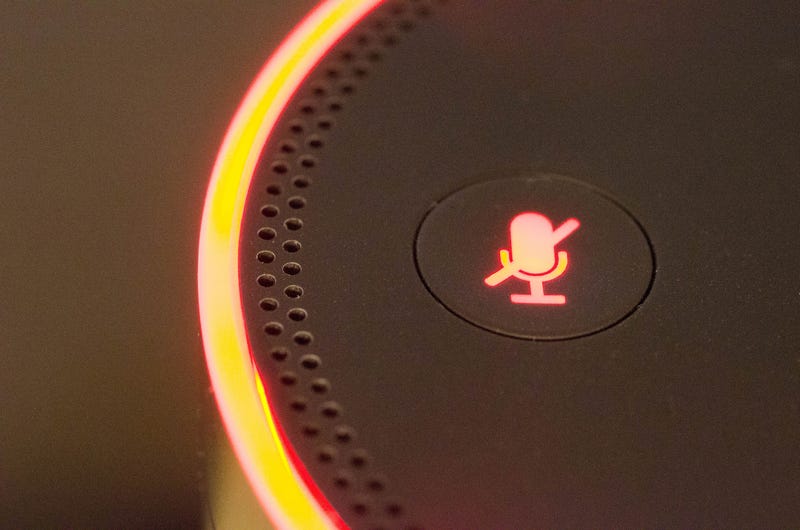
How to Delete the Voice Data That Amazon Echo and Google Home Are Storing

Photo: steam_rocket on TrendHype

For those of us who don’t have an Amazon smart speaker, visits home for the holidays bring with them a new family member, always being shouted at. Alexa! ALEXA! SKIP SONG! But for anyone living with Amazon’s or Google’s smart home device, day in and day out, you eventually start to wonder: How much is it listening? Is it sending my every word to Big Tech Company HQ?

First of all, yes, it’s always listening. It has to be, in order to hear its cue word—“Alexa” or “Hey Google” or “computer” or whatnot. But, according to Wired, it doesn’t record anything until it hears that cue. (The podcast Reply All recently did an episode on a related suspicion, the idea that Facebook is listening in through our phones to target ads according to our conversations. Short version: Facebook isn’t listening to what you say, but it’s tracking you every other way in order to target ads.) Once you trigger your device, however, it is recording, at least in order to send your queries to the cloud.

So your queries go to a server in the cloud, the computers do their work, and Alexa or Hey Google gives you what you want. But what happens to your queries in the cloud? They stay there. Unless you clear them out. Here’s how:

For Alexa, go into your Alexa app and select Settings, then History, to delete queries individually. To clear out everything at once, go to Manage Your Content and Devices in your Amazon account. Find your Echo under “Devices,” and select “Manage voice recordings.” You’ll get a pop-up that allows for the full purge.

For Google, go to myactivity.google.com. Click on the three dots in the top right corner, and select “Delete activity by.” You’ll be able to choose a date range—or all time—and you’ll find “Voice & Audio” under “All Products.”

There’s no way to stop your Echo or Google Home from recording your requests—the devices themselves don’t have the information you need, so they have to record your voice to process your commands in the cloud—but you can at least do a regular clean-up.

What Amazon Echo and Google Home Do With Your Voice Data | Wired

http://www.nola.com/living/index.ssf/2017/11/when_your_kid_tries_to_say_ale.html

When your kid tries to say ‘Alexa’ before ‘Mama’

This July 29, 2015, file photo shows Amazon's Echo speaker, which responds to voice commands.
 (AP Photo/Mark Lennihan, File)

In Yana Welinder’s house, her son will say “Papa!’ to either her or her husband. “Mama” isn’t in his vocabulary yet. But her son, who just turned 1, does have a name for another prominent figure in the household: “Aga!”

Or, as the rest of us know her, Alexa – Amazon’s voice assistant.

Welinder’s son can’t summon the assistant from the Echo speaker in their San Francisco home on his own. But he knows what he’s trying to do.

“He says it and he looks at her, and he expects her to respond,” Welinder said. “It cracks me up every time.”

Parents still grappling with kids’ app and smartphone use now have a new relationship to navigate – the bond between their children and the all-knowing, all-hearing disembodied voice in the corner. Several parents have uploaded videos to YouTube of their kids interacting with Amazon’s Alexa or Google’s Assistant AI. Some kids chatter with the voice assistants, peppering them with questions or imploring them to play their favorite songs. Others treat them as a friend who listens to what they would like to have and, in the case of Alexa, can send them gifts (much to the surprise of parents who receive those unintended orders.).

While kids seem to understand that voice assistants aren’t people, research shows that many see them as their own entities. But as with so many questions about kids and tech, it’s hard to say what that means for their development – and whether it could be harmful.

“The jury’s out on it,” said Pamela Hurst-Della Pietra, founder and president of the nonprofit group Children and Screens: Institute of Digital Media and Child Development.

Mobile-device use among kids is already on the rise. The parental advocacy group Common Sense Media found that the average time that children 8 years old and younger spend on mobile devices has tripled over the past six years to a daily average of 48 minutes. The group also found that 42 percent of kids in that age group have their own tablet.

Voice assistants, with their conversational nature, take the tech relationship to another level. When it comes to voice assistants, Common Sense Media estimates that at least one in every 10 homes with young children has a voice-activated device in it.

And as research continues on the effects of these new, budding relationships, tech firms are quickly adding more kid-friendly features. Amazon recently made it easier for teens to order items through the Echo speaker on their parents’ accounts. Google has positioned its Home smart hub as a source for homework help and now allows parents to create kid-safe Google accounts for the Home. Mattel recently canceled plans for a child-focused home hub called Aristotle, amid concerns over privacy.

Regulators are starting to look at home hubs for kids, but are focused solely on privacy issues. For example, the Federal Trade Commission recently said that companies can collect voice queries from children without fear of reprisal, as long as they use and store them only to understand a query. Amazon said in a statement that it was evaluating the new rules to protect privacy and offer new features. Google spokeswoman Kara Berman said the company is compliant with the kids’ privacy law and does not store audio recordings from kid-focused apps – apart from whatever is necessary to process what someone has said.

But the broader issue of whether it affects development is harder to nail down. Those opposing Mattel’s Aristotle highlighted that a voice assistant in the nursery could hurt parental bonding, if the child considered the voice assistant to be their first playmate or a source of comfort. Also, kids may not be able to wrap their minds around a friend that has no body but can carry on a (stilted) conversation. And Hurst-Della Pietra, who has a background in pediatrics, said assistants may give kids the impression that everything can be done instantaneously. Parents may also regret letting their kids issue orders without so much as a “please” in a voice assistant’s direction.

Just think carefully about the implications of tech in your home, said Jim Steyer, executive director of Common Sense Media. Don’t think of smartphones and other gadgets as toys, he said, but rather as the supercomputers they are. And consider declaring the bedroom a tech-free zone and setting times when kids should be unplugged, such as dinnertime.

Technology, he said, is not a bad thing in and of itself. But parents should know how tech works, particularly when incorporated deeply into the home. Used well, voice assistants can build communication skills or teach kids phrases in other languages.

Welinder said she has thought deeply about her son’s relationship with tech and is fine with his choice of early words. Her husband works in artificial intelligence, and she is a former technology lawyer and now product manager at the 3D-printing firm Carbon. She said their aim is to have her son learn to use Alexa just as he would any other tool, to be creative.

Welinder is already thinking about ways to explain Alexa to her son when he’s older. She and her husband like the idea that her son will grow up in a world in which objects can talk back to him – defining what’s imaginary and what’s real will be the problem to solve. Until he’s old enough to understand, however, Welinder thinks it’s most likely her son will think of the voice as an imaginary figure, like Santa Claus.