http://www.deccanchronicle.com/lifestyle/health-and-wellbeing/231117/just-20-minutes-of-high-intensity-exercise-a-day-can-improve-memory-study.html

Just 20 minutes of high intensity exercise a day can improve memory: study
Improvements in this type of memory from exercise may explain previously established link between aerobic exercise and academic performance.
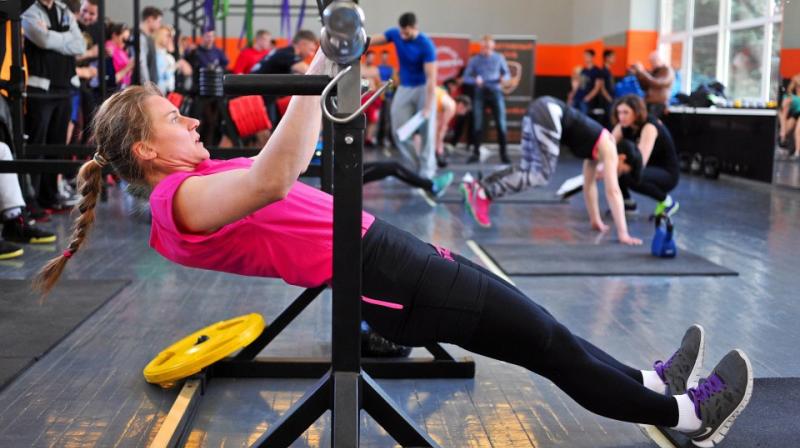
High-intensity exercises include: lunges, side lunges, butt kicks, high knees (Photo: AFP)

 High-intensity exercises include: lunges, side lunges, butt kicks, high knees (Photo: AFP)

Washington: Engaging in high-intensity exercises for just 20 minutes may help enhance your memory and ward off dementia and Alzheimer’s, finds a recent study.

According to researchers at the McMaster University in Hamilton in Ontario, six weeks of intense exercise — short bouts of interval training over the course of 20 minutes – showed significant improvements in, what is known as, high-interference memory.

High-intensity exercises include: lunges, side lunges, butt kicks, high knees. The findings could have implications for an aging population, which is grappling with the growing problem of catastrophic diseases, such as dementia and Alzheimer’s.

The results suggested that memory performance of the participants, who were all healthy young adults, increased over a relatively short period of time.

“Improvements in this type of memory from exercise might help to explain the previously established link between aerobic exercise and better academic performance,” explained lead author Jennifer Heisz.

Heisz added, “At the other end of our lifespan, as we reach our senior years, we might expect to see even greater benefits in individuals with memory impairment brought on by conditions such as dementia.”

They also found that the participants who experienced greater fitness gains also experienced greater increases in brain-derived neurotrophic factor (BDNF), a protein that supports the growth, function and survival of brain cells.

The team examined 95 participants, who completed six weeks of exercise training, combined exercise and cognitive training or no training (the control group which did neither and remained sedentary).

Both the exercise and combined training groups improved performance on a high-interference memory task, while the control group did not.

The results revealed a potential mechanism for how exercise and cognitive training may be changing the brain to support cognition, suggesting that the two work together through complementary pathways of the brain to improve high-interference memory.

“One hypothesis is that we will see greater benefits for older adults given that this type of memory declines with age,” Heisz noted.

The study was published in the Journal of Cognitive Neuroscience.

http://www.kurzweilai.net/take-a-fantastic-3d-voyage-through-the-brain-with-immersive-vr-system

Take a fantastic 3D voyage through the brain with immersive VR system

Plus a “journey to the center of the cell” with 360 VR movies
November 23, 2017


Wyss Center for Bio and Neuroengineering/Lüscher lab (UNIGE) | Brain circuits related to natural reward

What happens when you combine access to unprecedented huge amounts of anatomical data of brain structures with the ability to display billions of voxels (3D pixels) in real time, using high-speed graphics cards?

Answer: An awesome new immersive virtual reality (VR) experience for visualizing and interacting with up to 10 terabytes (trillions of bytes) of anatomical brain data.

Developed by researchers from the Wyss Center for Bio and Neuroengineering and the University of Geneva, the system is intended to allow neuroscientists to highlight, select, slice, and zoom on down to individual neurons at the micrometer cellular level.

This 2-D brain image of a mouse brain injected with a fluorescent retrograde virus in the brain stem — captured with a lightsheet microscope — represents the kind of rich, detailed visual data that can be explored with a new VR system. (credit: Courtine Lab/EPFL/Leonie Asboth, Elodie Rey)

The new VR system grew out of a problem with using the Wyss Center’s lightsheet microscope (one of only three in the world): how can you navigate and make sense out the immense volume of neuroanatomical data?

“The system provides a practical solution to experience, analyze and quickly understand these exquisite, high-resolution images,” said Stéphane Pages, PhD, Staff Scientist at the Wyss Center and Senior Research Associate at the University of Geneva, senior author of a dynamic poster presented November 15 at the annual meeting of the Society for Neuroscience 2017.

For example, using “mini-brains,” researchers will be able to see how new microelectrode probes behave in brain tissue, and how tissue reacts to them.

Journey to the center of the cell: VR movies

A team of researchers in Australia has taken the next step: allowing scientists, students, and members of the public to explore these kinds of images — even interact with cells and manipulate models of molecules.

As described in a paper published in the journal Traffic, the researchers built a 3D virtual model of a cell, combining lightsheet microscope images (for super-resolution, real-time, single-molecule detection of fluorescent proteins in cells and tissues) with scanning electron microscope imaging data (for a more complete view of the cellular architecture).

To demonstrate this, they created VR movies (shown below) of the surface of a breast cancer cell. The movies can be played on a Samsung Gear VR or Google cardboard device or using the built-in YouTube 360 player with Chrome. The movies will also play on a conventional smartphone (but without 3D immersion).

UNSW 3D Visualisation Aesthetics Lab | The cell “paddock” view puts the user on the surface of the cell and demonstrates different mechanisms by which nanoparticles can be internalized into cells.

UNSW 3D Visualisation Aesthetics Lab | The cell “cathedral” view takes the user inside the cell and allows them to explore key cellular compartments, including the mitochondria (red), lysosomes (green), early endosomes (light blue), and the nucleus (purple).


Abstract of Analyzing volumetric anatomical data with immersive virtual reality tools

Recent advances in high-resolution 3D imaging techniques allow researchers to access unprecedented amounts of anatomical data of brain structures. In parallel, the computational power of commodity graphics cards has made rendering billions of voxels in real-time possible. Combining these technologies in an immersive virtual reality system creates a novel tool wherein observers can physically interact with the data. We present here the possibilities and demonstrate the value of this approach for reconstructing neuroanatomical data. We use a custom built digitally scanned light-sheet microscope (adapted from Tomer et al., Cell, 2015), to image rodent clarified whole brains and spinal cords in which various subpopulations of neurons are fluorescently labeled. Improvements of existing microscope designs allow us to achieve an in-plane submicronic resolution in tissue that is immersed in a variety of media (e. g. organic solvents, Histodenz). In addition, our setup allows fast switching between different objectives and thus changes image resolution within seconds. Here we show how the large amount of data generated by this approach can be rapidly reconstructed in a virtual reality environment for further analyses. Direct rendering of raw 3D volumetric data is achieved by voxel-based algorithms (e.g. ray marching), thus avoiding the classical step of data segmentation and meshing along with its inevitable artifacts. Visualization in a virtual reality headset together with interactive hand-held pointers allows the user with to interact rapidly and flexibly with the data (highlighting, selecting, slicing, zooming etc.). This natural interface can be combined with semi-automatic data analysis tools to accelerate and simplify the identification of relevant anatomical structures that are otherwise difficult to recognize using screen-based visualization. Practical examples of this approach are presented from several research projects using the lightsheet microscope, as well as other imaging techniques (e.g., EM and 2-photon).


Abstract of Journey to the centre of the cell: Virtual reality immersion into scientific data

Visualization of scientific data is crucial not only for scientific discovery but also to communicate science and medicine to both experts and a general audience. Until recently, we have been limited to visualizing the three-dimensional (3D) world of biology in 2 dimensions. Renderings of 3D cells are still traditionally displayed using two-dimensional (2D) media, such as on a computer screen or paper. However, the advent of consumer grade virtual reality (VR) headsets such as Oculus Rift and HTC Vive means it is now possible to visualize and interact with scientific data in a 3D virtual world. In addition, new microscopic methods provide an unprecedented opportunity to obtain new 3D data sets. In this perspective article, we highlight how we have used cutting edge imaging techniques to build a 3D virtual model of a cell from serial block-face scanning electron microscope (SBEM) imaging data. This model allows scientists, students and members of the public to explore and interact with a “real” cell. Early testing of this immersive environment indicates a significant improvement in students’ understanding of cellular processes and points to a new future of learning and public engagement. In addition, we speculate that VR can become a new tool for researchers studying cellular architecture and processes by populating VR models with molecular data.

https://news.ubc.ca/2017/11/23/more-evidence-that-you-need-to-spend-time-enjoying-nature/

More evidence that you need to spend time enjoying nature

Popular Science cited a UBC study about the connection between nature and well-being.

“Exposure to nature increases people’s social well-being,” said Holli-Anne Passmore, a UBC psychology PhD candidate and author of a study that showed even a brief look at something natural can make a difference.

https://news.ubc.ca/2017/11/23/seven-b-c-companies-pushing-the-boundaries-of-robotics/

Seven B.C. companies pushing the boundaries of robotics

Elizabeth Croft, a UBC professor of mechanical engineering and director of the Collaborative Advanced Robotics and Intelligent Systems laboratory, was quoted in a BC Business story about robotics in B.C.

“We produce half per capita the number of engineers that our peer provinces do,” she said. “If you don’t produce engineers, you won’t have robotics companies. You need people in computing and AI, and I think people are waking up to that investment.”

https://www.macrumors.com/2017/11/22/macys-apple-watch-series-1/

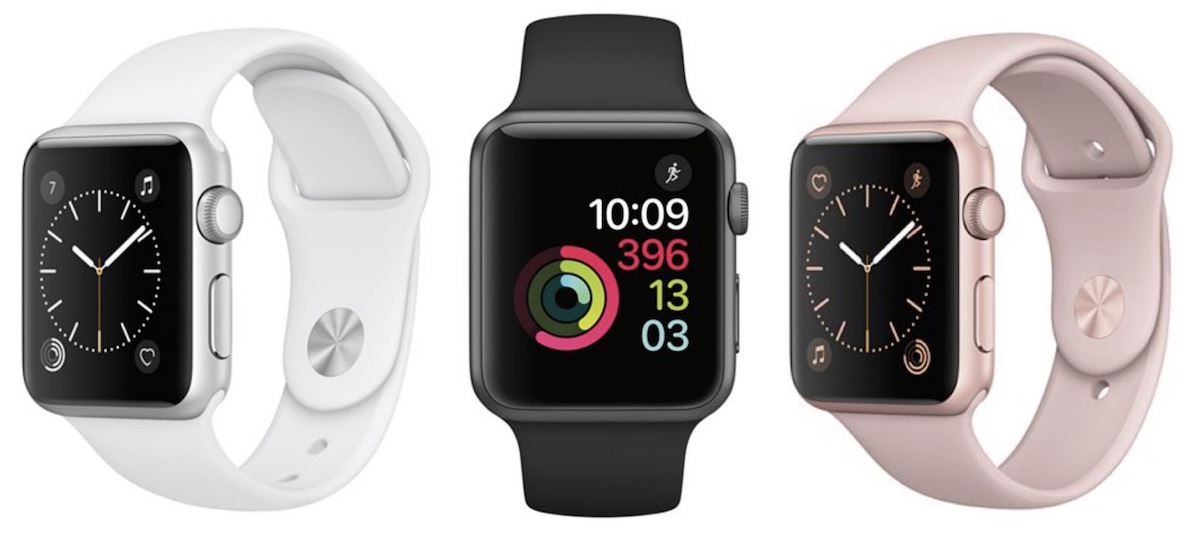
Macy’s Launches Apple Watch Series 1 Black Friday Discount: 38mm for $180 and 42mm for $210

The latest Black Friday deal has gone live today, and this time it’s for the Apple Watch Series 1, which debuted alongside the Series 2 in September 2016. The Series 1 models lack the advancements of 2017’s Series 3 — like LTE and a faster processor — but the older Apple Watch is still a reliable device, and now with a cheaper entry price over at Macy’s, it makes for a great holiday gift.

The retailer has the Apple Watch Series 1 discounted by $70 beginning today, with 38mm models running for $179.00 and 42mm models priced at $209.00. In terms of overall Black Friday deals, we know that Target will match this $70 off Series 1 deal beginning tomorrow when sales there go live. So if you’re looking to get some shopping done a little early, Macy’s offer is the first notable Apple Watch Series 1 deal happening this holiday season.

Note: MacRumors is an affiliate partner with LivingSocial. When you click a link and make a purchase, we may receive a small payment, which helps us keep the site running.

Here’s every Apple Watch Series 1 device available in Macy’s sale:

As a point of comparison, the new non-LTE Apple Watch Series 3 models are priced at $329 (38mm) and $359 (42mm). Sales on Series 2 models have been appearing frequently throughout the fall, with the most recent dropping 38mm cases to $229 and 42mmm cases to $259. Until Black Friday sales, no notable deals had yet to arrive for the Series 1 devices following the launch of Series 3 in September.

If you purchase the Series 1, be aware that in comparison to higher-cost versions it has a slower S1P processor, lower water resistance (so it is not suitable for swimming), a display that doesn’t get as bright, slightly lower battery life, and no LTE or GPS support. Otherwise, you’ll be able to access all of the expected Apple Watch features like activity tracking, notification and phone call support with a connected iPhone, and more.

Also of note is an Apple Music deal going on at LivingSocial, where you can get a four month subscription to Apple’s streaming music service for free. This deal essentially adds one extra month (priced at $9.99/month) onto Apple Music’s existing three month free trial, and is only available to new subscribers signing up for an individual membership plan.

As always, you can visit our Black Friday Roundup to keep track of the latest deals going on heading into Thanksgiving and Black Friday. Some sales will begin going online a bit early today, but the bulk will see activation when retailers first open their doors tomorrow night between 5:00 p.m. and 6:00 p.m. local time.

https://9to5mac.com/2017/11/22/fresh-report-supports-launch-of-iphone-se-refresh-early-next-year/

Fresh report supports launch of iPhone SE refresh early next year

We first heard talk of a new iPhone SE model back in August, and a new report today echoes this. Labelling it the iPhone SE 2, the Chinese report suggests that it will be exclusively manufactured by Wistron in India, though for worldwide sale …

The supply-chain report doesn’t have any fresh details about the rumored device beyond suggesting a first-quarter launch. This would be in line with the original model, which went on sale in March of 2016.

Though primarily intended as a budget handset, with India a particular target, the SE has also found a niche following among those who could afford the larger models but prefer the pocketability and classic design of the 4-inch device.

The previous report suggested a fairly modest update, with a faster chip, possibly through an upgrade to the A10 chip used in the iPhone 7.

We have seen more than one render illustrating a rather more optimistic vision of an iPhone X-style screen, but there have sadly been no reports of such plans. Such a phone would be a challenge for the dual role of the device as a low-cost phone and ultra-portable device, though the idea proved popular in a reader poll.


Check out 9to5Mac on YouTube for more Apple news:

http://bgr.com/2017/11/22/dog-happiness-humans-research-study/

Study reveals dogs are programmed to want to us to be happy

Of all the animals mankind interacts with on a regular basis, dogs have always seemed to be the most in tune with our emotional states. New research has attempted to examine why that might be, and scientists now believe they have evidence to show that dogs are incredibly adept at learning human facial cues. As it turns out, dogs really, really want their human companions to be happy, and may even share the reliance on the hormone oxytocin to promote social bonding with their two-legged caretakers.

Using eye tracking hardware to monitor the reactions of 43 individual canines, the scientists presented the dogs with images of human faces. The faces, which were either smiling or frowning, produced different reactions in the dogs, with pupil size suggesting the emotions the dogs were feeling when shown the faces. As you might expect, frowning or angry faces resulted in a sharp reaction from the dogs, with increased pupil size and attentiveness, while smiling faces put them more at ease, but that’s not the entire story.

The researchers supplemented their initial findings with further experiments using oxytocin to gauge how the “cuddle hormone” might change the dogs’ reactions. They found that, as it would in humans, oxytocin made the same frightening faces seem less intimidating, and made them more interested in the smiling faces than they had been previously.

“We were among the first researchers in the world to use pupil measurements in the evaluation of dogs’ emotional states,” Professor Outi Vainio of the Canine Mind research group explains. “This method had previously only been used on humans and apes.”

This, the scientists say, suggests that dogs are wired in much the same way as humans, and that they instinctively want their human companions to be happy. Before you get too sentimental, it’s also entirely possible (and likely) that the reaction is part of a larger survival instinct which gives dogs an edge when it comes to coexisting with humans. Happy humans means a good life for the dogs in their care, so it’s in their best interest to ensure they see more smiling faces than angry ones.

https://www.nytimes.com/2017/11/22/well/move/exercise-may-enhance-the-effects-of-brain-training.html

Exercise May Enhance the Effects of Brain Training

CreditiStock

Exercise broadly improves our memories and thinking skills, according to a wealth of science. The evidence supporting similar benefits from so-called brain training has been much iffier, however, with most people performing better only on the specific types of games or tasks practiced in the program.

But an interesting new study published in the Journal of Cognitive Neuroscience suggests that combining intense exercise and brain training might, over time, amplify the benefits of both for the brain, even in people whose minds already are working well.

Most of us are blissfully unaware of the complexity of our brain’s memory systems. Memories come in many different types, including detailed recollections of faces and objects and how they differ from similar faces and objects, as well as separate memories about where and when we last saw those things. These remembrances are created and stored throughout the hippocampus, our brain’s primary memory center.

Past studies with animals show that exercise prompts the creation of many new brain cells in the hippocampus, presumably providing the raw materials — the blank canvas — onto which strong, new memories can be written and allowing for improvements in many types of memory after exercise.

Brain-training programs typically have had more limited effects. Research in people suggests that they often improve only the specific type of memory and thinking tested. So people who practice crossword puzzles may get better at completing crossword puzzles, but they may not get better at remembering where they last put their wallets.

Interestingly, however, some studies in animals have found that learning and thinking of any type, such as occurs during brain training, can improve the survival and functioning of young brain cells.

So scientists at McMaster University in Hamilton, Ontario, began to wonder recently whether brain training and exercise training might be complementary, with exercise prompting the creation of baby neurons that brain training would then strengthen.

To find out, the researchers decided to study a group of healthy, young college students, a group that would be expected to have robust and vigorous memories. If an experimental program resulted in better memories in these people, the scientists reasoned, it should also have implications for those of us whose aging memories might be starting to stutter and fade.

They eventually recruited 95 young men and women, none of whom currently exercised. They drew blood, checked the volunteers’ aerobic fitness, and had them complete a series of memory tests.

Then they randomly sorted them into three groups. One, as a control, was asked to continue with their normal lives.

Another began exercising, reporting to the university’s physiology lab three times a week for 20 minutes of supervised, high-intensity interval training on stationary bicycles. The researchers chose intense intervals because they provide a “strong physical stimulus” which should rapidly raise the fitness of the young people, says Jennifer Heisz, an assistant professor at McMaster University who led the study.

The third group undertook the same cycling program but with the addition of 20 minutes of computerized brain training before or after the workouts. This particular mental training consisted of memorizing faces that were similar to one another and then matching the correct faces as they appeared randomly on a computer screen. This program should improve the ability to dial in the details of the human face, an important but narrow type of memory.

The groups continued their assigned program for six weeks, and then repeated their original tests of fitness and memory.

In general, the young people who had exercised, whether they also brain trained or not, were then more physically fit than those in the control group. They also, for the most part, performed better on memory tests. And those improvements spanned different types of memory, including the ability to rapidly differentiate among pictures of objects that looked similar, a skill not practiced in the brain-training group.

These enhancements in memory were most striking among the volunteers whose fitness had also improved the most, especially if they also practiced brain training.

In effect, more fitness resulted in stronger memories, Dr. Heisz says, with the brain training adding to that effect, even for a type of memory that was not part of the training.

But the gains were not universal, the researchers found. Some of the young people in both exercise groups barely added to their aerobic fitness and also had the skimpiest improvements in memory.

For them, Dr. Heisz and her colleagues suspect, the interval training was probably too intense a form of exercise and may have caused their bodies to produce large amounts of stress hormones, which then affected how well their bodies and brains responded to the activity.

“It’s possible that they would have developed a better response with different and perhaps more-moderate exercise,” she says.

She and her colleagues plan soon to study the effects of various types and amounts of exercise and brain training on memory, including in people who are older. They also hope to follow people for longer periods of time to see whether the brain benefits linger, grow or stall.

But for now, the study’s findings suggest that exercising both our bodies and minds may provide the greatest boost to our memories, she says.

And the effort does not need to be formal or complicated, she adds. “I would suggest memorizing the details of a painting or landscape” — or perhaps a loved one’s face — before or after each workout, she says. It could provide broader memory benefits all around.

http://www.metronews.ca/news/edmonton/2017/11/22/tip-of-the-iceberg-south-pole-researchers-make-groundbreaking-physics-discovery.html

‘Tip of the iceberg’: South Pole researchers make groundbreaking physics discovery

University of Alberta professor is part of a team that observed neutrinos being absorbed by matter for the first time

The IceCube Lab with the South Pole station in the background, taken in March 2017.

MARTIN WOLF / ICECUBE/NSF

The IceCube Lab with the South Pole station in the background, taken in March 2017.

A University of Alberta researcher is part of an international team that stationed in the South Pole to make a groundbreaking particle physics discovery.

The IceCube Collaboration, which includes U of A physics professor Darren Grant, announced Wednesday it observed neutrinos being absorbed by matter for the first time.

The discovery about the subatomic particles – previously dubbed “ghost particles” because they were thought to pass through nearly everything – could lay the groundwork to answer long-sought questions about the composition of the earth’s core.

“This is sort of the – terrible pun – tip of the iceberg,” said Grant, who is also the Canada Research Chair in Astroparticle Physics.

“It’s the first time we’ve looked at it, it’s the first time anyone has seen a measurement of these energies. Where that takes us, that’s going to play out over the next number of years.”

Raffaella Busse and Johannes Werthebach and the soon-to-leave James Casey and Martin Wolf send a salute to their collaborators up north. The building behind them is the IceCube Lab, which hosts the computers that collect raw data from the detector. Taken in November 2017.

MARTIN WOLF/ICECUBE/NSF

Raffaella Busse and Johannes Werthebach and the soon-to-leave James Casey and Martin Wolf send a salute to their collaborators up north. The building behind them is the IceCube Lab, which hosts the computers that collect raw data from the detector. Taken in November 2017.

The IceCube team is made up of about 300 researchers from 48 institutions in 12 countries.

Researchers used the IceCube detector, a machine with 5,160 basketball-sized optical sensors deeply encased within a cubic kilometre of ice, to observe that high-energy neutrinos were absorbed by the earth, rather than passing through its core.

Grant was living in the United States when he joined the project in 2007 and remembers being struck by the location when he arrived.

“It’s absolutely stark. You land on skis, which is pretty cool. You’re at a high altitude because the glacier is nearly three kilometres thick,” he said.

“It’s cold. There’s no living thing anywhere on the horizon.”

Researchers got one news broadcast on a screen each day during dinner, which would include information about what the coldest place on earth was each day.

The IceCube Lab and the Milky Way with an aurora on the horizon. Image taken in May 2017.

MARTIN WOLF/ICECUBE/NSF

The IceCube Lab and the Milky Way with an aurora on the horizon. Image taken in May 2017.

“Six days out of the week it was South Pole station, where we were. Usually one day out of the week it was somewhere in Russia,” Grant said.

“And I do remember, (one day) I looked up at dinner and it said the coldest place on the earth today is Edmonton, Alberta. This was just before I had moved to join the U of A – I had been hired but I hadn’t moved up here yet – and I kind of paused in my meal.

“And then it sort of clicked. I said, ‘Well, I’ve got the right gear.’ ”

The results announced Wednesday come from data collected in 2010-11 that took years to analyze, so the team already has seven more years’ worth of data in the bag.

Meanwhile, the researchers are working to replicate the study over multiple years and upgrade their detector to increase its sensitivity and unlock more discoveries.