https://www.space.com/39340-researchers-probe-origin-fast-radio-bursts.html

Researchers Probe Origin of Superpowerful Radio Blasts from Space

Researchers Probe Origin of Superpowerful Radio Blasts from Space

The Arecibo telescope in Puerto Rico recorded highly polarized signals from the fast radio burst source FRB 121102, twisted by an extreme region of magnetized plasma.

Credit: Image design: Danielle Futselaar – Photo usage: Brian P. Irwin/Dennis van de Water/Shutterstock.com

New work probes the extraterrestrial source of incredibly powerful explosions of radio waves, investigating why that spot is the only known location to repeatedly burst with these blasts.

These repeating bursts may come from a dense stellar core called a neutron star near an extraordinarily powerful magnetic field, such as one near a massive black hole, the study finds.

Fast radio bursts, or FRBs, are intense pulses of radio waves lasting just milliseconds that can give off more energy in a fraction of a second than the sun does in hours, days or weeks. FRBs were discovered only in 2007, and while researchers have detected 20 or so FRBs in the past decade, they estimate that such flashes might occur as many as 10,000 times a day across the entire sky, researchers wrote in the study. [Inside a Neutron Star (Infographic)]

 Much remains a mystery about the origins of FRBs, because their brief nature makes it difficult to pinpoint where they come from. Among the possibilities that prior work suggested are cataclysmic events such as the evaporation of black holes and collisions between neutron stars.
A 3D-printed depiction of one of FRB 121102's radio bursts detected with Arecibo shows how bright the burst was as a function of observed radio frequency and time.

A 3D-printed depiction of one of FRB 121102’s radio bursts detected with Arecibo shows how bright the burst was as a function of observed radio frequency and time.

Credit: Anne Archibald/University of Amsterdam

However, in 2016, scientists discovered that a fast radio burst known as FRB 121102 could release multiple bursts. “It is the only known repeating fast radio burst source,” study co-lead author Jason Hessels, an astrophysicist at the University of Amsterdam, told Space.com.

That FRB 121102 can explode over and over again suggests it does not come from some one-time cataclysmic event, Hessels said. “A key question in the field is whether this repeating fast radio burst source is fundamentally different compared to all the other apparently nonrepeating sources,” he said.

To learn more about this FRB, scientists used the Arecibo Observatory in Puerto Rico and the Green Bank Telescope in West Virginia to analyze data on 16 bursts from object. FRB 121102 is located in a star-forming region of a dwarf galaxy found about 3 billion light-years from Earth, Hessels said. Because astronomers can see it from such a great distance, the amount of energy in a single millisecond of each of these bursts must be about as much as the sun releases in an entire day, Hessels and his colleagues said in a statement.

In studying these emissions, the researchers focused on a feature of radio waves known as polarization. This property occurs because all light waves, including radio waves, can ripple up and down, left and right, or at any angle in between. The radio waves from FRB 121102 were short in duration and strongly polarized (with most of the radio waves all rippling in the same direction), similar to radio emissions from young energetic neutron stars previously seen in the Milky Way galaxy, Andrew Seymour, co-author on the study and a researcher at the National Astronomy and Ionosphere Center at Arecibo Observatory, said in the statement.

The Green Bank Telescope in West Virginia measured a complicated structure in a fast radio burst from the source FRB 121102. The telescope detected the burst using a new recording system from the Breakthrough Listen project.

Credit: Image design: Danielle Futselaar – Photo usage: Shutterstock.com

When radio waves pass through a magnetized plasma, or cloud of electrically charged particles, the direction in which they are polarized can twist, an effect known as Faraday rotation. Hessels and his colleagues found that FRB 121102’s radio bursts were more than 500 times more twisted than those from any other FRB to date. Gorgeous New Hubble Photo Reveals ‘Beating Heart’ of Crab Nebula

“I couldn’t believe my eyes when I first saw the data. Such extreme Faraday rotation is extremely rare,” Hessels said in the statement.

This extreme twisting suggests that FRB 121102’s bursts passed through an extraordinarily hot plasma with an extremely strong magnetic field. Such plasmas might exist near either a black hole more than 10,000 times the mass of the sun or the remnant of a supernova, the researchers said.

“Myself and many others would love to know whether this fast radio burst phenomenon has a single or multiple physical origins,” Hessels said. “There is a whole host of telescopes coming online in the next few years that promise to discover many more such sources and to answer these questions.”

The scientists detailed their findings in the Jan. 11 issue of the journal Nature.

Follow Charles Q. Choi on Twitter @cqchoi. Follow us @SpacedotcomFacebook and Google+. Original article on Space.com.

https://gadgets.ndtv.com/laptops/news/razer-project-linda-razer-mamba-hyperflux-mouse-razer-firefly-hyperflux-mouse-pad-ces-2018-1798417

Razer Showcases Project Linda to Merge Smartphone and Laptop, Debuts Wireless HyperFlux Mouse at CES 2018

Razer has unveiled Project Linda and HyperFlux technology at CES 2018. Project Linda is a 13.3-inch laptop design that is powered by the Android-based Razer Phone. It is a smartphone and laptop hybrid concept that aims to merge the Android environment with a laptop. Meanwhile, HyperFlux is a truly wireless mouse technology that gets its power from the mouse pad. This technology includes a mouse and a compatible mouse pad so that users do not have to charge the wireless mouse separately.

In Project Linda, a laptop docks the Razer Phone on its body, in the area where a touchpad is usually placed. It does not dock like Samsung’s DeX or require a separate adapter. It connects with the press of a button and instantly transforms Project Linda into an Android laptop. The smartphone’s Qualcomm Snapdragon 835 SoC and 8GB RAM ensure responsive performance. Clearly, Razer has an exciting new product in Project Linda. Razer co-founder and CEO Min-Liang Tan, says, “Project Linda combines the best of both worlds, bringing a larger screen and physical keyboard to the Android environment, enhancing the experience for gaming and productivity.”

The laptop has a 15mm thin unibody CNC aluminium chassis and weighs under 1.25kg including the docked phone.It sports a 13.3-inch Quad HD touchscreen and comes with a built-in keyboard. The 5.7-inch display on the Razer Phone can be used as a touchpad, or as a second screen to access apps and tools. The laptop keyboard also includes the Razer Chroma backlighting that can be personalised with various colour options.

The concept laptop also features a 53.6Whr internal battery that can charge the docked phone to full capacity over three times, Razer says. Inside the laptop is 200GB of storage. In terms of connectivity, Project Linda features a built-in 3.5-millimetre audio jack, a USB Type-A port, a USB Type-C charging port, 720p webcam, and a dual-array microphone. As of now, it is unclear when Project Linda will hit the market.

razer mamba hyperflux Razer Mamba HyperFlux mouse and Razer Firefly HyperFlux mouse pad

As for the HyperFlux, it is similar to the Corsair Dark Core RGB mouse and its Corsair MM1000 Qi Wireless Charging Mouse Pad that was also unveiled at CES 2018 this year. While it doesn’t use the Qi charging standard, the Razer’s solution uses makes the mouse pad to generate a magnetic field that transfers power directly to the mouse instead of charging a battery. Razer claims that the Razer Mamba HyperFlux mouse and the Razer Firefly HyperFlux mouse pad are the world’s first such devices that provide power directly to the mouse, eliminating the need for a battery. Razer CEO Tan says, “While other companies have attempted to do wireless charging for mice, they have been unable to achieve true wireless power as their mice still need a battery to be charged. HyperFlux Wireless Power Technology is a game changer in the world of wireless gaming.”

The Razer HyperFlux wireless hardware combo will be made available in Q1 2018, and is priced at $249 (roughly Rs. 15,900). The Razer Mamba HyperFlux mouse has an optical sensor capable of 16,000 DPI, and features Razer Chroma customisable lighting, something that finds its way to the Razer Firefly HyperFlux mouse

https://www.theregister.co.uk/2018/01/10/real_wireless_charging_war_imminent/

Watt? You thought the wireless charging war was over? It ain’t even begun

No need to Nikola cables, though

The inductive charging standards battle of the past few years is formally over, only weeks after Apple entered the fray. But don’t be thinking the wireless charging war is over. Things might be just hotting up.

Last week wireless charging company Powermat quietly joined the Wireless Power Consortium, which certifies Qi-compatible products. Apple built Qi charging into all three new iPhones in September, having already supported it in its Watch since it launched in 2015.

Formerly a stalwart of the PMA charging standard, Powermat raised the white flag by declaring that “Qi has become the dominant wireless charging standard on the market, and the recently launched Apple iPhone lineup is evidence of this success,” in a canned statement. “By joining WPC, it further unifies the wireless charging ecosystem behind the Qi global standard”.

However, inductive charging requires charger and device to be in contact, or as good as. More ambitious ventures are seeking to make good on Nikolai Tesla’s work* – electricity over a distance. Companies are developing far more advanced, and useful charging using magnetic resonance and RF charging – different technologies which allow charging at a much greater distance.

Energous has been quiet since its IPO in 2015. Until now.

Shortly before Christmas, a communique from mag res militants Airfuel vowed never to surrender.

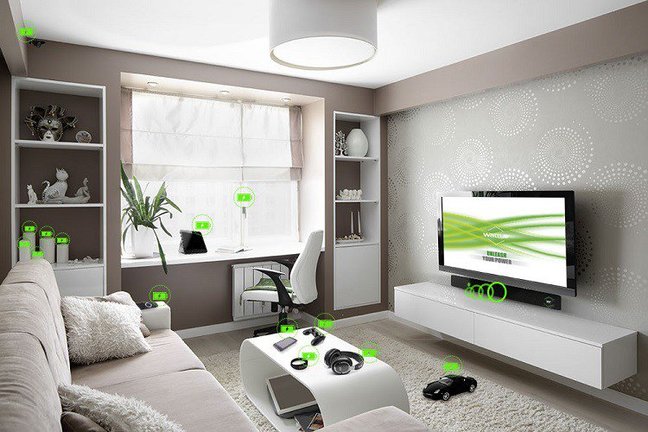
The much-talked about newcomer Energous, which went public in in 2015 under the stock ticker “WATT”, claimed to be working on powering multiple devices from “mid field” ranges, such as three feet (91cm) away, to “far field” transmission, over some 15 feet (4.5m) or in a 30 foot (9m) radius circle or “envelope”.

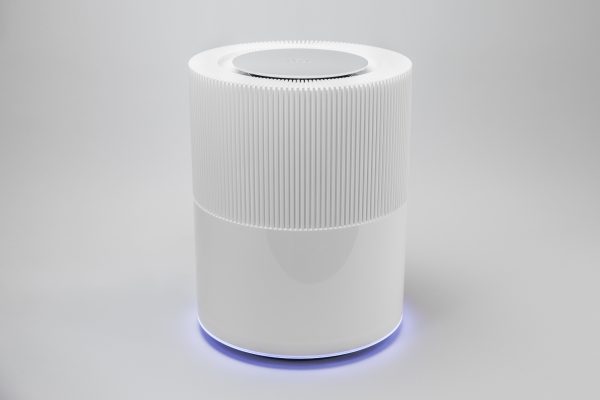
A Cota transmitter. Ossia uses magnetic resonance for wireless charging at a distance

After a quiet period, it has burst back into view at CES. Its first midrange RF chip – WattUp Mid Field – received FCC certification on December 27, and it claims to have two major partners including “one of the top 10 consumer electronic companies in the world based on worldwide sales” with products incorporating WattUP in the second half of the year.

Ossia Inc is pursuing magnetic resonance charging that is happy to tell rivals where they’re going wrong.

Ossia is advancing the Cota standard, announced in October. Ossia claims Intel’s backing.

But Energous’s partner might have even more clout.

Energous envisages an envelope charging many devices

In June, Apple published a patent application for charging that could be embedded into furniture. And that’s very much the point: your phone could be charged from say, an armchair. One report claims Energous and Apple have been working together since 2014.

Recent history suggests a device-centric approach will win out. The Power Matters Alliance targeted infrastructure, and scored early wins by installing chargers in select key locations such as airports and the Starbucks coffee** chain. However the WPC’s Qi found its way into more devices (in more territories, too) with strong support from phone makers like Samsung and Nokia. Since it was easier to bundle a cheap charger with an expensive phone, the device-first consortium won out.

If Energous can make good on its 2H 2018 promise, it might come sooner than we thought. And off we go on another wireless charging standards war. ®

Bootnotes

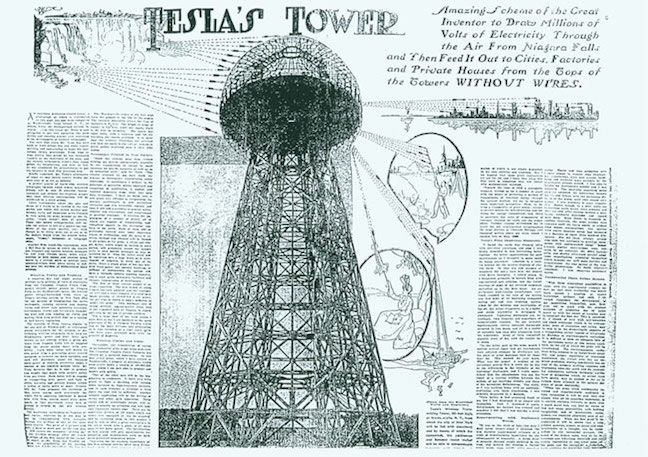
*Nikola Tesla had demonstrated room range power transmission in the early 1890s, to illuminate lightbulbs, at the 187 foot Wardenclyffe Tower at Shoreham, Long Island before he could demonstrate long distance power transmission using the Earth as a conductor. It was destroyed during WWI, on fears German spies were using the giant apparatus.

https://www.theverge.com/circuitbreaker/2018/1/9/16867536/vivo-fingerprint-reader-integrated-display-biometric-ces-2018

I tried the first phone with an in-display fingerprint sensor

After an entire year of speculation about whether Apple or Samsung might integrate the fingerprint sensor under the display of their flagship phones, it is actually China’s Vivo that has gotten there first. At CES 2018, I got to grips with the first smartphone to have this futuristic tech built in, and I was left a little bewildered by the experience.

The mechanics of setting up your fingerprint on the phone and then using it to unlock the device and do things like authenticate payments are the same as with a traditional fingerprint sensor. The only difference I experienced was that the Vivo handset was slower — both to learn the contours of my fingerprint and to unlock once I put my thumb on the on-screen fingerprint prompt — but not so much as to be problematic. Basically, every other fingerprint sensor these days is ridiculously fast and accurate, so with this being newer tech, its slight lag feels more palpable.

Vivo is using a newly announced Synaptics optical sensor, which has been in development for years. It works by peering through the gaps between the pixels in an OLED display (LCDs wouldn’t work because of their need for a backlight) and scanning your uniquely patterned epidermis. This is likely the tech that Synaptics and Samsung were collaborating on for the Galaxy S8 for last year, right up until it became apparent that it wouldn’t be ready in time for the phone’s release. Things are different now, as Vivo is close to announcing this as-yet-unnamed phone properly and Synaptics is already in mass production with the so-called Clear ID sensor.

The uncanny thing for me with this phone is how obvious and immediately intuitive the in-display fingerprint system is. This 6-inch phone has the minimal bezels of something like the OnePlus 5T, but it also happens to unlock when I put my finger at the bottom of its screen. The technological aspect is just totally invisible and, if you’re not paying attention to how challenging this is technically, it feels almost pedestrian and unimpressive. Like, of course, that’s how it always should have been.

https://www.forbes.com/sites/janakirammsv/2017

3 Key Machine Learning Trends To Watch Out For In 2018

2017 witnessed the meteoric rise of Artificial Intelligence and Machine Learning. From large platform vendors to early-stage startups, AI and ML have become the key focus areas. VCs poured billions of dollars in funding AI-related startups. Platform companies increased their R&D budget to accelerate research in AI & ML domains. The number of online courses offering self-paced learning has hit the roof. Finally, there is no single industry vertical that’s not impacted by AI.

Source: Graphicstock

ML Trends

Though it has become a cliché, ‘democratizing machine learning’ has taken off in 2017. Amazon, Apple, IBM, Google, Facebook and Microsoft are competing with each other to make ML accessible to developers. The availability of tools and frameworks doubled in just one year. 2017 also saw the beginning of AI infusion in business applications.

With the hype at its peak, what’s in store for AI and ML in 2018?

Here are three key trends for 2018 that will take AI and ML to the next level.

DevOps for Data Science

A data scientist is defined as an individual who is better in statistics than an average programmer and a better programmer than an average statistician. Data scientists squarely focus on finding hidden patterns in data sets. They apply proven statistical models to modern data sets to solve business problems.

Though data scientists deal with Python, R and Julia to create machine learning models, they are not equipped to deal with the infrastructure and environment required for developing and deploying ML models. During the development phase, ML models will be moved back and forth between local development environments and cloud-based training environments where GPU-based VMs are used for scale. Data scientists need a simple mechanism to perform the roundtrip between local environment and cloud-based environment.

Ultimately, a trained model is yet another piece of code that needs to be treated like any other mission-critical application. They need to be deployed in secure, available, scalable, and reliable environments.

During the training and inference, there is quite a bit of infrastructure plumbing that’s needed by data scientists. This plumbing includes setting up the right development environment, packaging the code as container images, scaling the containers during the training and inference, versioning existing models, configuring a pipeline to upgrade models with newer versions seamlessly, and many other typical DevOps tasks.

As data science becomes mainstream, DevOps for data science becomes more important. 2018 will witness mature and streamlined DevOps processes exclusively defined for data science.

Amazon SageMaker and Azure ML Workbench are early indicators of this trend. Both the platforms focus on the DevOps aspect of data science.


Inference at the Edge

Edge Computing takes compute closer to the applications. Each edge location mimics the public cloud by exposing a compatible set of services and endpoints that the applications can consume. It is all set to redefine enterprise infrastructure.

The edge computing layer exposes compute, storage, and network services to developers. Typically, edge computing runs on top of a constrained infrastructure that may not be powerful enough to run VMs or containers. This is where serverless plays a crucial role in delivering the compute services.

After virtualization and containerization, serverless is emerging as the next wave of compute services. Functions as a Service (FaaS), a serverless delivery model, attempts to simplify the developer experience by minimizing the operational overhead in deploying and managing code.

Janakiram MSV

Machine Learning Models Delivered through Serverless from the Edge

Machine learning models that are fully trained in the cloud are deployed at the edge for inference. The heavy lifting takes place in the public cloud while the optimized model is implemented at the edge. The inference model is exposed as a function deployed within the serverless compute environment.

If the edge computing layer runs on powerful hardware capable of running containers, the ML inference models are packaged and deployed as containers.

AWS Deep Lens and Azure IoT Edge are examples of how inference models are deployed at the edge. AWS Deep Lens runs ML model written in Python as a Lambda function. In Azure IoT Edge, the ML modules are packaged as containers and pushed to the edge layer.

Machine learning will become the key driver for accelerating the adoption of edge computing.

AI for IT Operations   

Modern applications and infrastructure are generating log data that is captured for indexing, searching, and analytics. The massive data sets obtained from the hardware, operating systems, server software and application software can be aggregated and correlated to find insights and patterns. When machine learning models are applied to these data sets, IT operations transform from being reactive to predictive.

When the power of AI is applied to operations, it will redefine the way infrastructure is managed.

The application of ML and AI in IT operations and DevOps will deliver intelligence to organizations. It will help the ops teams perform precise and accurate root cause analysis. Advanced models can help prevent disruption and outage to IT through predictive analytics. Intrusion detection can be augmented with ML for enhanced security. There are many scenarios where the application of ML to IT will lead to intelligent operations.

Amazon Macie and Azure Log Analytics are early examples of AIOps. Apart from AWS and Azure, many startups are investing in AI-driven Ops.

http://www.kurzweilai.net/unhackable-computer-under-development-with-3-6m-darpa-grant

DARPA-funded ‘unhackable’ computer could avoid future flaws like Spectre and Meltdown

January 8, 2018

(credit: University of Michigan)

A University of Michigan (U-M) team has announced plans to develop an “unhackable” computer, funded by a new $3.6 million grant from the Defense Advanced Research Projects Agency (DARPA).

The goal of the project, called MORPHEUS, is to design computers that avoid the vulnerabilities of most current microprocessors, such as the Spectre and Meltdown flaws announced  last week.*

The $50 million DARPA System Security Integrated Through Hardware and Firmware (SSITH) program aims to build security right into chips’ microarchitecture, instead of relying on software patches.*

The U-M grant is one of nine that DARPA has recently funded through SSITH.

Future-proofing

The idea is to protect against future threats that have yet to be identified. “Instead of relying on software Band-Aids to hardware-based security issues, we are aiming to remove those hardware vulnerabilities in ways that will disarm a large proportion of today’s software attacks,” said Linton Salmon, manager of DARPA’s System Security Integrated Through Hardware and Firmware program.

Under MORPHEUS, the location of passwords would constantly change, for example. And even if an attacker were quick enough to locate the data, secondary defenses in the form of encryption and domain enforcement would throw up additional roadblocks.

More than 40 percent of the “software doors” that hackers have available to them today would be closed if researchers could eliminate seven classes of hardware weaknesses**, according to DARPA.

DARPA is aiming to render these attacks impossible within five years. “If developed, MORPHEUS could do it now,” said Todd Austin, U-M professor of computer science and engineering, who leads the project. Researchers at The University of Texas and Princeton University are also working with U-M.

* Apple released today (Jan. 8) iOS 11.2.2 and macOS 10.13.2 updates with Spectre fix for Safari and WebKit, according to MacWorld. Threatpost has an update (as of Jan. 7) on efforts by Intel and others in dealing with Meltdown and Spectre processor vulnerabilities .

** Permissions and privileges, buffer errors, resource management, information leakage, numeric errors, crypto errors, and code injection

Topics: Computers/Infotech/UI | Survival/Defense

http://www.trustedreviews.com/news/asus-chromebox-3-looks-like-mac-mini-upgrade-apple-refuses-make-3368075

ASUS Chromebox 3 looks like the Mac mini upgrade Apple refuses to make

image: http://ksassets.timeincuk.net/wp/uploads/sites/54/2018/01/Chromebox_3-920×470.jpg

Chromebox 3

ASUS has announced a new version Chrome OS-powered mini desktop computer known as the Chromebox.

The Mac mini-like Chromebox 3 is notable due to the presence of the 8th generation Intel Core ‘i’ processors (no word on which yet), which are still yet to appear on a host of popular Windows 10 PCs.

It also includes a USB-C port, for the first time, as well as pair of HDMI ports and a DisplayPort connection.

The device, announced during CES 2018, also offers dual-band 802.11ac Wi-Fi, as well as gigabit LAN. All of that should make 4K video streaming an absolute doddle.

Related: Best laptops

Asus hasn’t announced the full spec sheet, but says the business-focused device will be available later in 2018. Pricing is also still to be confirmed.

Depending on the numbers the bean counters come up with, this could be a decent option as a media streamer as well as a portable desktop PC. Especially considering the relatively recnt addition of the Google Play store to the Chrome OS ecosystem.

The launch of the Chromebox 3 comes as Apple fans’ continue to hope for a new version of the cult favourite Mac mini.

Back in October, an email allegedly sent to a user saw Apple CEO Tim Cook pledge the diminutive desktop was still “an important part of our product line going forward.” At the time Cook reportedly said it wasn’t the right time to share more details.


https://www.wired.com/story/black-mirror-shared-universe-singularity/

DOES THIS BLACK MIRROR FAN THEORY MEAN WE’RE FINALLY READY FOR THE SINGULARITY?

JONATHAN PRIME/NETFLIX

WHEN BLACK MIRROR first hit the air in 2011, it drew invariable comparisons to The Twilight Zone. Understandably so: Both shows dealt with elements of science fiction and psychological horror, and both functioned as anthology shows, with episodes so distinct from one another that an uninitiated viewer could plunge in at random and be as familiar with a given episode’s premise as a seasoned fan. It was a selling point; it made the show easy to recommend to people who might be wary of committing to a complex, serialized narrative.

But since its purchase by Netflix in 2015, Black Mirror has begun to chip away at its episodic edges. Technologies introduced in one installation reappear in another; news tickers on characters’ TV screens chronicle events from previous episodes; musical cues repeat again and again. Call them Easter eggs, or call them clues to piecing together a shared universe—one that creator Charlie Brooker, after years of denying, has finally admitted does, indeed, exist.

The new episodes, released last Friday, are more thematically cohesive than any batch that’s preceded them. They grapple obsessively with the notion of the human mind: uploading it; infiltrating it; probing its memories; preserving it after death. Though the show has flirted with digital consciousness in the past, most notably with its mind-bending “White Christmas” special and the series three darling, “San Junipero,” the new season takes up the thought experiment with zeal. Black Mirror’s episodes still stand well enough on their own, but after this latest installation, it’s possible to zoom out and see a cohesive rumination on the implications of digital immortality.

(Spoiler alert: spoilers for multiple Black Mirror episodes follow.)

Viewers were first introduced to the “cookie,” Black Mirror’s term for a carbon-copied consciousness, in 2014’s “White Christmas,” which followed Jon Hamm as he coerced digital souls into acting as hyper-personalized home assistants and confessing to crimes. But there were hints of this manifestation of the singularity even back in the show’s first few episodes. Take, for example, “Be Right Back,” in which a woman named Martha, mourning her dead boyfriend, signs up for a service that promises to harvest the traces of his online presence to recreate him as a chatbot—and, later, place that AI in a synthetic body.

The uncanny process is flawed, naturally: The android “Ash” can only mimic what he’s been taught, and his lack of human traits (like the need for sleep) is off-putting. But Martha’s desire to resurrect her dead loved one stands as a precursor to the digital rebirth we see later in the series. Her experience is remarkably similar to that of Jack, who we meet in “Black Museum,” the final episode of Black Mirror’s latest season. When his wife Carrie falls into an irreversible coma, he’s offered the chance to implant her consciousness in his own mind, using the technology that we learn was initially developed to help diagnose disease—and, much like in “Be Right Back,” that decision goes terribly wrong.

That casts a new light on the 2013 episode. What if we see it not only as a warning against meddling with death, but also as an early attempt by technologists in the Black Mirror-verse to digitize consciousness? Android Ash lacks a true sense of self; he doesn’t have memories from his previous life in the same way that Carrie does. But, at least for a little while, he passes his girlfriend’s Turing test. It’s a failed experiment, for sure—but maybe a necessary, realistic stumble on the path to true digital reincarnation.

From that first seed of cloud-based immortality planted in “Be Right Back,” we jump to “White Christmas,” where the technology, too, has leapt ahead—and has even more sinister implications. Sure, your cloned assistant might streamline life for the true “you,” but what about the “you” that’s then forced to live out eternity trapped in a Google Home-esque device? And Hamm’s ability to torture cookies by speeding up their timelines, subjecting them to months or years of insanity-inducing boredom, certainly hints at the “human rights for cookies” that “Black Museum” tells us were later enacted. In both “White Christmas” and this season’s “USS Callister,” digital cloning appears largely unregulated: Tech companies like the one that employs Hamm’s character are able to turn cookies into slaves for their “real” selves, while bad actors like Callister’s Robert Daly are able to get their hands on the technology to enact sadistic punishment on those who have “wronged” them—and no one steps in to stop them.

It’s clear that at this moment in the technology’s lifetime, the ACLU hasn’t yet seized upon cookies’ cause, and the mass protests mentioned in “Black Museum” have yet to have any effect. And by the end of “Black Museum,” it’s still not apparent whether those human rights for cookies are actually enforced: The museum’s proprietor is still torturing Clayton Leigh’s cookie, seemingly unhampered by pesky regulations, though his own karmic blowback returns that favor in kind. It also seems at this point that no one has given any real thought to the ethical and psychological implications of what they’ve created: How do you ensure that your cookie doesn’t spend eternity being driven mad by boredom—hell dressed up as limbo?

That brings us to “San Junipero.” No more creepily submissive androids, stimulation-starved home assistants, or uploaded minds trapped in other people’s skulls or teddy bears: Now, upon death, residents of the universe can choose to live forever in a simulated utopia, seemingly without any real drawbacks. It’s the best possible outcome of mind-uploading technology: that we use it not to service our real-world selves or punish criminals, but rather to guarantee life—a good life—after death. There are nods to a similarly happy outcome in “Hang the DJ,” this season’s heart-wrenching, dating app-inspired episode in which hundreds of thousands of cookies form a data set for real-world singles (and though that app makes a sneaky cameo on a phone in “USS Callister,” it’s arguably an earlier, less cookie-dependent iteration, given that cookie technology doesn’t appear known to most of that episode’s characters).

You can take the shared-cookie-timeline theory even further, if you don’t mind some attenuation. Perhaps the memory-capturing technology to which we’re first introduced in season 1’s “Entire History of You”—and which resurfaces in this season’s “Arkangel” and “Crocodile”—helped facilitate mind uploading, creating an easily downloadable reel of a life’s worth of data. Maybe the hyperrealistic augmented reality flaunted in “Playtest” was ultimately adapted to create the virtual paradise of “San Junipero.”

Some fans have seen even more hints of the cookie-verse in “Playtest”: As Redditors SplurgyA and sailormooncake speculate, the character of Sonja in Playtest might well be the real-world version of Selma, played by the same actress in season 1’s “Fifteen Million Merits.” Look closely in “Playtest,” and you’ll notice that her apartment sports a book on the singularity—and because she’s so enamored with game development, Redditors hypothesize, she might well have been one of the first to cookie-ify herself. Which, in turn, might mean that the world of “Fifteen Million Merits” is a reality show or form of punishment for cookies. And speaking of punishment, still others have suggested, the protagonist of series two’s “White Bear” might well be a cookie herself, sentenced to eternal, repetitive punishment. The speculative possibilities are endless.

The idea of digitally replicating a human mind is a much-loved trope of sci-fi novels that’s been seeing renewed enthusiasm recently. Altered Carbon, a novel in which characters are able to upload and download their personalities into new bodies, will be reborn as a Netflix series next month. The Canadian TV show Travelers, which premiered in 2016, imagines a world in which humans send their consciousnesses back in time to prevent an apocalypse. And in Cory Doctorow’s Walkaway, published last spring, self-appointed outcasts discover how to evade death by “backing themselves up” to the the cloud. The trend is perhaps reflective of Silicon Valley’s own obsession with digitizing the human mind. From technologies like brain-machine interfaces to the pipe dreams of futurists like Ray Kurzweil, many see this as the holy grail of AI—and one that some project might be attainable by 2045. So as we interpret Black Mirror as a cautionary tale about online dating and robot guard dogs and myriad technologies, let’s not lose sight of its larger message: A reminder to center our humanity as we speed toward a world in which that becomes harder and harder to define.

https://9to5mac.com/2018/01/08/iphone-se-2-wireless-charging/

Rumor: iPhone SE 2 will feature glass back, possibly for wireless charging

We’ve seen rumors about the timing of an updated iPhone SE release for a few months now, but the only feature change expected has been a speed boost. Now a new rumor claims the new iPhone SE could pick up a popular feature from the iPhone 8 and iPhone X…


Sachin Bhatt writes on tekz24.com that “a very reliable source” claims the rumored iPhone SE 2 will feature an all-glass back. That’s a change from the current iPhone SE which has glass panels along the top and bottom rear but is mostly aluminum.

Apple switched to glass backs on the iPhone 8, iPhone 8 Plus, and iPhone X in large part to support wireless charging. Doing the same thing for the upgraded iPhone SE would give the 4-inch handset a visual difference from its predecessor, making it feel less old, while giving users a new feature to enjoy.

Using glass backs for wireless charging on all new iPhones going forward — even budget models — certainly helps with Apple’s message of embracing wireless as well, but I would guess that the headphone jack is still safe unless Apple is doing a thorough redesign or needs space for new components like charging coils.

Bhatt also writes that his source says the new iPhone SE “might support wireless charging” in case anyone thought the change was strictly for aesthetics.

iPhone SE is currently powered by the A9 chip used in the iPhone 6s from late 2015. A previous rumor claimed the new iPhone SE, which we would expect to see around March or April, will be upgraded to the A10 chip used in the iPhone 7 introduced a year later.

Apple originally introduced the iPhone SE almost two years ago as a budget friendly answer to customers who prefer the smaller form factor. Apple doubled the storage capacity a year later without changing other specs. The current iPhone SE retails for $349 for 32GB and $449 for 128GB.


Subscribe to 9to5Mac on YouTube for more Apple news:

https://medicalxpress.com/news/2018-01-seasonal-patterns-depressive-symptoms-common.html

Seasonal patterns of depressive symptoms more common in women than men

January 8, 2018, University of Glasgow
Seasonal patterns of depressive symptoms more common in women than men
Credit: University of Glasgow

Women, but not men, experience seasonal changes in their mood across the year, including more depressive symptoms in winter, a new study from the University of Glasgow has found. These changes appear to be independent of social and lifestyle factors, such as smoking, alcohol use and physical activity.

The research, from the University’s Institute of Health and Wellbeing and published in the Journal of Affective Disorders, showed low mood, tiredness and anhedonia (the inability to experience pleasure from activities usually found enjoyable) peaked in the winter months in women. A relationship between shorter days and greater  in women was also found, but this may have been explained by variation in outdoor temperatures.

A condition previously referred to as Seasonal Affective Disorder (clinically-significant depressive symptoms peaking during winter months) affects up to 3% of the general population. It is also more common for patients with a history of major depression to experience more symptoms during , with new prescriptions of antidepressants also rising.

The researchers performed a cross-sectional analysis of more than 150,000 participants of the UK Biobank cohort, and analysed data to assess evidence of  by scoring ‘total depressive symptoms’, plus symptoms of low mood, anhedonia, tenseness and tiredness. Associations between depressive symptoms and day length and average outdoor temperatures were also assessed.

Daniel Smith, Professor of Psychiatry, said: “This very large, population-based study provides evidence of seasonal variations in depressive symptoms which appear to be more pronounced in women than in men. We don’t yet fully understand why this should be the case, but it was interesting that the changes were independent of social and , perhaps suggesting a sex-specific biological mechanism. Clearly, this is a complex but important area which requires further study.”

“Clinicians should be aware of these population-level sex differences in seasonal mood variation, to aid the recognition and treatment of depressive symptoms across the calendar year.”

This work made use of data from UK Biobank.

 Explore further: Teenage depression linked to father’s depression

More information: Laura M. Lyall et al. Seasonality of depressive symptoms in women but not in men: a cross-sectional study in the UK Biobank cohort, Journal of Affective Disorders (2018). DOI: 10.1016/j.jad.2017.12.106