Month: March 2018
Up next AUTOPLAY 17:28 Electric Comets: Born From Fire | Space News ThunderboltsProject 11K views New 1:03:52 Thunderbolts of the Gods | Official Movie ThunderboltsProject 1.3M views 6:02 8 BEST APPS FOR APPLE WATCH SERIES 3 (FEB 2018) Apple Watch World Recommended for you 6:12 The Personal Philosophy of Steven Pinker Big Think Recommended for you Discourses on an Alien Sky #35 | The Ram and the Golden Fleece ThunderboltsProject 7.5K views New Wallace Thornhill: The Long Path to Understanding Gravity | EU2015 ThunderboltsProject 177K views BBC Documentary 2018 From Earth to the Universe – Space Documentary 2018 HD GEO Documentary 118K views Free Speech – Steven Pinker Lecture Question Everything Recommended for you The Simulation Theory: What Is The E8 Lattice? REAL SPIRIT DYNAMICS Recommended for you New The Electric Universe Theory Does Electricity Rule the Solar System [FULL VIDEO] UAMN TV 115K views Younger Dryas crater Antonio Zamora Recommended for you Supernova & Neutron Star Theory Exploding — Electric Star Model Offers Solution | Space News ThunderboltsProject 20K views MIT AGI: Cognitive Architecture (Nate Derbinsky) Lex Fridman Recommended for you The Extraordinary Theorems of John Nash – with Cédric Villani The Royal Institution Recommended for you Michael Armstrong: The ‘Culture Shock’ of Planetary Catastrophe | EU2015 talk ThunderboltsProject 17K views Hypatia Stone Shatters Solar System Myths | Space News ThunderboltsProject 36K views RON HATCH: Relativity in the Light of GPS | EU 2013 ThunderboltsProject 22K views Ben Davidson: An Introduction to Earthspots | EU2015 ThunderboltsProject 21K views “I Am No Einstein!” | Space News ThunderboltsProject 21K views Donald Scott: Cosmic Power Lines Part 1 | EU2015 ThunderboltsProject 19K views Electric Comets in an Electric Universe | Space News
https://news.ubc.ca/2018/03/29/top-researchers-join-ubc-as-canada-150-research-chairs/
Top researchers join UBC as Canada 150 Research Chairs
UNIVERSITY NEWS
Three internationally recognized researchers will join the University of British Columbia this year, bringing international talent in the fields of evolutionary genomics, functional genetics and social psychology as Canada 150 Research Chairs.
Judith Mank, Josef Penninger and Azim Shariff are the latest international researchers to join UBC through the Canada 150 Research Chairs Program. The program was established by the Government of Canada in celebration of Canada’s 150th anniversary to attract top-tier scholars from abroad to strengthen Canada’s research programs. Mank and Penninger’s positions each come with $1 million in federal funding per year for seven years, while Shariff’s position comes with $350,000 in federal funding per year for seven years.

Judith Mank
“We are thrilled to welcome Judith, Josef and Azim— all internationally-recognized scholars in their respective fields— to UBC,” said UBC President Santa J. Ono. “Through the Canada 150 Research Chairs Program, the federal government provides institutions like UBC with an invaluable recruitment tool to draw some of the world’s most prestigious researchers. This investment enables UBC to be at the forefront of discovery in these exciting research fields.”
The three researchers join Harvard professor Margo Seltzer, whose appointment as the Canada 150 Research Chair in Computer Systems and the Cheriton Family Chair in Computer Science was announced in December. Seltzer, whose position also comes with $1 million in federal funding per year for seven years, joins UBC in September.
Judith Mank, currently at University College London, will be the Canada 150 Research Chair in Evolutionary Genomics when she joins UBC in October. Mank and her team are studying the genetic causes and evolutionary consequences of differences between the sexes. Her research aims to understand how and why men and women, despite sharing the vast majority of their genomes, show so many behavioural and physiological differences.
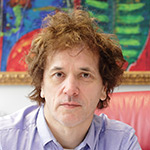
Josef Penninger
“Our research has found that many genes affect one sex more than the other, indicating that many genes present in both males and females can function very differently in each sex,” said Mank. “Outside of the evolutionary implications, these results make it clear that sex must be considered during biomedical testing, and in order to do this, it is important to understand how these sex-specific mutations function. I’m keen to build on this research at UBC.”
Josef Penninger will be the Canada 150 Research Chair in Functional Genetics and director of the Life Sciences Institute when he arrives at UBC in December. As a functional geneticist and founding scientific director of the Institute of Molecular Biotechnology at the Austrian Academy of Sciences, Penninger’s research is focused on understanding the complex mechanisms of how diseases develop, particularly in cardiovascular, autoimmune and bone diseases, and cancers. His work has shed light on a key regulator of bone loss that impacts millions of people, as well as key genes that control pain and inflammation in autoimmune disease and heart diseases.
“I have always been captivated with trying to figure out the vital mechanisms that control how our bodies work and how disease develops,” said Penninger. “Uncovering the architecture and fundamental biological mechanisms of human disease is key to developing new and effective treatment strategies. I look forward to continuing this work at UBC.”
Penninger’s Austrian Academy of Sciences laboratory will remain active, creating new opportunities for collaboration between the two institutions.

Azim Shariff
Azim Shariff will be the Canada 150 Research Chair in Moral Psychology. Currently at the University of California, Irvine, Shariff is a social psychologist whose research focuses on where morality intersects with religion, cultural attitudes and economics. Another rapidly expanding part of his research looks at human-technology interactions and the ethics of automation, including self-driving cars.
“All manner of new and thorny ethical quandaries emerge when we turn the moral decisions we make as human drivers over to pre-programmed algorithms,” said Shariff. “The impact of self-driving cars—and greater automation in general—will be transformational. Moral psychology research will be critical in addressing the human-level issues that emerge.”
Shariff, who grew up in Vancouver and received his PhD in psychology from UBC in 2010, will join UBC in July.
http://www.kurzweilai.net/the-brain-learns-completely-differently-than-weve-assumed-new-learning-theory-says
The brain learns completely differently than we’ve assumed, new learning theory says
New post-Hebb brain-learning model may lead to new brain treatments and breakthroughs in faster deep learning
March 28, 2018

(credit: Getty)
A revolutionary new theory contradicts a fundamental assumption in neuroscience about how the brain learns. According to researchers at Bar-Ilan University in Israel led by Prof. Ido Kanter, the theory promises to transform our understanding of brain dysfunction and may lead to advanced, faster, deep-learning algorithms.

A biological schema of an output neuron, comprising a neuron’s soma (body, shown as gray circle, top) with two roots of dendritic trees (light-blue arrows), splitting into many dendritic branches (light-blue lines). The signals arriving from the connecting input neurons (gray circles, bottom) travel via their axons (red lines) and their many branches until terminating with the synapses (green stars). There, the signals connect with dendrites (some synapse branches travel to other neurons), which then connect to the soma. (credit: Shira Sardi et al./Sci. Rep)
The brain is a highly complex network containing billions of neurons. Each of these neurons communicates simultaneously with thousands of others via their synapses. A neuron collects its many synaptic incoming signals through dendritic trees.
In 1949, Donald Hebb suggested that learning occurs in the brain by modifying the strength of synapses. Hebb’s theoryhas remained a deeply rooted assumption in neuroscience.
Synaptic vs. dendritic learning

In vitro experimental setup. A micro-electrode array comprising 60 extracellular electrodes separated by 200 micrometers, indicating a neuron patched (connected) by an intracellular electrode (orange) and a nearby extracellular electrode (green line). (Inset) Reconstruction of a fluorescence image, showing a patched cortical pyramidal neuron (red) and its dendrites growing in different directions and in proximity to extracellular electrodes. (credit: Shira Sardi et al./Scientific Reports adapted by KurzweilAI)
Hebb was wrong, says Kanter. “A new type of experiments strongly indicates that a faster and enhanced learning process occurs in the neuronal dendrites, similarly to what is currently attributed to the synapse,” Kanter and his team suggest in an open-access paper in Nature’s Scientific Reports, published Mar. 23, 2018.
“In this new [faster] dendritic learning process, there are [only] a few adaptive parameters per neuron, in comparison to thousands of tiny and sensitive ones in the synaptic learning scenario,” says Kanter. “Does it make sense to measure the quality of air we breathe via many tiny, distant satellite sensors at the elevation of a skyscraper, or by using one or several sensors in close proximity to the nose,?” he asks. “Similarly, it is more efficient for the neuron to estimate its incoming signals close to its computational unit, the neuron.”

Image representing the current synaptic (pink) vs. the new dendritic (green) learning scenarios of the brain. In the current scenario, a neuron (black) with a small number (two in this example) dendritic trees (center) collects incoming signals via synapses (represented by red valves), with many thousands of tiny adjustable learning parameters. In the new dendritic learning scenario (green) a few (two in this example) adjustable controls (red valves) are located in close proximity to the computational element, the neuron. The scale is such that if a neuron collecting its incoming signals is represented by a person’s faraway fingers, the length of its hands would be as tall as a skyscraper (left). (credit: Prof. Ido Kanter)
The researchers also found that weak synapses, which comprise the majority of our brain and were previously assumed to be insignificant, actually play an important role in the dynamics of our brain.
According to the researchers, the new learning theory may lead to advanced, faster, deep-learning algorithms and other artificial-intelligence-based applications, and also suggests that we need to reevaluate our current treatments for disordered brain functionality.
This research is supported in part by the TELEM grant of the Israel Council for Higher Education.
Abstract of Adaptive nodes enrich nonlinear cooperative learning beyond traditional adaptation by links
Physical models typically assume time-independent interactions, whereas neural networks and machine learning incorporate interactions that function as adjustable parameters. Here we demonstrate a new type of abundant cooperative nonlinear dynamics where learning is attributed solely to the nodes, instead of the network links which their number is significantly larger. The nodal, neuronal, fast adaptation follows its relative anisotropic (dendritic) input timings, as indicated experimentally, similarly to the slow learning mechanism currently attributed to the links, synapses. It represents a non-local learning rule, where effectively many incoming links to a node concurrently undergo the same adaptation. The network dynamics is now counterintuitively governed by the weak links, which previously were assumed to be insignificant. This cooperative nonlinear dynamic adaptation presents a self-controlled mechanism to prevent divergence or vanishing of the learning parameters, as opposed to learning by links, and also supports self-oscillations of the effective learning parameters. It hints on a hierarchical computational complexity of nodes, following their number of anisotropic inputs and opens new horizons for advanced deep learning algorithms and artificial intelligence based applications, as well as a new mechanism for enhanced and fast learning by neural networks.
https://www.eurekalert.org/pub_releases/2018-03/hhmi-dsi032118.php
Detailed structure illuminates brain-enhancing drug’s action
16:11 How to Focus Intensely Freedom in Thought 332K views 12:18 How One Man Manipulated All of America Freedom in Thought 567K views 9:50 The Most Powerful Mindset for Success Freedom in Thought 270K views 24:09 NVIDIA’s Largest Ever GPU for Artificial Intelligence – DGX-2 512GB, 2 PetaFLOPS The Artificial Intelligence Channel Recommended for you New 43:06 Quantum Consciousness and its Nature In Microtubules. Dr. Stuart Hameroff – Brief History. Warner J Duchén M Recommended for you Language and Thought | Petrina Nomikou | TEDxAsociaciónEscuelasLincoln TEDx Talks 5.4K views Andrew Ng – The State of Artificial Intelligence The Artificial Intelligence Channel Recommended for you From Artificial Intelligence to Artificial Consciousness | Joscha Bach | TEDxBeaconStreet TEDx Talks Recommended for you This Is How Short Your Life Is. Freedom in Thought 2.7M views Artificial Intelligence: Investing in Yourself | Upamanyu Ghose | TEDxHRCollege TEDx Talks Recommended for you 7 Habits of Highly Effective Thinkers Freedom in Thought 249K views How Powerful People Think (Animated) Freedom in Thought 78K views Self-Discipline is Freedom… From Yourself. | Why it’s Important. Freedom in Thought 631K views The Science of the Voices in your Head – with Charles Fernyhough The Royal Institution 49K views Steven Pinker on Enlightenment, Our Complex Democracy, and Hope for Humanity (Pt. 2) The Rubin Report Recommended for you New Neil deGrasse Tyson: Why a Colony on Mars is Unlikely to Happen. ExpovistaTV Recommended for you NEW iPad (2018) – 20 Things You Didn’t Know! ZONEofTECH Recommended for you New Elon Musk Answers Your Questions! | SXSW 2018 SXSW 612K views ‘Holy Sh*t, We’re in a Cult!’ The Atlantic 426K views How the language you speak affects your thoughts TED-Ed Clubs 13K views Can You Think Complex Thoughts Without Language? | 1984 – George Orwell
https://www.news-medical.net/news/20180328/Scientists-discover-link-between-diminished-dopamine-firing-cells-and-ability-to-form-new-memories.aspx
Scientists discover link between diminished dopamine-firing cells and ability to form new memories
A new link between diminished input from dopamine-firing cells deep inside the brain and the ability to form new memories could be crucial in detecting the earliest signs of Alzheimer’s disease.
Scientists from the National Institute for Health Research (NIHR) Sheffield Biomedical Research Centre at the University of Sheffield have discovered a loss of cells that use dopamine – a neurotransmitter that has a number of functions including regulating movement and emotional responses – may cause the part of the brain responsible for forming new memories to function less effectively.
The findings could revolutionise screening for the early signs of Alzheimer’s disease – which affects more than 520,000 people in the UK – changing the way brain scans are acquired and interpreted as well as using different memory tests.
Lead author of the study, Professor Annalena Venneri, from the Sheffield Institute for Translational Neuroscience (SITraN) at the University of Sheffield, said: “Our findings suggest that if a small area of brain cells, called the ventral tegmental area, does not produce the right amount of dopamine for the hippocampus, a small organ located within the brain’s temporal lobe, it will not work efficiently.
“The hippocampus is associated with forming new memories, therefore these findings are crucial to the early detection of Alzheimer’s disease. The results point at a change which happens very early on, which might trigger Alzheimer’s disease.
“This is the first study to demonstrate such a link in humans.”
Professor Venneri and fellow lead author Dr Matteo De Marco acquired 3Tesla Magnetic Resonance Imaging (MRI) scans on 51 healthy adults, 30 patients with a diagnosis of mild cognitive impairment, and 29 patients with a diagnosis of Alzheimer’s disease. 3Tesla MRIs are twice the normal strength of normal MRI scans generating the highest quality images.
The results showed a key link between the size and function of the ventral tegmental area, the size of the hippocampus and the ability to learn new material.
“More studies are necessary, but these findings could potentially lead to a new way of screening the elderly population for early signs of Alzheimer’s disease, changing the way brain scans are acquired and interpreted and using different memory tests,” said Professor Venneri, who is also an Honorary Consultant at Sheffield Teaching Hospital NHS Foundation Trust.
“Another possible benefit is that it might lead to a different treatment option with the potential to change or halt the course of the disease very early, before major symptoms manifest.
“We now want to establish how early alterations in the ventral tegmental area can be seen and also test whether these alterations can be counteracted with treatments already available.”
https://www.express.co.uk/life-style/health/938258/How-to-sleep-Five-things-to-change-in-your-bedroom-to-get-a-better-night-s-rest
How to sleep: Five things to change in your bedroom to get a better night’s rest
NEARLY all of us have trouble sleeping at some stage in our lives. Making these five changes to your bedroom could vastly improve the quality of your rest.
Push Doctor advise making these five changes to create the right environment for sleep and get a better night’s rest.
Clean your room
Studies have shown that a tidy bedroom results in better and healthier sleep. Even if you don’t hoover as regularly as you should, clearing away clothes and even making the bed can make a big difference.
According to the National Sleep Foundation, people who make their bed are 19 per cent more likely to have a good night’s sleep than people who don’t bother.
RELATED ARTICLES


Cats are nocturnal so are likely to move around while you’re trying to snooze, Push Doctor state, while dogs may demand attention, no matter what time of night it is. If you have trouble sleeping, it’s best to regulate them to another room.
Don’t look at the time
It’s best to leave your phone out of reach of your bed. The blue light it emits may disrupt your circadian rhythm (your 24-hour cycle), making it harder to fall asleep.
If you wake up in the night, the temptation to check the time is reduced if you can’t easily reach for it. Constantly checking the clock can also make you anxious, making it harder to drift off. Dim the screen, keep it off your bedside table and ignore it until morning, advises Push Doctor.
 GETTY
GETTY
How to sleep: Five things to do with your bedroom to get a better night’s rest
How to Sleep: 10 things to avoid if you want a good night’s sleep
Fri, March 16, 2018
Sleepless nights can be avoided if you ditch the curries, don’t drink alcohol at lunch and curb that evening gym session. Ten things to avoid if you want a good night’s sleep.

GETTY IMAGES
1 of 11
How to Sleep: 10 things to avoid if you want a good night’s sleep


How to sleep: Putting phones away and tidying your bedroom can improve your sleep
Any warmer than that causes restlessness, according to the Sleep Council, while a temperate colder than 12°C will make it harder to nod off.
Make your room smell of lavender
Having a bedroom that smells nice makes it a more inviting place to be. If you have trouble sleeping, lavender can boost relaxation and help you drift off.
Sprinting a few drops of essential oil on your pillow or use a diffuser or air freshener.
 GETTY
GETTY
How to sleep: Putting phones away and tidying your bedroom can improve your sleep
 Bruce's Blog