http://www.labmanager.com/news/2018/04/studying-oxygen-in-earth-s-oceans-scientists-discover-clues-to-recovery-from-mass-extinction#.Wtd5zNPwYmI

Studying Oxygen in Earth’s Oceans, Scientists Discover Clues to Recovery from Mass Extinction

This event, called the “Permian-Triassic mass extinction,” represents the greatest catastrophe in the history of life on Earth

About 252 million years ago, more than 90 percent of all animal life on Earth went extinct. This event, called the “Permian-Triassic mass extinction,” represents the greatest catastrophe in the history of life on Earth. Ecosystems took nearly 5 million years to recover and many aspects of the event remain a mystery.

A research team, led by scientists from Arizona State University and funded by NASA and the National Science Foundation, is helping to understand why this extinction event happened and why it took life so long to recover. The study, published in Science Advanceswas led by ASU School of Earth and Space Exploration graduate student Feifei Zhang, with direction from school faculty member Ariel Anbar.

Pioneering a new technique for understanding

For this study, the research team focused on marine ecosystems, which were decimated during the Permian-Triassic mass extinction. Previous studies demonstrated that the loss of dissolved oxygen in Earth’s oceans, an effect called “marine anoxia,” played an important role in the mass extinction event. The team wanted to find out when the anoxia occurred, how widespread it was, and how long it persisted after the extinction event.

In particular, the team wanted to see if separate episodes of extinction that happened during the long period of recovery were driven by episodes of ocean anoxia and other environmental changes.

Typically, scientists determine ocean anoxia levels by looking at the abundance of pyrite, commonly known as “fool’s gold,” and other elements and minerals in ancient mud rocks. But mud rocks only provide clues to what may have happened at a single location. Scientists need to sample dozens of sites around the world to infer the big picture from mud rocks.

To overcome this, the team pioneered a new and more efficient approach. By studying the variations of uranium isotopes recorded in carbonates, the team was able to infer global anoxia occurring throughout the ocean using samples from a single outcrop. These sediments, collected in modern day Iran, were deposited 246-252 million years ago in a relatively shallow tropical ocean near the equator.

The resulting variations of uranium isotopes gave the team the answers they were looking for. They were able to show that episodes of extinction coincided with pulses of ocean anoxia, driven by changes in ocean circulation and nutrient levels.

“This finding provides important insights into patterns of oceanic environmental change and their underlying causes, which were ultimately linked to intense climate warming during the Early Triassic,” Zhang said.

Climate change—then and now

This team’s discovery also calls attention to the possible effects of modern climate change, because global warming was the ultimate driver of marine anoxia in the Early Triassic period.

“One of the most interesting and worrying things about the Permian-Triassic extinction is how similar those events are to what is happening today,” co-author Stephen Romaniello said. “Similar to what happened during the Permian period, the Earth’s modern oceans are facing rapid climate warming and enhanced nutrient fluxes.”

Point in fact, scientists have discovered more than 400 marine dead zones in the modern oceans. These are mostly linked to elevated nutrient fluxes in coastal areas, and global warming is likely to cause these zones to expand dramatically in the future.

“Our work shows that if we continue on our present course, there is a good chance that oxygen depletion will exacerbate the challenges marine organisms are already facing,” added co-author Thomas Algeo, of the University of Cincinnati.

http://www.dailymail.co.uk/sciencetech/article-5625435/Rare-diamonds-inside-meteorite-crashed-Earth-remains-lost-planet.html

Incredibly rare diamonds found inside a meteorite that crashed to Earth are remains of a lost planet created 4.5 billion years ago when the solar system formed

  • Diamonds found in the Almahata Sitta meteorite come from a ‘proto-planet’
  • The planet – slightly larger than Mercury – was destroyed in an cosmic collision
  • Tiny diamonds provide scientists with a window into the formation of planets
  • Tens of these budding worlds crashed into each other to form the rocky planets

A meteorite that crashed to Earth a decade ago was part of a long lost planet that formed in the early solar system, just a few million years after the birth of the sun.

The Almahata Sitta meteorite, which contains microscopic diamonds, come from a mysterious embryonic planet that once circled the sun 4.5 billion years ago, experts say.

The celestial body, which was slightly larger than Mercury, was destroyed in an epic cosmic collision.

As well as being extremely valuable, the rare diamonds provide scientists with a tantalising window into the formation of planets.

Tens of these budding worlds, which were generally between the size of the moon and Mars, smashed into each other to form the rocky planets we see today.

Scroll down for video

Diamonds found in the Almahata Sitta meteorite (fragment, pictured) come from a mysterious 'proto-planet' that was around 4.5 billion years ago, just a few million years after the birth of the sun

Diamonds found in the Almahata Sitta meteorite (fragment, pictured) come from a mysterious ‘proto-planet’ that was around 4.5 billion years ago, just a few million years after the birth of the sun

As well as being extremely valuable, the tiny diamonds (pictured on the top left, lighter part of this image) provide scientists with a tantalising window into the formation of planets. Tens of these budding worlds crashed into each other to form the rocky planets

As well as being extremely valuable, the tiny diamonds (pictured on the top left, lighter part of this image) provide scientists with a tantalising window into the formation of planets. Tens of these budding worlds crashed into each other to form the rocky planets

The Almahitta Sitta is named after the location in Sudan above which the space rock exploded in 2008.

Witnesses at the town of Wadi Halfa and at a railway stop in the Nubian desert, known as ‘Station Six’ or Almahata Sitta in Arabic, reported they had seen a ‘rocket-like fireball’ in the sky.

This extremely rare type of meteorite, known as an ureilite, is one of the main families of meteorites and range from few grams up to few kilograms.

The diamonds in the meteorite have tiny crystals inside them that would have required great pressure to form

The parent planetary body from which they formed is believed to have been catastrophically disrupted by an impact during the first 10 million years of the solar system.

‘There are over 480 meteorites that are classified as ureilites,’ lead researcher Dr Farhang Nabiei from the Swiss Federal Institute of Technology in Lausanne, told MailOnline.

‘There are many meteorites coming from Mars or the moon. However, this specific proto-planet has been destroyed in the early solar system and that is unique so far.’

The Almahitta Sitta - named after the place in Sudan where witnesses saw it explode in the sky. It is an extremely rare type of meteorite (stock image) known as an ureilite that is thought to be a potential remnant of these proto-planets

The Almahitta Sitta – named after the place in Sudan where witnesses saw it explode in the sky. It is an extremely rare type of meteorite (stock image) known as an ureilite that is thought to be a potential remnant of these proto-planets

‘Planetary formation simulations suggest that they were tens of planetary embryos in the size range between that of moon and that of Mars in the early solar system.’

The Swiss led team behind the find used a powerful scanning technique, called transmission electron microscopy.

They examined tiny crystals embedded within diamonds in the meteorite, to make the discovery.

The study showed the diamonds must have formed at pressures above 20 gigapascals, or 197,385 times the pressure of Earth’s atmosphere at sea level.

This is equivalent to billions of tonnes of rock pushing down from above, crushing forces so high they must have happened on a Mercury to Mars-sized proto-planet.

Pictured is an electron micrograph and compositional maps of diamond inclusions in ureilite. The study, published in the journal Nature Communications, showed the diamonds must have formed at pressures above 20 gigapascals

Pictured is an electron micrograph and compositional maps of diamond inclusions in ureilite. The study, published in the journal Nature Communications, showed the diamonds must have formed at pressures above 20 gigapascals

Pictured is the diamond under an electron micrograph. Nearly 50 fragments of the 83 tonne asteroid were collected from the desert in northern Sudan where it fell in October 2008

Pictured is the diamond under an electron micrograph. Nearly 50 fragments of the 83 tonne asteroid were collected from the desert in northern Sudan where it fell in October 2008

Dr Nabiei added: ‘Planetary formation models show terrestrial planets are formed by the accretion of tens of Moon- to Mars-sized planetary embryos through energetic giant impacts.

‘However, relics of these large proto-planets are yet to be found.’

Nearly 50 fragments of the 83 tonne asteroid were collected from the desert in northern Sudan where it fell in October 2008.

The bus sized lump of rock was first detected by astronomers in the US and made headlines as it was tracked by telescopes around the world.

It eventually disintegrated in the atmosphere above the Nubian desert, posing no threat to human life.

Researchers studied a section of the Almahata Sitta ureilite where large diamonds were formed at high pressure inside their parent planet.

Scientists scour desert in search of meteorite fragments

‘We discovered chromite, phosphate, and sulfide inclusions embedded in the diamond’, said Dr Nabiei.

‘The composition and morphology of the inclusions can only be explained if the formation pressure was higher than 20 gigapascals.

‘Such pressures suggest that the ureilite parent body was a Mercury- to Mars-sized planetary embryo.’

The researchers said these types of meteorites are the last remaining remnants of this lost planet.

An extensive ground search turned up 47 meteorite fragments for analysis.

The historic event – the first time such an object has been followed in this way – will boost our chances of avoiding a future catastrophe like the asteroid strike that wiped out the dinosaurs.

Almahitta Sitta was travelling at an estimated 27,739mph (44,642kph) until it disappeared in to the planet’s shadow and was then observed as it exploded in a fireball as bright as a full moon.

Dr Nabiei said: ‘Although this is the first compelling evidence for such a large body that has since disappeared, their existence in the early solar system has been predicted by planetary formation models.

‘This study provides convincing evidence the ureilite parent body was one such large ‘lost’ planet before it was destroyed by collisions.’

The full findings were published in the journal Nature Communications.

Meteorite explosion caught on camera is out of this world


https://www.macworld.co.uk/news/mac/imac-2018-release-3669589/

iMac 2018 release date, UK price, features, specifications

We look at what Apple might have in store for the iMac in 2018, including whether the iMac will be offered in space grey and redesigned, if Face ID will be incorporated and whether we can expect 6-cores.

By  

The iMac Pro has been getting a lot of attention since it arrived in December 2017, but if that machine is overkill for you, you might be wondering what’s in store for the standard iMac this year.

In this article we answer all your questions, from whether the iMac will be offered in Space Grey like the iMac Pro, and whether it will utilise the new cooling system found in that model. We also assess rumours, such as a claim from a Foxconn insider that the iMac will be redesigned in 2018 – could the new iMac have slimmer bezels and a narrower chin, for example? We also question whether Touch ID could be added to the keyboard, or if FaceID might make its way on to the iMac, and we look at the chances that there could be a 6-core iMac in the wings. Read on to find out more.

Since 2018 marks 20 years of the iMac – yes it’s been 20 years since Apple introduced the Bondi Blue iMac on 15 August 1998 – could we see an all new design to mark the occasion?

2018 iMac Release Date

In 2017 Apple updated the iMac on 5 June during WWDC. Will the next update to the iMac happen at WWDC 2018? Read about what we expect to see at WWDC when it kicks of on 4 June 2018 here.

It’s certainly possible that the iMac could be updated in the early summer of 2018. There has been an update to the Kaby Lake range of processors from the 7th generation used in the iMac currently, to 8th generation Kaby Lake R. But more likely, Apple will use Intel’s new Coffee Lake chips – which are also already available, although reports indicate there are likely to be shortages during the first quarter.

However, with the average iMac refresh usually being more than a year, it is also possible that Apple could wait until September or October 2018 to issue an updated iMac. If the company is considering a more substantial redesign (as we dicsuss below), this may well be the case.

iMac Price

While it’s unlikely that the price of the iMac range will change, there could be some price changes if Apple does significantly redesign the model in 2018.

Here are the current iMac prices:

  • Entry-level 21.5in iMac, £1,049
  • Mid-level 21.5in iMac, £1,249
  • Top-level 21.5in iMac, £1,449
  • Entry-level 27in iMac, £1,749
  • Mid-level 27in iMac, £1,949
  • Top-level 27in iMac, £2,249

As we will explain below, part of a redesign could involve removing the hard drive option from the iMac in order to free up space inside the machine – and allowing for a slimmer chassis. If Apple was to do this though it is likely that it would keep on an entry-level iMac in the older design, with a hard drive option. This model could be priced at a lower level than it is currently, especially if it uses the same chips as the 2017 iMac. This could bring the starting price down to around £949 but it will probably be an older generation iMac than the others in the range.

It’s unlikely that the high-end iMacs will see any decline in price. The iMac Pro starts at £4,899 while currently a standard iMac spec’d up to match the Pro’s 32GB RAM (and with the most beefy processor offered as a build-to-order option in that range) costs £3,509.

That leap of £1,390 to get from a quad-core to an 8-core processor and the advanced graphics offered by the Pro might seem reasonable, but if the iMac gains a 6-core processor (read on to find out more about that) then the golf between the two models will close a tad. In which case, Apple might see fit to raise prices.

iMac Redesign

The iMac has had the same design since 2012 when the sides of the iMac were slimmed down. However, the aluminium look is now over 10 years old – the first aluminium iMac launched in 2007. Some people are calling for a facelift, or at least some internal changes that could allow Apple to slim the unit down even further, and perhaps shave off some of the chin.

https://qz.com/1252865/after-being-an-apple-fanboy-for-years-im-now-an-android-convert/

After being an Apple fanboy for years, I’m now an Android convert

Or that’s how my dad made me feel when I talked to customers in his phone store about the advantages of phones like the Siemens C60 over the Nokia 3595. But ever since I switched to using an Apple device, starting with the iPhone 4S in 2011, I’ve felt no need to keep up with what other phones offer. It was clear that, for the price premium I was paying, Apple was producing the best damn phones in the market.

That’s no longer true.

In the year that Apple launched the much-awaited iPhone X, Quartz’s tech reporter Mike Murphy declared that Samsung’s flagship phones were the best smartphones in 2017. So when the time came for me to buy a new phone, the main choice wasn’t between an iPhone 8 Plus and an iPhone X. Instead, I was facing a much bigger question: Is it time to give up on iOS and choose Android instead?

I spent a week weighing my options and trying out different smartphones. In the end, Samsung Galaxy S9+ seemed to have no contest for all the things I wanted: it’s fast, it still has a home button, a headphone jack, a thumbprint scanner… along with an amazing camera, face recognition, and the best smartphone screen in the world. Murphy calls the phone “pretty much perfect.”

Two weeks later, a former Apple fanboy for years, I’m now an Android convert. The switch was much easier than I imagined it would be, and perhaps some of the questions I had to answer for myself may help you jump the ship when the time comes for an upgrade.

Is iOS worth the money?

Apple seems to have lost its competitiveness on price. There was a time when paying more for an iPhone meant you got a phone with better build quality, camera capabilities, and a gorgeous screen. It couldn’t have competed with the noisy Android market on the number of features and customizability offered. But it didn’t matter because the Apple package overall provided more value.

That successful formula has broken down in the last few years, and for me the $1,000 iPhone X was the nail in the coffin. In Samsung S9+, Google Pixel 2 XL, or OnePlus 5T, I had phones that had everything that an iPhone X did—and more—at a much lower cost. In fact, at current retail price, you can buy two OnePlus 5T for the cost of one iPhone X. And, as the star YouTube reviewer Lewis Hilsenteger says, “There is no way that the iPhone X is twice as good as the OnePlus 5T.”

Isn’t it difficult to move from iOS to Android?

My biggest fear was that I was going to hate using an Android phone. I had been in the iOS universe with a MacBook, iPad, and iPhone for so long that I thought getting used to Android would be a nightmare. As a teenage salesman of mobile phones, my best quality was that I was able to remember how to navigate each of the many different operating systems on phones of the time: Nokia, Siemens, Motorola, and Sony Ericsson (remember?). But as a grown-up adult with no knowledge of operating systems outside of iOS, I was genuinely worried.

Luckily, my colleague Murphy was able to loan me an Android to try for a couple of days. Within hours my fears dissipated. I had underestimated how useful search had become on smartphones. And it’s no surprise that Google-powered Android does a better job of integrating search in its usability than Apple’s iOS does. There isn’t a setting that I couldn’t find using the search box, and it made my life so easy as I adapted to using Android. Not everyone is lucky enough to be able to easily test a phone before buying it, but most places offer helpful return policies in case you just can’t deal with using a different operating system.

What about moving data, photos, and contacts from iOS to Android?

Transferring data from iOS to Android is simple. As soon as you start setting up your Android phone, it will walk you through simple steps to move Photos, browser history, SMS messages, contacts, and other files from your iPhone. What you will not be able to port is iMessage, and that could be a big problem for power users. If you still decide to move to Android, you should go this setting and turn off your phone number from being associated to iMessage. This way you should continue to receive messages from your friends in the form an SMS rather than in iMessage.

Isn’t iOS a better user experience?

As an Apple fanboy, one of the claims I made was that iOS had a better user experience than its competition. To some extent it is true, as Apple has maintained tight control over the operating system. That’s allowed it to create a system that feels uniform and more refined.

Android’s experience can feel scattered, especially if you use it on devices made by multiple manufacturers. For instance, the Samsung S9+ has its back button on the lower-right side of the screen, whereas Google Pixel 2 XL has it on the lower left. But Android’s saving grace is its amazing amount of flexibility. For instance, after using the S9+ for just one day I changed the launcher—the system that governs your home screen and the access to the phones apps—from Samsung’s default setup to one called Evie, and it made my experience of the operating system so much better.

That said, users today spend time most of their time in apps that are designed neither by Apple, Google, or any of the device makers. So your experience of the same app across operating system tends to be the same. For most users, operating systems shouldn’t make much difference today. (No guarantees that all your third-party apps will work ok. Murphy says that the Twitter app’s interface differs based on the operating system.)

What about all the apps bought on iOS?

This may be a bigger concern for others. I summed up the amount of money I had paid for iOS apps and the total only came up to about £70 ($100) over seven years. Luckily, most of the paid apps were games that I was unlikely to use in the future.

By buying a Samsung S9+ instead of an iPhone X, I had already saved more money than I had paid for iOS apps. Better still, because the S9+ has a headphone jack, I can continue to use my Bose noise-canceling headphones, saving me some $299 that I would’ve forked out for the Bluetooth version, or having to mess about with adapters.

What do you miss about iOS?

  • The ability to scroll to the top of a page with just a tap on the top.
  • Wifi calling. In the UK, my cell provider Three allowed me to use wifi to make and receive calls when I didn’t have cell signal. Three told me that iPhones have built-in software to enable the feature. On my Samsung, which I didn’t buy from Three, I need a separate app to use that feature. And that app has to run in background all the time for the feature to work.
  • I really like San Francisco, the font Apple uses in its operating system.

What do I not miss about iOS?

  • The notifications tab on iOS is a mess. In Android, different app notifications are stacked together and you can easily expand the ones you want to look at.
  • The lack of customization.
  • No slots for external memory cards.
  • Siri.

https://www.theverge.com/2018/4/17/17248140/spotify-free-tier-new-user-interface-redesign

This may be the new free Spotify

On-demand playlists are coming

There have been reports about upcoming changes to Spotify’s free tier of service over the past couple of weeks, and it appears the music service is now serving the updated UI to select users. While The Verge cannot confirm if this is officially the new form of the free version for mobile expected to roll out next week, these UI changes, which include the option to play songs on demand in select playlists, would make the free tier act more like a Premium account. Spotify declined to comment.

Last week, Bloomberg reported these updates would specifically impact mobile users, and a flyer for the company’s upcoming April 24th event recently confirmed that modifications were coming to Spotify mobile.

While there are several notable changes in this version of Spotify free for mobile, perhaps the biggest is the new option to play certain playlists on demand, as seen with the “Gold Edition” playlist above. If a playlist can only be played in shuffle mode, that is now designated with a blue shuffle icon. Previously on the free tier, all playlists could only be played in shuffle mode.

Also new is the way individual songs are displayed while playing. Spotify previously used full-screen art with certain prominent playlists like RapCaviar. Now, that has seemingly rolled it out as a standard. In fact, nearly everything in this version of Spotify free is redesigned, from the Search page, which now has colorful boxed prompts like “Workout” and “Mood” to previews under playlist icons that give a heads-up on the songs contained inside (as seen under “New Music Friday,” above and to the right).

When it comes to the bottom strip of navigation, the Browse button has disappeared, and that content is folded into Search. The Radio button has also disappeared, and the function is nowhere to be found throughout any menus. There’s now also a Premium button to the right, prompting free users to upgrade.

Voice control, a feature Spotify was testing earlier this month, is seemingly not included in the update, for now.

Spotify went public on April 3rd, and its services are available in 61 countries with an overall user base of 159 million that includes ad-supported free listeners and 70 million paying users as of January 2018. The company is forecasting as many as 96 million paid subscribers and a 30 percent increase in revenue to $6.6 billion by year’s end. It’s predicted that the company will likely continue to focus on user subscription growth, and making the free experience better to use is crucial to attracting new people to the service.

https://mail.google.com/mail/u/0/?tab=jm#inbox/162d91413fc280e6

Google
Researchers at the University of Washington have also been working on a method for wireless devices to communicate without using any battery power.

Daily update ⋅ April 18, 2018
NEWS
UW researchers 3D print innovative ‘smart’ device for ordering laundry detergent

It is this liquid flow that is used to provide power to the mechanism, so there is no need for batteries or anyelectronics equipment. … The device is capable of communicating this drop, and using it to make sure your laundry doesn’t go unwashed. … ”There’s been a lot of interest in 3D printing,” said Iyer.

https://www.techhive.com/article/3269027/streaming-hardware/stream-all-the-things-to-your-tv-with-this-killer-deal-on-a-google-chromecast.html

Stream all the things to your TV with this killer deal on a Google Chromecast

Save 30 percent on Google’s streaming dongle.

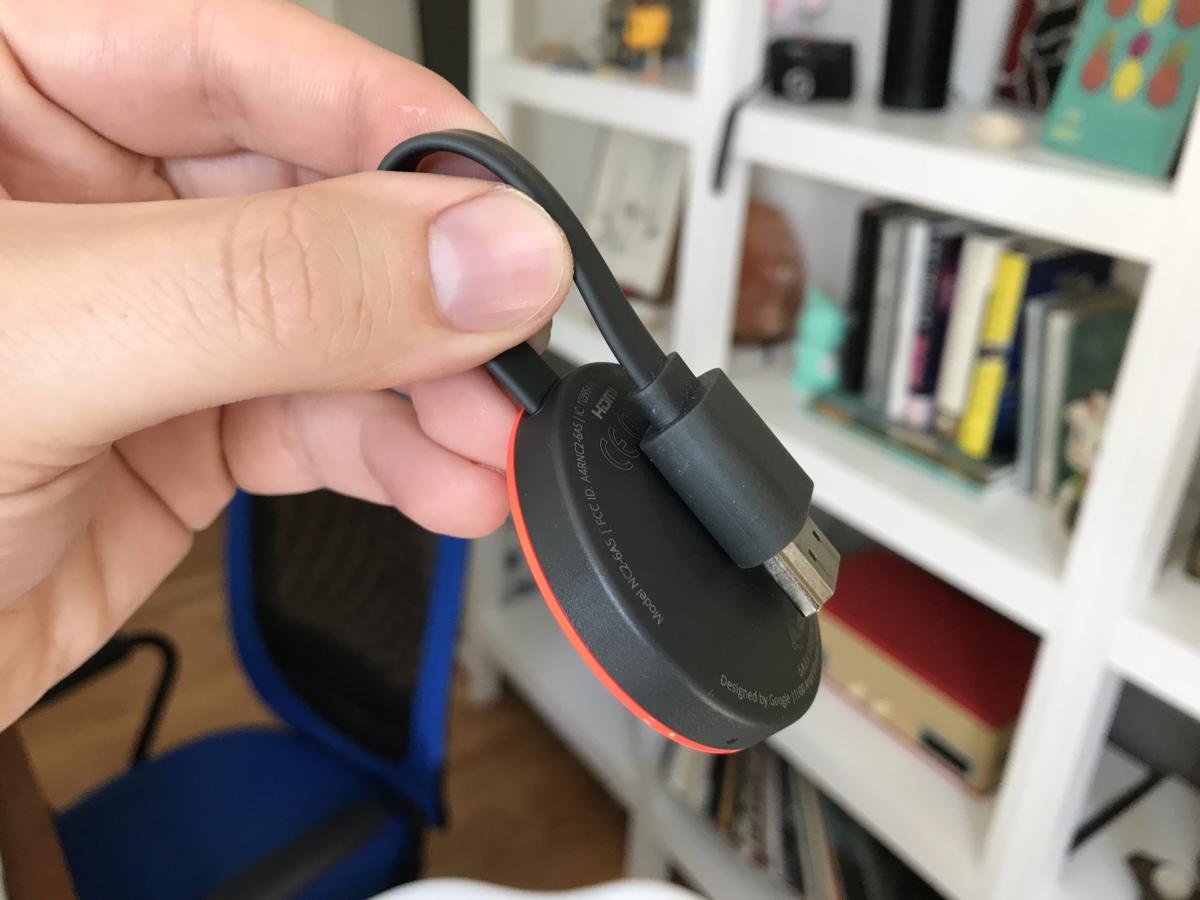
chromecast folded
Andrew Hayward/IDG
 If you’re unsure about becoming a cord-cutter, a streaming dongle can be a great way to test the waters without diving in. Google’s Chromecast is a fantastic entry-level solution, using an Android or iOS device, PC, or Chromebook as the remote, and allowing you to cast content right from the same device. With a $35 MSRP, it’s already in impulse buy territory, but right now, you can get a black Chromecast for just $25 at Target, good for a savings of nearly 30 percent.

The Chromecast dongle plugs simply into a free HDMI port on your TV and uses a WiFi to sync with your device. Once connected, you’ll be able to do as much as you can with a Roku or Apple TV, including streaming movies and shows from your library or subscription services such as Hulu and Netflix. You can also beam photos to your TV and mirror your screen using an Android app or the Chrome browser on your laptop.

If you have a 4K TV, Target has also cut the price of the Chromecast Ultra by $10, bringing it down to $59.

The Google Chromecast is already pretty inexpensive as streamers go, and this deal makes it even cheaper. Especially if you’re just getting into the streaming game, it’s a simple way to catch all your streaming services. We gave it 4 stars out of 5 for its speed and simplicity. And be sure to check out how it compares to other streaming devices in our roundup of best media streaming devices.

https://www.androidcentral.com/best-smart-led-light-bulbs-work-google-home

Best Smart LED Light Bulbs that Work with Google Home

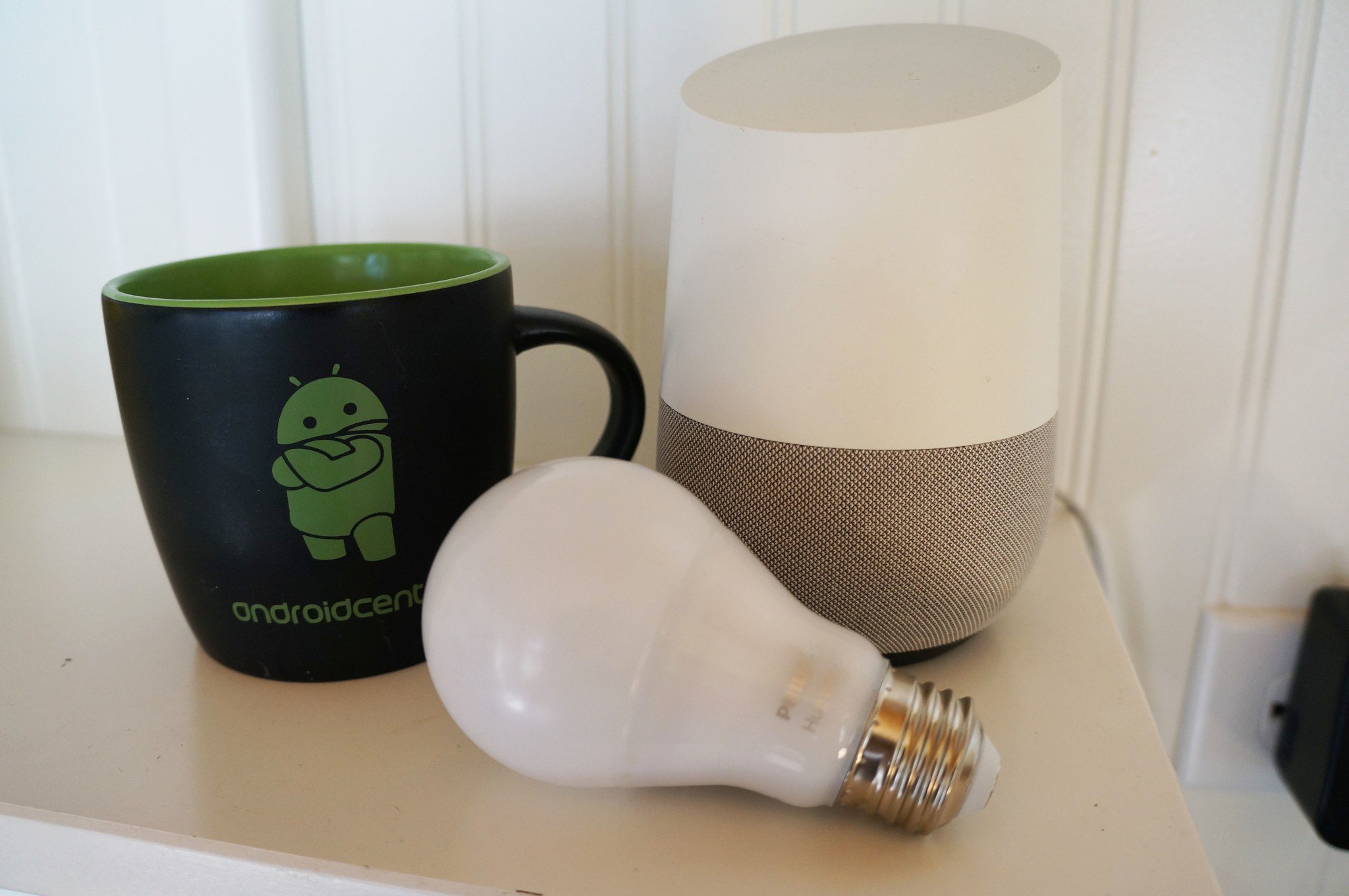
Google has so far done a pretty great job in the smart home race — between the stellar Google Home speakers and Google Assistant baked into the Android experience, we’ve all likely come to rely on Google’s smart home assistant more and more over the past couple years.

If you love the idea of controlling the lights around your home using just your voice, here are your best options for smart LED bulbs that work with Google Home.

Philips Hue

Philips is one of the leading manufacturers of wireless LED smart bulbs. The Philips Hue lineup features a multitude of different lighting options for around your home, which must be configured through the Philips Hue Bridge via. You’re able to connect up to 50 lights to one Bridge and then configure and control them in so many different ways.

Once set up, you’re able to speak to your Google Home to set and adjust your Philips Hue lights throughout your house without leaving the couch, or easily turn off all the lights when you’re leaving the house or it’s time for bed.

See at Amazon

LIFX Smart Lights

LIFX offers its third generation of smart bulbs for both indoors and outdoors. Both offer 1100 lumens of brightness, with options to customize the look with 16 million colors and 1000 shades of warm to cool whites. No additional hardware is required to get things set up with Google Assistant as each bulb connects directly to your Wi-Fi network.

A single A19 bulb starts at $50, but if you’re planning to do up your home with LIFX bulbs, you’re definitely better off buying the 4-pack of A19 bulbs for $196

See at Amazon

TP-Link offers a full line of smart LED lightbulbs along with other hardware including smart plugsand switches that allow you to convert lamps and appliances you already own into smart devices you can automate to power on or control with your voice.

Whether you’re fine with a standard A19 dimmable bulb ($20), a Multicolor A19 bulb ($36), these are quality products that do not require a hub to set up with Google Assistant. We’ll link to the 3-pack starter kit below, which is your best value at just $55.

See at Amazon

Sengled Element

Sengled bulbs are some of the cheaper options for smart bulbs, but the tradeoff is that you will require a hub.

The starter kit we’ve linked below includes four bulbs and the required hub for just $60 — not bad at all. From there, if you really want to tech out your home with smart bulbs, you can build out your home with 4-packs of bulbs for just $33 or an 8-pack of bulbs for $77. These are just your standard white dimmable smart bulbs and are ideal for lamps and fixtures around your home.

See at Amazon

Smartika

Smartika is a Canadian company that offers rather stylish home automation products for lighting your home fully compatible with Google Home as well as Amazon Alexa and IFTTT.

Everything is controlled via the Smartika Hub, which lets you create groups and scenes by programming automated functions. The Hub also lets you connect to the Smartika mobile app, which lets you easily interconnect and control all your Smartika products.

Beyond the Hub, Smartika offers five different lighting fixtures, which range from $135 for recessed ceiling lights to $500 for a full track light setup with four adjustable lights — perfect for a kitchen renovation.

Installation is available for those living in Quebec and Ontario, otherwise, you’re left to install things on your own via the included installation and user manual.

See at Smartika

Nanoleaf Aurora

Most of the lights we’ve featured so far are practical solutions, but the Nanoleaf Aurora? This is just downright cool.

Aurora consists of modular panels that you can connect together into whatever shape your heart desires. Russell Holly dove in with a full review but in short these are futuristic triangle panels of LED light which you can arrange into fantastic shapes and then control via your smartphone. Nanoleaf Aurora is now compatible with Google Assistant meaning you’ll be able to control these rad lights with your voice.

The Rhythm Starter Kit sells for $229 and comes with nine light panels, along with the Rhythm module that allows the light panels to respond to your music, putting on a pretty epic personal light show. 15- and 30-panel kits are also available.

http://www.iclarified.com/65423/dropbox-app-gets-full-screen-file-navigation-on-ipad-drag-and-drop-support-more

Dropbox App Gets Full Screen File Navigation on iPad, Drag and Drop Support, More

Dropbox has updated its app for iOS with full screen file navigation on iPad, drag and drop support, better text file support, and more.

Dropbox is a creative collaboration space designed to reduce busywork, bring your files together in one central place, and safely sync them across all your devices—so you can access them anytime, anywhere. And sending large files is easy, even to people who don’t have a Dropbox account. Features like the doc scanner, shared folders, offline access, and more make collaborating with others simple.

Dropbox App Gets Full Screen File Navigation on iPad, Drag and Drop Support, MoreDropbox App Gets Full Screen File Navigation on iPad, Drag and Drop Support, More

Features:
• Work on files with others through shared folders
• Use the doc scanner to turn receipts, whiteboards, and notes into PDFs
• Comment on files to share feedback with your team
• Sync, share, and edit Word, Excel, and PowerPoint files

What’s New In This Version:
What’s new:
• Full-screen file navigation on iPad: Now you can finally see those super-long filenames as you browse on your tablet, by collapsing the preview pane.
• Drag and drop: For those of you on iOS 11, you can now tap-and-hold files to drag-and-drop them around in your Dropbox.
• Grant access on the go: Let’s say someone requests access to your file—but you’re out on a trip. Now you can get a push notification and grant access from your phone, even if you’re a million miles away.
• Better text file support: Improved previewing and introduced text editing for more than 120 file extensions!

You can download Dropbox from the App Store for free.

Download

Dropbox App Gets Full Screen File Navigation on iPad, Drag and Drop Support, MoreDropbox App Gets Full Screen File Navigation on iPad, Drag and Drop Support, More

http://www.businessinsider.com/basic-income-worldwide-by-2030s-ray-kurzweil-2018-4

Google futurist and director of engineering: Basic income will spread worldwide by the 2030s

Ray KurzweilTech Insider
  • Basic income will be widespread by the 2030s, according to Google futurist and director of engineering Ray Kurzweil.
  • Kurzweil is known for making seemingly wild predictions. In 2016, he predictedthat by 2029, medical technology will add an extra year to human life expectancies on an annual basis.
  • “We’re going to have more and more powerful technology to keep our physical bodies going. We’ll think, ‘Wow, back in 2018, people only had one body, and they couldn’t back up their mind file,'” he said onstage at TED.

As it becomes apparent that artificial intelligence will replace ever-more jobs in the coming years, a growing number of politicians, nonprofits, and Silicon Valley entrepreneurs have started thinking about how we’ll cope with a world in which not everyone can — or needs to — work.

Basic income experiments, in which people are given a regular salary just to live, no strings attached, are popping up all over Europe, Africa, and North America.

At the 2018 TED Conference, futurist Ray Kurzweil made a bold prediction about the future of “free” money: “In the early 2030s, we’ll have universal basic income in the developed world, and worldwide by the end of the 2030s. You’ll be able to live very well on that. The primary concern will be meaning and purpose,” he said onstage at the annual event.

It’s no coincidence that this timeline also coincides with when Kurzweil, Google’s chief futurist and director of engineering at Google Research, thinks AI will pass the Turing Test — when it becomes impossible to discern machine intelligence from human intelligence. At that point, human jobs could become increasingly sparse.

Kurzweil is known for making seemingly wild predictions. In 2016, he predicted that by 2029, medical technology will add an extra year to human life expectancies on an annual basis.

“We’re going to have more and more powerful technology to keep our physical bodies going. We’ll think, ‘Wow, back in 2018, people only had one body, and they couldn’t back up their mind file,'” he said onstage at TED.

In the case of basic income, the big hurdle isn’t technology. It’s political will. That, at least, isslowly emerging on a local level.