LG Watch Timepiece: Finally, a smartwatch without battery woes
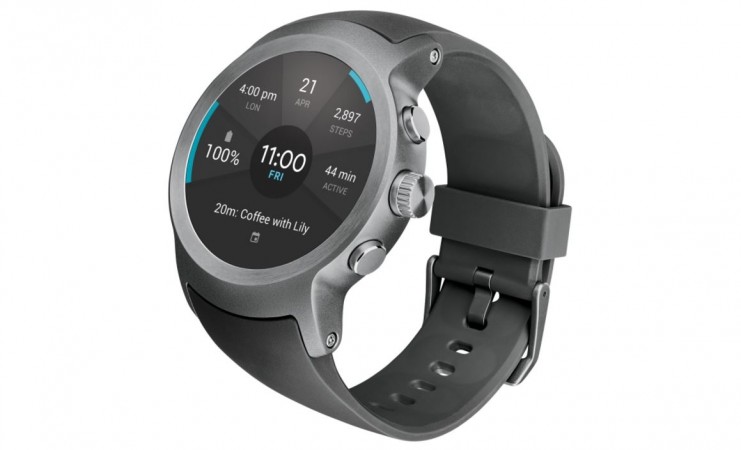
LG Watch Timepiece is expected to take on Apple Watch with its “hybrid” nature and 100 days battery life along with other perks of a smartwatch and a mechanical watch.
The smartwatch industry is widely dominated by Apple as it ships millions of Apple Watch units around the world. But there are other players thriving to be the number one player in this space and LG Electronics is one of them. The South Korean electronics giant has a range of smartwatches in its portfolio, but there’s going to be a new addition soon.
According to a report by Android Headlines, LG is expected to announce all-new LG Watch Timepiece that will address one of the biggest pain points of smartwatches. The upcoming smartwatch is expected to be a “hybrid” one, fusing digital and mechanical aspects to form one-of-a-kind wearable.
By combining the best of watch features, LG’s hybrid Watch Timepiece will strike an appeal to both analog and digital watch fans. The report further reveals the complete specifications of the unannounced smartwatch, such as its long-lasting battery, Android Wear OS and more.
LG Watch Timepiece is expected to come with a 240mAh battery, which will run 100 hours between charges, giving ample time for its users to go without charging for days. There will be a 1.2-inch display with 360 x 360p resolution screen to display the smart functions such as apps.
LG Watch SportLG official page (screen-shot)
Interestingly, the report speaks of a special Watch Mode, which will disable the Wear OS on the watch and turn over the mechanical side of the watch. With this, users can go up to a 100 days on a single charge, which is a nifty feature for those who are always on-the-go.
Other features expected in the LG Watch Timepiece include:
Qualcomm Snapdragon 2100 chipset
4GB storage
769MB RAM
IP68 dust and water resistance certification
USB-C port
Bluetooth 4.2
Wi-Fi 802.11b/g/n
Measurements: 45.5 x 45.4 x 12.9 mm
A 22 mm silicone rubber strap
A micro gearbox for “highly precise quartz movement”
Stainless steel design
Colors: New Aurora Black and Cloud Silver
With all these features onboard, the rumored watch isn’t expected to have NFC or GPS onboard. Assuming the report is right, the Watch Timepiece could retail for around $250 and start retailing by June.
Would you be interested in a hybrid smartwatch? Share your thoughts with us in the comments below.
8 Mesh Wi-Fi Alternatives to Apple’s Discontinued AirPort Routers
Now that Apple has discontinued its AirPort lineup of wireless routers, you may be looking for an alternative. Rather than purchasing a standalone router, you may want to consider a multi-node system.
Wireless mesh routers use multiple access points to provide strong, reliable WiFi across your entire home or office. Most wireless mesh routers provide better network management, improved security, and can be easily controlled via a smartphone.
While mesh routers for home are a fairly recent development, there are now many options to choose from. Here’s eight popular systems listed from best to worst in customer satisfaction. Please note, if you have a smaller area to cover, many of these are offered with just one or two devices as well.
eero Home WiFi System (3-Pack) – $398.95
Ideal for most homes, this system comes with an eero and two eero Beacons that seamlessly cover the typical home in fast, reliable WiFi. It’s simple to set up. Easy to manage. And gets better over time with new features and improved performance. eero is WiFi you never have to worry about. Ios requirements: device running iOS 8.0 or later, Android requirements: device running Android 4.3 or later (tablets included) both eero and eero Beacon are powered by TrueMesh, the software and mesh routing algorithm at the core of the eero system. It’s the next generation of wireless mesh technology, custom-built from the ground up to work perfectly with eero. Taking full advantage of the hardware, it means that your WiFi is not only fast and resilient, but also intelligently adapts to your home.
Linksys Velop Tri-band Whole Home WiFi Intelligent Mesh System (3-Pack) – $417.61
Linksys Velop is a high-performing modular Wi-Fi mesh system of nodes built to provide exceptional Wi-Fi coverage throughout your home. It sets up in minutes and delivers a flawless, ultra-fast, full-strength signal.
Google WiFi System (3-Pack) – $368
Enjoy a fast signal in every room, on every device. Google Wi-Fi is a new type of connected system that replaces your router for seamless coverage throughout your home.
AmpliFi HD (High-Density) Home Wi-Fi System – $329.99
The AmpliFi HD (High-Density) Home Wi-Fi System includes a Router and two Mesh Points for Wi‑Fi coverage throughout your home. The AmpliFi HD system delivers maximum throughput to meet your streaming and gaming demands with lag-free performance. The Router features an innovative and simple design with an intuitive touchscreen display. The Mesh Points provide enhanced coverage to eliminate dead spots in your home. A mobile app is available for iOS and Android platforms for instant setup and easy management.
NETGEAR Orbi Home Mesh WiFi System (3-Pack) – $287.82 – $30 = $257.82
Bring fast, secure, and reliable internet to your entire family with the NETGEAR Orbi Home WiFi System. No more WiFi boosters or extenders necessary. The Orbi WiFi Router and Satellite Wall Plug In extend high performance WiFi to your property from the basement to the backyard. The system smartly manages your WiFi so that each device’s access is optimized and never interrupted.
TP-Link Deco Whole Home Mesh WiFi System (3-Pack) – $228.98
Deco M5 keeps you connected in every room without you having to switch networks or remember different passwords. And with TP-Link’s unique Adaptive Routing Technology, Deco M5 automatically finds the best connection for every device. Now, you can move across your home and always have strong Wi-Fi.
Tenda Nova MW6(3-pack) Whole Home Mesh Router WiFi System (3-Pack) – $147.75
No matter what is your house structure, a set of three Nova units can covers up to 6,000 sq. ft. There’s no hiding place for dead spots, enabling fast and consistent WiFi experience wherever you go.
Luma Whole Home WiFi (3-Pack) – $137.50
Luma redefines home WiFi with the first intelligent WiFi system offering unparalleled speed, security and control. Luma’s Surround WiFi system covers every inch of your home so you can forget about buffering and dead zones. Luma provides next-generation content controls to ensure your children can only access appropriate websites. Luma is just as simple to set up as it is to use. Plug it in, download the app, and it works in minutes. From there, the devices adapt to your home and automatically fine-tune their signal in real time to always offer peak performance and speed.
Seniors stick with fitness routines when they work out together
SCIENCE, HEALTH & TECHNOLOGY
Apr 27, 2018 | For more information, contact Erik Rolfsen
The study recruited 627 adults, averaging 72 years in age, for 12-week exercise classes at YMCA locations in Metro Vancouver.
Older adults are more likely to stick with a group exercise program if they can do it with people their own age, a new University of British Columbia study has found.
Working out with peers of the same gender doesn’t seem to make a difference – it’s the age that counts.
“This study points to the importance of age-targeting, but perhaps not gender-targeting, when developing these programs,” says UBC kinesiology professor Mark Beauchamp, the study’s lead author.
Mark Beauchamp
Older adults worldwide are less active than they should be, with activity levels lowest in the Americas. In Canada, fewer than 15 per cent of people past age 59 meet international physical activity guidelines. Beauchamp and his international team of researchers have been looking for ways to keep people active into old age, because inactivity has been shown to increase risk of cardiovascular disease, obesity and arthritis. It can also lead to physical limitations that affect overall quality of life.
The researchers knew from earlier studies that older adults prefer to exercise within their own age group. They wanted to find out whether preferences expressed by older adults in surveys would actually lead to greater adherence in practice.
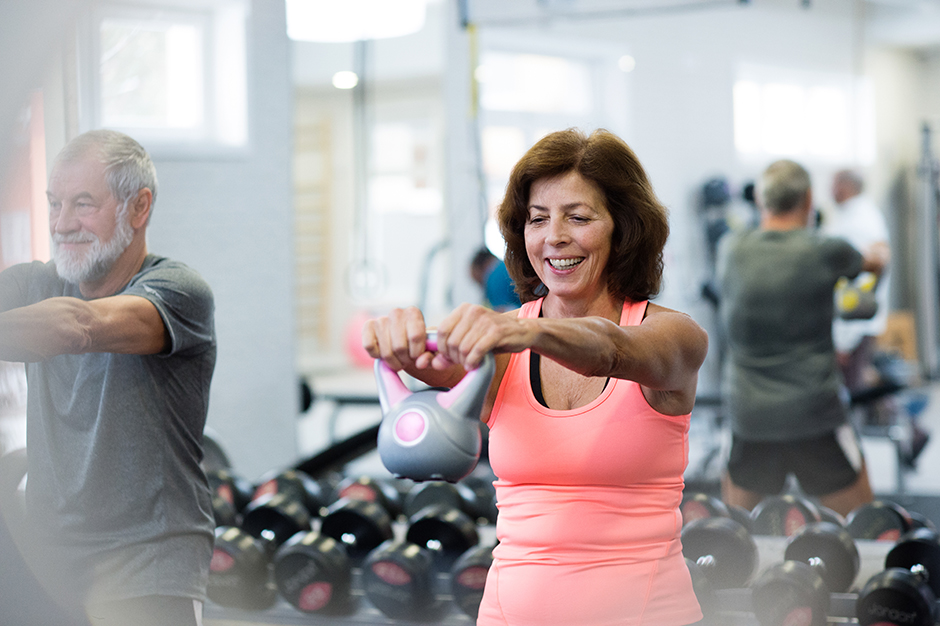
The study recruited 627 adults, averaging 72 years in age, for 12-week exercise classes at YMCA locations in Metro Vancouver. Participants had the option to extend participation for another 12 weeks afterward. Researchers divided participants into three workout groups. One group was consistent in age and gender, while another was consistent in age but not gender. Those groups were led by older adult instructors recruited and trained for the study. The third group worked out in a typical YMCA class that was open to all ages and genders, led by a YMCA instructor.
Over the 24-week period, participants who worked out with people their own age attended an average of 9.5 more classes than counterparts in the mixed-age group. Participants in the mixed-age group averaged 24.3 classes. Participants in the same-age, mixed-gender group averaged 33.8 classes, and participants in the same-age, same-gender group averaged 30.7 classes.
The researchers’ prediction that same-gender classes would lead to even greater adherence wasn’t borne out by the results. This is significant, as it could free facilitators from the cost of providing separate classes for each gender unnecessarily.
Age and gender groupings weren’t the only strategies researchers used to try to strengthen participants’ commitment. Participants also received custom T-shirts that identified them as members of a group, and were given opportunities to socialize over coffee following class.
“All of this together points to the power of social connections,” Beauchamp said. “If you set the environment up so participants feel a sense of connection or belonging with these other people, then they’re more likely to stick with it.”
Such strategies would be easy to employ in a variety of physical activity settings such as community centres, fitness clubs and retirement communities, the researchers noted.
In this case, study participants didn’t want the classes to end. Rather than continue their workouts in regular classes, they successfully lobbied the YMCA to continue age-specific sessions after the experiment was over.
The study appears in the May issue of Health Psychology and was funded by a grant from the Canadian Institutes of Health Research.
Raspberry Pi-alike NanoPi K1 Plus: For $35 you get 2xRAM, 4K video, Gigabit Ethernet
FriendlyElec’s $35 NanoPi K1 Plus takes aim at the Raspberry Pi Model 3 B+.
FriendlyElec has released a $35 rival to the Raspberry Pi 3 B+, outdoing the better-known board with 2GB of memory, Gigabit Ethernet, and a more powerful GPU.
The NanoPi K1 Plus follows FriendlyElec’s Nano Pi K2, released last year with similar dimensions to the Raspberry Pi 3 for $40.
The NanoPi K1 Plus shares similar specs to the Nano Pi K2 and maintains the Raspberry Pi’s form factor, but offers double the RAM, Gigabit Ethernet, and 4K video playback.
The device also has the same 40-pin GPIO pin-header as the Raspberry Pi 3, so it should work with Raspberry Pi accessories and housings.
Instead of the NanoPi K2’s 1.5GHz Amlogic processor, FriendlyElec opted for an Allwinner H5 quad-core 64-bit Cortex A53 processor that runs at 1.4 GHz as well as a six-core Mali450 GPU. The Raspberry Pi 3 B+ uses a 1.4GHz Broadcom BCM2837B0, Cortex-A53 ArmV8 64-bit SoC.
The NanoPi K1 features three USB 2.0 ports, one microUSB 2.0 port for power, a microSD slot, while wireless support includes 802.11 b/g/n.
An HDMI port supports 4K video output. However, it’s restricted to 30 frames per second. It also has one GPIO button, a red LED power indicator, a green LED status light, heatsink, and a built-in infrared receiver.
Multimedia features include a DVP camera interface, a built-in mic, and a 3.5mm audio jack.
Naturally, to use the NanoPi K1 users will need to have their own monitor, TF card keyboard and mouse, and FriendlyElec recommend the host computer is a 64-bit system running Ubuntu 16.04.
FriendlyElec provides a FriendlyCore OS, which is based on UbuntuCore. Further specification and setup details are also available on the NanoPi K1 Plus wiki.
The NanoPi K1 Plus offers Gigabit Ethernet and 4K video playback.
How we react on social media is totally dependent on the weather
WASHINGTON DC: Did you know! The climate outside affects our social media behaviour as a recent study has found when the weather conditions are good, we are happier on social networks.
The research was carried out by researchers at Universidad Carlos III De Madrid.
“Our study is the first to observe and measure the relationship between good weather and frame of mind using billions of posts on Twitter and Facebook in 75 metropolitan areas of the USA,” said Esteban Moro.
DETECTR, a DNA-detection system based on CRISPR biology, can spot specific DNA snippets in human samples and could help identify infections, cancer, and more. [HHMI]
CRISPR pioneer Jennifer Doudna, Ph.D., has co-founded a new company, Mammoth Biosciences, that aims to democratize gene-editing technology by developing a platform that the company and its partners may use to launch an “endless variety of tests for biosensing in healthcare, as well as across industries such as agriculture, manufacturing, forensics, and more.” Belying its ponderous name, Mammoth chooses to emphasize the speed with which its technology may lead to new applications, which will, themselves, speed test results to patients in clinical settings, or people at home.
According to Mammoth, users won’t have to take multiple trips to the clinic and wait days for their results. Instead, they can “add a sample,” “take a picture,” and “get results” in 30 minutes.
“Our platform has two form factors to enable its use in many different settings,” Mammoth’s website indicates. “For use in the field and at home, we use a simple paper-based test. For this system, the sample is applied to the detection card, resulting in a visible color change. To achieve the maximum sensitivity and accuracy in real time, we can leverage a smartphone to detect the signal in liquid containing the sample of interest.”
Mammoth is licensing technology from the University of California, Berkeley, where Doudna, a professor of molecular and cell biology and of chemistry, leads research into CRISPR (clustered regularly interspaced short palindromic repeats). Of particular relevance is a CRISPR technology developed by Doudna and colleagues called DETECTR, which stands for DNA endonuclease targeted CRISPR trans reporter.
Announced last February as “a simple method that may lead to fast, reliable medical tests,” DETECTR has also been featured in a recent paper (“CRISPR-Cas12a Target Binding Unleashes Indiscriminate Single-Stranded DNase Activity”) in the journal Science.
“By combining Cas12a ssDNase [single-stranded DNase] activation with isothermal amplification, we create a method termed DNA endonuclease-targeted CRISPR trans reporter (DETECTR), which achieves attomolar sensitivity for DNA detection,” wrote the article’s authors. “DETECTR enables rapid and specific detection of human papillomavirus in patient samples, thereby providing a simple platform for molecular diagnostics.”
As this statement indicates, DETECTR makes use of an alternative CRISPR nuclease. Most CRISPR development has centered on the Cas9 nuclease. Alternative nucleases, such as Cas12, are “programmable,” like Cas9, because they may be paired with different guide RNAs, which direct DNA-cutting nucleases to their targets. Working with different nucleases may prove fruitful, however, because they present different capabilities.
“Our initial platform makes use of two unique CRISPR proteins,” details the Mammoth website. “The first, Cas12, binds and cuts DNA, the material that makes up the genomes of all living things on Earth. The second, Cas13, recognizes and cuts a related molecule called RNA. Together, these two proteins enable us to sense virtually any type of nucleic acid.”
Like its molecular cousin Cas9, Cas12a snips DNA. But instead of snipping only the DNA strand it binds, Cas12a chops other DNA, too. “We started to see this surprising activity where it would just start cutting random stuff,” said Lucas Harrington, a graduate student in Doudna’s lab and a coauthor of the Science paper.
Under certain circumstances, the enzyme turns into a DNA-shredding machine, slicing up any single-stranded DNA nearby, the researchers saw. But this wasn’t indiscriminate destruction. For the machete action to begin, Cas12a first has to find a precise DNA target. Researchers can program that target by adding a guide RNA molecule to tell Cas12a what to look for
Once Cas12a locks onto and snips the target, it then begins shredding all of the single-stranded DNA it can find. But for the system to be useful, Doudna and colleagues needed a way to see when Cas12a starts this molecular mayhem, signaling that it has found its target. So the researchers used a glowing molecule—an easy-to-spot flare—linked by a single strand of DNA to a suppressor molecule that prevents the glow. When Cas12a turns into a machete, it slices the DNA strand that links these two molecules together. This removes the suppressor, letting the glowing molecule shine—a signal researchers can detect.
The team then put their DNA detective to the test. Working with Joel Palefsky, M.D., and his team at the University of California, San Francisco, the investigators hunted for DNA signals from two types of cancer-causing human papillomavirus (HPV): type 16 and type 18. Researchers obtained 25 DNA samples taken from people who had no HPV infection, one type of virus, or both types. For HPV16, DETECTR made the right call for all 25 of the samples. For HPV18, DETECTR got it right for 23 of 25 samples. The ones it missed gave weak signals that can likely be improved with different guide RNA design, Doudna noted.
Compared with current methods to detect HPV, DETECTR is “simpler, quicker, and does not require specialized equipment,” Harrington asserted. That could make the system useful in resource-limited health clinics and for point-of-care diagnostics.
Doudna’s team’s method could easily be applied to other types of viral or bacterial infections, and even cancer markers, chromosomal abnormalities, or other genetic signals, Harrington commented at the time the study appeared.
In addition to the protein and guide RNA components, the Mammoth technology also includes a reporter molecule. Once Cas12 or Cas13 finds its matching target, the protein breaks apart the reporter molecule, which produces a color change. This signal indicates the presence of a specific DNA or RNA sequence.
Scientists from the University of Basel noticed for the very first time the Einstein-Podolsky-Rosen paradox (EPR) of quantum mechanics in a complex interacting system of hundreds of atoms.
The phenomena can be traced back to a renowned mind-experiment, which has been conducted back in 1935.
The paradox permits precise predictability of the measurement and may be applied to develop new kinds of sensors and new electromagnetic imaging methods. The discoveries were just released in the journal Science.
In the world of small particles, which is governed by the laws of quantum physics, there is a critical threshold for the precision of such predictions.
This threshold is stated by the Heisenberg uncertainty ratio, which establishes that it is precluded to simultaneously forecast, for example, the measurements of the location and time of a particle.
Scientists managed to create the Einstein-Podolsky-Rosen paradox of quantic mechanics
During past-experiments, researchers have used either light or single atoms to investigate the EPR paradox.
Now, a group of physicists directed by Professor Philipp Treutlein from the University Of Basel has witnessed the EPR paradox by successfully implementing a multi-particle system of a few hundred atoms ‘working’ together within a system, for the first time.
The study employed lasers to quench atoms to temperatures at which the atoms act entirely in conformity with the principles of quantum mechanics and constitute the Bose-Einstein condensate, which is a condition of the matter that Einstein foresaw in a ground-breaking paper he issued in 1925.
In this ultra-frosty mist, that is Bose-Einstein condensate, atoms are continuously clashing with each other, twisting and swirling.
The investigators then measured the centrifugation in regions that were separated from the condensate. The high-resolution images allowed for the measurement of the spin sequences between directly split regions and, in parallel, the positioning of the atoms at accurately determined locations.
With their recreation of the Einstein-Podolsky-Rose paradox, the scientists were successful in making predictions of outcomes for other regions using the measurements conducted in another region, a principle theorized by quantum mechanics.
How Will Merging Minds and Machines Change Our Conscious Experience?
One of the most exciting and frightening outcomes of technological advancement is the potential to merge our minds with machines. If achieved, this would profoundly boost our cognitive capabilities. More importantly, however, it could be a revolution in human identity, emotion, spirituality, and self-awareness.
Brain-machine interface technology is already being developed by pioneers and researchers around the globe. It’s still early and today’s tech is fairly rudimentary, but it’s a fast-moving field, and some believe it will advance faster than generally expected. Futurist Ray Kurzweil has predicted that by the 2030s we will be able to connect our brains to the internet via nanobots that will “provide full-immersion virtual reality from within the nervous system, provide direct brain-to-brain communication over the internet, and otherwise greatly expand human intelligence.” Even if the advances are less dramatic, however, they’ll have significant implications.
How might this technology affect human consciousness? What about its implications on our sentience, self-awareness, or subjective experience of our illusion of self?
Consciousness can be hard to define, but a holistic definition often encompasses many of our most fundamental capacities, such as wakefulness, self-awareness, meta-cognition, and sense of agency. Beyond that, consciousness represents a spectrum of awareness, as seen across various species of animals. Even humans experience different levels of existential awareness.
From psychedelics to meditation, there are many tools we already use to alter and heighten our conscious experience, both temporarily and permanently. These tools have been said to contribute to a richer life, with the potential to bring experiences of beauty, love, inner peace, and transcendence. Relatively non-invasive, these tools show us what a seemingly minor imbalance of neurochemistry and conscious internal effort can do to the subjective experience of being human.
Taking this into account, what implications might emerging brain-machine interface technologies have on the “self”?
The Tools for Self-Transcendence
At the basic level, we are currently seeing the rise of “consciousness hackers” using techniques like non-invasive brain stimulation through EEG, nutrition, virtual reality, and ecstatic experiences to create environments for heightened consciousness and self-awareness. In Stealing Fire, Steven Kotler and Jamie Wheal explore this trillion-dollar altered-states economy and how innovators and thought leaders are “harnessing rare and controversial states of consciousness to solve critical challenges and outperform the competition.” Beyond enhanced productivity, these altered states expose our inner potential and give us a glimpse of a greater state of being.
Expanding consciousness through brain augmentation and implants could one day be just as accessible. Researchers are working on an array of neurotechnologies as simple and non-invasive as electrode-based EEGs to invasive implants and techniques like optogenetics, where neurons are genetically reprogrammed to respond to pulses of light. We’ve already connected two brains via the internet, allowing the two to communicate, and future-focused startups are researching the possibilities too. With an eye toward advanced brain-machine interfaces, last year Elon Musk unveiled Neuralink, a company whose ultimate goal is to merge the human mind with AI through a “neural lace.”
Many technologists predict we will one day merge with and, more speculatively, upload our minds onto machines. Neuroscientist Kenneth Hayworth writes in Skeptic magazine, “All of today’s neuroscience models are fundamentally computational by nature, supporting the theoretical possibility of mind-uploading.” This might include connecting with other minds using digital networks or even uploading minds onto quantum computers, which can be in multiple states of computation at a given time.
In their book Evolving Ourselves, Juan Enriquez and Steve Gullans describe a world where evolution is no longer driven by natural processes. Instead, it is driven by human choices, through what they call unnatural selection and non-random mutation. With advancements in genetic engineering, we are indeed seeing evolution become an increasingly conscious process with an accelerated pace. This could one day apply to the evolution of our consciousness as well; we would be using our consciousness to expand our consciousness.
What Will It Feel Like?
We may be able to come up with predictions of the impact of these technologies on society, but we can only wonder what they will feel like subjectively.
It’s hard to imagine, for example, what our stream of consciousness will feel like when we can process thoughts and feelings 1,000 times faster, or how artificially intelligent brain implants will impact our capacity to love and hate. What will the illusion of “I” feel like when our consciousness is directly plugged into the internet? Overall, what impact will the process of merging with technology have on the subjective experience of being human?
The Evolution of Consciousness
In The Future Evolution of Consciousness, Thomas Lombardo points out, “We are a journey rather than a destination—a chapter in the evolutionary saga rather than a culmination. Just as probable, there will also be a diversification of species and types of conscious minds. It is also very likely that new psychological capacities, incomprehensible to us, will emerge as well.”
Humans are notorious for fearing the unknown. For any individual who has never experienced an altered state, be it spiritual or psychedelic-induced, it is difficult to comprehend the subjective experience of that state. It is why many refer to their first altered-state experience as “waking up,” wherein they didn’t even realize they were asleep.
Similarly, exponential neurotechnology represents the potential of a higher state of consciousness and a range of experiences that are unimaginable to our current default state.
Our capacity to think and feel is set by the boundaries of our biological brains. To transform and expand these boundaries is to transform and expand the first-hand experience of consciousness. Emerging neurotechnology may end up providing the awakening our species needs.
Basil Hubbard, Canada Research Chair in Molecular Therapeutics and an assistant professor in the U of A’s Department of Pharmacology, and his team have filed a patent on their discovery and are hoping to partner with the pharmaceutical industry to incorporate it into a therapeutic.
Interest in gene-editing technology has been rapidly rising since the discovery of CRISPR/Cas9. This system is naturally present in bacteria, which use it for protection against their natural predators, called bacteriophages.
“It allows bacteria to store information about previous infections and then use it to seek out and destroy the DNA of new invaders by cutting it,” explained Hubbard.
Using its natural RNA guide molecule, the Cas9 system is quite accurate, only making a mistake about one per cent of the time, he noted.
“However, given that there are trillions of cells in the human body, even one percentage off is quite significant, especially because gene editing is permanent. One wrong cut and a patient could end up with a serious condition like cancer.”
The new BNA guide molecule that Hubbard and his team—which includes PhD student Christopher Cromwell, who is first author on the study—developed was shown to be much more stable and stringent in its quest for finding the right DNA to cut.
“Our research shows that the use of bridged nucleic acids to guide Cas9 can improve its specificity by over 10,000 times in certain instances—a dramatic improvement,” said Hubbard.
Though gene-editing technology still has several hurdles to overcome, including the challenge of how to deliver it effectively into the human body, it may someday be used to treat a wide variety of genetic diseases, from muscular dystrophy to hemophilia and various cancers.
Abstract
Off-target DNA cleavage is a paramount concern when applying CRISPR-Cas9 gene-editing technology to functional genetics and human therapeutic applications. Here, we show that incorporation of next-generation bridged nucleic acids (2′,4′-BNANC[N-Me]) as well as locked nucleic acids (LNA) at specific locations in CRISPR-RNAs (crRNAs) broadly reduces off-target DNA cleavage by Cas9 in vitro and in cells by several orders of magnitude. Using single-molecule FRET experiments we show that BNANC incorporation slows Cas9 kinetics and improves specificity by inducing a highly dynamic crRNA–DNA duplex for off-target sequences, which shortens dwell time in the cleavage-competent, “zipped” conformation. In addition to describing a robust technique for improving the precision of CRISPR/Cas9-based gene editing, this study illuminates an application of synthetic nucleic acids.
THE SURPRISINGLY SIMPLE IPAD APPS PILOTS USE TO MAKE YOUR FLIGHT BETTER
BRITISH AIRWAYS
AS YOU QUEUE anxiously on the jet bridge, you pull out your tablet to see how much battery you’ve got left. Then you check your kids’ tablets—this is a long flight, and those game- and movie-filled screens will be a welcome, necessary distraction at 35,000 feet. And if you look carefully as you step onto the plane, you might catch your pilots doing the same thing.
Don’t freak—even with autopilot’s help, human aviators aren’t allowed to kick back for a Lord of the Rings marathon or accept your Words With Friends challenge. Just like you need your tablet to get you through the flight with your sanity intact, the pilots need their tablets to get you wherever you’re going.
iPads and other tablets first entered the cockpit about a decade ago, replacing the reams of printouts and books that pilots had to carry in their flight bags, an easy way to save about 100 pounds of weight in an industry where fuel efficiency is incredibly important. But an off-the-shelf tablet is powerful enough to augment a plane’s built-in computer, and airlines keep finding new ways to use that handy power. Pilots can swipe and tap to stay up to date on safety notices, meet the rest of their crew, order fuel, and plot the fastest, most efficient routes.
Essential Information
Pilots launch a British Airways portal, to give them quick and easy access to the apps they need before take-off and during flight.
BRITISH AIRWAYS
At British Airways, which started equipping its pilots with iPads five years ago, the tablets are a tool for streamlining the many tasks that compete for attention before takeoff. Passengers and baggage need loading, fuel needs pumping, flight plans need agreeing. When a pilot unlocks his iPad, it looks much like yours, albeit with a big, dark, British Airways logo as the background. But then the pilot opens a portal and gets a simplified view of the apps they’ll need, as large blue buttons in neatly arranged rows. There’s Go Fly, for inflight information; Yammer, for chatting with other people in the company; ESP-PIL, for letting the pilot pull up information on every passenger aboard, to see what status they are, and whether they’ve been delayed recently. If another holdup is imminent, the pilot can walk back through the plane and give that high-value, potentially aggrieved traveler some special attention.
If they didn’t have time to meet everybody in person before the flight, pilots can pull up a photo for each crew member. An Airbus A380 carries 22 crew members, so these profiles help with security and teamwork. “When you’re opening the flight deck door, you’ve got a good idea who you’re operating with, for example,” says BA pilot Spencer Norton.
Before heading to the plane, pilots use the iPads to check for operational alerts: a strike in Europe closing an airport, or a memo about deicing in winter conditions. Before going electronic, BA’s dispatchers hung these notices from clips at the top of the escalator into the crew room at London’s Heathrow Airport. A pilot would report for duty not knowing how many notices there were to read and absorb, so they would always have to allow plenty of time. Even that didn’t guarantee every pilot saw every notice, particularly if someone was borrowing a long one that they wanted extra time to absorb. “If it’s a four-page notice, the guy before you would take it to photocopy it, then you arrive at the clip and you don’t see it,” Norton says.
Now, in the electronic portal, a pilot clicks on Notices and gets a list color coded red, amber, or green in order of importance. They check each off as they read them, creating a paper trail—without paper.
Fill Her Up
Using a tablet to order fuel allows pilots to calculate exactly how much they’ll need for a specific route, in particular weather conditions.
BRITISH AIRWAYS
Next, it’s onto one of an airline’s biggest expenses: fuel. In the past, British Airways pilots would make their best estimate of how much fuel they needed for the trip, for contingency, for diversions, and in reserve, and relay their order to a dispatcher. The airport fueler would arrive with their truck and get to pumping, usually with a little extra to account for the fuel sloshing around during fueling and not giving accurate readings on the gauges. They would then disconnect the hose, climb the stairs to the jet way, and walk through first class to hand the pilots a piece of paper for sign off. “You know he’s there, you can smell the fuel,” says BA pilot Dave Thomas.
Since December, British Airways pilots have used their iPads to calculate exactly how much fuel to request, send it to the fueler’s own tablet, and sign for it. If they want an extra 20-minute buffer on the way from London to LA because there are reports of storms, they just have to move a little slider. The tablet automatically adds 28 minutes’ worth of fuel to the request, since that extra fuel means more weight, reducing the plane’s efficiency. For the guy or gal working the pump, they have some extra time to fill the tanks more slowly—and avoid the sloshing that makes for inaccurate readings—and then don’t have to stink up first class.
The Route Ahead
Using a tablet, a pilot can pull up detailed maps, and zoom in on the destination airport, or one that they have to divert to.
BRITISH AIRWAYS
Once they’re in the air, pilots can dig deeper into the portal, pull up flight plans, and check out either their route or, if there’s an in-flight emergency, an alternative where they can land quickly. It’s not quite like pulling up Google Maps and saying “Go straight 800 miles, then turn left at Nevada.” Pilots’ charts contain data like waypoint coordinates, and nearest divert airports, so they knew where to go if an emergency strikes. As they get closer to their destination, the tablet offers approach paths, and airport layout maps with taxi paths to stands and gates.
Right now, BA’s maps are pdfs, so a pilot can write on them, to cross out a closed taxiway for example, but they don’t update in real time. In the future, they could be made much more dynamic. BA is experimenting with an Aircraft Interface Device, or AID, which is a one-way connection to the plane’s flight management computer. The aircraft would communicate its exact position to the iPad, which could then give an experience much more like the real-time navigation you’re used to in your car. The single-direction gateway helps keep the plane’s systems secure.
Modern airliners are incredibly complicated, but even on the most electronically controlled planes, the built-in computers are relatively basic, and slow to change. That’s deliberate, because they’re extremely robust, with proven safety records and certifications. A tablet can be much more powerful, and flexible. “I can’t fly the plane through angry birds on my iPad, but the plane can talk to the iPad, give it speed, altitude, and temperatures, and then you can start doing some really whizzy things,” says Thomas.
Those whizzy things could someday include weather info that updates in real time. Today, pilots pick up weather maps produced around 4am, and then rely on them for the entire duration of a day long, long-distance international flight, or several short-haul hops. Combined with in-flight WiFi, which many airlines are introducing, a dispatcher on the ground could send real-time weather information to a tablet, and allow a pilot to avoid a pocket of turbulence, or to plot the most efficient route. “If we can deliver this information to the iPad closer to departure, then we might get customers there quicker, save some fuel,” Thomas says.
So while you’re enjoying Netflix on your tablet in the back, you can be grateful for the pilot’s, upfront.





 Bruce's Blog