https://www.thestar.com/business/tech_news/2018/04/25/gmail-redesign-sends-reply-reminders-offers-emails-with-time-limits.html

Gmail redesign sends reply reminders, offers emails with time limits

Gmail isn’t the first service to offer self-destructing messages, but it will help bring it to the masses.

At the bottom of every new Gmail, there’s a button for “Confidential mode” that can secure messages in a few cool ways. One method is to set a time limit.

Gmail is getting a major update starting Wednesday. A certain amount of hyperventilation is to be expected when a service used by 1.4 billion people changes anything.

I’m here to report it’s going to be OK.

Truth be told, when Google first showed me the redesign, I thought: Who asked for this? It’s like Gmail got a facelift to look cuter. Buttons are rounded and its bubbly new font could have been ripped from a 1992 school yearbook.

But I came around after living with the new Gmail for a week. It’s cleaner and the stuff you rely on hasn’t moved far. What’s more, it has some good ideas to keep you from missing important emails and to make them more secure. Google is getting much more deeply involved with our messages, and the result moves email in the right direction.

My favourite new thing: You can now send emails that self-destruct.

Your Gmail experience won’t change immediately, unless you tap the gear icon (for settings) and turn on the new website look. But it’ll come to you eventually: in the coming months, Google will bring the new design and features to everyone, including people with corporate accounts.

The new design doubles down on an idea that Google helped invent 14 years ago when Gmail debuted: We get such an avalanche of emails, it’s not worth trying to delete — or even look at — all of them. Instead, Gmail wants us to use search and, now, artificial intelligence to surface just the information we need. That approach requires quite a bit of faith in Google. There are good alternatives such as Microsoft Outlook for people who think more in folders or hope to achieve the elusive “inbox: zero.”

If you’re sticking with Gmail, here’s what you need to know about what’s changed.

Gmail won’t let you miss that message from mom

Behind the facelift, Gmail added functions that might change your relationship with your inbox. And also possibly with other people.

Gmail’s AI systems — which it dubs “Google magic” — are regularly scanning your inbox for cues about your behaviour. Now they’ll proactively remind you if, after three days, you haven’t replied to messages that look like the kind of thing you’d normally reply to. Those messages get moved back to the top of your inbox with a warning.

Google calls this “nudging.” But does it feel like nagging? I didn’t get many nudges in my week with a preview version of the new Gmail. (The company says it takes time to learn which people matter most — and, for the record, I always reply to emails from mom.) Among a test pool of business users, Google said this feature prevented 8 per cent of people from dropping the ball on an email each week. I’ll take all the help I can get.

But the AI isn’t all-knowing (yet). Gmail doesn’t know if you actually replied to a message in real life, on the phone, or in a text. It also doesn’t let you identify certain senders as top priority.

To keep annoyance to a minimum, Google promises to send a max of three nudges per day. It’s on by default, but you can turn it off if you’d like.

This email will self-destruct

Emails sure show up in the news these days, getting hacked, leaked or just plain misused. The new Gmail offers a partial solution to that: make old emails do a disappearing act.

Gmail isn’t the first service to offer self-destructing messages, but it will help bring it to the masses. At the bottom of every new Gmail, there’s a button for “Confidential mode” that can secure messages in a few cool ways. The most basic is to set a time limit. You can choose a month, a week, or a day. (Sadly there’s no Mission Impossible setting for self-destruct in five, four, three …)

On the other end, the recipients see they’ve received a confidential message and a warning about the time limit. They also won’t be able to forward this email to others. After their time is up, your recipients can’t see the message anymore, though they can request further access.

If the people you’re emailing are on a phone without the Gmail app, they’ll have to open a web browser to read the content of the message, which technically now lives elsewhere (in Google’s cloud).

Would-be Deep Throats should keep a few things in mind: The contents of confidential messages are encrypted, but the messages are not hidden from Google. And even though a message may have expired, it’s possible your recipient took a screen capture of it. Keep in mind, too, the original message still lives in the sender’s own sent mail box — where snoops might find it.

Your cheese is safe

What’s most remarkable is that Gmail’s first big design change since 2011 avoids a case of redesign-itis.

That’s when a tech company overhauls its product just for the sake of changing it. The new Gmail generally keeps things in the same places they used to be: The “compose” email button sports a new look, but it’s still in the upper left corner.

Small additions also don’t much impact the service you already know how to use. For example, hovering over an email’s subject line in your inbox reveals a new button that looks like an alarm clock. Tap the button, and you can “snooze” an email you just don’t have time to deal with. It’ll pop back on top of your inbox at the time you specify.

The biggest architectural change is a welcome one: The calendar, previously several clicks and windows away, now snuggles up on the right side of your Gmail. Tap on the calendar icon once to dock it as a panel (good for a widescreen laptop), or tap it again to make it disappear. (You can also use that space for a new to-do list app, notes or other third-party programs vetted by Google.)

In addition to testing the new Gmail with employees and power-users, Google sought feedback from seniors, who are often the first to spot a case of redesign-itis. “We have tried to move as little cheese as possible,” product manager Jacob Bank told me.

There aren’t additional ads arriving in the new Gmail, either. Google is sticking with a commitment it made last summer not to use the content of your emails to target ads. The search giant collects so much other data about each of us, it doesn’t really need our emails.


https://news.ubc.ca/2018/04/25/millennial-men-value-altruism-and-self-care-above-traditional-male-qualities/

Millennial men value altruism and self-care above traditional male qualities

ARTS & HUMANITIES

Contrary to popular stereotypes, young men today are likely to be selfless, socially engaged and health-conscious, according to a new study from the University of British Columbia and Intensions Consulting, a Vancouver-based market research firm.

The researchers surveyed 630 young men ages 15-29 in Western Canada and found that the most strongly endorsed masculine value is selflessness. Ninety-one per cent of the men agreed that a man should help other people, and 80 per cent believed that a man should give back to the community. Openness also ranked highly—88 per cent said a man should be open to new ideas, new experiences, and new people—and so did health, with a majority of participants saying that men should be healthy or in good shape.

John Oliffe

More traditionally “male” values ranked lower on the scale, but were still valued by the majority of participants. Seventy-five per cent of the men said that a man should have physical strength, compared with those who said a man should have intellectual strength (87 per cent) or emotional strength (83 per cent). Autonomy also tracked lower with 78 per cent of the men agreeing that a man should be “independent.”

“Young Canadian men seem to be holding masculine values that are distinctly different from those of previous generations. These values may run counter to long-standing claims that young men are typically hedonistic, hypercompetitive, and that they risk or neglect their health,” said lead author John Oliffe, a nursing professor who leads the men’s health research program at UBC.

Nick Black, managing partner at Intensions Consulting and a study co-author, believes many young Canadian men are expanding their definition of masculinity to include values like openness and well-being.

“As a millennial myself, I can see these values reflected in the lives of men around me,” said Black. “They want to be both caring and strong, both open to others and self-sufficient, and they see no contradiction in these values.”

Nick Black

Oliffe says more research is needed to include other age groups and geographical locations, but adds that the current results could be useful for designing more effective men’s health-care programs.

“The life expectancy gap is closing between men and women, and I hope that additional gains are mustered through these emerging health-related values – and our continued work in men’s health,” said Oliffe.

The study included interviews with a small group as well as a broader online survey. It was published last week in Psychology of Men & Masculinity. To obtain a copy or schedule interviews with the researchers, contact lou.bosshart@ubc.ca.

http://www.kurzweilai.net/new-immunotherapy-treatment-for-lung-cancer-dramatically-improves-survival-researchers-report

New immunotherapy treatment for lung cancer dramatically improves survival, researchers report

Treatment cut in half the risk of dying or having the cancer worsen, compared to chemo alone, after nearly one year
April 25, 2018

(credit: Merck)

An immunotherapy treatment — one that boosts the immune system — has improved survival in people newly diagnosed with the most common form of lung cancer (advanced non–small-cell lung cancer), according to an open-access study published in the New England Journal of Medicine.

The study results were presented last Monday, April 16, at the annual American Association for Cancer Research conference in Chicago.

Cutting the risk of dying in half. The new study, led by thoracic medical oncologist Leena Gandhi, MD, PhD, associate professor of medicine and director of the thoracic medical oncology program at NYU’s Perlmutter Cancer Center, shows that treating lung cancer by a combination of immunotherapy with Merck’s Keytruda (aka pembrolizumab) and chemotherapy is more effective than chemotherapy alone, according to a statement by NYU Langone Health.

The combination cut in half the risk of dying or having the cancer worsen, compared to chemo alone, after nearly one year, the Associated Press reported in The New York Times. “The results are expected to quickly set a new standard of care for about 70,000 patients each year in the United States whose lung cancer has already spread by the time it’s found,” the AP stated.

“Another study found that an immunotherapy combo — the Bristol-Myers Squibb drugs Opdivo and Yervoy — worked better than chemo for delaying the time until cancer worsened in advanced lung cancer patients whose tumors have many gene flaws, as nearly half do. But the benefit lasted less than two months on average and it’s too soon to know if the combo improves overall survival, as Keytruda did.”

Micrograph of a squamous carcinoma, a type of non-small-cell lung cancer (credit: Wikipedia)

Removing a cloak. All three of these “checkpoint inhibitor” treatments remove a “cloak” that some cancer cells have that hides the cancer cells from the immune system.

These immune-therapy treatments — which are administered through IVs and cost about $12,500 a month — worked for only about half of patients. But that’s far better than chemo alone has done in the past, notes the AP.

The American Cancer Society estimates that in 2018, there will be about 234,030 new cases of lung cancer in the U.S and about 154,050 deaths from lung cancer.

http://www.businessinsider.com/kanye-west-watches-ted-talk-from-google-exec-ray-kurzweil-immortality-singularity-2018-4

Kanye West is watching a TED Talk from the Google exec who predicted that computers will become super-intelligent by 2030 and humans will live forever by 2045

http://www.prpeak.com/community/healthy-living-vitamin-d-and-sleep-1.23278020

Healthy Living: Vitamin D and sleep

Are you having trouble sleeping? A vitamin D deficiency may be behind your insomnia.

Canadians and more than half the world’s population is deficient in vitamin D. You may enjoy better sleep as well as reduced pain and inflammation in just a few days with more vitamin D.

It is commonly believed people only need to be outdoors to receive enough of the sunshine vitamin but, to avoid excess sun, we are wearing sunscreen and staying either covered up or in the shade. This has limited our ability to create enough vitamin D, which takes place in the skin.

We need to expose most of our skin to the sunlight during the hours we observe our shadow is shorter than we are tall. If our shadow is too tall then the angle of the light is not correct for the UVB exposure necessary. This leaves a very limited window of time during the day and there are few days when the sun is shining warmly enough to be outdoors with exposed skin.

In Canada, vitamin D is added to commercially produced milk, some soy milks, orange juices and cereals to prevent rickets, a bone disease resulting from lack of vitamin D. Eating foods rich in vitamin D may be helpful, for instance, fatty fish, mackerel, salmon, egg yolks and beef liver, but research shows typically not enough.

Health Canada recommends 400 IU per day with an upper limit of 4,000 IU. Should you choose a higher dosage, then reduce to 400-600 IU per day after either 12 months or a blood test showing a satisfactory levels. Be sure to take your dose in the morning as it may temporarily pause the production of melatonin, a sleep hormone.

Supplementing your diet with additional vitamin D may solve your sleeping problems safely and naturally.

WATCH: Communicating with people who sign just got a whole lot easier                     TOPICS: APPLE, APPLE WATCH , BIG-TECH-COMPANIES, IPHONE, TECH, WATCHOS

CRISPR Screens Stem Cell Genome, Charts Essentialome

Haploid human embryonic stem cells created at the Hebrew University’s Azrieli Center for Stem Cells and Genetic Research. [Hebrew University of Jerusalem]

  • Click Image To Enlarge +
    A colony of haploid embryonic stem cells created at the Hebrew University’s Azrieli Center for Stem Cells and Genetic Research. [Hebrew University of Jerusalem]

    Scientists at the Hebrew University of Jerusalem have generated an atlas of genes—the essentialome —that are essential for the normal growth and maintenance of human pluripotentent stem cells (hPSCs). The team, led by Nissim Benvenisty, M.D., Ph.D., director of the Azrieli Center for Stem Cells and Genetic Research and the Herbert Cohn Chair in Cancer Research, carried out a genome-wide CRISPR-Cas9loss-of-function screen on haploid human embryonic stem cell (hESCs) to highlight which of more than 18,000 genes are necessary for growth and survival of the pluripotent cells and which genes restrict cell growth.

    “Our screen revealed the essentialome of hPSC-specific genes, and highlighted the main pathways that regulate the growth of these cells,” the researchers write in their published paper in Nature Cell Biology. The findings also uncovered opposing roles for tumor suppressor and oncogenes, evaluated the role of genes for hereditary disorders in early human development and growth, and demonstrated how cancer-causing genes could affect growth of the human embryo.

    “This study creates a new framework for the understanding of what it means to be an embryonic stem cell at the genetic level,” comments co-lead author Atilgan Yilmaz, Ph.D. “The more complete a picture we have of the nature of these cells, the better chances we have for successful therapies in the clinic.” The researchers report their findings in a paper entitled “Defining Essential Genes for Human Pluripotent Stem Cells by CRISPR–Cas9 Screening in Haploid Cells.”

    The Hebrew University scientists recently identified a type of haploid hESC that retains human pluripotent stem cell features, gene expression signatures, and epigenetic profiles; can differentiate into haploid somatic cells both in vitro and in vivo; and can be grown and retain a normal haploid karyotype in culture. These features make the cells “an efficient screening platform to address questions regarding pluripotency on a genome-wide level,” the researchers write.

    They carried out a CRISPR-Cas9-based genome-wide loss-of-function screen on the haploid cells, using a library of single guide RNAs (sgRNAs) targeting more than 180,000 mutations on some 18,000 coding genes. The aim was  “to identify mutations in essential genes that affect the survival or normal growth of hESCs based on their depletion in the hESC population, as well as mutations in growth-restricting genes that provide a growth advantage to hESCs.”

    Results from the screen suggested that while 9% of all the genes are essential to the growth and survival of these human pluripotent stem cells (hPSCs), 5% act to limit cell growth. Loss of function of these genes gives the hPSCs a growth advantage. “We found that 66% of the cell-essential genes encode proteins that localize to the nucleus, 12% encode mitochondrial proteins and 8.5% encode cytosolic proteins, while the rest encode proteins that are distributed between the endoplasmic reticulum, plasma membrane, extracellular space, cytoskeleton and the Golgi,” the researchers write.

    Many of the essential genes identified are also mutated in human autosomal recessive (AR) genetic disorders. “Of 2,099 human AR-related genes reported in the Online Mendelian Inheritance in Man (OMIM) database that were also represented in our library, 226 (10.8%) were found to be essential for hESC growth,” the authors note. Genes responsible for AR disorders that have a growth-retardation phenotype were highly represented in the set of essential genes. “Our analysis suggests that the phenotype of growth retardation associated with AR disorders may initiate, in one-fifth of the disorders, at very early stages of embryogenesis,” the researchers continue. These findings open up an exciting future direction toward modeling the growth-retardation phenotype already in hPSCs for a wide group of AR disorders.

    Nearly all of the oncogenes whose mutations affect the growth of hESCs were also classified as essential for normal growth, except for one, JUN, which was growth restricting. In contrast, tumor suppressors were classified into both essential and growth-restricting camps, with analyses indicating an enrichment for apoptosis-related genes among the growth-restricting tumor suppressors, whereas essential tumor suppressor genes were more likely to be involved in processes such as genomic instability and DNA repair. “This analysis thus points to distinct roles for tumor suppressor genes in hPSCs,” the researchers state. In particular, a role for the p53-mTOR (mechanistic target of rapamycin) pathway was identified in hESC growth regulation. “Our screen also led to the identification of growth-restricting genes whose loss of function provides a growth advantage to hPSCs, highlighting the role of the P53–mTOR pathway in this context.”

    Further analyses of the screening results also uncovered a set of genes that are essential for the survival of hPSCs, but not other cell types, and are thought to play a role in maintaining ESC identity, holding back cell differentiation and preventing stem cells from becoming cancerous. “hPSC-enriched essential genes mainly encode transcription factors [TFs] and proteins related to cell-cycle and DNA-repair, revealing that a quarter of the nuclear factors are essential for normal growth,” they write. “Our characterization of the hESC essentialome extends the definition of pluripotency beyond the TF-centric view and suggests that genes regulating cell-cycle and DNA repair, which are enriched in hESCs, are also essential for their normal growth and play a vital role in pluripotent cell identity.”

    The team suggests its findings could lay the groundwork for future studies investigating human pluripotency essential genes, hPSC growth regulation, and disease modeling using hPSCs. “This gene atlas enables a new functional view on how we study the human genome and provides a tool that will change the fashion by which we analyze and treat cancer and genetic disorders,”Dr. Benvenisty concludes.

https://mashable.com/2018/04/24/apple-watch-review-3-years-later/#765pZZUCsZqU

The Apple Watch turns 3, and it’s still flawed

The Apple Watch Series 3.

The Apple Watch Series 3.
IMAGE: LILI SAMS/MASHABLE
In 2007, Apple changed the act of socializing, maybe forever, with the release of the iPhone. There it was, a perfectly packed 4.5-inch-long computer designed to pulverize boredom like a drill through your skull. You bought one, and now, whenever you have a few minutes of downtime, even if that downtime is shared with your friends or spouse or mom at Christmas, you tap or scroll or swipe something on that little glass screen.

To own a smartphone is to cede some part of yourself to it. The device is too innately fascinating to be conquered by lifehacks, which feel like treating a hernia with vinyasa flow. So, three years ago, Apple released the Apple Watch, promising a better way forward. It’s a mini-computer you strap to your wrist to free yourself of the one you carry in your pocket. Apple’s promises then are worth reconsidering today, after years of modest improvements to the wearable, because the fundamental problem — tech interrupting and shaping our natural lives — remains unsolved.

Indeed, the original sales pitch of the Apple Watch was an admission that something wasn’t quite right in iPhoneland. There was Tim Cook, beginning hour two of a PR gauntlet that had included the announcement of the iPhone 6S, hawking his company’s new “intimate way to connect and communicate.” There was a standing ovation.

Minutes later, Apple screened a commercial narrated by Jony Ive, the corporation’s chief designer. In 2018, we may understand the Apple Watch mostly as a fitness tracker, but in the video, Ive gives it a significantly more nuanced pitch.

“We conceived, designed, and developed Apple Watch as a completely singular product,” Ive says in his silken British hum. “You know, you can’t determine a boundary between the physical object and the software.”

One of the first promotional images for the Apple Watch depicted a romantic embrace.

One of the first promotional images for the Apple Watch depicted a romantic embrace.

IMAGE: APPLE/YOUTUBE

Throughout all of this, a render of the Apple Watch rotates and shimmers. During this next line, you see chain-link metal flowing like cream and an erotic pan over the bottom of the Watch’s golden wrist strap.

“We’re introducing an unparalleled level of technical innovation combined with a design that connects with the wearer at an intimate level to both embrace individuality and inspire desire,” he continues.

You can draw a message on the 42-mm screen, or try to. You can share your heartbeat with someone. That’s the Apple Watch difference.

The money shot.

The money shot.

IMAGE: APPLE/YOUTUBE

All of which is to say the Apple Watch, at conception, was a very personal response to an already very personal computer — the iPhone, which you can use during a potluck or after 50 sit-ups or whenever, really.

Yes, Apple, like any great company in the business of marketing products, is skilled at creating needs where you didn’t have any, though maybe it was onto something here. The smartphone made personal computers and the internet ubiquitous, but it also moved them into social life, creating millions of invisible barriers between people that never existed before. Perhaps something smaller, with a series of subtly actionable notifications that only alert the human wearing the device, could in some way solve the problems we hadn’t anticipated from the iPhone.

But the Apple Watch doesn’t solve these problems.

Mixed messages

The author (Damon Beres) and his loaner Apple Watch.

The author (Damon Beres) and his loaner Apple Watch.

IMAGE: LILI SAMS/MASHABLE

Three years after the original device went on sale, I strapped on the newest iteration of the Apple Watch — a “Series 3” model, temporarily provided for review by Apple — and expected to learn something new. Truthfully, I’ve always been suspicious of wearables, for a fairly self-evident reason: Their pitch is to solve data overload by more or less re-contextualizing that data, without meaningfully changing much in the process. Worse, by virtue of the device being strapped onto your wrist, the chances for unwanted technological interjection are quite a bit higher than they are with a phone in your pocket, or in another room.

Say your friend sends you a text message. In Apple’s ecosystem, that message is equally accessible and interactive no matter what device you’re on. Just like your iPhone, iPad, or MacBook, the Apple Watch receives the signal and produces a little blue, text-filled bubble. You can respond to it fully no matter what device you’re on.

Messages on the Apple Watch

IMAGE: MASHABLE SCREENSHOT

Messages on the iPhone

IMAGE: MASHABLE SCREENSHOT

On paper, that’s impressive. The Apple Watch has a unique user interface, with a digital crown to rotate and different ways of responding to messages by default — write out letters with your fingers, dictate with your voice, use one of many automated responses — but the core functionality mirrors the programs you’re already accustomed to. Especially with the Series 3, which can be completely untethered from your iPhone, Apple has designed a wristwatch that functions like a “full” computer (at least with some applications).

It is unmistakably an engineering feat, but that doesn’t mean it’s good for people. Though they should offer quite different things to a user, the membrane between the Apple Watch and the iPhone is basically nonexistent. When it comes to something like messages, you’re getting all or nothing on your wrist, just as you do on your iPhone.

The Apple Watch's iMessage settings.

The Apple Watch’s iMessage settings.

IMAGE: MASHABLE SCREENSHOT

I use iMessage a lot. It is, in effect, my preferred social network. Very quickly, the notifications on my wrist became vomit-inducing. When I need to, I can shove my iPhone in a bag or put it in another room or, in a fit of heaving sobs, ask my wife to hide it, but taking the Apple Watch off is another thing entirely. If you’re going to do that, why have one at all?

Yes, you can use the “Do Not Disturb” function, which stops notifications from prodding at your wrist, though again I wondered: If I turn everything off, what good is this thing? At that point, it becomes a glorified fitness tracker — more on that in a second — that I can use like a mini-iPhone when needed. That is literally never needed, because I have an iPhone, and the Apple Watch is no less disruptive to tinker with than the rectangular slab in my pocket. 

Remember that Apple’s original pitch for this thing was all about intimate communication. There are two really important but unspoken elements of that pitch:

  1. Unlike the iPhone, the Apple Watch should keep your hands free. Pay attention to the amount of time people spend actually touching the watch in commercials for this device: It’s not very much.
  2. If you have to look at the Apple Watch, you should get the information you need very quickly.

Remember, out of the context of Apple’s advertising, “intimacy” is already a defining trait of the iPhone. It goes with you everywhere, it takes pictures of everything — that’s intimacy! So, the Apple Watch really has to make its case as something that can remove the barrier between you and the people you’re communicating with in real life (and not via gadgets).

I’m belaboring this point to the exclusion of the, like, billions of other little things the Apple Watch can do — I downloaded a game about chewing bubble gum! — because fundamentally, the Apple Watch fails to remove this barrier. When it comes to intimacy between people, the Apple Watch is nothing new. The user interface replicates the functions of your iPhone, and fiddling with its screen or digital crown will be just as annoying to anyone you’re sitting across from.

This 1983 concept for an Apple "wrist and ear phone"  is nuts, but at least it's not emulating an existing computer.

This 1983 concept for an Apple “wrist and ear phone”  is nuts, but at least it’s not emulating an existing computer.

IMAGE: CONCEPT BY HARTMUT ESSLINGER; IMAGE VIA “KEEP IT SIMPLE: THE EARLY DESIGN YEARS OF APPLE, ” PUBLISHED BY ARNOLDSCHE VERLAGSANSTALT

So… it sucks?

Measured against the original promises, the Apple Watch is hardly a success. And indeed, I wanted to experience the device — its latest update, no less — specifically in reference to those promises. We’re more aware now of the potential harms lying beneath our touchscreens, but the fundamental product hasn’t changed much.

That’s probably why Apple has pivoted its marketing for the device. The original commercials were all about subtle interactions between people; many of the recent ones are about exercise. Fair enough: The exercise and health features are great, and certainly better than any of the several other fitness trackers I’ve used over the years.

Perhaps unsurprisingly, focusing on fitness seems to have improved Apple Watch sales.

“My theory is that consumers are starting to see a place for Apple Watch in their lives,” industry analyst Neil Cybart recently wrote on his Above Avalon blog. “While Apple’s revised Apple Watch marketing campaign around health and fitness has led to a clearer sales pitch, I think the health and fitness messaging ends up being Apple’s way to get its wrist in the door.”

His full argument is much more involved. The familiar functions of the Apple Watch attract people, but the device introduces new ideas that hint at the future Apple is trying to build. I may not like the screen interface, but Cybart rightly points out that the Apple Watch is packed with additional technology — voice recognition, artificial intelligence, smart sensors — that could become very important to Apple moving forward.

But we’re not in that future yet. I would argue we’re a paradigm shift or two away from the Apple Watch standing apart as a device that most of us would experience as meaningfully different than the iPhone when it comes to most aspects of personal computing, fitness tracking aside. The Apple Watch won’t be “done,” in my view, until you can own it without needing an iPhone — not because Apple’s ecosystem is busted, but because the Watch is too beholden to the iOS framework, warts and all. In an era when many of us dream about being less trapped by screens and notifications, the Apple Watch does little more than pile on.

One could argue that Apple needs to rethink what the Watch is capable of. The fanboys will crucify me for saying so, but maybe reducing functionality would be a step in the right direction — perhaps we don’t need the full, iOS-like iMessage experience on our wrists, for example, though I could only guess at what the right replacement would be.

Until then, here’s what the Apple Watch is for: more of the same.

http://www.kurzweilai.net/augmented-reality-system-lets-doctors-see-medical-images-projected-on-patients-skin

Augmented-reality system lets doctors see medical images projected on patients’ skin

April 23, 2018

Projected medical image (credit: University of Alberta)

New technology is bringing the power of augmented reality into clinical practice. The system, called ProjectDR, shows clinicians 3D medical images such as CT scans and MRI data, projected directly on a patient’s skin.

The technology uses motion capture, similar to how it’s done in movies. Infrared cameras track invisible (to human vision) markers on the patient’s body. That allows the system to track the orientation of the body, allowing the projected images to move as the patient does.

Applications include teaching, physiotherapy, laparoscopic surgery, and surgical planning.

ProjectDR can also present segmented images — for example, only the lungs or only the blood vessels — depending on what a clinician is interested in seeing.

The researchers plan to test ProjectDR in an operating room to simulate surgery, according to Pierre Boulanger, PhD, a professor in the Department of Computing Science at the University of Alberta, Canada. “We are also doing pilot studies to test the usability of the system for teaching chiropractic and physical therapy procedures,” he said.

They next plan to conduct real surgical pilot studies.


UAlbertaScience | ProjectDR demonstration video


https://news.elearninginside.com/net-neutrality-impacts-elearning/

How Net Neutrality Impacts eLearning: Trouble on the Horizon?

By Sherman Morrison April 19, 2018

 1297  6

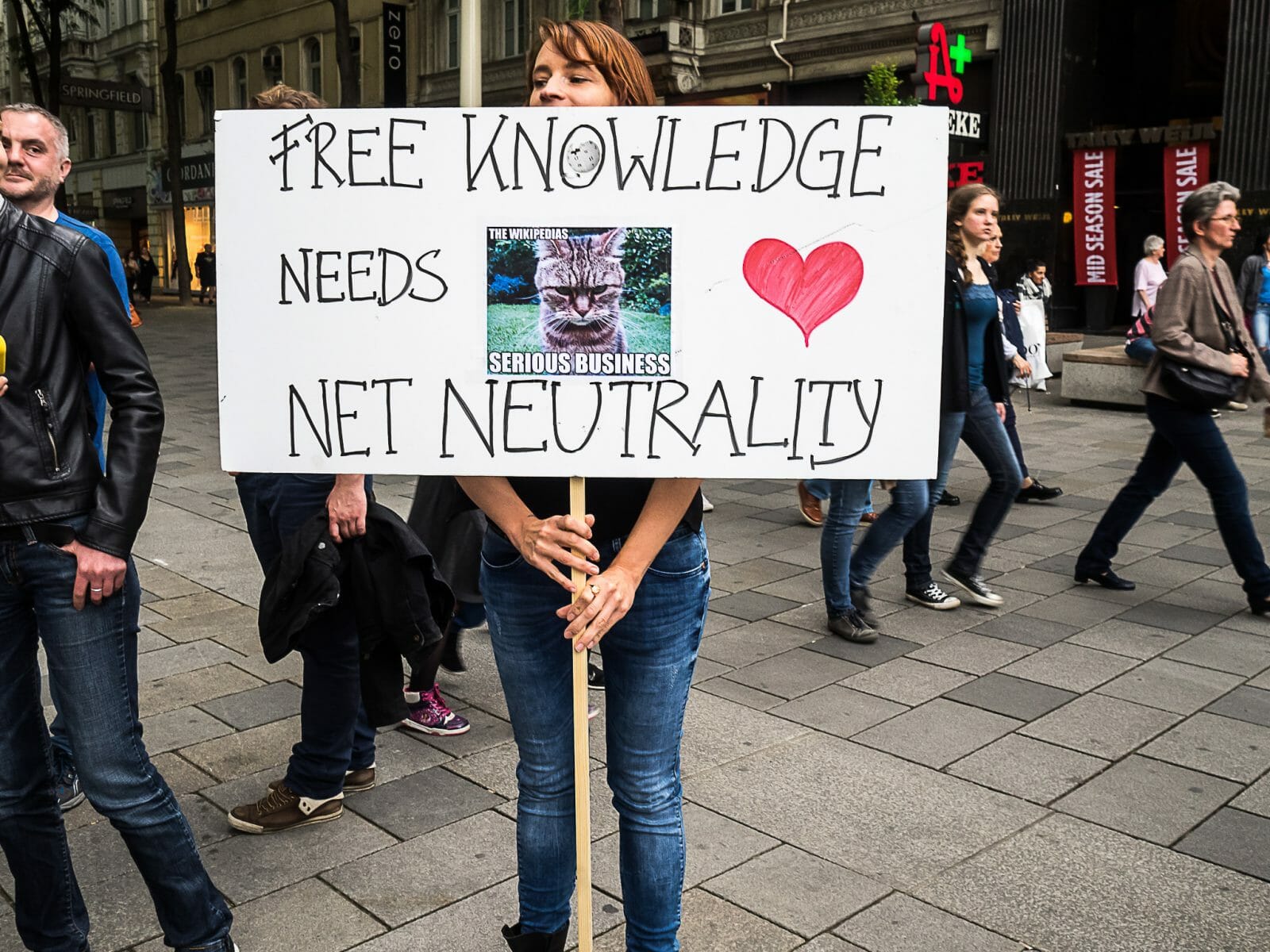
net neutrality impacts elearningA protester at a 2016 rally in support of net neutrality. Source: Arbeitskreis Vorratsdaten, Flickr.

The Federal Communications Commission (FCC) voted in December of 2017 to dismantle the net neutrality policy it established in 2015 under the Obama administration. The core of the Net Neutrality policy was to reclassify Internet Service Providers (ISPs) as “common carriers” who are providing public telecommunications services like other utilities (electricity) instead of just being “information providers.” The distinction is important. If ISPs are common carriers, then they have to treat all content the same, no matter where it’s coming from. This means they can’t decide to make it more difficult to access or stream some content (slowing it down is called “throttling”) nor can they charge different prices to different customers for the same service.

Net neutrality will officially end on April 23rd.

There are a number of reasons why this dismantling of net neutrality is a disturbing development, some of which could have direct effects on eLearning in general. Here’s how net neutrality impacts eLearning, and why many eLearning professionals are concerned:

Net Neutrality Impacts eLearning Content Access

Imagine now that ISPs can charge customers different amounts depending on the kind of content they’re accessing. Imagine they’re allowed to throttle some content. The customers trying to access that kind of content are going to be negatively impacted. Those who favor dismantling net neutrality say that won’t happen because ISPs will not do anything to alienate paying customers. The counter-argument, of course, is that not all paying customers are created equal. If net neutrality goes away, carriers will be free to cater to their most lucrative customers, possibly at the expense of others. It seems obvious that society very much depends on open, unfettered access to the Internet. Anything less than that will surely wind up putting some people at a disadvantage.

Montana Gov. Steve Bullock
Montana Governor Steve Bullock signed legislation in January that forces net neutrality in his state. Source: Flickr.

Take Montana, for example. It’s a large rural state where there are many tiny schools that simply don’t have the resources to offer a wide range of learning opportunities. But eLearning has changed that, and the state has done a fantastic job at making sure people throughout the state can get connected. Without net neutrality, will Montana’s students still have unfettered access to the content they have come to depend upon? There’s no way to answer that question at present, but if net neutrality is done away with, providers who diminish that access to some content or for some customers won’t be doing anything illegal – and that strikes many as a gamble not worth taking. Let’s face it, in a head-to-head comparison of entertainment traffic versus educational traffic, which one do you think profit-hungry ISP companies are going to focus on?

Part of the repeal of net neutrality by the FCC includes a ban on states passing their own net neutrality laws. Needless to say, several states are already taking legislative action to protect net neutrality within their borders, even though doing so is in direct defiance of the FCC. The governors of both Montana and New York have signed legislation mandating that state agencies purchase their Internet access from companies adhering to net neutrality principles. Washington has gone a step further and passed its own net neutrality law. Another bill in California is currently making its way through several state committees.

Net Neutrality Impacts eLearning via Internet Access

Besides the issue of how providers could legally mess with access to content through streaming rates and/or cost differentials between different types of content, there’s the additional problem of basic access to the Internet itself. Some have made the point that, without net neutrality, ISPs won’t have as much incentive to keep investing in the improvement of infrastructure. They will still be able to make money by just increasing prices on the wealthy customers who can pay, but there will be no incentive to serve less wealthy customers, paving the way to legal “net discrimination.”

Where Net Neutrality Goes from Here

Although the FCC’s net neutrality vote took place in December 2017, the rules couldn’t take effect until being published in the Federal Register, which didn’t happen until February 22 as The Restoring Internet Freedom Order. The rules still aren’t in full effect yet, though, as the FCC has a few other bureaucratic hoops to jump through. But now that the new rules are “on the books,” the next phase of the battle over Internet deregulation is getting underway. Net neutrality supporters are looking to file lawsuits against the FCC’s ruling and have also been seeking Congressional support for a resolution to undo the FCC’s actions and restore the previous net neutrality rules. Lawsuits have now been filed by a number of companies, including Kickstarter, Foursquare, Etsy, Shutterstock, Expa, Automattic, Vimeo and Mozilla. For the most part, these are not top-shelf tech companies, which means they’re nervous about finding themselves “throttled” out of the market if ISPs cater to their larger competitors.

How dismantling net neutrality impacts eLearning remains to be seen. Those who believe that the repeal of net neutrality creates a slippery slope down which Internet providers are likely to slide in pursuit of profits (at the expense of those who most need unobstructed access to content) are working hard to block the FCC ruling. Whether or not they will succeed is something to which eLearning professional everywhere should be paying close attention.