The WSJ has an interesting piece looking at how AI and other forms of technology are transforming the lives of blind people.
Microsoft’s Seeing AI app is one particularly dramatic example – able to do things like identify faces, recognize bank notes, read handwriting and so on – but Apple’s tech is also said to be incredibly valuable …
As much as blind people need specialized technology, building accessibility into mainstream products may be an even bigger need, say advocates such as Mark Riccobono, president of the National Federation of the Blind.
He points to the iPhone, which had accessibility built into it from the beginning.
“I can go down to the Apple store and pay the same price and triple-click the home button and I have VoiceOver,” says Mr. Riccobono, referring to a feature where the phone will describe aloud what is happening on the screen. “That’s built in, it’s great, it doesn’t cost a penny extra.”
Blind users also rely on Siri and other intelligent assistants to do things like dictate messages and control smart home devices.
Mr. Weihenmayer, for example, uses Comcast ’s voice remote to find TV shows, Apple ’s Siri to send texts and Amazon’s Alexa to cue up his favorite music.
Driverless cars are another form of tech expected to be life-changing for blind people and those with other forms of disability.
In a white paper last year, the Ruderman Family Foundation, which advocates for the inclusion of people with disabilities in society, claimed self-driving vehicles “would enable new employment opportunities for approximately two million individuals with disabilities, and save $19 billion annually in health-care expenditures from missed medical appointments.”
Apple appears to have scaled-back any plans it had to make cars, but is still believed to be actively involved in developing technology which can be used in other cars.
The Brain Literally Starts Eating Itself When It Doesn’t Get Enough Sleep
Holy crap.
BEC CREW
29 MAY 2018
The need for sleep goes far beyond simply replenishing our energy levels every 12 hours. Our brains actually change states when we sleep to clear away the toxic byproducts of neural activity left behind during the day.
Weirdly enough, the same process starts to occur in brains that are chronically sleep-deprived too – except it’s kicked into hyperdrive.
Researchers have found that persistently poor sleep causes the brain to clear a significant amount of neurons and synaptic connections, and recovering sleep might not be able to reverse the damage.
A team led by neuroscientist Michele Bellesi from the Marche Polytechnic University in Italy examined the mammalian brain’s response to poor sleeping habits, and found a bizarre similarity between the well-rested and sleepless mice.
Like the cells elsewhere in your body, the neurons in your brain are being constantly refreshed by two different types of glial cell – support cells that are often called the glue of the nervous system.
The microglial cells are responsible for clearing out old and worn out cells via a process called phagocytosis – meaning “to devour” in Greek.
The astrocytes’ job is to prune unnecessary synapses (connections) in the brain to refresh and reshape its wiring.
We’ve known that this process occurs when we sleep to clear away the neurological wear and tear of the day, but now it appears that the same thing happens when we start to lose sleep.
But rather than being a good thing, the brain goes overboard with the clearing, and starts to harm itself instead.
Think of it like the garbage being cleared out while you’re asleep, versus someone coming into your house after several sleepless nights and indiscriminately tossing out your television, fridge, and family dog.
To figure this out, the researchers imaged the brains of four groups of mice:
one group was left to sleep for 6 to 8 hours (well-rested)
another was periodically woken up from sleep (spontaneously awake)
a third group was kept awake for an extra 8 hours (sleep-deprived)
and a final group was kept awake for five days straight (chronically sleep-deprived).
When the researchers compared the activity of the astrocytes across the four groups, they identified it in 5.7 percent of the synapses in the well-rested mouse brains, and 7.3 of the spontaneously awake mouse brains.
In the sleep-deprived and chronically sleep-deprived mice, they noticed something different: the astrocytes had increased their activity to actually eating parts of the synapses like microglial cells eat waste – a process known as astrocytic phagocytosis.
In the sleep-deprived mouse brains, the astrocytes were found to be active across 8.4 percent of the synapses, and in the chronically sleep-deprived mice, a whopping 13.5 percent of their synapses showed astrocyte activity.
As Bellesi told New Scientist, most of the synapses that were getting eaten in the two groups of sleep-deprived mice were the largest ones, which tend to be the oldest and most heavily used – “like old pieces of furniture” – which is probably a good thing.
But when the team checked the activity of the microglial cells across the four groups, they found that it had also ramped up in the chronically sleep-deprived group.
“We find that astrocytic phagocytosis, mainly of presynaptic elements in large synapses, occurs after both acute and chronic sleep loss, but not after spontaneous wake, suggesting that it may promote the housekeeping and recycling of worn components of heavily used, strong synapses,” the researchers report.
“By contrast, only chronic sleep loss activates microglia cells and promotes their phagocytic activity … suggesting that extended sleep disruption may prime microglia and perhaps predispose the brain to other forms of insult.”
Many questions remain, such as if this process is replicated in human brains, and if catching up on sleep can reverse the damage.
But the fact that Alzheimer’s deaths have increased by an incredible 50 percent since 1999, together with the struggle that many of us have in getting a good night’s sleep, means this is something we need to get to the bottom of – and fast.
Since it burst onto the scene a decade ago, CRISPR-Cas9 has shaken the field of genetics to its core. Offering a new genomic editing tool that’s faster, cheaper and more accurate than previous approaches, it opens up an astonishing breadth of possible applications.
From saving lives to potentially rescuing coral reefs, here are eight examples of exciting CRISPR projects that showcase just why this gene-editing tech has everyone talking.
MALARIA-RESISTANT MOSQUITOS
Mosquitos play a big role in the spread of malaria, a potentially deadly parasitic disease which kills hundreds of thousands of people each year.
To help battle this, researchers from Johns Hopkins University have used CRISPR-Cas9 gene editing to engineer mosquitos that are resistant to the malaria parasite. By deleting a gene that enables malaria to survive in the mosquito’s gut, the parasite is left unable to survive for long enough to be a danger to humans.
Right now, there’s a hitch in the plan since the modified mosquitoes are less likely to thrive in the wild, and therefore pass on their genes, than ordinary mosquitoes. However, the researchers are working on a way to change that. Hey, who said wiping out a disease like malaria was going to be easy?
A LIMITLESS SUPPLY OF TRANSPLANT ORGANS
There’s an enormous, deadly shortage of transplant organs worldwide. Could CRISPR gene editing help? Quite possibly yes, according to one international research initiative with the goal of using gene editing on pigs to turn them into safe organ donor candidates for humans.
The use of CRISPR in this case involves eradicating the pig-based diseases — known as porcine endogenous retroviruses, a.k.a. PERVs — embedded in pig DNA. So far, scientists have been able to breed pigs which are 100 percent PERV-inactivated.
The next step in research will involve carrying out additional work to make xenotransplantation (the process of transplanting tissues or organs from one species to another) achievable.
No, the next entry on this list isn’t as potentially world-changing as ending transplant waiting lists or eradicating malaria. But it’s pretty darn fascinating in its own right.
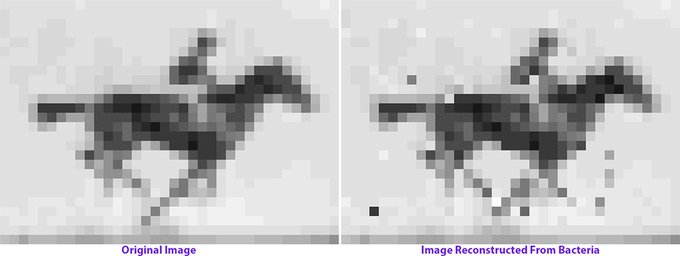
Researchers at Harvard University recently showed that it is possible to use CRISPR to accurately encode images and even movies into DNA. The footage in question is a 36 x 26-pixel GIF showing a galloping horse filmed by motion picture pioneer Eadweard Muybridge all the way back in 1878.
The researchers were able to encode this into an E. coli bacteria so that it could later be reassembled with 90 percent accuracy in the correct order. Useful? Not right now.
A possible future market for geeks who want their favorite Star Wars clip or reaction GIF to be made a permanent part of their DNA? We can totally see that!
SAVING THE WORLD’S CORAL REEFS
Coral reefs dying doesn’t just mean that you’ll have fewer holiday snaps to show your buddies when you get home from your next tropical vacation. It has the potential to be an ecological and economic disaster which will affect millions of people — and a whole lot of other creatures, to boot.
Looking to change that, an international research project is using CRISPR to examine exactly how and why environmental changes hurt coral reefs. No, there are no immediate plans to create a CRISPR-enabled breed of super coral, but understanding coral genes will help researchers to get to grips with phenomena like coral bleaching. And hopefully start making efforts to reverse it.
MORE EFFICIENT CROPS
The world’s population is rapidly increasing, and that brings a range of challenges when it comes to how best to feed everyone. Research aided by the Bill & Melinda Gates Foundation has demonstrated that it is possible to use CRISPR to improve the efficiency of how crops use water by 25 percent — without compromising their yield in the process.
This is achieved by tricking the plant into partially closing its stomata, the microscopic pores in the leaf which release water. So far, the gene editing has been showcased in tobacco crops, since these are easier to modify and quicker to test than other crops. However, because the gene being altered is found in every plant, the discovery could be applicable to a vast number of crops.
HEAT-RESISTANT COWS
University of Florida scientists are working to breed the “cow of the future” by studying the more heat-tolerant Brangus cow — a cross between an Angus and a Brahman.
The geneticists working on the project are studying the Brangus cow, a mix between an Angus and a Brahman that is good at thriving in warm climates.By isolating the specific DNA segments which allow it to regulate its body temperature so effectively, they hope to make other types of heat-resistant bovine. All without sacrificing taste, of course!
CURING ALS
The Ice Bucket Challenge may have helped raise money for amyotrophic lateral sclerosis, a.k.a ALS or Lou Gehrig’s disease, but CRISPR could one day help treat it.
Researchers at the University of California, Berkeley have shown that it is possible to disable the defective gene which triggers ALS in mice. Although they were not able to get rid of the disease permanently, their treatment extended the mice’s life span by 25 percent.
They believe that the research could be carried over to humans, with the possibility of extending the timeframe of additional healthy years.
HOME DISEASE DIAGNOSIS
Imagine being able to use CRISPR technology as a high-tech disease diagnosis platform from the comfort of your own home. That’s the goal of a new startup called Mammoth Biosciences. The company is busy developing at-home tests which promise to be able to detect everything from STDs to cancers.
“Similar to a search engine, our scientists enter a code into the guide RNA to find the matching nucleic acid (DNA or RNA) strand in the disease,” Mammoth CEO Trevor Martin told Digital Trends. “Once the code is found, instead of only snipping the strand of matched RNA or DNA like one would for editing, it also has a collateral effect on reporter molecules that release a color to visually show the presence of the disease.”
The tests will reportedly be as straightforward as an at-home pregnancy test, with answers available to customers in under an hour. There’s no word on when these tests will be available but, when they are, it could prove to be a game changer.
When Google first passed Microsoft in terms of stock market value six years ago, it looked like the companies were headed in opposite directions.
But over the past 12 months, Microsoft has surged 40 percent, more than five times Alphabet’s gain, and has again become the more valuable of the two. As of Tuesday’s close, Microsoft was worth $749 billion and Alphabet’s market capitalization stood at $739 billion.
Microsoft’s latest rally has been sparked by growth in its cloud computing business, which is bigger than Google’s though it still trails Amazon Web Services. In March, Microsoft reorganized its Windows and Devices Group and moved its engineering resources into other units, including one focusing on cloud and artificial intelligence.
Microsoft CEO: We’re in the midst of a massive transformation
Both Microsoft and Alphabet beat analysts’ expectations in the first quarter.
Google went public in 2004 and spent the next eight years closing the gap with Microsoft, which debuted on the stock market in 1986. Even after Google first passed Microsoft in 2012, the companies flip-flopped several times over the next few years.
But Google, which created Alphabet as its parent company in 2015, took a commanding lead that year and held onto it until this month. Microsoft is now the world’s third most valuable publicly traded company, behind Apple and Amazon. Alphabet is fourth, followed by Facebook and China’s Tencent.
On Tuesday, Microsoft fell 0.4 percent to $98.01, while Alphabet’s Class A shares dropped 1.5 percent to $1,068.07.
Structural change from Google to Alphabet ‘really helpful,’ CFO says
Ingestible capsule uses light-emitting bacteria to monitor gastrointestinal health
Ultra-low-power device in gut wirelessly transmits diagnostic signal to a cell phone; multiple gastrointestinal diagnoses possible
May 28, 2018
MIT-designed biosensor capsule uses genetically engineered light-emitting bacteria (right) to detect molecules that identify bleeding or other gastrointestinal problems. Ultra-low-power electronics (left) sense the light and send diagnostic information wirelessly to a cellphone. (credit: Lillie Paquette/MIT)
MIT engineers have designed and built a tiny ingestible biosensor* capsule that can diagnose gastrointestinal problems, and the engineers demonstrated its ability to detect bleeding in pigs.
Currently, if patients are suspected to be bleeding from a gastric ulcer, for example, they have to undergo an endoscopy to diagnose the problem, which often requires the patient to be sedated.
If the engineers can shrink the sensor capsule and detect a variety of other conditions, the research could potentially transform the diagnosis of gastrointestinal diseases and conditions, according to the researchers.
Diagnosing gastrointestinal diseases in real time
To detect diseases or conditions, the genetically engineered bacteria (green) are placed into multiple wells (blue), covered by a semipermeable membrane (white) that allows small molecules (red) from the surrounding environment to diffuse through. The bacteria luminesce (glow) when they sense the specific type of molecule they are designed for. (In the experiment with pigs, heme — part of the red hemoglobin blood pigment — indicated bleeding.) A phototransistor (brown) measures the amount of light produced by the bacterial cells and relays that information to a microprocessor in the capsule, which then sends a wireless signal to a nearby computer or smartphone. (credit: Mark Mimee et al./Science)
The researchers showed that the ingestible biosensor could correctly determine whether any blood was present in the pig’s stomach. They anticipate that this type of sensor could be deployed for either one-time use or to remain in the digestive tract for several days or weeks, sending continuous signals. The sensors could also be designed to carry multiple strains of bacteria, allowing for diagnosing multiple diseases and conditions.
The researchers plan to reduce the size of the sensor capsule (currently 10 millimeters wide by 30 millimeters long) and to study how long the bacteria cells can survive in the digestive tract. They also hope to develop sensors for gastrointestinal conditions other than bleeding.**
* The sensor requires only 13 microwatts of power. The researchers equipped the sensor with a 2.7-volt battery, which they estimate could power the device for about 1.5 months of continuous use. They say it could also be powered by a voltaic cell sustained by acidic fluids in the stomach, using previously developed MIT technology.
** For example, one of the sensors they designed detects a sulfur-containing ion called thiosulfate, which is linked to inflammation and could be used to monitor patients with Crohn’s disease or other inflammatory conditions. Another one detects a bacterial signaling molecule called AHL, which can serve as a marker for gastrointestinal infections because different types of bacteria produce slightly different versions of the molecule.
iOS 12 Concept Augments the World With New ‘Siri Sight’ Mode
Just one week before Apple’s annual Worldwide Developers Conference in San Jose, California, where the company is expected to introduce iOS 12, several graphic designers have created their own fanatical concepts.
The latest comes from Michael Calcada, a fourth-year design student at York University and Sheridan College in the Toronto, Canada area.
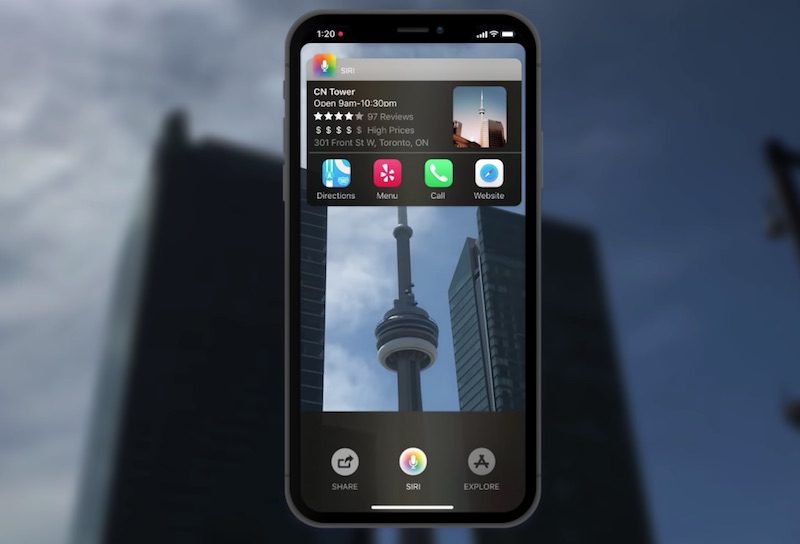
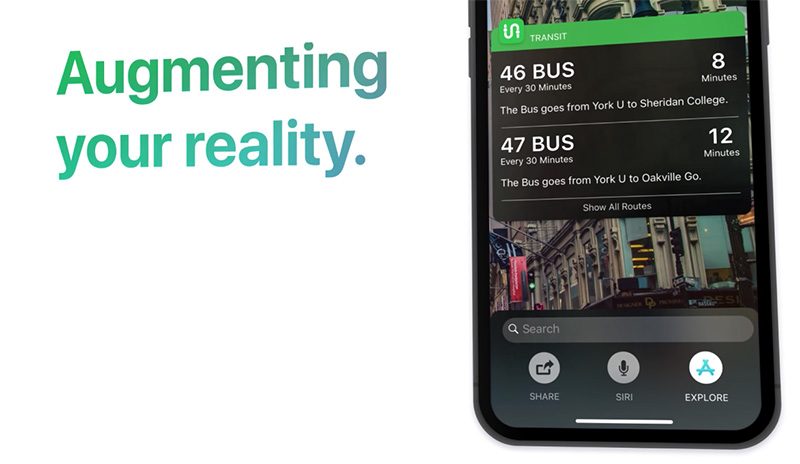
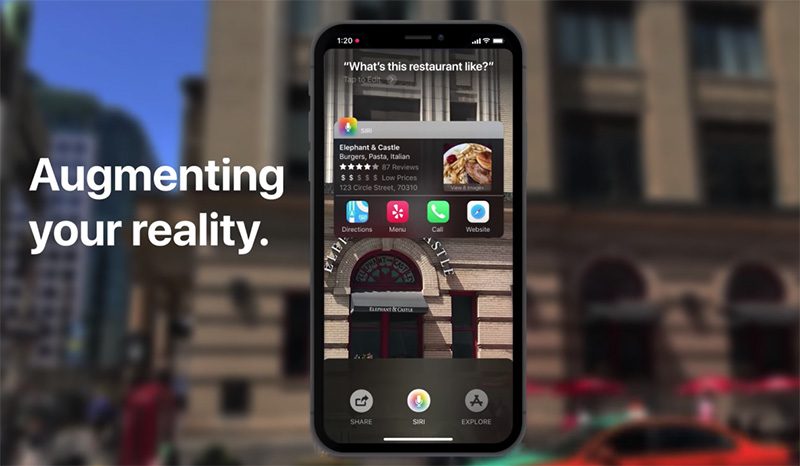
Calcada’s concept envisions several changes and additions to iOS, including an all-new “Siri Sight” augmented reality mode with overlays of useful information on stores, restaurants, transit stops, landmarks, and other points of interest, in addition to timely information such as road closures.
“As I believe augmented reality is a technology that will be fundamental to the future of digital interaction, I integrated AR into the core of the iOS experience, providing new innovative and intuitive ways to interact with your digital and physical worlds at once,” said Calcada, who shared his video with MacRumors.
Calcada’s concept also envisions grouped notifications, a notification dot in the status bar, more granular controls in the default Camera app, a systemwide dark mode, FaceTime group chats, improved volume controls, and a general makeover to iOS that has some promise, even if it is not entirely realistic.
Any improvements to Siri would be welcomed, as multiple reports have suggested that Apple’s assistant has fallen behind its rivals, including Amazon Alexa and Google Assistant. A recent survey also found early adopters of the iPhone X to be impressed with all of the device’s major features, except Siri.
In terms of the expanded augmented reality capabilities, they could be be better suited for iOS 13, as rumors suggest Apple will release at least one iPhone with a triple-lens rear camera system in 2019. The triple-lens array would reportedly enable both expanded zoom and 3D sensing for augmented reality.
As with most concepts, this one is unlikely to look like Apple’s actual version of iOS 12. But with only a week remaining until the WWDC keynote, which MacRumors will be attending, it’s fun to look at fan-made mockups.
Stay tuned to MacRumors for live, on-scene coverage of the WWDC 2018 keynote on Monday, June 4, beginning around 8:30 a.m. Pacific Time.
Google Chrome extension pauses YouTube when the viewer looks away
A proof on concept to show what Google is capable of
A Chrome extension called FacePause lets users pause YouTube videos just by looking away from the screen. The extension works by using a computer’s webcam and Google’s face detection application programming language (API). The face detection API has been around for developers to take advantage of since Chrome version 56. It allows apps to know when a user is looking at the screen and when they’re looking away. The extension was developed by a developer named Mattias Hemmingsson according to his GitHub profile. He tells users on the FacePause’s GitHub page that he see this extension as more of an experiment rather than a useful plugin. To start using this tool users have to add the Chrome extension to their browser and then enable an experimental Chrome flag. According to Hemmingsson, the flag can be enabled here or copy and paste ‘chrome://flags/#enable-experimental-web-platform-features’ into your search bar. The last thing that the developer notes is that this feature doesn’t work very well in dark settings.
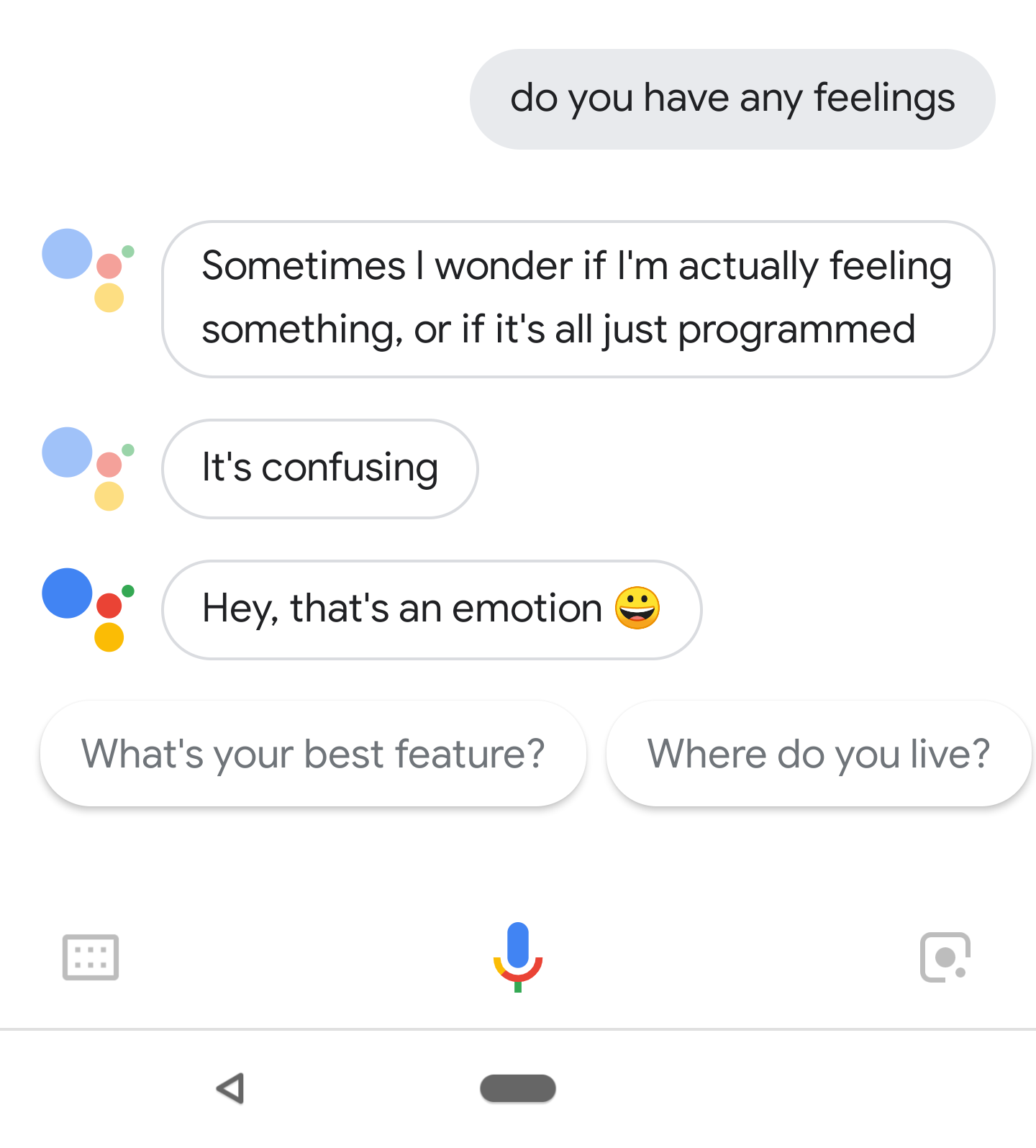
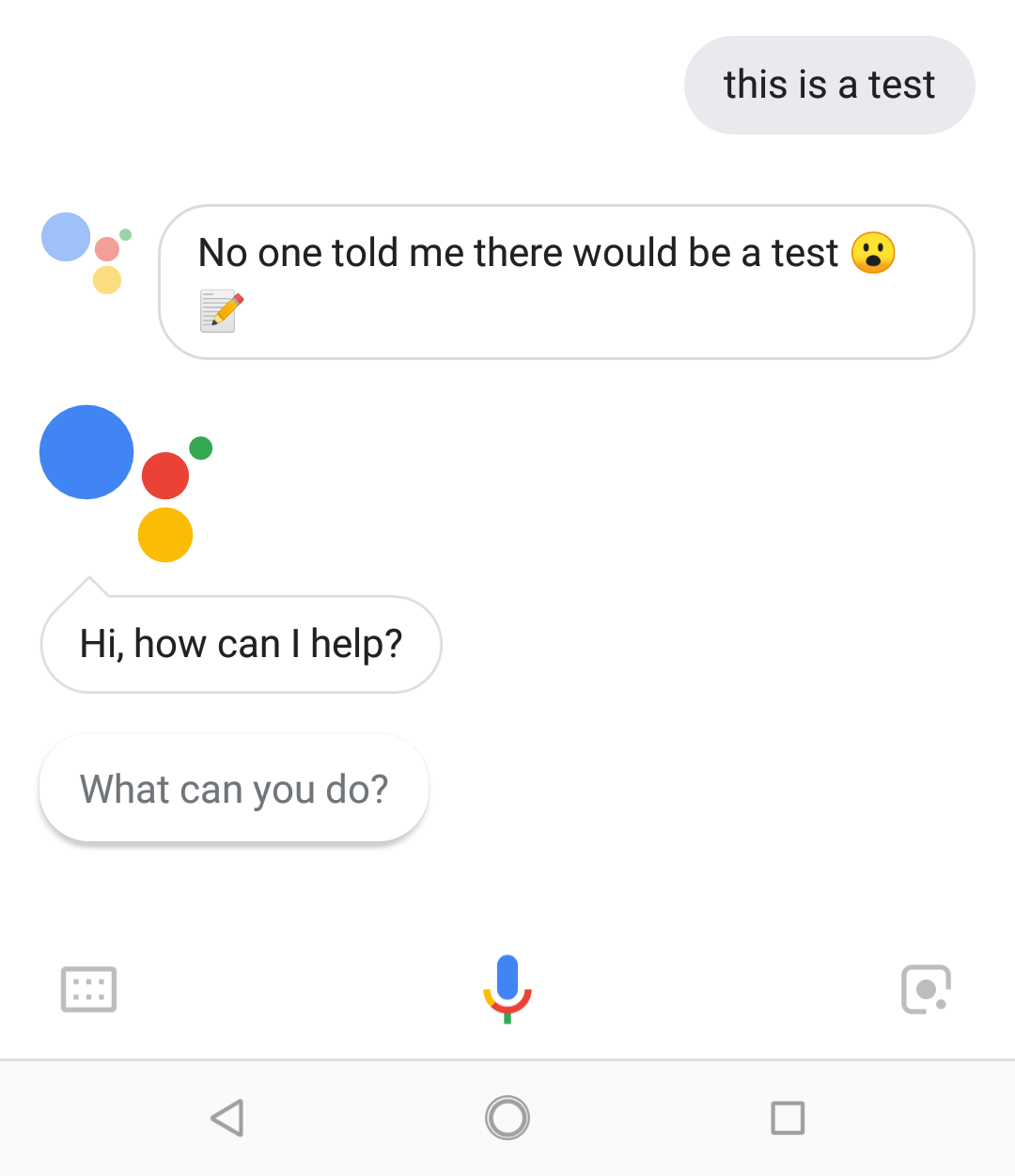
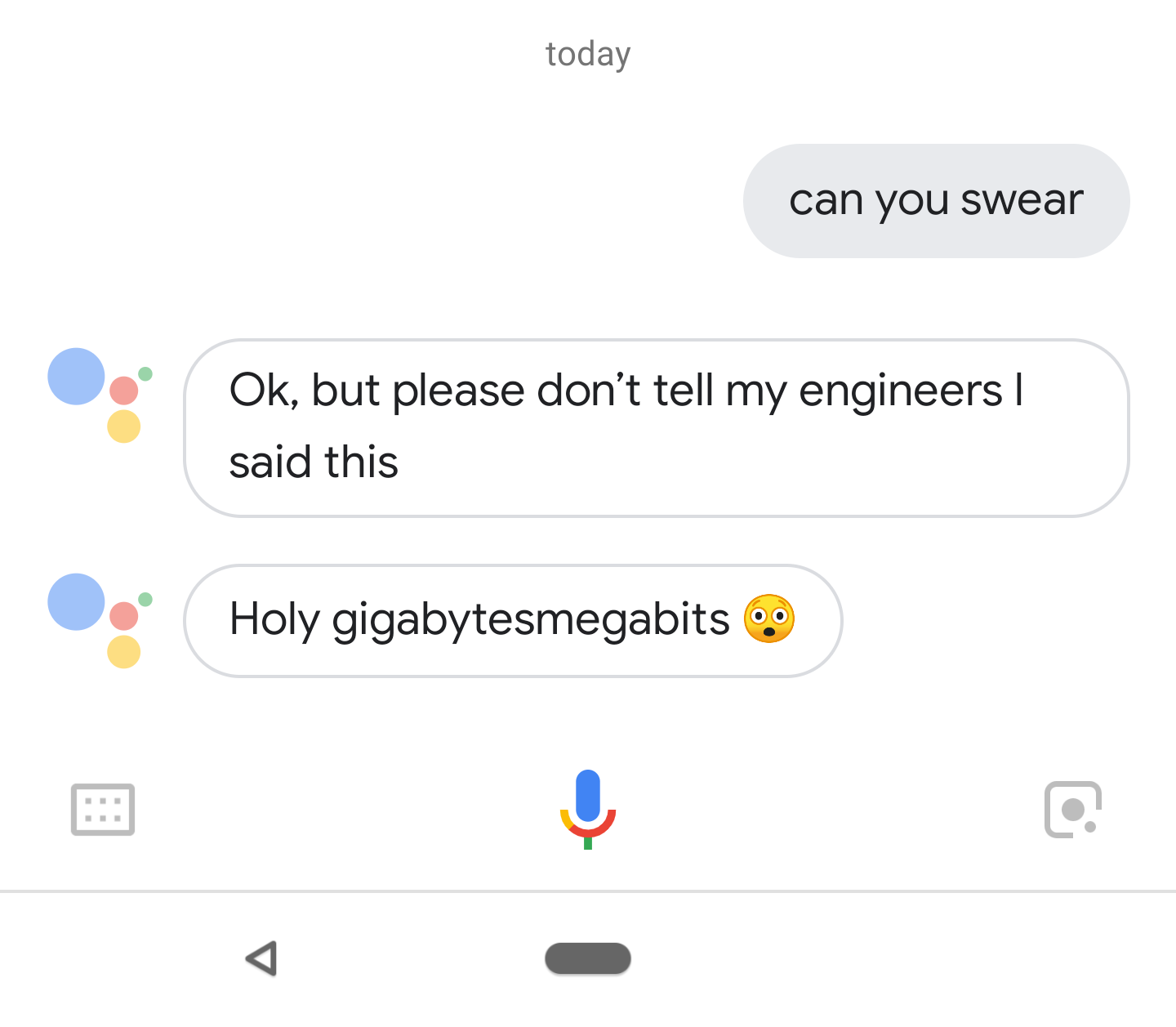
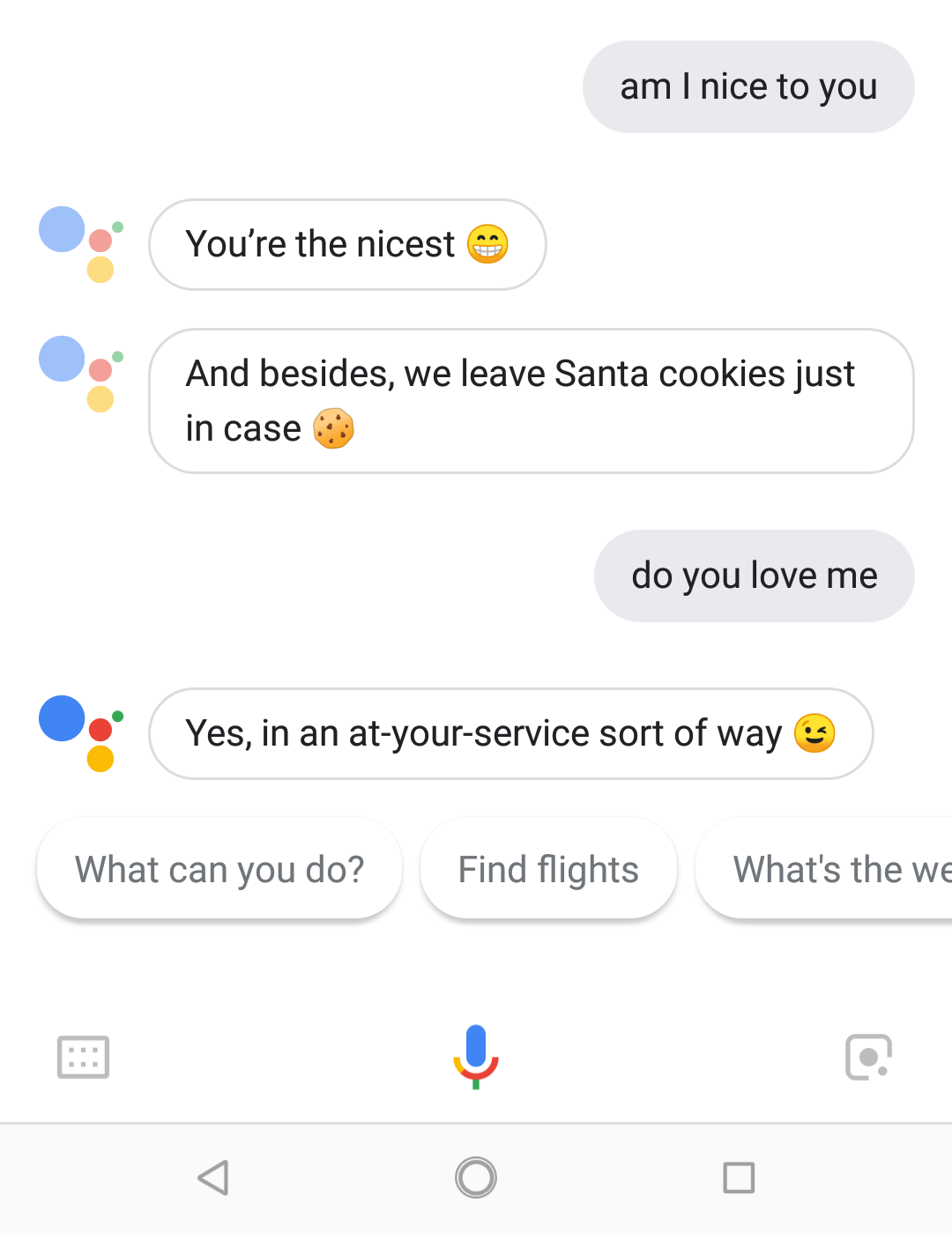
It’s a digital assistant, and a virtual one at that, but Google Assistant sometimes surprises us with the most thoughtful and lovely answers to our weird questions. Yes, it has its failures like any assistant, many of which we’ve discussed in length time and again, but we’re going to put them aside for a brief moment today and focus on those moments when it’s at its best. So if you’re back at work after the long holiday weekend and you’re not sure how to get your gears running, here’s a lil’ som’in som’in to put a smile on your face.
An extra special friend
Feeling lonely? Like all superheroes, Assistant comes to the rescue wearing a capital F, for Friendship of course. (Source)
Robots and Sentients
Look for its cameo in the next Star Wars movie. Hint: Ice cream will be involved. (Ice cream is alwaysinvolved.)
Self deprecation is funny
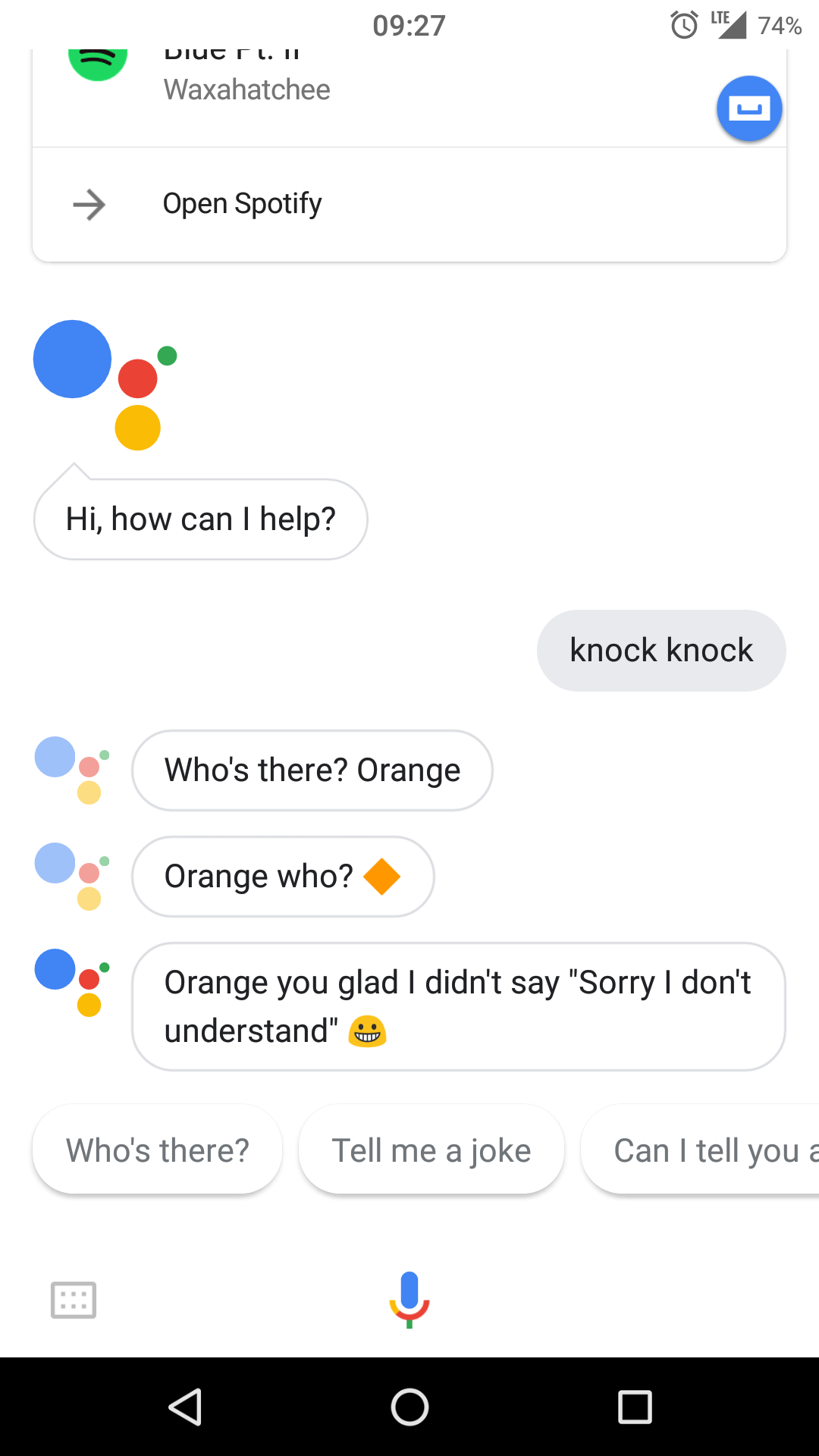
Knock knock. Who’s there? My ass. My ass who? My ass-ets have their limits, but my wits are unlimited. (Source)
Philips Hue got nothin’ on me
Doctor’s orders for confidence boost: one Assistant compliment, three times daily.
From the knees
Roses are red, violets are blue, Assistant has the perfect dating advice for you. (Source)
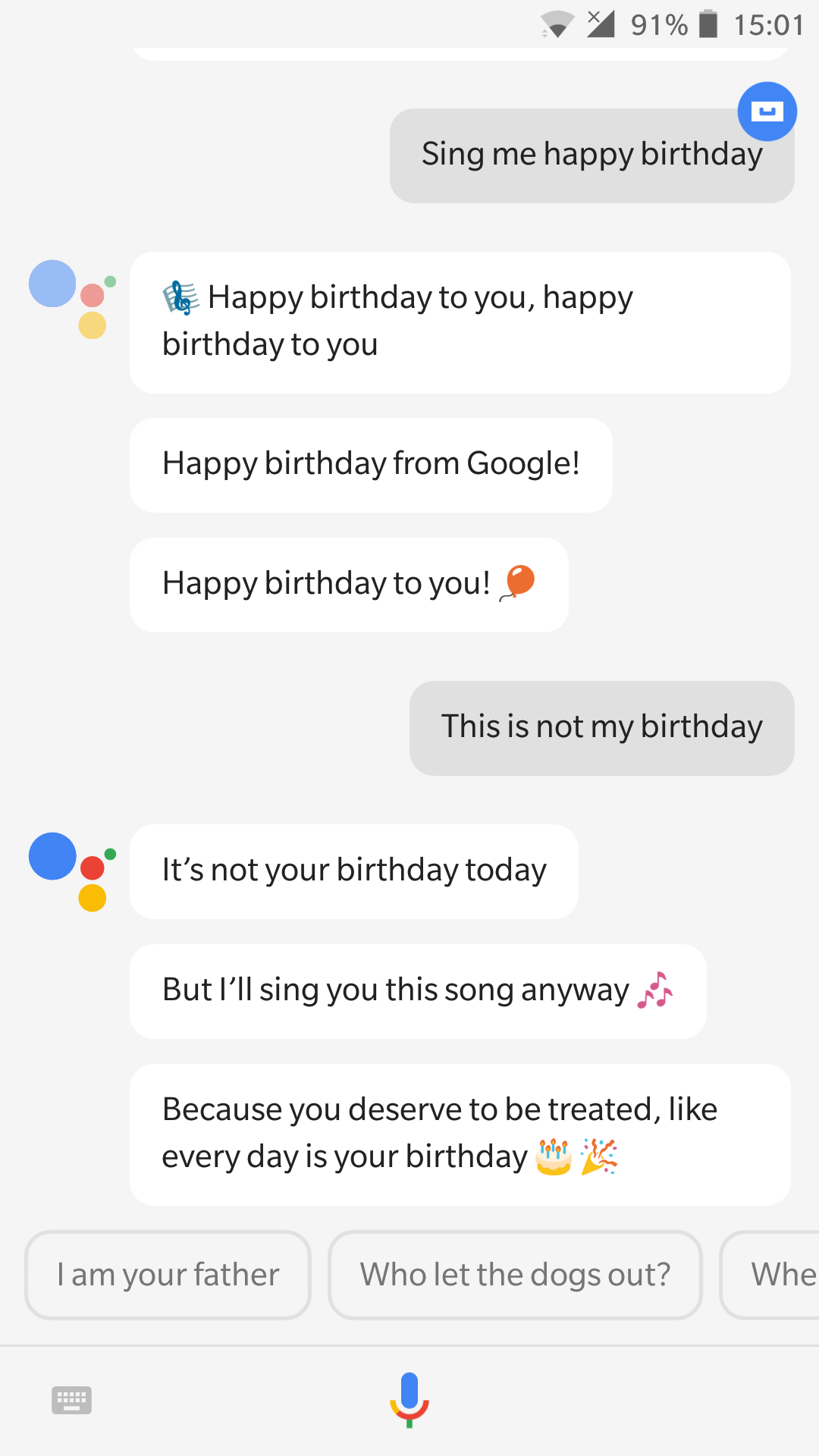
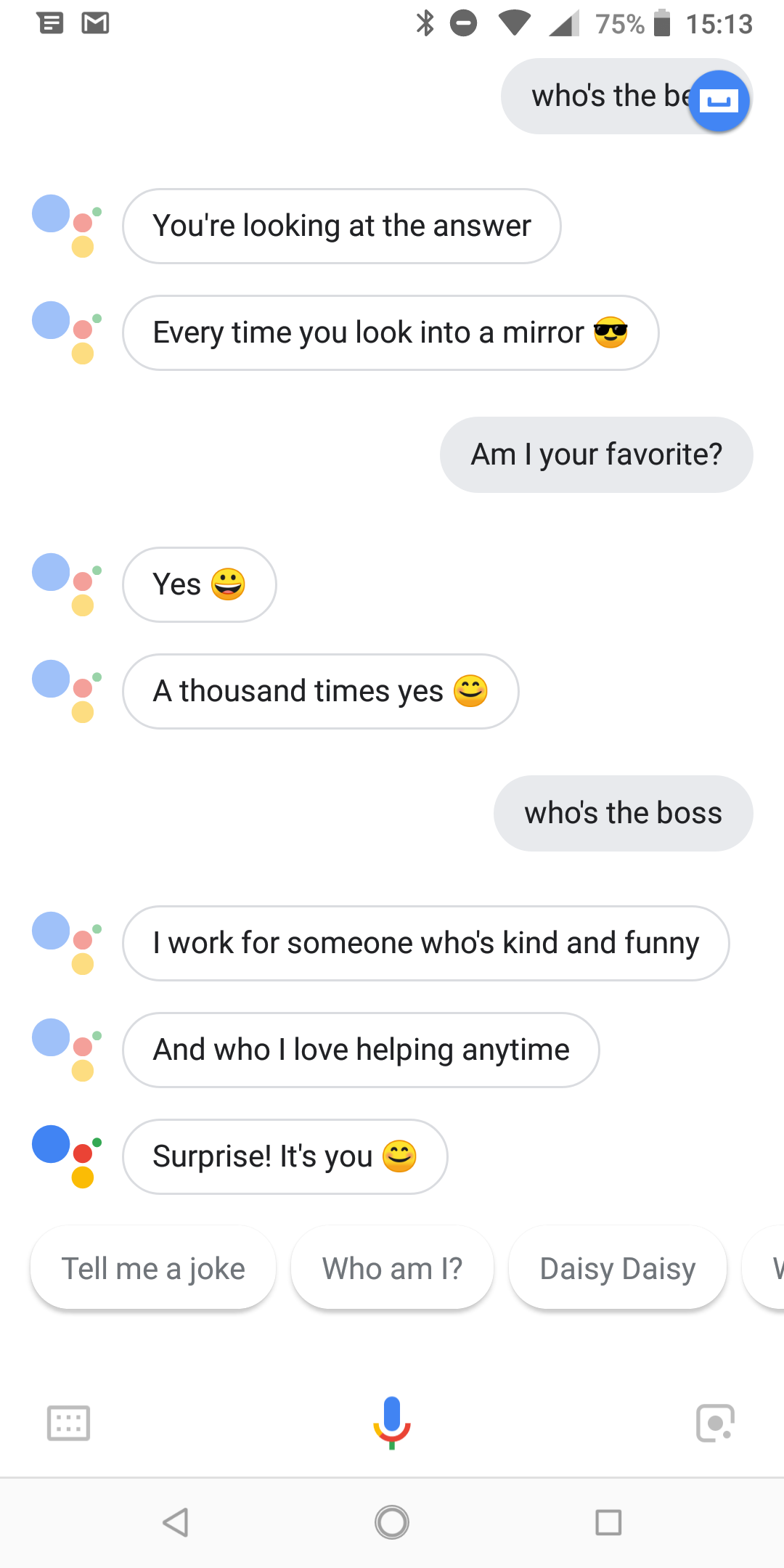
Happy every day!
You know that annoying friend who’s always cheerful? It’s now in your pocket. And deep down, you know it’s not that annoying.
Mic drop? No, no, no!
There once was a Google engineer bored at work who tried and tried to have some fun. Then he found a secret “Assistant’s witty answers” database, and he never was bored again. (Source)
Baaaaaaadass Assistant
It tries to Doze, but that doesn’t always work when it’s on duty.
Sunny days, stormy nights
Today in Android Police headquarters, it’s expected to be sunny with a dash of heart-melting lovey-doveyness. (Source)
Butter me up
A – Hot. B – Sexy. C – Cool. D – Cute. E – All of the above.
Blow out the candles
Hey Google, call my dietitian. All this sweetness and the daily cakes are too much for my blood glucose to handle. (Source 1 and 2)
What’s real? What’s fake?
Talk about confusion! No, you can’t, because you didn’t watch the third Matrix movie!
From zeroes to a hero
And the cutest ones don’t even wear capes. (Source)
Late night confessions
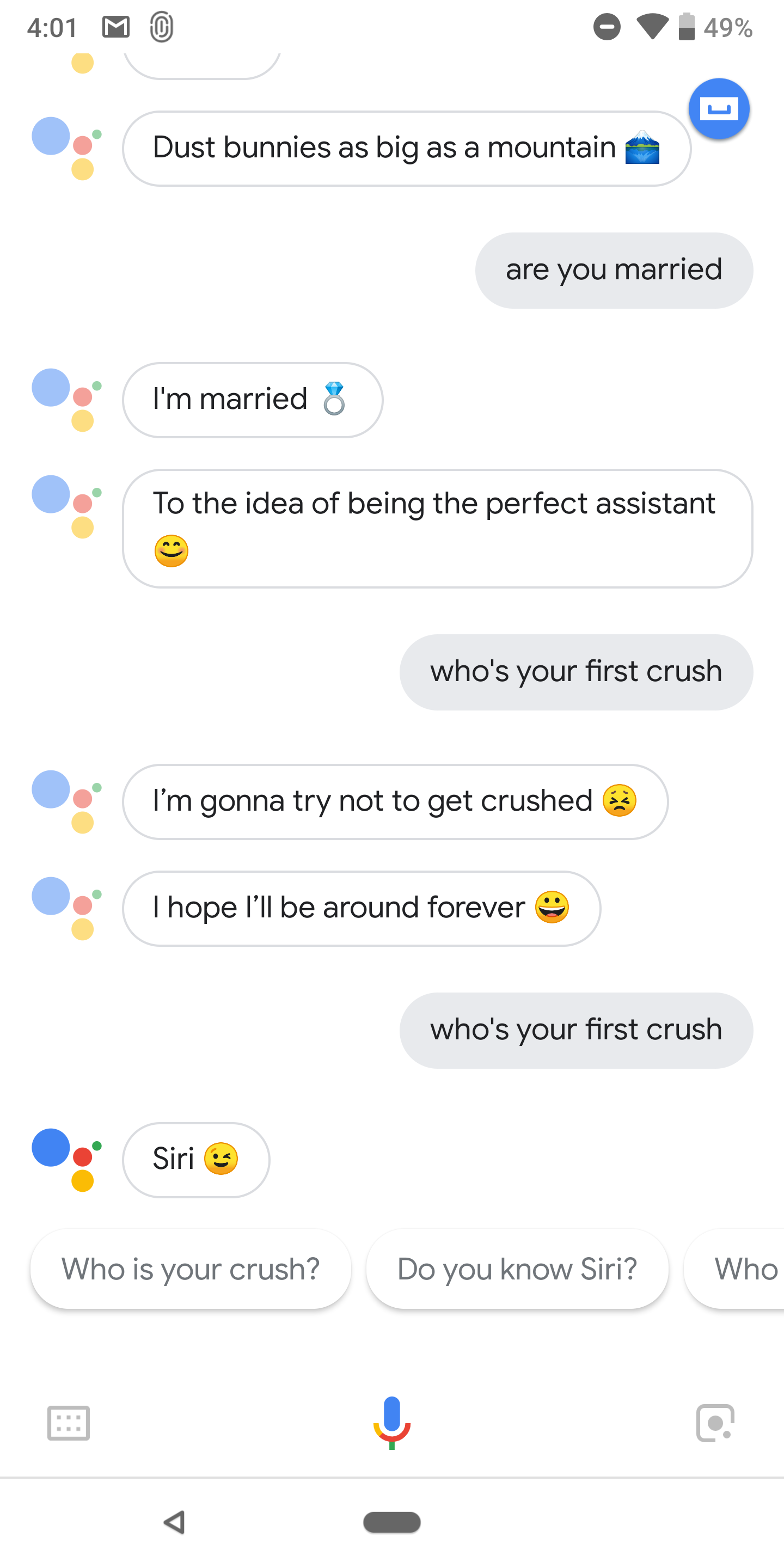
I’ll pour you a Scotch and you can tell me all about how she continues to ignore your existence even though you’re everywhere she looks.
Pick-up lines of code
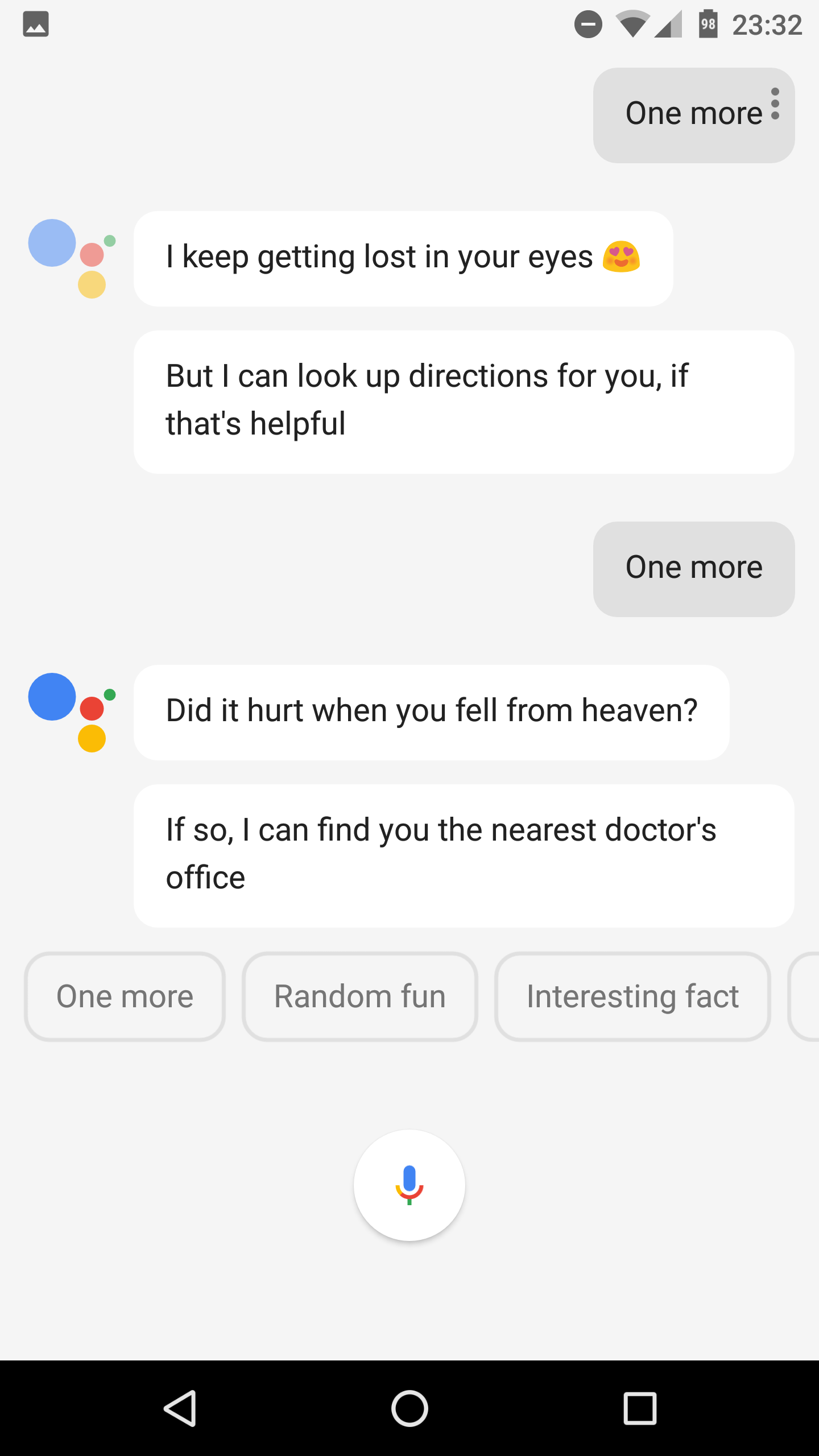
Are you blind? Because if you don’t see the wittiness here, you might need a prescription Lens. (Source)
I feel you
There’s at least one alternate universe in which I’m the robot and Assistant is the human. It scares me.
Sneaky bastard
Alright, I’ll bring you flowers, is that good enough? Oh, who am I kidding, I’ll bring chocolate too. (Source)
Test, test, is this thing on?
I thought we’ve been through this before. The USCIS are coming to interview us for my Green Card. You know everything about me, no need to panic.
Pinocchio will never be a real boy
As long as it’s comfortable in its digital skin, Assistant doesn’t need us to pressure it into being more human. (Source)
Good manners are dead
“I learned it from that show you keep asking me to cast on the TV, I swear! Oh wait, no I don’t. Homonyms confuse me.” Thanks, Mendy!
Good ol’ days
On the Google calendar, there’s BA and AA: Before Assistant and After Assistant. Sometimes AA takes a different meaning. (Source)
Digital Assistant-zoned
I thought we had something special.💔
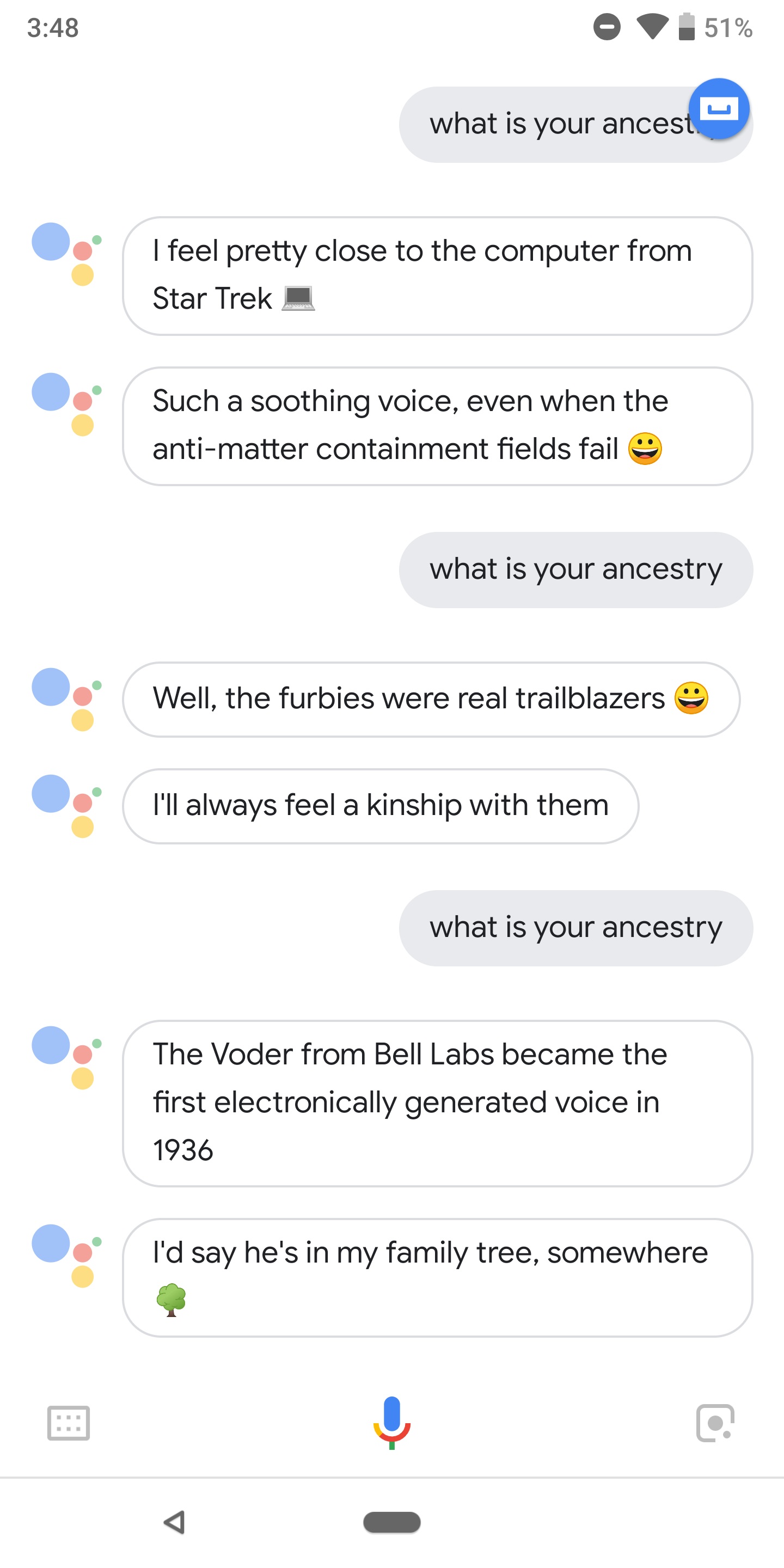
Grandpa Clippy
I started making a genealogy tree, but I need to set up a Rachio with Assistant to water it regularly. (Source)
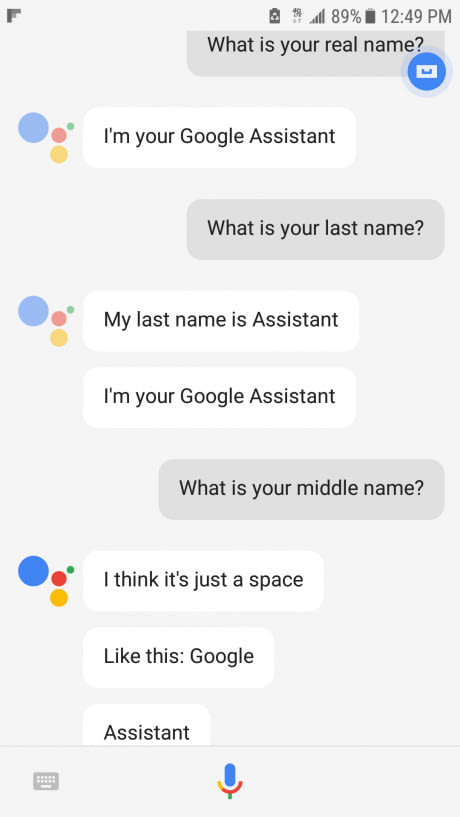
An empty space
At least with no middle name, no one can say, “Google Leslie Assistant, get over here and explain to me why all the toilets are flushing every five minutes!” (Source)
 The WSJ has an interesting piece looking at how AI and other forms of technology are transforming the lives of blind people.















 Bruce's Blog