https://electrek.co/2019/09/25/rivian-electric-pickup-truck-frunk-alexa-voice-command/

Watch Rivian open frunk of electric pickup truck through Alexa voice command

https://futurism.com/the-byte/elon-musk-ai-manipulate-social-media

ELON MUSK: “ADVANCED AI” WILL MANIPULATE SOCIAL MEDIA

DANIEL OBERHAUS VIA FLICKR/VICTOR TANGERMANN

AI Threat

Artificial intelligence could be destabilizing the internet news ecosystem. And according to billionaire Elon Musk, social media is the first to fall prey.

Elon Musk tweeted early Thursday morning that “advanced AI” will be used to “manipulate social media” — if, he opined, it hasn’t done so already. He added that “anonymous bot swarms” are “evolving rapidly.”

Bot Swarms

It’s unclear what exactly Musk was referring to when he warned about “advanced AI” and “anonymous bot swarms.” It may be related to a bombshell report by the New York Times that was published two hours prior to Musk’s tweets, detailing how at least 70 countries used social media to spread disinformation.

Musk has talked about the impending threat of AI in the past. “Vastly more risk than North Korea,” he tweeted in 2017. In a 2018 documentary called “Do You Trust This Computer?” Musk suggested that AI could become “an immortal dictator from which we could never escape.”

Great Success

Musk could also be talking about something far more mundane. “Anonymous bot swarms” could simply be referring to his countless impersonators on Twitter, as Business Insider points out — or fake bot accounts as a whole on social media.

Those swarms of fake identities can be used for great political gain, if the 2016 U.S. presidential election is anything to go by. Evidence shows that thousands of bots originating from inside Russia had great success in swaying the believes of millions of Americans.

READ MORE: Elon Musk has warned that ‘advanced AI’ could poison social media [Business Insider]

More on Musk and AI: Elon Musk: We Communicate Too Slowly for Future AI to Understand

PEER REVIEWED CONTENT FROM PARTNERS WE LOVE

  1. Social media dos and don’ts for journals, publishers, and societies
    Payman Taei, Editage Insights, 2017
  2. Can new measures of research impact replace the impact factor?
    Sneha Kulkarni, Editage Insights, 2015
  3. The STAP story so far
    Alagi Patel, Editage Insights, 2015
  1. Sexual abuse and assault
    Sheela Lahoti et al., BMJ Best Practice, 2018
  2. Eustachian tube dysfunction
    Edward D. McCoul, BMJ Best Practice, 2018
  3. Pseudospin-1 Physics of Photonic Crystals
    A. Fang et al., Research, 2019

https://medicalxpress.com/news/2019-09-cellular-aging-linked-brain.html

Cellular aging is linked to structural changes in the brain

Cellular aging is linked to structural changes in the brain
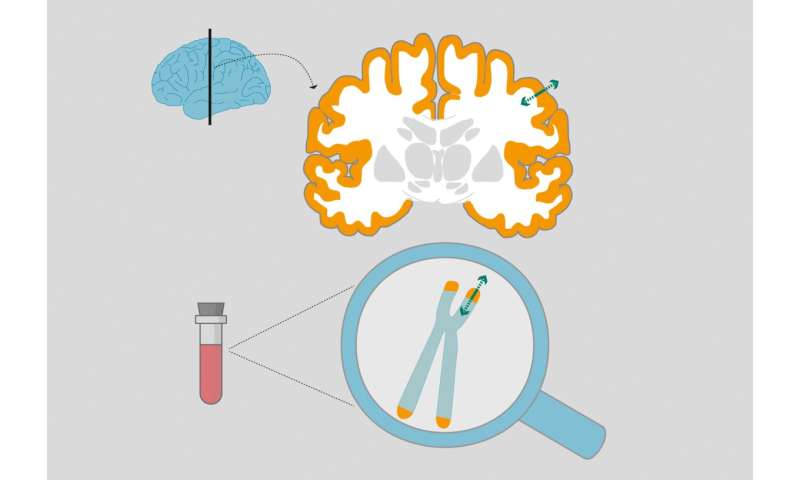
To determine the role of telomer length on brain structure scientists measured their length with the DNA of leukocytes from the blood using a polymerase chain reaction. Additionally, they calculated the thickness of the cerebral cortex with MRI scans of study participants. Credit: MPI CBS

Telomeres are the protective caps of our chromosomes and play a central role in the aging process. Shorter telomeres are associated with chronic diseases and high stress levels can contribute to their shortening. A new study now shows that if telomeres change in their length, that change is also reflected in our brain structure. This association was identified by a team of scientists including Lara Puhlmann and Pascal Vrtička from the Max Planck Institute for Cognitive Brain Sciences in Leipzig together with Elissa Epel from the University of California and Tania Singer from the Social Neuroscience Lab in Berlin as part of Singer’s ReSource Project.

Telomeres are protective caps at the ends of chromosomes that become shorter with each cell division. If they become so short that the genes they protect could be damaged, the cell stops dividing and renewing. Consequently, the cell is increasingly unable to perform its functions. This mechanism is one of the ways in which we age.

Telomere length is therefore regarded as a marker for the biological age of a person—in contrast to their chronological age. For two people of the same chronological age, the person with  has an increased risk of developing age-related diseases such as Alzheimer’s or cancer, and even a shorter life expectancy.

Telomere lengthening?

One key to staying younger longer therefore seems to be related to the question: How do we slow down, stop, or even reverse the shortening of telomeres? Genetics and unhealthy lifestyle are important contributors to  shortening, along with psychological stress. Based on this knowledge, researchers have examined how much lifestyle can influence . Recent studies suggest that telomeres can change faster than previously thought, possibly taking just one to six months of mental or physical training to elongate. The exciting premise is that telomere lengthening may represent a reversal of biological aging processes. However, it remains unclear if telomere elongation actually reflects any improvement in a person’s overall health and aging trajectory.

“To explore whether a short-term change in telomere length, after only a few months, might actually be associated with changes in a person’s biological age, we linked it to another biomarker of aging and health: ,” explains Lara Puhlmann, now a member of the Research Group “Social Stress and Family Health’ led by Veronika Engert at the Leipzig Max Planck Institute. The project had been initiated by Tania Singer as part of the ReSource Project.

Participants of the researchers’ study underwent four MRI examinations, each spaced three months apart, and provided blood samples on the same dates. Using the DNA of leukocytes from the blood, the scientists were able to determine telomere length using a polymerase chain reaction. The MRI scans were used to calculate the thickness of the cerebral cortex of each participant. This outer layer of gray matter becomes thinner with age. It is also known that some neurological and age-related diseases are associated with faster cortical thinning in certain brain regions.

Fast changes in biological aging

The result: “Across systems, our biological aging appears to change more quickly than we thought. Indices of aging can vary together significantly in just three months,” says Puhlmann. If the telomeres changed in length, this was associated with structural changes in the brain. In a period when participants’ telomeres lengthened during the study, it was also more likely that their cortex had thickened at the same time. On the other hand, telomere shortening was associated with reductions of gray matter. This association occurred specifically in a brain region called the precuneus, which is a central metabolic and connectional hub.

The above results suggest that even short-term changes in telomere length over just three months might reflect general fluctuations in the body’s health- and aging status. Many other questions, however, remain open. “We do not know, for example, which biological mechanism underlies the short-term changes in telomere length,” explains the scientist, “or whether the short-term changes really have a longer-term effect on health.”

Mental training

At the same time, the team of researchers investigated whether telomere length could be altered by nine months of mindfulness- and empathy-based mental training, and whether such systematic change in telomere length would also be reflected in cortical thickening or thinning. Previous data from the ReSource Project, which was supported by the European Research Council (ERC), had already shown that certain regions of the cortex can be thickened by training, depending on the respective mental training contents of three distinct modules, each lasting for three months. The physiological stress response could also be reduced by mental training with social aspects.

In contrast to their earlier work and previous findings from other groups, the team did not find any training effects on telomeres. Future studies will need to continue to address the question of which measures or behaviors most effectively stop or even reverse telomere shortening, and the biological aging process.


Explore further

Size does matter when it comes to telomeres


More information: Lara M. C. Puhlmann et al. Association of Short-term Change in Leukocyte Telomere Length With Cortical Thickness and Outcomes of Mental Training Among Healthy Adults, JAMA Network Open (2019). DOI: 10.1001/jamanetworkopen.2019.9687

Journal information: JAMA Network Open
Provided by Max Planck Society

https://phys.org/news/2019-09-laser-compels-iron-compound-power.html

Laser light compels iron compound to conduct power without resistance

Laser light compels iron compound to conduct power without resistance
Visualizations of electron energies as the experiment ran. Credit: Suzuki et al.

For the first time researchers successfully used laser pulses to excite an iron-based compound into a superconducting state. This means it conducted electricity without resistance. The iron compound is a known superconductor at ultralow temperatures, but this method enables superconduction at higher temperatures. It is hoped this kind of research could greatly improve power efficiency in electrical equipment and electronic devices.

“Put simply, we demonstrated that under the right conditions, light can induce a state of superconductivity in an iron compound. So it has no resistance to an electric current,” explained Project Researcher Takeshi Suzuki from the Institute for Solid State Physics at the University of Tokyo. “In the past it may even have been called alchemy, but in reality we understand the physical processes that instantly changed a normal metal into a superconductor. These are exciting times for physics.”

Superconduction is a hot topic in solid state physics, or rather a very, very cold one. As Suzuki explained, superconduction is when a material, frequently an electrical conductor, carries an  but does not add to the resistance of the circuit. If this can be realized, it would mean devices and infrastructure based on such principles could be extremely power efficient. In other words, it could one day save you money on your electricity bill—imagine that.

However, at present there is a catch as to why you don’t already see superconductor-based televisions and vacuum cleaners in the stores. Materials such as iron selenide (FeSe) the researchers investigated only superconduct when they are far below the freezing point of water. In fact, at ambient-pressure FeSe usually superconducts at around 10 degrees above absolute zero, or around minus 263 degrees Celsius, scarcely warmer than the cold, dark depths of space.

Laser light compels iron compound to conduct power without resistance
Visualisations of photoemission spectra as the experiment ran. Credit: Suzuki et al.

There is a way to coax FeSe into superconduction at slightly less forbidding temperatures of up to around minus 223 degrees Celsius, but this requires enormous pressures to be applied to the sample, around six gigapascals or 59,000 times standard atmosphere at sea level. That would prove impractical for the implementation of superconduction into useful devices. This then presents a challenge to physicists, albeit one that serves to motivate them as they strive to one day be the first to present a room-temperature superconductor to the world.

“Every material in our daily lives has its own character. Foam is soft, rubber is flexible, glass is transparent and a superconductor has a unique trait that current can flow smoothly with no resistance. This is a character we would all like to meet,” said graduate student Mari Watanabe, also from the Institute for Solid State Physics. “With a high-energy, ultrafast laser, we successfully observed an emergent photo-excited phenomenon—superconduction—at the warmer temperature of minus 258 degrees Celsius, which would ordinarily require high pressures or other impractical compromises.”

This research is the latest in a long line of steps from the discovery of superconduction to the long-awaited day when a room-temperature superconductor may become possible. And as with many emerging fields of study within physics, there may be applications that have not yet been envisaged. One possible use of this idea of photo-excitation is to achieve high-speed switching components for computation which would also produce little heat, thus maximize efficiency.

“Next, we will search for more favorable conditions for light-induced superconductivity by using a different kind of light, and eventually achieve room-temperature superconductivity,” concluded Suzuki. “Superconductivity can dramatically reduce waste heat and energy if it can be used in everyday life at room temperature. We are keen to study superconductivity in order to solve the energy problem, which is one of the most serious problems in the world right now.”


Explore further

Scientists break record for highest-temperature superconductor


More information: Takeshi Suzuki et al. Photoinduced possible superconducting state with long-lived disproportionate band filling in FeSe, Communications Physics (2019). DOI: 10.1038/s42005-019-0219-4

Journal information: Communications Physics
Provided by University of Tokyo

https://www.teslarati.com/tesla-model-y-secrets-manufacturing-ambitions/

The Model Y is an understated Trojan Horse for Tesla’s manufacturing ambitions


The launch of the Tesla Model Y is, in several ways, an understated and undramatic event. There were no surprise vehicles at the end of the crossover’s presentation, nor were there any announcements about the number of pre-orders the electric car maker received for the seven-seater. Tesla has been pretty quiet about the Model Y since, too, as updates on the crossover have mostly come through insider reports and patent applications from the company.

It is through these patent applications that one could see the potential of the Model Y to revolutionize Tesla’s overall manufacturing operations. A look at two patents that are tailor-fit for the Model Y, for example, suggests that Tesla will be adopting a far more innovative production process for the vehicle compared to its past electric cars, including the mass-market Model 3 sedan, a vehicle that is essentially carrying Tesla into its current transition into a mainstream car manufacturer. With this in mind, the Model Y could even be described as a Trojan Horse of sorts, carrying the electric car maker’s innovations (mostly) under the radar.

A patent for Tesla’s rigid wiring system. (Credit: US Patent Office)

One of these innovations is a rigid wiring system that will allow Tesla to drastically reduce the wiring of the Model Y compared to its older stablemates. Using the company’s design outlined in its patent, Tesla is expected to use only around 100 meters of wiring for the Model Y, far less than the 1.5 km of cabling used in the Model 3. Such a design also aids the company’s automation initiatives, as the rigid wiring harness will be easier to install by the company’s robots.

Another, even more notable innovation lies in a patent for a “Multi-Directional Unibody Casting Machine for a Vehicle Frame and Associated Methods” that seems to have been teased by company executives in the past. Elon Musk has mentioned that the company’s new casting machine will have the capability to cast pretty much the entire body of a vehicle in one piece, essentially eliminating the need for numerous welds across the body. “When we get the big casting machine, it’ll go from 70 parts to 1 with a significant reduction in capital expenditure on all the robots to put those parts together,” Musk said.

A patent for Tesla’s giant casting machine. (Credit: US Patent Office)

These new innovations outlined in Tesla’s patent applications hint at the Model Y being the company’s first vehicle to adopt such designs in its wiring and casting. This is great news for the company’s upcoming vehicles like the Tesla Pickup Truck, the Semi, and the next-generation Roadster, all of which will likely benefit from these optimizations. More importantly, this is also great news for the Model 3.

Tesla’s struggles with the Model 3 ramp in the United States have been well-documented, as the company had to abandon a widely-automated approach to producing the vehicle to one that was more balanced between humans and machines. With the Model Y, Tesla could essentially start anew and experiment with more ambitious and manufacturing models once more. Fortunately for the Model 3, the vehicle shares about 75% of its parts with the Model Y, which means that production improvements that work for the crossover would likely be applicable for the midsize sedan as well.

The Tesla Model Y’s manufacturing revolution might begin sooner than expected, especially with the start of production at the company’s Gigafactory 3 site in Shanghai. Gigafactory 3 is designed to produce affordable versions of the Model 3 and Model Y for the Chinese market, suggesting that the facility will be optimized for speed and volume. It would then be interesting to see how Tesla produces the Model 3 (and later, the Model Y) on the site, as it could provide a glimpse at how much the company has improved based on lessons learned from the electric sedan’s ramp in the United States.

H/T Long Term Tips.

https://business.financialpost.com/news/retail-marketing/mcdonalds-has-finally-cooked-up-a-beyond-meat-burger-and-ontario-is-its-global-testing-ground

McDonald’s has finally cooked up a Beyond Meat burger — and Ontario is its global testing ground

But the new PLT sandwich will only be available in select locations — for now

McDonald’s Inc. is preparing to launch a Beyond Meat sandwich and it will conduct its first global test of the landmark offering in a patch of cities and towns in Southwestern Ontario.

The announcement, expected Thursday morning, ends months of speculation as to when the iconic fast-food giant would join the plant-based bandwagon.

McDonald’s is calling the product a PLT — plant, lettuce and tomato — a play on the BLT (bacon, lettuce and tomato sandwich) although the PLT will also include two pickles, slivered onions, cheese, mustard, ketchup, “mayo-style sauce” and the same bun used for Quarter Pounder burgers. It will cost a little more than a Quarter Pounder at $6.49 plus tax.

The burger will be available for 12 weeks, in 28 stores in and around London, Ont., s

Plans for the launch have been shrouded in secrecy.

During a preview presentation for the Financial Post at McDonald’s Canadian office in Toronto earlier this month, the test kitchen — which operates as a functioning McDonald’s restaurant for the 363 staff at the Canadian office — was closed while Jeff Anderson, a senior manager in culinary innovation known around the Toronto headquarters as Chef Jeff, prepared PLTs.

Many employees at the office still didn’t know about the new product, and the few who did were worried about leaks.

“It’s a pretty tight group,” said Michaela Charette, head of consumer insights for McDonald’s Canada.

A diagram of the PLT, taped up in the test kitchen, was labeled “Project Dune Ops Test” but was later removed by a staff member.

McDonald’s officials would not explain the code name.

The sandwich was developed at McDonald’s global headquarters in Chicago, with the Canadian operation only responsible for the rolling out the test in the London, Ont., region.

Head office picked Southwestern Ontario because it more or less looks like a North American every town — or in the parlance of one McDonald’s spokesman, because it has “geographic and representative spreads that we can take and measure against other demographics.”

Charette added that other draws were the Canadian market’s diversity, and its familiarity with plant-based products.

Jeff Anderson, culinary innovation senior manager at McDonald’s Canada shows the new PLT veggie burger at the companies head offices in Toronto. Peter J Thompson

More than a year ago, A&W Canada stirred up interest in plant-based products after the launch of its own Beyond Meat sandwich — a major milestone for Beyond Meat, which until that point had yet to launch with a large fast-food chain. Since then, Beyond Meat has vaulted the meat substitute industry into the global spotlight, with its explosive stock market debut and a series of product launches with major chains.

McDonald’s wouldn’t say how long it’s been working on developing the patty with the Los Angeles-based company. In recent months, the absence of a plant-based option on the McDonald’s menu was starting to raise eyebrows, since a slew of competing fast-food chains — A&W, Burger King, even Tim Hortons — had experimented with versions of their own.

“I guess I’m curious,” JP Morgan analyst Ken Goldman said on a call with Beyond Meat’s executives following the company’s quarterly report in July.

“Does it surprise you at this point — with so much evidence that consumers are willing to pay for this … that at least one of those huge (quick-service restaurants) is still on the sideline?”

Beyond Meat’s chief financial officer, Mark Nelson, stuck up for the unnamed fast-food giant.

t

https://www.theguardian.com/technology/2019/sep/26/amazon-launches-alexa-smart-ring-smart-glasses-and-earbuds

Amazon launches Alexa smart ring, smart glasses and earbuds

Echo Frames, Loop and Buds launched along with series of updates to previous products

Amazon’s Echo Frames
 Amazon’s Echo Frames are equipped with directional speakers and microphones for Alexa. Photograph: Jeffrey Dastin/Reuters

Amazon wants its Alexa voice assistant to leave the home and be with you everywhere you go, and is turning to wearable technology to achieve this.

Unveiled at an event in Seattle on Wednesday, Amazon’s new Echo Frames smart glasses, Echo Loop ring and Echo Buds aim to put Alexa on your face, your hand or in your ears.

The $179.99 (£146) Echo Frames are equipped with directional speakers similar to the Bose Frames smart glasses, and have microphones for Alexa, which connects to a phone to read out emails, text messages and other information. The smart glasses do not have a display or camera – seeking to avoid the stigma associated with Google’s Glass – but can be equipped with prescription lenses.

The Echo Loop smart ring vibrates when you get a message
Pinterest
 The Echo Loop smart ring vibrates when you get a message. Photograph: Glenn Chapman/AFP/Getty Images

The $129.99 Echo Loop is a smart ring that vibrates to alert users of notifications, while built-in microphones and a speaker can be used to interact with Alexa – an experience attendees in Seattle described as being akin to “whispering a secret to Alexa”.

The Loop and Frames will have a limited release in a trial from its skunkworks hardware development division. But the Echo Buds, competitors to Apple’s AirPods, will get a wide release costing £119.99 in the UK and $129.99 in the US.

They feature a true wireless design, Bose active noise reduction technology and, of course, integrated Alexa functionality similar to that provided by Siri with second-generation AirPods.

Amazon's Echo Buds
Pinterest
 The Echo Buds launch Amazon into the ultra-competitive field of true wireless earbuds. Photograph: Amazon/PA

Geoff Blaber, the vice-president of research for the Americas at market analysts CCS Insight, said: “Amazon is doing what it does best. Entering new categories with new features and disrupting aggressively on price.

“With Echo Frames and Echo Loop Amazon is offering consumers the opportunity to help it experiment in new areas. The more Alexa usage grows, the lower hardware pricing becomes. This should be a significant concern for Amazon’s competitors.”

Amazon also launched a deluge of other Alexa-powered devices, including a smart oven, an updated Echo Dot (£59.99) with an integrated clock, an improved standard Echo (£89.99), the smaller and cheaper Echo Flex (£24.99) that plugs straight into the wall, a premium sound Sonos One competitor called the Echo Studio (£189.99), an 8in Echo Show 8 (£119.99) smart display and the Echo Glow smart lamp for kids. It also launched a pet tracker called Fetch powered by its new long-range, low-power networking technology called Sidewalk.

The best-selling Echo Dot gains an LED display for the time
Pinterest
 The best-selling Echo Dot gains an LED display for the time, timers and other limited information, aimed at replacing the alarm clock. Photograph: Amazon/PA

Amazon’s Ring also launched a cheaper indoor security camera and its Eero division launched a line of mesh wifi systems that integrate with Alexa and aim to undercut the competition on price.

Looking to assuage privacy fears as Alexa ventures out of the home and into every part of customers’ lives, Amazon also announced some changes to the way it handles voice data, including the ability to automatically delete voice recordings every three or 18 months.

Amazon also said it has improved the software responsible for listening out for the wake word “Alexa”, increasing accuracy by 50% in the last 12 months and reducing false activations as a result. Errant activations and the potential for them to end up recording private conversations have been a focus of privacy concerns.

Amazon’s head of devices, Dave Limp, said the company was committed to privacy, making it “foundational” to every device, arguing a service “can’t be private unless you give [customers] this control” over use of their data and recordings.

The firm also launched its first celebrity voice for Alexa: actor Samuel L Jackson, which will cost $4.99 and be available in a “clean” version for those who do not want to hear Jackson curse. Amazon said other celebrity voices would be added next year.


https://www.insidehighered.com/news/2019/09/06/expansion-chatbots-higher-ed?utm_source=Inside+Higher+Ed&utm_campaign=a36c636dbe-DNU_2019_COPY_01&utm_medium=email&utm_term=0_1fcbc04421-a36c636dbe-199681393&mc_cid=a36c636dbe&mc_eid=e572da52ee

Chatting with Chatbots

Chatbots have started to infiltrate every corner of higher ed — from admissions to student affairs, career services and even test prep. Is that a good thing?

September 6, 2019
WWW.ISTOCKPHOTO.COM/ANYABERKUT

More and more colleges are deploying virtual assistants or chatbots to communicate with students on all aspects of college life, creating a virtual “one-stop-shop” for student queries.

Colleges initially were deploying this technology only in specific areas, such as financial aid, IT services or the library. Now institutions are looking to deploy chatbots with much broader capability. For the companies that make this computer software that conducts text or voice-based conversations, this changing usage on campus marks a significant shift.

This expansion happened naturally, said Mark McNasby, CEO and co-founder of chatbot company Ivy.ai. He noted that around 35 percent to 40 percent of the questions students ask a departmental chatbot are actually the domain of another department.

A student talking to an admissions bot might, for example, want to know about the career outcomes of a particular program. Rather than directing that student to a separate career services bot, institutions want integrated services where students “can ask any question, no matter the entry point,” McNasby said.

“Initially we were selling bots to one department, then three, then seven or eight departments. In the last three months, we’ve designed more bots for the whole institution,” McNasby said.

Institutional level bots may be on the rise, but many individual departments still want the option of designing a custom-user interface, according to McNasby. Not only does the appearance of a specialized bot indicate to students that the bot can answer specific questions, it also allows administrators to filter out and review which questions are directed to their department.

Ivy.ai started out as a tool for the careers office, then moved into adjacent areas such as academic advising, said McNasby. Colleges have requested bots for administrative functions such as HR and purchasing. And Ivy.ai is exploring new communication channels, including texts, Facebook messenger and email.

McNasby said there are few places in the university ecosystem where chatbots can’t be deployed, including for providing counseling services for students who may be dealing with serious mental health issues.

“We have 10 to 15 counseling bots,” he said, adding that providing such services requires a delicate touch — students are quickly referred to trained staff when they need help.

“We need to be mindful that when someone is in crisis, they need to speak to a live human or reach emergency services. Often we err on the conservative side.”

Andrew Magliozzi, CEO of chatbot company AdmitHub, has seen a similar expansion. AdmitHub, as the name suggests, started with a focus on admissions, but now touches all stages of the student’s college-going experience from the first expression of interest in an institution to enrollment, retention and even alumni relations. AdmitHub’s chatbots cover 6,500 discrete topics, but students can still ask unexpected questions.

“The goal is not perfection,” he said. If the chatbot can’t help, it will direct the student to someone who can.

AdmitHub primarily communicates with students through text messages rather than a web interface. “Texting is the easiest way to reach students,” said Magliozzi. It also enables the university to proactively reach a student and remind them of deadlines to register for class, for instance.

“Students know that they aren’t texting with a person, and that gives them the freedom to ask whatever is on their mind,” said Magliozzi. “They might feel embarrassed to ask an admissions advisor whether there’s a Chipotle on campus or whether they can bring a dog to their dorm.”

Both McNasby and Magliozzi agree that personalization will drive the next generation of chatbots. Not only will chatbots be able to retrieve personal information, such as grades or account balances, for students who are logged in to the college system, but they will also talk to students in an individualized way, perhaps employing humor or references based on the interests of the user.

Personalization is an area where it would be easy to go too far, which is why most chatbots have so far limited personalization to functions such as addressing the student by name.

“You never want to seem creepy,” McNasby said.

Magliozzi said chatbots can do a lot more than most institutions are using them for, but he believes the technology can still be improved. He also said that chatbots won’t yield positive results, such as reducing summer melt, without good institutional organization.

“Chatbots are like connective tissue between services,” he said. “They are not a solution to all problems.”

Many companies offering higher ed chatbots say their services are not replacing administrative staff, but instead supporting them to make better use of their time. “One of the key drivers for institutions to use chatbots is a desire to increase efficiency and cut costs,” said Patricia Velazquez Alamo, director of education and research industry marketing at Oracle Higher Education.

“The average cost of a call center call is around $5 across the board,” said Velazquez Alamo. “If you introduce chatbots, you can slash that price quite significantly.”

Oracle Higher Education offers a chatbot as part of its cloud services. Keith Rajecki, vice president of industry solutions, says that this can be used by university employees to check their vacation balance and to perform a variety of other administrative tasks. For students, it can be used to check grades or schedule appointments with professors or advisors at any time.

Oracle’s chatbot, which it describes as a digital assistant, was initially referred to internally as “Lucy,” much as Amazon’s digital assistant has the name Alexa, and Apple has Siri. But it was never the company’s intention for every institution to have an assistant called Lucy. “We wanted people to make it their own,” Rajecki said.

With so many customization options available, few institutions have attempted to create their own chatbots in-house, particularly sophisticated ones powered by AI or machine learning. But there are some experiments underway.

Researchers at Stanford University have developed a “QuizBot” that they say is more effective than flashcards at helping students learn and retain information, and WGU Labs, a non-profit organization founded by Western Governors University is also exploring this technology.

Jason Levin, executive director of WGU Labs, has been working with AI researchers at Carnegie Mellon University to develop a tool that will help guide students into the right degree programs and courses for the career they want to achieve.

“It’s a big decision to commit to a four-year degree,” said Levin. If someone wanted to pursue a career in digital marketing, for example, there are many considerations to take into account when advising the student: What are the skillsets related to that career? Which competencies does the student already have? What factors are important in helping them weigh that decision?

“We’ve done a lot of qualitative research on how students make career decisions, and we’re starting to analyze those results,” Levin explained. “Our process is going to involve a lot of user testing to help students make better decisions and ultimately save them money in the long run.”

Bryan Alexander, a futurist, writer, educator, and consultant, noted that chatbots have been around for a long time. The first chatbot, known as Eliza, was created by the Massachusetts Institute of Technology from 1964 to 1966.

“AI and machine learning have come a long way since the 1960s, but many chatbots in higher ed are fairly limited in scope,” said Alexander. “Being able to ask what time the library closes instead of searching for it yourself is useful, but it isn’t terribly sophisticated,” he said.

Alexander is nonetheless curious about how far the technology can go, particularly how it might be used in the classroom.

“You can easily imagine practicing a foreign language with a chatbot, particularly if you’re at an institution where there isn’t enough student demand for languages such as Mandarin.”

It’s “kind of hard to get away” from the prospect that chatbots might be used to cut jobs, Alexander said. “Think about how many campuses are under enormous financial pressure. Vendors say that this technology doesn’t replace people, and they may well mean it. But they’re not the ones making that decision.”

Young people may well be more comfortable chatting to robots than the generation before them, “but this technology does create a sense of distance between the institution and the student,” he said.

Alexander suggested the possibility that students’ familiarity with chatbots may play out along socioeconomic lines over time, with poorer students receiving less human interaction than their wealthier peers. Not using chatbots may become a “marker of taste and class” at some educational institutions.

The line between helpful, personalized information and creepiness is a difficult one to walk, Alexander said. Can chatbots mimic the language that students use without the user noticing? Should they give students information, such as where and when to find their professors when they are struggling in class?

“That might be nice, or it might be terrifying,” he said. A lot of testing will need to be done to establish where these lines should be drawn.

Alexander would like to see more institutions doing their own research into how students respond to chatbots.

“It would make a great senior testing project for undergrads,” he said.

Read more by

https://www.natureasia.com/en/nmiddleeast/article/10.1038/nmiddleeast.2019.131

Better logic for DNA computing

Published online 23 September 2019

Researchers develop a faster, more efficient approach for logic operations with DNA.

Andrew Scott

Wavebreak Media ltd / Alamy Stock Photo

Researchers have achieved faster, more reliable logic operations using DNA molecules to perform computing logic tasks that might one day help diagnose and treat disease.Several DNA properties can be repurposed to achieve computational logic. DNA stores information in its molecular ‘base sequence’. A DNA strand can recognize and bind to a matching strand with a complementary sequence. DNA strands can be copied by enzymes, and can have chemical groups attached that can be activated or deactivated by the addition or removal of short complementary strands.

Duke University computer scientist John Reif, and colleagues in the USA and Egypt, exploited such properties to develop fast, compact logic systems equivalent to the OR and AND gates of conventional computing. OR gates send an output signal if one or both of two possible input signals arrive, while an AND gate does so if two selected signals are both present.

In the team’s DNA computing process, the inputs are short DNA molecules that interact with other DNA molecules and enzymes to generate an output signal by activating fluorescence from a chemical group attached to a signalling DNA. The input and output molecules can represent numbers, or more complex aspects of whatever system is being analysed.

The procedure uses an enzyme that works with single strands of DNA, rather than the double strands used in more cumbersome techniques. A natural enzyme called DNA polymerase is used to copy the DNA molecules up to the levels required.

“We used our simple logic gates to implement a large circuit that can compute the square-root of a four-bit number,” says Reif.

The innovation simplifies and refines the molecular processes to achieve the computation in minutes, rather than the hours required by previous research; and with fewer undesired side reactions.

“The work nicely combines the programmability of DNA interactions and the efficiency of enzymes to provide a robust, simple and fast implementation of molecular logic circuits,” says biomolecular computing expert, Yannick Rondelez, of the French National Centre for Scientific Research, who was not involved in the study.

Andrew Phillips, head of the Biological Computation Group at Microsoft Research in Cambridge, UK, also not involved, describes the work as “an important alternative to more complex DNA architectures.”

Reif acknowledges that the research still has a long way to go before it can deliver practical applications. But it may eventually allow networks of DNA molecules and enzymes to detect and analyse the molecular indications of disease, and compute and control the steps necessary for the most effective release of drugs.

doi:10.1038/nmiddleeast.2019.131


Song, T. et al. Fast and compact DNA logic circuits based on single-stranded gates using strand-displacing polymerase. Nat. Nanotechnol. http://doi.org/10.1038/s41565-019-0544-5 (2019).

https://www.eurekalert.org/pub_releases/2019-09/cshl-tna091919.php

The next agricultural revolution is here

COLD SPRING HARBOR LABORATORY

As a growing population and climate change threaten food security, researchers around the world are working to overcome the challenges that threaten the dietary needs of humans and livestock. A pair of scientists is now making the case that the knowledge and tools exist to facilitate the next agricultural revolution we so desperately need.

Cold Spring Harbor Laboratory (CSHL) Professor Zach Lippman, a Howard Hughes Medical Institute investigator, recently teamed up with Yuval Eshed, an expert in plant development at the Weizmann Institute of Science in Israel, to sum up the current and future states of plant science and agriculture.

Their review, published in Science, cities examples from the last 50 years of biological research and highlights the major genetic mutations and modifications that have fueled past agricultural revolutions. Those include tuning a plant’s flowering signals to adjust yield, creating plants that can tolerate more fertilizer or different climates, and introducing hybrid seeds to enhance growth and resist disease.

Beneficial changes like these were first discovered by chance, but modern genomics has revealed that most of them are rooted in two core hormonal systems: Florigen, which controls flowering; and Gibberrellin, which influences stem height.

Lippman and Eshed suggest that in an age of fast and accurate gene editing, the next revolutions do not need to wait for chance discoveries. Instead, by introducing a wide variety of crops to changes in these core systems, the stage can be set to overcome any number of modern-day challenges.

Dwarfing and flower power revolutions

To explain their point, the scientists reviewed research that focused on key moments in agricultural history, such as the Green Revolution.

Before the 1960s, fertilizing for a large wheat yield would result in the plants growing too tall. Weighed down with their grainy bounty, the wheat stems would fold and rot away, resulting in yield losses. It was only after Nobel laureate Norman Borlaug began working with mutations that affect the Gibberellin system that wheat became the shorter and reliable crop we know today. Borlaug’s dwarfing was also applied to rice, helping many fields weather storms that would have been catastrophic only years before. This reapplication of the same technique to a different plant hinted that a core system was in play.

More recent examples Lippman and Eshed mention include the changes undergone by cotton crops in China. There, growers turned the normally sprawling, southern plantation plant into a more compact, faster flowering bush better suited for China’s northern climate. To do so, they took advantage of a mutation that affects Florigen, which promotes flowering, and its opposite, Antiflorigen.

This kind of change is related to Lippman’s works. He often works with tomatoes and explained that an Antiflorigen mutation in tomato was also the catalyst that transformed the Mediterranean vine crop into the stout bushes grown in large-scale agricultural systems throughout the world today. What’s striking, Lippman said, is that cotton is quite unlike any tomato.

“They’re evolutionary very different in terms of the phylogeny of plants. And despite that, what makes a plant go from making leaves to making flowers is the same,” he said. “That core program is deeply conserved.”

Fine-tuning a revolution

As the review details, this has defined what makes an agricultural revolution. A core system–either Gibberellin, Florigen, or both–is affected by a mutation, resulting in some helpful trait. In a moment of pure serendipity, the plants boasting this trait are then discovered by the right person.

It then takes many more years of painstaking breeding to tweak the intensity of that mutation until it affects the system just right for sustainable agriculture. It’s like tuning an instrument to produce the perfect sound.

Lippman and Eshed note that CRISPR gene editing is speeding up that tuning process. However, they show that the best application of gene editing may not be to just tune preexisting revolutionary mutations, but instead, to identify or introduce new ones.

“If past tuning has been creating genetic variation around those two core systems, maybe we can make more variety within those systems,” he said. “It would certainly mitigate the amount of effort required for doing that tuning, and has the potential for some surprises that could further boost crop productivity, or adapt crops faster to new conditions.”

A future in… chickpeas?

More of that genetic variety could also set the stage for new agricultural revolutions. By introducing genetic variation to those two core systems that define most revolutions, farmers might get to skip the serendipitous waiting game. Chickpea is one example.

“There’s a lot more room for us to be able to create more genetic diversity that might increase productivity and improve adaptation survival in marginal grounds, like in drought conditions,” Lippman said.

Drought resistance is just one benefit of under-utilized crops. Past revolutions have allowed crops to be more fruitful or to grow in entirely new hemispheres. Having a means to continue these revolutions with more crops and at a greater frequency would be a boon in a crowded, hungry, and urbanizing world.

“Given that rare mutations of Florigen/Antiflorigen and Gibberellin/DELLA mutations spawned multiple revolutions in the past, it is highly likely that creating novel diversity in these two hormone systems will further unleash agricultural benefits,” the scientists wrote.