https://www.forbes.com/sites/nicolemartin1/2019/10/18/how-artifical-intelligence-is-advancing-precision-medicine/#3baecdd5a4d5

How Artifical Intelligence Is Advancing Precision Medicine

Artificial intelligence and machine learning have been utilized for years in the field of healthcare and continue to grow tremendously each year with its ability to advance medicine and discoveries in the industry.

The term “precision medicine”, sometimes referred to as “personalized medicine,” is a relatively new term in the healthcare field but the idea has been around for many years in the industry. According to the U.S. National Library of Medicine, precision medicine is “an emerging approach for disease treatment and prevention that takes into account individual variability in genes, environment, and lifestyle for each person.”

Precision medicine helps physicians determine more personalized treatments for patients considering individualized approaches instead of a blanketed approach for all patients. They do this by looking at a patient’s genetic history, location, environmental factors, lifestyle and habits to determine a plan of action for treatment.

Today In: Innovation

With artificial intelligence, it takes precision medicine to the next level and increases the accuracy and prediction of outcome for patients. Some actually believe that precision medicine is not completely possible without the addition of machine learning algorithms to assist in the process.

In a report from Chilmark Research, it states that to achieve the full potential of precision medicine it must be accompanied by machine learning and artificial intelligence due to the deep learning technology and ability to analyze large data sets faster than clinicians and medical researchers.

Not only can AI read and analyze large sets of medical data much faster than a human, it can more accurately determine results to come to conclusions about a patient’s treatment options and possible outcomes of the treatment.

With AI, the ability to not only predict outcomes but also be able to predict future patients’ probability of having diseases is a major benefit for precision medicine. By better understanding why diseases may occur and in what environments they are more likely to occur, artificial intelligence can help in the education of medical professionals to know what to look for before a disease is showing symptoms. To be able to evaluate the risk of disease in patient populations is revolutionary for healthcare and the lives of many.

Machine learning can also help improve FDA regulations of tests, drugs and pharmaceutical partnerships to help support treatments. Fully achieving precision medicine effectively takes a collaboration of pharmaceutical companies, biotechs, academia, diagnostic companies and others to drive innovation forward.

Amplion, a leading precision medicine intelligence company, recently released Dx:Revenue, a software intelligence platform that uses machine learning to deliver insights into pharmaceutical partnerships.

The platform uses over 34 million data sources from clinical trials, scientific publications, conference abstracts, FDA approved tests, lab tests, and other information to match a test provider’s capabilities to pharma’s specific needs.

“This is particularly important in cancer, where we’re moving away from the one-size-fits-all approach to care toward a more targeted approach with treatments based on the biological characteristics of each patient,” said CEO of Amplion Chris Capdevlia. “Personalizing our approach to healthcare in this way not only results in better outcomes for patients, it also drives down drug development costs through shorter, more successful trials and reduces time to market for valuable drugs – all very good news for better patient outcomes.”

Precision medicine can truly improve the lives, and even save the lives, of many people and the use of artificial intelligence can increase those outcomes drastically. It can also make treatments more affordable and accessible to those who may not be able to receive those treatments due to cost and health insurance at this time. There are many challenges ahead for precision medicine to be perfect, but artificial intelligence can help drive us closer to those goals.

Follow me on LinkedIn. Check out my website.

Nicole Martin is the owner of NR Digital Consulting and host of Talk Digital To Me Podcast. She has worked in many different industries on customer journeys

https://www.teslarati.com/elon-musk-tesla-pickup-truck-cyberpunk-vs-conventional/

Elon Musk’s ‘Cyberpunk’ Tesla Pickup Truck: Go, Tesla, Go! Or Why, Elon, Why?

(CREDIT: STEPHEN MASON/YOUTUBE)


The Tesla Truck reveal is only a month away now, and a few more specifics about what it looks like have been revealed by Elon Musk. We already expected something cyberpunk, but now we also are to expect a military-styled armored personnel carrier as part of its inspiration. This all sounds very cool as a concept vehicle, perhaps, but will it sound cool to a large enough consumer base to be worth the time and effort to put in on the market?

Actually, another question has started to creep into my mind: What exactly is the point of the Tesla Truck?

Whereas other Tesla vehicles were designed to directly take on ICE cars and revolutionize the EV market in their own sporty or practical way, the pickup truck market seems to be more particular about what converts a potential customer into an actual customer. That said, a cyberpunk beast is an odd choice for a company that has proven so many EV myths false and arguably inspired a lot of legislation to be aimed squarely at legacy manufacturers. If Tesla can do it, regulators seem to say, so can you. But one area EVs really need to take on to truly be a completely mainstream option is pickup trucks.

That’s where Rivian seemed to be coming in, albeit their starting prices are a bit on the high side for the mainstream truck customer. It could all be proven completely worth the expense down the line, but when Tesla fired shots with an “under $50k” potential truck price tag, it certainly seemed like there was going to be a real shakeup that put an affordable and all-electric work truck on the road soon. The more I hear about the style of the Tesla Truck, though, the more I scratch my head. Yes, Rivian did their own style thing with the piggy-nose headlights, but that was really just one feature people have started to warm up to. The point of it was also so they would be very recognizable and distinguished as their brand. An entire vehicle going against the grain is a different matter entirely.

I know Musk has his mantra of aiming to design a vehicle that he would personally want to buy, and I respect the logic behind that. However, there’s also the other angle about him that doesn’t jive with Harrison Ford being behind the wheel of this kind of Tesla in a Hollywood production: Making EVs mainstream.

Sure, the Model S and even Model X aren’t really practical purchases for more fiscally-limited consumers (i.e., most of them). There’s an argument to be made for them, though. After proving that EVs could be amazing, the improvements that went into their manufacturing has now translated into the mass market Model 3. There’s already an existing parallel in the ICE world on this as well via racing. The US gas company Sonoco exemplifies this with their motto that their gas is the “official fuel of NASCAR” despite regular car fuel being totally different from racing car fuel. The thought is that if they know how to manufacture super performance gas, their fuel will have an overall higher level of refinement technology that your car will benefit from. I have no idea if it actually does, but that’s the message.

That said, maybe the Tesla Truck is supposed to be this beast that has amazing specs which inspire customers to crave a “normal” looking truck from Tesla to eventually be produced. The next question will be whether enough buyers will go along with the cyberpunk thing and justify the expense from all the tweaks that will inevitably be necessary to develop a mass market pickup truck to follow. The Model S was very expensive, but it was still a traditionally designed sedan which appealed to a large enough consumer base to help fund Tesla’s next developments.

The Tesla Truck is kind of an outlier on this thinking, too. It will be a somewhat inexpensive truck with an even smaller consumer base. Or, does Musk hope to change what people think of in terms of a pickup truck? I am a staunch doubter on this, period. If there’s one thing the pickup market doesn’t seem to be very open to, it’s that sort of radical change. I’ll gladly be proven wrong, but until that day comes, I can’t really entertain this possibility.

Maybe Musk isn’t going for a mass market pickup at all. Maybe he just wants to prove that he can make a truck, make it cheaper, and make it better.

Then again, the Taycan also wasn’t supposed to be a true Tesla competitor, either, yet here we are. Plaid Mode is capturing headlines and significant interest in the EV community. Would we be hearing about it so soon without the Taycan reveal? I have my doubts, but who really knows?

https://www.psychologytoday.com/us/blog/theory-knowledge/201910/there-are-two-hard-problems-consciousness-not-one

There Are Two Hard Problems of Consciousness, Not One

The hard problem of consciousness consists of two separate problems.

Posted Oct 19, 2019

David Chalmers’ essay on the hard problem of consciousness has sparked many analyses, arguments, and counterclaims. Here I explain why we should think about the hard problem as two different problems, rather than one.

One problem is the “ontological problem” of how it might be possible to engineer the felt experience of being. The other is the “epistemological problem” of directly knowing another’s primary experience.

Before diving into these two hard problems, let’s start by being clear about the difference between the “easy” and “hard” problems. The easy problems are the “neuro-cognitive” problems that provide a functional account for how we overtly behave the way we do.

Consider, for example, that we can surmise that if you are reading this post and thinking about it, the following is happening: (1) light patterns are coming off the screen, (2) flowing into your retina where they are (3) translated into the “language” of neurobiological information. The (4) incoming information is sorted and tracked back into the occipital lobe, where it is sorted further, integrated with higher-order processes, and connected (5) to your semantic-linguistic processing system. We can track all this via the activity of your nervous system. And as psychologists, we can assess your “functional awareness and response” by asking questions to obtain information about how well you processed the information. We can even monitor your affective system and see if you were positively or negatively inclined to what you are reading. All of this can be done via a “third person” perspective that adopts a cognitive-neuroscience functionalist view of human mental processes.

The hard problem of consciousness refers to the fact that we can learn all of this and still not know for certain that you are not a “philosophical zombie.” A philosophical zombie is a thought experiment that refers to an individual who looks like us and talks like us but has no inner life. This can be hard to wrap your head around, so some examples might help. To get a handle, think of robots like the Stepford Wives or maybe Commander Data and the Borg from Star Trek. What is it like to be a Borg, from the inside? Maybe nothing. That said, surely the Borg would have information processing systems, such as working memory and central processing units, and the like. In other words, we could functionally analyze Borg’s behavior in terms of information processing, awareness and response.

As I note in the post, 10 problems with Consciousness, there are a number of complicated issues swirling around. But here I am honing in on the hard problem and the key point that it really is two different problems. I note this in the 10 problems post, but since writing it, it has become more clear to me that we should definitely be separating the hard problem into two distinct issues.

We can call the first problem the “ontological” problem. This is the theory of how the brain actually produces the first-person experience of being. The common term for this problem is the “neuro-binding” problem. Consider that much of the “neuro-information processing” that goes on in your brain is nonconscious. So, we can ask: What is the magic ingredient that turns the light of experience on? This can also be considered to be an engineering problem, framed this way: How do we build something that actually feels things?

Correlational research has yielded significant insights into how the brain might be producing conscious experience. For example, I have found Dehaene’s work on global neuronal workspace and the P3 ignition wave to be fascinating. In my opinion, it clearly advances our scientific knowledge of conscious perception. But even this work was only indirectly related to the ontological problem. It showed certain wave functions were correlated with human conscious experience and access. But it did not really touch the problem of why and how those kinds of waves actually functioned to produce conscious experience. As far as I am aware, no one has a clue about the specific neuro-informational mechanics that specifically produce our first-person experience of being. This is the ontological problem: a theory of what causes us to experience redness or hunger.

The second hard problem is the “epistemological” problem. This pertains to the fundamental difference between “first person” and “third person” viewpoints on knowing, as described by people like Ken Wilber and his quadrants. It works as follows: A third-person viewpoint is a view that can be taken by an external observer. An easy way to think of a third-person view visually is that it is anything that can be captured by a video camera. In contrast, the first-person view is the view behind your eyes. This is fully “contained” within the individual and of course cannot be filmed by a camera. This containment results in two important epistemological difficulties, which are mirror images of each other. I call this the “epistemological gap” because it pertains to how we can know what we know. The first is the problem of directly knowing another’s subjective experience—the problem being it cannot be done. This is the problem of, “How do I know that you see red the way I see red?” This problem also relates to our knowledge of consciousness in other animals, which we can only know indirectly. This is the point that Nagel makes in his famous What Is It Like to Be a Bat? The second issue is the inversion of this problem. This is the problem that, as individuals, we are in some ways trapped in our subjective perceptual experience of the world. That is, the only way I can know about the world is through my subjective theater of experience.

I am keen on this issue because it carries some important implications for both the nature of scientific knowledge and its limits. Scientific knowledge is framed by an “objective” third-person view of the world, whereby the data are publicly available to observers. The goal of science is to build models/theories of reality that are then tested via measurement and experiment. This means that framed in “cognitive functional” terms, consciousness can be readily analyzed via science. Here is how Dehaene frames the issue in terms of his research, such that his findings are anchored to behaviors that are measured:

In that sense, the behaviorists were right: as a method [for a pure, truth revealing procedure], introspection provides a shaky ground for a science of psychology, because no amount of introspection will tell us how the mind works. However, as a measure, introspection still constitutes… the only, platform on which to build a science of consciousness, because it supplies a crucial half of the equation—namely, how subjects feel about some experience (however wrong they are about the ground truth). To attain a scientific understanding of consciousness, we cognitive neuroscientists “just” have to determine the other half of the equation: Which objective neurobiological events systematically underlie a person’s subjective experience?

Despite these advances in the science of consciousness, science still can’t bridge directly into the specific, unique experience of consciousness from the first-person perspective. Put in personal terms, I have much more direct knowledge of my subjective phenomenology than science could ever have. In saying this, I need to note that this does not mean I can explain why I do what I do better than science; that is a different issue.

But what it does mean is that the unique experience of being-in-the-world for each of us as particular individuals is in some important ways an “extra-scientific” domain. That is, our idiographic experience of being resides outside of the purview of scientific knowledge. It is important to note that there are other important “extra-scientific” domains, such as questions of ethics and morality. Science tells us about what likely “is” from a third-person general point of view; that is, it builds models about the behavior of the universe across different dimensions and levels of analysis. But science does not tell us what ought to be. Nor does it give us a definitive theory of the unique, idiographic experience of being-in-the-world from a first-person perspective. Indeed, science struggles to do this both ontologically and epistemologically.

Currently, when I talk about this unique, particularly first-person domain, I use the language of the soul and spirit. (Click here for the educational philosopher and “metapsychologist” Zak Stein using similar terminology.) In using these terms, I don’t mean a supernatural sense of an entity that will leave my body after death. Rather, I use them to talk about our unique selves from the first-person point of view. In this language system, my soul is my unique lifeworld and everyday trials and triumphs, whereas my spirit refers more to transcendental ethical concerns and how I might connect my life quest to them. My point here is that the soul/spirit defined this way plays by a different set of rules than the language game of science. I believe the differences between the language games or domains of science/behavior and of soul/spirit and morality/ethics are crucial for us to keep in mind as we hunt for a more consilient scientific humanistic philosophy that can guide humanity in the 21st century.

https://hackaday.com/2019/10/18/usb-power-delivery-for-all-the-things/

USB POWER DELIVERY FOR ALL THE THINGS

The promise of USB Power Delivery (USB-PD) is that we’ll eventually be able to power all our gadgets, at least the ones that draw less than 100 watts anyway, with just one adapter. Considering most of us are the proud owners of a box filled with assorted AC/DC adapters in all shapes and sizes, it’s certainly a very appealing prospect. But [Mansour Behabadi] hasn’t exactly been thrilled with the rate at which his sundry electronic devices have been jumping on the USB-PD bandwagon, so he decided to do something about it.

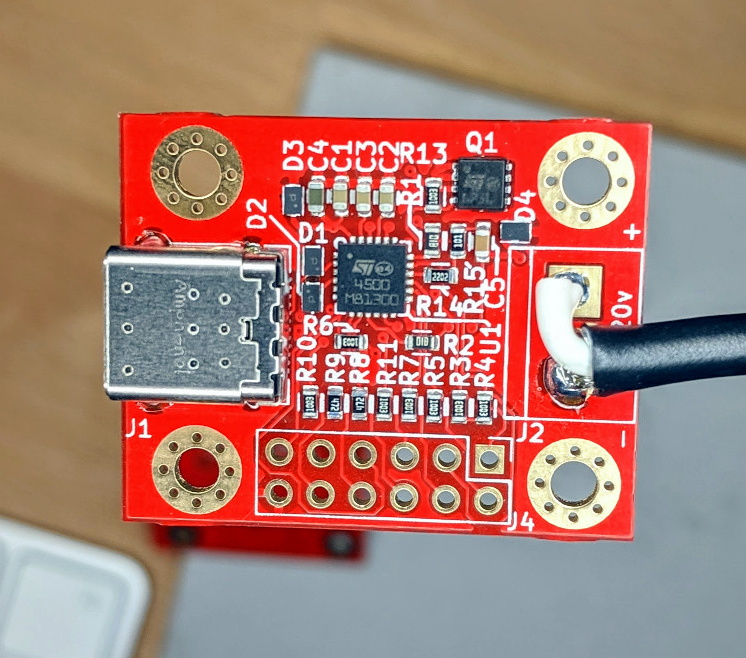
[Mansour] wanted a simple way to charge his laptop (and anything else he could think of) with USB-PD over USB-C, but none of the existing options on the market was quite what he wanted. He looked around and eventually discovered the STUSB4500, a a USB power delivery controller chip that can be configured over I2C.

With a bit of nonvolatile memory onboard, it can retain its settings so he didn’t have to include a microcontroller in his design: just program it once and it can be used stand-alone to negotiate the appropriate voltage and current requirements when its plugged in.

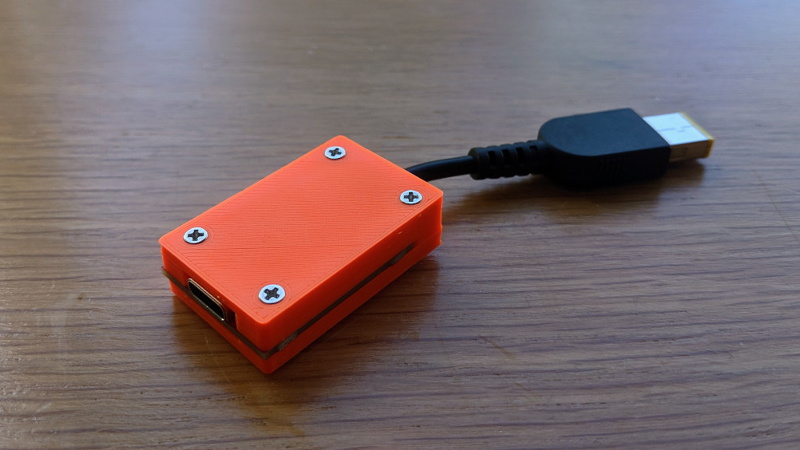
The board that [Mansour] came up with is a handy way of powering your projects via USB-C without having to reinvent the wheel. Using the PC configuration tool and an Arduino to talk to the STUSB4500 over I2C, the board can be configured to deliver from 5 to 20 VDC to whatever device you connect to it. The chip is even capable of storing three seperate Power Delivery Output (PDO) configurations at once, so you can give it multiple voltage and current ranges to try and negotiate for.

In the past we’ve seen a somewhat similar project that used USB-PD to charge lithium polymer batteries. It certainly isn’t happening overnight, but it looks like we’re finally starting to see some real movement towards making USB-C the standard.

https://futurism.com/neoscope/russian-biologist-more-crispr-babies

RUSSIAN BIOLOGIST CONFIRMS HE’S WORKING ON MORE CRISPR BABIES

HE’S ALREADY EDITING DONATED HUMAN EGGS AND BODILY CELLS.
BY KRISTIN HOUSER / OCTOBER 18 2019

Russian biologist Denis Rebrikov is one step closer to creating CRISPR babies.

On Friday, the journal Nature reported that Rebrikov claimed in an email sent the day prior that he had already used the gene-editing tech to tinker with the genetic code of donated humans eggs — a major step forward in his plan to edit human embryos to prevent children from inheriting their parents’ deafness.

Rebrikov told Nature in July that he’d found five pairs of deaf parents willing to let him use CRISPR to edit their embryos. The goal of those edits would be to ensure the children born from the embryos wouldn’t inherit a deafness-causing mutation in the GJB2 gene.

To that end, Rebrikov is now editing the eggs of a non-deaf woman to help him understand any potential “off-target” mutations his embryo edits might cause, presumably so he can avoid those mutations.

He’s also attempting to use CRISPR to repair the deafness-causing GJB2 mutation in bodily cells sourced from deaf people who have it.

Rebrikov told Nature he plans to publish the results of these experiment soon — but he won’t actually create any CRISPR babies unless the Ministry of Health of the Russian Federation gives him the green light.

“I will definitely not transfer an edited embryo without the permission of the regulator,” he told the journal.

https://insideevs.com/news/377184/tesla-model-y-sightings-growing/

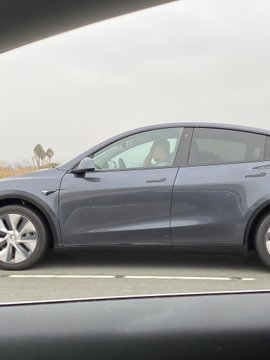
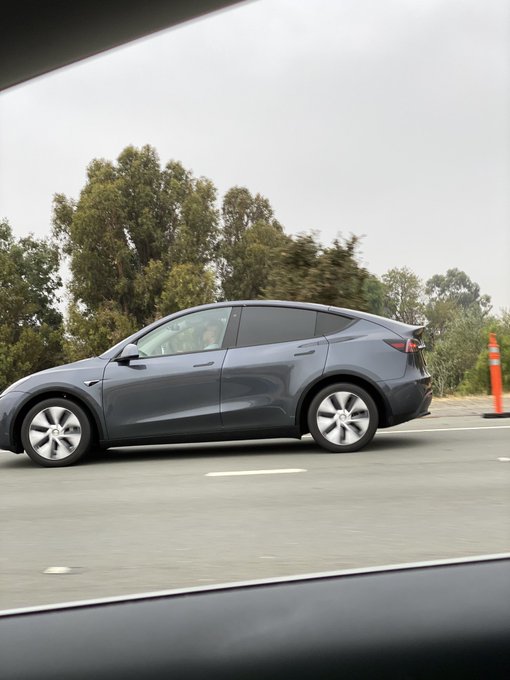
Overload Of Pre-Production Tesla Model Y Crossover Sightings: Images

With plans to start producing the car in the near future, real-world testing is in order.

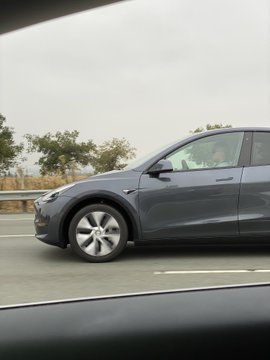
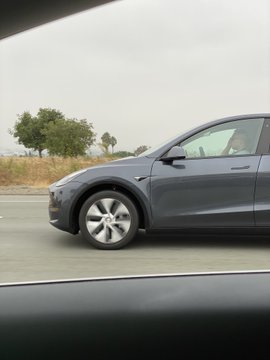
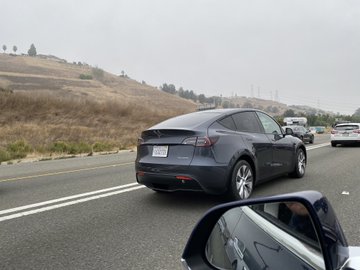
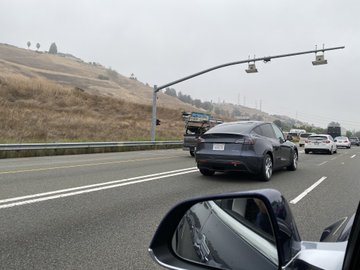
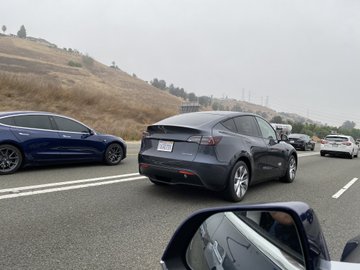
The floodgates have opened already and the Tesla Model Y is not even available yet. This makes sense since the car has already been unveiled and there are not many secrets. We’ve witnessed much the same situation with the Tesla Semi — and to some degree — the upcoming Roadster.

Some will say that, unlike legacy OEMs, Tesla doesn’t make major attempts to hide its concepts or pre-production vehicles. While this statement is true in some cases, it’s definitely not the case with the upcoming Tesla Pickup Truck. However, once the truck is revealed, we’re confident it will show up on public roads just like the Model Y, Semi, and Roadster.

Below, we’ve gathered up a collection of recent Model Y sightings, as well as a few related tweets. As expected, most are from California, and more specifically, the area around Fremont, which is where Tesla’s factory is located. Interestingly, though, as you’ll see from the last two tweets, the Model Y has traveled much further.


mrleetesla@mrleetesla

Tesla Sentry Mode PSA https://youtu.be/OTtLKGs17ic  also other photos of Tesla Model Y from Fremont, CA.

View image on TwitterView image on TwitterView image on TwitterView image on Twitter
See mrleetesla’s other Tweets

mrleetesla@mrleetesla

More Tesla Model Y https://twitter.com/mrleetesla/status/1184146145225797632 

View image on TwitterView image on Twitter
mrleetesla@mrleetesla
Replying to @vincent13031925 @cleantechnica

Yes, from Fremont, CA on Oct 15, 2019 on HWY 680 #ModelY #Tesla

View image on Twitter
95 people are talking about this

HeaddieGlidewell@HeaddieG

Family day at the Giga was such an amazing event. As a hard working single mom, I am blessed to be apart of this beautiful company. @Tesla

View image on TwitterView image on TwitterView image on Twitter
38 people are talking about this

John_HelloVteq_com@vteq316

All @Tesla colors so far…

View image on TwitterView image on TwitterView image on TwitterView image on Twitter
See John_HelloVteq_com’s other Tweets

Tesla Taxi America@teslataxisea

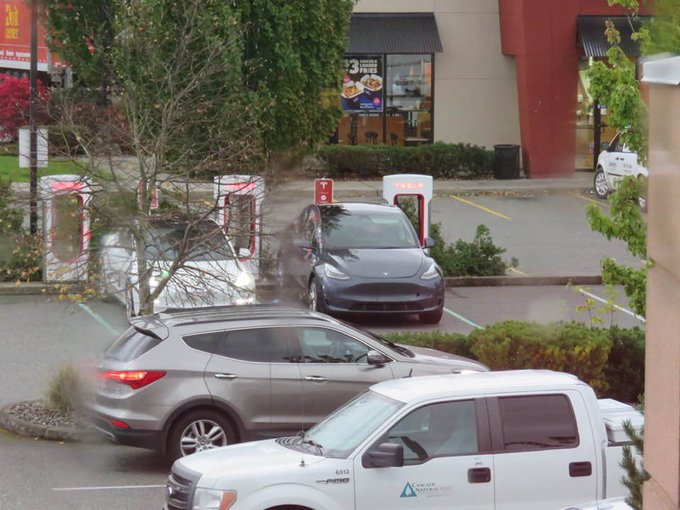
Tesla Model Y Spotted at the Burlington, WA Supercharger (Image Courtney Of Karan, Northwest Tesla Owners Group

View image on Twitter
24 people are talking about this

⛴ Morten Grove 🚢@mortenlund89

🔴Model Y spotted in Vancouver, Washington🔴
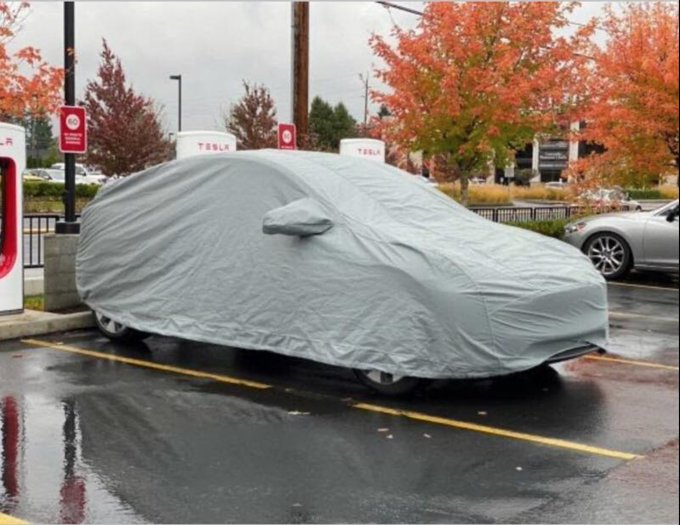
Long Distance Testing Confirmed (668 miles from Fremont)!

View image on Twitter
See ⛴ Morten Grove 🚢‘s other Tweets

Have you seen a Tesla Model Y in the wild? If so, share the experience and your images with us in the comment section. As time goes on, we’d love to hear about Model Y crossovers spotted long distances from Fremont.

https://insideevs.com/reviews/364925/tesla-pickup-truck-price-specs-more/

UPDATE: Tesla Pickup Truck: Everything We Know: Price, Range, Reveal Date

Is this what the Tesla truck will actually look like? We think it’s close.

The pieces of the Tesla truck puzzle are falling into place, so let’s have a look at what’s known.

Outside of perhaps the Tesla Model Y, the electric pickup truck from Tesla is surely the automaker’s most anticipated upcoming electric vehicle.

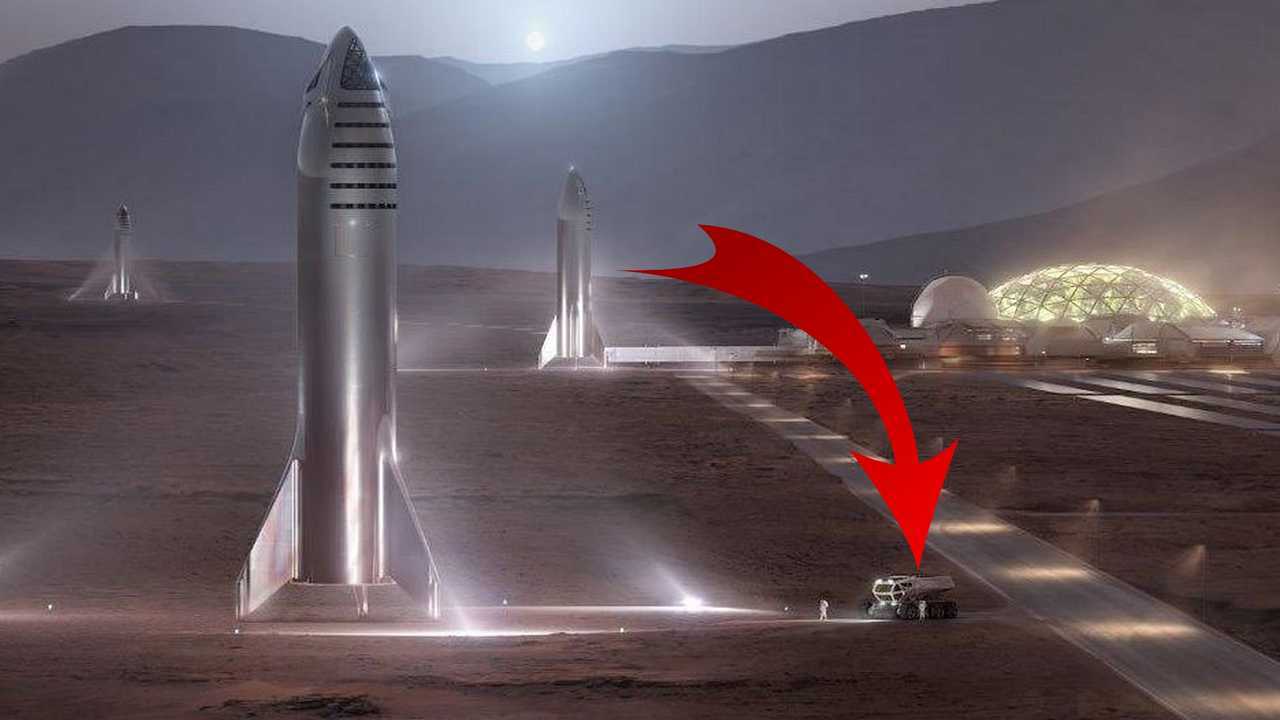
UPDATE 6: Adds information that suggests Musk tweeted out the image of the Tesla truck on Mars back in April (see image directly below).

Tesla Truck On Mars

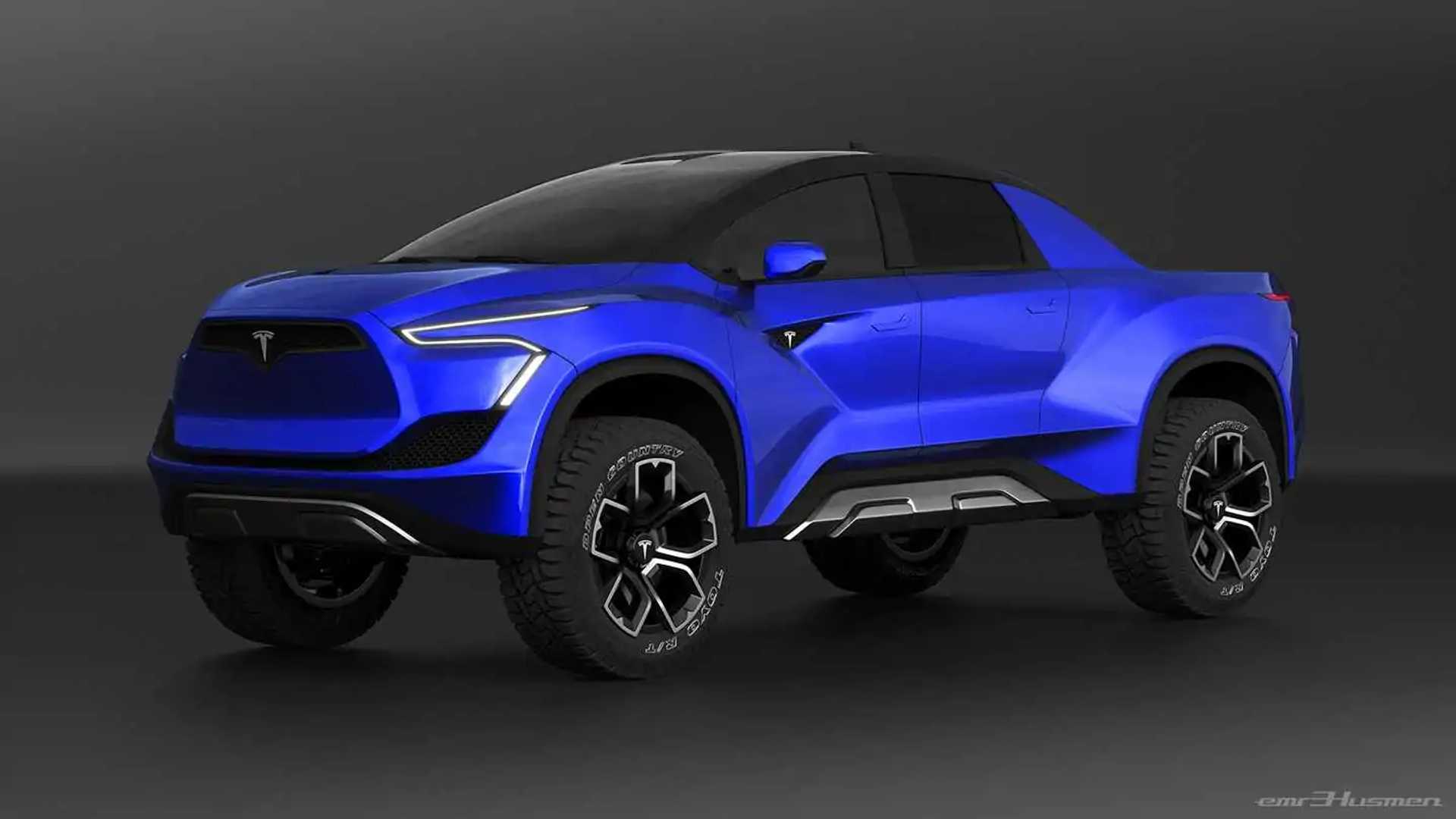
UPDATE 5: Adds new and most realistic Tesla truck render yet. Check it out in detail here and directly below:

truck render

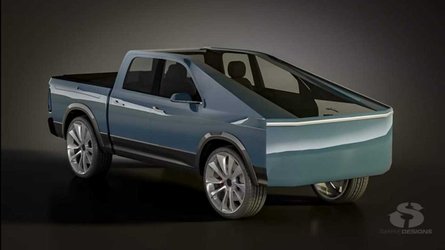
UPDATE 4: Includes info on the appearance of the truck. It’ll look like a futuristic, armored people carrier.

UPDATE 3: Includes new comment from Elon Musk.

UPDATE 2: This post has been updated to add information on the potential for the Tesla truck to be equipped with the much-hyped million-mile battery.

UPDATE: This post has been updated to include a new reveal date for the Tesla truck. Info further down below.

Over time, mostly via Tesla CEO Elon Musk, we’ve bit by bit learned more and more details on the Tesla truck, so we think it’s now time to highlight everything we know in regards to Tesla’s pickup.

Gallery: New Tesla Electric Pickup Render Is Bold, Reminds Us Of Ram Truck

Price

This Tesla truck topic is perhaps the most controversial.

The only mention of pricing was made by Elon Musk and it’s so low it’s somewhat unbelievable.

According to Tesla CEO Elon Musk, the upcoming Tesla truck will have a target price of under $50,000. Musk stated:

 “You should be able to buy a really great truck for $49k or less.”

We find it hard to believe that this price point is even possible, but that’s the target. Here’s more from Musk on the price topic:

“We don’t want it to be really expensive. I think its got to start at less than $50,000 – it’s got to be like $49,000 starting price max. Ideally less. It just can’t be unaffordable. It’s got to be something that’s affordable. There will be versions of the truck that will be more expensive, but you’ve got to be able to get a really great truck for $49,000 or less.”

Gallery: Tesla Truck Render

Performance And Specs

The Tesla truck will make the Ram seem toy-like and will beat the Ford F-150 too. Lofty goals, but Tesla really never fails to deliver on the performance front.

In top-level trim, the Tesla truck should boast a range of between 400 and 500 miles, possibly more. As one might suspect, it will be all-wheel drive with a motor for each axle. Musk also noted that the suspension will dynamically adjust according to its load. Being electric and a truck means it will have gobs of torque. Musk once tweeted that it could tow 300,000 pounds.

Some additional features include 240-volt power for all of your work tools, a unique drop-down tailgate and it will parallel park automatically & have 360-degree cameras & sonar.

UPDATE: There’s now some speculation that the Tesla truck will be the first Tesla equipped with the million-mile battery that’s being developed by Tesla researcher Jeff Dahn and Jessie Harlow. Read more on the battery from an entry in the Journal of the Electrochemical Society here.

Trucks are known for reliability and dependability. In fact, reliability often tops the list for truck buyers. Performance and other aspects generally rank much lower. How can Tesla assure electric truck buyers that the Tesla Truck will be reliable? Quite simply by offering a million-mile battery with a warranty to back it up.

Elon Musk Shares Tesla Pickup Truck Teaser

Appearance

Elon Musk previously mentioned that the Tesla Truck will not look out of place in the set of the sci-fi Blade Runner franchise.

***UPDATE: It seems Musk may have shown the tesla truck to the world back in April of this year. More details here.

***UPDATE: Tesla CEO Elon Musk just announced (October 13, 2019) that the upcoming Tesla electric pickup truck actually resembles some sort of armored military personnel carrier.

🐶Earl of Frunkpuppy🐶@28delayslater

What do you think of the Tesla pickup drawings that are going around? Some are really bad

Elon Musk

@elonmusk

Cybertruck doesn’t look like anything I’ve seen bouncing around the Internet. It’s closer to an armored personnel carrier from the future.

606 people are talking about this

***UPDATE: Musk comments that the Tesla truck is special. See embedded tweet below:

Vincent@vincent13031925

I will order the Tesla pickup truck in the unveiling event next month.

I can’t wait for it!

View image on Twitter

Elon Musk

@elonmusk

It’s something special

508 people are talking about this

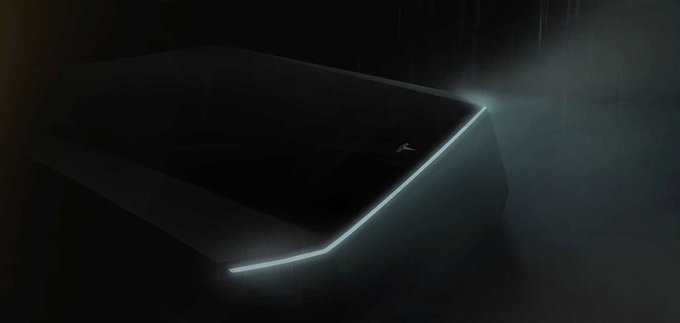
In addition, one lone teaser image was released (see above).

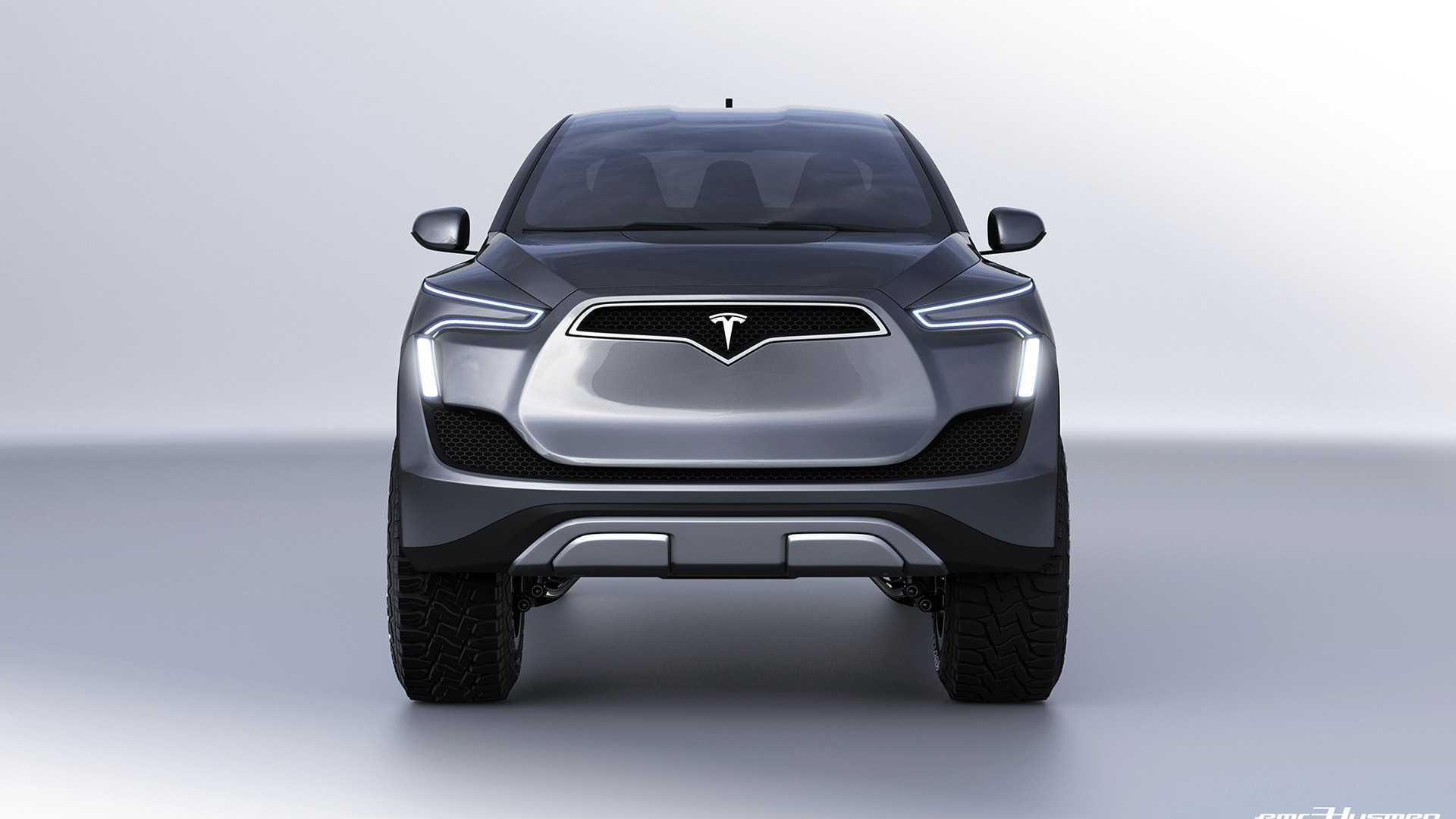
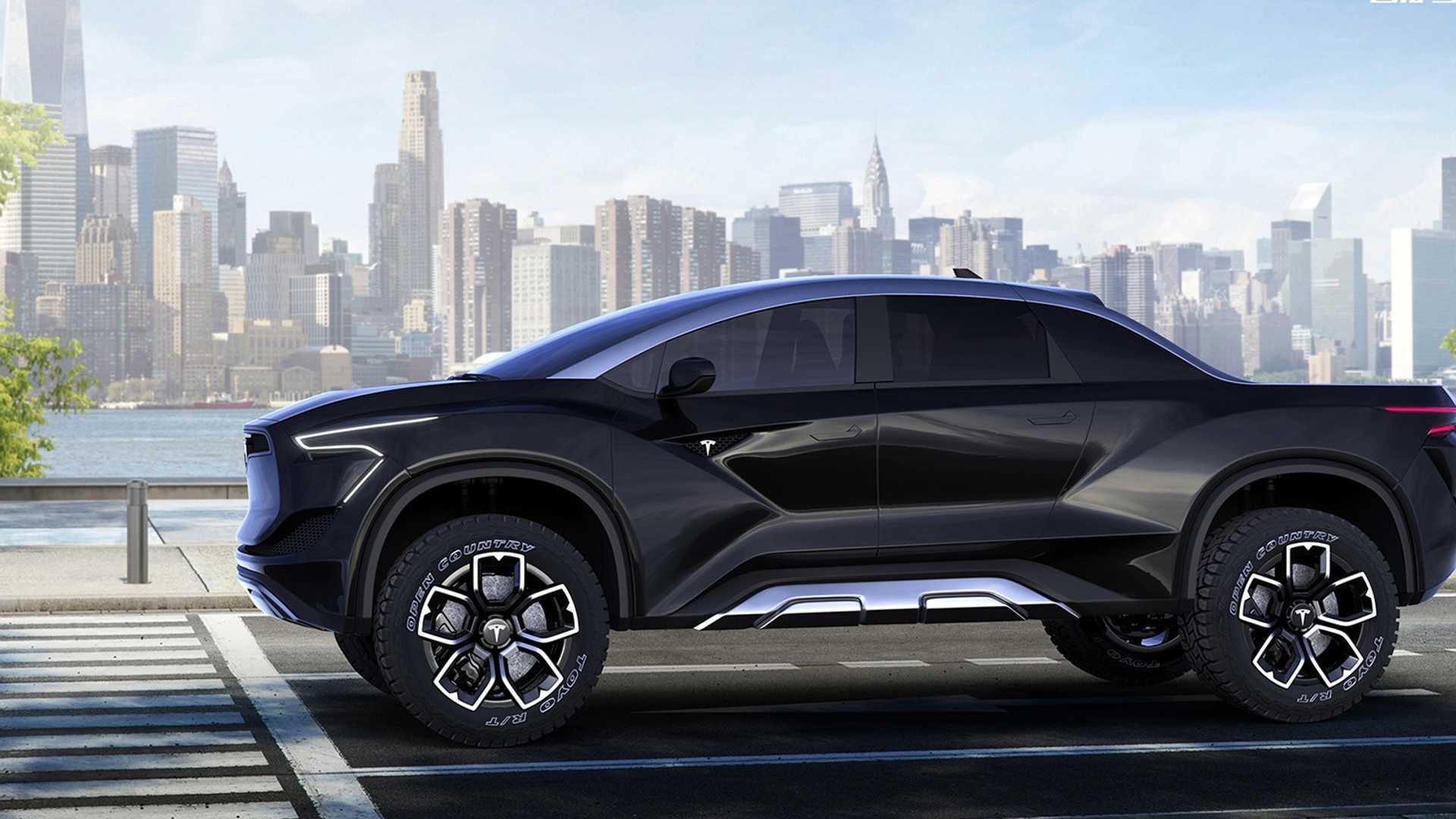
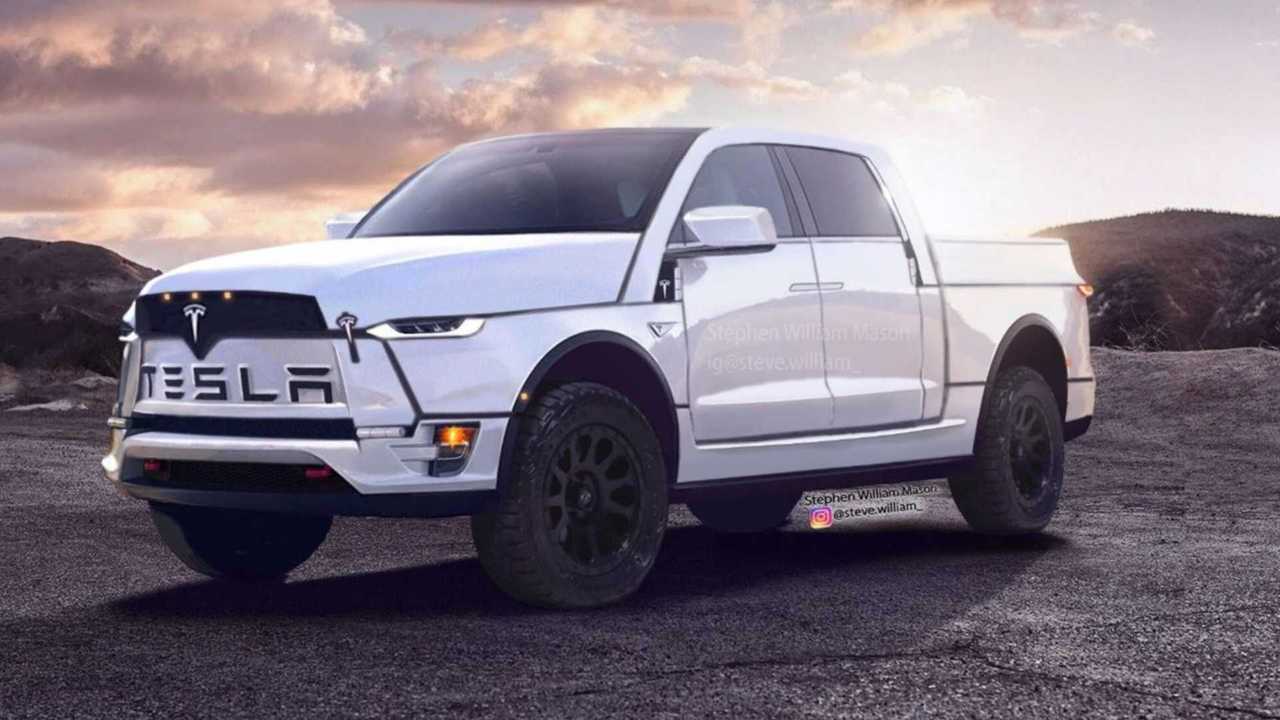
But outside of this, really nothing is known in regards to its looks other than it will be radical and perhaps a bit polarizing, like this always controversial Tesla-Ram render featured above.

Tesla truck render

Model Name

Won’t you B my neighbor.

This is highly speculative, but there’s some indication the Tesla truck will be called the Tesla Model B.

Could B actually be connected to Elon Musk’s Blade Runner reference?

Could the truck be called the Model B just so that the result is B S3XY? That’s not outside the realm of what Elon Musk would do. What do you think? If not B, what will the Tesla truck be called?

Steve Jobs Ghost 👻@tesla_truth

Pickup Truck will be called the Model B.

Tesla —B S3XY R

B Semi S3XY R if you count the semi?@elonmusk will this 🐝 the case

70 people are talking about this

Gallery: Musk Tweets – Tesla Truck Range To Be 500 Miles, Maybe Higher

Reveal Date And Launch/Production Plans

The reveal is still supposedly on track to happen sometime this year, though there’s no concrete info beyond that.

***UPDATE: Elon Musk says the unveiling will most likely occur this November:

Vincent@vincent13031925

Hi Elon, any chance to have the Pickup truck unveiling event before the end of October? Need to schedule my next biz trip and don’t wanna miss the exciting event, thank you!

Elon Musk

@elonmusk

November most likely

275 people are talking about this

As for production plans and availability? Those are both complete unknowns at this point in time. Tesla still has to get the Model Y into production, plus it’s working on both the Tesla Roadster and Tesla Semi. The Tesla truck could be fast-tracked, but there are no details available right now.

Best-case scenario, in our opinion, is that production could begin within 2 years. That still puts Tesla well behind Rivian with its R1T electric pickup truck slated for production next year.

Gallery: Is This Our First Look At The Real Tesla Truck? Video

Closing

We’ve included a ton of renders of the Tesla truck in the various galleries throughout this post and more down below. It’s still anyone’s guess what the actual truck revealed by Tesla will look like, but surely one of these renders will be close.

Gallery: Truck Trend Magazine Renders Tesla Truck

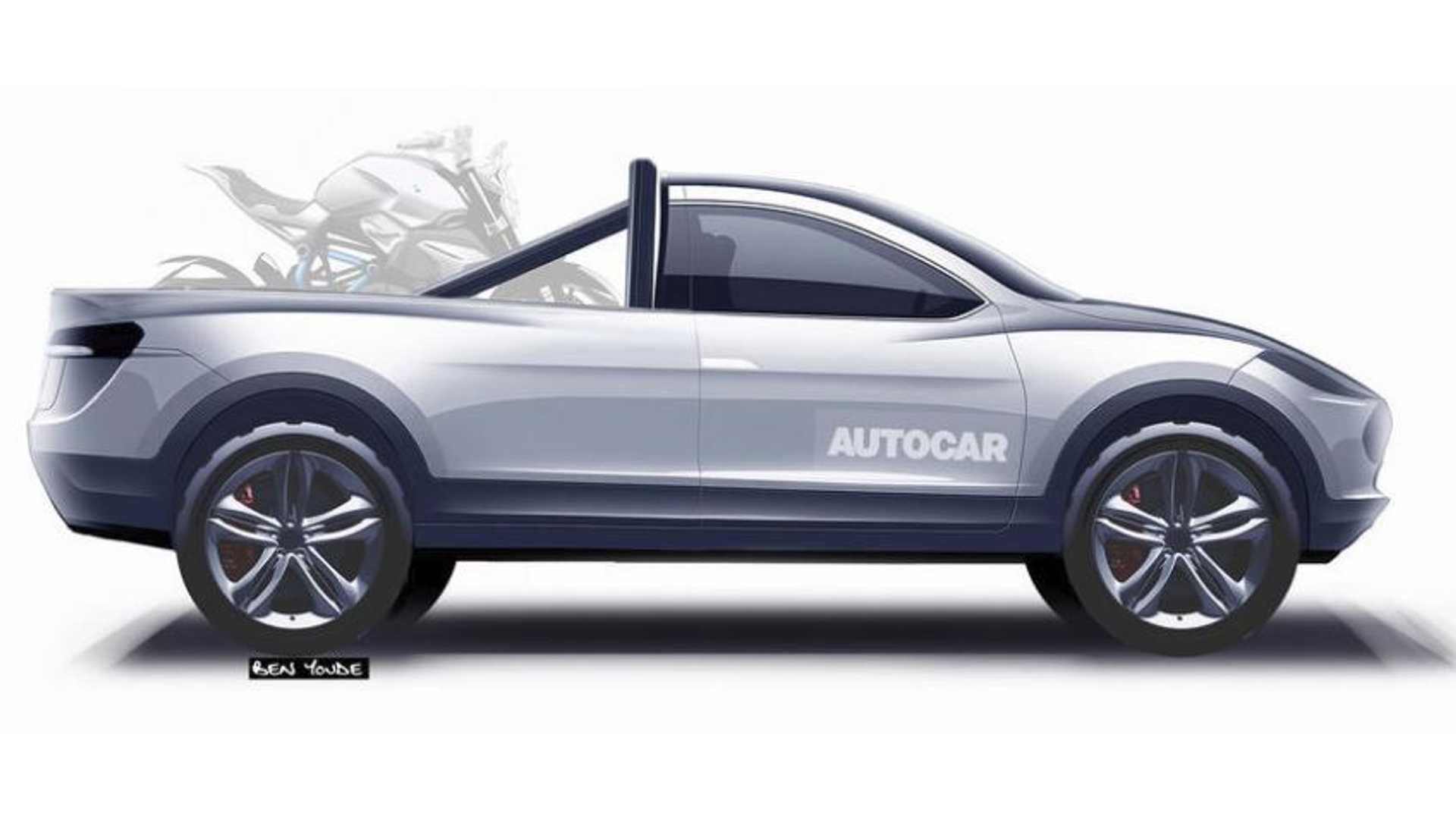
Gallery: Autocar Renders Tesla Truck, Model 3-Based Crossover


https://www.technologynetworks.com/neuroscience/articles/why-neuralinks-implants-are-an-essential-step-in-medtech-innovation-323534

Why Neuralink’s Implants Are an Essential Step in MedTech Innovation

ARTICLE   Sep 03, 2019 | by Jenna Tsui

Why Neuralink's Implants Are an Essential Step in MedTech Innovation A packaged Neuralink sensor device. Credit: Neuralin

Elon Musk has never been afraid to push the envelope when working towards a more innovative future, as his business ventures, which include autonomous electric cars and self-landing rockets, show. One of Musk’s latest projects involves a company called Neuralink. It wants to help people interact with computers by using their minds.

This concept as a whole is not new. Modern medicine has been innovating with equipment called brain-machine interfaces (BMIs) to help people with neurological disorders since the turn of the century. For example, a paralyzed person can use a BMI to move a mouse cursor or a robotic arm. Such options let them retain more independence.

Elon Musk founded Neuralink in July 2016. His original goal was to connect people’s brains to computers. And, he won’t restrict the technology to people for whom it’s medically necessary. According to a Washington Post article, Neuralink’s head neurosurgeon Matt MacDougall said the company’s long-term goal is to offer its brain technology as an elective procedure. The same source mentioned how Musk sees the technology as a medical necessity as well as something that stops humans from getting “left behind” as artificial intelligence (AI) becomes more prominent in society.

An academic paper (and a livestream) published so far

Musk’s technology is still in the early stages, but it is starting to take shape. Neuralink representatives published an academic paper  on bioRxiv. Their document outlines some of the intentions for the technology and what the company has done so far. However, bioRxiv is not peer-reviewed.

The paper describes the steps taken to create a scalable, high-bandwidth BMI with electrodes arranged in arrays called “threads.” Each array potentially contains more than 3,000 electrodes distributed across nearly 100 threads.

The electrode array is housed inside a small, implantable device, and the paper suggests that it could be possible to insert an individual thread into a region of the brain with micron precision. Neuralink, however, has not successfully demonstrated that approach in humans. During a recent Neuralink livestream, though, Musk revealed during a Q&A that the technology let a monkey control a computer with its brain.

Even though there is a lot of progress left to make, Neuralink’s technology could give scientists more options for learning about the brain, especially since our understanding of how the brain’s structures relate to behavior is still in its infancy.

What’s new about Neuralink’s tech?

As mentioned earlier, what Neuralink wants to achieve does not represent the first step in BMI implants. However, it offers some new ideas that could combine to make significant progress in this type of brain tech. Neuralink’s implant stands out from previous efforts undertaken elsewhere for several reasons:

  • Neuralink’s interface aims to be a safer and smaller option than some previously available BMI technology. Current options are too cumbersome for everyday use and remain mostly confined to labs. What Neuralink comes up with could make the tech more accessible to a larger target audience that could benefit from it.
  • Although Neuralink’s prototype doesn’t have a wireless transmitter, it offers a low-power chip that doesn’t require frequent battery changes. That aspect could make it more user-friendly.
  • Neuralink also hopes to use a “sewing robot” to insert the electrodes into the brain in the desired locations or at particular depths using a fine needle that can place up to six electrode threads per minute. If successful, this approach could be faster and more precise than current methods. But, there are issues to overcome concerning whether the thin, flexible electrodes will be durable enough once placed. That’s especially because the brain’s environment destroys many kinds of plastics.

Future plans for the company?

Neuralink’s research paper also mentions that the company has built two prototypes. Each one is capable of recording the brain’s activity across multiple regions and layers of the cortex. One features 1,536 recording channels, while the other has 3,072.

During the livestreamed Neuralink presentation, the company’s president, Max Hodak, mentioned that it would test its technology next year on five paralyzed people to see if they can use it to move a mouse cursor and type with their brains. So far, Neuralink has only been tested on rats.

The planned experiment with paralyzed patients is not revolutionary, and similar ones have occurred since the 2000s. Plus, the small size of Neuralink’s sample may not accurately represent the pros and cons of the technology. The research community is nevertheless waiting with anticipation for the outcomes of the company’s planned human trials.

Fascinating ideas

Neuralink’s technology shows promise for facilitating brain implant progress. But it’s too soon to say for sure the extent of the impact it will have.

One of the strangest parts of Neuralink’s vision is that it intends for everyone to have access to an implant— not just people with neurological disorders. Eventually, Musk hopes it will be as easy for people to get one as it is for them to have vision correction surgery today.

It’s not clear if this idea will have widespread appeal. Would people be willing to go through what is, let’s not forget, brain surgery to control a computer differently? How much might it cost to do so? What about the recovery time?

Furthermore, for people who have a medical reason to get a Neuralink implant, how different would the BMI be compared to what already exists or what other groups are also developing?

A lot of questions are still unanswered, but that should change as Neuralink’s technology advances. For now, Musk and Neuralink have raised awareness of BMI implants, captured headlines, and made people curious about what’s possible.

https://medicalxpress.com/news/2019-10-memory-air-pollution.html

Memory is damaged by air pollution, researchers find

air pollution
Credit: CC0 Public Domain

New research from the University of Warwick shows that human memory is significantly worse in parts of England with high levels of nitrogen dioxide (NO2) and air particulates (PM10). The difference in memory quality between England’s cleanest and most-polluted areas is equivalent to the loss of memory from 10 extra years of aging.

This is consistent with prior smaller-scale laboratory research on rats and other animals. But the new work, by Nattavudh Powdthavee, Professor of Behavioural Science at Warwick Business School, and Andrew Oswald, Professor of Economics and Behavioural Science, is some of the first to confirm the same in humans.

The researchers examined 34,000 English citizens randomly sampled from across England’s local-authority districts. Everyone in the study was asked to remember 10 words in a standardized word-recall test. The analysis adjusted for a large number of other influences on the quality of people’s memory—including people’s age, health, level of education, ethnicity, and family and employment status. The report, revealing a strong link between air pollution and impaired memory, is to be published in the journal Ecological Economics.

Memory slowly worsens as people grow older. The authors estimate that the difference in memory quality between England’s cleanest and most-polluted areas is equivalent to the loss of memory from 10 extra years of aging. The most polluted air in England is in places like Kensington and Islington. The cleanest is on the west coastline in districts like Devon and West Somerset.

“There is a little prior evidence of a negative association between levels of traffic pollution and memory using data on elderly individuals and in children,” said Professor Powdthavee, “but almost all research in  on this topic has been based on elementary correlations and not on nationally representative samples of individuals in a country. We have tried to solve these two problems in our study.”

Professor Andrew Oswald said “When it comes to remembering a string of words, a 50 year old in polluted Chelsea performs like a 60 year old in Plymouth. We are still not exactly sure how nitrogen dioxide and air particulates act to do this.”

Using a nationally representative sample in the UK Household Longitudinal Study—the Understanding Society—the researchers have been able to study the link between data on a standardized word-recall test that was done in the year 2011 by 34,000 randomly sampled English citizens with data on NO2 and PM10 across 318 geographical areas. By exploiting regional variations in the direction of prevailing westerly wind and population density as predictors of  but not memory, they were also able to correct for the potential selection effect that might arise from people with impaired  choosing to live in more polluted areas.


Explore further

Deep brain stimulation modifies memory


More information: Is there a link between air pollution and impaired memory? Evidence on 34,000 English citizens, Ecological Economics, 2019. in press

https://medicalxpress.com/news/2019-10-short-gene-memory-deficits-deprivation.html

‘Short sleep’ gene prevents memory deficits associated with sleep deprivation

gene
Credit: CC0 Public Domain

The UCSF scientists who identified the two known human genes that promote “natural short sleep”—nightly sleep that lasts just four to six hours but leaves people feeling well-rested—have now discovered a third, and it’s also the first gene that’s ever been shown to prevent the memory deficits that normally accompany sleep deprivation. The researchers believe this latest discovery may one day lead to a druggable target for therapies that improve sleep and treat sleep disorders.

The findings, detailed in a study published October 16, 2019 in Science Translational Medicine, were announced just weeks after the same team reported their discovery of the second short sleep gene, an achievement that was a decade in the making.

“Ten years ago, when we identified the first short sleep gene, the field of sleep genetics was in its infancy. People didn’t think that genes could significantly influence sleep behaviors, and big breakthroughs were rare. Today the field is advancing much more rapidly, and we’re beginning to get a better picture of how important your genes are to getting a good night’s sleep,” said Ying-Hui Fu, Ph.D., a professor of neurology and member of the UCSF Weill Institute for Neurosciences who has led the research teams that identified all three known short sleep genes.

Fu and her team identified the newest gene in a father-and-son pair who averaged just 5.5 and 4.3 hours of sleep each night, respectively—far less than the eight or more hours that most people need in order to avoid feeling sleep-deprived.

“There are serious health consequences associated with ,” said Louis Ptáček, MD, professor of neurology, co-senior author of the new study, and a member of the Weill Institute. “People who are chronically sleep deprived are more likely to suffer from obesity, diabetes, cardiovascular problems, depression and cognitive deficits.”

But like other natural short sleepers, the father-son pair don’t seem to experience any of the adverse cognitive or physical effects that generally accompany sleep deprivation. Fu and Ptáček wanted to know why.

The researchers performed gene sequencing on both father and son, and zeroed in on a single-letter mutation in a gene called NPSR1, which encodes a  that sits on the surface of neurons and was previously shown to be involved in regulating sleep. Like the mutations in the other known short sleep genes, this mutation is exceedingly rare, occurring in fewer than one in 4 million people.

Play

00:00
01:34
Settings

Enter fullscreen

Play

Dr. Ying-Hui Fu answers three questions for the general public concerning the finding of the NPSR1 mutations in natural short sleepers. Credit: John Webb

To understand the gene’s function in the brain, the researchers performed a series of experiments on mice that were genetically engineered to carry an identical mutation in the mouse version of NPSR1. Mice with the mutation spent less time sleeping and were more physically active than those without it, in part because, at the biochemical level, the mutant version of NPSR1 behaves differently from the more common version of the protein.

NPSR1 is part of a signaling pathway in the brain that promotes wakefulness. When it’s activated, it switches on other proteins in the same pathway by attaching a chemical modification to them. To test whether the mutant and non-mutant versions of NPSR1 were able to activate components of this pathway to the same degree, the researchers injected a compound that triggers NPSR1 into both normal and genetically-engineered mice. They then looked at proteins downstream from NPSR1 to see how many of them had been chemically modified to promote activation. They found that mutant NPSR1 activated many more downstream proteins than the non-mutant version.

The researchers then performed a complementary experiment and found that mutant NPSR1 is easier to trigger than the non-mutant version of the protein. Together, these results suggest that the version of NPSR1 associated with short sleep is easier to activate, and is also better at switching on other components of this wakefulness-promoting pathway.

The researchers next turned to a memory test. Mice were placed in a specially designed chamber and allowed to explore their new environment for a few minutes, after which an electrical current was switched on to gently shock their feet. When normal mice are removed from the chamber and returned to it a day later, they remember the shock and either freeze or roam the chamber more slowly—but only if they’ve had sufficient sleep.

By contrast, sleep-deprived mice experience memory deficits (just like sleep-deprived humans) and have trouble forming lasting memories of the jolting experience. When they’re returned to the chamber a day after being shocked, they don’t exhibit any of the expected fear-based behaviors. But carriers of the mutant version of NPSR1 did remember the electrical shocks, even after being sleep deprived.

“NPSR1 not only promotes short sleep, it also prevents memory problems that usually result from sleep deprivation,” Fu said. “This is the first gene that anyone’s discovered that exerts a protective effect against one of the many adverse consequences of sleep deprivation.”

And because the NPSR1 protein is a cell-surface receptor, the researchers believe that it may one day be possible to develop drugs that activate or interfere with NPSR1.

“Not only does this discovery provides us with a better understanding of how  contribute to an unusual sleep phenotype, it also offers up an appealing target for future therapies that may help treat  or prevent certain cognitive deficits associated with lack of sleep,” Ptáček said.


Explore further

After 10-year search, scientists find second ‘short sleep’ gene


More information: L. Xing el al., “Mutant neuropeptide S receptor reduces sleep duration with preserved memory consolidation,” Science Translational Medicine (2019). stm.sciencemag.org/lookup/doi/ … scitranslmed.aax2014

Journal information: Science Translational Medicine