https://www.therobotreport.com/chinese-robotics-market-look-ahead-2020/

China’s robotics market: A look ahead to 2020

China's robotics market -- a look ahead to 2020

Trade tensions and a global economic slowdown, particularly in automotive manufacturing, have affected demand in the Chinese robotics market. However, interest in supply chain automation and political support of domestic innovation could encourage growth in 2020.

This is Part 2 of The Robot Report‘s Q&A with Georg Stieler, managing director for Asia at international consulting firm STM Stieler. In Part 1, he discussed the state of the robotics market in China, looking at causes for the current slowdown and what types of robots are in demand. Here, Stieler continues his analysis with a look ahead.

Room for optimism?

We’ve seen some optimistic descriptions of the robotics market in China — are they wrong, or are they looking only at certain areas?

Stieler: The International Federation of Robotics (IFR) receives its numbers from the China Robot Industry Alliance (CRIA), which in April still said it expected China to be the main driver for a 14% annual average growth of the global robotics market until 2021. The organizations lowered their expectations when they presented their numbers for 2018 in July.

As I previously mentioned, we do not expect this to be a mere cyclical downturn, but more the beginning of a phase of slower growth in China.

Speaking of the IFR, nobody at the large robot manufacturers we are talking to believes in the 12% global growth that was forecast for next year.

Developers and AI in the Chinese robotics market

What should robotics developers consider when designing or selling systems into the Chinese robotics market?

Stieler: Reducing cost is certainly a major issue. Another major issue is delivery speed.

With the state as a main economic actor, demand in China can be very volatile. When the economy picks up, buyers expect vendors to be able to supply quickly. Balancing this act is a major challenge for operations in China.

How important are technologies such as artificial intelligence and machine learning, the Internet of Things, and 5G networks to developers of robots for China?

Stieler: There are some fundamental misconceptions about China‘s strengths in AI. Yes, the country is leading in facial recognition technology and is strong in speech recognition, but it is lagging in autonomous cars, for instance.

Waymo, the technology leader in this field, can drive over 10 times the distance without disengagement than Pony.ai and over 50 times than Baidu.

However, all this is been built on foreign technology. The two dominant deep learning frameworks, also in China, are Google’s TensorFlow and Facebook’s PyTorch. The Chinese alternative, PaddlePaddle by Baidu, has a much lower presence.

What about computing hardware?

Stieler: The cloud computing centers for the training of neural networks are running primarily on NVIDIA chips. Even though there are now alternatives in form of sophisticated chip designs from Chinese companies such as Huawei’s HiSilicon, these firms are still dependent from U.S. chip design software from Cadence Design Systems or Snyopsis.

Also, chip foundries in mainland China are a couple of years behind when it comes to manufacturing technologies. The most sophisticated chips made by TSMC [Taiwan Semiconductor Manufacturing Co.], Samsung, and Intel are using 7 nm technology. In comparison, SMIC [Semiconductor Manufacturing International Corp.], the most sophisticated foundry in mainland China, is able to master 14 nm. For the production of these chips, you need photolithographic systems, where Dutch ASML is the leading supplier.

In industrial applications, only a few high-end enterprises have truly so-called digital factories. Foxconn, BOE, Tianma, Comau, or SAIC have production lines where the management and processing workflow has been opened up and linked together. These generate multi-dimensional data that can be used for statistical pattern analysis.

The vast majority of robotics companies are still making normal industrial robots. Many of them are not even using offline programming tools at a noteworthy extend, yet.

Robotics market segments worth watching

Where are investors supporting robotics development?

Stieler: Worth mentioning are Dorabot and Mech-Mind, which are both combining computer vision, motion planning, and deep learning for robots, primarily in logistics. In cloud robotics, there is currently nothing comparable to AWS RoboMaker in China.

The next closest might be Geek+’s infrastructure. It claims to have 7,000 robots installed at clients worldwide. CloudMinds, which has filed for an IPO in the U.S. to raise $500 million, still has to deliver its first robots to customers and show that it can live up to its promises.

Ubtech has been outfitted by investors led by Tencent with $800 million to develop humanoid robots. Yet, while Ubtech’s Walker is completing its first steps, Boston Dynamics’ Atlas is already doing somersaults.

There is a lot of talk about 5G as Huawei is trying to position itself as an enabler for the factory of the future with cloud, IoT, AI, etc. I have the impression that it wants to learn as much about manufacturing from its clients as its clients still have to learn about cloud and these other technologies.

Are there Chinese robotics markets, such as healthcare, retail, or agriculture, where growth will be strong? Over what time frame?

Stieler: Sales markets with positive dynamics included the food and beverage industry, which is less affected by the trade war and has still comparatively low-hanging fruit in terms of applications. Driven by subsidies, photovoltaics had good year, and manufacturers have invested in replacing human labor with robots. We also saw growth in the medical industry, albeit on a low level.

Intralogistics is a growth market for automation and robotics. Other than videos from companies such as Jd.com and the likes want to make you expect, the future is still far away, however.

Influenced by China’s tech hype of the past three years, some people might expect AGVs or drones in last-mile delivery, but in reality, it’s a human driver with a smartphone and an electric scooter who makes a bit more than $20 a day.

There were reports of big data, drones, and first field robots being used in Chinese agriculture, but we don’t see this as a mass phenomenon yet. The average farm size in China is 1.4 hectares [3.4 acres], which is less than 1% of the average farm size in the U.S. Their purchasing power is correspondingly low.

The Robot Report is launching the Healthcare Robotics Engineering Forum, which will be on Dec. 9-10 in Santa Clara, Calif. The conference and expo will focus on improving the design, development, and manufacture of next-generation healthcare robots. Learn more about the Healthcare Robotics Engineering Forum, and registration is now open.


Geopolitics and robotics

Does uncertainty in Europe around Brexit and in the U.S. around upcoming elections create an opportunity for Chinese or foreign companies?

Stieler: In the U.S. in particular, Chinese companies are having a hard time winning trust these days.

In Europe, the situation is still a bit different. There is still the idea that Chinese investors had endless amounts of money because they have paid high premiums in the past. Estun’s recent acquisition of Cloos showed that this is still somewhat true if interests are aligned with those of the government.

In general, we are seeing that financing at home has become more difficult, and Chinese the government is approving less cross-border transactions this year. China is perceived by many as this stable monolith whose rise was a historical necessity. If you look closer, it has a lot of headaches of its own.

Looking ahead into next year, what is most likely to change? Do you think the situation improve or get worse before it gets better?

Stieler: Orders received among all major robot manufacturers continued to fall, with double-digit declines in Q3 2019, darkening the outlook for Q4 2019.

In the beginning of this month, the open quotations of many systems integrators are on an all-time high. Due to the ongoing economic uncertainty, the majority of their customers keep postponing their investment plans further. Only few clients are pushing ahead now to do something in 2020.

How might the political and macroeconomic environment affect the robotics market?

Stieler: Over the past year, the Chinese leader Xi Jinping has repeatedly warned Communist Party officials to steel themselves for “struggle” and hazards such as possible economic turbulence, rising debt levels linked to local governments, technological competition, and sparks of social discontent spread across the Internet. The wording from the latest leadership meeting in early November suggests that Xi sees no easing in those risks.

Further into 2020, we expect a stronger emphasis on manufacturing for domestic demand. There is still potential for the automation in the production of solar panels. The demand for semiconductors for servers and cloud computing is also expected to grow further.

https://insideevs.com/news/384073/tesla-cybertruck-design-requirements/

Tesla Cybertruck Was Designed To Meet These 6 Specific Requirements

There’s a reason the Cybertruck looks exactly like it does.

I assume that Tesla set the following requirements that the Tesla Cybertruck design must satisfy:

  1. Tough exterior.
  2. Low aerodynamic resistance to allow long-range and high efficiency.
  3. Large and comfortable interior.
  4. Variable ground clearance, low for ingress and egress and highway driving and quite high for rough terrain.
  5. Good storage, bed and towing capacity.
  6. Battery capacity to provide long-range and high efficiency.

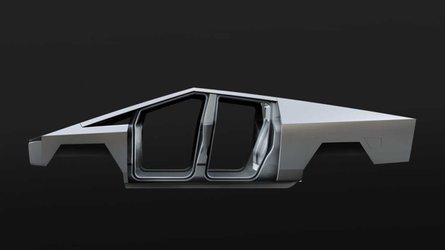
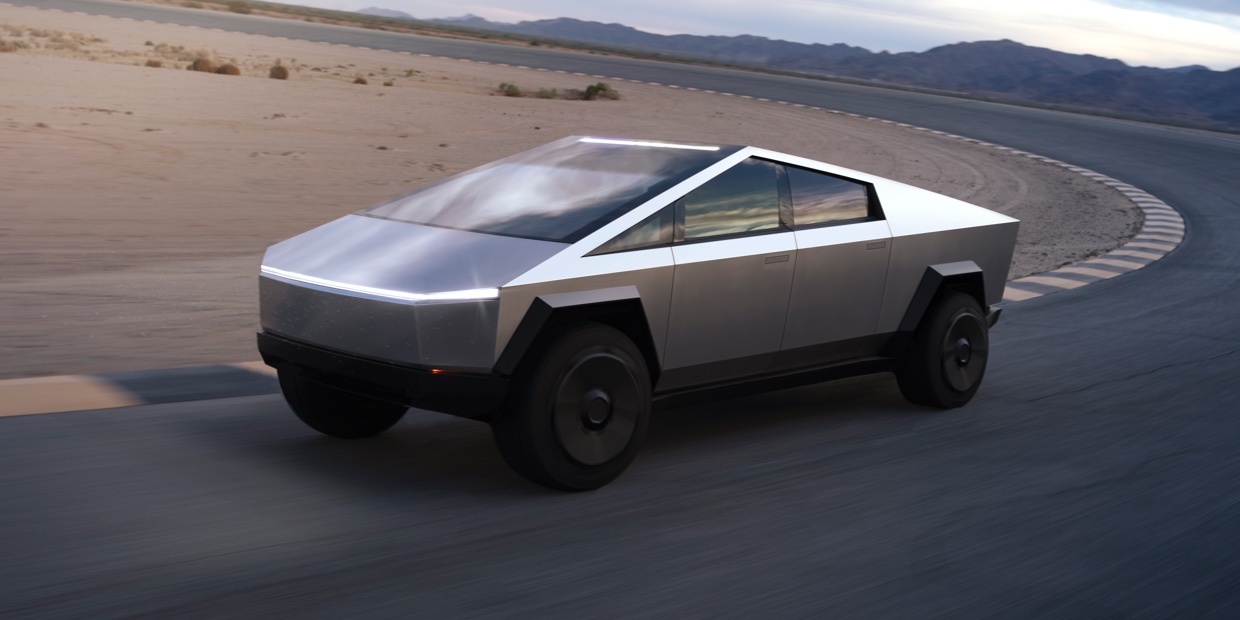
Item 1 above is best achieved by thick hardened (cold-rolled) stainless steel. Such steel is difficult to stamp into curvature form. So, such a tough exterior is usually composed of flat sheets. Since the Cybertruck’s exterior is made of hardened stainless steel, it has flat panels joined by angles.

Item 2 above requires that the Cybertruck have an upward-sloping hood and windshield and an inward-sloping nose:

external_image

Item 2 also requires that the Cybertruck have a “spoiler” rear to reduce turbulence and rear lift:

external_image

Note the spoiler effect behind the cab when the cover is retracted and behind the Cybertruck when the cover is in place.

The combination of items 1 and 2 must be arranged such as to provide items 3 and 5. The Cybertruck has done this very well!

Item 4 is well provided for by the design of the Cybertruck.

Tesla is the world leader in proving the needed battery capacity of item 6.

Unanswered Questions

Will the Cybertruck have cameras in place of side mirrors?

What is the makeup of a front crumple zone?

Will the Cybertruck automatically lower to a user-selected height when the owner approaches?

Will the smartphone app be able to raise and lower the Cybertruck and open and close the bed cover?

Conclusion

The design requirements almost force the design selected for the Cybertruck.

https://www.mindbodygreen.com/articles/new-research-finds-dangerous-effect-of-sleep-deprivation

Sleep Deprivation Affects More Than Just Attention, Study Finds

There are around 80 distinct sleep disorders, and an estimated 50 to 70 million Americans suffer from poor sleeping patterns. With such a large population not meeting recommended sleeping requirements (7-8 hours per night for adults), it’s safe to assume that the majority of them aren’t operating at full speed.

New research from Michigan State University found that sleep deprivation interferes with people’s ability to perform multi-step tasks.

People can accomplish routine tasks, like brushing their teeth and even taking vital signs, while running on little to no sleep. But the research published in the Journal of Experimental Psychology reveals that your ability to complete complex tasks is impaired.

How did they measure this?

Researchers asked 138 people to participate in an overnight sleep assessment. Some of the participants were asked to go home and sleep, while 77 were asked to stay awake all night. Before going home, all participants completed cognitive evaluations. One tested for reaction times, and the other tested ability to complete a multi-step task while being randomly interrupted to see how well they could keep their place (the process is called place-keeping).

Tests were repeated again in the morning to find out how sleep deprivation impacted performance. Sporadic interruptions led to mistakes the night before, but error rates of the sleep-deprived group increased by 15% the next morning.

Article continues below

Why does this matter?

Previous research has associated lack of sleep to declines in fundamental processes, such as poor attention. But this study revealed more severe effects on higher-level cognitive functioning, including problem solving and procedural performance.

“Place-keeping is a broadly-relevant component of higher-order cognition…that predict real world outcomes such as academic achievement and job performance,” the study said.

The authors of the study hope the new information urges people to recognize their limitations before getting behind the wheel, performing surgery, or starting other high-risk activities. It can also encourage doctors to commit to studying sleep disorders to provide treatment and prevent accidents.

https://www.medicalnewstoday.com/articles/327111.php#6

Can the gut microbiome unlock the secrets of aging?

A new study has shown how the gut microbiota of older mice can promote neural growth in young mice, leading to promising developments in future treatments.

The research group, based in Nanyang Technological University (NTU) in Singapore, transferred the gut microbiota of older mice into the gut of younger mice with less developed gut fauna.

This resulted in enhanced neurogenesis (neuron growth) in the brain and altered aging, suggesting that the symbiotic relationship between bacteria and their host can have significant benefits for health.

The past 20 years have seen a significant increase in the amount of research into the relationship between the host and the bacteria that live in or on it. The results of these studies have established an important role for this relationship in nutrition, metabolism, and behavior.

The medical community hopes that these latest results could lead to the development of food-based treatment to help slow down the aging process.

In this study, the research team attempted to uncover the functional characteristics of the gut microbiota of an aging host. The researchers transplanted gut microbiota from old or young mice into young, germ-free mouse recipients.

The findings appear in the journal Science Translational Medicine.

What did the research involve?

The gut microbiome changes as the host ages, and to investigate how it evolves, the research team transplanted the gut microbiome from 24-month old mice into young 6-week old, germ-free mice.

Professor Sven Pettersson at the NTU Lee Kong Chian School of Medicine led the team.

After 8 weeks, Prof. Pettersson and colleagues observed increased intestinal growth and increased neurogenesis in the mice’s brain.


To control for the experiment, the team transferred the gut microbiome of young mice into germ-free mice of the same age. The researchers did not observe the same effects as they saw in the mice that received the gut microbiome from older mice.

The team also conducted molecular analysis on the rodents and found they had increased levels of butyrate. Butyrate is a short-chain fatty acid that gut microbes produce.

Butyrate is beneficial for health and can protect against diseases, such as inflammatory bowel disease, colorectal cancerobesity, and diabetes.

The enrichment of certain gut microbes and increased bacterial fermentation of dietary fibers in the colon led to these increased levels of butyrate. In turn, increased butyrate levels stimulated the production of pro-longevity hormone FGF21.

FGF21 is a fibroblast growth factor that plays an important role in regulating metabolism. Increased levels of FGF21 were also associated with increased AMPKTrusted Source and SIRT-1 activity and reduced mTOR signaling.

This is important because increased AMPK leads to increased uptake of short-chain fatty acids during cellular metabolism. SIRT-1 also regulates homeostasis and can protect against a variety of human disorders.

Reduced mTOR can protect against human cancers and various inflammatory diseases.

The researchers went on to explore the effect of gut microbiome transplants on the digestive tracts of the mice.

Normal aging of intestinal tissue reduces the viability of intestinal cells. This has associations with reduced mucus production, which can lead to increased cell damage and death.

The researchers found transplanting the microbiome of older mice to younger mice led to an increase in the length and width of the villi, which are small structures that make up the wall of the intestine.

The mice who had received the microbiome from the older mice also had a longer colon and a longer small intestine than the control group that had received the microbiome from other young mice.

The researchers also gave the young germ-free mice butyrate by itself and observed that it led to similar increases in neurogenesis and intestinal growth.

How have these results been received?

Scientists from around the world have reacted to these results. Dr. Dario Riccardo Valenzano, group leader at the Max Planck Institute for Biology of Ageing in Germany, says, “These results are exciting and raise several new open questions for both biology of aging and microbiome research.”

Some of these questions, says Dr. Valenzano, include “whether there is an active acquisition of butyrate-producing microbes during mice life and whether extreme aging leads to a loss of this fundamental microbial community, which may be eventually responsible for dysbiosis and age-related dysfunctions.”

In addition, Professor Brian Kennedy, Director of the Centre for Healthy Ageing at the National University of Singapore, says, “It is intriguing that the microbiome of an aged animal can promote youthful phenotypes in a young recipient.”

“This suggests that the microbiota with aging have been modified to compensate for the accumulating deficits of the host and leads to the question of whether the microbiome from a young animal would have greater or less effects on a young host.”

The findings move forward our understanding of the relationship between the microbiome and its host during aging and set the stage for the development of microbiome-related interventions to promote healthy longevity.”

Prof. Brian Kennedy

Implications for future treatments

These results are highly promising for future progression in the treatment of diseases associated with aging, such as neurogenerative disorders.

They suggest that the composition of gut microbiota and dynamics is age sensitive and that the response to microbial cues in early life differs significantly from that in later life.

The results imply that the gut microbiota of older hosts with metabolic homeostasis may support host health. In contrast, in adults with type 2 diabetes, the gut microbiome may induce inflammatory pathways.

Limitations to this study include the fact that microbiomes may change over the course of the study, even under controlled experiments, such as the ones presented here.

It is also possible that other microbial metabolites and cellular pathways have a role to play, but researchers did not investigate these in this study.

More Tesla Cybertruck News:  Check Out These Top Memes About The Tesla Cybertruck Official Unveil    Does Tesla Already Have Over 200,000 Cybertruck Reservations?

AI, Brain Augmentation and Our Identities


Do you know who you are? If so, do you direct your own actions? These are two questions that we ask ourselves when someone asks us about our identities. In the west, individualism is valued. We like to think that we have agency in our own actions. We like to think that our identities are not affected by the world. We are distinct. We are unique.

The history of identity theory

There are two classes of identity theory: mind-brain identity theory (from philosophy) and social identity theory (from psychology). Mind-brain identity theory, originated in the 1930’s with psychologist E. G. Boring, also known as type physicalism states that mental events can be grouped into types that correlate with physical events in the brain. Over time, psychologists Feigel and Smart distinguished sensations from brain processes but asserted that they refer to the same physical phenomenon. Mind-brain identity theory makes us think that identity is an individual construct and an independent construct.

In contrast, social identity theory, originated in the 1970’s and 80’s with psychologists Henri Tajfel and John Turner, states that one’s self-concept comes from membership in social groups such as family, school, and community. In this construct, membership mobility, competition and creativity affect the individual’s identity. Social identity theory makes us think that we have less agency than we do since our identity is formed from interactions in social groups and environments.

Chances are our identities are developed and maintained by a mix of these two identity theories. Our brain’s network determines how we respond to social situations. The reflections of our identities in social situations help our brain to recognize and form judgments about who we really are. Our true identities are formed from the interaction between the mechanisms defined in these theories.

Brain augmentation and identity theory

Today In: Innovation

Brain augmentation is not a new concept. From the 1950’s, ever since Robert G. Heath demonstrated that you can use electrical stimulation to treat patients with mental illnesses, there were waves of physicians following suit to treat their patients with brain stimulation. From that point onwards, the US military experimented with mind control techniques for the use of the military. Eventually, in the 2000’s, military programs developed implants on animal’s brains via a Micro-Electro-Mechanical Systems that could effectively control the animals. “Cyborg Insects” and “Cyborg Sharks” were the results of such research. It’s important to note that brain stimulation in the form of ECT (Electroconvulsive Therapy) and recently, TMS (Transcranial Magnetic Stimulation) are being used widely for treatment of mood disorders.

It’s not hard to see the origins of brain augmentation in Mind-brain identity theory. In a sense, brain augmentation realized the core concepts of mind-brain identity theory: mental events can relate to physical events in the brain. By identifying these events, they can be monitored, controlled or even modified to elicit the desired physical response. This is essentially brain augmentation.


It’s not hard to see the ethical implications of brain augmentation. With the power of artificial intelligence, if the brain can be controlled, then any responses from the individual can also be controlled. This is when we start to lose our human agency. 

Innovation often contain a certain element of risk. Managing that risk is critical to help with the advancement of innovation. There are three areas of focus to setting the right ethical boundaries of brain augmentation:

  1. Human testing strictly regulated by the FDA and NIH, completely voluntary for the participant. As seen in clinical trials recently performed, removal of the implants are paid for by the companies conducting the research. However, in cases where participants choose to keep the implants, they have to bear the burden of cost of maintenance.  There are also strict criteria for eligibility.
  2. Finding the right use cases for brain augmentation by prioritizing societal need. For instance, solving illnesses such as Parkinson’s disease would probably take precedence over any brain enhancement issues. Likely, with insights regarding the gains of treating mental illnesses with brain augmentation and brain implants, other types of brain augmentation can be accomplished safely and securely.
  3. Allowing for human agency every step of the way is critical in the process. When someone elects to have an implant, then this person is personally responsible for this choice. But, if it is normalized too quickly, then people lose the ability to choose an outcome that is suitable or preferred. Striking a balance between human and AI agency is difficult but not impossible.

Neuralink and Elon Musk

When Elon Musk released his white paper showcasing the research from the Neuralink project, the element that received most attention was the Neural Lace implant. The implant would theoretically grow inside the brain with the brain and become an AI layer on top of the brain to enhance the brain’s activities.

In his presentation, Elon Musk demonstrated how we can converge with AI with the possibilities of an implant that can be safe to insert and maintain. He alluded to alleviating symptoms of mental illnesses and illnesses affecting the brain’s activities.

After the presentation, scientists debated the possibilities of “curing” diseases with this type of device. Artificial Intelligence enthusiasts contemplated possibilities of humans enhanced by artificial intelligence. Essentially, to adapt to the age of artificial intelligence, we may need an implant to help us enhance our “abilities”. This is as evolutionists like to call “human-machine” evolution. We will evolve with the help of our machine counterparts.

What’s scientific and what’s real? 

Even though, extensive research and progress has been made in the area of brain augmentation with artificial intelligence, we still have a long way to go before a viable implant is tested and can be used by humans to treat certain diseases. Without the first proof of concept, we will have to wait and see. In the mean time, ethical considerations must be elicited and thoroughly discussed.

What new research did was to give us a vision of future possibilities that raises many questions in our lives. It makes us think about human agency, ethical conflicts, security concerns, privacy concerns, and health hazards.

Rather than focusing on the small steps of innovation we take to get there, we need some time and resources to process these implications first.

Conclusion

The future is as uncertain as ever. The timeline is uncertain as well. However, it’s a real accomplishment just to be able to see the vision of human-machine evolution. In the age of artificial intelligence, this vision may finally be realizable. Do we want this vision to be realized? Have we thought about the implications? These are the questions we’ll be asking in the new year, and undoubtedly, the years ahead.


https://insideevs.com/features/383976/why-tesla-cybertruck-makes-sense/

https://www.ctvnews.ca/autos/tesla-cybertruck-has-146-000-orders-despite-launch-mishap-musk-1.4699916

Tesla ‘Cybertruck’ has 146,000 orders despite launch mishap: Musk

Published Sunday, November 24, 2019 8:15AM EST

LOS ANGELES — Elon Musk says Tesla has received nearly 150,000 orders for its new electric pickup truck since the automaker revealed the futuristic vehicle earlier this week to mixed reviews.

The Tesla CEO tweeted Saturday that the company received 146,000 orders for the wedge-shaped “Cybertruck” since is unveiling Thursday night.

Musk said 17 per cent of the orders are for the single-motor model, 42 per cent are for the dual-motor version and 41 per cent are for the tri-motor model.

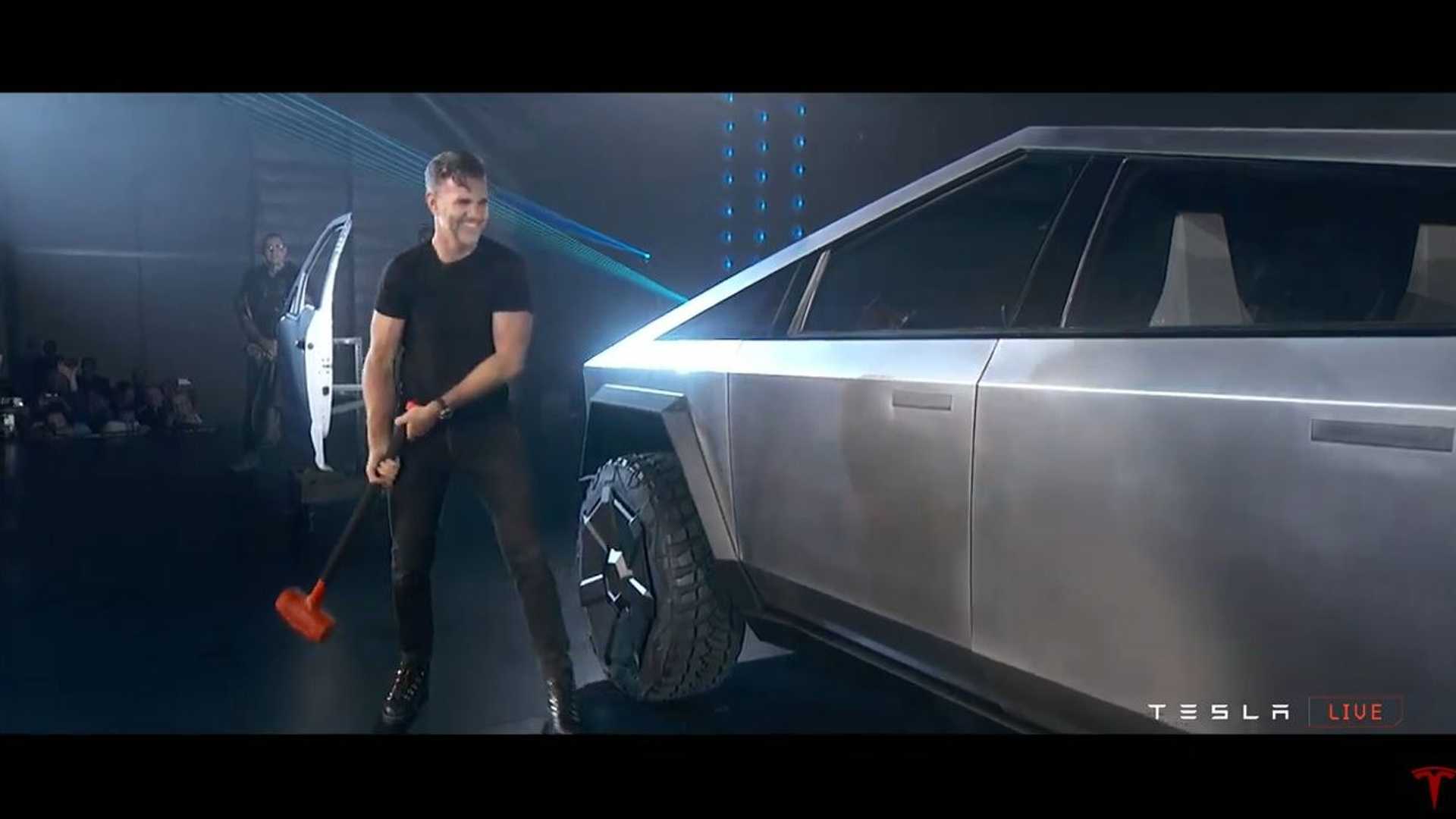
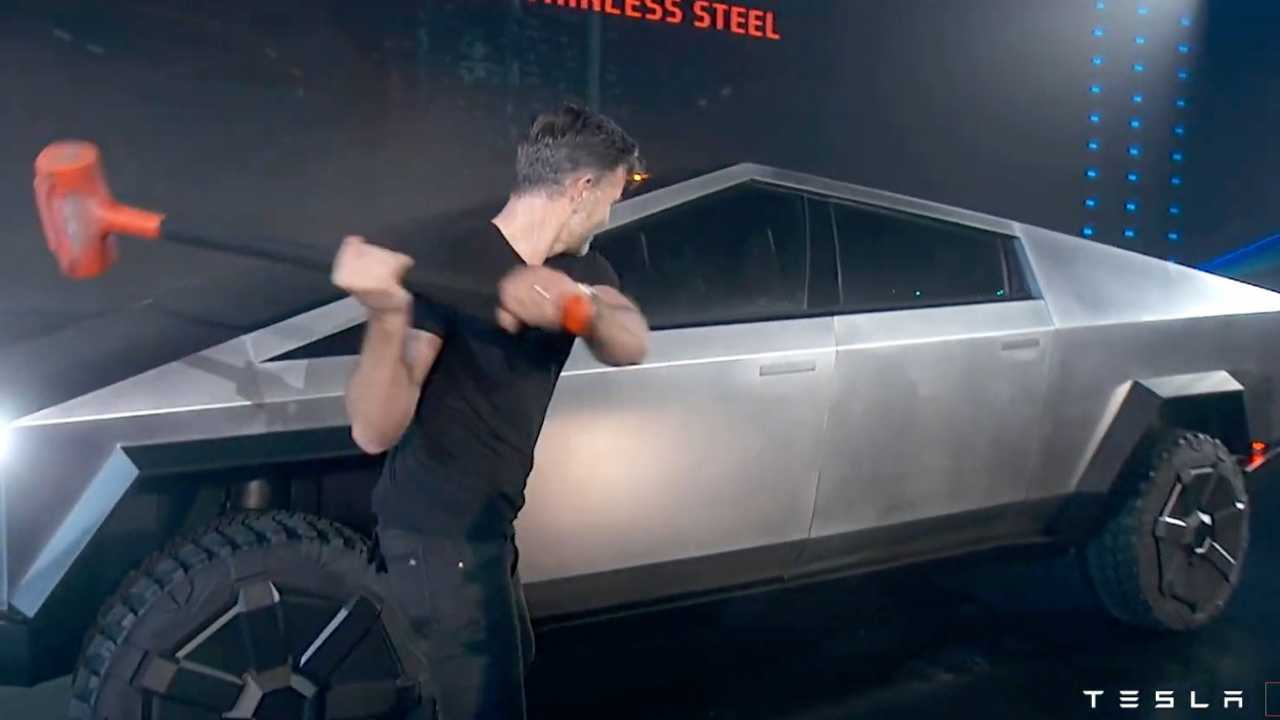
The much-hyped unveiling went off script when its supposedly unbreakable window glass splintered twice when hit with a large metal ball. Some analysts panned the truck’s blocky, angular looks.

Placing an order costs buyers US$100, which Tesla says is fully refundable.

Tesla has said the “Cybertruck,” which starts at US$39,900, will be in production in 2021.

Elon Musk

@elonmusk

146k Cybertruck orders so far, with 42% choosing dual, 41% tri & 17% single motor

https://www.forbes.com/sites/christopherelliott/2019/11/23/how-to-sleep-on-a-flight-like-a-pro/#5d71339d4d7a

How To Sleep On A Flight Like A Pro

If you want to sleep on a flight, good luck. From noise-canceling headsets to travel pillows to pills, it seems like everyone has a favorite method of getting some shut-eye onboard. But does any of it wor

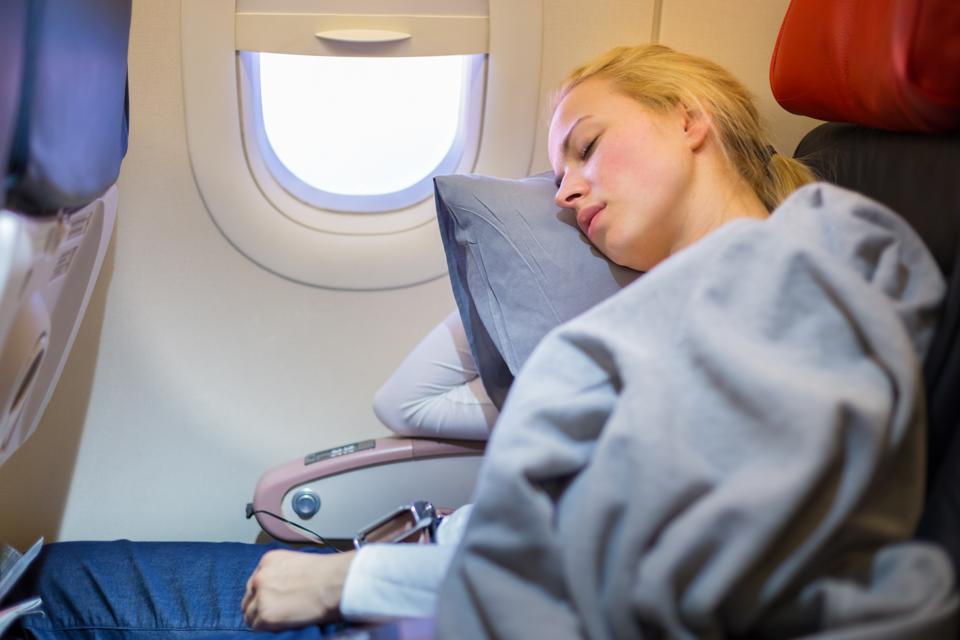
Let me be blunt: You probably won’t sleep well, at least in economy class. That’s according to a new study by The Sleep Judge, a mattress review site.

That’s right, most air travelers (61%) experienced “below average” or “very poor” sleep on a flight.

And while we’re at it, let’s also debunk another myth about sleeping on planes. Reclining your seat back will result in the worst sleep, according to The Sleep Judge.

Today In: Lifestyle

Yep, leaning forward is the best way to get a little shut-eye.

“Leaning forward over the tray table is the best seat position for maximizing rest,” said The Sleep Judge spokeswoman Haley Green. “Reclining and leaning to the sides are the worst positions.”

I hate to say “I told you” — but I told you. I believe we’ve run out of room on planes and that seats should be locked in place. I said so in my latest USA Today column, and you wouldn’t believe the hate mail I’ve received. Death threats, even.

That said, there are ways to sleep better on an aircraft. Even in economy class.

How the pros do it

Everything about the plane is conspiring against your sleep.

“It’s the narrow tightness of the seat pitch,” says Socrates Anastasiadis, a retired financial advisor from Chino Hills, Calif. “It’s the obnoxious passengers that push their seats back all the way as soon as the plane takes off. It’s the ones who need to go to the bathroom often yet they take a window seat.”

Comfortable clothes. “If you’re planning to get some sleep on a flight, you shouldn’t wear jeans that will squeeze your belly,” says John Breese, a frequent air traveler and CEO of Happysleepyhead.com, a mattress review site. “Your clothes should be loose and comfortable. Besides, since it can get cold on an airplane, you’d better be dressed in something with long sleeves and pants. You may also want to wear warm socks.”

Meditation. “In the early days, I used to take a Tylenol PM and melatonin after dinner,” says Jeanine Joy, a consultant for the sleep advice site Sleeptips.org. “But since I began meditating regularly, I don’t feel the need.”

Music. “If I need the distraction of sound, I insert some squishy earbuds and keep a few albums by the ambient-music band Marconi Union on my phone,” says Robin Catalano, the travel editor for an alternative newspaper in the Berkshires. Marconi Union’s song “Weightless” was recently named “the most relaxing song in the world” in a marketing study.

Pills. Andrew Steinberg, a travel concierge with Modern Travel, an affiliate of Ovation Travel Group recommends the anti-anxiety drug, Ativan. “I’m a believer in taking the right pill as the best practice,” he says. “For those who rarely take sleep medication, Ativan works as a great aid and goes through your body quickly with zero side effects or residual drowsiness.”

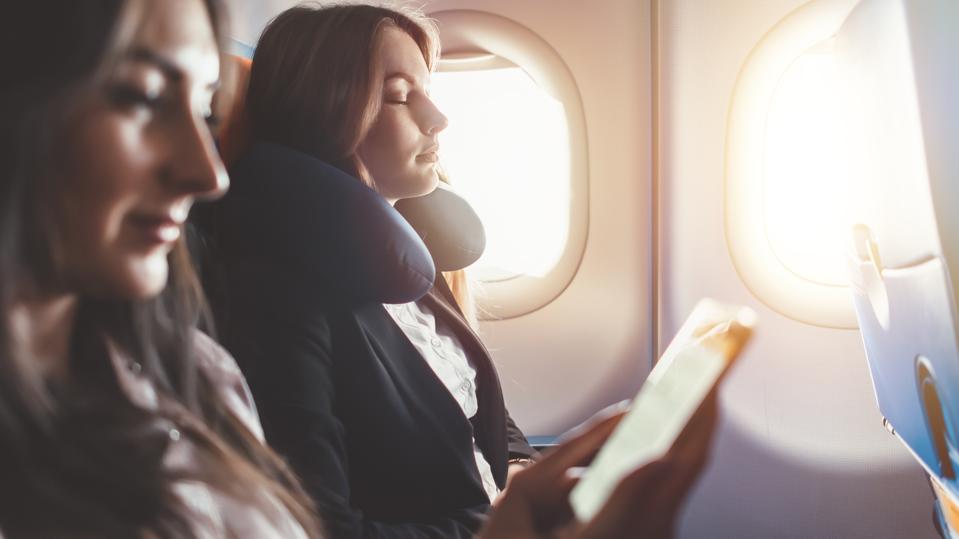
Pillows. That’s the recommendation of Hassan Alnassir, the founder of a toy company. “The main technique I typically use to relax my body and sleep easily on the plane is to use two pillows: one to support my neck and another to support my lower back,” he says. “I also wear a comfortable eye mask which helps to block the plane lights and become calmer, without exerting pressure on my head.”

Water. Stay away from alcohol, and drink plenty of water to stay hydrated in the dry cabin air. “Water is your best friend,” says Brett Manders, an international airline pilot and author of “Behind the Flight Deck Door – Insider Knowledge About Everything You’ve Ever Wanted to ask a Pilot.” “But not too much because what goes in must come out and it is awful to wake up to have to visit the bathroom to then try to get back to sleep.”
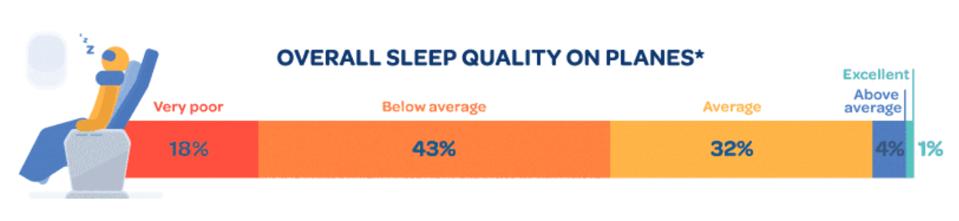
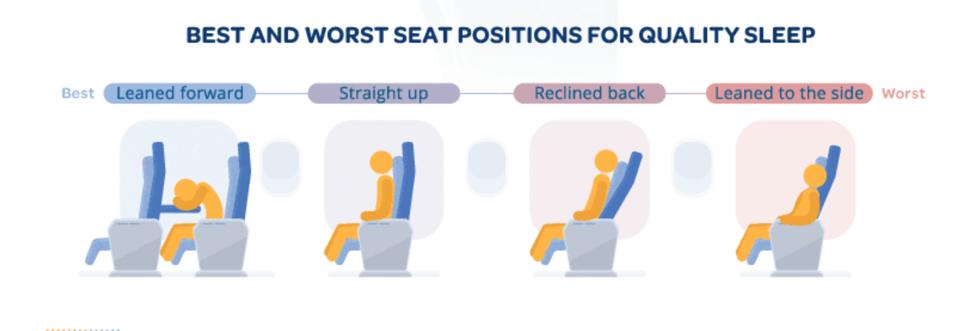
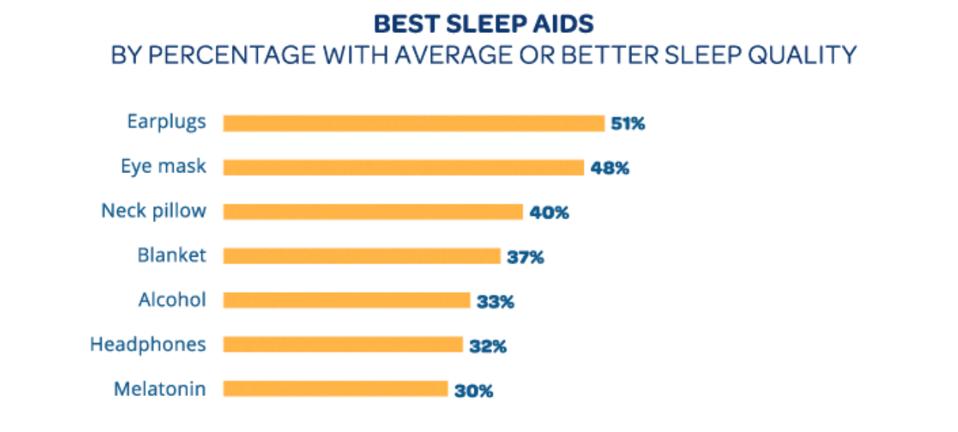
The survey results reflect this advice, more or less.

Note: Alcohol may work as a sleep aid in the short term, but it can really mess with your sleep cycle on a long-haul flight. It can also lead to some very unfortunate in-flight incidents, especially when combined with prescription drugs.

What’s the best seat to sleep on a flight?

Perhaps the most important decision: Which seat to book?

“Get the right seat,” says Breese of Happysleepyhead.com. “Window seats are the best option, as you can lean on the wall and let your body relax more. Plus, you won’t have to get up when your neighbor wants to visit the bathroom.”

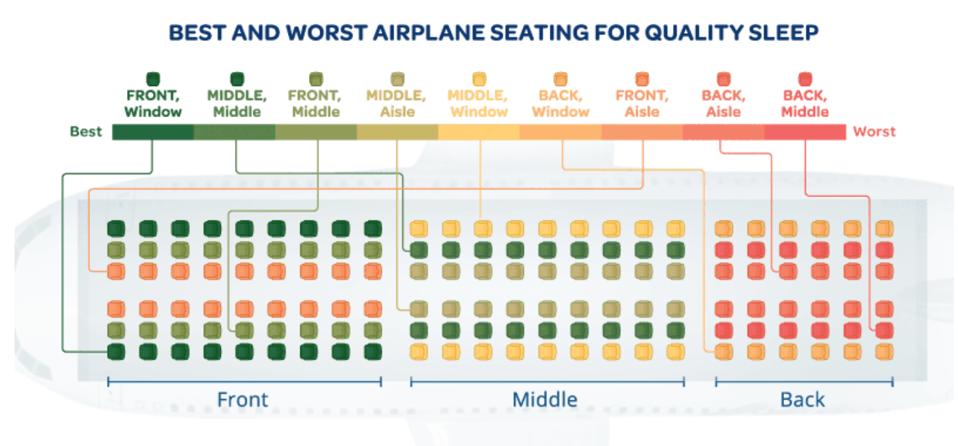
Actually, it’s a little more complicated, according to the latest study.

According to The Sleep Judge, the window seat may not always be the best choice:

  • The window seat in the front of the plane is the best place for sleep. The middle seat is not terrible. Avoid the aisle!
  • In the middle of the aircraft, go for the middle seat. The window and aisle are awful.
  • The back of the plane is terrible for sleep, but for your best results, go for the window. Definitely avoid the middle seat.

How I sleep on a flight

There’s no right way to sleep on a flight. As the father of three teenagers, all of whom fly with me most of the time, I always sleep with one eye open. My new favorite headset is a Cleer’s Flow II, which offers the best noise-canceling technology I’ve ever heard — or maybe I should say, not heard.

For the best sleep, I prefer blankets to pillows and an eye mask is a must. I stay away from alcohol and taking prescription drugs, but I know that for many nervous fliers, these substances can be helpful.

For most of us, sleeping on a plane is impossible. The seats are just too darned small, the interior cabin too loud. Airlines could easily fix this by offering a civil amount of space to their passengers and upgrading their planes. I hear the Airbus A330neo is really nice. (Anyone got an extra $296 million lying around?)

The best long-term fix would be to eliminate the class system, giving every seat a generous amount of legroom. But we are years away from reaching that point. By then, air travel probably will be obsolete.

https://electrek.co/2019/11/22/congressman-thomas-massie-on-tesla-cybertruck-preferring-model-s-to-model-3/

One of the biggest boosters of electric vehicles in Congress is a Republican representing a rural stretch of east Kentucky. The Congressman is also a legit Tesla hacker with a YouTube channel, two MIT engineering degrees, and serves on the US House Committee on Transportation & Infrastructure. So what does he think about the Tesla Cybertruck, and what new projects can we look forward to on his farm?
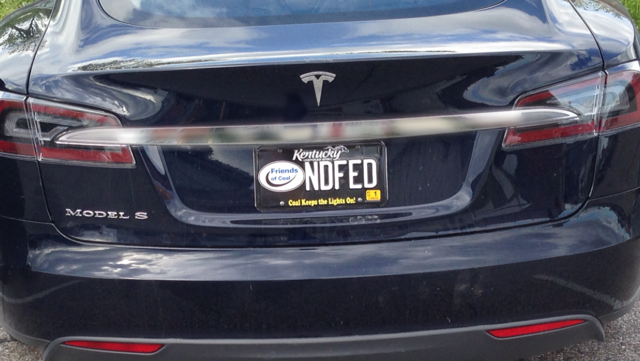
Congressman Thomas Massie started young with electric vehicles. He joined the MIT solar car team in 1989, helping build and race the solar car from Florida to Michigan in GM Sunrayce USA 1990. He was a Tesla early adopter, putting down a $5,000 deposit in 2010 on a Model S, sight unseen. He picked it up in January 2013, VIN #3347, and has been driving it ever since. Even in the pre-Supercharger days, he used his Model S to travel back and forth between Kentucky and DC, sleeping in the back while charging at RV lots. On his YouTube channel, he’s showcased building his own homebrew Powerwall with a salvaged Model S 85 battery. He has Kentucky’s official “Friend of Coal” license plate, showing that he’s proudly supporting his coal country constituents by driving an EV.

(note: this interview is edited and condensed from a longer conversation)

Q: So, first thoughts on the Tesla Cybertruck?

A: First impression is that I like that it’s stainless steel. For a lot of electric cars, the life of the drivetrain is measured in decades. It’ll outlast the body. So stainless steel was a good choice. I’m very interested to see the towing setup. I need it to pull a fifth wheel trailer. I drive a 240-mile roundtrip with a loaded 16’ foot cattle hauler, so I’m eager to see what kind of range I’d get. I’m also really curious about Tesla’s ‘Cyberquad’ ATV. I have a Polaris Ranger that I’ve been planning on EV converting.

Q: Can you tell us more about converting your Polaris ATV?

A: I’d use two Tesla Model S battery modules. The Model S pack has 16 modules, I’d use two them, run it at 48V, and probably use the Briggs and Stratton 48V electric motor that’s out there. I already have one for my son’s go-kart. Two modules would equal 10kWh of capacity.

Q: What about using a Model 3 battery?

A: The Model 3 battery is less hacker-friendly (hacking being a good thing, despite its bad name these days) because it has 4 modules instead of 16, and the modules aren’t all the same voltage. Each Model S battery module is 24V, you can wire them up easily in a number of configurations. The Model 3 battery has 4 modules, and they’re all higher voltage than most off-the-shelf commercial inverters today. It doesn’t lend itself to compatibility with 48V. You see this reflected on eBay, the Model S battery goes for more.

Q: Have you considered trading in your Model S for a Model 3 so you can add to your home energy storage?

A: I’ve tried the Model 3, but I prefer the Model S. I think Tesla nailed it with the Model S. I much prefer the ride quality. I’m keeping my 2012 Model S for now.

Q: Elon just tweeted that the Cybertruck will have a solar roof option to add 15 miles of range per day, what do you think of that?

A: I personally really like that option. I’m a bit bothered by battery phantom drain. Having enough solar to offset that is a very good improvement. People are used to finding the same amount of gas in their car even after they’ve been gone for a month.

Q: You’ve got experience with solar cars, can you tell us about that?

A: I joined the MIT solar car team in 1989, and the next year we entered the car in the GM Sunrayce. We competed with 32 teams, racing from Florida to Michigan. Our car had about 900W of solar, and if it was sunny out, we could drive 32mph at break even – the car’s amp meter would read zero. That was such a cool feeling. The battery was a silver-zinc battery designed for torpedoes. The captain of our team was James Worden, who went on to found Solectria. His company bought Chevy Metros, took out the power train, and resold them as EVs, he was a real EV pioneer.

Q: What’s another feature you’d like to see in the Cybertruck?

A: One thing I want to see for all Teslas is a way to more seamlessly integrate charging with solar. It’s especially important when you’re off-grid, like I am at the farm. Having my Tesla crank up its charging when the sun is beating down, and wind down its charging when the clouds come in. I put a solid state relay in the circuit breaker in my house, wired to the 240V outlet I use for my Tesla. When the sun is blaring, I turn it on, and when I lose the sun, I can cut it. But if you do this too often (more than twice a day), the Tesla will think it’s connected to a faulty outlet and refuse to charge.

Q: Do you think the Cybertruck will be a hit in Kentucky?

A: One of the things that attracts businesses to Kentucky is our low cost of electricity, so that should help people go electric here. I think driving electric with a “Friends of Coal” license plate also helps people make a connection between driving electric and supporting homegrown, locally generated power.

Q: I saw that recent video tour of your farm. You have a creek on your property, have you ever looked into micro-hydro?

A: I’ve surveyed the creek many times to see its elevation drop. I built a makeshift weir (ed note – a weir, or low head dam, is a barrier across the width of a river that alters the flow characteristics of water) to measure the height, estimate the volume of water traveling through the creek. But each time I looked at it, I concluded installing more solar or battery storage makes more sense. I am still pursuing pumped hydro for stored energy. I built a pond with a vertical elevation 200ft higher than my house. I ran a 2” line from it, big enough to allow a substantial flow at 88PSI. (ed note – this is very cool, coal country is already home to “the world’s largest battery” in the form of a pumped hydro station in SW Virginia)


https://phys.org/news/2019-11-method-magnetic-materials.htmlg

New method for using spin waves in magnetic materials

New method for using spin waves in magnetic materials
Magnetic simulations for magnetic disks measuring 0.5 micrometres in diameter. The spatial distributions of dynamic magnetization in permalloy (left) and cobalt and nickel (right) can be seen. Credit: B. Divinskiy et al./Nature Communications

Smaller, faster, more energy-efficient—this is the goal that developers of electronic devices have been working towards for years. In order to be able to miniaturize individual components of mobile phones or computers for example, magnetic waves are currently regarded as promising alternatives to conventional data transmission functioning by means of electric currents. The reason: As chips become smaller and smaller, electrical data transmission at some point reaches its limits, because electrons that are very close to each other give off a lot of heat—which can lead to a disruption of physical processes.

High-frequency , by contrast, can propagate in even the smallest nanostructures and thus transmit and process information. The physical basis for this is the so-called spin of electrons in the magnetic material, which can be simplified as a rotation of the electron around its own axis. However,  in microelectronics have so far only been of limited use, due to the so-called damping, which acts on the spin waves and weakens them.

Physicists at the University of Münster (Germany) have now developed a new approach that eliminates unwanted damping and makes it easier to use spin waves. “Our results show a new way for the application of efficient spin-driven components,” says Dr. Vladislav Demidov, the head of the study (Institute for Applied Physics, Research Group Demokritov). The new approach may be relevant for future developments in microelectronics, but also for further research into quantum technologies and novel computer processes. The study was published in the journal Nature Communications.

New method for using spin waves in magnetic materials
Layout of the experiment. Thin magnetic plates of Mu-metal or of cobalt and nickel (blue) are on a thin layer of platinum (beige). Magnetic anisotropies act at the interfaces of the materials. The effects are measured with laser light (green; Brillouin light scattering spectroscopy). Credit: B. Divinskiy et al./Nature Communications

Background and method:

Magnonics is the name of the research field in which scientists study electron spins and their waves in . The term is derived from the particles of magnetism, which are called magnons, corresponding to spin waves.

The best way to electronically compensate the disturbing damping of spin waves is the so-called spin Hall effect, which was discovered a few years ago. The electrons in a spin current are deflected sideways depending on the orientation of their spin, which makes it possible to efficiently generate and control spin waves in magnetic nano-devices. However, so-called nonlinear effects in the oscillations lead to the spin Hall effect not working properly in —one reason why scientists have not yet been able to realize damping-free spin waves.

In their experiment, the scientists placed magnetic disks made of permalloy or cobalt and nickel, just a few nanometers thick, on a thin layer of platinum. So-called magnetic anisotropies acted on the interfaces of the different materials, which means that the magnetization took place in a given direction. By balancing the anisotropies of the different layers, the researchers were able to efficiently suppress the unfavorable nonlinear damping and thus achieve coherent spin waves—i.e. waves whose frequency and waveform are the same and which therefore have a fixed phase difference. This enabled the scientists to achieve complete damping compensation in the magnet system, allowing the waves to propagate spatially.

The scientists expect that their new approach will have a significant impact on future developments in magnonics and spintronics. “Our findings open a route for the implementation of spin Hall oscillators capable of generating microwave signals with technologically relevant power levels and coherence,” stresses Boris Divinskiy, a Ph.D. student at the Institute for Nonlinear Magnetic Dynamics at Münster University and first author of the study.


Explore further

Researchers take magnetic waves for a spin


More information: Boris Divinskiy et al, Controlled nonlinear magnetic damping in spin-Hall nano-devices, Nature Communications (2019). DOI: 10.1038/s41467-019-13246-7

Journal information: Nature Communications