https://techcrunch.com/2020/04/17/google-card/

Leaked pics reveal Google smart debit card to rival Apple’s
Google Card Debit

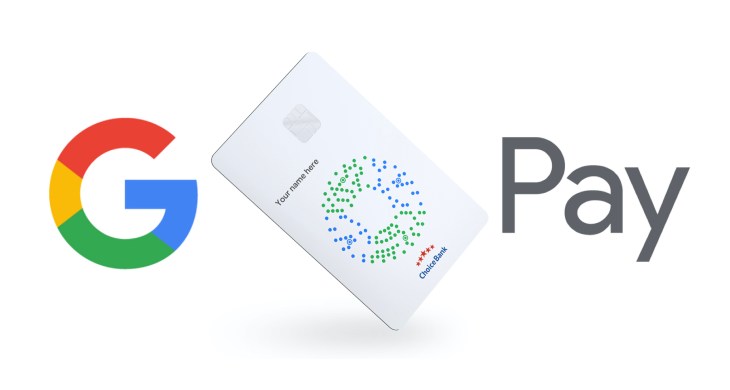
Would you pay with a “Google  Card?” TechCrunch has obtained imagery that shows Google is developing its own physical and virtual debit cards. The Google card and associated checking account will allow users to buy things with a card, mobile phone or online. It connects to a Google app with new features that let users easily monitor purchases, check their balance or lock their account. The card will be co-branded with different bank partners, including CITI and Stanford Federal Credit Union.

A source provided TechCrunch with the images seen here, as well as proof that they came from Google. Another source confirmed that Google has recently worked on a payments card that its team hopes will become the foundation of its Google Pay app — and help it rival Apple Pay and the Apple Card. Currently, Google Pay only allows online and peer-to-peer payments by connecting a traditionally issued payment card. A “Google Pay Card” would vastly expand the app’s use cases, and Google’s potential as a fintech giant.

Google the financial services company?

By building a smart debit card, Google has the opportunity to unlock new streams of revenue and data. It could potentially charge interchange fees on purchases made with the card or other checking account fees, and then split them with its banking partners. Depending on its privacy decisions, Google could use transaction data on what people buy to improve ad campaign measurement or even targeting. Brands might be willing to buy more Google ads if the tech giant can prove they drive a sales lift.

The long-term implications are even greater. While once the industry joke was that every app eventually becomes a messaging app, more recently it’s been that every tech company eventually becomes a financial services company. A smart debit card and checking accounts could pave the way for Google offering banking, stock brokerage, financial advice or robo-advising, accounting, insurance or lending.

Young wealthy man pays card using mobile payment

Google’s vast access to data could allow it to more accurately manage risk than traditional financial institutions. Its deep connection to consumers via apps, ads, search and the Android operating system gives it ample ways to promote and integrate financial services. With the COVID-19 downturn taking shape, high-margin finance products could help Google develop efficient revenue opportunities and build its share price back up.

When TechCrunch asked Google for confirmation, it did not dispute our findings or assertions. The company offered us a statement it provided reporters following a November story, wherein Google told The Wall Street Journal it was experimenting in the checking account space. TechCrunch is the first to report Google’s debit card plans:

We’re exploring how we can partner with banks and credit unions in the US to offer smart checking accounts through Google Pay, helping their customers benefit from useful insights and budgeting tools, while keeping their money in an FDIC or NCUA-insured account. Our lead partners today are Citi and Stanford Federal Credit Union, and we look forward to sharing more details in the coming months.

For now, Google’s strategy is to let partnered banks and credit unions provide the underlying financial infrastructure and navigate regulation while it builds smarter interfaces and user experiences. It’s forseeable that one day Google might cut out the banks and take all the spoils for itself. Google launched a Wallet debit card in 2013 as an extension of its old payment app Google Wallet, but shut the card down in 2016. Given Google’s penchant for renaming or shutting down then reviving products, building a new debit card feels on-brand.

With people around the world suddenly more concerned about their finances amidst the coronavirus economic disaster, a debit card with more transparency and controls could be appealing.

First look at the Google Card

Traditional banking products can be clunky, often requiring phone communication with customer service or sifting through cluttered websites to address security issues. Google hopes to make financial management as intuitive as its email and mapping apps. The card and app designs shown here are not final, and it’s unclear when Google’s debit card may launch. But let’s take a look at what these internal Google materials reveal about its ambitions for its payment instrument.

The Google debit card will come co-branded with the Google name and its partnered bank, though the exact name of the product is still unknown. In the designs, it’s a chip card on the Visa network, though Google could potentially support other networks like Mastercard. Users are able to add money or transfer funds out of their account from the connected Google app, which is likely to be Google Pay, and use a fingerprint and PIN for account security.

Once connected to their bank or credit union account, users could pay for purchases in retail stores with a physical Google debit card, including with contactless payments, by just holding it up to a card reader. A virtual version of the card that lives on a user’s phone can also be used for Bluetooth mobile payments. Meanwhile, a virtual card number can be used for online or in-app payments.

Users are shown a list of recent transactions, with each including the merchant name, date and price. They can dig into each transaction to see the location on a map, get directions or call the store. If users don’t recognize a transaction, it’s easy to protect themselves with the card’s vast security options.

If a customer suspects foul play because they lost their card, they can lock it and optionally order a replacement while still being able to pay with their phone or online, thanks to Google’s virtual card number system that’s different than the one on their physical card. If instead they suspect their virtual card number was stolen by a hacker, they can quickly reset it. And if they believe someone has gained unauthorized access to their account, they can lock it entirely to block all types of payments and transfers.

The settings reveal options for notifications and privacy controls to “decide what information you share,” though we don’t have imagery of what’s contained in those menus. It’s unclear how much power Google will give customers to limit the company or merchant’s data access. Google’s decisions there could impact how transaction data might fuel its other businesses.

Fintech everywhere

Google is a relative late-comer to offering its own card. Apple launched its Apple Card in August, offering a slickly designed titanium Mastercard credit card backed by Goldman Sachs. It charges minimal customer fees, comes with a virtual card for use through Apple Pay and generates interest.
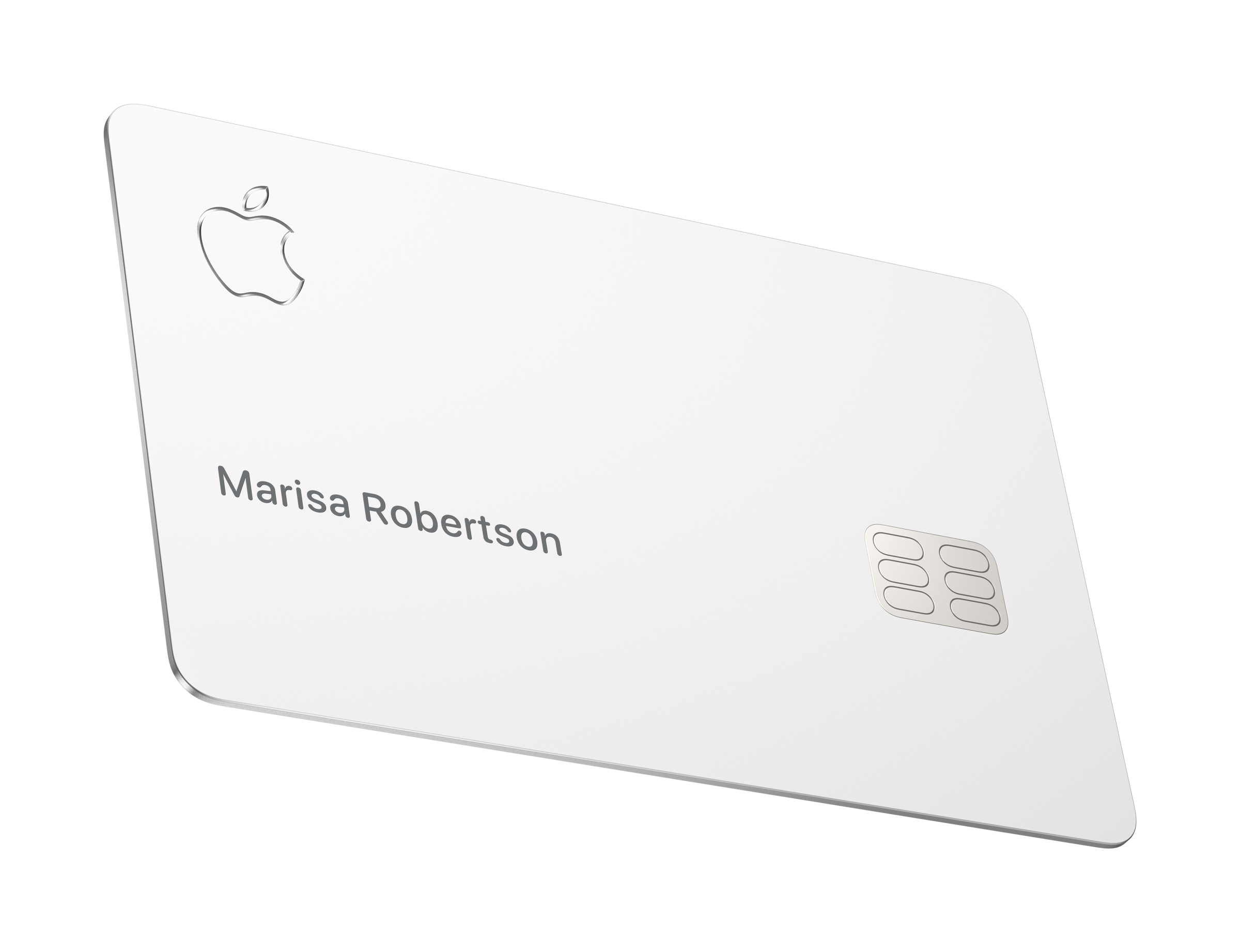
Apple does collect interchange fees from merchants, though, which Google could similarly gather to earn revenue. Last month, Apple changed the Card’s privacy settings to share more data with Goldman Sachs that might also help the two provide additional financial services. Apple Pay now accounts for 5% of global card transactions, and is forecast to hit 10% by 2024, according to Bernstein research. The underlines the gigantic market Google is gunning for here.

The stock brokerage and robo-advisor apps have also joined the payments race. Wealthfront launched cash accounts and debit cards last February, bringing in $1 billion in assets in two months and doubling the company’s total holdings to $20 billion by September. Betterment launched its checking product in October 2019 with a Visa debit card, but it doesn’t generate interest.

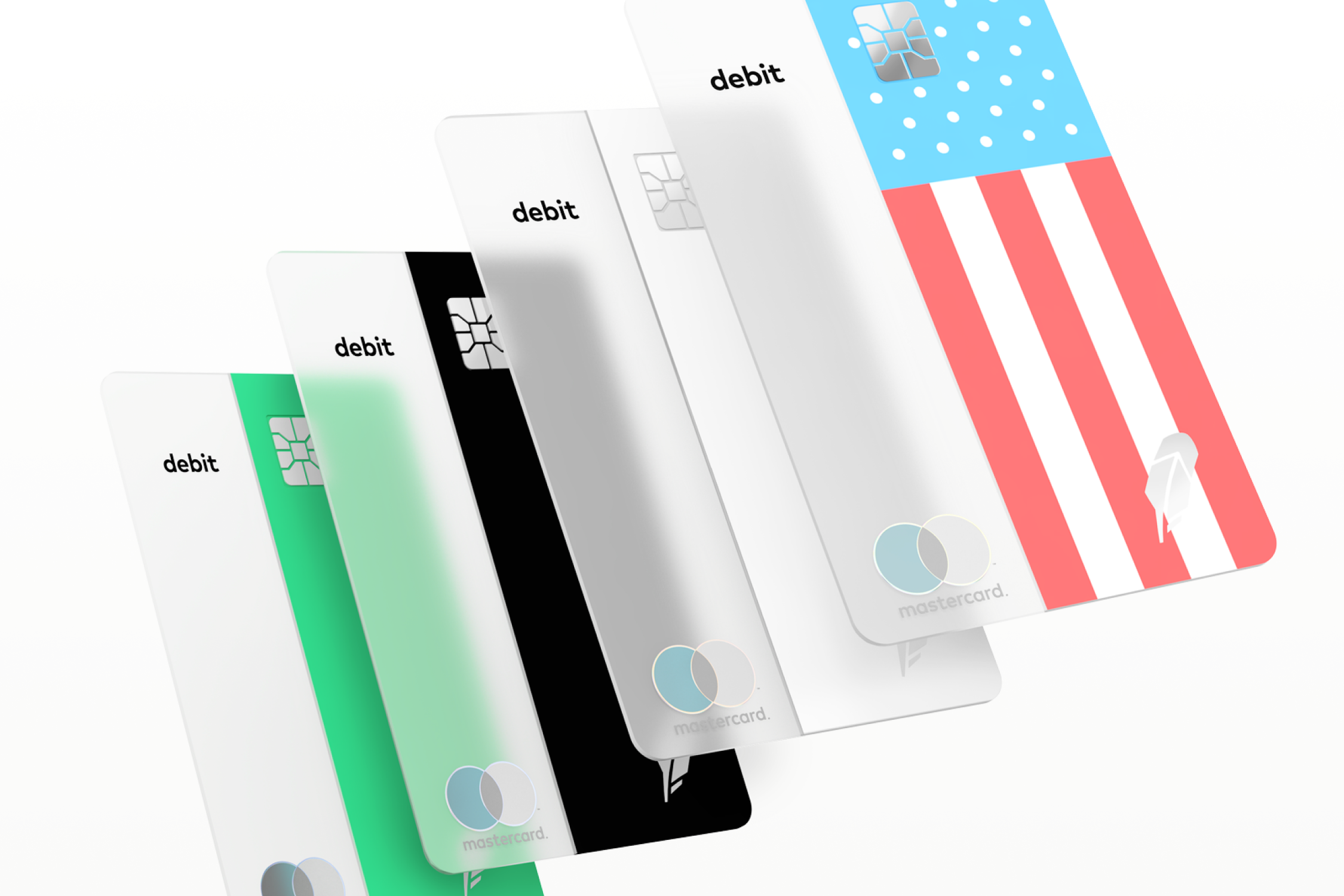
Robinhood  botched the December 2018 launch of its checking accounts due to ineligible insurance, but relaunched in October 2019 with debit card withdrawls from 75,000 ATMs and a solid interest rate. It’s unclear how Google’s card will work with ATMs or how its checking accounts will generate interest.
The appeal for Google and the rest is clear. It seems whenever companies help move people’s money around, some of it inevitably “falls off the truck” and lands in their pockets. Financial services are typically low-overhead ways to generate revenue. That could be especially enticing, as Google has found many of its side hustle “other bets” to be unsustainable. It’s moved to prune some of these tertiary projects, such as its Makani wind energy kites.

Google may never find businesses as lucrative as its core in search and advertising, but it has the advantages to become a serious player in fintech. Its vast sums of cash, deep bench of engineering talent, experience building complex utilities, numerous consumer touch points and near-bottomless well of data could give it an edge over stodgier old banks and scrappier startups. And while Facebook slams into regulatory scrutiny and is forced to scale back its Libra cryptocurrency, Google’s more familiar approach via debit cards could pay off.

https://www.psypost.org/2020/04/what-changes-when-couples-open-their-relationship-surprisingly-little-new-research-suggests-56494

What changes when couples open their relationship? Surprisingly little, new research suggests

A new study tracked people who planned to open up their romantic relationship to include other partners for two months. The findings, published in Social Psychological and Personality Science, indicate that engaging in consensual non-monogamy is associated with some increases in sexual satisfaction — but does not have much of an impact on other aspects of one’s relationship.

The idea for the study primarily came from Annelise Murphy, an undergraduate psychology student at Western University. “She wanted to gain some research experience by conducting her own independent project. She was particularly interested in consensual non-monogamy (CNM), and whether the experience of practicing CNM might be better or worse for certain individuals,” explained Samantha Joel, an assistant professor at the University of Western Ontario and co-author of the research.

“My own research interests are on relationship decisions, so this project was the natural merger between her interests and mine,” explained Joel, who is also the head of the Relationships Decision Lab.

“How do people choose to open their relationships up to other partners, and what happens afterward? How do their relationship change? Do the consequences of opening up a relationship depend on a person’s reasons for wanting to do so? We decided to conduct this exploratory study to learn as much as we could about that relationship transition.”

For their study, the researchers recruited 233 individuals currently in a monogamous relationship who had expressed a desire to try swinging, an open relationship or polyamory (but had not done so yet.) The participants completed assessments of relationship quality, life satisfaction, sexual satisfaction, and motives for engaging in consensual non-monogamy. Two months later, the participants completed a follow-up survey.

The relationship quality assessment asked the participants to indicate how well their partner met their needs, how much they loved their partner, and how many relationship problems they were experiencing, among other things.

More than half of the participants, 155 individuals, reported that they had in fact opened their relationship over the two month span. The researchers found that participants who opened their relationships tended to experience positive changes in sexual satisfaction, while those who did not tended to experience negative changes in sexual satisfaction over the course of the study.

When it came to relationship quality and life satisfaction, on the other hand, there was no meaningful difference between those who opened their relationships and those who did not.

“On the one hand, there’s an idea out there that turning your monogamous relationship into a non-monogamous one is an effective way to ruin that relationship. On the other hand, consensual non-monogamy is sometimes talked about as though it’s an elixir for relationship problems. The biggest takeaway from the current data is that we found no support for either of these ideas. People who opened up their relationships to other partners were no more or less happy with their relationships after they opened up than they had been at the beginning of the study,” Joel told PsyPost.

“We did find that people who opened up their relationships were subsequently more sexually satisfied, both compared to before they had opened up, and compared to the portion of our sample who thought about opening up but didn’t. This was particularly true for people who had the goal of addressing sexual incompatibilities within their primary relationship. So, although engaging in CNM may not improve people’s relationships per se, our results tentatively suggest that it could help people’s sex lives.”

The findings point to overall trends, but the results may vary for individual couples — especially when one partner wants to open the relationship while the other does not.

“We specifically recruited people who were thinking about opening up their relationships, and so our participants were all at least somewhat enthusiastic about CNM by definition. The current results probably wouldn’t generalize to people who hold negative attitudes about CNM. Another major caveat is that we did not collect partner reports, and so we cannot say how our participants’ partners felt about the experience of opening up their relationships,” Joel explained.

“People self-selected into the ‘open’ group by choosing to engage in CNM. That self-selection limits our causal conclusions: we don’t know why some people in our sample chose to open up while others didn’t, and what other third variables (e.g., other things happening in their lives) might explain the differences between the groups or between the time points.”

In addition to recruiting both couple members, future research should also include more partner-related assessments and examine the long-term impact, the authors of the study advised. “We only followed our participants over a couple of months, and so these data cannot speak to the long-term effects of opening up a relationship to other partners,” Joel noted.

The study, “A Prospective Investigation of the Decision to Open Up a Romantic Relationship“, was authored by Annelise Parkes Murphy, Samantha Joel, and Amy Muise.

https://carbuzz.com/news/ford-mustang-mach-e-more-powerful-than-previously-thought

Ford Mustang Mach-E More Powerful Than Previously Thought

YESTERDAY   

The Ford Mustang Mach-E is a huge deal for the automaker. As its first-ever mass-produced all-electric vehicle, expectations are understandably high. Having the “Mustang” name also raises the stakes. Aside from how it drives, the Mustang Mach-E will also be judged by its power output. Previously, Ford released some early horsepower and torque figures and they were impressive, but now new information has come to light claiming the Mach-E is more powerful than even Ford thought.

The crew over at Mach-E Forum managed to get ahold of an updated set of specifications for the SUV and the information is interesting, to say the least. “We bring exciting news,” the forum admin writes. “The 2021 Mach-E specs on Ford’s dealer training site (obtained from our dealer source) are now showing an increase in horsepower, torque, and kW output specs for all Mach-E trims and models!”

CarBuzz

CarBuzz

Ford

Below is a comparison between the old specs and the updated ones:

RWD Standard Range Mach-E:

266 hp / 317 lb-ft / 198 kW

(+11 hp, +11 lb-ft, +8 kW from original specs)

RWD Extended Range Mach-E:

290 hp / 317 lb-ft / 216 kW

(+8 hp, +11 lb-ft, +6 kW from original specs)

AWD Standard Range Mach-E:

266 hp / 428 lb-ft / 198 kW

(+11 hp, +11 lb-ft, +8 kW from original specs)

AWD Extended Range Mach-E:

346 hp / 428 lb-ft / 258 kW

(+14 hp, +11 lb-ft, +10 kW from original specs)

Clearly, these increases aren’t dramatically more, but we don’t think anyone will complain. Ford previously said it’ll announce all final specs closer to the Mustang Mach-E’s launch, initially planned for next spring, though that could potentially change given the current circumstances in the world.

Mach-E Forum

Ford

DashboardFord

Prices will begin at $43,895 for the Select trim and will top off at $60,500 for the GT. All First Edition examples, priced at $59,900 a pop, are sold out. Ford also released data last month regarding how American buyers are speccing their Mach-Es. Rapid Red Metallic has been the most popular color, followed by Infiniti Blue Metallic. Western state buyers have overwhelmingly been opting for the extended-range battery and rear-wheel-drive setup, while all-wheel drive is more popular with buyers in the northeastern states.

Hopefully, Ford will announce final output figures soon since the above training site info is now out in the open. Will more power lure more buyers? Probably not, but it’ll certainly please those who’ve already placed their $500 reservation and subsequent order.

Ford

Ford

Front View DrivingFord

SOURCE CREDITS: MACH-E FORUM

https://newatlas.com/science/psilocybin-synthesis-yeast-bacteria/

Scientists turn yeast into psychedelic psilocybin factories

Scientists from DTU Biosustain show that psilocybin, a potential drug for treating depression and other psychological conditions, can be produced in yeast
The Novo Nordisk Foundation Center for Biosustainability
VIEW 1 IMAGES

With psilocybin on the cusp of becoming a clinically validated and approved medicine, scientists are exploring new ways to produce the chemical without needing to grow magic mushrooms or relying on costly synthesis techniques. A team of Danish researchers has presented a novel method of producing the psychedelic chemical using common yeast.

“It’s infeasible and way too expensive to extract psilocybin from magic mushrooms and the best chemical synthesis methods require expensive and difficult-to-source starting substrates,” explains Nick Milne, an author on the new study published in the journal Metabolic Engineering. “Thus, there is a need to bring down the cost of production and to provide a more consistent supply chain.”

If psilocybin research continues down the path it is currently on, there will be a great need for large-scale production in the coming years. It is not commercially viable to extract the chemical from magic mushrooms, but as Milne and his team suggest in their study, current synthesis methods are not ideal either.

“Recently the company COMPASS pathways developed and patented a new method for the chemical synthesis of psilocybin,” the team writes in the study, “and while it improves on previous methods with an overall yield of 75%, it uses expensive 4-hydroxyindole as a starting substrate resulting in high production costs which may limit its application.”

Last year a team of researchers from Miami University presented an incredibly novel way of producing psilocybin by engineering a well-known strain of Escherichia coli bacteria.

“We are taking the DNA from the mushroom that encodes its ability to make this product and putting it in E. coli,” said lead on the Miami University study Andrew Jones last year. “It’s similar to the way you make beer, through a fermentation process. We are effectively taking the technology that allows for scale and speed of production and applying it to our psilocybin-producing E. coli.”

According to Milne’s new research, however, this E.coli method is not particularly more cost-effective than other current synthesis techniques as it still requires expensive precursor chemicals such as 4-hydroxyindole. The new study describes a method of producing psilocybin from Saccharomyces cerevisiae, commonly known as baker’s yeast, using no expensive starting substrate chemicals.

Although this new study presents a promising proof of concept, Milne says more metabolic engineering is necessary to make the process more efficient.

“What we find in the study is that we get a lot of this non-phosphorylated compound psilocin,” explains Milne. “Essentially, we are losing half of our product because the phosphate group falls off. Dealing with this high amount of psilocin is something that absolutely needs to be solved before realistically moving to a production process.”

A compelling implication of this new study is the ability to synthesize particles that are produced in psilocybin-containing mushrooms but generally found in such low levels that they have been too difficult to purify and study until now. This would allow new research into clinical outcomes for molecules that may offer entirely undiscovered therapeutic pathways.

Even more intriguingly, Milne says the technique could potentially result in the production of entirely novel molecules that don’t occur naturally.

“Our interest is not only to make kilogram-scale production of psilocybin but to use the biological machinery to make new derivatives that aren’t available today,” says Milne. “Thus, it is very useful that we could not only demonstrate the production of psilocybin but also find many derivatives that could turn out to have important therapeutic relevance.”

The new research was published in the journal Metabolic Engineering.

https://www.sciencedaily.com/releases/2020/04/200416114535.htm

Psychedelic compound from magic mushrooms produced in yeast

Date:
April 16, 2020
Source:
Technical University of Denmark
Summary:
Scientists prove that psilocybin, a potential drug for treating depression and other psychological conditions can be produced in yeast.

Psilocybin mushrooms have been found to have minimal harmful effects and could potentially benefit those with depression. But they remain illegal even though they offer a groundbreaking alternative to several under-treated psychological conditions.

Nevertheless, psychedelics are currently riding a wave of positive momentum brought on by cannabis, and if psilocybin gets approved as a pharmaceutical drug, production in yeast appears to be the most commercially viable option.

“It’s infeasible and way too expensive to extract psilocybin from magic mushrooms and the best chemical synthesis methods require expensive and difficult to source starting substrates. Thus, there is a need to bring down the cost of production and to provide a more consistent supply chain,” says Nick Milne, former Postdoc at DTU Biosustain and CSO and Co-founder of Octarine Bio.

Bio-based production of psilocybin has gained big interest and researchers have already proved small-scale production in E. coli. However, production in bacteria comes with a wide range of concerns which can be addressed by using yeast instead.

In yeast, the scientists prove that psilocybin can be produced de novo, which means that you can produce the molecule by simply growing the yeast with sugar and other nutrients, without the need to add any other starting substrates.

Producing psilocybin de novo in E. coli is difficult since a key enzyme in the biosynthetic pathway doesn’t work in bacteria, and so to get around this problem you need to add an expensive starting substrate, making the whole production process too costly.

“Since yeast and Psilocybe mushrooms are quite closely related species, this enzyme works very well in yeast, providing a much more cost-efficient alternative,” says group leader at DTU Biosustain Irina Borodina.

Additionally, yeast also performs better in large-scale fermentation due to its long history in the beer brewing process, and also in the purification process since E. coli produces additional potentially harmful compounds that you would not like to have in your final product.


Story Source:

Materials provided by Technical University of Denmark. Original written by Anders Østerby Mønsted and Anne Wärme Lykke. Note: Content may be edited for style and length.


Journal Reference:

  1. N. Milne, P. Thomsen, N. Mølgaard Knudsen, P. Rubaszka, M. Kristensen, I. Borodina. Metabolic engineering of Saccharomyces cerevisiae for the de novo production of psilocybin and related tryptamine derivativesMetabolic Engineering, 2020; 60: 25 DOI: 10.1016/j.ymben.2019.12.007

Cite This Page:

Technical University of Denmark. “Psychedelic compound from magic mushrooms produced in yeast.” ScienceDaily. ScienceDaily, 16 April 2020. <www.sciencedaily.com/releases/2020/04/200416114535.htm>.

https://futurism.com/the-byte/elon-musk-teslas-automatically-stop-lights

ELON MUSK: TESLAS WILL SOON AUTOMATICALLY STOP AT TRAFFIC LIGHTS

Stop And Go

Tesla CEO Elon Musk tweeted today that the electric carmaker is working on an update that will allow its vehicles to automatically stop at traffic lights or stop signs.

“We’re working super hard on getting traffic lights and stops released,” he said.

Tiers In Rain

There are currently two general tiers of Tesla “self-driving” technology. There’s Autopilot, a system that includes lane assist, speed matching and other smaller features. And there’s Full-Self Driving (FSD), which despite its misleading name only currently allows Tesla vehicles to get on and off the highway, change lanes automatically, and park in parking lots.

The traffic light update will come along some other incremental updates to vehicles, according to Musk. “Reverse Summon (auto park) will be part of the core Autopilot software upgrade for FSD this year,” he tweeted.

Promises

The news comes after Musk promised “more FSD features later this month” in a March 5 tweet. At the time, Electrek suggested that he could have been referring to automatic driving on city streets, including the ability to navigate traffic lights.

Tesla has been promising such abilities since at least February 2019. Will Tesla finally make good on its promise? It’s impossible to tell amid the current coronavirus pandemic.

READ MORE: Tesla ‘working super hard’ on auto stop for traffic lights, Elon Musk says [Digital Trends]

More on self-driving tech: New Self-Driving Features Will Come Out This Month

https://electrek.co/2020/04/16/tesla-cybertruck-updated-dynamic-suspension-kick-butt-baka/

Elon Musk announced that Tesla is working on an updated dynamic suspension for the Cybertruck electric pickup truck.

He hinted at Tesla could be testing it in Baja off-road Motorsport.

When Tesla unveiled the Cybertruck in November of last year, it created a lot of talk, mostly about its design, but many people focused on the insane specs at a surprisingly reasonable price.

The company also announced some interesting features like bulletproof exoskeleton body, armored glass, and an innovative adaptive suspension.

Tesla wrote about the latter:

“Raise and lower suspension four inches in either direction for easy access to Cybertruck or the vault, while self-leveling capabilities adapt to any occasion and assist with every job.”

Now CEO Elon Musk says that Tesla is updating the air suspension to have even more travel for off-roading.

On Twitter, the CEO hinted that Tesla might test the truck in Baja:

“We’re working on increasing dynamic air suspension travel for better off-roading. Needs to kick butt in Baja.”

He is referencing the Baja 1000, which is a Mexican off-road motorsport race held each year on the Baja California Peninsula. It features a bunch of cars, trucks, motorcycles, ATVs and buggies outfitted for off-roading.

When asked what is going to be the clearance of the updated version of the Cybertruck, Musk said he is “reviewing overall system with vehicle engineering team next week” and he should have the number then.

Recently, Musk also announced that Tesla is going to have a ‘Plaid’ version of the Cybertruck, which is going to be the highest performance of the electric pickup truck.

It could be the version of the truck that Tesla ends up testing in the Baja race.

When first announcing the Cybertruck, Tesla said that the tri-motor version will accelerate from 0 to 60 mph in just 2.9 seconds.

Tesla said that it plans to launch the two higher-end versions of the Cybertruck in late 2021.

Those two electric trucks will have between 300 and 500 miles of range and be equipped with dual- and tri-motor powertrains and start at $49,000.

Musk also said that the Cyberquad, an electric ATV, is going to be launched as an option for Cybertruck buyers at around the same time as the truck.

About the Author

Fred Lambert

Fred is the Editor in Chief and Main Writer at Electrek.

You can send tips on Twitter (DMs open) or via email: fred@9to5mac.com

Through Zalkon.com, you can check out Fred’s portfolio and get monthly green stock investment ideas.

https://www.androidpolice.com/2020/04/15/google-is-temporarily-lowering-chromecasts-ambient-mode-photo-quality-and-slideshow-speed/

Google is temporarily lowering Chromecast’s ambient mode photo quality and slideshow speed


Following the announcement that it’d be reducing Nest’s video quality to help lower network strain around the world, Google has also revealed that it’ll do the same for the Chromecast and smart displays. The move is temporary and comes from a mindset that every bit helps, even if it’s just saving everyone a little bit of bandwidth.

The change will roll out over the next few days and will affect both the photo quality and slideshow speed of Chromecasts’ Ambient Mode. Google says it may not be noticeable and things will go back to normal once internet resources aren’t spread so thin. However, unlike Nest, it doesn’t explain whether you’d be able to manually revert those changes or not. Chromecasts already have a setting for slideshow speed, spanning from every 5 seconds to 10 minutes, so that should be manually controllable, but there’s no visible setting for image quality yet.

My colleagues here at Android Police were debating whether this would have any impact on bandwidth consumption at home, given that Chromecasts aren’t technically streaming, which puts them in a different box from all the other streaming services that have reduced quality so far. But my experience with the Lenovo Smart Display (which offers a similar Ambient Mode to Chromecasts and Nest Hub displays), offers a bit of perspective. Even when idle, and with no one home to issue any requests, my display was using 200MB/day while set to rotate images every minute. I talked about this in my Firewalla review, and explained how reducing the frequency to five minutes dropped that idle usage to 50MB/day. In a month, that goes down from 6GB to 1.5GB, approximately.

Now imagine if someone had set the frequency to 5 seconds and imagine that person having multiple Chromecasts at home (that, as far as I know, keep the photo album going if they’re plugged into power even if the TV is off). That would add up really quickly, all for a feature that isn’t as essential as work or education. Reducing that superfluous usage makes sense.

https://www.techradar.com/uk/news/chrome-finally-gets-a-long-awaited-feature-to-simplify-everyday-browsing

Chrome finally gets a long-awaited feature to simplify everyday browsing

Google Chrome

Chrome has just received an update that should make your everyday browsing much more straightforward.

It is all too easy to keep dozens, score, even hundreds of tabs open in your browser – believe us, we speak from personal experience. But while you may think it is helpful to keep all of these tabs open for when the time comes that you need to use them, when this time does roll around, you’re probably going to have a hard time finding what you need.

But Chrome has a solution. Google recognises the mess peoples are able to get themselves into with tabs, and has added a grouping option to the browser that makes it easy for anyone – or just about anyone – to stay far better organized.

Called Tab Groups, the feature does very much what you would expect from the name – it lets you group tabs together. If you’re working on a couple of projects or ideas at the same time, this handy feature gives you the ability to keep related tabs together in groups, making it easier to keep sites organised in meaningful groups. Or, to look at it the opposite way, it makes it easier to keep unrelated tabs separate from each other to help reduce confusion.

To take advantage of this handy option, you just need to be running Chrome 81. Right click a tab and select the ‘Add to new group’ option. The selected tab will change colour to help you to identify the group in future. You can add more tabs to a group you’ve created by simply dragging and dropping them into place.

I feel the need, the need to group

If you’ve read the last few paragraphs and tried to test out Tap Groups for yourself only to be disappointed that you can’t find the feature, just read on.

Pay a visit to chrome://flags/#tab-groups (or just visit chrome://flags and search for ‘Tab Groups’. Use the drop-down menu next to this option to select ‘Enabled’ and then click the ‘Relaunch’ button to restart Chrome. You can then use the steps outlined above to use the feature.

You can change the colour used to differentiate between tab groups by clicking the little colours dot that appears to the left of a group and selecting a new color. You can also use the menu that appears after clicking the dot to assign a name to the group, or break the tabs into the group into separate entities.


https://betanews.com/2020/04/16/raspberry-pi-edge-server/

The Raspberry Pi-based server that could transform edge computing

Turing Pi

Cloud servers, you might think, are big expensive pieces of kit. But you’d be wrong, at least where the Turing Pi project is concerned.

This mini ITX format board costing under $200 allows seven Raspberry Pi systems to be combined into a desktop Kubernetes cluster that’s smaller than a sheet of A4 paper.

The board has 1 Gbps network capability, multiple I/O options including HDMI, and features like nodes power management via a I2C bus. Turing Pi is a platform for developing and hosting cloud-native apps locally or at the edge. Turing Machines, the company behind the project, believes that this hardware architecture could lay a new foundation for edge computing hardware principles.

“The concept of a cluster board is similar to a PC motherboard, but with Ethernet instead of a PCI bus,” says Constantin Alexandrov, founder of Turing Machines Inc. “Rather than using just one processor, the cluster board can combine multiple processors and multiple types of processors. As an example, general-purpose compute modules can work in tandem with machine learning modules. This heterogeneous approach could open a wider adaptation of machine learning applications at the edge.”

Technologies like containers, serverless computing and Kubernetes have changed the way developers build, deliver, and scale software. What all these technologies have in common is that they’re designed for clusters of distributed resources. The idea behind Turing Pi is a cluster of computers interconnected with Ethernet but all in one compact device. This architecture allows deploying and scaling software to the edge in the same way as in the cloud.

You can find out more and pre-order the board on the Turing Pi site.