https://driving.ca/tesla/auto-news/news/musk-hints-at-super-quick-plaid-tesla-cybertruck

Musk hints at super-quick ‘Plaid’ Tesla Cybertruck

Unclear if new trim improves acceleration or off-road performance

It hasn’t even launched yet, and already we’re hearing about a new, improved version of the Tesla Cybertruck, specifically a new “Plaid” trim that should offer some high-performance tweaks.

The source of this breaking news? Where else? Elon Musk’s Twitter account. The automaker CEO let slip that his personal Cybertruck will rock a “Plaid” mode in a discussion with a prospective customer.

What exactly will the Plaid Cybertruck do? That much isn’t clear, to be honest. In the company’s other vehicles, we’ve heard “Plaid” will improve upon Tesla’s “Ludicrous” hard-launch mode for ridiculously quick acceleration; and better lap times, suggesting overall speed gets nudged upward, too.

Sofiaan Fraval@Sofiaan

Only discord it’s gonna cause is Pope needing to get another when she takes it from him 😂 😂 😂

Elon Musk

@elonmusk

Plaid Cybertruck is what I will drive

530 people are talking about this

In the upcoming Tesla Roadster, for example, only when Plaid Mode is selected will the EV coupe nail its vaunted 1.9-second zero-to-96-km/h time. (The top-trim tri-motor AWD Cybertruck, for comparison, should offer zero-to-96-km/h blitzes in 2.9 seconds without any Plaid-ness, thanks to its 800 hp and 1,000 lb-ft of torque, Musk says.)

However, there’s also the possibility that, since it’s being applied in a truck, a Plaid Mode or trim would instead improve off-road performance, perhaps with the addition of features like torque vectoring.

We’ll keep our ears open for details, but we might have to wait a while, since the Model S is supposed to get a Plaid Mode, too – in the form of a third motor – when the next generation of the nameplate is revealed.


https://medicalxpress.com/news/2020-04-right-brained-left-brained-molecular.html

Being right-brained or left-brained comes down to molecular switches

Being right-brained or left-brained comes down to molecular switches
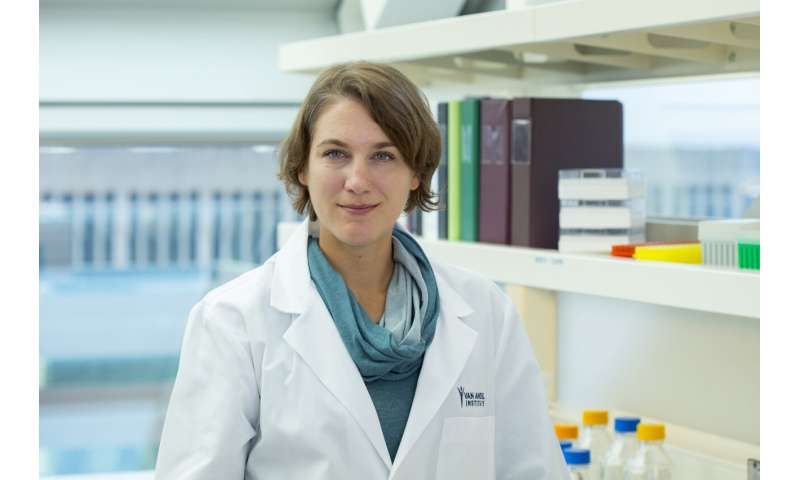
Dr. Viviane Labrie. Credit: Van Andel Institute

Scientists may have solved one of the most puzzling and persistent mysteries in neuroscience: why some people are “right-brained” while others are “left-brained.”

The answer lies in how certain  on each side of the  are switched “on” and “off” through a process called epigenetic regulation. The findings may explain why Parkinson’s disease and other neurological disorders frequently affect one side of the body first, a revelation that has far-reaching implications for development of potential future treatments.

The study was led by Van Andel Institute’s Viviane Labrie, Ph.D., and published in the journal Genome Biology.

“The mechanisms underlying brain asymmetry have been an elephant in the room for decades,” Labrie said. “It’s thrilling to finally uncover its cause, particularly given its potential for helping us better understand and, hopefully one day, better treat diseases like Parkinson’s.”

Each cell in the brain has the same genes but it is epigenetics that dictate whether those genes are switched “on” or “off.” Labrie and her collaborators found numerous epigenetic differences between the hemispheres of healthy brains that are linked to variations in gene activity. Notably, these differences, or asymmetry, could make one side of the brain more vulnerable to .

For example, epigenetic abnormalities on one side of the brain could make that hemisphere more susceptible to the processes that cause the death of brain cells in Parkinson’s. The differences in cell death across hemispheres leads to the appearance of the disease’s , such as tremor, on one side of the body before the other. As the disease progresses, symptoms on the side first affected often are more severe than symptoms on the other side of the body.

The findings also give scientists a vital window into the various biological pathways that contribute to symptom asymmetry in Parkinson’s, including brain cell development, immune function and cellular communication.

“We all start out with prominent differences between the left and right sides of our brains. As we age, however, our hemispheres become more epigenetically similar. For Parkinson’s, this is significant: people whose hemispheres are more alike early in life experienced faster disease progression, while people whose hemispheres were more asymmetric had slower  progression,” Labrie said. “Many of these changes are clustered around genes known to impact Parkinson’s risk. There is huge potential to translate these findings into new therapeutic strategies.”

Labrie is already starting to look at this phenomenon in other neurological diseases like Alzheimer’s.

The study is one of the first to parse the molecular causes of brain asymmetry. Early research on the left versus right brain was conducted in the mid-20th century by Roger Sperry, whose groundbreaking work with split-brain patients earned him a Nobel Prize.


Explore further

Hotspot in the genome may drive psychosis in schizophrenia and bipolar disorder


More information: Peipei Li et al, Hemispheric asymmetry in the human brain and in Parkinson’s disease is linked to divergent epigenetic patterns in neurons, Genome Biology (2020). DOI: 10.1186/s13059-020-01960-1

Journal information: Genome Biology

https://www.sciencedaily.com/releases/2020/04/200414122804.htm

How stress remodels the brain

Date:
April 14, 2020
Source:
Louisiana State University Health Sciences Center
Summary:
Research has shown how stress changes the structure of the brain and reveals a potential therapeutic target to the prevent or reverse it.

Research led by Si-Qiong June Liu, MD, PhD, Professor of Cell Biology and Anatomy at LSU Health New Orleans School of Medicine, has shown how stress changes the structure of the brain and reveals a potential therapeutic target to the prevent or reverse it. The findings are published in  the Journal of Neuroscience.

Working in a mouse model, Liu and her research team found that a single stressful event produced quick and long-lasting changes in astrocytes, the brain cells that clean up chemical messengers called neurotransmitters after they’ve communicated information between nerve cells. The stressful episode caused the branches of the astrocytes to shrink away from the synapses, the spaces across which information is transmitted from one cell to another.

The team also discovered a mechanism resulting in communication disruption. They found that during a stressful event, the stress hormone norepinephrine suppresses a molecular pathway that normally produces a protein, GluA1, without which nerve cells and astrocytes cannot communicate with each other.

“Stress affects the structure and function of both neurons and astrocytes,” notes Dr. Liu. “Because astrocytes can directly modulate synaptic transmission and are critically involved in stress-related behavior, preventing or reversing the stress-induced change in astrocytes is a potential way to treat stress-related neurological disorders. We identified a molecular pathway that controls GluA1 synthesis and thereby astrocyte remodeling during stress. This suggests new pharmacological targets for possible prevention or reversal of stress-induced changes.”

She says that since many signaling pathways are conserved throughout evolution, the molecular pathways that lead to astrocyte structural remodeling and suppression of GluA1 production may also occur in humans who experience a stressful event.

“Stress alters brain function and produces lasting changes in human behavior and physiology,” Liu adds. “The experience of traumatic events can lead to neuropsychiatric disorders including anxiety, depression and drug addiction. Investigation of the neurobiology of stress can reveal how stress affects neuronal connections and hence brain function. This knowledge is necessary for developing strategies to prevent or treat these common stress-related neurological disorders.”


Story Source:

Materials provided by Louisiana State University Health Sciences CenterNote: Content may be edited for style and length.


Journal Reference:

  1. Crhistian Luis Bender, Xingxing Sun, Muhammad Farooq, Qian Yang, Caroline Davison, Matthieu Maroteaux, Yi-shuian Huang, Yoshihiro Ishikawa, Siqiong June Liu. Emotional stress induces structural plasticity in Bergmann glial cells via an AC5-CPEB3-GluA1 pathwayThe Journal of Neuroscience, 2020; JN-RM-0013-19 DOI: 10.1523/JNEUROSCI.0013-19.2020

Cite This Page:

Louisiana State University Health Sciences Center. “How stress remodels the brain.” ScienceDaily. ScienceDaily, 14 April 2020. <www.sciencedaily.com/releases/2020/04/200414122804.htm>.

https://www.psychologytoday.com/us/blog/fulfillment-any-age/202004/is-your-brain-social-distancing

This Is Your Brain on Social Distancing

New research suggests how your brain responds to virtual hugs and handshakes.

Posted Apr 14, 2020

With social distancing now becoming part of ordinary social life, you may feel that you’re losing an important source of emotional comfort. Your physical contact with people you love but can’t touch is replaced by virtual hugs exchanged over FaceTime or Zoom. Family gatherings may involve putting everyone’s favorite dessert up to the screen and “sharing” their contributions to the meal.

If you’re currently unattached, you can’t meet in person the people you’d like to get to know better, and you definitely can’t seek out new relationships. Religious leaders give blessings to pictures of people sitting in their places of worship. The list of sacrifices in your ability to connect physically with others goes on and on. Throughout all of this, you might ask, can any of these social distancing measures actually have any benefit?

As it turns out, when you can’t touch others, your brain may actually respond in important ways. Ordinarily, the sense of touch not only allows you to experience pleasurable sensations but can also guide the way you navigate your world, particularly in the social domain.

In a new study conducted just prior to the COVID-19 pandemic, Leuwen’s Haemy Lee Masson and colleagues (2020) compared brain responses to touch and non-touch social interaction. Their findings can help you understand how to make up for the lack of physical touch in your everyday life by exchanging virtual for real touch.

The Belgian authors note, “The sense of touch enables us to efficiently interact with both social and physical aspects of the environments” (p. 74). When you touch an object, you learn about its properties, but when you touch a person, you pick up a great deal more information, including the person’s emotional state. Conversely, when the people you care about touch you, they can pick up on how you’re feeling.

Even a brief handshake can potentially communicate important psychological cues, including that individual’s sincerity and level of self-assurance. If the handshake along with more prolonged physical connections disappear from your interpersonal vocabulary, what will this mean for your relationships?

According to Masson et al., completely different pathways underly the communication of information about touching objects vs. other people. Importantly, from the standpoint of virtual touch, it’s possible that receiving touch information through visual channels can activate the pathways that communicate physical touch. When you watch other people touch, your brain sets off a chain reaction involving multiple neural responses in the somatosensory cortex, the part of the brain that registers touch in your own body. When you’re watching other people touch objects, the parts of your brain involved in processing information about objects kicks into high gear.

The Belgian authors, in noting these previous findings, call attention to the fact that previous studies fail to take into account the complex nature of social cognition, or the sorting through of information about yourself in relation to other people. This type of processing, they maintain, “is the result of dynamic integration and coordination of the collective brain activity across several regions” (p. 74). What happens when social cognition occurs through virtual channels?

Using neuroimaging data from a sample of 37 participants (28 males) ranging from 19 to 38 years old, Masson and her collaborators tracked the brain’s responses to video clips depicting social (human-to-human) or non-social (human-to-object) touching. The social touching clips included hugs (either full or partial body), handshakes, shoulder-patting, wrist-tugging, and elbowing. In the nonsocial video clips, participants watched what were the same types of movements, but with objects rather than other people.

The people depicted in the videos were average-weight male and female, and only their torsos were displayed, not their faces. The one caveat in comparing these situations to your own virtual touching is that participants were reacting to the actions of two other people, not themselves. Still, these were the closest counterparts to the type of interactions you’re having now through remote physical connections.

Prior to the study, the authors identified so-called regions of interest (ROI) based on prior research that are known to be involved in visual processing, somatosensory processing, and social cognition. This control ensured that the findings would not reflect chance activations of brain regions not theoretically linked to the perception of touch.

Further controls the research team placed on the experiment included prompts for participants to stay awake during the task (which took approximately 90 minutes while they were lying in the brain scanner) and a calibration of the brain scanning method based on responses to an actual touch given by the experimenters through either a rubber band snap or stroking with a brush.

The findings showed that patterns of communication among brain regions were consistent with the study’s predictions, showing wider activation patterns for the videos involving social than non-social touch. Compared to non-social touch, not only were these activation patterns stronger among the social brain regions but they were also greater between the social regions and other parts of the brain that process more basic sensory information. In the words of the authors, “during the observation of other people’s touch actions, extensive changes occur in the functional structure of the brain, depending on whether the recipient is a person or an object” (p. 86).

Furthermore, the social touch videos elicited more intense reactions in the brain regions associated with “Theory of Mind,” or the way you draw conclusions about other people’s mental states. The networks of your brain, in other words, take in this touch-based information as a way of understanding others.

In part, this type of social cognitive processing occurs as you compare the interactions you’re seeing with your own thoughts about how you react to the touch of others. When you see other people touching, you engage your own internal processes, in other words, to determine how they may be feeling. As such, your brain acts like a mirror network, running the observations you’re making through an internal analysis of your own that engages what you yourself would do in the situation you’re seeing.

To sum up, returning to the question of whether virtual hugs can indeed give you comfort, the findings suggest that, as the new rules of social interaction become part of your reality, your brain may react in ways that can actually provide you with at least some consolation. Although you can’t enjoy a virtual meal in the same way you can an actual one, when it comes to touch, there’s reason to hope that your brain will be able to adapt and take this new reality in stride.

References

Lee Masson, H., Pillet, I., Boets, B., & Op de Beeck, H. (2020). Task-dependent changes in functional connectivity during the observation of social and non-social touch interaction. Cortex: A Journal Devoted to the Study of the Nervous System and Behavior, 125, 73–89. doi:10.1016/j.cortex.2019.12.011

https://newatlas.com/energy/new-solar-cells-efficiency-records/

Two new solar cells break records, including highest efficiency ever

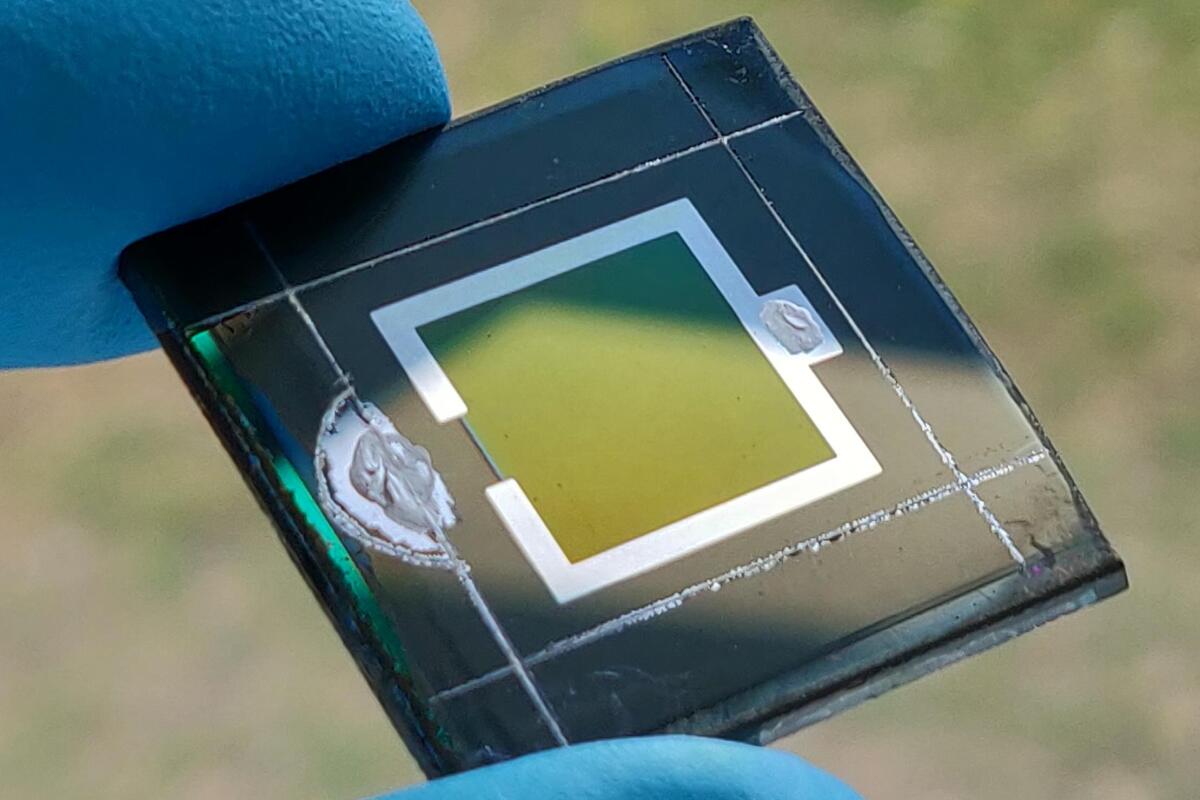
A small sample of the perovskite-CIGS tandem solar cell
HZB
VIEW 2 IMAGES

Solar cells are constantly improving on the road to maximum efficiency. Now, three records have been broken by two different devices, including one that pushes the highest overall solar conversion efficiency towards the 50-percent mark.

The top honor was claimed by researchers at the National Renewable Energy Laboratory (NREL), who have developed a new solar cell with an efficiency of 47.1 percent. That makes it the most efficient solar cell of any kind in the world – for now, at least. These records have a tendency to be broken pretty regularly.

The device is what’s known as a six-junction III-V solar cell, meaning it’s made up of six different types of photoactive layer. Each of these is comprised of various III-V materials, named after their positions on the periodic table, which collect energy from different parts of the light spectrum. In total there are around 140 layers, packed into a solar cell that’s thinner than a human hair.

It’s also worth noting that the record was broken under light focused to be about 143 times stronger than natural sunlight. While the efficiency of this design is obviously going to drop in real-world uses, the team says that the device could be built with a mirror to focus the sunlight onto the cell.

The team also tested a variation of this cell under light equivalent to one Sun, and it still achieved an efficiency record of 39.2 percent.

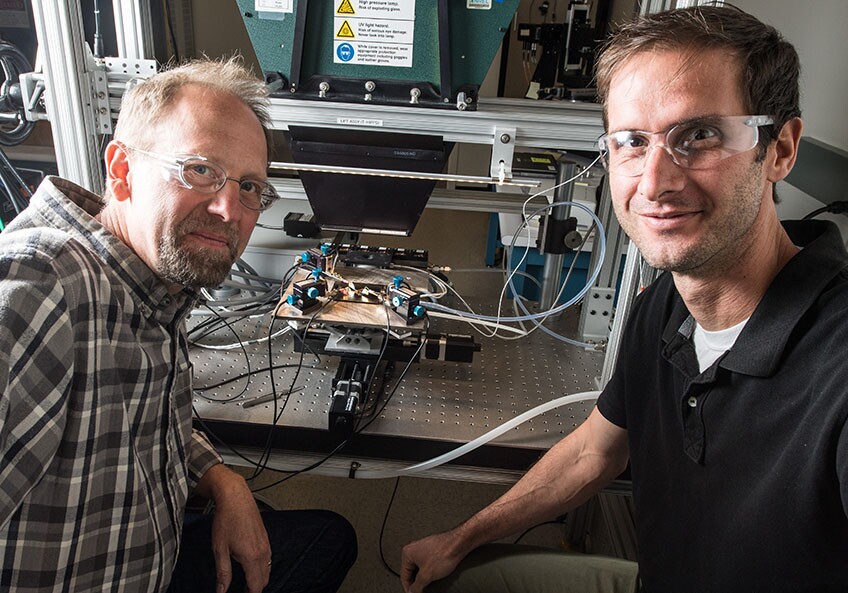
John Geisz (left) and Ryan France, researchers on the NREL study that broke the solar cell efficiency record

John Geisz (left) and Ryan France, researchers on the NREL study that broke the solar cell efficiency record
Dennis Schroeder, NREL

In a separate study, researchers from Helmholtz Zentrum Berlin (HZB) broke a different efficiency record, this time for a new type of tandem solar cell.

Tandem solar cells are those with two different types of photoactive layers. In this case, one layer was made of perovskite, while the other was a combination of copper, indium, gallium and selenium, which the team calls CIGS.

The CIGS layer, which measures between 3 and 4 micrometers thick, is deposited first, then the perovskite layer, which measures just 0.5 micrometers thick, goes on over the top. The two work well together because the perovskite collects visible light, while the CIGS targets infrared. To improve the contact between the two layers, the team added a layer of rubidium atoms between them.

With this method, the team reached a peak efficiency of 24.16 percent. That’s not quite as high as silicon-perovskite tandem cells, but considering this is the first perovskite-CIGS tandem cell it’s a great start. The thickness, or rather, thinness, of the technology means flexible solar modules could be produced, which, being extremely light and stable against irradiation, would be well suited to applications in space.

A paper on the six-junction cell was published in the journal Nature Energy, while the perovskite-CIGS cell was discussed in Joule.

Sources: NRELHZB

https://medicalxpress.com/news/2020-04-adult-brain.html

When damaged, the adult brain repairs itself by going back to the beginning

When damaged, the adult brain repairs itself by going back to the beginning
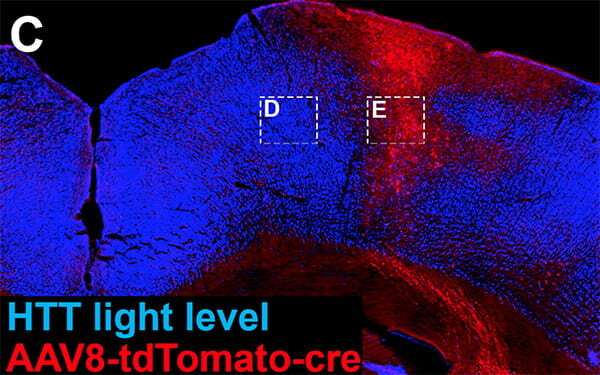
A cross-section of a rat brain depicts cells (in blue) expressing normal levels of the Huntingtin gene while cells (in red) have had the gene knocked out. The latter cells, without the Huntingtin gene, displayed less regeneration. Credit: UC San Diego Health Sciences

When adult brain cells are injured, they revert to an embryonic state, according to new findings published in the April 15, 2020 issue of Nature by researchers at University of California San Diego School of Medicine, with colleagues elsewhere. The scientists report that in their newly adopted immature state, the cells become capable of re-growing new connections that, under the right conditions, can help to restore lost function.

Repairing damage to the brain and spinal cord may be medical science’s most daunting challenge. Until relatively recently, it seemed an impossible task. The new study lays out a “transcriptional roadmap of regeneration in the adult brain.”

“Using the incredible tools of modern neuroscience, molecular genetics, virology and computational power, we were able for the first time to identify how the entire set of genes in an adult brain cell resets itself in order to regenerate. This gives us fundamental insight into how, at a transcriptional level, regeneration happens,” said senior author Mark Tuszynski, MD, Ph.D., professor of neuroscience and director of the Translational Neuroscience Institute at UC San Diego School of Medicine.

Using a , Tuszynski and colleagues discovered that after injury, mature neurons in adult brains revert back to an embryonic state. “Who would have thought,” said Tuszynski. “Only 20 years ago, we were thinking of the adult brain as static, terminally differentiated, fully established and immutable.”

But work by Fred “Rusty” Gage, Ph.D., president and a professor at the Salk Institute for Biological Studies and an adjunct professor at UC San Diego, and others found that new brain  are continually produced in the hippocampus and subventricular zone, replenishing these brain regions throughout life.

“Our work further radicalizes this concept,” Tuszynski said. “The brain’s ability to repair or replace itself is not limited to just two areas. Instead, when an  cell of the cortex is injured, it reverts (at a transcriptional level) to an embryonic cortical neuron. And in this reverted, far less mature state, it can now regrow axons if it is provided an environment to grow into. In my view, this is the most notable feature of the study and is downright shocking.”

To provide an “encouraging environment for regrowth,” Tuszynski and colleagues investigated how damaged neurons respond after a spinal cord injury. In recent years, researchers have significantly advanced the possibility of using grafted neural stem cells to spur spinal cord injury repairs and restore lost function, essentially by inducing neurons to extend axons through and across an injury site, reconnecting severed nerves.

Last year, for example, a multi-disciplinary team led by Kobi Koffler, Ph.D., assistant professor of neuroscience, Tuszynski, and Shaochen Chen, Ph.D., professor of nanoengineering and a faculty member in the Institute of Engineering in Medicine at UC San Diego, described using 3-D printed implants to promote nerve cell growth in  in rats, restoring connections and lost functions.

The latest study produced a second surprise: In promoting neuronal growth and repair, one of the essential genetic pathways involves the gene Huntingtin (HTT), which, when mutated, causes Huntington’s disease, a devastating disorder characterized by the progressive breakdown of nerve cells in the brain.

Tuszynski’s team found that the “regenerative transcriptome”—the collection of messenger RNA molecules used by corticospinal neurons—is sustained by the HTT gene. In mice genetically engineered to lack the HTT gene,  injuries showed significantly less neuronal sprouting and regeneration.

“While a lot of work has been done on trying to understand why Huntingtin mutations cause disease, far less is understood about the normal role of Huntingtin,” Tuszynski said. “Our work shows that Huntingtin is essential for promoting repair of  neurons. Thus, mutations in this gene would be predicted to result in a loss of the adult neuron to repair itself. This, in turn, might result in the slow neuronal degeneration that results in Huntington’s disease.”


Explore further

In a break with dogma, myelin boosts neuron growth in spinal cord injuries


More information: Gunnar H. D. Poplawski et al, Injured adult neurons regress to an embryonic transcriptional growth state, Nature (2020). DOI: 10.1038/s41586-020-2200-5

Journal information: Nature

https://cleantechnica.com/2020/04/13/elon-musk-says-teslas-can-be-superhuman-rhetoric-of-ai-sparks-controversy-intrigue/

Elon Musk Says Teslas Can Be “Superhuman” — Rhetoric Of AI Sparks Controversy, Intrigue

April 13th, 2020 by 


A driver’s responsibility is to ensure that the vehicle is appropriately positioned within a designated lane and moving at the correct speed, which is determined by posted limits, pace of surrounding traffic, and contextual conditions like weather. The Tesla Autopilot feature enables a vehicle to steer, accelerate, and brake automatically within its lane, alleviating the driver of nearly total decision-making and redirecting the driver’s role to that of a supervisor. But does such a reversal of driving authority mean that Teslas can be “superhuman?”

Teslas can be superhuman

Elon Musk has stirred up another proverbial hornet’s nest with his recent tweet that Tesla cars outfitted with self-driving tech “can definitely be superhuman.” The notion of a device made by humans that can exceed ordinary human power, achievement, experience, and capacity is eerie, unsettling — and really compelling.

Third Row Tesla Podcast@thirdrowtesla

the performance of Autopilot in the latest update is simply incredible.

I can’t believe this is possible with software and cameras

Elon Musk

@elonmusk

Humans drive using 2 cameras on a slow gimbal & are often distracted. A Tesla with 8 cameras, radar, sonar & always being alert can definitely be superhuman.

963 people are talking about this

The “2 cameras” to which Musk refers are, of course, human eyes. Our head and neck function in unison as “a slow gimbal.” Sight and perception of our surroundings permit drivers to assess what’s around us and react accordingly. But our skills in this area are perhaps not as good as we assume.

Self-driving vehicles of the future are widely considered to be able to alleviate the limitations of human binocular vision and will potentially lead to less congestion, fewer accidents, and lower stress. Musk hypothesized in an interview last year with MIT researcher Lex Fridman that autonomous driving technology is so advanced that it will soon surpass human driving control. Musk described then how Tesla’s technology is so advanced that, before we know it, allowing humans to steer the vehicle may be more dangerous than relying on Autopilot.

The Tesla website describes Autopilot as follows:

“Eight surround cameras provide 360 degrees of visibility around the car at up to 250 meters of range. Twelve updated ultrasonic sensors complement this vision, allowing for detection of both hard and soft objects at nearly twice the distance of the prior system. A forward-facing radar with enhanced processing provides additional data about the world on a redundant wavelength that is able to see through heavy rain, fog, dust and even the car ahead.”

The use of language regarding vision and the latent meanings found within the Tesla website description of Autopilot as a whole are quite revealing. A human’s peripheral visual field extends 100 degrees laterally, 60 degrees medially, 60 degrees upward, and 75 degrees downward — not anywhere close to reaching the extent of Autopilot’s capabilities. With constant improvements (note “updated” in the paragraph above) and possessing the angular span vertically and horizontally to perform an action accurately, like reading or face recognition (“vision”), Autopilot, as described on the Tesla website, affirms — albeit in a more subtle way — Musk’s “superhuman” claim. The “enhanced processing” and “redundant wavelength” complement each other, providing additional data to assure the human formerly known as a driver. The human recognizes that Autopilot is “seeing in every direction simultaneously and on wavelengths that go far beyond the human senses,” according to a Tesla blog post.

“Superhuman” in Culture

The term “superhuman” connotes many meanings. Often, it is ascribed to physical powers beyond typical human strength. Those of us of a particular age remember The Six Million Dollar Man and The Bionic Woman (the latter was my personal favorite :)). In these cases, the protagonists endure shattering injuries that are not only remedied by modern medicine but rebuilt with bionic surgical implants that accentuate typical human faculties like hearing, jumping, running, and throwing.

A recent editorial by Lance Eliot in Forbes suggests that Musk’s description of autonomy as “superhuman” seeps into our imagination as a result of fascination with popular culture super characters from comic books, movies, television, and merchandising. Importantly, though, while the AI techniques here offer progress, they do not provide the human cognitive common-sense reasoning that is essential to humanness.

In mythology, superhumans had the guidance of deities, natural spirits, ancestors, or perfected humans who had power beyond that of ordinary humans. Today’s cultural climate includes a definition of  “superhuman” as human augmentation that transcends the natural human body and becomes something more godlike.

Eliot argues that Musk’s intent through attaching the term “superhuman” to an AI system is to provide “a glow of incredible essence, and inch by inch is convincing the public that AI can do wondrous things of a superhuman nature.” The result, Eliot, continues, creates “outsized expectations and sets people up to be misled and less wary of what AI is able to actually do today.”

“Do AI-based true self-driving cars deserve to get the superhuman tribute, and if so, when or how will we know that it is appropriate and fair to do so?” Eliot looks askance at the notion and instead clarifies the distinctions among levels of autonomy, pointing out that “true self-driving cars are ones that the AI drives the car entirely on its own, and there isn’t any human assistance during the driving task.”

Granted, Musk wasn’t suggesting that currently available AI is doing all of the driving. He’s saying that the hardware available today, with the right software, can drive at a level well above humans.

Final Thoughts about whether Teslas can be Superhuman

Autonomous vehicles are appealing due to the potential enhancements they will be able to offer to people’s way of life. We’ll achieve greater road safety, increased independence, and tremendous environmental gains. Perhaps these are more important than the superlatives that we attach to the technology, yes? “Superhuman” or not, autonomous vehicles will redefine what it means to be a driver. Autopilot is the first real taste that many of us will ever get of that experience, and it’s really, really cool.

About the Author

Carolyn Fortuna, Ph.D. is a writer, researcher, and educator with a lifelong dedication to ecojustice. She’s won awards from the Anti-Defamation League, The International Literacy Association, and The Leavy Foundation. As part of her portfolio divestment, she purchased 5 shares of Tesla stock.

https://venturebeat.com/2020/04/15/googles-ai-enables-robots-to-make-decisions-on-the-fly/

Google’s AI enables robots to make decisions on the fly

Google AI logo

Image Credit: Khari Johnson / VentureBeat

In a paper published this week on the preprint server Arxiv.org, a team of researchers from Google Brain, Google X, and the University of Calfornia at Berkeley describe an extension to existing AI methods that enable an agent — for instance, a robot — to decide which action to take while performing a previous action. The idea is that modeling an agent’s behavior after that of a person or animal will lead to more robust, less failure-prone systems in the future.

The researchers point out that while AI algorithms have achieved success in video games, robotic grasping, and manipulation tasks, most use a blocking observe-think-act paradigm — an agent assumes that its environment will remain static while it “thinks” so its actions will be executed on the same states from which they were computed. This holds true in simulation but not in the real world, where the environment state evolves as the agent processes observations and plans its next actions.

The team’s solution is a framework that can handle concurrent environments in the context of machine learning. It leverages standard reinforcement learning formulations — formulations that drive an agent toward goals via rewards — wherein an agent receives a state from a set of possible states and selects an action from some set of possible actions according to a policy. The environment returns the next state sampled from a transition distribution and a reward, such that the agent learns to maximize the expected return from each state.

In addition to the previous action, two additional features — action selection time and vector-to-go (VTG) — help to encapsulate concurrent knowledge. (The researchers define VTG as the last action to be executed the instant the state of the environment is measured.) Concurrent action environments capture the state while the previous action is being executed and after the state is captured. And the policy selects an action and executes it regardless of whether the previous action has been completed — even if that necessitates interrupting the previous action.

The researchers conducted experiments on a real-world robot arm, which they tasked with grasping and moving various objects from a bin. They say their framework achieved grasp success comparable to a baseline blocking model but that it was 49% faster than the blocking model in terms of policy duration, which measures the total execution time of the policy. Moreover, the concurrent model was able to execute “smoother” and swifter trajectories than the baseline.

“Concurrent methods may allow robotic control in dynamic environments where it is not possible for the robot to stop the environment before computing the action,” wrote the coauthors. “In these scenarios, robots must truly think and act at the same time.”

The work follows a Google-led study describing an AI system that learned from the motions of animals to give robots greater agility. The coauthors believed their approach could bolster the development of robots that can complete tasks in the real world, such as transporting materials between multilevel warehouses and fulfillment centers.

https://www.psypost.org/2020/04/long-term-exposure-to-high-altitudes-linked-to-impairments-in-working-memory-56481

Long-term exposure to high altitudes linked to impairments in working memory

An estimated 140 million people live in high-altitude communities, i.e., those situated over 2,400m (8,000ft) above sea-level. While these populations thrive and have exhibited specific adaptations related to their geographic location, certain neurological impairments have been demonstrated both in those born in high altitudes and those who move there later. To better understand the effects of high altitudes on the brain, a study published in Brain and Behavior compared the working memory of individuals in low- and high-altitude communities.

The study’s forty participants were split roughly down the middle in terms of gender and altitude location. All participants had been born and raised in low altitudes (at least 18 years), while high-altitude subjects were those that had lived at least 3 years in high-altitudes communities.

The study focused on Working Memory, a critical cognitive function with multiple components, including the short-term storage of verbal information, a visuo-spatial “sketchpad”, and a central executive system that moderates inhibition, attention shifting and information updating. Working memory is an essential neurological component, and impairments have been linked to learning disabilities and attentional deficits.

The n-back task was used to measure differences in working memory. In this test, individuals are shown a series of shapes (in this case letters A through L at different locations on a screen) or hear a series of verbal cues, and are asked to indicate if the current stimulus differs from either the previous one (1-back) or the one before that (2-back). Additionally, electroencephalography (EEG) data was recorded from scalp sites proximal to brain regions known to be involved in different components of working memory.

The results showed that high-altitude individuals tended to have poorer working memory for both verbal and spatial cues. Furthermore, 1-back cues were significantly more accurate than 2-back cues, and high-altitude individuals took significantly longer to give their response. Finally, EEG data showed that neurological impairment mechanisms differed, such that spatial memory suffered from reduced maintenance (“holding” information in memory) and matching (comparing new input with remembered representations), while verbal memory deficits was related only to impairment in maintenance.

Overall, these findings confirm that high altitudes are associated with working memory impairments, but offer possible avenues of approach for both understanding the phenomenon better and developing possible interventions.

The study, “Long‐term exposure to high altitude attenuates verbal and spatial working memory: Evidence from an event‐related potential study“, was authored by Hailin Ma, Delong Zhang, Xuebing Li, Huifang Ma, Niannian Wang, and Yan Wang.

https://mobilesyrup.com/2020/04/15/mustang-mach-e-more-powerful-ford-promised/

The Mustang Mach-E might be faster than Ford originally promised

It looks like Ford has been able to get a bit more power out if the Mach-E

By Brad Bennett@thebradfadAPR 15, 2020 4:38 PM

New leaked specs for Ford’s upcoming Mustang Mach-E electric vehicle suggest the EV will be marginally more powerful than initially expected. When Ford showed off the Mach-E to the press in November of last year, the company revealed a list of perspective specs for the car.

Now, as the vehicle creeps closer to launch, Ford is sending out dealer slides with Mach-E training materials to the Ford dealerships across North America. According to a user on the Mach-E forums, these leaked slides show improvements in horsepower torque and kW output specs. The old and new specs are listed below:

RWD Standard Range Old — 255 horsepower — 306 lb-ft torque — 190 kilowatts

New — 266 horsepower — 317 lb-ft torque — 198 kilowatts

AWD Standard Range Old — 255 horsepower – 417 lb-ft — 190 kilowatts

New — 266 horsepower – 428 lb-ft — 198 kilowatts

RWD Extended Range Old — 282 horsepower — 306 lb-ft — 210 kilowatts

New — 290 horsepower — 317 lb-ft — 216 kilowatts AWD Extended

Range: Old — 332 horsepower — 417 lb-ft — 248 kilowatts

New — 346 horsepower — 428 lb-ft — 258 kilowatts

It doesn’t appear that the range of these models has been altered. Ford originally said that the Premium trim Mustang would come out in the fall of 2021, so it will be interesting to see if the company will be able to uphold that date amid the COVID-19 pandemic. You can learn more about the Mustang Mach-E in our prior coverage.