Scientists develop photon-based silicon circuitry that could make Moore’s Law obsolete
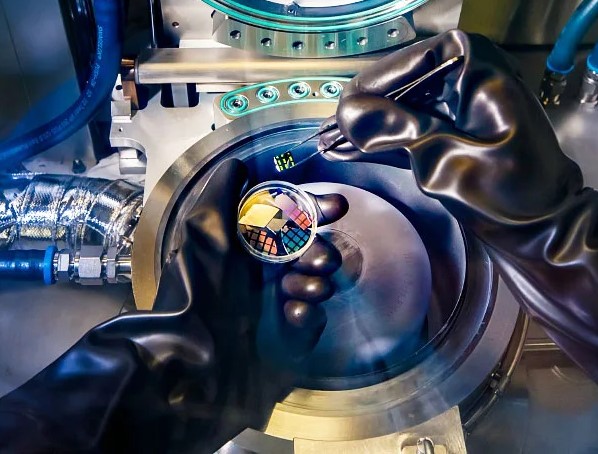
Scientist managed to change the cubic silicon structure into a hexagonal nanowire structure. (Image Source: Wired)
By changing the cubic silicon structure to a hexagonal nanowire structure, scientists managed to develop photon-based silicon alloy circuitry that may replace electron-based transistors. The photon-based material prevents electron traffic jams, overheating and transmission slowdowns caused by cramming too many transistors.
Intel co-founder Gordon Moore was estimating that CPU transistor counts could double every two years, and so far this proved to be more or less accurate. The problem now is that we are approaching the physical limits of silicon transistors, which cannot really be shrunk down to less than 1 nanometer, so scientists are looking into new materials that can help overcome such restrictions. One of the latest inventions in this field comes from the Netherlands in the form of light-emitting silicon circuitry that could help reduce the number of needed transistors while still improving the performance.
A group of Eindhoven University of Technology scientists led by Erik Bakkers managed to develop silicon alloy nanowires that can emit light. These new materials can potentially be used to build photon-based circuits that, in turn, may replace the electron-based cubic transistor models used in commercial chips nowadays.
The photon-based hexagonal nanowires should greatly improve the computational performance as data transmitted through photons instead of electrons can prevent electron traffic jams, overheating and transmission slowdowns caused by cramming too many transistors in a determined area. Photons move considerably faster than electrons, so they can transmit data more efficiently over multiple channels. With the introduction of photonic circuits, data-intensive applications like machine learning and big data crunching could see tremendous boosts.
Researchers are currently trying to figure out a way to implement a tiny laser to act as the light source within the new materials. It is yet unclear how long it will take for this technology to become a reality. Intel is planning to reach the 1 nm transistor size limit by the end of this decade and TSMC may do it even faster, so scientists ought to come with a decent solution by 2025.
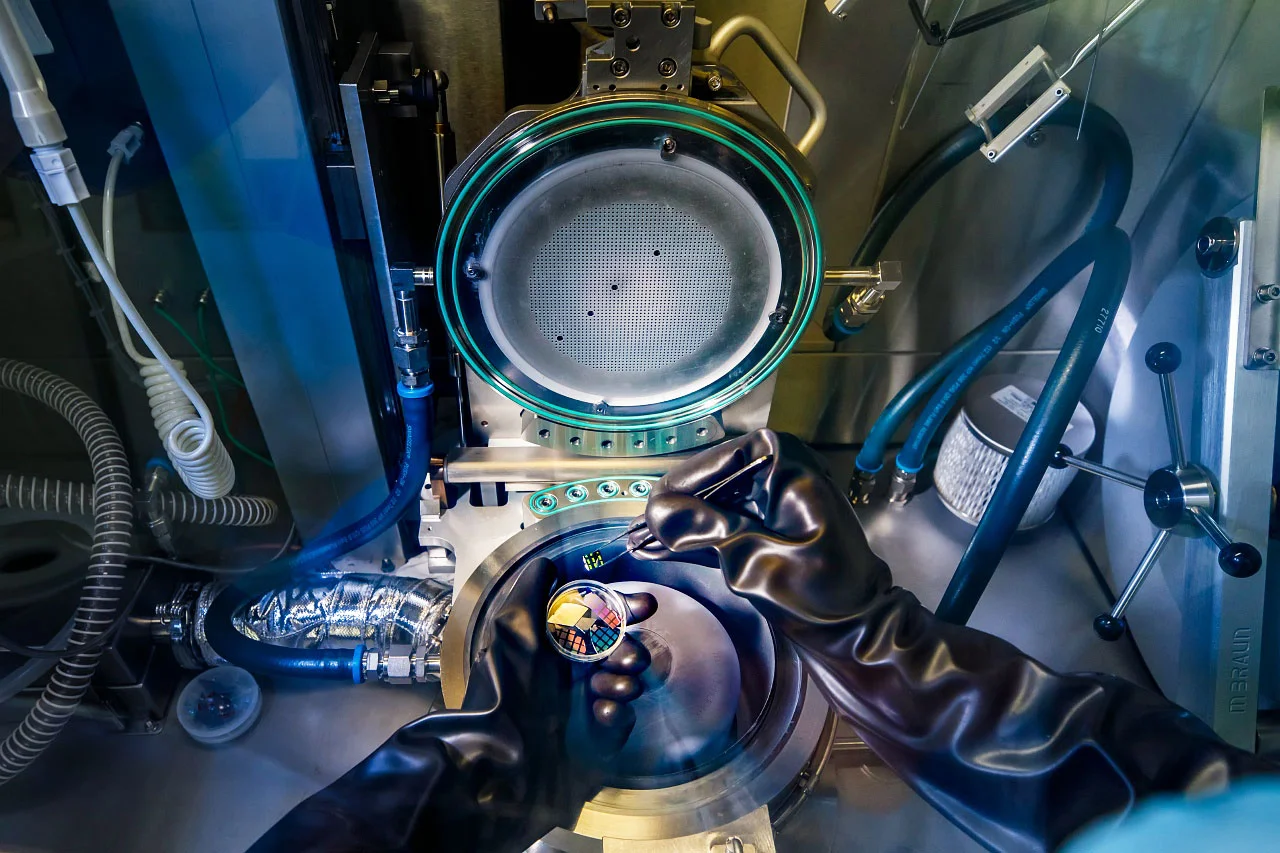
The machine used to fabricate the new hexagonal silicon alloy nanowires (Image Source: Wired)
Many people are donating their PC’s leftover power to help fight the coronavirus.
IBM Summit supercomputer (Image credit: HPC Wire)
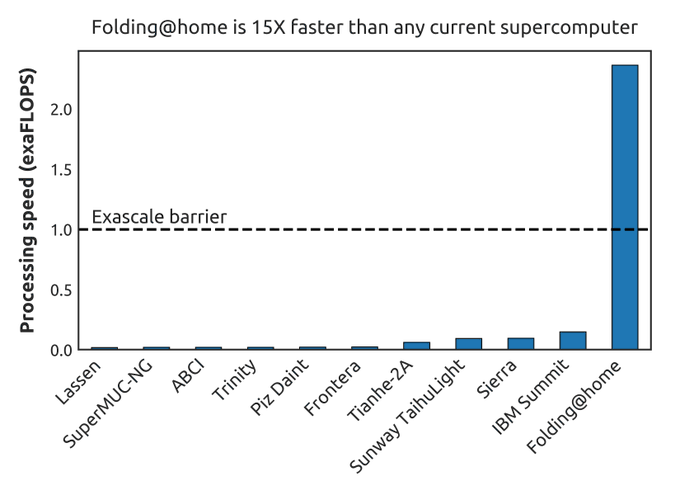
After weeks of recruiting, Folding@Home has now grown to so many users that it is surpassing 2.4 ExaFLOPS of computational power, making it a staggering (give or take) 15 times as powerful as the world’s strongest supercomputer, IBM’s Summit at the Oak Ridge National Laboratory.
Folding@home@foldingathome
With our collective power, we are now at ~2.4 exaFLOPS (faster than the top 500 supercomputers combined)! We complement supercomputers like IBM Summit, which runs short calculations using 1000s of GPUs at once, by spreading longer calculations around the world in smaller chunks!
Summit is capable of a sustained output of 149 PetaFLOPS with a peak of 200 PetaFLOPS, while the Sierra supercomputer peaks at 125 PetaFLOPS. Continue down the list, and, according to Folding@Home’s math, its network of folders is stronger than the top 500 supercomputers combined.
It has to be noted that the Folding@Home network is growing so fast that its creators aren’t actually able to keep everyone’s computers loaded with work. This means that although the network has a capacity of 2.4 ExaFLOPS, it isn’t being utilized fully.
That’s no surprise after the surge in popularity of the service, but the organization has been working on creating more work, as tweeted by Greg Bowman, Folding@Home’s director:
Greg Bowman@drGregBowman
More GPU work units are coming for @foldingathome. We’ve had to shift some of our effort from setting up projects to moving data off servers to make room for more data. Its amazing how quickly the data is coming in! Something like 6TB/hr.
This isn’t to say that Folding@Home has rendered supercomputers obsolete in this battle. Whereas supercomputers are great at completing big calculations very quickly, the Folding network takes longer to complete huge amounts of individual, smaller work units. Folding@Home is also great for completing big calculations that can be split up into smaller chunks and when turnaround time isn’t critical. It just depends on what the researchers’ needs are and what they can afford. And currently, there are numerous organizations donating supercomputers to fight the coronavirus.
Folding@Home is a great way to contribute to the fight against COVID-19 with your PC. When you donate its leftover CPU and graphics card power to the network, Folding@Home assigns workloads to your PC from researchers studying COVID-19, Alzheimer’s, Huntington’s, Parkinson’s or other diseases. All it costs is a little electricity.
Now AWD extended-range Mach-E owners will have 14 extra horsepower with which to rip big sweet drifts.
Ford
If you’ve had your heart set on Ford’sMustang Mach-E, but were a little bummed about its performance specs, then the folks over at MachEForum.com have some excellent news for you — those specs are getting bumped.
According to MachEForum’s unnamed dealer source, the Blue Oval is improving the horsepower, torque and power density of its first built-to-purpose EV. Now, before you get all twitterpated over Tesla-like numbers, the performance boost isn’t massive. The most significant increase is for the top-tier all-wheel drive extended-range model, which sees 14 horsepower, 11 pound-feet and 10 kilowatts, respectively.
The other models see increases ranging from 8 hp on the extended-range RWD model to 11 hp on the standard-range AWD and RWD models. Torque goes up by 11 lb.-ft. across the board.
So, why did Dearborn decide to juice the Mach-E? Well, Ford is opting to keep clam on the subject (we asked), but we’d expect that it’s a combination of keeping up with the market and generally finding software efficiencies — something that Tesla has done semiregularly on its cars.
If you’re not already one of the Mach-E hopefuls, and you’ve been sitting on the fence, then perhaps this spec increase in combination with the Mach-E’s winter-driving chops will be enough to get you to plunk down a deposit.
Meet the Mustang Mach-E, Ford’s new, all-electric SUV
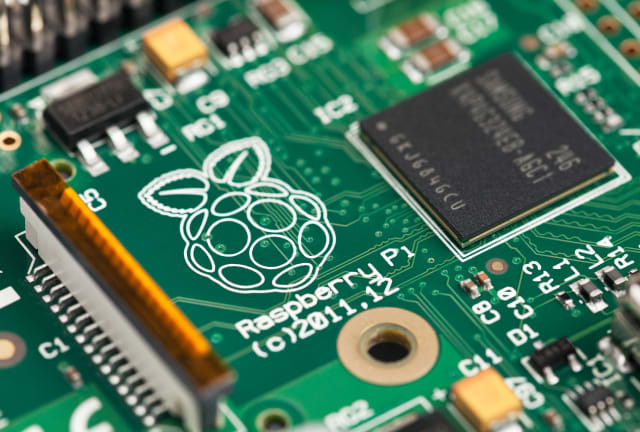
As the coronavirus pandemic continues to overwhelm the healthcare industry, one of the clearest needs is a more reliable supply of ventilators. To make more of the life saving devices, manufacturers are turning to new designs that are faster and more affordable to make — and the super affordable Raspberry Pi computer boards have become a go-to component. Tom’s Hardware reports that The Raspberry Pi Foundation is ramping up production of its Pi Zero boards to help supply manufacturers with enough units to keep up with the high demand for ventilators. While the $5 Pi Zero is the company’s least powerful computer (it features a single core, 1.0 GHz CPU and 512 MB of RAM) it still has enough juice to control the relatively simple computing tasks of a ventilator.
Another reason Raspberry Pi boards are ideal for ventilators is the company’s ability to supply them quickly. Eben Upton, CEO and Founder of Raspberry Pi told Tom’s Hardwarethat, “Raspberry Pi ‘builds to stock’ rather than ‘building to order,’ so we generally have products either on-hand or in the pipeline with short lead times.” The company made 192,000 Pi Zero and Pi Zero W boards in the first quarter of 2020, but is aiming to produce 250,000 of them in the second quarter of the year. Upton said that, as far as he is aware, this is the first time Raspberry Pi boards are being used as medical device components.
It’s encouraging to see manufacturers getting a little creative with their designs, and adopting technology that is usually associated with the DIY community. Hopefully this approach will help bring more ventilators to market — and save more lives.
For the third of our lives that we spend in slumber, our minds take up residence in the unknown regions of the subconscious. We dream, though we don’t fully know why. And while these nightly mashups of images and storylines have captured the imagination for generations, modern science largely believes that dreams have no effect on daily life.
At MIT’s Dream Lab, however, a small team of researchers thinks otherwise and is creating technologies capable of mining the subconscious to prove the value of dreams.
“Dreaming is really just thinking at night,” says Adam Horowitz, a PhD student at MIT Media Lab’s Fluid Interfaces Group and a Dream Lab researcher. “When you go inside, you come out different in the morning. But we have not been asking questions about the experience of that transformation of information or the thoughts that guide it.”
Horowitz and his fellow researchers are taking it upon themselves to ask — and hopefully answer — these questions. And while previous research has shown that dreams may contribute to memory consolidation, emotional regulation, and overall mental health, the Dream Lab is pushing research a step further. Rather than simply exploring the role of dreams in our lives, the researchers want to see what happens when they interfere with them.
To do this, the Dream Lab, which was launched in 2017 as a division of MIT’s Media Lab Fluid Interfaces Group, is developing novel and open source wearable devices that track and interact with dreams in various ways. While part of this work aims to legitimize the idea that dreams are not just random mind slush, but access points to deeper levels of cognition, the larger goal is to show that when dreams can be hacked, augmented, and swayed, our waking lives benefit.
“Dreaming is really just thinking at night.”
“People don’t know that a third of their life is a third where they could change or structure or better themselves,” Horowitz says. “Whether you’re talking about memory augmentation or creativity augmentation or improving mood the next day or improving test performance, there’s all these things you can do at night that are practically important.”
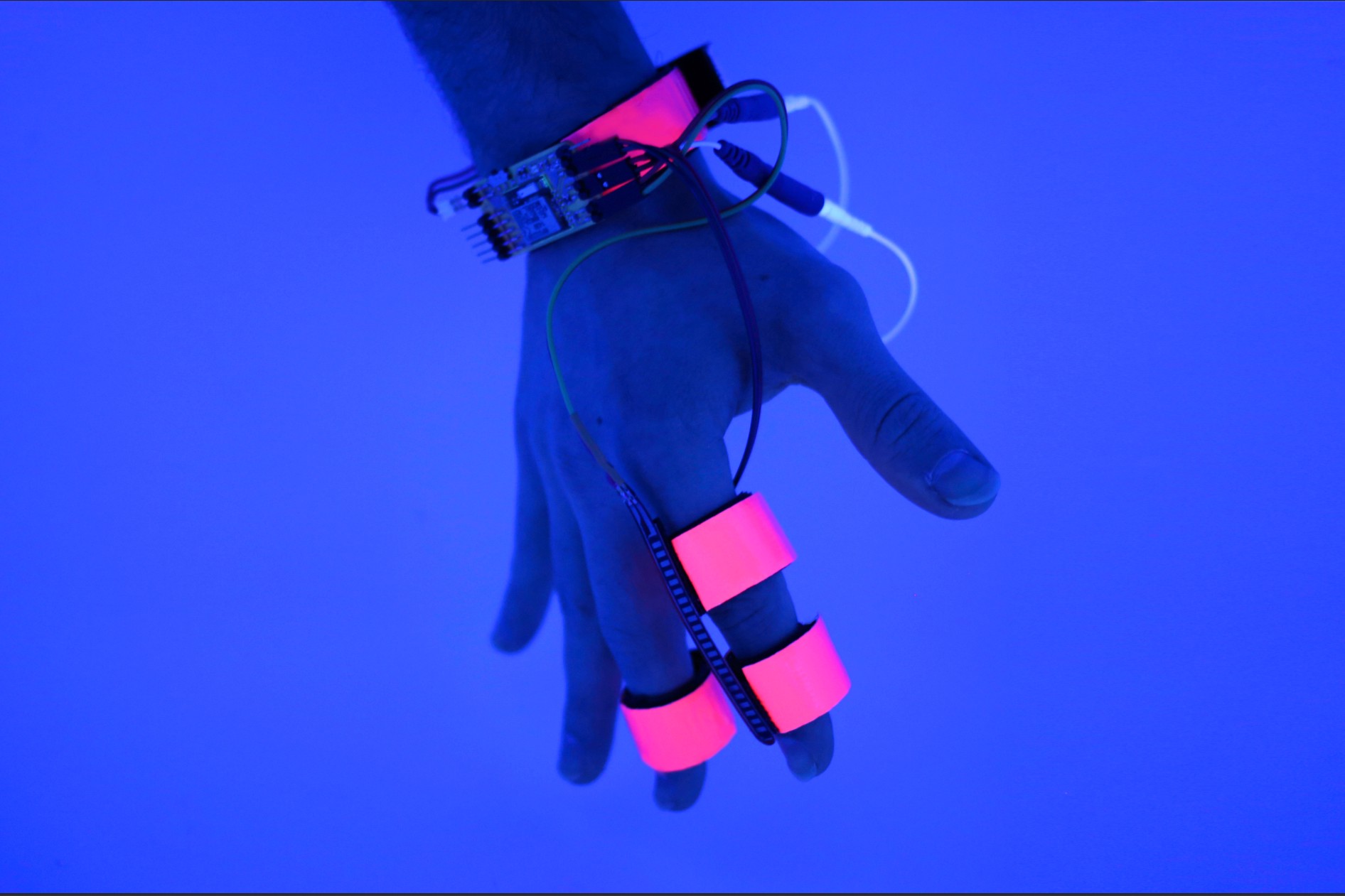
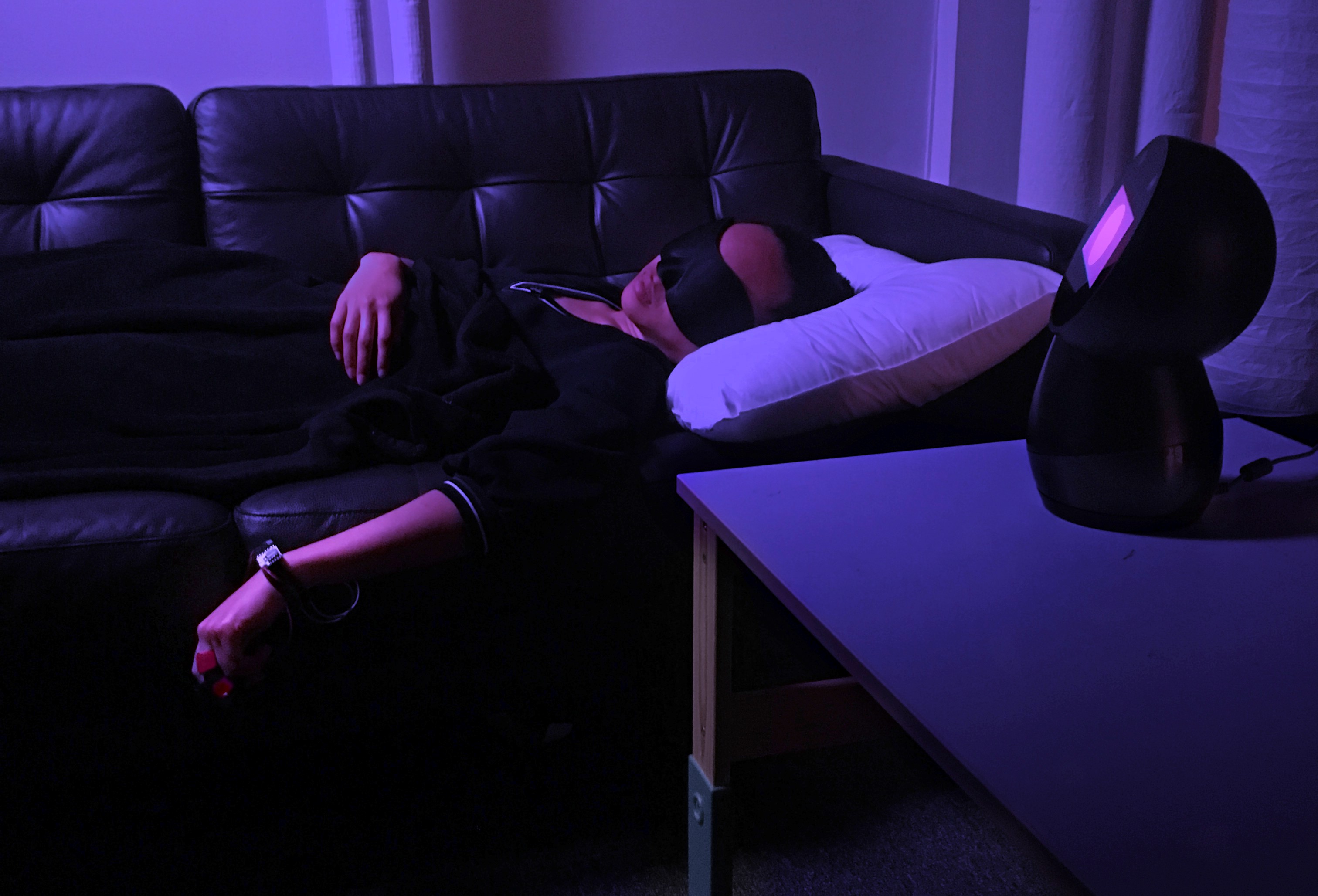
Horowitz’s crown jewel at the Dream Lab is Dormio, a glovelike device meant to boost creativity by helping us tap into hypnagogia — that semilucid state between wakefulness and sleep where thoughts untether from reality and begin to get dreamy. Dormio helps extend, influence, and capture this transitional state in order to give users access to fluid thinking and free associations.
The guiding principle behind Dormio isn’t new. Creators as diverse as Thomas Edison, Nikola Tesla, and Salvador Dalí are said to have taken naps with a steel ball in hand in order to wake in the hypnagogic state when the ball dropped to the ground. In this borderland between the conscious and subconscious, their creative minds could open.
Dormio gives that steel ball a 21st-century update. With sensors wrapped around the user’s wrist and fingers, the device tracks muscle tone, heart rate, and skin conductance to identify the various stages of sleep. When the user slips into hypnagogia, the device plays a prerecorded audio cue, usually consisting of one word, and records anything the user might say in response.
In a 50-person experiment with Dormio, Horowitz found that the content of the audio cue successfully showed up in people’s dreams — if the word was “tiger,” for instance, users reported dreaming of a tiger. But more than altering dream content, Horowitz also found that this extension of and interaction with the hypnagogic state improved users’ performance creativity tasks. In other words, Dalí and Co. were on to something.
Judith Amores, another Dream Lab researcher and PhD candidate at the MIT Media Lab, is working on changing the content of dreams by accessing an even deeper level of the subconscious through smell. Her project, BioEssence, is a wearable scent diffuser that monitors heart rate and brain waves to track the stages of sleep. When users reach the N3 stage, which is associated with memory consolidation, the device releases a preset scent that the user associates with a memory or learned behavior. By smelling that scent during sleep, the subconscious mind strengthens the memory. And unlike an auditory or touch-based trigger, smell is less likely to wake you up.
“The sense of smell is particularly interesting because it’s directly connected to the memory and the emotional parts of the brain — the amygdala and the hippocampus,” Amores says. “And that’s a very interesting gateway to access well-being.”
Amores is currently working on research showing that BioEssence could be used as a tool to change maladaptive memories associated with trauma and PTSD. By piping in positively associated smells during nightmares, she says, “You can heal without being fully conscious.”
While the prospect of augmenting a dream might give you flashes of Inception, in reality, it’s actually pretty simple. Think about a time when you’ve integrated the sound of your alarm into your dream or imagined the house was rocking when someone tried to shake you awake. It’s this natural inclination to narrativize our surroundings in our sleep that the Dream Lab is tapping into.
“In dreams, we’re turning any sensory input into part of a story,” Horowitz says.
In the world of dream research, however, not everyone is thrilled with the idea of tapping into our dreams for waking-world gains. Rubin Naiman, PhD, a psychologist and sleep and dream expert with the University of Arizona’s Center for Integrative Medicine, believes the importance and power of dreams lie in their ability to flourish on their own. Tinkering with them, he says, is arrogant.
“The thing with hacking dreams is that it’s based on a presumption that the subconscious is unintelligent, that it doesn’t have a life,” Naiman says. “The unconscious, it’s another kind of intelligence. We can learn from it. We can be in dialogue with it rather than dominate it, rather than ‘tap in’ and try to steer it in directions we want.”
Beyond that, Naiman also wonders how this might affect sleep. After all, the hypnagogic state is a brief bridge between waking and sleeping. If we extend it or disrupt it, we “could end up with sleep-onset insomnia,” he says.
While the Dream Lab researchers don’t believe this interference takes away from the life of dreams, they do realize that the idea of dream hacking and dream control might read as slightly creepy. They addressed this by creating a video project called Cocoon, which imagines a dream machine that is capable of fully augmenting the unconscious mind. The video features a person curled up beneath a glass dome, covered in wires and small devices, while dreamy, saturated colors flash on close-ups of their eyes. It’s reminiscent of a dystopian Björk music video — and that’s kind of the point.
“The unconscious, it’s another kind of intelligence.”
“We wanted it to be provocative to start a discussion around the ethics of dream engineering,” Amores says.
Though the video features all of the Dream Lab’s real, functional dream-augmentation devices — including Dormio and BioEssence — it nods to the reality that most technologies that interact with the unconscious mind do so in a way that can feel out of our control. And while the idea of engineering dreams edges close to the autocracy of this kind of tech-human integration, Horowitz and Amores are clear that the Dream Lab’s intention is not to control every aspect of our dream space, but to help us access that space to learn something deeper about ourselves.
“This is less like, ‘I’m going to map something so I control it,’ and more like, ‘I’m going to give you a looking glass, and you do with that what you will,’” Horowitz says. “I have very little interest in creating tools that take people further from themselves. That’s definitely not the hope.”
Amores put it simply: “This is about bringing awareness to the capabilities that we already have.”
In fact, dream incubation has been around for decades, and researchers and psychologists alike have used existing low-tech methods to influence dreams for research purposes or to help people rewrite their nightmares. The Dream Lab aims to create technology that can standardize and democratize these techniques — for scientists and for the general population. With their open source hardware and software, anyone can build their own Dormio or BioEssence, whether it’s a research team looking to study hypnagogia or an individual wanting to hack the inspiration residing in their own dreams.
In the meantime, Amores and Horowitz are working on getting their devices into the hands of as many scientists as possible to increase the prevalence and ease of dream research. Harvard professor and dream researcher Deirdre Barrett, PhD, is designing a study using Dormio to see if the hypnagogic state can help professional artists access a deeper level of creativity. But beyond that particular study, Barrett is excited by the prospect of inexpensive, seamless, and accessible tools for dream research in general.
“What’s exciting about this group is that they’re making devices that are so cheap and so easy to use at home and not very distracting from normal sleep that they enable research to be done in larger numbers and on a shoestring budget,” Barrett says. “And without having to bring people into a lab, we can get better data on what naturalistically happens with dreams.”
This is also what Horowitz wants to see. Rather than creating technology that can control dreams, he and the Dream Lab researchers want technology to have open access to the dream — and everything that may follow.
In brief: The Raspberry Pi Foundation has seen demand for all Pi models surge in recent weeks as people are turning to the inexpensive DIY board for remote learning and home projects. But that’s not the only segment interested in the affordable hardware.
Ventilator manufacturers are reportedly turning to the company’s ultra-affordable Raspberry Pi Zero to help power the life-saving devices. According to Raspberry Pi founder Eben Upton, this is the first time (to his knowledge) that Pi boards are being used in medical devices.
Because the foundation is able to rapidly scale manufacturing, they may be able to beat other chip suppliers like Intel to the punch.
Upton said they “build to stock” rather than “building to order,” so they generally have products either on hand or in the pipeline with short lead times. Even still, the sudden demand for products has resulted in some Pi Zero shortages.
The Raspberry Pi Zero packs a single-core Broadcom BCM2835 processor clocked at 1GHz alongside 512MB of RAM for just $5. The Raspberry Pi Zero W, meanwhile, adds wireless Bluetooth and Wi-Fi connectivity for just five bucks more.
Upton said the foundation shipped 1.75 million Pi units in Q1 2020. With regard to the Pi Zero line specifically, the foundation pumped out 192,000 units in the first quarter but aims to push that figure to 250,000 units moving forward.
The Raspberry Pi Foundation isn’t the first tech giant to lend a hand to the struggling medical industry. Dyson, Tesla, Razer, Maingear and a whole host of others have also diverted manufacturing efforts to help in the fight against Covid-19.
You can see it, but perhaps you overlooked the advantage of it.
There’s one secret weapon on the Tesla Cybertruck and it’s not often discussed. The reason is, it’s so obvious that we just overlook it.
What do you think the secret weapon is? It has to do with the body of the electric pickup truck, but it’s not the exoskeleton production method in which we’ve covered extensively. Like we said, it’s more obvious than that. It’s something you think about the moment stainless steel comes to mind.
Need a hint? Say goodbye to rust. Yeah, the secret weapon is really that simple. Stainless steel is almost impervious to rust and the Cybertruck’s entire body is made from this rust-free material.
Of course, it’s no secret that the Cybertruck is made of stainless steel and it’s widely known that this material resists rust very welll, but in exploring all of the other genius technological breakthroughs linked to the Cybertruck, most of us ignore the simplest. This is a vehicle designed with a body that won’t rust. That’s welcoming news for anyone who lives in areas where road salt dominates in the winter or where ocean air destroys cars.
Is a stainless steel body or parts of a car entirely new though? No, but as this video shows, only a few cars have ever taken the stainless steel approach, which makes the Cybertruck rather unique. Check out the video for a bit of history and education on the use of stainless steel in the automotive world.
Elon Musk’s newly unveiled Tesla truck delivers a smackdown to rust. I look at historic Fords, a Porsche 911, and Deloreans vs. the Cybertruck (all in stainless steel). How does rust fare against stainless steel, and why aren’t there more cars made from this metal?
COVID-19 China: Nation fights second wave of resurgent virus as cases grow
A total of 108 new coronavirus cases were reported in mainland China on Sunday, up from 99 a day earlier, marking the highest daily tally since March 5
China’s northeastern border with Russia has become a frontline in the fight against a resurgence of the coronavirus epidemic as new daily cases rose to the highest in nearly six weeks – with more than 90 per cent involving people coming from abroad.
Having largely stamped out domestic transmission of the disease, China has been slowly easing curbs on movement as it tries to get its economy back on track, but there are fears that a rise in imported cases could spark a second wave of COVID-19.
A total of 108 new coronavirus cases were reported in mainland China on Sunday, up from 99 a day earlier, marking the highest daily tally since March 5.
Imported cases accounted for a record 98. Half involved Chinese nationals returning from Russia’s Far Eastern Federal District, home to the city of Vladivostok, who re-entered China through border crossings in Heilongjiang province.
“Our little town here, we thought it was the safest place,” said a resident of the border city of Suifenhe, who only gave his surname as Zhu.
“Some Chinese citizens — they want to come back, but it’s not very sensible, what are you doing coming here for?”
The border is closed, except to Chinese nationals, and the land route through the city had become one of few options available for people trying to return home after Russia stopped flights to China except for those evacuating people.
Some Chinese citizens — they want to come back, but it’s not very sensible, what are you doing coming here for?
Streets in Suifenhe were virtually empty on Sunday evening due to restrictions on movement and gatherings announced last week, when authorities took preventative measures similar to those imposed in Wuhan, the central Chinese city where the pandemic ripping round the world first emerged late last year.
The total number of confirmed cases in mainland China stood at 82,160 as of Sunday. At the peak of the first wave of the epidemic on Feb 12 there were over 15,000 new cases, though that was a one-off spike following the deployment of new testing methods.
Though the number of daily infections across China has dropped sharply from that peak, China has seen the daily toll creep higher after hitting a trough on March 12 because of the rise in imported cases.
Chinese cities near the Russian frontier are tightening border controls and imposing stricter quarantines in response.
Suifenhe and Harbin, the capital of Heilongjiang, are now mandating 28 days of quarantine as well as nucleic acid and antibody tests for all arrivals from abroad.
In Shanghai, authorities found that 60 people who arrived on Aeroflot flight SU208 from Moscow on April 10 have the coronavirus, Zheng Jin, a spokeswoman for the Shanghai Municipal Health Commission, told a press conference on Monday.
Pang Xinghuo, deputy director of the Center for Diseases Prevention and Control in Beijing, said the trend for local transmission of the disease in the capital was low.
Our recollection of events is usually not like a replay of digital video from a security camera—a passive observation that faithfully reconstructs the spatial and sensory details of everything that happened. More often memory segments what we experience into a string of discrete, connected events. For instance, you might remember that you went for a walk before lunch at a given time last week without recalling the soda bottle strewn on the sidewalk, the crow cawing in the oak tree in your yard or the chicken salad sandwich you ate upon your return. Your mind designates a mental basket for “walk” and a subsequent bin for “lunch” that, once accessed, make many of these finer details available. This arrangement raises the question of how the brain performs such categorization.
A new study by neuroscientist Susumu Tonegawa of the Massachusetts Institute of Technology and his colleagues claims to have discovered the neural processing that makes this organization of memory into discrete units possible. The work has implications for understanding how humans generalize knowledge, and it could aid efforts to develop AI systems that learn faster.
A brain region called the hippocampus is critical for memory formation and also seems to be involved in navigation. Neurons in the hippocampus called “place” cells selectively respond to being in specific locations, forming a cognitive map of the environment. Such spatial information is clearly important for “episodic” (autobiographical rather than factual) memory. But so, too, are other aspects of experience, such as changing sensory input. There is evidence that neurons in the hippocampus encode sensory changes by altering the frequency at which they fire, a phenomenon termed “rate remapping.” According to research by neuroscientist Loren Frank of the University of California, San Francisco, and his colleagues, such changes may also encode information about where an animal has been and where it is going, enabling rate remapping to represent trajectories of travel.
Besides coding continuously changing variables, whether sensory inputs or route trajectories, some imaging studies previously suggested that the brain also processes experience as segmented events. But exactly how it achieves this process at a neural level was not known. In the new study, published last week in Nature Neuroscience, the team—led by Chen Sun, a graduate student in Tonegawa’s lab—devised a task that attempted to disentangle the discrete, segmented nature of events from the continuously changing spatial and sensory details of moment-to-moment experience. The researchers trained mice to run around a square track. After doing four laps, the animals were rewarded with a sweet treat. They visited the reward box after every lap, segmenting each trial into four “events” (with the reward defining the end of a trial). Each lap traversed the same route, so sensory and location information was constant from one event to the next, allowing the researchers to attribute brain activity differences to what did change: the laps, or events.
The researchers recorded activity in hundreds of hippocampal cells while the mice performed this task and found that around 30 percent of cells showed a lap-specific pattern. Some of them were highly active when a rodent ran through the location it responded to on the first lap and relatively quiet during the remaining three laps. Others responded on the second lap far more than the rest, and so on. These neurons, which the researchers termed “event-specific rate remapping,” or ESR, cells, seemed to signal which lap a mouse was on.
To confirm the ESR cells were really encoding events, the researchers conducted experiments using tracks that were elongated along one dimension, increasing their length. Even when lap length was randomly altered between trials, the cells were still much more active on their preferred lap, showing the activity could not be related to the time elapsed or distance travelled. “The results support the idea that the hippocampus can express representations of relevant variables, including, in this case, the number of laps since a reward was delivered,” says Frank, who was not involved in the study.
In another experiment, the team trained mice on a square track on the first day, then substituted a circular track on the next one. Shifting to a new environment resulted in the ESR cells’ spatial responses being completely remapped onto the circular track. Strikingly, though, the lap that those neurons preferentially responded to remained the same. These findings suggest that ESR activity represents segmented units of experience—and that this “event code” can be transferred between different experiences that share a common structure.
Tonegawa compares this process to a familiar scenario. “If you go to a restaurant to have dinner with your friend, that episode is made up of different segments: you arrive at the restaurant, then order an appetizer, then you choose a main dish, and then, usually, you have dessert,” he says. “As all this is going on, the stimuli coming to you are changing. But at the same time, it’s made up with distinct events, where you switch from the appetizer, to eating a main dish, dessert, and so on.” The coding revealed in the study may explain how the brain abstracts events such as “main course” across different visits to different restaurants with different friends. And this idea may offer insight into how the brain generalizes knowledge to learn efficiently. “You’re transferring knowledge you already have, based on past experience, to learn new things,” Tonegawa says. “That’s why we can learn things much faster.” These insights, he thinks, could help engineers develop AI systems with the ability to transfer competencies from one environment to another, such as for medical robots moved between hospitals.
The circular track experiment showed that brain responses that specify your precise location can be altered without affecting event-specific activity. In a final experiment, the team asked whether the reverse is also true. A region called the medial entorhinal cortex (MEC) works closely with the hippocampus in spatial cognition and navigation. There is also evidence that it is involved in segmenting experience into sequential events. The researchers used optogenetics (a technique involving genetically altering cells so they can be activated or inhibited using light) to switch off signals from the MEC to the hippocampus while mice performed the running task. Doing so had no effect on location-specific responses but completely disrupted lap-specific ones, suggesting place and event encoding can be separately manipulated—even though the same cells process both aspects of experience.
One limitation of the study is that running repeatedly around a track is unlike most natural experiences. “There’s no demonstration that these event-related patterns exist the first time an animal experiences a set of events—only that they appear after many repeats of a now familiar sequence,” Frank says. “This is not really the same as our episodic memories, where each new experience gets encoded separately and stored as an event the first (and often only) time it happens.” He thinks the cells represent “well-learned and relevant elements of an experience with repeating elements.” That arrangement, he says, is reminiscent of reports from studies of hippocampal neurons that “fire similarly, but not identically, in geometrically repeated elements of the same environment.”
“This is an insightful experiment, performed with the care and numerous controls characteristic of Tonegawa’s lab,” says neuroscientist György Buzsáki of the NYU Grossman School of Medicine, who was not involved with the study, though he provided comments to the researchers. But Buzsáki has a more radical take on what is happening. He thinks all of the properties researchers have assigned to hippocampal neurons are different aspects of the same fundamental mechanism. To explain this idea, he compares it to the relationship between the motion of a vehicle’s engine and its distance travelled and journey time— different variables reflecting a single underlying process.
In the case of episodic memory, the hypothesized elements are what, where and when. “The definition of episodic memory is: ‘What happened to me, where and when?’” Buzsáki says. When you combine these elements, it re-creates the event. “This is called memory,” he adds. Researchers relate the activity they observe to what, where or when, but all the hippocampus is doing is efficiently encoding experience into a neuronal sequence. The hippocampus is “like a librarian that tells you to go to shelf five, row two. Then the next book is this, then this, and so on,” he says. But the librarian is blind to the content of these sequences, which is constructed in the cortex. Thus, Buzsáki’s interpretation of the new findings is that cells do not encode abstract “event-specific” properties—such as which lap number or dinner course one is experiencing—so much as they generate the ordinal sequences that give memory the order necessary for us to make sense of it.
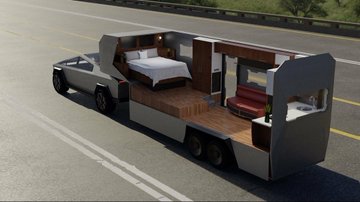
This custom Tesla Cybertruck RV camper trailer is truly exceptional. It’s a home on wheels and it fits right in with the modernistic design of the Cybertruck.
The trailer is of the fifth-wheel variety and it looks to be on the large side. There are no measurements provided, but it’s like 30 feet long or so and the exterior styling, though not quite as angular as the Cybertruck, still features the sharp creases and edges found on Tesla’s upcoming electric pickup truck.
The exterior may appear rather basic, but the inside is entirely different. Take a look at the amenities within in our photo gallery below:
Gallery: Cybertruck RV Home
5Photos
As you can see in the images, there’s plenty of room for living within. The Cybertruck home on wheels features a large sleeping area, a full kitchen, a couch that transforms into an eating area and even a shower/bathroom that seems to extend out only when needed.
Additionally, there’s solar located on the top of the RV and presumably some sort of energy storage system within (at least that’s how we’d spec it).
Of course, these are just renders and anything in the world is possible in rendered form. However, we’re fairly certain there will be demand for an RV/trailer that fits with the style of the Cybertruck.
This isn’t the first Cybertruck-inspired camper and it certainly won’t be the last. Have a look at some others in the related articles below and then us know in comments what the Cybetruck-inspired RV of your dreams would look like and feature within.










 “Our little town here, we thought it was the safest place,” said a resident of the border city of Suifenhe, who only gave his surname as Zhu.
 Our recollection of events is usually not like a replay of digital video from a security camera—a passive observation that faithfully reconstructs the spatial and sensory details of everything that happened. More often memory segments what we experience into a string of discrete, connected events. For instance, you might remember that you went for a walk before lunch at a given time last week without recalling the soda bottle strewn on the sidewalk, the crow cawing in the oak tree in your yard or the chicken salad sandwich you ate upon your return. Your mind designates a mental basket for “walk” and a subsequent bin for “lunch” that, once accessed, make many of these finer details available. This arrangement raises the question of how the brain performs such categorization.


 Tesladorian







 Bruce's Blog