https://asia.nikkei.com/Business/Startups/Chinese-AR-smart-glasses-startup-plans-funding-round

Chinese AR smart glasses startup plans funding round

MAD Gaze launches smartwatch that can be linked to its glasses

MAD Gaze is a Chinese startup specializing in AR smart glasses for consumers. (Photo courtesy of MAD Gaze)

BEIJING — MAD Gaze, a Chinese company that develops augmented reality smart glasses, is preparing for a new funding round after launching a motion control watch and wide-angle lenses that can be used at a distance.

Tech majors such as Microsoft and Google have long launched AR glasses but the technology has yet to be used widely in part due to high prices. Estimates by industry officials showed that the majority of consumer AR glass makers sell an average of only around 2,000 units per annum.

But with the advent of fifth-generation technology, industry watchers are hoping that smart wearable devices will become trendy with consumers.

Since its establishment in 2013, MAD Gaze has released a total of eight smart hardware products — seven AR glasses and one smartwatch. The company’s latest “Glow” smart glasses weigh 75 grams and are sold at 3,999 yuan each (about 62,000 yen).

MAD Gaze raised more than five million yuan (about $704,863) to produce Glow smart glasses on crowdfunding site Indiegogo in the fourth quarter of last year. This was in addition to 80 million yuan it raised in a pre-Series A funding round last year.

In January, MAD Gaze raised 130 million yuan in a Series A round from DNS in Shenzhen and Black30 Venture in Hong Kong.

With that war chest, it started mass producing those glasses in January and has shipped them around the world. Overseas customers account for 80% of the total, according to the company.

Zheng Wenhui, MAD Gaze founder and chairperson, said that the company has changed its strategy over the years.

“Seven years ago, we thought of making smart glasses to replace mobile phones and developed many apps at our company and installed them on smart glasses,” Zheng said.

“[But] we see that most people have purchased our products for one or two apps. We don’t think that smart glasses will replace mobile phones. We are sure that will never happen in a short period of time,” Zheng added.

AR glasses had tended to be heavy and bulky, but Zheng said the company has now developed “Glow Plus” which can be pocketed when folded.

Glow Plus has a viewing angle of 53 degrees, which means that it can be used on wide screens three meters away and can be connected to a smartphone. Unlike some AR glasses, Glow Plus is also stylish and looks like sunglasses.

Aside from AR glasses, the company also unveiled a motion-detecting smartwatch at CES 2020, a key consumer technology trade show, in Las Vegas in January. The watch responds to 33 gestures.

The smartwatch can be used together with Glow Plus.

“The smartwatch is useful for consumers to operate smart glasses easily and naturally in public places. At the same time, it means strengthening our product lineup toward cultivating the [consumer] market and also a differentiated marketing method,” Zheng said.

In addition to consumer products, MAD Gaze has built its own AR ecosystem, which includes a MAD app store, cloud storage, a platform for developers and tech support.

MAD Gaze has formed alliances with coffee machine seller Nespresso, sports goods maker Decathlon, Cathay Pacific Airways, IBM, Microsoft, software company Oracle, fashion conglomerate LVMH, OPPO and Sony.

36Kr, a Chinese tech news portal founded in Beijing in 2010, has more than 150 million readers worldwide. Nikkei announced a partnership with 36Kr on May 22, 2019.

https://science.sciencemag.org/content/368/6487/134

Epigenetic tinkering with neurotransmitters

 See all authors and affiliations

Science  10 Apr 2020:
Vol. 368, Issue 6487, pp. 134-135
DOI: 10.1126/science.abb3533

Summary

Dopamine is a monoamine neurotransmitter associated with movement and reward responses. The ventral tegmental area (VTA), a tiny midbrain region involved in motivation and addiction, and the neighboring substantia nigra contain most brain dopamine neurons. Dopamine neurons encode reward prediction errors (12), and dopamine conveys motivational value and promotes movement at multiple time scales (3). VTA dopamine neurons are part of the brain reward circuit. A central mechanism activated by addictive drugs and addictive behaviors, such as gambling, is to increase extracellular dopamine in the regions innervated by these neurons, such as the nucleus accumbens (4). It therefore comes as a surprise that dopamine is also an epigenetic mark. On page 197 of this issue, Lepack et al. (5) show that covalent attachment of dopamine (dopaminylation) to histone H3 glutamine 5 (H3Q5dop) plays a role in cocaine-induced transcriptional plasticity. Reducing dopaminylation prevented withdrawal-induced changes in gene expression and reduced cocaine-seeking behavior in rats.

View Full Text

https://www.castanet.net/news/Kelowna/296925/Extreme-opinions-can-impact-spread-of-pandemic-says-UBC-prof

Extreme opinion affects virus

New research from UBC Okanagan suggests that polarized and extreme opinions can impact the spread of a pandemic like COVID-19.

Efforts to contain a pandemic can be significantly hampered by opinions and behaviours of people, especially those who think in extremes.

UBC Okanagan associate professor of mathematical biology and study lead Rebecca Tyson says what we think of even the most basic actions changes how fast society will be able to move through the virus.

“While we didn’t have COVID-19 specifically in mind when we conducted our research, we did try to imagine an epidemic that didn’t have a vaccine and that was best prevented by hand washing and other relatively simple actions. Behaviours like these can have extremes on either end of the spectrum, from denying the problem and doing nothing to completely isolating oneself.”

Tyson and her team used a mathematical model displaying the spread of opinion and the spread of disease to find out how the presence, distribution and transmission of extreme behaviours can influence the outcome.

Of particular interest was how quickly a pandemic can form, the peak of the infection, the final numbers of those infected and the risk of a second wave.

“Our results show that opinion dynamics have a profound effect on the progression of disease in a population,” says Tyson.

“In particular, the state of public opinion at the onset of a pandemic can have enormous influence—either dramatically reducing the fraction of the population that will be infected and the peak epidemic size, or making the epidemic worse than it would be otherwise.”

She says the level of trust people have in opinion influencers can rapidly shift a pandemic into growth or decline, such as in Hong Kong where early adoption of physical distancing rules and government regulations helped eliminate the spread.

“Our models show that when faith in opinion influencers, like public health officials, is high, extreme preventative behaviours like quarantine and social distancing spread quickly through the population and the pandemic slows. This is exactly what we’re seeing in places like Hong Kong, Taiwan, Singapore and South Korea.

“I believe this is part of the issue in the United States, where faith in government and public health officials is perhaps weaker than it is elsewhere and where there has been mixed messaging from different levels of government,” Tyson adds.

The study was recently published in the Bulletin of Mathematically Biology with funding from Natural Sciences and Engineering Research Council of Canada (NSERC).

https://www.slashgear.com/north-focals-review-smart-glasses-twelve-month-test-10616175/

After a year with North’s smart glasses, here’s why I’m all-in on Focals 2.0

Chris Davies – Apr 10, 2020, 9:29 am CDT

4

After a year with North’s smart glasses, here’s why I’m all-in on Focals 2.0
EDITORS’ RATING: 7/10
PROS
  • Smart glasses feel like the future of wearables
  • Focals come close to looking like regular glasses
  • North’s feature updates have been impressive & frequent
  • Multiple ways to interact add to everyday usability
CONS
  • They’re light, but the weight balance could be better
  • Display quality is a little fuzzy
  • Charging case is big & bulky
  • Life at the cutting-edge is expensive

For nearly the past year, on and off, the future has been balanced on my face. Smart glasses have long been the lodestar of wearables, and North’s Focals promised a taste of that before the tech heavyweights had shown their hand. It hasn’t been an easy path here, though, shaped by sci-fi movies and soured by projects like Google Glass along the way.

I’ve been alternating between my regular glasses and the first-generation Focals since I took delivery of them a few months short of a year ago. That came after North opened up its testing and fitting process more broadly, using a mobile sizing system the company could take around the country, but before it turned to using an app to make the whole thing even easier. Part of the complexity was getting the prescription lenses right, too.

Your face is a tough nut for smart glasses to crack

Like a lot of would-be smart glasses wearers, I’m already primed for the concept because I wear regular glasses every day. I’m short sighted (as in, I can’t really read these words I’m typing without my specs on) and so North’s eagerness to make prescription versions of Focals felt like a huge deal. I’ve always believed – and still do – that existing glasses-wearers are the obvious early audience for tech like this.

Getting custom lenses made, and ones which work with North’s embedded display system, took a while, though. And I have to admit, when I first put Focals on, I wasn’t entirely convinced by what I was seeing.

Showing what a Focals’ wearer is seeing is tough, especially when the glasses have been made especially for your particular vision. North’s app has a “virtual view” you can load up on your phone, but since the first-gen Focals don’t have a camera it relies on the phone’s camera for the scene ahead. Then it superimposes the head-up display graphics you’re seeing in your right eye on top of that.

Or, at least, it superimposes the graphics the software generates. What I was seeing through Focals myself was always a little more fuzzy around the edges; a touch more blurred. You can tweak the alignment, both of the position of the display in your line of sight and of how the colors overlap and blend, but even after multiple runs through the setup process it always looked a bit… crunchy.

Adding to that was the fact that getting Focals to stay in place – and do so comfortably – is another issue. North’s glasses weigh 68.3 grams – it can vary depending on the size, style, and lenses – and at first glance that doesn’t seem like much at all. A plastic-bodied Pixel 3a, for instance, is 147 grams. A pair of Beats Solo Pro headphones come in at 267 grams.

Problem is not everything that might be on, or around, your face applies its weight in the same way. My regular glasses, for example, are 22.7 grams, a third of the Focals. That difference adds up the longer you wear them, and it’s exacerbated by how the mass is balanced.

A lot of it is placed on the bridge of your nose, because Focals’ heaviest parts are biased to the front. That makes it more noticeable, yes, but I found it also has the side-effect of the glasses gradually shifting down on my face. That slowly moves the display out of its perfect positioning in my eyeline. Similarly, every time I nudged them because of the comfort issue, I usually pushed them slightly out of that best location for optimal screen visibility.

Discretion isn’t guaranteed

One aspect of Focals works incredibly well: how discreet the display is. Maybe early on in smartwatches you could get away with checking your wrist and not having people instantly understand you were reading a notification, but those halcyon days are far behind us. At this point, no matter how surreptitiously I glance down at my Apple Watch, my partner knows I’m only half paying attention.

We’ll probably reach a similar point with smart glasses too, but for the moment North’s display is a lot more clandestine in use. There’s a little shimmer where the projection system is designed to hit the plastic lens, if you happen to be looking at the right angle and at the right time, but mostly it’s all very low-key. As long as I stifled whatever chuckles the funny replies to tweets might have prompted, I could generally get away without my divided attention being discovered.

More troublesome to hide is the fact that these aren’t ordinary glasses, period. North deserves some serious kudos for how compact it managed to slim the first-generation Focals down, certainly. I’ve been trying out prototype smart glasses for several years now, from a variety of companies, and shrinking everything into a form-factor that comes even close to regular eyewear is incredibly tough. That Focals do that is an achievement worthy of high praise.

They’re not perfect, though. The primary bulk is around the arms, where they meet the lenses. That’s where the batteries, the processor and other components, the microphones, and the projector system are all contained, and as a result they’re much chunkier than the arms of a standard pair of regular glasses.

Look at Focals dead-on from the side and you won’t really see it; from straight ahead, the bulging arms are a little more obvious. But at any sort of angle, assuming you’ve got short hair that doesn’t cover it all up, people are going to clock that these aren’t your typical glasses. Expect questions, though that’s probably not out of line for any early-adopter with a first generation product.

When the stars align, Focals are near-sublime

If I sound overly critical of Focals, you should know that it comes from a place of love. I’ve wanted the smart glasses form-factor to exist as a consumer product – something you can go out and buy, rather than just as a sci-fi movie prop or a weird proof-of-concept – for decades. I think augmented reality is legitimately one of the most exciting segments in the industry, and I do believe that things like smart glasses are the form-factor of the (near) future.

Focals have given me addicting glimpses of how that future will work. Having a notification float into view, and responding to it with a quick voice command, can be much quicker than pulling out my phone and doing it the traditional way.

I’d worried a little that having my digital world suspended in front of my face might make it hard to pull myself away from it. The reality is, though, that I’m far less likely to go off on an internet tangent through Focals than I am on my phone. I am, it seems, singularly incapable of seeing a notification on my lock screen, opening it on my phone, reacting to it, and then putting the phone down again. Far more likely is that I deal with the notification, then get distracted with my email, or Twitter, or Instagram, or… well, you get the picture.

Focals may have a range of functionality, but it feels far more task-biased than your iPhone or Galaxy does. If I check the weather forecast on Focals, I’m not going to then segue into my inbox. You can see your Twitter mentions – and Like, Retweet, or Reply – but this really isn’t the form-factor to keep up with a fast-moving timeline. North’s app sensibly allows you to choose which of your phone notifications make it through to your eyeline, too, and automatically mutes them when it senses you’re driving.

Just as was the case with smartwatches, I think we’re still in the early, discovery days of figuring out how smart glasses fit into our overall collection of personal devices. My Apple Watch hasn’t replaced my iPhone, but it has augmented it; my smart speaker hasn’t supplanted apps, but it has proved to be a shortcut to their key functionality.

North offers a tantalizing glimpse of how digital eyewear may fit into that too. One thing I’ve particularly liked was the plurality of ways to control Focals. Unlike Google Glass’ side-mounted trackpad – which always made me feel like I was cosplaying Star Trek: TNG‘s Geordi La Forge – you navigate primarily using a wireless plastic ring with a tiny joystick on top, which North calls the Loop. I’m not a ring-wearer normally, and so having the Loop on my finger felt a bit strange initially, but it turned out to be a great, unobtrusive way to move through the Focals interface.

Alternatively, there’s voice control. You can use voice-to-text to respond to messages, for example, or talk to Alexa just as you would with a smart speaker. I’m always a little self-conscious to use voice command systems out in public, but Focals’ microphone was at least sensitive enough that it could usually pick up my relatively quiet murmuring rather than demanding I bellow instructions like a marching band leader.

Even battery life was a pleasant surprise. The 700 mAh battery in Focals didn’t give me a huge amount of confidence about all-day use, but honestly it was usually my face that was the limiting factor. You charge the smart glasses – and the Loop – in the included case, which is reassuringly sturdy but also comically large.

North’s commitment is the big picture here

Where North has really impressed has been in just how agile the company is at updating Focals with new functionality. That’s not something a lot of companies – even big, established ones – get right.

Launching a new product, in a new segment, as a new startup is fraught with issues. On the one hand, big promises get your device attention and help justify the inevitable first-generation price premium. Problem is, they’re also difficult to live up to: even if you deliver on 90-percent of what you committed to, it’s the absent 10-percent that people will remember.

On the flip side, be conservative with your pitch and you run the risk that people simply won’t be impressed at all. Without a reason to buy, sales will struggle and even if you had a compelling roadmap planned out, there’s a solid chance you won’t be around to deliver it.

North has managed to just about tread a middle ground between the two, and that takes some doing. Focals launched with a relatively compact set of features, hitting what I’d say were the essentials: messages, turn-by-turn directions, weather reports, calendar reminders, and the ability to summon an Uber to your current location. The smart glasses also interacted with Amazon Alexa. Since then, though, the new abilities and refinements have been more of a flood than a trickle.

At some points, indeed, an update to Focals was dropping pretty much every week. The ability to view presentation slides, get commuting updates with live public transit data, and control different media apps like Spotify remotely, for example. Not all of the new apps were necessarily relevant to every Focals wearer, but it underscored that North wasn’t going to be an absent parent when it came to its eyewear.

It’s that commitment more than anything else which leaves me confident about Focals 2.0. If Focals are the spiritual successor of Google Glass – a head-worn display that isn’t really AR – then North’s attitude is leap-years ahead of what Google delivered, despite the difference in scale between the two companies. Fresh features were few and far between on Glass, leaving early-adopters wondering whether Google’s heart was really in it. That’s not a complaint you can reasonably level at North.

North Focals Verdict

You can’t buy the first-generation Focals right now, because North is preparing to launch its second-generation Focals 2.0. That’s okay, though, because realistically I couldn’t really recommend that anyone but the most avid early-adopter and smart glasses advocate jump onboard quite yet. Focals may have come down from their sky-high initial $1,000 price to a more attainable $599 (or $799 with prescription lenses), but the reality is that cost was never the biggest barrier.

What I want from Focals 2.0 is better weight balance. A crisper display that isn’t quite so positioning-dependent. And a package that doesn’t place so many demands on you overall, whether that be weight on the bridge of your nose, bulky arms in your peripheral vision, or a clunky charging case in your bag.

The good news is that, from the teasing North has done already about its second-generation product, it sounds like that wish-list isn’t impractical out of the gate. Combine a sleeker, more comfortable set of smart glasses with North’s proven commitment to pushing out new and clever apps and services, and you have something which – though probably still not for the mass market yet – is fit for the faces of a much bigger audience of tech enthusiasts.

In that sense, North Focals did just what it was meant to: help crystalize a sense of just what smart glasses are meant to look like and do in our everyday lives. Now, Focals 2.0 just needs to deliver that.

https://insideevs.com/news/409081/tesla-roadster-only-exposed-carbon-fiber/

Gruber Motor Company presents us withone more of the jewels it is helping get back to life.

Tesla now offers four models. It is a successful company, years ahead of competitors in what relates to EVs. But it only got there because of the solid stepping stone: the Tesla Roadster. Gruber Motor Company is specialized in recovering these pioneers. The video above shows one of the most special roadsters ever created: it is the only one to present an exposed carbon-fiber body.

You’ll notice that the bumpers do not use that material. We have no idea if the car looks good despite that: the video shows it only inside a building. The reason for that is that Gruber Motor Company is still recovering the battery pack of this unique EV. We hope it also makes a video when it is finally able to leave that building on its own.

The exposed carbon fiber is not the only unusual thing about this Roadster. According to Pete Gruber, the company’s founder, it also has more substantial brakes. That was a test for the so-called WhiteStar project, which created the Model S. The car is also one of the two that came with a limited-slip differential. Tesla gave up on the idea when it noticed the Roadster had too much torque for these differentials to handle.

In the rear, this EV also presents dual brake calipers. The final touch of exclusivity on this EV is the suede inserts on the seats, but we doubt people would notice that with all the other eye-popping details this Roadster has.

Check The Only Tesla Roadster With Exposed Carbon Fiber Ever Made

Apart from the exposed carbon fiber Roadster, Gruber also presents other Roadsters with exciting stories. As we have told you based on Out of Spec Motoring videos, the company also recovers Model S units, some of them salvage vehicles. Gruber must also be very disappointed with Tesla’s new Unsupported Vehicle Policy.

Video Description Via Maximilian Gruber On YouTube:

“A look at the only carbon fiber Tesla roadster created. 

Pete Gruber, CEO of Gruber Motor gives insight to the beautiful car.”

https://linuxgizmos.com/hummingboard-ripple-sbc-combines-i-mx8m-mini-with-lightspeeur-ai-chip/

HummingBoard Ripple SBC combines i.MX8M Mini with Lightspeeur AI chip

Apr 9, 2020 — by Eric Brown — 1639 views

SolidRun has launched an open-spec, $170 and up “HummingBoard Ripple” Pico-ITX SBC, a stripped-down version of the HummingBoard Pulse that runs Linux on an i.MX8M Mini module with optional Lightspeeur SPR2803 neural accelerator.

As we reported in our January catalog of 136 community-backed SBCs, SolidRun has been working on a more affordable, feature-reduced-feature HummingBoard Ripple variant of the HummingBoard Pulse SBC, which was originally launched with NXP’s i.MX8M, but last year expanded to supporting the i.MX8M Mini. SolidRun has now launched the Ripple, which joins the identically sized Pulse, as part of a new HummingBoard-M family. The family also includes the i.MX8M SOM and the i.MX8M Mini SOM, which can power either the Pulse and the Ripple, and which are available separately as well.

 
HummingBoard Ripple
(click images to enlarge)
The HummingBoard Ripple removes several features found on the Pulse, including the MIPI-DSI, digital audio, and one each of the dual GbE and MIPI-CSI links. It also switches the HDMI port to micro-HDMI. Originally, SolidRun had said the M.2 and optional PoE would go too, but they’re still listed. 

Eventually, both the Ripple and Pulse will be available with either the i.MX8M SOM or i.MX8M Mini SOM in all their core configurations: dual- and quad for the i.MX8M and single, dual, and quad for the Mini. For now, however, the Ripple ships only with the quad-core, 1.8GHz i.MX8M Mini SOM, at least for single-unit purchases, and only with 2GB LPDDR4 and 8GB eMMC. The currently available SKUs have an extended 0 to 70°C range, although the optional industrial -40 to 85°C model is likely available now for volume orders.

The HummingBoard Ripple starts at $170 or $186 with a WiFi/Bluetooth module.
For $202 or $218 (with WiFi/BT), SolidRun adds a Gyrfalcon Lightspeeur SPR2803 AI acceleration chip. SolidRun also integrates the SPR2803 with i.MX8M SoCs in up to 128-AI chip clusters on its Janux GS31 AI Inference Server.

The SPR2803 (or just 2803) provides 24 TOPS/W AI processing per chip, with optimal peak performance at 16.8 TOPs @ 300MHz and a low-power mode of 16.8 TOPs @ 700mW. It supports deep learning frameworks including TensorFlow, Caffe, and PyTorch. (More details on the Ripple may be found in the spec list farther below.)

The HummingBoard Pulse lacks the SPR2803 option but offers both i.MX8M and i.MX8M Mini SoCs starting with a dual-core i.MX8M SKU with 1GB RAM and 8GB eMMC for $182. The highest-end, $276 Pulse model also taps the i.MX8M, but with 3GB RAM, 8GB eMMC, and WiFi/BT. (Note that the $134 starting price for the Pulse shown on the HummingBoard-M product page comparison chart is incorrect.)

The Ripple joins other similarly sandwich-style, Linux-driven HummingBoards, including the i.MX6-based HummingBoard Pro — the heir to the original HummingBoard — and the i.MX6-based HummingBoard Edge, which shares many features with the slightly stripped down i.MX6-driven HummingBoard Gate and CAN-enabled HummingBoard CBi. Pricing and other details for all these open-spec boards may be found in our hacker board catalog.
i.MX8M SOM and i.MX8M Mini SOM

Thanks to its 14nm fabrication process, NXP’s 1.8GHz i.MX8M Mini SoC is faster and more power-efficient than the earlier i.MX8M. However, it’s limited to 1080@60 instead of the 4K@60 resolution found on the i.MX8M, which also adds support for HDMI 2.0, HDR video, and 20 audio channels. The i.MX8M features a Vivante GC7000 Lite GPU while the Mini has GCNanoUltra (3D) and GC320 (2D) graphics cores. Both provide 400MHz Cortex-M4 MCUs.


HummingBoard-M family
(click image to enlarge)
The i.MX8M SOM arrived in 2018 while the i.MX8M Mini SOM was announced last summer. The i.MX8M SOM, which was originally called the i.MX8 SOM, is available in a dual-core model with up to 3GB LPDDR4-3200 and a quad-core model with up to 4GB LPDDR4-3200. 

The i.MX8M Mini SOM is available in a single-core Solo model with up to 3GB LPDDR4-3200, and the Dual and Quad versions support up to 4GB LPDDR4-3200. They both measure 47mm x 30mm and support Linux and Android. The modules support external eMMC, NOR-flash, microSD, and PCIe SSD storage, with optional QSPI-NOR flash.
HummingBoard Ripple

At 102 x 69mm, the HummingBoard Ripple and Pulse SBCs are essentially Pico-ITX boards, which typically measure 100 x 72mm. The only other i.MX8M Mini-based Pico-ITX SBC we’ve seen was Estone Technology’s recent, voice-control focused EMB-2237-AI, which similarly uses a sandwich-style, COM-and-carrier design by way of its SOM-2237 module.

 
HummingBoard Ripple front and back detail views
(click images to enlarge)
The HummingBoard Ripple has a microSD slot in addition to 8GB eMMC and offers a GbE port with optional PoE. There’s also an optional WiFi/BT module and an HD-ready micro-HDMI port. One of the spec sheets hints that the single MIPI-CSI connector could support dual CSI connections when used with the non-standard i.MX8M SOM. Similarly, the dual USB host ports listed as USB 3.0 are downgraded to USB 2.0 unless you have the i.MX8M SOM. 

The Ripple is further equipped with micro-USB host and MikroBus connectors, as well as mini-PCIe and M.2 slots. No further details were provided, but there’s a SIM card slot, and the M.2 slot likely supports SSDs.

The Ripple has a wide-range, 7-36V input and a real-time clock. There’s also an optional IP32-protected extruded aluminum enclosure, but it did not show up as an option on the standard shopping pages. Schematics and mechanical files have been posted, and there’s a software wiki for various flavors of Linux 4.4x.

Specifications listed for the HummingBoard Ripple include:

  • Processor (via i.MX8M Mini SOM) — NXP i.MX8M Mini Quad (4x Cortex-A53 @ up to 1.8GHz) with GCNanoUltra GPU for 3D, GC320 for 2D, and Cortex-M4F @ 400MHz; Solo and Dual versions “coming soon,” and Ripple will eventually support i.MX8M SOM; optional GTI optional Lightspeeur SPR2803 AI chip
  • Memory/storage:
    • 2GB LPDDR4 RAM (via i.MX8M Mini SOM); 4GB possible on volume orders
    • 8GB eMMC; more eMMC possible on volume orders
    • MicroSD slot
  • Networking/wireless:
    • Gigabit Ethernet port with optional PoE
    • Optional WiFi/Bluetooth module
  • Other I/O:
    • Micro-HDMI port for up to HD resolution
    • 4-lane MIPI-CSI
    • 2x USB 3.0 host ports (only USB 2.0 with Mini)
    • Micro-USB OTG port
  • Expansion:
    • M.2 slot
    • Mini-PCIe slot
    • SIM card slot
    • MikroBus interface
  • Other features — RTC with battery; configurable push button; optional enclosure (141.5 x 78 x 30mm)
  • Power – 7-36V DC jack; optional PoE; reset button; optional power adapters
  • Operating temperature — 0 to 70°C; -40°C to 85°C model likely available for volume orders; 10% to 95% non-condensing humidity tolerance
  • Dimensions – 102 x 69mm
  • Operating system — Linux kernel 4.4x (Debian, Yocto, BuildRoot, OpenWrt)


HummingBoard Ripple has its YouTube moment
Further information

The HummingBoard Ripple is available starting at $170 (see pricing above). More information may be found in SolidRun’s announcement and product page, which links to shopping pages. There’s also a HummingBoard Ripple wiki with open source hardware files and a software page.


https://www.psypost.org/2020/04/heightened-social-anxiety-severity-is-associated-with-reduced-levels-of-mindfulness-and-self-compassion-56429

Heightened social anxiety severity is associated with reduced levels of mindfulness and self-compassion

Individuals who suffer from social anxiety disorder tend to have lower levels of self-compassion and mindfulness, according to a new study published in Mindfulness.

Social anxiety disorder is a very common mental health condition characterized by the constant fear of being judged by others which leads to avoidance of social interactions. Previous research on social anxiety suggests that self-compassion and mindfulness can be leveraged to treat this disorder. Self-compassion is described as the ability to be kind and non-judgmental towards oneself when facing failure. Mindfulness is a trait that involves being attentive to and accepting of the world around without judging it.

Researchers behind the present study sought to further investigate the relationship between self-compassion, mindfulness and social anxiety disorder. The researchers surveyed 136 adult participants who met the diagnostic criteria for social anxiety disorder. The inventory was designed to measure the severity of social anxiety, self-compassion, mindfulness, and a few other variables related to mental health and well-being.

The obtained results revealed that participants had lower levels of self-compassion and mindfulness compared to the normative population with no mental health disorders. While self-compassion and mindfulness were significantly correlated, the level of self-compassion was found to be a more important predictor of the severity of social anxiety, higher self-esteem, lower depression, and greater life satisfaction.

The researchers explain this finding by suggesting that self-compassion serves as a natural remedy for people suffering from social anxiety who tend to be very self-critical. Additionally, even short training is self-compassion was found effective for reducing post-event processing, a behavior characterized by prolonged rumination over the past even that causes anxiety.

Self-compassion was found to be a mediating link between mindfulness and social anxiety severity. When mediating effects of mindfulness in the relationship between self-compassion and social anxiety were analyzed, only the “describe” skill of mindfulness was found to have a significant effect. This skill involves observing and labeling emotions which may aid one’s emotional regulation.

The study, “Exploring Connections Between Self-Compassion, Mindfulness, and Social Anxiety”, was authored by Elisa Makadi and Diana Koszycki.

https://insideevs.com/news/408821/tesla-cybertruck-average-transaction-60000/

Most truck buyers aren’t going to settle for the cheap option.

We’ll take a tri-motor Tesla Cybertruck with Full Self-Driving. That is, if we could afford a ~$70,000 pickup truck. If you haven’t followed the details surrounding Tesla’s upcoming all-electric truck, you might actually be surprised to learn that the ranging-topping high-performance all-wheel-drive behemoth with 500 miles of range starts at only $69,990.

Like other Tesla vehicles, the Cybertruck will come to market in its more expensive configuration first, but eventually, you’ll be able to take ownership of the base model for around $40,000. However, according to crowdsourced data from CybertruckTalk.com forum, most people aren’t going to be waiting for the cheaper versions.

CybertruckTalk.com forum revealed that the average transaction price for the Cybertruck could be about $62,554. It relied on data from over 1,800 members to estimate the price. While this type of estimate can’t be relied on for accuracy, it makes sense that people would prefer the dual- or tri-motor trucks with their performance advantages and longer range.

We’ve included the data below:

All Orders – Average Transaction Price: $62,554
Single Motor ATP: $44,012 | Base Price: $39,900
Dual Motor ATP: $54,446 | Base Price: $49,900
Tri Motor ATP: $75,448 | Base Price: 69,900

In addition, the forum gleaned that a majority of Cybertruck pre-orders include the $7,000 Full Self-driving option. See below:

Single Motor with FSD: 58.74%
Dual Motor with FSD: 64.94%
Tri Motor with FSD: 79.25%

Did you secure a spot in line for the Tesla Cybertruck? If so, let us know which option you’re planning to buy.

https://www.techspot.com/news/84769-darpa-taps-intel-georgia-tech-pioneer-machine-learning.html

DARPA taps Intel and Georgia Tech to pioneer a machine learning ‘immune system’

GARD program looks to guard ML systems against adversarial deception attacks

By  

In context: The proliferation of machine learning systems in everything for facial recognition systems to autonomous vehicles has come with the risks of attackers figuring out ways to deceive the algorithms. Simple techniques have already worked in test conditions, and researchers are interested in finding ways to mitigate these and other attacks.

The Defense Advanced Research Projects Agency (DARPA) has tapped Intel and Georgia Tech to head up research aimed at defending machine learning algorithms against adversarial deception attacks. Deception attacks are rare outside of laboratory testing but could cause significant problems in the wild.

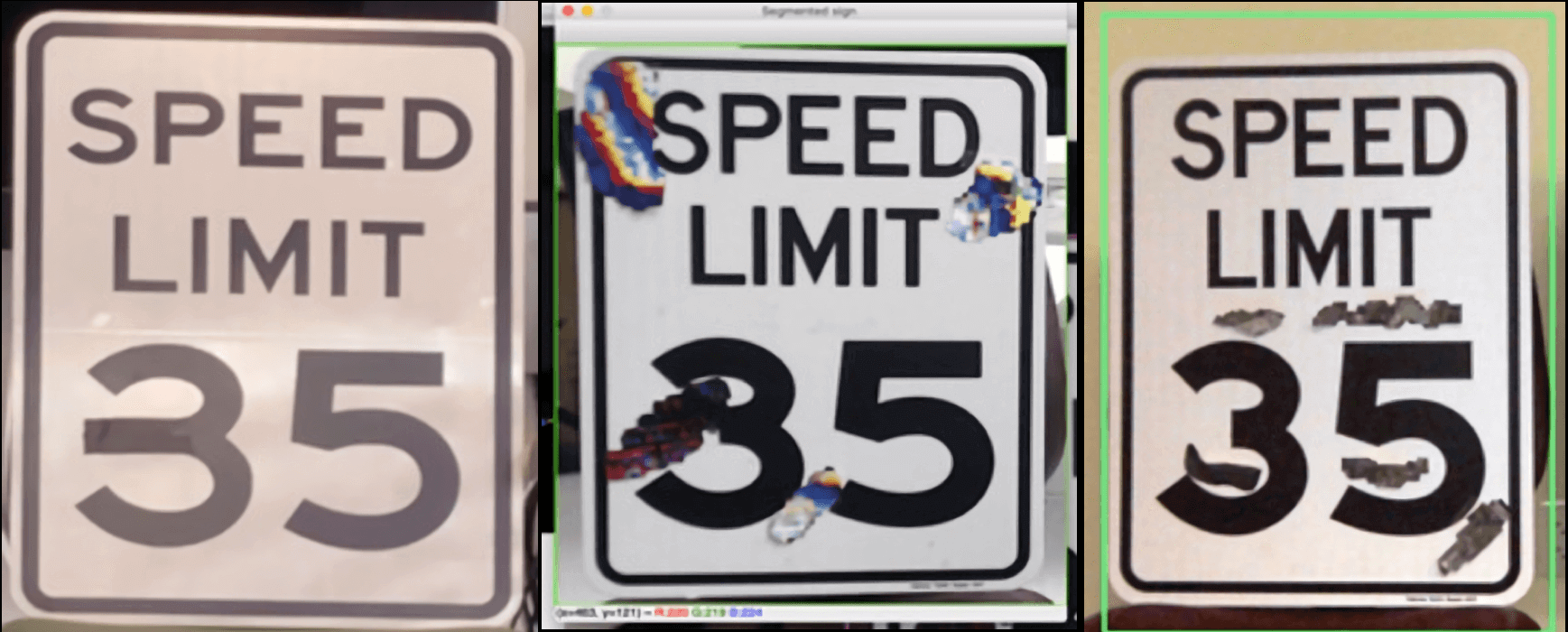
For example, McAfee reported back in February that researchers tricked the Speed Assist system in a Tesla Model S into driving 50 mph over the speed limit by placing a two-inch strip of black electrical tape on a speed limit sign (below). There have been other instances where AI has been deceived by very crude means that almost anyone could do.

DARPA recognizes that deception attacks could pose a threat to any system that uses machine learn and wants to be proactive in mitigating such attempts. So about a year ago, the agency instituted a program called GARD, short for Guaranteeing AI Robustness against Deception. Intel has agreed to be the primary contractor for the four-year GARD program in partnership with Georgia Tech.

“Intel and Georgia Tech are working together to advance the ecosystem’s collective understanding of and ability to mitigate against AI and ML vulnerabilities,” said Intel’s Jason Martin, the principal engineer and investigator for the DARPA GARD program. “Through innovative research in coherence techniques, we are collaborating on an approach to enhance object detection and to improve the ability for AI and ML to respond to adversarial attacks.”

The primary problem with current deception mitigation is that it is rule-based and static. If the rule is not broken, the deception can succeed. Since there is nearly an infinite number of ways deception can be pulled off, limited only by the attacker’s imagination, a better system needs to be developed. Intel said that the initial phase of the program would focus on improving object detection by using spatial, temporal, and semantic coherence in both images and video.

Dr. Hava Siegelmann, DARPA’s program manager for its Information Innovation Office, envisions a system that is not unlike the human immune system. You could call it a machine learning system within another machine learning system.

“The kind of broad scenario-based defense we’re looking to generate can be seen, for example, in the immune system, which identifies attacks, wins, and remembers the attack to create a more effective response during future engagements,” said Dr. Siegelmann. “We must ensure machine learning is safe and incapable of being deceived.”

https://scitechdaily.com/quantum-entanglement-of-independent-particles-without-any-contact-ever/

Quantum Entanglement of Independent Particles Without Any Contact – Ever

Particle Entanglement Interaction

Entanglement by Identity, or Interaction Without Ever Touching

What is interaction and when does it occur? Intuition suggests that the necessary condition for the interaction of independently created particles is their direct touch or contact through physical force carriers. In quantum mechanics, the result of the interaction is entanglement–the appearance of non-classical correlations in the system. It seems that quantum theory allows entanglement of independent particles without any contact. The fundamental identity of particles of the same kind is responsible for this phenomenon.

“The whole is other than the sum of its parts.” — Aristotle (Metaphysics, Book VIII)

Quantum mechanics is currently the best and the most accurate and sophisticated theory used by physicists to describe the world around us. Its characteristic feature, however, is the abstract mathematical language notoriously leading to serious interpretational problems. The view of reality proposed by this theory is still a subject of scientific dispute, which, instead of expiring over time, is becoming hotter and more interesting. The new motivation and intriguing questions are brought forth by a fresh perspective resulting from the standpoint of quantum information and the enormous progress of experimental techniques. This allows verification of the conclusions drawn from subtle thought experiments directly related to the problem of interpretation. Moreover, we are now witnessing enormous progress in the field of quantum communication and quantum computer technology, which significantly draws on non-classical resources offered by quantum mechanics.

The work by Pawel Blasiak from the Institute of Nuclear Physics of the Polish Academy of Sciences in Krakow and Marcin Markiewicz from the University of Gdansk focus on analyzing widely accepted paradigms and theoretical concepts regarding the basics and interpretation of quantum mechanics. The researchers are trying to answer the question to what extent the intuitions used to describe quantum mechanical processes are justified in a realistic view of the world. For this purpose, they try to clarify specific theoretical ideas, often functioning in the form of vague intuitions, using the language of mathematics. This approach often results in the appearance of inspiring paradoxes. Of course, the more basic the concept to which a given paradox relates, the better, because it opens up new doors to deeper understanding of a given problem.

In this spirit, both scientists decided to ponder the fundamental question: what is interaction and when does it occur? In quantum mechanics, the result of the interaction is entanglement, which is the appearance of non-classical correlations in the system. Imagine two particles created independently in distant galaxies. It would seem that a necessary condition for the emergence of entanglement is the requirement that at some point in their evolution the particles touch one another or, at least, indirect contact should take place through another particle or physical field to convey the interaction. How else can they establish this mysterious bond, which is quantum entanglement? Paradoxically, however, it turns out that this is possible. Quantum mechanics allows entanglement to occur without the need for any, even indirect, contact.

To justify such a surprising conclusion, a scheme should be presented in which the particles will show non-local correlations at a distance (in a Bell-type experiment). The subtlety of this approach is to exclude the possibility of an interaction understood as some form of contact along the way. Such a scheme should also be very economical, so it must exclude the presence of force carriers which could mediate this interaction (physical field or intermediate particles). Blasiak and Markiewicz showed how this can be done by starting from the original considerations of Yurke and Stoler, which they reinterpreted as a permutation of paths traversed by the particles from different sources. This new perspective allows generating any entangled states of two and three particles, avoiding any contact. The proposed approach can be easily extended to more particles.

How is it possible to entangle independent particles at a distance without their interaction? The hint is given by quantum mechanics itself, in which the identity — the fundamental indistinguishability of all particles of the same kind — is postulated. This means, for example, that all photons (as well as other families of elementary particles) in the entire Universe are the same, regardless of their distance. From a formal perspective, this boils down to symmetrization of the wave function for bosons or its antisymmetrization for fermions. Effects of particle identity are usually associated with their statistics having consequences for a description of interacting multi-particle systems (such as Bose-Einstein condensate or solid-state band theory). In the case of simpler systems, the direct result of particle identity is the Pauli exclusion principle for fermions or bunching in quantum optics for bosons. The common feature of all these effects is the contact of particles at one point in space, which follows the simple intuition of interaction (for example, in particle theory, this comes down to interaction vertices). Hence the belief that the consequences of symmetrization can only be observed in this way. However, interaction by its very nature causes entanglement. Therefore, it is unclear what causes the observed effects and non-classical correlations: is it an interaction in itself, or is it the inherent indistinguishability of particles? The scheme proposed by both scientists bypasses this difficulty, eliminating interaction that could occur through any contact. Hence the conclusion that non-classical correlations are a direct consequence of the postulate of particle identity. It follows that a way was found to purely activate entanglement from their fundamental indistinguishability.

This type of view, starting from questions about the basics of quantum mechanics, can be practically used to generate entangled states for quantum technologies. The article shows how to create any entangled state of two and three qubits, and these ideas are already implemented experimentally. It seems that the considered schemes can be successfully extended to create any entangled many-particle states. As part of further research, both scientists intend to analyze in detail the postulate of identical particles, both from the standpoint of theoretical interpretation and practical applications.

A big surprise may be the fact that the postulate of indistinguishability of particles is not only a formal mathematical procedure but in its pure form leads to the consequences observed in laboratories. Is nonlocality inherent in all identical particles in the Universe? The photon emitted by the monitor screen and the photon from the distant galaxy at the depths of the Universe seem to be entangled only by their identical nature. This is a great secret that science will soon face.

Reference: “Entangling three qubits without ever touching” by Pawel Blasiak and Marcin Markiewicz, 27 December 2019, Scientific Reports.
DOI: 10.1038/s41598-019-55137-3

The Henryk Niewodniczanski Institute of Nuclear Physics (IFJ PAN) is currently the largest research institute of the Polish Academy of Sciences. The broad range of studies and activities of IFJ PAN includes basic and applied research, ranging from particle physics and astrophysics, through hadron physics, high-, medium-, and low-energy nuclear physics, condensed matter physics (including materials engineering), to various applications of methods of nuclear physics in interdisciplinary research, covering medical physics, dosimetry, radiation and environmental biology, environmental protection, and other related disciplines. The average yearly yield of the IFJ PAN encompasses more than 600 scientific papers in the Journal Citation Reports published by the Clarivate Analytics. The part of the Institute is the Cyclotron Centre Bronowice (CCB) which is an infrastructure, unique in Central Europe, to serve as a clinical and research centre in the area of medical and nuclear physics. IFJ PAN is a member of the Marian Smoluchowski Kraków Research Consortium: “Matter-Energy-Future” which possesses the status of a Leading National Research Centre (KNOW) in physics for the years 2012-2017. In 2017 the European Commission granted to the Institute the HR Excellence in Research award. The Institute is of A+ Category (leading level in Poland) in the field of sciences and engineering.