https://medicalxpress.com/news/2020-04-brain-discovery-source-lifelong-behavioral.html

Brain discovery suggests source of lifelong behavioral issues

Brain discovery suggests source of lifelong behavioral issues
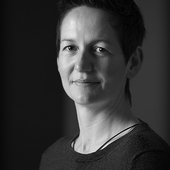
“You don’t want [brain] cells to have genomic compromises. You don’t want damaged DNA,” explained researcher Catherine R. Lammert, a graduate student at UVA’s School of Medicine. “When the damage isn’t recognized, the cells that have DNA damage live on in the CNS [central nervous system] and can be seen by accumulation of DNA damage in the brain.” Credit: Dan Addison, UVA Communications

Improper removal of faulty brain cells during neurodevelopment may cause lifelong behavioral issues, new research from the University of Virginia School of Medicine suggests. The finding also could have important implications for a wide range of neurodegenerative diseases, such as Alzheimer’s and Parkinson’s.

UVA neuroscientists have discovered that an unexpected form of cellular cleanup takes place in developing brains. If this process goes wrong—happening too little or too much—it can cause permanent changes in the brain’s wiring. In lab mice, this results in anxiety-like behavior, and it may play a role in neurological conditions such as autism in humans.

“You don’t want [brain]  to have genomic compromises. You don’t want damaged DNA. So this would be a normal mechanism to expel those cells from being incorporated into the central nervous system,” explained researcher Catherine R. Lammert. “When the damage isn’t recognized, the cells that have DNA damage live on in the CNS [central nervous system] and can be seen by accumulation of DNA damage in the brain.”

Understanding brain development

The cellular cleaner the researchers spotted, the AIM2 inflammasome, has been associated primarily with the body’s immune response to infections but has not been extensively studied in the brain. But there it plays a critical role in ensuring the  is assembled properly and functions correctly, Lammert discovered in collaboration with principal investigator John Lukens, Ph.D.

“Neurodevelopment is a very complicated process,” said Lammert, a graduate student whose specialized skills were instrumental in the discovery. “This form of cell death actually plays a role in removing unwanted cells from the brain to establish a healthy CNS with the correct connections and the right number of cells.”

More than half the neurons created during  end up dying, so proper cleanup is essential, noted Lukens, of UVA’s Department of Neuroscience. “Too much or too little is thought to underlie everything from autism to —any type of neurodevelopmental disorder,” he said.

For example, ataxia is a condition that causes people to lose control of their movements. “There’s a potential that this pathway could be contributing to the neuronal loss that is seen in ataxia,” said Lukens, a researcher with UVA’s Center for Brain Immunology and Glia (BIG). “On the one hand, you need it [the cleanup] but if you have too much of it, it can have negative consequences, like, potentially, ataxia. A lot of the early-onset neurodegenerative diseases are associated with mutations in DNA damage repair proteins, and this pathway could also be involved.”

The discovery came about somewhat serendipitously, the result of an observation of the behavior of  while the researchers were investigating traumatic brain injury. But following that unexpected lead has given scientists a better understanding of brain development, and that understanding may one day yield new treatments for .

Lukens, a member of UVA’s Carter Immunology Center, cautioned that such treatments are likely a long way off, but he said a therapy based on the discovery might have widespread applications. “Hitting this pathway in the mature  would likely provide a treatment strategy for any neurodegenerative disease associated with DNA damage,” he said. “And that’s all the major heavy hitters: Alzheimer’s disease, Parkinson’s, ALS.”


Explore further
Uncovering potential pathway to slowing Alzheimer’s


More information: Catherine R. Lammert et al, AIM2 inflammasome surveillance of DNA damage shapes neurodevelopment, Nature (2020). DOI: 10.1038/s41586-020-2174-3

Journal information: Nature

https://theconversation.com/seven-tips-to-get-your-sleep-cycle-back-on-track-during-lockdown-135595

Seven tips to get your sleep cycle back on track during lockdown

You might have noticed your normal sleep pattern has changed. Some of us may be sleeping more, and some of us may be sleeping less. Life has changed dramatically for many of us, with our usual daily routine – including commutes, meal times, and the amount of time we spend outside – being altered because of self isolation.

All of these changes impact our natural circadian rhythm, which is an essential internal “clock” that plays a key role in regulating our sleep pattern. It controls body temperature and hormones in order to make us feel alert during the day and tired at night.

Exposure to natural light and regular meal times are two of the most powerful forces in aligning our circadian rhythms. But for many of us, quarantine has changed the amount of time we spend outside, and we might be eating at different times than normal.


While some of us are reconnecting with our natural circadian rhythm, others might have trouble falling asleep, or may be waking up multiple times during the night. This is also a normal experience, as uncertainty can increase stress levels and stress hormones (such as cortisol), which help regulate our sleep-wake cycle. Cortisol normally drops in the evening, reaching its lowest level at midnight. But if levels are too high before bedtime, it could disrupt sleep.

Some of us might also be sleeping more, catching up on lost hours. Many of us have so-called “sleep debt”, which is the cumulative effect of not getting enough sleep, and may lead to mental and physical fatigue. As we juggle our daily tasks, we often run out of hours in the day to get things done – so many of us choose to sleep less to do more.

Sleep debt (also known as sleep deprivation) is associated with declines in performancememory and our immunity.

If you are sleeping longer than normal, you may be repaying some of that sleep debt acquired in life. Don’t panic here – let your body catch up and erase some of that debt you have subconsciously been carrying around. Sleep loss studies that have allowed recovery sleeps of ten hours have demonstrated a restoration of performance when the participants are awake, suggesting this is a fixable problem.

The solutions

1. Establish a new routine. You may have been furloughed or be working from home for the first time. Routine is very important for the body right now. This will be the starting block for engaging with your natural circadian rhythm – not the one your job normally sets. Start by focusing on your sleep-wake cycle, go to bed when you feel tired and try to wake up without an alarm. You may sleep a little more than normal at the beginning, but within a week or two you will return to your natural duration. Though everyone is different, you should aim for 7-9 hours a night. Not only is routine good for our sleep cycle, it’s also beneficial to our mental health.

2. Don’t use your bedroom as your office (if possible) When it’s time for bed, remove electronic devices and make the room cool, dark and quiet. It’s important to associate your bedroom as the place you go to sleep, not the place you work or watch TV. This will help you to relax and prepare for sleep. Electronic devices also emit artificial light that can influence our sleep cycle. Artificial light can trick your circadian clock into thinking daylight has been extended and alter our quality of sleep. If you need electronic devices nearby, place them in night mode.

3. Avoid napping As you try to establish your new routine, it’s important to engage with your natural circadian rhythm – and napping could potentially disrupt this at the beginning. However, if your previous night’s sleep was poor you may feel more tired after lunch. Short naps – less than 20 minutes – can help to restore cognitive function and may make you feel less sleepy.

4. Only drink caffeine before noon We all respond a little differently to caffeine. Because caffeine is a known stimulant, it could influence our sleep by keeping us awake later. So when trying to fix your sleep pattern, it may be best to limit caffeine intake to earlier in your day.

Try to drink your coffee before noon. aanbetta/ Shutterstock

5. Exercise Both aerobic and resistance exercise has been shown to have positive effects on sleep. However, timing is important. It’s best to avoid vigorous exercise one hour before bedtime as this may reduce our sleep duration, quality and make it more difficult to fall asleep in the first place.

6. Get outside Exposure to both natural light and dark during this time will help us keep our circadian rhythms in balance, and make us tired.

7. Change your bedtime routine At least an hour before bed stop work, reduce screen time, meditate, or read. These techniques allow us to relax and help our circadian rhythm take control by releasing hormones that will promote sleep and reduce alertness.

Though it’s still uncertain what life will look like after quarantine has ended, one thing for certain is that if we look after our sleep pattern during this time, we may leave quarantine feeling less fatigued – and maybe a little more productive.

https://www.tomshardware.com/news/raspberry-pi-dev-server-project-ubuntu-triple-boot

Raspberry Pi Dev Server Manages Triple-Boot System With Help From Ubuntu

This Raspberry Pi project covers all of your on-the-go developer needs. Designed by a developer known as CodeF.red, it uses a Raspberry Pi 4 running Ubuntu to help manage his triple boot laptop rig. With the portable dev server, he can easily swap between the Windows, macOS and Linux.

The server is running Ubuntu off an NVME drive connected via USB (we have also detailed how to install Ubuntu on Raspberry Pi). The unit is controllable with a Bluetooth keyboard and also features a touchscreen. The maker also upgraded the Pi’s cooling capabilities with a 5V Noctua fan with a super-low noise profile.

The dev server uses Docker and can be controlled via SSH. Since it uses Ubuntu, you can add plenty of additional tools, like Glances for cross-platform monitoring features.

Like many other Pi projects, the creator crafted this one using hardware already had on hand. CodeF.red said via Reddit that he considers the NVMe drive “overkill,” especially since the performance is limited by the USB connection. But after removing the drive from an old Mac, it was gathering dust and needed to be put to use.

The touchscreen is also optional. It was chosen only to help click when using the Ubuntu desktop environment. You could easily use a mouse or keyboard instead.

This project is almost finished, but not quite. CodeF.red already has another hardware upgrade on the way—a battery UPS (uninterruptible power supply).

You can read more about the portable Pi dev server on the original Reddit post. And if you’d like to see more of CodeF.red’s work, check out his official YouTube channel.

https://www.ghacks.net/2020/04/09/mozilla-installs-scheduled-telemetry-task-on-windows-with-firefox-75/

Mozilla installs Scheduled Telemetry Task on Windows with Firefox 75

Observant Firefox users on Windows who have updated the web browser to Firefox 75 may have noticed that the upgrade brought along with it a new scheduled tasks. The scheduled task is also added if Firefox 75 is installed on a Windows device.

The task’s name is Firefox Default Browser Agent and it is set to run once per day. Mozilla published a blog post on the official blog of the organization that provides information on the task and why it has been created.

firefox default browser agent

According to Mozilla, the task has been created to help the organization “understand changes in default browser settings”. At its core, it is a Telemetry task that collects information and sends the data to Mozilla.

Here are the details:

  • The Task is only created if Telemetry is enabled. If Telemetry is set to off (in the most recently used Firefox profile), it is not created and thus no data is sent. The same is true for Enterprise telemetry policies if they are configured. Update: Some users report that the task is created while Telemetry was set to off on their machine.
  • Mozilla collects information “related to the system’s current and previous default browser setting, as w2ell as the operating system locale and version”.
  • Mozilla notes that the data cannot be “associated with regular profile based telemetry data”.
  • The data is sent to Mozilla every 24 hours using the scheduled task.

Mozilla added the file default-browser-agent.exe to the Firefox installation folder on Windows which defaults to C:\Program Files\Mozilla Firefox\.

Firefox users have the following options if they don’t want the data sent to Mozilla:

  • Firefox users who opted-out of Telemetry are good, they don’t need to make any change as the new Telemetry data is not sent to Mozilla; this applies to users who opted-out of Telemetry in Firefox or used Enterprise policies to do so.
  • Firefox users who have Telemetry enabled can either opt-out of Telemetry or deal with the task/executable that is responsible.

Disable the Firefox Default Browser Agent task

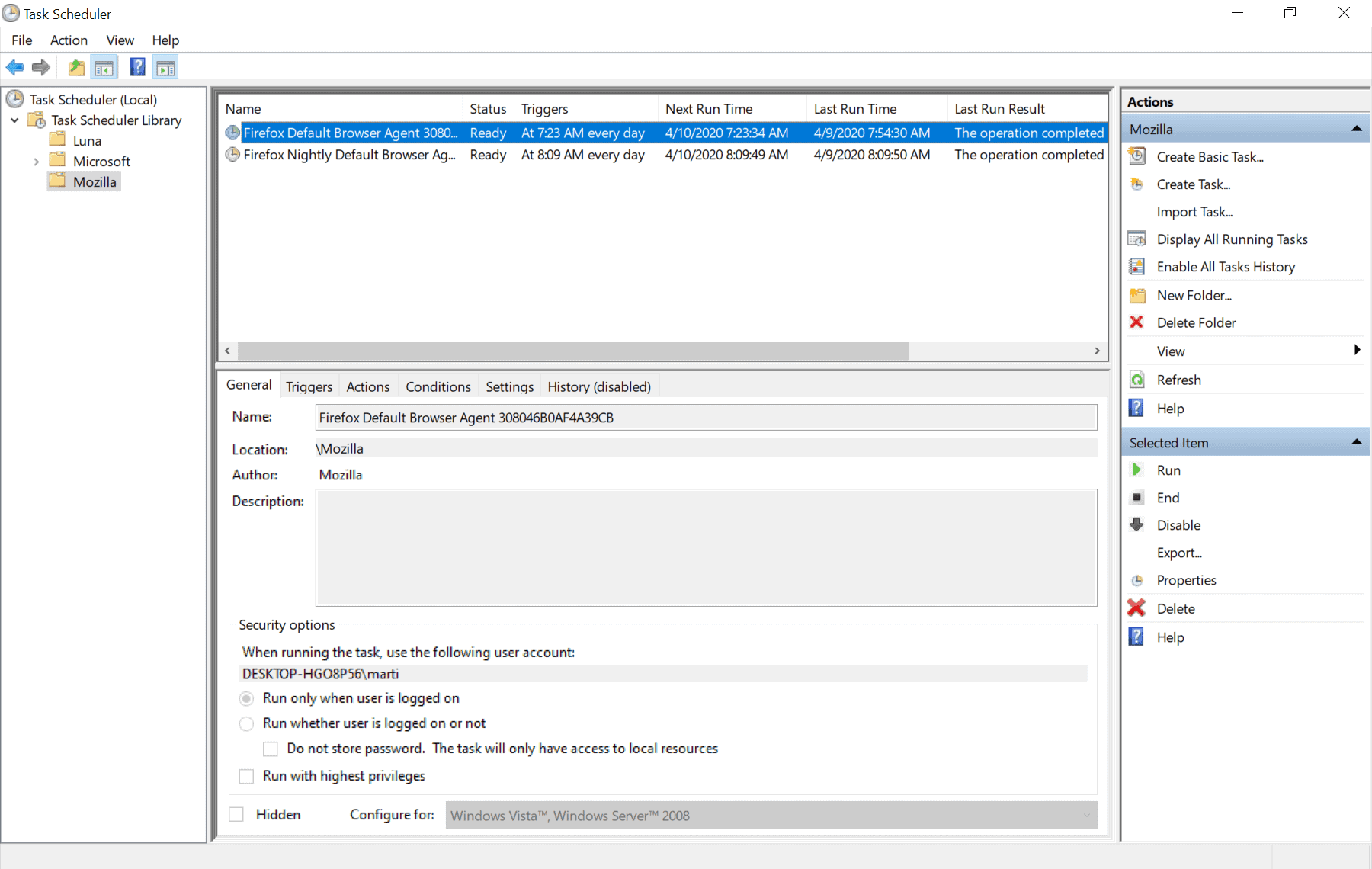
firefox-browser agent task disabled

Here is how you disable the task:

  1. Open Start on the Windows machine and type Task Scheduler.
  2. Open the Task Scheduler and go to Task Scheduler Library > Mozilla.
  3. There you should find listed the Firefox Default Browser Agent task.
  4. Right-click on the task and select Disable.
  5. Note: Nightly users may see the Firefox Nightly Default Browser Agent task there as well and may disable it.

The task won’t be executed anymore once it is disabled.

Closing Words

The new Telemetry task is only introduced on Windows and runs only if Telemetry is enabled (which it is by default). Mozilla is transparent about the introduction and while that is good, I’d preferred if the company would have informed users about it in the browser after the upgrade to Firefox 75 or installation of the browser and before the task is executed the first time.

https://www.popularmechanics.com/technology/a32020835/ai-thoughts-into-text/

Training AI To Transform Brain Activity Into Text

If successful, AI could one day help people with speech disabilities communicate.

Artificial intelligence concept

YUICHIRO CHINOGETTY IMAGES
  • Neuroscientists at the University of California, San Francisco, have come up with an AI-based system that can decode brain waves into written text faster than existing technologies.
  • While the new tech is limited to recognizing verbal speech at the moment, it has the potential to help those with speech disabilities in the future.
  • The researchers published their results in the scientific journal Nature Neuroscience at the end of March.

Back in 2008, theoretical physicist Stephen Hawking used a speech synthesizer program on an Apple II computer to “talk.” He had to use hand controls to work the system, which became problematic as his case of Lou Gehrig’s disease progressed. When he upgraded to a new device, called a “cheek switch,” it detected when Hawking tensed the muscle in his cheek, helping him speak, write emails, or surf the Web.

Now, neuroscientists at the University of California, San Francisco have come up with a far more advanced technology—an artificial intelligence program that can turn thoughts into text. In time, it has the potential to help millions of people with speech disabilities communicate with ease.

“We exploit the conceptual similarity of the task of decoding speech from neural activity to the task of machine translation; that is, the algorithmic translation of text from one language to another,” the scientists wrote in a new paper published in the scientific journal Nature Neuroscience.

MORE FROM POPULAR MECHANICS

Amazing Camping Gear

Previous VideoPlayNext Video

Unmute
Current Time 0:00
Loaded: 18.12%

Remaining Time 3:19
Captions

Fullscreen

They’ve taken an AI approach that is akin to translating text in different languages. The underlying theory is the same in both cases—the goal is to convert one sequence of some arbitrary length into another—but the inputs are different, neural signals in the brain versus text.

To test out their hypothesis, the researchers used human trials. The scientists implanted electrodes into the brains of four participants with epilepsy to monitor their speech. Each person then read sentences aloud from one of two datasets: a set of picture descriptions, composed of 30 sentences and 125 unique words, which contained 460 sentences and about 1,800 unique words.

Each participant read 50 sentences aloud multiple times, including lines like “Tina Turner is a pop singer” and “there is chaos in the kitchen.” As each person spoke, the researchers monitored their brain activity. Then, they input the data into a machine learning algorithm that could switch the brain waves into a string of numbers that encoded the sentences. In another portion of the system, the numbers were converted back into a sequence of words.

image
NATURE NEUROSCIENCE

At the outset, the system came up with some nonsensical phrases, like “the spinach was a famous singer;” lines with improper grammar, like “several adults the kids was eaten by;” and some ultimately philosophical-sounding sentences, such as “the oasis was a mirage.” Over time, the system improved as the researchers fed the system the initial sentences that the participants read aloud, to compare against.

In one case, the system got 97 percent of the sentences correct, representing less errors than the average human transcriber. Still, the algorithm is only processing a small number of sentences and words compared to what a user would ultimately desire.

Still, the system currently only works on verbal speech—meaning those who suffer from speech disorders caused by muscle paralysis won’t benefit just yet.

https://www.mindbodygreen.com/articles/how-to-position-your-bed-according-to-feng-shui

Feng Shui For Your Bed: How To Position It & Why It Matters

Sarah Regan
Sunny Bedroom with Natural Light
Image by Ali Harper / Stocksy

Feng shui is all about paying attention to the details of your environment so you can create a space that supports personal growth and transformation. And one place that might need an energy refresh is your bedroom—particularly, your bed itself. According to feng shui, proper bed placement can help foster feelings of security, balance, and stability. We asked architect and certified feng shui consultant Anjie Cho for the lowdown on how to position your bed for maximum positive energy:

How to position your bed, according to feng shui.

“There’s something in feng shui called ‘the commanding position,'” Cho explains. “If you’re sitting up in bed with your back against the headboard, you would want to be able to see the door without being directly in line with it. Usually that means you’re looking diagonally toward the door. That’s generally the best position.”

As far as windows go, Cho says it’s best not to position your bed directly underneath them, particularly if your bedroom is on the ground floor: “Sometimes you have to and that’s totally OK, but it can create a feeling of insecurity because it’s less safe.”

And lastly, you ideally want your headboard to be right up against the wall, with room to the right and left for bedside tables or lamps. “I know it sounds silly, but I’ve seen beds floating in the middle of the room, which offers no stability. You really want the headboard against the wall.”

To summarize: In order to fully relax and get quality sleep, you’ll want to make sure you feel totally comfortable and at ease in your bed. Makes sense, right?

Article continues below

Why does it matter, anyway?

As far as why bed placement matters, it comes down to the more primitive side of the mind. When you can’t see the door, you might subconsciously feel unsafe; like someone could come barging in without you knowing. And if you’re directly in line with the door, you could subconsciously feel like you’re in harm’s way too.

Your door also has a more metaphorical importance in feng shui, according to Cho: “When you can see it, you’re open to all the opportunities and energy coming toward you. When you can’t, you’re looking away from your future and inadvertently looking backward. It’s about walking through life with your eyes open and seeing all the world has to offer.”

And if you’re wondering about how bed placement can affect a current (or future) partnership, Cho explains that symmetry, and having open space on both sides of the bed, supports balance within a relationship.

What if I have a small bedroom and can’t set up my bed this way?

If you can’t swing these tips because of the size of your room, there are other options: “If you can’t position your bed in a way that puts you in optimal view of the door, you can position a mirror so you can see the reflection of the door in the mirror while in bed,” Cho says.

Similarly, if having space on either side of your bed is tough in your bedroom, you can use a mirror on your bedside wall to expand the view. However, “that’s not ideal,” according to Cho, “and you really want to have space on both sides.” Even if it’s just a little, it can help keep energy flowing around you as you sleep.

Other feng shui tips to consider in your bedroom.

Once you position your bed, there are plenty of other feng shui tweaks that can improve the energy in your bedroom: For starters, you’ll want to make sure the area under your bed is as clutter-free as possible. The idea is that anything under there can block the energy flow around you as you’re sleeping. If your storage space is limited, soft things like linen and pillows are fine to stow away under the bed. But you don’t want anything sharp or hard, like shoes, suitcases, or books.

As far as fabrics and colors, Cho recommends organic, nontoxic materials for your linens if it’s within your budget. And the best bedroom colors in feng shui are soothing, healing tones like blues and greens, earthy tones, and soft yellows. Cho is also a fan of white for its freshness. If you’re craving passion, red can be a nice change-up, but it may feel too energizing if you have a hard time sleeping.

Lastly, keeping symmetry in mind always helps to foster balance in the bedroom. If possible, you can create this effect with two nightstands or two lamps and symmetrical pillows. This also ties back to supporting a balanced relationship with your partner if you have one.

A recap of how to feng shui your bed.

With the help of the “commanding position” (remember: face the door, but not directly), a centered headboard, plus colors that support balance and prosperity, you can rest easy knowing that your positive energy is still flowing, even while you snooze.

https://www.notebookcheck.net/Raspberry-Pi-Turn-the-popular-single-board-computer-into-an-ad-blocker.460236.0.html

Raspberry Pi: Turn the popular single-board computer into an ad blocker

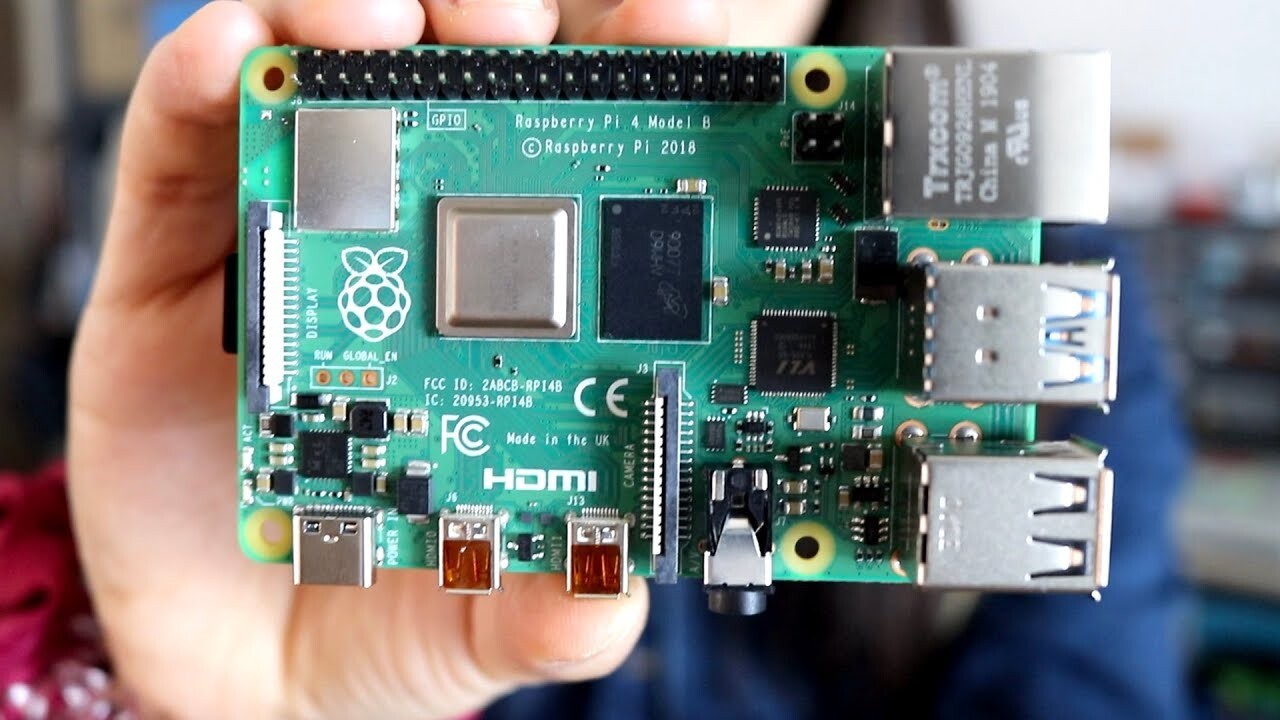
Raspberry Pi: Turn the popular single-board computer into an ad blocker. Image source: Estefannie Explains It All)
The simple project should take all over ten minutes to set-up and turns a Raspberry Pi into your very own ad blocker. There is more to it than just blocking ads though, as it also gives you an oversight of your whole network among other features.

While adverts are not necessarily a bad thing, you may want some control over what content you are shown. Ad blockers are two a penny these days, with some web browsers like Opera even including built-in ones. But what if you would like greater oversight on the ads and trackers that are following your travels through the internet?

Well, if you have a spare Raspberry Pi lying about, then you could put it to use as a Pi-hole client. Pi-hole has been around for a while now, with the Raspberry Pi Blog running a post on it in 2018. All the same, it is a great way to block, and keep track of, traffic on your network.

All you need is a Raspberry Pi and the ability to run a script, the details of which you can find on places like the Raspberry Pi Blog or in a recent Devscover Coding & Raspberry Pi video. In essence, Pi-hole does not block ads in as much as it sends no data to certain domains. So, you will still see the boxes where adverts would normally be, but they should no longer display. Equally, Pi-hole hamstrings trackers, too. Setting-up Pi-hole takes about ten minutes and can be done from your Raspberry Pi itself.

You must also configure your devices to use your Raspberry Pi’s IP address as their default DNS name server. While this is borderline impossible on Android 10, setting your router’s DNS name server to your Raspberry Pi’s IP address seems to resolve any device-specific restrictions.

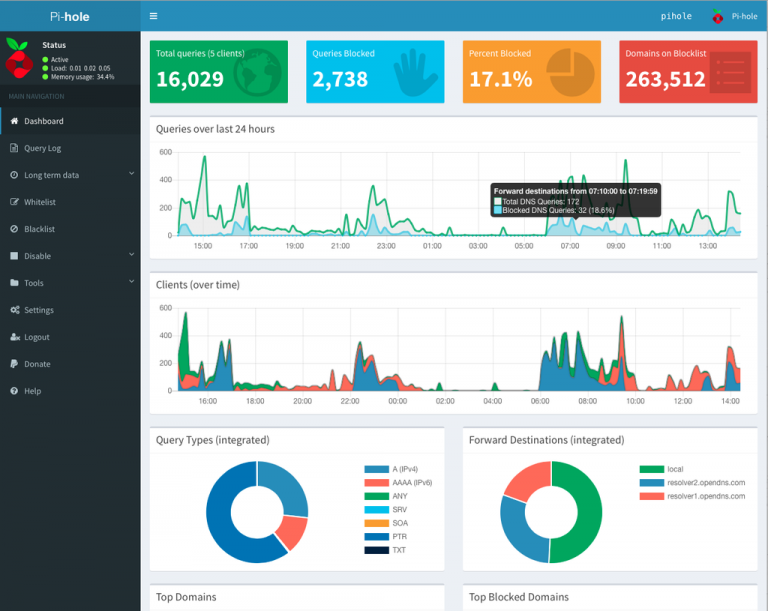
There are limits to Pi-hole, though. Sadly, it cannot control YouTube video adverts, primarily because of Google’s obfuscation with the domains it uses to serve them before the start of videos. However, Pi-hole serves more than just to block ads. There is also a handy Pi-hole web interface that allows you to monitor ad-blocking data, query logs and a host of other information. Pi-hole is free to use, although the developers ask for a donation the software useful.

The Pi-hole web interface. (Image source: Raspberry Pi Foundation via Pi-hole)

https://www.bloombergquint.com/businessweek/your-mattress-is-not-the-cure-for-a-good-night-s-sleep

Your Mattress Is Not the Key To a Good Night’s Sleep Bloomberg Bookmark April 09 2020, 3:55 PM April 09 2020, 4:10 PM (Bloomberg Businessweek) —

We may hold on to the dream that the perfect mattress is the key to a great evening of sleep, but science shows that the answer may lie in lighting. Twenty years ago, the discovery of a photosensitive pigment deep inside the human eye helped researcher

Twenty years ago, the discovery of a photosensitive pigment deep inside the human eye helped researchers understand how blind people can wake up naturally in the morning without seeing sunlight. The pigment, melanopsin, picks up the blue light of the color spectrum, which signals the brain to energize. “It was a major discovery in neuroscience,” says Steven Lockley, an associate professor of med

“It was a major discovery in neuroscience,” says Steven Lockley, an associate professor of medicine at Harvard Medical School. He built off this discovery to help NASA determine how astronauts in space can maintain a normal sleep schedule without a 24-hour sun cycle. Remember science class in elementary school? When you look at a flame, the blue part is the hottest; the yellow, not as hot.

“In the daytime you want blue light, which is alerting and has you as productive as possible,” Lockley says. “In the evening you want to calm the brain with lower-­temperature light and make it dimmer.” This is why you should put your blue-light cellphone away when it’s time for bed.

The health benefit of obeying our circadian rhythms has led to an explosion in consumer products. Lockley now consults for Light Cognitive, a Finnish group that designs wall boxes to look like real windows, and he’s an adviser to LED maker Lighting Science, with whom he worked on the NASA project. He encourages getting as much natural sunlight as possible, above all else

Interior decorators are taking these cues as well, using blue-­enriched bulbs for gallery walls and dressing areas, where full-spectrum light is essential for seeing color. New York designer Clodagh, who won the 2018 Global Wellness Award, says low-temperature lighting has an important side benefit in the bedroom. “When you make love, you want to look your absolute best,” she says.

https://mobilesyrup.com/2020/04/09/googles-duplex-ai-chat-agent-is-now-available-in-canada/

Google’s human-like Duplex AI assistant expands to Canada

The AI assistant is being used to update business hours and closures amid the COVID-19 pandemic

By Patrick O’Rourke@Patrick_ORourkeAPR 9, 2020 9:22 AM

Google quietly updated its support page to reveal that Duplex, the tech giant’s human-like, AI-powered chat agent capable of scheduling appointments and gathering other information over the phone, is now available in a limited capacity in the U.K., Australia and Canada.

The updated information page features the numbers Duplex is using to call businesses across each country. This page previously only listed businesses in the U.S. and New Zealand, Duplex’s initial launch regions. Duplex first launched on Pixel devices before making its way to iOS and then more Android smartphones. Back in early March, Google CEO Sundar Pichai said the tech giant is using Duplex to contact businesses to confirm closures and adjusted hours to ensure Google Search and Maps feature accurate information.

At the start of every Duplex call the person on the other end is informed that they’re being recorded, according to Google. If the individual taking the call doesn’t want to be recorded, the call is then handed off to a human operator that annotates the call transcripts. Google first showed off Duplex at its 2018 I/O developer conference. The AI assistant was criticized by many for using speech so natural it sounded like an actual person, including even common fluctuations like “ums” and “ahs.”

Google then stated that Duplex would confirm it’s an AI assistant at the start of every call to ensure the person on the other end is aware they’re talking to artificial intelligence and not an actual person. With the COVID-19 pandemic still ongoing in Canada, it makes sense for Google to be leveraging Duplex to gather the most up to date store hours and closure information possible. Via: VentureBeat Source: Google

Read more at MobileSyrup.comGoogle’s human-like Duplex AI assistant expands to Canada

https://insideevs.com/news/408818/tesla-cybertruck-plaid-musk/

Musk says he’ll be driving the Plaid version of the Cybertruck.

Elon Musk has confirmed that there will be a plaid of the Tesla Cybertruck, but we wonder if it will be an extreme off-road-truck or something that crushes every other car at the drag strip.

Tesla has already confirmed that both the Model S and Model X will get high-performance Plaid variants in the future, with the first expected to be the Plaid Model S later this year, but now we’ve learned of another Plaid Tesla in the works.

According to Tesla CEO Elon Musk, there will be a Plaid Cybertruck variant and this will be the version of the truck that Musk himself will drive:

Sofiaan Fraval@Sofiaan

Only discord it’s gonna cause is Pope needing to get another when she takes it from him 😂 😂 😂

Elon Musk

@elonmusk

Plaid Cybertruck is what I will drive

403 people are talking about this

Admittedly, that single tweet doesn’t make much sense without some context, so here’s the previous tweet:

Pope of Muskanity@RationalEtienne

I confess: the Cybertruck fills my dreams and prayers.

My lady dislikes it. Should I purchase this artwork from Legends Studio as a shameless attempt to change her mind?

Also, please give me other tips on how to get her to accept this beautiful beast. I need thy assistance. 🙇‍♂️

View image on Twitter

Elon Musk

@elonmusk

You may return the vehicle for a full refund in the unlikely event that it causes domestic discord

342 people are talking about this

So a Plaid Cybertruck is coming. That’s now known. What we don’t know is what the focus of the truck will be. Will tesla take the extreme off-road approach and go after trucks like the Ford F-150 Raptor? This route would require a beefier suspension, more ground clearance, a winch and some off-road rubber. Or is a on-street performance truck more likely? Something like a lowered, high power truck fitted with stick tires and wide wheels that could dominate at the drag strip.

Tesla Cybertruck Colors

Our money would be on the off-roader, but that doesn’t fit with the performance profile of the other planned Plaid Tesla vehicles, so perhaps we’re wrong.

What are your thoughts on the direction Tesla will choose with the Plaid Cybertruck? Let us know in comments below.