https://medicalxpress.com/news/2020-04-newly-memory-decision-making.html

Newly discovered memory process influences decision-making

Newly discovered memory process influences decision-making: neuroscience study
Decisions we make between similar items, like what brand of juice to buy, can be influenced by psychological links we’ve been trained to make in the past. 

Learned connections between stimuli and reward—like the positive emotions associated with popular brands—have a powerful influence over our future decisions. Scientists have started to discover why.

A new type of memory process has been discovered by scientists at UNSW Sydney.

This process explains how learned associations between  and a reward—called predictive learning or Pavlovian conditioning—can influence goal-directed decisions made later in life, like choosing between different foods to eat or clothes to buy. While the study was conducted in rats, it gives us powerful indicators for human behavior, too.

Scientia Professor Bernard Balleine, director of the Decision Neuroscience Laboratory and co-senior author of the study alongside Dr. Vincent Laurent, likens this predictive learning process to the long-lasting influence of advertising.

“When deciding between purchasing similar, equal-priced items at the shops, what often sways our decisions is the influence of advertising—arbitrary, brand-related images (stimuli) that we have been conditioned to link to something we value even more (reward),” he says.

“But advertising doesn’t just occur at the point of purchase. Over time, ads build up our emotional connections with brands.

“My team looks at how these associations become encoded as memories in the  and how they influence decisions we make later on.”

The findings, published today in the journal Neuron, are based on analysis of the same neural processes in rats. The animals were taught to associate  (stimuli) with certain types of food (reward)—for example, a long tone indicated a pellet while a stream of clicks indicated sugar.

Eventually, the animals only needed to hear the sound before anticipating the reward that was to follow: a stream of clicks prompted them to approach the lever that usually delivers sugar.

“It’s common to use rodents like rats and mice to study decision-making because, like humans, they are omnivorous, gregarious, and they’re continually trying to predict how and where to find things they value. They also readily learn new actions to get those things,” Prof Balleine explains.

“It’s no surprise then that many of our fundamental psychological capacities are emulated by rodents. The neural systems controlling those capacities are also surprisingly similar.”

Cellular memories

Analysis of the rats’ neurons showed that the memory encoding process important for decision-making starts in the basolateral amygdala—a  involved in emotional learning and memory.

The  creates cellular ‘memories’ of these learnings in another brain structure, the , which is the interface between emotion and motor actions.

“The cellular memories cause a physical and long-lasting change in the expression of delta opioid receptors in the nucleus accumbens,” says Prof Balleine. “During learning, the receptors build up on the membrane of critical modulatory neurons—called cholinergic interneurons—that regulate outputs from this emotion/motor action part of the brain.

“This increased expression lasts for many weeks and is necessary for the stimulus-reward memory to influence choice between different actions.

“In other words, those receptors make us act a certain way in a situation where we’re presented with a predictor of reward that we’ve learned to value.”

Delta opioid receptors are part of the G protein-coupled receptor (GPCR) family—receptors that detect molecules outside the cell and activate a cellular response. While opioid activity in the brain is usually linked with reward, in this case, it was also the prediction of the  that activated the receptors.

This is the first evidence of a GPCR-based memory process.

“We were surprised that these complex psychological processes were captured within this narrow circuit in which connections between two critical brain structures are regulated by this GPCR-based ,” says Prof Balleine.

“Up until now, it was thought that these decision-making processes required a far broader set of structures and circuits.”

The science of decision-making

Prof Balleine hopes to expand this research by investigating the role of other GPCR receptors in encoding psychological processes.

He also plans to track how expressions of delta opioid  are maintained over time.

“Every new discovery we make at the Decision Neuroscience Lab builds understanding of the complex brain processes involved in decision-making.

“We’re working towards answering the broadest questions about how brain processes control decisions: how we choose between different courses of action to gain the things we value most and avoid those we dislike or fear.”


Explore further

New light shed on neuronal circuits involved in behavior, learning and dysfunction


More information: Ashleigh K. Morse et al. Basolateral Amygdala Drives a GPCR-Mediated Striatal Memory Necessary for Predictive Learning to Influence Choice, Neuron (2020). DOI: 10.1016/j.neuron.2020.03.007

Journal information: Neuron

https://www.eurekalert.org/pub_releases/2020-04/kfu-oot040720.php

One of the mechanisms of Staphylococcus antibiotic resistance deciphered

A joint Russian-French-German paper was published in Nature Communications

KAZAN FEDERAL UNIVERSITY

IMAGE
IMAGE: RSFS PROTEIN BINDS TO THE 50S PARTICLES AND PREVENTS RIBOSOMAL SUBUNITS ASSOCIATION. view more 

CREDIT: KAZAN FEDERAL UNIVERSITY

The Russian side is represented by Structural Biology Lab (Kazan Federal University) and Institute of Proteins (Russian Academy of Sciences). This particular paper tackles the issue of stress resistance in Staphylococcus aureus. The results can help in finding new antibiotics.

Head of Structural Biology Lab Konstantin Usachev explains that this was the fruit of a five-year-long cooperation between KFU, Institute of Proteins, Stuttgart University, and Institute of Genetics and Molecular and Cellular Biology (Strasbourg, France). In 2016, the team was first to completely describe the structure of Staphylococcus aureus ribosome and compare it to other organisms.

“The ribosome is the largest ribonucleic complex in the cell, and it consists of two subunits: large and small. The small subunit is responsible for reading the genetic code, and the function of the large subunit is to ensure the formation of the peptide bond in the growing protein chain. In our article, using cryoelectron microscopy and X-ray diffraction methods, we were able to show the ribosome binding mechanism of the RsfS protein (Ribosome silencing factor S), which protects Staphylococcus aureus from stress (antibiotics, fever, or host immunity). Under stress, this protein binds to the large subunit of the ribosome and prevents the small subunit from joining, preventing the formation of functional ribosomes,” says Usachev.

Research in this area began 5 years ago. For a long time, scientists were not able to obtain the structure of a complex of bacterial ribosomes with the RsfS protein in high resolution, which was necessary to understand the details of its mechanism of action.

“One of the problems was the high toxicity of this protein to the cells of the bacteria E. coli, the organism used to produce proteins in the laboratory. The fact is that the RsfS protein, which stops the synthesis of proteins in Staphylococcus aureus, is able to stop this process in other bacteria. This resulted in a very small amount of protein sample, insufficient for structural studies. In addition, the sample was extremely unstable and aggregated. Then the idea came to us – to isolate this protein simultaneously with its target in the structure of staphylococcus ribosome – protein L14, which is a part of the large subunit. It turned out that if you select both components at the same time, they will be stable in solution. We were able to obtain crystals of these proteins and solve the structure by X-ray diffraction analysis, first with medium resolution using the new single-crystal diffractometer available in our laboratory, and then with high resolution using the ESRF synchrotron in Grenoble, France,” continues the interviewee.

Next, the scientists needed to study the details of the interaction of the RsfS protein with Staphylococcus aureus ribosome. This could be achieved with cryoelectron microscopy.

“Unfortunately, we did not have a microscope capable of solving high-resolution structures using this method, but NovAliX became interested in our studies and offered their microscope to test the initial samples. The obtained samples of the complexes had turned out so good that the company then contacted one of the world’s leading manufacturers of FEI microscopes in the Netherlands and organized data collection on a Titan Krios microscope. As a result, combining the data of cryoelectron microscopy with the previously obtained data of X-ray diffraction analysis, we were able to show in detail the molecular mechanism of the action of the RsfS protein on Staphylococcus aureus ribosomes,” concludes Usachev.

Currently, Structural Biology Lab is partnering up with the Chemoinformatics Lab to predict the structure of potential antibiotics disrupting the functioning of RsfS protein and thus effectively eliminating Staphylococcus.

According to Usachev, only combined efforts of biologists, chemists and physicists can advance the research in protein synthesis and new medications.

https://www.mindbodygreen.com/articles/3-calming-breathing-techniques-that-will-help-you-stay-positive

3 Calming Breathing Techniques That Will Help You Stay Positive

Kaia Roman
Woman Sitting on a Hillside, Eyes Closed, Enjoying the Sun

I, like so many people, am finding it challenging to remain positive these days. Though I’m fortunate enough to be able to stay inside, cabin fever is setting in, my family is getting on each other’s nerves, and there’s a steady stream of adrenaline-producing news in the background.

It’s the perfect recipe for negativity—which is why my mindfulness practice has become more important than ever. Mindful activities like breathwork can be incredibly beneficial for easing stresslowering blood pressureimproving mood, and even altering the way the body responds to pain. Here are a few calming breathing techniques that can help us stay positive through these trying times:

“Let it go” breath:

  1. Begin by sitting in a comfortable position with your feet planted solidly on the ground. Close your eyes and bring your awareness to your breath.
  2. As you inhale, feel your belly and lungs expand. As you exhale, feel your feet grounded on the Earth, steadying you in uncertain times.
  3. On the next inhale, visualize moving any negativity that you’ve been experiencing all the way up from your grounded feet, through your body, into your head.
  4. On the exhale, imagine pushing all of that negativity out through your ears as gray smoke. See and feel it leaving your body completely.

Repeat this breath and visualization as often as you like. I recommend using it multiple times a day.

“Bubble of safety” breath:

  1. Find yourself in a comfortable position, sitting or lying down, and close your eyes.
  2. Start by bringing your attention to the rise and fall of your breath. Right here, right now, all you need to focus on is your breath.
  3. Next, become aware of your body: What sensations do you notice as you are sitting or lying in stillness?
  4. Now, expand your awareness to include the space around your body. That space may extend several inches or several feet, depending on what feels comfortable for you.
  5. As you take note of this space, imagine that it’s your bubble of safety, enveloping you in a peaceful, impenetrable cocoon. Know that this bubble of safety is always with you, regardless of what’s happening around you.

“Grateful heart” breath:

  1. Begin by getting comfortable, either sitting or lying down, and then close your eyes.
  2. Start to pay attention to your breath, consciously deepening your inhale and slowing your exhale.
  3. Now, put your hands on your heart and bring to mind something, or someone, that you’re grateful for. Choose an easy one: a person, place, situation, pet, etc., that really fills your heart with appreciation.
  4. As you continue to deeply inhale and slowly exhale, let the feeling of gratitude wash over your entire body. Hold this feeling for one to five minutes, or longer if you like.

Feel free to come back to this exercise multiple times, adding more reasons to be grateful to your list.

https://www.notebookcheck.net/The-latest-Casio-G-SHOCK-watch-is-the-first-of-its-line-to-have-a-heart-rate-monitor.460239.0.html

The latest Casio G-SHOCK watch is the first of its line to have a heart-rate monitor

Casio's new G-SHOCK Move. (Source: Casio)
Casio’s new G-SHOCK Move. (Source: Casio)
Casio’s upcoming addition to the G-SHOCK line has heart-rate tracking functions for the first time. The watch’s new sensor is also joined by others to track fitness-related activities while in use. It is also a Bluetooth device, with its own app to display its measurements and manage notifications while training.

Casio’s newest G-SHOCK-series watch is called the Move (or GBDH1000) variant of this line of watches. It is the first one to feature heart-rate tracking via an optical sensor. This extra added function shows its metrics on a dedicated section of the device’s MIP-LCD screen, and can also relate them to 5 distinct workout modes (Recovery, Base, Cardio, At Threshold or Maximum).

The optical sensor is also joined by a triple barometric pressure/compass/temperature sensor in order to track other areas of performance during exercise. Furthermore, the G-SHOCK Move also features a 3-axis accelerometer to track metrics such as step count or run-distances. It also incorporates standalone GPS/GLONASS for general location– and activity-tracking.

Finally, the watch also supports cardiorespiratory fitness tracking through VO2max (or oxygen consumption) sensing, which can then be tracked using a Firstbeat Technologies algorithm, a feature that also makes a debut in this G-SHOCK.

This data (and analysis) can then be sent to the G-SHOCK Move app via Bluetooth for storage and long-term performance evaluations. Therefore, this watch is definitely geared towards use while getting or keeping fit. This is also evident in its large, easy-press buttons and urethane band, which comes in black (GBDH1000-1) or white with neon accents (GBDH1000-1A7).

Either choice will be priced at US$399.99 on the launch of both the G-SHOCK Move and its app on April 17, 2020. It will be available on the series’ site and in selected US retailers from that date.

https://medicalxpress.com/news/2020-04-next-generation-brain-implants-thousand-electrodes.html

Next-generation brain implants with more than a thousand electrodes can survive for more than six years

Protecting thin, flexible brain interfaces from the human body
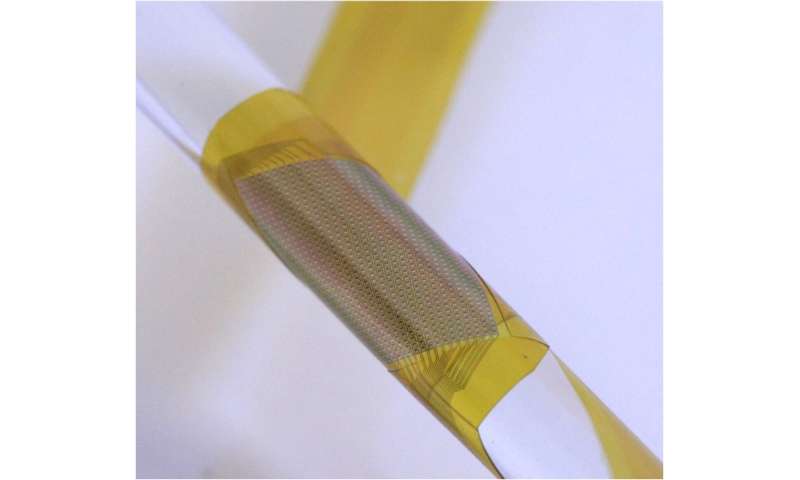
To demonstrate the extreme flexibility of their neural interfaces, researchers wrap it around a 2.5 mm tube. Despite it’s flexibility, the neural interface can withstand the harsh environment of a brain for more than six years. Credit: John Rogers, Northwestern University

Researchers have demonstrated the ability to implant an ultrathin, flexible neural interface with thousands of electrodes into the brain with a projected lifetime of more than six years. Protected from the ravaging environment of internal biological processes by less than a micrometer of material, the achievement is an important step toward creating high-resolution neural interfaces that can persist within a human body for an entire lifetime.

The results, appearing online April 8 in the journal Science Translational Medicine, were published by a team of researchers led by Jonathan Viventi, assistant professor of biomedical engineering at Duke University; John Rogers, the Louis Simpson and Kimberly Querrey Professor of Materials Science and Engineering, Biomedical Engineering and Neurological Surgery at Northwestern University; and Bijan Pesaran, professor of neural science at New York University.

“Trying to get these sensors to work in the brain is like tossing your foldable, flexible smartphone in the ocean and expecting it to work for 70 years,” said Viventi. “Except we’re making devices that are much thinner and much more flexible than the phones currently on the market. That’s the challenge.”

The human body is an unforgiving place to live if you’re an uninvited guest—especially if you’re made of polymers or metal. Besides attacks from the surrounding tissues and immune system, foreign objects must be able to stand up to a corrosive, salty environment.

Engineering  that can withstand this assault is an even more daunting prospect. Current long-term implantable devices are almost universally hermetically sealed within a laser-welded titanium casing. Think of a pacemaker, for example.

Play

00:00
00:39
Mute
Settings

PIPEnter fullscreen

Play

This 1,008-electrode neural interface can survive implantation within a brain for six years, blowing previous technologies completely out of the water. One of their goals is to create a new type of visual prosthetic that interacts directly with the brain that can restore at least some sight capacity for people with damaged optic nerves. But such a device could also be used to control other types of prosthetics or in a wide range of neuroscience research projects. Credit: Charles Wang and Mackenna Hill, Duke University

“Building water-tight, bulk enclosures for such types of implants represents one level of engineering challenge,” Rogers said. “We’re reporting here the successful development of materials that provide similar levels of isolation, but with thin, flexible membranes that are one hundred times thinner than a sheet of paper.”

But when it comes to the human brain, space and flexibility is of the essence. There is no room for rigid devices with millimeter-thick walls. These challenges mean that existing neural interfaces can sample only about a hundred sites, which pales in comparison to the tens of billions of neurons that make up the human brain. Any attempt to make these devices larger invariably runs into the hurdle of wiring logistics—because each sensor requires its own wire, size constraints quickly become an issue.

Viventi and his colleagues have been working on a different approach.

“You need to move the electronics to the sensors themselves and develop local intelligence that can handle multiple incoming signals,” said Viventi. “This is how digital cameras work. You can have tens of millions of pixels without tens of millions of wires because many pixels share the same data channels.”

Through their work, the researchers have already demonstrated flexible neural devices just 25 micrometers thick with 360 electrodes. But previous attempts to keep them safe from harm inside the body have failed, as even the tiniest defect can thwart the entire effort.

Play

00:00
00:41
Mute
Settings

PIPEnter fullscreen

Play

A virtual tour depicting how flexible neural interfaces with thousands of electrodes could be used in a wide range of applications from controlling prosthetics to treatments for neurological disorders. Credit: Charles Wang and Mackenna Hill, Duke University

“We tried a bunch of strategies before. Depositing polymers as thin as is required resulted in defects that caused them to fail, and thicker polymers didn’t have the flexibility that was required,” said Viventi. “But we finally found a strategy that outlasts them all and have now made it work in the brain.”

All it took was perfection.

In the new paper, Viventi, Rogers, Pesaran and their colleagues demonstrate that a thermally grown layer of silicon dioxide less than a micrometer thick can ward off the hostile environment within the brain, degrading at a rate of only 0.46 nanometers per day. And because this form of glass is biocompatible, any trace amount that dissolves into the body should not create any problems of its own.

They also show that, even though the glass encapsulation is not conductive, the device’s electrodes can detect neural activity through capacitive sensing. This is the same sort of technology that can detect the movements of a finger on a smartphone’s touchscreen. They implanted a 64-electrode neural interface into a rat for over a year and a 1,008-electrode neural interface into the motor cortex of a monkey reaching to a touchscreen.

“Successfully deploying the device in monkeys doing human-like tasks is a huge leap forward,” said Perasan. “Now we can refine our technology to help people suffering brain disorders.”

Protecting thin, flexible brain interfaces from the human body
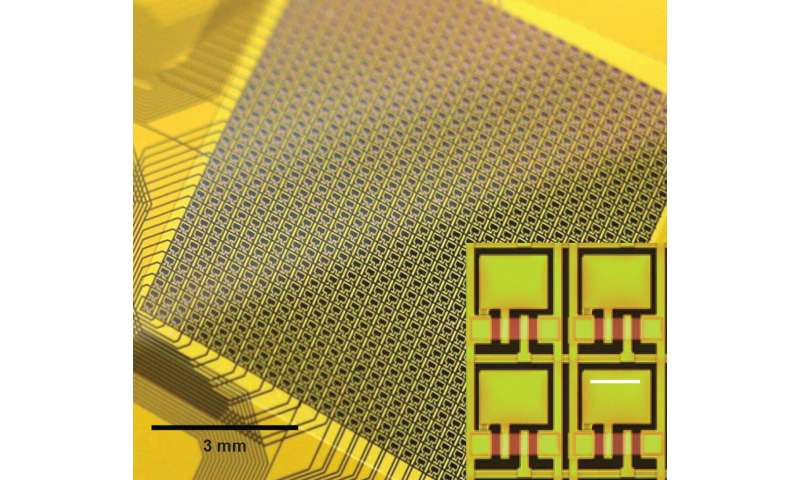
A photograph of the Neural Matrix array, which allows for high-resolution and long-term microelectrocorticography. Credit: C.-H. Chiang et al., Science Translational Medicine (2020)

Based on these results and experiments to heat the devices to simulate longer periods of time, the researchers believe their devices could withstand implantation for more than six years.

While these results are enormous steps forward in comparison to current state-of-the-art devices, they’re not anywhere near the level of the researchers’ aspirations. Viventi’s student is currently working to scale the prototype up from 1,000 electrodes to more than 65,000. And they expect that by using commercial foundries to make the electrodes, which are far superior to their own capabilities, that the performance of their neural interface will increase greatly both in terms of signal quality and surviving within the .

“One of our goals is to create a new type of visual prosthetic that interacts directly with the brain that can restore at least some sight capacity for people with damaged optic nerves,” said Viventi. “But we can also use these types of devices to control other types of prosthetics or in a wide range of neuroscience research projects.”


Explore further

Engineers 3-D print soft, rubbery brain implants


More information: C.-H. Chiang el al., “Development of a neural interface for high-definition, long-term recording in rodents and nonhuman primates,” Science Translational Medicine (2020). stm.sciencemag.org/lookup/doi/ … scitranslmed.aay4682

Journal information: Science Translational Medicine
Provided by Duke University

https://multiplesclerosisnewstoday.com/news-posts/2020/04/08/small-genetic-variants-affect-oligodendrocytes-myelin-production-study/

Small Changes in Genes May Affect Myelin Production, Study Suggests

Small Changes in Genes May Affect Myelin Production, Study Suggests

The small variants seen in the DNA code among individuals may affect the ability of oligodendrocytes to produce myelin, the protective coat surrounding neurons and whose destruction is a hallmark of multiple sclerosis (MS), a study reported.

These findings open the possibility of new therapeutic options that target the underlying cause of MS.

The study “Cell type specificity of intralocus interactions reveals oligodendrocyte intrinsic mechanisms for multiple sclerosis” was published in the journal Cell.

In MS, the immune system attacks myelin, the protective sheath that surrounds nerves. Myelin works as an insulator, allowing electrical signals to be efficiently transmitted; when damaged, nerves have trouble transmitting messages, leading to the disease’s hallmark symptoms.

Due to the crucial role played by immune cells, current MS treatments try to slow the disease by limiting immune reactions, and by controlling symptoms. They do not reverse myelin damage, and often fail to stop MS progression.

Due to the lack of myelin regeneration and lost of neurons, researchers suspect that the immune system is not the only player to blame.

Previous studies have shown that individuals carrying certain gene variants are at higher risk for developing MS. Exploring how these genetic changes cause disease could lead to the discovery of new therapeutic targets.

Researchers at the Whitehead Institute, in Cambridge, Massachusetts, investigated how MS-related variants affect cells from different tissues, including immune and neuronal cells.

“The idea that only genetic variants that affect your immune system are important in MS always struck me as incongruous with the way that the brain is so impacted,” Olivia Corradin, PhD, the study’s lead author, said in a Whitehead news story.

“Although the disease is primarily autoimmune, it makes sense that some aspect would be intrinsic to the brain,” she added.

Corradin’s research group used a genomic approach to identify cell types in which known variants could cause disease. Their technique is called an ‘outside variant approach,’ and takes into consideration not only variants to the DNA but also their 3D location within a cell’s nucleus.

In this way, researchers can identify DNA sequences that are far apart in the DNA sequence, but are actually neighbors when taking into account their 3D location.

Using this approach, the team selected outside variants — regulatory DNA sequences that are 3D neighbors of MS risk variants, and that targeted the same gene. If the presence of an outside variant combined with its MS risk variant increased the overall risk for MS, researchers would look for a cell type where these two variants were active.

Most of the variants were, in fact, found to be affecting both T- and B-cells, immune cells known to play a role in MS. Yet two risk variants affected oligodendrocytes. Oligodendrocytes are the myelin-producing cells found in the central nervous system (brain and spinal cord).

Next, the team studied how these two variants affected the ability of oligodendrocytes to work as intended. This was done in collaboration with Paul Tesar at the Case Western Reserve University School of Medicine.

They discovered that the process that converts the DNA code into messenger RNA (the molecules used to produce proteins) was abnormal in immature oligodendrocytes with these genetic variants. This disruption may keep oligodendrocytes from maturing, and producing myelin.

“These data implicate cell-intrinsic aberrations outside of the immune system, and suggest new avenues for therapeutic development,” the researchers wrote.

Their findings suggested that therapies promoting the growth and maturation of oligodendrocytes could help restore myelin production in MS.

Researchers hope their outside variant approach may also be used to study other complex diseases that, like MS, result from a combination of genetic and environmental factors, including cancer, and cardiovascular and psychiatric conditions.

“With complex diseases, there is a huge amount of variation among patients, in terms of both genetics and disease progression, and the same treatment is not equally effective for every patient,” said Anna Barbeau, the study’s first author.

“Our approach can lend insight into developing novel therapeutics that might benefit people who don’t respond well to existing treatments,” Barbeau added.

Patricia holds her Ph.D. in Cell Biology from University Nova de Lisboa, and has served as an author on several research projects and fellowships, as well as major grant applications for European Agencies. She also served as a PhD student research assistant in the Laboratory of Doctor David A. Fidock, Department of Microbiology & Immunology, Columbia University, New York.
Fact Checked By:

Patrícia holds her PhD in Medical Microbiology and Infectious Diseases from the Leiden University Medical Center in Leiden, The Netherlands. She has studied Applied Biology at Universidade do Minho and was a postdoctoral research fellow at Instituto de Medicina Molecular in Lisbon, Portugal. Her work has been focused on molecular genetic traits of infectious agents such as viruses and parasites.

https://www.greencarreports.com/news/1127720_put-the-ev-in-the-garage-solar-driveways-could-power-entire-households

Electric cars and solar power are a perfect combination. Charging an electric car from a solar array reduces its overall carbon footprint. Now a Hungary-based company is bringing these two technologies even closer together with solar driveways.

Platio (via Inhabitat) claims to be the first company to embed solar tiles in a residential driveway. A 20-square-meter (215-square-foot) area of these tiles can handle the yearly energy demands of an average household, according to the company.

Each tile is made from 400 recycled PET plastic bottles, with hardened glass around the solar cells, according to Platio. They are designed to be safe to walk on, and the company markets them for use in walkways and patios as well as driveways.

While this is the first driveway product we’re aware of, there are many solar-road projects already underway.

In 2016, France announced plans to pave 620 miles of road with solar panels, although early trials have exposed durability issues.

Platio solar drivewayPlatio solar driveway

That same year, an initiative to pave a section of the historic Route 66 in Missouri with solar panels was announced as well.

Prior to that, Dutch firm SolaRoad embedded solar panels on stretches of bike path in Amsterdam. The first section’s electricity generation even exceeded early estimates. However, it’s worth noting that solar panels laid flat in a roadway are generally at a disadvantage when it comes to harvesting energy. Mounting panels at an angle is generally preferable.

Tesla is the only automaker that also makes solar panels, and has said it wants to make solar products a bigger part of its business. But the company hasn’t discussed solar driveways, and market share of its existing residential solar roof products has shrunk.

https://insideevs.com/news/408521/combustion-engine-heater-extend-tesla-range-sweden/

Patrik Hast realized his Model X could go further in cold weather with this setup.

Tesla owners celebrated the fact that the Model Y came with a heat pump. It will make thermal management much more efficient, especially in cold weather. Patrik Hast lives in Sweden and owns a seven-seater 2016 Model X 90D. He decided he needed something more efficient now, and the solution found was as witty as unexpected: he installed an engine heater in his Tesla.

“I live in Sweden and we got snowy winters, cold springs, and rainy autumns. Sometimes it rains a lot in the summers as well. Before the great diesel boom, we used to have preheating systems in almost all our cars. All the garages and driveways have preheating outlets, as well as all the workplace parking lots. We preheated both the engine coolant and the cabin.”

That made Sweden exceptionally friendly to electric cars until new diesel vehicles became more popular.

“When auto manufacturers started offering nice diesel cars, we discovered they don’t manage to heat the cabin enough during winter to get better mileage. So they offer diesel-burning heaters which you also can operate as a preheater. Therefore, the use of electric preheaters is in decline.”

Gallery: Engine Heater Helps Extend Tesla Model X Range In Sweden

That was when Hast decided to give these preheating outlets a better use.

“When I discovered that my Tesla does not perform according to my wishes, the step to thinking standard Swedish preheating was not far fetched. At first, I was going to do this myself, but we got ‘inhouse developers’ in my country just three hours away.”

Engine Heater Helps Extend Tesla Model X Range In Sweden

But doesn’t Tesla offer a preheating system already?

“Yes, they do offer some sort of preheating: a 6 kW beast that draws power from the battery. For my exact model, it does not work. Some say it’s a software issue but I never got it to work on my previous Model X either, regardless of the software version. I have not even managed to start the regular heater when I navigate to a Supercharger. I see with the app Scan My Tesla that it does nothing. 

The other issue with the regular heater is that you must remember to preheat both the cabin and battery from the app at least 15 minutes before departure. I sometimes just preheated the cabin.” 

To fix that, Hast thought it would be a good idea to get an engine heater. They are made by companies such as Calix and Defa.

Could that void the battery pack warranty? It does not interfere with the warranty on regular cars, according to Hast.

“Preheating systems from Calix and Defa and others does not affect any warranties on any other car make or model. Usually, the car dealers offer them from start with new cars. Mine has been professionally installed and will be thoroughly tested by me.”

Engine Heater Helps Extend Tesla Model X Range In Sweden

But did Tesla approve the adaptation? If Hast could only talk to the company, he would know. And he is not even from the press, mind you.

“I’m having trouble getting through to Tesla. In Sweden, that is generally like that. So I have not talked to Tesla yet. I hope that it doesn’t feel the need to prohibit this initiative. Besides, I own an old car, with over 80,000 km on the odometer. I believe that a permanently preheated battery pack is better for durability than one with different temperatures a couple of times a day.”

Engine Heater Helps Extend Tesla Model X Range In Sweden

Hast told us how he did that.

“We managed to get hold of some schematics for the cooling circuit and locate the regular onboard heater so it went next to that. The process is: remove the frunk lining and box; install the heater; pull the intake cable and fasten it to the front; bleed the cooling system from air; and reinstall the frunk.” 

If you are asking how much it costs to have that, you’ll probably be surprised.

“I spoke to Calix and they estimate that a complete preheating kit to the end-user customer will be about 5,000 SEK. I’m guessing they just use standard parts off the shelves. That is roughly €450 or $490. Not bad at all. Otherwise, the installation was pretty straight forward.”

Engine Heater Helps Extend Tesla Model X Range In Sweden

The advantages make it worth it, according to Hast.

“When I charge to 80 percent, the display shows 285 km of range at a battery temperature of 5ºC. When I preheat to 20ºC, it shows 302 km of range. How accurate and scientific that is, I don’t know.”

More range is not the only benefit.

“Mostly, it’s for regen purposes. If I regen more, I get more range. If the battery is at the ideal temperature, I get full regenerative braking power. 

Usually, when I drive on an 80 km/h road, it takes 50 km before I get full regen. If I preheat, I have full regen from the beginning. If I drive conservatively at a 0ºC outside temperature, the battery pack cools down and I get regen restrictions again after 30 km. I also need to insulate the underside of the battery pack. That has been done before on other models.”

Engine Heater Helps Extend Tesla Model X Range In Sweden

Hast points out another advantage.

“If I need to Supercharge nearby after work, I get the full speed right away.”

You would imagine Hast will now try to sell these engine heating kits, right. Well, that is not his goal. He just wanted to share the benefits he had with them. In other words, to spread the good news with InsideEVs help.

https://www.janes.com/article/95371/darpa-seeks-enhanced-low-light-navigation-performance-for-unmanned-systems

DARPA seeks enhanced low-light navigation performance for unmanned systems

06 April 2020

DARPA is pursuing improved methods to enable unmanned ground vehicles to navigate accurately in low-light conditions. Source: DARPA


A new programme from the US Defense Advanced Research Projects Agency (DARPA) aims to address a key weakness of autonomous and semi-autonomous land systems: the need for active illumination to navigate in low-light conditions.

Unmanned systems rely on active illumination – anything that emits light or electromagnetic radiation, such as light detection and ranging (LIDAR) systems – to navigate at night or underground.

However, according to Joe Altepeter, programme manager in DARPA’s Defense Sciences Office, this approach creates significant security concerns, as such emissions could be detected by potential adversaries.

The Invisible Headlights programme aims to address this challenge by exploiting ambient thermal emissions, Altepeter explained, noting that “infrared light is emitted by everything in the world around us, whether animate or inanimate”.

The programme aims to discover what type of information can be captured from even an extremely small amount of thermal radiation, and develop passive sensors and algorithms that can build this information into 3D maps that unmanned systems could then exploit, rather than having to emit active illumination.

If the programme is successful, it could create benefits beyond the obvious security advantages, Altepeter told Jane’s . He pointed out that if an unmanned ground vehicle (UGV) or similar platform is effectively relying on a kind of light-based sonar to receive a very specific type of information if it employs LIDAR.

“The platform uses information on the distance from objects around it to build a kind of pixelated view of the world,” said Altepeter.

However, the use of ambient thermal emissions would enable the systems to build much more complex pictures of their environment – images that would be in colour, as opposed to the black-and-white pictures the system can create using LIDAR and other forms of active illumination.


ttps:h//www.cosmopolitan.com/interactive/a32037401/g-spot-not-real/

The G-spot doesn't exist
By ELIZABETH KIEFERApril 7, 2020

NCE UPON A TIME, that time being 1982, there was sex. And then, suddenly, there was sex.

The difference? A teensy half-inch ribbed nub on the upper front wall of your vagina. Scientists—and magazines (hi) and books and sex-toy companies and movies and TV shows and your roommates and your sex-ed teacher—reported that it was a universal key to The Mysterious Female Orgasm. And thus began the era when you were supposed to be able to say “it blew my mind” to your girlfriends at brunch.

Or was it three inches wide? Farther down, near your vulva? Slick instead of ribbed? Kinda springy to the touch?

Whatever, it was it. And fuck if we all didn’t work hard to find our own. Back in 1982, Cosmo told women to get there by “squatting” so it would be easier “to stick one or two fingers inside the vagina” and make the necessary “come-hither motion.” A 2020 Google search turns up thousands of road maps (“where is the G-spot?” has been searched more times than Michaels Jordan and Jackson). That cute-adjacent guy you slept with in college tried the classic pile-drive maneuver, to middling success.

But it must not matter, because the G-spot economy is booming: G-spot vibrators, G-spot condoms, G-spot lube, G-spot workshops, and, for the particularly daring and/or Goop-inspired, $1,800 G-spot shots meant to plump yours for extra pleasure.

Hell, even Merriam-Webster is in on it: The G-spot is a “highly erogenous mass of tissue” in every dictionary it prints.

So then why, when we talked to the woman who helped “discover” it, did she tell us we’ve all been obsessed with the wrong thing?

THAT WOMAN IS Beverly Whipple, PhD. She and a team of researchers officially coined the term “G-spot” in the early ’80s. They named the thing, which they described as a “sensitive” “small bean,” for German researcher Ernst Gräfenberg (yeah, a dude). And just like that, your most frustrating fake body part was born.

ACCORDING TO OUR SURVEY,of women have avoided sex because they can’t find their G-spot.

Honestly, it all got out of hand from there, says Whipple. Her team wasn’t saying that each and every woman has a G-spot. (“Women are capable of experiencing sexual pleasure many different ways,” she insists to Cosmo now. “Everyone is unique.”) And despite that bean analogy, they didn’t mean it was a spot spot. They were talking about an “area” that could simply make some women feel good. But the media (hi again!) preferred the neat and tidy version and ran with it like a sexual cure-all.

Researchers did too. In 2012, a study published in The Journal of Sexual Medicine proclaimed that of course the G-spot was real. It just wasn’t a bean. It was actually an 8.1- by 3.6-millimeter “rope-like” piece of anatomy, a “blue” and “grape-like” sac. This revelation came from gynecologic surgeon Adam Ostrzenski, MD, PhD, after his study of an 83-year-old woman’s cadaver. (He went on to sell “G-spotplasty” treatments to women.) Over the years, lots of other researchers found the G-spot to be lots of other things: “a thick patch of nerves,” “the urethral sponge,” “a gland,” “a bunch of nerves.”

For the most part, though, the thing that women were supposed to find has remained a mystery to the experts telling them to find it. Dozens of trials used surveys, pathologic specimens, imaging, and biochemical markers to try to pinpoint the elusive G-spot once and for all.

In 2006, a biopsy of women’s vaginas turned up nothing.

In 2012, a group of doctors reviewed every single piece of known data on record and found no proof that the G-spot exists.

In 2017, in the most recent and largest postmortem study to date done on 13 cadavers, researchers looked again: still nothing.

“It’s not like pushing an elevator button or a light switch,” asserts Barry Komisaruk, PhD, a neuroscientist at Rutgers University. “It’s not a single thing.”

of women have felt frustration, confusion, or anxiety while trying to locate their G-spot.

“I don’t think we have any evidence that the G-spot is a spot or a structure,” says Nicole Prause, PhD, a neuroscientist who studies orgasms and sexual arousal. “I’ve never understood why it was interpreted as some new sexual organ. You can’t standardize a vagina—there is no consistency across women as to where exactly we experience pleasure.”

Sure, she says, some women might have an area inside their vaginas that contains a bunch of smaller, super-sensitive areas. But some women say that when they follow Cosmo’s old two-finger come-hither advice, they feel discomfort or like they have to pee. Others feel nothing at all. Because for them, there’s nothing there.

NOW FOR THE TRICKIEST PART of this story—and, TBH, the reason this is even a story at all. Despite the lack of scientific evidence, there are still lots of G-spot believers, many of them super-smart, well-meaning sex educators. They’re a pretty heated group (one hung up on us when we called for an interview) and not…entirely…wrong. Their point is: If a woman believes she’s found her G-spot, that should outweigh any lack of science. And specifically, if someone claims to have experienced G-spot pleasure, it seems “bizarre” to shut her down, says Kristen Mark, PhD, a sex educator at the University of Kentucky. “That feels like going backward.”

Fair. It’s just that, as Prause points out, “women deserve accurate information about their bodies.” Can’t we have our pleasure—and the truth too?

As Prause said (and this bears repeating), for some women, there is sexual sensitivity where the G-spot is supposed to be. But for others, there’s none. Or it’s to the left. Or it’s in a few places. And that’s kind of the whole point. It’s all okay. It can all feel good.

What everyone can agree on is that we need more research. Women’s sexual health is vastly understudied, and the scientific hurdles are borderline absurd. In 2015, Prause tried to get a trial going at UCLA that would study orgasms in women who were, you know, actually alive. The board heard her out but wanted a promise that her test subjects “wouldn’t climax” because they didn’t like the optics of women orgasming in their labs. (As you’ve already guessed, the study wasn’t approved.)

So yeah, a new kind of thinking about female pleasure is going to take a minute for certain people to get on board with. Like those brunch friends who go on and on about G-spot rapture. And like men, who might love the idea of the G-spot best of all. A G-spot orgasm requires penetration, which just so happens to be the way most guys prefer to get off. “If you’ve got a penis, it would be super convenient if the way the person with a vagina has pleasure is for you to put your penis in their vagina,” says Emily Nagoski, PhD, author of Come as You Are, a book that explores the science of female sexuality. Related: 80 percent of the men in Cosmo’s survey said they believe every woman has a G-spot; nearly 60 percent called it the “best way” for a female partner to achieve pleasure. (“Once you rally enough experience like myself, you can find it on every girl,” one supremely confident guy told us.)

of women say their partner has gotten frustrated while searching for it.

Just like it did for women, the G-spot gave men a universal performance metric and the “cultural message that pleasure for women happens by pounding on their vaginas with your penis,” says Nagoski.

Things were thisclose to going in a much better direction. “In the early ’80s, there was research that was really putting the clitoris front and center,” explains Nagoski. “Then along came the G-spot research, creating this pressure for women to be orgasmic from vaginal stimulation even though most women’s bodies just aren’t wired that way. And if you really think about why vaginal stimulation matters so much, it’s because it puts the focus on male pleasure.”

GO AHEAD AND let that sink in while we gear up to talk about the fallout. Not only the sexual frustration (although that, definitely that) but also the giant emotional burden the G-spot unwittingly dropped on all of us. Turns out, the thing that was supposed to awaken and equalize our sex lives came with a really shitty side effect: shame.

More than half of the women in Cosmo’s survey reported feeling inadequate or frustrated knowing that others are able to orgasm in a way they can’t. Eleven percent said this made them avoid sex entirely. “I have friends who say they always climax from intercourse alone and they’re like, ‘You just haven’t found it yet,’” says Alyssa, a Cosmo reader. “It’s like they’re the lucky ones.”

That’s why on one recent Tuesday, another Cosmo reader, Beth, found herself sitting in a room that looked oddly like a vagina—low, pink light, a candle burning softly nearby—getting her first round of G-spot homework. She and her husband had hired a sex therapist to help them feel more in sync sexually. Basically, he wanted it a lot more than she did, probably because she was still waiting for something…bigger. “I can have a clitoral orgasm,” she says. “But knowing that there’s something better, I wanted to experience that.”

of men believe every woman has the magic button.

The couple’s take-home tasks were a checklist of “sexy” moves, designed to help them find Beth’s G-spot so she could have The Orgasm. “The night we did doggy-style, it felt…god, there was the sound of skin smacking and my husband asking me if it was working. It was terrible.” (We fact-checked this with Beth’s husband. Oh yeah, “it sucked.”) After that, they gave up.

Other couples are still searching: 22 percent of guys say that finding a woman’s G-spot is the number one goal of sex, which helps explain the 31 percent of women who say they’re dealing with exasperated partners. Prause worries about that. She says: “You’ll hear guys say things like, ‘My last girlfriend wasn’t this much work,’ or ‘You take a long time to orgasm,’ or ‘This worked for the last person I slept with.’ That makes women question if they’re normal. And that, we hate.”

WHICH IS WHY we’re calling off the search. We’re done with the damn “spot” and we’re sorry, again, that we ever brought it up. And actually: Unless sex researchers make a surprisingly major breakthrough, Cosmo won’t be publishing any more G-spot sex positions or “how to find it” guides.

“What would truly be revolutionary for women’s sex lives is to engage with what research has found all along: the best predictors of sexual satisfaction are intimacy and connection,” adds Debby Herbenick, PhD, a professor at Indiana University School of Public Health and a research fellow at the Kinsey Institute.

The science world is revolutionizing, too, trying to figure out how to rebrand the G-spot into something more (and by “more,” we mean actually) accurate. Whipple stands by her “area.” Italian researchers have suggested renaming it the somewhat less sexy “clitoral vaginal urethral complex.” Herbenick has her own ideas: “First of all, it should not be named after a man. It’s a female body we’re talking about, and just because a man wrote about it doesn’t mean he was the first to understand or experience it.” But anyway, she’d go with “zone.”

As for us, we’re going to kick off this new era with a 100 percent G-spot-free piece of smarter, wiser sex advice, courtesy of Nagoski: “If it feels good, you’re doing it right.” Call that whatever you want.