https://phys.org/news/2020-04-metasurface-laser-world-super-chiral.html

New metasurface laser produces world’s first super-chiral light
New metasurface laser produces world's first super-chiral light
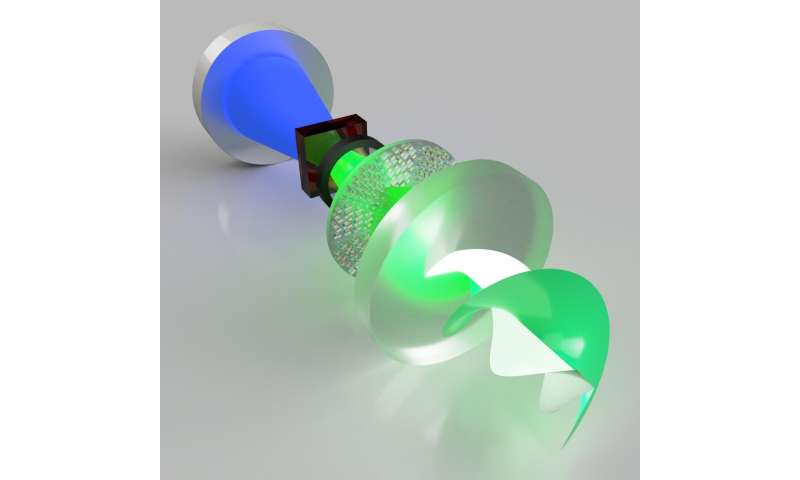
An artistic impression of the metasurface laser to produce super-chiral twisted light with OAM up to 100. Credit: Wits University

Researchers have demonstrated the world’s first metasurface laser that produces “super-chiral light”: light with ultra-high angular momentum. The light from this laser can be used as a type of “optical spanner” to or for encoding information in optical communications.

“Because  can carry angular , it means that this can be transferred to matter. The more angular momentum light carries, the more it can transfer. So you can think of light as an ‘optical spanner’,” Professor Andrew Forbes from the School of Physics at the University of the Witwatersrand (Wits) in Johannesburg, South Africa, who led the research. “Instead of using a physical spanner to twist things (like screwing nuts), you can now shine light on the nut and it will tighten itself.”

The new  produces a new high purity “twisted light” not observed from lasers before, including the highest angular momentum reported from a laser. Simultaneously the researchers developed a nano-structured  that has the largest phase gradient ever produced and allows for high power operation in a compact design. The implication is a world-first laser for producing exotic states of twisted structured light, on demand.

Nature Photonics today published online the research that was done as a collaboration between Wits and the Council for Scientific and Industrial Research (CSIR) in South Africa, Harvard University (USA), the National University of Singapore (Singapore), Vrije Universiteit Brussel (Belgium) and CNST—Fondazione Istituto Italiano di Tecnologia Via Giovanni Pascoli (Italy).

In their paper titled: High-purity orbital angular momentum states from a visible metasurface laser, the researchers demonstrate a new laser to produce any desired chiral state of light, with full control over both angular momentum (AM) components of light, the spin (polarisation) and orbital angular momentum (OAM) of light.

The laser design is made possible by the complete control offered by new nanometer-sized (1000 times smaller than the width of a human hair) metasurface—designed by the Harvard group—within the laser. The metasurface is made up of many tiny rods of nanomaterial, which alters the light as it passes through. The light passes through the metasurface many times, receiving a new twist everytime it does so.

“What makes it special is that to the light, the material has properties impossible to find in Nature, and so is called a “metamaterial”—a make-believe material. Because the structures were so small they appear only on the surface to make a metasurface.”

The result is the generation of new forms of chiral light not observed from lasers until now, and complete control of light’s chirality at the source, closing an open challenge.

“There is a strong drive at the moment to try and control chiral matter with twisted light, and for this to work you need light with a very high twist: super-chiral light,” says Forbes. Various industries and research fields require super-chiral light to improve their processes, including the food, computer and biomedical industries.

“We can use this type of light to drive gears optically where physical mechanical systems would not work, such as in micro-fluidic systems to drive flow,” says Forbes. “Using this example, the goal is to perform medicine on a chip rather than in a large lab, and is popularly called Lab-on-a-Chip. Because everything is small, light is used for the control: to move things around and sort things, such as good and bad cells. Twisted light is used to drive micro-gears to get the flow going, and to mimic centrifuges with light.”

The chiral challenge

“Chirality” is a term often used in chemistry to describe compounds that are found as mirror images of one another. These compounds have a “handedness” and can be thought of as either left- or right-handed. For example, lemon and orange flavours are the same chemical compound, but only differ in their “handedness”.

Light is also is chiral but has two forms: the spin (polarization) and the OAM. Spin AM is similar to planets spinning around their own axis, while OAM is similar to planets orbiting the Sun.

“Controlling light’s chirality at the source is a challenging task and highly topical because of the many applications that require it, from optical control of chiral matter, to metrology, to communications,” says Forbes. “Complete chiral control implies control of the full angular momentum of light, polarisation and OAM.”

Because of design restrictions and implementation impediments, only a very small subset of chiral states has been produced to date. Ingenious schemes have been devised to control the helicity (the combination of spin and linear motion) of OAM beams but they too remain restricted to this symmetric set of modes. It was not possible to write down some desired chiral state of light and have a laser produce it, until now.

Metasurface laser

The laser used a metasurface to imbue light with ultra-high angular momentum, giving it an unprecedented “twist” in its phase while also controlling the polarisation. By arbitrary angular momentum control, the standard spin-orbit symmetry could be broke, for the first laser to produce full  control of light at the source.

The metasurface was built from carefully crafted nanostructures to produce the desired effect, and is the most extreme OAM structure so far fabricated, with the highest phase gradient yet reported. The nanometre resolution of the metasurface made possible a high-quality vortex with low loss and a high damage threshold, making the laser possible.

The result was a laser that could lase on OAM states of 10 and 100 simultaneously for the highest reported AM from a laser to date. In the special case that the metasurface is set to produce symmetric states, the laser then produces all prior OAM states reported from custom structured light lasers.

Going forward

“What we find particularly exciting is that our approach lends itself to many laser architectures. For instance, we could increase the gain volume and metasurface size to produce a bulk laser for high-power, or we could shrink the system down onto a chip using a monolithic metasurface design,” says Forbes.

“In both cases the lasing mode would be controlled by the pump’s polarisation, requiring no intra-cavity elements other than the metasurface itself. Our work represents an important step towards merging the research in bulk lasers with that of on-chip devices.”


Explore further

Method of angular momentum multiplexing and demultiplexing for high-capacity optical communications


More information: Sroor, H., Huang, Y., Sephton, B. et al. High-purity orbital angular momentum states from a visible metasurface laser. Nat. Photonics (2020). https://doi.org/10.1038/s41566-020-0623-z

Journal information: Nature Photonics
Provided by Wits University

https://www.thenational.ae/lifestyle/zoom-burnout-why-it-s-ok-to-say-no-to-video-calls-even-if-you-have-nowhere-better-to-be-1.1010728

Zoom burnout: why it’s OK to say no to video calls even if you have nowhere better to be

We are Zooming for work, to catch-up with friends and family, even to workout. How much video calling is too much?


Chances are, over the past few weeks, you will have been part of a Zoom call.

For colleagues and students around the world, it’s been a way to have meetings, to learn, and to continue daily commitments without too much disruption.

And for friends, family members and partners separated due to social distancing measures, it’s been a lifeline.

But sometimes, there can be too much of a good thing.

At first it was novel, a way to catch-up, to speak to all your friends at once, even to host your own virtual pub quizzes and dinner parties. But a month down the line, the novelty might be starting to wear off. Back-to-back Zoom meetings at work and multiple lessons a week are seeing people spend hours video calling.

And then, when work’s done, we do it all over again in the name of socialising.

We are inviting people into our personal space, and subconsciously this can feel like an invasion of our privacy

Asma HIlal Lootah

Usually, when you are making social plans, you have to make a few considerations before committing to an event. Do I have work the next day? Did I book in for that gym class in the morning? Will I get stuck in traffic on my commute home? Chances are, on top of a busy working schedule and your usual weekly commitments, you might only go out on a school night on the odd occasion.

Back then, it was easy to turn down an invitation. Everyone had a valid excuse.

But now, when someone is inviting you to join a five-way video call or virtual quiz every night of the week, the usual go-to list of excuses has suddenly disappeared. The truth is, many of us don’t have anywhere better to be, and everyone knows it.

But just because many of us are at home doesn’t mean we need to be socialising every night. You wouldn’t do it in ordinary life, so you don’t have to now either. While it is important to maintain social contact, especially if you are isolating alone, you still need time to relax after a busy working day.

You are entitled to an evening to yourself, even if that only means moving from the dining room table to the sofa.

“Spending hours on any task can become stressful and tiring, especially when we are glued to our screens and are surrounded by pressure and uncertainty. Many of us have shifted our usual work online and have had to adjust to a completely new way of working,” says Asma HIlal Lootah, founder of The Hundred Wellness Centre.

And this shift has also brought the office into our home environment, a place usually associated with relaxation and winding down. If you’ve spent the day at the kitchen table having stressful work meetings, then return a couple of hours later to eat your dinner, it can feel like a continuation of your working day.

“Now, meetings that would have been held within a professional environment, are taking place in our homes through video calls. We are inviting people into our personal space, and subconsciously this can feel like an invasion of our privacy. Many people like to keep their home lives and their work lives separate; we have different roles and responsibilities in each, so it can be uncomfortable when our two worlds collide.”

Why socialising on Zoom can cause anxiety

Using Zoom to socialise could just be adding to the burnout. It means turning the computer back on and committing to more screen time.

And as great is Zoom is for keeping in touch with you friends and family members, it’s not the same as seeing them face-to-face. Zoom comes with its own cache of technical problems and awkward pauses and delays, and sometimes, it can be much harder to pick up on social cues through a screen than it would be in real life.

This is something that can trigger anxiety in some people.

“Video chats mean we need to work harder to process non-verbal cues like facial expressions, the tone and pitch of the voice, and body language; paying more attention to these consumes a lot of energy,” Gianpiero Petriglieri, an associate professor at Insead, told the BBC.

“Video calls and adjusting to our new ways of working and socialising can trigger anxiety,” says Lootah.

It is important to establish healthy boundaries within our homes for our own peace of mind, Lootah says, and if that means saying no to a Zoom catch up, even if you have no other plans, then you should allow yourself to do so.

“We must learn to say no and to let go of any feelings of guilt for stating what works for you and what doesn’t,” she says. “When we simply say what we can do and what we can’t, we subconsciously allow others to do the same, which in turn, helps us find the best way of working or collaborating with them. It is OK to put yourself first.”

A very simple tip …

One suggestion for those suffering video-call fatigue is to go ‘audio only’ for some calls: just sit back, close your eyes and chat to your friends. That way, you won’t have to stare at your screen, and delays in video streaming won’t make you confused about social cues.

Turns out a good old phone call might be just what the doctor ordered.

https://www.psychologytoday.com/us/blog/sleep-newzzz/202004/5-surprising-sources-insomnia

5 Surprising Sources of Insomnia

Can’t sleep? Here are five potential reasons why…

Posted Apr 23, 2020


Deposit photos

Having a hard time falling asleep?

If so, you’re not the only one. Research indicates one in four Americans suffers from acute, or short-term, insomnia each year. This common sleep disorder includes symptoms like daytime fatigue, having a difficult time concentrating, and frequently waking up during the night. But insomnia is notorious for its best-known symptom: sufferers often have an incredibly hard time falling asleep at night.

Insomnia has been on my mind lately considering the emotional stress many people are dealing with as a result of the coronavirus outbreak.

Stress is often a catalyst for insomnia, and the weight of the stay-at-home orders, coupled with fears a loved one could potentially be affected by COVID-19 or an outcome of it, can be incredibly taxing.

I won’t be surprised at all if data later indicates cases of acute insomnia increased during this time period.

There are a number of ways insomnia can negatively impact your health, but the one thing I keep coming back to lately is how important quality sleep is — especially during a pandemic.

You might remember this stat from earlier this year: people who get 6 hours of sleep or less each night are 4.2 times more likely to catch a cold than those who get 7 hours or more. In other words: Not sleeping isn’t doing your immune system any favors.

Sleep is vital right now. That’s why this week I wanted to run through 5 surprising sources of insomnia you might not know about. Watch out for these pitfalls, and you should give yourself a better chance of avoiding a bout of insomnia.

Bed Confusion

This might be a new one for you.

Bed confusion is when your body fails to associate your bed with going to sleep. This typically stems from doing too many activities in your bed that are not directly related to sleep. Whether it’s reading, doing a crossword puzzle, having a late-night snack, or surfing your favorite social media app, you’re better off not doing it in bed.

We are creatures of habit and we also learn cues. Remember Pavlov’s dogs? After some conditioning around cues, they salivated when he rang a bell.

We are not different. When we lay in bed, watch TV, scroll social media, and eat (often mindlessly, especially now), our brain and body start to respond to bed as a place to be activated, not a place to rest.

As a general rule, you want to reserve your bed for two primary functions: sleep and sex. Do that and you’ll help your body avoid bed confusion.

Back Pain

Anyone who has dealt with back pain before knows it’s the worst. One small turn in the wrong direction can suddenly have your body feeling like it’s been stuffed into a trash compactor.

That lingering and often searing pain that accompanies back injuries can make it incredibly difficult to fall asleep and stay asleep — one of insomnia’s trademarks.

Two quick tips to avoid having back pain derail your sleep. For those not suffering from back pain currently, remember to stretch. Stretching each morning for five minutes, especially as you get older, can loosen up your back muscles. This will give you a head start on making sure your back doesn’t keep you up later at night. And for those who do suffer from back pain, try placing a small pillow behind your knees when you go to sleep. This should help alleviate some of the pressure on your spine.

Menopause

To all female readers, please keep in mind: You are especially susceptible to insomnia when going through menopause. This has to do with menopause being driven by a drop in hormone production, including estrogen and progesterone.

Estrogen is known for being a hormone that regulates women’s reproductive function and menstrual cycle, but it also contributes to better sleep. Higher estrogen levels are connected to fewer sleep arousals during the night, as well as an easier time falling asleep.

Progesterone, on the other hand, helps prepare women for pregnancy. It also regulates mood, protects against anxiety, and contributes to a sense of calm. I often refer to progesterone as the “feel good” hormone; it’s been linked to increased production of GABA, a neurotransmitter that promotes better sleep.

Overall, hormones perform a delicate balancing act to help regulate mood, energy levels, libido and sleep — among other functions. Understandably, when there’s a decline in hormone production, it can throw off sleep patterns.

Maybe the most disturbing part of menopause for many women is hot flashes, and bedtime is when they are often noticed most. It’s even worse when your bed partner is as hot as a heater, too!

Your Diet

What you eat also impacts how you sleep.

Researchers from Columbia University earlier this year found that diets high in refined carbohydrates are associated with a higher risk of developing insomnia. That means soda, sugary foods, white rice and white bread are all foods you should eat in moderation.

But what is the temptation when we are bored and stressed? Refined carbohydrates and sugar!

How do these interfere with quality sleep? The reason refined carbs can be a problem, the study indicates, is that the body releases insulin when blood sugar increases rapidly; when blood sugar drops, hormones like adrenaline are released, which may make it harder to fall asleep.

On the opposite end, diets that include a large amount of fruits and vegetables did not increase a person’s risk of insomnia. While containing sugar, the fiber in fruit helps better moderate blood sugar spikes than refined carbs.

Napping

Naps aren’t bad for you. In fact, a well-timed nap comes with a number of health benefits, including giving you an energy boost, helping elevate your mood, and improving your physical performance.

But the old phrase “everything in moderation” certainly applies here. You don’t want your nap interfering with falling asleep at night, but that can often be the case.

To make sure that doesn’t happen, you want to watch out for two things. First, keep your naps to the early afternoon, if possible. Anything after 4:00 p.m. threatens to make it harder for you to fall asleep at a “normal” hour. And second, stay away from taking long naps. Longer than 90 minutes, when REM sleep starts to take place, is too much time. You run the risk of not feeling like you need to go to sleep at night, even though your body isn’t completely rested.

Instead, 20-30 minute “power naps” are a great alternative.

Spend some time focused on eliminating or treating these sources of insomnia and you may find yourself sleeping better and feeling more rested in the morning.

https://electrek.co/2020/04/26/tesla-cybertruck-glass-demo-fail-elon-musk-electric-truck-attention/

Elon Musk agreed with the suspicion many had about the Tesla Cybertruck gaining a lot of exposure thanks to its failed glass strenght demonstration.

When Tesla unveiled the Cybertruck last year, it created a lot of discussions, mostly about how it looked. Some people focused more on the insane specs and price, but many were also talking about the unveiling itself.

Tesla claimed that the electric pickup truck was virtually bulletproof:

Cybertruck is built with an exterior shell made for ultimate durability and passenger protection. Starting with a nearly impenetrable exoskeleton, every component is designed for superior strength and endurance, from Ultra-Hard 30X Cold-Rolled stainless-steel structural skin to Tesla armor glass.

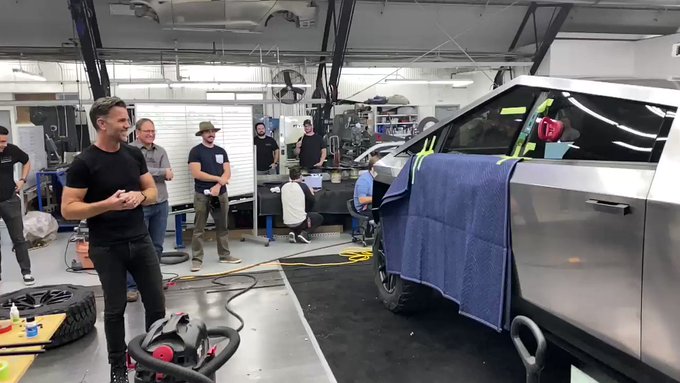
To demonstrate this during the unveiling, Tesla chief designer Franz von Holzhausen threw a steel ball at both the prototype’s door and windows.

While the windows didn’t shatter, they did break, and from the reaction of the designer and the CEO, Elon Musk, it didn’t look like it was supposed to happen.

Several memes were created around the fail and some went viral – bringing more attention to the unveiling and Tesla’s new electric pickup truck. Some said that the mistake was actually a net positive for Tesla, which managed to secure over half a million reservations for the Cybertruck.

Last week, during a Q&A with the Hack Club, an organization promoting computer programing in high school, Musk was asked by a student about what went through his mind when the ball broke the Cybertruck’s window.

The CEO answered:

“Both Franz and I have thrown the ball at the window before the event. So it was quite shocking that it didn’t work at the time.”

Musk explained what he thinks happened:

“What I think happened is that when Franz used the sledgehammer on the door, I think we probably cracked one corner and that’s probably what led the steel ball cracking the window instead of just bouncing off, like when we were practicing.”

The CEO then elaborated about what went through his mind:

“Well, if the first window didn’t work, don’t worry, the second window will definitely work. We were meant to use the window on the other side. That was a bit startling.”

Musk added that the fact that the fail attracted a lot of attention made it not so bad:

“It got a lot of attention so I guess it wasn’t that bad. We could always repeat it again.”

He did end up sharing a successful demonstration of the Tesla Cybertruck’s window resisting the steel ball test:

Elon Musk

@elonmusk

Franz throws steel ball at Cybertruck window right before launch. Guess we have some improvements to make before production haha.

Embedded video

46.6K people are talking about this

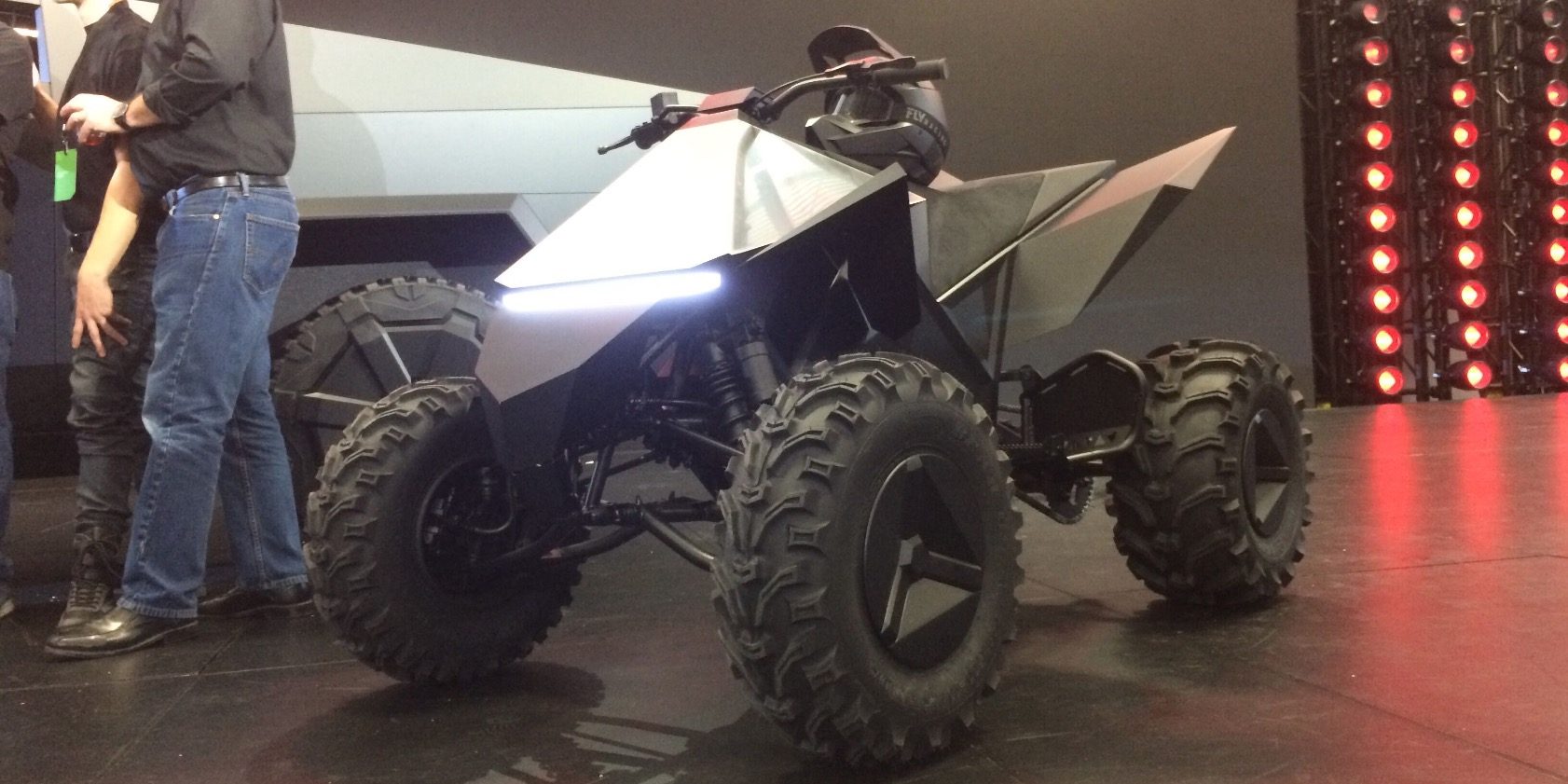
However, the CEO admitted that the whole ordeal threw him off and made it hard to continue the unveiling event. He added that the Tesla Cyberquad, an electric ATV, and the demonstration of loading it onto the Cybertruck probably saved the event.

Later, Tesla ended up embracing the Cybertruck window-breaking mishap and even turning into a T-shirt that the automaker started selling.

Electrek’s Take

I think the failure was actually a net positive for Tesla.

The fact that the window broke was never going to discourage people that were already watching and interested in the Cybertruck.

On the other hand, it probably brought hundreds of thousands if not millions more people to check out the truck and the unveiling.

While many of those people came to laugh at the mishap, I am sure that also quite a few decided to look more seriously at the electric vehicle.

What do you think? Do you think the window-breaking fail was a net positive for Tesla and Cybertruck?


https://www.techradar.com/news/this-4tb-pcie-ssd-can-make-your-windows-laptop-feel-more-like-a-macbook-pro

This 4TB PCIe SSD can make your Windows laptop feel more like a MacBook Pro

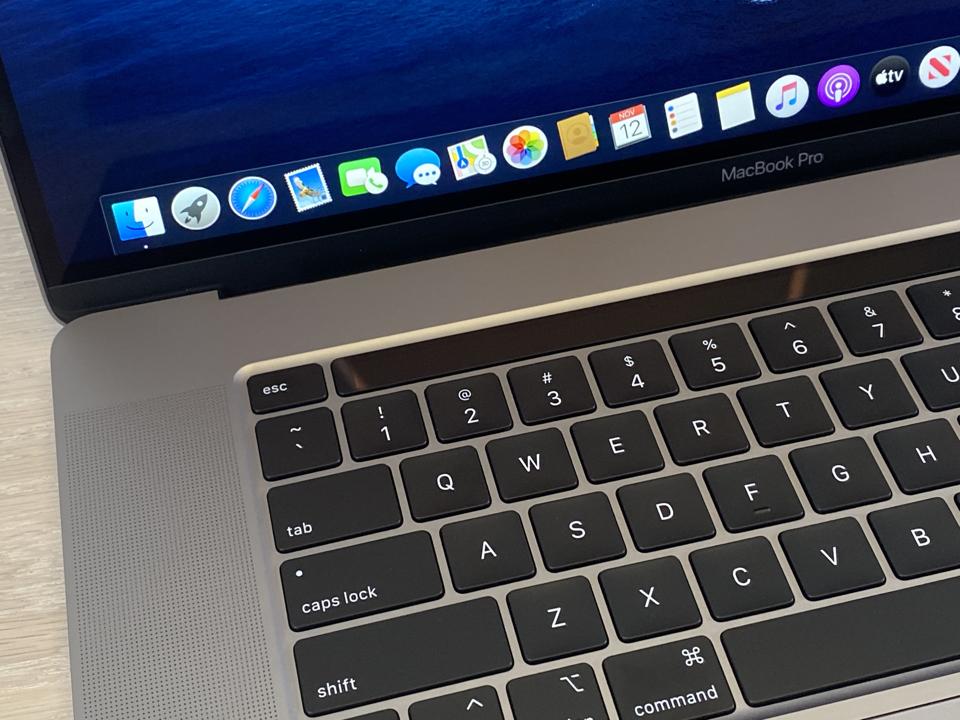
The Apple MacBook Pro 16 still holds bragging rights when it comes to the maximum storage capacity available in a traditional portable laptop.

Apple uses a proprietary approach, plugging memory chips directly into the motherboard to reach a whopping 8TB of storage, while only a handful of vendors even offer 4TB PCIe SSDs.

Sabrent Rocket 4TB PCIe SSD – $849.99 from Amazon
(roughly £690/AU$1335)
Double up on this comparatively affordable 4TB SSD from Sabrent, to create a Windows laptop to rival the Apple Macbook Pro – at least where storage capacity is concerned.

OWC has recently joined Sabrent as only the second consumer vendor to offer a 4TB NVMe PCIe M2.2280 SSD. OWC’s Aurora P12 costs $1,149.88, while Sabrent’s offering, known as Rocket, is available for only $849.99 from Amazon (roughly £690/AU$1335).

Why does that matter? Well, because you can plug two into a Windows laptop to match the MacBook Pro’s 8TB capacity.

INTERNATIONAL CUSTOMERS

Unfortunately, Amazon does not deliver globally, so international customers may have to use a specialist parcel forwarding service if they want to take advantage of the deal.

There’s only one laptop vendor worldwide (Eurocom), to our knowledge, that bundles its laptops with these 4TB drives – and they’re neither as cheap nor as portable as Apple’s slim-and-thin mobile workstation.

Apple charges $6,099 for the very top of the range 16-inch MacBook Pro, while Dell has, unfortunately, stopped pushing 2TB PCI NVMe SSD with its 64GB XPS 15 laptop.

FOUND A BETTER DEAL?

Have you managed to get hold of a cheaper product with equivalent specifications, in stock and brand new? Let us know and we’ll tip our hat to you.

As for the Sabrent Rocket, it is an x4 model that comes bundled with the Acronis True Image software, Toshiba’s BICS3 flash and Sabrent’s own RKT303 controller. Its performance speeds can reach up to 3450 MB/s (read) and 3000 MB/s (write).

https://robotics.sciencemag.org/content/5/41/eaaz9239

Electronic skins and machine learning for intelligent soft robots

 See all authors and affiliations

Science Robotics  22 Apr 2020:
Vol. 5, Issue 41, eaaz9239
DOI: 10.1126/scirobotics.aaz9239

Abstract

Soft robots have garnered interest for real-world applications because of their intrinsic safety embedded at the material level. These robots use deformable materials capable of shape and behavioral changes and allow conformable physical contact for manipulation. Yet, with the introduction of soft and stretchable materials to robotic systems comes a myriad of challenges for sensor integration, including multimodal sensing capable of stretching, embedment of high-resolution but large-area sensor arrays, and sensor fusion with an increasing volume of data. This Review explores the emerging confluence of e-skins and machine learning, with a focus on how roboticists can combine recent developments from the two fields to build autonomous, deployable soft robots, integrated with capabilities for informative touch and proprioception to stand up to the challenges of real-world environments.

View Full Text

https://www.aljazeera.com/indepth/features/doctor-note-sleep-ramadan-coronavirus-200425090109950.html

Doctor’s Note: Sleep, Ramadan and the coronavirus

Being up early for prayer and staying up late for iftar may disturb sleep patterns. How will this affect immune systems?

by

A Muslim boy wearing a protective face mask looks from his home on the first day of Ramadan, amid the coronavirus outbreak, in Bangkok, Thailand [REUTERS/Soe Zeya Tun]

With the holy month of Ramadan upon us, the daily routines of Muslims around the world will change. Although there have been a number of health benefits linked to the intermittent fasting pattern during Ramadan, there is an argument that these may be counterbalanced by the negative effects that disrupted sleep patterns may have on the body.

Traditionally, Muslims fast from sunrise to sunset. This means waking up before the sun rises to have a pre-fasting meal, or suhoor, fasting all day and then breaking the fast at sunset with an iftar – followed by prayers that can go on late into the night.

This year will be different as many mosques remain closed during the coronavirus pandemic and most of these activities will be done from home.

At a time when our immune system is most vital, do these disrupted sleep patterns associated with these early mornings and late nights put us more at risk of catching infections?

A good night’s sleep is vital for good health. As the benefits of high-quality sleep become better understood, many scientists now feel sleep is just as important to good health as nutrition and exercise. Lack of sleep also promotes hunger hormones to go into overdrive, something you can do without when you are fasting.

Good quality sleep has been linked to a reduced risk of obesity, better concentration and memory, reduced risk of heart disease and stroke, reduced risk of type 2 diabetes, reduced risk of depression and anxiety and, most importantly, healthier immune systems.

For an immune system to work effectively, it must be able to recognise a foreign invader such as a virus or bacteria when it enters the body. It then needs to set off a wider reaction to contain and eventually destroy the invader. T-cells are a part of the immune system that recognise these foreign invaders and trigger that wider immune response. A recent study has shown that sleep enhanced the efficiency of T-cell responses to foreign invaders, thus promoting better immune function.

Proteins known as cytokines are also part of the body’s immune response to infection. As well as recognising an infection is taking hold, cytokines send messages to uninfected cells telling them to prepare themselves for an invasion and promote enzyme production that helps fight off the infection.

Studies have shown that cytokines not only work best during sleep, but are actually produced when a person is asleep. This links to the ancient advice that people need to rest when they are unwell as doing so not only conserves energy but also helps the body to fight off the infection.

Other studies have shown that people who sleep more also have better reactions to vaccines. That is, they have better immunity to the disease the vaccine was given for than those who are sleep deprived. This has been shown for flu vaccines and for the hepatitis B vaccine.

It will be difficult during Ramadan to maintain the eight hours of continuous sleep recommended by experts, but there are ways around it.

If you are struggling to get your usual amount of sleep at night during Ramadan, you can make up for the lost hours through the day. This may involve taking naps or being creative.

Because of lockdown, many people are working from home now so it may be possible to go back to bed for another hour after suhoor as there is no longer a commute to work.

If you find yourself getting sleepy during the day, then take a 20 to 30-minute nap in a quiet, darkened room for the best effects.

Sleep quality may be affected by what you eat. The temptation to over-indulge with unhealthy food when it is time to break the fast can result in the consumption of calorie-loaded, sugar-heavy food. These can reduce your quality of sleep at night. So, as hard as it may be, try to balance these out with healthier alternatives.

It is clear that sleep has numerous benefits, including helping to ward off infections. But will better sleep help in our body’s defence against the coronavirus?

This is a new disease, so it is impossible to say for sure just yet. However, given all the evidence that having a good night sleep does help your immune system recognise and fight off any infection, it certainly can’t hurt when it comes to battling coronavirus.

SOURCE: AL JAZEERA NEWS

ABOUT THE AUTHOR

https://www.forbes.com/sites/ewanspence/2020/04/25/apple-macbook-pro-arm-intel-new-leak-rumor-specs-release-date/#3cd4776261d6

Apple Leak Reveals Radical New MacBook

Apple may be preparing to update the 13-inch and 16-inch MacBook Pro machines to Intel’s tenth-generation processors, but its longstanding project to bring ARM power to its MacOS platform gathers pace, with reports today that a release in 2021 is on the cards.

Update 25 April: One of the biggest obstacles facing an ARM powered MacBook will be third-party application support, so it’s unlikely that Apple can make the jump from Intel to ARM in a single move. That’s unlikely to be the plan.

Roland Moore-Colyer at Tom’s Guide has been speaking to a number of analysts (including Geoff Blaber of CCS Insight, and Avi Greengart of Techspotential) on the nature of an ARM based MacBook.

The easiest way in to the market for the laptops is to take on Google’s Chromebooks:

As it stands, Chromebooks are popular among students but are generally rather basic, with more premium models being expensive and using Intel CPUs. And Chrome OS simply isn’t as flexible or flush with apps as macOS or Windows 10.

…All this means there’s a gap in the market for Apple to make a low-powered yet well-made and keenly priced laptop to offer more flexibility than Chromebooks and bypass the shortcomings of Windows 10 on ARM; something Blaber says Apple can learn from.

Apple would ensure that its own core apps would run on ARM, including iWork, its media apps, and the all important browser. That there is enough to take on Chrome OS with a lightweight MacBook running the new chipset.

A number of chips are under development. The first is based on the A14 system on chip that will be fitted to the iPhone 12 smartphone family and is expected to be the first to be launched. A second-generation chip, potentially with extra commuting power for more demanding applications, is also under way.

Apple is preparing to release at least one Mac with its own chip next year, according to the people. But the initiative to develop multiple chips, codenamed Kalamata, suggests the company will transition more of its Mac lineup away from current supplier Intel Corp.

Taiwan Semiconductor Manufacturing Co., Apple’s partner for iPhone and iPad processors, will build the new Mac chips, said the people, who asked not to be identified discussing private product plans. The components will be based on a 5-nanometer production technique, the same size Apple will use in the next iPhones and iPad Pros, one of the people said. An Apple spokesman declined to comment, as did Intel and TSMC.

This is not a quick or easy project, but there are some advantages if the move is successful.

Probably the biggest one will be reducing Intel’s influence on Apple’s product line. The pace of Intel’s updates is not on an annual schedule, which leaves the Mac family of laptops and desktops waiting on the new chips from Intel, rather than fitting into Apple’s regimented yearly cycle seen in the iPhone and iPad platforms.

That sits on top of having Intel as an external point of failure. Apple has no issue with iPhone processors, as witnessed by the regular annual updates to the Axx silicon. But there have been multiple issues with sourcing 5G modems from external suppliers. When Intel stopped its 5G efforts, that left Apple beholden to Qualcomm for the next few years.

(In the meantime, Apple bought Intel’s 5G modem division to bring it in-house, with the view to using Qualcomm as a stop-gap).

A unified approach around the Axx architecture for iOS, iPadOS, and MacOS offers a number of benefits of scale. Resources can be focused and better managed, Apple can choose its own path and try to shape the market to its own desire, and MacOS machines could switch to a regular update cycle, potentially annually for the lower end laptops, bi-annually for the Pro laptops, and every three years for the desktop power-houses.

It’s possible to argue that Apple already has an ARM-based laptop. Okay the screen and the keyboard detach from each other, but the iPad Pro and Magic keyboard combination is being heavily pushed by Apple into the ‘your next computer’ space.

The key difference with an ‘iPadOS laptop’ and MacOS machine is that Apple has far more control over the iPadOS platform, what applications can run on it, and can take a rake over any and all payments through the platform as it sees fit.

The move to ARM will bring with it the same headaches faced by any manufacturer changing architecture; developers will be dealing with a new environment, and applications will need recompiled or recoded for the new chips.

New app development will be in a better situation with Apple. There is already a wealth of experience in the ecosystem thanks to the use of ARM on the iPhone and iPad. That will make a transition from Intel to ARM smoother. There is an additional benefit that coders who have stayed with iOS and not made the jump to MacOS may now be tempted over.

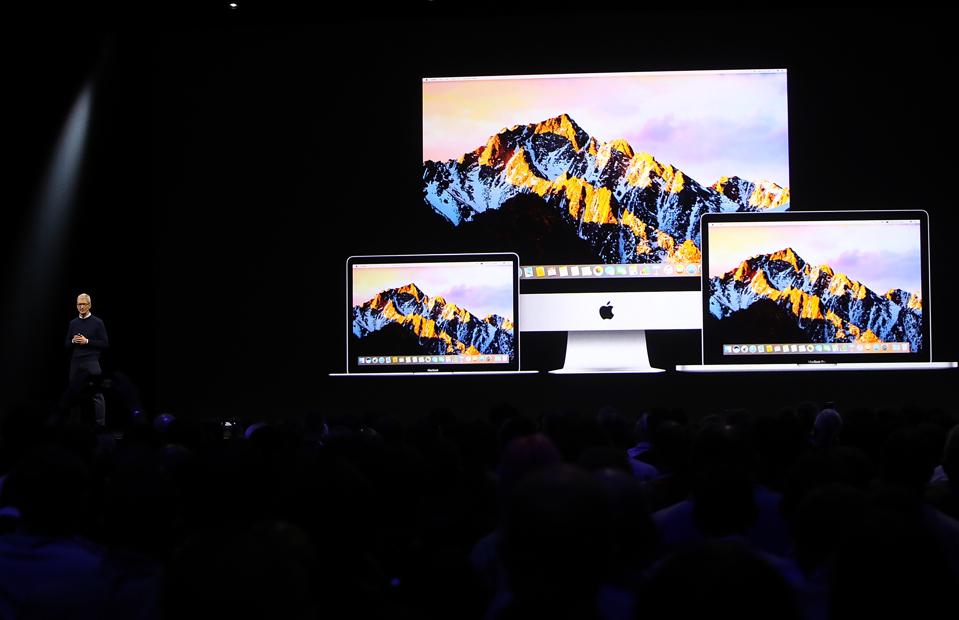
The ‘hard break’ from Intel to ARM means that existing applications will not be able to run natively on the new MacBook machines. Apple could run an emulation layer to allow a virtual Intel machine, but I wonder if Tim Cook and his team would take a more ruthless approach and say that there will be no hand-holding – if developers want apps to run on the new machines then they will need to code native ARM apps.

After all, Cook took the same approach when MacOS Catalina removed 32-bit support… it was the 64-bit way or the highway.

Previous reports suggested a launch date of late 2020 or early 2021. Given the economic impact of the coronavirus pandemic, Apple is widely believed to be focusing on keeping the iPhone 12 on schedule, which will see other products slip back. With the challenges of the Intel to ARM switch, it makes sense for these Mac machines to arrive late.


https://www.mindbodygreen.com/articles/how-to-soothe-skin-irritation-from-face-masks-during-covid-19

How To Soothe Skin Irritation From Face Masks During COVID-19

Alexandra Engler
Medical Mask on a Blue Background
Image by Marc Tran / Stocksy

Given that several states have now ordered residents to wear masks, as well as the fact that the Centers for Disease Control and Prevention (CDC) highly recommends wearing face coverings in public, many of us have probably started donning the protective gear while getting groceries, on runs, and so on. This, of course, is a good thing, as it will help slow the spread of the coronavirus. However, you might be noticing some skin irritation around the areas where you’re wearing it, especially if you’re wearing your face mask frequently.

There are two types of irritation that can occur when wearing face masks: contact friction and breakouts. They can occur at the same time and on the same person (meaning: not mutually exclusive skin concerns). But they do have unique triggers, and, therefore, they have different treatments.

What to do about skin irritation from wearing masks.

Let’s start with irritation from friction. “Any areas that are tight or rubbing can irritate the skin. Minimize this as much as possible by making sure the areas that contact your skin are smooth and not abrasive and not tighter than necessary to achieve a good seal,” says board-certified dermatologist Hadley King, M.D. “If you notice this kind of irritation after removing the mask, wash the area with water and a gentle cleanser and apply an ointment.”

And ultimately, some irritation may be unavoidable, unfortunately. This just happens when you wear a secure fabric on delicate skin or for long periods of time; because you can’t necessarily stop it from happening, your best bet is to soothe it after the fact. It’s comparable to hand-washing: Since you can’t change the drying nature of hot water and soap, instead you treat dryness with a hand cream after the fact. Take the same approach with your face-mask-induced irritation.

So when you reach for a healing ointment, here are a few ingredient suggestions: Aloe vera is a super-hydrating anti-inflammatory (that’s why people love it for sunburns and the like). You can use on its own via a face mask—and just spot-treat the areas that are most irritated—or it’s often formulated into lotions and creams. Colloidal oat is a nurturing derm-approved favorite that you’ll see in many sensitive skin formulas. Finally, ceramides are incredibly healing for the skin barrier.

What to do about acne from wearing masks.

You may be breaking out right now due to a variety of reasons, including stress and changes in your diet. Add face masks to the list of culprits, says King: “The occlusive nature of a protective mask creates a humid and warm environment under the mask, which can lead to increased sebum and sweat. And this can lead to irritation, inflammation, and breakouts.”

And unfortunately, the area that a mask covers—nose, mouth, and chin—are areas that tend to break out more anyway. So if you are an acne-prone individual, take extra precautions to keep skin clear.

“I recommend washing the face before and after wearing a mask. A gentle cleanser is adequate, or if your skin is particularly oily or acne-prone, consider a cleanser with salicylic acid, which can penetrate into pores and gently exfoliate and remove sebum,” says King. “And use a light moisturizer that’s noncomedogenic, to support and bolster the skin barrier without clogging pores. Avoid heavy and potentially comedogenic products under the mask area.” Yes, this means skipping heavy foundations (but there are plenty of reasons to take a breather from makeup right now anyway).

The take-away.

Of course, we want to stress just how important it is to wear masks, especially if you are in public places. (You should also be careful with how you wear it, take it off, and clean it.) If skin irritation occurs, it’s perhaps annoying but overall far better than the alternative. Do not use skin irritation or breakouts as an excuse to skip wearing one—simply tend to your skin a bit more diligently right now. If anything, use it as an excuse to try a DIY hydrating treatment or spot treatment for zits.

https://www.cnet.com/news/microsoft-tells-chrome-users-to-switch-to-its-edge-browser-on-outlook/

Microsoft tells Chrome users to switch to its Edge browser on Outlook

Microsoft’s web browser and email service are “better together,” the company argues.

Stephen Shankland mugshot
LISTEN

– 01:47

Microsoft Edge icon logo
Illustration by Stephen Shankland/CNET

For years, Google has placed prominent pop-up ads on its web properties suggesting people switch to Google’s Chrome browser, saying they’ll get better performance, features and security. Now Microsoft is trying the same idea, taking advantage of its email service to try to push people to its newly revamped Edge web browser.

Microsoft Edge + Outlook = Better together,” says one promotional note across the top of the Outlook.com website. Clicking the text sends you to an Edge download site, but the site doesn’t indicate in what ways Microsoft thinks its technology works better. A variety of other ads also can be shown, according to Windows Latest, which spotted the ads earlier this week.

The promotion is a new example of tech giants using power in one domain to promote their browsers. Microsoft also has prompted people to switch to Edge using ads in the Windows 10 start menu. And though Apple allows third-party browsers on its iPhones and iPads, it requires them to build their software on Apple’s own Safari browser technology foundation.

Microsoft Edge promo on Outlook.com
Microsoft Edge and Outlook are “better together,” a Microsoft ad says.

Screenshot by Stephen Shankland/CNET

It’s not clear how widespread Microsoft’s Edge promotion is. I saw it in Chrome, but not other browsers, and only on one computer. Microsoft and Google didn’t immediately respond to requests for comment.

Chrome dominates browser usage, accounting for 64 percent of web activity, according to analytics firm StatCounter. Microsoft stripped down its Internet Explorer into a more modern Edge years ago, but when that failed to catch on widely, Microsoft rebuilt Edge on top of Chromium, Google’s open-source foundation for Chrome.

That new version of Edge is available for download now. Microsoft plans to distribute it widely through Windows Update later this spring.

Browsers are important for tech giants. They drive traffic to search engines that often share resulting ad revenue with the browser. But when Chrome sends searches to Google or Edge sends them to Bing, the browser makers don’t have to share revenue with another company.