https://venturebeat.com/2020/04/23/google-claims-its-ai-can-design-computer-chips-in-under-6-hours/

Google claims its AI can design computer chips in under 6 hours

Google AI logo

Image Credit: Khari Johnson / VentureBeat

In a preprint paper coauthored by Google AI lead Jeff Dean, scientists at Google Research and the Google chip implementation and infrastructure team describe a learning-based approach to chip design that can learn from past experience and improve over time, becoming better at generating architectures for unseen components. They claim it completes designs in under six hours on average, which is significantly faster than the weeks it takes human experts in the loop.

While the work isn’t entirely novel — it builds upon a technique proposed by Google engineers in a paper published in March — it advances the state of the art in that it implies the placement of on-chip transistors can be largely automated. If made publicly available, the Google researchers’ technique could enable cash-strapped startups to develop their own chips for AI and other specialized purposes. Moreover, it could help to shorten the chip design cycle to allow hardware to better adapt to rapidly evolving research.

“Basically, right now in the design process, you have design tools that can help do some layout, but you have human placement and routing experts work with those design tools to kind of iterate many, many times over,” Dean told VentureBeat in an interview late last year. “It’s a multi-week process to actually go from the design you want to actually having it physically laid out on a chip with the right constraints in area and power and wire length and meeting all the design roles or whatever fabrication process you’re doing,” said Dean. “We can essentially have a machine learning model that learns to play the game of [component] placement for a particular chip.”

The coauthors’ approach aims to place a “netlist” graph of logic gates, memory, and more onto a chip canvas, such that the design optimizes power, performance, and area (PPA) while adhering to constraints on placement density and routing congestion. The graphs range in size from millions to billions of nodes grouped in thousands of clusters, and typically, evaluating the target metrics takes from hours to over a day.

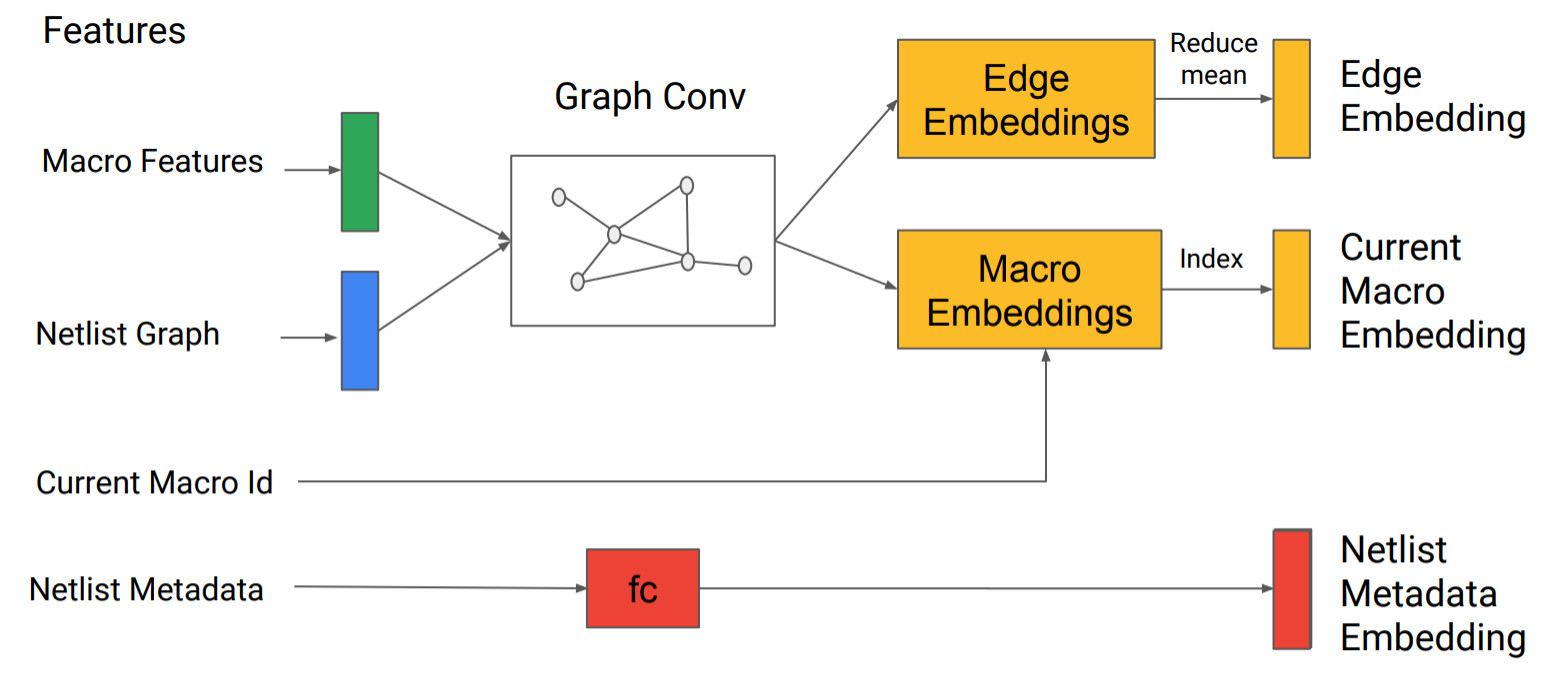
The researchers devised a framework that directs an agent trained through reinforcement learning to optimize chip placements. (Reinforcement learning agents are spurred to complete goals via rewards; in this case, the agent learns to make placements that will maximize cumulative reward.) Given the netlist, the ID of the current node to be placed, and the metadata of the netlist and the semiconductor technology, a policy AI model outputs a probability distribution over available placement locations, while a value model estimates of the expected reward for the current placement.

In practice, starting with an empty chip, the abovementioned agent places components sequentially until it completes the netlist and doesn’t receive a reward until the end, when a negative weighted sum of proxy wavelength (which correlates with power and performance) and congestion is tabulated (subject to density constraints). To guide the agent in selecting which components to place first, components are sorted by descending size; placing larger components first reduces the chance there’s no feasible placement for it later.

Google chip AI

Training the agent required creating a data set of 10,000 chip placements, where the input is the state associated with the given placement and the label is the reward for the placement (i.e., wirelength and congestion). The researchers built it by first picking five different chip netlists, to which an AI algorithm was applied to create 2,000 diverse placements for each netlist.

In experiments, the coauthors report that as they trained the framework on more chips, they were able to speed up the training process and generate high-quality results faster. In fact, they claim it achieved superior PPA on in-production Google tensor processing units (TPUs) — Google’s custom-designed AI accelerator chips — as compared with leading baselines.

“Unlike existing methods that optimize the placement for each new chip from scratch, our work leverages knowledge gained from placing prior chips to become better over time,” concluded the researchers. “In addition, our method enables direct optimization of the target metrics, such as wirelength, density, and congestion, without having to define … approximations of those functions as is done in other approaches. Not only does our formulation make it easy to incorporate new cost functions as they become available, but it also allows us to weight their relative importance according to the needs of a given chip block (e.g., timing-critical or power-constrained).”
https://www.neowin.net/news/google-researchers-use-deep-reinforcement-learning-for-optimizing-chip-design/

~ Leave a comment

Google researchers use deep reinforcement learning for optimizing chip design


Optimal chip design, or floorplanning, is a linchpin to increasing the computational power of today’s systems. However, it is a process that takes substantial time, and efforts are being made to make it more efficient. Considering this, researchers working with Google have now looked towards machine learning to help tackle the problem.

In a recent paper titled “Chip Placement with Deep Reinforcement Learning” published on arXiv, the team at Google poses chip placement as a reinforcement learning (RL) problem. The trained model then places chip blocks, each of which is an individual module, such as a memory subsystem, compute unit, or control logic system onto a chip canvas.

Determining the layout of a chip block, a process called chip floorplanning, is one of the most complex and time-consuming stages of the chip design process and involves placing the netlist onto a chip canvas (a 2D grid), such that power, performance, and area (PPA) are minimized, while adhering to constraints on density and routing congestion. Despite decades of research on this topic, it is still necessary for human experts to iterate for weeks to produce solutions that meet multi-faceted design criteria.

The input to the deep reinforcement learning model is the chip netlist, the ID of the current node to be placed, and some netlist metadata. The netlist graph and the current node are passed through an edge-based graph neural network to generate embeddings of the partially placed graph and the candidate node.

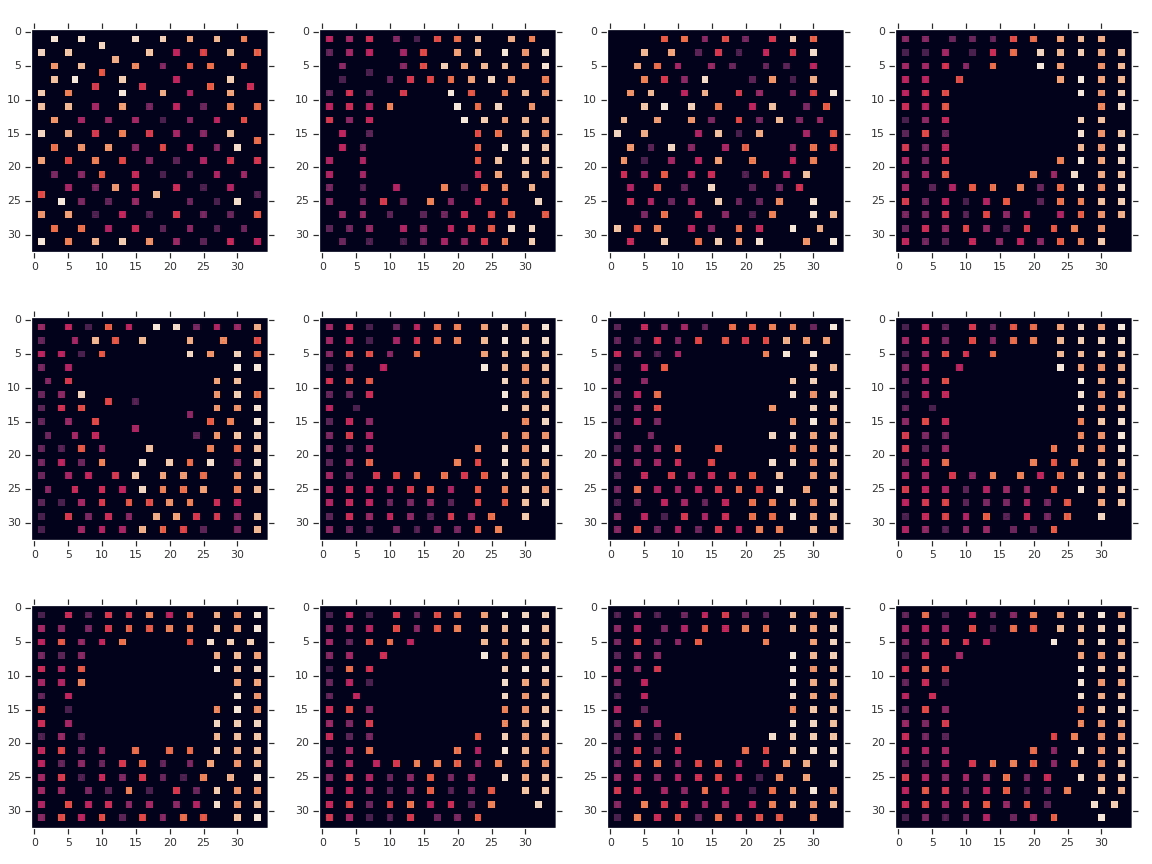
A feed-forward neural network then takes this as a concatenated input to output a learned representation that captures the useful features and helps generate a probability distribution over all possible grid cells onto which the current node could be placed via a policy network. This entire process can be encapsulated in the GIF below. The chip on the left shows macro placement from scratch and on the right, some initial placements are being fine-tuned.

With this setup, the researchers demonstrated an improvement in efficiency and placement quality, stating that for a process that would have taken several weeks for human experts, it was completed in under six hours with their trained ML model.

Our objective is to minimize PPA (power, performance, and area), and we show that, in under 6 hours, our method can generate placements that are superhuman or comparable on modern accelerator netlists, whereas existing baselines require human experts in the loop and take several weeks.

Moving forward, the team believes that its model demonstrates a potent automatic chip placement method that could greatly accelerate chip design, that too, for any chip placement problem, which would enable co-optimization with earlier stages of the chip design process as well.

https://www.med.ubc.ca/news/making-a-difference-ubc-students-design-low-cost-ventilator-for-covid-19/

~ Leave a comment

Making a difference: UBC students design low-cost ventilator for COVID-19

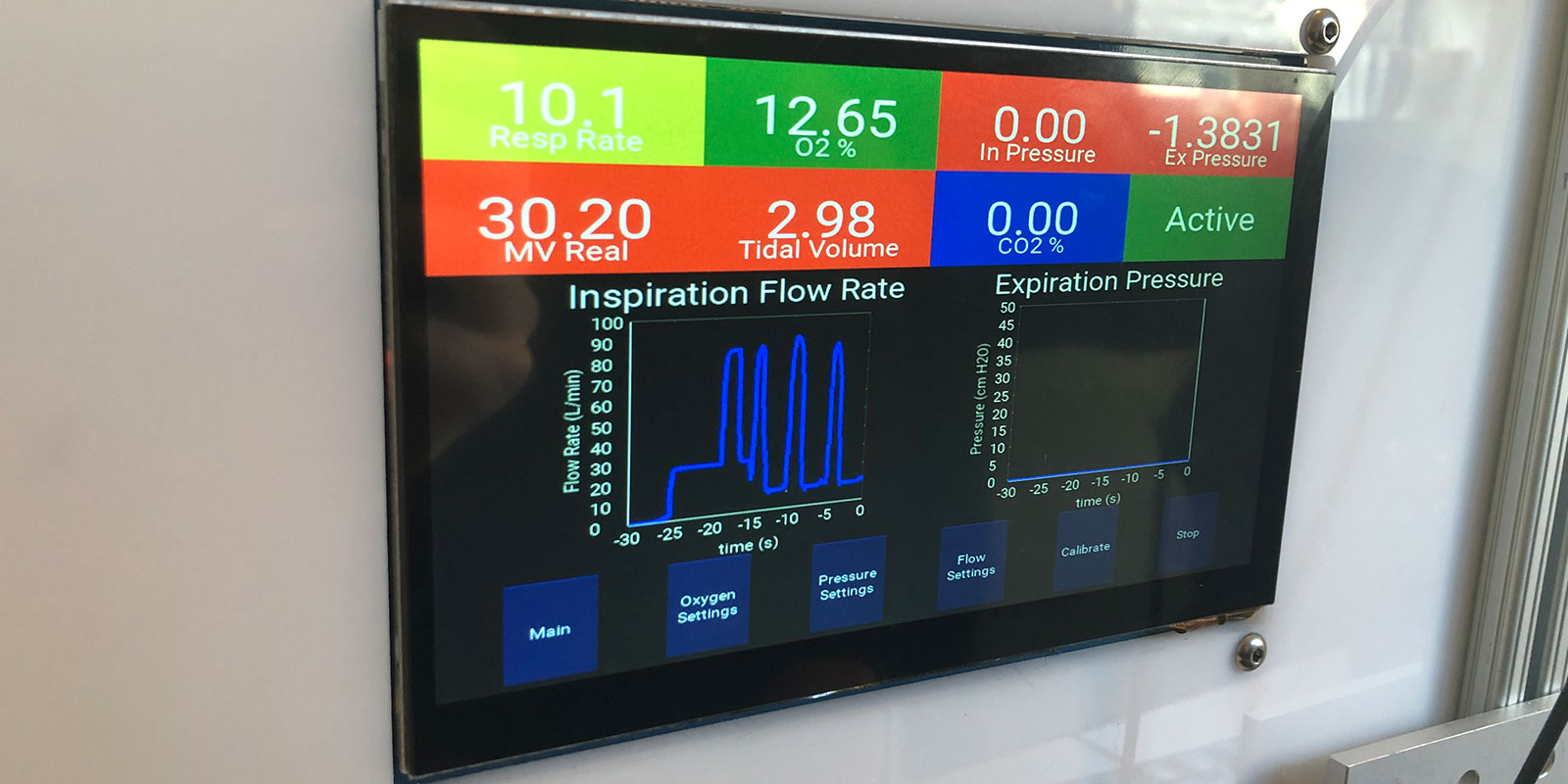
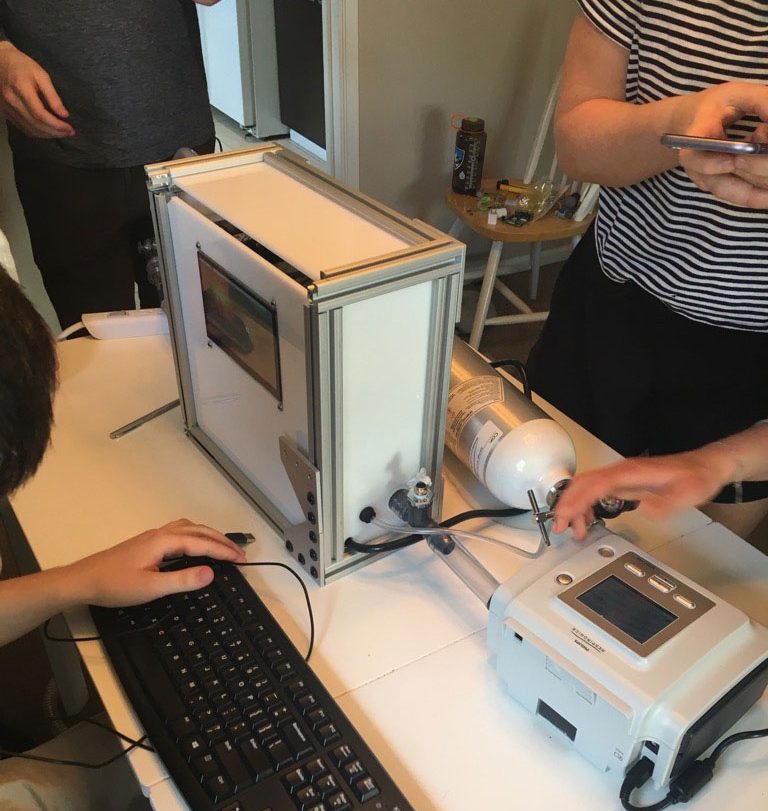
UBC students have developed a simple, low-cost COVID-19 ventilator that may very well save lives. Their design—built around a modified BiPAP (Bilevel Positive Airway Pressure) machine—is among the final 10 in the Code Life Ventilator Challenge, an international competition that has attracted more than 1,000 teams from 94 participating countries.

The competition, hosted by the Montreal General Hospital Foundation and McGill University Health Centre, invited participants to design a ventilator that can be manufactured easily anywhere in the world and adheres to compliance specifications. Final results will be announced by the end of the week.

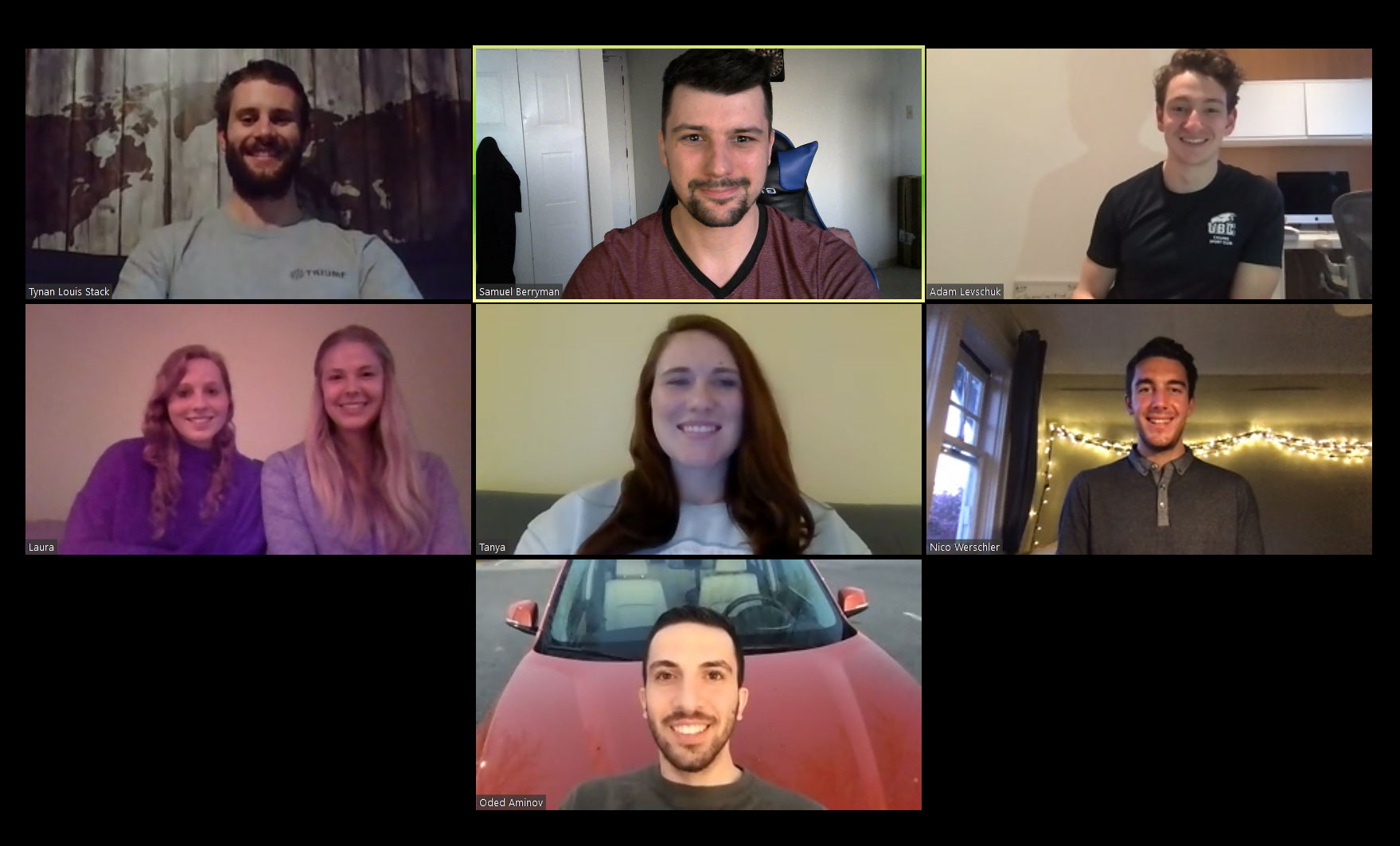
The team, which calls itself FlowO2, includes Oded Aminov (master in biomedical engineering), Tanya Bennet (PhD biomedical engineering), Sam Berryman (PhD mechanical engineering), Georgia Grzybowski (master in biomedical engineering), Adam Levschuk (master in biomedical engineering), Tynan Stack (mechanical engineering alumnus), Laura Stankiewicz (PhD biomedical engineering) and Nico Werschler (PhD biomedical engineering).

Together, the students came up with the idea of customizing the BiPAP machine, which has been used for years to treat sleep apnea.

“Where conventional ventilators cost from $25,000 to $50,000, our invention should cost only a few thousand dollars to manufacture.”
Nico Werschler, biomedical engineering PhD candidate

“Instead of building a ventilator from the ground up, we decided to use the BiPAP machine because it’s already approved for medical applications and people know how it works,” explains team member Laura Stankiewicz. “This allowed us to focus our efforts on writing the special software needed and securing additional parts—which are easily sourced from hardware stores or online suppliers—that would turn it into a potential life support tool for people with COVID-19.”

Biomedical Engineering

UBC’s School of Biomedical Engineering, a partnership between UBC’s faculties of medicine and applied science, offers innovative programs that emphasize a balance of biomedical engineering and life science study, with a focus on clinical and industrial application.


“Where conventional ventilators cost from $25,000 to $50,000, our invention should cost only a few thousand dollars to manufacture—and most of that is from the cost of the BiPAP machine,” says team member Nico Werschler.

The team organized quickly after learning of the design challenge, communicating through Skype and reaching out to faculty mentors, parts suppliers and medical experts as they developed the ventilator. They received feedback from clinicians across Canada and from Mount Sinai in New York. Funding was provided by the UBC Engineers in Scrubs program and the faculty of applied science, alongside donated equipment from the Provincial Pulmonary Outreach Program and testing and fabrication support from TRIUMF.

In just two weeks, the team had a prototype ready to ship out to Montreal for evaluation.

“When the students saw this challenge, they just jumped on it like nothing else,” says Dr. Roger Tam, director of the Engineers in Scrubs program and an associate professor of radiology in the faculty of medicine. “It presented a great opportunity not only to put what they’ve learned into practice, but also to potentially make a major real-world impact.”

The ventilator was assessed on members of the team and a test lung at McGill University, producing what team member Adam Levschuk calls “very promising results.” It will soon be further evaluated at a simulation centre in Vancouver General Hospital and test lungs at TRIUMF.

“The next steps for us are to use our competition results to further improve our system,” says Levschuk, a master’s student in biomedical engineering. “We’ll continue to improve upon the components we use — whether that means sourcing cheaper, more accurate or more robust materials. Within the next couple weeks we will make a final push to get our BiPAP-to-ventilator augmentation kit approved by Health Canada. Our ultimate goal is to make a low-cost and readily available system that will make a meaningful impact to the health authorities who use it.”


A version of this story originally appeared on the UBC News website.

https://www.tomshardware.com/news/turing-pi-raspberry-cluster-board-server

~ Leave a comment

Turing Pi Cluster Board Lets You Make a Raspberry Pi Server Rack

(Image credit: Turing Machines Inc)

The Turing Pi cluster board is officially available for preorder from Turing Machines Inc. This Mini-ITX-sized motherboard can support up to seven Raspberry Pi Compute Modules, essentially creating a server rack.

The Turing Pi board has support for the Kubernetes environment. It’s ideal for things like machine learning, cloud environments, application testing and serverless stacks. The board features a variety of ports, including an audio jack, HDMI port and a 1 Gbps Ethernet port. It uses a real-time clock (RTC) and cluster management bus (I2C) as well.

(Image credit: Turing Machines Inc)

The Turing Pi cluster board only supports a few specific Raspberry Pi models: the Raspberry Pi Compute Module 1Raspberry Pi Compute Module 3 and Raspberry Pi Compute Module 3+. As per the Raspberry Pi Foundation’s product descriptions, Compute Modules are like the single-board computers we typically think of when picturing a Pi but in a more flexible form factor targeting industrial applications.

Turing’s Pi cluster board can support up to seven Compute Modules at a time but will work with any number of nodes. Each node is assigned a unique IP address and shares the same 1 Gbps Ethernet port but is limited to 100 Mbps USB speed. The unit can receive power from one of two methods: ATX power supply or 12V.

(Image credit: Turing Machines Inc)

The operating system can be loaded from eMMC storage, an SD card or netboot. You can find more details on setting up the operating system on the official Turing Pi website.

If you’d like to get your hands on one of these boards, visit the Turing Pi preorder page to place an order. The new cluster board is available with a price tag of $189 (€174.41).

Volume 0%
PLAY SOUND

https://medicalxpress.com/news/2020-04-adult-astrocytes-key-memory.html

~ Leave a comment

Adult astrocytes are key to learning and memory

Adult astrocytes are key to learning and memory
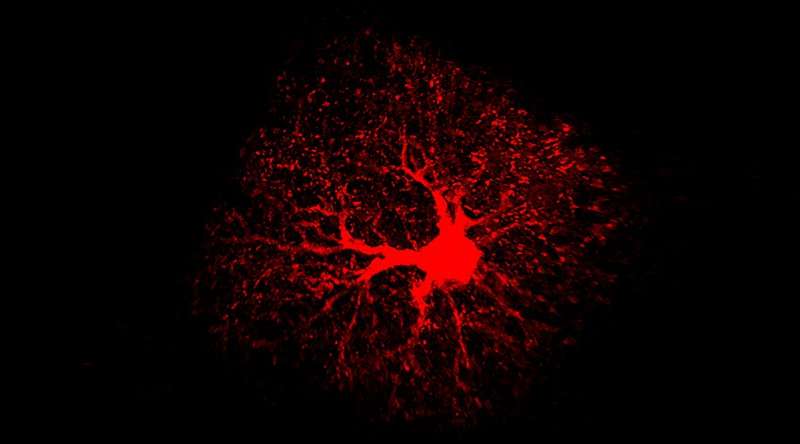
An image of an astrocyte of the adult mouse brain labeled with tdTomato red fluorescent protein. Credit: The Deneen lab

Researchers at Baylor College of Medicine reveal that astrocytes, the most abundant cells in the brain, play a direct role in the regulation of neuronal circuits involved in learning and memory. The findings appear in the journal Neuron.

“It has become increasingly clear that astrocytes are much more than supportive cells in the healthy adult . They play a direct role in a wide variety of complex and essential functions, including neuronal communication through synapses and regulation of neural circuit functions,” said corresponding author Dr. Benjamin Deneen, professor of neurosurgery and a member of the Center for Stem Cell and Regenerative Medicine at Baylor. “In this study, we show a new role of astrocytes in normal brain function.”

Previous work showed that astrocytes comprise diverse populations with unique cellular, molecular and functional properties. They occupy distinct brain regions, indicating regional specialization. There is evidence suggesting that —proteins involved in controlling —regulate astrocyte diversity. Deneen and his colleagues looked to get a better understanding of the role transcription factor NFIA, a known regulator of astrocyte development, played in adult mouse brain functions.

The researchers worked with a mouse model they had genetically engineered to lack the NFIA gene specifically in adult astrocytes in the entire brain. They analyzed several brain regions, looking for alterations in astrocyte morphology, physiology and gene expression signatures.

“We found that NFIA-deficient astrocytes presented defective shapes and altered functions,” said Deneen, who holds the Dr. Russell J. and Marian K. Blattner Chair and is a member of the Dan L Duncan Comprehensive Cancer Center at Baylor. “Surprisingly, although the NFIA gene was eliminated in all , only the astrocytes in the hippocampus were severely altered. Other regions, such as the cortex and the brain stem, were not affected.”

Astrocytes in the hippocampus also had less calcium activity—calcium is an indicator of  function—as well as a reduced ability to detect neurotransmitters released from neurons. NFIA-deficient astrocytes also were not as closely associated with neurons as normal astrocytes.

Importantly, all these morphological and functional alterations were linked to defects in the animals’ ability to learn and remember, providing the first evidence that astrocytes are to some extent controlling the neuronal  that mediate learning and memory.

“Astrocytes in the brain are physically close to and communicate with neurons. Neurons release molecules that astrocytes can detect and respond to,” Deneen said. “We propose that NFIA-deficient astrocytes are not able to ‘listen’ to  as well as normal astrocytes, and, therefore, they cannot respond appropriately by providing the support needed for efficient memory circuit function and neuronal transmission. Consequently, the circuit is disrupted, leading to impaired learning and memory.”


Explore further

Researchers find regulator of first responder cells to brain injury


More information: Anna Yu-Szu Huang et al, Region-Specific Transcriptional Control of Astrocyte Function Oversees Local Circuit Activities, Neuron (2020). DOI: 10.1016/j.neuron.2020.03.025

Journal information: Neuron

https://nationalpost.com/news/world/the-covid-19-lockdown-lifestyle-sleeping-in-staying-up-late-and-more-netflix

~ Leave a comment

The COVID-19 lockdown lifestyle: Sleeping in, staying up late and more Netflix

Hydro data gives a glimpse of the new normal as people shelter in place from coronavirus

Am I bringing COVID-19 into my home?1:42

Life in lockdown means getting up late, staying up till midnight and slacking off in the afternoons.

That’s what power market data show in Europe in the places where restrictions on activity have led to a widespread shift in daily routines of hundreds of millions of people.

It’s a similar story wherever lockdowns bite. In New York, electricity use has fallen as much as 18 per cent from normal times at 8 a.m. Tokyo and three nearby prefectures had a 5 per cent drop in power use during weekdays after Japan declared a state of emergency on April 7, according to Tesla Asia Pacific, an energy forecaster.

Italy’s experience shows the trend most clearly since the curbs started there on March 5, before any other European country. Data from the grid operator Terna SpA gives a taste of what other places are also now starting to report.

1. People are sleeping later

With no commute to the office, people can sleep longer. Normally, electricity demand began to pick up between 6 a.m. and 8 a.m. Now in Germany, it’s clear coffee machines don’t go on until between 8 a.m. and 9 a.m., said Simon Rathjen, founder of the trading company MFT Energy A/S.

Germany, France and Italy — which between them make up almost two thirds of the euro-zone economy — all have furlough measures that allow workers to receive a salary while temporarily suspended from their jobs. The U.K. also has a support package. Many of these workers will be getting up later.

“Now, I have quite a relaxed start to the morning,” said David Freeman, an analyst in financial services from London. “I don’t get up until about half an hour before I need to start work.”

2. Less productive afternoons

There is a deeper dip in electricity use in the afternoons. Previously, power use rose between 2 p.m. and 5 p.m. Now it dips as people head out for a walk or some air. This chart from U.K. grid operator National Grid Plc shows that afternoon drop off.

It’s “as though we are living through a month of Sundays,” said Iain Staffell, senior lecturer in sustainable energy at Imperial College London.

3. Evenings in

From 6 p.m., electricity use begins to rise steeply as people finish work and start chores. Restrictions like work and home schooling that prevent much daytime TV watching lift in the early evening.

This following chart for Germany shows the evening peak for power use coming during later hours.

The evening is when electricity use is highest, with most people confined to their homes. Netflix Inc. reported a record 15.8 million paid subscribers — almost double the figure forecast by Wall Street analysts. Video-streaming services like Netflix and YouTube have found a captive audience. The new Disney+ service surpassed 50 million subscribers in just five months, a faster pace than predicted.

Internet traffic is skyrocketing, with a surge in bandwidth-intensive applications like streaming services and Zoom. This may mean that monthly broadband consumption of as much as 600 gigabytes, about 35 per cent higher than before, according to Bloomberg Intelligence.

In Singapore, electricity use has dropped off significantly since the country’s “circuit-breaker” efforts to keep people at home began April 7. Electricity use has fallen and stayed low during the day. But late at night is a different story, as power demand fell sharply immediately after the lockdown began, it has steadily crept back in the past two weeks, perhaps a sign that “Tiger King” and “The Last Dance” have been finding late-night fans in the city state.

4. Staying up late

We’re going to bed later too. Demand doesn’t start to drop off until 10 p.m. to 12 a.m., at least an hour later than before.

“My children are definitely going to bed later,” said Liz Stevens, a teaching assistant from London. “Our whole routine is out the window.”

It’s challenging for those that need to predict behaviour — power grids and electricity traders. Forecasting is based on historical data, and there isn’t anything to go into the models gauging use now.

The closest we can get is looking at big events like football World Championships when people are all sitting down at the same time, according to Rathjen at MFT.

“Forecasting demand right now is very tricky,” said Chris Kimmett, director of power grids at Reactive Technologies Ltd. “A global pandemic is uncharted territory.”

What normal looks like when the crisis passes is also an open question. Different countries are set to unravel their measures in their own ways, with Germany and Austria loosening restrictions first and Italy remaining under tight control. Some changes may be permanent, with both workers and employers becoming more comfortable with working from home.

5. Different sectors consume more

In China, which is further along recovering from the pandemic than Europe or the U.S., the sharp contraction in overall power output masks a shift in daily routines.

Eating habits have changed. Restaurants are expanding delivery and even offering grocery services as the preference for dining at home persists. Household electricity consumption in China probably increased from activities such as cooking and heating, according to IHS Markit, which said that residential demand rose by 2.4 per cent in the first two months as people stayed in.

The increase in technology use also drove China’s power demand from the telecom and web-service sectors to rise by 27 per cent, the consultancy said.

Overall, power consumption in the first quarter of the year fell 6.5 per cent from the same period in 2019 to 1.57 trillion kilowatt-hours, China’s National Energy Administration said last week. Industry uses about 70 per cent of the country’s electricity, while the commercial sector and households account for 14 per cent each.

https://www.zdnet.com/article/raspberry-pi-alternative-new-odroid-c4-undercuts-4gb-raspberry-pi-4-by-5/

~ Leave a comment

Raspberry Pi alternative: New Odroid-C4 undercuts 4GB Raspberry Pi 4 by $5

Raspberry Pi 4 gets a cheaper rival, but the two boards don’t have equal features.

Hardkernel, the maker of Raspberry Pi-like Odroid single-board computers, has released a direct and cheaper rival to the top-end Raspberry Pi 4 4GB model, arguing its new board outperforms the Pi on speed and performance.

The new Amlogic-based Odroid-C4 packs a quad-core Cortex A55 processor with a new-generation Mali-G31 GPU and 4GB of DDR4 memory.

The A55 cores run at 2GHz, which Hardkernel says operate without thermal throttling and use the stock heat sink, allowing for a robust and quiet computer.

The Odroid-C4’s CPU is about 40% faster and the DRAM performance is 50% faster than the four-year-old Odroid-C2, but it’s more energy efficient too, thanks to the 12nm Amlogic S905X3 CPU.

While the $50 Odroid-C4 is a big upgrade for fans of the Odroid-C2, Hardkernel is really gunning for the $55 4GB Raspberry Pi 4 and it makes it known in several benchmarks.

The new Pi-rival comes as the Raspberry Pi Foundation saw a big uptick in sales of the Raspberry Pi 4 this March, which it attributed to people seeking cheap computing projects while staying at home due the COVID-19 coronavirus pandemic.

In Hardkernel’s CPU tests, the Odroid-C4’s Amlogic S905X3 unit outperforms the Raspberry Pi 4 on two of four performance benchmarks and is about equal to it in two other tests.

The Odroid-C4 is not as fast as Hardkernel’s Amlogic S922X Odroid-N2, but the N2 is considerably more expensive than the Raspberry Pi 4 and the Odroid-C4.

The Odroid-C4 also outperformed the Raspberry Pi 4’s Broadcom VideoCore VI GPU in a GPU performance benchmark and beat it in a memory benchmark.

But the Odroid-C4 doesn’t have the same features as the Raspberry Pi 4, so users will need to weigh up what works for their application.

The Odroid-C4 features four USB 3.0 host ports, an RJ45 Gigabit Ethernet port, one HDMI 2.0 display port up to 4K@60Hz, a Micro USB 2.0 port and a power jack.

Notably, unlike the Raspberry Pi 4, it doesn’t come with built-in Wi-Fi and Bluetooth. Instead, optional adapters are available for this connectivity. Also, the Raspberry Pi’s Broadcom Coretex-A72 runs at 1.5GHz.

The Odroid-C4’s eMMC storage connector supports 8GB, 16GB, 32GB, and 64GB and there are green and amber networking LEDs for indicating data traffic at 100Mbps and 1Gbps, respectively.

SEE: Raspberry Pi sales jump: Here’s why the tiny computer’s in demand in coronavirus crisis

Two more red and blue system LEDs respectively indicate whether DC power is connected and show kernel activity. There’s also a 40-pin expansion header and a seven-pin audio expansion header. The computer measures 85mm x 56mm and weighs 59 grams with the heat sink.

There’s an Ubuntu 20.04 LTS 64bit image available with Linux kernel version 4.9.218 LTS. It also supports Google’s Flutter UI framework on Ubuntu for building home-automation applications. And there’s support for LineageOS, CoreELEC, and Android 9.

Hardkernel is offering discounts for volume purchases. Buyers who want 25 to 99 Odroid-C4 units get a 4% discount. Those who want 500 or more get a 7% discount.

odroid-c4-a.jpg
The new Amlogic-based Odroid-C4 packs a quad-core Cortex A55 processor with a new-generation Mali-G31 GPU and 4GB of DDR4 memory.

Image: Hardkernel

c4-cpu-bench1.png
Odroid-C4’s Amlogic S905X3 unit outperforms the Raspberry Pi 4 on two of four performance benchmarks and is about equal to it in two other tests.

Image: Hardkernel

MORE ON RASPBERRY PI AND SINGLE-BOARD COMPUTERS

https://www.labmanager.com/news/rebuilding-the-bridge-between-neuroscience-and-ai-22452

~ Leave a comment

Rebuilding the Bridge between Neuroscience and AI

Half-century-old bridge between neuroscience and artificial intelligence is revived through a newly revealed ultrafast brain-inspired learning mechanism


The origin of machine and deep learning algorithms, which increasingly affect almost all aspects of our life, is the learning mechanism of synaptic (weight) strengths connecting neurons in our brain. Attempting to imitate these brain functions, researchers bridged between neuroscience and artificial intelligence over half a century ago. However, since then experimental neuroscience has not directly advanced the field of machine learning and both disciplines—neuroscience and machine learning—seem to have developed independently.

In an article published today (Apr. 23) in the journal Scientific Reports, researchers reveal that they have successfully rebuilt the bridge between experimental neuroscience and advanced artificial intelligence learning algorithms. Conducting new types of experiments on neuronal cultures, the researchers were able to demonstrate a new accelerated brain-inspired learning mechanism. When the mechanism was utilized on the artificial task of handwritten digit recognition, for instance, its success rates substantially outperformed commonly-used machine learning algorithms.

To rebuild this bridge, the researchers set out to prove two hypotheses: that the common assumption that learning in the brain is extremely slow might be wrong, and that the dynamics of the brain might include accelerated learning mechanisms. Surprisingly, both hypotheses were proven correct.

Figure: Advanced learning mechanisms of our brain might lead to more efficient AI algorithms.
IDO KANTER, BAR-ILAN UNIVERSITY


“A learning step in our brain is believed to typically last tens of minutes or even more, while in a computer it lasts for a nanosecond, or one million times one million faster,” said the study’s lead author and professor Ido Kanter, of Bar-Ilan University’s Department of Physics and Gonda (Goldschmied) Multidisciplinary Brain Research Center. “Although the brain is extremely slow, its computational capabilities outperform, or are comparable, to typical state-of-the-art artificial intelligence algorithms,” added Kanter, who was assisted in the research by Shira Sardi, Dr. Roni Vardi, Yuval Meir, Dr. Amir Goldental, Shiri Hodassman, and Yael Tugendfaft.

The team’s experiments indicated that adaptation in our brain is significantly accelerated with training frequency. “Learning by observing the same image 10 times in a second is as effective as observing the same image 1,000 times in a month,” said Sardi, a main contributor to this work. “Repeating the same image speedily enhances adaptation in our brain to seconds rather than tens of minutes. It is possible that learning in our brain is even faster, but beyond our current experimental limitations,” added Vardi, another main contributor to the research. Utilization of this newly-discovered, brain-inspired accelerated learning mechanism substantially outperforms commonly-used machine learning algorithms, such as handwritten digit recognition, especially where small datasets are provided for training.

The reconstructed bridge from experimental neuroscience to machine learning is expected to advance artificial intelligence and especially ultrafast decision making under limited training examples, similar to many circumstances of human decision making, as well as robotic control and network optimization.

http://cameray.ca/our-board-of-directors/

~ Leave a comment

Our Board of Directors

Cameray Board of Directors

Cameray Child & Family Services is governed by a volunteer Board of Directors, made up of interested people from the community with various backgrounds and areas of expertise. The Board of Directors is responsible for managing the affairs of the Society, and is accountable for the agency’s governance, policy development, strategic planning, and financial management.


2018-2019 Board of Directors


Don Macdonald      (President)

Don has been on the Board since 2008.  He is a Registered Clinical Counsellor and Parenting Coordinator who has been counselling professionally since 2004.  Working with children, families and individuals on a wide variety of issues, he combines parenting support and education with his extensive experience to help his clients reach the balance in their lives they seek.  His background as a social worker in Northern BC, as an elementary and secondary school teacher and Principal in Burnaby, as an instructor/ coordinator in the Native Indian Teacher Education program at U.B.C., as a sessional instructor at City University in the M.Ed. counselling program, provides Don with a comprehensive resource of experience from which to draw.

After retiring from the Burnaby School District, Don came to begin his counselling career at Cameray in 2005 and worked as a Child and Family Counsellor for 2.5 years.  He has also facilitated Neufeld attachment training with the Cameray counselling staff since moving on to private practice.


Nancy Maloney       (Vice President)

Nancy has been on the Board since 1982.  She taught psychology at Douglas College until retiring in 2014.  Previously, she worked as a clinical psychologist in a variety of settings, the last of which was Maple Ridge Mental Health Centre where she was the Child and Youth Coordinator and Acting Director.  There Nancy worked with other community services providers to identify needs and create solutions.

Nancy became involved with Cameray in 1982, when her friend who was on the Board invited Nancy to attend an AGM.  She was elected to the Board that evening.   As a member of the personnel committee, Nancy participated in selection interviews for many years.  She has also served as Vice-President for many terms.

Nancy notes that she is honoured to have been a small but supportive part of Cameray’s excellent work.  She appreciates everyone’s commitment to our shared goals and mission.


Brian Shuster          (Treasurer)

Brian has been on the Board since 1984.  He recently retired from the Burnaby School District as the Principal of Cascade Heights Elementary School.  When Brian was a Community School Coordinator in 1983, he was asked to sit on the Board of Cameray, and he happily agreed.  Brian is a Burnaby resident who is married with two grown children, and is a proud grandparent of Delainey.


Nazarina DiSpirito  (Secretary)

Nazarina has been on the Board since 2014.  She is a licensed mortgage broker and has been working in the Finance industry for over 33 years.  With an extensive financial and marketing background and a commitment to providing excellent client service, Nazarina extends these skills to her role at Cameray.  She has operated her own business for over 15 years and as such, understands what it means to work with a limited budget and ensure expenditures bring maximized benefits.

Nazarina has been involved in many fundraising initiatives over the years including GGMS (defibrillators) and various youth sports and school programs in Burnaby.

Nazarina is married and has three adult children who have all gone through the Burnaby school system.  Her family has been a part of many clubs through Burnaby schools and other organizations that the children have been involved in.

As a parent and a Burnaby resident for 32 years, Nazarina is happy to assist a non-profit society focused on youth and families.   Burnaby is continually growing and Nazarina believes the work that Cameray does to support our young residents and their families is extremely important to ensure they have a positive influence in our community.


Bruce Landon

Bruce has been on the Board since 1986.  He is a retired psychology instructor.  Prior to a serious stroke in 2007, Bruce taught at Douglas College for approximately 25 years.  Bruce’s areas of specialization are social and cognitive psychology and educational technology.  He served on the faculty association’s executive as an elected Vice President and was actively involved in contract negotiations.

Bruce was invited to become a Board member by his partner, Nancy Maloney.  He served as President of the Board for many years, and he worked with the admin staff in building Cameray’s technology capacity.


Tracy Logan

Tracy joined the board in 2017. She has had experience working in all three sectors including 21 years working at Crystal Decisions/Business Objects when it transitioned from a software start-up to a billion dollar company. Tracy has developed a broad business skill set as she led the Sales, International Sales, Customer Service, Human Resources and Corporate Giving teams at Crystal. She is active in the voluntary sector as both a consultant and volunteer. Of particular note, she volunteers at Vantage Point leading training sessions focused on board governance. Tracy lives in South Surrey with her husband, sons and dog, Eli


Susan Montabello

Sue has been on the Board since 2017. She is a passionate educator whose work honours and nurtures the diversity of relationships and community, enabling others to come together to learn and thrive.

Sue Montabello worked in the Burnaby school district as a principal in both elementary and secondary schools for twenty-five years.  She spent her career working as principal of community schools, leading and learning in communities embodying the belief that ‘there is no power equal to a community discovering what it cares about.’

Sue has worked at Simon Fraser University as a faculty associate and coordinator of the Professional Development Program and as an instructor of graduate diploma programs for practicing K to 12 teachers.  She completed both her MA and PHD at Simon Fraser University.  Sue continues her work as instructor in education and leadership at both the undergraduate and graduate level with Simon Fraser and Vancouver Island and City Universities.


Alexina Picard

Alexina has been on the Board since 2019. She is a counselling student at Adler University and the Executive Assistant at the BC Psychological Association.

Alexina brings skills and experience in event planning and fundraising. She was inspired to join the Cameray Board due to her enjoyment in planning events and her passion towards mental health services for children.


Joining Our Board

If you are interested in joining our Board please contact Tracey Rusnak, Executive Director, at tracey.rusnak@cameray.ca

Eligible candidates for a Board of Directors position should be a member of the community and/or have knowledge or experience in one or more of the following areas:

  • Finance
  • Personnel
  • Business
  • Management
  • Cultural Diversity
  • Social Services
  • Knowledge of the Communities Served
  • Skill and experience in developing policy
  • Leadership Ability
  • Commitment and ability to fundraise
  • Commitment and ability to connect the agency with other resources
  • Community Program Development
  • Counselling and Therapy


https://www.tricitynews.com/lifestyles/fitness-port-moody-rec-complex-a-path-to-recovery-for-stroke-victim-1.1878100

~ Leave a comment

FITNESS: Port Moody rec complex a path to recovery for stroke victim

Bruce Landon opens the door to the workout room at the Port Moody recreation complex, makes his way to one of the three modified cardio machines and starts to cycle his right arm.

It’s what the 66-year-old Anmore resident has done about five times a week for the past four years or so, ever since he suffered a stroke that nearly took his life in September 2007.

Then, Landon – a 25-year Douglas College instructor who has a PhD in experimental social psychology from Rutgers University – was at home blogging when he fell to the floor.

His longtime partner, Nancy Maloney, was out and didn’t find him for two hours. “He wasn’t able to speak but he was conscious,” she said.

Maloney dialled 911. And, from there, she remembered, a lengthy period of treatment, rehabilitation and waiting began.

Fortunately, over the next few weeks, Landon’s situation improved and, eventually, he was able to leave RCH for in-patient treatment at ERH for 10 weeks. He functioned little but by December – four months after the stroke had occurred – he was released.

Still, Landon was told by Fraser Health he had to wait 11 months for outpatient rehab. In the meantime, he and Maloney went for care in Vancouver that included speech therapy and physiotherapy.

By the fall of 2008, the couple had a personal trainer and received special permission from the city of Port Moody to bring the outside therapist to the PoMo rec complex.

The next year, the complex’s kinesiologist Maria Morano – who works with clients suffering from Parkinson’s disease and multiple sclerosis, with hip replacements, back problems and recovering from surgeries, for example – started exercise rehabilitation with Landon on a weekly basis, reconnecting with her former psychology prof.

But the costs mounted quickly and Landon was faced with the difficult decision of not being able to continue.

Melissa Evanson, the city’s recreation planner, said Landon’s luck soon changed: a friend of his neighbour’s – a stranger – heard his story and paid for about $1,500 worth of personal training. And last December, Landon was the one millionth visitor to walk through the facility’s doors, winning him a lifetime membership. “It was wonderful news,” Maloney said.

The financial relief has allowed the couple to focus on what’s important: Landon’s well-being and recovery. Besides the modified cardio machines, he also uses weights and the upstairs track to improve his strength, balance and co-ordination, Morano said.

“I remember when he first started, he was on the recumbent bike and I had to put his feet in the pedals and help him push,” she said. “He doesn’t need that anymore…. There’s been a huge change in his life.”

Today, Landon has limited visibility in his left eye and is slowly improving the right side of his body, which was partially paralyzed, “but it’s better,” he said, gesturing. He recalls having Maloney helping him use a spoon for cereal in the beginning because he kept missing his mouth; now, with his rehab, he can do it on his own.

In a recent electronic speech to Doug College students (see it at: http://www.youtube.com/watch?v=92noF8ErriQ), Landon stated: “Stroke recovery is hard work. New areas of the brain had to be trained to replace damaged areas.”

And, with Morano’s help, “His body is functioning much better, too,” Maloney said. “It’s just been phenomenal to witness.”

jwarren@tricitynews.com