https://www.sciencedaily.com/releases/2020/04/200422091205.htm


Link between obesity and sleep loss

Energy conservation may be a major function of sleep, according to new study in worms

Date:
April 22, 2020
Source:
University of Pennsylvania School of Medicine
Summary:
Can staying up late make you fat? Researchers found the opposite to be true when they studied sleep in worms: It’s not the sleep loss that leads to obesity, but rather that excess weight can cause poor sleep.
Share:
FULL STORY

Clock by bed (stock image). | Credit: © Bits and Splits / stock.adobe.com
Clock by bed (stock image).

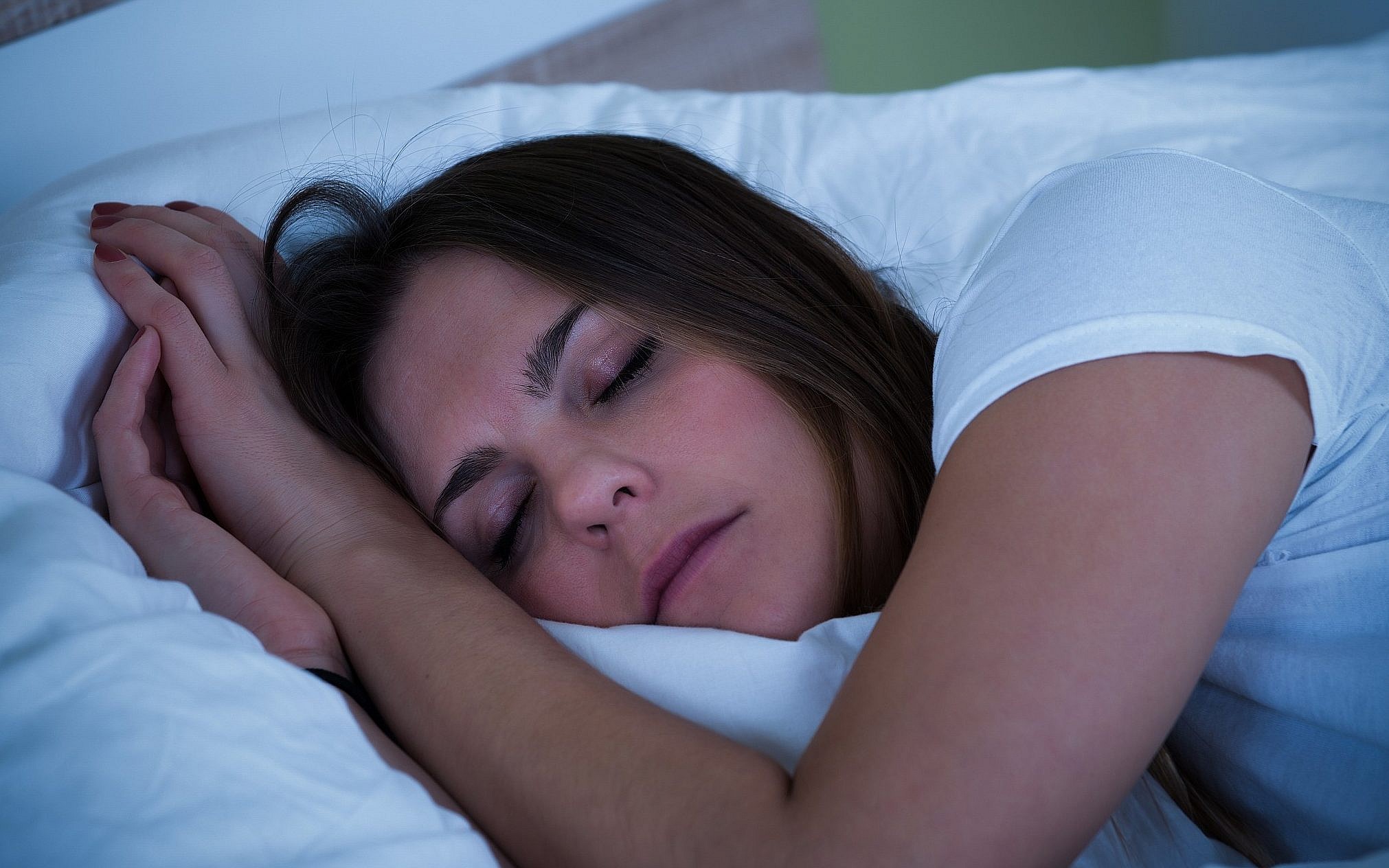
Can staying up late make you fat? A growing body of research has suggested that poor sleep quality is linked to an increased risk of obesity by deregulating appetite, which in turn leads to more calorie consumption.

But a new study published this week in PLOS Biology found that the direction of this reaction might actually be flipped: It’s not the sleep loss that leads to obesity, but rather that excess weight can cause poor sleep, according to researchers from the University of Pennsylvania’s Perelman School of Medicine and the University of Nevada, Reno, who discovered their findings in the microscopic worm Caenorhabditis elegans (C. elegans).

“We think that sleep is a function of the body trying to conserve energy in a setting where energetic levels are going down. Our findings suggest that if you were to fast for a day, we would predict you might get sleepy because your energetic stores would be depleted,” said study co-author David Raizen, MD, PhD, an associate professor of Neurology and member of the Chronobiology and Sleep Institute at Penn.

Raizen emphasized that while these findings in worms may not translate directly to humans, C. elegans offer a surprisingly good model for studying mammalian slumber. Like all other animals that have nervous systems, they need sleep. But unlike humans, who have complex neural circuitry and are difficult to study, a C. elegans has only 302 neurons — one of which scientists know for certain is a sleep regulator.

In humans, acute sleep disruption can result in increased appetite and insulin resistance, and people who chronically get fewer than six hours of sleep per night are more likely be obese and diabetic. Moreover, starvation in humans, rats, fruit flies, and worms has been shown to affect sleep, indicating that it is regulated, at least in part, by nutrient availability. However, the ways in which sleeping and eating work in tandem has remained unclear.

“We wanted to know, what is sleep actually doing? Short sleep and other chronic conditions, like diabetes, are linked, but it’s just an association. It’s not clear if short sleep is causing the propensity for obesity, or that the obesity, perhaps, causes the propensity for short sleep,” said study co-author Alexander van der Linden, PhD, an associate professor of Biology at the University of Nevada, Reno.

To study the association between metabolism and sleep, the researchers genetically modified C. elegans to “turn off” a neuron that controls sleep. These worms could still eat, breathe, and reproduce, but they lost their ability to sleep. With this neuron turned off, the researchers saw a severe drop in adenosine triphosphate (ATP) levels, which is the body’s energy currency.

“That suggests that sleep is an attempt to conserve energy; it’s not actually causing the loss of energy,” Raizen explained.

In previous research, the van der Linden lab studied a gene in C. elegans called KIN-29. This gene is homologous to the Salt-Inducible Kinase (SIK-3) gene in humans, which was already known to signal sleep pressure. Surprisingly, when the researchers knocked out the KIN-29 gene to create sleepless worms, the mutant C. elegans accumulated excess fat — resembling the human obesity condition — even though their ATP levels lowered.

The researchers hypothesized that the release of fat stores is a mechanism for which sleep is promoted, and that the reason KIN-29 mutants did not sleep is because they were unable to liberate their fat. To test this hypothesis, the researchers again manipulated the KIN-29 mutant worms, this time expressing an enzyme that “freed” their fat. With that manipulation, the worms were again able to sleep.

Raizen said this could explain one reason why people with obesity may experience sleep problems. “There could be a signaling problem between the fat stores and the brain cells that control sleep,” he said.

While there is still much to unravel about sleep, Raizen said that this paper takes the research community one step closer to understanding one of its core functions — and how to treat common sleep disorders.

“There is a common, over-arching sentiment in the sleep field that sleep is all about the brain, or the nerve cells, and our work suggests that this isn’t necessarily true,” he said. “There is some complex interaction between the brain and the rest of the body that connects to sleep regulation.”

Additional authors on this paper include Jeremy Grubbs and Lindsey Lopes, who completed this research while students at the University of Nevada, Reno and the Perelman School of Medicine, respectively.

This study was funded by the National Institutes of Health grants R01NS107969 and R01NS088432, COBRE P20GM103650, and the National Science Foundation grant IOS1353014.


Story Source:

Materials provided by University of Pennsylvania School of MedicineNote: Content may be edited for style and length.


Journal Reference:

  1. Jeremy J. Grubbs, Lindsey E. Lopes, Alexander M. van der Linden, David M. Raizen. A salt-induced kinase is required for the metabolic regulation of sleepPLOS Biology, 2020; 18 (4): e3000220 DOI: 10.1371/journal.pbio.3000220

Cite This Page:

University of Pennsylvania School of Medicine. “Link between obesity and sleep loss: Energy conservation may be a major function of sleep, according to new study in worms.” ScienceDaily. ScienceDaily, 22 April 2020. <www.sciencedaily.com/releases/2020/04/200422091205.htm>.

https://gizmodo.com/tab-groups-is-chromes-best-new-feature-in-years-and-he-1842944249

Tab Groups are here in Chrome 81.
Screenshot: Gizmodo

After making its way through the developer and beta versions of the browser, a significant new feature has just arrived in the stable version of Google Chrome that most of us are using: Tab Groups. It might just change the way you browse the web forever.

Tab Groups appears in Google Chrome 81 for Windows and macOS, so first of all you need to make sure you’re running the latest version of the browser. Open the Chrome menu then choose Help and About Google Chrome. If you’re not already running version 81 or later, you should see a prompt to update the software.

As the name suggests, Tab Groups lets you… group tabs. It’s likely that most of us have more tabs open at any one time than is really viable, and the new feature lets you take more control over how these tabs are managed. Various third-party extensions have tackled this problem in the past (more on these add-ons below), but now Chrome offers you some built-in assistance.

Adding tabs to a group is simple.
Screenshot: Gizmodo

The easiest way to get started with Tab Groups is to right-click (or Ctrl+click on a Mac) on a tab header in Chrome—you should see an option to Add to New Group. You’ll see the tab gets a colored outline and a colored dot beside it.

Click the dot to name your brand new tab group (a name which will appear on the tab bar), and to change the color, if you don’t like the default one assigned to it. The other options on this menu let you close all the tabs in a group, ungroup all the tabs in a group (deleting the group along the way), and add a new empty tab to the group).

So, for example, you might have one tab group for work stuff and one tab group for social media. If you’re researching two or more topics at once, or trying to work on multiple projects, or just trying to keep your business and leisure web browsing separate, then these are all scenarios where tab grouping can come in handy.

Once you’ve created your first group, a right-click (or Ctrl+click) on any tab header then gives you the option to add that tab to an existing group as well as creating a new one (it’s here that naming your tab groups smartly pays dividends). If you open up a link from a tab that’s already in a tab group, the new tab goes into the same group.

You’ve got eight colors to choose from for your tab groups.
Screenshot: Gizmodo

You can also add a tab to a group by simply clicking and dragging it into one. Tabs can be moved between groups in the same way. Pinned tabs are exempt and can’t be grouped (if you try and group a pinned tab, it’ll unpin itself; grouped tabs that you pin will then no longer be grouped).

One of the cool tricks that tab groups enables is moving tabs en masse—click and drag on a tab group label, and you can move all of its tabs at once (or drag them out to a whole new window). You can do this without tab groups by the way, by selecting multiple tabs with a Ctrl+click (or Cmd+click on a Mac) and then dragging them around.

The Chrome development team will no doubt add more functionality to Tab Groups as time goes on. At the moment, it’s not the most robust of solutions: Simply dragging a single tab will pull it out of a group, for example, and there’s no way of saving groups of tabs or bringing them back as a group after you’ve closed them.

Still, it’s a promising start, and shows that Google engineers are thinking about better ways to manage the avalanche of tabs we’re all working our way through every day. Give it a try and you might find it more useful than you expect.

Toby is one of the third-party tab management options available.
Screenshot: Toby

If you need more than Tab Groups can offer, plenty of Chrome extensions cover the same sort of ground. Cluster lets you organize tabs by window, so you can group together tabs with similar content, then open and close them in batches. It makes searching through tabs much more straightforward too.

Tab Manager Plus uses a similar sort of approach to help you manage tabs based on the browser window they’re in—if you want to close down groups of tabs but get them back again easily, it works well. As an added bonus, it will help you spot duplicate tabs you’ve got open, and can (optionally) limit how many tabs you’re able to open in total.

Toby is also worth a mention, and is the most comprehensive of the lot. It essentially transforms the way tabs and bookmarks are managed in Chrome, giving you a new and streamlined way of keeping track of the webpages you need to keep track of. It can take a bit of getting used to, but it can potentially make a big difference to your online productivity if it suits you.

https://www.timesofisrael.com/up-at-night-with-coronavirus-nightmares-experts-say-its-totally-normal/

Up at night with coronavirus nightmares? Experts say it’s totally normal

Social distancing and irregular routines cause anxiety and disrupted sleep, but we should be able to return to getting a good night’s rest once all this is over, say profs

Illustrative image of a sleepless man (tommaso79; iStock by Getty Images)

Illustrative image of a sleepless man (tommaso79; iStock by Getty Images)

Julie Gray recently dreamed of people in hazmat suits unloading body bags from a helicopter outside her house in Israel’s Ramat Gan. In another dream, people were running — terrified, screaming, clawing and tearing at one another — from something unseen that was trying to round them up.

“It was awful. I rarely have nightmares, and never in my life have I dreamed directly about something like this,” Gray, an author and editor, told The Times of Israel.

Pearl Mattenson, a nonprofit consultant who immigrated to Israel a year and a half ago, reported that she had a dream where in the midst of the coronavirus crisis, Israel was attacked by an enemy and the country was suddenly at war.

“We needed to find a bunker, but as new renters in our building I wasn’t sure where it was… In the dream, I woke my husband as we tried to figure out what to bring to the shelter, even as rockets were flying overhead and time was of the essence,” Mattenson said.

David Moyal, a synagogue administrator in Toronto, tidily summed up his recent weird dreams simply as “Cronenbergesque,” making reference to the Canadian filmmaker David Cronenberg, who pioneered the body horror genre, or the disturbing intersection of technology, the human body, and the subconscious.

Gray, Mattenson and Moyal are hardly alone in having vivid, disturbing dreams as the entire world copes with the COVID-19 pandemic. It is common to see social media posts about bizarre dreams, trouble sleeping, or both.

“Sleep is a very sensitive barometer of our levels of stress. It’s the first thing that changes when we are stressed. So, it is very natural that people are experiencing this during the coronavirus crisis,” said Prof. Peretz Lavie, former Technion president and professor emeritus in the university’s Rappaport Faculty of Medicine. Lavie is an expert in the psychophysiology of sleep and sleep disorders.

According to Lavie, it is normal to have strange dreams these days. “We dream of the things that are of importance to us during the day. Dreams are bizarre now because we are in a bizarre situation.”

Lavie noted that even for Israelis, who are unfortunately accustomed to wars and terrorist attacks, COVID-19 is causing a new kind of anxiety that is playing itself out while at rest.

It’s like an invasion from Mars. It’s an invisible enemy

“It’s like an invasion from Mars. It’s an invisible enemy. People have a fear of this new illness and have little experience living in isolation as we have been doing for over a month. The density of the events and emotions we are dealing with now are difficult to digest and adapt to,” Lavie said.

Technicolor dreaming

Some individuals, such as Steve, a civil servant in Ottawa, Canada, and David A.M. Wilensky, a journalist in San Francisco, reported that they are remembering their dreams more than usual.

“I don’t often remember my dreams, but right now I remember a lot of details of my dreams almost every night,” Wilensky said.

“I seem to be dreaming so much now that I go from one to another. It’s almost like binge watching multiple shows and movies — so much so that it is hard to remember everything,” Steve said.

It’s almost like binge watching multiple shows and movies

According to Dr. Meir Kryger, a professor at the Yale School of Medicine who has been treating patients with sleep disorders for over 40 years, the fact that dreams are more and better remembered can be attributed to sleep disturbances that many are currently experiencing.

Usually sleepers experience between three and five rapid eye movement (REM) cycles — the time when we have vivid dreams — per night. We may remember one dream, but only fleetingly. However, if we wake up during or right after one of these REM cycles, it may make more of an impact on us.

“People are waking up a lot more during the night, so there is a greater chance they will remember their dreams,” Kryger explained.

Disturbed sleep patterns are due in large part to the anxiety-provoking effects of being locked down at home, even while working remotely — assuming one still has a job as the global economy heads into free fall.

According to Kryger, the body craves regularity when it comes to sleep, but this isn’t happening now when sleep-wake and light exposure patterns are more variable. Eating schedules are off, as well.

Who couldn’t use a good nap?

Gordon Haber, a writer and teacher in New York who lost his teaching job last month, finds sleeping is a necessity now. He also can’t get through the day without a nap.

https://liliputing.com/2020/04/50-odroid-c4-is-a-single-board-computer-with-4gb-ram-quad-core-arm-cortex-a55-processor.html

~ Leave a comment

$50 ODROID-C4 is a single board computer with 4GB RAM, quad-core ARM Cortex-A55 processor

https://thenextweb.com/growth-quarters/2020/04/23/heres-how-you-can-reset-your-sleep-cycle-during-lockdown/

~ Leave a comment

Here’s how you can ‘reset’ your sleep cycle during lockdown

sleep-reset-gq

You might have noticed your normal sleep pattern has changed. Some of us may be sleeping more, and some of us may be sleeping less. Life has changed dramatically for many of us, with our usual daily routine – including commutes, meal times, and the amount of time we spend outside – being altered because of self-isolation.

All of these changes impact our natural circadian rhythm, which is an essential internal “clock” that plays a key role in regulating our sleep pattern. It controls body temperature and hormones in order to make us feel alert during the day and tired at night.

Exposure to natural light and regular mealtimes are two of the most powerful forces in aligning our circadian rhythms. But for many of us, quarantine has changed the amount of time we spend outside, and we might be eating at different times than normal.

While some of us are reconnecting with our natural circadian rhythm, others might have trouble falling asleep, or maybe waking up multiple times during the night. This is also a normal experience, as uncertainty can increase stress levels and stress hormones (such as cortisol), which help regulate our sleep-wake cycle. Cortisol normally drops in the evening, reaching its lowest level at midnight. But if levels are too high before bedtime, it could disrupt sleep.

Some of us might also be sleeping more, catching up on lost hours. Many of us have so-called “sleep debt,” which is the cumulative effect of not getting enough sleep, and may lead to mental and physical fatigue. As we juggle our daily tasks, we often run out of hours in the day to get things done – so many of us choose to sleep less to do more.

Sleep debt (also known as sleep deprivation) is associated with declines in performancememory, and our immunity.

If you are sleeping longer than normal, you may be repaying some of that sleep debt acquired in life. Don’t panic here – let your body catch up and erase some of that debt you have subconsciously been carrying around. Sleep loss studies that have allowed recovery sleeps of ten hours have demonstrated restoration of performance when the participants are awake, suggesting this is a fixable problem.

The solutions

1. Establish a new routine.
You may have been furloughed or be working from home for the first time. Routine is very important for the body right now. This will be the starting block for engaging with your natural circadian rhythm – not the one your job normally sets. Start by focusing on your sleep-wake cycle, go to bed when you feel tired and try to wake up without an alarm. You may sleep a little more than normal at the beginning, but within a week or two, you will return to your natural duration. Though everyone is different, you should aim for 7-9 hours a night. Not only is routine good for our sleep cycle, but it’s also beneficial to our mental health.

2. Don’t use your bedroom as your office (if possible)
When it’s time for bed, remove electronic devices and make the room cool, dark and quiet. It’s important to associate your bedroom as the place you go to sleep, not the place you work or watch TV. This will help you to relax and prepare for sleep. Electronic devices also emit artificial light that can influence our sleep cycle. Artificial light can trick your circadian clock into thinking daylight has been extended and alter our quality of sleep. If you need electronic devices nearby, place them in night mode.

3. Avoid napping
As you try to establish your new routine, it’s important to engage with your natural circadian rhythm – and napping could potentially disrupt this at the beginning. However, if your previous night’s sleep was poor you may feel more tired after lunch. Short naps – less than 20 minutes – can help to restore cognitive function and may make you feel less sleepy.

4. Only drink caffeine before noon
We all respond a little differently to caffeine. Because caffeine is a known stimulant, it could influence our sleep by keeping us awake later. So when trying to fix your sleep pattern, it may be best to limit caffeine intake to earlier in your day.

5. Exercise
Both aerobic and resistance exercise has been shown to have positive effects on sleep. However, timing is important. It’s best to avoid vigorous exercise one hour before bedtime as this may reduce our sleep duration, quality and make it more difficult to fall asleep in the first place.

6. Get outside
Exposure to both natural light and dark during this time will help us keep our circadian rhythms in balance, and make us tired.

7. Change your bedtime routine
At least an hour before bed stop work, reduce screen time, meditate, or read. These techniques allow us to relax and help our circadian rhythm take control by releasing hormones that will promote sleep and reduce alertness.

Though it’s still uncertain what life will look like after quarantine has ended, one thing for certain is that if we look after our sleep pattern during this time, we may leave quarantine feeling less fatigued – and maybe a little more productive.The Conversation

This article is republished from The Conversation by Lesley Ingram-Sills, Lecturer, Edinburgh Napier University under a Creative Commons license. Read the original article.

Published April 23, 2020 — 07:44 UTC

https://www.inc.com/jeff-haden/new-neuroscience-research-calls-where-you-study-key-to-faster-learning.html

~ Leave a comment
To Learn Faster, Neuroscientists Now Say Study Somewhere New

Need to learn something important, and learn it fast? Research where you study matters as much as how.

By Jeff HadenContributing editor, Inc.@jeff_haden

Granted, success is at least partly about whom you know.  But for the most part, success is about what you know — and then what you actually do with the knowledge you’ve gained.


So what can you do if you need remember, or better yet memorize, something important?

According to new research published earlier this month in the scientific journal Neuron, stop studying in your office. Or in your home. Or anywhere you’re familiar. Study in a place that’s new to you.


While that might seem odd, since studying in an unfamiliar setting sounds distracting rather than conducive to learning, the opposite turns out to be true.

A fresh environment activates the dopamine system in your brain, and dopamine promotes associative learning, triggering feelings of reward that increase your brain’s ability to absorb and retain information. (Associative learning is connecting a stimulus or action with a positive or negative outcome; think connecting the dots.)


In short, the natural buzz you get from being somewhere new–or as the researchers call it, experiencing “inconsequential novel stimulus”–helps you learn more quickly.

“From a very practical perspective,” the researchers write, “the results remind us to break our routine more often and seek out novel experiences to be better learners.”

Need to nail a new sales demo? Need to nail a presentation? Need to remember a variety of facts and figures to support an idea? Study and rehearse somewhere new.

Just keep in mind that “new” really does mean new.


“Strictly speaking,” the researchers write, “anything is only new the first time we perceive it.”

Which means you’ll constantly have to find new places to study.

But since new can be “inconsequential,” where you go doesn’t need to have a great view. Or special ambience. Or social cachet.

To learn better and faster, where you go just has to be different.

https://insideevs.com/news/414230/video-jump-out-tesla-on-autopilot/

~ Leave a comment

You need to exit through the window to make it work though. A word of warning…this is NSFW.

Can you exit a moving Tesla while it’s on Autopilot? We don’t advise you to try this as it’s highly dangerous, but provided you can shimmy out the window, here’s what happens.

First things first though. Never exit a moving car while it’s in drive. Just don’t do it. Not only is this dangerous to others on the road, but also it’s a danger to you. Had this guy fallen upon exiting the Tesla, he would’ve been run over, so just don’t do it.


Regardless, there will still be those curious to know if Tesla Autopilot continues to operate once the driver is no longer there. We’re not talking about a driver who fell asleep at the wheel here. Rather, this Tesla driver exited the car completely.

Does Autopilot know? Does it turn off and bring the car to a halt? It should, we’d think, but this video proves it does not work that way.

We should note that in order to “trick” the system your seatbelt must be engaged (behind the driver in this case) and the door can not be opened. Therefore, one must shimmy out the window to pull this stuff off. This is highly unlikely to happen in the real world, but in the YouTubers kingdom, apparently, this is par for the course.

Lastly, and we’ll close with this, we think the airbag sensor in the driver’s seat should realize that nobody is in the car and bring it to a halt immediately. Why is this not the case here? Perhaps Tesla overlooked this?

https://idevries.com/tag/educational-technology/

~ Leave a comment

Ed tech really matters: A reminder

A moment ago I followed a link in a Tweet by Stephen Harlow which he posted in response to a query regarding a learning repository:

Dr. Alec Couros

@courosa

Any New Zealand educators know much about POND? http://www.n4l.co.nz/pond/ 

See Stephen Harlow’s other Tweets

The link points to an archived 2004 blog post by Alan Levine that includes a discussion between him and Bruce Landon. This caught my attention, not so much because the topic of the discussion is still very much relevant today, but more so because of Bruce Landon himself. This is Dr. Bruce Landon, a brilliant cognitive psychologist, researcher, college teacher and ed-tech aficionado who was also a close acquaintance of mine at the time of that post.

Back then both we worked in ed tech in neighboring institutions, he at Douglas College and I at the Justice Institute of BC. We collaborated on several ed tech projects, and also he was particularly devoted to increasing accessibility of educational web resources for the visually impaired. I’m sure some ETUG members of that time remember his presentations and challenges to all of us to do better in this area.

Shortly after this time I moved on to something else and, as can sometimes happen, we fell out of contact with one another, not by intent but rather by changing circumstances. The last time I talked to him was when he kindly provided me a reference for the doctoral program that I was just starting.

The link to this eleven-year-old blog post prompted me to look him up, and I learned from a local news item that some years ago Bruce suffered a serious stroke and has been undergoing a long period of rehabilitation. The article also linked to a YouTube video of a recent electronic speech by Bruce to students at Douglas College, which I struggled to view through blurred eyes:

As surprised and saddened as I was to stumble across this news via this strangely circuitous route, it was also humbling and inspiring to see how Bruce is now himself using the very types of technologies he advocated for in his ed tech work. It just reminds me that in spite of the many frustrations we run into, ed tech work really does matter – especially with a reminder that we need to remember accessibility in our work. Thanks Bruce for your inspiration, and I’ll be dropping by soon to reconnect!

https://phys.org/news/2020-04-scientists-nanoparticle-treatment-bone-defects.html

~ Leave a comment

Scientists invent nanoparticle that could improve treatment for bone defects

bone
Credit: CC0 Public Domain

A team of biomaterials scientists and dentists at the UCLA School of Dentistry has developed a nanoparticle that, based on initial experiments in animals, could improve treatment for bone defects.

A paper describing the advance is published today in the journal Science Advances.

Bone defects, which can be caused by traumatic injury, infection, osteoporosis or the removal of tumors, are difficult for orthopedic surgeons to treat. And the need for  grafts are becoming more common thanks in part to our aging population: Bone injuries are particularly prevalent among the elderly.

Today, the standard treatment for bone defects is a , which involves transplanting healthy bone from another part of the body to repair the damaged area. However, the procedure can cause complications, including infections where the transplanted bone is taken from, bleeding and nerve damage.

So the researchers turned their attention to liposomes, tiny spherical sacs that are derived from naturally existing lipids. Liposomes have been used since the 1990s to treat cancer and , and more recently they are being explored for their possible use in bone tissue engineering. They can be used to administer nutrients and  in the body and can easily enter cells to administer their valuable cargo, but they do have some drawbacks: They are physically unstable and it can be difficult to control how and when they release drugs.

To help improve their stability and enhance their ability to form bone in the body, the UCLA researchers developed a new type of liposome called a sterosome. (The name is inspired by the fact that they contain a high concentration of steroids.)

To produce the sterosomes, the scientists replaced cholesterol, an important component of liposomes, with oxysterol, a type of cholesterol that has a key role in skeletal development and bone healing. In tests using mice with bone defects, the researchers found that the sterosomes successfully activated bone regeneration on their own, without needing .

“Liposomes are generally made from pharmacologically inactive substances,” said Min Lee, the paper’s corresponding author and a professor of biomaterials science at the dental school. “Including oxysterol into our liposomal formulation not only increased nanoparticle stability but also stimulated cells to develop into bone-forming cells.”

In a second phase of the study, the researchers wanted to see how they could make the sterosome even more effective.

They added their sterosome nanoparticle to a tissue engineering scaffold—a structure often used to move and grow naturally occurring stem cells, which is matched to the site of the  and is used during bone graft procedures. They loaded the sterosomes with a bone-building drug called purmorphamine. Next, they immobilized the drug-loaded sterosome onto a scaffold to ensure that the sterosomes stayed concentrated in the defective areas and released the drugs where they were most needed for as long as possible.

In a six-week study using mice with bone defects in their skulls, the researchers saw an average reduction of roughly 50% in the size of the defects after the -loaded scaffold was implanted.

“By using our nanoparticle, which we found has intrinsic bone-forming capabilities, along with the addition of therapeutic drugs, we were able to speed up the bone regeneration process,” Lee said. “Our nanoparticle-packaged drugs will be useful in many clinical situations where bone grafting is required to treat non-healing skeletal defects and related bone pathologies.”

Dr. Paul H. Krebsbach, professor of periodontics and dean of the , said, “The research led by Min Lee and his team demonstrates that UCLA Dentistry’s research endeavors go well beyond treating the diseases of the oral cavity, and their findings have wider implications for treating  throughout the entire body.”


Explore further

Hydrogel could be step forward in therapies to generate bones in head and neck


More information: “Smoothened agonist sterosome immobilized hybrid scaffold for bone regeneration” Science Advances (2020). https://advances.sciencemag.or … ontent/6/17/eaaz7822

Journal information: Science Advances

https://www.notebookcheck.net/Inexpensive-and-fast-New-silent-Mini-PC-with-Core-i7-processors-priced-at-under-US-325-launches.462281.0.html

~ Leave a comment

Inexpensive and fast: New, silent Mini-PC with Core i7 processors priced at under US$325 launches

Inexpensive and fast: New, silent Mini-PC with Core i7 processors priced at under US$325 launches. (Image source: Eglobal)
Aimed at those who need an ultra-compact mini-PC with some computing power, Eglobal is offering its units with up to 64 GB of DDR4 RAM, a 2 TB SSD and a Core i7-10710U processor. Others configurations with different Core i7 processors are available, too.

The new Eglobal system measures 210 x 175 x 45 mm, making it larger than a typical NUC system. However, it remains compact compared to other desktop PCs. Additionally, the manufacturer has opted for passive cooling, effectively transforming the unit’s aluminium chassis into a giant heatsink.

Eglobal will equip the mini-PC with an Intel Core i7-8565UCore i7-10510U or Core i7-10710U processor. While the company will sell the unit as a barebones system without any RAM, SSD or Wi-Fi, it also offers multiple SKUs up to 64 GB of RAM and a 2 TB SSD. These RAM and storage capacities are available across all three processors, for reference.

According to Eglobal, the device supports up to DRR4-2400 RAM and has an M.2 slot, along with a 2.5-inch drive for adding a second drive. There are also eight USB Type-A ports, four USB 2.0 and four USB 3.0. Moreover, the mini-PC supports DisplayPort, HDMI and VGA. Gigabit Ethernet and 802.11 b/g/n are onboard, too.

The device starts at US$324.88 for the entry-level barebones system. Prices range up to US$1,170.57 depending on the configuration. Typically, Core i7-8565U models cost around US$80 less than Core i7-10510U models and US$125 less than Core i7-10710U models.

(Image source: Eglobal)