The Meatless Revolution Has Come for Chicken Nuggets
How soy protein and pitch-perfect marketing could help a Manhattan startup take on McDonald’s
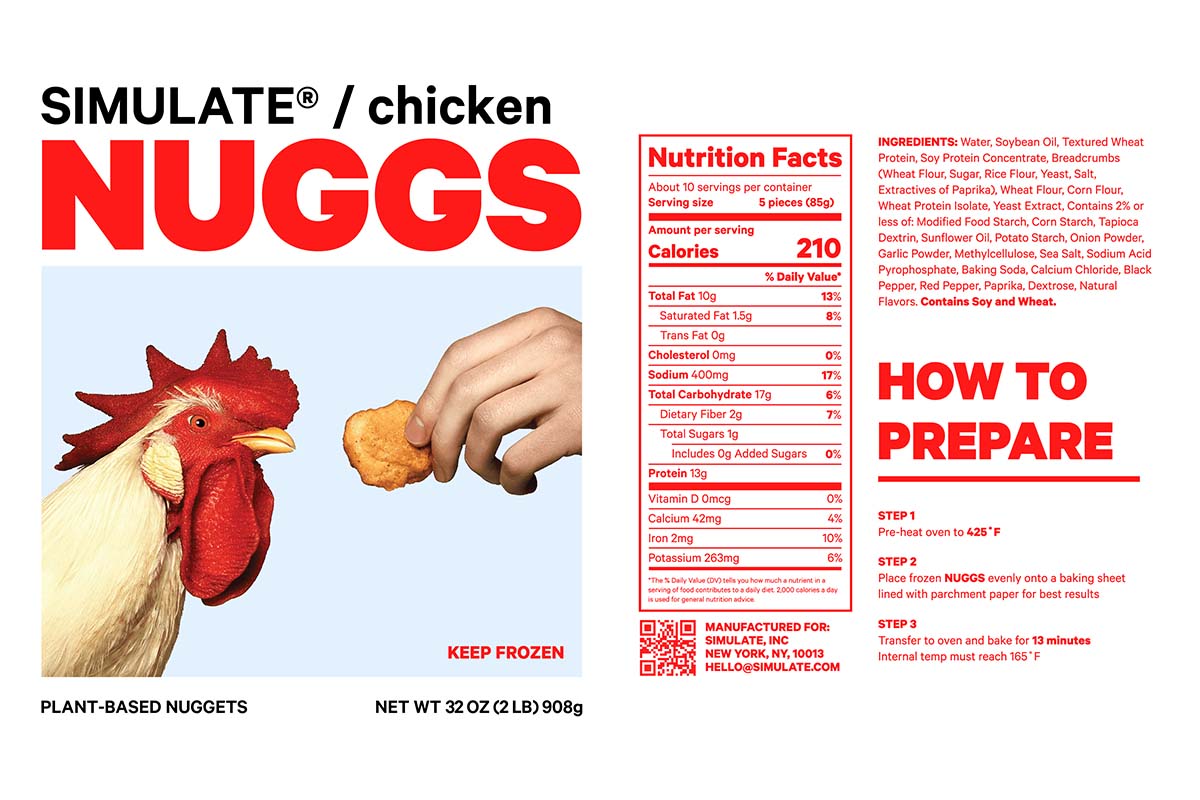 NUGGSBY TANNER GARRITY / JUNE 25, 2020 9:13 AM
It was far easier, when mainstream fake meat tasted like dog food boiled in a pair of athletic socks, to either label the meatless movement a hopeless hippie enterprise, or just ignore it altogether.
“Taste” has always been Big Meat’s obvious ace in the hole, and it served as a continuous checkmate until some unofficial point in the last 30 months, when the breakthrough that had already reached certain local eateries throughout the country — New York’s Superiority Burger, Minneapolis’s The Herbivorous Butcher, Palo Alto’s Vina Enoteca — made it to both grocery shelves and fast-food joints. Plant-based brands Beyond Meat and Impossible Foods brought a decades-long dietary experiment to the finish line by making meat that smells, tastes and bleeds like the real thing as ubiquitous as Dunkin’ Donuts. In fact, alternative meat is now massively popular at Dunkin’ Donuts. Even conservative radio hosts (the Platonic ideal of meat-eaters) have struggled to tell the difference.

But not long after that concession, the discussion shifted. Critics of fake meat — lawmakers from states with large livestock industries, the CEOS of Whole Foods and Chipotle, your uncle — suddenly wanted to talk about nutritional value, and began pushing the narrative that plant-based meat was highly processed and its familiar taste was only achieved by soaking “burgers” in buckets of sodium. For these concerned citizens, plant-based substitutes shouldn’t be considered healthy: their ingredients lists are far too long, and after all, who knows what such unnaturally created food could do to the body?
This premise conveniently forgets that the ingredients list for a traditional beef burger looks like a Facebook terms and conditions page. It assumes that the production of America’s meat supply, which in many cases involves keeping farm animals in internment camps and killing them on rapid-fire assembly lines, is a “natural” way to harvest, package and distribute food.
But most importantly, this line of thinking imagines — perhaps for a reason as simple and silly as the fact that “plant” is in the billing — that people are turning to plant-based meat as a healthy option. When really, that’s the function of a plant-based diet as a whole. Studies have indicated that a limiting or quitting meat consumption while emphasizing whole grains, fruits and vegetables will reduce your risk of cancer, diabetes, Alzheimer’s and heart disease. From a wellness perspective, that’s the crux of the switch. The rise of plant-based meat just adds another dimension to that dietary lifestyle. As Pat Brown, the CEO and Founder of Impossible Foods, told The New York Times last year, “The niche that [the Impossible Burger] fills is not the same niche that a kale salad fills.”
That realization is a liberating way forward for carnivores and vegans alike: fake meat is no savior. Built with pea protein and potato starch, the product isn’t proven, yet, to be healthier than traditional meat. It does have less saturated fat and no cholesterol, but it’s just too early for researchers to conclusively brand it as better for you. And that’s okay. Its true calling card lies in its capacity to steadily carve out space in an industry that is destroying the planet on a daily basis, which gasses and shoots animals when demand is low, which has been a hotbed for COVID-19 cases in this country, which has a history of exploiting undocumented laborers.
But even shoving aside all of that, you shouldn’t sit around waiting for an explicit invitation to try it, either. As with any other type of food, you might simply be surprised. There’s a reason these Silicon Valley-backed companies are struggling to meet demand: people like it. And the industry is only growing, with companies that take their mission seriously but don’t take themselves as seriously as many might believe.
 Bruce's Blog