https://techxplore.com/news/2020-06-statistical-cognitive-status-natural-language.html

A statistical model of cognitive status for natural language generation

by Ingrid Fadelli , Tech Xplore

A statistical model of cognitive status for natural language generation
Credit: MIRRORLab, mirrorlab.mines.edu/research/

In order for robots to be used a wide variety of settings, they need to be able to communicate seamlessly with humans. In recent years, researchers have thus been developing increasingly advanced computational models that could allow robots to process human language and formulate adequate responses.

An important aspect of human language that machines should acquire is the use of pronouns in sentences. According to an established linguistic theory known as the “Givenness Hierarchy” (GH), humans choose what pronouns to use based on their implicit assumptions about the “cognitive statuses” the objects have in the minds of their listeners. For example, if a speaker assumes that their target object is “in focus” (which is a cognitive status) within the current conversation, they may choose to use the pronoun “it.”

Researchers at MIRRORLab at the Colorado School of Mines, have recently presented two models of cognitive status in a paper pre-published on arXiv. The first model is a theoretical rule-based Finite State Machine model directly informed by the GH literature, whereas the second model is a statistical probabilistic model (Cognitive Status Filter) that predicts the cognitive status of an object under uncertainty.

“My advisor, Dr. Tom Williams, and his peers had already started working on using the concept of cognitive status to aid robotic natural language understanding (NLU), where a listener has to identify the target object given their cognitive status/referring form information,” Poulomi Pal, one of the researchers who carried out the study, told TechXplore. “The main idea/objective behind our recent paper was to create a computational model for cognitive status filtering based on the linguistic theory of the Givenness Hierarchy (GH) for the purpose of natural language generation (NLG), more specifically, to enhance machine use of pronouns (e.g., it, this, that, etc.).”

The first model presented by Pal and her colleagues is a Finite State Machine (FSM) model that generates the cognitive status of an object based on the rules laid out by the GH literature. The second model presented in the paper is a Cognitive Status Filter (CSF) that learns these rules automatically from textual data. The researchers then trained and evaluated their CSF model on data collected through the online Amazon Mechanical Turk platform.

During the experimental design of their CSF model, the researchers used a subset of the silver-standard English translation of the OFAI multimodal task description corpus, which is a collection of human-human and human-robot multimodal interactions. They found that the CSF handled uncertainty better than the FSM model, as it did not follow pre-established rules, but instead acquired rules directly from the data it was analyzing.

“Our results suggest that the CSF model is slightly better than the theoretical FSM model in terms of its accuracy in predicting the cognitive status of an object,” Pal said. “The CSF model may thus be preferable when trying to assess the cognitive status of an object (especially when data is large), compared to a rule based theoretical model, as it can automatically learn the rules from the data.”

The CSF model devised by Pal and her colleagues could ultimately help to enhance natural language interactions between humans and robots by improving upon the latter’s ability to use pronouns in conversations. In the future, these findings could inspire other teams to develop similar models for robotics applications, as well as analogous techniques rooted in other fields of study, such as computational linguistics or cognitive psychology.

“We believe that developing a computational model like the CSF would help in the advancement of cognitively informed approaches toward both natural language generation and understanding,” Pal said. “My plans for further research include developing and implementing a GH-informed anaphora generation model that accounts for the cognitive status of an object leveraging the CSF model during the selection of different referring forms for NLG.”


Explore furtherModel helps robots think more like humans when searching for objects


More information: Givenness hierarchy theoretic cognitive status filtering. arXiv: 2005.11267 [cs.AI]. arxiv.org/abs/2005.11267

© 2020 Science X Network
https://medicalxpress.com/news/2020-06-scientists-cellular-poorly-understood-visual.html

Scientists discover cellular structure of poorly understood visual brain region

by Virginia Tech

Scientists discover cellular structure of poorly understood visual brain region
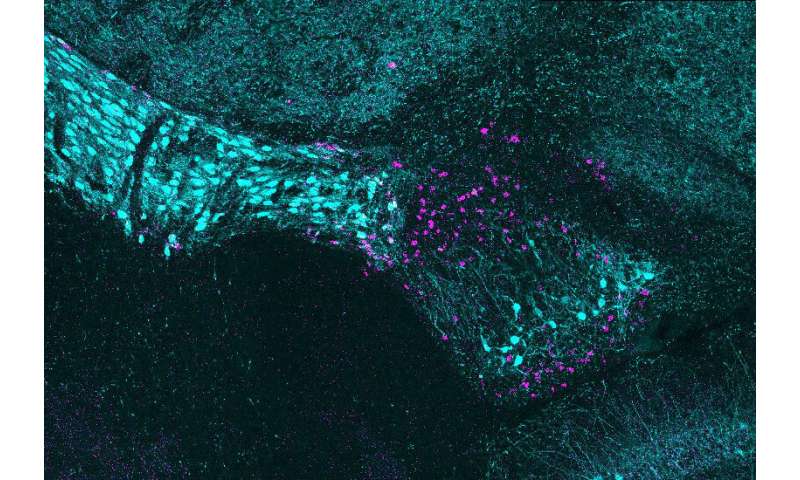
The brain’s ventral lateral geniculate nucleus (vLGN) receives signals from the eye, but it is not associated with classical image-forming. For decades little was known about this brain region’s cellular structure and purpose. In a new study, Fralin Biomedical Research Institute at VTC neuroscientists reveal newly identified brain cell subtypes unique to this region that form a striking layered formation. Credit: Virginia Tech

Graduate student Ubadah Sabbagh placed a cold glass slide on the microscope. It was getting late and the lab was quiet. He adjusted a few settings, and traced along the optic tract before zooming in on the brain’s thalamus. What he saw surprised him: two adjacent stripes of glowing spots, each dot denoting a cell body.

At that point, two decades had passed since scientists reported that a small area in the brain’s visual thalamus had unique characteristics that set it apart from nearby regions. Previous studies led by other researchers showed that the region, called the ventral lateral geniculate nucleus, connects to neural circuits involved in regulating circadian rhythm and mood.

But little was known about the region’s cellular architecture—until now.

In a new study published online this week in the Journal of Neurochemistry, Virginia Tech scientists identified more than 40 genes expressed in the vLGN and discovered more than half a dozen brand new neuron subtypes, each expressing unique molecules and clustered in tightly packed striped layers.

“The ‘wow’ moment for me was when Ubadah showed me the image of the two cell subtypes aligning in adjacent layers,” said Michael Fox, the study’s senior author and a professor at the Fralin Biomedical Research Institute at VTC. “It struck us because when we see layered groups of neurons, it usually means that brain area is segregating different types of information. Now we have a more precise tool kit to help us understand what specific cell types in the vLGN do.”

The vLGN spans just a few hundred micrometers in mice and receives signals from the eye via the optic nerve. But unlike some other visual brain regions, it is not associated with classical image-forming.

Neuroscientists initially studied this brain region by destroying its cells and documenting the effects. In the process, however, they also interrupted collateral brain circuits. This led to significant behavioral changes and made it harder to discern which effects were linked to the vLGN. Researchers have since developed more precise, less invasive genetic tools that let them see what happens when a specific cell type’s activity is turned on or off.

Fox wanted to apply these modern techniques to understand the vLGN’s function and downstream connections, but first he needed to determine which cell types to target. Sabbagh, then a second-year graduate student in Virginia Tech’s Translational Biology, Medicine, and Health graduate program, set out to develop an atlas describing the vLGN’s cellular structure as part of his doctoral thesis.

It wasn’t long before they found the first clue that the vLGN might be organized by cell type in segregated layers, which the researchers described in a 2018 study.

In that study, Fox’s team revealed two types of specialized lattice-like structures, called perineuronal nets, that wrapped around distinct types of inhibitory neurons. When the scientists stained these perineuronal nets, they discovered that different populations of neurons covered by these nets were distributed in distinct stripes across the vLGN.

“That was our first hint that there could be layers, but we still needed to identify more cell types to see if they also aligned in non-overlapping domains,” Fox said.

Over the next year, Sabbagh tested roughly 70 different riboprobes to map out the vLGN’s cellular landscape. Riboprobes are segments of ribonucleic acids (RNA) that bind to complementary segments of RNA.

Scientists add fluorescence genes borrowed from other organisms and viruses to the probe, so when a segment of RNA meets its matching sequence, the targeted molecules light up. The researchers combined these tools to visualize cells producing specific genetic molecules in the vLGN, with each molecule glowing in a different color under the microscope.

This method revealed distinct layers on the scans, but the scientists wanted to be sure. Sabbagh coded a computer program to scan pictures of the vLGN and measure probe signals, which verified their findings and showed distinct layers.

But a question lingered: Where were these cells getting their information from?

The researchers used a nonhazardous viral tracing tool to determine which neurons in the vLGN communicated with the neurons lining the eye’s retina. It took a month for the virus to travel a few millimeters between the retina and the thalamus, but it was worth the wait.

The virus revealed that cells in each of the vLGN’s main layers received direct visual signals from retinal neurons in the eye. Next, collaborators at the University of Louisville analyzed the communications properties of those connections. Together, these insights help describe how visual information is processed in the vLGN.

“This is an exciting find. We still have more work to do to fill in gaps, but I expect we’ll find more cell types, and maybe even more layers as we continue to find more biomarkers,” said Fox, who is also a professor in Virginia Tech’s College of Science and was recently named director of the College’s School of Neuroscience.

His team has started analyzing gene expression in individual cells, using a process called single cell RNA sequencing. Fox says that once they know more about specific cell types, they can trace the circuits and begin revealing how the vLGN’s neurons engage with other brain regions.

“We suspect the vLGN has numerous functions, including regulating mood, but now we’ll be able to analyze how specific cell types contribute to those functions with greater precision,” said Sabbagh, who was recently awarded a six-year $390,000 National Institutes of Health award to support his research.

This research also raises questions about brain evolution and comparative biology. As mammals evolved into larger species, their vLGNs shrank relative to the rest of the visual thalamus. By revealing the vLGN’s complicated architecture in mice, Fox hopes to shed light on how these genetic instructions might cross over in other species.


Explore furtherScientists shed light on surprising visual development patterns


More information: Ubadah Sabbagh et al, Diverse GABAergic neurons organize into subtype‐specific sublaminae in the ventral lateral geniculate nucleus, Journal of Neurochemistry (2020). DOI: 10.1111/jnc.15101Journal information:Journal of NeurochemistryProvided by Virginia Tech

https://www.cnbc.com/2020/06/25/beyond-meat-shares-fall-after-mcdonalds-ends-canadian-trial-of-meatless-burger.html

Beyond Meat shares fall after McDonald’s ends Canadian trial of meatless burger

PUBLISHED THU, JUN 25 202010:49 AM EDTUPDATED 3 HOURS AGOAmelia LucasKEY POINTS

  • McDonald’s Canada stopped testing a meat-free burger made with a Beyond Meat patty on April 6.
  • The chain has no plans to bring back the menu item at this point.
  • McDonald’s has yet to test a vegan burger in the U.S.
The "P.L.T." sandwich is arranged for a photograph at a McDonald's Corp. restaurant in London, Ontario, Canada, on Wednesday, Jan. 8, 2020.

The “P.L.T.” sandwich is arranged for a photograph at a McDonald’s Corp. restaurant in London, Ontario, Canada, on Wednesday, Jan. 8, 2020.Cole Burton | Bloomberg | Getty Images

Shares of Beyond Meat fell 7% in morning trading after the CBC reported that McDonald’s stopped testing a burger made with its patties in Canada.

In a tweet to a consumer asking about the burger, McDonald’s Canada said that the test ended April 6. The chain has no plans to bring back the item at this time. 

McDonald’s stock was trading down 1%.ADVERTISINGAds by Teadsjust bamy@aammyysmyth · 

@McDonaldsCanada where the plt go 😔🥺McDonald’s Canada@McDonaldsCanada

Hi there. Our Plant-Based Burger was being tested in several Markets until April 6th. We have no current plans to bring it back to our menu at this time. However, we will be sure to share your feedback with our team for future consideration.2Twitter Ads info and privacy19 people are talking about this

“We can only comment generally and share that we were pleased with the test,” a Beyond spokesperson said in a statement to CNBC.

Beyond Meat CEO Ethan Brown told analysts in early May that the test concluded “for no negative reason at all.”

“I mean, we feel very good about our relationship with McDonald’s. And what’s going to be happening both, there and potentially elsewhere,” Brown said. “So, by the nature of it being a test, it had a beginning and an end.”

In September, McDonald’s joined the push for more meat alternatives in North America when it started testing the meat-free P.L.T. burger in southwestern Ontario. The test expanded to another 24 locations in January for a 12-week test.

McDonald’s said in a statement that there has been no change to its relationship with Beyond Meat.

“We’re evaluating learnings from our recent test to inform future menu options. As we look ahead, we will plan to bring plant-based options to the menu at the right time for customers in individual markets,” the company said.

Other international McDonald’s markets have found more success with meatless burgers. Restaurants in Germany, for example, have added veggie burgers made by Nestle to their menus.

In the United States, McDonald’s has yet to test a vegan burger. The coronavirus pandemic led the chain to streamline its menus temporarily and to push back product launches, including a new chicken sandwich.

Rival Burger King has been serving an Impossible Whopper nationwide for nearly a year. The Restaurant Brands International chain recently announced that it will be adding a meat-free breakfast sandwich to national menus.

Beyond’s stock, which has a market value of $8.9 billion, has risen nearly 84% so far this year. Shares of McDonald’s, which has a market value of $140 billion, has fallen 8% in 2020. 

https://phys.org/news/2020-06-scientists-mechanism-mitochondrial-energy-production.html

Scientists identify the mechanism that regulates mitochondrial energy production

by Centro Nacional de Investigaciones Cardiovasculares Carlos III (F.S.P.)

CNIC scientists identify the mechanism that regulates mitochondrial energy production
The figure represents the association of the respiratory complexes I, III and IV associated to form the N-respirasome super complex. The presence or absence of the SCAF1 protein determines the efficiency in the use of the energy source (food) to convert it into productive work by keeping complexes III and IV physically connected within the N-respirasome. SCAF1 would work like the gears of a motorcycle allowing efficient regulation of performance. Credit: CNIC

Scientists at the Centro Nacional de Enfermedades Cardiovasculares (CNIC) have identified the molecular mechanism by which mitochondria, the main source of the cell’s energy supply, regulate their function to optimize energy production in order to meet the body’s changing needs. The discovery, published in the journal Science Advances, helps to explain how the body regulates its metabolism.

The study shows that mitochondria adjust the efficiency of the electron transport chain (ETC) to meet the body’s needs by regulating the associations between its component macromolecular structures. The researchers found that the protein SCAF1, discovered by the same team in 2016, plays a key role in this metabolic regulation by optimizing mitochondrial energy efficiency in response to high energy demand.

Mitochondria, which house the mitochondrial ETC, generate most of the cell’s energy supply and adjust their function to meet the body’s metabolic needs. “The electron transport chain generates energy from nutrient molecules, such as glucose and fatty acids, and also has an important role in the synthesis of molecules needed to maintain cellular and bodily health,” explained Dr. José Antonio Enríquez.

The ETC is composed of four large multiprotein complexes: CI, CII, CIII, and CIV. These complexes can alter their structural organization to carry out different functions and adapt to local conditions.

In 2016, the CNIC research team discovered that the protein SCAF1 forms a bridge between complexes CIII and CIV, acting as a molecular switch that regulates the assembly of these complexes into superstructures within the ETC. However, as co-director Dr. Jesús Vázquez explained, “We did not know if the formation of these SCAF1-regulated structures affected mitochondrial energy efficiency or what physiological impact they had.”

The Science Advances study demonstrates that SCAF1-mediated formation of specific ETC superstructures affects not only the efficiency of mitochondrial energy production, but also the body’s ability to respond to physiological stress.

“We used mouse models and cultured cells engineered to lack the gene encoding SCAF1, thus enabling us to study the effect of eliminating this protein,” explained Enrique Calvo, a lead author on the study together with Sara Cogliati, Pablo Hernansanz-Agustín, and Marta Loureiro-López.

The research team used new proteomics methods developed at the CNIC together with cutting-edge genetic, biochemical, and metabolic techniques. Using this technology, “We show that, in the absence of SCAF1, the ETC complexes adopt a suboptimal configuration that reduces the efficiency of energy production,” said Pablo Hernansanz-Agustín.

The study also shows that the lack of SCAF1 reduces the capacity of mice for intense physical activity. “The physical output of these mice is 30% below that of unmodified mice,” explained Sara Cogliati.

These results explain molecularly the observation recently published in EMBO Reports, and carried out in collaboration with Nadia Mercader’s group, from the University of Bern (Switzerland), in which the researchers saw that the ablation of the SCAF1 protein in zebrafish impair their metabolism, growth and fertility.

The research team conclude that SCAF1-mediated physical interaction between CIII and CIV is essential for optimal mitochondrial energy production. Marta Loureiro-López explained that “SCAF1 is a regulatory factor that allows mitochondria to adapt to the available nutrient sources of sugars, fats, or proteins. This capacity for metabolic adaptation also explains the ability of mitochondria to adapt to stress situations, for example during intense physical exercise.”


Explore furtherScientists dicipher organization of cellular mechanisms responsible for energy production


More information: “Functional role of respiratory supercomplexes in mice: SCAF1 relevance and segmentation of the Qpool” Science Advances (2020). advances.sciencemag.org/lookup … 1126/sciadv.eaba7509Journal information:Science Advances EMBO ReportsProvided by Centro Nacional de Investigaciones Cardiovasculares Carlos III (F.S.P.)

https://www.apple.com/newsroom/2020/06/apple-introduces-macos-big-sur-with-a-beautiful-new-design/

Apple introduces macOS Big Sur with a beautiful new design

macOS Big Sur includes the biggest Safari update ever and powerful enhancements to Messages, Maps, and privacy

Messages in macOS Big Sur displayed on MacBook Pro.

Cupertino, California — Apple today previewed macOS Big Sur, the latest version of the world’s most advanced desktop operating system. macOS Big Sur introduces a beautiful redesign that is entirely new yet instantly familiar. Safari is packed with new features, including a customizable start page, elegantly designed and more powerful tabs, quick and easy translation, and a new Privacy Report. The updated Messages app lets Mac users send and receive more personal and expressive messages, and easily keep track of and interact within group messages. Maps also offers an all-new experience with immersive features for exploring and navigating the world.“macOS Big Sur is a major update that advances the legendary combination of the power of UNIX with the ease of use of the Mac, and delivers our biggest update to design in more than a decade,” said Craig Federighi, Apple’s senior vice president of Software Engineering. “With its modern and clean look, huge improvements to key apps including Safari, Messages, and Maps, and new privacy features, we think everyone is going to love the breakthrough experience that macOS Big Sur offers.”

The spacious design of macOS Big Sur displayed on the Mac and MacBook Pro.

Biggest Design Upgrade Since the Introduction of Mac OS X

macOS Big Sur delivers a spacious new design that makes navigation easier, while putting more controls at users’ fingertips. Everything from the curvature of window corners to the palette of colors and materials has been refined, and new features provide even more information and power. Icons in the Dock have been thoughtfully designed to be more consistent with icons across the Apple ecosystem while retaining their Mac personality. Buttons and controls appear when needed, and recede when they’re not. The entire experience feels more focused, fresh, and familiar, reducing visual complexity and bringing users’ content front and center.The customizable menu bar features an all-new Control Center, delivering quick access to controls from the desktop. An updated Notification Center includes more interactive notifications and redesigned widgets that come in different sizes, providing users with more relevant information at a glance. And a new design for core apps brings more organization to multiple open windows and makes interacting with apps even easier.

The new Dock in macOS Big Sur displayed on MacBook Pro.
The Control Center in macOS Big Sur displayed on MacBook Pro.
The Notification Center in macOS Big Sur displayed on MacBook Pro.
  • previous
  • next

A Faster, More Personal, Privacy-First Safari Experience

In the biggest update to Safari since its original launch in 2003, the world’s fastest browser is even faster, providing industry-leading speed1 and battery life.Safari’s fast JavaScript engine helps it outperform other browsers on Mac and PC, and Safari loads frequently visited sites an average of 50 percent faster than Chrome.1 Tabs have been entirely redesigned to make navigating with Safari faster and more powerful by showing more tabs onscreen, displaying favicons by default to easily identify open tabs, and giving users a quick preview of a page by simply hovering over the tab.

The Notification Center in macOS Big Sur displayed on MacBook Pro.
Safari browser displayed on MacBook Pro.
  • previous
  • next

Safari brings new features for greater personalization while browsing the web. Users can customize the new start page with a background image and sections like their Reading List and iCloud Tabs. With built-in translation, Safari can detect and translate entire webpages from seven languages with just a click.3 Users can further personalize their experience with improved support for extensions, and the Mac App Store makes it easy to discover and download great Safari extensions with a new category that includes editorial spotlights and top charts.Privacy has always been built into Safari, and a new Privacy Report delivers added visibility into how Safari protects browsing activity across the web. Users can choose when and which websites a Safari extension can work with, and tools like data breach password monitoring never reveal your password information — not even to Apple.

The new Privacy Report in Safari in macOS Big Sur.

Powerful and Expressive Messages 

Messages on the Mac includes new tools to better manage important conversations and share expressive messages. Users can now pin their favorite conversations to the top of their messages list for fast access, and search has been entirely redesigned — organizing results into links, photos, and matching terms — to help users quickly find what they are looking for.Message effects let users add personality to their messages with balloons, confetti, and more. Users can now create and customize their Memoji on the Mac, and express themselves with Memoji stickers to match their mood and personality. And with a new photo picker and #images, it’s easy to quickly share images, GIFs, and videos.New group messaging features streamline interactions with family, friends, and colleagues. Inline replies enable users to respond directly to a message, and now they can direct a message to an individual in a group conversation by simply typing their name. And users can now set a photo or an emoji for their group conversation that’s shared with all members of the group.

A Memoji sticker in Messages displayed on MacBook Pro.
The new photo picker in Messages displayed on MacBook Pro.
Pinned conversations in Messages displayed on MacBook Pro.
  • previous
  • next

All-New Planning Tools with Maps

Completely redesigned for macOS Big Sur, Maps brings new features for exploring the world. Discover places to visit and things to do with Guides from trusted resources, or create custom guides of favorite restaurants, parks, and vacation spots that can be shared with friends and family. Get a 360-degree view of a destination with Look Around, and browse detailed indoor maps of major airports and shopping centers. Cycling and electric vehicle trips can now be routed on a Mac, and sent directly to iPhone to have when on the go.

The new Guides feature in Maps displayed on MacBook Pro.

Industry-Leading Privacy

Privacy is at the core of the Mac experience, and macOS Big Sur offers users even more transparency and control over their data. Inspired by the convenience and readability of food nutrition labels, new privacy information detailed in the Mac App Store will help users understand the privacy practices of apps before downloading them, including the types of data the apps might collect — such as usage, contact information, or location — and whether that data is shared with third parties for tracking.

World-Class Developer Tools

Apple’s developer community of more than 20 million use the Mac to create amazing experiences for iOS, iPadOS, macOS, watchOS, and tvOS. Xcode 12 makes developing great apps for macOS easier than ever. SwiftUI gets a major upgrade so that developers can write entire apps with shared code across all Apple platforms, while easily adding custom Mac features like Preferences windows. And SwiftUI is used in even more places, powering the new widgets for Mac, iPhone, and iPad using shared Swift code.Mac Catalyst, which debuted with macOS Catalina last year, has made it easy for developers to bring their iPad apps to the Mac. And in macOS Big Sur, Mac Catalyst apps automatically inherit the new look, while giving developers powerful new APIs and total control over the look and behavior of their apps.Developers can now also offer Family Sharing for their in-app purchases and subscriptions, and with support for the WebExtensions API, developers can easily bring extensions built for other browsers over to Safari.AvailabilityThe developer beta of macOS Big Sur is available to Apple Developer Program members at developer.apple.com starting today, and a public beta will be available to Mac users next month at beta.apple.com. macOS Big Sur will be available this fall as a free software update. For more information, including compatible Mac models, visit apple.com/macos/big-sur-preview. Features are subject to change. Some features may not be available in all regions or languages.

https://medicalxpress.com/news/2020-06-protein-mitochondria-health-longevity.html

Study finds protein in mitochondria appears to regulate health and longevity

by University of Southern California

old age
Credit: CC0 Public Domain

A new study led by researchers at the USC Leonard Davis School of Gerontology is the first to demonstrate that a tiny protein has a big impact on health and longevity in both animals and humans.

The researchers examined humanin, a peptide encoded in the small genome of mitochondria—the powerhouses of the cell. From experiments in laboratory animals to measurements in human patients, the multi-site collaboration demonstrates how higher levels of humanin in the body are connected to longer lifespans and better health. It is linked to a lower risk for diseases such as Alzheimer’s.

“Humanin has long been known to help prevent many age-related diseases, and this is the first time that it has been shown that it can also increase lifespan,” said senior author Pinchas Cohen, professor of gerontology, medicine and biological sciences and dean of the USC Leonard Davis School.

An intriguing evolutionary history

Humanin has been found not only in human mitochondria but also throughout the animal kingdom, a sign that its related gene has been maintained, or conserved, throughout evolution. The study, which was published online in the journal Aging on June 23, examined humanin in several animal species, including worms and mice, as well as humans, including Alzheimer’s patients and children of centenarians.

The results highlight the potential for humanin and other mitochondrial proteins to become treatments for age-related ailments. They also indicate that humanin may be an ancient mitochondrial signaling mechanism that is key for regulating the body’s health and lifespan, said first author and USC Leonard Davis Research Assistant Professor Kelvin Yen.

More humanin, longer lifespans

Humanin levels have previously been observed to decrease with age in many species. In this new study, the scientists observed higher levels of humanin in organisms predisposed to long lives, including the famously age-resistant naked mole rat, which experiences only a very slow decline in levels of humanin circulating in the body throughout its 30-year lifespan.https://googleads.g.doubleclick.net/pagead/ads?client=ca-pub-0536483524803400&output=html&h=135&slotname=7099578867&adk=3723451648&adf=1873531024&w=540&fwrn=4&lmt=1593071973&rafmt=11&psa=1&guci=2.2.0.0.2.2.0.0&format=540×135&url=https%3A%2F%2Fmedicalxpress.com%2Fnews%2F2020-06-protein-mitochondria-health-longevity.html&flash=0&wgl=1&adsid=NT&dt=1593071971428&bpp=185&bdt=4374&idt=2008&shv=r20200622&cbv=r20190131&ptt=9&saldr=aa&abxe=1&cookie=ID%3D159a91dc538ead62-226ff397b4bf00c2%3AT%3D1591824291%3AS%3DALNI_MZdNgFYzfMhlp0CcIFG6GvwGyJvxg&correlator=3694375622816&frm=20&pv=2&ga_vid=1534776174.1526672041&ga_sid=1593071973&ga_hid=1841797679&ga_fc=0&ga_wpids=UA-73855-15&iag=0&icsg=9086976&dssz=28&mdo=0&mso=0&rplot=4&u_tz=-420&u_his=1&u_java=0&u_h=1050&u_w=1680&u_ah=980&u_aw=1680&u_cd=24&u_nplug=3&u_nmime=4&adx=410&ady=2186&biw=1550&bih=899&scr_x=0&scr_y=0&eid=21065725%2C21066167&oid=3&pvsid=1535309878220222&pem=424&ref=https%3A%2F%2Fnews.google.com%2F&rx=0&eae=0&fc=896&brdim=1%2C24%2C1%2C24%2C1680%2C23%2C1550%2C979%2C1550%2C899&vis=1&rsz=%7C%7CpeEbr%7C&abl=CS&pfx=0&fu=8336&bc=31&ifi=1&uci=a!1&btvi=1&fsb=1&xpc=dbVqbjDWaW&p=https%3A//medicalxpress.com&dtd=2166

In contrast, mice experience a 40% drop in humanin over the first 18 months of life, and primates such as rhesus macaques appeared to have a similarly dramatic drop in humanin between the ages of 19 and 25.

In humans, researchers observed this phenomenon of higher and more sustained levels of humanin in 18 children of centenarians, versus a control group of 19 children of non-centenarians. Individuals whose parents reach 100 years old are statistically more likely than other people to reach very old age.

In some species, including worms and mice, modifying their genes to produce higher amounts of humanin within their bodies was enough to significantly increase lifespans. But these longer-lived animals had fewer offspring. Scientists have observed a similar pattern in long-lived humans.

“This tradeoff between longevity and reproduction is thought to be due to an evolutionarily conserved balance between using energy to produce more offspring or using the energy to maintain the organism for future reproductive efforts,” Yen said. “Evolutionarily speaking, the goal of life is to reproduce and then you’re done, but if you can’t reproduce, you should try to hang around as long as possible, and a side effect of that is longevity.”

Indication of—and protection against—disease

Higher humanin levels aren’t just linked to increased lifespan; lower levels may increase the risk of disease and lower resistance to toxic exposures.

The researchers analyzed samples of cerebral spinal fluid from a small number of Alzheimer’s patients and control individuals without dementia and noticed that humanin levels were much lower in the Alzheimer’s patients. And in newborn cord blood samples, high levels of humanin correlated with a high mitochondrial DNA (mtDNA) copy number, or the number of copies of the mitochondrial genome present within each cell.

“Humanin levels are inversely correlated with a decrease in mitochondrial DNA (mtDNA) copy number, which in itself has been associated with a number of different diseases such as cancer, kidney disease, and cardiovascular disease,” Yen said.

Potential for treatments

Cohen’s laboratory was one of three groups that independently discovered humanin and has continued to unlock the secrets of the mitochondrial genome. Other promising mitochondrial peptides characterized by Cohen’s team include MOTS-c, which plays a role in communication between the mitochondria and the nucleus in cells and appears to mimic the effects of exercise.

This new wide-ranging study highlights the importance of humanin as a potentially powerful regulator of lifespan and health, and harnessing it for treatments could address a variety of age-related illnesses, Cohen said.

“This study, as well as many others, suggest that humanin administration would be an effective therapeutic treatment for a large number of diseases and further solidifies the importance of the mitochondria beyond its traditional role as the ‘powerhouse of the cell,'” he said.


Explore furtherResearchers uncover previously unknown dementia, Alzheimer’s risk factor


More information: Kelvin Yen et al, The mitochondrial derived peptide humanin is a regulator of lifespan and healthspan, Aging (2020). DOI: 10.18632/aging.103534Provided by University of Southern California

https://www.indy100.com/article/should-you-sleep-with-a-fan-on-why-bad-idea-uk-heatwave-sun-weather-8464436

Why sleeping with a fan on in this hot weather is actually a terrible idea

Posted 17 hours ago by Greg Evans in newsUPVOTE

iStock/Getty Images

Incase you hadn’t noticed, it’s really, really hot outside.

And unless you are a sloth, trying to get to sleep in this weather is very difficult.

Either you sacrifice your duvet, sleep next to a window or have a fan constantly running throughout the night to avoid waking up in a pool of sweat.https://giphy.com/embed/fBEDuhnVCiP16#amp=1

However, the latter of those options would appear to not be that beneficial to your health, for a variety of reasons.

Sleep expert Mark Reddick, of Sleep Advisor believes that there are both advantages and disadvantages to sleeping with a fan.

The benefits include a controlled room temperature, constant air circulation and the sound of white noise, which does help some people sleep.

However, the cons seemingly outweigh the pros.

One of the biggest downsides to a fan is there is a tendency to provoke allergic reactions due to the amount of dust and pollen they can blast into your sinuses.

Those that suffer from allergies, asthma and hay fever could find themselves having trouble with these ailments during the night.

Reddick adds:

Also, take a close look at your fan. If it’s been collecting dust on the blades, those particles are flying through the air every time you turn it on.

The dry air that fans produce may also cause problems. This may cause your skin and throat to dry out and also cause irritation to your eyes, especially if you wear contact lenses.

Nasal passages and sinuses could also be affected by the dry air which may lead to mucus and headaches.

The constant stream of air also has a tendency to dry out your nasal passages, which could affect your sinuses.

If the dryness is particularly extreme, it can result in your body producing excess mucous to try to compensate.

Then, you’re more susceptible to blockage, stuffiness, and sinus headaches.

You may also find that you are waking him with cramp and tense muscles because of the cool concentrated air.

This obviously isn’t very good news for anyone hoping to get a good nights sleep in 30C+ heat.

That being said there are ways to make sure that you do stay cool at night without the assistance of a fan.

These include:

  • Keeping a bedroom shaded throughout the day.
  • Drinking cold water and avoiding alcohol and caffeine.
  • Sleeping on cotton sheets.
  • Taking a cold shower and wearing loose clothing.

If you do want to use a fan Reddick came up with a unique solution that would turn a fan into a makeshift air conditioning unit.

It involves freezing four to six bottles of saltwater. Then when you are ready for bed, place the bottles on a tray in front of the fan, then a cool breeze will blow over you.

Reddick also suggests that you invest in a fan that rotates rather than one that blows directly on to you or even setting a fan to a timer so it isn’t going all night.

He adds:

There’s no inherent danger in sleeping with something like this in your bedroom. It’s a matter of preference and of finding the right one for your needs.

Whether you’re trying to keep cool or fall asleep faster, a fan is probably the most cost-effective piece of equipment you can use to improve your sleep quality.

There are a lot of upsides to having one in the room, and most of the downsides can be eliminated by using something quiet that rotates and has a timer.

So there we have it: on the hottest day of the year, don’t sleep with a fan on.

https://www.pharmacytimes.com/news/insufficient-sleep-a-likely-cause-of-poor-performance-among-pharmacists-pharmacy-students

Insufficient Sleep: A Likely Cause of Poor Performance Among Pharmacists, Pharmacy Students2020-06-23 15:24:00Oluwakorede Adedeji, PharmD StudentSleep plays a significant role in the normal functioning of the human body. It is vital in health, cognition, and emotion and may affect learning and memory.1 Generally, sleep is considered to provide optimal benefits only in sufficient amounts, with either a lack or excess of sleep potentially posing risks.2,3

Insufficient sleep is defined as sleeping less than the 7 to 8 hours recommended by the American Academy of Sleep Medicine and the Sleep Research Society for Optimal Health. Insufficient sleep is an issue prevalent in more than 30% of the American population, with some instances classified as a disorder and referred to as insufficient sleep syndrome.4

Insufficient sleep is prevalent among pharmacy students, and college students more generally, with studies showing that many pharmacy students in the didactic portion of the academic curriculum suffer from poor quality sleep.5 This is further exacerbated at specific periods during the semester as a majority obtain fewer than the recommended 7 hours of sleep, especially close to an examination.6

Not only is the right amount of sleep important, but the sleep quality is also essential. In a situation in which one lacks both, the outcome is invariably associated with adverse health effects, such as impairment in working memory, executive function, processing speed, and cognitive throughput.This impairment of cognitive function often has detrimental effects on the 3 brain processes associated with learning: acquisition, consolidation, and recall, which can ultimately lead to decreased academic performance.5

A common problem that arises for many pharmacy students is that they are also unaware that they have sleep difficulties that are affecting their academic performance.5 The consequences of this lack of awareness may exacerbate the issue over time, leading to a decline in alertness and an increase in stress levels, which can all take a toll on performance.8

Even outside school, pharmacists are often faced with increased workloads and long working hours, which may directly affect their sleep duration and sleep quality. Sleep duration is often determined by work, and not only the actual work time, but also the time spent in commuting to and from work.7

The effects of sleep deprivation on key mental processes such as cognitive function and vigilant attention suggest the extent of harm that insufficient sleep can have on the performance of pharmacists.8 Although there is a lack of literature showing a direct link between sleep duration and professional performances of pharmacists, a number of studies have shown that increased workload and fatigue rank as causes of medication errors, which has the potential to reflect negatively professionally on the pharmacist.9

Insufficient sleep not only affects alertness but is also associated with impaired immune function, increased pain, impaired performance, increased errors, and greater risk of accidents, which all have the potential to negatively affect the lives and careers of both pharmacy students and professional pharmacists alike.In light of this, it is necessary that just as pharmacists provide advice and medical counselling to their patients on proper sleeping habits, they should endeavour to apply such useful information for themselves as well.

REFERENCES

  1. Maquet P. The role of sleep in learning and memory. Science. 2001;294(5544):1048-1052. doi: 10.1126/science.1062856.
  2. Watson NF, Badr MS, Belenky G, et al. Recommended amount of sleep for a healthy adult: a joint consensus statement of the American Academy of Sleep Medicine and Sleep Research Society. Sleep. 2015;38(6):843-844. doi: 10.5665/sleep.4716.
  3. Linz D, Kadhim K, Kalman JM, McEvoy RD, Sanders P. Sleep and cardiovascular risk: how much is too much of a good thing? European Heart Journal. 2019;40(20):1630-1632. doi: 10.1093/eurheartj/ehy772.
  4. Lombardero A, Hansen CD, Richie AE, Campbell DG, Joyce AW. A Narrative Review of the Literature on Insufficient Sleep, Insomnia, and Health Correlates in American Indian/Alaska Native Populations. Journal of Environmental and Public Health. 2019;4306463. doi: 10.1155/2019/4306463.
  5. Cates ME, Clark A, Woolley TW, Saunders A. Sleep quality among pharmacy students. American Journal of Pharmaceutical Education. 2015;79(1):09. doi: 10.5688/ajpe79109.
  6. Zeek ML, Savoie MJ, Song M, et al. Sleep Duration and Academic Performance Among Student Pharmacists. American Journal of Pharmaceutical Education. 2015;79(5):63. doi: 10.5688/ajpe79563.
  7. Grandner MA. Sleep, Health, and Society. Sleep Medicine Clinics. 2017;12(1):1‐22. doi: 10.1016/j.jsmc.2016.10.012.
  8. Worley SL. The Extraordinary Importance of Sleep: The Detrimental Effects of Inadequate Sleep on Health and Public Safety Drive an Explosion of Sleep Research. Pharmacy and Therapeutics. 2018;43(12):758‐763. ncbi.nlm.nih.gov/pmc/articles/PMC6281147/.
  9. Balayssac D, Pereira B, Virot J, et al. Work-related stress, associated comorbidities and stress causes in French community pharmacies: a nationwide cross-sectional study. PeerJ. 2017;5:e3973. doi: 10.7717/peerj.3973.

https://9to5google.com/2020/06/24/google-incognito-mode/

Google making Incognito Mode a long press away across Android and iOS apps

Abner Li

– Jun. 24th 2020 8:59 am PT

@technacity

In addition to new auto-delete defaults, Google is making it easier to control key privacy settings. Google Account controls will be directly available in Search, while Incognito Mode is becoming more ubiquitous.

Google is capitalizing on how most people just turn to Search instead of navigating long settings pages. Signed-in users will soon be able to search for terms like “Is my Google Account secure?” and “Google Privacy Checkup.”

They’ll encounter an inline card that links to the appropriate preference or lets you directly adjust. This is similar to how Find My Device is already integrated with Search for fast access.

The company is also working to make Incognito Mode easier to access across all of its products. In Maps and YouTube today, tapping your avatar in the top-right displays a menu of options, with “Turn on Incognito” towards the bottom of the screen.

Building on how you can swipe to quickly change accounts, you’ll soon be able to long press on that avatar to launch Incognito. This useful shortcut is already available on Google Search for iOS and “coming soon” to Android, as well as other apps.

Google is also working on cross-service Incognito where you’ll be able to stay in the mode across apps like YouTube and Maps. More details are coming soon.

Lastly, in providing better control, Google is adding proactive recommendations to Privacy Checkup. Meanwhile, Password Checkup will soon be integrated on the Security Checkup page to identify any credentials that have leaked. The tool has been used by 100 million users and led to a 30% reduction in breaches. It was recently added to Chrome, with the standalone extension going away soon.

FTC: We use income earning auto affiliate links. More.


Check out 9to5Google on YouTube for more news:

https://techxplore.com/news/2020-06-humanoid-robots-locomotion-behaviors-human.html

Teaching humanoid robots different locomotion behaviors using human demonstrations

by Ingrid Fadelli , Tech Xplore

Teaching humanoid robots different locomotion behaviors using human demonstrations
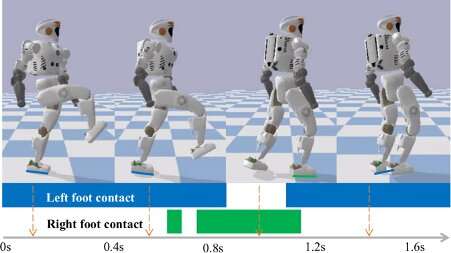
Asymmetric leaping gait without imitation: the AI policy would cheat as long as general high-level tasks are achieved, with a possible outcome that we do not expect or prefer. Credit: Yang et al.

In recent years, many research teams worldwide have been developing and evaluating techniques to enable different locomotion styles in legged robots. One way of training robots to walk like humans or animals is by having them analyze and emulate real-world demonstrations. This approach is known as imitation learning.

Researchers at the University of Edinburgh in Scotland have recently devised a framework for training humanoid robots to walk like humans using human demonstrations. This new framework, presented in a paper pre-published on arXiv, combines imitation learning and deep reinforcement learning techniques with theories of robotic control, in order to achieve natural and dynamic locomotion in humanoid robots.

“The key question we set out to investigate was how to incorporate (1) useful human knowledge in robot locomotion and (2) human motion capture data for imitation into deep reinforcement learning paradigm to advance the autonomous capabilities of legged robots more efficiently,” Chuanyu Yang, one of the researchers who carried out the study, told TechXplore. We proposed two methods of introducing human prior knowledge into a DRL framework.”

The framework devised by Yang and his colleagues is based on a unique reward design that uses motion caption data of humans walking as training references. In addition, it utilizes two specialized hierarchical neural architectures, namely a phase functioned neural network (PFNN) and a mode adaptive neural network (MANN).Play00:0000:10MuteSettingsPIPEnter fullscreenPlayAssymetric leaping gait genereted by four policies with different network configurations when trained without imitation learning techniques. PFNN is the only network that is able to generate human-like symmetric gaits without human reference due to its inherent periodic structure. Credit: Yang et al.

“The key to replicating human-like locomotion styles is to introduce human walking data as an expert demonstration for the learning agent to imitate,” Yang explained. “Reward design is an important aspect of reinforcement learning, as it governs the behavior of the agent.”

The reward design used by Yang and his colleagues consists in a task term ad an imitation term. The first of these components offers the guidance necessary for a humanoid robot to achieve high-level locomotion, while the latter enables more human-like and natural walking patterns. This unique design is aligned with key theoretical concepts behind other conventional humanoid control approaches.https://googleads.g.doubleclick.net/pagead/ads?client=ca-pub-0536483524803400&output=html&h=280&slotname=8459827939&adk=1069712709&adf=2631371385&w=540&fwrn=4&fwrnh=100&lmt=1592951268&rafmt=1&psa=1&guci=2.2.0.0.2.2.0.0&format=540×280&url=https%3A%2F%2Ftechxplore.com%2Fnews%2F2020-06-humanoid-robots-locomotion-behaviors-human.html&flash=0&fwr=0&rpe=1&resp_fmts=3&wgl=1&adsid=NT&dt=1592951266127&bpp=266&bdt=14081&idt=1773&shv=r20200618&cbv=r20190131&ptt=9&saldr=aa&abxe=1&cookie=ID%3D9d91fd4a09aa449b%3AT%3D1590107819%3AS%3DALNI_MYE9Fe_H64RX8YIJR4NdsSdb8aO8g&correlator=2631198959059&frm=20&pv=2&ga_vid=1553828505.1590107820&ga_sid=1592951268&ga_hid=1057123339&ga_fc=0&ga_wpids=UA-73855-17&iag=0&icsg=137011200&dssz=32&mdo=0&mso=0&u_tz=-420&u_his=1&u_java=0&u_h=1050&u_w=1680&u_ah=980&u_aw=1680&u_cd=24&u_nplug=3&u_nmime=4&adx=410&ady=2268&biw=1550&bih=899&scr_x=0&scr_y=0&eid=21066452%2C42530499%2C42530501%2C182982100%2C182982300&oid=3&pvsid=226653166645247&pem=171&ref=https%3A%2F%2Fnews.google.com%2F&rx=0&eae=0&fc=896&brdim=1%2C24%2C1%2C24%2C1680%2C23%2C1550%2C979%2C1550%2C899&vis=1&rsz=%7C%7ClEbr%7C&abl=CS&pfx=0&fu=8336&bc=31&ifi=1&uci=a!1&btvi=1&fsb=1&xpc=Lq5kG0dN7h&p=https%3A//techxplore.com&dtd=2185

The researchers evaluated their imitation learning framework in a series of experiments conducted in simulated environments. They found that it was able to produce robust locomotion behaviors in a variety of scenarios, even in the presence of disturbances or undesirable factors, such as terrain irregularities or external pushes.Play00:0000:10MuteSettingsPIPEnter fullscreenPlaySymmetric human-like walking gait generated by four policies with different network configurations trained with imitation learning techniques. All network configurations are able to learn a symmetric human-like walking gait when imitation reward term is provided. Credit: Yang et al.

“By leveraging human walking motions as an expert demonstration for the artificial agent to imitate, we are able to speed up learning and improve overall task performance,” Yang said. “Human demonstration knowledge allowed us to design our learning framework more meaningfully, which proves to be beneficial for motor skills and motor control in general.”

The findings gathered by this team of researchers suggest that expert demonstrations, in this case footage of humans walking, can significantly enhance deep reinforcement learning techniques for training robots on different locomotion styles. Ultimately, the new framework they proposed could be used to train humanoid robots to walk in a similar way to humans faster and more efficiently, while also achieving more natural and human-like behaviors.

Teaching humanoid robots different locomotion behaviors using human demonstrations
Natural and human-like symmetric gait with imitation: the human demonstration ensures the AI policy not to deviate too far from the suggested motions. Credit: Yang et al

So far, the Yang and his colleagues only evaluated their framework in simulations, thus they now plan to investigate ways of transferring it from simulated environments to real world settings. They eventually would like to implement it on a real humanoid robot, in order to further assess its effectiveness and usability.

“In our future work, we also plan to extend the learning framework to imitate a more diverse and complex set of human motions, such as general motor skills across locomotion, manipulation and grasping,” Yang said. “We also plan to research efficient simulation-to-reality policy transfer to enable fast deployment of the learned policies that adapt to real robots.”


Explore furtherA system to reproduce different animal locomotion skills in robots


More information: Learning natural locomotion behaviors for humanoid robots using human knowledge. arXiv:2005.10195 [cs.RO]. arxiv.org/abs/2005.10195

Chuanyu Yang et al. Learning Natural Locomotion Behaviors for Humanoid Robots Using Human Bias, IEEE Robotics and Automation Letters (2020). DOI: 10.1109/LRA.2020.2972879

Daniel Holden et al. Phase-functioned neural networks for character control, ACM Transactions on Graphics (2017). DOI: 10.1145/3072959.3073663

He Zhang et al. Mode-adaptive neural networks for quadruped motion control, ACM Transactions on Graphics (2018). DOI: 10.1145/3197517.3201366

groups.inf.ed.ac.uk/advr

© 2020 Science X Network