Impossible Foods Inc. will make its meatless sausage available nationwide, ratcheting up the competition with Beyond Meat Inc. as the coronavirus pandemic roils meat supply chains across the country.
The pre-cooked sausage patties, which Impossible debuted earlier this year, are now available to all U.S. restaurants and are sold through major food distributors such as Dot Foods Inc. and Sysco Corp., the company said Monday in a statement. They were already sold at over 20,000 locations, including Burger King and Starbucks Corp.
The Impossible Breakfast Sandwich from StarbucksSource: Starbucks
After the success of plant-based burgers in recent years, sausage has become a new frontier for faux-meat makers, who are capitalizing on shortages of beef and pork during the pandemic to attract new customers cooking at home. Sales of plant-based meat products surged 264% in the U.S. in the early months of lockdown, even as restaurants shut their doors and consumer spending fell.
“Covid hit, and America completely changed its food buying and dining habits,” Rachel Konrad, Impossible’s chief communications officer, said in an interview. The company’s restaurant sales have picked up recently, she said, and its burgers are now sold in about 5,000 U.S. grocery stores, up from 150 in early March.
Impossible has moved quickly to bring its sausage to market. The restaurant expansion comes about a week after the company announced a partnership with Starbucks to add an Impossible breakfast sandwich to the coffee shop’s U.S. menu.
Rival Beyond Meat, which has its own partnership agreements with Starbucks in China and Canada, began selling its sausage in retailers at the end of March.
Facebook’s VR research division is presenting prototype VR optics smaller than any we’ve seen yet for the annual SIGGRAPH computer graphics conference.
The ideas behind the “holographic near-eye display” could one day enable VR headsets with sunglasses form factor- but for now this is solely research with limitations.
Why Are VR Headsets So Bulky?
The primary driver of the size and bulk of today’s VR headsets is the optical design. Magnifying a display over a wide field of view requires a large, thick lens, and focusing it at a viewable distance requires a long gap to the display. After adding the housing needed to contain this system, even the most minimal designs end up over 350 grams.
The standalone Oculus Quest, with a battery, mobile chip and lens separation adjustment, weighs 571 grams. Many people find it hurts their face after a few minutes.
Panasonic and Pico have shown off prototypes of compact headsets using “pancake lenses”, and Huawei has already launched this as a product in China. Without a tracking system or battery, these headsets end up around 150 grams.
Huawei’s VR Glass, sold in China, weighs 166 grams
However, these current pancake lens designs have a number of unsolved flaws. They block around 75 percent of light which can make the image look dim and washed out. They may also show faint ghost versions of the image slightly misaligned, and this “ghosting” only gets worse as you try to improve the image with a brighter source.
Holographic Lenses
Facebook Reality Labs’ new approach is a thin film where focusing is done by holographic optics instead of by the bulk of the lens. ‘Hologram’ in this context just means a physical “recording” of how light interacts with an object- in this case a lens rather than a scene.
Facebook claims the research may be able “to deliver a field of view comparable to today’s VR headsets using only a thin film for a thickness of less than 9 mm.” The total weight of the display module is claimed as just 18 grams. However, this does not include the actual laser source, and nor do any of the images Facebook provided. “For our green-only sunglasses-like prototype, we measured an overall maximum field of view of approximately 92◦ ×69◦,” according to the research paper.
By using polarization-based optical folding, these ultra-lightweight lenses can be placed directly in front of the display source.
Because holographic elements disperse light, the only practical illumination source is lasers used at specific angles and wavelengths. The researchers were able to “inject” laser light into a 2.1″ 1600×1600 LCD, replacing the backlight.
The prototype is currently monochrome, only capable of displaying the color green. The researchers have a tabletop-sized proof of concept for multi-color, and believe bringing this to the sunglasses prototype is “viable” with further engineering.
The range of colors laser light can deliver (known as the color gamut) is significantly wider than LCD displays, and in fact slightly wider than even OLED, so this would represent a milestone achievement if it could be moved into a head-worn system.
Early Research, Lofty Goals
It’s important to understand that what’s being presented here is just early research for a new kind of display system. If it ever becomes a product, it will also need a tracking system. And unless it connects to your phone with a cable, it’d likely need a battery and mobile chipset too.
Facebook describes this research as being on the same miniaturization research “path” as Half Dome 2 and 3, which it presented at Oculus Connect 6 back in October.
Those headsets are much larger than what’s being shown here, but achieved a wider field of view while also having eye tracking and variable focus. FRL says future iterations of this sunglasses prototype could also be varifocal by moving the lenses on a range of just 1 millimeter. This could theoretically be achieved with tiny piezoelectric actuators.
For virtual reality to reach Mark Zuckerberg’s lofty goal of 1 billion users, headsets need to get significantly more comfortable while increasing realism. While designs like the Rift S “halo strap” can redistribute weight, this is more of a bandage than truly addressing the issue of bulk.
Like all early research, this idea may never pan out. Practical issues may emerge. Facebook is simultaneously exploring a number of novel compact display architectures. If it can make even one work, it could do to VR what LCD panels did to CRT monitors and televisions.
“Lightweight, high resolution, and sunglasses-like VR displays may be the key to enabling the next generation of demanding virtual reality applications that can be taken advantage of anywhere and for extended periods of time. We made progress towards this goal by proposing a new design space for virtual reality displays that combines polarization-based optical folding, holographic optics, and a host of supporting technologies to demonstrate full color display, sunglasses-like form factors, and high resolution across a series of hardware prototypes. Many practical challenges remain: we must achieve a full color display in a sunglasses-like form factor, obtain a larger viewing eye box, and work to suppress ghost images. In doing so, we hope to be one step closer to achieving ubiquitous and immersive computing platforms that increase productivity and bridge physical distance.”
RESEARCHERS SAY YOU CAN IMPROVE YOUR EYESIGHT BY STARING AT THIS SPECIFIC TYPE OF LIGHT
Light Diet
Researchers from University College London (UCL) say they’ve found that exposing the human eye to deep red light for three minutes a day could improve declining eyesight.
According to a study about the research published in the Journals of Gerontology, cellular function declines with age due to lower densities of mitochondria in the retina’s photoreceptor cells. Mitochondria are — as you may have learned in school — the powerhouse of the cell, producing energy and boost cell function. Photoreceptor cells are particularly power hungry — but after being exposed to near-infrared light with a wavelength of 670 nanometers, their performance improved, along with study subjects’ eyesight.
“The technology is simple and very safe, using a deep red light of a specific wavelength, that is absorbed by mitochondria in the retina that supply energy for cellular function,” Glen Jeffery, professor at the UCL Institute of Ophthalmology and lead author of the study, said in a statement.
Cell Well
For the study, 12 male and 12 female participants between the ages of 28 and 72 had the sensitivity of their eyes checked. They were then asked to stare into a small LED flashlight for three minutes a day over two weeks, a process Jefferey likened to “re-charging a battery.”
Participants’ ability to detect colors improved 20 percent among some of those 40 and older. Low light sensitivity improved significantly in the same group as well.
“Mitochondria have specific light absorbance characteristics influencing their performance: longer wavelengths spanning 650 to 1000nm are absorbed and improve mitochondrial performance to increase energy production,” Jeffrey said.
Google is reportedly in talks to acquire smart glasses manufacturer North Inc. to the tune of $180 million, potentially shoring up its own wearable efforts with the acquisition. Google saw limited success with its own “Google Glass” smart glasses, though the project lives on. The new purchase, if it happens, could also complement Google’s acquisition of Fitbit.
In case you’re unfamiliar, North is a Canadian-based company that makes Smart Glasses which project an image on an optionally prescription lens. The company previously opened a showroom in Brooklyn, NY back in late 2018. Obviously, these glasses don’t have a touchscreen: North’s first-gen smart glasses used a built-in mic and a ring (as in: touch controls that you wear on a finger) for commands. They could do stuff like show you notifications and messages as they come in, or help with navigation. For more details, you can see MrMobile’s video review of the first-generation product here.
Virtual demonstration of North’s first-generation “Focals.”
Details come courtesy of The Globe and Mail, though there aren’t too many to the story, and sources have not been revealed. North previously picked up Intel’s smart glasses patents in 2018, shoring up its own portfolio. But the company has faced more recent issues, like failing to materialize an anticipated second-generation product and laying off almost 500 employees last year. The Globe and Mail was told that the company may not have sold “many more than 1,000 pairs,” and that it was close to running out of money.
Pharma’s Dirty Secret, And The Synthetic Biology Startup Offering A New Approach
John CumbersSenior ContributorManufacturingSynthetic biology & space settlement connector, founder and investor.
Many of today’s most trusted drugs are so notorious for their wide range of potentially serious … [+] OCTANT BIO
Many of today’s most trusted drugs are blunt tools. When successful, they bind to a specific target in the body to relieve pain or depression, stop a cancer, lower cholesterol, or suppress a cough. But they don’t stop there. They also bind to many other receptors, causing side effects that can range from a harmless dry mouth to life-threatening reactions.
These multi-receptor drugs are so notorious, they are known informally in the pharmacology business as “dirty drugs.”
Octant Bio recently raised a $30M Series A to do something about this. The Bay Area, CA-based synthetic biology startup is using an approach you may never have heard of, but that you definitely haven’t heard the last of.
Polypharmacology: A new approach
“Polypharmacology isn’t a term we made up,” says Octant co-founder and CEO Sri Kosuri. He says that many of the dirty drugs on which we depend work precisely because they bind to so many different receptors, often different aspects of the condition being treated. Kosuri’s team is leaning into the multi-receptor approach by applying advanced biotechnology in the pursuit of polypharmacology—the design of drugs that act on multiple targets or disease pathways. In doing so, Kosuri believes Octant can find not only drugs without unwanted side effects, but also better candidates for treating highly complex, multi-target diseases like obesity and diabetes.Most Popular In: Manufacturing
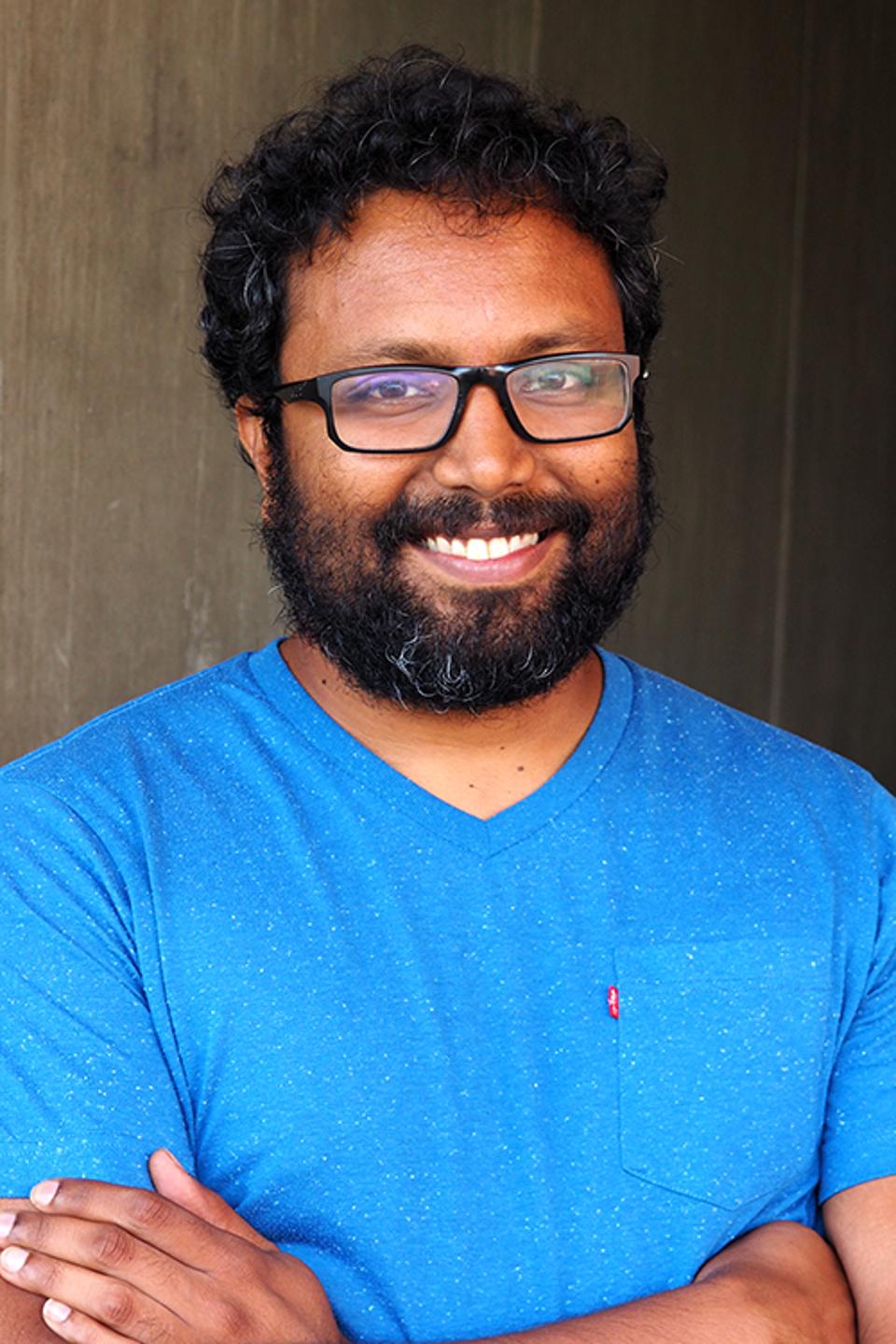
Octant co-founder and CEO Sri Kosuri OCTANT
“The last 30 years have been focused on specificity in the pharmaceutical industry,” says Kosuri. Using technologies like protein structure modeling, gene therapies, and CRISPR, drugs have been designed to hone in on specific targets: one gene responsible for a disease, or one biomarker that differentiates a cancer cell. “There have been a lot of successes,” he explains, “but most of these are in areas like rare disease and cancer, diseases that are genetically distinct in their nature.”
But for more common diseases with multiple causes, like cardiovascular disease, diabetes, Alzheimer’s, and mental illness, Octant speculates that this traditional thesis of drug delivery—find one target, drug one target—might not be the best approach. These complex diseases, which may emerge from the interactions of thousands of biological pathways, have proven elusive to companies still following the single-target trend.
“The efforts to make today’s dirty drugs more specific haven’t led to more effective treatments,” says Kosuri, “not because we haven’t been able to make drugs more specific, but because those drugs simply didn’t work as well.” This may be one reason why drug innovation has been sluggish for complex yet common diseases.
The special sauce in Octant’s technology
In the past decade, two complementary fields have emerged from academic labs to revolutionize the life sciences industry: synthetic biology and computational biology. Synthetic biology uses genetic tools and techniques to design biological systems, while computational biology uses the growing power of machine learning (a.k.a. artificial intelligence) to analyze massively complex biological data. While these two toolsets are powerful on their own, combining them can result in unlocking completely new tools and platforms for the life sciences and drug discovery.
Octant combines synthetic biology and computational biology to create a platform that can measure the impact of a drug across cellular pathways. Octant’s early focus is on a group of cell signaling receptors called G protein-coupled receptors, or GPCRs, which live on the outer surface of human cells and trigger activity within the cell. (About one-third of all drugs are GPCR modulators, accounting for around 10% of global pharmaceutical sales—around $100 billion.)
Octant engineers cells so that when a drug affects one of these GPCRs, the cell releases a unique, genetically encoded barcode signal. By measuring these signals across thousands of engineered cells, Octant maps the full effects of a chemical across hundreds of potential GPCRs. By analyzing the data from these high-throughput experiments, Octant can identify the optimal chemical to hit a desired set of targets in just the right way.
Octant uses this platform to see how current drugs, failed drug candidates, and natural chemicals hit the hundreds of GPCRs in a given human cell. By comparing a chemical’s “hits” to its known effects and toxicities, Octant can then predict a set of targets that will both treat the disease and avoid unwanted side-effects.
“Octant is built around two goals,” Kosuri said. “The first is identifying the polypharmacological sweet spots we might want to hit, and second is how we build small molecules to do that.”
After identifying those sweet spots, Octant turns to its synthetic biology platform, using high-throughput experimentation to test a massive array of chemicals, and then refining to find the best molecule for hitting a particular target set. In contrast to the hypothesis-driven target identification process, Octant’s asset discovery program is empirically-driven. It embraces high-throughput experimentation, big data, and machine-learning similar to that of companies specializing in computational biology (for example, Recursion Pharmaceuticals or AbCellera). This is the beauty of Octant Bio’s platform—they’ve built a way to collect biochemical data en masse, and then analyze it both rationally with human researchers and empirically using computational engines.
Octant’s platform has the ability to detect small numbers of RNA molecules. In response to Covid-19 the company repurposed this feature for use in detecting the virus at the heart of the pandemic. Octant made this method, called SwabSeq, freely available to the research community to help overcome certain bottlenecks in testing for coronavirus, including RNA purification, qPCR machinery, and automation. Octant reports that a number of groups, firms, and academic institutions have already utilized the SwabSeq protocol.
The bigger picture: An atlas for treating complex disease
Octant’s big-picture vision is not limited to the discovery of individual drug candidates. The company also aims to build a definitive map of chemical-cell interactions, with the ultimate goal of providing a chemical solution to any complex human physiology. If you can find a set of GPCR target vectors associated with a disease, Octant can design the chemical. (The platform can even be applied to flavors and fragrances, which our bodies sense through taste and olfactory GPCR receptors.)
In the shift to a data-first, computational biology approach, Octant embraces a business model vastly different from the high-risk, high-investment model seen in traditional pharma. By acting as a central resource which any researcher can use to find and build a multi-target drug candidate, Octant can 1) diversify its pipeline, 2) minimize the in-house time and cost of identifying disease target vectors, and 3) focus on diseases that have known target vectors. With their unique chemical-to-cell mapping, Octant will be able to make the most targeted polypharmacological drugs, and they will be able to do so more quickly and cheaply than potential competitors.
A different kind of team, a different kind of strategy
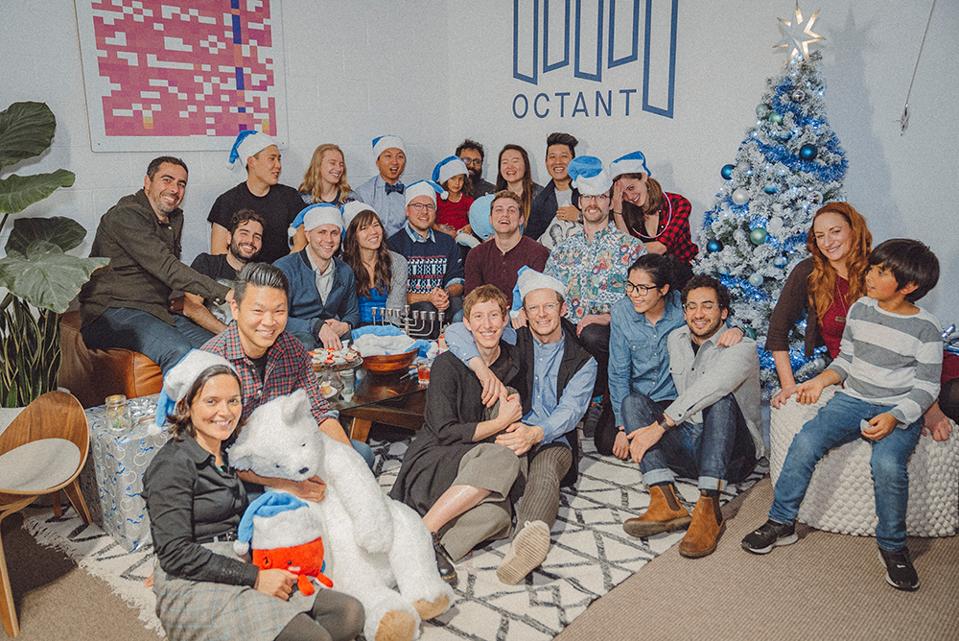
Octant Team OCTANT
Octant has a unique pedigree. Kosuri himself is the former staff scientist of George Church, a synthetic biology pioneer and serial entrepreneur. Kosuri’s co-founder is Ramsay Homsany, formerly of Google and Dropbox, who serves as President. Octant’s board of directors notably includes Jason Kelly of Ginkgo Bioworks (synthetic biology’s first unicorn), the academic luminary Charles Zuker, and Vijay Pande, a Stanford biophysicist and partner at Andreessen Horowitz, which anchored the company’s Series A. What does this team see in Octant’s approach?
“There are a lot of people working on cancer immunotherapy and new ways to achieve specificity through AI,” Kosuri tells me. “But no one else is working on the types of things we’re working on.” At a time when pharma companies are avoiding the messy search for complex disease treatments, Octant and its leaders believe that doubling down on complexity is going to lead to the future of drug discovery.
“We’re making a fundamental bet that we’re not going to find a single target,” he says.
Octant’s real bet is that better tools for understanding the basic biology behind complex diseases will soon be developed. These tools will enable researchers to identify new and promising potential drug treatments. Such discoveries may be made by Octant itself, by a cousin firm, or one of the many academic labs and biotechs developing disease-specific research tools and models. Whoever the discoverer may be, Octant will be their natural partner for translating basic science into treatments and cures.
Researchers have mapped the mouse brain into areas according to their molecular profile. Credit: Karolinska Institutet
In a new study researchers at Karolinska Institutet and KTH Royal Institute of Technology have developed a new kind of brain atlas based on an innovative method of mapping brain tissue into areas according to their molecular profile. The study is published in Science Advances.
Many of the atlases currently used to describe the brains of humans and mammals are based on visible differences in how neurons and their pathways are organized or how the most common neurotransmitters are distributed.
“These atlases have been invaluable to neuroscience in the planning and interpretation of experiments, but they’ve also been under dispute as they were developed by different experts using different kinds of definition,” says Konstantinos Meletis, docent at the Department of Neuroscience, Karolinska Institutet and one of the study’s main author.
Capturing molecules in brain tissue
The study now presented examines whether there is a more independent way to define brain atlases on a data and factual basis. The study, which uses the brain of an adult mouse, is the result of a collaborative project between Dr. Meletis’s group at KI and Professor Joakim Lundeberg’s group at KTH/Science for Life Laboratory (SciLifeLab).
“To achieve this mapping, we used a method called spatial transcriptomics, which enabled us to capture the molecules that code for the cell’s identity and function,” explains Dr. Meletis.
The method of extracting RNA molecules has been co-developed by Professor Lundeberg at KTH and is used to identify the molecules’ precise location in brain tissue. RNA (ribonucleic acid) serves as a messenger between genes and the proteins that they code for. Despite the small size of the mouse brain, it is a large-scale mapping totalling 35,000 different measurement points that has been going on for almost three years.https://www.youtube.com/embed/XbLYRPRpKH8?color=whiteCredit: Karolinska Institutet
The mapping has enabled researchers to recreate a virtual 3-D atlas of the entire mouse brain with data on over 15,000 genes that are active in the various areas.
“We know that different kinds of imbalance in the brain can lead to mental or neurological disease,” says Dr. Meletis. “In the efforts to find new treatments, prior knowledge of the molecular differences between brain areas and how they affect neuronal function will be essential.”
Studies on human brain under way
Studies are also under way to understand how the development of the human brain is based on the same molecular principles, work that is being done by Professor Lundeberg’s group and the Human Developmental Cell Atlas (HDCA).
“It’s fantastic that we can now recreate brain anatomy in all its detail by only capturing the molecular profile without having any knowledge of the brain or the molecules’ function,” says Professor Lundeberg.
As part of the project, the researchers have created a web portal for the molecular atlas of the mouse brain. The portal is an open resource for anyone wanting to study and learn about the brain: https://www.molecularatlas.org/
They’re great in your Chipotle burrito bowl, but are beans ever really the star of the show? One person who thinks that they should be is longevity expert and Blue Zones founder Dan Buettner. After years of studying the world’s longest-living people, there’s still no better option to put on your plate when you’re trying to reach the age of 100.
In a lecture given by Buettner through the Global Wellness Summit, he broke down what those living in the Blue Zones eat to stay so healthy. While their diets consist of plenty of greens, whole grains, tubers, nuts, and very little animal products, beans are an unbeatable staple in all five areas. “The longevity all-star food is beans,” he says. “If you’re eating about a cup of beans a day, it’s probably worth an extra four years of life expectancy.”
A cup of beans a day for all those extra years of life? Yeah, that’s a pretty solid trade-off, IMO. Buettner’s findings come from researching the Blue Zones for years, where he discovered the longest-living people stick to that full cup opposed to the 1/2 cup recommended by the U.S. Dietary Guidelines. Other studies have shown just how incredible beans are for longevity, too. In a study from the Southeast Asian Journal of Tropical Medicine and Public Health, participants’ risk of mortality was decreased by 7 to 8 percent for every 20 grams of legumes they ate.
“The longevity all-star food is beans. If you’re eating about a cup of beans a day, it’s probably worth an extra four years of life expectancy.” —Dan Buettner, founder of Blue Zones
When you’re shopping for beans of any kind, experts recommend choosing either a dried or canned option. If you choose canned, just be sure that it’s low-sodium. Then, add them into anything and everything in order to get your daily cup in. You can use the protein- and fiber-filled food in desserts, soups and chili, veggie burgers, dips, salads, and more. Most of the time, you can even sneak them in without even noticing they’re there. (Looking at you, black bean brownies.)
Those in the Blue Zones are proving staying healthy and living a long, happy life is easier than we think. And if I can up my intake of beans in order to make my centenarian dreams come true, you better believe I’m going to stock up ASAP.
Startup Creates Plant-Based Deli Meats Using Bananas And Discarded Grapes From Winemaking
‘We just need to use creativity to produce foods that are good for us and for the planet, but [are] also tasty and affordable’LIAM GILLIVERJUN 28, 2020
‘Food is the single strongest lever to optimize human health’ (Photo edited by Plant Based News)
Hungarian startup Plantcraft has created a range of plant-based deli meats and pâté using ‘unexpected’ ingredients such as green bananas.
Founded by Kati Ohens and Csaba Hetenyi, the brand also uses grape seeds leftover from the winemaking process in its plant-based pepperoni, as it’s ‘high in Omega-6 fatty acids and Vitamin E’.
‘Tasty and affordable’
“The future of food is plant-based and there is more than enough for our growing population,” Csaba told ProVeg Incubator.
“We just need to use creativity to produce foods that are good for us and for the planet, but [are] also tasty and affordable… We believe that food is the single strongest lever to optimize human health and environmental sustainability on Earth.”
Covid-19
Plantcraft had plans to launch in the U.S. before the coronavirus (Covid-19) outbreak which has meant the brand cannot travel overseas for product tests and manufacturing trials.
“Overall the current situation has urged us to rethink and restructure some of our strategies,” explained Kati, “If anything, it has accelerated our plans to hit the market with our products.”
The company says it is ‘exploring the possibility of bringing the EU launch forward’ and says it’s ‘likely’ to go ahead before the end of this year.
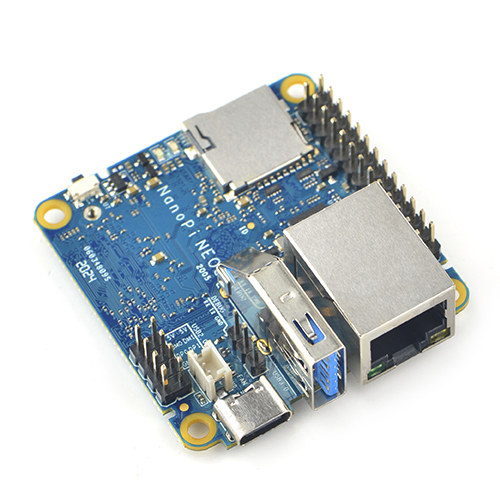
Tiny NanoPi NEO3 SBC Targets Networked Storage with GbE and USB 3.0
Once upon a time, FriendlyELEC launched a Raspberry Pi Zero competitor for headless applications with Allwinner H3 powered NanoPi NEO, which was then followed with NanoPi NEO2 equipped with a more powerful Allwinner H5 processor and Gigabit Ethernet, and less than two years ago, NanoPi NEO4 was launched with Rockchip RK3399 hexa-core processor, 1GB RAM, and HDMI output.
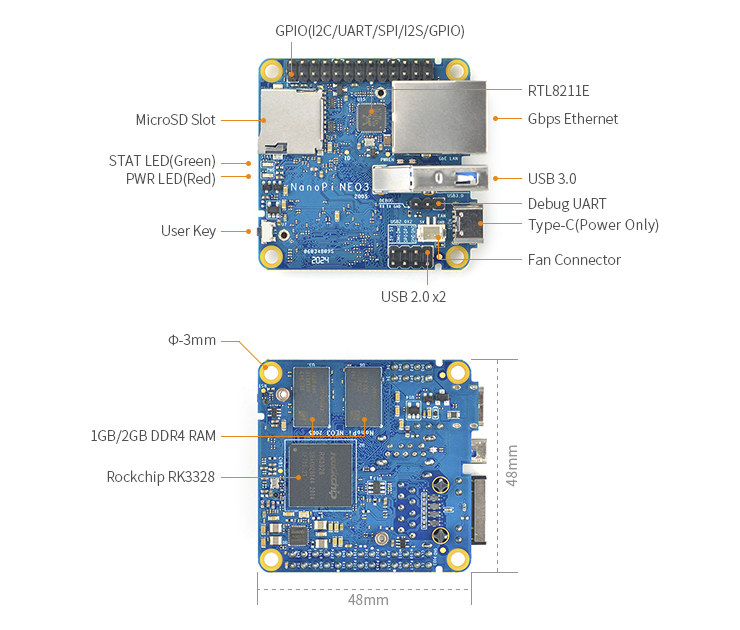
“Wait! What happened to NanoPi NEO3?!” you may ask. It probably got lost in the woods, but FriendlyELEC found it under a rock, and are about to launch NanoPi NEO3 SBC based on Rockchip RK3328 and offering a USB 3.0 port and Gigabit Ethernet network connectivity.NanoPi NEO3 specifications:
SoC – Rockchip RK3328 quad-core Arm Cortex A53 processor with Mali-450MP2 GPU
System Memory – 1GB or 2GB DDR4
Storage – MicroSD Slot for system boot and storage
Video Output – N/A
Connectivity – Gigabit Ethernet with unique MAC via RTL8211E PHY
USB – 1x USB3.0 Type-A port, 2x USB2.0 on 2.54mm 8-pin header
Expansion – 26-pin header with I2C, UART, SPI, I2S, GPIO
Debugging – 3-pin header for serial console
Misc – Power & System LEDs, user key, 2-pin header for 5V Fan
Power Supply – 5V/1A via USB Type-C header or GPIO pin
PCB Dimensions – 48 x 48mm
Weight – 22 grams
Temperature Range – -20°C to 70°C
The new FfriendlyELEC SBC is a close cousin to NanoPi R2S, except the latter is geared toward router use with dual Gigabit Ethernet, a USB 2.0 port, and a smaller 10-pin GPIO header. NanoPi NEO3 should make a good board for network storage, and few such tiny headless boards come with 2GB RAM.
I found all information above in the Wiki that is still work in progress as NanoPi NEO3 has not been launched just yet. There’s no information about software, but I’d expect the board to support the same operating systems as NanoPi R2S namely FriendlyWrt (OpenWrt), FriendlyCore (Ubuntu 18.04 Core), as well as Armbian-built Ubuntu 20.04 Focal and Debian 10 Buster with Linux 5.4.xx.
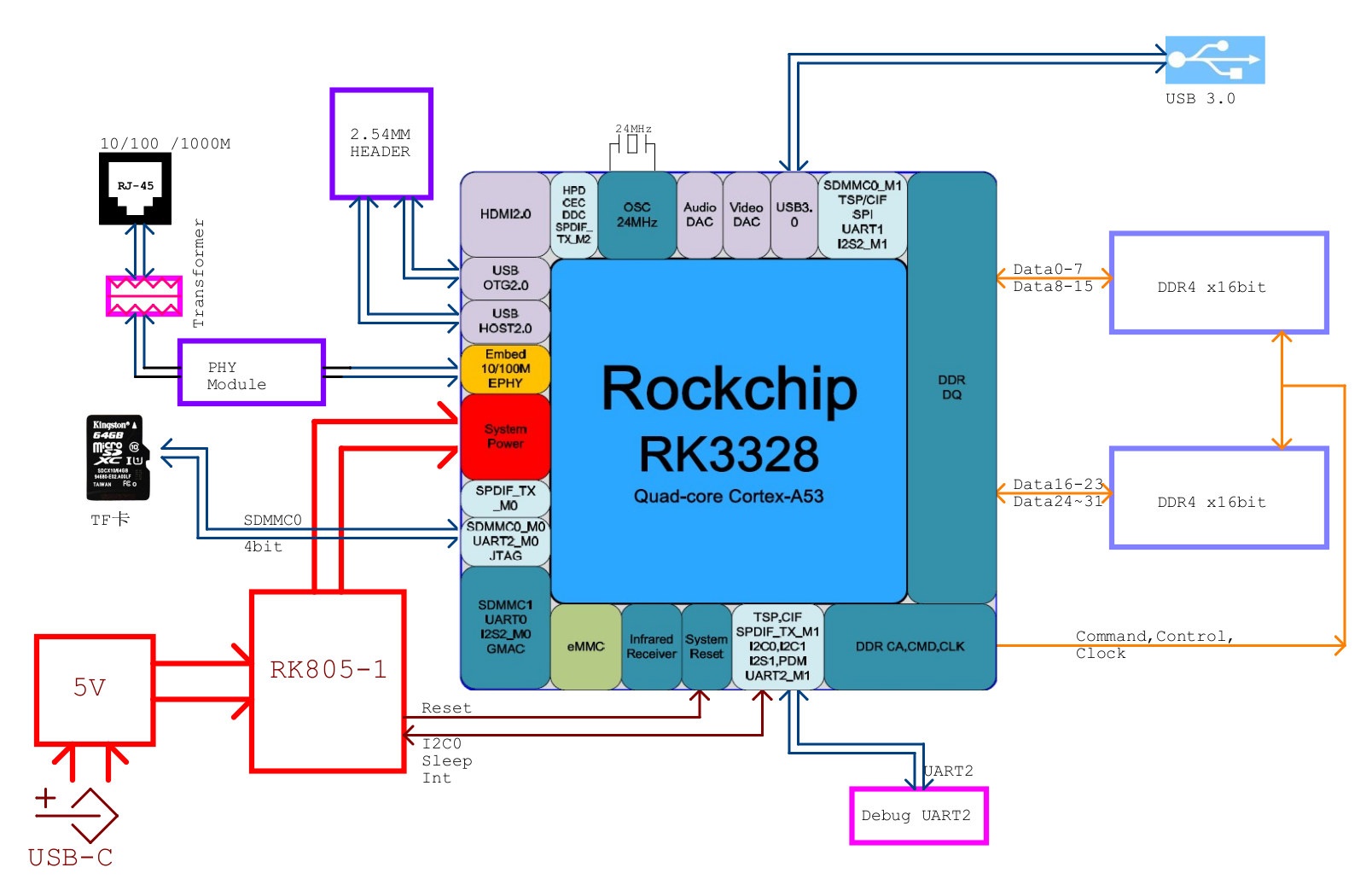
Block Diagram – Click to Enlarge
We can speculate about NanoPi NEO3 price based on the $22 asked for NanoPi R2S. The 1GB RAM version should be fairly cheaper since we remove the USB 3.0 to Gigabit Ethernet controller, so something around $18-$19 might be feasible, and the 2GB version might go for $22$-23.
Jean-Luc started CNX Software in 2010 as a part-time endeavor, before quitting his job as a software engineering manager, and starting to write daily news, and reviews full time later in 2011.
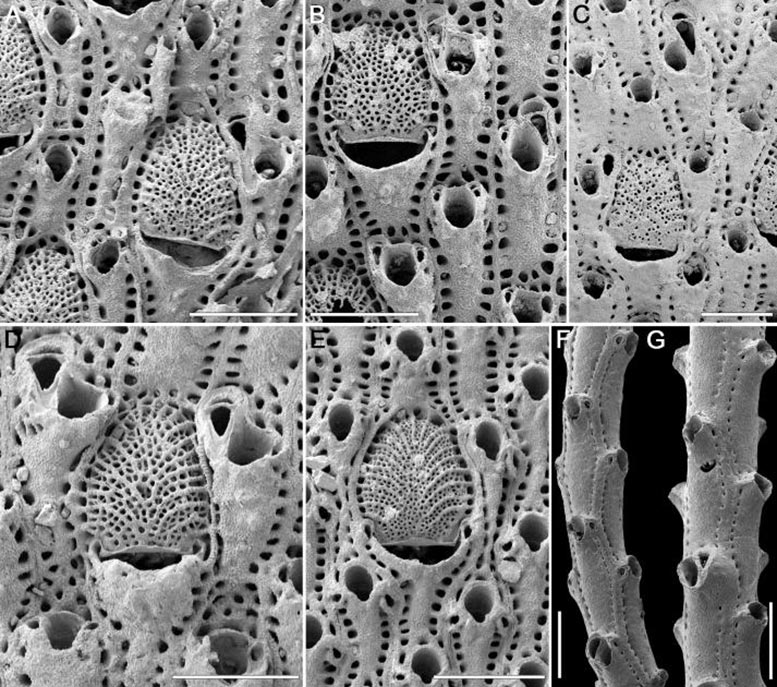
The picture shows the seven species of bryozoans that were used in the debunking.The white line is only 500 micrometers in lenght. Copyright: JoAnn Sanner, The University of Chicago The most popular textbook example of
Researchers at the University of Oslo have debunked a textbook example about how evolution proceeds during speciation. Renowned paleontologist Stephen Jay Gould fronted the old theory.
Evolutionary biologists have for a long time disagreed on the rate of evolution when new species emerge. Are new species the result of gradual changes – as Charles Darwin suggested – or is evolution speeding up for short periods of time when new species evolve?
World renowned paleontologist Stephen Jay Gould (1941-2002) formulated the theory of punctuated equilibrium together with Niles Eldredge (1943-) in 1972. The theory states that species remain more or less unaltered during their existence, with major evolutionary change happening during rapid events of speciation. As evidence for this view, Gould pointed to the fossil record.
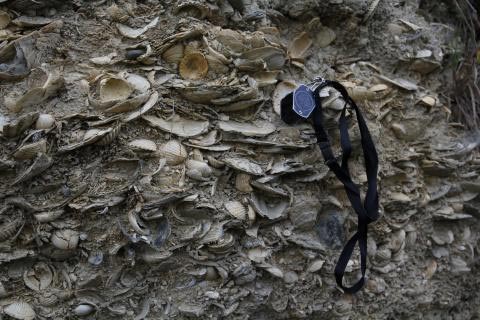
Fossils can tell scientists about what life on Earth looked like in the past. The picture shows two million year old fossils of marine organisms found on an expedition to New Zealand. Credit: Kjetil Lysne Voje/UiO
According to Gould, the fossil record typically show that species do not change significantly after they emerge, and that major changes occurred when new species appeared.
Stephen Jay Gould was one of the twentieth century’s most famous evolutionary biologists and a bestselling popular science writer. Some even claimed that Gould was the foremost biologist of his time – perhaps the greatest since Charles Darwin himself – so his words have carried a lot of weight to this day.
In a new paper from researchers at the University of Oslo, the authors claim to have found several methodological problems in the most famous and well-trusted example supporting the theory of punctuated equilibrium.
“We find no evidence for punctuated evolution in our reanalysis of the most recognized dataset that Gould used to support his theory,” says Kjetil Lysne Voje at UiO’s Center for Ecological and Evolutionary Synthesis (CEES) at the Department of Biosciences.
Textbook example is rejected
Fossils of the bryozoan genus Metrarabdotos – a group of aquatic invertebrates thoroughly investigated by the excellent paleobiologist Alan Cheetham – have been the prime example of punctuated evolution.
Gould called Metrarabdotos “the most brilliantly persuasive, and most meticulously documented, example ever presented for predominant (in this case, exclusive) punctuated equilibrium in a full lineage” (Gould 2002, page 827).
Researcher Kjetil Lysne Voje led the new study on evolution of species within the bryozoan genus Metrarabdotos. Credit: Unni Vik/UiO
“We detected some critical methodological issues in the original work on Metrarabdotos. When we take the methodological issues into account, we do not find any evidence of punctuated evolution in our reanalysis of the Metrarabdotos data,” says Kjetil Lysne Voje.
Bryozoans are so small that scientists have to use an electron microscope to study them in detail, but they form colonies that can be quite large (up to 1 meter). Most bryozoans live in the sea, but there are also many species in fresh water. The bryozoan genus Metrarabdotos has been used as a textbook example in evolutionary biology and paleontology, showing how evolution speeds up when new species form compared to a much slower evolution of already established species.
“But our new results show nothing else than a gradual evolution of the bryozoan species both before, during and after the formation of new species,” emphasizes Voje.
Why is this important?
The idea of fast-track evolution during speciation has been controversial. Critics of the theory of punctuated equilibrium found it difficult to believe that the evolutionary processes leading to new species should be markedly different from the processes that cause already existing species to change.
“Species are continuously evolving and our results support the hypothesis that evolution does not “behave” differently when new species emerge,” says Voje.
The paper with the new results was published in the May issue of The American Naturalist. The authors of the study are Kjetil Lysne Voje, Emanuela Di Martino and Arthur Porto.
Reference: “Revisiting a Landmark Study System: No Evidence for a Punctuated Mode of Evolution in Metrarabdotos” by Kjetil Lysne Voje, Emanuela Di Martino and Arthur Porto, 17 March 2020, The American Naturalist. DOI: 10.1086/707664







 Bruce's Blog