https://phys.org/news/2020-06-record-breaking-metalens-revolutionize-optical-technologies.html

Record-breaking metalens could revolutionize optical technologies

by Sarah Yang, University of California – Berkeley
Record-breaking metalens could revolutionize optical technologies
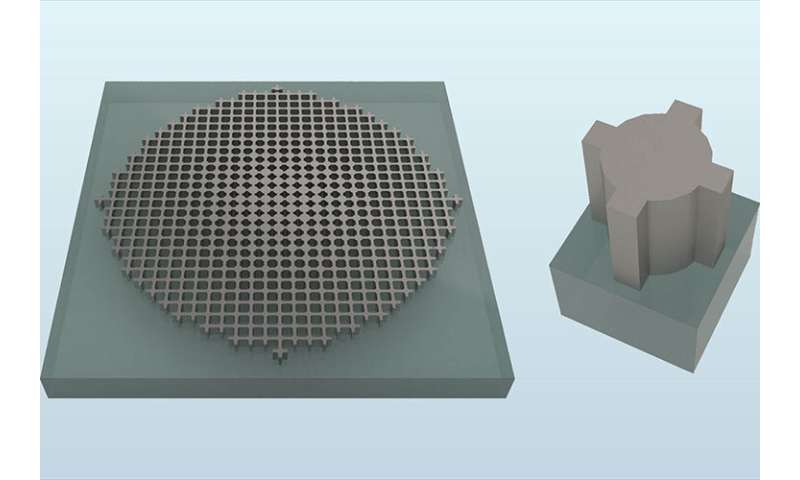
A schematic of the metalens, which is constructed of tiny titanium waveguides. On the right, a schematic of a single waveguide. Credit: Boubacar Kanté

Traditional lenses—like the ones found in eyeglasses—are bulky, heavy and only focus light across a limited number of wavelengths. A new, ultrathin metalens developed by researchers at the University of California, Berkeley, uses an array of tiny, connected waveguides that resembles a fishnet to focus light at wavelengths spanning from the visible to the infrared with record-breaking efficiencies.

Unlike traditional lenses, the metalens is flat and compact and could be made small enough to fit inside increasingly miniaturized devices. The development could lead to game-changing advances in solar energy, virtual reality technology, medical imaging, information processing with light and other applications reliant upon optics.

“We have overcome what was regarded as a fundamental roadblock,” said study principal investigator Boubacar Kanté, associate professor of electrical engineering and computer sciences at UC Berkeley and faculty scientist at Lawrence Berkeley National Laboratory. “This is, simply, the thinnest, most efficient, broadest band flat lens in the world.”

The new technology, named the “Fishnet-Achromatic-Metalens (FAM),” is described in a study that appeared online June 25 in the journal Nature Communications.

While many methods have been proposed to implement flat lenses over the past decade, the arrival of the new metalens is the first time this combination of properties has been achieved.

The team demonstrated the ability of its fishnet-achromatic-metalens to capture 70% of incoming light in frequencies ranging from 640 nanometers (reddish-orange light) to 1,200 nanometers (infrared light). Light entering the fishnet metalens within that broad octave band of wavelengths would be focused at a single point on the other side of the lens.

“We are very excited by these results because many applications required the simultaneous processing of multiple wavelengths in a broad spectrum,” said Kanté. “This is the case for solar energy applications where we need to focus all colors of light for efficient solar cells or solar concentrators.”

A good next step, Kanté said, would be to develop processes that could enable larger scale production.


Explore furtherResearchers develop a mass-producible, centimeter-scale metalens for VR, imaging


More information: Abdoulaye Ndao et al. Octave bandwidth photonic fishnet-achromatic-metalens, Nature Communications (2020). DOI: 10.1038/s41467-020-17015-9Journal information:Nature CommunicationsProvided by University of California – Berkeley

https://electrek.co/2020/06/26/tesla-cybertruck-amphibious-boat-elon-musk/

Elon Musk hints at Tesla Cybertruck being amphibious — is he kidding?

Fred Lambert

– Jun. 26th 2020 1:08 am ET

@FredericLambert

Elon Musk is hinting at Tesla Cybertruck being virtually amphibious, and it’s not clear if he’s actually kidding.

Sometimes, Musk makes comments about future Tesla products and features that can be hard to judge.

For example, it was hard to tell if he was kidding when he said that the next Tesla Roadster would be equipped with a cold air thruster, but that’s apparently happening.

Musk also had people confused when he said Tesla would release a “fart app” and that the Boring Company would sell a flamethrower, but both of those things happened.

Now Tesla’s CEO has people confused about a comment he made regarding this render of a Cybertruck being used as a boat by 3D artist Slav Popovski:

To a repost of the render on Twitter, Musk commented: “I think we could make that work.”

While the video doesn’t seem like something the Cybertruck would do, it’s not too farfetched based on previous comments made by Musk.

A few years ago, the CEO said that the Model S could almost be used as a boat after a Tesla Model S was spotted driving (or swimming) through a flooded tunnel — although the CEO made it clear it isn’t recommended.

He said:

We definitely don’t recommend this, but Model S floats well enough to turn it into a boat for short periods of time. Thrust via wheel rotation.

With the battery pack at the bottom being sealed and waterproof, the vehicle can indeed float for a few moments, but not quite like in the Cybertruck video.

Musk also has had a fascination with amphibious vehicles for a while.

A few years ago, the CEO bought the amphibious Lotus Esprit model used in the 1977 James Bond movie The Spy Who Loved Me.

Later on, he said that Tesla would turn the model into a real amphibious electric vehicle, though that was a while ago and has yet to happen — unless Musk did it secretly and he’s using it to access his underwater villain lair.

Do you think Elon Musk is kidding about the Cybertruck being able to “turn into a boat”? Let us know in the comment section below.

FTC: We use income earning auto affiliate links. More.You’re reading Electrek— experts who break news about Teslaelectric vehicles, and green energy, day after day. Be sure to check out our homepage for all the latest news, and follow Electrek on TwitterFacebook, and LinkedIn to stay in the loop. Don’t know where to start? Check out our YouTube channel for the latest reviews.


Subscribe to Electrek on YouTube for exclusive videos and subscribe to the podcast.

https://mobilesyrup.com/2020/06/26/alphabet-reportedly-buying-waterloo-based-smart-glasses-startup-north/

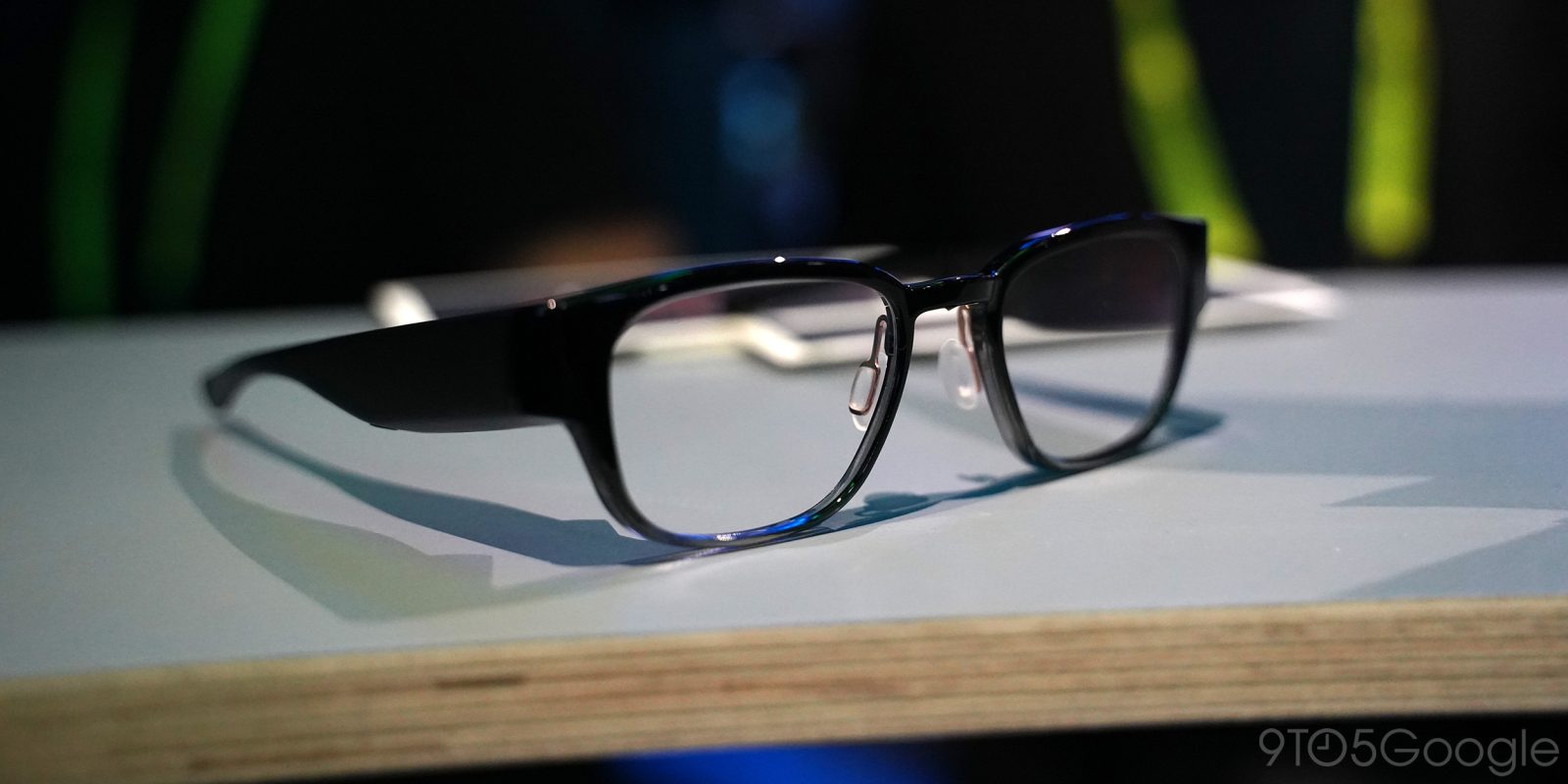
Alphabet reportedly buying Waterloo-based smart glasses startup North It’s unclear what this means for Focals 2.0

By Patrick O’Rourke@Patrick_ORourkeJUN 26, 2020 10:44 AM EDT0

Waterloo, Ontario-based North has reportedly been acquired by Google parent company Alphabet for $180 million USD (roughly $245 million CAD). The report, which comes from The Globe and Mail, states that Alphabet is in the “final stages” of purchasing North. Unsurprisingly, the first-generation Focals didn’t sell as well as North hoped they would, says the report. North stopped selling its Focals back in December to focus on its second-generation smartglasses, Focals 2.0.

The new smart glasses have been teased several times over the past few months, with North stating Focals 2.0 will feature a “lighter” and “sleeker” design, along with a display “10x” larger than the first-generation Focals. The Globe and Mail cites someone close to North’s sales operations as stating that the company likely sold less than 1,000 pairs. Further, there were reportedly days across the company’s retail stores in Toronto and Brooklyn, New York where there were zero sales.

Purchasing Focals required an extensive fitting process involving a 3D model of your face being created. When the smart glasses first launched, it was only possible to scan your face at a physical retail store location. However, North eventually added the ability to scan the wearer’s face to its iPhone app.

The company also dropped the price of the first-generation Focals to start at $799 CAD back in February of 2019. This is always how I expected things to end for North despite the company’s first-generation Focals showing significant promise. Hardware is a complicated business, especially in a new, unproven space like smart glasses. While North’s Focals are indeed impressive, they’re pricey, somewhat awkward to use and, at least as far as the first-generation glasses are concerned, feature a small field of view that’s difficult to get into focus.

Read more at MobileSyrup.comAlphabet reportedly buying Waterloo-based smart glasses startup North

https://medicalxpress.com/news/2020-06-experts-scenarios-people-health.html

More than 100 experts identify four scenarios that could shape people’s health between now and 2040

by Annalyn Bachmann, Massachusetts Institute of Technology

Trust or consequences
Over 100 experts participated in Trust CoLab, an innovative online exercise that developed a set of alternative scenarios about the future of medicine and health care. The exercise identified one potential development that quickly became quite salient: the prospect of global pandemic leading to drastic changes in health care practices. Credit: Massachusetts Institute of Technology

Will innovations in health and medicine deliver? This is a question on the top of everyone’s mind as COVID-19 tests the resiliency of global medical supply chains.

Over 100 experts recently participated in Trust CoLab, an innovative online exercise that developed a set of alternative scenarios about the future of medicine and health care. The exercise identified one potential development that quickly became quite salient: the prospect of global pandemic leading to drastic changes in health-care practices. This possibility is spelled out in “Scaling the Tried and True,” one of the four scenarios developed in the exercise.

The MIT Center for Collective Intelligence and U.S. Pharmacopeia has now released a report, “Trust or Consequences 2040: Will innovations in health and medicine deliver?,” based on the Trust CoLab effort. The report is the product of a four-week process that elicited ideas from experts affiliated with leading organizations, including the Bill and Melinda Gates Foundation, the American Association of Pharmacy, and Harvard Medical School. Participants were asked to consider what developments might shape people’s health between now and 2040 and what impact these developments could have on the evolution of trust in medicine and health care.

The report details four potential future scenarios:

  • Scaling the tried and true: In response to a series of major health crises, key actors in health care cooperate across all sectors to build institutions with global scope, designed to deliver basic, proven cures to all.
  • Dangerous uncertainty: Problems with big data/AI and gene modification trigger devastating medical failures. Disparities in access continue. In response, the wealthy depend on the latest, science-based medicine, the middle class turns to trusted local caregivers, and the less-privileged rely on folk medicines and food-based cures.
  • A world of difference: Rapid advances occur by pairing genetic information with big data and artificial intelligence, but inequality creates a “haves” versus “have-nots” dynamic. Those who cannot access the latest therapies mistrust the overall health care system.
  • Solving tomorrow’s problems: Smart and deliberate innovation is distributed broadly. With diseases more predictable, the focus of health care shifts to prevention. Innovation leads to remarkable new discoveries and also curbs increases in health-care costs.

As leaders around the world think about how to respond to the COVID-19 outbreak, considering potential fault lines that could increase risks in health care and medicine will become even more important. This prospect highlights the importance of experts coming together across disciplines, as they did in Trust Colab, to identify potential threats and opportunities to enhance the system’s resilience.


Explore furtherResearcher finds COVID-19 pandemic shapes opportunities for radical change to the U.S. health care system


More information:www.usp.org/200-anniversary/trust-or-consequencesProvided by Massachusetts Institute of Technology

https://9to5google.com/2020/06/25/alphabet-north-focals/

Alphabet reportedly buying North after ‘minuscule’ Focals smart glasses sales

Abner Li

– Jun. 25th 2020 7:47 pm PT

@technacity

While Glass lives on as an enterprise product, it never came close to reaching Google’s wildly ambitious vision of replacing the smartphone. Others have since entered the smart glasses space, with North being one of the more notable players. Alphabet is now rumored to be acquiring North after Focals sold poorly.

The Globe and Mail this evening reports that North is in the “final stages” of an acquisition from Alphabet. Google’s parent company is said to be paying $180 million for the Canadian company.

This comes after North in December stopped selling Focals to focus on launching second-generation smart glasses sometime in 2020. “Focals 2.0” has been teased over the past several months with North claiming that they would be the “most significant product introduction to date in the category.”

A “lighter” and “sleeker” design would have a “10x display,” while miniaturizing the technology by 40%.

north-focals-2-tease-1
north-focals-2-tease-2

Sales of the first-generation device are described as “minuscule” in today’s report:

One person close to the sales operations says it’s unlikely North sold many more than 1,000 pairs. Its only retail stores, in Toronto and Brooklyn, N.Y., often went days without a single sale.

North made a major sales push at the start of 2019 with a price cut from $999 to $599. Buying Focals required a fitting process where a 3D model of your face is made. This capture rig was originally only available at two physical retail stores, but North later turned to pop-up locations and scanning via iPhones.

In ending sales, North has not been bringing in any revenue, and the company is running out of money even after slashing monthly spending in half to $3 million. Despite taking on additional investment and loans, North is said to have started looking for a buyer earlier this year.

Today’s report identifies Alphabet as the acquirer. It’s not clear if that’s actually the case as North and Focals would make more sense within Google’s AR & VR division rather than as a standalone Alphabet company.

FTC: We use income earning auto affiliate links. More.


Check out 9to5Google on YouTube for more news:

https://scitechdaily.com/fascinating-machines-of-death-the-latest-research-on-bacterial-toxins/

“Fascinating Machines of Death” – The Latest Research on Bacterial Toxins

TOPICS:BacteriaCell BiologyMicrobiologyToxicologyUniversity Of Toronto

By UNIVERSITY OF TORONTO JUNE 25, 2020

Bacterial Toxin Concept

Research finds mechanism by which bacterial toxis evolve ability to cause new illnesses.

The coronavirus pandemic is a daily reminder of the consequences brought by a successful invasion of human cells by a pathogen. As new research on bacterial toxins shows, it does not take much for these encounters to turn deadly.

The research has found that two almost identical bacterial toxins cause distinct illnesses — diarrhea and fatal toxic shock syndrome — by binding unrelated human receptors. It also highlights a mechanism by which pathogens have evolved distinct receptor preferences to infect different organs.

“I always think of bacterial toxins as fascinating machines of death in how they find new ways to enter host tissue,” says Mikko Taipale, a co-leader of the study and an assistant professor of molecular genetics in the Donnelly Centre for Cellular and Biomolecular Research at the University of Toronto.

The work was also co-led by Roman Melnyk and Jean-Philippe Julien, both senior scientists at the Hospital for Sick Children in Toronto and associate professors of biochemistry at U of T.

The findings are published in the journal Cell.

Clostridial Toxins

Many are familiar with Clostridium difficile, a gut-dwelling bacterium that can cause diarrhea. Lesser known is its close relative, Paeniclostridium sordellii, which too lives in the gut and in female reproductive tract. Infections are rare but fatal and can occur when the bacterial toxin escapes into the bloodstream, during birth for example, and spreads into the lungs and other organs.

Both species are thought to be part of the microbiome, the body’s resident bacteria, but it’s not clear why they harm some people and not others.

The toxin released by C. difficile acts through Frizzled, a cell surface receptor with a role in tissue regeneration. Although P. sordellii produces a similar toxin, it does not bind Frizzled. The nature of its receptor remained unknown and the U of T team decided to find it.

The researchers took an unbiased approach by systematically switching off every gene in human cells and exposing them to the P. sordellii toxin. Cells that survived turned out to lack genes encoding cell surface proteins called semaphorins, and other experiments confirmed that two members of this class, Semaphorin6A and Semaphorin6B, are indeed the receptors for the toxin. Both receptors are present in the lungs as expected, although their role there remains unclear.

Knowing the receptor opens the door to finding treatment. The researchers were able to halt infection in mice by co-injecting the toxin with purified semaphorin fragments, which bound and neutralized the toxin before it could reach the real receptors.

But the finding was unexpected and led to more surprises.

Like Frizzled, semaphorins play important roles in the body, most notably in the developing nervous system where they help guide projecting nerve fibers. That a bacterial toxin impairs lungs through a protein receptor usually found on nerve endings was surprising enough.

But even more surprising was that it binds a receptor with no structural resemblance to Frizzled.

“Here we have two toxins that are so similar to each other, but they use completely different receptors,” says Taipale. “We did not expect to find that.”

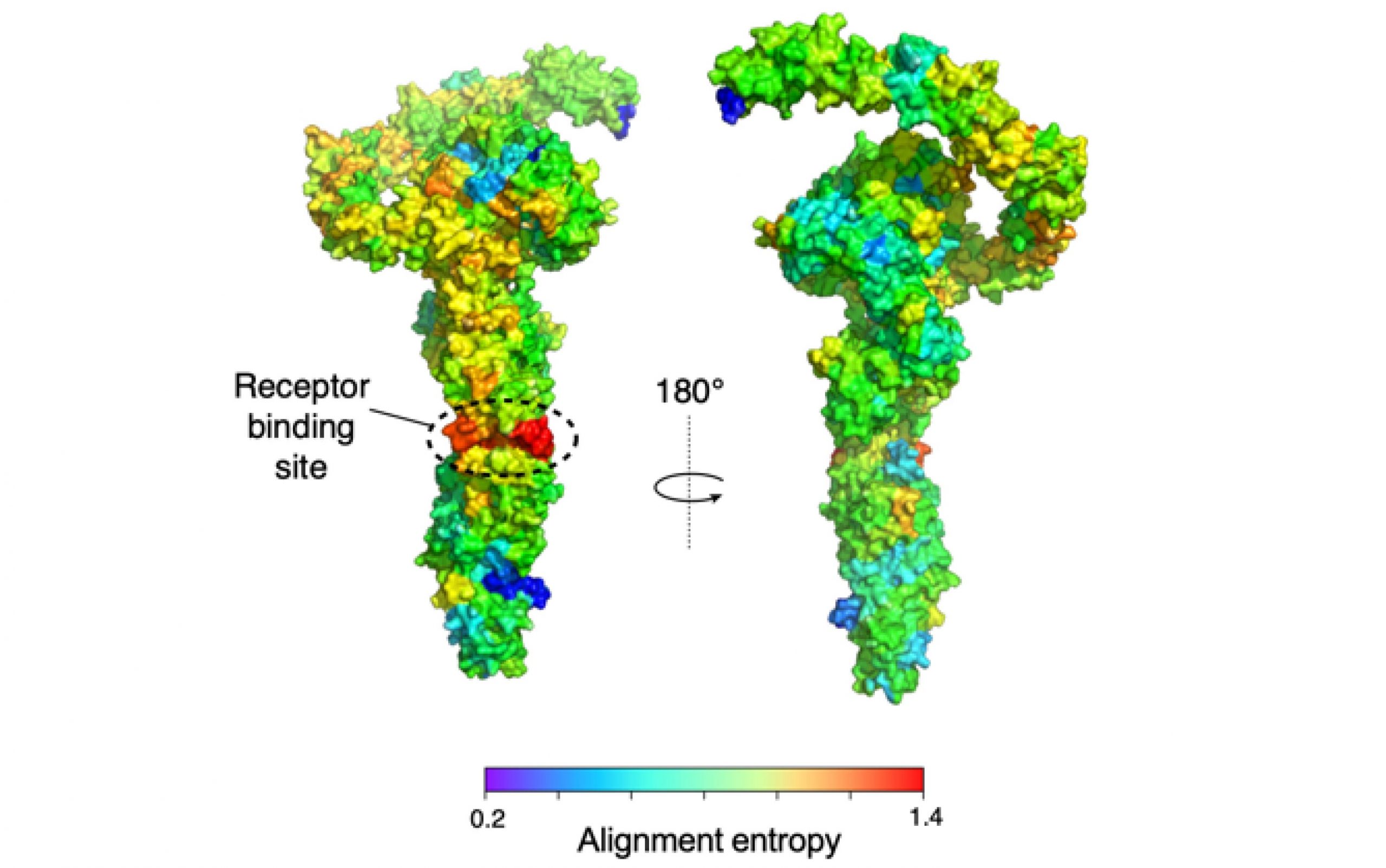
The reason for this is a tiny part of the toxins that differs considerably between C. difficile and P. sordellii. Found in the middle of the toxin, it forms a surface by which both toxins contact their receptors, as revealed by cryo electron microscopy, which allows a detailed three-dimensional view of molecular structure.

Each toxin protein is composed of about 2500 amino-acids and the researchers were able to pinpoint those that directly engage with the receptor. Swapping mere 15 of these amino acids between the two toxins was sufficient to switch receptor preference. In other words, they created a P. sordellii toxin that targeted Frizzled and vice versa.

“We were floored when we saw that the toxins shared a surface each evolved to uniquely interact with distinct cells,” says Julien, who along with Taipale plays for The Flying Puckheads, the hockey team of U of T’s Faculty of Medicine.

It appears that while the rest of the toxin is under strong evolutionary pressure to remain unchanged, the receptor-binding surface is free from such constraints. This can allow toxins to evolve into variants that can bind new receptors to invade other tissues and hosts.

Receptor switching is not unique to bacteria, however. SARS-CoV-2 and coronavirus strains that cause common cold use the same part of the now famous spike protein to bind diverse receptors, which might explain differences in disease severity.

“This is a nice example of how viruses and bacteria – from completely different domains of life — have found similar molecular tactics to change their receptor targets in human cells,” says Taipale. “And it also reminds us how much cool biology one can find in the microbial world!”

https://www.insidehook.com/article/food-and-drink/review-nuggs-imitation-chicken-nuggets

The Meatless Revolution Has Come for Chicken Nuggets

How soy protein and pitch-perfect marketing could help a Manhattan startup take on McDonald’s

The Meatless Revolution Has Come for Chicken NuggetsNUGGSBY TANNER GARRITY / JUNE 25, 2020 9:13 AM

It was far easier, when mainstream fake meat tasted like dog food boiled in a pair of athletic socks, to either label the meatless movement a hopeless hippie enterprise, or just ignore it altogether.

“Taste” has always been Big Meat’s obvious ace in the hole, and it served as a continuous checkmate until some unofficial point in the last 30 months, when the breakthrough that had already reached certain local eateries throughout the country — New York’s Superiority Burger, Minneapolis’s The Herbivorous Butcher, Palo Alto’s Vina Enoteca — made it to both grocery shelves and fast-food joints. Plant-based brands Beyond Meat and Impossible Foods brought a decades-long dietary experiment to the finish line by making meat that smells, tastes and bleeds like the real thing as ubiquitous as Dunkin’ Donuts. In fact, alternative meat is now massively popular at Dunkin’ Donuts. Even conservative radio hosts (the Platonic ideal of meat-eaters) have struggled to tell the difference.

(Photo by DAVID MCNEW/AFP via Getty Images)

But not long after that concession, the discussion shifted. Critics of fake meat — lawmakers from states with large livestock industries, the CEOS of Whole Foods and Chipotle, your uncle — suddenly wanted to talk about nutritional value, and began pushing the narrative that plant-based meat was highly processed and its familiar taste was only achieved by soaking “burgers” in buckets of sodium. For these concerned citizens, plant-based substitutes shouldn’t be considered healthy: their ingredients lists are far too long, and after all, who knows what such unnaturally created food could do to the body?

This premise conveniently forgets that the ingredients list for a traditional beef burger looks like a Facebook terms and conditions page. It assumes that the production of America’s meat supply, which in many cases involves keeping farm animals in internment camps and killing them on rapid-fire assembly lines, is a “natural” way to harvest, package and distribute food.

But most importantly, this line of thinking imagines — perhaps for a reason as simple and silly as the fact that “plant” is in the billing — that people are turning to plant-based meat as a healthy option. When really, that’s the function of a plant-based diet as a whole. Studies have indicated that a limiting or quitting meat consumption while emphasizing whole grains, fruits and vegetables will reduce your risk of cancer, diabetes, Alzheimer’s and heart disease. From a wellness perspective, that’s the crux of the switch. The rise of plant-based meat just adds another dimension to that dietary lifestyle. As Pat Brown, the CEO and Founder of Impossible Foods, told The New York Times last year, “The niche that [the Impossible Burger] fills is not the same niche that a kale salad fills.”

That realization is a liberating way forward for carnivores and vegans alike: fake meat is no savior. Built with pea protein and potato starch, the product isn’t proven, yet, to be healthier than traditional meat. It does have less saturated fat and no cholesterol, but it’s just too early for researchers to conclusively brand it as better for you. And that’s okay. Its true calling card lies in its capacity to steadily carve out space in an industry that is destroying the planet on a daily basis, which gasses and shoots animals when demand is low, which has been a hotbed for COVID-19 cases in this country, which has a history of exploiting undocumented laborers.

But even shoving aside all of that, you shouldn’t sit around waiting for an explicit invitation to try it, either. As with any other type of food, you might simply be surprised. There’s a reason these Silicon Valley-backed companies are struggling to meet demand: people like it. And the industry is only growing, with companies that take their mission seriously but don’t take themselves as seriously as many might believe.

https://www.eurekalert.org/pub_releases/2020-06/f-bsw061920.php

Better sleep with a partner

Couples that spend the night in the same bed show increased REM sleep and synchronization of sleep architecture

In many countries, sharing a bed with a partner is common practice. Yet, research investigating the relationship between bed sharing and sleep quality is both scarce and contradictory. Most studies have compared co-sleep to individual sleep in couples by only measuring body movements. However, Dr. Henning Johannes Drews of the Center for Integrative Psychiatry (ZIP), Germany and colleagues overcame these limitations by also assessing sleep architecture in couples that shared a bed.

Researchers conducted the study among 12 young, healthy, heterosexual couples who spent four nights in the sleep laboratory. They measured sleep parameters both in the presence and absence of the partner using dual simultaneous polysomnography, which is a “very exact, detailed and comprehensive method to capture sleep on many levels — from brain waves to movements, respiration, muscle tension, movements, heart activity” says Dr. Drews. Additionally, the participants completed questionnaires designed to measure relationship characteristics (e.g., relationship duration, degree of passionate love, relationship depth, etc.)

The results showed that rapid-eye movement (REM) sleep is both increased and less disrupted in couples sleeping together compared to when they slept individually. This finding is particularly relevant because REM sleep, which is associated with vivid dreams, has been linked to emotion regulation, memory consolidation, social interactions and creative problem solving.

The team also found that couples synchronize their sleep patterns when sleeping together. This synchronization, which is not linked to the fact that partners disturb each other during the night, is positively associated with relationship depth. In order words, the higher participants rated the significance of their relationship to their life, the stronger the synchronization with their partner.

The researchers propose a positive feedback loop in which sleeping together enhances and stabilizes REM sleep, which in turns improves our social interactions and reduces emotional stress. Although researchers did not specifically measure these possible effects, Dr. Drews says that “since these are well known effects of REM sleep, it is very likely that they would be observed if testing for them.”

Interestingly, researchers found an increased limb movement in couples who share the bed. However, these movements do not disrupt sleep architecture, which remains unaltered. Dr. Drew states that “one could say that while your body is a bit unrulier when sleeping with somebody, your brain is not.”

Although results are promising, many questions remain to be answered. “The first thing that is important to be assessed in the future is whether the partner-effects we found (promoted REM sleep during co-sleep) are also present in a more diverse sample (e.g., elderly, or if one partner suffers from a disease)” says Dr. Drew.

Despite the small sample size and the explorative nature of some of the analyses, this research furthers our understanding of sleep in couples and its potential implication for mental health. Dr. Drews adds that “sleeping with a partner might actually give you an extra boost regarding your mental health, your memory, and creative problem-solving skills.”

https://medicalxpress.com/news/2020-06-pathways-memory-decisions.html

Study identifies pathways between memory and decisions

by Cedars-Sinai Medical Center

brain
Credit: Pixabay/CC0 Public Domain

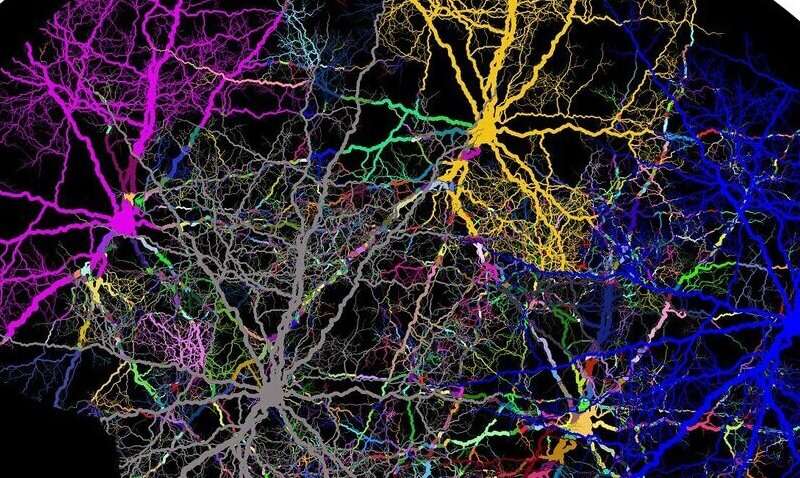
New research from Cedars-Sinai has identified the pathways of neurons that help people retrieve information from memories and use that information to make decisions—a discovery that may aid development of future treatments for memory disorders that accompany certain conditions, like schizophrenia and Alzheimer’s disease.

The research, led by Ueli Rutishauser, Ph.D., professor of Neurosurgery, Neurology and Biomedical Sciences, and Board of Governors Chair in Neurosciences at Cedars-Sinai, appears June 26 in the journal Science. This scientific work provides a detailed understanding of the neural networks behind the conscious recollection of information. Understanding those networks is laying the groundwork for scientists working on diseases and other problems within the brain that impact memory.

“This study sheds important light on how memories are retrieved to allow us to make decisions based on past experience,” Rutishauser said. “Our long-term goal is to enable the development of new treatments that combat the devastating effects of memory disorders.”

Cognitive flexibility is essential for many of the daily tasks that we perform, like remembering where we parked the car. A crucial aspect of this flexibility is the ability to rapidly change what we are doing based on a goal.

“What we discovered is a key aspect of the neural networks that are engaged when we effortfully search our memory for a piece of information needed to make a decision,” said Juri Minxha, Ph.D., postdoctoral scholar in Neurosurgery and the first author of the study.

In the study, subjects switched between two tasks—a categorization task and a memory task. For the categorization task, they were shown a series of images that included human faces, monkey faces, fruits and cars, and were asked after each image to determine whether it belonged to a certain visual category—for example, whether it was a fruit. Subjects indicated “yes” or “no” by pressing a button or moving their eyes to their selected choice, which was recorded using an eye-tracking device.

For the memory task, the subjects viewed a series of images and were asked whether each image was new or familiar. Again, they indicated their “yes” or “no” decisions by a button press or eye movement.

The investigators monitored the activity of single neurons in the subjects’ brains using small electrodes that had been implanted by co-investigator Adam Mamelak, MD, professor of Neurosurgery, for the treatment of epilepsy.

The investigators found that, in people performing the memory task, specific neurons in the medial frontal cortex (part of the brain involved in decision-making) coordinated their activity with neurons in the hippocampus (part of the brain involved in learning and memory) to create “memory pathways.” When patients switched to performing the categorization task, these pathways were no longer active.

“Our study showed that the pathways between the hippocampus and the medial frontal cortex are selectively switched on when the person needs that information,” Rutishauser said.

The study found no difference between the activation of these pathways in subjects who indicated their choice with the push button and those who used eye tracking.

“This result is important because it shows that these neurons signal the decision in an abstract form, not the activation of a particular movement to communicate the decision,” Rutishauser said.

The team is now investigating whether the same mechanism is involved in switching between different types of memory retrieval. The investigators also are studying ways to strengthen these newly discovered “memory pathways.” The investigators hypothesize that strengthening these pathways could hold the key to improving memory in patients suffering from certain memory disorders.


Explore furtherEpilepsy study shows link between brain activity and memory


More information: “Flexible recruitment of memory-based choice representations by the human medial frontal cortex” Science (2020). science.sciencemag.org/cgi/doi … 1126/science.aba3313Journal information:ScienceProvided by Cedars-Sinai Medical Center

https://venturebeat.com/2020/06/24/intels-sample-factory-speeds-up-reinforcement-learning-training-on-a-single-pc/

Intel’s Sample Factory speeds up reinforcement learning training on a single PC

KYLE WIGGERS@KYLE_L_WIGGERS JUNE 24, 2020 11:35 AM

In a preprint paper this week published on Arxiv.org, researchers at Intel describe Sample Factory, a system that achieves high throughput — higher than 10environment frames per second — in reinforcement learning experiments. In contrast to the distributed servers and hardware setups those experiments typically require, Sample Factory is optimized for single-machine settings, enabling researchers to achieve what the coauthors claim are “unprecedented” results in AI training for video games, robotics, and other domains.

Training AI software agents in simulation is the cornerstone of contemporary reinforcement learning research. But despite improvements in the sample efficiency of leading methods, most remain notoriously data- and computation-hungry. Performance has risen due to the increased scale of experiments, in large part. Billion-scale experiments with complex environments are now relatively commonplace, and the most advanced efforts have agents take trillions of actions in a single session.Recommended VideosPowered by AnyClipApple switches to its own chips for Mac computersPauseUnmuteDuration 1:40Toggle Close Captions/Current Time 0:17Loaded: 19.67% FullscreenUp Nexthttps://imasdk.googleapis.com/js/core/bridge3.392.0_en.html#goog_1409

Sample Factory targets efficiency with an algorithm called asynchronous proximal policy optimization, which aggressively parallelizes agent training and achieves throughput as high as 130,000 FPS (which here indicates environment frames per second) on a single-GPU commodity PC. It minimizes the idle time for all computations by associating each workload with one of three types of components: rollout workers, policy workers, and learners. These components communicate with each other using a fast queuing protocol and shared hardware memory. The queuing provides the basis for continuous and asynchronous execution, where the next computation step can be started immediately as long as there is something in the queue to process.

Intel Sample Factory

VB Transform 2020 Online – July 15-17. Join leading AI executives: Register for the free livestream.

To be clear, Sample Factory doesn’t enable experiments that couldn’t be performed before. But it accelerates them so that they’re more practical on single-PC setups than before. At full throttle, even with multi-agent environments and large populations of agents, Sample Factory can generate and consume more than 1GB of data per second. A typical update to a model takes less than 1 millisecond.

In experiments on two PCs — one with a 10-core CPU and a GTX 1080 Ti GPU and a second with a server-class 36-core CPU and a single RTX 2080 Ti — the researchers evaluated Sample Factory’s performance on three simulators: Atari, VizDoom (a Doom-like game used for AI research), and DeepMind Lab (a Quake III-like environment). They report that the system outperformed the baseline methods in most of the training scenarios after between 700 to 2,000 environments, reaching at least 10,000 frames per second.

In one test, the researchers used Sample Factory to train an agent to solve a set of 30 environments simultaneously. In another, they trained eight agents in “duel” and “deathmatch” scenarios within VizDoom, after which the agents beat the in-game bots on the highest difficulty in 100% of matches. And in a third, they had eight agents battle against each other to accumulate 18 years of simulated experience, which enabled those agents to defeat scripted bots 78 times out of 100.Sample Factory

Above: Sample Factory running in real time in the VizDoom environment.

“We aim to democratize deep [reinforcement learning] and make it possible to train whole populations of agents on billions of environment transitions using widely available commodity hardware,” the coauthors wrote. “We believe this is an important area of research, as it can benefit any project that leverages model-free [reinforcement learning]. With our system architecture, researchers can iterate on their ideas faster, thus accelerating progress in the field.”

Sample Factory and example models are available on GitHub.