https://www.bnnbloomberg.ca/zoom-soars-on-surging-sales-forecasts-that-swamp-estimates-1.1487545

Zoom soars on surging sales, forecasts that swamp estimates

Nico Grant, Bloomberg News

ZOOM (ZM:UW)

428.14 29.55 (6.46%)As of: 09/02/20 3:33:54 pm
(delayed at least 15 minutes)6. Jul3. Aug31. Aug100200300400500Chart Type – 3monthSee Full Stock Page »

Zoom Video Communications Inc. reported the second-largest sales surge among Nasdaq 100 companies last quarter, providing an emphatic demonstration that businesses and consumers have continued to flock to the video-meeting service in even larger numbers than expected. Shares soared as much as 47 per cent Tuesday.

Revenue jumped more than four times to US$663.5 million in the fiscal second quarter from a year earlier, the San Jose, California-based company said Monday in a statement. Analysts, on average, projected US$500 million. Biotech firm Moderna Inc. is the only Nasdaq 100 company to have reported a larger sales gain in a similar period, according to data compiled by Bloomberg. Earnings, excluding some items, were 92 cents a share in the period ended July 31, compared with analysts’ estimates of 45 cents.

Zoom has emerged as one of the clearest corporate beneficiaries of the COVID-19 pandemic, which has forced millions of people to remain home to prevent the spread of the virus. Workers, students and families count on the service to keep them connected to colleagues, teachers and loved ones. Chief Executive Officer Eric Yuan has tried to multiply the software maker’s good fortune by bringing complementary products to market, including an expanded phone service and dedicated monitors to slot into a home office.

“I’m at a loss for words,” said Rishi Jaluria, an analyst at D.A. Davidson who is bullish on the stock. “After Q1, my colleagues and I said this is one of the best quarters in software history. How do you follow this up? I think they’ve done it. Outside of the massive acceleration in growth, the biggest positive surprise is how much profitability is going to the bottom line.”

Zoom gave a forecast suggesting the explosive growth will continue. The company said sales will be as much as US$2.39 billion in the fiscal year ending in January — meaning revenue would almost quadruple in just one year. Analysts, on average, expected sales of US$1.81 billion. Zoom previously projected fiscal-year revenue of US$1.8 billion.

Fiscal-year adjusted profit will be US$2.40 to US$2.47 a share, the company said. Analysts, on average, estimated US$1.25.

Shares rose to an intraday high of US$478 in New York Tuesday after closing Monday at a record US$325.10. The stock, which entered the public markets in April 2019, has increased more than fourfold this year.

“Organizations are shifting from addressing their immediate business continuity needs to supporting a future of working anywhere, learning anywhere, and connecting anywhere on Zoom’s video-first platform,” Yuan said in the statement.

Zoom now has 370,200 business customers with more than 10 employees, a more than fivefold surge from a year earlier. There are now 988 clients spending more than US$100,000 on Zoom services, more than double the figure from a year ago.

The company has also made international growth a priority, bolstering operations in India to gain more users in the world’s second most-populous nation. The company hired 500 employees in the most recent period and told analysts in a conference call that it would expand spending on sales, marketing, capital expenditures and research and development in the coming quarters, to take advantage of the market opportunity. Yuan said Zoom is exploring an entry into the market for virtual events, but hasn’t decided whether it will partner or acquire to help businesses host remote conferences.

The results provide “confidence the company may extend its hyper growth beyond the peak of COVID-19 through at least the end of 2020,” said Boyoung Kim, an analyst at Bloomberg Intelligence. “The risk of churn as quarantine restrictions ease is manageable, given a rapidly expanding base of enterprise customers, many of which sign annual or multiyear contracts.”

https://www.bloomberg.com/news/articles/2020-09-01/amazon-drivers-are-hanging-smartphones-in-trees-to-get-more-work

Amazon Drivers Are Hanging Smartphones in Trees to Get More Work

By Spencer SoperSeptember 1, 2020, 5:51 AM PDT

  •  Someone seems to have rigged Amazon system to get orders first
  •  Operation reflects ferocious rivalry for gigs in a bad economy

Why Amazon Drivers Are Hanging Phones in TreesUnmuteWatch: Contract delivery drivers are putting smartphone in trees to get a jump on rivals seeking orders.

LISTEN TO ARTICLE

 4:58

A strange phenomenon has emerged near Amazon.com Inc. delivery stations and Whole Foods stores in the Chicago suburbs: smartphones dangling from trees. Contract delivery drivers are putting them there to get a jump on rivals seeking orders, according to people familiar with the matter.

Someone places several devices in a tree located close to the station where deliveries originate. Drivers in on the plot then sync their own phones with the ones in the tree and wait nearby for an order pickup. The reason for the odd placement, according to experts and people with direct knowledge of Amazon’s operations, is to take advantage of the handsets’ proximity to the station, combined with software that constantly monitors Amazon’s dispatch network, to get a split-second jump on competing drivers.

That drivers resort to such extreme methods is emblematic of the ferocious competition for work in a pandemic-ravaged U.S. economy suffering from double-digit unemployment. Much the way milliseconds can mean millions to hedge funds using robotraders, a smartphone perched in a tree can be the key to getting a $15 delivery route before someone else.

Amazon Drivers Are Hanging Smartphones In Trees To Get More Work
Contract delivery drivers hang mobile devices from a tree outside of a Whole Foods store in Evanston, Illinois, on Aug. 29.Photographer: Christopher Dilts/Bloomberg

Drivers have been posting photos and videos on social-media chat rooms to try to figure out what technology is being used to receive orders faster than those lacking the advantage. Some have complained to Amazon that unscrupulous drivers have found a way to rig the company’s delivery dispatch system.

In an internal email seen by Bloomberg, Amazon said it would investigate the matter but would be unable to divulge the outcome of its inquiry to delivery drivers. The company, through a spokeswoman, declined to comment.

Bloomberg reviewed photos and video of smartphones in trees outside Whole Foods and Amazon delivery stations. They show drivers approaching the phones and syncing them with their own devices, then sitting or standing nearby waiting for an alert about a route.

An Uber-like app called Amazon Flex lets drivers make deliveries in their own cars. For many with other jobs, it’s a way to earn extra money in their spare time. But with joblessness rising and unemployment payments shrinking, competition for such work has stiffened, and more people rely on it as their primary income source. Adding to the pressure, fewer people are using ride-hailing services like Uber and Lyft, so more drivers have to deliver online shopping orders to make money. As a result, some Whole Foods locations have come to resemble parking lots at Home Depot Inc., where day laborers have long congregated to pick up home repair gigs.

Unlike hourly employees who get paid even when work is slow, gig workers only get paid by the job. So securing a route through the smartphone app is the key first step to making money. Most Flex routes last from two to four hours and can be scheduled in advance. That system can be gamed as well. Drivers download apps on their smartphones that constantly monitor the Amazon Flex site and automatically take any routes that become available, as CNBC reported in February. Bloomberg reported similar use of apps by Instacart shoppers earlier this month.

Operations At An Amazon.com Inc. Fulfillment Center During the ICON Conference
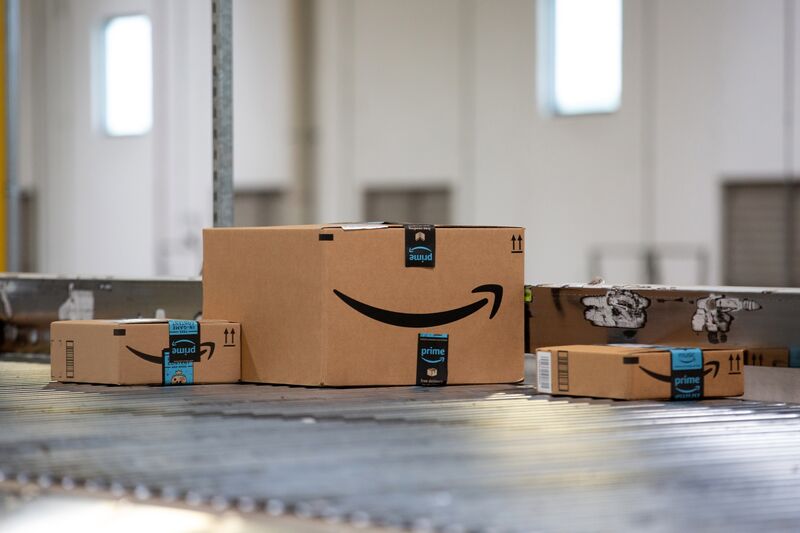
Packages at an Amazon fulfillment center.Photographer: Bess Adler/Bloomberg

What’s happening at Whole Foods in the Chicago area is different. Drivers are competing for fast-delivery Instant Offers, which require an immediate response and typically take between 15 and 45 minutes to complete. Instant Offers are dispatched by an automated system that detects which drivers are nearby through their smartphones, according to two people familiar with the technology. When drivers see an Instant Offer, they have only a few minutes to accept the delivery or lose it to someone else.

In an urban area with good cell tower coverage and plentiful WiFi hotspots, the system can detect a smartphone’s location to within about 20 feet, one of the people said. That means a phone in a tree outside Whole Foods’ door would get the delivery offer even before drivers sitting in their cars just a block away.

The phones in trees seem to serve as master devices that dispatch routes to multiple nearby drivers in on the plot, according to drivers who have observed the process. They believe an unidentified person or entity is acting as an intermediary between Amazon and the drivers and charging drivers to secure more routes, which is against Amazon’s policies.

The perpetrators likely dangle multiple phones in the trees to spread the work around to multiple Amazon Flex accounts and avoid detection by Amazon, said Chetan Sharma, a wireless industry consultant. If all the routes were fed through one device, it would be easy for Amazon to detect, he said.

“They’re gaming the system in a way that makes it harder for Amazon to figure it out,” Sharma said. “They’re just a step ahead of Amazon’s algorithm and its developers.”

One reason Flex contractors do this is to get around the requirements for being a driver, such as having a valid license or being authorized to work in the U.S., according to a person familiar with the matter. In such cases, someone who meets the requirements downloads the Flex app and is offered a route earning $18 an hour. He or she accepts the route and then pays someone else $10 an hour to do it, said the person, who requested anonymity to discuss a private matter.

A Flex driver who has been monitoring the activity said the company needs to take steps to make sure all drivers are treated fairly.

“Amazon knows about it,” the driver said, “but does nothing.”

https://www.motorbiscuit.com/tesla-we-wish-to-be-the-leader-in-apocalypse-technology/

Tesla: “We Wish To Be The Leader In Apocalypse Technology”

by Thom Tayloron 

You can always count on Tesla founder Elon Musk to be provocative. Recently he was interviewed and revealed some interesting background to the controversial Cybertruck and its origins. Like this ditty, “We wish to be the leader in apocalypse technology.” Say, what?https://34bfdd3b15708d5145f90385fb23fa70.safeframe.googlesyndication.com/safeframe/1-0-37/html/container.html

There’s more. “I just wanted to make a futuristic battle tank, something that looked like it came out of Bladerunner or Aliens or something like that,” Elon Musk explained. So, do you get the impression Tesla is just one big playground for Mr. Musk? That those within the Tesla empire do his bidding without question? 

“We just made a car we thought was awesome and looked super-weird”

https://34bfdd3b15708d5145f90385fb23fa70.safeframe.googlesyndication.com/safeframe/1-0-37/html/container.html

Here’s what he told the podcast Automotive News Daily Drive, “Customer research? We just made a car we thought was awesome and looked super-weird,” explained Musk. “The body panels are bulletproof to a handgun so it’s probably helpful in the apocalypse,” he added. “Let me tell you, the truck you want in the apocalypse is the Cybertruck. We wish to be the leader in apocalypse technology.” 

During the infamous Cybertruck debut last November Musk explained his 30x cold-rolled stainless steel body could withstand a 9mm bullet from a handgun. The demonstration of the bulletproof glass didn’t work out as you’ll remember. But it did leave you with the idea that the whole Cybertruck purpose was to escape some kind of dystopian landscape. 

“Cybertruck option package”

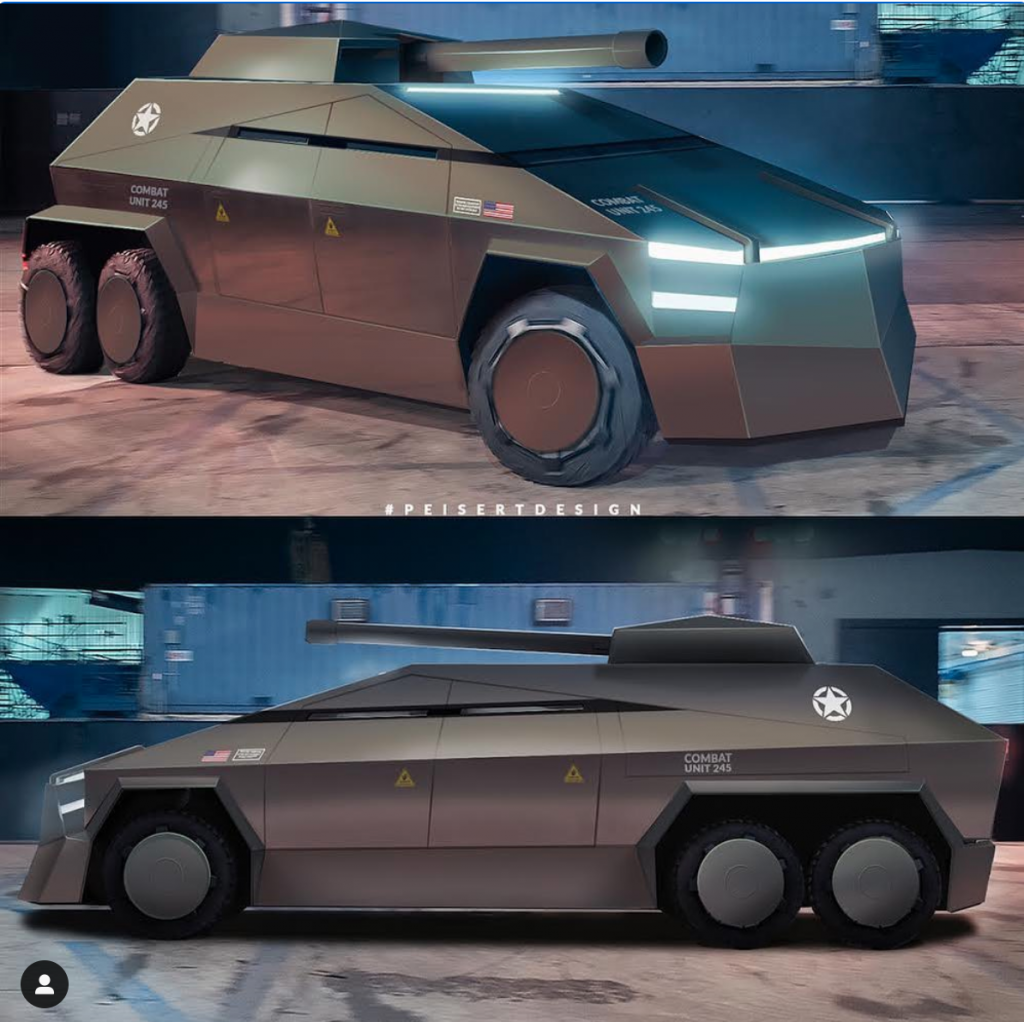
You know that this paramilitary truck idea is on Musk’s mind when the Cybertruck is brought up. In a recent tweet, he teased about a “Cybertruck option package.” Some designers have actually tackled what a military version of the Sybertruck would look like. https://www.youtube.com/embed/wrJoT6jQ6Jk?feature=oembedhttps://34bfdd3b15708d5145f90385fb23fa70.safeframe.googlesyndication.com/safeframe/1-0-37/html/container.html

RELATED: People Are Losing Their S**t Over Tesla Cybertruck

This YouTube dissertation of Jan Peisert’s ideas for how this would take form gives you a great look at imagined military Cybertrucks. There are four variants as well as the background behind each imagination and annotated “blueprints” too. Each is different from the other making for an imaginative presentation. 

Cybertruck Military render | Peisert

https://34bfdd3b15708d5145f90385fb23fa70.safeframe.googlesyndication.com/safeframe/1-0-37/html/container.html

The question should be would the military actually consider electrified “battle tanks?” In an apocalyptic future would it be more reliable to count on processing and schlepping in gasoline? Would electricity even be available in instances where the Cybertruck might be in a warzone or other such environment? 

Military Cybertruck design | Peisert

It’s fun to imagine if Musk and company have actually apocalypse technology into account

It might be worth having a Cybertruck that is more of a hybrid with a small auxiliary gas engine in case the juice isn’t flowing. It would give the occupants at least some chance of escaping when the batteries run dry. This is all crazy speculation but fun to imagine if Musk and company have actually taken these scenarios into account? 

As an aside, we like seeing the Cybertruck painted even if it is Army green. We’re already tired of the stainless-steel look while the overall design is slowly settling in. Musk has said in the past that Tesla might have a wrap department that could put anything the customer wanted onto the Cybertruck. Maybe even he is getting a little tired of the shiny silver finish?

https://www.dezeen.com/2020/09/02/neuralink-elon-musk-brain-implant-technology/

Elon Musk unveils updated Neuralink brain implant design and surgical robot

Natashah Hitti | 7 hours ago3 comments

Elon Musk‘s neuroscience startup Neuralink has revealed the “dramatically simplified” design for an implant that aims to create brain-to-machine interfaces, alongside the robot that inserts it and several pigs that have the device installed.

Musk shared updates of the implant, which Neuralink is developing to connect human brains with computer interfaces via artificial intelligence, in an online presentation last week.

In the presentation, the entrepreneur and Tesla founder unveiled the new design of the chip, as well as the full-scale surgical robot and a group of pig test subjects.

Elon Musk unveils new Neuralink brain implant design and robot that inserts it
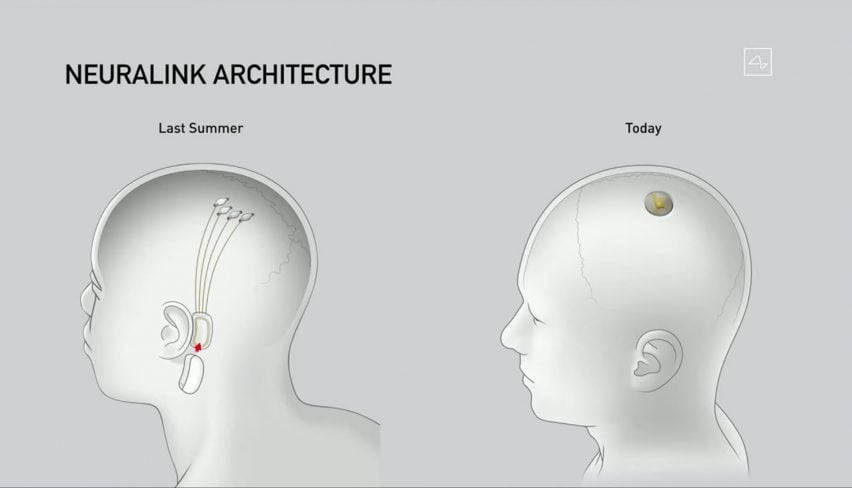
The Neuralink has been simplified from a device behind the ear to one on top of the skull

Musk explained that over the past year the company has “dramatically simplified” the wearable device. The previous design consisted of a bean-shaped device that would sit behind the ear.

“It was complex, and you still wouldn’t look totally normal; you would have a thing behind your ear,” he said about the old design. “So we’ve simplified this to something that is about the size of a large coin, and it goes in your skull.”

The in-brain device could enable humans with neurological conditions to control technology, such as phones or computers, with their thoughts.

Musk also claims to be able to solve neurological disorders from memory, hearing loss and blindness to paralysis, depression and brain damage.

Elon Musk unveils new Neuralink brain implant design and robot that inserts it
The coin-sized chip would enable humans to control technology with their mind

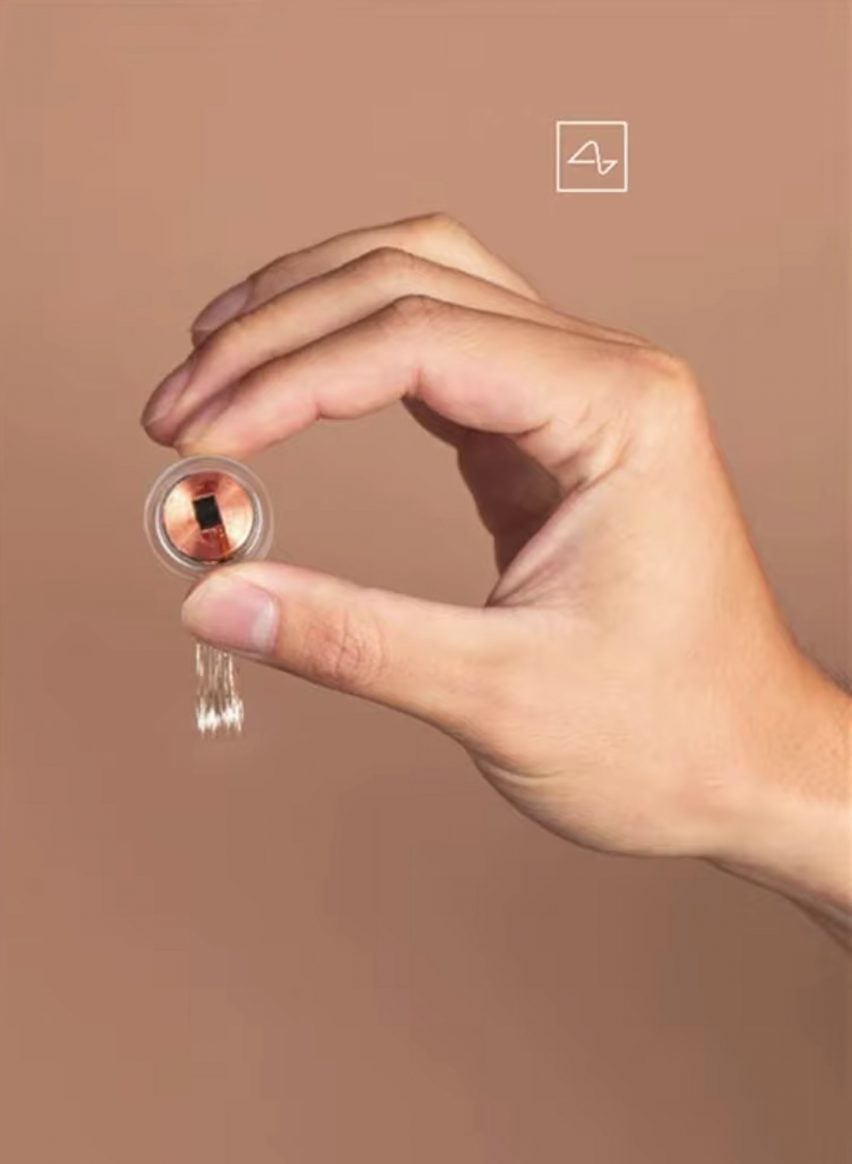
The current prototype – referred to as version 0.9 – measures at 23 millimetres by eight millimetres, and has 1024 electrode “threads” attached to it that are implanted into the brain.Related storyElon Musk’s Neuralink implant will “merge” humans with AI

It is designed to replace a coin-sized portion of skull and sit flush so it would be physically unnoticeable. It would be inductively charged, the same way you would wirelessly charge a smartwatch or a phone.

“It’s kind of like a FitBit in your skull, with tiny wires,” said Musk.

Elon Musk unveils new Neuralink brain implant design and robot that inserts it
Woke Studios designed the robot that inserts the devices

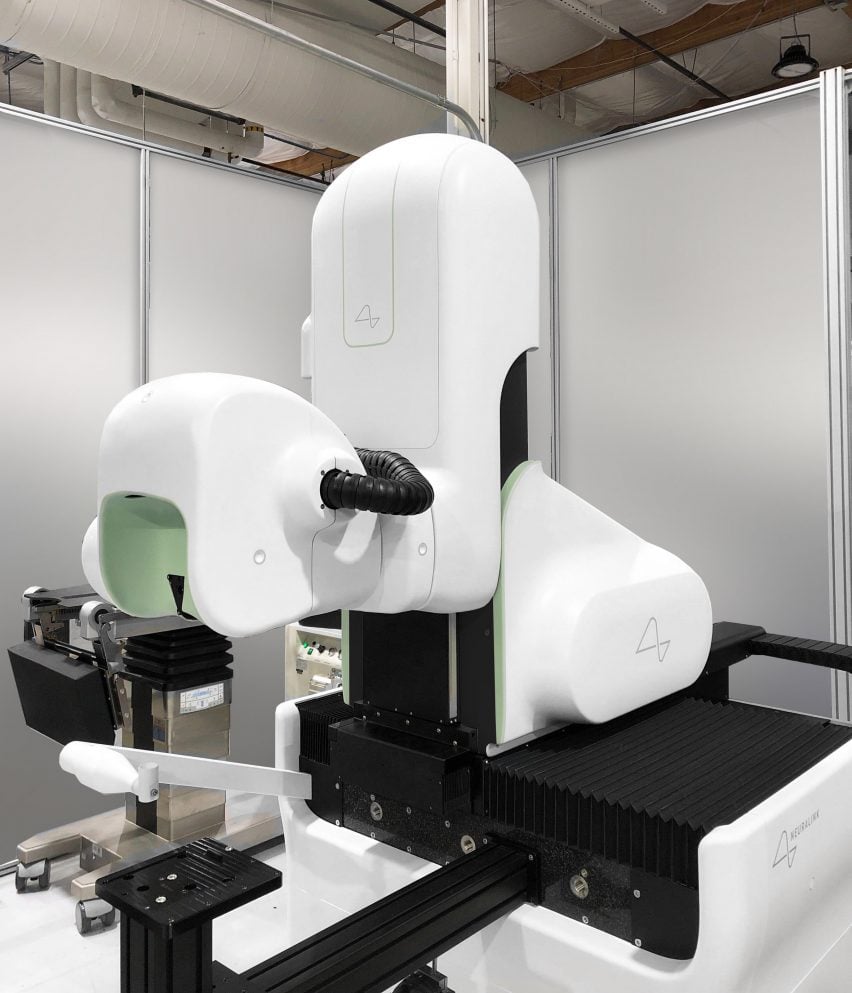
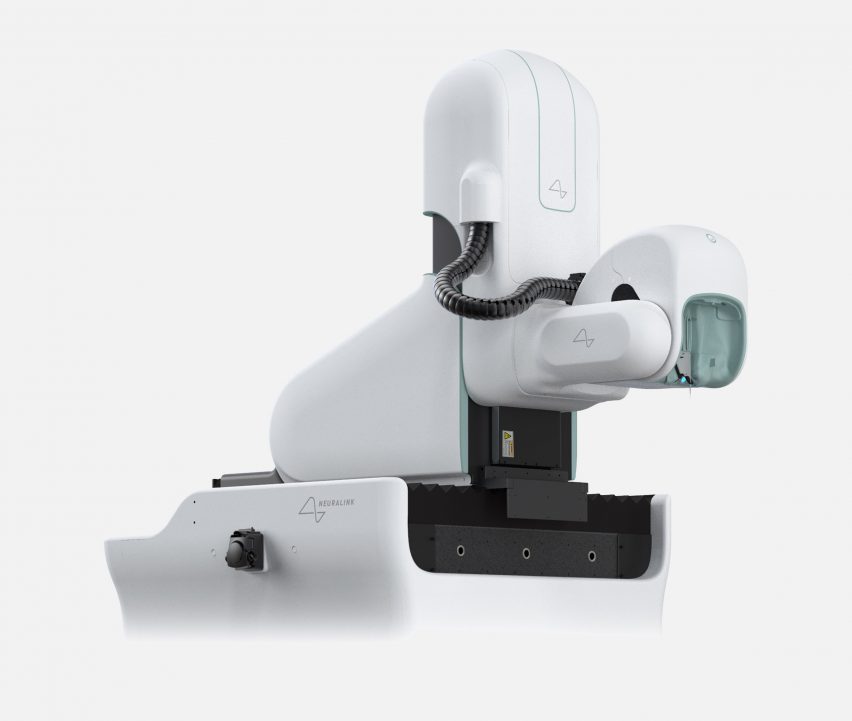
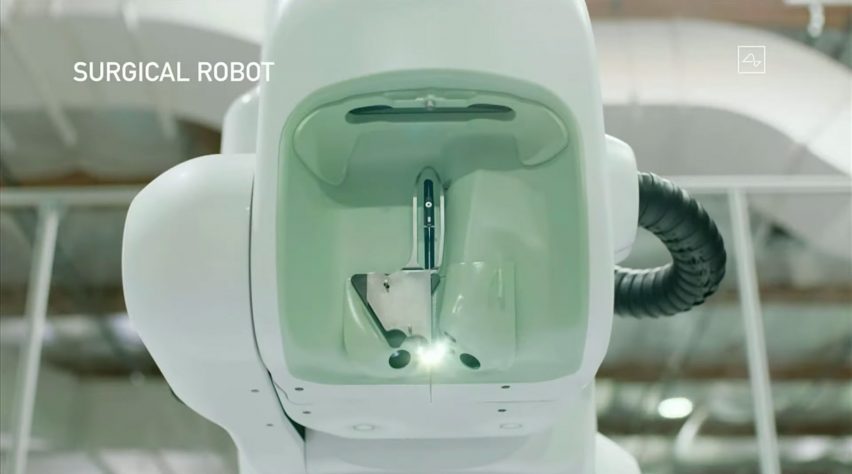
Designed by US tech company Woke Studios, the surgical robot is programmed to insert the neural threads safely into the brain.

The robot would be able to insert the link in under an hour without general anaesthesia, with the patient able to leave hospital on the same day.

“We ultimately want this robot to do essentially the entire surgery – so everything from incision, removing the skull, inserting electrodes, placing the device and then closing things up,” said Musk during the live event. “We want to have a fully automated system.”

The robot has been used to insert the implant into a number of pigs that are being used to test the device.

Elon Musk unveils new Neuralink brain implant design and robot that inserts it
The surgical robot is designed to be “comforting” for patients

As Woke Studios explained, the team wanted to design the machine to suit its clinical setting, while still comforting patients and expressing “the futuristic nature” of the technology.

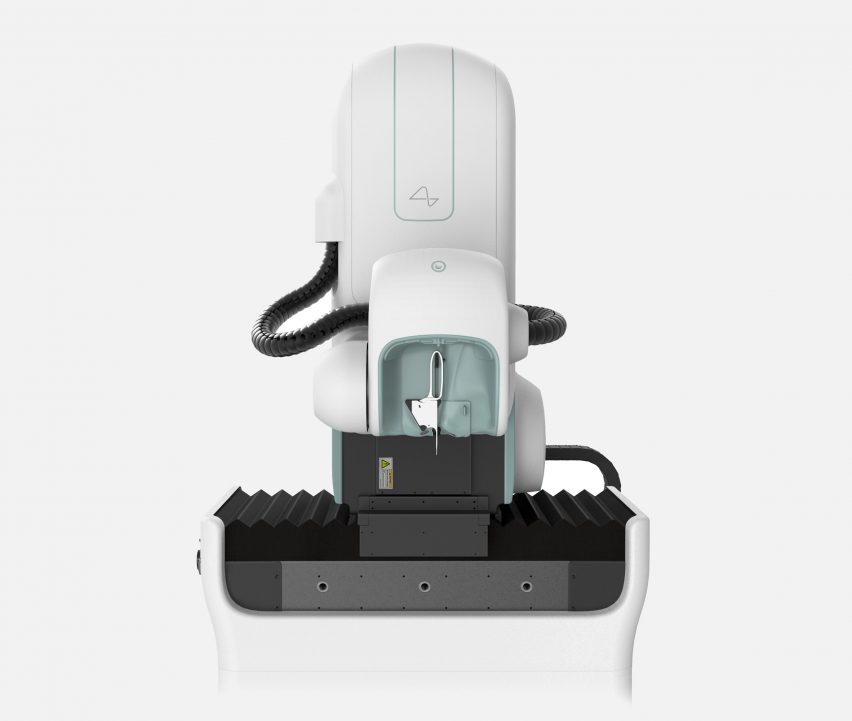
Comprised of three main elements – the head, the body and the base – the eight-foot-tall robot features a rounded form with soft edges, similar to other, less invasive, medical machines in a bid to give as much of a “friendly-feeling” as possible.

While the majority of the robot is coloured in white, for sterility purposes, the inner surface of the head has been given a light, mint green colour to provide “visual comfort”.

Elon Musk unveils new Neuralink brain implant design and robot that inserts it
Neural threads are inserted into the brain via a needle

Designed “with zero room for error”, the head of the machine holds and guides the needle that performs the operation, and contains a large amount of cameras and sensors to capture the whole brain.

The asymmetric body features a “car-like curvature”, and provides the mechanics for controlled movement. This part of the robot, which moves in five axes, was designed to make the motion appear “clean and effortless”.

The body is attached to the base, which provides weighted support for the whole structure and holds the processing power to operate the entire machine.

Elon Musk unveils new Neuralink brain implant design and robot that inserts it
The implant could allegedly solve neurological disorders

Musk also showed viewers the group of pigs that he and his team have been testing the Neuralink implant on during the live presentation.

The implant sends real-time signals from the animal’s brain whenever it touches something with its snout.Related storyDezeen Awards 2020 design longlist announced

Described as “healthy and happy”, one of the pigs was given an implant two months ago, while another pig has dual Neuralink implants, demonstrating that it is possible to have multiple chips in your head at one time.

A third pig has no implant. According to Musk, each of the animals are “indistinguishable” from each other.

Musk also showed a pig that previously had a chip inserted into its brain, but had since been removed, to show that the procedure is reversible without any serious side-effects.

Elon Musk unveils new Neuralink brain implant design and robot that inserts it
Musk revealed the updates during a live presentation on 28 August

Neuralink received a Breakthrough Device designation from the FDA in July. The startup is now preparing for its first human implantation, pending required approvals and further safety testing.

Woke Studios’ design for the Neuralink N1 brain implant was recently longlisted in the wearable design project category for this year’s Dezeen Awards.

https://www.newswire.ca/news-releases/xanadu-releases-world-s-first-photonic-quantum-computer-in-the-cloud-818969456.html

Xanadu Releases World’s First Photonic Quantum Computer in the Cloud


NEWS PROVIDED BYXanadu 

Sep 02, 2020, 09:00 ET


Xanadu Quantum Cloud offers access to 8 and 12 qubit processors using photonics, the most viable path to large scale fault tolerance

TORONTO, Sept. 2, 2020 /CNW/ – Xanadu, the leader in photonic quantum computing, announced today the release of the world’s first publicly available photonic quantum cloud platform. Developers can now access Xanadu’s gate-based photonic quantum processors, in 8, 12, and soon 24 qubit machines. 

Photonics based quantum computers have many advantages over older platforms. Xanadu’s quantum processors operate at room temperature. They can easily integrate into existing fiber optic-based telecommunication infrastructure, enabling a future where quantum computers are networked. It also offers great scalability supporting fault tolerance, owing to robust error-resistant physical qubits and flexibility in designing error correction codes. Xanadu’s unique type of qubit is based on squeezed states – a special type of light generated by our own chip-integrated silicon photonic devices.

“We believe that photonics offers the most viable approach towards universal fault-tolerant quantum computing with Xanadu’s ability to network a large number of quantum processors together. We are excited to provide this ecosystem, a world-first for both quantum and classical photonics,” said Christian Weedbrook, Xanadu Founder and CEO. “Our architecture is new, designed to scale-up like the Internet versus traditional mainframe-like approaches to quantum computing.”

Xanadu’s partners and customers are currently testing solutions on the pre-release Xanadu Quantum Cloud. These include leading academic institutions, quantum startups, and major national labs including Creative Destruction Labs, Scotia Bank, BMO and Oak Ridge National Laboratory (ORNL). Now the company will be extending access to a number of new enterprise clients who are seeking to leverage quantum computing to solve their most complex problems.

In addition to Xanadu Quantum Cloud, developers will use Xanadu’s open-source tools widely available on Github. These include Strawberry Fields, its cross-platform Python library for simulating and executing programs on quantum photonic hardware and PennyLane, its software library for quantum machine learning, quantum computing, and quantum chemistry. The community for these platforms is growing rapidly. The community includes a vast array of tutorials and educational materials for users of all levels of experience to begin developing and experimenting with quantum applications. 

The Xanadu team is hard at work developing the next generation of photonic quantum computers. “We believe we can roughly double the number of qubits in our cloud systems every six months,” said Weedbrook. “Future machines will also offer improved performance and new features like increased qubit connectivity, unlocking more applications for customers.” In addition to the computing market, the company is also targeting secure communication and quantum networking, an area that photonics is poised to dominate. “We are laying the groundwork for our vision of the future: a global array of photonic quantum computers, networked over a quantum internet.”

The enterprise adoption of quantum computing is in the early stages of development, but access to photonic quantum computing over the cloud will – for the first time – give developers across industries and academia the chance to explore potential business applications. Open access educates and drives interest towards new, concrete implementations that demonstrate the future of computing. Xanadu’s processors provide researchers and developers with novel approaches that are unique to solve problems in finance, quantum chemistry, machine learning, and graph analytics. 

Xanadu announced a $32 million Series A financing in June 2019. OMERS Ventures led the round with participation from Georgian Partners, Radical Ventures, Real Ventures, Silicon Valley Bank and Tim Draper. In addition they have received grants from DARPA and Sustainable Development Technology Canada (SDTC) to advance its work in photonic quantum computing. Xanadu’s total investment to date is $45 million.

Sign up for cloud access at Xanadu.ai

About Xanadu
Xanadu is a Canadian quantum technology company with the mission to build quantum computers that are useful and available to people everywhere. Founded in 2016, Xanadu has

become one of the world’s leading quantum hardware and software companies. The company also leads the development of Pennylane, an open-source software library for quantum machine learning and application development. visitwww.xanadu.ai or follow us on Twitter @XanaduAI.

SOURCE Xanadu

https://appleinsider.com/articles/20/09/02/vuzixs-designer-smart-glasses-to-debut-in-2021

Vuzix’s designer smart glasses to debut in 2021

author image By Mikey Campbell | 6 hours ago

article thumbnail

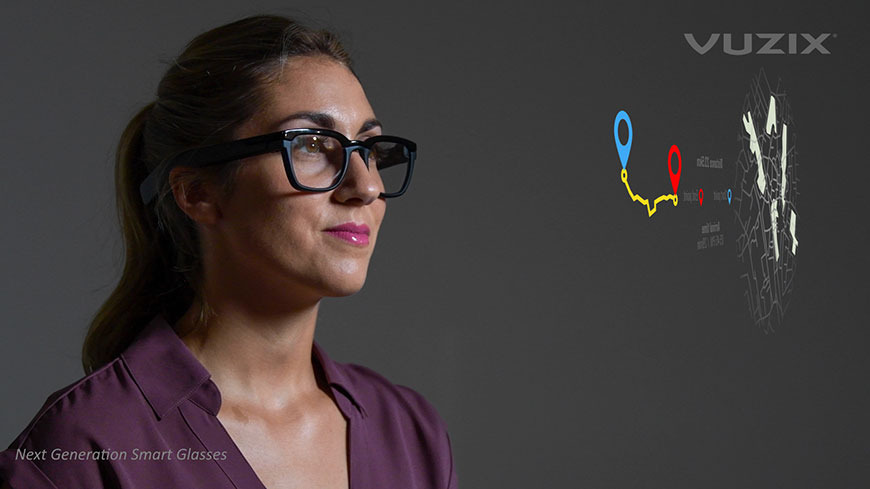
Vuzix, a firm at the forefront of augmented reality and smart optics technology, has announced plans to debut a stylish set of consumer smart glasses in 2021.

The smart glasses industry, though still niche in the consumer space, has come a long way since Google Glass. Market players have in the intervening years managed to develop increasingly complex optics, miniaturized audio hardware and power-dense battery packs, but packaging it all into a visually appealing product remains a struggle.

Vuzix hopes to change that with a forthcoming device lineup set for unveiling in 2021.

Announced on Wednesday, the firm’s next-generation smart glasses are bristling with optical technology that has been refined over the past 20 years.

“It’s taken years to develop — and intellectual properties from multiple disciplines — but all in [all] we’re excited that Vuzix Next Generation smart glasses are finally able to deliver so much experience to the user in such fashion forward designs,” Paul Travers, President and CEO at Vuzix, told AppleInsider in an emailed statement.

At the heart of the device are a pair of micro LED projectors embedded in an eyeglass frame’s end pieces, each flanking thin, see-through binocular waveguides that double as a common lenses. Waveguides are commonly used in AR glasses as a means of routing graphical information from an output source to one or more display planes positioned in front of a user’s eyes.

At one micron across, the micro LEDs in Vuzix’s glasses offer one of the highest density pixel arrays available, the company says. Both monochrome and full-color, high-resolution RGB modules are in development, as is support for prescription lenses.

Information like heads-up display data, including navigation, incoming phone calls, real-time language translation and more, can be processed by an on-board CPU running Android. The setup allows for the display of holograph-style 3D images that float in front of a user’s eyes.

Watch the Latest from AppleInsider TV

Primis Player Placeholder

Skip Ad

A wireless communications stack with Wi-Fi, Bluetooth and cellular LTE radios is also included for standalone use without a companion smartphone. Multiple noise-cancelling microphones handle phone calls and facilitate voice-enabled device interactions, while frame-integrated acoustic chambers route stereo sound directly to a user’s ears. The displays can also be controlled by tapping on one of the frame’s arms.

Third-party apps will be supported, and Vuzix is currently in talks to integrate outside app ecosystems. The firm also plans to achieve Made for iPhone certification.

For smart glasses, a futuristic take on a very personal accessory, what’s outside is just as — if not more — important as what’s inside. That notion is not lost on Vuzix, and the company will be venturing into largely unknown territory with its next-generation models. Vuzix has years of experience with no-nonsense enterprise solutions like AR security glasses, but has had little exposure to a wider, more fickle consumer market.

“Vuzix’ focus is on Enterprise and that will not change,” Travers said. “You will see our Next Generation technology with a continued focus on that part of our business. Clearly the form factor is a great fit for the broader markets and you will see Vuzix, in cooperation with partners, wade into those waters too.”

The company plans to release two models bearing its new tech next year: a more affordable pair of smart glasses and a higher-end variant with AR functionality.

Vuzix plans to share more about the next-generation hardware, including component specifications and a final design, in the coming months.

Apple is rumored to be working on a pair of so-called “Apple Glass” device, an in-house designed AR headset that could debut as soon as next year. Previous reports have claimed the project, referred to internally as “T288,” runs its own “rOS” operating system and employs ultra high-resolution 8K displays, LiDAR and a separate processing unit to overlay virtual images over real-world objects present in a user’s field of vision. More recent rumblings suggest Apple is working on two distinct head-mounted wearables, one being a simplified heads-up display.

https://www.psypost.org/2020/09/sleep-quality-has-declined-since-covid-19-lockdown-particularly-among-those-working-from-home-57863

Sleep quality has declined since COVID-19 lockdown, particularly among those working from home

BY BETH ELLWOOD 

Findings published in the Journal of Translational Medicine suggest that Italians have suffered a reduction in sleep quality since the beginning of the pandemic, characterized by changes in sleep efficiency, sleep onset latency, sleep disturbances, and daytime dysfunction. These adverse changes were more pronounced in those who were remote working.

As the COVID-19 pandemic struck Italy, the country, like many others, went into intense lockdown. Study authors Luigi Barrea and colleagues describe how this unprecedented quarantine drastically altered citizens’ daily lives, altering their grocery shopping habits, reducing their opportunities for physical activity, and leaving many citizens working from home.

Barrea and colleagues wanted to see how these changes may have impacted citizens’ sleeping habits and possibly affected their Body Mass Index (BMI).

In a retrospective study, data was obtained from 121 men and women between the ages of 18 and 65. Data was collected at baseline, before any quarantine, and again 40 days after lockdown. Participants’ BMI was calculated, and their quality of sleep was assessed using the Pittsburgh Sleep Quality Index (PSQI).

Results revealed that, overall, participants showed a significant increase in PSQI score — indicating worse sleep — following the 40 days of quarantine. When it came to specific aspects of sleep, participants showed increased sleep disturbance and daytime dysfunction, less efficient sleep, and an increase in the time it took them to fall asleep.

Interestingly, those who reported ‘smart working’ — using technology to work from home —showed a greater loss in sleep quality than those who did not. While this effect was found for both genders, the effect was strongest in men. The authors point out that the use of smart devices has been strongly linked to poor sleep. Working from home may lead to increased screen time, including time spent in front of the computer or television screen late at night, which can impact sleep quality.

Next, subjects’ BMI was found to increase, overall, after the quarantine. As the authors point out, limited shopping excursions likely led people towards unhealthy food choices, such as more processed food and less fresh fruits and vegetables. These food choices may also have affected participants’ quality of sleep, as energy intake from fats and snacks has been linked to poorer sleep. Unsurprisingly, participants also reported reduced physical activity during the lockdown.

The researchers address how stress related to the pandemic likely affected participants’ sleep, creating a destructive cycle. Stress releases cortisol in the body, and hypercortisolism has been linked to interrupted sleep, fewer hours of sleep, and reduced slow-wave sleep. In turn, poor sleep can exacerbate hypercortisolism, contributing to an endless cycle.

The study was limited since it did not include an analysis of subjects’ diet. Nevertheless, the authors suggest that “consuming food containing or promoting the synthesis of serotonin and melatonin at dinner such as roots, leaves, fruits, and seeds such as almonds, bananas, cherries, and oats” may help mitigate sleep disturbances during quarantine.

The study, “Does Sars‑Cov‑2 threaten our dreams? Effect of quarantine on sleep quality and body mass index”, was authored by Luigi Barrea, Gabriella Pugliese, Lydia Framondi, Rossana Di Matteo, Daniela Laudisio, Silvia Savastano, Annamaria Colao, and Giovanna Muscogiuri.

https://www.fool.com/investing/2020/09/01/apple-expands-wearables-leadership-in-q2/

Apple Expands Wearables Leadership in Q2

The Mac maker grabs more share in a growing market.

Evan Niu

Evan Niu, CFA(TMFNewCow)Sep 1, 2020 at 9:20AMAuthor Biohttps://platform.twitter.com/widgets/follow_button.2d7d9a6d04538bf11c7b23641e75738c.en.html#dnt=false&id=twitter-widget-0&lang=en&screen_name=TMFNewCow&show_count=true&show_screen_name=true&size=l&time=1599008879630

The wearables market saw unit volumes jump by 14% in the second quarter, according to the latest estimates from IDC. While the COVID-19 pandemic has hurt discretionary spending, it’s also driven heightened interest in being able to track health data. Hearables — wearable audio gadgets that include additional functionalities — continued to be the largest product category.

Apple expanded its leadership in the market even as the overall market grew.Close-up of a hand gripping a handlebar, with an Apple Watch on the person's wrist

IMAGE SOURCE: APPLE.

Most wearables are hearables 

Worldwide wearables shipments were 86.2 million in the second quarter, and hearables represented 60% of all wearables. Watches and wristbands accounted for just under 40%, with other nascent categories like rings or connected clothing being little more than a rounding error following a 59% year-over-year decline.

Here were the top five vendors in the second quarter.

VendorQ2 2020 ShipmentsQ2 2020 Market ShareGrowth (YOY)
Apple (NASDAQ:AAPL)29.4 million34.2%25.3%
Huawei10.9 million12.6%58%
Xiaomi10.1 million11.8%13.5%
Samsung7.1 million8.3%0.9%
Fitbit (NYSE:FIT)2.5 million2.9%(29.2%)
Others26.1 million30.3%1.6%
Total86.2 million100%14.1%

DATA SOURCE: IDC. YOY = YEAR OVER YEAR.

The majority of Apple’s shipments were hearables. The Mac maker shipped an estimated 23.7 million AirPods and Beats products, representing over 80% of the Cupertino tech giant’s total volumes. IDC says that demand for earworn wearables was bolstered by the ongoing shift to remote work and remote learning. Additionally, AirPods are more affordable than Apple Watch, and Apple launched its annual back-to-school promotion near the end of the quarter that included free AirPods with qualifying hardware purchases.  

Wristbands and other wrist-worn wearables like smartwatches saw units decline by 4.4%. IDC notes that Fitbit has made progress in strengthening its brand by investing in different ways to detect disease. Last week, Fitbit unveiled its 2020 product lineup, including a new Sense smartwatch that will soon be able to take ECGs while utilizing an electrodermal activity (EDA) sensor to measure stress and anxiety levels. The company had already reported its 29% drop in shipments to 2.5 million when it announced earnings earlier this month.

China’s Huawei continues to climb the rankings, posting the strongest growth (46%) in the wrist-worn category. Huawei launched its Watch GT last year and is expected to release a higher-end Watch GT 2 Pro as early as next month. Xiaomi continues to hold its own in wristbands thanks to its affordable Mi Band fitness trackers.

Apple Watch shipments increased 14% to an estimated 5.8 million. The older Apple Watch Series 3 continues to sell well at its lower price point, and the company is expected to unveil the Apple Watch Series 6 alongside the iPhone 12 soon. Apple is also reportedly working on third-generation AirPods that are scheduled to launch in early 2021.

Just Released: Three “Double Down” Stock Picks for 2020

Something big just happened here at The Motley Fool. Our market-beating team just issued three new “double down” stock recommendations for 2020. These are the stocks we have the highest conviction in and think are screaming buys right now.

These “double down” alerts don’t happen very often, but when they do, investors know it can pay off in a big way to listen. Simply click here to find out how you can access these new picks now.Evan Niu, CFA owns shares of Apple. The Motley Fool owns shares of and recommends Apple and Fitbit. The Motley Fool has a disclosure policy.

One 5G Stock for 2020 – Motley Fool Makes 5G Buy Alert

5G is one of the greatest arrivals in technology since the birth of the internet.

And in 2020… we could see an onslaught of new wealth-building opportunities for Canadian investors that would potentially dwarf any that came before them.

  • Bigger than the dot-com boom
  • Bigger than the Bitcoin boom of 2017
  • Bigger than pot stocks

There’s a perfect storm being created by some of the biggest tech titans in the world… with each one fighting tooth and nail to win the 5G arms race.

But the smart money is doing something different…

Fortunately, our team at Motley Fool Stock Advisor Canada has identified one under-the-radar California company that’s cleverly positioned itself to dominate the 5G industry with its unique business model and technology.

Simply click here to get the full story now.

https://singularityhub.com/2020/09/01/neuralinks-new-brain-implant-the-hype-vs-the-science/

Neuralink’s Wildly Anticipated New Brain Implant: the Hype vs. the Science

By Shelly Fan -Sep 01, 202011180

Neuralink’s wildly anticipated demo last Friday left me with more questions than answers. With a presentation teeming with promises and vision but scant on data, the event nevertheless lived up to its main goal as a memorable recruitment session to further the growth of the mysterious brain implant company.

Launched four years ago with the backing of Elon Musk, Neuralink has been working on futuristic neural interfaces that seamlessly listen in on the brain’s electrical signals, and at the same time, “write” into the brain with electrical pulses. Yet even by Silicon Valley standards, the company has kept a tight seal on its progress, conducting all manufacturing, research, and animal trials in-house.

A vision of marrying biological brains to artificial ones is hardly unique to Neuralink. The past decade has seen an explosion in brain-machine interfaces—some implanted into the brain, some into peripheral nerves, or some that sit outside the skull like a helmet. The main idea behind all these contraptions is simple: the brain mostly operates on electrical signals. If we can tap into these enigmatic “neural codes”—the brain’s internal language—we could potentially become the architects of our own minds.

Let people with paralysis walk again? Check and done. Control robotic limbs with their minds? Yup. Rewriting neural signals to battle depression? In humans right now. “Recording” the electrical activity behind simple memories and playing it back? Human trials ongoing. Linking up human minds into a BrainNet to collaborate on a Tetris-like game through the internet? Possible.

Given this backdrop, perhaps the most impressive part of the demonstration isn’t lofty predictions of what brain-machine interfaces could potentially do one day. In some sense, we’re already there. Rather, what stood out was the redesigned Link device itself.

A FitBit for the Brain

In Neuralink’s “coming out” party last year, the company envisioned a wireless neural implant with a sleek ivory processing unit worn at the back of the ear. The electrodes of the implant itself are “sewn” into the brain with automated robotic surgery, relying on brain imaging techniques to avoid blood vessels and reduce brain bleeding.

The problem with that design, Musk said, is that “it had multiple pieces and was complex. You still wouldn’t look totally normal because there’s a thing coming out of your ear.”

The prototype at last week’s event came in a vastly different physical shell. About the size of a large coin, the device replaces a small chunk of your skull and sits flush with the surrounding skull matter. The electrodes, implanted inside the brain, connect with this topical device. When covered by hair, the implant is invisible.

Musk envisions an outpatient therapy where a robot can simultaneously remove a piece of the skull, sew the electrodes in, and replace the missing skull piece with the device. According to the team, the Link has similar physical properties and thickness as the skull, making the replacement a sort of copy-and-paste. Once inserted, the Link is then sealed to the skull with “superglue.”

“I could have a Neuralink right now and you wouldn’t know it,” quipped Musk.

For a device that small, the team packed an admirable array of features into it. The “Link” device has over 1,000 channels, which can be individually activated. This is on par with Neuropixel, the crème de la crème of neural probes with 960 recording channels that’s currently used widely in research, including by the Allen Institute for Brain Science.

Compared to the Utah Array, a legendary implant system used for brain stimulation in humans with only 256 electrodes, the Link has an obvious edge up in terms of pure electrode density.

What’s perhaps most impressive, however, is its onboard processing for neural spikes—the electrical pattern generated by neurons when they fire. Electrical signals are fairly chaotic in the brain, and filtering spikes from noise, as well as separating trains of electrical activity into spikes, normally requires quite a bit of processing power. This is why in the lab, neural spikes are usually recorded offline and processed using computers, rather than with on-board electronics.

The problem gets even more complicated when considering wireless data transfer from the implanted device to an external smartphone. Without accurate and efficient compression of those neural data, the transfer could tremendously lag, drain battery life, or heat up the device itself—something you don’t want happening to a device stuck inside your skull.

To get around these problems, the team has been working on algorithms that use “characteristic shapes” of electrical patterns that look like spikes to efficiently identify individual neural firings. The data is processed on the chip inside the skull device. Recordings from each channel are filtered to root out obvious noise, and the spikes are then detected in real time. Because different types of neurons have their characteristic ways of spiking—that is, the “shape” of their spikes are diverse—the chip can also be configured to detect the particular spikes you’re looking for. This means that in theory the chip could be programmed to only capture the type of neuron activity you’re interested in—for example, to look at inhibitory neurons in the cortex and how they control neural information processing.

These processed spike data are then sent out to smartphones or other external devices through Bluetooth to enable wireless monitoring. Being able to do this efficiently has been a stumbling block in wireless brain implants—raw neural recordings are too massive for efficient transfer, and automated spike detection and compression of that data is difficult, but a necessary step to allow neural interfaces to finally “cut the wire.”

Link has other impressive features. For one, the battery life lasts all day, and the device can be charged at night using inductive charging. From my subsequent conversations with the team, it seems like there will be alignment lights to help track when the charger is aligned with the device. What’s more, the Link itself also has an internal temperature sensor to monitor for over-heating, and will automatically disconnect if the temperature rises above a certain threshold—a very necessary safety measure so it doesn’t overheat the surrounding skull tissue.

An Inherent Tension

From the get-go of the demonstration, there was an undercurrent of tension between what’s possible in neuroengineering versus what’s needed to understand the brain.

Since its founding, Neuralink has always been fascinated with electrode numbers: boosting channel numbers on its devices and increasing the number of neurons that can be recorded at the same time.

At the event, Musk said that his goal is to increase the number of recorded neurons by a factor of “100, then 1,000, then 10,000.”

But here’s the thing: as neuroscience is increasingly understanding the neural code behind our thought processes, it’s clear that more electrodes or more stimulated neurons isn’t always better. Most neural circuits employ what’s called “sparse coding,” in that only a handful of neurons, when stimulated in a way that mimics natural firing, can artificially trigger visual or olfactory sensations. With optogenetics—the technique of stimulating neurons with light—scientists now know that it’s possible to incept memories by targeting just a few key neurons in a circuit. Sticking a ton of wires into the brain, which inevitably causes scarring, and zapping hundreds of thousands of neurons isn’t necessarily going to help.

Unlike engineering, the solution to the brain isn’t more channels or more implants. Rather, it’s deciphering the neural code—knowing what to stimulate, in what order, to produce what behavior. It’s perhaps telling that despite claims of neural stimulation, the only data shown at the event were neurons firing from a section of a mouse brain—using two-photon microscopy to image neural activation—after zapping brain tissue with an electrode. What information, if any, is really being “written” into the brain? Without an idea of how neural circuits work and in what sequences, zapping the brain with electricity—no matter how cool the device itself is—is akin to banging on all the keys of a piano at once, rather than composing a beautiful melody.

Of course, the problem is far larger than Neuralink itself. It’s perhaps the next frontier in solving the brain’s mysteries. To their credit, the Neuralink team has looked at potential damage to the brain from electrode insertion. A main problem with current electrodes is that the brain will eventually activate non-neuronal cells to form an insulating sheath around the electrode, sealing it off from the neurons it needs to record from. According to some employees I talked to, so far, for at least two months, the scarring around electrodes is minimal, although in the long run there may be scar tissue buildup at the scalp. This may make electrode threads difficult to remove—something that still needs to be optimized.

However, two months is only a fraction of what Musk is proposing: a decade-long implant, with hardware that can be updated.

The team may also have an answer there. Rather than removing the entire implant, it could potentially be useful to leave the threads inside the brain and only remove the top cap—the Link device that contains the processing chip. The team is now trying the idea out, while exploring the possibility of a full-on removal and re-implant.

A Futuristic Vision

As a demonstration of feasibility, the team trotted out three adorable pigs: one without an implant, one with a Link, and one with the Link implanted and then removed. Gertrude, the pig currently with an implant in areas related to her snout, had her inner neural firings broadcasted as a series of electrical crackles as she roamed around her pen, sticking her snout into a variety of food and hay and bumping at her handler.

Pigs came as a surprise. Most reporters, myself included, were expecting non-human primates. However, pigs seem like a good choice. For one, their skulls have a similar density and thickness to human ones. For another, they’re smart cookies, meaning they can be trained to walk on a treadmill while the implant records from their motor cortex to predict the movement of each joint. It’s feasible that the pigs could be trained on more complicated tests and behaviors to show that the implant is affecting their movements, preferences, or judgment.

For now, the team doesn’t yet have publicly available data showing that targeted stimulation of the pigs’ cortex—say, motor cortex—can drive their muscles into action. (Part of this, I heard, is because of the higher stimulation intensity required, which is still being fine-tuned.)

Although pitched as a prototype, it’s clear that the Link remains experimental. The team is working closely with the FDA and was granted a breakthrough device designation in July, which could pave the way for a human trial for treating people with paraplegia and tetraplegia. Whether the trials will come by end of 2020, as Musk promised last year, however, remains to be seen.

Rather than other brain-machine interface companies, which generally focus on brain disorders, it’s clear that Musk envisions Link as something that can augment perfectly healthy humans. Given the need for surgical removal of part of your skull, it’s hard to say if it’s a convincing sell for the average person, even with Musk’s star power and his vision of augmenting natural sight, memory playback, or a “third artificial layer” of the brain that joins us with AI. And because the team only showed a highly condensed view of the pig’s neural firings—rather than actual spike traces—it’s difficult to accurately gauge how sensitive the electrodes actually are.

Finally, for now the electrodes can only record from the cortex—the outermost layer of the brain. This leaves deeper brain circuits and their functions, including memory, addiction, emotion, and many types of mental illnesses off the table. While the team is confident that the electrodes can be extended in length to reach those deeper brain regions, it’s work for the future.

Neuralink has a long way to go. All that said, having someone with Musk’s impact championing a rapidly-evolving neurotechnology that could help people is priceless. One of the lasting conversations I had after the broadcast was someone asking me what it’s like to drill through skulls and see a living brain during surgery. I shrugged and said it’s just bone and tissue. He replied wistfully “it would still be so cool to be able to see it though.”

It’s easy to forget the wonder that neuroscience brings to people when you’ve been in it for years or decades. It’s easy to roll my eyes at Neuralink’s data and think “well neuroscientists have been listening in on live neurons firing inside animals and even humans for over a decade.” As much as I’m still skeptical about how Link compares to state-of-the-art neural probes developed in academia, I’m impressed by how much a relatively small leadership team has accomplished in just the past year. Neuralink is only getting started, and aiming high. To quote Musk: “There’s a tremendous amount of work to be done to go from here to a device that is widely available and affordable and reliable.”

Image Credit: Neuralink80

SHELLY FANShelly Xuelai Fan is a neuroscientist-turned-science writer. She completed her PhD in neuroscience at the University of British Columbia, where she developed novel treatments for neurodegeneration. While studying biological brains, she became fascinated with AI and all things biotech. Following graduation, she moved to UCSF to study blood-based factors that rejuvenate aged brains. She is the …

https://www.optimistdaily.com/2020/09/craving-a-bedtime-snack-these-9-foods-promote-deeper-sleep/

Craving a bedtime snack? These 9 foods promote deeper sleep

September 1, 2020 in Food

Warm milk is a class pre-bedtime sleep aid, but it turns out there are lots of sleep-inducing foods to choose from for a late-night snack. Here are nine foods and drinks to enjoy before bed for a restful slumber. 

  1. Almonds. These nuts are not only high in riboflavin, phosphorus, and reduce the risks of chronic disease, they also are high in magnesium which promotes good sleep. Magnesium reduces inflammation and the stress hormone cortisol for better rest. 
  2. Turkey. This Thanksgiving classic contains the amino acid tryptophan, which increases the production of melatonin and is high in protein which has been linked to deeper sleep. 
  3. Chamomile tea. This health-boosting beverage has antioxidants that reduce inflammation. It is widely used for overall health benefits, but for sleep specifically, it contains apigenin which binds to certain receptors in your brain that may promote sleepiness and reduce insomnia. 
  4. Kiwi. This green fruit is high in antioxidants and serotonin. It also has digestive benefits for a calmer stomach throughout the night. 
  5. Tart cherry juice. This juice is rich in potassium and antioxidants as well as high levels of melatonin to combat insomnia. 
  6. Fatty fish. A great source of omega-3 fatty acids and vitamin D, one study showed that men who ate 10.5 ounces (300 grams) of Atlantic salmon three times a week for 6 months fell asleep about 10 minutes faster than men who ate chicken, beef, or pork.
  7. Walnuts. These nuts provide 19 vitamins and minerals, boost heart health, and their high melatonin levels will help you doze off more quickly. 
  8. Passionflower tea. This herbal drink has the calming antioxidant apigenin and could help you wind down before bed. 
  9. White rice. Although lower in fiber, nutrients, and antioxidants than brown rice, it does have a high glycemic index which has been linked to better sleep when consumed an hour before bed. In one study, higher rice intake was associated with better sleep than bread or noodles. 

If you’re looking for more sleep solutions, check out our other recent article about rejuvenating “caff-naps.”