Sometimes, falling asleep is a real struggle. Whether you find it difficult to unwind after a stressful day, or your mind won’t stop racing over tomorrow’s to-do list, a disconnect between a tired body and a wired mind can keep anyone up at night. But Sleepcasts might just be able to help.
Welcome to Quick Tips, a series where we offer tips and tricks that aren’t necessarily new but may have gone under the radar or otherwise not be well known.
Sleepcasts are essentially sleep podcasts, or audio content designed to help soothe your mind at night so it can disengage from the day’s worries and (finally) fall asleep. The feature is one of many offered by Headspace, an online healthcare company focusing on meditation. Its app is chock-full of tools for helping you meditate, reduce stress and anxiety, be more mindful, and—you guessed it—fall asleep at night.
The audio consists of gentle sounds and a simple narrated story told in a low soothing voice, like a bedtime story. Each one typically lasts anywhere from 45-55 minutes and consists of multiple sections like breathing techniques, visualizations, meditation exercises, and the narrated story about a dreamy landscape with a quiet, yet immersive, soundtrack behind it. The guided journey is just interesting enough to focus your mind (read: getting it to forget about everything else), but not enough to keep you awake.
And what’s really cool about Sleepcasts? Headspace shuffles the order daily, so there’s no set beginning, middle, or end. This prevents you from memorizing the narrative (which would engage your mind, rather than relax it), and it means you can leave off and pick up anywhere without missing a beat. All you have to do is lay down and enjoy a peaceful story. Many find that this type of content, rather than white noise, is more conducive to falling asleep quickly and staying asleep.
A few story options include Indigo Gallery, which offers a space for busy minds to rest; Night Town where you can escape your stress in a sleepy town; and Desert Campfire, which offers comfort for worrying minds.
Sleepcasts are a great tool that makes it a little bit easier to find more balance and peace each day and each night. Sleepcasts are an extension of the helpful articles, meditations, and stories offered by Headspace to help you reduce and manage all kinds of issues caused by stress or a lack of focus. These kinds of issues, if left unchecked, can disrupt many aspects of your life including your sleep, which can cause other disruptions in a vicious circle. Sleepcasts help you set up a healthy bedtime routine, which will eventually become a habit that trains your brain to let go of anxieties as night approaches and peacefully fall asleep.
Sleepcasts (a la Headspace) offers a free trial for the first two weeks, then you can continue with a monthly or annual subscription. Pricing starts at $5.83 per month, and gives you access to the entire app, not just sleep-centric content. Headspace offers student and family pricing as well, which is great if your spouse, kids, or parents also have trouble falling asleep.
Image illustrating the finding of holistic bursting cell. Credit: Ms. LOU Jia
A single cortical neuron represents a learned complex object as a whole, not as parts.
In the past century, neuroscientists have discovered various functional classes of neurons that are relevant to cognitive functions of the brain. These include orientation selective cells, place cells, grid cells and fear memory engram cells.
These specific functional classes of neurons have been regarded as cornerstones of the cognitive map of the brain. Recently, scientists from the Suzhou Institute of Biomedical Engineering and Technology of the Chinese Academy of Sciences, together with collaborators at home and abroad, presented the discovery of “holistic bursting” cells, a novel functional class of cortical neurons that represent learned complex objects as wholes rather than parts.
A consortium of interdisciplinary researchers performed a set of highly challenging experiments using cutting-edge technology, including the combination of two-photon Ca2+ imaging of neuronal populations and loose-patch recording of single neurons in behaving mice. The researchers found that in mice that had received auditory association training, there existed a special subset of neurons in layer 2/3 of auditory cortex, each of which reliably exhibited a unique mode of high-rate, prolonged burst firing response (instantaneous firing rate ~ 100 Hz, firing duration 100—250 ms) to the trained sound in each trial.
In contrast, neurons with such strong and reliable burst firing responses were almost absent in the auditory cortices of untrained animals, where the typical neuronal responses were unreliable singlet firings. A set of chronic imaging experiments revealed that the bursting response property emerged due to the associative training but occurred only in a sparse subset (~5%) of neurons in the auditory cortex.
Of particular interest, the researchers found that mice could be trained with different chords, each consisting of multiple pure tones. The behavioral response showed a “holistic” character, i.e., the mice exhibited a reliable behavioral response exclusively to the trained chords but not to any of the constituent pure tones, even though all sounds were played at nearly the same volume.
In the animals trained with chords, a special class of neurons was found, referred to as holistic bursting (HB) cells, each of which reliably exhibited a bursting response exclusively to a trained chord, but not to other chords or to individual constituent tones. The experimental precision was sufficient to show that, for these HB cells, the response strength to the preferred chord was significantly larger than the sum of individual response strengths to the four tones that constituted the chord.
Dr. Israel Nelken, a renowned neuroscience expert in the auditory system and a key contributing author of this paper said, “The groundbreaking finding of this paper is the emergence of few neurons which respond, very powerfully, to a stimulus as a whole, rather than to its components, in contradistinction to most neurons surrounding them. These very few holistic bursting neurons could not be detected before the deployment of the combined technology of two-photon imaging and single-cell electrophysiology.”
If you’ve got a personal website that needs hosting or a few hundred gigabytes of files that could use a centralized storage location, the Raspberry Pi’s small size and extreme energy efficiency make it a compelling server choice compared to that curbside Pentium 4 box you’ve been trying to find a home for. All you need is something to put in.
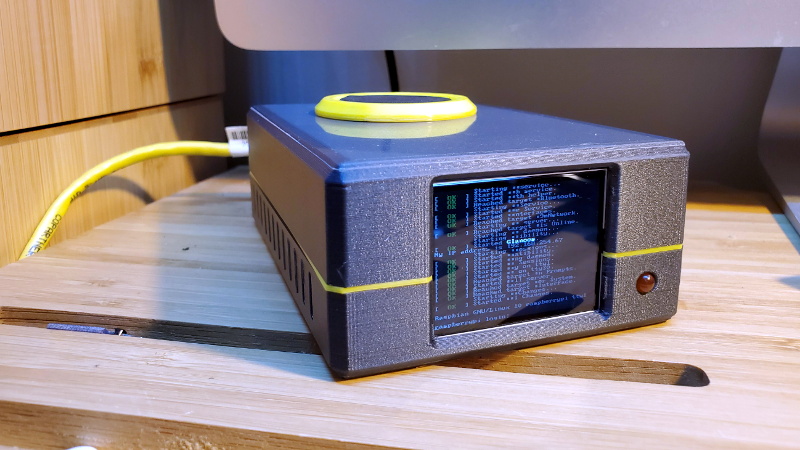
Of course there’s no shortage of Pi case designs ready to be extruded from your 3D printer, but we recently found ourselves particularly taken with this unique one designed by [Ken Segler]. It’s not only small and sleek with a dash of futuristic flair, but it includes a front-mounted two inch 240 x 320 IPS display that connects to the Pi over SPI. At the minimum that gives you a way to see all those beautiful boot messages on startup, but with a little code, it could provide you with various system statics and status messages at a glance.
While the LCD is clearly the star of the show here, the case also has a few other nice features that make it worthy of your consideration. The magnetically attached fan filter on the the top, for one. The stacked layout that puts the Pi directly above the SSD also makes for a relatively compact final product.
One thing to note though is that [Ken] is using Power-over-Ethernet, meaning there’s no spot for a dedicated power jack on the case. It’s an easy enough feature to add into your own build, but naturally not everyone’s network is suitably equipped. In that case, beyond the normal annoyances of editing STL files, it shouldn’t be too much trouble to add one in without having to literally hack your way through the printed plastic.Posted in Parts, Raspberry Pi
An entire Windows 10 PC on a stick that plugs into an HDMI port.Terryza
Looking for a remote-learning setup for a student? You’re probably thinking “laptop,” but there’s another option: A PC on a stick. Yep, you can run Windows from a dongle that’s barely larger than a flash drive. Simply plug it into just about any monitor, TV or even projector. You’ll need a couple accessories, but let’s start with the guts: For a limited time, and while supplies last, Amazon seller Xingxin-store has the Terryza W5 Pro PC Stick for $118.99. That’s after clipping the on-page $20-off coupon, and it’s a buck cheaper than last time.SEE IT AT AMAZON
The stick plugs into an HDMI port and runs Windows 10 Pro. It features an Intel Z8350 processor, 4GB of RAM, 64GB of onboard storage and support for dual-band Wi-Fi. For expansion it offers a pair of USB ports and a microSD card slot.
CNET CHEAPSKATE
Subscribe for all the latest deals delivered to your inbox. It’s FREE!SIGN ME UP!
By signing up, you agree to the CBS Terms of Use and acknowledge the data practices in our Privacy Policy. You may unsubscribe at any time.
That’s not a ton of horsepower, but it should be sufficient for basic computing, as well as things like watching videos. (Students doing more advanced coursework are likely to need something more robust.)
Finally, you’ll probably want a webcam as well (because Zoom meetings). Here’s a well-reviewed 1080p USB webcam for $36, just one option of many.
I haven’t yet had the chance to test-drive the W5 Pro, but it’s on my to-do list. If you’ve used one of these PC sticks before, hit the comments and let your fellow cheapskates know what to expect.
First published earlier this year. Updated to reflect new price and availability. Removed expired bonus deal.
CNET’s Cheapskate scours the web for great deals on tech products and much more. For the latest deals and updates, follow the Cheapskate on Facebook and Twitter. Find more great buys on the CNET Deals page and check out our CNET Coupons page for the latest promo codes from Best Buy, Walmart, Amazon and more. Questions about the Cheapskate blog? Find the answers on our FAQ page.
You might have seen the traditional word2vec or Glove word embeddings examples that show King -Man+Woman = Queen. Here Queen will be returned from the word embedding algorithm given the words King, Man, and Woman. Today we will see how we can use this structure to solve a real-world problem.
An edtech company in the USA wants to expand into India after being successful in its home market. It has a large set of questions in their question bank that it wants to use when it enters the Indian market.
But there is one big problem. A sample third class (grade) math question in their question bank looks like this —
Frank lives in San Francisco and Elizabeth lives in Los Angeles. If the flight time is 2 hrs when will Elizabeth reach Frank if she starts at 8am in the morning?
A 3rd-grade kid living in India would not connect with this question as it has references to names and locations lesser know to him/her – Frank, San Franciso, Los Angeles, etc.
So it would be ideal if we change the question to suit the Indian context and rephrase it—
Sanjay Verma lives in Bangalore and Rekha lives in Mumbai. If the flight time is 2 hrs when will Rekha reach Sanjay Verma if she starts at 8am in the morning?
This concept is called localization. It is the general concept of adopting a product or idea to a different country or region respecting local norms, customs, and any other preferences. The goal is to resonate with the target audience for whom the content is localized.
Image by Author
2. The word embeddings approach:
Now let’s look at how we can localize our original USA math question to the Indian context.
Frank lives in San Francisco and Elizabeth lives in Los Angeles. If the flight time is 2 hrs when will Elizabeth reach Frank if she starts at 8am in the morning?
Step 2.1: Our goal is to extract all the keywords that need to be localized. We will use the Spacy Named Entity Recognition to achieve this.
Named entities extracted
Step 2.2: Filter named entities that are irrelevant. For example entities like numbers (cardinal) and time doesn’t need localization in our case.
Filtered entities: Frank, San Franciso, Elizabeth, Los Angeles
Step 2.3: Now comes the most interesting part. We will use the King-Man + Woman = Queen framework to convert each of the entities. The code is present in the next sections but here we only show the concept.
Frank-USA+India = Sanjay Verma
San Franciso-USA+India = Bangalore
Elizabeth-USA+India = Rekha
Los Angeles-USA+India = Mumbai
Step 2.4: We go back and change the entities with their replacements to get –
Sanjay Verma lives in Bangalore and Rekha lives in Mumbai. If the flight time is 2 hrs when will Rekha reach Sanjay Verma if she starts at 8am in the morning?
Check out the complete and clean Google Colab notebook, that shows two different localization examples. The first example is automated and the second one has simple UI to choose the best replacement manually.
The important parts are shown here in code again (besides Colab)—
Step 3.1 Extract entities that need to be localized
import spacy
import pandas as pd
from spacy import displacy
from spacy.tokens import Span
nlp = spacy.load("en")original_input = "Frank lives in San Francisco and Elizabeth lives in Los Angeles. If the flight time is 2 hrs when will Elizabeth reach Frank if she starts at 8am in the morning?"
processed_input_text=nlp(original_input)
keyword_set = set()
entity_mapping = []
for token in processed_input_text.ents:
    if token.text not in keyword_set:
      keyword_set.add(token.text )
      entity_mapping.append((token.text,token.label_))
print (entity_mapping)
displacy.render(processed_input_text, style='ent', jupyter=True)# Now all entities cannot be localized. Example no need to localize numbers. So keep only relevant entities that need to be localized.
keep_entities_list = ['PERSON','GPE','FAC','ORG','PRODUCT','NORP','MONEY','LOC','WORK_OF_ART','LAW','LANGUAGE','QUANTITY']
finalized_entity_mapping = {}
for ent in entity_mapping:
  if ent[1] in keep_entities_list:
    finalized_entity_mapping[ent[0]] = []print (finalized_entity_mapping)
Step 3.2 Initialize the Google news word vectors from Gensim and perform localization
import gensim.downloader as api
model = api.load("word2vec-google-news-300")
word_vectors = model.wvOrigin_country='USA'
Target_country='India'final_mapping ={}for word in finalized_entity_mapping:
  word = word.strip()
  word = word.replace(" ","_")
  try:
    similar_words_list= model.most_similar(positive=[Target_country,word],negative=[Origin_country],topn=10)
    # Remove the scores for the retrieved choices
    similar_words_list = [choices[0].replace("_"," ") for choices in similar_words_list ]
    final_mapping[word.replace("_"," ")] = similar_words_list
  except:
    similar_words_list = []
    print (" Fetching similar words failed for ",word)
  print (word," -- Replacement suggestions -- ",similar_words_list)
You can see each word along with its top replacement choices.
Step 3.3 Print the output with its replacement
def localize(sentence,mapping):
  for k in mapping:
    sentence = sentence.replace(k,mapping[k][0])
  return sentenceprint('Original Sentence:')
print(original_input)localized_string =  localize(original_input,final_mapping)print('\nLocalized Sentence:')
print(localized_string)
The output is —
Original Sentence:
Frank lives in San Francisco and Elizabeth lives in Los Angeles. If the flight time is 2 hrs when will Elizabeth reach Frank if she starts at 8am in the morning?Localized Sentence:
Sanjay Verma lives in Bangalore and Rekha lives in Mumbai. If the flight time is 2 hrs when will Rekha reach Sanjay Verma if she starts at 8am in the morning?
Great! We are finally near the finish line.
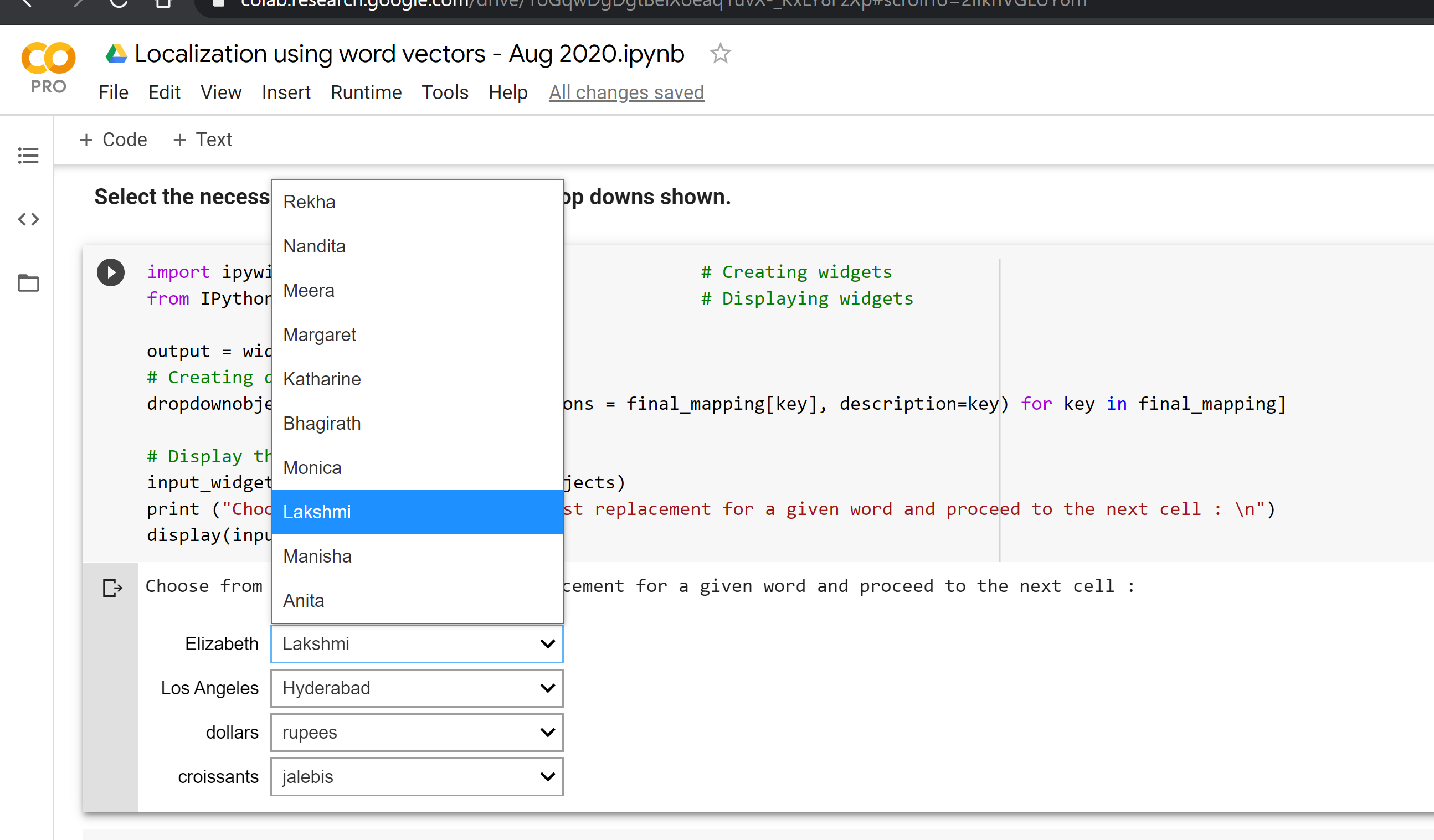
But what if the first choice shown is not the correct replacement for a given word?
To fix that problem, we built a small UI to select the correct choice with a dropdown. It is shown in the Google Colab notebook under example 2.
UI to select correct words
This project is carried out by the awesome intern Niharika Reddy, under my mentorship as a part of my open-source initiative Questgen.ai
Most over-the-counter drugs don’t work, but I found one that does.CSBy Chris Shearer31 August 2020, 10:19pm
ALL PHOTOS BY THE AUTHOR
As the pandemic rolls on, even the sweet escape of sleep has eluded me. While I often deal with bouts of insomnia, in the past I’ve let them run their course and usually find myself back to normal in a couple of weeks. But not this year. This year my insomnia, like everything else, has been “unprecedented”.
Yes, I’ve tried exercising more, cutting out screen time before bed, eating at more regular times, waking up more consistently, and all those other things people suggest. But anyone who has tried to make major lifestyle changes will tell you it’s hard, and between that and continuing lack of sleep I was miserable. So I decided to road test some sleeping pills instead—from over-the-counter supplements to heavy prescription meds—to see if one, or a combination of several, might help me get a reasonable night’s sleep.
ME, TAKING SLEEP DRUGS
Melatonin tablets
Anyone who has experienced jet lag has probably heard of melatonin tablets, as they’re often suggested as a way to recalibrate your body clock in a new time zone. Melatonin itself is a hormone produced by the pineal gland which helps regulate the body’s sleep cycle: more of it in your system makes you drowsy, less of it helps the body wake up. It also has the added advantage of being non-addictive, so I thought it was a good place to start.
A friend gave me a couple of her 10mg tablets, and said I should take one half an hour before planning on sleeping. I let it dissolve on my tongue around 1 AM, then set up a sleep tracker on my phone and settled in at 1:30.
Before long I was in that semi-lucid pre-sleep stage, but felt alert again if I shifted my weight even slightly. Nonetheless, I drifted off around 2.15 AM, which is good for me, but the sleep was fairly light. I found myself waking up from vivid dreams every hour or two, and by the time my alarm went off at 9:30 I felt like I hadn’t rested well. Nothing that two hours of extra snoozing couldn’t sort out, but not exactly what I was hoping for.
ZMA
Zinc magnesium aspartate, or ZMA, was recommended to me by a friend who said he took it to help him sleep after heavy workouts. As a nutritional supplement it seemed a pretty harmless thing to try.
My experience was a little more mixed than my friend’s. I took one of the capsules an hour before bed, and lay awake for a little over an hour thinking it would have worked better if I’d got some exercise earlier in the day. Without a doubt though, this was the deepest, most rejuvenating sleep I’d had in months. I woke up at 9:30 feeling refreshed, but thought I’d still try to sneak in a half hour snooze before facing the day. After 10 minutes I realised I was totally awake and without any of the usual groggy-nausea I usually get, so I surprised myself by getting up.
Restavit
The pharmacist who recommended Restavit explained that its key ingredient, doxylamine succinate, is actually an anti-histamine that causes heavy drowsiness as a side-effect. I had some reservations about this one: friends who had had it before told me that the day after they’d felt either groggy or anxious. So with a little trepidation about what tomorrow might bring, I took one of the 25mg pills 20 minutes before bed, as suggested, and snuggled up.
The drowsiness started about 15 minutes in, and my sleep tracker says I was in snoozeville not long after. But I know I was lying motionless, debating whether the slight pressure in my bladder was growing and wondering if I left it would I piss myself in the middle of the night. The need outweighed the risks about an hour later, and afterwards I slept uninterrupted until 9:30. But the grogginess upon waking, man: I felt like I’d had two hours sleep instead of seven. I switched off my alarm and, without meaning to, slept for another four hours. I think I might chuck out the Restavit.
Zopiclone
A friend of mine was kind enough to donate two of her prescription zopiclone, commonly known as Imovane, to my experiment. There’s a lot of research backing this drug’s ability to treat insomnia, so I was looking forward to trying it out.
Just one of the little 7.5mg fellas knocked me out within 15 minutes of closing my eyes, and my sleep tracker says I spent more time in deep sleep than any other night I’ve measured. I was woken up once by a passing garbage truck, but apart from that I was dead to the world. My sleep tracker also said I snored for 40 minutes throughout the night, though—about four times the amount I otherwise would—so while this was pretty good for me, I probably wouldn’t take it when my partner was staying over.
Temazepam
Ah, benzodiazepines. Many a big night has been brought to a restful end by one of the many -pams out there, but this would be my first time taking one for sleep while sober, so I had high hopes for its effectiveness.
I washed down the tiny 10mg tablet about 30 minutes before bed, and by the time I switched off the light I was already feeling the effects: a growing, gentle lulling that made my body feel relaxed and my mind calm, and a total lack of interest in rolling over—both of which seemed tailor-made to deal with my biggest issues getting to sleep. Within nine minutes I was out.
After just under eight hours of sleep I’d only woken up twice and spent most of the night in a deep, restful slumber. My only regret about Temazepam is that it’s not easy to get because it’s highly addictive. On those very bad nights where nothing else seems to be working and the next day requires me to have my head screwed on though, I can see myself reaching for this.
The mix and match
Seeing as ZMA and melatonin both seemed to work in a complimentary way for me, and they’re relatively easy to procure, I thought I’d give them a go together. In fact, I held pretty high hopes for this combo: one study on insomniacs taking zinc, magnesium and melatonin found they got to sleep faster and slept better than those using a placebo.
Sadly, it wasn’t the silver bullet I was hoping for. Even though I did feel tired after taking both, I couldn’t get comfortable and tossed and turned for an hour before nodding off. What followed was a relatively deep sleep, but according to the tracker it wasn’t quite as deep as when I’d had the ZMA alone, and I woke up feeling groggy.
So what did I learn? Well, nothing is perfect. Perhaps that’s why nearly one in three adults still regularly have issues with insomnia: there’s no miracle pill that’s going to totally negate the effects without some sort of consequence. For me there were some small successes, but long term I’m thinking the hard and boring way of lifestyle changes and good pre-sleep habits might actually be the smartest way forward—with a couple of heavy pharmaceuticals in the bedside drawer, just in case.
A pair of researchers from the University of Bristol have formed a company called Arkenlight to try to make diamond batteries out of nuclear waste that can potentially power devices for thousands of years. The betavoltaic batteries work by releasing beta radiation, which excites semiconductor material to produce electricity. These types of batteries don’t put out much power — they can’t replace your iPhone battery for example — but they do their thing for a loooong time.
Arkenlight is focused on creating batteries that have a diamond-like structure out of irradiated graphite, which is quite common.
But that’s where a radioactive isotope called carbon-14 may be able to help. Best known for its role in radiocarbon dating, which allows archaeologists to estimate the age of ancient artifacts, it can provide a boost to nuclear batteries because it can function both as a radioactive source and a semiconductor. It also has a half-life of 5,700 years, which means a carbon-14 nuclear battery could, in principle, power an electronic device for longer than humans have had written language.
I mean, it’s little more than a theory at this point so maybe it won’t be feasible after all, but what a brilliant idea: combining the radioactive source and the semiconductor (thereby upping the efficiency) and using nuclear waste to build the whole thing. Science at its most poetically useful. (via geoff manaugh)
A little understood region of the cerebellum plays a critical role in making split-second ‘go-no go’ decisions, according to a new study from researchers at the University of Colorado Anschutz Medical Campus.
“We wanted to know how this kind of decision making takes place,” said the study’s senior author Diego Restrepo, Ph.D., professor of cell and developmental biology at the University of Colorado School of Medicine. “How, for example, do you decide to swing or not swing at a fast ball in baseball?”
The study was published online today in Nature Communications.
Employing mice rather than ball players, Restrepo and his team used a multiphoton microscope that peered into the brains of the free-moving rodents as they decided whether or not to lick a water solution.
The researchers focused specifically on the molecular layer interneurons (MLIs) in the cerebellum. The mice were given a sugar water reward if they licked a water spout in the presence of a specific, pleasant odor and they avoided a timeout when they refrained from licking in the presence of unscented mineral oil.
At first, the MLI responses did not differ between odors. But with learning, the reward odor prompted a large increase in MLI calcium responses. When the stimuli were reversed, the MLI switched responses to the odors.
When the scientists intervened with chemogenetic agents to inhibit MLI activity, the mice floundered and became less effective in making `go-no go’ decisions.
“Our data indicate that the MLIs have a role in learning valence,” Restrepo said. “That is, it helps determine whether something is good for me or not.”
The findings further illuminate the function of the cerebellum, long associated primarily with movement. But it also plays a key role in cognition and emotion and is associated with non-motor conditions such as autism spectrum disorders.
“A lot of learning goes on inside the cerebellum,” Restrepo said. “The cerebellum may also be the place where quick choice arises.”
This study shows that it also coordinates both motion and decision making, when to go or not to go.
“We found an entire subset of brain cells that change after learning,” Restrepo said. “It sheds further light on how the cerebellum functions and the complex web of connections that go into quick decision making.”
Auctify’s Specs (above) are being marketed as a “productivity-boosting” tool.
The difficulty of staying focused in an age of distractions is one of those annoyingly accurate cliches. (I checked my phone three times just writing this paragraph.) But a startup named Auctify has what it claims is the solution: smart glasses that use AI to monitor what you’re looking at and nudge you to pay attention. Depending on your worldview, it’s the product of your dreams or a productivity-hacking nightmare.
The glasses are called Specs, and they launch today on Indiegogo. The premise is simple: a camera built into the frame of Specs uses machine learning to identify what you’re looking at, whether that’s a laptop, book, or a fellow human being. It records this data and sends it to a connected app where users can take action in a number of ways.MACHINE LEARNING TRACKS HOW YOU SPEND YOUR TIME EACH DAY
If you’re casual, you can simply get a breakdown of how you’ve spent each day, with colorful pie charts recording how many of the finite minutes of your life you’ve wasted recently. If you want to be more proactive, you can set “focus sessions” for times when you want to concentrate on certain activities. And if you really want to be whipped into shape, Specs can alert you when you’re looking at the wrong thing using visual and audio cues — either a light in the corner of your vision or a sound played through the glasses’ built-in speakers.
A connected mobile app will give users a breakdown of how they’ve spent their time.
Putting aside what a product like this says about our work-obsessed culture, can Specs work as promised? Although each of us knows when we’re getting distracted, it can be hard to explain the rules of this to a machine. As a journalist, for example, I use Twitter for both productive activities (finding new stories) and pointless time-wasting (reading your tweets). Will Specs know the difference?SPECS WILL BE ABLE TO DIFFERENTIATE BETWEEN 20 ACTIVITIES AT LAUNCH
“Yes and no” is the short answer. In the specific example of me using the same website for different functions, Specs will be helpless. But Auctify says the glasses come with companion apps for the web and your phone that will allow Specs to identify what websites or apps you’re using and feed that information into its tracking history.
Speaking to The Verge over email, Auctify founder and CTO Hisham El-Halabi says the company’s algorithms will be able to identify 20 different activities at launch, including reading, writing, looking at your phone, your laptop, watching TV, working out at the gym, doing yoga, cooking, playing an instrument, eating, and chatting to other people. More will be added in the future, and users can change how each of these activities is categorized.https://www.youtube.com/embed/QxHUyqrRP0E?rel=0
A note on crowdfunding:
Crowdfunding is a chaotic field by nature: companies looking for funding tend to make big promises. According to a study run by Kickstarter in 2015, roughly 1 in 10 “successful” products that reach their funding goals fail to actually deliver rewards. Of the ones that do deliver, delays, missed deadlines, or overpromised ideas mean that there’s often disappointment in store for those products that do get done.
The best defense is to use your best judgment. Ask yourself: does the product look legitimate? Is the company making outlandish claims? Is there a working prototype? Does the company mention existing plans to manufacture and ship finished products? Has it completed a Kickstarter before?
And remember: you’re not necessarily buying a product when you back it on a crowdfunding site.
“Since being productive means different things to different people, users can choose within the companion app which activities are recognized as productive,” says El-Halabi. “For activities that can be more vague such as studying, the user can set which specific activities contribute towards studying (such as reading, writing, etc.)”
In addition to its activity tracking, Specs has a few other tricks up its arms. A built-in blood oximeter, accelerometer, and gyroscope will allow the glasses to function as a fitness-tracking device, while bone conduction speakers will let you listen to music and even take calls using Specs. And of course, you can put prescription lenses in the glasses, too, if you want to use them for the humdrum purpose of correcting your vision.
Obviously, for a device with the express purpose of monitoring everything you do each day, privacy is a big concern. Auctify says Specs never sends photos or videos anywhere over the internet, and it uses machine learning to analyze visual on-device, after which they’re immediately discarded. The company also says information on your phone is encrypted, though that doesn’t mean the glasses themselves couldn’t be hijacked.
Screenshots of the Specs app showing the notification center and activity tracking.
The biggest worry, though, is that Specs simply won’t live up to Auctify’s bold claims, as often happens with crowdfunded products. El-Halabi tells The Verge that the team has already built a fully functional prototype of Specs and shared videos of these in action.
But turning a prototype into a consumer device that can be manufactured at scale is incredibly challenging. That’s especially true of a device like Specs, which not only has to cram multiple functions into a slender piece of hardware, but also combine machine learning and multiple apps to deliver on its key function.
El-Halabi is bullish about the product’s appeal. He says “everyone can benefit from improving their productivity” and that “our audience won’t just be tech enthusiasts, but a much more diverse set of audiences that all share the universal problem of procrastination.”
Based on the team’s experience and market research, he adds that students will be particularly interested “since so many of them struggle with procrastination.” Entrepreneurs have “also shown a lot of interest,” he says, which makes sense as they “greatly value productivity.”
Funnily enough, Specs aren’t just about productivity, though. Auctify says it’s also integrating a “mindfulness training” mode into the app, which will prompt users to carry out virtuous activities they might otherwise ignore, like reading or working out. It can even lead them through calming breathing exercises. With the right mindset, even meditation can be optimized.
Oliver Zahn began his professional career studying the stars. The founder of Climax Foods, a startup that’s using data science to replace animal proteins with plant-based substitutes, spent years at the University of California at Berkeley with his eyes fixed firmly toward the heavens before taking up with Pat Brown and Impossible Foods as the company’s leading data scientist.
That experience focused Zahn on more terrestrial concerns and undoubtedly led the founder down the path to launching Climax Foods .
Now with $7.5 million in financing from investors including At One Ventures, founded by the GoogleX co-founder Tom Chi, along with Manta Ray Ventures, S2G Ventures, Valor Siren Ventures, Prelude Ventures, ARTIS Ventures, Index Ventures, Luminous Ventures, Canaccord Genuity Group, Carrot Capital and Global Founders Capital, Zahn is ready to take on the future of food.
The pitch to investors is similar to the one that Josh Tetrick made at Just Food (the company formerly known as Hampton Creek). It’s elegant in its simplicity — scan the natural world for proteins that have the same or better characteristics than those that are currently made by animals and make products with them.
By looking at what makes animal products so delicious, the company will find their plant-based analogs and start producing.
As with most things that depend on data science, the taxonomy is the key. So Climax Foods is building machine learning algorithms that will process and cross-reference molecular structures to find the best fit. It’s starting with cheese.
While replacing the humble wheel of cheese may not seem like a worthy adversary for an astrophysicist, companies have already raised hundreds of millions to defeat the big dairy industry.
“We are at a pivotal time where industrialization enabled explosive population growth and consumption of animal products. Today, more than 90% of all mammalian animals and more than 70% of all birds on the planet exist for the sole purpose of metabolizing plants and being turned into food,” said Zahn in a statement. “This industry is complex and wasteful, creating as much climate change as all modes of transportation combined, and using more than a third of the earth’s water and usable land. By speeding up food science innovation, Climax Foods is able to convert plants into equally craveable foods without the environmental impact.”
Joining Zahn on this quest to conquer the cheese industrial complex and its milk-made monstrousness are a few seasoned industry veterans, including co-founder Caroline Love, the company’s chief operating officer and former sales and operations executive from JUST foods; and Pavel Aronov, a Stanford-educated chemist who previously worked at the chemicals giant Thermo Fisher.
“Climax Foods is tackling the same opportunity to change the market and the food system, but they are doing it with an entirely novel technological approach. They are using data science to produce a new category of foods that will not merely compete with, but out-compete, animal products in terms of taste, nutritional density, and price,” said Sanjeev Krishnan, one of the largest investors in the plant protein space and chief investment officer of S2G Ventures. “The machine intelligence approach Climax Foods is pioneering is critical for harnessing the vast number of ways raw ingredients and natural processes can be used to create the ultimate digital recipes.”
Krishnan would know. He’s an investor in Beyond Meat, the most successful public offering of a plant-based protein replacement company.









/cdn.vox-cdn.com/uploads/chorus_image/image/67325939/5e60a2bab4f1c90022ef45cf_optimized_1520.0.jpeg)
:no_upscale()/cdn.vox-cdn.com/uploads/chorus_asset/file/21822275/main_screen_1_deskwithlaptop.jpg)
:no_upscale()/cdn.vox-cdn.com/uploads/chorus_asset/file/21831694/auctify_specs_app.jpg)

 Bruce's Blog