http://linuxgizmos.com/networking-sbc-boasts-2-5gbe-gbe-with-poe-and-optional-5g-and-wifi-6/

Networking SBC boasts 2.5GbE, GbE with PoE and optional 5G and WiFi 6

Sep 9, 2020 — by Eric Brown — 5381 viewsPlease share:


Wally’s $200 “DR6018 v2” router SBC runs Linux on a quad -A53 Qualcomm IPQ6010 and features 2.5GbE, 3x GbE, GbE with PoE, and 2x M.2 and SIM slots for 4G/5G and 802.11ax (WiFi 6).

When Wally’s Communications launched its DR6018 router board in May, company reps noted it was a prototype that would be improved after customer feedback. The result is the DR6018 v2, which offers improvements such as a smaller size, dual SIM card slots, and a second M.2 slot, but with one less GbE port.


DR6018 v2
(click image to enlarge)

Whereas the original DR6018 and an almost identical Compex CP01 board we covered in the same report are based on a Qualcomm Atheros IPQ6018, the DR6018 v2 uses the similarly quad-core, Cortex-A53 IPQ6010. Although the IPQ6010 is listed by Qualcomm along with an IP6028 model as part of a Qualcomm Networking Pro 400 family that tops out at 1GHz and is limited to 802.11ac (WiFi 5), a Wally’s rep tells us the SoC runs at up to 1.8GHz and features 802.11a/n/ac/ax (WiFi 6) support, just like the IPQ6018. The only difference is that the IPQ6010 lacks the AI capabilities of the IPQ6018, says Wally’s.


DR6018 v1

The dual-band, 2.4GHz/5GHz 802.11a/n/ac/ax standard offers lower latency and power consumption, improved simultaneous data delivery, and up to 30 percent faster speed than Wave2, the newer version of 802.11ac. Like Wave2 802.11ac, 802.11ax features dual-band concurrent MU-MIMO for simultaneous WiFi connections to multiple devices.

The 185 x 116mm DR6018 v2 board (down from 219 x 150 x 16.55mm) is once again supported with Linux, including OpenWrt. Like the V1, the V2 is equipped with up to 1GB DDR3L along with 256MB NAND, 32MB NOR, and a microSD slot.

The DR6018 v2 is equipped with USB 2.0 host and USB 3.0 Type-C ports and a 12-pin serial interface. There is also an “LED header” with an FFC/FPC connector, which appears to refer to an LCD interface.

Like the v1 board, the DR6018 v2 has a single 2.5GbE port, but it has one less GbE port. The v2 supplies 3x GbE standard GbE ports and a fourth GbE with Power-over-Ethernet with 24V~48V (802.3bt). Unlike the original, it offers active in addition to passive PoE support.


DR6018 v2 detail view
(click image to enlarge)

Like the v1, the v2 offers an M.2 E-key socket with PCIe 3.0 support for an optional Qualcomm QCN9074 802.11ax module. It also provides an M.2 B-key with USB 3.0 signals that supports an optional Quectel 5G-enabled RM500Q-G module. Unlike the original, there are dual SIM card slots and 4x MMCX antenna connectors.

Although it is not indicated in the spec sheet or detail view, the back of the board has a socket for plugging in an optional Bluetooth module, as well as a mini-USB port for Bluetooth debug. Also available are a JTAG header, a reset button, and boot config and auth enable switches.

The DR6018 v2 has 40-pin GPIO, but it is not broken out for hardware hacking. The 12V powered board once again supports -40 to 70°C temperatures.

 
Further information

The DR6018 v2 is sampling now for $200. More information may be found on Wally’s DR6018 v2 product page.
 

LinuxGizmos related posts:

https://imgur.com/a/A3BzOi4

Raspberry Pi Cluster CaseNext207 Views•10d

THE FINISHED PRODUCT Ports 1-4 are the Raspberry Pi, bottom to top. Port 5 and 6 are currently open. Port 7 has a cable going to my workbench; not connected.Port 8 connects to the router, providing internet access to the cluster. Added a WiFi USB adapter in the back for Kali

TRENDnet 8-port switch in top of case Door for left side

Mid-section front 120mm fan, and grill (1mm thick)

Mid-section front

Mid-section right Holes for RPi power Tower for buck converter 5v->12v

Midsection rear Grooves for the Raspberry Pi trays

Mid-section left Locking hooks for RPi trays

Mid-section left Door stopper and “lock”

Mid-section front-right tower 5v->12v buck converter for fan Bottom hole for USB power, center hole for fan header

Raspberry Pi Trays

Base

Base upside-down USB power hub enclosure

Base upside-down Anker USB power hub in enclosure

Base upside-down Closing cap for USB power hub enclosure

Mid-section rear RPi trays inserted

https://brightside.me/wonder-curiosities/why-you-cant-sleep-without-hugging-something-798850/

Why You Can’t Sleep Without Hugging Something

8822kShare on FacebookShare on TwitterShare on Pinterest

Although this habit could be linked to our fetal sleeping position from when we were kids, it’s not about diving back into our childhood at all. Whether it’s a plush toy or a soft cuddly pillow you can’t sleep without, there are a few reasons why you can’t let them go.

We at Bright Side have figured out the reasons for why people sleep easily when they have something to hug on.

1. It reduces your snoring or sleep apnea.

Sleep apnea is a sleep disorder where a person’s breathing is not as smooth as it should be. This, in effect, creates a sleep environment that is regularly disturbed — where you are constantly waking up throughout the night and a sense of morning tiredness and day-long drowsiness.

Your pillow hugging habit has the physical benefit of reducing this sleep disorder. Having a body pillow will support your entire body and allow you to start sleeping on your side.

2. You don’t want to feel lonely.

Reddit user once shared his experience that hugging something makes him feel like he is cuddling with someone.

We’re not all cuddly sleepers, but when we are all alone and we basically get tired of it being this way, and we need something to hold on to, even if it means hugging a pillow.

3. You value strong attachment.

Hugging a pillow gives you emotional comfort during your sleep. In this sleeping position, you are actually one of those who values a strong bond in your relationships, especially among family. You are a very helpful person, who loves going the extra mile for the people you love and care for.

4. You are used to hugging during your sleep.

If you have already established a routine, at some point, because it worked for you, like getting up around the same time or doing the same morning and evening routine, you are actually routine-oriented.

Having said that, when you hug something every single night before you sleep, it means that this is one of your routines too.

5. You tend to hug when anxiety attacks.

It makes it harder for us to sleep when we have anxiety. When you are experiencing this, it’s always best to make your bed a comfort zone. People who have it may need a hug to ease their anxiety.

Does hugging something when you sleep make you feel comfortable? Could you sleep without hugging something?

https://phys.org/news/2020-09-machine-learning-assisted-method-rapidly-quantum.html

New machine learning-assisted method rapidly classifies quantum sources

by Purdue University

New machine learning-assisted method rapidly classifies quantum sources
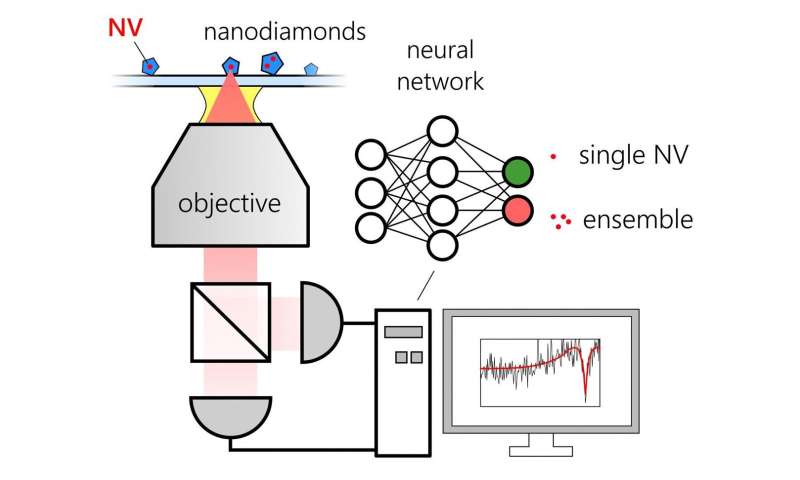
Purdue University researchers trained a machine to recognize promising patterns in single-photon emission within a split second. Credit: Purdue University /Simeon Bogdanov

For quantum optical technologies to become more practical, there is a need for large-scale integration of quantum photonic circuits on chips.https://50bb48e2dbebfc7df83d7ba61e98a8a8.safeframe.googlesyndication.com/safeframe/1-0-37/html/container.html

This integration calls for scaling up key building blocks of these circuits—sources of particles of light—produced by single quantum optical emitters.

Purdue University engineers created a new machine learning-assisted method that could make quantum photonic circuit development more efficient by rapidly preselecting these solid-state quantum emitters.

The work is published in the journal Advanced Quantum Technologies.

Researchers around the world have been exploring different ways to fabricate identical quantum sources by “transplanting” nanostructures containing single quantum optical emitters into conventional photonic chips.

“With the growing interest in scalable realization and rapid prototyping of quantum devices that utilize large emitter arrays, high-speed, robust preselection of suitable emitters becomes necessary,” said Alexandra Boltasseva, Purdue’s Ron and Dotty Garvin Tonjes Professor of Electrical and Computer Engineering.

Quantum emitters produce light with unique, non-classical properties that can be used in many quantum information protocols.

The challenge is that interfacing most solid-state quantum emitters with existing scalable photonic platforms requires complex integration techniques. Before integrating, engineers need to first identify bright emitters that produce single photons rapidly, on-demand and with a specific optical frequency.

Emitter preselection based on “single-photon purity”—which is the ability to produce only one photon at a time—typically takes several minutes for each emitter. Thousands of emitters may need to be analyzed before finding a high-quality candidate suitable for quantum chip integration.

To speed up screening based on single-photon purity, Purdue researchers trained a machine to recognize promising patterns in single-photon emission within a split second.

According to the researchers, rapidly finding the purest single-photon emitters within a set of thousands would be a key step toward practical and scalable assembly of large quantum photonic circuits.

“Given a photon purity standard that emitters must meet, we have taught a machine to classify single-photon emitters as sufficiently or insufficiently ‘pure’ with 95% accuracy, based on minimal data acquired within only one second,” said Zhaxylyk Kudyshev, a Purdue postdoctoral researcher.

The researchers found that the conventional photon purity measurement method used for the same task took 100 times longer to reach the same level of accuracy.

“The machine learning approach is such a versatile and efficient technique because it is capable of extracting the information from the dataset that the fitting procedure usually ignores,” Boltasseva said.

The researchers believe that their approach has the potential to dramatically advance most quantum optical measurements that can be formulated as binary or multiclass classification problems.

“Our technique could, for example, speed up super-resolution microscopy methods built on higher-order correlation measurements that are currently limited by long image acquisition times,” Kudyshev said.


Explore furtherNear-optimal chip-based photon source developed for quantum computing


More information: Zhaxylyk A. Kudyshev et al, Rapid Classification of Quantum Sources Enabled by Machine Learning, Advanced Quantum Technologies (2020). DOI: 10.1002/qute.202000067Provided by Purdue University

https://www.ndtv.com/health/these-soothing-yoga-poses-will-help-you-sleep-better-2293009

These Soothing Yoga Poses Will Help You Sleep Better

Yoga for sleep: If you are finding it difficult to fall asleep, here’s one effective solution you can try. Practicing yoga and meditation can help you sleep better. Read here to know some expert recommended yoga poses.

September 09, 2020 10:00 pm

These Soothing Yoga Poses Will Help You Sleep Better

Several yoga poses can help you ensure better sleep

Yoga is truly one of the most adaptive practices as it is open for all ages, is suitable for any body type and can also be done at any time of the day. Yoga can begin as early as when you are 4 years old and performed well into your 80s even. The holistic nature of yoga brings so many health benefits regardless of when you begin its practice. You can start your day with a yoga practice of even a minimum of 15-20 minutes to experience increased energy, better mood and productivity. Similarly, when you practice yoga in the evening or nights, it can be a soothing and restorative activity that encourages better sleep, and regulates your sleep cycles.

Yoga asanas, pranayama and meditation when done regularly ensures that you enjoy a restful sleep, and wake up feeling more refreshed, rejuvenated and relaxed. Practising yoga allows you to enjoy deeper sleep, eliminating sleep disorders such as sleep apnea, sleep anxiety, insomnia, etc. If you want do wonders for your health, spending even as little as just 15-20 minutes each day can improve both your physical and mental health. Practice these following asanas, pranayama and meditation technique recommended for you. You can hold each pose for 30 seconds and repeat for 3 sets, pranayama and meditation can be done for 2-3 minutes in the beginning, and gradually increased to 10 minutes or so.

Yoga poses for better sleep

1. Parvathasana (Mountain Pose)

Formation of the posture

  • Start on all fours, ensuring palms are under the shoulders and knees below hips
  • Pushing off from your palms and toes lift up your pelvis
  • Straighten the knees and elbows forming an inverted ‘V’ shape with your body
  • Palms should be placed shoulder width apart
  • Bring your feet closer and lift up your heels
  • Your body weight should be distributed between your toes and palms
  • Keep your focus on your big toes
1qlklaa8

Mountain pose can help you strengthen your legs
Photo Credit: iStock

2. Vajrasana (Thunderbolt pose)

This is the only pose that can be done on a full stomach. In fact, it should be done right after having a meal.

Formation of the posture

  • Gently drop your knees down
  • Keep your heels close to each other
  • Do not place the toes on top of the other, instead right and left must be next to each other
  • Place your palms on your knees facing upward
  • Straighten your back and look forward
fhdeov2o

Yoga poses: Vajrasana can help boost digestion
Photo Credit: iStock

3. Dandasana (Staff Pose)

Formation of the posture

  • Sit down on the ground, or on a bed as per your comfort
  • Ensure that your back is erect
  • Stretch your legs out in front of you with toes pointed towards you
  • Tighten the muscles of your pelvis, thighs and calves
  • Place your palms beside your hips on the floor as this supports your spine and relaxes your shoulders

Also read: Tips To Ensure Better Sleep

4. Advasana (Reverse Corpse Pose)

Formation of the posture

  • Lie down on your stomach
  • Stretch out your arms
  • Keep your palms facing down shoulder-width apart
  • Forehead remains on the ground

Also read: Yoga Poses For Beginners

Pranayama and Meditation

Along with asanas, you can also include the dynamic and ancient practice of Himalaya Pranam. This full body workout ensures that you get in a forward fold, gentle back bends and a variety of movements that can improve your mobility. Yoga’s greatest ability is its potential to bring calmness to the mind. This reduces anxiety, stress and mental tiredness. Sthithi Dhyan, Ropan Dhyan, Swaas Dhyan are effective meditative practices that help you to clear your mind of unwanted thoughts thus increasing awareness. Pranayama such as Brahmari Pranayama is also known to lift the mood, and improve the functioning of your lungs and eliminate digestive disorders. Pranayama and meditation helps to increase your focus and remove toxins from the body. When paired with proper breathing, it relieves stress and helps to enhance concentration.

Also read: Yoga to lose belly fat 

Yoga asanas, pranayama and meditation techniques encourage you to become an observer of your flow of thoughts. Instead of resisting them, you learn to let them flow. This is very relaxing for the mind as well as the body and can aid in better sleep. While sleep in itself is a restorative process, it can be enhanced by practicing yoga whether you do it each morning or as a wind down routine at the end of day.PromotedListen to the latest songs, only on JioSaavn.comhttps://www.jiosaavn.com/embed/playlist/85481065

(Grand Master Akshar is a Yoga Master, Spiritual Guide and Lifestyle Coach)

Disclaimer: The opinions expressed within this article are the personal opinions of the author. NDTV is not responsible for the accuracy, completeness, suitability, or validity of any information on this article. All information is provided on an as-is basis. The information, facts or opinions appearing in the article do not reflect the views of NDTV and NDTV does not assume any responsibility or liability for the same.CommentsYoga for sleepYoga poses for better sleepYoga poses to sleep better

Track Coronavirus pandemic in India and get the latest COVID-19 news from around the world on ndtv.com/coronavirus

HIGHLIGHTS

  • Yoga can help you boost overall health
  • Some yoga poses can help you sleep better
  • Drinking chamomile tea can also help you ensure better sleep

https://medicalxpress.com/news/2020-09-telomere-length-varies-human-tissue.html

Telomere length varies across human tissue types

by University of Chicago Medical Center

telomeres
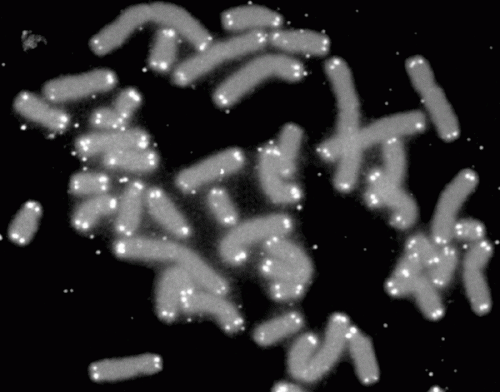
Human chromosomes (grey) capped by telomeres (white). Credit: PD-NASA; PD-USGOV-NASA

Telomere length has long been considered an important biomarker in human aging and disease, but most studies on the relationship between telomere length and health have looked only in a single tissue type: blood. This limitation has raised the question of whether blood cells are a reliable proxy for other tissues for researchers studying the effects of aging, disease and lifestyle factors on telomere length.

A new study, published in the September 11 issue of Science, answers this question by examining telomere length in over 20 different human tissue types, from nearly 1,000 individual post-mortem donors. The results show that telomere length in whole blood can serve as a stand-in for telomere length in most other tissues, and further bolsters existing research on the relationship between telomere length, ancestry and aging.

Telomeres are repetitive, non-coding sequences of DNA found at the ends of chromosomes, acting like protective caps to prevent deterioration of the genome. Each time a cell divides, the chromosomes have to be replicated, giving each new cell a new copy. The enzymes that do this can’t quite reach the end of the chromosome, so a little bit of the tip is lost in every duplication. Telomeres provide a small amount of extra chromosome as a buffer, protecting important genetic information from being lost.

Normal aging is associated with telomere shortening, and telomere shortening has been linked to mortality and age-related diseases. But the relationship between telomere shortening, aging and disease is not completely clear—partly because scientists don’t fully understand the ways in which telomeres vary between different tissue types.

“Most studies on human telomere length focus on tissue types that are easy to collect from living subjects, like whole blood or saliva,” said first author Kathryn Demanelis, Ph.D., a postdoctoral scholar in the Department of Public Health Sciences at the University of Chicago. “We wanted to see how well the length of telomeres found in whole blood cells aligned with those found in other tissues.”

In the study, the scientists took advantage of the Genotype-Tissue Expression (GTEx) project, a massive public resource focused on collecting samples from many different tissues from hundreds of human subjects.

“The GTEx study was originally designed to study how inherited genetic variation regulates gene activity in different tissues, and how tissues differ from one another,” said senior author Brandon Pierce, Ph.D., Associate Professor of Public Health Sciences and Human Genetics at UChicago. “We saw the GTEx tissue bank as an opportunity to access tissue types that we normally can’t study easily, and to look at an important biomarker—telomere length—and start to ask deeper questions about the relationship between telomere length and diseases like lung cancer, and how telomeres shorten with age in different kinds of tissue.

The researchers used a new type of assay for measuring telomere length, comparable in cost to traditional methods but with “higher throughput and better precision,” according to study co-author Muhammad Kibriya, MD, Ph.D., Research Associate Professor at the Institute for Population and Precision Health at UChicago. By analyzing more than 6,000 tissue samples across over 20 tissue types and nearly 1,000 unique post-mortem human subjects, Kibriya said, “We were able to find statistically significant tissue-to-tissue differences in telomere length within the sample set.”

This allowed the investigators to compare telomere length in a variety of tissues, such as skin, brain, lung, colon and kidney, to measurements of telomere length in blood cells.

They found that out of the 23 tissues they studied, telomere length in 15 tissues showed a clear, positive correlation with telomere length in whole blood cells, supporting the use of easily collected whole blood cell telomere length as a proxy for telomere length in harder-to-access tissues, like brain and kidney.

“We were also able to look across all of these tissue types to answer questions that have been looked at repeatedly for blood cell telomeres,” said Pierce. “Some patterns held up across different tissues, like shorter telomeres in aging, and longer telomeres in people of African ancestry, but others didn’t, like longer telomeres in females. We observed shorter telomeres among smokers in only a few tissues.”

This helps to clarify conflicting results from past studies indicating relationships between individual traits and telomere length, or a lack thereof.

These results will help the researchers understand what aspects of telomere length are consistently due to genetic inheritance versus those that may be affected by lifestyle, environmental exposures or epigenetic changes during a person’s lifetime. This in turn will make it easier for scientists to study and understand the roles of specific biomarkers in aging and disease.

“As epidemiologists, we’re often trying to answer questions by studying blood samples, so we have to be aware of how these biomarkers might vary across different tissue types,” Pierce said. “It’s a big limitation. But we know that the inherited genome sequence is the same in every tissue, so if we can understand how certain genetic variations affect biomarkers, like telomere length, in specific tissue types, that makes it easier to study those biomarkers in human populations. We can use inherited genetic variation to predict tissue-specific biomarkers.”

Future projects will further explore the GTEx samples to look at various biomarkers across different tissue types. “This first study provides a resource to better understand what telomere length looks like in various tissues and will allow other researchers to compare their data against our results,” Demanelis said. “In the future, we’ll be looking at other markers like DNA methylation and somatic mutations in different types of tissues to try and understand their relationship to telomere length and aging.”


Explore furtherResearchers develop new system to conduct accurate telomere profiling in less than 3 hours


More information: K. Demanelis el al., “Determinants of telomere length across human tissues,” Science (2020). science.sciencemag.org/cgi/doi … 1126/science.aaz6876Journal information:Science

https://www.theguardian.pe.ca/news/canada/hi-tide-halifax-man-goes-to-sleep-in-tent-wakes-up-in-cobequid-bay-495428/

Hi, tide: Halifax man goes to sleep in tent, wakes up in Cobequid Bay

Nicole Munro(nmunro@herald.ca)
Published: 9 hours agoUpdated: 8 hours agoFacebookTwitterMore

Grant Hatcher parked his motorcycle in Noel Shore to set up his tent for the night, but little did he know he would wake up on floating on the waters of the Cobequid Bay.
Grant Hatcher parked his motorcycle in Noel Shore to set up his tent for the night, but little did he know he would wake up on floating on the waters of the Cobequid Bay. – Contributed

HALIFAX, N.S. — Grant Hatcher gave water bed a whole new meaning when he woke up in his tent floating on the Cobequid Bay near Noel Shore. 

About three weeks ago, the Halifax resident was gearing up to head home to Cape Breton for the first time this year but his trip home went about as well as 2020 is going in general. 

Hatcher meant to leave earlier that day, but after getting sidetracked, he was off on his motorcycle at about 7:30 p.m.

“I didn’t want to drive at night so much, and I literally just bought a brand new tent that day for this reason, so I thought I’ll just go set the tent up somewhere outside Truro,” Hatcher said in an interview Thursday. 

“There was no rush to get to Cape Breton.” 

So after dropping something off in the Lower Sackville area, Hatcher moseyed down Beaver Bank Road and ended up in Noel Shore.

“It was getting really dark and I was getting a little nervous because it was starting to rain, so I took a drive down by Noel Shore and there was this amazing spot with all this grass and flats,” Hatcher recalled. 

But when Hatcher climbed down the hill and got to the flat, a few red flags popped up. 

First, the beachgrass, which normally stands tall, was lying flat on the ground. Second, the ground was squishy as he walked on it. And third, after touching the grass and licking his finger, he noticed it was salty. 

“I knew the tide got high in that area, but I rationalized it all in my head and thought it’s all good,” he said of the area that sees the world’s highest tides. 

Pushing those suspicions aside, Hatcher set up his three-person tent and fell asleep within the next half-hour. 

“Then, at like almost 4 a.m. exactly, a dew drop just hit me in the forehead and kind of startled me awake,” Hatcher said. 

“So I rolled over to readjust my position to go back to sleep and it was that precise moment that I knew something was really off.

“Everything underneath me moved. The whole tent wiggled. I wiggled. It all just wiggled.” 

Suddenly, the flat, salty beachgrass and squishy ground all made sense. The tide had started to come in as Hatcher was sleeping and swept him slowly off the shore.

Grant Hatcher takes a selfie about two hours before he set up his tent, which he would later wake up in on the Cobequid Bay, in Noel Shore. - Contributed
Grant Hatcher takes a selfie about two hours before he set up his tent, which he would later wake up in on the Cobequid Bay, in Noel Shore. – Contributed

“My first thought was holy crap. I don’t know this area. Am I sucked out to sea?” Hatcher said. “But when I sat up in the tent, I sunk down a little bit and my bum just gently bounced off the ocean floor so I knew I wasn’t too far.” 

Luckily, no water had seeped into his brand new tent — yet. 

“I reach for the door and begin to unzip it and everything’s fine, but the moment I moved an inch closer to the door, the door went under the water and it was just like a movie,” Hatcher said. 

“It was like whoosh. The whole ocean came into the tent at that exact moment.” 

So there Hatcher stood in his tent, surrounded by his floating pillow, sleeping pad, comforter and backpack. 

“I climbed out of the tent and I’m actually naked at this point because it was hot and I was sleeping naked,” Hatcher said. “So here I am sinking in the ocean, naked, dragging my tent back to shore.” 

After putting on a pair of soaked pants, Hatcher started to break down the tent on the side of the road when he spotted headlights in the distance.

At first, he welcomed them at the thought of someone stopping to help.

“Then I looked down and saw myself half-naked, soaked, my tent, and I realized I don’t want anybody to see me like this, so I scooped my tent up and jumped into the bushes to hide,” he said.

Hatcher emerged from the bushes after the car passed, put on a wet T-shirt, soaked boots, motorcycle helmet and headed to the closest hotel in Truro — About a 45-minute drive away. 

“It’s like five in the morning at this point, pitch black and I’m freezing. It was the coldest most awful drive of my life,” he said. 

“I get to the hotel and the guy was kind of looking at me like, what’s this guy’s story? Who shows up to a hotel at 5:30 in the morning and looks like this?

Despite having to check out in less than six hours, Hatcher booked the room, took a hot shower and grabbed a couple of hours of sleep before he headed for Cape Breton. 

Initially, Hatcher was so embarrassed that he only told his sister and close friend what happened. But as he passed Truro on a bus ride back to Halifax Wednesday, he shared his story on Facebook. The post has since received more than 3,400 likes and 6,000 shares. 

“I can laugh about it now and hoped it would make at least one person smile,” he said.

And the whole ordeal gained Mountain Equipment Co-op, where Hatcher bought the tent, a lifelong customer. 

“Oh, completely sold now on their tents,” Hatcher said with a laugh, adding he still has the tent.

“Helluva tent.” 

https://medicalxpress.com/news/2020-09-emotion-vocabulary-state-well-being.html

Emotion vocabulary reflects state of well-being, study suggests

by University of Pittsburgh

Emotion
Credit: CC0 Public Domain

Vocabulary that one uses to describe their emotions is an indicator of mental and physical health and overall well-being, according to an analysis led by a scientist at the University of Pittsburgh School of Medicine and published today in Nature Communications. A larger negative emotion vocabulary—or different ways to describe similar feelings—correlates with more psychological distress and poorer physical health, while a larger positive emotion vocabulary correlates with better well-being and physical health.

“Our language seems to indicate our expertise with states of emotion we are more comfortable with,” said lead author Vera Vine, Ph.D., postdoctoral fellow in the Department of Psychiatry at Pitt. “It looks like there’s a congruency between how many different ways we can name a feeling and how often and likely we are to experience that feeling.”

To examine how emotion vocabulary depth corresponds broadly with lived experience, Vine and her team analyzed public blogs written by more than 35,000 individuals and stream-of-consciousness essays by 1,567 college students. The students also self-reported their moods periodically during the experiment.

Overall, people who used a wider variety of negative emotion words tended to display linguistic markers associated with lower well-being—such as references to illness and being alone—and reported greater depression and neuroticism, as well as poorer physical health.

Conversely, those who used a variety of positive emotion words tended to display linguistic markers of well-being—such as references to leisure activities, achievements and being part of a group—and reported higher rates of conscientiousness, extraversion, agreeableness, overall health, and lower rates of depression and neuroticism.

These findings suggest that an individual’s vocabulary may correspond to emotional experiences, but it does not speak to whether emotion vocabularies were helpful or harmful in bringing about emotional experiences.

“There’s a lot of excitement right now about expanding people’s emotional vocabularies and teaching how to precisely articulate negative feelings,” Vine said. “While we often hear the phrase, ‘name it to tame it’ when referring to negative emotions, I hope this paper can inspire clinical researchers who are developing emotion-labeling interventions for clinical practice, to study the potential pitfalls of encouraging over-labeling of negative emotions, and the potential utility of teaching positive words.”

During the stream-of-consciousness exercise, Vine and colleagues found that students who used more names for sadness grew sadder over the course of the experiment; people who used more names for fear grew more worried; and people who used more names for anger grew angrier.

“It is likely that people who have had more upsetting life experiences have developed richer negative emotion vocabularies to describe the worlds around them,” noted James W. Pennebaker, Ph.D., professor of psychology at the University of Texas at Austin and an author on the project. “In everyday life, these same people can more readily label nuanced feelings as negative which may ultimately affect their moods.”


Explore furtherA new strategy to alleviate sadness: Bring the emotion to life


More information: Vera Vine et al, Natural emotion vocabularies as windows on distress and well-being, Nature Communications (2020). DOI: 10.1038/s41467-020-18349-0

A custom open-source software developed by these researchers to help with emotion vocabulary computation is called “Vocabulate.” It’s available at osf.io/8ckyp/ and github.com/ryanboyd/VocabulateJournal information:Nature CommunicationsProvided by University of Pittsburgh

https://www.tomshardware.com/reviews/nanopi-neo3

NanoPi NEO3 Review: Raspberry Pi Competitor for Your Network

Smaller than a Raspberry Pi 3A+, the NanoPi NEO3 is made for networking.

By Les Pounder 13 hours ago

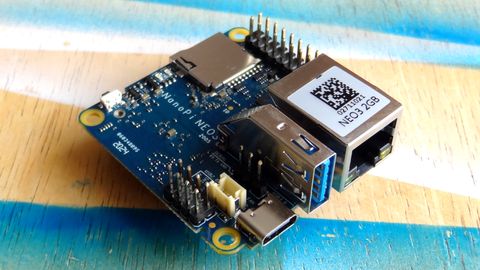
NanoPi NEO3

(Image: © Tom’s Hardware)

OUR VERDICT

For just $20, the NanoPi NEO3 can be a server on your network, but it won’t replace your Raspberry Pi.

FOR

  • Small size
  • Powerful package
  • USB 3 port

AGAINST

  • GPIO not Raspberry Pi compatible

The competitors for the Raspberry Pis crown are plentiful and each produce a number of boards that serve a specific purpose. The latest board from FRIENDLY ELEC is the $20 ($25 for 2GB of RAM, $54 direct from Amazon) NanoPi NEO3 which offers similar performance to the Raspberry Pi 3, but in a much smaller package. But what’s the catch? In the case of the NanoPi NEO3 the catch is that this is not a general purpose computer, but rather something from which we can build networked appliances and Internet of Things (IoT) devices.Today’s best NanoPi NEO3 deals

NanoPi NEO3
Amazon

US$53.99We check over 130 million products every day for the best prices

NanoPi NEO3
(Image credit: Tom’s Hardware)

Specifications of the NanoPi NEO3

At the heart of the NanoPi NEO3 is a RockChip RK3328 Quad Core 64bit Cortex A53. The Cortex A53 running between 400MHz and 1.296GHz provides solid performance, similar to the 1.2GHz quad core ARM Cortex A53 found in the Raspberry Pi 3. The 1GB or 2GB of DDR4 is plenty for the tasks that this board will be performing. We chose to max out the RAM and went for the 2GB model for this review.

NanoPi NEO3
(Image credit: Tom’s Hardware)

The NanoPi NEO3 is not a board for general purpose use, made clear by the lack of any form of connection for displays. For the NanoPi NEO3 a life of quiet networked applications is all it shall undertake while looking cute in its optional white plastic case. Unlike other boards in the range, the NanoPi NEO3 does not come with any onboard flash storage, rather a single microSD card is our only source of bootable storage.

System on ChipRockChip RK3328, Quad-core 64-bit high-performance Cortex A53
RAM1GB/2GB DDR4
LAN10/100/1000M Ethernet with unique MAC
USB1x USB3.0 Type A and 2x USB2.0 on 2.54mm pin header
MicroSDOne slot for system boot and storage
Fan2Pin JST ZH 1.5mm Connector for 5V Fan
GPIO2.54mm pitch 26 pin-header, include I2C, UART, SPI, I2S, GPIO
Serial Debug Port2.54mm pitch 3 pin-header, 1500000bps
Power5V/1A, via Type-C or GPIO

Design of the NanoPi NEO3

NanoPi NEO3
(Image credit: Tom’s Hardware)

The NanoPi NEO3 is deceptively small. Measuring just 1.9 x 1.9 x 0.9 inches (48 x 48 x 24mm) which makes it smaller than the Raspberry Pi 3 A+  2.5 x 2.2 x 0.5 inches  (65 x 56 x 12mm) but more square than a Raspberry Pi Zero which measures 2.5 x 1.2 x 0.5 inches (65 x 30 x 12mm).

https://www.macrumors.com/2020/09/09/yubico-launches-yubikey-5c-nfc/

Yubico Launches ‘YubiKey 5C NFC’ With USB-C and NFC Support

Wednesday September 9, 2020 4:00 am PDT by Juli Clover

Yubico, a company that sells physical security keys for two-factor authentication, today announced the launch of the new YubiKey 5C NFC, pairing USB-C and NFC support in a single device.


According to Yubico, the YubiKey 5C NFC is the first multi-protocol security key that supports smart cards. With the NFC integration, the YubiKey 5C NFC features tap-and-go authentication that works with all major browsers and operating systems, plus it continues to offer a physical USB-C connector.

Like other devices in the YubiKey lineup, the YubiKey 5C NFC is a hardware-based two-factor authentication dongle that is designed to work with hundreds of services to make logins more secure. It’s more convenient than software-based two-factor authentication because you don’t need a security code. Just connect it to a USB-C device or tap it on an NFC-compatible iPhone to authenticate.

“The way that people work and go online is vastly different today than it was a few years ago, and especially within the last several months,” said Guido Appenzeller, Chief Product Officer, Yubico. “Users are no longer tied to just one device or service, nor do they want to be. That’s why the YubiKey 5C NFC is one of our most sought-after security keys — it’s compatible with a majority of modern-day computers and mobile phones and works well across a range of legacy and modern applications. At the end of the day, our customers crave security that ‘just works’ no matter what.”

YubiKey 5C NFC is compatible with common password management apps like 1Password and LastPass, and it also works on the web. It supports multiple authentication protocols such as FIDO2 and WebAuthn, FIDO U2F, PIV (smart card), OATH-HOTP and OATH-TOTP (hash-based and time-based one-time passwords), OpenPGP, YubiOTP, and challenge-response, so a single key can work with multiple services and applications.

The YubiKey 5C NFC can be purchased for $55 from the Yubico website.Tag: YubiKey31 comments ]

Top Rated Comments

(View all)

Avatar

jogu12 hours ago at 05:59 am


We used Yubikeys in our org up through last year. They’re $50+ per piece. Our security team doesn’t allow us to deprovision/reprovision them for a 2nd use once they’ve been issued to the first departing employee because they could then contain malware and be compromised- even after following Yubi’s procedures to scrub them.

Needless to say, we don’t use them anymore because if you can’t safely repurpose an IT asset during its service life, it’s a showstopper.
If whatever you’re trying to protect isn’t worth 50 USD per employee why bother with the yubikeys in the first place? In most organisations I’ve worked getting a new employee hired, onboarded and trained up is costed in thousands of dollars at a minimum, 50 USD is insignificant compared to that cost, and items under 75 USD aren’t tracked on our asset register.

Did you find something that’s better/cheaper?Score: 9 Votes (Like | Disagree)

Avatar

bierdybard11 hours ago at 07:08 am


We used Yubikeys in our org up through last year. They’re $50+ per piece. Our security team doesn’t allow us to deprovision/reprovision them for a 2nd use once they’ve been issued to the first departing employee because they could then contain malware and be compromised- even after following Yubi’s procedures to scrub them.

Needless to say, we don’t use them anymore because if you can’t safely repurpose an IT asset during its service life, it’s a showstopper.
Then I have to say as a fellow tinfoil-hat wearer that your security team is really not smart, or really doesn’t understand the YubiKey.

It is not possible* for someone to alter the code on a YubiKey once it has been programmed and sealed at the factory.

To me this would be a whistleblower moment for higher-ups. They are throwing away both a massive capital investment, and quite literally (when used properly) the best tool they have against both phishing and lateral movement in their network, because they fail to adequately understand what they are working with and do a proper risk assessment.

Stories like this anger me so much. We need the best security we can possibly get, especially in an age where so many peoples’ personal data is being collected and stored. But no, instead of asking the right questions, doing proper research, and doing a proper risk analysis, we’re going to use something inferior.

(*as with anything else, yes, I’m sure it’s possible somehow, but 1. not by persons of ordinary means and 2. not without physical destruction of the device or other evidence of tampering. Your security team is flushing value down the toilet over the smallest possible chance of compromise.)