Study of circadian rhythm reveals differences in men and women
by Bob Yirka , Medical Xpress
Credit: Pixabay/CC0 Public Domain
A pair of researchers at the University of Pennsylvania has been analyzing papers by researchers studying the circadian rhythm in humans and has found a pattern: there are gender differences. Seán Anderson and Garret FitzGerald have published a Perspective piece in the journal Science describing the differences they found.
Prior research has found that humans and other animals have more than one kind of bodily rhythm. In addition to the circadian rhythm, which regulates sleep and wakefulness, humans have rhythms that control breathing, the shedding of skin and the heart rate—to name just a few. The circadian rhythm is perhaps the most well-known because it has such an observable impact on our daily lives; it controls when we go to bed and when we wake up. It also is involved in metabolism. We get more tired at certain times than others and because of that, tend to speed up or slow down whatever it is we are doing. In this new effort, the researchers were looking to learn more about the circadian rhythm by reading papers written by researchers who had conducted direct studies of its impact on people. In all Anderson and FitzGerald looked at studies involving over 53,000 people. In so doing, they found that age and sex “substantially affect” body clocks.
More specifically, the researchers found women in general, tend to be morning people, while men are more apt to be night people. They also found that women are more resilient to disruptions of their natural circadian rhythm. Women tend to be more active during the day, a pattern that is also common in children. They are less energetic than men at night, however. And they found that women spend more time sleeping and while sleeping spend more time in slow-wave deep sleep, than men. They were also more resilient to disturbances while they were sleeping. Men on the other hand, were found to be more likely to take afternoon naps.
The researchers did not find any reasons for the differences in circadian rhythms between the genders but suspect it has to do with the maternal role women have traditionally played—it would seem natural for them to have a circadian rhythm in tune with their offspring. They also note that some research has found a link between the circadian rhythm in women and their estrous cycle.
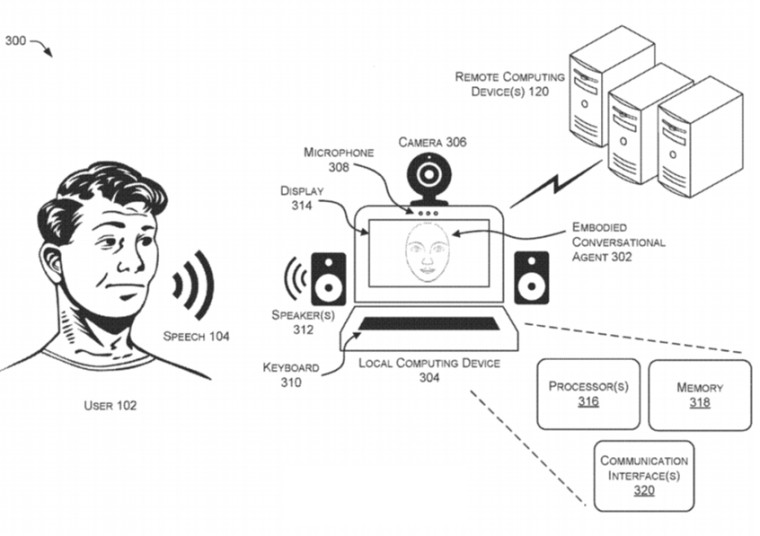
A new patent granted to Microsoft by the United States Patent and Trademark Office (USPTO) reveals that the company is working on conversational agents that mirror users’ conversational style and/or facial expressions. The patent – Linguistic Style Matching Agent – was granted to Microsoft on September 3, 2020, and credits Daniel J McDuff, Kael R. Rowan, Mary P Czerwinski, Deepali Aneja, and Rens Hoegen as inventors.
With advances in speech recognition and generative dialogue models, conversational interfaces like chatbots and virtual agents are becoming increasingly popular. While such natural language interactions have led to an evolution in human-computer interactions, the communication is mostly monotonic and constrained. These conversations, therefore, end up being only transactional and are not very natural.
This new patented technology aims to bring an end-to-end voice-based conversational agent that can engage in a more natural, multi-turn dialogue that aligns with a user’s conversational style and facial expressions.
A conversational agent that is implemented as a voice-only agent or embodied with a face may match the speech and facial expressions of a user. Linguistic style-matching by the conversational agent may be implemented by identifying prosodic characteristics of the user’s speech and synthesizing speech for the virtual agent with the same or similar characteristics. The facial expressions of the user can be identified and mimicked by the face of an embodied conversational agent. Utterances by the virtual agent may be based on a combination of predetermined scripted responses and open-ended responses generated by machine learning techniques. A conversational agent that aligns with the conversational style and facial expressions of the user may be perceived as more trustworthy, easier to understand, and create a more natural human-machine interaction.
The conversational agent may be audio-only or embodied, meaning it has a ‘face’ which appears to speak. In both these implementations, the agent may use machine-learning techniques and respond to utterances from a user in a natural and understandable way, thereby improving human-machine interactions as a whole.
Facebook has revealed a set of AR glasses that give users “perceptual superpowers” by amplifying what they want to hear and dimming background noise.
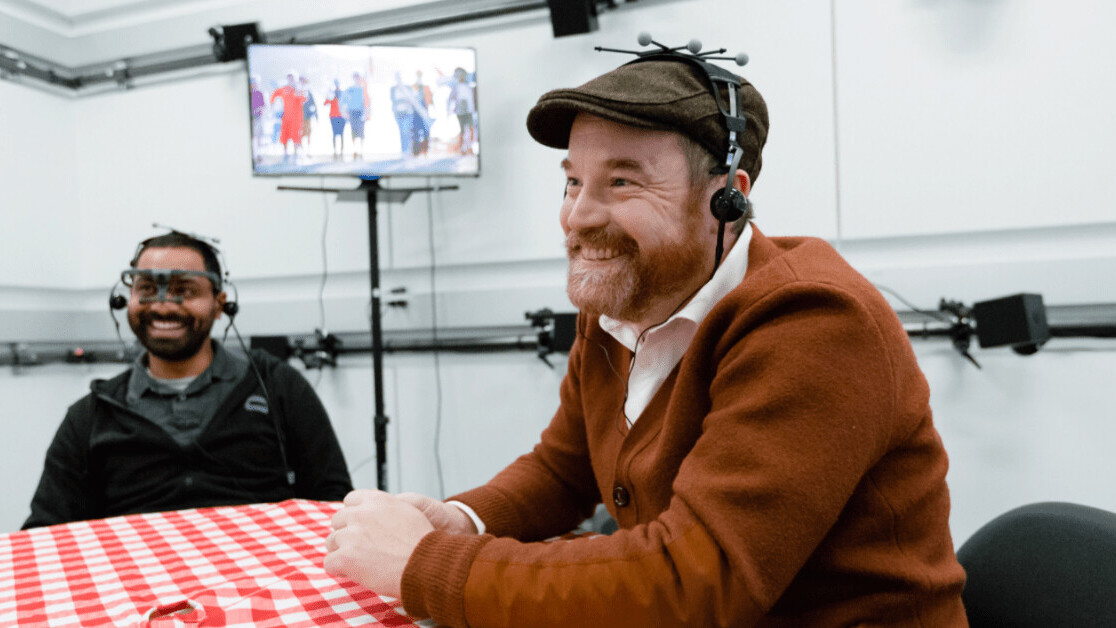
One prototype device is equipped with headphones and microphones that capture surrounding sounds. It then tracks the movements of the user’s head and eye movement to work out what they’re trying to hear. This headset then enhances the sounds the user’s focused on, and turns the volume down on everything else.
The specs don’t look particularly comfy or attractive — two of the reasons AR glasses have never taken off. But Facebook thinks they’d serve two useful purposes in noisy places such as restaurants.
“Loud restaurants aren’t just annoying — they can also pose a potential health risk for employees,” said Lisa Brown Jaloza, a technology communication manager at Facebook. “In fact, prolonged exposure to noise levels above 85 decibels — which many restaurants and bars surpass these days — can contribute to hearing loss, if exposed for long periods. By dimming the noise, we may be able to help protect people’s hearing over time.”
Perhaps, although I doubt many restaurants will want to splash out on the headsets and I can’t imagine their staff will be desperate to wear them.
Another device creates an effect called audio presence — the feeling that the source of a distant sound is in the same place as the listener.
Facebook produced this effect by placing an array of microphones around a meeting room full of people. In a separate room, Jaloza wore a modified Oculus Rift headset and a pair of headphones.
The microphones then send the voices of every person in the meeting room to different points in Jaloza’s headphones while she watched each speaker through the lenses.
“I find myself naturally turning to face the direction of each person,” she said. “This helps me follow and participate in the conversation and feel like I’m in the room itself — even though I’m actually not.”
It sounds impressive, but it’s gonna need to be seriously scaled-down before it’s on the market, as the prototype device needs 32 separate microphones to collect sounds from a room.
There are also some major security risks in the devices. Facebook says it encrypts the data before it’s given to researchers and separates the user’s identity from and separates the user’s identity from the information. But that might not allay concerns that the company could use the recordings to deliver targetted ads.
Nonetheless, the glasses could be useful for people with hearing problems — or anyone who wants to cut a loudmouth idiot out of a conversation.
So you’re interested in AI? Then join our online event, TNW2020, where you’ll hear how artificial intelligence is transforming industries and businesses.
10 ways to conquer adult nightmares and get better sleep
By Kristen Rogers, CNN
Updated 3:10 AM ET, Fri September 4, 2020
Sleep does the body good 00:58
(CNN)We leave behind our fears of monsters under the bed as we say goodbye to our childhoods, but one can follow us into adulthood and loom over our heads.Nightmares are more common in childhood, but anywhere from 50% to 85% of adults report having occasional nightmares.Almost everyone can experience nightmares — and especially during the pandemic.
How to strengthen your immunity during the coronavirus pandemic: Exercise, meditation, sleep and stress management“With a combination of additional stress and safer-at-home orders, more people are struggling with nightmares,” said Jennifer Martin, a professor of medicine at the David Geffen School of Medicine at the University of California, Los Angeles, and member of the American Academy of Sleep Medicine’s board of directors.If your days arefilled with online school for the children, social distancing, masks and a daily death toll, isn’t it no wonder adults are having nightmares at night?”Dreams do usually incorporate things that happened during the day, leading some researchers to hypothesize that dreams and rapid eye movement sleep is essential for memory consolidation and cognitive rejuvenation,” said Joshua Tal, a sleep and health psychologist based in Manhattan. “Nightmares are the mind’s attempts at making sense of these events, by replaying them in images during sleep.”Nightmares are what the American Academy of Sleep Medicine call “vivid, realistic and disturbing dreams typically involving threats to survival or security, which often evoke emotions of anxiety, fear or terror.”
10 ways sleep can change your lifeIf someone has frequent nightmares — more than once or twice weekly — that cause distress or impairment at work or among people, he or she might have nightmare disorder. Treatments include medications and behavioral therapies.Addressing frequent nightmares is important since they have also been linked to insomnia, depression and suicidal behavior. Since nightmares can also cause sleep deprivation, they are linked to heart disease and obesity as well.Trying out these 10 steps could help you ease your nightmares and improve your sleep and quality of life.
1. Establish a sleep routine
Create a nighttime routine to improve the quality of your sleep and reduce nightmares.Nightmares, Martin said, occur during rapid eye movement sleep, the phase during which our muscles relax and we dream. Waking up during REM sleep enables recollection of the dream and resulting distress.”One of the most effective ways to treat nightmare problems in adults is actually to get them sleeping more soundly (so) they wake up less often,” Martin said.A healthy sleep routine begets sound sleep. Develop one by exercising, setting regular sleep and waking times, ensuring your room is dark and cool, avoiding stimulating beverages after midafternoon and engaging in relaxing activities.
2. Cut back on alcohol
Alcoholic beverages can induce restlessness and awakenings throughout the night — potentially helping you remember nightmares, Martin said.
Less dream-stage REM sleep linked to higher risk of death, study says“A lot of people use alcohol as a way to wind down and feel sleepy at the end of the day, but it’s really not the right solution,” she added. Instead, try herbal teas and other beverages conducive to sleep. If drinking was theonly part of your relaxation routine, chat with your partner or read instead.One drink more than three hours before bedtime is OK, Martin said. Just pay attention to whether it causes a post-dinner nap and alertness at bedtime, and eliminate that drink if it does.
3. Don’t eat before bed
Avoid snacking before bed to prevent spiking your metabolism and activating your brain.Snacking can boost metabolism, which causes your brain to be more active and could lead to nightmares, according to the National Sleep Foundation.While some people sleep better after eating a light snack, you should stop eating two to three hours before bedtime. If you notice that you have nightmares afterward, try avoiding nighttime snacking or heavier meals before bed.
4. Review your medications
Some medications can prompt nightmares by interrupting REM sleep.”If people can identify that their nightmares either started or increased when they had a change in their medication, that’s definitely a reason to talk to their doctor” about their medication schedule or alternatives, Martin said.
The rich have one more thing you don’t: Better sleepMelatonin, while a popular sleep aid, influences our circadian rhythm that regulates REM sleep, and can lead to more or fewer nightmares. If you want to take melatonin for better sleep, work with a sleep specialist to ensure you’re taking it at the right time and not compounding the problem, Martin said.
5. Practice stress-relieving activities
Calming activities can deactivate your fight-or-flight response and trigger your relaxation system.Progressive muscle relaxation — tensing muscle groups as you inhale and relaxing them as you exhale — has been effective for reducing nightmares.
Try this 5-minute yoga routine before bedtime“Nightmares activate the sympathetic nervous system, the ‘fight or flight system,’ the body’s natural response to imminent danger,” said Tal via email.”The body also has an innate relaxation system: the parasympathetic nervous system, aka the ‘rest and digest’ system.” Progressive muscle relaxation and other relaxation activities can help activate that system.
6. Journal your worries
Journaling can help you release your anxieties.Write down your worries to get them all out ahead of time, lest they rear their disquieting heads at night. Journaling can be helpful for alleviating nightmares and stress in general, Tal said.
7. Don’t watch or read scary content before bed
Images from any exciting or disturbing content you watched before bed can appear in your dreams.Since our nighttime observations can appear during sleep, “spend some energy engaging with things that are more emotionally neutral or even positive” before bedtime, Martin suggested.During the pandemic, our everyday lives are looking pretty scary, too. “Reading the news media and then hopping into bed is more likely to trigger disturbing and upsetting dreams than looking through pictures from your last vacation with your family,” she added.
8. Rewrite the ending
Imagery rehearsal therapy is effective “when the chronic nightmares are showing similar themes and patterns,” Tal said.
10 commandments for better sleepSince nightmares can be learned behavior for the brain, this practice involves writing down in detail the narrative elements of the dream. Then rewrite the dream so that it ends positively. Just before falling asleep, set the intention to re-dream by saying aloud, “If or when I have the beginnings of the same bad dream, I will be able to instead have this much better dream with a positive outcome.””By practicing a rewrite during the daytime, you increase your chances of having them at night while you’re sleeping instead of your nightmare,” Tal said.
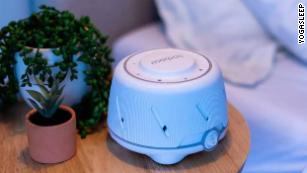
9. Use a white noise machine
Silence is key in a sleep routine, but “for people who either don’t like it to be completely quiet or who are awakened by noises they can’t control during the night,” background noise “is a good strategy,” Martin said.
If nothing works and you’re still having nightmares, talk with a therapist or sleep specialist.Get CNN Health’s weekly newsletter
Sign up here to get The Results Are In with Dr. Sanjay Gupta every Tuesday from the CNN Health team.”Nightmares might be a sign of a larger issue, such as PTSD or a mood disorder,” Tal said. “It is possible to treat the nightmares without treating the underlying disorder, but it may also be helpful to treat both the symptom and the disorder.”There has been great progress on psychological treatments for nightmares, insomnia, anxiety and mood disorders,” Tal added. “Do not be afraid to ask for help; psychotherapy works and it is often short term and accessible.”
This Week In XR: Nreal Smartglasses Get $40 M Boost
Charlie FinkI’m a former tech executive covering VR, AR and new media for Forbes.
Nreal Smartglasses just got a $40M boost. Bringing the total raise by the Chinese company to over $70M. The Nreal Light glasses, now available in South Korea as a 5G – Samsung Galaxy bundle, are coming to the US later this fall priced to sell at $500. Both Apple and Facebook are working on smartglasses, which are expected several years from now.
Owl Ventures raises $585M for its education technology fund. The new funds will help accelerate the firm’s strategy of making early, growth and later stage investments in the world’s leading education technology companies across the education spectrum, from pre-K to professional development.
Kate Winslet, Jennifer Hudson and Glenn Close have joined previously announced lead Daisy Ridley in … [+] BAOBAB STUDIOS
Venice Film Festival’s “Venice VR Expanded” taking place online this year from now through September 12. This is the 5th year for the Venice Film Festival’s VR arm and there are 44 works to be experienced. Access to 23 of these is free via this registration form.
Spatial launches on Oculus Quest bringing its remote collaboration platform to standalone VR.
4th-IR and Virtuleap partner up to improve early detection of cognitive diseases. Virtuleap’s “Enhance VR”, is a brain training application designed as a daily cognitive workout that assesses cognitive functions like memory, attention, motor control, and more. 4th-IR’s AI-powered deep learning tools will be used to enhance Virtuleap’s VR technology.
iPhone 12 will have Sony lidar technology.The same lidar tech was put on the iPad Pro back in March and will now appear on the “Pro” level of upcoming iPhones. The lidar uses pulses of light to measure the distance between the camera lens and objects. The data can be used for beter auto focus features and augmented reality.
Immotion announces “Undersea Explorer Virtual Reality Theater” at Mandalay Bay in Las Vegas. The new attraction can be found in the Shark Reef Aquarium and includes multiple live action 360 degree 3D underwater experiences. Dive with sharks or humpback whales, take an immersive selfie with a shark, and more.
LBVR continues to come back according to this graph provided by Omni Arena, one the leaders in VR … [+] VIRTUIX
Virtuix Omni reports revenues approaching pre-covid levels. Virtuix has 29 Omni Arena locations, 21 of which have reopened to the public. So far, says CEO Jan Goetgeluk business has reached 85% of pre-lockdown revenue levels. Other VR attractions companies are reporting a much more sluggish recovery.
Gnomes and Goblins full version comes out later this month. The immersive experience is being created by Wevr studios and comes from the mind of Jon Favreau. It first released as a short preview version back in September 2016 but soon PC VR users can experience the full “dream-like journey and explore an enchanted forest world where interactions with the realm’s denizens shape the story’s evolution.”.
Mario Kart Live: Home Circuit turns your home into a Mario Kart race track using RC and AR. Using a remote control kart with a camera on the front and the Nintendo Switch as a controller players can race around their living rooms, or anywhere the kart can drive around. The kit comes with cardboard checkpoints you can set up when planning your race track. Players can see what the cart sees and drive it around using their Switch.
VR/AR Global Summit takes place September 30 through October 2. The summit will be presented online and includes many live sessions and announcements from sponsor companies. Notably HP will be announcing a new product during the event. You can register on the summit’s website. Tickets are $55 for non-VRARA members, and $44 for members.
Forbes contributor Charlie Fink is the Author of “Remote Collaboration & Virtual Conferences, The Future of Work” (2020), “Convergence” (2019) and “Charlie Fink’s… Read More
Team Well+Good is eternally questing for ways to snag a perfect night of sleep, and we know you are, too. Last year we surveyed 1,500 readers about the matter and found that 83 percent say that sleep deprivation compromises their quality of life. To help get to the bottom of what stands between you and gold-star-quality REM, we’re committed to investigating questions about sleep, sleep tech, and trying the latest products on the market to optimize.
While we’ll continue to snuggle sleep robots and crash on smart mattresses in the name of researching questions about sleep, we wanted to address what we’ve learned to this point. Below, find 13 of the most common (and, in some cases, bizarre) questions about sleep, investigated and answered.
Below, get answers to 13 of the most controversial questions about sleep.
1. Can you work in your bed and still get a good night’s sleep?
If you’ve transitioned fully to the WFH life during the pandemic, this question might be weighing on your mind because you, quite simply, may not have many options of where you can work. Despite changing time, sleep experts still frown upon mixing business with pleasure in such a way.
“I’m not a huge fan of lingering in bed overall, since spending more time in bed can actually worsen insomnia for some people. The bed is for sleep and sex.” —Shelby Harris, PsyD, sleep psychologist
But if working in your bedroom is unavoidable, a few things can help: decluttering your room, putting your devices on snooze, and setting strong boundaries between work hours and sleep hours.
Verdict: You can make it work, but it isn’t advised.
2. Do you need less sleep as you get older?
There’s a kernel of truth in this tidbit that your nana may or may not humble brag about all the time. In the journey from newborn baby to senior, you’ll typically require less sleep. According to the National Sleep Foundation, a baby requires 14 to 17 daily hours of zzz’s, but by the time you’re 65+, you might need more like seven to nine hours. But that’s not because, like, you have all this energy.
“As we age, we tend to have less deep sleep, with more broken sleep and awakenings throughout the night,” Dr. Harris says. “Naps and dozing occur more throughout the day as well. When taken into account, an average older adult should get approximately the same amount of sleep as [they] did normally before aging, maybe half an hour to an hour less. And this is because the new, extra broken sleep in the middle of the night is made up for by those little naps.”
Verdict: Technically yes, but your sleep quality can get shoddier.
3. When should you stop drinking coffeeto sleep soundly at night?
According to Dan Reardon, MD, the CEO and co-founder of FitnessGenes who has studied how coffee affects people, that really all depends on your metabolism. “The speed at which you metabolize caffeine creates a natural cut off point through the day,” he previously told Well+Good. “Whereas a fast metabolizer might clear 100-200 milligrams—what’s in a typical cup of coffee—in just a few hours, it might take a slow metabolizer 12-hours-plus, which could impact sleep.”
For slow coffee metabolizers, Dr. Reardon suggests a cut-off time between 12 p.m. and 2 p.m., because it can take your body a full eight hours to process said caffeine burst. But even if it goes right through your system, fast metabolizers should have their last cup no later than 5 p.m., when it’s time to start prepping for bed anyway.
Verdict: Pay attention to how you process coffee, but 5 p.m. is an absolute deadline for everyone.
4. Does counting sheep actually work?
Counting sheep is perhaps the original sleep hack many of us learned as children, and it’s essentially just the meditative practice of “susokukan,” or “observing the breath with numbers.” “Counting sheep can help to calm the mind because it gives you a specific and neutral focus, which allows the busy, active mind to settle down,” meditation teacher Stephen Sokoler and founder and CEO of Journey Meditation previously told Well+Good.https://tpc.googlesyndication.com/safeframe/1-0-37/html/container.html
To that end, it doesn’t have to be sheep! It could be goats, it could be pigs, it could be water buffalo, it could be elephants, it could be flamingos. Your brain doesn’t give a damn.
Verdict: It could, and don’t be afraid to switch it up with other members of the animal kingdom.
5. Can you sleep well with the light on?
I’m actually afraid of the dark, and I do sleep with the light on…but not well. That’s because, as the American Medical Association points out, blue or white nighttime light suppresses melatonin release and interrupts circadian biological rhythms. Also, the dark just helps us know that it’s bedtime, so keeping your lamps on does not help.
That being said, there’s research that supports that red light will allow you to sleep soundly, albeit not as well as straight darkness. So if you need a night light, lean toward warmer shades always.
Verdict: Maybe, so long as you have the right (read: red) light.
6. How many days do you feel sleepy after Daylight Saving Time?
Um, because it feels like forever. Though this is specifically a twice-a-year-problem in most regions of the country, rest assured that it takes the body only five to seven days to adjust to the new time, lighting, and alarms post-Daylight Saving Time. Taking day walks or doing light aerobics for 20 to 30 minutes (but not close to bed) can help expedite the process.
Verdict: You’ll probably feel on track in a week, max.
7. Does the full moon mess with your sleep?
According to a sleep study analyzing a million nights of sleep, on nights of the full moon, people required 9 percent more time to fall asleep, and clocked 7 percent less deep sleep. And according to Quentin Soulet de Brugiere, co-founder and CTO of Dreem, the cultural association of the moon evoking bad behavior is what might impact our sleep.
“I have clients who tell me they feel the effect of full moons in relation to not being able to sleep, in particular,” astrologer Courtney O’Reilly previously told Well+Good. “Some also say they feel a little drained or depleted.”
Verdict: A little, so just get the lavender oil flowing on those wild, restless nights.
8. Does sleeping naked help you sleep?
Research tends to support that sleeping nude cools the body down, and lower temps are optimum for a good night’s rest. And from my personal experience, doing so will also make you feel more confident!
Verdict: It can, but definitely make sure to wash your sheets regularly.
9. Is it bad if your partner doesn’t want to spoon while sleeping?
It’s may be typical for couples to cuddle up during the honeymoon phase, but a lot of people drift apart over time…to the other side of the bed. And a lot of people (especially light sleepers!) just like their own space. None of this means any specific sleep position is a sign of a doomed relationship. “One of the basic things about those positions is that they’re just not that comfortable for a long period of time, so we would never think of them as sleeping positions,” body-language expert and co-author 365 Ways to Get a Good Night’s SleepMaryann Karinch previously told Well+Good. “We would think of them as ‘waking-up positions’ or ‘going-to-bed positions.’”
“One of the basic things about [cuddling] positions is that they’re just not that comfortable for a long period of time, so we would never think of them as sleeping positions.” —body-language expert Maryann Karinch
In fact, if you’re facing away from one another, back-to-back, that could signify a strong, secure independent relationship. “You’re very secure back-to-back,” Karinch says. “You’re saying, ‘Hey, I feel good with you.’”
Verdict: Chill, you’re going to be fine.
10. Can hypnosis help you sleep?
The National Sleep Foundation considers auditory hypnosis as a helpful tool for falling asleep, as does Well+Good writer Allie Flinn. Likewise, a small 2014 study from the University of Zurich, Switzerland found that “young, healthy, suggestible females” who listened to audio hypnosis before sleeping had 80 percent more slow-wave sleep. So to the point of “suggestible,” if you think hypnosis isn’t a thing, this probably isn’t for you, my friend.
Verdict: Worth a shot if you believe in it.
11. Are sleep and rest the same?
Rest, here, is loosely defined as not sleep—not even napping, just lying in bed and staring at the window having an existential crisis (or whatever). It’s basically not being engaged in anything mentally or physically, and while that can be good for hitting your reset button, it ain’t the same as sleep.
“There are restorative and regenerative properties of sleep that don’t happen during during any other state,” Elliott Exar, MD, a sleep specialist with John Hopkins Medicine, previously told Well+Good.
Verdict: No, but feel free to embrace some Niksen nonetheless.
12. Can orgasming help you fall asleep?
“When you have an orgasm, you release a cocktail of hormones that helps you feel relaxed and sleep better,” Rebecca Alvarez Story, sexologist and founder of Bloomipreviously told Well+Good. “Think of this cocktail as the body’s natural sleep remedy.” This includes endorphins, vasopressin, oxytocin, norepinephrine, serotonin, and prolactin. The cuddle hormone in particular has an important role in this.
“During sexual arousal, levels of oxytocin can increase significantly, and this can have a calming effect on the mind and body and induce a restful sleep,” sexologist Jess O’Reilly, PhD, host of the @SexWithDrJess Podcast, told Well+Good. “Some research suggests that the process of quashing sexual desire that occurs post-orgasm can result in slumber inducing chemicals that promote some drowsiness.”
Summary: Sibling study reveals moderate cannabis use during adolescence has adverse effects on cognitive function that cannot be explained by genetics or other environmental factors.
Source: CU Anschutz Medical Campus
A new study led by researchers from the University of Colorado School of Medicine compares adolescent siblings to determine the impact of early and frequent use of marijuana on cognitive function.
This study, published in the journal Addiction, contrasts with previous studies by finding that moderate adolescent cannabis use may have adverse effects that cannot be explained by the genetic or environmental factors that siblings may have in common.
“We wanted to expand our understanding of whether cannabis use is related to lower cognitive functioning,” said lead author Jarrod M. Ellingson, Ph.D., assistant professor of psychiatry at the CU School of Medicine. “There’s a large body of evidence that cannabis use is linked to cognitive functioning, but we know that cannabis use is not isolated from other important risk factors. That was the primary motivation behind this study, in which we compared siblings to account for many of these risk factors.”
Such possibilities include environmental risk factors, such as peer group influence, parental behavior, and socioeconomic status. In addition, by designing the study to look at siblings, researchers could consider whether genetic factors explain a shared risk for worse cognitive functioning and earlier or heavier cannabis use.
With this study, Ellingson and his colleagues were able to establish comparisons between siblings and then determine that differential levels of cannabis use were related to poorer cognitive functioning, particularly verbal memory.
With this study, Ellingson and his colleagues were able to establish comparisons between siblings and then determine that differential levels of cannabis use were related to poorer cognitive functioning, particularly verbal memory. Image is in the public domain.
The study participants were 1,192 adolescents from 596 families. They were primarily male—64 percent—and racially and ethnically diverse, with non-Hispanic whites accounting for 45 percent. The families were from metro Denver and San Diego. Drug use was assessed through clinical interviews and cognitive abilities were analyzed through a battery of neuropsychological tests. Two waves of data were collected. The first wave was from participants with an average age of 17 from 2001-2006; the second wave was collected from 2008-2013, with an average participant age of 24.
“More work needs to be done to determine how cannabis use is related to cognitive functioning and we hope that our study can help inform future study designs,” Ellingson said. “These studies are particularly important because cannabis is becoming more potent and more accessible as states legalize its recreational use.”
In the article, Ellingson and his co-authors state, “Due to changes in the legality of recreational and medical cannabis and widespread access in many states, valid empirical data must be available to inform policy and public health decisions, including how cannabis use may affect the developing brain.”
About this psychology research article
Source: CU Anschutz Medical Campus Contacts: Press Office – CU Anschutz Medical Campus Image Source: The image is in the public domain.
The Google Magenta team, which makes machine-learning tools for the creative process, has made models that help you compose melodies, and tools that help you sketch cats. Mostly because it’s fun, but also to explore how AI can make creation more accessible. Its latest project now gives anyone a chance to make quarantine tunes to vibe to—no music training necessary.
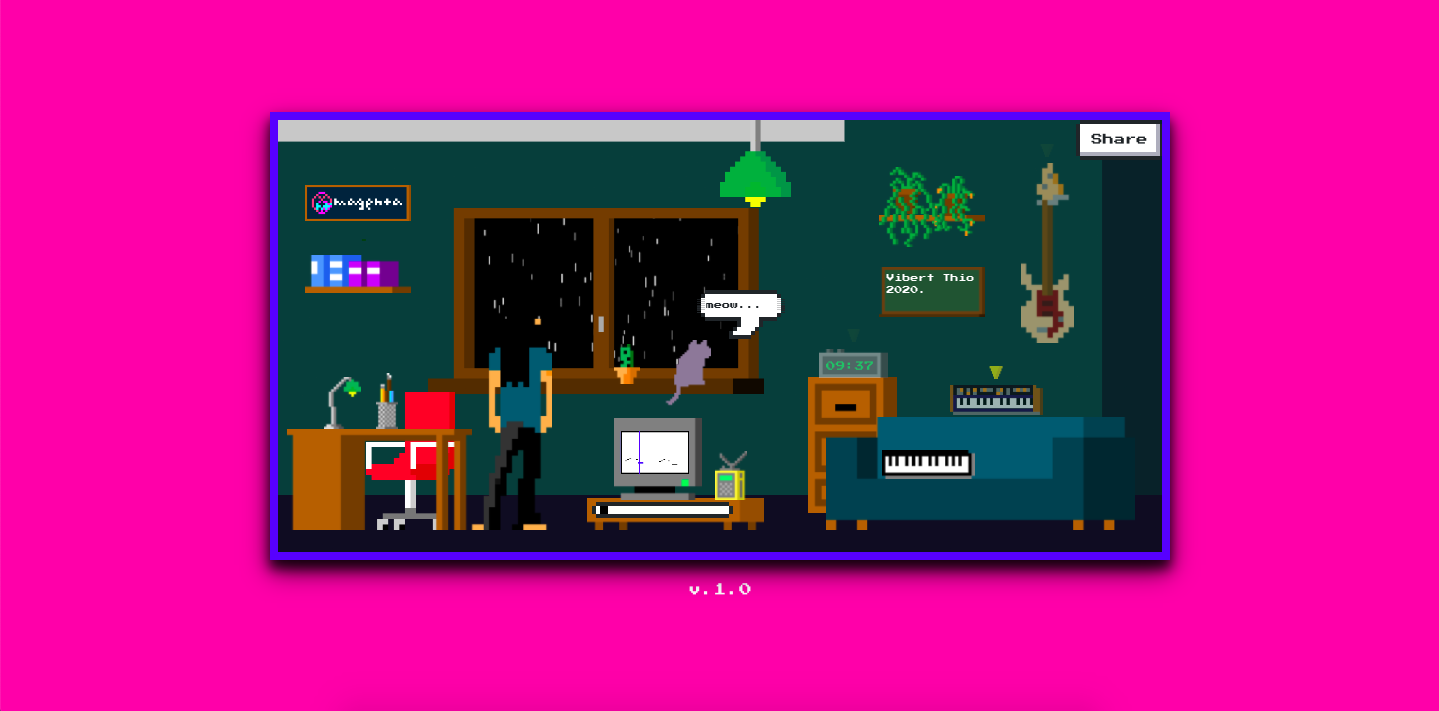
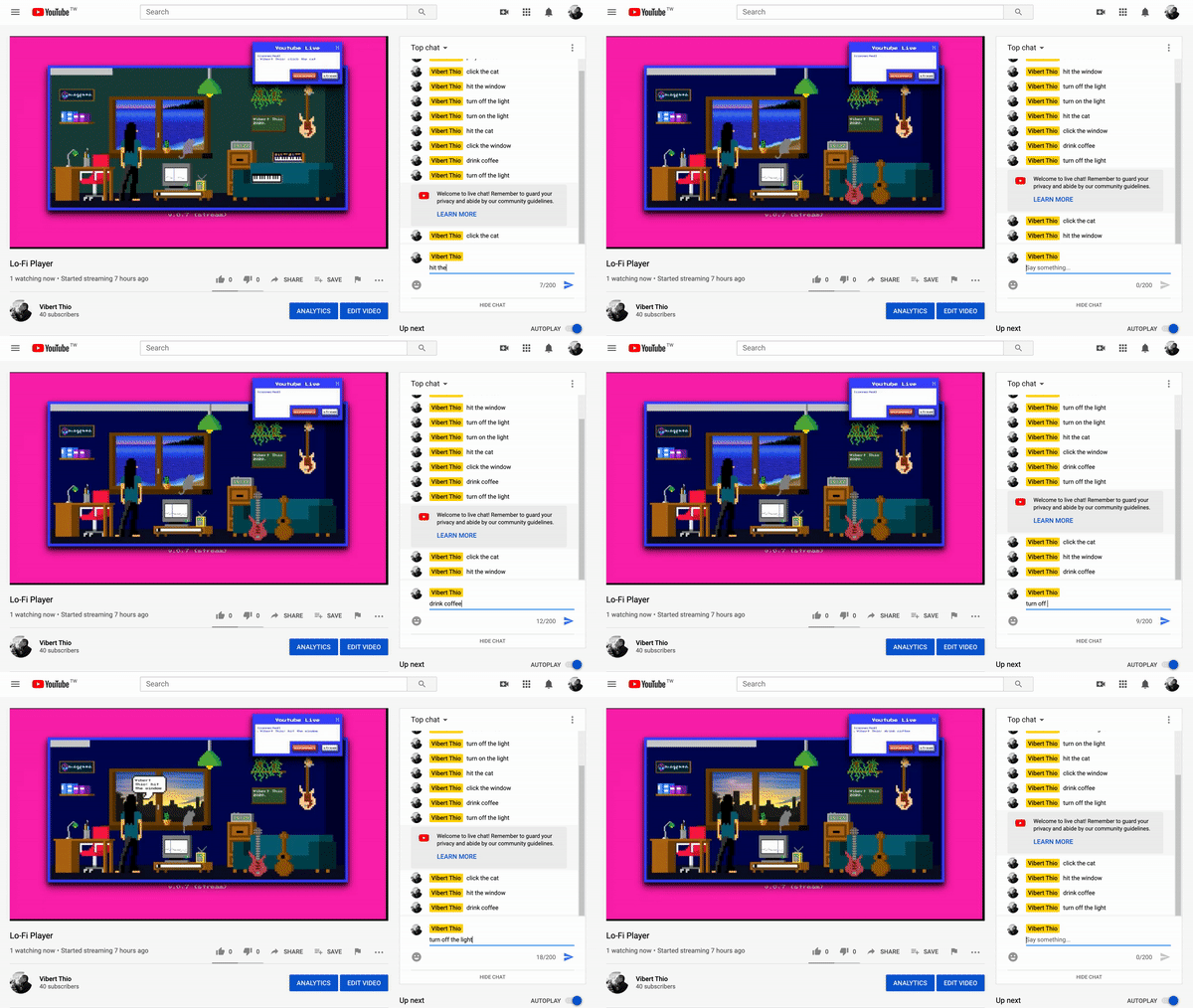
Lo-Fi Player, designed by Vibert Thio, a technologist and artist who interned with the team this summer, lets users interact with objects in a virtual room to mix their own lo-fi hip-hop soundtracks. The goal is to make the music-mixing experience as simple and friendly as possible. The room is a two-dimensional, pixelated drawing displayed in a web browser. Clicking on different objects, like the clock and the piano, prompts the user to adjust different tracks, like the drum line and melody.
There are two machine-learning models at work in the background. One, tucked away in the radio, generates new melodies when clicked on; the other, hidden in the TV, interpolates between two melodies to create something that sounds a little bit like both.
Most of the sounds in the room, however, are not generated by machine learning—and that’s kind of the point. Throughout the process, Thio worked with lo-fi producers to curate bass lines, drum lines, and background ambience that exemplify the genre and sound good. He also wrote four melody options that users can choose from. The machine learning adds just enough of a wild card on top of the scripted tracks to give each user a unique mix.
The initial launch of Lo-Fi Player also includes an interactive YouTube livestream, where users can type commands into the chat window to change the music. The idea is to make music creation a more collective experience, with quarantine in mind. “What a tiny, small thing to bring us together during covid,” says Doug Eck, a research scientist who supervised the project.
Right now the project is in its first version, but Thio already sees more possibilities. His dream project is to make a kind of TikTok for music creation—an interface that makes it really easy for non-musicians to play with music editing, share their creations, and express themselves.
To bring the ability to track where a wearer’s gaze and attention are focused, without requiring costly processing or battery-draining performance, Apple is having to develop a whole new system of eye tracking technology for “Apple Glass.”
Future Apple AR devices are not going to have any problem figuring out when you’ve turned your head to the left or right. What’s going to be much more difficult is figuring out when your head is stationary but your eyes are moving.
So if an AR device is presenting a book to you, it would be good if it knew when you’d reached the bottom of the page. In a game when you’re hunting for treasure, it’s going to have to be pretty big treasure unless there’s a way for the device to know precisely where your eyes are looking.
“Method and Device for Eye Tracking Using Event Camera Data”, a newly revealed patent application, describes the fact that this feature is needed — but then also what problems it brings. Apple is not reinventing the wheel with eye tracking, but it is trying to make that wheel much smaller.
“[In typical systems,” a head-mounted device includes an eye tracking system that determines a gaze direction of a user of the head-mounted device,” says Apple. “The eye tracking system often includes a camera that transmits images of the eyes of the user to a processor that performs eye tracking.”
Watch the Latest from AppleInsider TV
“[However, transmission] of the images at a sufficient frame rate to enable eye tracking requires a communication link with substantial bandwidth,” continues Apple, “and using such a communication link increases heat generation and power consumption by the head-mounted device.”
So current eye-tracking technology would necessarily make the AR device’s battery life shorter. Given that there is already a trade off between the lightweight single-device design that Jony Ive wanted and the more powerful two-device system Apple had previously preferred, power is at a premium.
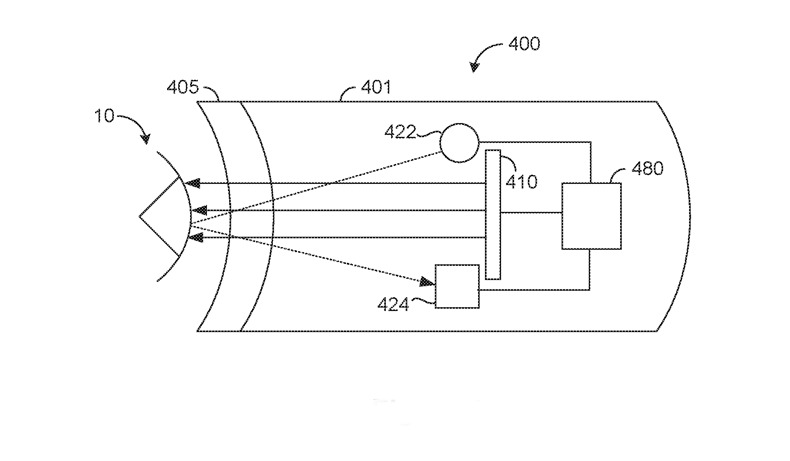
Apple’s proposed solution is to cut down on the processing needed to track a user’s gaze, and to do that by changing what exactly is tracked. “[One] method includes emitting light with modulating intensity from a plurality of light sources towards an eye of a user,” says Apple.
Detail from the patent showing how light may be projected onto an eye and the reflections detected
“The method includes receiving light intensity data indicative of an intensity of the emitted light reflected by the eye of the user in the form of a plurality of glints,” it continues. “The method includes determining an eye tracking characteristic of the user based on the light intensity data.”
So while the AR headset can’t exactly shine floodlights into a user’s eyes, it could project some amount of light. A system would know exactly how much light was used and where it was directed.
“[Then] a plurality of light sensors at a plurality of respective locations [could detect] a change in intensity of light and indicating a particular location of the particular light sensor,” says Apple. “The method includes determining an eye tracking characteristic of a user based on the plurality of event messages.”
This proposal of using reflected light to calculate gaze is a development of a previous Apple patent to do with using an infrared emitter. Separately, Apple has also previously explored different tracking systems in order to assess a user’s eye dominance.
AppleInsider has affiliate partnerships and may earn commission on products purchased through affiliate links. These partnerships do not influence our editorial content.
Neuralink, a neurotechnology company founded by Elon Musk, is actively developing a brain-machine interface to ‘connect humans and computers.’ Last week during a presentation, Musk unveiled the new design of the Neuralink chip device, called ‘Link’. The small coin-size device could one day solve a variety of brain-related issues, including returning mobility to paralyzed individuals; restoring memory, eyesight, and hearing loss, even warning if an individual will have a stroke before it occurs.
Besides restoring health, Musk’s vision for Neuralink is for humans to merge with Artificial Intelligence (AI) – Neuralink “would solve a lot of brain/spine injuries and is ultimately essential for AI symbiosis,” he said. In the future, Neuralink could also feature the capability to summon your Tesla car with a thought and play video games. Individuals with the Link implant could be able to “save and replay memories. […] This is obviously sounding increasingly like a black mirror episode, but well, I guess they’re pretty good at predicting,” Musk said. “You could potentially download [memories] into a robot body.”
The Link chip features 1,024 tiny electrode threads that are threaded by a surgical robot inside the brain to stimulate neurons. Neuralink demonstrated a working Link device implanted on a pig named Gertrude on August 28; the chip was actively recording signals from its sensory area in the brain that is linked to the nerves on her snout. Musk said the purpose of the presentation was to recruit employees that would like to help develop the system. – “We’re not trying to raise money or do anything else, but the main purpose is to convince great people to come work at Neuralink, and help us bring the product to fruition; make it affordable and reliable and such that anyone who wants one can have one,” he said.
Neuralink is based in Fremont, California, new job listings suggest that the neurotech company may expand to Austin, Texas – though not officially confirmed. “We are building a team of multidisciplinary experts passionate about making a world-changing impact,” the job application states. “Neuralink is seeking engineers to write software that communicates in real-time with the brain.”
There are four job listings on the company’s website seeking individuals living in Texas. The job positions posted are: Electrical Engineer for Implant Systems, Senior Software Engineer Full Stack, Software Engineer BMI Applications, and Controller/Senior Accountant.
The company also has eighteen open job positions in Fremont, California. Musk previously said that individuals applying to work at Neuralink do not have to have a neurology background – “You don’t need to have brain experience,” he stated.
Neuralink received a Breakthrough Device designation from the U.S. Food and Drug Administration (FDA) in July, and is “preparing for first human implantation soon, pending required approvals and further safety testing.” The first clinical trial will implant the Link device on paralyzed individuals resulting from cervical spinal cord injury.
ABOUT THE AUTHOR
EVELYN AREVALO
SpaceX Boca Chica correspondent. Writer specialized in spaceflight and space exploration. Rocket connoisseur.



 Create a nighttime routine to improve the quality of your sleep and reduce nightmares.Nightmares, Martin said, occur during rapid eye movement sleep, the phase during which our muscles relax and we dream. Waking up during REM sleep enables recollection of the dream and resulting distress.”One of the most effective ways to treat nightmare problems in adults is actually to get them sleeping more soundly (so) they wake up less often,” Martin said.A healthy sleep routine begets sound sleep.
 Avoid snacking before bed to prevent spiking your metabolism and activating your brain.Snacking can boost metabolism, which causes your brain to be more active and could lead to nightmares, according to the
 Calming activities can deactivate your fight-or-flight response and trigger your relaxation system.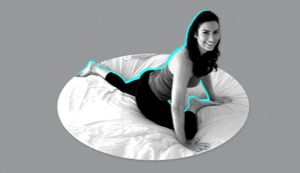
 Journaling can help you release your anxieties.Write down your worries to get them all out ahead of time, lest they rear their disquieting heads at night. Journaling can be helpful for alleviating nightmares and stress in general, Tal said.
 Images from any exciting or disturbing content you watched before bed can appear in your dreams.Since our nighttime observations can appear during sleep, “spend some energy engaging with things that are more emotionally neutral or even positive” before bedtime, Martin suggested.During the pandemic, our everyday lives are looking pretty scary, too. “Reading the news media and then hopping into bed is more likely to trigger disturbing and upsetting dreams than looking through pictures from your last vacation with your family,” she added.





 GOOGLE MAGENTA
 By
By 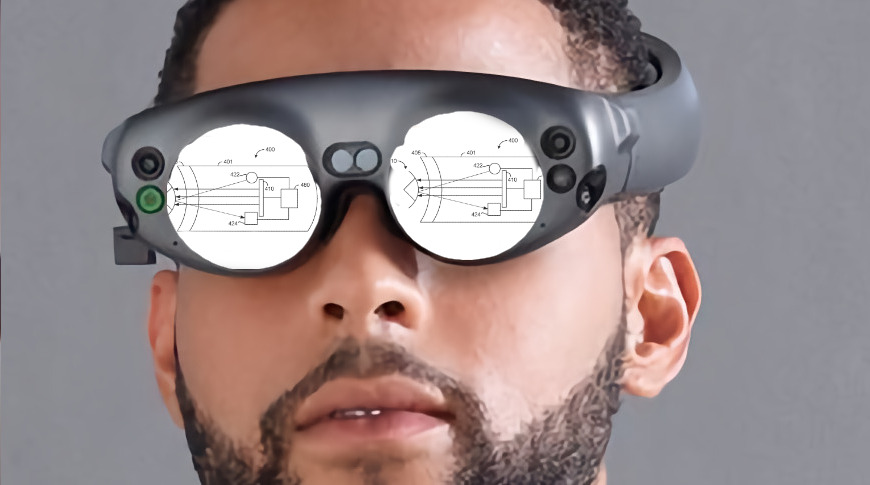




 Bruce's Blog