Liquid glass discovered as new state of matter
By Michael IrvingJanuary 05, 2021https://newatlas.gystaudio.com/embedded/newatlas.com/materials/liquid-glass-new-state-matter/
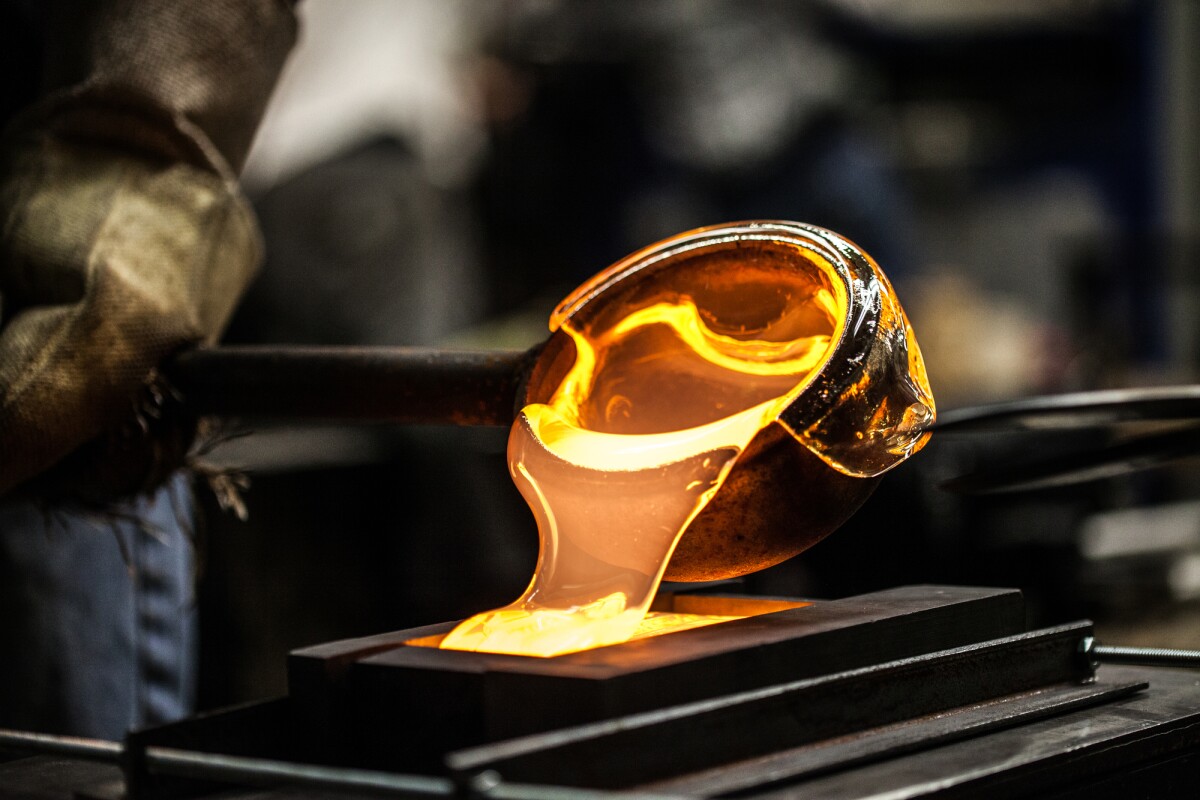
Researchers have discovered a new state of matter called liquid glassaetb/DepositphotosVIEW 2 IMAGES
Mundane as it may seem, glass is a surprisingly mysterious material. Now scientists at the University of Konstanz have identified a new state of matter called liquid glass, which has some unusual properties.
It’s a persistent fallacy that glass already is a liquid, spread by misinformed high school teachers and tour guides. But that’s not technically true – glass is an amorphous solid. Normally when a substance transitions from a liquid to a solid, the formerly free-flowing atoms line up into a rigid crystal formation. That’s not the case with glass though: its atoms “freeze” in their disordered state.
MORE STORIES
MEDICALHeating cancer cells with magnetic nanoparticles can enhance chemotherapy

SCIENCENew analytical tech could make for better beers
Or at least, that’s how it usually goes. In the new study, the researchers discovered a form of glass where the atoms exhibit a complex behavior that’s never been seen in bulk glass before. Essentially, the atoms can move but aren’t able to rotate.
The team made this discovery in a model system of colloidal suspensions. These mixtures are made up of large solid particles suspended in a fluid, making it easier for scientists to observe the physical behavior of atoms or molecules. Normally these particles are spheres, but for this experiment the team used elliptical ones so they could tell which direction they were pointing.
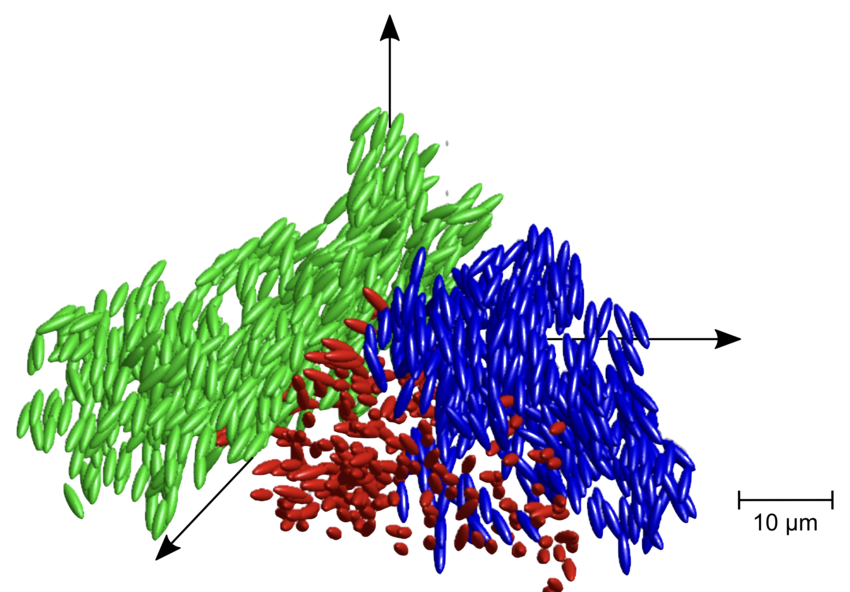
The researchers tested different concentrations of particles in the fluid, tracking how well they could move and rotate. Eventually they found that at higher concentrations, the particles blocked each other from rotating, but they could still move, forming a liquid glass state.
“At certain particle densities orientational motion froze whereas translational motion persisted, resulting in glassy states where the particles clustered to form local structures with similar orientation,” says Andreas Zumbusch, lead author of the study.
The team says that the observed behavior comes from two competing glass transitions interacting with each other. Liquid glass has been predicted for decades, and the new observation suggests that similar processes could be at work in other glass-forming systems.
“This is incredibly interesting from a theoretical vantage point,” says Matthias Fuchs, senior author of the study. “Our experiments provide the kind of evidence for the interplay between critical fluctuations and glassy arrest that the scientific community has been after for quite some time.”
The research was published in the journal Proceedings of the National Academy of Sciences.
Source: University of Konstanz
We recommend
- Does Ideology Matter?: A Case Study of Sino-ex-Soviet Republics’ RelationsYang Zhong, Communist and Post-Communist Studies, 1994
- In China’s Economy, the State’s Hand Grows HeavierNaughton et al., Current History, 2009
- Black Lives Matter: Decrypting Encrypted RacismUgorji et al., Ethnic Studies Review, 2017
- Heterostructures get a quantum buildupTom Siegfried, Knowable Magazine, 2017
- MONARCH 2: Abemaciclib in Combination With Fulvestrant in Women With HR+/HER2− Advanced Breast Cancer Who Had Progressed While Receiving Endocrine TherapySledge et al., J Clin Oncol, 2017
- The Heart of the Matter: An In-Depth Look at the Latest Evidence With CLL Therapies and How to Optimize Treatment SafetyAn independent learning activity funded by Janssen Inc. 15minutes
 Bruce's Blog