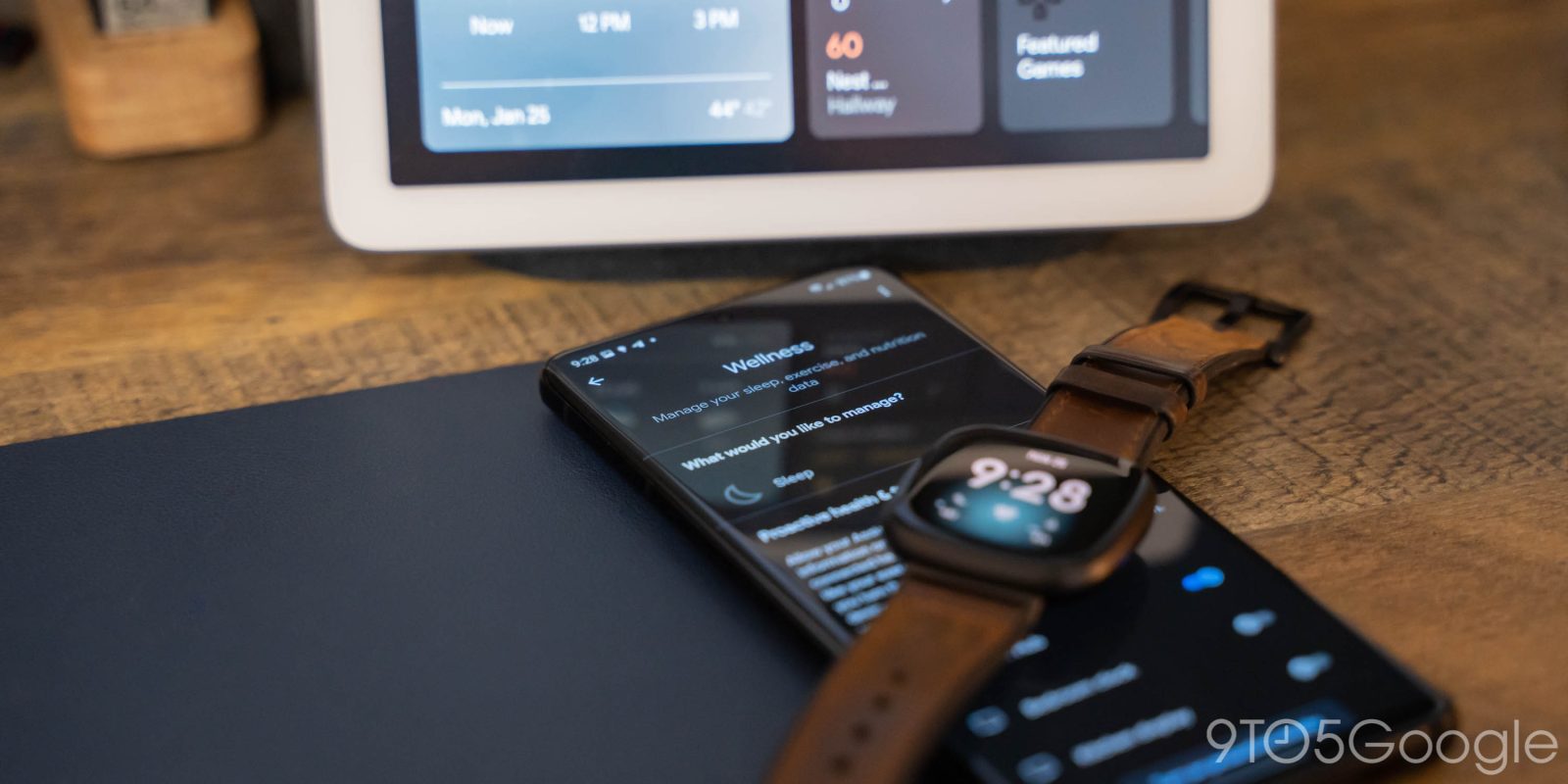
In a quiet update to Google Assistant, a new “wellness” section has been added which prepares the ability for Assistant to show your health and fitness data on smart displays and more.
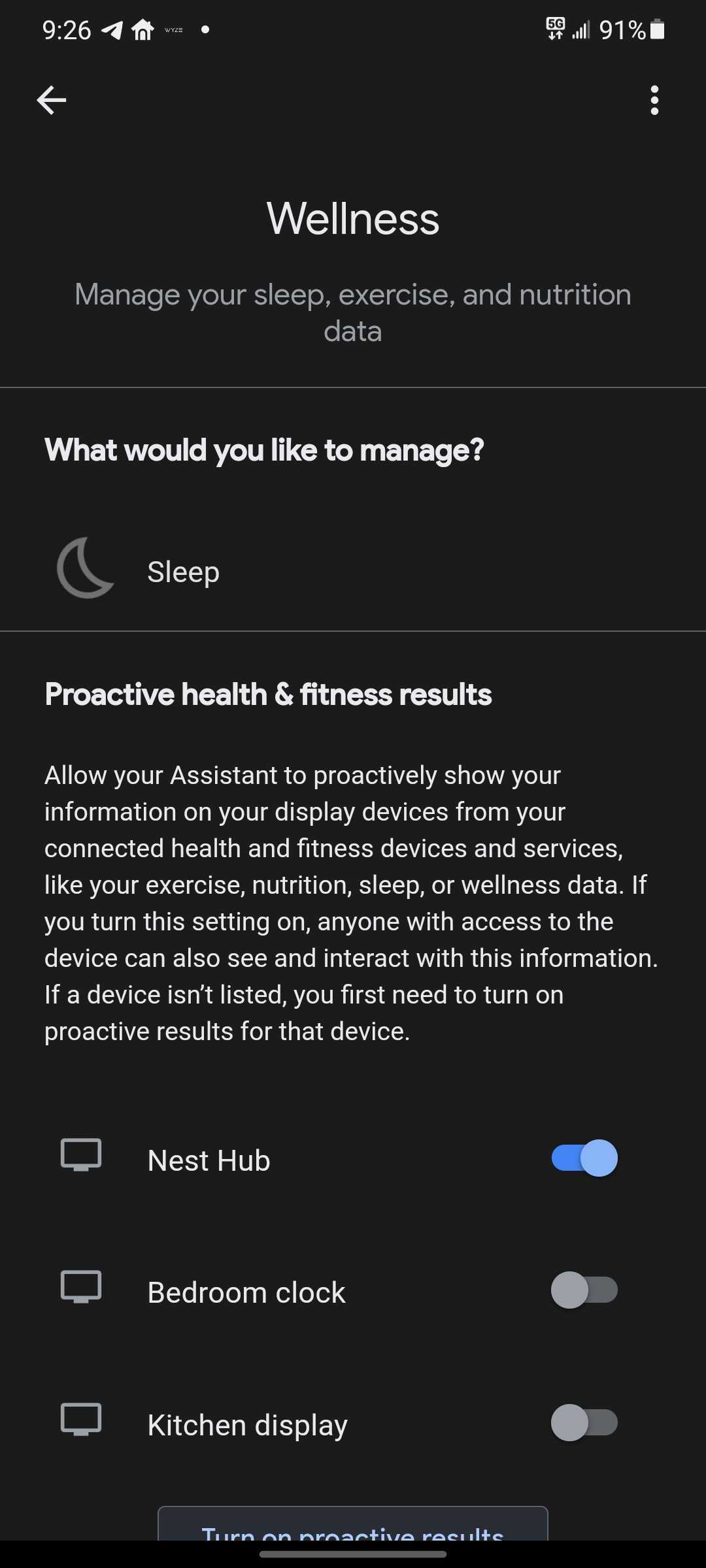
Rolling out now to users, the “Wellness” section of Google Assistant’s settings replaces the “Sleep” section that rolled out in November 2020. This new section integrates the sleep settings including the integration with Fitbit. Currently, sleep is the only option available in this section.
However, the “Wellness” section of Google Assistant will be able to do much more in time, as the page teases managing data on “sleep, exercise, and nutrition” gathered from fitness devices.
Most importantly, this data will be shown “proactively” on compatible devices, those devices being Google Assistant smart displays. Right now, we can see the current Nest Hub, the Nest Hub Max, and the Lenovo Smart Clock as options for proactively showing this data, though once enabled we didn’t see the results actually appear on screen.
Google explains:
Allow your Assistant to proactively show your information on your display devices from your connected health and fitness devices and services, like your exercise, nutrition, sleep, or wellness data.
Presumably, this includes deeper integration with the Fitbit app and possibly Google Fit as well, but none of those features have gone live just yet. This new section is also likely being prepared ahead of the debut of Google’s new Nest Hub which we exclusively reported would ship with Soli for the purpose of sleep tracking.
Google also notes that, with these features turned on, anyone interacting with the smart display can see the information.
Taking to Twitter, Elon Musk took a counter-barb at Waymo chief saying that Tesla has better hardware and software than the self-driving car unit to attain full self-driving system. Musk wrote, “To my surprise, Tesla has better AI hardware & software than Waymo (money).
Earlier, John Krafcik, the chief executive officer of Waymo, had said, “It is a misconception that you can simply develop a driver-assistance system further until one day you can magically jump to a fully autonomous driving system.”
Krafcik’s barb was aimed at Autopilot, which has stoked controversy since Tesla first introduced the suite of driver-assistance features in 2014. The electric-car maker has been criticised for how it has branded its system while still requiring that users be fully attentive and ready to grab the wheel at any time.
Tesla CEO Elon Musk said in December he was “extremely confident” Tesla will offer full autonomy to customers in some jurisdictions this year. He’s made similar claims in the past, including in April 2019, when he predicted Tesla would have more than 1 million cars on the road by the middle of 2020 that wouldn’t require drivers to be attentive.
Krafcik said he doesn’t consider Tesla a competitor in driverless vehicles, telling Manager Magazin that it’s “developing a really good driver-assistance system.”
For a lot of women, sleep problems explode during middle age, and throughout the menopausal transition. The transition through menopause has long been associated with disruption to sleep. Sleep problems are linked to the hormonal changes of menopause, and to both the physical symptoms and psychological effects that often occur for women during menopause.
We also know that aging itself brings changes—and challenges—to sleep. Sleep architecture—the structure of our nightly rest as we move through the different stages of sleep—changes with age. Broadly speaking, we spend less time in deep sleep and more time in light sleep as we get older.
Health issues often complicate sleep as we age, everything from increasing pain and stiffness, to illness and its treatment, to weight gain.
And declining production of hormones, beyond those associated with menopause (and with andropause in men), also affect sleep. Melatonin levels drop with age, and with declining melatonin comes a lack of robustness and consistency in the body’s daily circadian timing. As a result, our natural sleep-wake cycles often become less regular the older we get. We may be more apt to wake during the night (having to go to the bathroom is also a factor here), to wake earlier in the morning, and to feel sleepy during the day. Aging is a privilege, but one that often comes with a more complicated picture for sleep.
While sleeping in midlife and older age poses challenges for both men and women, menopause can create additional hardship for sleep. And there remain open questions about the long-term effects of menopause on sleep.
New research by a group of scientists in Finland sheds some light on how menopause and age may affect women’s sleep. The big-picture news here is good: the results of this research indicate that over the long term, menopause does not worsen women’s sleep.
There’s a lot to talk about here. Let’s first take a closer look at this study’s intent, and its results.
How does sleep change in the menopausal transition?
For this study, scientists investigated changes to sleep architecture connected to menopause. They were interested in distinguishing between the effects of menopause and the effects of aging on sleep during the years when most women undergo the transition from pre-menopause to post-menopause. Put another way, scientists asked the question: What changes to sleep architecture can be attributed to menopause, and what changes can be attributed to aging?article continues after advertisement
The study included 57 premenopausal women, with an average age of 46 at the time the study began. Scientists observed and measured women’s sleep using polysomnography, both at the start of the study and again 10 years later. They also took measurements of follicle-stimulating hormone (FSH) at the outset and the 10-year mark, to pinpoint where women were in their menopausal transitions. FSH is a hormone that stimulates production of estrogen in the ovaries. As estrogen production declines throughout perimenopause, FSH levels rise. A higher FSH is a signal that women are further along in their transition to menopause.
The analysis found evidence that most of the changes to sleep architecture were attributable to age, not to menopause.
Aging 10 years was associated with changes to time spent in light sleep, and in deep sleep, as well as to changes to the time it takes to fall asleep and the time it takes to reach stage 2 sleep, the deeper of the two light sleep stages.
Menopause, they found, was linked only to a longer sleep latency, meaning a longer time to fall initially to sleep.
What’s the takeaway for women here? While menopause may have short- and medium-term effects on sleep—remember, the study looked only at a 10-year time span—this study suggests long-term sleep does not worsen because of menopause, and that changes to sleep architecture over the long-term are linked to aging itself.
Here are some of the key things to know about what can happen to sleep in menopause, and what to do about it:
Night sweats
Nighttime hot flashes are the body’s response to drops in estrogen. Night sweats can make sleep uncomfortable and difficult, whether it’s from waking up in the night drenched in sweat and having trouble falling back asleep, or waking feeling unrested because of restless sleep caused by night sweats. For many women, hot flashes and night sweats begin during perimenopause and tend to increase in frequency until a couple of years into post-menopause, before beginning a gradual decline.
Physical pain
The menopausal transition often includes a range of potentially painful and uncomfortable physical symptoms that can interfere with sleep:
During perimenopause, when estrogen, progesterone and other hormones are fluctuating sharply, some women experience severe PMS and heavy periods, accompanied by cramping, bloating, and breast tenderness.
Headache and migraine can be a sign of low estrogen. Painful headaches and migraine arise for some women during pre-menopause, when estrogen levels drop at points during their monthly menstrual cycles. Often women in perimenopause experience headaches in response to the erratic fluctuations and overall decline of their estrogen levels.
Muscle and joint pain and stiffness also occur for many women during menopause. One of estrogen’s functions in the body is to control and reduce inflammation. When estrogen declines, so does the strength of its work as a natural anti-inflammatory agent. This is one reason women may start feeling arthritis-like pain during menopause.
Frequent urination
Incontinence and persistent need to urinate are both common symptoms for women going through menopause. The thinning of vaginal tissue, as well as the tissue’s diminishing elasticity, make bladder control an issue for many women in menopause. So does a weakening of the pelvic muscles. Urinary tract infections also become more common in menopause.article continues after advertisement
It helps to stay hydrated throughout the day, to keep alcohol consumption very moderate, and to avoid drinking too much of anything very close to bedtime.
Weight gain
Weight gain during menopause happens to many women. Every woman is different, and weight gain with age can result from several factors, including genetics, daily habits of diet and exercise, and other health conditions. The hormone changes associated with menopause do also contribute to weight gain and changes to appetite. Research shows estrogen helps control appetite in the same way as the hormone leptin, triggering feelings of fullness and signaling to the brain that the body has sufficient fat and energy stored. Declining estrogen levels can bring about changes to appetite, increasing hunger and cravings for fatty and sugary foods. Low estrogen can also make it more likely for women to gain fat in the abdominal area.
A brain pressure disorder that especially affects women, causing severe headaches and sometimes permanent sight loss, has risen six-fold in 15 years, and is linked to obesity and deprivation, a new study by Swansea University researchers has shown.
Rates of emergency hospital admissions in Wales for people with the disorder were also five times higher than for those without.
The condition is called idiopathic intracranial hypertension (IIH). It causes increased pressure in the fluid surrounding in the brain. This can lead to severely disabling headaches as well as vision loss, which can be permanent.
The research team, from Swansea University Medical School, used anonymised health records of Welsh patients held in the SAIL databank, a national healthcare database managed by the University. They analysed 35 million patient years of data from 2003 to 2017. They identified 1,765 people with IIH during that time, 85% of whom were women.
They recorded the body mass index of people in the sample and estimated their relative deprivation using a standard national scoring system. For each person with IIH, they compared three people with a comparable profile who did not have the condition.
They found:
A six-fold increase in the number of cases of the disorder over the course of the study – from 12 cases per 100,000 in 2003 to 76 cases in 2017.
Rates of emergency hospital admissions were 5 times higher in people with IIH, compared to others – 9% of people with IIH require brain surgery to try and preserve vision.
There were strong links for both men and women between body mass index and risk of the disorder.
Obesity rates in Wales over the same period rose from 29% of the population to 40%
For women only, deprivation was linked to risk, even after adjusting for body mass index. Women in the most deprived areas had 1.5 times greater risk of developing the disorder than women in the least deprived areas
Dr Owen Pickrell of Swansea University Medical School, who led the study, said:
“The considerable increase in idiopathic intracranial hypertension we found may be due to many factors but likely mostly due to rising obesity rates. What is more surprising from our research is that women who experience poverty or other socioeconomic disadvantages may also have an increased risk, independent of obesity.”
More research is needed to determine which socioeconomic factors such as diet, pollution, smoking or stress may play a role in increasing a woman’s risk of developing this disorder.
At present we don’t know exactly what causes IIH, but the link with deprivation evident in our research could help provide clues.
Our findings offer yet more reasons why it is essential to address the obesity epidemic, deprivation and inequalities in Wales.”
Reference:
Miah L, Strafford H, Fonferko-Shadrach B, et al. Incidence, Prevalence and Healthcare Outcomes in Idiopathic Intracranial Hypertension: A Population Study. Neurology. Published online January 20, 2021. doi:10.1212/WNL.0000000000011463
This article has been republished from the following materials. Note: material may have been edited for length and content. For further information, please contact the cited source.
If you’re the opposite type of person, a.k.a. the kind who can’t fall asleep in less than 30 minutes and is reeled into wakefulness at the slightest sound, you probably found yourself here as part of your quest to achieve normal sleep habits.
As someone who struggles to sleep myself, I’ve browsed the internet and drugstore shelves for hours in an attempt to find a remedy. I’ve tried melatonin; I’ve tried herbal supplements (and suffered through subsequent allergy attacks); I’ve tried over-the-counter sleep medications. I’ve tried most things shy of prescription sleeping pills and here I’ll outline all of the options you can try too.
If you’re in the same boat, know that different sleeping remedies work for different people. You’ll have to experiment (with caution, of course, and with a doctor’s order for prescriptions) to find out what sleep aids out there will help you catch some much-needed rest. This list of sleep aids isn’t exhaustive, but it’s a good start.
Always consult with your doctor before taking any supplements or medications that can impact your sleep. If your inability to sleep is severely interfering with your ability to fulfill daily obligations or is accompanied by anxiety, panic, stress, depression or other mental health conditions, please talk to your doctor about possible root causes and treatments.
CNET HEALTH AND WELLNESS
Our Health & Wellness newsletter puts the best products, updates and advice in your inbox.SIGN ME UP!
By signing up, you agree to our Terms of Use and acknowledge the data practices in our Privacy Policy. You may unsubscribe at any time.
Natural and herbal sleep aids
Getty Images
For those just dipping their toes in the water, natural and herbal sleep aids are a good start. You can find oodles of products online and in stores that promise to help you sleep. Many natural sleep aids contain a combination of ingredients, while others contain just one ingredient. Here’s a look at several common natural sleep aids.
Melatonin: Melatonin is a hormone produced naturally in your body. In a perfect world, your body would produce more melatonin in the evening to prepare your body for sleep and less in the morning to help you feel alert. However, thanks to electricity and technology, many of us have wacky sleep schedules, thus wacky melatonin production. Supplementing may help (if you do it right).
Magnesium: An essential mineral, magnesium can improve sleep because it helps in the regulation of melatonin. If you’re hesitant to supplement melatonin directly, you could try supplementing magnesium first as a way to increase your body’s natural production of melatonin.
Valerian root: Nicknamed “nature’s Valium,” valerian root is available as an extract in pills and liquids. It gained its status as a sleep aid because of compounds that inhibit the breakdown of gamma-aminobutyric acid (GABA) in your brain. GABA is a chemical messenger, and low levels of GABA have been linked to poor sleep and anxiety. Because Valerian root inhibits the breakdown of GABA, more of it may remain in your brain, thus helping you sleep better.
Cannabidiol (CBD) has become a popular natural sleep supplement.Getty Images
CBD: CBD was the unicorn of the late 2010s. People started using it for everything from pain relief to relaxation and, yes, sleep. Although it’s unclear whether CBD can directly improve sleep in some physiological way, recent research does suggest that CBD reduces cortisol levels, which can alleviate stress and help you sleep.
Lavender: Ever felt super relaxed after using lavender essential oil or lighting a lavender candle? It’s not a placebo effect. Studies show that lavender really can promote sleepiness due to its effects on the nervous system. One study found that using lavender in combination with healthy sleep hygiene habits results in better rest than focusing on sleep hygiene alone. It’s a simple addition to your bedtime routine that has potential to help a lot.
Chamomile: Drinking chamomile tea or using an aromatherapy diffuser with chamomile essential oil may make it easier to fall asleep thanks to a compound called apigenin. This chemical compound binds to GABA receptors in your brain (are you sensing that GABA is a common denominator yet?) and induces relaxation.
One very important thing to note about natural and herbal sleep aids is that they’re regulated as dietary supplements, not medications. This means they aren’t subject to the strict safety and efficacy standards set forth by the Food and Drug Administration for medications. If you want to try one of the sleep aids described above, do thorough research on different brands before you buy.
Over-the-counter sleeping pills
Getty Images
When you head to the sleep aid aisle of a drugstore, you’ll see dozens of different bottles with different names. Look closer, though, and you’ll notice that most of the bottles contain one of the following two ingredients.
Diphenhydramine: Found in Benadryl and other allergy medications, diphenhydramine is sold as a single ingredient or in combination with pain relievers, fever reducers and decongestants. As a sleep aid, it’s typically sold alone. Brand names for sleep aids containing diphenhydramine include Aleve PM and Tylenol Simply Sleep. Most drugstores sell generic diphenhydramine as a sleep aid, too.
Doxylamine: Used for short-term treatment of insomnia, doxylamine is another antihistamine that can cause drowsiness. You can find it in drugstores as a generic sleep aid, as well as under the brand names Unisom, Nytol and Nyquil.
As you can see, OTC sleep aids are just sedating antihistamines. People generally use these medications to treat allergy symptoms, but certain antihistamines (like the three described above) can make you sleepy. Second-generation antihistamines usually don’t make you sleepy, and those are found in allergy pills labeled “non-drowsy.”
Keep in mind that although antihistamines are generally considered safe, they may interact with other medications you’re taking. Also, they’re not intended to be taken for more than two weeks at a time, so they aren’t a permanent solution to insomnia.
Prescription sleeping pills
Like OTC sleeping pills, prescription sleeping pills go by dozens of names. Prescription sleeping pills fall into three categories, hypnotics, barbiturates and benzodiazepines. Below are some of the more common sleeping pills prescribed by doctors.
Hypnotics: Hypnotics are a class of psychoactive drugs prescribed to induce sleep. They come with a lot of potential side effects, including headaches, nausea, depression, weakness, impaired coordination and nervousness. They may interact with other drugs you’re taking and aren’t recommended for use with alcohol, so be sure to talk to your doctor about those factors.
Prescription sleeping pills may cause dependency.Getty Images
Benzodiazepines: Benzodiazepines are typically used to treat anxiety, seizures and other mental health conditions, but they can also treat insomnia and are often prescribed for that purpose. These medications work by altering the activity of your nervous system, targeting neurons that trigger stress responses. There are several different types of benzodiazepines, and they all have potential side effects, some of which can be serious. Mixing benzodiazepines with alcohol or other sedating substances can be fatal.
Common benzodiazepines include:
Alprazolam (Xanax)
Chlordiazepoxide (Librium)
Clonazepam (Klonopin)
Clorazepate (Tranxene)
Diazepam (Valium)
Estazolam (Prosom)
Flurazepam (Dalmane)
Lorazepam (Ativan)
Midazolam (Versed)
Oxazepam (Serax)
Temazepam (Restoril)
Triazolam (Halcion)
Quazepam (Doral)
Barbiturates: Another sedative-hypnotic drug, barbiturates are a type of central nervous system depressant that quiets anxiety reactions and can treat insomnia and seizures. This class of medications can lead to emotional and physical dependence, and as such are classified as Schedule II drugs.
If you have trouble sleeping, talk to your doctor about possible treatment options.Getty Images
Natural, OTC and prescription sleeping pills all have pros and cons. For example, prescription medications are more likely to induce deep sleep, but they can also lead to dependence and side effects like sleepwalking or severe daytime drowsiness.
Natural remedies aren’t likely to be habit-forming, but because they’re regulated as dietary supplements, it’s hard to know what you’re really getting in a bottle. As for OTC sleep aids, many people quickly develop a tolerance to them and they can cause side effects in some people, as well as interact with other medications.
You should discuss sleep aids with your doctor if you think you could benefit from them. Ultimately, the “best” sleep aid is the one that helps you get the best rest without adverse effects.
The information contained in this article is for educational and informational purposes only and is not intended as health or medical advice. Always consult a physician or other qualified health provider regarding any questions you may have about a medical condition or health objectives.SleepLarge play-pause toggleGoodbye to the tech we lost in 202000:0001:34https://75b2fbe02e56c96293d31be7fda90fcb.safeframe.googlesyndication.com/safeframe/1-0-37/html/container.htmlCNET editors pick the products and services we write about. When you buy through our links, we may get a commission.
The best sleep masks for 2021
Block out light, reduce stress and sleep better with these eye masks.
Updating your bed, mattress or pillows can all make a difference in your sleep quality, but controlling how much light reaches your eyes at night is also important. For many of us, blocking out light is crucial for a good night’s rest. That’s where sleep masks come in.
Once I started using a sleep mask, I noticed a huge difference in my sleep quality. Even though I have blackout curtains in my room, light from my neighbor’s security flood light somehow still creeps in. Now, I use a sleep mask religiously to ensure that none of the light from the outside or my electronics inside disturbs me.
While just a few years ago a silk sleep mask may have been the height of luxury, things have changed. Today’s sleeping mask has more features that can help with everything from blocking out noise to anxiety. There are eye masks for sensitive skin, ones with an adjustable strap, ones with eye cups to help prevent puffy eyes and more.
From a weighted sleep mass that can act like weighted blankets for your face, to a noise-muffling eye mask, we’ve curated this list based on research and reviews of some of the best sleep masks currently available on the market. Keep reading below to find the best sleep mask for your needs, whether you’re a side sleeper or looking for something that can help your skin.Weighted sleep mask for stress reliefNodpod
NodPod
If you’ve ever used a weighted blanket for stress or anxiety, then you know the surprisingly calming effects that the pressure from weighted products can have on your sleep. The same concept has been applied to sleep masks, and Nodpod is one popular choice.
When I tried the sleep mask I loved the calming effect of the mask on my face. The NodPod also has two different materials — one side is made of jersey for a cooler feel, and the other is microfiber, which is warmer. $34 AT AMAZONBlocks out noise, tooLunya Silk Sleep Mask
Lunya
Lunya’s silk sleep mask sounds luxurious — and it is. But you can also throw it in the wash, making it more convenient for real life. The wide band and full-coverage fit ensures that your eyes are completely covered so no light gets in.
The most interesting feature of this mask is that it’s designed to help muffle noise since the band fits over your ears. If you’ve yet to get used to wearing ear plugs at night (like me) but want some noise relief, this can help. $48 AT LUNYAEnough coverage for side sleepersClique Silk Sleep Eye Mask
Clique
If you’re looking for a minimal, lightweight “barely there” sleep mask, this one is it. It’s super soft, light and the smooth silk doesn’t tug on your hair. The smooth fabric and headband ensure that you stay comfortable while you sleep on your side.
The mask is big enough to provide coverage over your eyes, but it doesn’t weigh you down. It’s also machine -washable and convenient for travel since it does not take up much space in a bag.$38 AT CLIQUEBigger sleep mask for menAlaska Bear Sleep Mask
Amazon
Some sleep masks are on the smaller side or are shaped in a way that doesn’t work for different sized faces. This Alaska Bear sleep mask offers a broad, full-coverage fit making it a good choice for bigger faces.
The key to a sleep mask working well is to find one that actually covers your face enough to block all light. The adjustable headband also ensures a snug fit for a variety of sleeping positions and head sizes.$10 AT AMAZONContoured sleep mask3D Contoured Sleep Mask
Amazon
If you don’t love the feeling of a mask pressing against your eyelids at night, or sometimes want the feeling of being able to blink and open your eyes, a contoured mask can help block out the light without weighing on your eyes. This 3D contoured mask also fits the bill if you’re on a budget since a three-pack clocks in at around $13.$13 AT AMAZONMemory foam molds to your faceTempur-Pedic sleep mask
Tempur-Pedic
If you love memory-foam pillows or mattresses, then you know how comfortable memory foam is for sleep. The foam eye mask molds to fit your face, and it covers your ears, which is handy to help secure ear plugs or headphones. The mask has an adjustable Velcro strap to ensure you have a snug fit that stays in place even if you toss and turn at night.
Quantum computing is nearing a ‘tipping point’, says CEO of Oxford Quantum Circuits.
(Image credit: Shutterstock / Costex)
For most of us, the refrigerator is where we keep our dairy, meat and vegetables. For Ilana Wisby, CEO at Oxford Quantum Circuits (OQC), refrigeration means something else entirely.
Her company, operator of the UK’s only commercially available quantum computer, has recently announced a new partnership with Oxford Instruments Nanoscience, a manufacturer of ultra-low temperature refrigerators.
As per the agreement, OQC will be the first to deploy the new Proteox cryo-refrigerator, which reaches temperatures as low as 5-8 millikelvin (circa -273 °C/-460 °F), significantly colder than outer space.
According to Wisby, the arrival of powerful new refrigerators will allow organizations like hers to take quantum computing to new heights, by improving the “quality” of superconducting quantum bits (qubits).RECOMMENDED VIDEOS FOR YOU…iPhone 12 Pro | Everything you need to know in 1 minutehttps://imasdk.googleapis.com/js/core/bridge3.435.0_en.html#goog_77135772400:00 of 01:17Volume 0%00:5801:24 PLAY SOUND
“Quantum effects only happen in really low-energy environments, and energy is temperature. Ultimately, we need to be at incredibly low temperatures, because we’re working at single-digit electron levels,” she explained
“A qubit is an electronic circuit made from aluminum, built with a piece of silicon, which we cool down until it becomes superconducting and then further until single electron effects are happening.”
The colder the system the less “noise and mess” there is, she told TechRadar Pro, because all the other “junk” is frozen out. With the Proteox, then, OQC hopes to be able to scale up the architecture of its quantum machine in a significant way.
The Proteox cryo-refrigerator from Oxford Instruments Nanoscience. (Image credit: Oxford Instruments Nanoscience)
A quantum future
The meaning of quantum computing, let alone its significance, can be difficult to grasp without a background in physics. At the end of our conversation, Wisby herself told us she had found it difficult to balance scientific integrity with the need to communicate the concepts.
But, in short, quantum computers approach problem solving in an entirely different way to classical machines, making use of certain symmetries to speed up processing and allow for far greater scale.
“Quantum computers exploit a number of principles that define how the world works at an atomic level. Superposition, for example, is a principle whereby something can be in two positions at once, like a coin that’s both a head and a tail,” said Wisby.
“Ultimately, that can happen with information as well. We are therefore no longer limited to just ones and zeros, but can have many versions of numbers in between, superimposed.”
Instead of running calculation after calculation in a linear fashion, quantum machines can run them in parallel, optimizing for many more variables – and doing so extremely quickly.
Advances in the field, which is really still only in its nascent stages, are expected to have a major impact on areas such as drug discovery, logistics, finance, cybersecurity and almost any other market that needs to process massive volumes of information.
Tipping point
Quantum computers in operation today, however, can not yet consistently outperform classical supercomputers. There are also very few quantum computing resources available for businesses to utilize; OQC has only a small pool of rivals worldwide in this regard.
The most famous milestone held aloft as a marker of progress is that of quantum supremacy, the point at which quantum computers are able to solve problems that would take classical machines an infeasible amount of time.
In October 2019, Google announced it was the first company to reach this landmark, performing a task with its Sycamore prototype in 200 seconds that would take another machine 10,000 years.
But the claim was very publicly contested by IBM, which dialled up its Summit supercomputer (previously the world’s fastest) to prove it was capable of processing the same workload in roughly two and a half days.
Although the quantum supremacy landmark remains disputed, and quantum computers have not yet been responsible for any major scientific discoveries, Wisby is bullish about the industry’s near-term prospects.
“We’re not there yet, but we will be very soon. We’re at a tipping point after which we should start to see discoveries and applications that were fundamentally impossible before, realistically in the next three years.”Advertisement
“In pharma, that might mean understanding specific molecules, even better understanding water. We hope to see customers working on new drugs that have been enabled by a quantum computer, at least partially, in the not too distant future.”
The challenge facing organizations working to push quantum computing to the next level is balancing quality, scale and control. Currently, as quantum systems are scaled and an appropriate level of control asserted, the quality decreases and information is lost.
“Achieving all these things in parallel is what’s going to unlock a quantum-enabled future,” says Wisby.
There is work to be done, in other words, before quantum fulfils its potential. But steps forward in the ability to fabricate superconducting devices at scale and developments in areas such as refrigeration are setting the stage.
No, I am not talking about “sleep learning,” where the idea is that you play recordings of information while you sleep. There is not much evidence that this works.
Did you know that your brain works while you sleep? Yes, both during dreaming and non-dreaming, your brain is consolidating memories of events in the immediately preceding day.
Most people think that the purpose of sleep is to rest the brain. But there is clear evidence that the brain is still busily at work during sleep, even when the brain is not dreaming. Decades ago, researchers demonstrated that many neurons fired just as much during sleep as during wakefulness. Some neurons were even more active during sleep.
One advantage that sleep provides for memory consolidation is that the brain doesn’t have all the distractions that occur during daytime wakefulness. Multiple conflicting stimuli and tasks are very disruptive to memory consolidation.
Source: Photo by Hessam Nabavi on Unsplash
The advantages offered by having fewer disruptive influences during sleep have also been confirmed in a study conducted in the brain imaging lab of Thomas Pollmacher in Munich, Germany. An auditory text stimulus was presented to sleep-deprived subjects prior to and after the onset of sleep, and imaging was performed to compare wakeful responses to sound stimuli with those during various stages of non-dreaming sleep. Brain activity during sleep was suppressed in auditory pathways and visual cortex, including other brain regions that are interconnected with the visual cortex. Suppression suggests that sleep shields the brain from the arousing effects of external stimulation that might disturb sleep. Blocking out such interference effects should facilitate memory consolidation. This study also prompted researchers to conclude that consolidation of memory occurs over many hours, at least in sleep-deprived subjects. That is to be expected, inasmuch as consolidation of memory depends on protein synthesis and physical changes in synapses.
Students often cut back on sleep to finish ever-mounting piles of homework and study. Combat soldiers are trained to function under sleep-deprived conditions. But these strategies are likely counter-productive. At my university, our Corps of Cadets used to have a tradition of rousing freshmen in the middle of the night and preventing them from sleeping. The idea was to make them tough. More likely, it just made them unable to do well in school, as I have seen many of them flunk out. Another area where this problem has surfaced is with sleep-deprived medical residents.
Sleep loss degrades many brain functions. In one study, sleep loss degraded visual vigilance and memory for words, and time-of-day fluctuations were found in choice reaction time, logical reasoning, and word memory. Exercise also seemed to have an effect in that brain function of non-exercising subjects degraded sooner than they did for exercising subjects. So, sleep-deprived couch potatoes beware!article continues after advertisement
Researchers have found that people who stay up all night after learning and practicing a new task show little improvement in their performance. No amount of sleep on following nights can make up for the toll taken by the initial all-nighter.
Robert Stickgold and colleagues at Harvard Medical School reported that people who learned a particular task did not improve their performance when tested later the same day but did improve after a night of sleep. To see whether the night of sleep actually caused the improvement, Stickgold trained 24 subjects in the same visual discrimination task, which consisted of identifying the orientation of three diagonal bars flashed for a sixtieth of a second on the lower left quadrant of a computer screen full of horizontal stripes. Half of the subjects went to sleep that night, while the other half were kept awake until the second night of the study. Both groups were allowed to sleep on the second and third nights. On the fourth day, both groups were tested on the visual discrimination task. Those who slept the first night identified the correct orientation of the diagonal bars much more rapidly than they had the first day. The other group showed no improvement, despite the two nights of catch-up sleep.
Another compelling study for the role of sleep on memory consolidation was published by Sean Drummond and his colleagues at San Diego State University and the University of California, San Diego. They combined memory performance with magnetic resonance imaging (MRI) to study sleep deprivation effects on verbal learning of young, healthy adults. After a sleepless night, free recall fell by about half, and the brain imaging analysis showed reduced blood oxygen activity in the temporal area. However, the areas of the prefrontal cortex that had been activated during remembering after normal sleep worked even more after sleep deprivation. What’s more, the bilateral parietal lobes and two additional areas in the prefrontal cortex, usually not activated after normal sleep, became active.
What about a small degree of sleep loss? A University of Pennsylvania study showed even a little sleep loss can devastate memory. People were assigned to sleep regimens of four, six, or eight hours of sleep each night for two weeks and tested periodically during the daytime for mental performance. Subjects who got four or even six hours of sleep performed as poorly on brain function tests as they did when kept from sleeping at all for three consecutive days. So, short-changing your sleep each night by an hour or so builds up a sleep debt that affects attention and working memory. In the study, performance decline was cumulative. An interesting aside from the study was that none of the 48 people in the study realized that their mental performance had deteriorated from the mild sleep loss. As a college professor, I wonder about the performance loss going on in students who short-change their sleep for months at a time.
There are also studies revealing lack of sleep before learning interferes with memory. Formally, this is called “proactive interference,” because it occurs in advance. The cause may relate to what was just explained: a sleepy brain doesn’t think effectively.
In another study, 28 healthy young adults were divided into two groups. On the first day, one group was kept awake for 35 straight hours. Participants in the other group spent a normal sleep night at home. At 6 p.m. the next day, all subjects watched a slideshow of 150 slides of landscapes, objects, and people who weren’t celebrities. All subjects then were sent home to have a normal night’s sleep. The next evening all subjects took a pop quiz on the slides, which were randomly mixed with 75 new slides. The test was for subjects to recognize whether they had seen each slide before.article continues after advertisement
Those subjects who had been sleep deprived on the first night scored the lowest, even though they later had a night to catch up on lost sleep. The upshot of it all is that lack of sleep is bad for remembering, whether the sleep loss occurs before or after learning events. For those who wonder why humans need to sleep, one obvious benefit is to enhance learning.
Need to learn something quickly? Take a nap. Daytime naps are said to rejuvenate energy and lower stress. And there is evidence that naps speed up consolidation of memories.
Matthew Walker reported experiments showing nap enhancement of memory. In his study, 39 young adults were divided into two groups. At noon, all the participants took part in a memory exercise that required them to remember faces and link them with names. Then the subjects took part in another memory exercise at 6 p.m., after 20 subjects had napped for 100 minutes during the break. Those who remained awake performed about 10 percent worse on the tests than those who napped. Students take note: 10% is often the difference between an A and a B.
This concludes the lessons in this series on Learning How to Learn. I believe and hope that you all will become more effective life-long learners.
References
Drumond, Sean, Brown, Gregory, G., Gillin, J. Chrisstian, Stricker, John. L. (2000). Altered brain response to verbal learning following sleep deprivation. Nature 403(6770):655-7. DOI: 10.1038/35001068
Stickgold, R., James, L, and Hobson, J. (2000) Nature Neuroscience. 3 (12), 1237-1238. DOI:10.1038/81756
With the introduction of Apple Silicon, macOS developers will need to port their programs to the new CPU. For complex programs, this may be no small feat, though, as Firefox engineer manager Gian-Carlo Pascotto recounted.
In general, the first step in the transition to Apple Silicon for any program will be compile the code for the ARM 64 platform. Usually, this will be no major issues for programs that support both macOS and iOS, since all iOS devices from Apple uses the ARM64 architecture. This was not the case with Firefox, though, since its iOS version is little more than a wrapper around WebKit and does not use Firefox own engine due to restrictions imposed by Apple. Yet, Firefox did already have an ARM64 version for Android and Linux, so this was not a major concern.
So with 64-bit ARM support already in the codebase, the first pass of work was to go through all the Firefox code, dependencies, and various third-party build systems to see if they correctly dealt with the novel idea that a Mac could have an ARM chip inside.
One key concern, explains Pascotto, was the availability of a working Rust compiler for Apple Silicon, which is required by core parts of Firefox, including Servo and other key parts. When the Rust compiler became available, the Firefox team could adapt and fix all low-level details of Firefox codebase, as well as of the crates it required, that had to do with calling conventions and interfaces with other languages, including JavaScript and C++.
One area of major complexity in Firefox is dealing with video streaming formats used by services such as Hulu, Disney+, or Amazon Prime, which requires using closed source, proprietary DRM software that is downloaded on demand when the user visits any of those services. For the port to Apple Silicon, Firefox could not rely on those codecs to be ready on time, so they resorted to a specific approach to enable the use of the existing x64 codecs under Rosetta emulation:
We ended up leveraging a technique that we are also using for the Windows on ARM version of Firefox. The DRM video decoder already executes in a separate process so we can sandbox the proprietary code from the user’s system.
A final area that required some work was adapting to macOS Big Sur, the latest version of macOS which included many deprecations and backward incompatibilities.
With this, Mozilla engineers had tackled all major technical hurdles in the transition to Apple Silicon and were among the first to announce Apple Silicon support. But the road to a stable release has proved to be not that easy in spite of that. As Pascotto explains, the app update process also revealed additional hurdles that Firefox engineers had to overcome and the WebRender was disabled in the first version to work around some graphics driver bugs in Big Sur. Finally, Native support for Apple Silicon became officially available in Firefox 84, released last December.
Pascotto adds much more detail in his writing that can be addressed here, including future plans for Firefox on Apple Silicon and performance considerations, so you may want to make sure you read his story, too, if you are interested.
DNBy Debra NortonSpecial to the StarSun., Jan. 24, 2021timer6 min. read
From social isolation, to lack of routine as many people work from home and cope with remote learning, many people are seeking out solutions for a better night’s sleep.
“Everyone wants a quick fix,” says Jonathan Charest, a behavioural sleep medicine specialist and representative for the Canadian Sleep Society running a campaign called Sleep on It Canada promoting the importance of sleep. “You need to put in some effort to make sleep happen. It’s all about routine, it’s an investment in your next day’s energy. It’s important to invest in your sleep.”
How much sleep do we need? Seven to nine hours, says Charest, who recommends people allow themselves a range of 30 minutes on either side of their bedtime. “You need a routine, but that doesn’t mean you need to go to bed at exactly the same time every day. People should go to bed when they’re sleepy. If you wake up in the morning and you’re refreshed and feeling good, your sleep was good quality.”
Setting up daily routines and habits that encourage rest at the end of the day is the cornerstone of getting good sleep. Sleep experts call this sleep hygiene and it all begins with how you start your day.
Start your day with natural light
Sunlight doesn’t just brighten our mood; it also impacts our sleep. Winter days spent indoors, working from home and a lack of natural light can negatively impact our circadian rhythm, which regulates our 24-hour sleep-wake cycle, affecting our sleep. “Our brain craves light,” says Charest, who recommends making time every day to go outdoors for a dose of natural light and fresh air. “Getting enough light exposure during the morning and early afternoon, such as a daily lunch break walk, would be highly beneficial for our circadian rhythm. If you have a half-hour of light exposure before noon you will set the stage from a circadian perspective for a good night’s sleep.” Eating at different hours every day can also affect our circadian rhythm, says Charest, who suggests eating at regular times every day. “Having a routine regarding light exposure and food is important to maintain an adequate stability of our circadian rhythm.”
SAD (seasonal affective disorder) light lamps can help as long as the lamp is 10,000 lux of cool-white fluorescent light. “Someone that needs to be up early for work (before sunrise) can benefit from bright light therapy. Exposure while getting ready in the morning helps our wakefulness system overpower the sleep system. The earlier you get light exposure, the better the next night should be — or at least you are increasing the likelihood for it,” says Charest.
The general rule is that coffee should be stopped at noon, says Charest. “Depending on how sensitive you are to caffeine, it can affect how easily you get to sleep or whether you experience any difficulty maintaining sleep.” Try reducing your caffeine intake throughout the day, swap the cappuccino for an herbal tea such as Lavender and Peppermint loose leaf tea infused with lavender buds from Purple Hill Lavender Farm in Creemore, Ont.
Turn your bedroom into a sleep sanctuary
A relaxing sleep environment — dark, cosy and quiet — is key. Weighted blankets can help calm the muscles, prevent restlessness in the legs and can help the body make more serotonin, says Nastasia Irons, a naturopathic doctor at Province Apothecary in Toronto. “Bed linen should be natural, breathable fabric to allow for your body to stay cool in the night,” says Irons. Invest in bedding made of natural materials such as cotton, linen or bamboo, which breathe easier. Turn the thermostat down at night or open the window a little to let in fresh air and, while natural light is important during the day, keeping the bedroom dark at night is important. “We release more of the sleep hormone melatonin when our eyes are not exposed to light,” says Irons, who says an eye mask that blocks out light can also help improve quality of sleep.
End the day with gentle yoga
Yoga can be a restorative way to wind down your day. A gentle yoga class that focuses on guided breathing and relaxation is accessible for everyone, says Tania Love, a Toronto artist and certified yoga instructor. The intention is to calm the nervous system with a gentle series of yoga asana (postures) and breathing techniques that promote the release of tension and balance the nervous system, says Love, who moved her yoga sessions, including “Yoga for Calm,” from her art studio online via Zoom due to the pandemic. “You don’t need a yoga background to participate; the technique itself is basically a way of focusing your attention and directing your mind through guided breathing and relaxation. Taking the time to create an even breath has an effect on calming the nervous system and that’s something everybody can do for themselves.”
We know sleep routines are important for children, but they are also essential for adults. It’s important to establish a daily routine that allows you to wind down. “If your brain is not in sleep mode, it’s not going to happen,” says Charest. “Prior to sleep, engage in relaxation: meditation, reading, writing, music or whatever you like. Initiate your sleep when you are sleepy, repeat this every day: this is your sleep hygiene. If it’s routine, you shouldn’t have to think about it.”
Develop a routine that you like. “I do a lot of reading,” says Love. “My favourite thing is to turn on Radio-Canada, and listen to the classical music program in the evenings while reading a book and having my tea. I always have my candles lit, that’s how I wind down in the evenings.”
Calm the senses
GET THE LATEST IN YOUR INBOX.
Never miss the latest news from the Star, including up-to-date coronavirus coverage, with our email newsletters.Sign Up Now
Smelling lavender can promote a sense of calm and reduce anxiety, says Irons. “I’ve seen that lavender in an essential oil diffuser has helped a lot of my patients and there’s research on its calming effects when you stimulate the olfactory nerve through smelling.” Lavender essential oil, distilled from the plant Lavandula angustifolia, is widely used to promote relaxation and a deeper sleep through aromatherapy, and can be used in room diffusers, in the bath or a few drops on the bottom of your feet before bed. Try Purple Hill Lavender Farm’s Essential Oil or spritz the Lavender Pillow Spray on a pillow or yoga mat. Wind down with a relaxing bath or shower, but swap regular soap for a soothing lavender-infused body wash such as Weleda’s Relaxing Body Wash to soothe and calm your senses.
A gratitude journal can also help, says Charest. “Going to bed frustrated and anxious is never a good thing; focusing on the positive will definitely help you sink into sleep.” Irons suggests keeping a journal beside your bed so that if you have racing thoughts at night, you can quickly jot them down instead of ruminating through them during the night.
Put your phone far enough away from your bed that you cannot reach it easily. The blue light from screens can affect melatonin levels. While some suggest the optimal time to turn off your screen is two hours before bed, that can be a challenge. Blue light blocking glasses worn after 7 p.m., especially when looking at screens, can help with light exposure after the sun has set, says Irons, who also advises us to avoid going to bed hungry. “A handful of pumpkin seeds before bed helps reduce hunger overnight. It’s a seed high in tryptophan, which can help improve sleep quality and relaxation.”
A new study suggests that a lot of people might be going through life with symptoms that resemble concussion – a finding supporting researchers’ argument that athletes recovering from a brain injury should be assessed and treated on a highly individualized basis.
In the national study, between 11% and 27% of healthy college athletes with no history of a recent concussion reported combinations of symptoms that met criteria for post-concussion syndrome (PCS) as defined by an international classification system. Among the nearly 31,000 student-athletes surveyed, three factors stood out as the most likely to predict PCS-like symptoms: lack of sleep, pre-existing mental health problems and stress.Jaclyn CacceseThe participants were cadets from four U.S. military service academies – who undergo rigorous training and are required to participate in athletics – and students who competed in NCAA sports at 26 U.S. higher education institutions.
Beyond the substantial numbers of students who reported clusters of PCS-like symptoms, between one-half and three-quarters of all of the athletes surveyed reported one or more symptoms commonly experienced by people who’ve had a concussion, the most common being fatigue or low energy and drowsiness.
“The numbers were high, and were consistent with previous research in this area, but it is quite shocking,” said study lead author Jaclyn Caccese, assistant professor in The Ohio State University School of Health and Rehabilitation Sciences. “These are elite athletes who are physically fit, and they are experiencing that many symptoms commonly reported following concussion. So looking across the general population, they’d probably have even more.”
It’s important to understand that there are multiple sources of these symptoms, researchers say, so that student-athletes’ post-concussion care zeroes in on symptoms caused by the injury. In addition, knowing athletes’ medical history and baseline symptom status may help clinicians predict which pre-existing factors could contribute to a slower recovery from a concussion.
“When a patient comes into a clinic and they are a month or more out from their most recent concussion, we need to know what symptoms they were experiencing before their concussion to know if their symptoms are attributable to their concussion or something else. Then we can start treating the concussion-related symptoms to hopefully help people recover more quickly,” Caccese said.
The initiative is designed to fill gaps in knowledge about concussion effects and recovery among student-athletes at colleges, universities and military service academies by collecting and analyzing data on men and women who compete in a range of sports and undergo military training.
Participants in this study included 12,039 military service academy cadets and 18,548 NCAA student-athletes who completed the Sport Concussion Assessment Tool symptom evaluation as part of the consortium’s baseline testing. The consortium also collected demographic data and personal and family medical histories from participants.
Statistical analyses showed which factors in athletes’ medical histories were most closely associated with reports of symptoms that aligned with PCS criteria. Among cadets, 17.8% of men and 27.6% of women reported a cluster of symptoms that met PCS criteria. Among NCAA athletes, 11.4% of men and 20% of women reported combined symptoms that mimicked the PCS criteria. (Caccese said the varied timing of data collection at military service academies compared to NCAA preseason testing likely contributed to the symptoms reported by a higher percentage of cadets.)
For both groups, sleep problems – and particularly insufficient sleep the night before the test – and pre-existing psychiatric disorders were the most predictive conditions, and a history of migraines also contributed to symptoms that met PCS criteria. In cadets, academic problems and being a first-year student increased odds of having symptoms that met PCS criteria, and in NCAA athletes, a history of ADHD or depression contributed to meeting PCS criteria.
The International Classification of Diseases, Tenth Revision uses the term post-concussion syndrome for persistent symptoms following concussion, although the cause or causes of these symptoms can be difficult to determine. Symptoms range from persistent headaches, dizziness and fatigue to anxiety, insomnia and loss of concentration and memory.
A complicating factor with high symptom reporting is that recognizing concussion and determining return to play is based on reported symptoms. And while some symptoms may be more closely connected to concussion than others – such as dizziness, pressure in the head, or sensitivity to light or noise – others, like fatigue, drowsiness and even headaches, can be linked to a variety of causes.
“Perhaps we can create a battery of symptoms more specific to concussion,” Caccese said. “That is another project in this series – trying to see if there are groups of symptoms or specific symptoms that may be more able to identify individuals with concussion.”
The CARE Consortium also aims to identify factors that will help predict outcomes in student-athletes and cadets who suffer concussions.
“This hopefully not only shows clinicians that we need to consider how people would have presented before injury, but also provides some normative data so they can interpret other patients’ data,” Caccese said. “We really don’t know a lot about why people have persistent symptoms, and it seems to be very variable. So we’re trying to understand this better to help predict who will have a prolonged recovery, and who will not.”








 Jaclyn CacceseThe participants were cadets from four U.S. military service academies – who undergo rigorous training and are required to participate in athletics – and students who competed in NCAA sports at 26 U.S. higher education institutions.
 Bruce's Blog