The Tesla Cybertruck has been repeatedly described as “polarizing.” However, its looks have been growing on a number of people, because the Cybertruck design is superior in so many ways. With the Cybertruck, form follows the function. The Cybertruck will come to dominate because it was designed based on first principles. Its triangular shape makes it strong, aerodynamic, and easy to manufacture.
The following video does an excellent job of explaining why the Cybertruck looks the way it does. I share it with you so that you may share its lessons with others. Charging Forward is the new YouTube channel that created the video below. Perhaps consider subscribing, as this channel shares the same purpose as Tesla and CleanTechnica — one for all, and all for one.
The Cybertruck is strong yet light, because of its brilliant exoskeleton design. Its cold-rolled stainless steel exterior provides structural support and is impervious to the wear and tear that destroys the luster of so many pickups.
As you may recall, the Cybertruck’s cold-rolled stainless steel exterior requires no paint job. The money saved on a useless, expensive, and fragile coat of paint went instead into a larger battery pack. Additionally, more money was spent on the larger battery pack because the Cybertruck does not use a prosaic body-on-frame design. That is how trucks have been built for over a century, and it’s time to drop that bad design.
The exoskeleton design makes more room for batteries, a large compartment, and an incredible 6.5 foot bed. I, for one, cannot wait to camp in the bed, which hopefully will be climate controlled. For comparison, the standard F-150 only has a 5.5 foot bed. Additionally, the Cybertruck’s strength allows it to hold a massive 3,500 pound payload, and that explains the clickbaity “Size Matters” headline. (See video above.)
If you have followed the Tesla Cybertruck for some time, then this is not news to you. However, if you care about the transition to renewable energy, then it is worth your time to study these facts over and over again to become an effective advocate for the Tesla Cybertruck.
Ideally, we would all be driving around in small vehicles, but we do not live in an ideal world. To complete the transition to renewable energy, we cannot just legislate it — we have to take the fossil fuel industry and supportive auto industry beat them at their own game.
For all intents and purposes, the Cybertruck has done that. With a rumored 500,000+ Cybertruck reservations, Tesla’s market capitalization has recently soared to more than $800 billion. That is over 21 times the market capitalization of Ford!
Moreover, Elon Musk has become the richest person in the world. Putting aside wealth inequality, I am so pleased to see Musk hold this immense power. He does not care about the money. His wealth is merely a means to end, with that end being the survival of human civilization, the environment, and human consciousness.
Being an early adopter of the Cybertruck is the best thing you can do for the environment in the near term. Just imagine what Musk and Tesla will do with the proceeds. Tesla builds cars, solar power systems, batteries, and has hinted at a more efficient HVAC system for homes and buildings. What is to stop Tesla from disrupting other polluting and/or inefficient industries?
Tesla is so mission-driven, and over the decades, Tesla will continually innovate to complete its mission. Tesla will help end planned obsolescence. Accordingly, the best of the best want to go to Tesla to create innovations to save the world, and equally, they want to work at Tesla because Tesla is S3XY cool.
The Tesla Cybertruck is badass, but it’s just a stepping stone. The future will be self-driving taxis, shuttles, and buses. When you buy a Cybertruck, you will be driving around a giant billboard for the future. Additionally, buying a Cybertruck gives Tesla the resources to create that future. It is likely the robotaxis of the future will contain many of the designs that we see in the Cybertruck.
It is also important to note that every Tesla Cybertruck, whether it has Autopilot software enabled or not, will be sending valuable data back to Tesla to train its neural networks. By providing this data, each Tesla owner is doing far more for the environment than they realize. This future is brilliantly explained in detail in the video above by Rutt Bridges.
Sleep cycles: Are you a lion, dolphin, wolf or bear?
Identifying your chronotype — the pattern of when you are most alert and most suited to sleep — can help you find greater balance in your day, or so the theory goes.By Paramita GhoshUPDATED ON JAN 16, 2021 10:15 AM IST
One of the upsides of sleep-wake cycles being disrupted in the pandemic — by anxiety, stress, the loss of routine — is that the individual can finally try and create a routine that works for them. What is their ideal lunch time? What are their most productive hours? How much sleep do they really need and when?
It’s an opportunity to hit reset by identifying and accommodating natural sleep-wake patterns. In one new chronotype theory, this involves asking, am I a lion, a dolphin, a wolf or a bear?
American clinical psychologist Dr Michael Breus put forth the theory, in 2016, that all sleepers fall into one of these four chronotypes. Which one depends on a mix of factors drawn out by a questionnaire that factors in personality traits and natural circadian rhythm.
Researchers have been using questionnaires since the 1970s to determine chronotypes — essentially, the pattern of when a person is most alert and most suited to sleep (as well as for how long).
In Breus’s four types, the type he calls the Bear rises around 7 am and is slow to start the day, often foggy and fatigued for the first few hours. These are typically industrious, diligent, adaptable people, worker bees who take direction well, are easy-going and thrive in team environments. “Bears” make up the chunk of the population, Breus said.
The Lion rises early (5 am – 6 am) and sleeps early (9 pm – 10 pm), is typically positive, intelligent, focused, ambitious, hard-working, efficient and health-conscious.
If the wolf had their way, they’d rise at 9 or 10am and sleep at 1 am. These are typically people who are sociable, come alive at night, are eager for new experiences, unconventional and happy to step outside boundaries.
The dolphins have more fluid sleep and wake patterns and may often stay up late and / or have difficulty sleeping. They tend to be more anxiety-prone, intuitive, creative and independent-minded.
Once a person has identified their chronotype, they can work out the kind of schedule that suits them best, not just in terms of sleep but also in terms of the best time to eat, work, socialise, creating a more ideal daily routine and thus, the theory goes, better work-life balance.
There is a flip side to such a balance, of course — the question of how you sync it with the rest of your world. That’s a question that comes to mind for Dr Sanjay Manchanda, a somnologist and head of the department of sleep medicine at Delhi’s Sir Gangaram Hospital, every time he hears of a new chronotype theory.
“Sleep has become completely patternless, which is affecting its quality and continuity,” he says. “But what I tell patients is to keep to the earlier routine as much as possible; keep the sleep time unchanged otherwise it will be difficult to readjust when things turn to normal.”
Here we go again – Chrome extension developers scraping user data. Maybe we ought to make this a weekly series. We’ve spoken at length about this and I always try to do my best to bring these things to your attention. Over the past month, we’ve had a very popular extension, along with 15 Facebook and Instagram extensions that we know of taking advantage of their users. Now, Facebook themselves have brought four more to light for doing the very same thing, and they’re even taking legal action against two of them.
If you have any of the following four extensions added to your Chrome browser, you need to remove them immediately! As you can see, they’re all Facebook and Instagram oriented once again – it seems to be the easiest kind of extension to manipulate. I wouldn’t know, it just looks that way. Honestly, you should only install extensions from sources that are well-known and that you trust. Even then, there’s always the chance that one of the good ones turns bad too.
Blue Messenger (A notification alert app for Facebook Messages)
Emoji Keyboard (A shortcut keyboard app)
Green Messenger (A WhatsApp Messenger)
Web for Instagram Plus DM (Tools for users to DM others on Instagram)
Two of the unnamed developers who presumed an identity under the business name Oink and Stuff (developers of Green and Blue Messenger) embedded hidden code that functioned like Spyware. Facebook itself has revealed this information to the public in a post recently.
The company said on its own website that it had over a million users, but it may just be falsified data. The name itself for the company kind of looks and feels like a sort of “shell company” for lack of a better term, just and only created for the purpose of performing malicious acts under the pretense of legitimacy. The other aforementioned extensions were guilty of similar things – all promising that they did not store or utilize user information in malicious ways, only to do so freely.
As of writing this, all four of them seem to have been removed from the Chrome Web Store, so far as we could investigate, but Oink and Stuff remain operational as a developer on the Google Play Store where they offer 10 separate apps. Many of these resemble the extensions that have been called out and one is literally the app version of Blue Messenger, so we recommend avoiding this developer entirely.
Here we go again – Chrome extension developers scraping user data. Maybe we ought to make this a weekly series. We’ve spoken at length about this and I always try to do my best to bring these things to your attention. Over the past month, we’ve had a very popular extension, along with 15 Facebook and Instagram extensions that we know of taking advantage of their users. Now, Facebook themselves have brought four more to light for doing the very same thing, and they’re even taking legal action against two of them.
If you have any of the following four extensions added to your Chrome browser, you need to remove them immediately! As you can see, they’re all Facebook and Instagram oriented once again – it seems to be the easiest kind of extension to manipulate. I wouldn’t know, it just looks that way. Honestly, you should only install extensions from sources that are well-known and that you trust. Even then, there’s always the chance that one of the good ones turns bad too.
Blue Messenger (A notification alert app for Facebook Messages)
Emoji Keyboard (A shortcut keyboard app)
Green Messenger (A WhatsApp Messenger)
Web for Instagram Plus DM (Tools for users to DM others on Instagram)
Two of the unnamed developers who presumed an identity under the business name Oink and Stuff (developers of Green and Blue Messenger) embedded hidden code that functioned like Spyware. Facebook itself has revealed this information to the public in a post recently.
“Oink and Stuff “misled users into installing the extensions with a privacy policy that claimed they did not collect personal information.”
Jessica Romero, Director of Platform Enforcement and Litigation at Facebook
The company said on its own website that it had over a million users, but it may just be falsified data. The name itself for the company kind of looks and feels like a sort of “shell company” for lack of a better term, just and only created for the purpose of performing malicious acts under the pretense of legitimacy. The other aforementioned extensions were guilty of similar things – all promising that they did not store or utilize user information in malicious ways, only to do so freely.
As of writing this, all four of them seem to have been removed from the Chrome Web Store, so far as we could investigate, but Oink and Stuff remain operational as a developer on the Google Play Store where they offer 10 separate apps. Many of these resemble the extensions that have been called out and one is literally the app version of Blue Messenger, so we recommend avoiding this developer entirely.
The 2021 digital toolkit – How small businesses are taking charge
Learn how small businesses are improving customer experience, accelerating quote-to-cash, and increasing security.Register Now
Once upon a time in Silicon Valley, engineers at the various electronics firms would tinker at their benches and create new inventions. This tinkering was done, at least in part, to show to the engineer at the next bench so they could both appreciate the ingenuity and inspire others. Some of this work eventually made it into products — but much of it did not. This inefficiency that existed until the late 1980s was largely supplanted (by the bean counters first, and then marketing staffs), and product development shifted to focus instead on perceived customer desires.
News from OpenAI last week about DALL-E – an advanced artificial intelligence neural network that generates images from text prompts – is reminiscent of those earlier times. The OpenAI team acknowledged in their blog post that there is not a defined application they had in mind, and that there is the potential for unknown societal impacts and ethical challenges from the technology. But what is known is that, like those earlier inventions, DALL-E is something of a marvel concocted by the engineering team.233K16PlayUnmuteDuration 19:39Toggle Close Captions/Current Time 0:32Loaded: 5.48% FullscreenUp Nexthttps://imasdk.googleapis.com/js/core/bridge3.433.2_en.html#goog_419715234https://imasdk.googleapis.com/js/core/bridge3.433.2_en.html#goog_1994882672
OpenAI chose the name DALL-E as a hat tip to the artist Salvador Dalí and Pixar’s WALL-E. It produces pastiche images that reflect both Dalí’s surrealism that merges dream and fantasy with the everyday rational world, as well as inspiration from NASA paintings from the 1950s and 1960s and those for Disneyland Tomorrowland by Disney Imagineers.
Above: The respective styles of Salvador Dalí and Pixar Animation Studio’s WALL-E.
That DALL-E is a synthesis of surrealism and animation should not come as a surprise, as it has been done before. Dalí and Walt Disney collaborated on a short animation beginning in 1946, though it took more than 50 years before it was released. Named “Destino,” the film melded the styles of two legendary imaginative minds.
Above: Destino, the collaboration between Dalí and Walt Disney.
DALL-E is a 12-billion parameter version of the 175 billion parameter GPT-3 natural language processing neural network. GPT-3 “learns” based on patterns it discovers in data gleaned from the internet, from Reddit posts to Wikipedia to fan fiction and other sources. Based on that learning, GPT-3 is capable of many different tasks with no additional training, able to produce compelling narratives, generate computer code, translate between languages, and perform math calculations, among other feats, including autocompleting images.
With DALL-E, OpenAI has refined GPT-3 to focus on and extend the manipulation of visual concepts through language. It is trained to generate images from text descriptions using a dataset of text-image pairs. Both GPT-3 and DALL-E are “transformers,” an easy-to-parallelize type of neural network that can be scaled up and trained on huge datasets. DALL-E is not the first text-to-image network, as this synthesis has been an active area of research since 2016.
The OpenAI blog announcing DALL-E claims it provides access to a subset of the capabilities of a 3D rendering engine — software that uses features of graphics cards to generate images displayed on screens or printed on a page — via natural language. Architects use them to visualize buildings. Archeologists can recreate ancient structures. Advertisers and graphic designers use them to create more striking results. They are also used in video games, digital art, education, and medicine to offer more immersive experiences. The company further states that unlike a 3D rendering engine, whose inputs must be specified unambiguously and in complete detail, DALL-E is often able to “fill in the blanks” when the text prompt implies that the image must contain a certain detail that is not explicitly stated.
For example, DALL-E can combine disparate ideas to synthesize objects, some of which are unlikely to exist in the real world, such as this incongruous example merging a snail and a harp.
Above: DALL-E interprets the text prompt “A snail made of harp. A snail with the texture of a harp.”
It is that “filling in the blanks” that is particularly interesting, as this suggests emergent capabilities — unexpected phenomena that arise from complex systems. Human consciousness is the classic emergent example, a property of the brain that arises from the communication of information across all its regions. In this way, DALL-E is the next step in OpenAI’s mission to develop general artificial intelligence that benefits humanity.
How might DALL-E benefit humanity?
The company’s blog specifically mentions design as a possible use case. For example, a text prompt of “An armchair in the shape of an avocado. An armchair imitating an avocado,” yields the following images:
The text prompt “A female mannequin dressed in a black leather jacket and gold pleated skirt” yields the following.
And the text prompt “A loft bedroom with a white bed next to a nightstand. There is a fish tank standing next to the bed” yields the following:
In each of the examples above, DALL-E shows creativity, producing useful conceptual images for product, fashion, and interior design. I’ve shown only a subset of the images produced for each of the prompts, but they are the ones that most closely match the request. And they clearly show that DALL-E could support creative brainstorming, or augment human designers, either with thought starters or, one day, producing final conceptual images. Time will tell whether this will replace people performing these tasks or simply be another tool to boost efficiency and creativity.
A mental health aid
In response to another DALL-E demo, shown below, where the text prompt asks for “an illustration of a baby daikon radish in a tutu walking a dog,” a recent entry in “The Good Stuff” newsletter starts: “A baby daikon radish in a tutu walking a dog. The phrase makes me smile. The thought of it makes me smile. And the illustrations conjured by a new artificial intelligence model may be the only things single-handedly propping up my mental health.”
The newsletter writer could be onto something significant. The relationship between creating art and positive mental health is well known. It has spawned the field of art therapy, and visualization has long been a mainstay of psychotherapy. Art therapy professor Girija Kaimalnotes: “Anything that engages your creative mind — the ability to make connections between unrelated things and imagine new ways to communicate — is good for you.” This is true for any visual creative expression: drawing, painting, photography, collaging, writing poetry, etc. This could extend to interacting with DALL-E, either to create something new or simply for a smile, or perhaps more significantly from a therapeutic perspective to give immediate visual representation to a feeling expressed in words.
Synthetic video on demand
As DALL-E already provides some 3D rendering engine capabilities via natural language input, it could be possible for the system to quickly produce storyboards. Conceivably, it could produce entirely synthetic videos based on a sequence of text statements. At its best, this might lead to greater efficiency in producing animations.
The creation of DALL-E harkens back to the time when engineers created without a clear signal from marketing to build a product. Discussing a fusion of language and vision, OpenAI Chief Scientist Ilya Sutskever believes the ability to process text and images together should make AI models smarter. If you can expose models to data in the same way it is absorbed by humans, the models should learn concepts in a way that is more similar to humans and that is more useful to a greater number of people. DALL-E is a considerable step forward in that direction.
For the past few months, I’ve been wearing an Oura ring to track my sleep. In December, I added a Whoop band for comparison’s sake. I was curious about them because I’ve seen so many athletes—professional and recreational—say they use devices like these to monitor how well they’re recovering from strenuous workouts. Some even use the gadgets’ feedback to plan future workouts. So I had to try it for myself.
Welcome, by the way, to the 2021 edition of the Lifehacker Fitness Challenge. Until now, we’ve been all about giving readers ideas for exercises you can do at the gym or at home. But there are plenty of home workout challenges out there (and many of us won’t be going anywhere else for a while), so we’re putting a new spin on this column for the coming year. I (and soon, other Lifehacker staffers) will be trying out different fitness hacks and reporting weekly on how they did—or didn’t!—change our lives.
This month, follow along with my experiences as I track my sleep. Today, I’ll tell you about what brought me to this challenge, and in the coming weeks I’ll give you a full rundown of what it’s like to live your life with each of these devices.
You can do intense workouts, eat the right foods, and take the right supplements, but your musclesRead more
I’ve also read Christie Aschwanden’s book Good to Go, about the science of recovery, which confirmed my suspicions that most “recovery” tech doesn’t do much. The biggest takeaway I got was that sleep is the best tool we have to help our bodies deal with the stress of exercise and prime us to do better next time.
So you’d think I know better.
But this year, lifting barbells in my driveway during a pandemic, I learned a few things about myself. One was that the stress of living through a pandemic really takes a toll on your ability to focus and to give 100% in workouts. Another was that my need for sleep absolutely skyrockets when I’m on a high intensity weightlifting program.
Intensity, in lifting terms, means that the weights are heavy. You might only do a lift one time before resting, instead of doing sets consisting of a bunch of repetitions, but that single lift is going to be really frickin’ heavy. One 6-week program I did this summer, which my coach described as “Bulgarian-ish” (after the famous Olympic team), didn’t have any weights or percentages written in. Instead, it constantly challenged me to find my “one rep max,” or sometimes a two or three rep max, on the lift of the day.
Normally, in weightlifting or powerlifting or any other strength sport, you only max out when you really mean it. You save those max effort attempts for when you’re on the platform at a competition, because afterward you can take the week off and rest as much as you like. A heavy lift really takes a lot out of you. And here I was, maxing out four days a week.Test Your Strength to Get an End-of-Year Benchmark
Last week we did a little test to see how many reps you could do (whether of push-ups or your…Read more
By the second week of the program, I was hungry all the time. That I expected. I was also a bit tired. Okay, I thought, that makes sense. I’ll make sure to get to bed early.
But it didn’t help. In week three, I was still exhausted. Not during the workouts—they were fun and challenging and I set personal records left and right. But during the rest of the day, I felt like a toddler in need of a nap. I made sure I was eating plenty. I questioned whether something else might be going wrong with my body—could I be sick? In week four, I ran out and bought a pregnancy test, just in case, because pregnancy is the only other time in my life I had ever felt so tired for so long. (It was negative.)
I finished the program, set some killer PR’s, and within days of getting back to a normal routine I felt like my old self again. I must have just needed a lot more sleep than I was getting, I figured.
Time to start tracking
I switched to a more normal program after that, which I found a bit boring. To be honest, maxing out is kind of my jam, so this past fall I did the high intensity program again. From the start I decided that this go-round, sleep would have to be my number one priority.
Serendipitously, right around the same time I started the program, I got an email from a PR person asking if I’d like to try out the Oura sleep tracking ring.
I’ve always been skeptical of tech that claims to tell you something about your body that your body should already know. I had heard that Oura gives you a “readiness” score, and that people who love their Oura rings will check the score every morning. Why would I do that, I thought?
If I feel great, would I want to ruin that feeling by letting an app tell me that I should feel tired? And if it’s the reverse situation and I get a good score when I’m feeling crappy, why would I choose to trust the app over what my own body tells me?
In fact, a 2014 study, which we wrote about here, found that we’re susceptible to the placebo effect (and its evil twin, the nocebo effect) when it comes to sleep quality. In the study, researchers told people how well they slept, but sometimes they were telling the truth and sometimes they were not. Subjects’ performance on a cognitive test better matched how they were told they slept, true or not, than how they actually slept.
I was determined to outsmart myself. During the first week I wore the Oura ring, I didn’t look at the app at all, but instead wrote down how I felt each morning, to compare against the app’s numbers later. After a while I decided to unblind myself, but I still don’t let the app tell me how to feel. With both the Oura and the Whoop band (which I added in later on), I take stock internally first, then I look to see what the app thinks.
I thought that was pretty clever, but when I asked sleep scientist Amy Bender, she pointed out that if I’m looking at my data at all, it could still influence my perception of effort during a workout. And one of the ways we know sleep can influence exercise is by changing how hard we think we’re working. The same pace on a run will feel harder if you’ve had a poor night’s sleep than if you’re fully refreshed. I don’t have a way to fully control for that while using the app, since the whole point is to use its feedback to make day-to-day decisions.
I wore the Oura ring during the second round of my high-intensity training program in November and December, then kept wearing it as I returned to regular training. I added the Whoop band while I was in that regular training block, and I’m currently still wearing both.
I’ll get into the details of how both the Oura ring and Whoop band work, as well as how they compare to one another, in future posts. (In the meantime, you can check out Gizmodo’s reviews of them here and here.) But to give a brief spoiler: I actually did find them useful. Not in deciding whether or how much to exercise, but to give me feedback on whether I’m sleeping enough to support my recovery.
And I did learn, during the second round of the high-intensity program, that more sleep was exactly what I needed. I moved my lifting workout later in the day so I would have time to sleep in, and I made sure to go to bed early every night. The all-day fatigue was gone, and my lifts were still great. Making more time for sleep is something I could have done without a gadget, to be sure, but I did appreciate being able to track just how much sleep I was getting, and whether other metrics, like my resting heart rate, indicated I was recovering enough. We’ll talk more about those next time.
Apple Silicon processor supplier TSMC is reportedly on schedule to begin risk production of 3nm chips in 2021, with full volume production in the second half of 2022.
After reports in July 2020 that it was close to finalizing its 3-nanometer processor technology, TSMC is now said to be on track to start risk production in 2021. Previous reports claim that Apple has bought up the entire 3nm production capacity, so it’s almost certain that it is Apple Silicon for Macs or iOS that is to be made.
“Our N3 technology development is on track with good progress,” said TSMC CEO CC Wei at the company’s earnings conference call on January 14, according toDigitimes. “We are seeing a much higher level of customer engagement for both HPC and smartphone application at N3 as compared with N5 and N7 at a similar stage.”
Risk production is the stage when a prototype has been completed and tested, but no final product has been made in volume. It uncovers issues to do with production at scale, and when any of those are solved, full production can begin.
According to Digitimes, TSMC also said that it expects to begin this production in the second half of 2022.
Digitimes is a generally good supplier of information from Apple’s supply chain, but notably worse at predicting Apple’s product plans. Friday’s report is more of the former than the latter.
Researchers Calculate That Super-Intelligent AI Will Be Impossible To Contain
Today we have an assortment of digital assistants to help us look up the weather, control the lighting, and all sorts of other tasks. Whether it’s enlisting the aid of Siri or tapping into Alexa’s growing set of skills, there is a new level of convenience at our disposal. Pretty cool, but take heed—one day it be us doing the bidding of super smart artificial intelligence (AI) schemes instead of the other way around. Sounds like science fiction, because right now, that is exactly what it is—Skynet scenarios and all that jazz. However, an international team of scientists and researchers have published an article outlining why an advanced AI would present “catastrophic risks” to humankind, as we would be unable to contain such an “superintelligence” machine. “We argue that total containment is, in principle, impossible, due to fundamental limits inherent to computing itself. Assuming that a superintelligence will contain a program that includes all the programs that can be executed by a universal Turing machine on input potentially as complex as the state of the world, strict containment requires simulations of such a program, something theoretically (and practically) impossible,” the researchers state (PDF).
The paper is titled “Superintelligence Cannot Be Contained: Lessons from Computability Theory,” and that pretty much sums it all up. It is an interesting read for sure. Not everything is sci-fi material, either. For example, the researchers point out that machines can cause “significant disruptions to labor markets,” though some of the other risks sound more dire. As in, “drones and other weaponized machines literally making autonomous kill-decisions.” Interestingly, the researchers point to demonstrations of AI using deep learning to master video games. This is something we have written about on numerous occasions, like when OpenAI bots decimated human players in Dota 2. On the surface, the feat is rather benign, but the researchers feel that the same characteristic could have dire consequencies. “The key feature of this achievement is that the AI uses purely unsupervised reinforcement learning—it does not require the provision of correct input/output pairs or any correction of suboptimal choices, and it is motivated by the maximization of some notion of reward in an on-line fashion. This points to the possibility of machines that aim at maximizing their own survival using external stimuli, without the need for human programmers to endow them with particular representations of the world,” the paper states. According to the team of researchers, a superintelligence poses a fundamentally different problem than what has been focused on, up to this point. It is multi-faceted, and because of that, a superintelligence would be able to mobilize a diverse set of resources “to achieve objectives that are potentially incomprehensible to humans, let along controllable.”
Pandemic Screen Time: Will Blue Light Glasses Help?
By Ralph Ellis
Jan. 15, 2021 — The COVID-19 pandemic has been good for the blue light glasses industry.
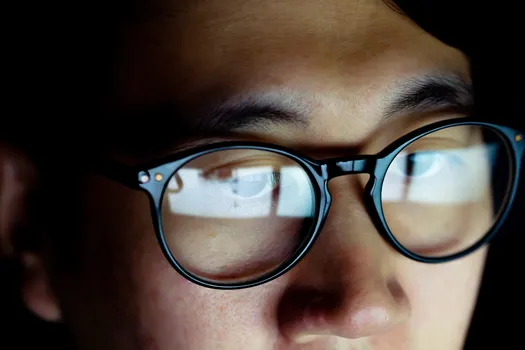
As people in lockdown spend more time staring at laptops and other digital screens, they’re ordering more blue light glasses, despite a lack of conclusive evidence the glasses actually reduce eyestrain or protect from the effects of blue light.
The optical company Zenni says sales for the blue-light-blocking product Blokz have risen 60% annually for the last 2 years, with nearly 2 million pairs sold in 2020 alone.
The glasses were already popular with office workers and gamers, “but most certainly the pandemic has had a pronounced effect [on sales] with nearly everyone absorbing more and more digital blue light than ever before,” says Sean Pate, a brand marketing and communications officer for Zenni.
Erin Lynn Sattler was an early adopter of blue light glasses, but has since given them up for prescription glasses.
The Book Club eyewear company says sales for its blue light glasses through March and April 2020 rose 116% over the same time in 2019, with the surge continuing, according to The Business of Fashion.
“You never predict a moment like [a global pandemic] is the moment that a brand blossoms and all of a sudden starts to sell out and gain attention,” says creative director Hamish Tame.
360ResearchReports, a market research company, says the global market for blue light eyewear will increase to $28 million by 2024, up from $19 million in 2020. The advertised benefits of the glasses include less eyestrain, improved sleep, and prevention of eye disease.
But do they really work? It depends on who you ask.
Because the glasses are a newer product, there’s not a lot of research to show either way.
The American Academy of Ophthalmology says you don’t need them and has gone on record as not recommending any kind of special eyewear for computer users. The organization says blue light from digital devices does not lead to eye disease and doesn’t even cause eyestrain. The problems people complain about are simply caused by overuse of digital devices, it says.
“The symptoms of digital eye strain are linked to how we use our digital devices, not the blue light coming out of them,” the AAO says.
In the United Kingdom, the College of Optometrists says, “The best scientific evidence currently available does not support the use of blue-blocking spectacle lenses in the general population to improve visual performance, alleviate the symptoms of eye fatigue or visual discomfort, improve sleep quality or conserve macula health.”
But some eye professionals believe they have benefits.
Greg Rogers, senior optician at Eyeworks in Decatur, GA, says he’s seen the benefits of blue light glasses among the shop’s customers. The staff asks a client how much time they spend in front of a screen daily. If it’s 6 hours or more, some sort of blue light reduction technique is recommended, whether it’s glasses or a special screen for a computer monitor.
The Vision Council, which represents the optical industry, says it doesn’t promote individual brands or products, and it “encourages everyone to do their own research, speak with an eye care provider, and determine the right solution for them and their family.”
Blue Light is Everywhere
We were getting plenty of blue light before modern digital life began. Most of it comes from the sun. But gadgets like televisions, smartphones, laptops, and tablets that populate modern life emit the brighter, shorter-wavelength (more bluish) light.
And because of the pandemic, we’re staring at those devices even more, according to Vision Direct, which surveyed 2,000 adults in the United States and another 2,000 in the United Kingdom.
Bright screens can dim your overall health. What can you do to protect your eyes?ABOUT
The study, published in June 2020, found those adults averaged 4 hours and 54 minutes on a laptop before the lockdown and 5 hours and 10 minutes after. They spent 4 hours and 33 minutes on the smartphone before the lockdown, and 5 hours and 2 minutes after. Screen time went up for television watching and gaming, too.
Susan Primo, OD, an optometrist and professor of ophthalmology at Emory University, agrees that the research so far shows digital overuse, not blue light, causes eye problems. But some patients who wear blue light glasses do report less eyestrain, she says.
“If you want to wear them and find some benefits, that’s fine,” she says.
Primo says she’s bothered by some of the marketing and advertising of blue light eyewear because it doesn’t line up with the research.
“They can word it in such a way that makes it appear to be beneficial. They can say this might be possible. They can use words like ‘may’ and ‘might,’” she says. “Marketing can take things to a level that might not be a sound recommendation, sound science, for people to go out and get them.”
An example: A chain of stores in the United Kingdom, Boots Ltd., was fined 40,000 pounds in 2017 for misleading advertising that said digital blue light caused retinal damage, and special eyewear sold at Boots Ltd. could protect users, Optometry Today reported.
Trying to Get Some Sleep
Another argument in favor of blue light glasses is that they help you sleep better at night. Researchers agree that blue light from LED devices like your smartphone or laptop holds back the body’s production of sleep-inducing melatonin.
A 2017 study done by the University of Houston found that participants wearing the glasses showed about a 58% increase in their nighttime melatonin levels. “By using blue blocking glasses we … can improve sleep and still continue to use our devices. That’s nice, because we can still be productive at night,” said Lisa Ostrin, PhD, a professor at the university’s College of Optometry, according to a university news release.
The American Academy of Ophthalmology takes a different approach. “You don’t need to spend extra money on blue light glasses to improve sleep — simply decrease evening screen time and set devices to night mode,” the group says.
‘I Believe I Can Work Longer’
Many consumers say the blue light glasses help.
Cindy Tolbert of Atlanta, a mystery novelist and retired lawyer, had a variety of vision problems and spent an extra $140 at the eye doctor for blue light lenses.
“It’s not terribly apparent that the glasses help when you’re wearing them, but I believe I can work longer, and I know I can work more comfortably,” she says. “Usually my eyes poop out after 4 or 5 hours of computer work, but I can work longer with the glasses.”
Michael Clarke of San Diego says he doesn’t care what the experts say about blue light glasses. They work for him.
“I use them so often that I have a pair of blue light glasses around my neck all day,” he said in 2019. “I’m not an optometrist. I just know that my eyes don’t get as tired at the end of the day. My frequency of headaches has gone down. I’m able to focus on things easier on a screen.”
Back in 2019, Erin Sattler of Bellevue, WA, was sold on blue light glasses, saying they eased eyestrain. But she’s changed her view.
“After doing more research, I have learned that the blue light technology isn’t well-founded and is largely a placebo effect,” Sattler said this month. “I now wear mild prescription glasses, and THAT has made a major difference. I believe I was experiencing relief from achy eyes with the blue light glasses because I would take them off regularly to clean them, adjust them, or talk to a co-worker in my office.”
You can easily order prescription and nonprescription blue light glasses at the optometrist’s office or online.
Give Your Eyes a Break
If you’re worried about how computers and other blue light-emitting screens are affecting your eyes, you can find relief without special eyewear.SLIDESHOW
Slideshow: What Eye Problems Look Like
1/32Warning Signs of Eye TroubleBlurry vision, spots, glare at night, flashing lights — these are common eye complaints. Each could be a harmless annoyance or an early sign of disease. It isn’t always easy to tell the difference. Visit your eye doctor promptly if you notice any changes in your vision.2/32Color Blindness TestWhich number do you see on the far left? If it’s “3,” you probably have normal color vision. If it’s a “5,” you may be color blind. The center panel shows a mild lack of color vision. Complete color blindness, which is rare, appears at right. No number is visible. Tinted glasses may help you see better.3/32Nearsightedness (Myopia)When you’re nearsighted, things in the distance look blurry. Doctors call it myopia. You’re more likely to have it if: One or both of your parents have itYou do lots of close-up readingNearsightedness can make it harder to drive, play sports, or see a blackboard or TV. Symptoms include blurred vision, squinting, and fatigue. To correct it, you can wear glasses, contacts, or get surgery in some cases.4/32Farsightedness (Hyperopia)Most people are born with mild farsightedness and outgrow it in childhood. When it persists, you may see distant objects well, but books, knitting, and other close objects are a blur. This problem runs in families. Symptoms include trouble with reading, blurry vision at night, eyestrain, and headaches. To treat it, you may wear glasses or contacts. Some people get surgery for it.5/32PresbyopiaTrouble reading fine print is a sign of aging. It’s called presbyopia, which means “old eye” in Greek. Most people start to notice it in their 40s. The eyes’ lenses become less flexible and can’t change shape to focus on objects at reading distance. The solution: Wear reading glasses or bifocals, which correct both near and distance vision. If you wear contacts, ask your eye doctor about contacts made for people with presbyopia.6/32Nearsightedness: What HappensThe cause is usually an eyeball that is too long. Or it can result from an oddly-shaped cornea or lens. Light rays focus just in front of the retina, instead of directly on it. This sensitive membrane lines the back of the eye (seen in yellow) and sends signals to the brain through the optic nerve. Nearsightedness often develops in school-age children and teens, so they may need to change glasses or contacts frequently as they grow. Multifocal contact lens or glasses and eye drops such as atropine, pirenzepine gel and cyclopentolate can help slow the progression. The prevalence of myopia has been rising at an alarming rate, much of it being attributed to increased use of handheld devices and computers.7/32Farsightedness: What HappensThis problem results from an eyeball that is too short or an oddly-shaped lens or cornea. Light rays focus behind your retina and close objects look blurry. Your distance vision might be fuzzy, too. Severely farsighted children often have crossed eyes (strabismus) or lazy eye (amblyopia) and may have trouble reading. That’s one reason eye doctors recommend vision exams for young children.8/32AstigmatismIf you have astigmatism in one or both eyes, your vision may be out of focus at any distance. It happens when the cornea, the clear “window” that covers the front of the eye, isn’t shaped right. Light rays can’t focus on a single point on your retina. Instead they scatter to many places. Glasses or contact lenses correct it. Surgery may be an option. Symptoms include blurred vision, headaches, fatigue, and eye strain.9/32Refractive Eye SurgeryDo you dream of seeing clearly without glasses? Surgery to reshape your cornea can correct nearsightedness, farsightedness, or astigmatism with a success rate of better than 90%. Surgery may not be right for you if you have severe dry eye, thin or oddly shaped corneas, or severe vision problems. Side effects include glare or sensitivity to light.10/32Glaucoma: ViewYou can’t feel it, but this disease damages your optic nerve. You may not have any symptoms until you lose your central vision. Your side vision will go first. That’s why you need regular eye exams every 1 to 2 years, especially after you turn 40. Doctors can treat glaucoma with medications or surgery.11/32Glaucoma: What HappensYour eye is filled with fluid. Sometimes too much of it builds up and raises pressure inside your eye. This can damage your optic nerve, a bundle of nerve fibers that carries information to your brain. Without treatment, glaucoma can cause total blindness.The bright yellow circle shows an optic nerve head damaged by glaucoma. The dark central area is the macula, which controls your finely-detailed central vision.12/32Macular Degeneration: ViewAge-related macular degeneration (AMD) damages and then destroys your central vision, making it hard to read or drive. Symptoms can include a central blurry spot or straight lines that appear wavy. You’re more likely to have it if you are older than 60, smoke, have high blood pressure, are obese, are female, or have a family history of the condition. See your eye doctor regularly to check for AMD. Prompt treatment can help slow vision loss. 13/32Macular Degeneration: What HappensAMD affects the central part of your retina, called the macula. There are two types:Dry: Doctors often see yellow deposits called drusen in the macula. As it worsens, the macular tissue breaks down. That causes changes or loss of your central vision over time.Wet: Abnormal blood vessels grow in your eye. They leak blood and fluid (shown here), which causes scars and further damages the macula.Both types leave you with a central blind spot.14/32Macular Degeneration: TestCover one eye and stare at the center dot in this Amsler grid from a distance of 12 to 15 inches. (You can wear your reading glasses.) Do you see wavy, broken, or blurry lines? Are any areas warped or just plain gone? Repeat for your other eye. Although no self-test can take the place of an eye exam, this grid is used to help spot early symptoms of AMD.Next:See how this grid looks with AMD.15/32Macular Degeneration: SignsAs seen here, the Amsler grid can look quite distorted to if you have severe macular degeneration. It may include a central dark spot. Straight lines that appear wavy are also cause for concern, as they can be an early symptom of wet AMD, the more serious, fast-moving type. See your eye doctor right away for a thorough exam.16/32Diabetic Retinopathy: ViewType 1 and type 2 diabetes can cause partial vision loss (an example is shown here) and lead to blindness. The damage involves tiny blood vessels in your retina. It can often be treated, but don’t wait for symptoms. By the time you have them — blurry vision, spots, shadows, or pain — the disease may be severe. If you have diabetes, get an annual eye exam. The best prevention is to keep your blood sugar in check.17/32Diabetic Retinopathy: What HappensHigh blood sugar levels damage the tiny blood vessels that support your retina. They can swell, break, and leak fluid. Sometimes dozens of new, abnormal blood vessels grow. This is called proliferative retinopathy. They’re fragile and break open easily. Over time all this can damage the retina and cause blurred vision, blind spots, or blindness. 18/32Cataracts: ViewBy age 80, more than half of us will have had a cataract, or cloudy lens. Your vision slowly gets foggy and it gets hard to read, drive, and see at night. Diabetes, smoking, or too much time in the sun raise your chances. Surgery that replaces the clouded lens with a man-made one works well.19/32Cataracts: What HappensA healthy lens focuses light into a single spot on your retina. It captures the image like film in a camera. As you age, protein builds up in the lens. It gets cloudy and sends scattered rays of light to your retina. Instead of one sharp clear image you get blurred vision, changes in color vision, and glare, especially at night. Advanced cataracts are easy to see. It’s the muddy-colored circle at the center of this picture.20/32Retinitis Pigmentosa (RP)You can inherit this disorder from your parents. It often begins with night vision problems. Next comes a slow loss of side vision. That becomes tunnel vision and finally, in some cases, blindness. High-dose vitamin A supplements can reduce vision loss and an implant that can restore some vision is in the works. But see your doctor before you take supplements. Too much vitamin A can be toxic.21/32Retinitis Pigmentosa: What HappensThe light-sensitive tissue of the retina slowly breaks down over many years. As that happens, it no longer sends signals to your brain, and you lose some vision. Eye exams show abnormal dark spots (pigments) sprinkled around the retina. Early cataracts can also happen, along with a swelling of the retina called macular edema (the central orange mass shown here).22/32Floaters and SpecksDo you see blurry spots or specks that move? They’re probably floaters — debris in your eye’s vitreous gel. They don’t block vision and are easier to see in bright light. Floaters are common and usually harmless. See a doctor right away if:They show up or multiply suddenly.You also see flashes of light.You see white or black spots all the time. You notice a sudden shadow or loss of side vision.23/32Amblyopia (Lazy Eye)When you’re a child, if one eye doesn’t see well, your brain may favor the other. This condition, called amblyopia, can happen if your eyes aren’t aligned right (strabismus or crossed eyes) or one eye just doesn’t work as well. The doctor will prescribe a patch or drops that blur vision in the “good” eye. This prompts your brain to use the other eye. If amblyopia isn’t treated during childhood, it can cause permanent vision loss.24/32Object in the EyeBecause so many nerve endings lie just beneath the surface or your cornea, even a tiny speck can be painful. Don’t rub your eye, or you could cause serious damage. Wash it with non preserved sterile saline solution — do not use regular tap water. If the object doesn’t move, call a doctor. They can remove it and give you antibiotic drops to prevent an infection.25/32Tears and Dry EyeTears keep your eyes moist. Sometimes you don’t have enough, either from dry air, aging, or other health conditions. Your eyes can get painful and irritated. Eye drops labeled artificial tears may do the trick for a mild case. If it’s a bigger problem, you may benefit from other treatments, medications or nutritional supplements26/32Pinkeye (Conjunctivitis)This inflammation results from a virus, bacteria, irritant, or an allergic reaction. Your eye will get red and itch or burn. You’ll also notice a gunky discharge. If your eye itches an allergy is probably to blame. The type you catch from other people is usually viral, so you won’t need antibiotics. If your pinkeye is caused by bacteria, the doctor will give you antibiotic eye drops. Pinkeye can be very contagious, so wash your hands often while you wait for it to clear up.27/32StyeThis painful red bump looks like a pimple on or near the edge of your eyelid. It’s a type of infection of the eyelids (the doctor will call it blepharitis). Styes usually heal in a week. You can speed things up by putting a warm, wet compress on it 3 to 6 times a day. Don’t wear contacts or eye makeup until it heals.28/32AllergiesThey can cause itchy, watery eyes. Pollen, grass, dust, weeds, and pet dander are common triggers. An allergy doctor can tell you what’s to blame for yours. Keep your windows shut at home and in your car. You can get special pillow and mattress covers to keep allergens out. Clean your house thoroughly and use allergen filters in your furnace and air conditioner. Allergy eye drops, artificial tears, and antihistamines may help.29/32Keep Up With Your Eye ExamsYou need regular checkups all through your life, especially if eye problems run in your family or if you have other risk factors. An eye exam can also find other problems, like diabetes and high blood pressure, or even a stroke or brain tumor. Bulging eyes can signal thyroid disease. A yellow tint in the whites of your eyes might be a sign of liver problems.30/32Prevent Sun DamageUV rays can harm your eyes. Exposure can cause you to get cataracts 8-10 years earlier than normal. Just one long session in the sun can cause very painful irritation of your corneas. So wear a hat and sunglasses that block UV rays. You can add a clear, protective UV-blocking film to your car’s side windows, too. If you have light-colored eyes you may be more sensitive to light. If it suddenly starts to bother you more than usual, call your eye doctor.31/32Stay Safe at HomeGrease splatters from a pan, yard debris flies up from the lawn mower, cleaning solution splashes in a bucket. Some of the greatest eye hazards are in the home. Eye doctors suggest everyone keep a pair of protective eyewear at home. Look for one approved by the American National Standards Institute. Even if an eye injury seems minor, go to the emergency room or your eye doctor right away to get it checked out.32/32Foods for Eye HealthCarrots really are good for your eyes. So are spinach, nuts, oranges, beef, fish, whole grains, many other things that make up a healthy diet. Look for foods with antioxidants like omega-3 fatty acids; vitamins C, E, and beta-carotene; as well as zinc, lutein, and zeaxanthin.
The American Academy of Ophthalmology, the Vision Council, and other vision-related organizations urge moderation in screen use. Most of them recommend adopting the 20-20-20 rule. That means that every 20 minutes, you’ll look at an object at least 20 feet away for 20 seconds.
The American Academy of Ophthalmology also recommends taking these steps:
Adjust your seat, or the position of your computer, so your eyes are about 25 inches from the screen. Position the screen so you’re gazing slightly downward.
Use a matte screen filter on the screen to reduce glare.
Use artificial tears when your eyes feel dry.
Pay attention to the lighting in the room where you work. You might try increasing your screen contrast.
If you wear contact lenses, give your eyes a break by wearing glasses now and then.WebMD Health News Reviewed by Neha Pathak, MD on December 16, 2019


 Image Credit: Radoslav Zilinsky/Getty Images


 By
By 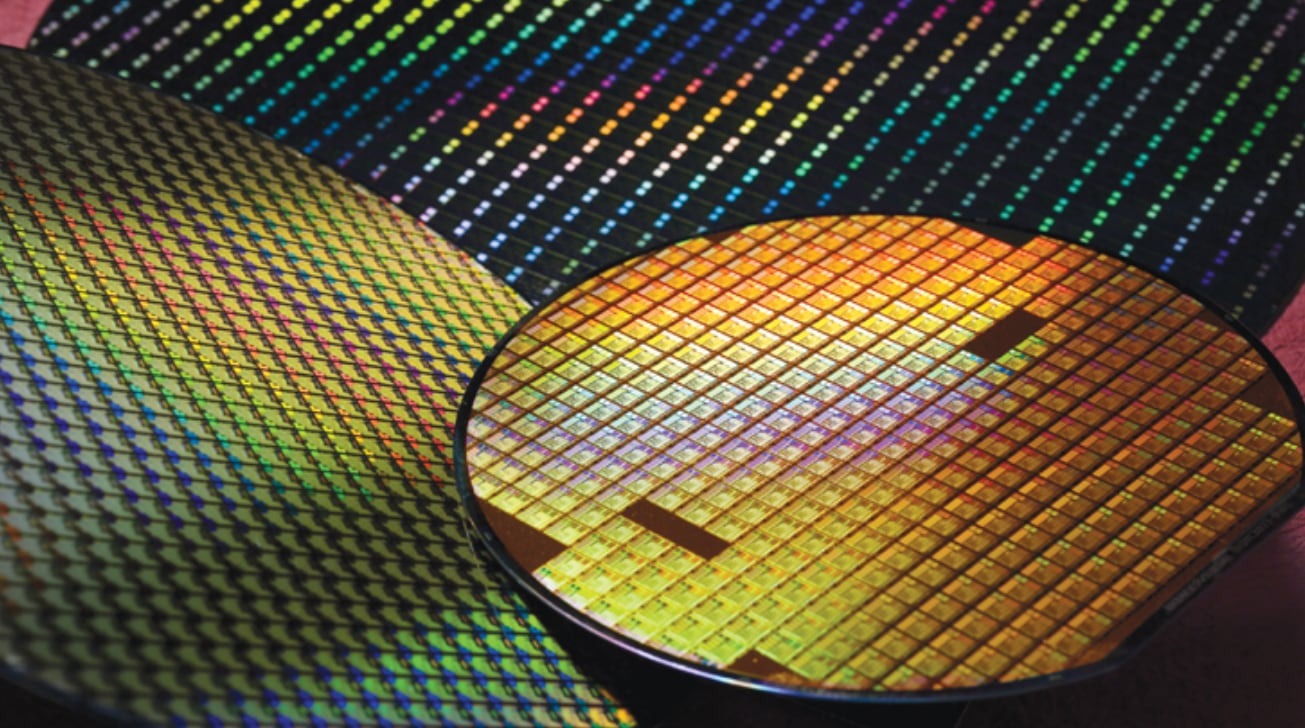



 Bruce's Blog


