Since its discovery in the mid-twentieth century, the DNA double-helix has become an iconic motif, encapsulating not only the genius of modern science but also the very essence of what makes us human. However, recent studies have indicated that DNA sometimes arranges itself into a four-stranded structure called a G-quadruplex (G4), and scientists have now observed these strange genetic anomalies interacting with other compounds in human cells.
Though little is known about G4, it seems that they form around sections of DNA that contain high concentrations of the nucleotide base guanine. Of the four types of nucleotide base present in genetic material, guanine is the only one that can bind with itself, and can therefore facilitate the addition of one double helix to another, resulting in a four-stranded molecule.
Exactly what function these structures fulfil in living cells is uncertain, although scientists think they may arise in order to temporarily hold DNA strands apart while they are being read. What we do know, though, is that G4 is more common in cancer cells and has been associated with cancer-related genes, raising suspicions that it may play a role in the formation of tumors.Top ArticlesResearchers Have Developed A Robot With A“Primitive Form Of Empathy”READ MOREREAD MOREREAD MOREREAD MOREREAD MORESKIP AD
For this reason, researchers are keen to develop a method to interact with G4 and prevent it from carrying out some of its functions. First, however, it is necessary to find a way to observe the action of G4 within living cells.
Writing in the journal Nature Communications, a team of scientists from Imperial College London describe how they used a molecular probe in order to discern some of the ways in which G4 interacts with other molecules in both human and mouse cells. Known as DAOTA-M2, the chemical probe is able to bind to G4, emitting a fluorescent glow when it does so.
Fluorescence lifetime imaging microscopy map of nuclear DNA in live cells stained with the new probe. Colours represent fluorescence lifetimes between 9 (red) and 13 (blue) nanoseconds. Credit: Imperial College London When enzymes and other molecules bind to the same G4, they displace the DAOTA-M2, which then ceases to glow. By measuring how long it takes for this fluorescence to fade, the study authors were able to gain an insight into the impact of a range of molecules on G4.
In particular, they identified two enzymes – called FancJ and RTEL1 – that significantly affected the amount of time that DAOTA-M2 remained lit up for. Both of these are helicases, meaning they break down DNA helices, and therefore appear to play a role in dismantling G4.
When these two helicases were removed from cells, DAOTA-M2 was able to fluoresce for longer, indicating that the G4 was not being destroyed as quickly. Such a finding would seem to confirm the role of FancJ and RTEL1 in breaking down these four-stranded DNA bundles.
In a statement, study author Ben Lewis explained that “evidence has been mounting that G-quadruplexes play an important role in a wide variety of processes vital for life, and in a range of diseases, but the missing link has been imaging this structure directly in living cells.”
Fortunately, DAOTA-M2 appears capable of highlighting the activity of G4 in cells, and has already revealed two enzymes that can unwind its four-stranded structure. While it’s far too early to say what relevance this will have for the treatment of cancer and other illnesses, it does at least open the door to a whole new approach to tackling certain conditions.
Visualize, if you will, a group of bacteria cells. They are kind of silly looking, when you get right down to it: shaped like a sphere or a pill, sometimes covered in tiny hairs or spikes. While technically alive, it is hard to imagine them as being particularly intelligent, much less capable of storing information like artificially intelligent machines such as computers.
Curiously, that’s exactly what a group of researchers just did: edited DNA inside individual bacteria cells in order to store digital data.Advertisement:
A new paper by researchers at Columbia University reveals that they were able to modify the DNA of bacteria cells by inserting specific DNA sequences with encoded data that could be translated into the message “Hello world!” Specifically the DNA sequences were modified to represent the 0s and 1s used in binary code (the same code that is used in computers) and then assembled in various arrangements to correspond with letters of the English alphabet. The end result is that the words “hello” and “world” were written and encoded into the DNA of E. coli cells.
Just as the English alphabet has twenty-six letters that comprise it, DNA has four compounds that serve as the basis for the genetic code: adenine, cytosine, guanine and thymine. These building blocks that comprise DNA molecules can be modified to store “bits” of information. Two of the Columbia University scientists behind the new research — Ross McBee, a PhD candidate, and Sung Sun Yim, a postdoctoral fellow — explained to Salon by email that they modified the bacterial DNA code using a technology known as CRISPR/Cas9 genetic scissors (or CRISPR for short), which allows scientists to directly alter DNA. (The scientists who developed CRISPR technology won the Nobel Prize in Chemistry last year for their invention.)
“In nature, the CRISPR system basically works as a bacterial immune system, allowing bacteria to ‘remember’ things like viruses that they have encountered in the past and defend against them,” McBee and Yim explained to Salon. “It does this by taking little bits of the DNA of those threatening organisms, and putting it into its own genome. Then, it can use these stored copies to check against, and degrades matching DNA, defending against infection.” They likened this to “a kind of information storage.”Advertisement:
Their labs and others have engineered this system to encode information within DNA or living organisms’ genomes. Their recent paper expands this research to include encoding digital signals.
The authors are very excited about the possible ways this technology can be used in the future.
“At the moment, digital and biological systems exist without good ways of ‘talking’ with each other,” they explained. “In addition to expanding the usefulness of DNA data storage, as a proof-of-concept for direct integration of arbitrary information into living cell populations, we think this work may be important for developing future hybrid digital-biological systems.”Advertisement:
CRISPR has revolutionized biology and biotech research in the past decade, making all kinds of headlines. Last year scientists were able to successfully edit SIV (simian immunodeficiency virus), a virus similar to HIV, out of the genomes of rhesus macaque monkeys. The prospect could prove promising for future HIV cure research.
MATTHEW ROZSA
Matthew Rozsa is a staff writer for Salon. He holds an MA in History from Rutgers University-Newark and is ABD in his PhD program in History at Lehigh University. His work has appeared in Mic, Quartz and MSNBC.
By INTERNATIONAL SOCIETY FOR STEM CELL RESEARCH JANUARY 14, 2021
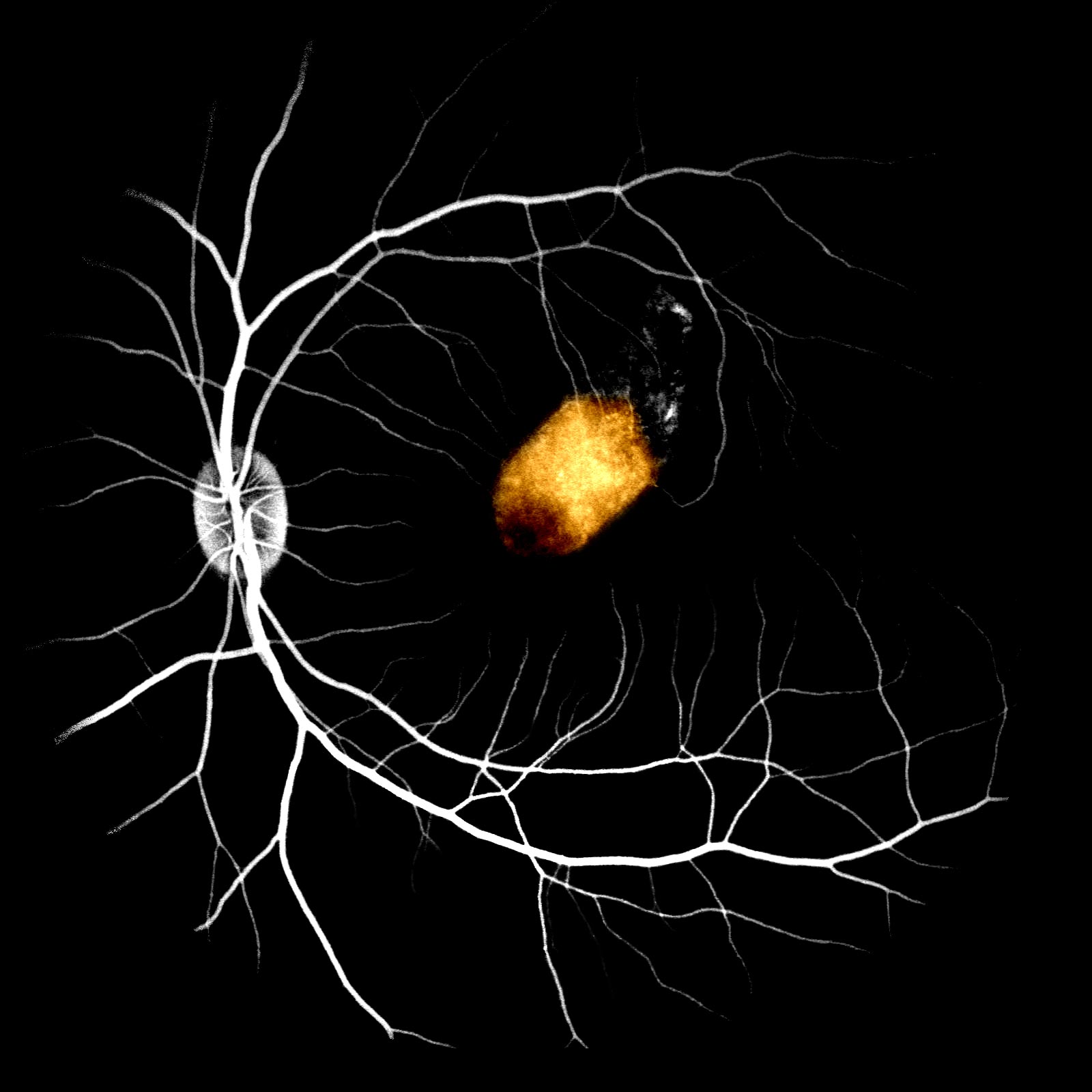
This is an image of RPE implant embedded in the sub-retinal space of a non-human primate model. The background retinal vessels highlighted by fundus fluorescein angiography. Credit: Su, Xinyi
Retinal cells derived from adult human eye stem cells survived when transplanted into the eyes of monkeys, an important early step in the validation of this approach for treating blindness, according to a study by Liu, et al recently published in Stem Cell Reports. The retinal pigment epithelium (RPE), a layer of pigmented cells in the retina, is essential for sustaining normal vision. Blindness due to RPE dysfunction, such as macular degeneration, affects about 200 million people worldwide.
To restore this population of cells, researchers extracted retinal stem cells from donated cadaver adult eyes, grew them into RPE cells and transplanted them into the eyes of monkeys. These unique cells have the potential to serve as an unlimited resource of human RPE, with the possibility of donor compatibility matching.
The study is the first time the safety and feasibility of adult retinal stem cell-derived RPE transplants in non-human primates was assessed. Researchers found that RPE patches transplanted into the monkey’s eye stably integrated for at least three months with no serious side effects. What is more, the stem cell-derived RPE partially took over the function of the monkey RPE and was able to support normal photoreceptor function. Importantly, these cells did not cause retinal scarring.
Altogether, this demonstrates the feasibility of using adult retinal stem cell-derived RPE transplants to replace defective RPE as a possible treatment for macular degeneration. However, further experiments need to be conducted. This includes evidence to demonstrate adult retinal stem cell-derived RPE can restore vision in diseased non-human primate models, and eventually in regulatory human clinical trials. Nonetheless, this proof-of-principle study is an important early step in validating this approach, which is part of as international collaboration between the Icahn School of Medicine at Mount Sinai (New York), Institute of Molecular Cell Biology (A*STAR), Singapore Eye Research, National University of Singapore, and Eye Clinic Sulzbach (Germany).
Reference: 14 January 2021, Stem Cell Reports. DOI: 10.1016/j.stemcr.2020.12.007
The Nobel Prize got Wall Street’s attention. On Oct. 7, the Swedish Academy awarded 2020’s Nobel in chemistry to two scientists for the development of Crispr-Cas9—a molecular scissors that can find and edit almost any sequence in a cell’s DNA. The 2012 discovery by Emmanuelle Charpentier and Jennifer Doudna had been commercialized with rare speed, and the Nobel was a boost for three companies founded to develop Crispr gene-editing therapies: Crispr Therapeutics, Intellia Therapeutics, and Editas Medicine. The three gene-editing stocks have more than doubled in the past few months, reaching a total market value above $23 billion.
Crispr-Cas9 is the second generation of technologies that seek to repair thousands of inherited genetic disorders and battle cancer in new ways. Gene editing is advancing so quickly that next-generation technologies are already on the heels of Crispr-Cas9, including a more-precise tool called base editing, which has lifted the stock of Beam Therapeutics (ticker: BEAM) sixfold since its February 2020 initial public offering.
While gene-editing start-ups will lose money during years of clinical trials, it’s hard to say the stocks are overvalued. If their one-time interventions can cure diseases that otherwise require chronic treatment—or lack any treatment at all—then the stocks will fly. Patent rights and know-how also make them desirable partners or acquisition targets for Big Pharma. Premiums of 100% were paid in deals for first-generation gene-therapy start-ups, like the Novartis (NVS) purchase of AveXis in 2018 and Roche Holding’s (RHHBY) 2019 acquisition of Spark Therapeutics.
“The median life span of these children is just 14 years,” says David Liu, a Harvard University chemistry professor and gene-editing pioneer at the Broad Institute and the Howard Hughes Medical Institute, who led the research with a team that includes National Institutes of Health director Francis Collins. “We’re very excited about a potential one-time treatment for progeria that directly corrects the root cause of the disease instead of treating its symptoms.” Of course, researchers must now prove that the treatment will work in humans.
Researchers began to propose ways to fix genetic diseases nearly 50 years ago. Genetic instructions are spelled out in our DNA with an alphabet of four molecules known as bases and designated by the first letters of their chemical names: A, T, G, and C. The bases pair up—A with T, G with C—to form the three billion letter pairs of our genome. Specific sequences encode for specific genes, which in turn provide instructions for assembling specific proteins. If a mutation scrambles the letters, however, the instructions can become garbled and yield a different version of the protein that causes disease. Genetic therapies seek to correct these errors.
Gene-therapy experiments began in the 1990s, but it took until 2017 for the Food and Drug Administration to approve the first one—the Spark/Roche treatment Luxturna for a genetic defect that leads to blindness. The second FDA approval was for Zolgensma, an AveXis/Novartis therapy for a muscle-wasting disease. Both diseases are rare. But at over $2 million per treatment, Zolgensma sales in the latest quarter were running at a $1.2 billion annual rate. Novartis believes that sales will top $2 billion in 2021.
Most first-generation gene therapies use a hollowed-out virus to carry synthetic versions of a gene into cells. The transferred gene isn’t integrated into the cellular DNA, but the cell can still use the instructions to produce functional versions of the missing protein.
Hundreds of such gene-augmentation therapies are in clinical trials. BioMarin Pharmaceutical (BMRN), UniQure (QURE), and Pfizer (PFE) are each in Phase 3 trials on therapies to treat hemophilia, the bleeding disorder resulting from a mutation in the gene for a blood-clotting protein. Pfizer is also racing Sarepta Therapeutics (SRPT) to treat Duchenne muscular dystrophy with transferred genes that can produce working versions of a muscle protein that patients can’t produce.
Pfizer is making a big bet on these gene-transfer therapies, with three clinical trials that could lead to approvals in the next few years. Manufacturing capacity will be critical, says Seng Cheng, the chief scientific officer of Pfizer’s rare disease division. Each muscular dystrophy patient must be transfused with trillions of copies of the gene-ferrying viruses, so Pfizer is investing in a North Carolina manufacturing facilities The company hopes to launch an approved product by 2023.
Each of its gene therapies could generate at least a billion dollars in annual sales, says Pfizer. The president of Pfizer’s rare disease group, Suneet Varma, says U.S. regulators expect to be approving 10 to 20 genetic therapies a year by 2025. “There could be 100 of these on the market in the U.S. by the end of the decade,” Varma says.
These gene-replacement therapies have limitations, however. Their effect wears off as children grow, or in parts of the body with high cell turnover, since transferred genes aren’t integrated in the genome and are left behind as cells divide. As a result, these expensive treatments might need to be repeated every few years. A patient’s immune system may then develop antibodies against the delivery viruses. And with gene-transfer therapy so new, its durability remains an open question.
Falling levels of clotting protein generated by BioMarin’s hemophilia therapy led the FDA to insist on another year of trials before the agency would consider approving it; BioMarin shares lost a third of their value in August after the news. Sarepta’s stock lost half on Jan. 8, after disappointing interim data on its muscular dystrophy gene-transfer therapy.
“That ability to discriminate a single address, based on a certain sequence out of three billion letters in the genome—that is still kind of a magical outcome. ”— John Evans, CEO, Beam Therapeutics
Because gene editing permanently changes the genome, it doesn’t appear to suffer from these issues. Nature evolved many tools to cut DNA at specific spots in the genome. As scientists discovered these tools, they became the foundations of public companies: Sangamo Therapeutics (SGMO) has mastered tools known as zinc finger nucleases, which it is using in collaborations with Pfizer, Novartis, and Biogen (BIIB). Both Cellectis (CLLS) and Allogene Therapeutics (ALLO) use tools like meganucleases and Talens to develop therapies for cancer, as does Bluebird bio (BLUE) in its advanced trials against sickle-cell anemia and cancer. Bluebird announced this past week that it would split into two companies, one pursuing cancer and the other, rare diseases.
The most widely used tool for targeted DNA editing is Crispr-Cas9. Derived from a mechanism that bacteria evolved to recognize and destroy invading viruses, the tool pairs the DNA-cutting protein Cas9 with a strand of RNA that goes by the name of Crispr. RNA normally carries genetic information from DNA to the cellular factories that assemble proteins. Because RNA mates with a complementary sequence of DNA, RNA “guides” can be written to direct the Cas molecular scissors to almost any genomic address.
“That ability to discriminate a single address, based on a certain sequence out of three billion letters in the genome—that is still kind of a magical outcome,” says Beam Therapeutics chief executive John Evans.
Gene editing has proved adept at permanently disrupting troublesome genes. After latching on to a targeted sequence of a couple of dozen letters, the Crispr-Cas complex cuts cleanly across the two strands of DNA. Natural repair processes of the cell then rejoin the cut ends. However, the repair process is error-prone, and often inserts or deletes a base-pair letter. That can be a good thing, if inserts and deletions render a toxic gene inactive.
Harvard professor and Broad Institute researcher David Liu, one of the pioneers of gene editing.Jessica Rinaldi/The Boston Globe/Getty Images
Although Crispr is faster and cheaper, zinc fingers and Talens can also be programmed to target and cut with precision. Nonetheless, the stocks that use them—Sangamo, Allogene, Cellectis, Bluebird bio—lack Crispr’s sizzle. That makes them a cheaper way to participate in a gene-editing boom.
Crispr Therapeutics (CRSP), Editas (EDIT), and Intellia (NTLA) all came public in 2016, endowed with licenses for the technology from Doudna’s University of California, Berkeley and Charpentier’s University of Vienna (she has since moved to Berlin’s Max Planck Society), or the Broad Institute. Each company has about a half-dozen programs. And they’ve raised lots of cash.
The market favorite is Crispr Therapeutics, co-founded by Charpentier, with a $13.8 billion valuation at its recent stock price of $212. It is in trials with a treatment that infuses cancer patients with tumor-targeting immune cells. This year, Crispr plans another trial of edited cells to treat diabetes. And it’s well along in trials treating one of the most common genetic disorders, sickle cell. With 100,000 Americans suffering from the disease, and 4,000 more born each year, Chardan Capital Markets analyst Geulah Livshits sees an annual demand for at least 3,000 one-time treatments a year, at more than $1.6 million per treatment.
Crispr Therapeutics CEO Samarth Kulkarni believes that gene editing will outperform gene-transfer therapies. “Gene therapy, while exciting, may only be a five- to 10-year solution,” Kulkarni says. “Gene editing is hopefully a lifelong solution.”
His company burned through some $160 million in the first nine months of 2020, but it has over $1.5 billion in cash, and partners like Bayer (BAYN.Germany) and Vertex Pharmaceuticals (VRTX) to share development costs.
Vertex was one of the first companies to bet on Crispr, after gene therapies struggled with a genetic disorder that has been Vertex’s focus, cystic fibrosis. Vertex and Crispr Therapeutics are now developing editing therapies for cystic fibrosis, muscular dystrophy, and blood disorders such as sickle cell and beta thalassemia. Vertex science chief David Altshuler likes the versatility of gene editing, where the same therapy can be deployed against both sickle cell and thalassemia.
Editas and Intellia have more modest market caps of about $5 billion each. Editas has one therapy in trials, a treatment for a retinal disorder, and plans to start trials in sickle cell, thalassemia, and off-the-shelf cell therapies against cancer.
Reprogramming DNA
These biotech start-ups use a handful of powerful new tools to repair genetic mistakes.
Company / Ticker
Technology
Recent Price
Market Value (bil)
2025E Revenue (bil)
2025E EPS
Comments
Crispr Therapeutics / CRSP
Crispr-Cas
$212.62
$13.8
$1.80
$4.98
First Crispr-Cas in the clinic Partners include Vertex
Beam Therapeutics / BEAM
Base editing
106.31
5.7
0.03
-4.22
The most precise gene repairs. In the clinic in late 2021
Editas Medicine / EDIT
Crispr-Cas
75.99
4.6
0.52
1.54
Testing the first Crispr-Cas for an eye disorder. Data by 2021’s end
Intellia Therapeutics / NTLA
Crispr-Cas
84.76
4.5
0.66
1.19
Testing first Crispr-Cas in entire body Partners include Regeneron
Bluebird bio / BLUE
Talen
51.33
3.3
1.23
1.44
Pioneered editing. First approval in Europe. Splitting company now
Sangamo Therapeutics / SGMO
Zinc finger
16.2
2.2
0.21
-0.75
Hemophilia trials, with Pfizer. Other partners: Biogen, Gilead, Novartis
E=estimate
Sources: Sentieo; FactSet
Intellia is also targeting sickle cell, in United Kingdom trials backed by Novartis. Partnering with Regeneron Pharmaceuticals (REGN), Intellia has also started trials of the first editing therapy systemically infused into patients—aiming to knock out a mutant gene that makes a misfolded form of the protein transthyretin, whose buildup slowly kills. Data may start appearing in 2021. Like progeria, the disorder can’t be addressed by gene therapy, since the mutant gene would keep producing mutant transthyretin and dominate the output of transferred healthy genes.
SICKLE-CELL MATH
Therapies for genetic diseases are often pricey, producing potentially large markets.
$4.8 B Some 100,000 Americans suffer from sickle-cell anemia, a blood disease. Analysts estimate annual demand of 3,000 treatments at $1.6 million per patient.
Chardan’s Livshits covers all three Crispr stocks and rates each a Buy. “They’ve all gone in slightly different directions,” she says. But gene editing promises permanence, which she sees as an advantage.
Other analysts find valuations of the gene editors hard to rationalize, and have price targets well below where Nobel enthusiasm has carried the stocks. And if scarcity value is fueling enthusiasm, competition is coming. Nobel laureate Doudna is advising ventures that have yet to come public, including Scribe Therapeutics, Caribou Biosciences, and Mammoth Biosciences. Raymond James analyst Steven Seedhouse rates Crispr Therapeutics at Underperform, arguing that its lofty price overvalues the advantages of Crispr-Cas over other technologies. He thinks that Editas has gotten ahead of itself, and he rates it a Market Performer. Only the lowest valued Intellia is an Outperform in Seedhouse’s view.
As bullish as most investors are about Crispr-Cas stocks, they seem more excited about Beam. Despite starting four years after the other companies and trailing them into the clinic, Beam has a market cap of $5.7 billion, at a recent stock price of $107, which values it above Intellia and Editas.
Beam was launched by Liu and other co-founders of Editas to commercialize base editing, an even more precise form of Crispr-guided repair that came out of Liu’s lab in 2016. When a disorder results from a single incorrect base letter in a gene—and about 30% of known genetic problems are caused by such point mutations—base editing can swap a C and a T, or an A and a G, to correct the problem. And unlike other gene editors, it does not cut both DNA strands.
“The only thing the Crispr-Cas editors can do well is to cut DNA,” says Beam CEO Evans. “They can’t really control what happens to the cut after they’ve made it. With base editing, we change a single base and it’s as if the cells don’t notice they’ve been edited.”
After spending some $70 million in cash in the nine months through September, Beam still has over $300 million in cash. It is targeting several disorders pursued by gene-editing predecessors, including sickle cell, for which it hopes to start trials this year.
Base editing can address problems unreachable by other genetic technologies, like progeria. A single injection corrected the progeria gene’s errant T to a C in mice. Crispr-Cas DNA cutters might target the patient’s other healthy gene copy, which differs by just one letter from the toxic version. In mice, Crispr-Cas edits of the gene achieved modest results.
On the horizon are even newer gene-editing strategies. Base editing corrects only single-point mutations. Crispr-Cas technology can efficiently disrupt targeted genes, but so far it hasn’t lived up to hopes that it could reliably insert desirable stretches of code into a gene. In 2019, Liu’s lab showed a way to do that, with a technology called prime editing.
Prime editing can insert, delete, or replace a sequence of several dozen base pairs at a precise location. That might be what’s needed to permanently fix certain kinds of cystic fibrosis. Prime editors can also swap base pairs that base editing can’t, which is why Beam has licensed prime technology for a treatment that would repair sickle cell more directly than other therapies.
Prime editing can’t yet work efficiently in some kinds of cells, though Liu thinks that it will eventually allow therapies to address nearly 90% of pathogenic mutations.
To target still larger insertions and deletions, researchers are interested in how bacteria shuffle big chunks of DNA, using mechanisms called transposases and recombinases. Researchers like Liu have shown that recombinases can manipulate large segments of DNA in mammalian cells, but only in a restricted set of locations in the genome.
The technologies have caught the eye of one of the savviest venture investors in biotech, Noubar Afeyan. His Cambridge, Mass.–based Flagship Pioneering launched Covid-19 vaccine developer Moderna (MRNA). Last year, Flagship unveiled a start-up called Tessera Therapeutics that hopes to use transposases to cut and paste entire genes. “What if you could directly paste an entire sentence, as opposed to the Liquid Paper equivalent of changing one letter on a typewriter?” Afeyan asks.
Neither Tessera nor other labs have yet shown that transposases can home in on a wide variety of DNA targets, at least in cells more complex than bacteria. But Tessera CEO Geoffrey von Maltzahn says his company will show that it can add new genes that won’t be left behind when a cell divides. That might allow therapies to be used in infants, instead of waiting until a child’s growth slows, as gene therapy must generally do. On Jan. 12, Tessera announced a $230 million infusion from investors that included SoftBank Group, the Alaska Permanent Fund, and the Qatar Investment Authority.
There will be uses for all of these genetic tools, says Liu. “There are non-Crispr base editors and nucleases that are widely used,” he says. “In reality, nucleases, base editors, and prime editors all have their own strengths and weaknesses, depending on the specific application.”
Of course, investors can’t expect to see profits at these gene-editing ventures for some time. Clinical trials in gene-transfer therapies have dragged on longer than anyone expected, with the FDA imposing repeated halts to investigate potential safety issues. Gene-editing trials may not see approvals until 2023 or 2024.
As with gene-transfer therapies, revenues of $1 million to $2 million per treatment do add up, even for rare diseases. In developed markets, populations with a particular genetic disorder may number in the hundreds or thousands, creating billion-dollar opportunities for each disease. After those existing populations are cared for, annual sales would taper to the rate that new cases emerge.
Pfizer is discussing payment plans with government and private payers, even though the company has yet to win approval for its gene-transfer therapies. Pfizer’s Varma says that government payers are considering pay-for-performance plans or annuity models that spread payments over a number of years. Insurers have discussed risk-pooling plans for genetic diseases.
The drug industry will see its financial model change, says Varma, as one-time treatments replace chronic sales. “Traditional pharmaceutical products tend to hit their peaks in the last three or four years before a loss of exclusivity,” he says. “Gene therapies could be the reverse, meaning you hit your peak in the first three years.”
Although gene-editing stocks have shot through price targets, the examples of many biotechs show how hard it is to pick an entry point with new technology platforms. Smart investors may be waiting for a lull in the scientific news. But an acquisitive pharma company may be waiting, too.
Smart lights normally require that you keep switches on all the time, and that can be a pain when someone flicks a switch out of habit. You’ll soon have a way to keep your lights available no matter what, though. Signify is releasing a Philips Hue wall switch module that upgrades existing switches to smart units. The add-on not only keeps lights available regardless of the switch position, but lets you specify what happens when someone toggles that switch.
You’ll have to wait until summer to get the module in North America, and the $40 price ($70 for a two-pack) makes it less likely that you’ll retrofit your entire home. This is more for frequently used bulbs like a hall light. It’s also battery-powered, so you’ll need to dismantle your switches every five-plus years to keep the module running. Still, this may be more elegant than replacing your switches outright, and easier than reminding others to leave things alone.
There is a new option if you do want new switches. A redesigned Philips Hue dimmer switch (shown at middle) gives you the familiar brightness and power functions, but there’s now a “Hue” button that lets you immediately enable a favorite lighting scene or adapt the lights to the time of day. The wireless device can fit on a wall plate, but it’ll also sit on your fridge or any other magnetic surface. The new dimmer will reach North America on February 23rd for $25.
A trio of researchers from the Google Brain team recently unveiled the next big thing in AI language models: a massive one trillion-parameter transformer system.
The next biggest model out there, as far as we’re aware, is OpenAI’s GPT-3, which uses a measly 175 billion parameters.
Background: Language models are capable of performing a variety of functions but perhaps the most popular is the generation of novel text. For example, you can go here and talk to a “philosopher AI” language model that’ll attempt to answer any question you ask it (with numerous notable exceptions).
While these incredible AI models exist at the cutting-edge of machine learning technology, it’s important to remember that they’re essentially just performing parlor tricks. These systems don’t understand language, they’re just fine-tuned to make it look like they do.
That’s where the number of parameters comes in – the more virtual knobs and dials you can twist and tune to achieve the desired outputs the more finite control you have over what that output is.
What Google‘s done: Put simply, the Brain team has figured out a way to make the model itself as simple as possible while squeezing in as much raw compute power as possible to make the increased number of parameters possible. In other words, Google has a lot of money and that means it can afford to use as much hardware compute as the AI model can conceivably harness.
Switch Transformers are scalable and effective natural language learners. We simplify Mixture of Experts to produce an architecture that is easy to understand, stable to train and vastly more sample efficient than equivalently-sized dense models. We find that these models excel across a diverse set of natural language tasks and in different training regimes, including pre-training, fine-tuning and multi-task training. These advances make it possible to train models with hundreds of billion to trillion parameters and which achieve substantial speedups relative to dense T5 baselines.
Quick take: It’s unclear exactly what this means or what Google intends to do with the techniques described in the pre-print paper. There’s more to this model than just one-upping OpenAI, but exactly how Google or its clients could use the new system is a bit muddy.
The big idea here is that enough brute force will lead to better compute-use techniques which will in turn make it possible to do more with less compute. But the current reality is that these systems don’t tend to justify their existence when compared to greener, more useful technologies. It’s hard to pitch an AI system that can only be operated by trillion-dollar tech companies willing to ignore the massive carbon footprint a system this big creates.
Context: Google‘s pushed the limits of what AI can do for years and this is no different. Taken by itself, the achievement appears to be the logical progression of what’s been happening in the field. But the timing is a bit suspect.
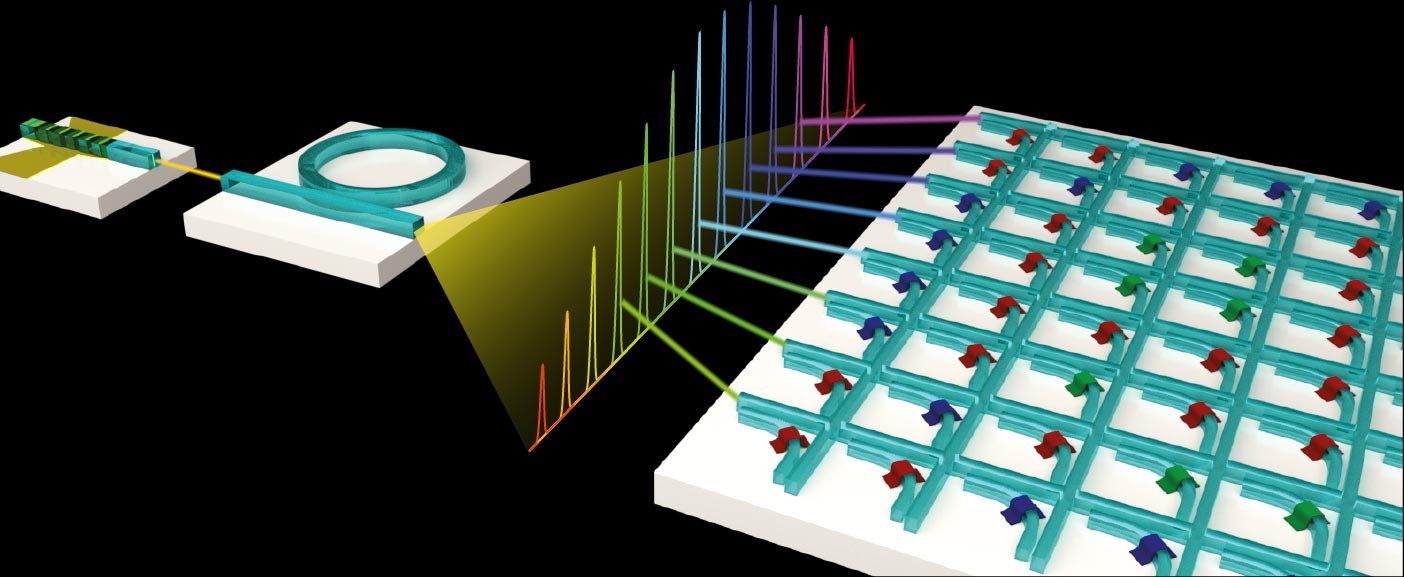
Schematic representation of a processor for matrix multiplications which runs on light. Together with an optical frequency comb, the waveguide crossbar array permits highly parallel data processing. Credit: WWU/AG Pernice
International team of researchers uses photonic networks for pattern recognition.
In the digital age, data traffic is growing at an exponential rate. The demands on computing power for applications in artificial intelligence such as pattern and speech recognition in particular, or for self-driving vehicles, often exceeds the capacities of conventional computer processors. Working together with an international team, researchers at the University of Münster are developing new approaches and process architectures that can cope with these tasks extremely efficiently. They have now shown that so-called photonic processors, with which data is processed by means of light, can process information much more rapidly and in parallel — something electronic chips are incapable of doing. The results have been published in the journal Nature.
Background and methodology
Light-based processors for speeding up tasks in the field of machine learning enable complex mathematical tasks to be processed at enormously fast speeds (10¹² -10¹⁵ operations per second). Conventional chips such as graphic cards or specialized hardware like Google’s TPU (Tensor Processing Unit) are based on electronic data transfer and are much slower. The team of researchers led by Prof. Wolfram Pernice from the Institute of Physics and the Center for Soft Nanoscience at the University of Münster implemented a hardware accelerator for so-called matrix multiplications, which represent the main processing load in the computation of neural networks. Neural networks are a series of algorithms which simulate the human brain. This is helpful, for example, for classifying objects in images and for speech recognition.
The researchers combined the photonic structures with phase-change materials (PCMs) as energy-efficient storage elements. PCMs are usually used with DVDs or BluRay discs in optical data storage. In the new processor, this makes it possible to store and preserve the matrix elements without the need for an energy supply. To carry out matrix multiplications on multiple data sets in parallel, the Münster physicists used a chip-based frequency comb as a light source. A frequency comb provides a variety of optical wavelengths which are processed independently of one another in the same photonic chip. As a result, this enables highly parallel data processing by calculating on all wavelengths simultaneously – also known as wavelength multiplexing. “Our study is the first one to apply frequency combs in the field of artificially neural networks,” says Wolfram Pernice.
In the experiment the physicists used a so-called convolutional neural network for the recognition of handwritten numbers. These networks are a concept in the field of machine learning inspired by biological processes. They are used primarily in the processing of image or audio data, as they currently achieve the highest accuracies of classification. “The convolutional operation between input data and one or more filters – which can be a highlighting of edges in a photo, for example – can be transferred very well to our matrix architecture,” explains Johannes Feldmann, the lead author of the study. “Exploiting light for signal transference enables the processor to perform parallel data processing through wavelength multiplexing, which leads to a higher computing density and many matrix multiplications being carried out in just one timestep. In contrast to traditional electronics, which usually work in the low GHz range, optical modulation speeds can be achieved with speeds up to the 50 to 100 GHz range.” This means that the process permits data rates and computing densities, i.e. operations per area of processor, never previously attained.
The results have a wide range of applications. In the field of artificial intelligence, for example, more data can be processed simultaneously while saving energy. The use of larger neural networks allows more accurate, and hitherto unattainable, forecasts and more precise data analysis. For example, photonic processors support the evaluation of large quantities of data in medical diagnoses, for instance in high-resolution 3D data produced in special imaging methods. Further applications are in the fields of self-driving vehicles, which depend on fast, rapid evaluation of sensor data, and of IT infrastructures such as cloud computing which provide storage space, computing power or applications software.
Reference: “Parallel convolutional processing using an integrated photonic tensor core” by J. Feldmann, N. Youngblood, M. Karpov, H. Gehring, X. Li, M. Stappers, M. Le Gallo, X. Fu, A. Lukashchuk, A. S. Raja, J. Liu, C. D. Wright, A. Sebastian, T. J. Kippenberg, W. H. P. Pernice and H. Bhaskaran, 6 January 2021, Nature. DOI: 10.1038/s41586-020-03070-1
Research partners: In addition to researchers at the University of Münster, scientists at the Universities of Oxford and Exeter in England, the University of Pittsburgh, USA, the École Polytechnique Fédérale (EPFL) in Lausanne, Switzerland, and the IBM research laboratory in Zurich were also involved in this work.
Funding: The study received financial support from the EU project “FunComp” and from the European Research Council (ERC Grant “PINQS”).
As rioters laid siege to the U.S. Capitol, the seat of American democracy became a melting pot of extremist groups: militia members, white supremacists, paramilitary organizations, anti-maskers and fanatical supporters of U.S. President Donald Trump, standing shoulder to shoulder in rage.
Experts say it was the culmination of years of increasing radicalization and partisanship, combined with a growing fascination with paramilitary groups and a global pandemic. And they warn that the armed insurrection that left five people dead and shook the country could be just the beginning.
“We look at it like a conveyor belt of radicalization,” said Devin Burghart, executive director of the Institute for Research & Education on Human Rights. “Once they step on that conveyor belt, they’re inundated with propaganda that moves them along that path until they’re willing to take up arms.”
Photographs and video of the Capitol siege showed people wearing attire with symbols associated with the anti-government Three Percenters movement and the Oath Keepers, a loosely organized group of right-wing extremists.
Many of those who stormed the Capitol were wearing clothes or holding signs adorned with symbols of the QAnon conspiracy theory, which centres on the baseless belief that Trump is waging a secret campaign against the “deep state” and a cabal of sex-trafficking cannibals. One of the intruders was wearing a “Camp Auschwitz” sweatshirt, a reference to the Nazi death camp.
Those who monitor online chatter say the threat of more violence by far-right fringe groups hasn’t abated, though it has been tougher to track since the social media platform Parler, a haven for right-wing extremists, was booted off the internet.
“We’re certainly not out of the woods yet. I’m afraid that we’re going to have to be prepared for some worst-case scenarios for a while,” said Amy Cooter, a senior lecturer in sociology at Vanderbilt University who studies U.S. militia groups.
The FBI is warning of plans for armed protests at all 50 state capitals and in Washington in the days leading up to President-elect Joe Biden’s inauguration next Wednesday. Cooter believes smaller gatherings at state capitals are a greater threat than a large, centrally organized event in Washington, given the heightened security there.
How many extremists are out there is unclear. Individual fringe groups tend to be small, with the largest claiming hundreds of members, but countless others have been swept up in the fury of late.
To understand the mix of extremists in the Capitol melee, it helps to look at history.
Much of the modern militia movement was a reaction to the push for tougher gun control laws in the 1990s. An 11-day standoff that left three people dead on Idaho’s Ruby Ridge in 1992 galvanized the movement, as did the disaster in Waco, Texas, the following year, when 76 people died in a fire after a 51-day standoff at the Branch Davidian cult compound.
A decade later, Cliven Bundy and his sons Ryan and Ammon Bundy engaged in armed standoffs with the federal government, first in a fight over grazing rights on federal land in Nevada in 2014, then in a 40-day occupation of a national wildlife refuge in Oregon in 2016. Those standoffs drew the sympathies of some Western ranchers and farmers who feared they were losing the ability to prosper financially.
Meanwhile, America’s white supremacy movement — as old as the country itself and energized by the civil rights movement of the 1960s — used every opportunity to stoke racism and increase recruitment. Within the last two decades, nationalists and white supremacists were especially successful in leveraging anti-immigration sentiment and the backlash over Barack Obama’s election as the nation’s first black president in 2008.
Some who follow such movements say the coronavirus pandemic provided the perfect recruitment opportunity.
Militias helped distribute surplus farm produce to the unemployed. Neo-Nazis pushed conspiracy claims that the government was trying to limit “herd immunity.” An anti-government group launched by Ammon Bundy last spring called People’s Rights held an Easter church service in defiance of a lockdown order in Idaho.
“That was the moment that sent a message nationwide that it was OK to take an insurrectionist posture toward COVID guidelines — and from that moment you saw this take hold across the country,” said Burghart, whose organization published an October report on the People’s Rights network.
While previously those upset about COVID-19 rules would complain online, suddenly individuals were defying authorities by opening their gyms or refusing to wear masks in very confrontational ways. For these individuals, social media accelerated a radicalization process that normally takes years into just a few months, fueled by the powerlessness many felt amid COVID-19 shutdowns.
“You had all of these kind of small interventions to try to fight against any kind of common-sense health restrictions,” Burghart said. “And in that moment you saw, simultaneously, militia activists getting involved in the COVID struggle and COVID insurrectionists taking up the militia posture and wanting to get involved with militia groups.”
The danger could intensify. The Capitol insurrection both further normalized the idea of violent government overthrow and allowed extremist groups to network with a broader population, said Lindsay Schubiner, an expert in extremism with the Western States Center.
As those groups continue to train and expand — many already offer instruction in weapons, first aid, food storage and ham radios — the risk of “lone wolf” actions also increases, she said, with members taking matters into their own hands when they feel their group has not gone far enough.
Stewart Rhodes, an Army veteran who founded the Oath Keepers in 2009, had been saying for weeks around the election that his group was preparing for a civil war and was ready to take orders from Trump. The group recruits current and former law enforcement officers and military personnel.
During a Nov. 10 appearance on far-right conspiracy theorist Alex Jones’ Infowars show, Rhodes said he had “good men on the ground already” in the Washington area who were “armed, prepared to go in if the president calls us up.”
“In case they attempt to remove the president illegally, we will step in and stop it,” he said.
Users on militia forums cheered on the Trump supporters who stormed the Capitol and hailed them as patriots, according to a review of social media posts by the Anti-Defamation League’s Center on Extremism. Many saw the attack as a call to arms.
Authorities have arrested more than 100 people on charges linked to the Capitol siege, but court documents don’t publicly identify any of them as members of a militia-style group, according to an Associated Press review of records.
Less than a week after the riot, several armed men in tactical gear with “Texas Militia” labels on their combat fatigues gathered at the Texas state capitol as lawmakers returned to work for a new legislative session. Texas GOP chairman Allen West posed with the group for a photo and shared the picture on the party’s Twitter account.
The gathering at the Texas statehouse in Austin came the same day President Trump flew to the southern border in Alamo, Texas, where he took no responsibility for his part in fomenting the violent insurrection in Washington, D.C. “People thought that what I said was totally appropriate,” Trump said.
Stopping extremist groups may be impossible, but pushing those groups further to the political margins is possible, Schubiner said.
“Everyone who believes in inclusive democracy and does not believe in political violence needs to come out and say so strongly, and then back that up with actions,” she said.
The Firefox and Chrome development teams share their progress in minimizing the impact of classic web attacks
ANALYSIS New browser security features offer the tantalizing promise of killing – or at least significantly reducing – many of the classic web security attack vectors.
Minimizing the potency of classic attack vectors such as cross-site scripting (XSS) and cross-site request forgery (CSRF) promises to herald what some are calling the ‘post-XSS world’.
The improvements represented a culmination of several years of work by many people in the industry, realized in specifications and implementations in Google Chrome 83 and Mozilla Firefox 79.
Security improvement roster
A blog post by Google back in July describes a set of security mechanisms to protect its applications from common web vulnerabilities.
For example, the script nonce attribute, set to an unpredictable token for every page load, “acts as a guarantee that a given script is under the control of the application”.
According to Google, even if part of the page is injected by an attacker, “the browser will refuse to execute any injected script which doesn’t identify itself with the correct nonce”.
This mitigates the impact of any server-side injection vulnerabilities including reflected XSS and stored XSS.
Content Security Policy refinements
Google has implemented these improvements through refinements in its Content Security Policy (CSP).
“CSP has mitigated the exploitation of over 30 high-risk XSS flaws across Google in the past two years,” the tech giant said.
“Nonce-based CSP is supported in Chrome, Firefox, Microsoft Edge, and other Chromium-based browsers. Partial support for this variant of CSP is also available in Safari.”
Elsewhere, Fetch Metadata request headers, which the browser attaches to outgoing HTTP requests, offer applications with trustworthy information about the provenance of requests sent to the server.
The mechanism offers a defense against cross-site request forgery (CSRF) and a new family of web-based privacy-leaking techniques known as XS-leaks.
Cross-Origin Opener Policy (COOP) allows developers to lock down their web applications to restrict interactions with browser windows belonging to other applications, a feature that can result in information leak vulnerabilities.
COOP debuted in Chrome 83 and Firefox 79.
A blog post by Mozilla web security expert Anne van Kesteren offers a technical background on the non-profit’s implementation of COOP, placing it in the wider context of efforts to improve browser security and memory management.
“With Chrome’s Site Isolation and Firefox’s Project Fission, browsers will isolate each site into its own process,” van Kesteren writes. “This is possible due to the web platform’s retrofitted same-origin policy.”
Project Fission: New Firefox security features
Project Fission was central in Mozilla’s effort to improve browser security last year, a Mozilla spokesperson told The Daily Swig:
In 2020, Mozilla has worked hard to make the internet safer for all users. The Firefox security team played a major role in making this happen. A primary focus for this group has been Project Fission, Mozilla’s implementation of Site Isolation in Firefox, which can currently be tested in the Nightly version of the browser.
Along with Cross-Origin Opener and Embedder Policy, it is part of Mozilla’s mitigations against Spectre-style attacks.
Additional work includes prototyping and helping design Fetch Metadata request headers and the HTML Sanitizer API. These will likely be rolled out in Firefox once they are standardized.
As part of our privacy efforts we’ve also worked on network partitioning, ensuring websites do not share network state. This also happens to address a class of security attacks known as XS-Leaks. It can be tested in Nightly now and will soon make it to release.
Start your engines
Support for these security mitigations is first added to browser engines that underpin today’s search experience. Chrome and all Chromium-based browsers inherit everything the Blink rendering engine and V8 JavaScript engine have to offer. Browsers like Firefox and Tor Browser are powered by Gecko.
Finally, Apple Safari and a handful of gaming console browsers (including the PS4 and Nintendo Switch) inherit their security improvements via the proprietary WebKit engine.
All browsers on iOS must run with WebKit under the hood.
Google is positioning all of these security features as building blocks in the development of a more secure web ecosystem.
The Daily Swig spoke to Santiago Diaz, an information security engineer at Google, about the latest wave of browser enhancements.
The security pro explained that the problem can be divided into two buckets – injection vulnerabilities and isolation issues.
“The solution is a number of mitigations to address each bucket. On the injection side of things, we have Trusted Types and CSP3.
“On the isolation side of things, we have Resource Isolation, Cross-Origin Opener Policy (COOP), Cross-Origin Embedder Policy (COEP), Cross-Origin Resource Policy (CORP), and Origin Isolation,” he added.
‘Battle-tested mitigations’ for DOM-based XSS
According to Diaz, on the injection side, CSP3 and Trusted Types are “battle-tested mitigations that make the vast majority of DOM-based XSS unexploitable when used correctly”.
“Only Chrome supports both,” he explained. “Firefox supports CSP3 and is working towards Trusted Types, and unfortunately Safari, the renegade browser, supports neither Trusted Types nor CSP3.
“CSP3 (nonce-based policies) is a pivotal part of the puzzle that Safari seems to completely neglect.”
Browser red team exercises
The Daily Swig asked Diaz if Google has carried out analysis on the browser security features from the perspective of an attacker.
“Defects have been found through research on how security mitigations can enable attacks,” he said.
“I can’t provide details on the research and unfortunately much of this is still undisclosed, but @shhnjk [Jun Kokatsu] from Microsoft has published their attacks. Rest assured, there’s been research on both bypasses and unintended side effects caused by new features.”
Many of the enhanced security features are being deployed by default, but this varies between browser engine developers.
For Google, SameSite cookies, Trusted Types enforcement (when a policy is present), CORB, resource isolation headers, and site isolation are enabled by default in Chrome.
Diaz said: “Firefox is working on Project Fission to enable some of these, but it hasn’t been released to production yet. Safari has released Intelligent Tracking Prevention, a mitigation somewhat similar to SameSite cookies.”
And finally, are there any plans to change the behavior of features such as document.write (the source of a lot of XSS holes and performance issues)?
Diaz responded: “While changing this behavior would generally break backward compatibility, we hope direct string assignments will be highly discouraged in the future.
“document.domain is one of the APIs that is still a major blocker to do this. Trusted Types is one way in which we’re trying to achieve a future of a web that uses types and not strings.”

 Top ArticlesResearchers Have Developed A Robot With A“Primitive Form Of Empathy”
 READ MORE
 READ MORE
 READ MORE
 READ MORE
 READ MORESKIP AD
 Virus Spores | Computer Code (Getty Images)









 Bruce's Blog