https://www.psypost.org/2021/01/psilocybin-produces-an-immunology-related-genetic-response-in-the-prefrontal-cortex-of-pig-brains-59115

Psilocybin produces an immunology-related genetic response in the prefrontal cortex of pig brains

BY ERIC W. DOLAN Share on Facebook Share on Twitter

SHARE

Psilocybin does not appear to severely impact gene expression, according to a new study published in European Neuropsychopharmacology. But the psychedelic substance — which is found in “magic” mushrooms — might produce lasting changes to the expression of a few immune-related genes in the brain.

“It is really intriguing that just a single psychedelic dose of psilocybin has such profound long-lasting effects on people’s personality and mood. We wanted to understand the mechanism behind this effect because it could be key to understanding the drug’s effects in general,” said study author Gitte Moos Knudsen, a professor at the University of Copenhagen and chair of the neurobiology research unit at Rigshospitalet.

In the study, which examined brain tissue from pigs, the researchers first conducted tests to establish the proper dose to produce psychoactive effects in the animals. Pigs were used because their brains are anatomically similar the brains of humans.https://googleads.g.doubleclick.net/pagead/ads?guci=2.2.0.0.2.2.0.0&client=ca-pub-9585941727679583&output=html&h=193&slotname=1119529262&adk=3884549396&adf=1130547514&pi=t.ma~as.1119529262&w=770&fwrn=4&lmt=1610597315&rafmt=11&psa=1&format=770×193&url=https%3A%2F%2Fwww.psypost.org%2F2021%2F01%2Fpsilocybin-produces-an-immunology-related-genetic-response-in-the-prefrontal-cortex-of-pig-brains-59115&flash=0&wgl=1&uach=WyJNYWMgT1MgWCIsIjEwXzExXzYiLCJ4ODYiLCIiLCI4Ny4wLjQyODAuMTQxIixbXV0.&dt=1610605987067&bpp=2&bdt=6027&idt=1367&shv=r20210107&cbv=r20190131&ptt=9&saldr=aa&abxe=1&cookie=ID%3Dffb4b7da62a79793-22253b9533c400c2%3AT%3D1603042448%3ART%3D1603042448%3AS%3DALNI_MbfRAjBg264i5Epv5o78TMRrZZM4g&prev_fmts=0x0%2C1200x280&nras=1&correlator=419339684853&frm=20&pv=1&ga_vid=1074498395.1549234223&ga_sid=1610605988&ga_hid=532060814&ga_fc=0&rplot=4&u_tz=-480&u_his=1&u_java=0&u_h=1050&u_w=1680&u_ah=980&u_aw=1680&u_cd=24&u_nplug=3&u_nmime=4&adx=254&ady=1884&biw=1678&bih=900&scr_x=0&scr_y=0&eid=21066700%2C21066793%2C42530671%2C182982000%2C182982200%2C21068496%2C21068769&oid=2&pvsid=1355816822567209&pem=924&ref=https%3A%2F%2Fnews.google.com%2F&rx=0&eae=0&fc=1920&brdim=2%2C23%2C2%2C23%2C1680%2C23%2C1678%2C980%2C1678%2C900&vis=1&rsz=%7C%7CeEbr%7C&abl=CS&pfx=0&fu=8320&bc=31&ifi=2&uci=a!2&btvi=1&fsb=1&xpc=IOqEfFbBfd&p=https%3A//www.psypost.org&dtd=1393

Knudsen and her colleagues then administered a psychoactive dose of psilocybin to 12 pigs, while a separate group of 12 pigs received inert saline injections. Half of the pigs were euthanized one day after the administration of psilocybin, while the rest were euthanized one week later.

An analysis of prefrontal cortex tissue revealed that 19 genes were differentially expressed one day after psilocybin administration. But only 3 genes were differentially expressed in the brain tissue one week later.

“This observation was unexpected, given the profound and lasting effects that have been observed after a single dose of psilocybin,” the researchers said.

Knudsen told PsyPost that there were “surprisingly few changes to be observed in the brain 24 hours and 7 days after a single dose of psilocybin.”

Immune-related genes constituted the largest group of genes impacted one week after psilocybin administration, suggesting that the long-lasting effects of the psychedelic substance might be related to neuroinflammation.

“Neuroinflammation is now recognised as key player in psychiatric diseases, such as depression, with positive outcomes of treatment with anti-inflammatory compounds,” the researchers wrote.

Scientists proposed in 2018 that psychedelic substances act as anti-inflammatory agents via the activation of the serotonin 2A receptor, which is known to play a key role in regulating immune function.

But there is currently very little research establishing a link between psychedelic drugs and neuroinflammation. Knudsen and her colleagues caution that “the ability of psilocybin to influence neuroinflammation remains to be further tested.”

In addition, “we only looked at two time points and cannot say anything about changes that occur outside these time points,” Knudsen said.

The study, “Effects of a single dose of psilocybin on behaviour, brain 5-HT 2A receptor occupancy and gene expression in the pig“, was authored by Lene Lundgaard Donovan, Jens Vilstrup Johansen, Nídia Fernandez Ros, Elham Jaberi, Kristian Linnet, Sys Stybe Johansen, Brice Ozenne, Shohreh Issazadeh-Navikas, Hanne Demant Hansen, and Gitte Moos Knudsen.

https://www.eatthis.com/news-oolong-tea-burn-fat-sleep-study/

Drinking This Tea Can Help You Burn Fat in Your Sleep, Study Shows

New research suggests sipping on just two cups of oolong tea each day can potentially melt fat.

Cheyenne Buckingham

BYCHEYENNE BUCKINGHAMJANUARY 12, 2021FACT CHECKED BYCheckmarkFAYE BRENNAN

oolong tea

When it comes to blasting belly fat, HIIT workouts and intermittent fasting may come to mind first—but what about tea?

New research published in the journal Nutrients reveals that drinking oolong tea may help you scorch fat while you’re sleeping. More specifically, researchers from the University of Tsukuba in Japan found that drinking just two cups of the traditional Chinese tea each day revs up fat-burning processes in the body. (Related: 15 Underrated Weight Loss Tips That Actually Work.)The Best Diabetic Drinks

“Like all teas, oolong contains caffeine, which impacts energy metabolism by increasing our heart rate. However, studies suggest that tea consumption may also increase the breakdown of fat, independent of the effects of caffeine,” senior author of the study, Professor Kumpei Tokuyama, said in a statement.

“We therefore wanted to examine the effects of oolong consumption versus caffeine alone on energy and fat metabolism among a group of healthy volunteers.”

What the researchers found after studying participants for two weeks? Both oolong tea—which is partially oxidized and is neither fully considered a green or black tea, given it displays characteristics of both—and pure caffeine increased fat breakdown by 20% compared to those who took a placebo.

An even more impressive finding is that the positive effects oolong tea had on the body were sustained throughout the night. Oddly enough, neither the group who drank oolong tea or pure caffeine over that two-week period experienced an increase in energy expenditure. This observation suggests that participants may have developed a tolerance to the stimulatory effects of both treatments.

On top of this, there were no noticeable changes in either group’s sleep patterns, or even the time it took for them to fall asleep, despite the fact that both treatments involved caffeine—a known sleep disruptor. Lack of sleep can then also disrupt energy metabolism—a group of processes the body uses to break down food and use it as energy—which can cause weight gain over time. However, oolong didn’t appear to have any negative effects on participants’ sleep.

So, should you consider drinking oolong every day? Professor Tokuyama says that while the effects oolong had on fat breakdown during sleep suggest the tea could help control body weight, it’s unclear if these effects will actually lead to fat loss over a prolonged period of time.

“In addition, we want to trial a decaffeinated oolong tea to better distinguish the effects of caffeine from other components of tea, which will help us understand exactly how oolong helps with fat breakdown,” he said in the statement.

Now, make sure you read up on Side Effects of Drinking Caffeine, According to Science.

https://phys.org/news/2021-01-wearable-electronics-cardiac-respiratory.html


Wearable electronics for continuous cardiac, respiratory monitoring

by American Institute of Physics

Wearable electronics for continuous cardiac, respiratory monitoring
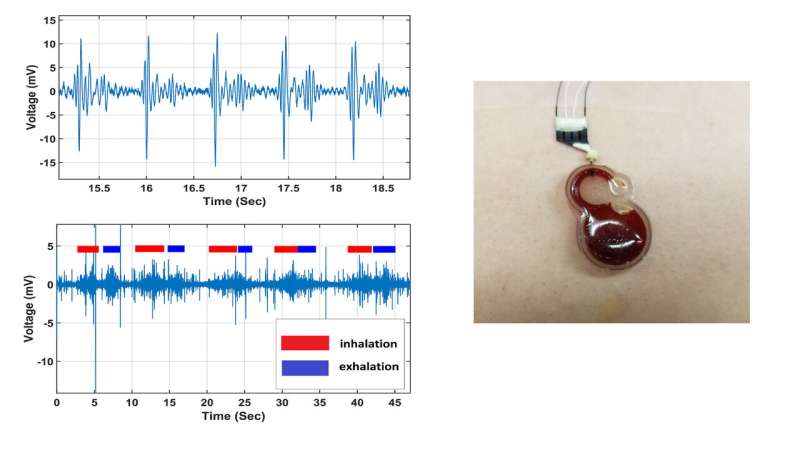
A small and inexpensive sensor, announced in Applied Physics Letters and based on an electrochemical system, could potentially be worn continuously by cardiac patients or others who require constant monitoring.Right: Wearable sensor attached to a patient’s chest. Left top: Heartbeat signal acquired from the sensor. Left bottom: Acquired breathing signal. Credit: Yong Xu

A highly sensitive wearable sensor for cardiorespiratory monitoring could potentially be worn continuously by cardiac patients or others who require constant monitoring.

The small and inexpensive sensor, announced in Applied Physics Letters, is based on an electrochemical system involving two ionic forms of iodine, I- and I3-. A solution containing these electrolyte substances is placed into a small circular cavity that is capped with a thin flexible diaphragm, allowing detection of subtle movements when placed on a patient’s chest.

Small motions that arise from the heartbeat and breathing cause the flexible diaphragm to move the I-/I3- solution into a narrow channel in the device, where it is electrochemically detected by four platinum electrodes.

“The sensor body was fabricated using Ecoflex 00-20, which has proven to be a very soft, strong and stretchy silicone rubber that is widely used in medical simulation, orthotics, and prosthetics,” said author Yong Xu.

The investigators created a mold for the circular chamber and the associated narrow channel using 3-D printing. A solution to create Ecoflex 00-20 was poured into the mold to form the body of the sensor and was also spin-coated on a rapidly rotating disk to produce the thin diaphragm. After the diaphragm and chamber body were bonded together, the investigators used a syringe to fill the chamber with the electrolyte solution.

The resulting device is only 28 millimeters wide and is skin-safe, so it can be attached directly to the patient’s body. The device was able to detect the heartbeat with high sensitivity. A signal-to-noise ratio of greater than 6:1 was achieved, which is considered good.

Respiration can be detected by this device in two different ways. Because of the sensor’s stretchability, it deforms when the chest contracts and expands during breathing, functioning as a strain sensor. The other way the sensor detects respiration is due to the way the volume of the chest cavity changes during a breath, modulating the heartbeat signal. In this way, respiration is detected indirectly through changes in the heartbeat.

The authors suggest their sensor could potentially be used for diagnosis of respiratory diseases, such as COVID-19, which often leads to shortness of breath.

“Symptoms in the early stage of infection could be subtle,” said Xu. “Wearable devices that are capable of accurate detection of subtle respiratory and cardiovascular variation are of great interest especially during the current pandemic.”


Explore furtherHighly sensitive sensors show promise in enhancing human touch


More information: “A wearable mechano-acoustic sensor based on electrochemical redox reaction for continuous cardiorespiratory monitoring,” Applied Physics Lettersaip.scitation.org/doi/10.1063/5.0029108Journal information:Applied Physics LettersProvided by American Institute of Physics

https://arstechnica.com/science/2021/01/electricity-and-crispr-used-to-write-data-to-bacterial-dna/


Electricity and CRISPR used to write data to bacterial DNA

Although it’s inefficient, we can use voltage changes to write data to bacteria.

JOHN TIMMER – 1/12/2021, 5:55 AM

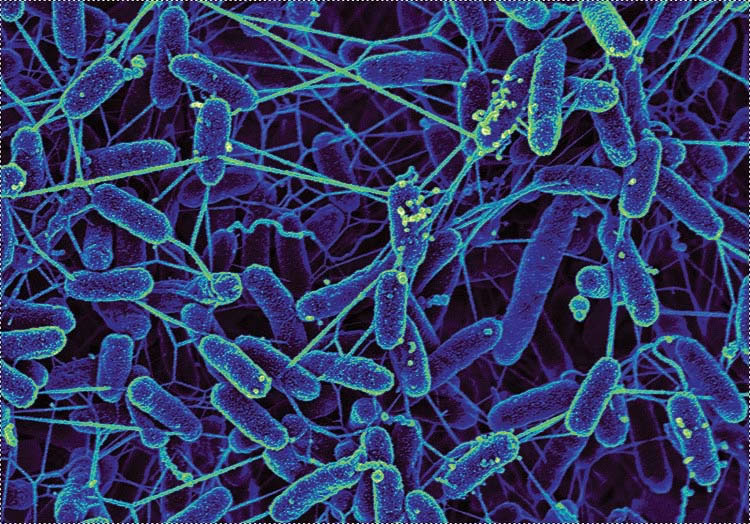
False color image of bacteria
EnlargeRizlan Bencheikh and Bruce Arey, PNNL

18WITH 15 POSTERS PARTICIPATING

In recent years, researchers have used DNA to encode everything from an operating system to malware. Rather than being a technological curiosity, these efforts were serious attempts to take advantage of DNA’s properties for long-term storage of data. DNA can remain chemically stable for hundreds of thousands of years, and we’re unlikely to lose the technology to read it, something you can’t say about things like ZIP drives and MO disks.

But so far, writing data to DNA has involved converting the data to a sequence of bases on a computer, and then ordering that sequence from someplace that operates a chemical synthesizer—living things don’t actually enter into the picture. But separately, a group of researchers had been figuring out how to record biological events by modifying a cell’s DNA, allowing them to read out the cell’s history. A group at Columbia University has now figured out how to merge the two efforts and write data to DNA using voltage differences applied to living bacteria.

CRISPR and data storage

The CRISPR system has been developed as a way of editing genes or cutting them out of DNA entirely. But the system first came to the attention of biologists because it inserted new sequences into DNA. For all the details, see our Nobel coverage, but for now, just know that part of the CRISPR system involves identifying DNA from viruses and inserting copies of it into the bacterial genome in order to recognize it should the virus ever appear again.

FURTHER READING

Gene-editing tool gets its inevitable Nobel

The group at Columbia has figured out how to use this to record memories in bacteria. Let’s say you have a process that activates genes in response to a specific chemical, like a sugar. The researchers diverted this to also activate a system that makes copies of a circular piece of DNA called a plasmid. Once the copy number was high, they activated the CRISPR system. Given the circumstances, it was most likely to insert a copy of the plasmid DNA into the genome. When the sugar was not present, it would generally insert something else.Advertisement

Using this system, it was possible to tell whether a bacterium has been exposed to the sugar in its past. It’s not perfect, since the CRISPR system doesn’t always insert something when you want it to, but it does work on average. So, you just have to sequence enough bacteria in order to figure out the average sequence of events.

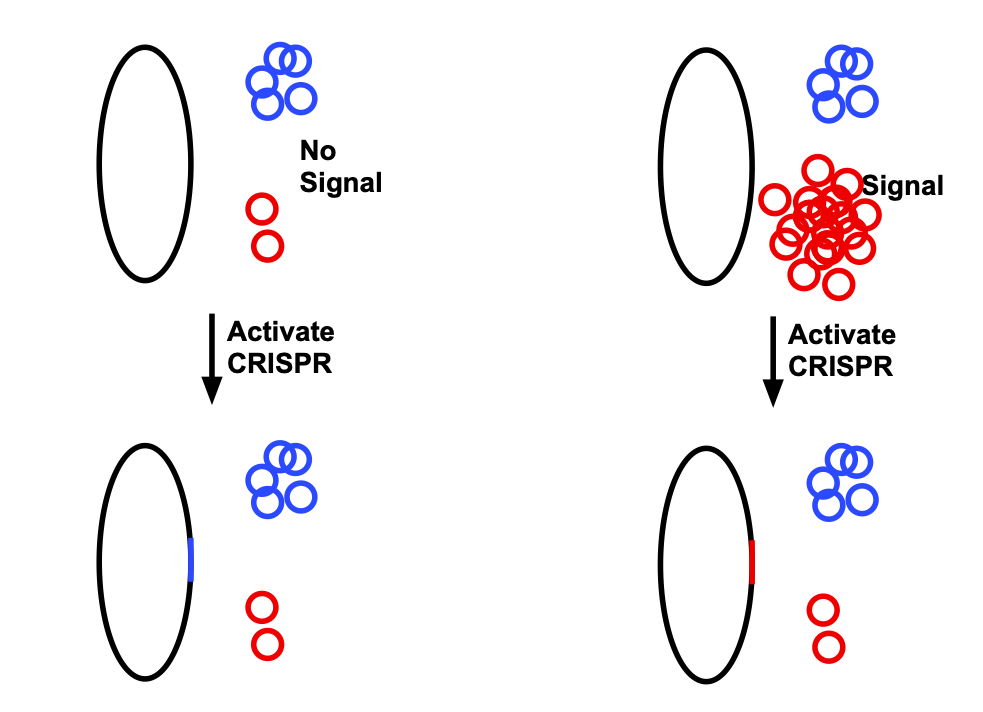
To adapt this for data storage, the researchers used two plasmids. One is the same as described above: present at low levels when a specific signal is absent, and present at very high levels when the signal’s around. The second is always present at moderate levels. When CRISPR is activated, it tended to insert sequences from whichever plasmid was present at higher levels, as shown in the diagram below.

On the left, without any signal, the red plasmid is present at low levels. When CRISPR is activated, the sequence from the blue plasmid is more likely to be inserted into the genome. On the right, when the signal is present, there's a lot more red plasmid, and so it's more likely to be inserted into the genome.
Enlarge / On the left, without any signal, the red plasmid is present at low levels. When CRISPR is activated, the sequence from the blue plasmid is more likely to be inserted into the genome. On the right, when the signal is present, there’s a lot more red plasmid, and so it’s more likely to be inserted into the genome.John Timmer

On its own, this only stores one bit. But the process can be repeated, creating a stretch of DNA that’s a series of inserts derived from the red and blue plasmids, with the identity being determined by whether the signal was present or not.

Giving it a jolt

It’s a neat system but pretty far removed from the sorts of things we normally associate with the production of data—the output of a sensor reading or calculation is rarely a sugar or antibiotic mixed in with a bunch of bacteria. Getting bacteria to respond to an electrical signal turned out to be relatively simple. E. coli is able to alter the activity of genes depending on whether it’s in an oxidizing or reducing chemical environment. And the researchers could alter the environment by applying voltage differences to a specific chemical in the culture with the bacteria.

More specifically, the voltage difference would alter the oxidative state of a chemical called ferrocyanide. That in turn caused the bacteria to alter the activity of genes. By engineering the plasmid so that it responded to the same signal as these genes, the researchers were able to control the levels of plasmid by applying different voltages. And they could then record that level of that plasmid by activating the CRISPR system in these cells.Advertisement

It’s pretty easy to see how each of the inserts in a series could be considered a zero or a one, depending on the identity of the insert. But remember that this system isn’t perfect; pretty regularly, CRISPR would insert nothing when it’s activated, which would shift all the ensuing bits. As this process is random, the longer the series of bits you try to encode, the more likely it becomes that at least one of them ends up being skipped.

To limit this problem, the researchers kept their data to three bits per bacterial population. Even then, they had to train a supervised learning algorithm to reconstruct the most probable series of bits based on an average of the sequences found in the population. And, even with that, the system failed to recognize the series of bits about six percent of the time. In the end, they settled on using a parity bit that was the sum of the first two to allow error correction, and then edited lots of populations in parallel.

(By giving each population’s plasmids a unique sequence tag called a “barcode,” it was possible to mix a lot of them into a single population after the bits were encoded and still untangle everything once the DNA was sequenced.)

With everything in place, they successfully stored and read out “Hello world!” They even put the bacteria into some potting soil for a week and showed that they were able to recover the message. (Storing them in the freezer obviously works better.) They estimate that the message can be retained for at least 80 generations of bacteria.

Let’s be clear: as a storage medium, in its current form, this is pretty terrible. If you wanted to put some data into DNA, you’d be much better off having the DNA chemically synthesized. But it is intriguing to think we could go straight from electrical signals to altered DNA, and there may be some ways to improve the system now that it has been established.

Nature Chemical Biology, 2021. DOI: 10.1038/s41589-020-00711-4 

https://www.ctvnews.ca/health/coronavirus/johnson-johnson-s-single-dose-covid-19-vaccine-on-track-for-march-rollout-exec-1.5265316

Johnson & Johnson’s single-dose COVID-19 vaccine on track for March rollout: exec

Julie Steenhuysen

ReutersStaff

ContactPublished Wednesday, January 13, 2021 2:42PM ESTJohnson & Johnson

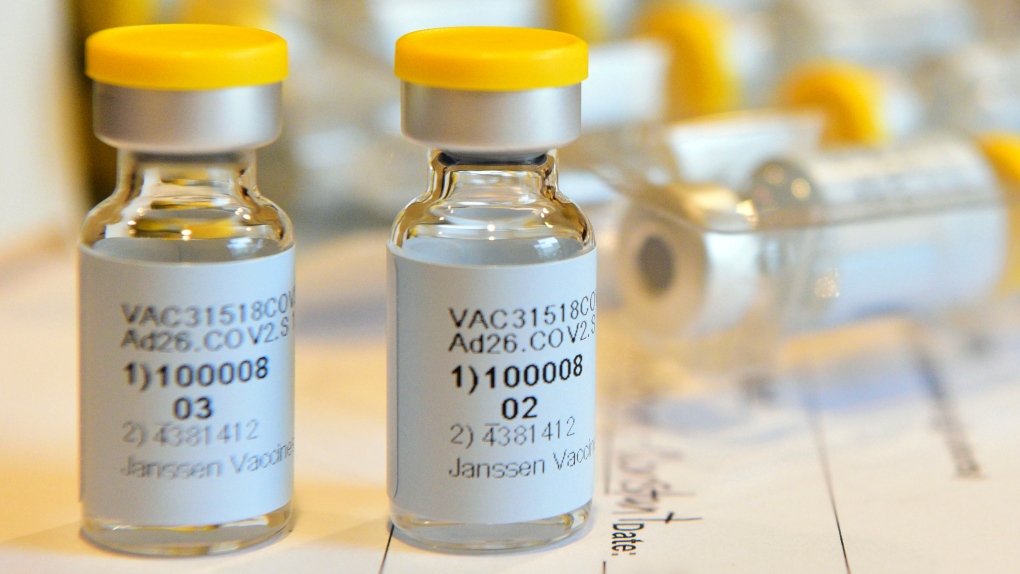
This September 2020 photo provided by Johnson & Johnson shows vials for a single-dose COVID-19 vaccine being developed by the company. (Cheryl Gerber/Johnson & Johnson via AP)

Johnson & Johnson is on track to roll out its single-shot coronavirus vaccine in March, and plans to have clear data on how effective it is by the end of this month or early February, the U.S. healthcare company’s chief science officer said.

Dr. Paul Stoffels in an interview on Tuesday also said J&J expects to meet its stated target of delivering 1 billion doses of its vaccine by the end of this year as the company ramps up production.

The New York Times reported earlier on Wednesday that J&J was experiencing manufacturing delays that would reduce the number of doses initially available. Stoffels declined to say how many doses would be ready to go into people’s arms in March, presuming it receives emergency authorization from the U.S. Food and Drug Administration.

CTV News COVID-19 Coverage

Tracking every case of COVID-19 in Canada

Coronavirus vaccine tracker: How many people in Canada have received shots?

Second year of pandemic ‘could even be tougher’: WHO

In 29 days, Canada has given enough COVID-19 vaccine doses to cover 1 per cent of population

Government won’t forgive CERB repayments over net-gross problem despite messaging mix-up

Front-line health workers push for vaccine priority after some researchers, PR exec received shot

Johnson & Johnson’s single-dose COVID-19 vaccine on track for March rollout: exec

‘Don’t forget about us’: Ontario gastroenterologists who work outside hospitals frustrated by vaccine schedules

Surveys suggest half of cannabis users have increased habit amid COVID-19 pandemic

Canadians worried about the mental health of their co-workers, report finds

What you need to know about the coronavirus right now

Ontario reports increase in COVID-19-related deaths and fewer than 3,000 new cases

Ontario addresses confusion about new stay-at-home rules. These are the answers to your top questions

Quebec COVID-19 hospitalizations surpass 1,500 with 2,071 new cases

Chinese COVID-19 vaccine far less effective than initially claimed in Brazil, sparking concerns

Full coverage at CTVNews.ca/Coronavirus

  •  

“We are aiming for 1 billion doses in 2021. If it is a single dose, that means 1 billion people. But it will be in a ramp-up throughout the year,” Stoffels said.

Initial launch capacity depends in part on validation of manufacturing plants, he added. The company is scaling up efforts to both produce the active vaccine and the means to package and ship it in large quantities.

Johnson & Johnson’s vaccine is being produced in the United States, Europe, South Africa and India with the help of contract manufacturers in order to build capacity.

“It’s a few weeks too early to be giving final numbers on what we can launch in the first couple months,” he said.

Although J&J’s clinical trial protocols allowed for an early look at the data after 20 people became infected by the novel coronavirus, the company intends to deliver data on at least 154 confirmed cases – the target needed to fully assess the vaccine’s efficacy – when it releases results. That should come in the last week of January or the first week of February, Stoffels said.

The U.S. Food and Drug Administration requires at least two months of safety data on half of the study participants to ensure no unexpected side effects crop up, as well as data on specific populations such as the elderly. The company crossed that two-month threshold earlier this month.

“That point came so close to the final analysis that we decided not to do an interim analysis,” Stoffels said.

A surge in COVID-19 cases in the fall that exceeded J&J’s initial projections allowed the company to reduce the number of study volunteers to 40,000 from the initially planned 60,000 participants. Data can be collected faster when community transmission is widespread during testing.

J&J plans to seek emergency use authorization from the FDA based on the study of the vaccine as a single shot, Stoffels said. If results of ongoing studies suggest people would fare better with a second booster shot, Stoffels said J&J would file separately for a booster dose authorization.

The company is closely monitoring changes or mutations in the virus that might affect the vaccine’s effectiveness.

Scientists are particularly concerned about a highly transmissible variant of the virus first discovered in South Africa that could affect how well vaccines protect against it.

Because part of J&J’s clinical trial is being conducted in South Africa, Stoffels said the company should have data on how its vaccine fares against this new variant.

https://www.inc.com/jessica-stillman/elon-musk-bill-gates-albert-einstein-memory.html

Elon Musk, Bill Gates, Albert Einstein, and a Neuropsychologist All Agree This Is the Secret to Having an Exceptional Memory

This truth is as powerful as it is simple. 

BY JESSICA STILLMAN@ENTRYLEVELREBEL

Albert Einstein.
Albert Einstein.

If you want to become one of those lucky people who soaks in new information like a sponge and never forgets an important detail, then the internet is chock full of tips and tools for you, from advice on when and how to learn to tricks to help you cram information into your head.  

These techniques are at least somewhat helpful, but according to Norwegian neuropsychologist Ylva Østby they will only improve your memory at the margins. The real secret to an exceptional memory, she reveals in Adventures in Memory, a book she co-wrote with her novelist sister Hilde Østby that’s recently been translated into English, is as simple as it is powerful: You need to care. 

And, apparently, a whole bunch of geniuses agree with her. 

Memories need something to stick to

Article continues after video.FEATURED VIDEO

Forget Big-Picture: Why You Should Build Mental Toughness Through Small Stepshttps://imasdk.googleapis.com/js/core/bridge3.433.1_en.html#goog_56425420000:00 of 00:47Volume 0% 

The Østby sisters have been doing interviews in support of the new translation, and many of these conversations are fascinating dives into the weird and wonderful world of how humans form and recall memories. But one review from blog Farnam Street is particularly useful for those looking for practical strategies to improve their memory. 

The post homes in on a truth about memory that’s so simple we often overlook just how powerful it is — we remember information best when it’s meaningful to us. 

That meaning can be something simple such as a connection to an idea we already know. For example, it’s hard to remember people’s names when you’re first introduced to them because their names have no associations to attach to. That’s why linking the person you meet with some existing memory — i.e., “This is Joe from Alaska where Uncle Barry went on vacation last year” — makes it far more likely you will remember their name

Some of the smartest minds in business already understand this truth, not just when it comes to names but in regards to all kinds of learning. Both Elon Musk and Bill Gates have advised those looking to learn faster to start by building up a foundation of basic concepts in whatever domain you’re focusing on. Then, you can branch out to learn the details. This speeds up learning in the same way the “Uncle Barry from Alaska” trick helps you remember names. It gives new information something to stick to. 

Passion supercharges your memory

But finding meaning in new memories can be about more than just connecting them with what you already know. It’s also about how much you care. 

“The Østbys explain that the strongest memory networks are created ‘when we learn something truly meaningful and make an effort to understand it,'” notes Farnam Street. “They describe someone who is passionate about diving and thus ‘will more easily learn new things about diving than about something she’s never been interested in before.'”

In short, the more you care about a subject, the faster you’ll learn it. And the difference between giving a damn or not trumps all the memory tricks out there. “Many people who rely on their memories don’t use mnemonic techniques, nor do they cram. They’re just passionate about what they do,” the Østbys note. 

Which may be why, when Einstein offered his young son advice on how to learn to play piano, he focused on passion. “Mainly play the things on the piano which please you, even if the teacher does not assign those. That is the way to learn the most, that when you are doing something with such enjoyment that you don’t notice that the time passes. I am sometimes so wrapped up in my work that I forget about the noon meal,” the genius wrote. 

All of this advice points in the same direction. The more meaningful information is to you, the faster you’ll remember it. That might not help you get through that required class you find dry as day-old toast, but it does mean there is nothing wrong with your leaky brain. 

https://www.howtogeek.com/702123/how-to-enable-an-extension-in-chromes-incognito-mode/

How to Enable an Extension in Chrome’s Incognito Mode

BENJ EDWARDS@benjedwards
JANUARY 13, 2021, 9:00AM EDT

Google Chrome

By default, Google Chrome does not run extensions in Incognito mode because they could potentially compromise your privacy. But, if you’d like to give an extension permission to work in private browsing mode, it’s easy to do. Here’s how.

First, open “Chrome.” Click the “Extensions” icon in the toolbar, which looks like a puzzle piece. When a menu pops up, select “Manage extensions.”

In Chrome, click the Extensions button and select "Manage extensions."

If you don’t see a puzzle piece button in the menu bar, click the vertical ellipses button (three vertical dots) and select More tools > Extensions from the menu.

When the Extensions tab appears, locate the name of the extension you’d like to enable in Incognito mode and click the “Details” button beside it.

On the Chrome Extensions page, click "Details."

On the extension’s details page, scroll down and locate the “Allow in incognito” option. Click the switch beside it to turn it on.

Warning: Extensions you enable in Incognito Mode may record your browsing history or other private details and could potentially share that data with a third party. They’ll work just like they will in standard browsing mode. Make sure you absolutely trust the extension before giving it access to your private browsing.

In Chrome, click the "Allow in Incognito" switch to turn it on.

If you need to do the same with any other extensions, click the back button once, then visit each extension’s “Details” page. Enable “Allow in incognito” for each extension you’d like to use in Incognito mode.

When you’re done, close the “Extensions” tab and the setting will take effect immediately. You’ll be able to use the extensions you enabled in Incognito mode, and they will still be active in non-private browsing mode as well. Happy browsing!

https://evolutionnews.org/2021/01/rna-world-repeated-downfalls-repeated-resurrections/


RNA World: Repeated Downfalls, Repeated Resurrections

Cornelius HunterJanuary 12, 2021, 6:21 PM

We’ve long since lost track of how many times the RNA World hypotheses — which states that life originated from an RNA enzyme-genome combination rather than from DNA — failed only to be once again resurrected, but we do know this crazy idea will, for a long time to come, continue to be cited as “good solid” evidence for evolution. This despite new research that gives yet another reason for its failure.

There are big problems with the idea that life arose from a random assembly of DNA. Aside from the little problem of generating astronomical amounts of crucial information from, err, random mutations, the resulting DNA doesn’t do anything by itself. That is because proteins are needed to extract said information and do something with it.

A Clever Idea

So, evolutionists came up with the clever idea of using RNA instead of DNA, since RNA can both store genetic information and also do something with it. Of course, this idea still has that little problem of generating the information in the first place. Oh, also, there is precisely zero evidence of any “RNA World” organisms. Now or ever.

There is no organism that does this. There is no organism that does anything like this. There is no controlled, laboratory, version of such a thing. There isn’t even a computer simulation of it, at least in any kind of detail.

Not only does this call the entire idea into question, it also raises another little problem: that if there was this so-called RNA World, then it must have gone away at some point, and neatly transitioned into a DNA world, without leaving a trace. But aside from vague speculation, there is no compelling notion of how this would occur.

A Brief Introduction

This is but a brief introduction to the problems one finds with the RNA World, that have led to its repeated downfall, before its repeated resurrections.

Now, this new research points out the rather inconvenient fact that RNA is too sticky:

But while RNA strands may be good at templating complementary strands, they are not so good at separating from these strands. Modern organisms make enzymes that can force twinned strands of RNA — or DNA — to go their separate ways, thus enabling replication, but it is unclear how this could have been done in a world where enzymes didn’t yet exist.

Amazingly enough, this story was picked up by, of all mags, Popular Mechanics.

Yup. You know you have problems with Popular Mechanics is dissing your evolutionary theory.

A Rather Fundamental Problem

And while one might have thought that this rather fundamental problem would have disqualified the RNA World hypothesis a long time ago — RNA’s “stickiness” was not just discovered yesterday — it turns out that fundamental problems such as this tend to be openly discussed only when a replacement theory is at the ready.

And sure enough, since DNA didn’t work, and perhaps now we can finally say that RNA also didn’t work, perhaps the trick is to combine them. Don’t two wrongs make a right? And so it is: the new research indeed proposes that life got going by using fancy chimeric molecular strands that are part DNA and part RNA.

Well, evolution dodged another bullet. But we think we can at least say that Alexander Oparin’s 1924 prediction that origin-of-life research would be solved “very, very soon” hasn’t quite turned out right.

Cornelius G. Hunter

FELLOW, CENTER FOR SCIENCE AND CULTURECornelius G. Hunter is a graduate of the University of Illinois where he earned a Ph.D. in Biophysics and Computational Biology. He is Adjunct Professor at Biola University and author of the award-winning Darwin’s God: Evolution and the Problem of Evil. Hunter’s other books include Darwin’s Proof, and his newest book Science’s Blind Spot (Baker/Brazos Press). Dr. Hunter’s interest in the theory of evolution involves the historical and theological, as well as scientific, aspects of the theory. His blog is Darwin’s God.

https://www.engadget.com/quantum-operation-inc-wearable-glucose-121015450.html

Startup claims its new wearable can monitor blood sugar without needles

Quantum Operation Inc’s prototype could be a big deal, if it works.

Daniel Cooper@danielwcooperJanuary 12, 2021 21Comments 1015Shares 

AdChoices

Sponsored Links

Smart USB Stick Backs Up Entire Computer (1 Click)InfinitiKloudA healthier “you” is within reach.Best Buy CanadaHow Much Should Hearing Aids Cost in 2021?Clinic Compare

AdChoices
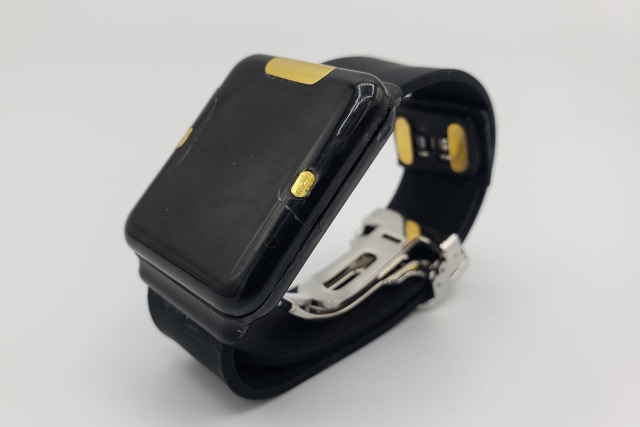
Image of the Quantum Operation Inc prototype blood glucose monitor.
Quantum Operation Inc.

A Japanese startup at CES is claiming to have solved one of the biggest problems in medical technology: Noninvasive continuous glucose monitoring. Quantum Operation Inc, exhibiting at the virtual show, says that its prototype wearable can accurately measure blood sugar from the wrist. Looking like a knock-off Apple Watch, the prototype crams in a small spectrometer which is used to scan the blood to measure for glucose. Quantum’s pitch adds that the watch is also capable of reading other vital signs, including heart rate and ECG.

The company says that its secret sauce is in its patented spectroscopy materials which are built into the watch and its band. To use it, the wearer simply needs to slide the watch on and activate the monitoring from the menu, and after around 20 seconds, the data is displayed. Quantum says that it expects to sell its hardware to insurers and healthcare providers, as well as building a big data platform to collect and examine the vast trove of information generated by patients wearing the device.

QOI

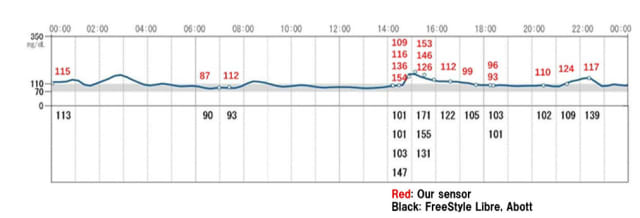
Quantum Operation supplied a sampling of its data compared to that made by a commercial monitor, the FreeStyle Libre. And, at this point, there does seem to be a noticeable amount of variation between the wearable and the Libre. That, for now, may be a deal breaker for those who rely upon accurate blood glucose readings to determine their insulin dosage. 

Noninvasive glucose monitoring is something of a holy grail for the medical industry, as well as the major wearables brands. After all, one in 10 Americans are diabetic, and that figure is likely to rise as the obesity crisis continues to rage. In order to maintain their health, diabetics today either need to take regular finger-prick blood tests or wear an implanted glucose monitor. In the last five years, companies like Dexcom and Abbott have even found ways to connect these monitors to smartwatches for ease of tracking

Naturally, the wearables industry has been looking for an easier, and less invasive, way of doing this to try and steal some of that lunch. Unfortunately, no company has been able to successfully demonstrate a working version of this technology, at least not to a commercial standard. In 2017, one company — PKVitality — came to CES with a watch that had a series of 0.5mm tall needles on the back of its watch which collected interstitial fluid from your skin. But that hardly counts as noninvasive. 

Apple has been reportedly working on a blood sugar monitoring platform since even before Steve Jobs died. Rumors surfaced in 2017 that the company had a dedicated lab looking at ways to monitor blood sugar through a wearable. In 2018, AppleInsider found a patent that the company had filed, related to using absorption spectroscopy to monitor blood glucose levels. 

This secret team was apparently bolstered by the former employees of C8 MediSensors, a company which failed to achieve this task at the start of the last decade. It raised $60 million in investment from companies like GE, but failed to create a working product before it closed in early 2013. An MIT Tech Review profile of the company from 2014 said that C8 simply couldn’t fix the variability problem — where readings differ from person to person — before it ran out of money.

A technique called Raman Spectroscopy has seen some promise both in the above example and in other projects. In 2018, a group of researchers at the University of Missouri and MIT found that a laser, through a fiber optic cable, could be used to monitor for glucose when pressed against the wrist. At the time, researchers said that the system could offer readings comparable to a finger-prick test. 

There’s still a long way to go before we’re able to see this sort of technology in a working product, even longer before it’s in one we want to buy. But if Quantum can demonstrate that it’s avoided the pitfalls that some of its rivals have hit, and that its technology is accurate enough, this could be pretty exciting. 

Of course, this being an all-virtual CES, it’s even harder to take the company’s fantastic claims at face value. If we were at the show in person, we’d be able to test the device out for ourselves and speak to the founders face-to-face. It’s worth noting, too, that there isn’t — yet — any peer-reviewed or otherwise externally-validated science to support this specific technology and its application. We can’t make any serious judgment on this technology yet, beyond saying that if Quantum Operation can make good on its claims, then we may be on the cusp of a very exciting time for wearables.

https://www.inverse.com/innovation/musk-reads-tesla-25000-car

MUSK READS: LEAKED DOCS MAY SHOW WHEN TESLA WILL LAUNCH ITS $25,000 CAR

Tesla’s $25,000 car may have a release date, Starlink comes to the UK, and Starship prepares to fly.JOHN THYS/AFP/Getty ImagesMIKE BROWN1.12.2021 9:38 AM

TESLA’S $25,000 CAR MAY HAVE a release date, Starlink comes to the UK, and Starship prepares to fly. It’s the free edition of Musk Reads #229 — subscribe now to receive two more editions later this week!

A version of this article appeared in the “Musk Reads” newsletter. Sign up for free here.

MORE LIKE THIS

INNOVATION1.5.2021 2:27 AMMUSK READS: TESLA UPDATES THE MODEL 3By MIKE BROWNINNOVATION12.30.2020 2:31 AMMUSK READS: ELON MUSK RESPONDS TO THE APPLE CARBy MIKE BROWNINNOVATION1.4.2021 6:57 AMTESLA MODEL S 2021: INCREDIBLE PHOTOS SHOW HIGH PERFORMANCE EV IN ACTIONBy MIKE BROWN

EARN REWARDS & LEARN SOMETHING NEW EVERY DAY.

SUBMIT

Last week, MUSK READS+ subscribers got to read an exclusive interview with rocket photographers from Cosmic Perspective. Ryan Chylinski and MaryLiz Bender revealed what it’s like in those last few seconds before launch and what SpaceX could mean for the future of art. This week, subscribers will hear how Tesla dramatically improved its cars’ internal quality from Sandy Munro, whose legendary car teardowns have made him a star in the community.

Don’t miss out — new members receive instant access to our ever-expanding archive, future premium issues, and much more. Subscribe to MUSK READS+.

MUSK QUOTE OF THE WEEK

“I am primarily trying to advance two causes: sustainable energy & extending life/consciousness beyond Earth. There is also the existential threat of A.I., which we should aspire to mitigate. This doesn’t leave time to write books.”

TESLA

Is Tesla’s $25,000 car arriving sooner than we think? Giga Shanghai documents, first shared by Sina Motors and spotted by Electreksuggest the ultra-cheap vehicle, first teased at the September 2020 Battery Day, could be on the way — with mass production possible as soon as 2022.https://9a2fd9009ffa14dc4539b909f29849fc.safeframe.googlesyndication.com/safeframe/1-0-37/html/container.html

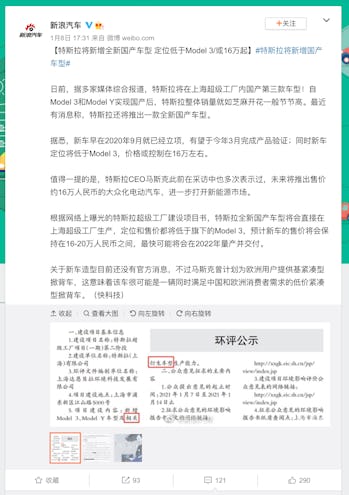
Screenshots of the government documents, as shared on Weibo.Sina Weibo

The screenshots of the documents show plans to produce the Model 3 and Model Y at the factory alongside related models. They also show plans to start production on a new car project, with six months of testing before introduction.

Sina Motors claims a new vehicle will launch with a starting price as low as RMB 160,000 — just under $25,000, around $10,000 cheaper than Tesla’s entry-level Model 3.

But the most exciting detail is the hint mass production could start as early as 2022. This should be taken with a hint of skepticism — while the publication claimed on microblogging site Weibo that this is shown in the documents, the shared images omit the date and price.

At the company’s Battery Day event, Musk claimed that the car would arrive in around three years’ time.

Real estate developer Tony Cho has unveiled what he claims is the largest Tesla Solar Roof in Florida. Where most installations measure less than 10 kilowatts, Cho’s giant roof measures 44 kilowatts. The construction forms part of the ChoZen Retreat, an environment-focused resort on the 22,000-acre Saint Sebastian nature preserve. Read more.https://platform.twitter.com/embed/index.html?dnt=false&embedId=twitter-widget-0&frame=false&hideCard=false&hideThread=false&id=1344339105811935239&lang=en&origin=https%3A%2F%2Fwww.inverse.com%2Finnovation%2Fmusk-reads-tesla-25000-car&siteScreenName=inversedotcom&theme=light&widgetsVersion=ed20a2b%3A1601588405575&width=550px

SPACEX

Liftoff! SpaceX successfully launched the Turksat-5A satellite on Thursday. It was the first launch of 2021. Musk is aiming to complete 48 launches total this year, with nearly one per week. So far so good! Read more.

The Starship, SpaceX’s giant ship designed for Mars and beyond, is set for its next test. The “SN9” prototype completed a static test fire of its three Raptor engines last week, in preparation for an expected launch. The launch is expected to come to a less fiery end than the December test. Unfortunately, as of Monday, a flight restriction that would have enabled a test on Tuesday has been canceled. Read more.https://9a2fd9009ffa14dc4539b909f29849fc.safeframe.googlesyndication.com/safeframe/1-0-37/html/container.html

Starlink has arrived in the United Kingdom. British regulator Ofcom has confirmed that SpaceX’s user terminals have clearance to operate, and reports are flooding in of new users. Next up on the rollout list could be Germany, Greece, or Australia. All three countries have given similar clearance to SpaceX. Read more.

IN OTHER MUSK NEWS…

With a net worth of $190 billion as of January 8, Elon Musk is the richest person in the world. Musk has already announced how he will spend his money. In June 2018, he said he’ll start major disbursements of his Tesla stock in about 20 years once it reaches a stable state. The plan, as he outlined four months later, is to use half the money “to help problems on Earth” and half for a self-sustaining city on Mars. Read more.

Sandy Munro is famed for his legendary Tesla teardowns. This week, he speaks with MUSK READS+ about his newfound fan base, his interactions with Musk, and how Tesla has upped its game in production quality. Don’t miss out.https://9a2fd9009ffa14dc4539b909f29849fc.safeframe.googlesyndication.com/safeframe/1-0-37/html/container.html

THE ULTRA-FINE PRINT

This has been Musk Reads #229, the weekly rundown of essential reading about futurist and entrepreneur Elon Musk. I’m Mike Brown, an innovation journalist for Inverse.

Why subscribe to MUSK READS+? You’ll be supporting in-depth, high-quality journalism about the world’s most ambitious change-maker, Elon Musk. Tesla investors, SpaceX critics, and anyone with an interest will find something they love in our offerings. Independent journalism is important now more than ever, and your contributions will help us continue in our mission to deliver interviews and analysis you won’t find anywhere else.

  • Email me directly at mike.brown@inverse.com and follow me on Twitter @mikearildbrown.
  • Follow Inverse on Twitter @inversedotcom.
  • Got any comments or queries? Don’t forget to send them over to muskreads@inverse.com.

MUSK READS+ is a fully independent operation. We are not Elon Musk, nor are we employed by him. Our job is to report the events we find newsworthy, giving you the inside look at the worlds of space rockets, electric cars, clean energy, and more. It means firsthand accounts of a SpaceX rocket launch, Tesla insights from third-party analysts, and more. If you want to support us in our mission, and receive exclusive interviews and analysis, consider contributing with a subscription.

What did you think of today’s stories? Hit reply to this email to let us know. Thanks for reading!