A trio of researchers from the Google Brain team recently unveiled the next big thing in AI language models: a massive one trillion-parameter transformer system.
The next biggest model out there, as far as we’re aware, is OpenAI’s GPT-3, which uses a measly 175 billion parameters.
Background: Language models are capable of performing a variety of functions but perhaps the most popular is the generation of novel text. For example, you can go here and talk to a “philosopher AI” language model that’ll attempt to answer any question you ask it (with numerous notable exceptions).
While these incredible AI models exist at the cutting-edge of machine learning technology, it’s important to remember that they’re essentially just performing parlor tricks. These systems don’t understand language, they’re just fine-tuned to make it look like they do.
That’s where the number of parameters comes in – the more virtual knobs and dials you can twist and tune to achieve the desired outputs the more finite control you have over what that output is.
What Google‘s done: Put simply, the Brain team has figured out a way to make the model itself as simple as possible while squeezing in as much raw compute power as possible to make the increased number of parameters possible. In other words, Google has a lot of money and that means it can afford to use as much hardware compute as the AI model can conceivably harness.
Switch Transformers are scalable and effective natural language learners. We simplify Mixture of Experts to produce an architecture that is easy to understand, stable to train and vastly more sample efficient than equivalently-sized dense models. We find that these models excel across a diverse set of natural language tasks and in different training regimes, including pre-training, fine-tuning and multi-task training. These advances make it possible to train models with hundreds of billion to trillion parameters and which achieve substantial speedups relative to dense T5 baselines.
Quick take: It’s unclear exactly what this means or what Google intends to do with the techniques described in the pre-print paper. There’s more to this model than just one-upping OpenAI, but exactly how Google or its clients could use the new system is a bit muddy.
The big idea here is that enough brute force will lead to better compute-use techniques which will in turn make it possible to do more with less compute. But the current reality is that these systems don’t tend to justify their existence when compared to greener, more useful technologies. It’s hard to pitch an AI system that can only be operated by trillion-dollar tech companies willing to ignore the massive carbon footprint a system this big creates.
Context: Google‘s pushed the limits of what AI can do for years and this is no different. Taken by itself, the achievement appears to be the logical progression of what’s been happening in the field. But the timing is a bit suspect.
From meditation and melatonin supplements to limiting your caffeine consumption and just plain counting sheep, you’ll try just about anything to get a good night’s sleep. But what you may not realize is that the secret to getting enough rest lies in what you eat—and in some cases, when you eat it. In fact, research has repeatedly shown that your diet and sleep quality are linked, meaning your diet changes can help you sleep. And vice versa—your sleep quality can impact your food choices.
“Sleep is incredibly important for helping to regulate hormones such as leptin and ghrelin—which influence appetite,” says Lauren Harris-Pincus, MS, RDN, founder of NutritionStarringYOU.com and author of The Protein-Packed Breakfast Club. “We sometimes create a vicious cycle by not fueling our bodies properly, which makes us feel fatigued and leads to eating later in the day, which can then affect our sleep quality—and the cycle continues.”What Nutritionists Eat Every Day to Stay Healthy
It’s not just the foods you eat closer to bedtime that can affect your sleep—what you eat all day long can play a role in how long it takes you to drift off, how often you wake up during the night, and the overall quality of your sleep.
Fortunately, thanks to these healthy diet changes that help you sleep, you can easily catch those 40 winks. Here are some simple tweaks dietitians recommend making for better sleep, and for more healthy tips, be sure to check out our list of The 7 Healthiest Foods to Eat Right Now.1
Eat breakfast.
Shutterstock
According to Jenna Gorham, RD, LN, skipping breakfast isn’t an ideal move when it comes to sleep. A 2018 study actually found that perceived sleep quality and sleep onset tended to improve after participants ate breakfast compared with when they didn’t eat anything in the morning.
“A balanced breakfast that is low in added sugar and offers fiber, healthy fat, or protein is best for managing energy and blood sugar throughout the day,” says Gorham.
You already know that having an espresso or a cup of caffeinated tea isn’t a good idea late in the day—but did you know that having a couple of after-dinner drinks can sabotage your sleep, too? Whereas caffeine is a stimulant that blocks the substance known for allowing you to feel sleepy, Gorham says alcohol may interfere with your sleep cycles—particularly REM sleep, which is a super important phase that stimulates parts of your brain involved in learning and retaining memories.
According to SleepFoundation.org, since alcohol is a sedative, it may help you to doze off faster. However, since you will likely fall into a deep sleep rather quickly, it can throw off your sleep cycles, creating an imbalance where you get less slow-wave sleep and more REM sleep, thereby decreasing the overall quality of your sleep. As a result, you’re more likely to sleep for a shorter amount of time and experience more sleep disruptions.
That’s not to say you need to swear off alcohol entirely, but needless to say, you might want to limit yourself to one drink in the evening, or swap it for a soothing cup of decaf tea. Here’s What Happens To Your Body When You Give Up Alcohol.3
Make sure you’re getting enough calories.
Shutterstock
Experts agree that not eating enough—or not meeting your daily recommended values for certain nutrients—can definitely make it harder for you to get adequate rest.
“Our bodies often confuse hunger, thirst, and fatigue, so it’s essential to consume well balanced, properly spaced meals and stay well hydrated to optimize our energy levels and sleep cycle,” explains Harris-Pincus.
Gorham adds that your body is still working while you sleep, which is why it’s important to ensure you’re consistently supplying it with enough fuel all throughout the day.
“Depriving your body of adequate nutrition will make it work harder or make you feel hungry during the night and impact your sleep cycle,” she adds.
Studies have shown that eating late at night can sabotage your sleep—likely by inhibiting the natural release of melatonin, which plays a crucial role in regulating your natural sleep-wake cycle. Specifically, research suggests that eating within three hours of your bedtime increases the likelihood that you’ll experience sleep disruptions—and this is especially important to keep in mind if you have acid reflux.
“If you are prone to experiencing heartburn, it’s important to avoid eating within three to four hours of bedtime in order to minimize any sleep disruptions due to reflux symptoms,” says Harris-Pincus. “You may also want to keep your evening meal lighter and limit fatty/fried foods and those [foods] known to be triggers like coffee, alcohol, carbonated beverages, chocolate, peppermint, spicy foods, and for some, acidic choices like tomatoes or citrus.”
By the way—fatty foods don’t just spell trouble for heartburn—they’re also more difficult for your body to digest, and therefore may cause indigestion that makes it harder to drift off. Additionally, studies have found that a higher overall saturated fat intake is associated with less time in restorative slow-wave sleep.
Aim for a well-balanced diet with plenty of fiber.
Shutterstock
Experts say one of the best ways to make sure you get quality rest at night is to ensure you’re getting all the nutrients your body needs—which means eating a diverse range of whole grains, protein sources, vegetables, and fruits.
“Many nutrients can support sleep, including calcium, magnesium, zinc, melatonin, and B vitamins,” adds Gorham.
Colleen Christensen, a registered dietitian and nutritionist, says that fiber is an especially crucial component of a healthy diet when it comes to sleep.
“Diets low in fiber have been linked to shorter, less restful sleep,” she explains. “An easy way to add more fiber to your day is to swap in whole-grain breads and pastas if you find them equally as satisfying.”
Ideally, you don’t want to go to bed feeling stuffed—but you also don’t want to feel any hunger pangs, either. If your stomach starts growling an hour or two before bed, experts say it’s totally fine to have a snack so you feel comfortable enough to doze off. The important thing is to choose the right snacks that won’t disrupt your sleep.
One of Harris-Pincus’s top choices is prunes because they contain calcium, magnesium, and Vitamin B6—all of which are needed to produce melatonin and therefore can help promote sleep.
“Start with a couple of prunes about an hour before bedtime to make sure your tummy tolerates them,” she advises. “Since prunes contain sorbitol, a sugar alcohol, they also help to regulate our digestive system and may lead you to use the bathroom which you don’t want to have to do in the middle of the night.”
Gorham, meanwhile, suggests a small bowl of warm muesli or cold cereal. However, she says it’s worth checking the nutrition label to make sure you’re opting for a low-sugar option, as the last thing you need is a boost of energy right before bed. Better yet, she recommends opting for a whole-grain cereal (such as an oat-based variety), because it’s a rich source of both fiber and melatonin.
“They’ve been linked to improved sleep possibly for one reason due to their serotonin content,” she explains. “They also provide folate which has been linked to improvements in insomnia.”7
Try drinking tart cherry juice.
Shutterstock
According to Christensen, tart cherries have a high melatonin content as well as anti-inflammatory properties that may have a beneficial effect on sleep.
In fact, you may just want to sip on it before bedtime: one 2010 study discovered that adults with insomnia fell asleep faster after drinking tart cherry juice.
Just be sure to opt for 100% tart cherry juice with no added sugar to reap the most snooze-promoting benefits.
Last January Google quietly did away with the existing Guest Mode feature, which allows people not on your Wi-Fi network to connect with a Chromecast or smart speaker by entering a four-digit PIN, from its Home and Nest devices on account that some people and pets could hear the ultrasonic frequencies the two devices use to pair. Today, in the culmination of online privacy efforts the company first announced back in October, users will be able to turn off the voice recording features of their smart display and speaker like the Nest Audio or Nest Hub Max simply by telling it to.
This new Guest Mode is basically like Chrome’s Incognito tabs. When activated, it prevents your Google Assistant interactions from being recorded to your account. This can be helpful even when you aren’t getting verbally freaky with your Assistant. For one thing, it keeps the interactions of your friends and family have with your smart devices from influencing the personalized Assistant experience that you’ve gradually curated.
The experience isn’t foolproof, however. Even if you’ve got your smart speaker in Guest Mode, if you use Assistant to access another Google service like Maps, your interactions might be saved by that service if not directly to your account.
A new study has found that up to 20% of glioblastomas—an aggressive brain cancer—are fueled by overactive mitochondria and may be treatable with drugs currently in clinical trials.
Mitochondria are responsible for creating the energy that fuels all cells. Though they are usually less efficient at producing energy in cancer, tumor cells in this newly identified type of glioblastoma rely on the extra energy provided by overactive mitochondria to survive.
The study, by cancer scientists at Columbia University’s Vagelos College of Physicians and Surgeons and Herbert Irving Comprehensive Cancer Center, was published online Jan. 11 in Nature Cancer.
The study also found that drugs that inhibit mitochondria—including a currently available drug and an experimental compound that are being tested in clinical trials—had a powerful anti-tumor effect on human brain cancer cells with overactive mitochondria. (Follow-up, unpublished work found that the same drugs are also active against mitochondrial tumors in glioblastomas growing in mice).
Such drugs are being tested in patients who have a rare gene fusion—previously discovered by the same researchers—that also sends mitochondria into overdrive.
“We can now expand these clinical trials to a much larger group of patients, because we can identify patients with mitochondria-driven tumors, regardless of the underlying genetics,” says Antonio Iavarone, MD, professor of neurology, who led the study with Anna Lasorella, MD, professor of pediatrics. Both are members of Columbia’s Institute for Cancer Genetics.
Study Finds Four Types of Brain Cancer
The study found that all brain cancers fall into one of four groups, including the mitochondrial subtype.
By classifying brain cancers based on their core biological features, and not just genetic alterations or cell biomarkers, the researchers have gained new insights into what drives each subtype and the prognosis for patients.
The importance of an accurate classification system is best illustrated by the example of breast cancer. Breast cancers have very well-defined subtypes that led to the development of therapies that target the key hallmarks, such as estrogen receptors or HER2, that sustain specific subtypes.
“We feel that one of the reasons therapeutic progress in brain cancer has been so slow is because we don’t have a good way to classify these tumors,” Iavarone says.
Glioblastoma is the most common—and most lethal—primary brain tumor in adults. Median survival for individuals with glioblastoma is only 15 months.
The new study showed that glioblastoma can be classified in four biological groups. Two of them recapitulate functions active in the normal brain, either stem cells or neurons, respectively. The two other groups include mitochondrial tumors and a group of tumors with multiple metabolic activities (“plurimetabolic”) that are highly resistant to current therapies.
Patients with the mitochondrial tumors had a slightly better prognosis—and lived for a few more months—than patients with the other three types.
“We are excited about the mitochondrial group, because we have drugs for that group in clinical trials already,” Lasorella says, “but the classification now gives us ideas about how to target these other three and we are starting to investigate these more intensely.”
“We’re going beyond one mutation, one drug concept,” she says. “Sometimes it’s possible to get a response that way. But it’s time to target tumors based on the commonalities of their core biology, which can be caused by multiple different genetic combinations.”
Single-Cell Analyses Opens New View of Brain Cancer
The new findings were only possible by utilizing recent advances in single-cell analyses, which allowed the scientists to understand—cell by cell—the biological activity of thousands of cells from a single tumor.
Overall, the scientists characterized the biological properties of 17,367 individual cells from 36 different tumors.
In addition to analyzing each cell’s genetic mutations and levels of gene activity, the researchers looked at other modifications made to the cells’ genomes and the proteins and noncoding RNAs made by each cell.
Using the data, the researchers devised a computational approach to identify core biological processes, or pathways, in the cells rather than the more common approach of identifying gene signatures. “In this way, we can classify each individual tumor cell based on the real biology that sustains them,” Iavarone says.
Most tumors, the researchers found, were dominated by cells from one of the four subtypes, with a smattering of cells from the other three.
Applying Same Techniques to Other Cancers
Lasorella and Iavarone are now applying the same techniques to multiple different aggressive cancers.
This “pan-cancer” approach, they say, should identify commonalities among different types of cancer regardless of the tumor’s origin. If such common pathways exist, drugs that treat mitochondrial brain cancer may also be able to treat mitochondrial types of lung cancer, for example.
“When we classify based on the cell’s core biological activities, which all cells rely on to survive and thrive, we may find that cancers share more in common than was previously apparent by just looking at their genes,” Lasorella says.
We’ll admit, we weren’t entirely sure what to expect when we agreed to judge the annual Best of CES Awards without an in-person show. How many companies would show up to an online-only show? What would we lose without being able to wander the halls of a massive convention center and see the products up close? As it turns out, we needn’t have worried. More than 1,900 brands, big and small, turned up this year, according to the Consumer Technology Association, the industry group that organizes the show each year. What’s more, many companies found socially distant ways to show us their latest and greatest in person, ahead of the show. (That’s especially useful for the TV category, wouldn’t you say?)
In the end, we had enough fodder for 14 categories covering hardware and services in every sector from home theater to transportation to accessibility tech. We’ll announce the winners tomorrow at 4:30pm ET during a ceremony on our virtual stage, which we’ll livestream to Engadget.com and our YouTube channel. We’re also continuing tradition and opening up voting for our People’s Choice Award — our reader poll is live now and closes tomorrow, ahead of the ceremony. Please be sure to vote, and congrats to all of the finalists! — Dana Wollman, Editor-in-Chief
Best Accessibility Tech
Wearable Devices Ltd. Mudra Band
The technology underpinning the Mudra Band might seem fanciful: sensors capture neural electrical impulses in the wrist and map them onto specific movements like a swipe or a tap, essentially letting you control an Apple Watch with subtle finger movements on one hand. There’s no doubt the benefit of convenience — you can operate your watch when your hands are wet or dirty, for instance. But some of the most interesting implications of this technology might relate to accessibility, like helping amputees use their devices. The band connects to the Apple Watch via Bluetooth, making it a simple integration with compelling possibilities. — Chris Ip, Features Editor
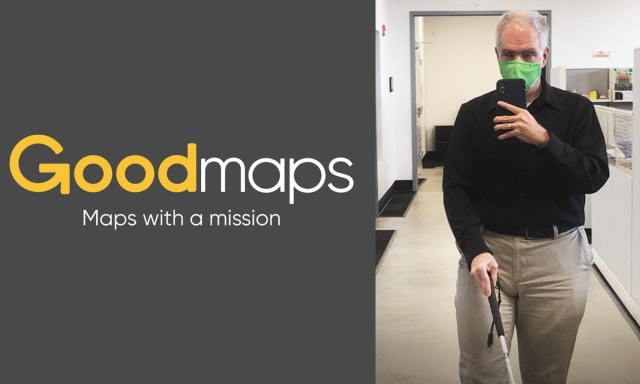
GoodMaps Explore (presented by American Printing House for the Blind)
GoodMaps Explore is a navigation tool that’s all about the next step. Designed for people who are visually impaired or blind, the app delivers detailed directional information through a combination of text and clear, responsive voice commands. Hold up your phone and the app will identify nearby businesses, streets and points of interest, adapting as you move and reading out cardinal directions along the way. The team has begun mapping the inside of buildings using LiDAR as well, and plans to bring the GoodMaps Explore technology to more indoor spaces over time. GoodMaps and the American Printing House have partnered on the app, which is now available on Android after initially launching on iOS. — Jessica Conditt, Senior Editor
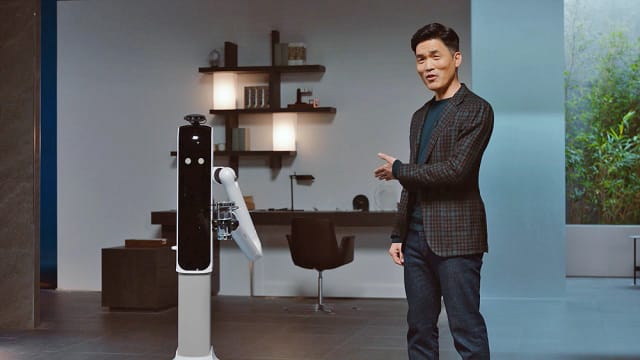
Samsung Bot Handy
Samsung’s CES 2021 presentation showcased a desk-bound woman in a leg cast, assisted only by her robot, Bot Handy. With an extendable gripper arm, the robot could load the dishwasher, pour a drink, and perform other delicate household tasks. The demo is just that: an illustration of how Samsung’s AI can identify and physically handle objects of different shapes and fragility. But it’s easy to imagine that some of the most meaningful applications of this technology could be in assisting people with physical disabilities. — C.I.
Best Digital Health and Fitness Product
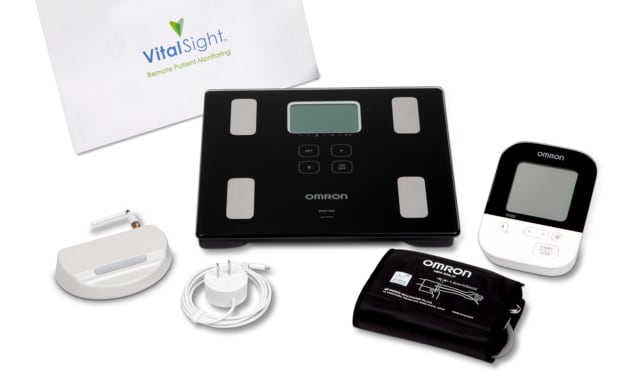
Omron VitalSight
Over the last 10 months, leaving the house and entering hospitals has become especially fraught for those whose health is most vulnerable, while doctors have faced challenges diagnosing patients remotely, without their equipment. Omron’s VitalSight service includes a connected blood pressure monitor that links directly with patients’ physicians, so healthcare professionals can monitor for signs of trouble without requiring regular in-person checkups. Omron already has a reputation for making top smart blood pressure monitors, but VitalSight happens to be ideal for pandemic-era telehealth. — C.I.
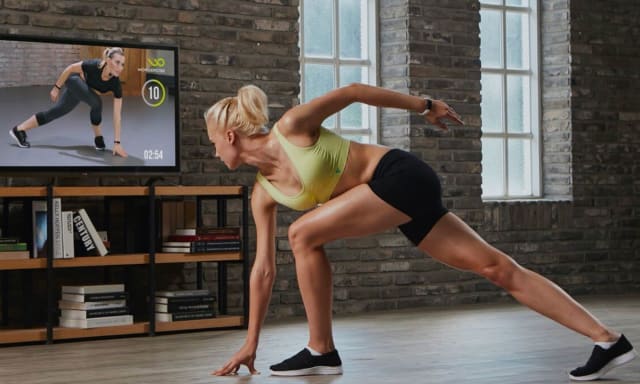
Wondercise Live Motion Matching System
Wondercise is one of many on-demand fitness services available right now, but it’s more focused on form than anything else. The company brought Apple Watch integration to its service at the end of last year, and for CES, it’s introducing arm and leg bands as part of its new “multi-point motion matching system.” These sensor-laden straps work with your smartwatch of choice (be it the Apple Watch, a Garmin device or the company’s own band) to track real-time movements and compare them to those of an on-screen instructor. A score indicating how well you’re mirroring the trainer’s movements shows up on the video, so you know immediately if you need to adjust. On top of that, the IMU sensors track heart rate and cardio burn, and the battery is rated for at least seven days on a charge. — Valentina Palladino, Commerce Editor
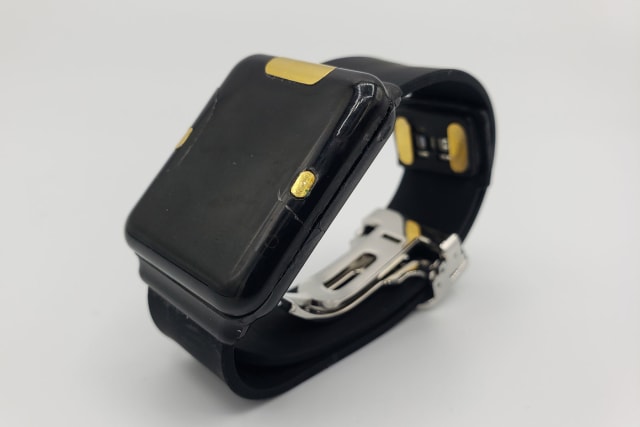
Quantum Operation Non-invasive Blood Glucometer
When you’re unable to see a product in person, it can be hard to be sure if the device can deliver on its promises. But if Quantum Operation has managed to solve the problem of non-invasive glucose monitoring, then its new wearable will become a must-have for diabetics the world over. One in 10 Americans have diabetes and a continuous blood sugar monitor that doesn’t require a finger-prick test would be a huge deal. It may also help the rest of us better manage our sugar intake if — and it’s a big if — the technology is as effective as its creators claim. — Daniel Cooper, Senior Editor
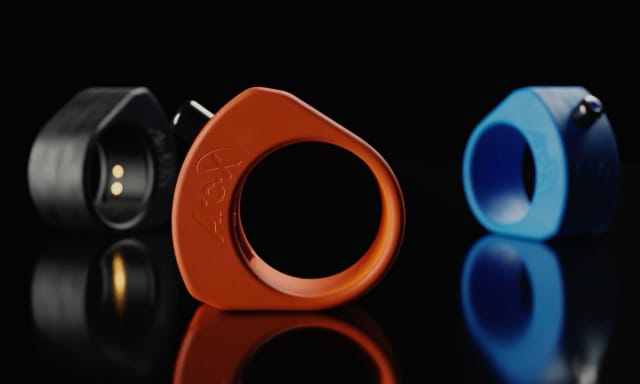
ArcX Smart Ring
When you’re out running, cycling or on the water, the last thing you want to do is to fiddle with your device while in motion. After all, breaking your run to touch your smartwatch to set a lap could knock precious seconds off your time. That’s why ArcX’s wearable joystick, which sits on your finger and can be controlled by your thumb, is such an ingenious solution. The Bluetooth remote lets you control your phone or watch from your clenched fist, making for an elegant — and possibly safer — user experience. — D.C.
Best Wearable
Wearable Devices Ltd. Mudra Band
The $179 Mudra band from Wearable Devices brings gesture control to the Apple Watch, but it’s not just for early adopters. The band, which attaches like any other Apple Watch strap and connects to the wearable via Bluetooth LE, has a sensor inside that detects electrical signals sent by your brain to your fingers. It then uses a deep-learning algorithm to analyze those signals and map them to finger motions you’d use on the Watch’s touchscreen to open apps, type out a short text and more. This is not only an intriguing new way to interact with your Apple Watch, but it could also be useful for those with certain disabilities: The company already built a proof of concept that allows ALS patients to type on a virtual keyboard. — V.P.
TCL Wearable Display
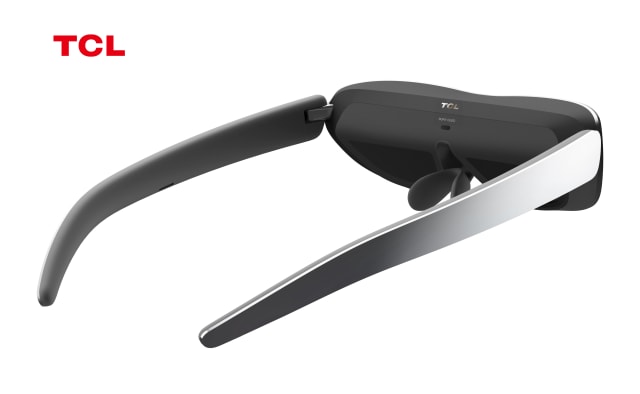
After years of showing its prototype at various tradeshows, TCL is finally ready to share some launch details about its heads-up display. Simply called the TCL Wearable Display for now, the headset stands out for its simplicity. It has two Full HD OLED screens that create a 140-degree field of view… and that’s it. There’s no battery onboard or chunky arms for processors (although a small onboard chip powers the displays). Just connect the device to your phone, laptop or tablet via USB-C to project your media to the glasses. Because it’s so simple, the Wearable Display is one of the lightest and smallest headsets of its kind that we’ve seen. While we wait for details on pricing, availability and the types of content that will be supported at launch, it’s encouraging to see TCL is close to bringing the device to the masses. — Cherlynn Low, Reviews Editor
Earin A-3
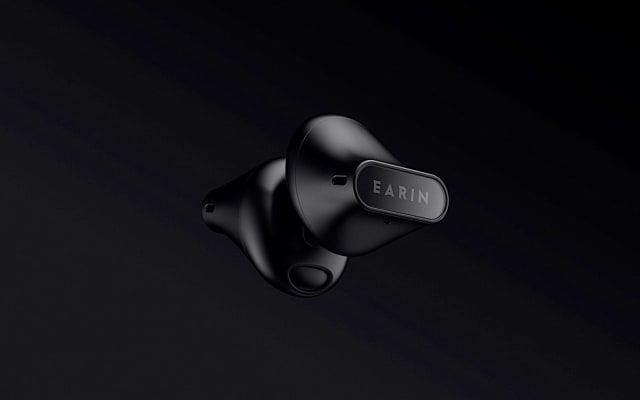
The latest earbuds from Earin, the A-3, experiment with the sort. of open design that only a few companies have attempted in the past (most notably, Samsung’s Galaxy Buds Live). The A-3 are shaped almost like little discs with thin ovals slightly sticking out of one side. Not only are they much more discreet than standard earbuds, but they have no left or right designation so you can freely swap them between ears. The open design lets you listen to tunes while also allowing you to hear what’s going on around you. Although they don’t have active noise cancellation, the A-3 include wind noise reduction algorithms to improve the listening experience. They’re also sweat, splash and dust resistant and have up to 30 hours of battery life with the included wireless-charging case. — V.P.
Lenovo ThinkReality A3 Smart Glasses
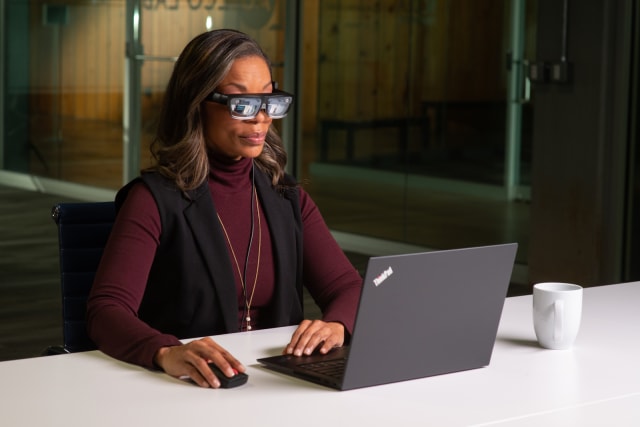
Sure, augmented reality glasses for enterprise aren’t the most approachable product. But Lenovo’s ThinkReality A3 headset has plenty of intriguing features that might one day change the way we work. For starters, the A3 can support up to five virtual 1080p displays at once, allowing for better multitasking in augmented reality. The A3 is also less bulky than its predecessor, and offers dual fish-eye cameras for room-scale tracking in addition to an 8-megapixel camera for video calls. Though the device uses a relatively old Snapdragon XR1 processor (the XR2 came out in 2019), Lenovo is one of few companies to continue working on a HoloLens competitor. For the industries that might benefit most from a hands-free AR experience, a device like the ThinkReality A3 is a reminder that companies haven’t given up. — C.L.
Best Transportation Technology
Mercedes-Benz Hyperscreen
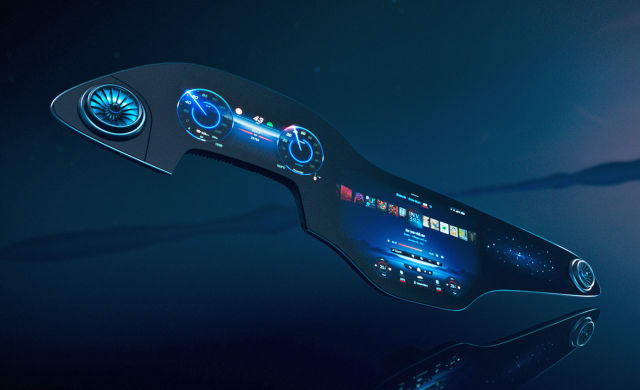
When Mercedes’ new EQS luxury electric SUV arrives later this year, folks may have difficulty not staring — at its monumental cabin display, that is. Measuring 56 inches across (nearly the entire width of the vehicle’s interior) the MBUX Hyperscreen will serve as an all-in-one replacement for the existing driver’s instrument cluster, navigation screen and infotainment system. It even adds a secondary “screen” on the passenger side for the rider’s convenience. This entire setup runs on its own integrated eight-core CPU with 24GB of RAM. And, unlike earlier iterations of the MBUX, the Hyperscreen has been designed with a “zero layer” aesthetic, ensuring that the most critical controls are always within arm’s reach and not buried in a byzantine menu system. — Andrew Tarantola, Senior Editor
Volvo Penta Assisted Docking System
Most of us have probably never had to dock a boat before, much less in whipping winds or a quick moving tide. And if you’re trying to park your ride in a particularly crowded marina, you’ve probably got other boats to contend with. Two years ago, Volvo Penta (the maritime arm of Volvo) demoed a self-docking system that attempted to remove human error from the equation. Now, it’s going to become a commercial reality. The Volvo Penta Assisted Docking system is basically the same as the assisted parking feature on many high-end cars, but for boats. Using GPS and other on board sensors it can make adjustments on the fly to slide your yacht into even the tightest spots. — Terrence O’Brien, Managing Editor
Panasonic Automotive AI-enhanced AR HUD
Navigating through unfamiliar streets is challenging enough even when you’re not glancing at Google Maps on your phone or your navigation screen every few seconds. But with Panasonic’s prototype AI-powered augmented reality HUD, drivers will get exactly the information they need without taking their eyes off the road. It’s equipped with eye tracking technology to ensure that the projected 4K resolution images always remain in focus, along with AI navigation capabilities that monitor traffic around the vehicle up to three lanes away, overlaying GPS guidance while highlighting traffic hazards. — A.T.
Best Home Theater Product
Sony 360 Reality Audio speakers (SRS-RA5000 and SRS-RA3000)
Two years after Sony debuted its 360 Reality Audio platform at CES 2019, the company is preparing to ship the first speakers built for this immersive sound ecosystem. The SRS-RA5000 and SRS-RA3000 are WiFi-connected wireless units that work in a similar fashion to Sonos. If the music you’re listening to isn’t in the 360 format, the speakers are equipped with an algorithm that converts the content. — Billy Steele, Senior News Editor
Samsung C-Lab EZCal
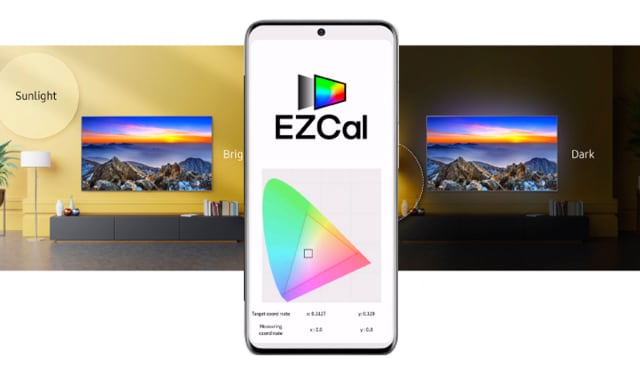
New TVs are capable of amazing image reproduction, but if they’re not set up correctly then all of those pixels will go to waste. Calibration setups that involve users phones have started to become common with more precise control of settings at very deep levels, but Samsung’s experimental C-Lab division proposes automating the process altogether. Your phone is capable of judging the screen’s output and ambient lighting conditions, so why not let AI do the work of setting things up while you pick out something to watch? — Richard Lawler, Senior News Editor
TCL Alto R1 soundbar
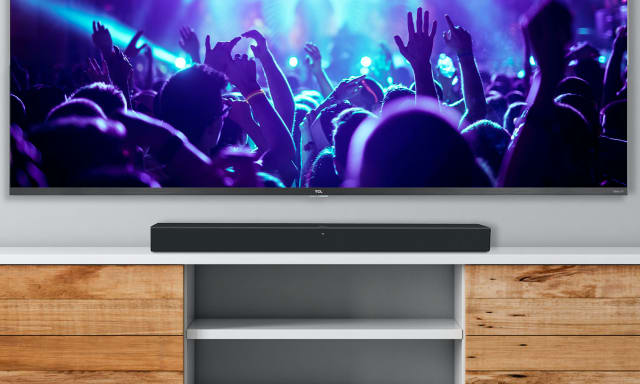
This Roku TV Ready soundbar doesn’t require you to run a cord to your TV, offering a wireless setup that keeps your living room free of another cable. All you need to do is plug in the Alto R1 and it guides you through the setup. You can also use your TV’s remote to control sound, and TCL promises better audio syncing, simple settings and automatic software updates. — B.S.
Samsung HW-Q950A Q-series soundbar
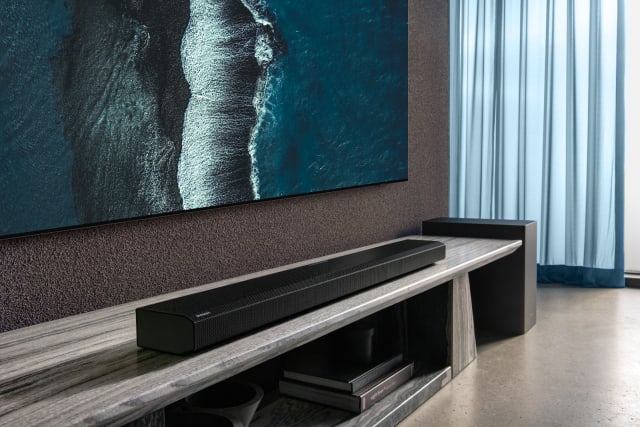
Samsung is taking things a step further on multiple fronts this year when it comes to its flagship Q-series soundbar. First, the HW-Q950A offers 11.1.4 channel surround sound with both upward- and side-firing speakers. That’s an improvement over the 9.1.4 spec on the company’s previous model, which was already the most audio channels supported in a single soundbar. Samsung also added calibration mics to the included subwoofer to better tailor the setup to your living room. Plus, all of the usual connectivity and compatibility is here: AirPlay 2, HDMI eARC Dolby Atmos, DTS:X and more. — B.S.
Best Connected Home Product
Samsung JetBot 90 AI+
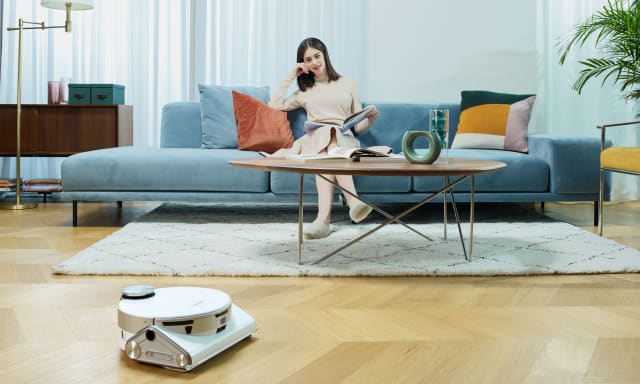
Samsung’s JetBot 90 AI+ gives the humble robot vacuum some new AI-powered smarts. It combines LiDAR and 3D sensors with object-recognition algorithms to be really good at knowing what’s on your floors. For example, the device should be able to recognize small, circular objects like cereal or pet food and vacuum them up while avoiding messes it can’t properly clean up (like an accident your dog had). All these sensors help the vacuum plan the most efficient route around a room while helping it avoid fragile objects entirely. It can even lower itself under furniture if needed. These smarts don’t seem. superfluous either — they should help the vacuum better achieve its goal of keeping your home clean. — Nathan Ingraham, Deputy Managing Editor
TP-Link Deco Voice X20
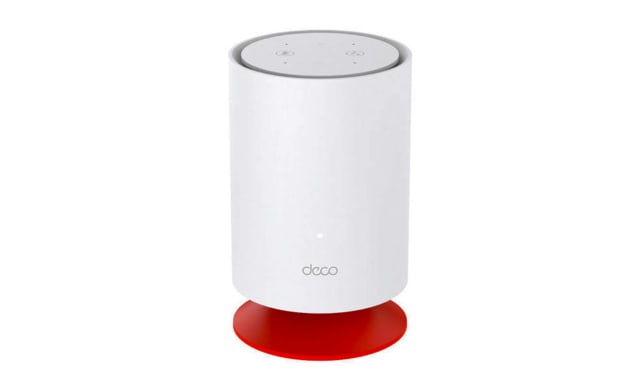
TP-Link’s new Deco Voice X20 isn’t the first router that also functions as a smart speaker. But this Alexa-powered mesh networking system works with the relatively new WiFi 6 standard, giving it a leg up in speed over similar options like Google’s Nest WiFi system. TP-Link is selling them in a two-pack, which should be enough to blanket 4,000 square feet with fast WiFi 6 coverage. At the same time, you’ll have multiple smart speakers around your house right off the bat. It sounds like an ideal starter kit for improving your WiFi and getting into the Alexa game. — N.I.
LG InstaView Refrigerator with Voice Recognition
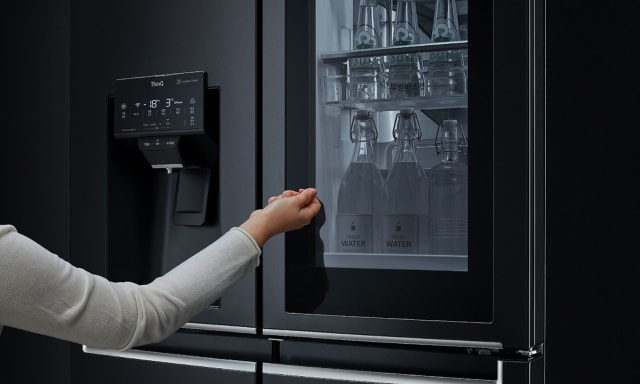
LG’s InstaView Door-in-Door refrigerators have always been some of the most high-tech on the market. The signature feature is a see-through mirrored glass panel that lights up with two quick knocks so you can take a quick peek without opening the door. This year’s model brings a few new features, most notably voice recognition. Now you can open the door just by saying “Open the refrigerator door,” which is great if you have your hands full. You can also ask for the day’s agenda or check if you’re low on ice or water. What’s more, the new fridges have UVnano tech built into the water dispenser to help reduce bacteria. — Nicole Lee, Senior Editor
Sony 360 Reality Audio speakers (SRS-RA5000 and SRS-RA3000)
Sony is ready to take on Sonos with the SRS-RA5000 and SRS-RA3000. They utilize Sony’s own 360 Reality Audio immersive audio platform, which impressed us back when the company first demonstrated it to us two years ago. The RA5000 houses seven total drivers while the RA3000 uses five, and are both capable of filling the room with ambient sound. These WiFi-connected speakers can be controlled with a Google Assistant or Amazon Alexa device, and you can use them as part of a multi-room audio system. — N.L.
Best Phone or Mobile Device
LG Rollable
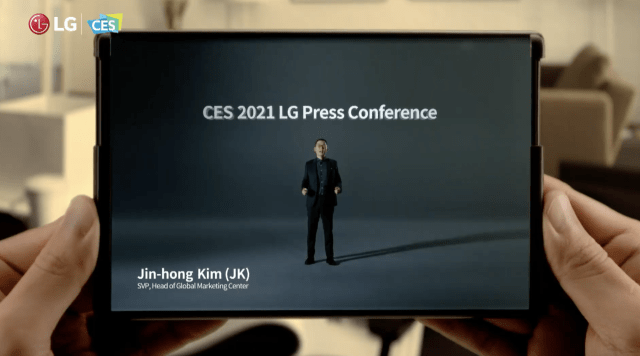
LG has sat out the foldable smartphone craze so far, and this week we got some clues as to why that is. During the briefest of teasers at the top and bottom of its CES press conference, the company officially showed off the Rollable, a smartphone with a full-size display (instead of a too-narrow one like the Samsung Galaxy Z Fold 2’s external screen) that unfurls to become a small tablet. For now, the Rollable is still shrouded in secrecy, but there are two things we know for sure about it. First, LG is committed to releasing it this year. And second, it’s perhaps LG’s best chance to get people excited about their phones again. — Chris Velazco, Senior Mobile Editor
Lenovo NEC Lavie Mini
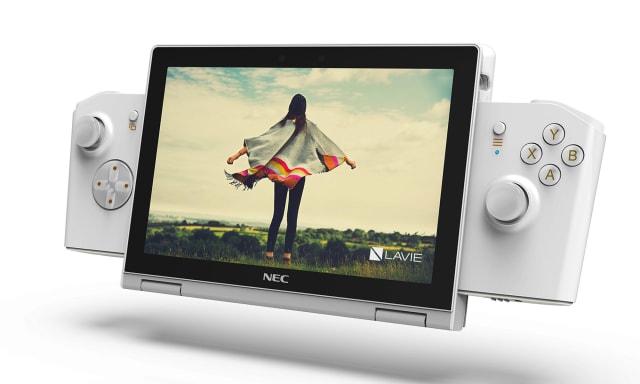
Thinking of the Lenovo-made NEC Lavie Mini as just a tiny laptop is to miss the point. Yes, you could plop it on a table and send some emails, or edit documents on its 8-inch screen. That said, the president of Lenovo Japan himself told us he nurtured this concept machine because he wanted an ultraportable PC powerful enough to play his favorite flashy games, but small enough that people could hold it in both hands and peck out messages with their thumbs. The end result: a strange, charming netbook lookalike that doubles as a game console and a huge phone. Consider us intrigued. — C.V.
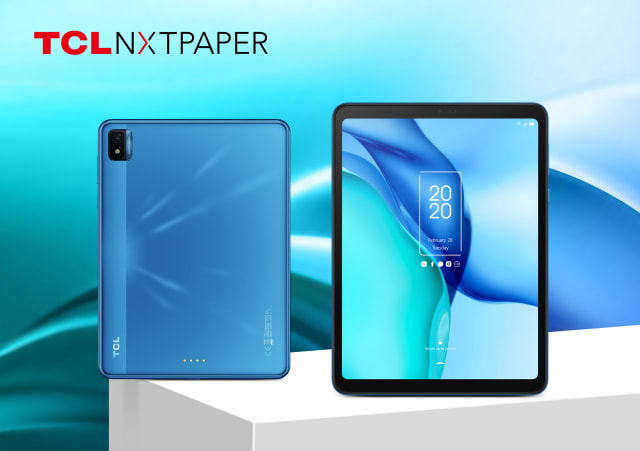
TCL NXTPAPER
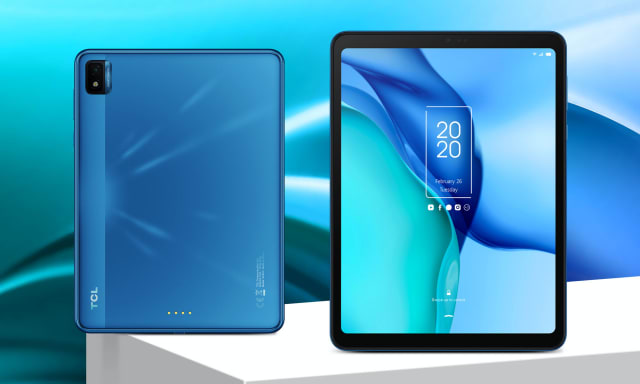
TCL teased its full-color paper-like NXTPAPER display last year, and now it’s arrived in an actual device: an 8.89-inch Android tablet awkwardly called the TCL NXTPAPER. The company claims that the low-power reflective LCD combines paper-like readability (in color!) with relatively high framerates. NXTPAPER can play videos at 30 frames per second, which is much better than the E Ink displays found in typical e-readers.
Until now, color e-readers have been a niche category, but the NXTPAPER combines this functionality with Android tablet features, including video playback, responsive web browsing and standalone apps. All told, it makes for a compelling package. — Mat Smith, UK Bureau Chief
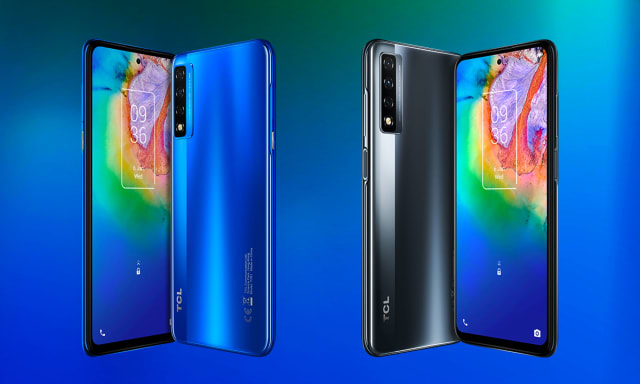
TCL 20 5G
TCL made a splash at this year’s CES, and its latest phones, while not the most headline-grabbing reveal, could help the company establish itself as a mobile force to be reckoned with. The TCL 20 5G ticks a lot of the boxes you’d hope it would. There’s a big 6.67-inch display with a cut-out front camera and HDR10 support; a Snapdragon 690 processor with 5G support; and an array of cameras around back. That includes a 48-megapixel main camera, 8-megapixel ultra-wide sensor and a 2-megapixel macro camera. In Europe, the phone will retail for €299, roughly $365. Although TCL isn’t pushing the boundaries of what smartphones can do, then, the pricing here forces us to consider, once again: Do you need a thousand-dollar smartphone? — M.S.
Best TV Product
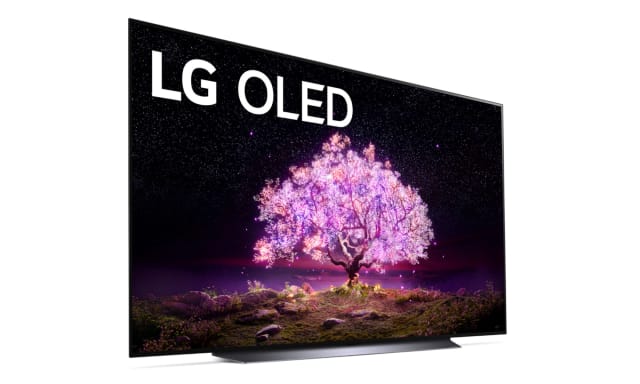
LG C1 OLED
LG’s latest OLEDs don’t change up the company’s formula too much — they still have gorgeous screens with rich colors and incredibly deep black levels — but now they feature the company’s Alpha 9 Gen 4 AI processor, which promises far better image processing. The company claims it can “analyze and optimize content” and improve picture quality on a scene by scene basis. (But of course, you can always turn that off.) The C1 OLED TVs also feature LG’s Sound Pro, which can produce a virtual 5.1.2 surround sound up-mix with its built in speakers, and they run an upgraded OS, webOS 6.0. — Devindra Hardawar, Senior Editor
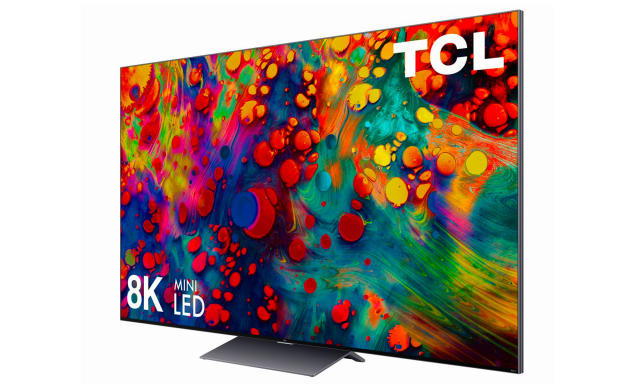
TCL 6-Series (8K)
Two years ago, TCL’s 6-Series Roku TV was among many good value-priced 4K options. Last year, TCL refreshed the lineup with mini LED technology that competitors are only adding just now. Now, TCL is betting that this is the right time to switch to shift its mainstream TV to 8K. These TVs feel like they’re bringing the future to us now, and at an “accessible” price. — R.L.
Samsung Neo QLED
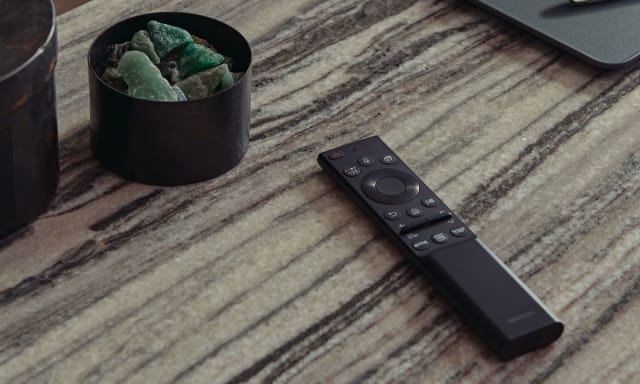
Every year, Samsung pushes LCD TVs to a new level of excellence, and for 2021 it’s adding mini LED backlighting to the package. That should give these TVs an advantage when it comes to contrast, with lights that are 1/40th the size of traditional tech. Samsung didn’t stop there either: For 2021 it rethought everything from the slim, bezel-less design to the more recyclable box your TV will come in. Google Duo, FreeSync Premium Pro and easy wireless connections to your PC come built in, as well as an advanced audio setup that combine with a matching soundbar for improved audio. And did we mention that the remote can charge its battery from sunlight? — R.L.
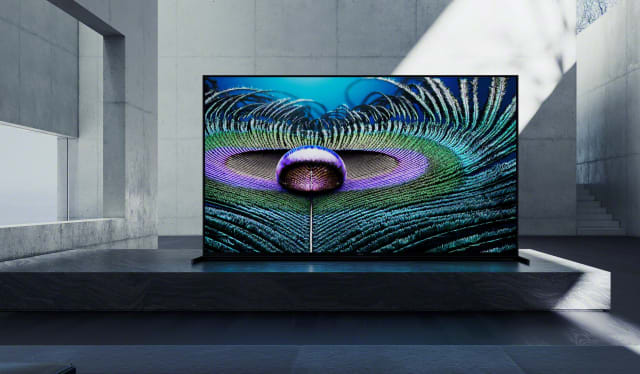
Sony Cognitive Processor XR
Perhaps more so than any other TV maker, Sony’s devotion to image processing is legendary. After all, it doesn’t matter what your display is made of if it has trouble actually rendering images. With the Cognitive Processor XR, Sony says it’s taking a step beyond “AI” image processing and closer towards the way our brains handle images. The chip gives Sony’s new Bravia XR TVs the ability to analyze a scene in real time and devote improved image quality to the sections your eyes are drawn to. It could be a face in a close-up, or the lights on a billboard as a character walks through a city. According to Sony, the Cognitive Processor XR will also be a huge help for 8K upscaling, as well as refining such a large image. — D.H.
Best Gaming Product
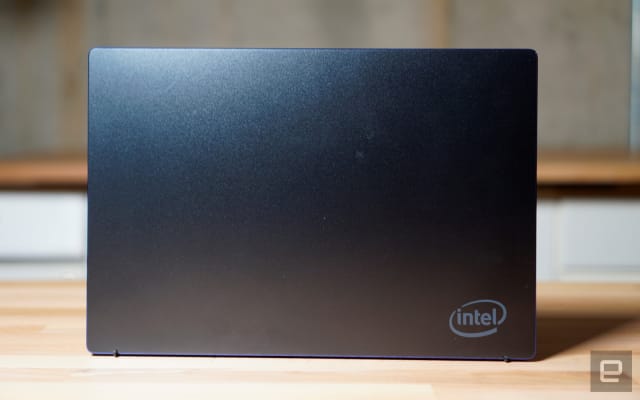
Intel Tiger Lake-H laptop chips
Intel announced a number of CPUs at CES this year, but it’s Tiger Lake-H that looks set to make the biggest impact. Rather than go for all-out power or battery life, the H series strikes an interesting balance. With a relatively conservative 35W power target, the chips focus more on high clock speeds than many cores, with the 35W line maxing out at four cores but able to hit peak turbo speeds of 5GHz. Intel believes the new chips will create a new gaming laptop segment, one that’s capable of playing games at 1080p while looking more like an ultraportable. — Aaron Souppouris, Executive Editor
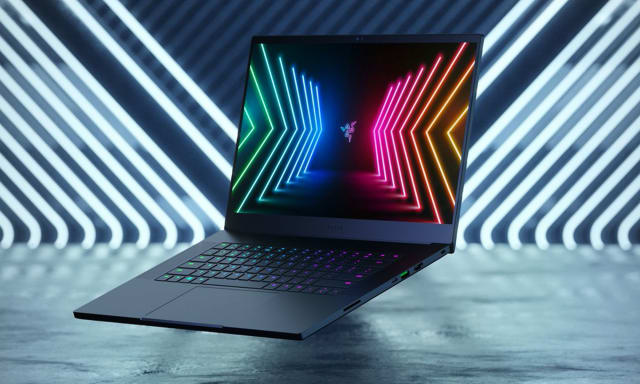
Razer Blade 15 with NVIDIA RTX 30 graphics
Razer’s Blade series has long been among the best laptops money can buy, mixing outrageous performance with, by gaming standards, subdued looks. This year, Razer’s updates are significant. NVIDIA’s latest RTX 30 series graphics will improve performance significantly over previous models, but it’s the display we’re most excited about: 1440p is a sweet spot for desktop PC gaming, and you’ll be able to pick up this year’s Blade with an ultra-fast 240Hz 1440p panel. — J.C.
AMD Ryzen 5000 laptop chips
AMD continued its resurgence in desktop chips last year with its 5000 series CPUs. At CES, the company announced a full lineup of CPUs based on the same Zen 3 cores for laptops. There’s all-out power from chips like the 5900H, which looks like it will keep pace with most desktop CPUs, but there’s also chips like the 5600U, which are designed for ultra-portables with long battery life and strong performance. In 2021, it seems the best laptops will leave all but the strongest desktop PCs wanting for power. — A.S.
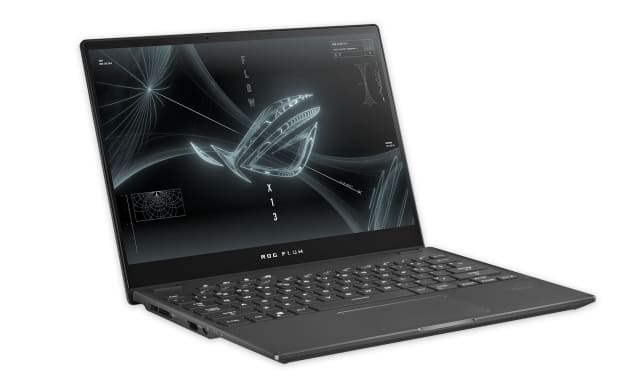
ASUS ROG Flow X13
The ASUS ROG Flow X13 is lightweight, slim and convertible, while packing enough power to run current-gen games and render art in 4K. It has an eight-core Ryzen 9 5980HS CPU and dedicated NVIDIA GeForce GTX 1650 GPU, plus a 360-degree hinge and touchscreen. However, if you need a little more juice in the tank, the laptop also supports an external dock to expand its graphics capabilities, incorporating a GeForce RTX 3080 GPU that connects directly to the CPU. At just 13 inches wide, 15.8mm thick and 2.9 pounds, the ROG Flow X13 is ultraslim and extra sleek, inside and out. — D.C.
Most Unexpected Product
Volvo Penta Assisted Docking System
If you’ve never piloted a boat, you may think the experience is like driving a car, except with a bigger wheel. But the road doesn’t actively try and push you away from your destination the way the sea does even on a quiet day. That’s why Volvo Penta’s Assisted Docking System is so compelling, since it uses the vessel’s on-board sensors and a computer to compensate for the natural variation in the water. The only thing the pilot needs to do is point their joystick in the right direction and the computer does the rest. Sure, for now this will be the reserve of bougie yacht owners, but hopefully it’ll open up to others in the next few years. — D.C.
Samsung Solar Cell Remote
It’s ridiculous that remote controls, one of the most common devices found in the home, still use AAA batteries even though most other things have switched over to rechargeable solutions. That’s what makes Samsung’s announcement of the Solar Cell Remote such a pleasant surprise — it can be powered off outdoor and indoor light, or supplemented with USB power if it’s too dark. Best of all, you won’t have to wait too long to check one out, as they’ll be included with all of Samsung’s 2021 TVs. — Kris Naudus, Buyer’s Guide Editor
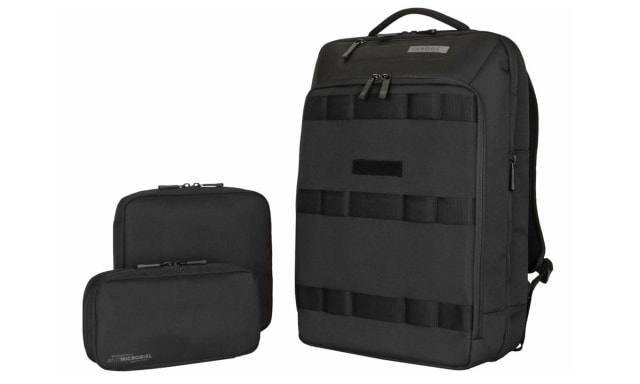
Targus 2Office Antimicrobial Backpack
“Unexpected” is such a tricky thing to define when you can find pretty much anything at CES if you look in the right corner. And while COVID-19 has been on everyone’s mind, the fact that a major luggage and accessory maker has made a product like this is still fairly surprising. The 2Office Antimicrobial Backpack has germ-killing coatings on “key touchpoints” to help cut the risk of picking up something nasty. It looks like, if this is any indication, we’re going to see companies promote how good their gear is at killing germs for years to come. — D.C.
Kohler Stillness Bath
You can outfit your home with mood lighting for movies and gaming, and now Kohler would like to see some color in your bathroom as well with its Stillness Bath. But it’s not just cool blues and soothing pinks that make this Japanese-styled tub a soothing repast, but a fog generator and even scent for that full at-home spa experience. It’s sure to cost a pretty penny, but it also may make a good alternative in a year when you can’t make it to a sauna. — K.N.
Best Sports Tech
Samsung Trainer
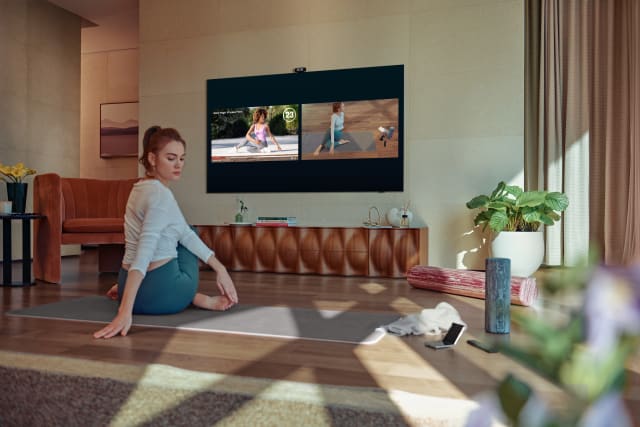
With just a TV and a camera, Samsung’s new Smart Trainer can help you maintain the proper form while working out. It’s a new feature of the company’s Health app, which debuted in its TVs last year. Using the help of a third-party camera (most any webcam will work), the app will tell you if your push-ups are straight enough or if you’re holding your plank properly. It even counts reps for you, which is great for the absent-minded among us. — N.L.
Wondercise Live Motion Matching System
Wondercise’s on-demand workout service has used wearables like the Apple Watch and Garmin devices to track your exercise form for a while now, but in 2021, the company has added hardware to the mix. They’re essentially IMU sensor straps that you can add to your existing wearable that promise to make arm-and-leg tracking even more accurate. You’ll see alerts on the video if your form is aligned with the trainer’s, and if it isn’t, it’ll prompt you to correct your stance. — N.L.
Best PC or Tablet
HP Elite Dragonfly Max
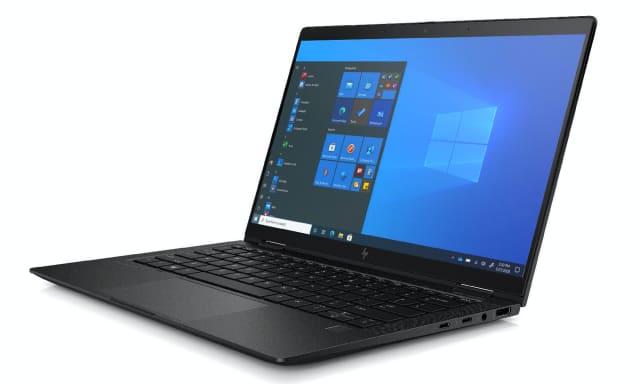
Setting aside HP’s ludicrous marketing claim that the original Elite Dragonfly was “lighter than air,” the company’s thin and light business laptop was truly impressive. With the new Dragonfly Max, HP expands the series and brings features like a 5-megapixel webcam and an embedded Tile tracker. That’s one of the sharpest cameras on a laptop yet, in one of the lightest notebooks around, too. As part of a growing trend, the Dragonfly Max’s screen also meets Eyesafe requirements for vision protection. It also comes with features like a mechanical webcam shutter and built-in privacy screen that should appeal to those looking to shield themselves from prying eyes. The Dragonfly Max shows that HP wasn’t just making a one-off gimmick with the original and is expanding the line thoughtfully with useful updates. — C.L.
Lenovo ThinkPad X1 Titanium Yoga
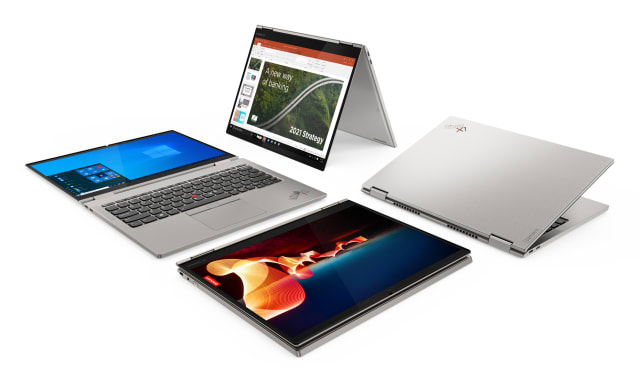
Dubbed the “thinnest ThinkPad ever” by Lenovo, the X1 Titanium measures a scant 11mm-thick and weighs just 2.5 pounds. And while it doesn’t really stray too far from the company’s ThinkPad aesthetic, it still manages to be an attractive looking notebook. As the name suggests, it relies on titanium to achieve that slim design while keeping its case sturdy. And since the X1 Titanium is a member of Lenovo’s convertible Yoga family, you’ll be able to spin its screen around in a variety of orientations. You can also look forward to a low-power 13.5-inch screen, Dolby Vision HDR, Atmos Sound and Dolby Voice to make you sound clear during conference calls. — D.H.
Unannounced ASUS device
We’re unable to reveal what this finalist is at this moment in time, but it is under consideration for a prize. Unfortunately, this means it is excluded from the People’s Choice award. We will update this post once the device has been formally unveiled.
TCL NXTPAPER tablet
It’s not often that an Android tablet grabs my attention at CES, but thanks to its unique display tech, the TCL NXTPAPER has me intrigued. It’s the first real product to use the company’s new LCD-based screen, which reflects light to create a paper-like experience and does away with backlighting altogether. Because of that, the company says it’s able to make devices that are much thinner and longer-lasting than before. Plus, NXTPAPER is capable of rendering full color, as well as animations and videos of up to 30 frames per second — something e-ink struggles with due to its low refresh rates. As an e-reader that also boasts Android apps and game or video playback, the TCL NXTPAPER is a fresh entrant in a fairly stale product category. — C.L.
Best Robot or Drone
Sony Airpeak AI drones
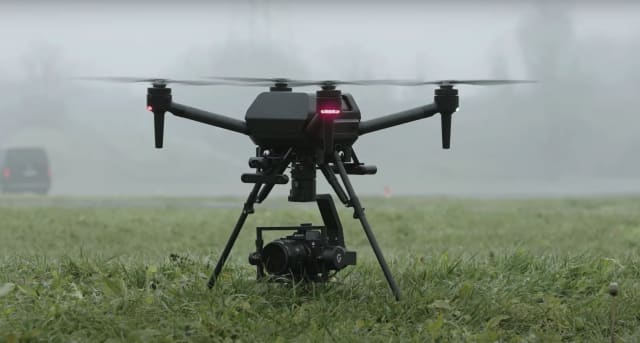
That sound? We presume it’s the thud of fist on wood from DJI headquarters. Sony, about the biggest name in consumer technology and cameras, is officially in on the drone game. The newly unveiled Airpeak platform is a business-focused aerial platform, launching this spring. The quadcopter is strong enough to carry one of the company’s Alpha mirrorless cameras yet Sony claims it’s the smallest craft to be able to do so. Sony even claims Airpeak uses AI for improved stabilization. Specific details are sparse, but it’s exciting to see a household name enter the space. — James Trew, Managing Editor
Vanguard Industries Moflin
After quite the year, we bet you could use a hug right now. Moflin might not have the required limbs, but it’s designed to give you the same good feels and is just generally adorable, to boot. Essentially, it’s an AI, emotionally capable pet laden with sensors and connectivity options, allowing it to potentially get more capable over time. Whether you just want something responsive to stroke as you read a book, or a critter to nurture and grow with you, we can see this furry little bag of joy filling that spot perfectly. Even if just so we can watch it peacefully “sleep” (charge) in its delightful egg-shaped nest. — J.T.
Samsung Bot Handy
We can all use a hand with household chores from time to time. Samsung’s prototype domestic robot does exactly that but with a mechanical gripper. The Bot Handy uses cameras mounted on its head and extendable arm to identify the material composition of items around it — including their sizes, shapes and weights — simply by looking at them. This allows the robot to consistently use just the right amount of grip force when picking up and moving objects so it won’t crack plates when loading the dishwasher or accidentally crush your delicate stemware when pouring drinks. There’s no word on when, or even if, the Bot Handy will make it into production, but we’re keeping our grippers crossed. — A.T.
Best Sustainability Product
Samsung Upcycling at Home
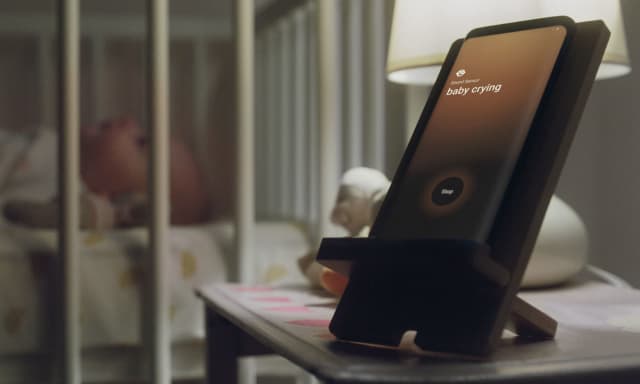
It’s a notion we’ve seen before: harnessing an unwanted smartphone’s screen, mic and processor to create a single-use device like a security camera. Samsung’s Galaxy Upcycling at Home program aims to streamline that conversion process. While details are still pending, we know that Samsung will release a software update allowing users to choose what they want their old phone to become. A baby monitor and light detector for the smart home were two of the examples showcased at CES. The apps themselves may not be the breakthrough technology here — the true innovation is that Samsung is smoothing the accessibility to those functions by building them right into its phones. — C.I.
Samsung Solar Cell Remote Control
Sometimes crucial sustainability innovations are simple and small, but done at massive scale. Starting this year, Samsung TV remote controls will have solar panels built in, allowing them to recharge by both indoor and outdoor light. (There will be USB-C charging, too.) No need to cycle through rechargeable batteries or, worse, consume and throw out the single-use variety. On top of that, the remote control is made in part from upcycled plastic bottles. Given how many TVs Samsung sells each year, the net impact of this change could be significant. — C.I.
LivingPackets The Box
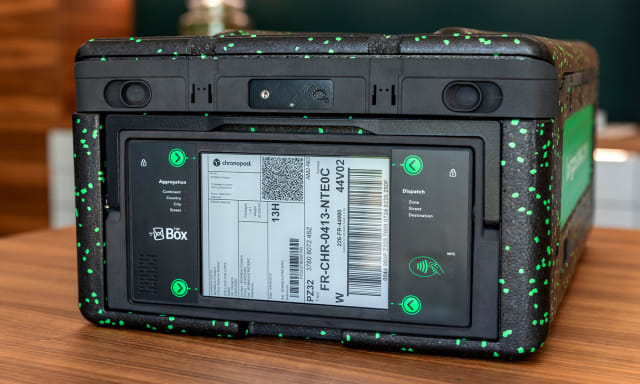
LivingPackets is developing a box. Not just any box, though: the kind that can be reused again and again. The company was nominated for an Innovation Award at CES last year. Since then, the team has developed a second-generation box with an integrated camera and sensors that measure temperature, humidity, pressure and other factors that could affect the goods inside. It also has an E Ink display, which can be used to display human and machine-readable shipping labels.
The team says that the revamped Box is rolling off the production line right now. The company is also scheduled to make an announcement tomorrow, which we believe could bring the concept closer to reality. The Box could reduce our reliance on cardboard. It’s always been a problem, but the ongoing coronavirus pandemic —which has forced many to shift their shopping away from bricks-and-mortar stores — has brought it into sharper focus. If enough retailers jump on board, LivingPackets could help society move away from boxes that are own thrown out after a single use. — Nick Summers, Senior Editor
Lasso
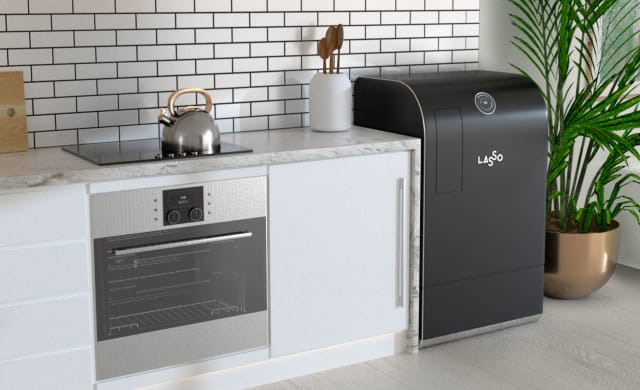
Lasso wants to radically change how the world recycles. The startup is working on a stylish appliance that accepts seven types of material, including glass, plastic and aluminum. You submit materials and a series of cameras and sensors figures out whether they’re recyclable. Approved items are then cleaned, ground down and organized into neat little boxes. Once your Lasso is full, you’ll be able to open a smartphone app and schedule a curbside collection. Because the materials have already been processed, they can skip the recycling center and go straight to companies that have the expertise to turn them into brand new products.
The team behind Lasso is working on a prototype that should be completed this quarter. It will then move into a pilot phase, which will inform the final design. Despite this timeline, we’re excited by the concept and the impact it could have on our environment. Everyone wants to recycle, but too much ends up in a landfill. That’s because the rules surrounding what you can recycle vary from place to place. Sometimes materials are contaminated, too, because they contain leftover food or have been mixed in with non-recyclable materials. Lasso could solve these issues, reduce our reliance on recycling centers and make the world a greener place. — N.S.
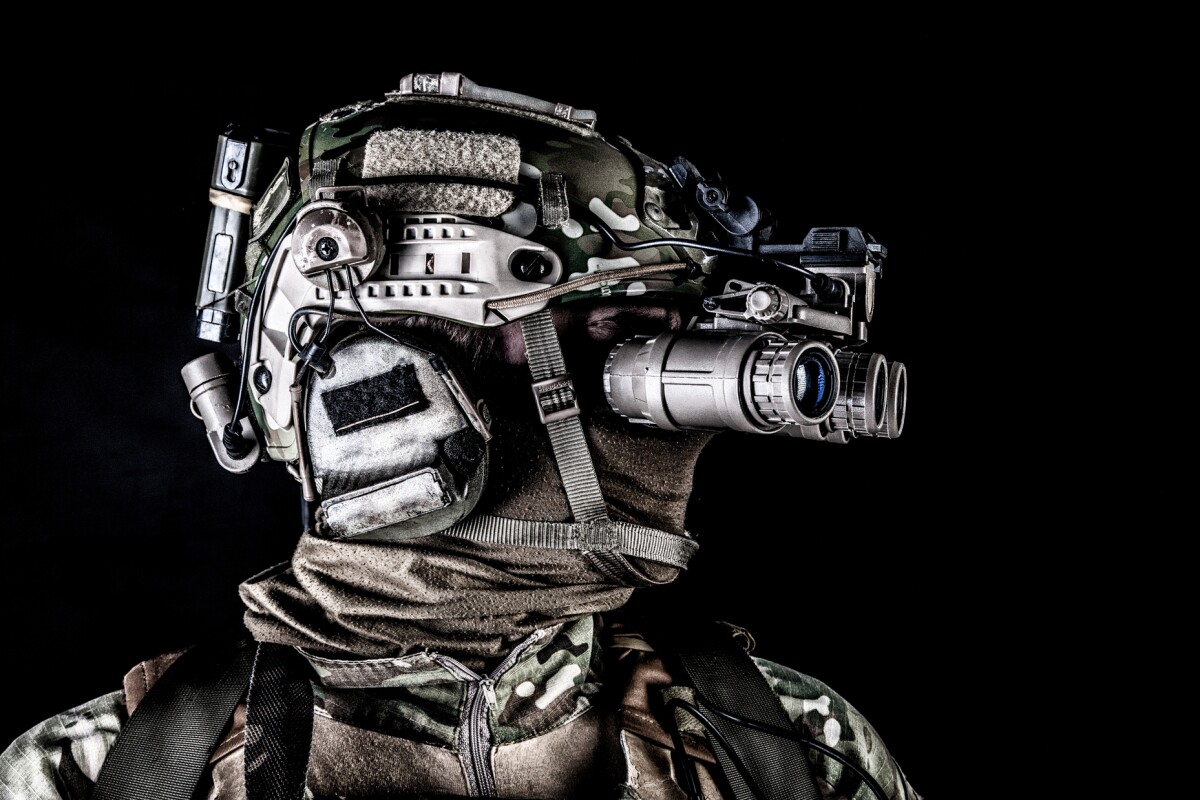
DARPA is launching a program to slim down night-vision eyewear from the bulky googles in use todayzabelin/DepositphotosVIEW 2 IMAGES
DARPA is starting a program to develop a new multispectral Enhanced Night Vision (ENVision) system for the military that replaces today’s heavy night-vision goggles with ones that are as light and compact as a pair of eyeglasses.
Night-vision devices were first developed before the Second World War, but only became practical in the 1960s. Since then, they have revolutionized warfare by effectively eliminating the cover of darkness as protection for a hostile force. Where once aircraft and ground troops were effectively nullified by the fall of night, pilots and soldiers can now operate as if it was high noon.
However, the technology is far from mature even after four or five development generations. The devices have become more sophisticated and sensitive, with the capability to see across more of the infrared spectrum as well as seeing heat signatures, but night-vision goggles remain bulky and heavy, with a field of vision that’s a third that of the naked eye.
The weight is a particular problem because the goggles are usually on a helmet mount where they stick out about five inches (12 cm) and put a great deal of strain on the user’s neck. This is made worse by the narrow field of vision that requires frequent head turns over the course of several hours.
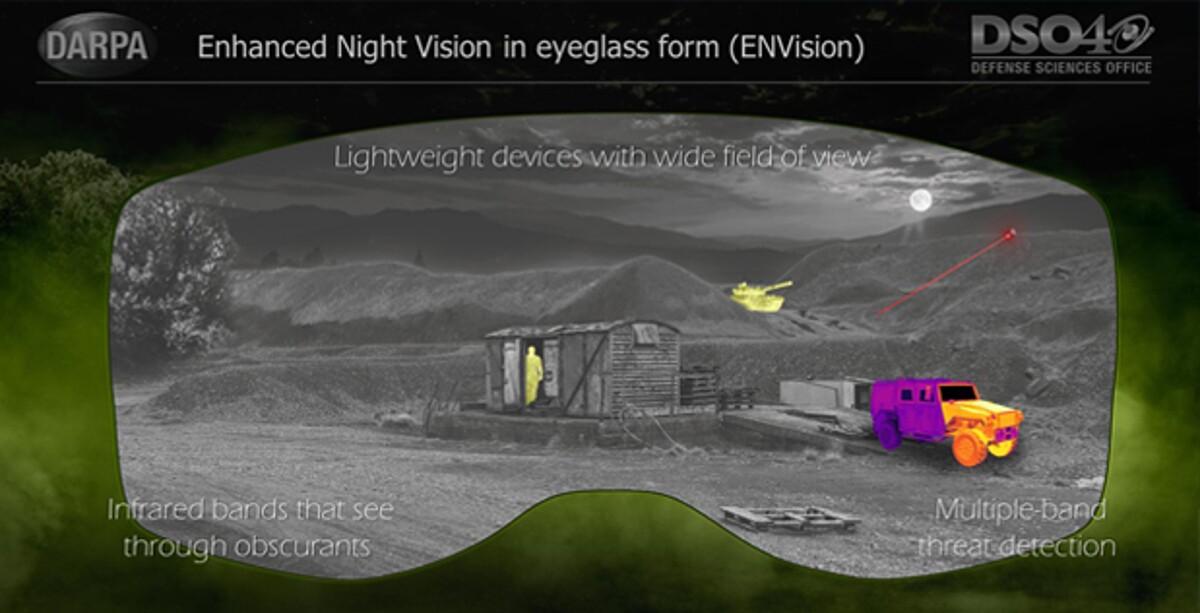
The ENVision program seeks to make night-vision eyewear with a wider field of view that is as lightweight as regular glasses
DARPA’s new ENVision program looks to use the latest advances in photonics and optical materials by the agency’s Defense Sciences Office (DSO) to replace the complex electronics with a single flat lens. This would involve using planar optics, new light detection materials, and light-matter interactions. In addition, the program will look at ways to use thin materials to directly convert photons from the infrared to the visible band of the spectrum instead of using a vision processing system.
“This will further simplify NVG systems by advancing from the multi-step conversion currently used to a single step up-conversion process,” says Rohith Chandrasekar, program manager in DARPA’s Defense Sciences Office. “Some of these processes even conserve the momentum of photons, which, in theory, could enable night vision without the need for any optics.”
DARPA is holding a webinar for the project as part of a Proposers Day on January 21, 2021.
The message ‘Hello world!’ was encoded in the DNA of the E. coli bacteria. Credit: Wikimedia Commons.
One milliliter droplet of DNA can theoretically store as much information as two Walmarts full of data servers. Naturally, many scientists see the blueprint of life as the ultimate medium for storing information — but that’s a bit easier said than done.
Previously, scientists encoded the entire book The Wizard of Oz, images, and even GIFs into the iconic double-helix “twisted ladder,” which they could then decode.
Now, a team at Columbia University in New York have taken things to the next level. Rather than storing information in DNA molecules isolated in the lab, the scientists used gene-editing tool CRISPR to encode and store information inside living bacteria.
DNA kept outside cells tends to degrade fast, which is exactly what you don’t want to happen to your precious data. Bacteria, on the other hand, are remarkably resilient in the face of harsh conditions and can adapt to changing environments. Essentially, the bacteria act as a buffer between the information stored in its DNA and the harsh environment.
The researchers inserted specific DNA sequences of the four bases — adenine (A), cytosine (C), thymine (T), and guanine (G) — that encode binary data (the 1s and 0s that computers use) into the cells of E. coli bacteria. Different arrangements of these four bases can be used, for instance, to encode different letters of the alphabet, which is how the scientists managed to store the 12-byte text message ‘Hello world!’ in the bacterial cells.
Get more science news like this…
Join the ZME newsletter for amazing science news, features, and exclusive scoops. More than 40,000 subscribers can’t be wrong.
The message was read by extracting and sequencing the bacterial DNA. Obviously, this is all a much more laborious and prone to error process than encoding 1s and 0s on a flash or hard drive. However, DNA storage will probably never be meant for average digital users. Instead, it might see use when long-term storage of important information is required, such as archives, even for up to thousands of years.
“We demonstrate multiplex data encoding into barcoded cell populations to yield meaningful information storage and capacity up to 72 bits, which can be maintained over many generations in natural open environments. This work establishes a direct digital-to-biological data storage framework and advances our capacity for information exchange between silicon- and carbon-based entities,” the researcher wrote.
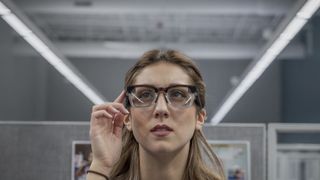
Augmented reality and wearable tech developer Vuzix has announced its newest pair of smart glasses at CES 2021, and they look set to finally solve one of the biggest issues with smart glasses in general: their appearance.
Powered by microLED technology, Vuzix has utilised ultra small display projectors fitted neatly into both sides of the glasses to make the product look as wearable as possible – and it may have paid off. Unlike other smart glasses we’ve seen, the American company seems to have developed a genuinely fashionable piece of wearable technology (as reported by The Verge).
Seriously, apart from some overly-thick temples, the Vuzix smart glasses could pretty much pass for regular eyewear. That’s all thanks to those microLED displays, which replace the internal projectors one would usually expect to find in glasses of this type, and come as a result of the company’s partnership with Chinese screen developer Jade Bird Display. On show at CES were the first of a variety of wearable displays and glasses, according to the two companies.
So, what can they do? Well, similar to Google Glass, Vuzix’s smart glasses are more of a heads-up display than true augmented reality, and are designed to mirror information from a paired smartphone. That means the glasses project a stereoscopic image onto the interior glass of both lenses to present the illusion of a 3D object in front of the user. Compatible smartphone software will send signals to the glasses to create virtual images of maps, data sets, call information, and so on. RECOMMENDED VIDEOS FOR YOU…CLOSEhttps://imasdk.googleapis.com/js/core/bridge3.433.1_en.html#goog_893762464Volume 0% PLAY SOUND
(Image credit: Vuzix)
The smart glasses will come with stereo speakers and noise-cancelling microphones to make your voice sound crisper and block out the bustle of your surroundings, while Wi-Fi support will come built-in, alongside optional 4G LTE. There’ll also be iOS and Android-supported gesture controls to navigate companion mobile apps by simply using the sides of the glasses.
The capabilities of the glasses themselves are nothing new, but Vuzix should be praised for squeezing it all into such a neat – dare we say stylish – package. It’s also worth noting that the company isn’t targeting the product at the mass consumer market in the same way that other smart glasses have been in the past.
Instead, Vuzix’s smart glasses are intended for the workplace, meaning many of its features have been geared towards effectively improving corporate, medical, retail and materials management environments.https://www.youtube.com/embed/XabpNlxq0oQ
A waning novelty
The redirection for the company comes as the interest in AR and VR technology dissipates with consumers. Much in the same way 3D TVs enjoyed a brief period of hysteria upon their initial launch, companies have been slow to adopt – and consumers slow to embrace – genuinely worthwhile VR technologies outside of gaming.
That’s the reason the lines are quiet on products like the Microsoft HoloLens, Magic Leap One AR goggles and, of course, a new generation of Google Glass – it’s just not a technology that people see as having practical, real-world applications beyond the vocational benefits it can provide (to a doctor, for example).
Still, the major players in tech are still hoping to solve the consumer smart glasses puzzle. Amazon has thrown its hat in the ring with its Echo Frames, Facebook is working on a glasses project with Ray-Ban, and Apple – of course – remains the subject of AR headset rumours.
In any case, Vuzix’s latest efforts seem primed to successfully function as practical, stylish workplace companions in the near future. The smart glasses don’t yet have a name, price or release date – bear in mind its previous Blade model cost $1,000, which converts to around £730 / AU$1,300 – but rumours are swirling that they’re bound for a mid-2021 arrival.
Tesla Inc TSLA 4.72% occasionally has themed events in which the company reveals details on its progress and plans for the future.
In 2019, Tesla held an autonomy day where the company talked about its progress on Full Self-Driving and first detailed its plans for a driverless robotaxi service.
In September 2020, Tesla held a battery day. CEO Elon Musk and others at the company talked about Tesla’s future battery technology, the new 4680 battery cells and Tesla’s plans to reduce battery costs by up to 50%.
Tesla’s stock is up about 92% since battery day.
Now Musk has teased Tesla AI day on Twitter. This came in response to a fan asking about the capabilities of Tesla’s Dojo supercomputer, a computer expected to help train Tesla’s self driving software.
★★★★★ “9 out of 10 trades have made me money!” – Cameron W. Houston, TX
We sift through this volatile market for consistent trades so you don’t have to. Get Benzinga Options: Starter Edition to follow Benzinga’s high-conviction options trades.
If Dojo is as powerful as Tesla expects, it will be one of the most powerful computers in the world.
Benzinga’s Take: It’s unclear what information would be shared at the event. Musk expects Tesla vehicles to reach level five self driving in 2021. If this occurs, it would mean a Tesla could drive from point A to point B without a human in the car.
Much remains unknown about Tesla’s upcoming Dojo supercomputer.


 Future Publishing via Getty Images



 Engadget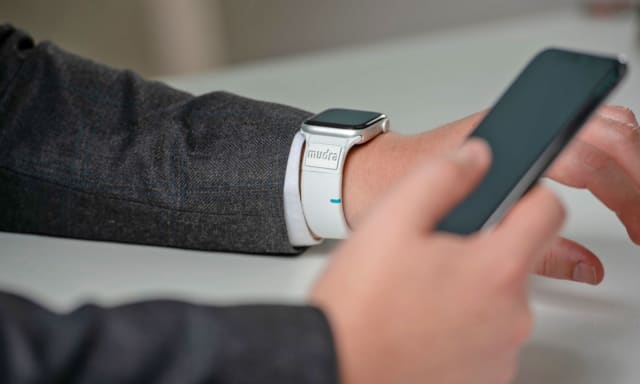









 by
by 



 Bruce's Blog