In the video, a regular image taken on a microscope is superimposed on a computer-generated digital image. This image processing method holds promise to not just cut down costs but also automatize medical image analysis and reveal details that the eye can sometimes miss. (Credit: Getty Images)SHARE THIS ARTICLE
Researchers have developed a deep-learning algorithm that can de-noise images to reveal otherwise invisible details.
To enter the world of the fantastically small, the main currency is either a ray of light or electrons. Strong beams, which yield clearer images, are damaging to specimens. On the other hand, weak beams can give noisy, low-resolution images.
“Images taken with low-powered beams can be noisy, which can hide interesting and valuable visual details of biological specimens,” says Shuiwang Ji, associate professor in the department of computer science and engineering at Texas A&M University. “To solve this problem, we use a pure computational approach to create higher-resolution images, and we have shown in this study that we can improve the resolution up to an extent very similar to what you might obtain using a high beam.”
Ji adds that unlike other de-noising algorithms that can only use information coming from a small patch of pixels within a low-resolution image, their smart algorithm can identify pixel patterns that may be spread across the entire noisy image, increasing its efficacy as a de-noising tool.
Instead of solely relying on microscope hardware to improve the images’ resolution, a technique known as augmented microscopy uses a combination of software and hardware to enhance the quality of images. The image processing method holds promise to not just cut down costs but also automatize medical image analysis and reveal details that the eye can sometimes miss.
Currently, a type of software based on a machine-learning algorithm called deep learning has been shown to be effective at removing the blurriness or noise in images. These algorithms can be visualized as consisting of many interconnected layers or processing steps that take in a low-resolution input image and generate a high-resolution output image.
In conventional deep-learning-based image processing techniques, the number and network between layers decide how many pixels in the input image contribute to the value of a single pixel in the output image. This value is immutable after the deep-learning algorithm has been trained and is ready to de-noise new images. However, Ji says fixing the number for the input pixels, technically called the receptive field, limits the performance of the algorithm.
“Imagine a piece of specimen having a repeating motif, like a honeycomb pattern. Most deep-learning algorithms only use local information to fill in the gaps in the image created by the noise,” Ji says. “But this is inefficient because the algorithm is, in essence, blind to the repeating pattern within the image since the receptive field is fixed. Instead, deep-learning algorithms need to have adaptive receptive fields that can capture the information in the overall image structure.”
To overcome this hurdle, Ji and his students developed another deep-learning algorithm that can dynamically change the size of the receptive field. In other words, unlike earlier algorithms that can only aggregate information from a small number of pixels, their new algorithm, called global voxel transformer networks (GVTNets), can pool information from a larger area of the image if required.
When they analyzed their algorithm’s performance against other deep-learning software, the researchers found that GVTNets required less training data and could de-noise images better than other deep-learning algorithms. Furthermore, the high-resolution images obtained were comparable to those obtained using a high-energy light beam.
The researchers note that their new algorithm can easily be adapted to other applications in addition to de-noising, such as label-free fluorescence imaging and 3D to 2D conversions for computer graphics.
“Our research contributes to the emerging area of a smart microscopy, where artificial intelligence is seamlessly integrated into the microscope,” Ji says. “Deep-learning algorithms such as ours will allow us to potentially transcend the physical limit posed by light that was not possible before. This can be extremely valuable for a myriad of applications, including clinical ones, like estimating the stage of cancer progression and distinguishing between cell types for disease prognosis.”
The paper appears in the journal Nature Machine Intelligence. Funding came from the National Science Foundation, the National Institutes of Health, and the Defense Advanced Research Projects Agency.
AppleInsider reviews the Oura Ring, a fashionable wearable that tracks key sleep measurements and can alert you to subtle health or bodily changes.
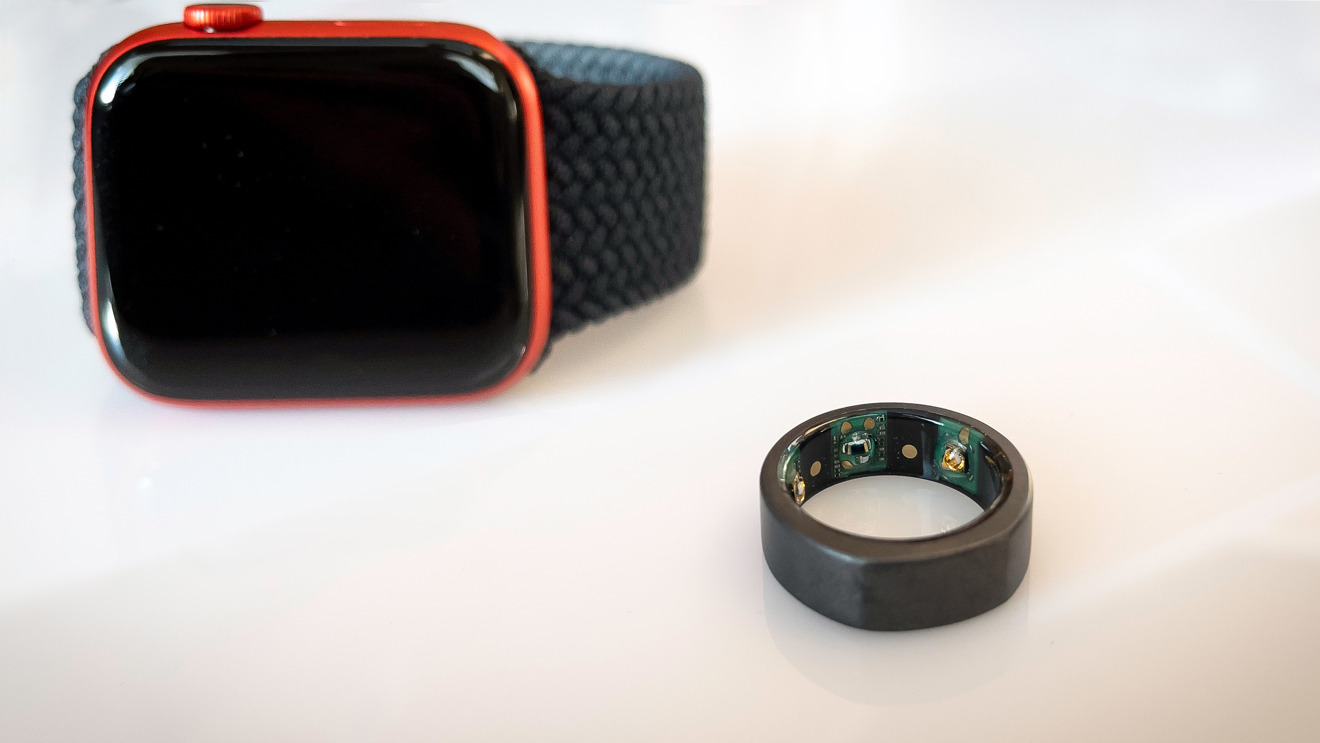
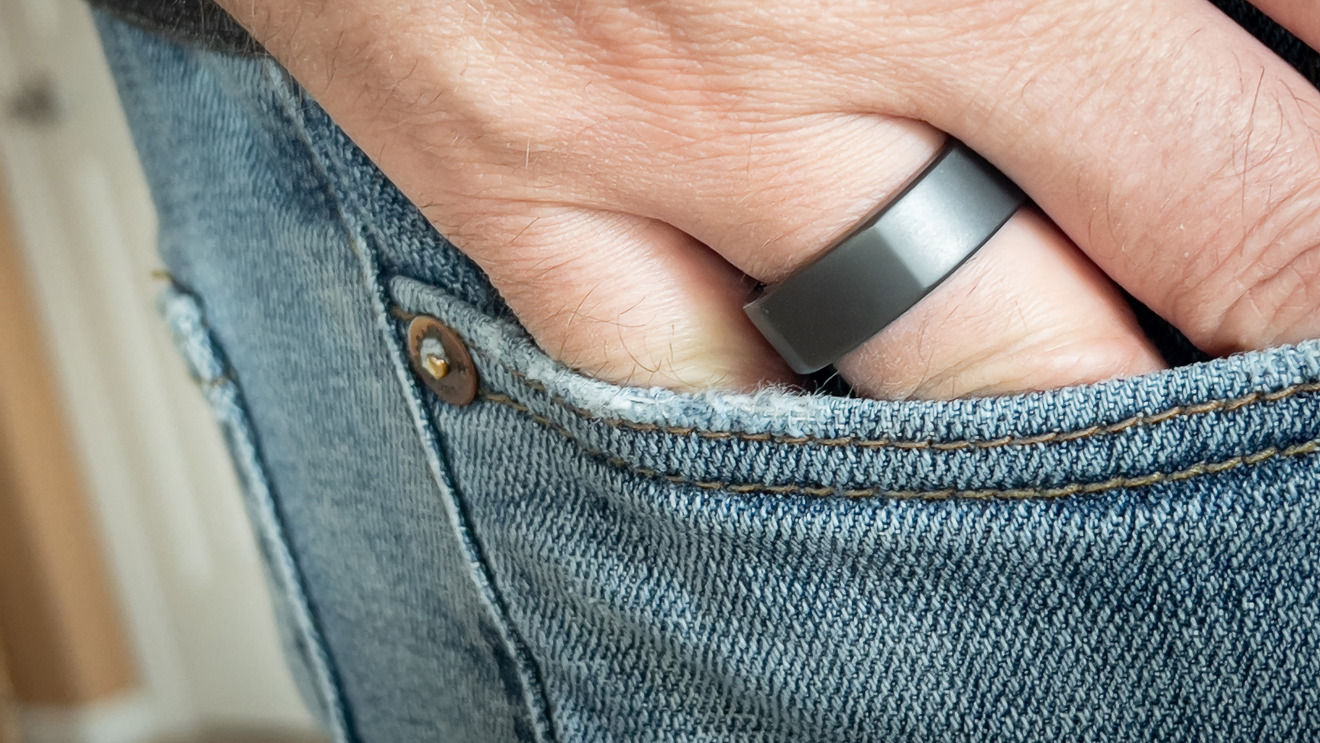
The Oura Ring is a sleep, readiness, and activity tracker that slips on your finger. You can wear it day and night, while you’re working, swimming, or bathing. It isn’t much larger than a regular ring, and nobody will suspect it’s a piece of advanced technology.
Oura doesn’t keep tabs on as many daytime measurements as the Apple Watch, but it is a good complement to Apple’s wearable. For starters, it has better sleep tracking. It also has more consistent heart-rate variability (HRV) sensing, something we’ll come back to later in this review. Perhaps best of all, the companion iPhone app wraps your data in a friendly and easy-to-understand package.
Oura Ring: Styles, buying, and setup
You can order Oura in one of two different styles — Heritage and Balance — and various colors. The model pictured in this review is Heritage Stealth, a titanium build with one flattened edge and a dark-gray matte finish. The main difference with the Balance design is that it has a single point instead of an entire flat edge. Both versions have the same technology and feature set, so your decision comes down to which design you like best.
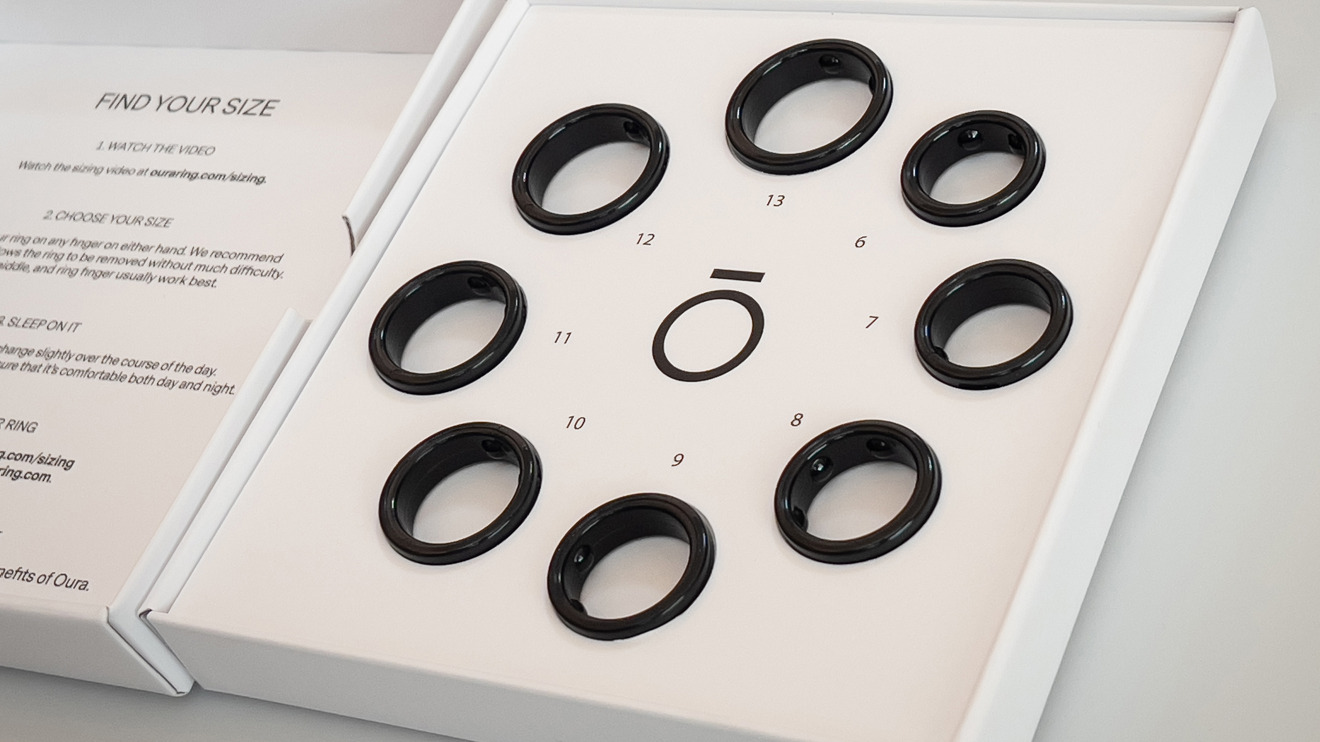
When you order a ring, the company first ships you a kit that includes plastic rings in different sizes. Once you find the sizing ring that fits, Oura recommends wearing it for a full day before confirming. This is because your finger’s size can change subtly under different conditions.
The kit Oura sends you to determine your ring size
The sizing kit was accurate for me. The plastic sizer that fit my ring finger led to a corresponding ring that fits perfectly. Oura lets you skip the sizing kit if you think you already know your size, but we only recommend that if you’ve already worn an Oura Ring. It might be a little different from the size you wear for a standard, non-tech ring.
After you’ve entered your size, the company ships your ring. Oura uses a size-specific charger, included with your purchase. The company says the ring’s battery lasts up to a week. Our review unit has held up to that. We’ve only dropped it onto a charger once every three or four days when it still had around 50% charge remaining.
Oura Ring: Sensors
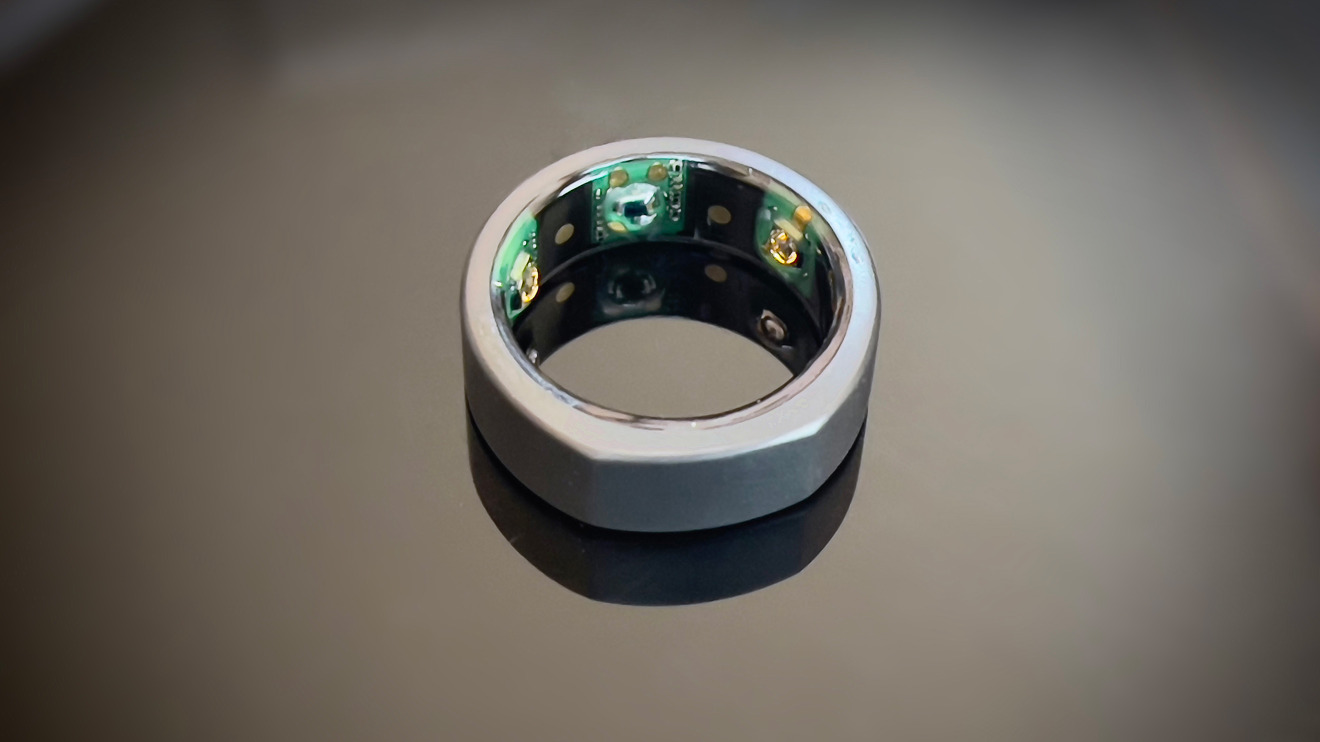
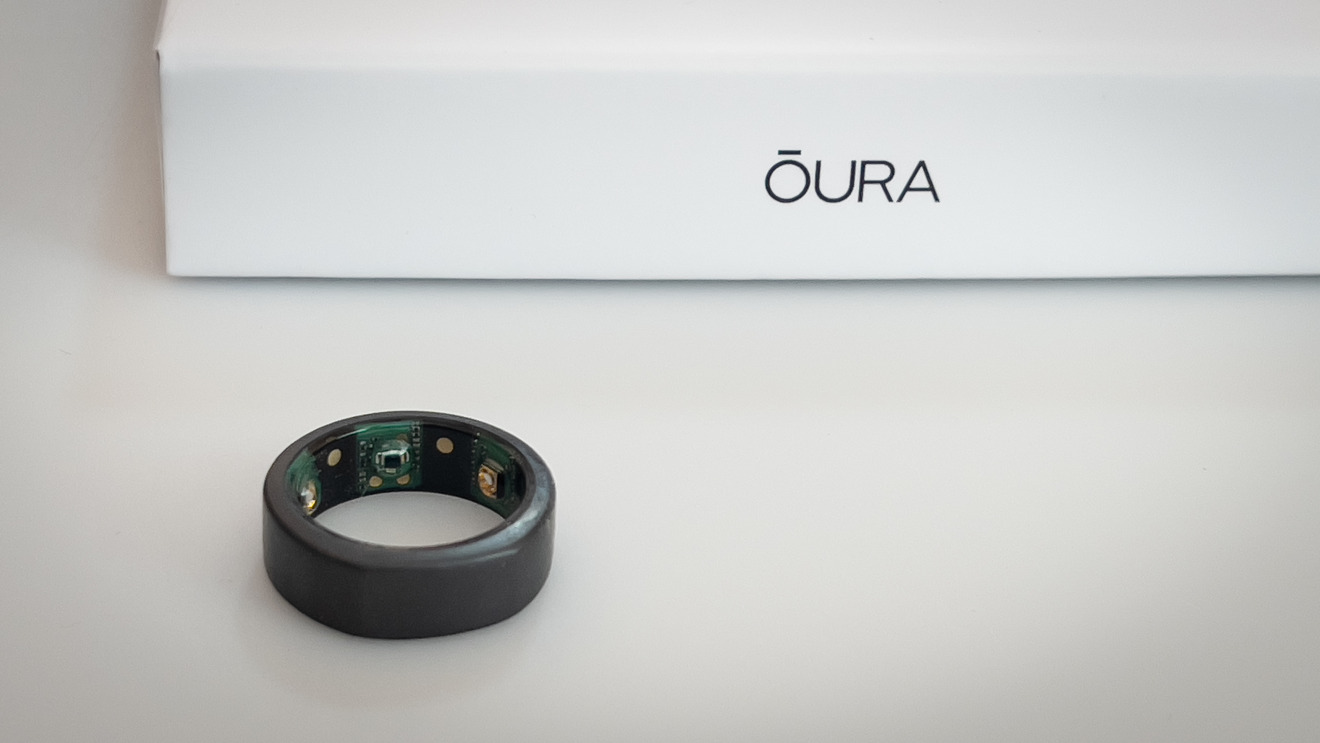
The Oura Ring has three categories of sensors
Oura squeezed several sensors into this little gadget. These include infrared sensors for heart rate and respiration, a sensor for body temperature, and a 3D accelerometer for movement.
The infrared sensors track your heart rate, HRV, and respiration. It uses LEDs on either side of the finger, leading to a more accurate reading than single-sided sensors on other wearables. The temperature sensor monitors your skin at night and can detect changes as small as 0.1 degrees Celsius. The accelerometer detects your nighttime movement. When combined with algorithms that identify your sleep stages, it can tell you how long you spent in deep, light, and REM sleep. It can also tell you when your sleep was disrupted and you woke up.
What do you learn from Oura?
Oura tracks some fundamental daytime activities, including steps, equivalent walking distance, and calories. However, we consider that more of an add-on than a primary selling feature. The Apple Watch and other dedicated fitness trackers do a better job with that.
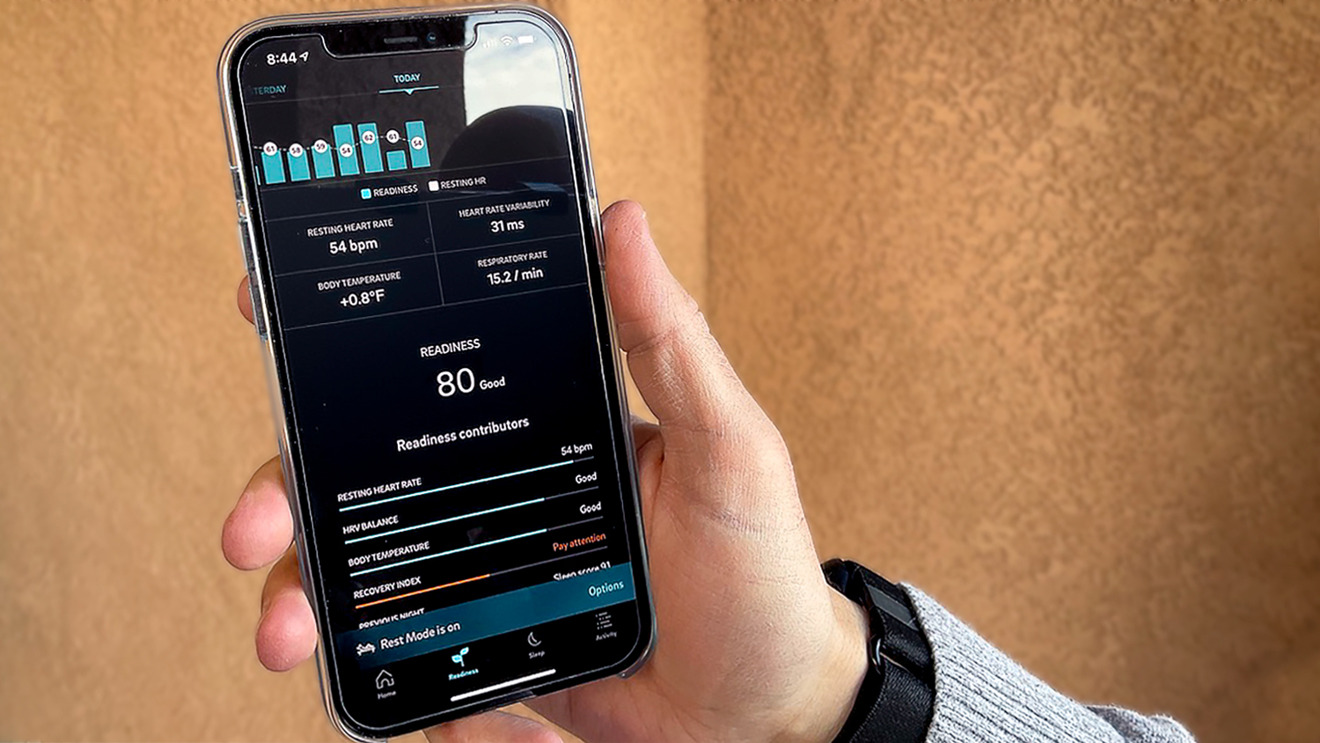
The reason to get Oura is nighttime tracking that can point to how healthy you are and determine how you feel throughout the day. Each of the three scores — Readiness, Sleep, and Activity — has its own tab inside the app. You can browse each tab to drill down into the finer details. Those metrics include things like HRV, resting heart rate, body temperature, and REM sleep. It presents all of it in graphs that show what happened that day and how your metrics are trending over time.
The Oura app
Oura includes those trends when figuring out your score. If you’ve been stressed or are getting sick, it may look at a combination of higher resting heart rate and temperature and tell you something may be going on with your body. It isn’t a doctor or fortune teller, but when it sees data suddenly changing, it can alert you that something may be up.
You can trigger many of Oura’s measurements during the day by choosing the Moment option. Moments are good for meditation, breathing exercises, or even a quick nap. As long as you remain still and choose long enough a session, it will record your HRV, skin temperature, and resting heart rate. It will also trigger these measurements automatically during the day if it senses a lengthy period of stillness.
We love the app’s presentation. You don’t need to understand the data to benefit from it, as the app gives you personalized evaluations and plain-language evaluations and recommendations. Yet, the more refined data is there if you want to learn about it.
Oura Ring: How it can help you
Oura Ring and Apple Watch are more complements than competitors
The ring and app don’t pretend to do the work for you. Like with any fitness tracker, it would be best to view Oura Ring as a starting point. It’s on you to make changes that will give you more restful sleep and readiness to take on the day.
Before using Oura, I knew next to nothing about most of its statistics. Now, after more than a month of use, I monitor them regularly and try to figure out what may have changed if something is off.
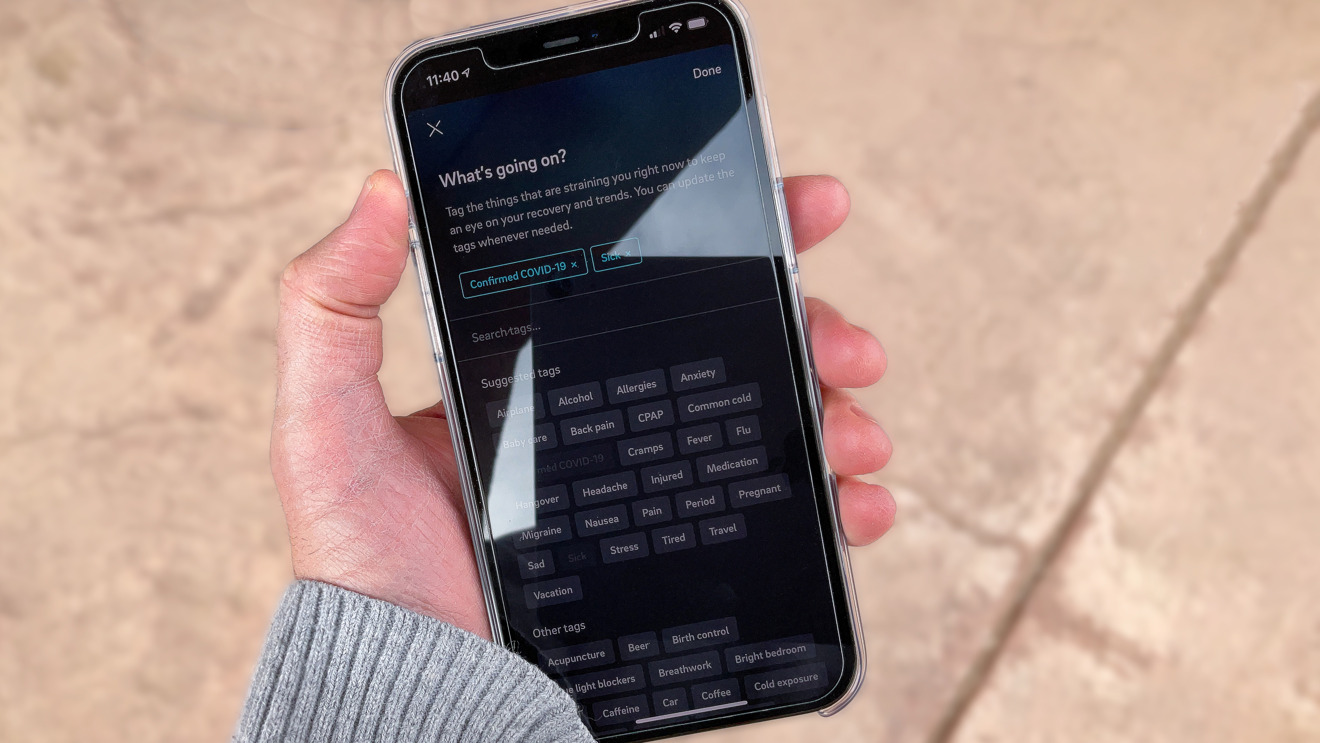
For example, I recently tested positive for COVID-19. Before I’d noticed any symptoms, the Oura app had told me that several of my stats were looking off. These included a raised body temperature, HRV rising later in the night than usual, and an increased resting heart rate. My Readiness score went down sharply. Within a day or two, I felt a little under-the-weather, and when I took a Covid test later on, I found out I was positive.
Keep in mind Oura isn’t a Covid-sensing device. It doesn’t test you, and it won’t explicitly tell you that you have it. My case merely illustrates that the ring can let you know about bodily changes that may indicate an oncoming illness.
Oura is a stylish wearable that doesn’t look like a tech product
The app lets you add pre-written or custom tags for any given day. Tags help you connect the dots between your lifestyle and Oura’s results. You can look at your body’s trends over time and figure out what may have influenced the changes.
Oura has also inspired me to learn more about HRV — the variability in time between heartbeats — and how to raise it. Studies point to a correlation between a higher HRV and a longer lifespan. Likewise, a low HRV can correlate with a greater risk for cardiovascular disease.
There’s no single bullet-proof method to raise your HRV. Things that may help include exercise, a healthy diet, meditation, and not eating or drinking before bedtime. Again, the app doesn’t tell you what to change, but it can point to trends over time. It’s up to you to do something with that.
Tags help you keep track of what may be affecting bodily changes
The Apple Watch measures HRV as well. However, apart from when you use the Breathe app, it only records HRV at sporadic moments. You need to be almost perfectly still to log an HRV recording on any current consumer device. That’s why Oura primarily measures it at night, and the Apple Watch doesn’t monitor it much at all.
Apple’s wearable is better at daytime fitness and health tracking, while Oura is better at tracking your sleep and how your nighttime stats could influence your day. Although the two devices have some overlap, they complement more than they compete with each other.
Is Oura worth it?
Oura Ring starts at $299
Oura Ring costs a pretty penny, starting at $299. It’s only going to be worth it if you’re ready to begin a journey of improving your sleep and lifestyle. You’d be wasting your money to use it passively, without any behavioral changes. However, we found the process to be fun. It inspires curiosity. It can set you on a self-improvement path that’s more enjoyable than stressful.
For those who want to learn more about their sleep, health, and what affects it, Oura is one of the best wearable-tech purchases you can make. HRV could be one of the most important ways to monitor in your body, and it combines with the ring’s other data to paint a broader picture of your health and well-being. It isn’t hyperbolic to say the Oura Ring can potentially be a life-changing purchase.
Pros
Can inspire lifestyle changes that make you healthier
App informs you in a friendly and easy-to-digest way
Quality HRV tracking
Fashionable
Weeklong battery life
Much more in-depth sleep tracking than Apple Watch
Cons
Daytime activity tracking is rudimentary
No daytime HRV measurements unless you sit perfectly still
$299 and up price isn’t cheap
Rating: 4.5 out of 5
Where to buy
You can only buy the Oura Ring from the company website. It starts at $299, and ranges all the way up to $999 for a diamond-clad model.
We include products we think are useful for our readers. If you buy through links on this page, we may earn a small commission. Here’s our process.
Comfortable and cozy in bed, you’re on the verge of drifting off to sleep when suddenly your partner lets out an enormous snore, jolting you back awake. They sleep on, oblivious to your frustrated wakefulness.
Snoring is fairly commonTrusted Source, so this might be a familiar story for many people. If this happens only occasionally, you might find it more of a minor annoyance.
When you sleep with a regular snorer, however, you might have a hard time falling asleep most nights, or wake up throughout the night and struggle to get back to sleep. If only you could push a mute button on their snoring!
Well, it’s not exactly a mute button, but Mute, a nasal device from RhinoMed, may help your partner (and you) get some relief from snoring.
Snoring often doesn’t wake the snorer, but it can still affect sleep quality. It can also suggest underlying health conditions, including obstructive sleep apnea, chronic nasal congestion, or a deviated septum. Read on to learn more about how Mute can help.
Here’s a quick look at the potential benefits and drawbacks of Mute.
Pros
Mute has FDA approval. The Food and Drug Administration (FDA) has approved the Mute Snoring nasal dilator. This means the organization has determined it works as intended and offers benefits that outweigh any potential risks.
It’s small and portable. With a Mute dilator, you won’t have to worry about a clunky device on your face during sleep. The small size also makes it more convenient to take with you.
It comes in different sizes. The Mute nasal dilator comes in small, medium, and large. You can also adjust each dilator to get a better fit. Video tutorials on the Mute website offer instructions on sizing and using the device correctly.
You can try it without spending too much money. Interested in seeing whether Mute actually helps your snoring? Want to make sure you get the right fit? Mute offers a smaller trial pack with one dilator in each size for just $20.
Cons
It doesn’t last forever. Mute is reusable, but not indefinitely: RhinoMed recommends using each Mute device no more than 10 times. This might work well for people who only snore sometimes, due to allergies, illness, or pregnancy, for example. Chronic snorers may prefer a long-term solution that doesn’t require regular replacement.
It might fall out in the night. If the device doesn’t fit exactly right, it could fall out when you turn over. What’s more, although Mute is designed to be worn up to 10 times, some customers said the device stretched and began to fall out after the third or fourth night.
It goes inside your nose. You might need some time to adjust to the feel of something in your nose as you sleep. The device could also irritate delicate nasal skin and cause discomfort.
Mute is an internal nasal dilator, which is a device you place inside of your nose to keep your nasal passages open as you sleep. This helps airflow more easily through your nasal passages, making it easier to breathe through your nose. When you can breathe through your nose without a struggle, you may notice reduced snoring, or even none at all.
The device itself is made of soft polymers, a flexible material often used to construct medical devices. Though the thought of sticking something in your nose may put you off at first, it’s designed to feel comfortable. Once you insert it correctly, you may not notice it much at all. Ribbed paddles help keep it in place and cushion sensitive nasal walls.
It comes in three sizes to ensure a comfortable fit, but you can customize the device by adjusting the ribbed paddles on either side. RhinoMed offers a sizing guide to help you determine your correct size.
Snoring happens when the tissues in your throat relax to the point of blocking your airway. As you try to breathe through this narrow airway, the tissues in your throat vibrate, causing snoring.
If you have trouble breathing through your nose for any reason — congestion, narrower nasal passages, or a deviated septum — you’re more likely to snore.
While snoring may not keep you awake, it can still interfere with the quality of your sleep. People who snore regularly often wake up feeling tired. Daytime tiredness can affect your mood and ability to concentrate, which can, in turn, cause difficulties at school, work, or in other aspects of your daily life.
Even if you don’t notice any of these difficulties, snoring can cause distress for any sleeping partners you have and prevent them from getting a good night’s rest.
HEALTHLINE QUIZMeet The Mattress Of Your Dreams With Our Matching Quiz
Our experts tested and approved the highest quality mattresses to narrow down the styles that best match your sleep preferences. Take a short quiz to discover restful sleep.GET STARTED
You’ll receive instructions for use when you purchase a Mute dilator, but these steps can give you an idea of how it works:
Hold the dilator between your thumb and first finger so the “arms” (which look like little loops) face you. When you hold it correctly, the paddles will point away from you.
Carefully insert the dilator in your nose, arms first. It helps to tilt the bridge of the dilator up while inserting it. If you can’t fit the arms and paddles into your nose, the dilator is too large for you. You can open up the loops of the dilator to get a better fit. Each dilator has three different adjustments.
To make sure you’ve put the dilator in properly, gently adjust your nostrils over the paddle. The paddles should gently rest against the inside of your nose. When the device is in your nose properly, the bridge will rest at the tip of your nose, across your nostrils. A gap between your nose and the bridge of the dilator means you need a smaller size.
Try removing the dilator. It shouldn’t drop out easily. If you’re using the right size, you’ll feel some resistance. This helps keep it in securely.
Always wash your hands before and after inserting the dilator.
After removing the Mute dilator, use mild soap and warm water to clean it. Rinse clean under running water and dry completely.
Nasal dilators such as Mute may not work for everyone, but several different scientific studies suggest these devices may help reduce snoring.
A 2019 clinical trial considered the effectiveness of three different anti-snoring aids for 27 couples (54 people altogether).
These aids included an internal nasal dilator (Mute), a sleep position trainer (a device that vibrates to retrain what position you sleep in), and a mandibular advancement device (a device that looks similar to a mouthguard that repositions your lower jaw).
The results suggest many of the participants found the Mute nasal dilator helpful. Of the three aids, people who snored gave it the highest scores for overall rating (3.4 out of 5), overall satisfaction (6.3 out of 10), and likeliness to purchase (6.4 out of 10).
These results suggest that Mute and other internal nasal dilators may offer a method to help relieve snoring that people are willing to use. The researchers say that while mandibular advancement devices work, many people prefer not to use them.
Another 2019 studyTrusted Source compared the effectiveness of external nasal strips (aka Breathe Right strips) with a different brand of internal nasal dilator (Nas-Air). The results suggest that while both helped relieve snoring and improved sleep, Nas-Air seemed to have more benefit for more participants.
A 2016 reviewTrusted Source of 33 different over-the-counter nasal dilators found evidence to suggest these products often work to help improve snoring.
This research, led by a third-year medical student at the University of California, Irvine didn’t recommend any specific product, but the researchers do recommend that people who have trouble snoring try these products before considering surgical treatment.
It’s important to note that while nasal dilators can help with primary snoring, or snoring not caused by sleep apnea, they may not relieve snoring caused by obstructive sleep apnea. This condition can be serious, so you’ll want to make an appointment to see your primary healthcare provider if you suspect you have it.
You may find the Mute dilator helpful if the available sizes work for you and you don’t mind sleeping with a device that goes inside your nose.
If you prefer to avoid using an internal nasal dilator, you might consider nasal strips, which are external dilators that help open your nasal passages from the outside. When you apply these strips to the bridge of your nose, the strong adhesive helps open your nasal passages so you can breathe more easily as you sleep.
If an internal dilator irritates the skin inside your nose or you simply can’t get used to the feel of something inside your nose as you sleep, nasal strips offer a less invasive option. On the other hand, if you’ve tried nasal strips already and found them less than effective, you might consider giving an internal dilator a try.
RhinoMed also makes a product called Pronto Sleep, a rechargeable vapor inhaler that works similarly to a nasal dilator. This inhaler helps open your nasal passages, just like Mute, but it also delivers a blend of essential oil vapors (tea tree, lavender, eucalyptus, and valerian) directly into your nose to improve relaxation and sleep quality.
Dilators may not always work when seasonal allergies or colds cause your congestion and snoring. If you regularly experience seasonal congestion, talk with your healthcare provider about alternative treatment options.
You’ll also want to talk with your provider if you or your sleeping partner notice signs of sleep apnea, including:
regular loud snoring
a tendency to gasp for air in your sleep
episodes during sleep where you breathe more slowly or not at all
Keep in mind these products aren’t designed for children under 12. If your child snores, their pediatrician can offer more guidance on potential treatment options.
When it comes to customer feedback on Mute, there’s a lot of variability. On Amazon, the product has an overall rating of 3.7 stars, out of 3,381 total reviews.
Many customers love the product and say it really works — more than half of these reviews are 4- or 5-star ratings. Several people say Mute greatly reduces their snoring and helps them get better sleep. One satisfied customer reports, “My wife says when I’m wearing this device my snoring is a lot softer… to the point where she can actually sleep next to me.”
A few people mention they like Mute much better than other options, including nasal strips or decongestant sprays. According to some reviewers, once you get the dilator in properly, it may take some getting used to. But those who could feel the dilator in their nose suggest the sensation was a small price to pay for improved breathing.
Though there are more satisfied customers overall, a good 40 percent of customers say they’re not satisfied, and plenty of reviews offer a range of criticisms.
Some say none of the sizing options seemed to fit, even after adjusting the dilator. Mute either fell out of their nose immediately or during the night, or the dilator felt too painful to leave in their nose.
A few people say adjusting the dilator helped it fit better, but the paddle loops didn’t stay open once adjusted. Others call the dilator uncomfortable and hard inside their nose, and some reviewers report that it seemed to trigger nosebleeds and septum pain.
As for the dilator’s effectiveness, several reviewers say it doesn’t seem to lead to much improvement. As one Amazon reviewer puts it, “My husband still sounds like he swallowed a couple of bears and they are having a fight when he sleeps.”
The generally mixed reviews suggest that although Mute doesn’t work for everyone, it does seem to work quite well for some customers.
Our editor’s review
After reading into the clinical trial and peer-reviewed studies about internal dilators like Mute, our team wanted to try it to see if it was easy to use, comfortable, and an actual solution for snorers.
While I don’t snore, my fiancé does, and I was more than willing to sign him up for some testing.
We started with Mute’s trial pack, which comes with three different sizes to give you a chance to find the size that works best for you. The directions that came with the trial pack were super helpful, laying out exactly what to do to insert the dilator and adjust it properly.
Once we found the right size and got it adjusted, I asked him how it felt. At first he said it felt a little weird, but after just a few minutes, he said it was pretty comfortable and easy to ignore.
But the true test: Will it stop him from snoring?
I honestly expected to wake up in the middle of the night from a big snore and feel disappointed that it didn’t work. But I didn’t. I woke up the next morning and forgot we were testing it. Wait, I didn’t wake up last night? You didn’t snore!? It worked!
While our success won’t be the same for everyone (since every person and every nose is different), the trial pack is definitely worth trying because the results are immediate. You’ll know right away if it works for you or if it doesn’t.
And anything that can help improve your (or your partner’s) sleep is worth a shot in our book.
Mute is sold over the counter, so you won’t need a prescription to purchase the dilator. You can find it in many drugstores and pharmacies, though available size options may vary by retailer.
Different retailers may also charge different prices for Mute. On Amazon, prices for a three-pack of dilators vary slightly depending on product size, though you’ll pay approximately $20 for a 3-pack of dilators and $15 for a trial pack.
Your local pharmacy may charge a little less or a little more, depending on your location and other factors. Some retailers may offer occasional discounts or sales on the product.
You can also purchase Mute from RhinoMed, if you prefer to shop from the company directly. The company charges $27.95 for a 3-pack and $19.95 for a trial pack. If you use each dilator for 10 days, Mute costs just under $1 per day, the company notes.
Mute is somewhat more expensive than similar nasal dilators or nasal strips. You can expect to pay over $13 for 30 Breathe Right strips, and $15 for an AIRMAX nasal dilator. According to some of Mute’s reviewers, however, the slightly higher price point speaks to Mute’s quality construction.
It’s understandable to feel a little skeptical about trying a nasal dilator. Most people probably don’t love the idea of sticking something in their nose and leaving it there while they sleep.
Still, many people praise Mute’s snoring aid and say it made a huge difference in their nighttime breathing, snoring, and sleep quality, so it may be worth giving this internal dilator a try.
Not convinced? That’s OK, too. You can find more snoring remedies to consider here.
Crystal Raypole has previously worked as a writer and editor for GoodTherapy. Her fields of interest include Asian languages and literature, Japanese translation, cooking, natural sciences, sex positivity, and mental health. In particular, she’s committed to helping decrease stigma around mental health issues.
A new study, published in the Journal of Neuroscience, suggests that long-term musical training is associated with robust changes in large-scale brain networks.
Increased subnetworks in absolute pitch musicians compared to non-musicians obtained in the whole-brain network-based statistic (NBS) analysis for resting-state functional connectivity (A) and diffusion weighted imaging (DWI)-based structural connectivity (B). Abbreviations: ACC – anterior cingulate cortex; AP – absolute pitch; aSMG – anterior supramarginal gyrus; aSTG – anterior superior temporal gyrus; cOp – central operculum; fOp – frontal operculum; FP – frontal pole; HG – Heschl’s gyrus; IFG, po – inferior frontal gyrus, pars opercularis; L – left; MTG – middle temporal gyrus; PCC – posterior cingulate cortex; postCG – postcentral gyrus; preCG – precentral gyrus; pSTG – superior temporal gyrus, posterior division; pOp – parietal operculum; PP – planum polare; PT – planum temporale; ptFG – posterior temporal fusiform gyrus; R – right; toFG – temporal occipital fusiform gyrus; TP – temporal pole. Image credit: Leipold et al., doi: 10.1523/JNEUROSCI.1985-20.2020.
Professional musicians are a popular model for investigating experience-dependent plasticity in human large-scale brain networks.
A minority of musicians — with Mozart and Michael Jackson in their ranks — possess absolute pitch, the ability to name a tone without reference. But, it remains unclear how this ability impacts the brain.
In the new research, Dr. Simon Leipold of Stanford University and colleagues compared the brains of professional musicians to non-musicians.
The study involved 153 female and male human participants: 52 absolute pitch musicians, 51 non-absolute pitch musicians, and 50 non-musicians.
To the team’s surprise, there were no strong differences between the brains of musicians with and without absolute pitch ability; instead absolute pitch may shape the brain in more subtle ways.
Compared to non-musicians, both types of musicians had stronger functional connectivity — the synchronized activity of brain regions — in the auditory regions of both brain hemispheres.
Musicians also had stronger white matter connections between auditory regions and lobes involved in various types of high-level processing.
Musicians that began their training at a younger age had stronger structural connections than musicians with a later start.
These results demonstrate how experience shapes the brain, especially early in life, and how enhanced musical skills are represented in our brain.
“We identified robust and replicable effects of musical expertise on intrinsic functional and structural brain networks,” the researchers said.
“As effects were stronger in the functional domain, we hypothesize that musical training particularly affects functional compared to structural networks.”
“The effects of absolute pitch on large-scale brain networks might be subtle, requiring very large samples or task-based experiments to be detected.”
_____
Simon Leipold et al. Musical expertise shapes functional and structural brain networks independent of absolute pitch ability. Journal of Neuroscience, published online January 25, 2021; doi: 10.1523/JNEUROSCI.1985-20.2020
Researchers used single-molecule imaging to compare the genome-editing tools CRISPR-Cas9 and TALEN. Their experiments revealed that TALEN is up to five times more efficient than CRISPR-Cas9 in parts of the genome, called heterochromatin, that are densely packed. Fragile X syndrome, sickle cell anemia, beta-thalassemia and other diseases are the result of genetic defects in the heterochromatin.
The researchers report their findings in the journal Nature Communications.
The study adds to the evidence that a broader selection of genome-editing tools is needed to target all parts of the genome, said Huimin Zhao, a professor of chemical and biomolecular engineering at the University of Illinois Urbana-Champaign who led the new research.
“CRISPR is a very powerful tool that led to a revolution in genetic engineering,” Zhao said. “But it still has some limitations.”
CRISPR is a bacterial molecule that detects invading viruses. It can carry one of several enzymes, such as Cas-9, that allow it to cut viral genomes at specific sites. TALEN also scans DNA to find and target specific genes. Both CRISPR and TALEN can be engineered to target specific genes to fight disease, improve crop plant characteristics or for other applications.
Zhao and his colleagues used single-molecule fluorescence microscopy to directly observe how the two genome-editing tools performed in living mammalian cells. Fluorescent-labeled tags enabled the researchers to measure how long it took CRISPR and TALEN to move along the DNA and to detect and cut target sites.
“We found that CRISPR works better in the less-tightly wound regions of the genome, but TALEN can access those genes in the heterochromatin region better than CRISPR,” Zhao said. “We also saw that TALEN can have higher editing efficiency than CRISPR. It can cut the DNA and then make changes more efficiently than CRISPR.”
TALEN was as much as five times more efficient than CRISPR in multiple experiments.
The findings will lead to improved approaches for targeting various parts of the genome, Zhao said.
“Either we can use TALEN for certain applications, or we could try to make CRISPR work better in the heterochromatin,” he said.
Even those critical of Apple as a company have to admit that they were really onto something with the iPod. The click wheel was a brilliant input device, and the simplicity of the gadget’s user interface made it easy to get to the music you wanted with a minimum of hoop jumping. Unfortunately it was a harbinger of proprietary software and DRM, but eventually there were a few open source libraries that let you put songs on the thing without selling your soul to Cupertino.
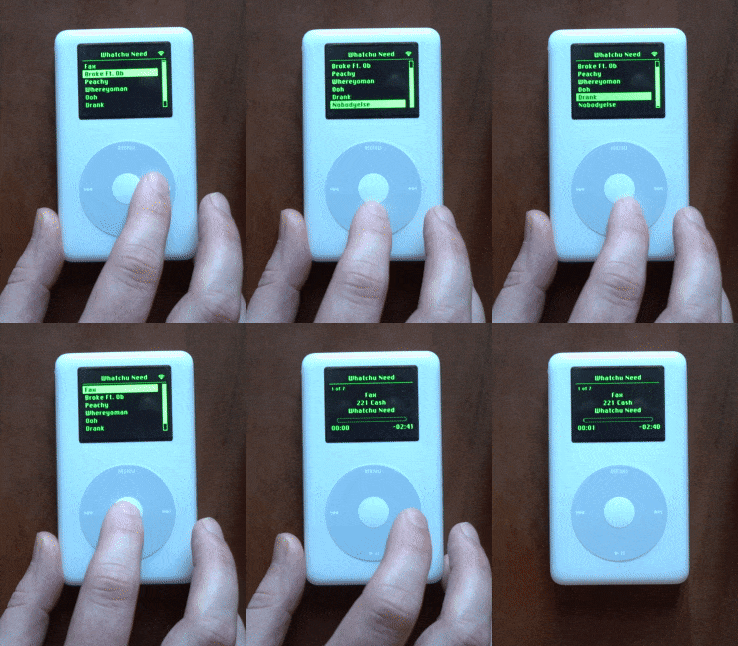
Of course, modern users expect a bit more than what the old hardware can deliver. Which is why [Guy Dupont] swapped the internals of his iPod Classic with a Raspberry Pi Zero W. This new Linux-powered digital audio player is not only capable of playing essentially any audio format you throw at it, but can also tap into streaming services such as Spotify. But such greatness doesn’t come easy; to pull this off, he had to replace nearly every component inside the player with the notable exception of the click wheel itself. Good thing the Classics were pretty chunky to begin with.
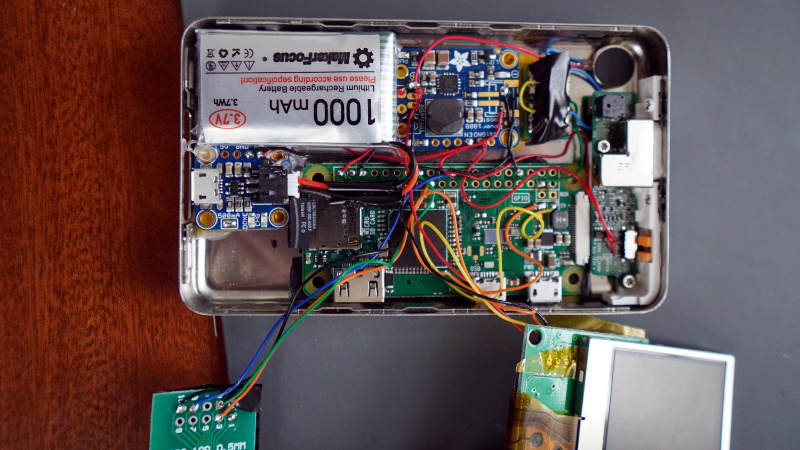
In addition to the Pi Zero running the show, he also had to fit a 1000 mAh battery, its associated charging and boost modules, a vibration motor for force feedback, and a 2″ LCD from Adafruit. The display ended up being almost the perfect size to replace the iPod’s original screen, and since it uses composite video, only took two wires to drive from the Pi. To interface with the original click wheel, [Guy] credits the information he pulled from a decade-old Hackaday post.
Of course with a project like this, the hardware is only half the story. It’s one thing to cram all the necessary components inside the original iPod enclosure, but by creating such an accurate clone of its iconic UI in Python, [Guy] really took things to the next level. Especially since he was able to so seamlessly integrate support for Spotify, a feature the Apple devs could scarcely have imagined back at the turn of the millennium. We’re very interested in seeing the source code when he pushes it to the currently empty GitHub repository, and wouldn’t be surprised if it set off a resurgence of DIY iPod clones.
New York (CNN Business)The internet is buzzing over a new technology created by Microsoft developers that could make it possible to have a virtual conversation with a deceased loved one (well, kind of).A patent granted to Microsoft (MSFT) last month details a method for creating a conversational chatbot modeled after a specific person — a “past or present entity … such as a friend, a relative, an acquaintance, a celebrity, a fictional character, a historical figure,” according to the filing with the US Patent and Trademark Office.The technology is reminiscent of a fictional app in the dystopian TV series “Black Mirror” that allowed a character to continue chatting with her boyfriend after he dies in an accident, by pulling information from his social media.Want to talk music with David Bowie? Or get some words of wisdom from your late grandmother? This tool would theoretically make that possible. But don’t get too excited, or freaked out for that matter: The company isn’t planning to turn the technology into an actual product.Tim O’Brien, Microsoft’s general manager of AI programs, said in a tweet on Friday that he “confirmed that there’s no plan for this.” In a separate tweet, he also echoed the sentiment of other internet users commenting on the technology, saying, “yes, it’s disturbing.”Here’s how the technology would work if it were in fact built into a product. According to the patent information, the tool would cull “social data” such as images, social media posts, messages, voice data and written letters from the chosen individual. That data would be used to train a chatbot to “converse and interact in the personality of the specific person.” It could also rely on outside data sources, in case the user asked a question of the bot that couldn’t be answered based on the person’s social data.”Conversing in the personality of a specific person may include determining and/or using conversational attributes of the specific person, such as style, diction, tone, voice, intent, sentence/dialogue length and complexity, topic and consistency,” as well as using behavioral attributes such as interests and opinions and demographic information such as age, gender and profession, the patent states.
Robot friends: Why people talk to chatbots in times of troubleIn some cases, the tool could even be used to apply voice and facial recognition algorithms to recordings, images and videos to create a voice and 2D or 3D model of the person to enhance the chatbot.While Microsoft doesn’t have plans to create a product from the technology, the patent does indicate that the possibilities for artificial intelligence have moved beyond creating fake people to creating virtual models of real people.The application for the Microsoft patent was filed in April 2017, which O’Brien said on Twitter predates the “AI ethics reviews we do today.” These days, the company has an Office of Responsible AI and an AI, Ethics, and Effects in Engineering and Research Committee, which help oversee its inventions.
Image by Santi Nunez / StocksyOur editors have independently chosen the products listed on this page. If you purchase something mentioned in this article, we may earn a small commission.January 27, 2021 — 10:10 AMShare on:
People who struggle to fall asleep tend to have a few things in common: Bags under the eyes, frequent yawning, and a thirst for all things caffeinated being the obvious ones. Through the years of meeting with sleep-deprived patients, board-certified sleep specialist Rafael Pelayo, M.D., has also noticed a more subtle connection: They all tend to use the same language to describe bedtime.
The problem with “trying” to sleep.
“People who have sleep problems on a regular basis talk a certain way that nobody else talks,” says Pelayo, who is also a professor at Stanford Medicine and the author ofHow To Sleep: The New Science-Based Solutions for Sleeping Through the Night. “The phrase that you’ll often hear people say is that they try to go to sleep.”
This word choice may seem innocuous, but Pelayo says that it speaks to a defeatist mindset and can therefore put a real damper on restfulness.
He considers someone’s state of mind to be one of the four main indicators of sleep quality (along with the amount, quality, and timing of sleep) since the brain can quickly dysregulate sleep. He explains it like this: If you are someone who breaths a healthy 12 times a minute, chances are you aren’t actively thinking about this cadence. It just comes naturally to you. But if someone came up to you with a timer and forced you to take 12 breaths a minute, you’d likely mess up.
The same goes for sleep: The body is naturally equipped to get a certain amount of it each night, and overthinking things can get in the way.
“You don’t try to breathe. You don’t try to get hungry. These are biological rhythms,” Pelayo reiterates. “You can only try to sleep by staying awake.”ADVERTISEMENT
How to adopt a new sleep state of mind.
Anyone who has struggled with occasional insomnia knows that changing your mindset around sleep is easier said than done. Here, Pelayo offers up some ideas that might help you reframe bedtime as something you don’t try to do but get to do:
1. Remember the value of a solid night’s sleep.
While missing out on it is certainly no fun, in general sleep is an all-around awesome activity that we get to do every day. It’s a time to rest the body, restore the mind, and escape from the responsibilities of waking life. The next time that sleep starts to become just another chore or difficulty, remind yourself of all the positive aspects of it that you really appreciate.
2. Think about what you do know about the day ahead.
“We sleep best in states of serenity, and we sleep worst in states of uncertainty,” Pelayo explains. To mitigate feelings of anxiety and uncertainty—and take your mind off of the chore of trying to fall asleep—he recommends thinking about what you know you’re going to be doing the next morning as you’re lying in bed.
Walk through your morning routine in your mind, homing in on the details: the coffee brewing, the teeth brushing, the breakfast making. While you might now know exactly what the day ahead has in store, there’s a good chance you’ll be doing these things. By reminding yourself of them, you’re acknowledging what you do have control over and putting your uncertainty-averse brain a little more at ease. (This is also a good strategy to employ any time generalized anxiety strikes.)
While getting high-quality sleep is certainly important for your health, poor sleep is not necessarily the end of the world. Consider the fact that new mothers need to wake up every few hours to nurse children. This trait is proof that our bodies have evolved to manage without sleep from time to time. “It’s important to understand that sleep will come,” Pelayo says. “Sometimes, it’s all right not to sleep.”
Using deep neural networks to identify features that may predict transcription factor binding
by Bob Yirka , Phys.org
Credit: Pixabay/CC0 Public Domain
A team of researchers at the University of California, San Diego, has developed a deep neural network system to identify features that may predict transcription factor binding. In their paper published in the journal Nature Machine Intelligence, the group describes their system possible uses for better understanding transcription-factor-based diseases.
Transcription factors are proteins that play a role in controlling the rate of transcription of genetic information—the way they bind to DNA is the means by which genes are turned on or off. Prior research has shown that problems with transcription factors can lead to human diseases such as Rett syndrome, maturity-onset diabetes and Fuch’s endothelial corneal dystrophy. Some research has suggested that they may also play a role in cancerous tumor development.
In order to prevent such diseases, scientists need to better understand the transcription process. In this new effort, the researchers built a neural-network-based system designed to assist with decoding the rules that govern transcription factors as they bind to target areas on strands of DNA. The team also hopes that it will prove useful in spotting specific noncoding nucleotides that have the biggest impact on binding.
The team named their overall system framework AgentBind—it was built starting with a prior system developed at UCSD. The new system was made by putting together three convolutional neural networks, a connected layer and a combination recurrent and convolutional neural network. Because of the massive amounts of data involved in such research, the team used transfer learning (rather than bulk learning), making the learning process much more efficient. They also added a post-analytical process to generate importance scores to place bindings in context.
Testing involved running the system with transcription factors to see what it might yield—they found it was capable of providing new insights into transcription-factor-binding variants that might possibly be related to potential disease development. Such insights, they note, could lead to identifying what takes place when transcription factors go awry and cause diseases, which could potentially lead to the development of relevant therapies.
More information: An Zheng et al. Deep neural networks identify context-specific determinants of transcription factor binding affinity, bioRxiv (2020). DOI: 10.1101/2020.02.26.965343
Alexa now automatically turns out the lights if it thinks you’re sleeping This is actually pretty exciting By Brad Bennett@thebradfadJAN 25, 2021 6:36 PM EST0 COMMENTS In a bid for total smart home domination, Amazon has expanded Alexa’s ‘Hunches’ feature to act independently. This means if you fall asleep with a light on, the digital assistant may turn the lights off for you, or if you’re on vacation, it could lower the thermostat to save you money on your electricity bill. This feature isn’t entirely new. Alexa’s Hunches launched in 2018 in the U.S., but previously it needed to ask for user permissions. After a recent update, Alexa can make these changes on its own, making it even more useful. The Verge notes an Amazon support article says that users will have control over which Hunches Alexa can act on or not. That said, the article in question is a bit vague, so MobileSyrup has reached out to Amazon for more information. Amazon is also rolling out a new Energy section to the Alexa app to estimate how many kWh of energy your connected devices use in a week. As of right now, neither of these features appear in my Alexa app on iOS or Android. When I asked my Echo Dot about Hunches, it seems to suggest that it can work here, but nothing is currently present in my apps. We’ve reached out to Amazon to confirm when these features are making their way to Canada. Hopefully, the new Hunches feature rolls out in Canada because the prospect of Alexa being able to automatically turns the light off is exciting. It hasn’t happened often, but I’ve definitely forgotten to turn off my lights more than once, only to wake up to a weirdly bright house. I’ve often found that smart homes are just as much of a hassle as dumb homes once you get bogged down in too many apps. Having a voice assistant helps cut down on this by making it easy to ask for lights to come on and off, but the next step are lights that turn on and off on their own, and this update makes me hope that Alexa could soon be capable of doing this. Update 26/01/2021: Amazon has responded to MobileSyrup claiming that the company has nothing to share about automatic Hunches coming to Canada.
 By
By 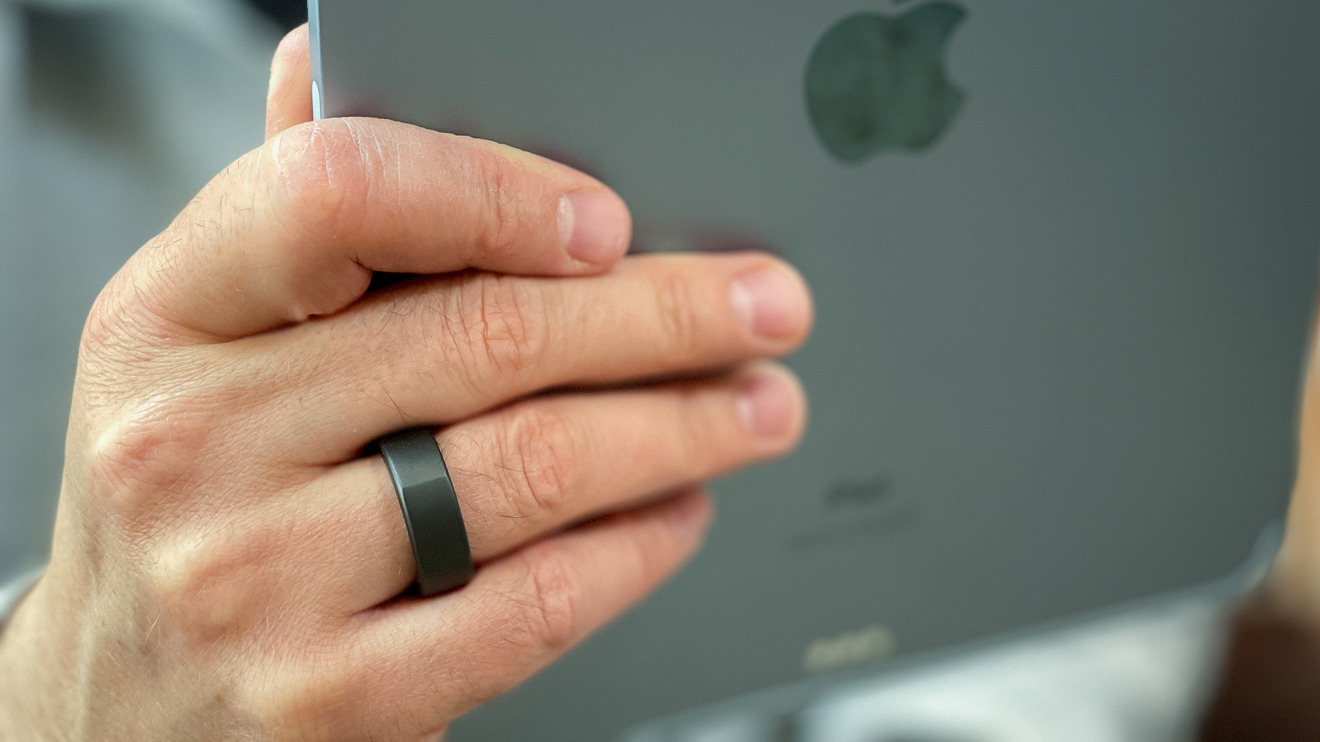











 Bruce's Blog
