China’s Mars craft enters parking orbit before landing rover
A man wearing a face mask to help curb the spread of the coronavirus tours an exhibition displaying models depicting a spacecraft and rovers on Mars at a shopping mall in Beijing on Wednesday, Feb. 24, 2021. China says its Tianwen-1 spacecraft has entered a temporary parking orbit around Mars in anticipation of landing a rover on the red planet in the coming months. (AP Photo/Andy Wong)
The Associated Press Published Wednesday, February 24, 2021 7:23AM EST
BEIJING — China says its Tianwen-1 spacecraft has entered a temporary parking orbit around Mars in anticipation of landing a rover on the red planet in the coming months.
The China National Space Administration said the spacecraft executed a manoeuvr to adjust its orbit early Wednesday morning Beijing time and will remain in the new orbit for about the next three months before attempting to land. During that time, it will be mapping the surface of Mars and using its cameras and other sensors to collect further data, particularly about its prospective landing site.
That follows the landing of the U.S. Perseverance rover last Thursday near an ancient river delta in Jezero Crater to search for signs of ancient microscopic life.
A successful bid to land Tianwen-1 would make China only the second country after the U.S. to place a spacecraft on Mars. China’s solar-powered vehicle, about the size of a golf cart, will collect data on underground water and look for evidence that the planet may have once harboured microscopic life.
Tianwen, the title of an ancient poem, means “Quest for Heavenly Truth.”
Landing a spacecraft on Mars is notoriously tricky. About a dozen orbiters missed the mark. In 2011, a Mars-bound Chinese orbiter that was part of a Russian mission didn’t make it out of Earth orbit.
China’s attempt will involve a parachute, rocket firings and airbags. Its proposed landing site is a vast, rock-strewn plain called Utopia Planitia, where the U.S. Viking 2 lander touched down in 1976.
Tianwen-1’s arrival at Mars on Feb. 10 was preceded by that of an orbiter from the United Arab Emirates. All three of the latest missions were launched in July to take advantage of the close alignment between Earth and Mars that happens only once every two years.
Tianwen-1 represents the most ambitious mission yet for China’s secretive, military-linked space program that first put an astronaut in orbit around Earth in 2003 and last year brought moon rocks back to Earth for the first time since the 1970s. China was also the first country to land a spacecraft on the little-explored far side of the moon in 2019.
China is also building a permanent space station and planning a crewed lunar mission and a possible permanent research base on the moon, though no dates have yet been proposed.
On Monday, a massive Long March-5B Y2 rocket was moved into place at the Wenchang Spacecraft Launch Site in Hainan province for assembly and testing before it launches the space station’s core module, christened Tianhe. Launch is scheduled for the first half of this year, the first of 11 missions slated over the next two years for the station’s construction.
China is not a participant in the International Space Station, partly at the insistence of the United States.
The space program is a source of enormous national pride in China and Tianwen-1 has attracted a particularly strong following among the public. Tourists flocked to tropical Hainan island to watch the launch, while others visit mock Mars colonies in desert sites with white domes, airlocks and spacesuits.
There’s already some strong evidence that getting to bed at a regular time is important for healthy living, besides how many hours of slumber we’re clocking up in total. A new study has now found a link between disrupted sleep patterns and a higher risk of bad moods and depression.
In research involving the direct measurement of the sleep times and moods of 2,115 physicians over the course of their first year of training, scientists found that those with variable sleep patterns were more likely to report lower moods and score more highly for symptoms of depression in questionnaires.
Variable sleep times were actually as likely to push up the risk of feeling depressed as much as a lack of sleep in general was – suggesting that staying in sync with our circadian rhythms is as important for our mental health as clocking up a good number of hours of shut-eye in total.
“These findings highlight sleep consistency as an underappreciated factor to target in depression and wellness,” says neuroscientist Srijan Sen, from the University of Michigan.
As you would expect, getting more sleep in total, getting up later, and going to bed earlier – as well as sticking to a more regimented sleep pattern – all tended to improve the mood of the participants. What perhaps hasn’t been well documented before is how important regular sleep patterns are in relation to those other factors.
Data were gathered through the use of sleep-tracking wearables, smartphone apps, and volunteer surveys. When it comes to the wearables, while they may not be as accurate for sleep tracking as instruments in the lab, they do enable scientists to monitor the habits of a lot of people at once, over a long period of time, without disrupting their daily activities (and nightly sleeping times).
“The advanced wearable technology allows us to study the behavioural and physiological factors of mental health, including sleep, at a much larger scale and more accurately than before, opening up an exciting field for us to explore,” says neuroscientist Yu Fang, from the University of Michigan.
“Our findings aim not only to guide self-management on sleep habits but also to inform institutional scheduling structures.”
While we can all agree that better sleep habits are good for our overall health, the team behind the new study wants to see more research into how different aspects of sleep hygiene – bedtime, waking up time, sleep patterns, total sleep – affect wellbeing individually.
The new study backs up previous research that suggests ignoring our circadian rhythms can be damaging to our mood, and increase the risk of depression over time. Try keeping to the same time for going to bed and getting up for an extended period of time, if you can – it might lighten your mood and outlook.
Next the researchers want to turn their attention towards other groups of people that may not necessarily have full control over when they go to bed, when they wake up, and how many hours of sleep they get in between – such as the parents of young children, for example.
“I also wish my 1-year-old could learn about these findings and only wake me up at 8.21 am every day,” says Fang.
Surgeons in Detroit have become the first U.S. team to implant the newest deep brain stimulation (DBS) system — Boston Scientific’s Vercise Genus — in a Parkinson’s disease patient.
The device, smaller and thinner than previous models, aims to reduce movement symptoms associated with Parkinson’s by stimulating targeted regions of the brain via implanted electrical leads. These are powered by a pulse generator placed under the skin of a patient’s chest.
The surgery, using Boston Scientific‘s newly approved fourth-generation system, was performed earlier this month by neurosurgeon Jason Schwalb, MD, of the Parkinson’s Disease and Movement Disorder Center at the Henry Ford Health System, in Michigan.
“With neurodegenerative movement disorders like Parkinson’s disease, the ability to deliver the right dose of stimulation where it is needed can make a remarkable difference in controlling an individual patient’s symptoms,” Schwalb said in a press release.
“This new Deep Brain Stimulation system has the ability to adapt therapy to address fluctuations in symptoms and the progressive nature of the condition,” he added, “which allows us to control stimulation precisely and minimize unwanted side effects.”
More than 160,000 DBS systems have been implanted in patients worldwide over the past 25 years to help treat movement disorders, including Parkinson’s, according to Boston Scientific. The new Vercise Genus DBS system, approved by the U.S. Food and Drug Administration in January 2021, is small and thin, according to its developers. Under certain conditions, patients with this device will be able to safely undergo MRI scans.
Medications such as levodopa are the first line of treatment for Parkinson’s-related motor symptoms, which include tremors, rigidity, stiffness, slowed movement, and walking problems. However, these therapies may not always prove effective.
Some patients may fail to adequately respond to medication or may experience problematic side effects. For these individuals, treatments such as DBS provide an alternate way to improve quality of life.
The latest Vercise Genus DBS — an upgrade to earlier systems available for years in both the U.S. and Europe — is approved as an add-on treatment for levodopa-responsive Parkinson’s patients, for whom levodopa alone is insufficient. It is approved for stimulation of both sides of the subthalamic nucleus and the internal globus pallidus, which are brain regions that play key roles in motor function.
When active, the Vercise Genus DBS System’s pulse generator stimulates the brain with a pre-determined program of mild electrical impulses.
The new device is based on cochlear implant technology, which precisely stimulates auditory nerves to replicate hearing. Earlier models, in contrast, rely upon pacemaker technology.
Using Bluetooth wireless technology, individual DBS stimulation programs can be fine-tuned and adjusted as needed, to address changes in symptoms that occur throughout Parkinson’s progression by targeting different brain regions. In this way, physicians and patients can work together to better optimize therapy for each individual.
The new Vercise Genus DBS System is available in both the United States and Europe. In the U.S., the device’s use is to be accompanied by full-body MRI scans.Forest Ray PhDForest Ray received his PhD in systems biology from Columbia University, where he developed tools to match drug side effects to other diseases. He has since worked as a journalist and science writer, covering topics from rare diseases to the intersection between environmental science and social justice. He currently lives in Long Beach, California.Fact Checked By:Ana de Barros PhDAna holds a PhD in Immunology from the University of Lisbon and worked as a postdoctoral researcher at Instituto de Medicina Molecular (iMM) in Lisbon, Portugal. She graduated with a BSc in Genetics from the University of Newcastle and received a Masters in Biomolecular Archaeology from the University of Manchester, England. After leaving the lab to pursue a career in Science Communication, she served as the Director of Science Communication at iMM.
Researchers at the University of Basel have discovered a molecular mechanism that plays a central role in intact long-term memory. This mechanism is also involved in physiological memory loss in old age.
Many life forms, from worms to humans, have differentiated memory functions, such as short-term and long-term memory. Interestingly, at the cell and molecule level, many of these functions are nearly identical from life form to life form. Detecting the molecules involved in memory processes is of great importance to both basic and clinical research, since it can point the way to the development of drugs for memory disorders.
By studying roundworms (Caenorhabditis elegans), scientists at the Transfaculty Research Platform for Molecular and Cognitive Neurosciences (MCN) at the University of Basel have now discovered a molecular mechanism of long-term memory that is also involved in memory loss in old age. They report on their findings in the journal Current Biology.
The team led by Dr Attila Stetak, Professor Andreas Papassotiropoulos and Professor Dominique de Quervain used sensory stimuli to first examine the learning and memory ability of genetically modified roundworms lacking a certain gene, mps-2. This gene contains the blueprint for part of a voltage-dependent ion channel in the nerve cell membrane and is suspected of playing a role in memory functions.
It was found that modified worms had equally good short-term memory as unmodified specimens. However, as the length of the experiment increased, the researchers found that the genetically modified worms were less able to retain what they learned. Without mps-2, they had a reduced long-term memory.
Age-related memory loss
In roundworms, as in humans, a loss of memory can be observed with increasing age. However, the molecular basis for this process is largely unclear. In further experiments, the researchers were able to prove that unmodified worms with the mps-2 gene exhibit a strong reduction of the MPS-2 protein, the product of the gene, in old age. This was related to reduced memory performance.
This lack of MPS-2 protein proved not to be a passive but an actively regulated process. The research team was able to identify another protein, NHR-66, as responsible for regulating this deficiency. NHR-66 actively curbs the reading of the mps-2 gene and thus production of the MPS-2 protein in old age. If in older worms MPS-2 protein level was artificially induced or their NHR-66 was turned off, they had a similarly good memory as younger worms. Both molecules, MPS-2 and NHR-66, therefore make for interesting targets for drugs that could mitigate age-related memory loss. In further studies, the researchers want to examine therapeutic options based on their discovery.
Reference: “Dual Role of an mps-2/KCNE-Dependent Pathway in Long-Term Memory and Age-Dependent Memory Decline” by Bank G. Fenyves, Andreas Arnold, Vaibhav G. Gharat, Carmen Haab, Kiril Tishinov, Fabian Peter, Dominique de Quervain, Andreas Papassotiropoulos and Attila Stetak, 30 November 2020, Current Biology. DOI: 10.1016/j.cub.2020.10.069
The current study is part of the Basel Genetics Memory Project of the Transfaculty Research Platform for Molecular and Cognitive Neurosciences, led by Andreas Papassotiropoulos and Dominique de Quervain. The aim is for the findings to be transferred from basic research into pharmaceutical studies and clinical projects as quickly as possible.
“One of the biggest mistakes that many of us make, myself included, is when we’re experiencing sleep difficulty, staying in bed and tossing and turning and thinking that if we just stay in bed a little bit longer, we’ll will ourselves to sleep,” says Dr. Robbins. But we’re actually doing the opposite. “We’re classically conditioning our brains to understand that in bed is where insomnia happens. It’s not a place where we drift off to sleep, but instead where we toss and turn.”
Most people don’t fall asleep the second their head hits the pillow, so don’t jump up if you can’t immediately fall asleep. You’ll know when it starts to feel like a lost cause.
“The well-rested person will take around 15 minutes to fall asleep. So even if you had a very healthy sleep system, it actually takes a little bit of time to fall asleep,” says Dr. Robbins. “But if you have a problematic sleep latency, right around the time when you find that voice chime in [that says] ‘Oh, not again, not again. I can’t fall asleep, not again tonight,’ that is exactly when you need to get out of bed and start the process over.”RELATED STORIESChange in Season Can Definitely Affect Sleep—Here’s How To Set Yourself Up…‘I’m a Neuroscientist, and This Is Exactly How Alcohol Ruins Your Sleep’
And yes, this can be difficult especially if you just really want to cozy up and drift off. But, Dr. Robbins says it’s worth it.
“When I was little, I remember my mother saying, ‘You must stay in bed. It’s very important. Stay in bed. You’ll get some sleep. It’s better than none,’” says Dr. Robbins. “But it’s much better to reset the brain, and get out of bed. Try to do something mindless. Fold your laundry, put away your dishes, or read a couple of pages of a boring book. And then when you’re tired, come back and start the process again.” Robbins notes that it’s best to avoid screens (like computers) and strong lights, as they greatly affect your sleep.https://a00efa424ce5bd8412e296842d8ac405.safeframe.googlesyndication.com/safeframe/1-0-37/html/container.html
Sometimes, the inability to fall asleep at night is tied to daytime behaviors. One of the big culprits is caffeine. “If you’re in bed and you’re not able to fall asleep because your heart is racing, blood pumping, that could be because you had too much caffeine,” she says. In that case, she says to avoid caffeine in the afternoon and limit your morning coffee to one or two cups. Another reason can be eating dinner too close to bedtime. “The digestion process takes up some energy and some time and that can keep you from falling asleep.” She also recommends refraining from high-intensity workouts right before bed.
But sometimes, behavior has nothing to do with it. Some nights, you will have a hard time falling asleep, and that’s okay.
“[Sleep difficulties] happen to all of us, and now more than ever, because we’re living in the midst of a pandemic. Our lives have been changed completely and sleep is a function of what happens during our days,” says Dr. Robbins. “Notice that that is completely normal, and take that in stride. Realize that the next day is going to get a little bit rough. You’re going to be tired, but do your best.” And remember that sleep should come much easier the following evening.
Oh hi! You look like someone who loves free workouts, discounts for cult-fave wellness brands, and exclusive Well+Good content. Sign up for Well+, our online community of wellness insiders, and unlock your rewards instantly.
Is This Sleek New Electric Vehicle the Future of #Vanlife?
By Marissa Hermanson – February 23, 2021View 8 PhotosThe Canoo MPDV van cuts a sharp profile reminiscent of the Tesla Cybertruck.
California-based EV company Canoo recently unveiled its latest offering, the MPDV (multipurpose delivery vehicle)—and its faceted form bears more than a passing resemblance to the Tesla Cybertruck. The MPDV is set for full-scale production in 2023 with pricing starting at $33,000—an enticing figure compared to other vehicles in its class.
Canoo’s new multipurpose delivery van will be available in limited numbers in 2022, with full-scale production launching in 2023.
ADVERTISING
Two models, the MPDV1 and MPDV2, are available for preorder, with a larger model to be unveiled in the near future.
“We created our multipurpose delivery vehicle—from the inside out—with the ergonomics of the driver in mind, and with attention to detail to help them be happier and more productive at work,” says Canoo’s executive chairman Tony Aquila. “The vehicle is affordable and offers greater cargo capacity than the current electric delivery offerings in its class. We aim to lower the total cost of ownership and increase return on investment for everyone from local small business owners to large fleets.”
The van’s side hatch makes for the perfect food truck.The MPDV’s interior can be customized to suit the driver and business.
The MPDV is designed to serve a wide range of customers—including last-mile delivery companies and small, independent businesses that need a spacious and affordable vehicle to haul their gear—and it can be customized to meet the needs of the buyer. With the vehicle’s sleek design and focus on function, we can’t help but think about all the cool ways it could be converted for life on the open road.
“We are building vehicles that are ideal solutions for specific use cases, such as a food truck or last-mile delivery solution, and a nomad lifestyle is no exception,” says a company spokesperson. “We have a deep appreciation for the outdoors and adventure, so we’d love to be able to create something that can be used that way.”
To the left of the driver’s seat, an inset panel holds devices at the ready while on the road.The vehicles’s bidirectional onboard charger and plethora of ports allow off-grid device and tool charging.
Despite its compact footprint, the van’s interior offers 30 percent more parcel volume than other leading delivery vehicles. Canoo is gearing up to launch two models—the 92-square-foot MPDV1 with 230 cubic feet of cargo volume, and the 123-square-foot MPDV2 with 500 cubic feet.
Trappings include a bidirectional onboard charger that can be used to power tools like electric saws, drills, and air compressors in off-grid locations. Drivers who need access to devices can have a workstation installed to the left of the driver’s seat.
The MPDV’s voluminous cargo area can be tailored to suit a wide range of applications.
ADVERTISING
The MPDV is designed to make multiple stops on a single charge and go further per kilowatt than similar EVs. High-tech software supports the driver, and a steer-by-wire system will allow for self-driving capabilities once they are commercially available.
Even as more people are logging onto popular video chat platforms to connect with colleagues, family and friends during the COVID-19 pandemic, Stanford researchers have a warning for you: Those video calls are likely tiring you out.
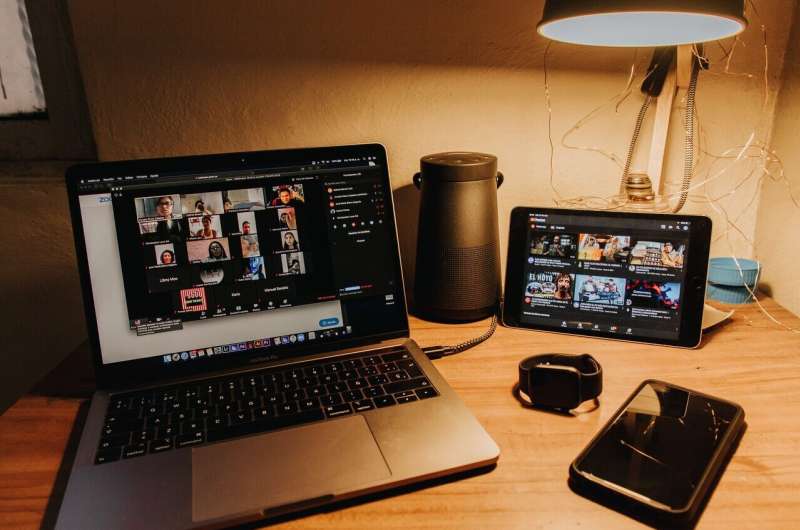
Prompted by the recent boom in videoconferencing, communication Professor Jeremy Bailenson, founding director of the Stanford Virtual Human Interaction Lab (VHIL), examined the psychological consequences of spending hours per day on these platforms. Just as “Googling” is something akin to any web search, the term “Zooming” has become ubiquitous and a generic verb to replace videoconferencing. Virtual meetings have skyrocketed, with hundreds of millions happening daily, as social distancing protocols have kept people apart physically.
In the first peer-reviewed article that systematically deconstructs Zoom fatigue from a psychological perspective, published in the journal Technology, Mind and Behavior on Feb. 23, Bailenson has taken the medium apart and assessed Zoom on its individual technical aspects. He has identified four consequences of prolonged video chats that he says contribute to the feeling commonly known as “Zoom fatigue.”
Bailenson stressed that his goal is not to vilify any particular videoconferencing platform—he appreciates and uses tools like Zoom regularly—but to highlight how current implementations of videoconferencing technologies are exhausting and to suggest interface changes, many of which are simple to implement. Moreover, he provides suggestions for consumers and organizations on how to leverage the current features on videoconferences to decrease fatigue.
“Videoconferencing is a good thing for remote communication, but just think about the medium—just because you can use video doesn’t mean you have to,” Bailenson said.
Below are four primary reasons why video chats fatigue humans, according to the study. Readers can also complete a questionnaire to see where they land on a Zoom Exhaustion & Fatigue Scale (ZEF) Scale.
Four reasons why
1) Excessive amounts of close-up eye contact is highly intense.
In a normal meeting, people will variously be looking at the speaker, taking notes or looking elsewhere. But on Zoom calls, everyone is looking at everyone, all the time. A listener is treated nonverbally like a speaker, so even if you don’t speak once in a meeting, you are still looking at faces staring at you. The amount of eye contact is dramatically increased. “Social anxiety of public speaking is one of the biggest phobias that exists in our population,” Bailenson said. “When you’re standing up there and everybody’s staring at you, that’s a stressful experience.”
Another source of stress is that, depending on your monitor size and whether you’re using an external monitor, faces on videoconferencing calls can appear too large for comfort. “In general, for most setups, if it’s a one-on-one conversation when you’re with coworkers or even strangers on video, you’re seeing their face at a size which simulates a personal space that you normally experience when you’re with somebody intimately,” Bailenson said.
When someone’s face is that close to ours in real life, our brains interpret it as an intense situation that is either going to lead to mating or to conflict. “What’s happening, in effect, when you’re using Zoom for many, many hours is you’re in this hyper-aroused state,” Bailenson said.
Solution: Until the platforms change their interface, Bailenson recommends taking Zoom out of the full-screen option and reducing the size of the Zoom window relative to the monitor to minimize face size, and to use an external keyboard to allow an increase in the personal space bubble between oneself and the grid.
2) Seeing yourself during video chats constantly in real-time is fatiguing.
Most video platforms show a square of what you look like on camera during a chat. But that’s unnatural, Bailenson said. “In the real world, if somebody was following you around with a mirror constantly—so that while you were talking to people, making decisions, giving feedback, getting feedback—you were seeing yourself in a mirror, that would just be crazy. No one would ever consider that,” he added.
Bailenson cited studies showing that when you see a reflection of yourself, you are more critical of yourself. Many of us are now seeing ourselves on video chats for many hours every day. “It’s taxing on us. It’s stressful. And there’s lots of research showing that there are negative emotional consequences to seeing yourself in a mirror.”
Solution: Bailenson recommends that platforms change the default practice of beaming the video to both self and others, when it only needs to be sent to others. In the meantime, users should use the “hide self-view” button, which one can access by right-clicking their own photo, once they see their face is framed properly in the video.
3) Video chats dramatically reduce our usual mobility.
In-person and audio phone conversations allow humans to walk around and move. But with videoconferencing, most cameras have a set field of view, meaning a person has to generally stay in the same spot. Movement is limited in ways that are not natural. “There’s a growing research now that says when people are moving, they’re performing better cognitively,” Bailenson said.
Solution: Bailenson recommends people think more about the room they’re videoconferencing in, where the camera is positioned and whether things like an external keyboard can help create distance or flexibility. For example, an external camera farther away from the screen will allow you to pace and doodle in virtual meetings just like we do in real ones. And of course, turning one’s video off periodically during meetings is a good ground rule to set for groups, just to give oneself a brief nonverbal rest.
4) The cognitive load is much higher in video chats.
Bailenson notes that in regular face-to-face interaction, nonverbal communication is quite natural and each of us naturally makes and interprets gestures and nonverbal cues subconsciously. But in video chats, we have to work harder to send and receive signals.
In effect, Bailenson said, humans have taken one of the most natural things in the world—an in-person conversation—and transformed it into something that involves a lot of thought: “You’ve got to make sure that your head is framed within the center of the video. If you want to show someone that you are agreeing with them, you have to do an exaggerated nod or put your thumbs up. That adds cognitive load as you’re using mental calories in order to communicate.”
Gestures could also mean different things in a video meeting context. A sidelong glance to someone during an in-person meeting means something very different than a person on a video chat grid looking off-screen to their child who just walked into their home office.
Solution: During long stretches of meetings, give yourself an “audio only” break. “This is not simply you turning off your camera to take a break from having to be nonverbally active, but also turning your body away from the screen,” Bailenson said, “so that for a few minutes you are not smothered with gestures that are perceptually realistic but socially meaningless.”
Many organizations—including schools, large companies and government entities—have reached out to Stanford communication researchers to better understand how to create best practices for their particular videoconferencing setup and how to come up with institutional guidelines. Bailenson—along with Jeff Hancock, founding director of the Stanford Social Media Lab; Géraldine Fauville, former postdoctoral researcher at the VHIL; Mufan Luo; graduate student at Stanford; and Anna Queiroz, postdoc at VHIL—responded by devising the Zoom Exhaustion & Fatigue Scale, or ZEF Scale, to help measure how much fatigue people are experiencing in the workplace from videoconferencing.
The scale, detailed in a recent, not yet peer-reviewed paper published on the preprint website SSRN, advances research on how to measure fatigue from interpersonal technology, as well as what causes the fatigue. The scale is a 15-item questionnaire, which is freely available, and has been tested now across five separate studies over the past year with over 500 participants. It asks questions about a person’s general fatigue, physical fatigue, social fatigue, emotional fatigue and motivational fatigue. Some sample questions include:
How exhausted do you feel after videoconferencing? How irritated do your eyes feel after videoconferencing? How much do you tend to avoid social situations after videoconferencing? How emotionally drained do you feel after videoconferencing? How often do you feel too tired to do other things after videoconferencing?
Hancock said results from the scale can help change the technology so the stressors are reduced.
He notes that humans have been here before. “When we first had elevators, we didn’t know whether we should stare at each other or not in that space. More recently, ridesharing has brought up questions about whether you talk to the driver or not, or whether to get in the back seat or the passenger seat,” Hancock explained. “We had to evolve ways to make it work for us. We’re in that era now with videoconferencing, and understanding the mechanisms will help us understand the optimal way to do things for different settings, different organizations and different kinds of meetings.”
“Hopefully, our work will contribute to uncovering the roots of this problem and help people adapt their videoconference practices to alleviate ‘Zoom fatigue,'” added Fauville, who is now an assistant professor at the University of Gothenburg in Sweden. “This could also inform videoconference platform designers to challenge and rethink some of the paradigm videoconferences have been built on.”
More information: Bailenson, J. N. (2021). Nonverbal Overload: A Theoretical Argument for the Causes of Zoom Fatigue. Technology, Mind, and Behavior, 1(3). doi.org/10.1037/tmb0000030Provided by Stanford University
This Dreamy Pillow Has More Than 12,000 5-Star Amazon Reviews — and It’s on Major Sale
byOLIVIA BOWMANpublished ABOUT 4 HOURS AGOSAVECOMMENTSWe independently select these products—if you buy from one of our links, we may earn a commission.
If you’ve been struggling to create and maintain healthy sleep habits since the start of the pandemic, you’re not alone. A recent study from Casper reported that more than half of Americans have been going to bed at later or more inconsistent times since March 2020. Thankfully, one small change that can make a big difference toward getting (and keeping) you snoozing through the night: the right pillow. Having a pillow that properly supports your neck, has just the right level of plushness, and even regulates your temperature throughout the night is key to catching some quality shuteye. Enter: The Beckham Hotel Collection Gel Pillow, which has more than 12,000 five-star Amazon reviews and is here to solve your sleep-related woes. And right now, you can snag a set of two on sale for just $39.99 (normally $79.99).Beckham Hotel Collection Gel Pillows (2-pack)$79.99$39.99AMAZONBUY NOWSAVE TO WISH LIST
This isn’t the first time we’ve written about this editor fave. It was included in our list of game-changing Amazon products of 2020, and it even made our Best List as the best gel pillow on the market. So what exactly is so magical about it? Let’s start with the specs. This fluffy, 100 percent cotton pillow has a plush gel memory foam fill, is designed with no-shift construction, and is resistant to fading, stains, dust, mold, and mildew. It’s definitely built to last: One AT editor has owned a set for more than three years and says they’ve survived “three apartments, two relationships, and one complete overhaul of [her] entire bedding landscape.”
The gel memory foam fill also makes these pillows an excellent choice for hot sleepers and those in warmer climates. Unlike down and other kinds of filling, gel stays cool to the touch, which, along with the pillow’s breathable cotton and cooling technology, will help keep you comfortable throughout the night. And whether you sleep on your side, back, stomach, or all of the above, the plushness of this pillow will keep your neck supported. “My massage technician and I both saw a dramatic improvement in my shoulder/neck muscles after I bought these,” said one Amazon reviewer, while another customer noted: “I awoke refreshed with NO neck stiffness! It is comfortable and COOL. I would marry these pillows.”
An overwhelming number of reviewers swear they’ve never slept better since purchasing the Beckham Hotel Collection Gel Pillow. “At night, I roll around about as much as a pig in mud and this pillow works in every position,” said one well-rested buyer. “I have also noticed I sleep much better throughout the night, I am usually up by 8:30 on the weekends but the first night I slept with this, I was dead to the world until 10am!”
Still not convinced the hype is real? Maybe this review will do it: “Holy moly! If heaven created a pillow line, this would be it!”
Olivia is an editorial intern on the commerce team at Apartment Therapy. When she’s not writing, she’s probably re-watching The West Wing, reading her horoscope, or researching skincare products. She is a proud University of Oregon alumna and firmly believes that seltzer water is part of a balanced diet.
Researchers from the University of Illinois Chicago have discovered a new gene-editing technique that allows for the programming of sequential cuts—or edits—over time.
CRISPR is a gene-editing tool that allows scientists to change the DNA sequences in cells and sometimes add a desired sequence or genes. CRISPR uses an enzyme called Cas9 that acts like scissors to make a cut precisely at a desired location in the DNA. Once a cut is made, the ways in which cells repair the DNA break can be influenced to result in different changes or edits to the DNA sequence.
The discovery of the gene-editing capabilities of the CRISPR system was described in the early 2010s. In only a few years, scientists became enamored with the ease of guiding CRISPR to target almost any DNA sequence in a cell or to target many different sites in a cell in a single experiment.
“A drawback of currently available CRISPR-based editing systems is that all the edits or cuts are made all at once. There is no way to guide them so that they take place in a sequential fashion, one after the other,” said UIC’s Bradley Merrill, associate professor of biochemistry and molecular genetics at the College of Medicine and lead author of the paper.
Merrill and colleagues’ new process involves the use of special molecules called guide RNA that ferry the Cas9 enzyme within the cell and determine the precise DNA sequence at which Cas9 will cut. They call their specially engineered guide RNA molecules “proGuides,” and the molecules allow for the programmed sequential editing of DNA using Cas9.
Their findings are published in the journal Molecular Cell.
While proGuide is still in the prototype phase, Merrill and colleagues plan to further develop their concept and hope that researchers will be able to use the technique soon.
“The ability to preprogram the sequential activation of Cas9 at multiple sites introduces a new tool for biological research and genetic engineering,” Merrill said. “The time factor is a critical component of human development and also disease progression, but current methods to genetically investigate these processes don’t work effectively with the time element. Our system allows for gene editing in a pre-programmed fashion, enabling researchers to better investigate time-sensitive processes like how cancer develops from a few gene mutations and how the order in which those mutations occur may affect the disease.”











 Bruce's Blog